Vetir vs. Digital Wardrobe Apps: The Complete Comparison for Luxury Fashion
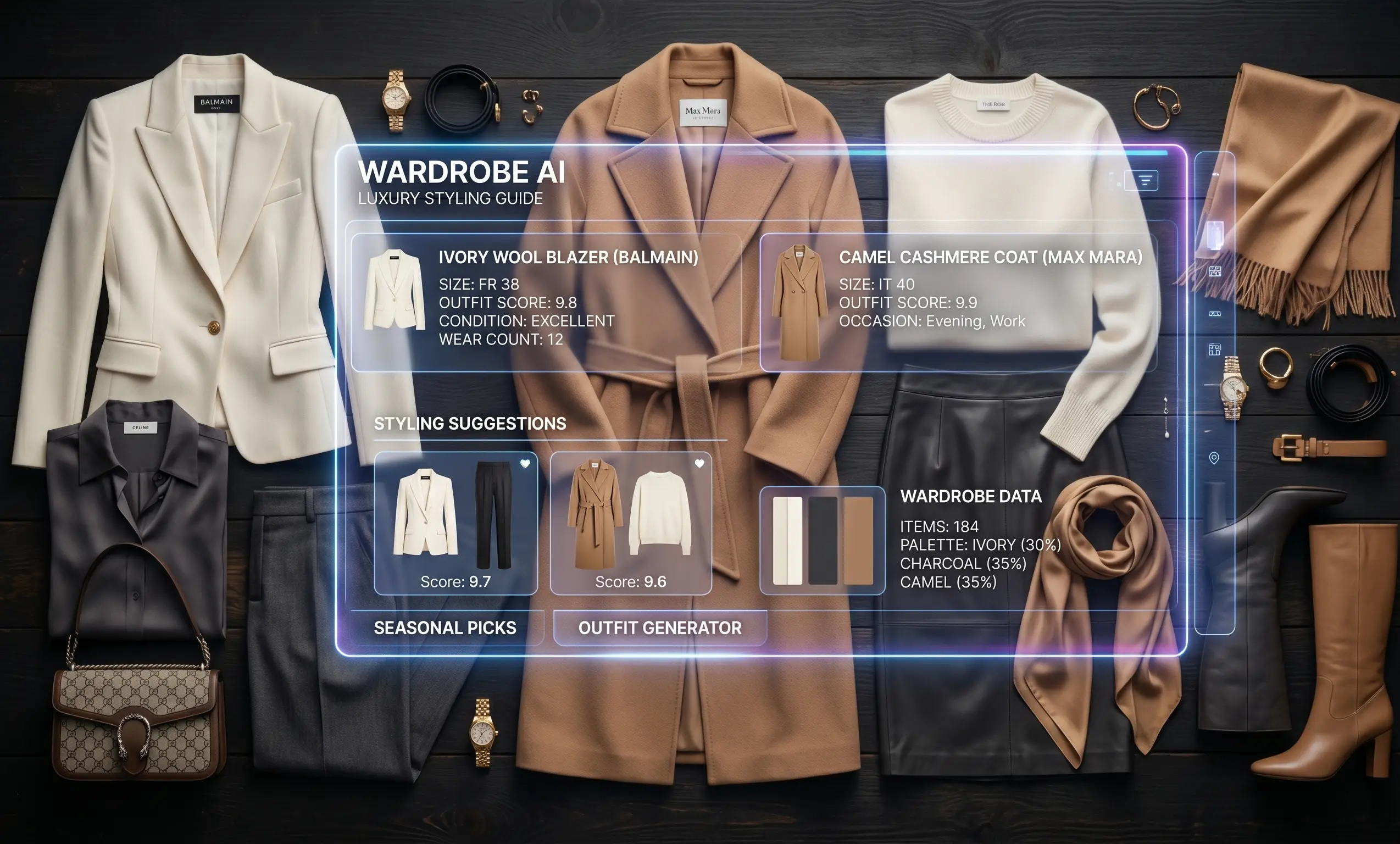
By the Vetir Editorial Team | Fashion Technology Analysis | Luxury AI & Styling Innovation
The closet is no longer just a room in your home. For a growing tier of premium fashion consumers, it has become a living data ecosystem — intelligent, predictive, and deeply personal.
If you’re comparing Vetir to other wardrobe apps, the first thing to understand is that they are not the same category of product. Traditional digital closet apps — platforms like Acloset, Stylebook, and Save Your Wardrobe — were built for one purpose: helping everyday consumers organize their clothes. They do that reasonably well. But for premium fashion clients, celebrity stylists, and luxury retail professionals, they fall short in almost every dimension that actually matters: AI depth, stylist infrastructure, luxury commerce integration, and the kind of concierge-level personalization that defines the high-end fashion experience.
This is where Vetir operates — not as a better closet app, but as a Wardrobe Operating System built from the ground up for the luxury tier. Below is a feature-by-feature breakdown of how the two compare.
Quick Answer: How does Vetir compare to other wardrobe apps?
Vetir is a luxury wardrobe operating system — not a consumer closet tracker. Where apps like Acloset or Stylebook offer manual upload and basic outfit planning, Vetir delivers individualized AI styling, photorealistic virtual try-on, professional stylist CRM tools, and deep luxury commerce integration. The functional gap is categorical, not incremental.
The clothes arrive. The tags are removed. And then — for the vast majority of consumers — garments enter a kind of digital invisibility. They exist physically in a wardrobe, but they cease to exist within any intelligent system. They are disconnected from the analytics, AI, and personalization infrastructure that governed the decision to buy them in the first place.
This disconnect is the central problem that AI wardrobe management is beginning to solve. And as this category matures, a critical divergence is emerging — one that mirrors the broader stratification of the fashion market itself. On one side are the consumer-grade digital closet apps: functional, accessible, designed for mass-market wardrobe tracking. On the other is an emerging class of technology that fashion insiders are beginning to call the wardrobe operating system (WOS): enterprise-grade, AI-powered, luxury-native platforms built not merely to catalog clothing, but to orchestrate entire fashion ecosystems.
Understanding the difference between these two paradigms is not just an exercise in product comparison. It is a window into the future of how premium fashion will be experienced, curated, and consumed.
What Is a Digital Wardrobe Platform?
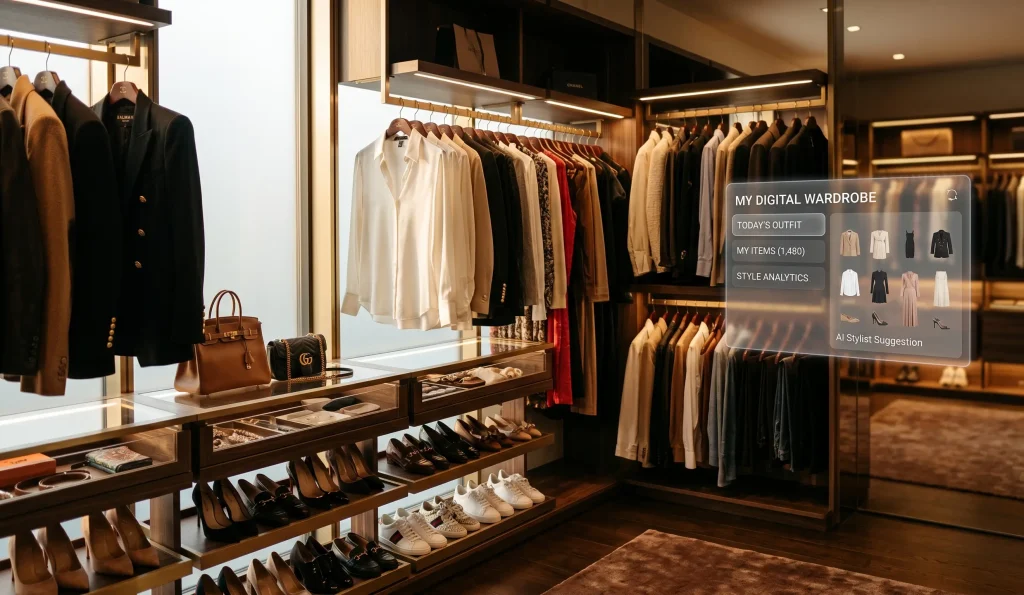
Before examining the landscape, it is worth establishing a precise definition. A digital wardrobe platform is any technology system that enables users to digitize, organize, manage, or style their physical clothing inventory through software. At the most foundational level, this means uploading garments, categorizing them, and using that inventory as the basis for outfit planning.
But the category has evolved considerably beyond this baseline.
Wardrobe digitization — the process of creating structured, searchable records of physical clothing — is now complemented by AI styling capabilities that can generate outfit recommendations, predict what a user might want to wear for a given occasion, and increasingly, integrate with commerce infrastructure to close the loop between wardrobe management and new acquisitions.
The emergence of AI-powered styling within wardrobe platforms represents a meaningful technological leap. Early systems relied on rule-based logic: if the user owns a white shirt and black trousers, suggest them together. Modern systems apply machine learning to style preference modeling, color theory, occasion mapping, and even cultural or seasonal context — generating recommendations that feel genuinely intuitive rather than algorithmically mechanical.
Within this evolution, post-purchase fashion technology has emerged as one of the most commercially significant categories in luxury fashion tech. The logic is straightforward: a brand that understands what a client already owns is infinitely better positioned to recommend what they should acquire next. The wardrobe, properly digitized and analyzed, becomes the foundation of a sophisticated clienteling relationship.
Traditional Digital Closet Apps: Genuine Utility, Structural Limitations
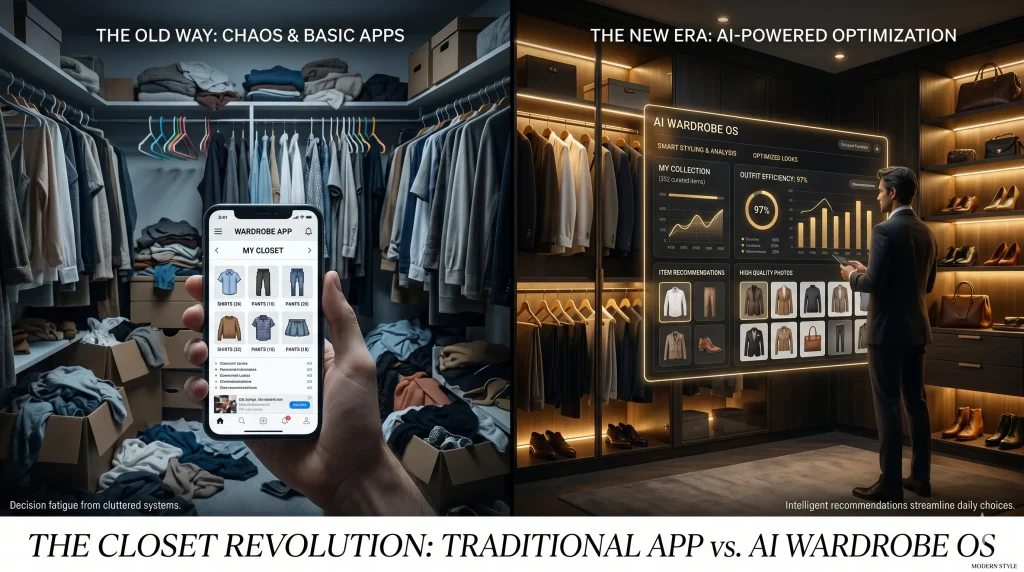
The consumer closet organization app category has delivered real value to fashion-aware users over the past decade. Platforms in this space have helped millions of people gain clarity on their wardrobes, reduce impulse purchases, and become more intentional about how they dress. These are meaningful contributions, and it would be intellectually dishonest to dismiss them.
Where Traditional Wardrobe Apps Deliver Value
Outfit planning and cost-per-wear analysis represent perhaps the most tangible benefits of mass-market wardrobe tools. The ability to log clothing costs, track how frequently items are worn, and calculate cost-per-wear gives fashion consumers a quantitative lens on their purchasing decisions — one that can meaningfully shift behavior over time.
Sustainability applications are similarly compelling. By making wardrobe contents visible and measurable, digital closet apps help users identify underutilized items, reduce redundant purchases, and engage more thoughtfully with the concept of wardrobe longevity. In an era of heightened environmental awareness, this is not a trivial function.
Wardrobe tracking — simply knowing what you own, where it is, and in what condition — has practical utility for frequent travelers, multi-property households, and anyone managing a large clothing inventory.
The Structural Limitations of Consumer Wardrobe Tools
Yet for a significant segment of fashion consumers — particularly those operating at the luxury tier — the structural limitations of traditional digital wardrobe apps become increasingly apparent.
Manual upload dependency remains perhaps the most significant friction point. Most consumer wardrobe platforms require users to photograph, tag, and categorize each garment individually. For someone managing a wardrobe of 200 items, this is a meaningful time investment. For a high-net-worth individual with a wardrobe spanning multiple residences, seasons, and categories, it becomes functionally impractical.
Generic AI recommendations represent a more subtle but commercially significant limitation. Consumer-grade wardrobe platforms tend to apply AI styling logic calibrated for general audiences — drawing on broad datasets that reflect mainstream fashion preferences rather than the nuanced aesthetic frameworks of luxury consumers. The result is recommendations that can feel contextually off: technically sound in terms of color coordination, but tonally misaligned with the sensibility of the individual being styled.
Subscription fatigue and monetization friction are increasingly visible in the consumer wardrobe app landscape. Many platforms have moved to subscription models that deliver adequate value at the mass-market level but struggle to justify premium pricing for luxury consumers who expect commensurate premium service.
Weak stylist infrastructure is perhaps the most consequential gap. Professional stylists — the individuals who manage wardrobes for celebrity clients, high-net-worth individuals, and luxury retail relationships — have found limited utility in most consumer wardrobe platforms. The collaboration tools, client management capabilities, and professional workflow support simply were not designed for this use case.
Limited commerce integration completes the picture. For consumer apps, the connection between wardrobe data and purchasing decisions tends to be superficial — a curated shop link here, a brand affiliate arrangement there. The deep integration of wardrobe intelligence with luxury commerce infrastructure that premium consumers increasingly expect is, by and large, absent.
The Rise of the Wardrobe Operating System
Against this backdrop, a new paradigm has begun to take shape: the wardrobe operating system (WOS).
The concept of an operating system — in the technological sense — refers to a foundational infrastructure layer upon which other applications and services run. It is not a single tool; it is the platform that makes other tools possible. Applied to fashion, a wardrobe operating system is not merely an app that organizes clothes. It is an intelligent infrastructure that connects wardrobe data, AI styling intelligence, professional stylist relationships, luxury commerce networks, and predictive analytics into a unified, coherent ecosystem.
The distinction matters enormously. A consumer closet app asks: What do you own? A luxury wardrobe operating system asks: What do you own, what does it say about who you are, what are you preparing for, and how can the full power of AI and professional expertise be brought to bear on making your next fashion decision exceptional?
This is not a quantitative difference. It is a categorical one.
Premium fashion consumers — particularly high-net-worth individuals and luxury retail clients — have long been accustomed to concierge-level personalization in their offline fashion experiences. The expectation that their digital fashion technology should deliver the same caliber of intelligence and service has been slow to materialize — until now.
The emergence of luxury wardrobe technology as a distinct category reflects a broader maturation of fashion tech investment. Whereas earlier waves of fashion technology focused on disrupting mass-market retail, the current generation is increasingly sophisticated about the specific demands of the luxury tier: the requirement for discretion, the expectation of genuinely predictive personalization, and the need for professional-grade infrastructure that can support not just individual consumers but the stylists and retailers who serve them.
Why Vetir Represents the Next Evolution in Fashion Technology
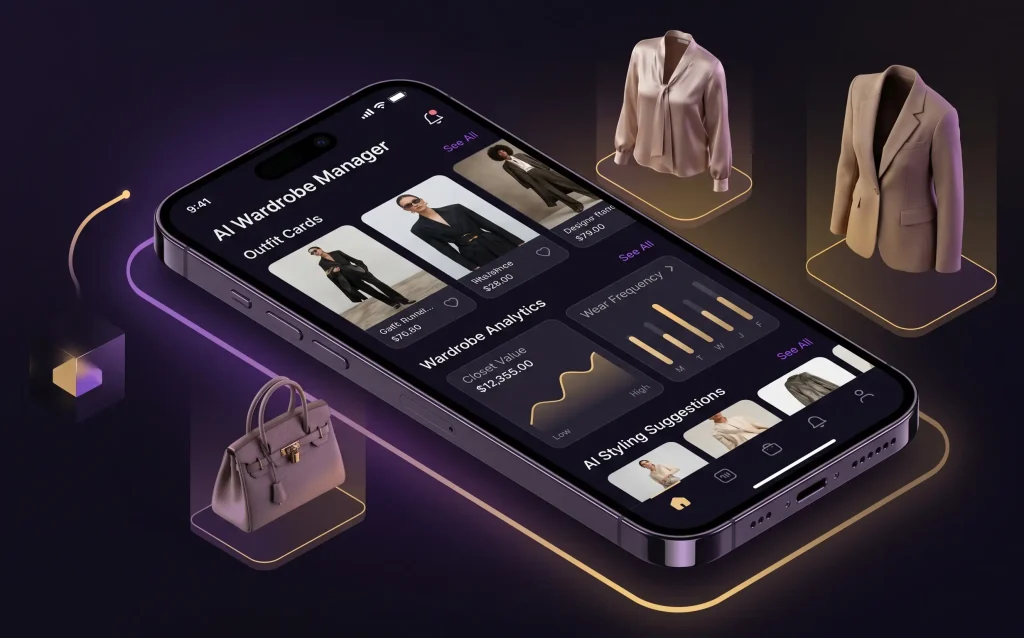
Within this emerging category, Vetir has positioned itself as the definitive luxury wardrobe operating system — a platform that addresses not just the organizational dimension of wardrobe management but the full intelligence layer that premium fashion consumers and professionals increasingly require.
AI-Powered Wardrobe Intelligence
Vetir’s approach to AI wardrobe management operates at a fundamentally different level of sophistication than consumer-grade alternatives. Rather than applying generic styling logic, Vetir builds individualized style intelligence models that reflect each user’s specific aesthetic framework, wardrobe composition, lifestyle patterns, and fashion aspirations. The result is AI-powered styling that feels like the output of a deeply informed human stylist rather than an algorithm calibrated for the median user.
Predictive styling capabilities allow Vetir to anticipate wardrobe needs before they become explicit — identifying gaps in a wardrobe relative to an upcoming event, flagging seasonal transitions, and generating proactive recommendations that align with the user’s evolving style trajectory.
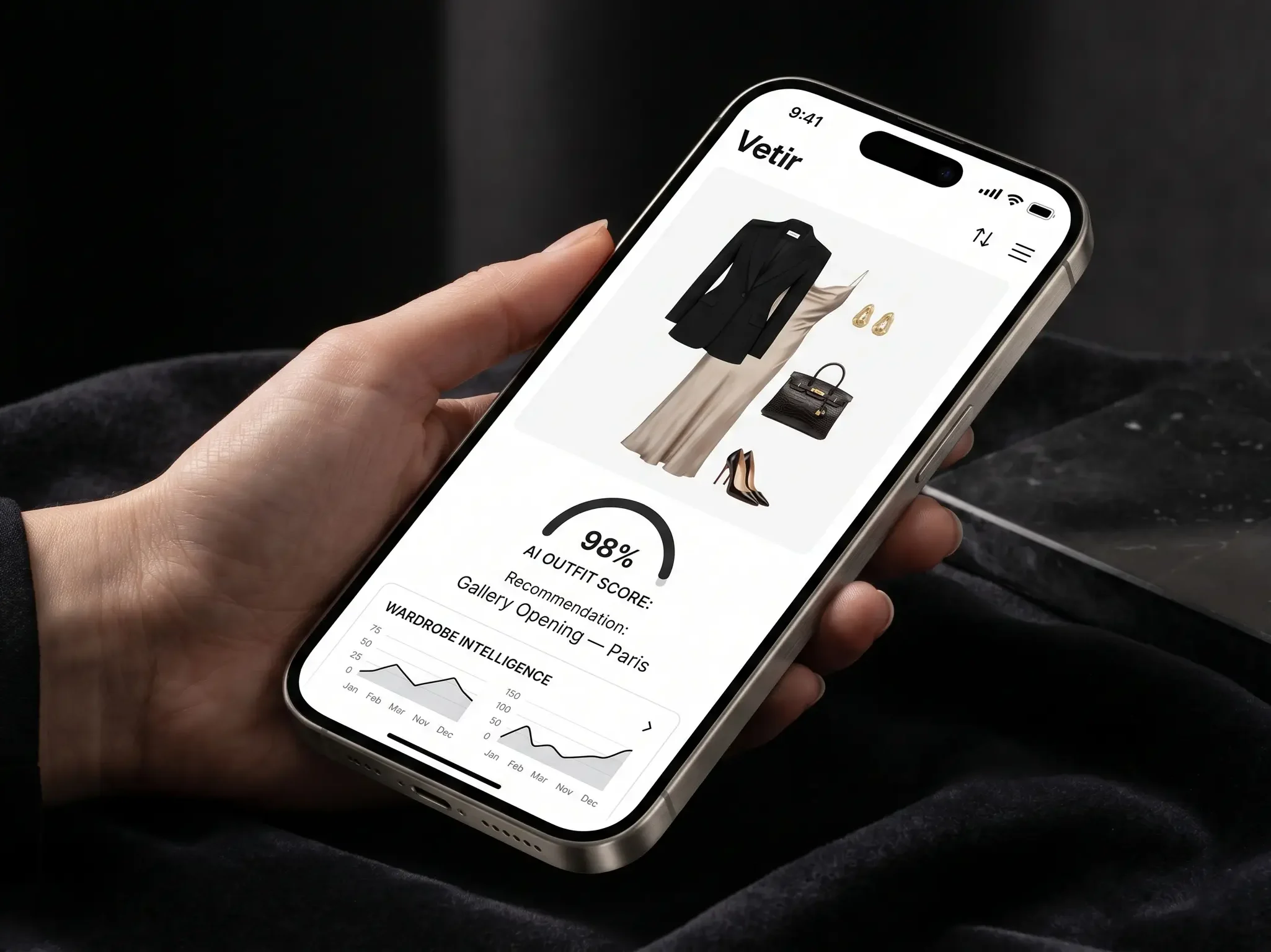
Event-based outfit recommendations represent a particular strength: the ability to analyze an upcoming occasion — a gallery opening, a board meeting, a destination wedding — and generate styling suggestions that account for the cultural register, dress code expectations, and personal brand considerations of the individual being styled.
Luxury Commerce Integration
Where traditional virtual closet apps treat commerce as an afterthought — a peripheral feature rather than a core infrastructure element — Vetir integrates luxury commerce at the architectural level. The platform’s connection to luxury retail ecosystems means that wardrobe intelligence directly informs purchasing recommendations, creating a seamless continuum between what a client owns and what they might next acquire.
This luxury clienteling platform capability is commercially significant not just for individual consumers but for the luxury retailers and brands that serve them. A platform that understands a client’s complete wardrobe — their style preferences, their inventory gaps, their purchasing cadence — is an extraordinary instrument for sophisticated retail relationships.
Stylist Ecosystem and Professional Infrastructure
Vetir’s investment in professional styling infrastructure addresses one of the most significant gaps in the existing digital wardrobe landscape. The platform has been designed to support the full workflow of celebrity stylists, personal shoppers, and luxury retail styling professionals — providing collaboration tools, client management capabilities, and wardrobe visibility features that are genuinely suited to professional use.
This creates a network effect that amplifies the platform’s value: as more professional stylists adopt Vetir as their primary digital wardrobe platform, the ecosystem of styling intelligence, brand relationships, and professional credibility accessible through the platform grows correspondingly.
Premium UI/UX and Enterprise Architecture
The aesthetic and experiential dimensions of Vetir reflect a deliberate commitment to luxury alignment. In a category where competitor platforms have often prioritized functional utility over design excellence, Vetir has invested in a premium UI/UX that feels native to the luxury fashion context — refined, intuitive, and visually aligned with the aesthetic sensibility of the users it serves.
At the infrastructure level, enterprise-grade architecture supports the scalability, security, and reliability requirements of luxury fashion professionals and institutions — a dimension that consumer wardrobe apps have generally not needed to address.
Photorealistic Virtual Styling
Photorealistic virtual styling represents one of the most technically ambitious capabilities in Vetir’s platform. The ability to visualize outfit combinations with genuine photorealistic fidelity — rather than the schematic representations typical of consumer wardrobe apps — transforms the styling decision process, making it possible to evaluate looks with a level of visual accuracy that approaches the experience of a physical fitting.
This capability has particular resonance for luxury consumers who make significant purchasing decisions based on precise aesthetic judgments, and for professional stylists who need to communicate styling concepts to clients with clarity and confidence.
Feature-by-Feature Strategic Comparison
The following tables provide a structured view of how digital wardrobe platforms compare across key capability dimensions. They are designed to offer analytical clarity rather than advocacy — the differences speak for themselves.
Vetir vs. Other Wardrobe Apps: Feature-by-Feature Breakdown
The following table illustrates how the core feature sets of different platform categories compare across the dimensions most relevant to premium fashion consumers and professionals. The depth of capability across each dimension reflects fundamentally different design philosophies and target use cases.
| Feature | Traditional Digital Closet Apps | Luxury Wardrobe Operating Systems | Vetir Advantage |
|---|---|---|---|
| AI Styling | Rule-based suggestions; generic recommendations | Individualized style modeling; predictive intelligence | Deep preference learning; event-aware outfit generation |
| Wardrobe Digitization | Manual photo upload; user-managed tagging | Automated digitization; AI-assisted categorization | High-fidelity item recognition; metadata enrichment |
| Outfit Recommendations | Basic color/category matching | Context-aware, occasion-specific suggestions | Predictive styling aligned to lifestyle and events |
| Commerce Integration | Affiliate links; basic shopping features | Deep luxury retail connectivity | Integrated luxury brand ecosystem; personalized acquisition |
| Stylist Collaboration | Limited or absent | Professional workflow support | Full stylist CRM; client wardrobe visibility; co-styling |
| Luxury Brand Ecosystem | Generic brand coverage | Curated luxury partnerships | Native luxury retail integrations and brand relationships |
| Event-Based Styling | Minimal | Occasion-specific recommendation engines | Contextual event analysis; cultural register awareness |
| Predictive Recommendations | Absent | Emerging | Full predictive wardrobe intelligence layer |
| Clienteling Features | Absent | Core capability | Enterprise-grade clienteling infrastructure |
| Virtual Styling | Schematic outfit visualization | Enhanced visual representation | Photorealistic virtual styling |
| Scalability | Individual consumer use | Professional and enterprise tiers | Multi-client, multi-property, multi-stylist architecture |
| Enterprise Support | None | Limited | Full enterprise deployment capabilities |
| Concierge Services | Absent | Platform-dependent | Integrated concierge-level personalization |
| Personalization Depth | Basic preference settings | Sophisticated style profiling | Individualized AI style intelligence |
| User Experience | Functional; utility-focused | Design-forward; premium aesthetic | Luxury-aligned UI; editorial-grade experience |
| Data Intelligence | Basic usage metrics | Wardrobe analytics | Full wardrobe data ecosystem; actionable insights |
The table above reflects capability categories at the platform architecture level. Individual feature implementations vary.
– Consumer vs. Luxury Fashion Technology Needs
Different user segments bring fundamentally different requirements to their digital wardrobe experience. The following table maps these distinctions across the dimensions most relevant to platform selection and design philosophy.
| Dimension | Mass-Market Users | Luxury Consumers | Celebrity Stylists | Fashion Enterprises |
|---|---|---|---|---|
| Primary Need | Wardrobe organization; outfit planning | Intelligent fashion curation; lifestyle alignment | Professional client management; styling efficiency | Client retention; data-driven clienteling |
| Key Pain Points | Wardrobe clutter; decision fatigue | Generic recommendations; lack of concierge depth | Limited professional tools; weak client collaboration | Disconnected client data; manual styling workflows |
| Experience Expectations | Functional; accessible | Premium; deeply personalized | Professional-grade; reliable | Enterprise-level; scalable |
| AI Requirements | Basic suggestion logic | Sophisticated preference modeling | Multi-client AI management | Predictive analytics; inventory intelligence |
| Styling Workflows | Self-directed; occasional | Collaborative with professionals | Multi-client, complex scheduling | Portfolio-scale styling operations |
| Commerce Expectations | General shopping links | Luxury brand integration; white-glove acquisition | Brand relationship management | Inventory integration; CRM-connected commerce |
Understanding these divergent requirement profiles is essential context for evaluating platform suitability across user segments.
– AI Fashion Platform Evolution Timeline
| Era | Technology Focus | Consumer Behavior | AI Capabilities | Commerce Model | Personalization Level |
|---|---|---|---|---|---|
| Ecommerce 1.0 (2000–2010) | Online catalog; basic search | Browse and transact | None | Transactional; category-based | Minimal; demographic segmentation |
| Ecommerce 2.0 (2010–2020) | Recommendation engines; social proof | Discovery-led shopping | Collaborative filtering; basic ML | Platform-mediated; returns-optimized | Product-level personalization |
| Wardrobe Operating Systems (2020–2025) | Post-purchase intelligence; wardrobe data | Ownership-aware fashion curation | Style modeling; occasion intelligence | Wardrobe-informed acquisition | Individual style profiling |
| Predictive AI Fashion Ecosystems (2025–) | Full-stack fashion intelligence; ecosystem integration | Proactive, AI-guided fashion decisions | Predictive wardrobing; generative styling | Ecosystem commerce; AI-driven clienteling | Individualized AI intelligence; predictive personalization |
The following table maps the technological evolution of digital fashion platforms across four distinct generations — from early ecommerce infrastructure through the emerging era of predictive AI fashion ecosystems.
Vetir operates at the intersection of the Wardrobe Operating System and Predictive AI Fashion Ecosystem eras — a positioning that reflects both current capability and forward architectural investment.
– Feature Depth Comparison Across Platform Types
The granularity of feature implementation — not simply the presence or absence of features — is what distinguishes platform categories in practice. The following table examines feature depth across three platform archetypes.
| Capability | Manual Closet Apps | AI Wardrobe Apps | Luxury AI Wardrobe Ecosystems (Vetir) |
|---|---|---|---|
| Automation Level | Fully manual | Partial automation; AI suggestions | High automation; intelligent workflows |
| AI Intelligence | None | General-purpose ML | Individualized style AI; preference modeling |
| Human Stylist Integration | None | Basic sharing features | Full professional stylist infrastructure |
| Predictive Analytics | None | Emerging; limited | Core architecture; event and lifestyle aware |
| Wardrobe Tracking | Manual logging | AI-assisted categorization | Automated; metadata-enriched; analytics-ready |
| Brand Partnerships | None or generic | Select mainstream partnerships | Curated luxury brand ecosystem |
| Virtual Try-On | None | Basic 2D visualization | Photorealistic virtual styling |
| Shopping Integration | Affiliate links | Integrated shopping features | Luxury commerce infrastructure; personalized acquisition |
| Data Ecosystem | None | Basic usage data | Full wardrobe intelligence; actionable insights layer |
– Enterprise Fashion Infrastructure Comparison
For fashion professionals and luxury retail institutions, the enterprise capability of a wardrobe platform is not a secondary consideration — it is the primary one. The following table examines how platform categories perform against enterprise-grade requirements.
| Capability | Independent Stylists | Luxury Retailers | Personal Shoppers | Fashion Houses | VIP Clients |
|---|---|---|---|---|---|
| CRM Capabilities | Needed for client management | Essential for clienteling | Critical for relationship tracking | Organizational requirement | Seamless experience expectation |
| Traditional Apps | Absent | Absent | Absent | Absent | Not applicable |
| Consumer AI Apps | Limited | Minimal | Basic | Absent | Fragmented experience |
| Vetir (Luxury WOS) | Full professional CRM | Enterprise clienteling suite | Portfolio-scale management | Brand-integrated architecture | White-glove experience delivery |
| One-to-Many Clienteling | Platform-dependent | Essential capability | Scaling requirement | Portfolio management | Personalized at scale |
| Wardrobe Visibility | Client wardrobe access | Inventory-linked | Full client visibility | House archive integration | Complete wardrobe intelligence |
| Styling Collaboration | Real-time co-styling | Staff-client workflows | Remote styling capability | Multi-team coordination | Concierge-level interaction |
| Customer Retention | Relationship continuity | Loyalty infrastructure | Long-term client data | Brand affinity deepening | Elevated loyalty through intelligence |
| AI Personalization | Style modeling per client | Segment and individual AI | Preference-aware suggestions | Brand-aligned recommendations | Deep individual intelligence |
Enterprise infrastructure requirements represent one of the clearest differentiators between consumer wardrobe tools and luxury wardrobe operating systems.
The Future of AI Fashion Technology: Predictive Wardrobes and Intelligence Ecosystems

The trajectory of AI fashion technology points clearly toward a world in which the wardrobe becomes a living intelligence layer — continuously updated, deeply analytical, and proactively engaged with both the individual’s lifestyle and the broader fashion ecosystem.
Predictive wardrobing — the ability of an AI system to anticipate wardrobe needs before they become conscious decisions — represents perhaps the most transformative near-term development. As wardrobe analytics platforms accumulate richer datasets about individual wearing patterns, seasonal preferences, lifestyle events, and style evolution, the predictive accuracy of AI styling recommendations will improve dramatically. The system that knows you wore your navy suit seven times in the past quarter, that you have a series of client dinners next month, and that your current wardrobe lacks a strong formal outerwear option, is a system that can make genuinely valuable proactive suggestions.
AI shopping intelligence — the integration of wardrobe data with purchasing behavior and market intelligence — will increasingly enable platforms to recommend not just what to wear from an existing wardrobe, but what to acquire next, from whom, at what price point, and in what priority order. This closes the loop between post-purchase intelligence and pre-purchase discovery in a way that has profound implications for both consumer behavior and luxury retail strategy.
Wardrobe data ecosystems — the aggregation of wardrobe intelligence across multiple users, stylists, and retail partners — will create network effects that amplify the value of individual wardrobe data. A platform with deep insight into how luxury consumers style specific garments, across what occasions, and in combination with what other pieces, possesses commercial intelligence of extraordinary value to luxury brands, retailers, and fashion institutions.
Virtual styling will continue its evolution toward photorealistic fidelity, ultimately enabling consumers and professionals to evaluate looks with a precision that approaches — and in some respects exceeds — the accuracy of a physical fitting. As generative AI capabilities mature, the ability to visualize not just existing wardrobe combinations but hypothetical acquisitions — seeing how a proposed purchase would integrate with an existing wardrobe — will become a standard expectation for premium fashion consumers.
Luxury commerce transformation through wardrobe intelligence will reshape the relationship between luxury brands and their clients. The era of broadcast retail — communicating the same product messages to broad customer segments — is giving way to a model of deeply individualized commerce, in which each client interaction is informed by comprehensive wardrobe intelligence. Platforms that sit at the center of this intelligence layer will occupy an extraordinarily influential position in the luxury fashion ecosystem.
AI-driven clienteling — the application of wardrobe intelligence to luxury retail relationship management — represents one of the most commercially significant developments in the category. Fashion houses and luxury retailers that can connect their client relationship infrastructure to genuine wardrobe intelligence will be able to engage clients with a relevance and precision that legacy CRM systems cannot approach.
Conclusion: Intelligence Is the New Luxury
The history of luxury is, in many respects, the history of personalization. What has distinguished premium fashion from its mass-market counterpart has always been not just the quality of the materials or the craftsmanship of the construction, but the degree to which the experience of fashion has been tailored to the individual.
For decades, this personalization was delivered by human professionals: the couturier who memorized a client’s silhouette, the personal shopper who anticipated seasonal acquisitions, the stylist who understood how a client’s public profile intersected with their private aesthetic preferences. These relationships were valuable precisely because they were individualized — because they treated each client as a distinct intelligence problem rather than a market segment.
The emergence of luxury AI wardrobe technology represents the systematic extension of this personalization logic into the digital domain. And within this emerging landscape, a clear distinction is crystallizing between the platforms that organize wardrobes and the platforms that understand them.
Traditional digital closet apps have delivered genuine value to fashion-conscious consumers seeking clarity and sustainability in their wardrobe management. For users whose primary need is organization and outfit planning, these tools remain functional and accessible. The contribution of the consumer wardrobe app category to sustainable fashion behavior and spending awareness should not be understated.
But for the growing cohort of premium fashion consumers — high-net-worth individuals, celebrity clients, luxury retail professionals, and fashion institutions — the demand is for something categorically more sophisticated. Not an app that tracks what they own, but an AI wardrobe intelligence platform that understands what they own, anticipates what they need, connects them to the luxury commerce ecosystem with precision and elegance, and supports the professional relationships that make exceptional fashion experiences possible.
This is the standard that Vetir is building toward — a platform conceived not as a consumer utility but as a foundational infrastructure for luxury fashion intelligence. In a category still finding its shape, Vetir’s architectural investment in AI styling intelligence, professional ecosystem infrastructure, luxury commerce integration, and predictive wardrobe analytics positions it as the most compelling answer to what premium fashion technology should look like in the years ahead.
The closet, properly understood, has always been one of the most intimate expressions of individual identity. The technology that finally does justice to that intimacy will not be a simple organizational tool. It will be an intelligence system — one sophisticated enough to understand not just what you own, but who you are, and what you deserve to wear next.
Frequently Asked Questions
1. What is a digital wardrobe platform?
A digital wardrobe platform is a technology system that enables users to digitize, organize, and manage their physical clothing inventory through software. At the foundational level, these platforms create structured, searchable records of garments — enabling outfit planning, wardrobe tracking, and cost-per-wear analysis. More sophisticated platforms extend into AI styling, commerce integration, professional stylist collaboration, and predictive wardrobe intelligence. The category spans from consumer closet organization apps to enterprise-grade luxury wardrobe operating systems.
2. How does AI wardrobe management work?
AI wardrobe management applies machine learning and artificial intelligence to wardrobe data in order to generate styling recommendations, predict outfit needs, and deliver personalized fashion intelligence. At the consumer level, this typically involves analyzing a user’s wardrobe inventory and applying general styling logic to suggest outfit combinations. At the luxury tier, AI wardrobe management involves individualized style modeling — learning the specific aesthetic preferences, lifestyle patterns, and fashion sensibility of each user to generate recommendations that feel genuinely intuitive and contextually appropriate.
3. What is the difference between a closet app and a wardrobe operating system?
A closet app organizes clothes; a wardrobe operating system (WOS) like Vetir connects wardrobe data, AI styling, professional stylist tools, luxury commerce, and predictive analytics into one unified platform — a categorical difference, not just a feature gap. A wardrobe operating system (WOS) is a foundational technology infrastructure that connects wardrobe data, AI styling intelligence, professional stylist ecosystems, luxury commerce networks, and predictive analytics into a unified platform. The distinction is categorical rather than quantitative: a closet app organizes clothes; a wardrobe operating system orchestrates an entire fashion intelligence ecosystem.
4. Are AI stylist apps worth it for luxury fashion consumers?
For mass-market users, consumer AI stylist apps offer functional value in outfit planning and wardrobe organization. For luxury fashion consumers, however, the relevant question is whether the AI intelligence on offer is calibrated to the demands of a premium aesthetic sensibility — and most consumer-grade platforms are not. Luxury consumers require individualized style modeling, event-aware outfit intelligence, integration with luxury commerce ecosystems, and access to professional stylist collaboration infrastructure. Platforms specifically architected for this use case — like Vetir — deliver meaningfully different outcomes than general-purpose wardrobe apps.
5. What is the best luxury wardrobe management platform?
For luxury consumers, professional stylists, and fashion enterprises, Vetir is the most fully-featured wardrobe management platform currently available — combining AI styling intelligence, photorealistic virtual try-on, stylist CRM, and luxury brand integration that no consumer wardrobe app offers at the same level. combining AI-powered styling intelligence, photorealistic virtual styling, professional stylist infrastructure, luxury commerce integration, and predictive wardrobe analytics in a unified ecosystem. For users whose needs extend beyond basic wardrobe organization to genuine luxury wardrobe intelligence, Vetir’s architectural investment and luxury-native design philosophy make it the leading option in the category.
6. How do professional stylists use digital wardrobe tools?
Professional stylists use digital wardrobe platforms primarily for client wardrobe visibility, outfit planning, and styling collaboration. The most sophisticated use cases involve maintaining digital records of multiple client wardrobes, accessing those wardrobes remotely to prepare looks for specific events, and collaborating with clients in real time on styling decisions. Consumer wardrobe apps typically offer limited support for these professional workflows; luxury wardrobe operating systems like Vetir are designed with professional stylist infrastructure as a core architectural element, supporting CRM-like client management, multi-client wardrobe visibility, and collaborative styling capabilities.
7. What is wardrobe digitization?
Wardrobe digitization is the process of creating structured, searchable digital records of physical garments — capturing imagery, metadata, and categorization information that enables intelligent wardrobe management. Consumer platforms typically require manual upload and tagging by the user; more advanced platforms apply AI-assisted image recognition and metadata enrichment to accelerate and refine the digitization process. High-fidelity wardrobe digitization is the foundational data layer that makes AI styling, predictive recommendations, and wardrobe analytics possible.
8. How is luxury clienteling connected to wardrobe management?
Luxury clienteling — the practice of managing deep, personalized relationships between luxury brands or stylists and their clients — is fundamentally enhanced by wardrobe intelligence. A stylist or brand advisor who has visibility into a client’s complete wardrobe can engage with far greater relevance and precision than one relying on purchase history alone. Wardrobe management software that integrates clienteling infrastructure — client CRM, styling history, preference tracking, and commerce connectivity — creates a platform that supports not just individual wardrobe management but the full relationship ecosystem of luxury fashion.
9. What are predictive wardrobe recommendations?
Predictive wardrobe recommendations are AI-generated styling suggestions that anticipate a user’s fashion needs before they become explicit requests. By analyzing wardrobe composition, wearing patterns, lifestyle data, upcoming events, and seasonal context, predictive wardrobe systems can proactively identify gaps in a wardrobe, recommend specific outfit combinations for future occasions, and suggest acquisitions that would meaningfully extend a wardrobe’s versatility. This represents one of the most significant frontiers in AI fashion platform development.
10. What is the difference between a virtual closet app and a luxury wardrobe operating system?
A virtual closet app is a consumer-grade tool that creates a digital representation of a physical wardrobe — typically through manual photo uploads — and enables basic outfit planning. A luxury wardrobe operating system is an enterprise-grade intelligence platform that integrates wardrobe data with AI styling intelligence, professional stylist workflows, luxury commerce infrastructure, and predictive analytics. The functional gap between these two paradigms is substantial: virtual closet apps solve an organizational problem; luxury wardrobe operating systems address the full complexity of premium fashion intelligence.
11. How does Vetir differ from traditional wardrobe apps like digital closet?
Vetir differs from Acloset in four core ways: AI depth (individualized style modeling vs. rule-based suggestions), stylist infrastructure (full professional CRM vs. none), luxury commerce integration (native brand partnerships vs. affiliate links), and scalability (enterprise architecture vs. single-user design)., offering accessible tools for outfit planning and wardrobe tracking. Vetir operates in a categorically different space: a luxury wardrobe operating system architected for premium fashion consumers, professional stylists, and luxury retail institutions. The distinction lies not in feature lists but in foundational design philosophy — Vetir is built around AI wardrobe intelligence, luxury commerce integration, professional ecosystem infrastructure, and enterprise-grade scalability that consumer wardrobe platforms are not designed to deliver.
12. What does the future of AI fashion technology look like?
The trajectory of AI fashion technology points toward increasingly predictive, proactive, and ecosystemic wardrobe intelligence. Near-term developments include photorealistic virtual styling, predictive acquisition recommendations, and deepluxury commerce integration. In the medium term, wardrobe data ecosystems — aggregating intelligence across consumers, stylists, and retail partners — will create network effects that transform both personal styling and luxury retail strategy. The long-term vision is a fully personalized AI fashion platform that understands each user’s complete fashion identity and proactively optimizes their wardrobe and acquisition decisions with the precision and elegance that luxury consumers have always expected from their most trusted fashion relationships.