The Best Cashmere Sweaters, and How to Tell Good Cashmere Before You Buy
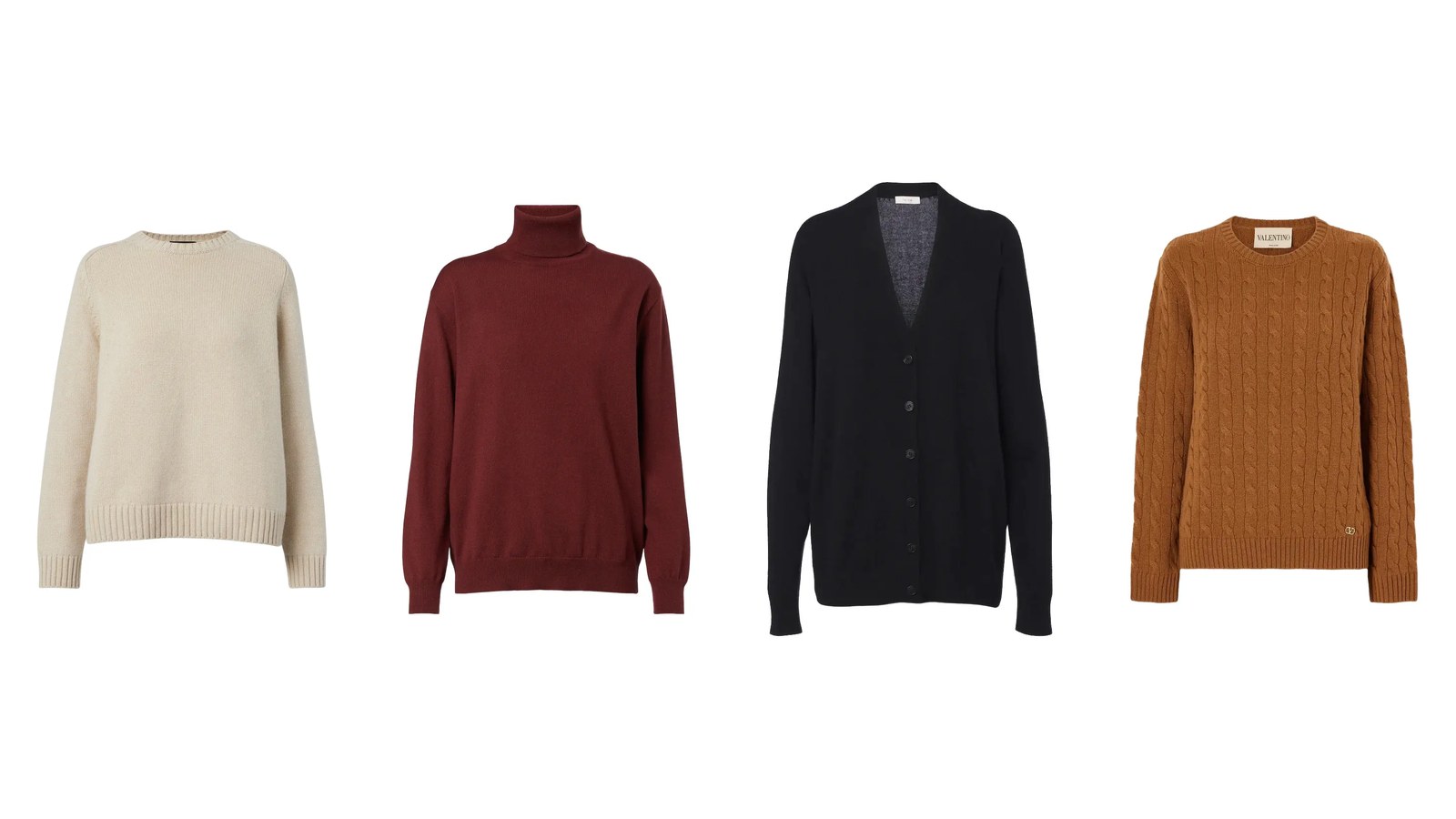
The best cashmere sweaters for women are made from long, fine fibers, spun into two-ply yarn and knitted densely enough to spring back when you pull them, and you can check most of that in a fitting room. Our short list starts with Loro Piana's Parksville crewneck, The Row's Pato, Brunello Cucinelli's rib-trimmed crewneck and Saint Laurent's close-cut crewneck, with cardigans from The Row and Prada, all labeled 100% cashmere.
Below: how to judge quality before you buy, which houses make the best crewnecks, cardigans, turtlenecks, cable knits and half-zips, where pure cashmere still costs under $1,000, and how to care for it so a good sweater lasts for years. If you are buying for the holidays, shop early: Google Trends data show that US searches for "cashmere sweater" typically start climbing between mid-September and mid-October and peak between Thanksgiving week and early December.
How to tell good cashmere: a buyer's checklist
Cashmere is the fine, soft undercoat of the cashmere goat. According to the Cashmere and Camel Hair Manufacturers Institute (CCMI), it is combed out by hand or shorn in spring, when the goats molt, then dehaired to strip out the coarse outer guard hair. A goat yields on average only 0.1 to 0.2 kilograms of that underdown a year, and the significant suppliers are China, Mongolia, Afghanistan and Iran. Scarcity explains the price. It does not guarantee the quality, which comes down to four things: how fine the fiber is, how long it is, how it is spun and how it is knitted.
Fineness: the legal floor
In the US, "cashmere" on a label is a legal claim. Under the Wool Products Labeling Act, the fiber must be the fine, dehaired undercoat of the cashmere goat, average no more than 19 microns across, and contain no more than 3 percent by weight of fibers coarser than 30 microns. The CCMI puts the range of cashmere at about 14 to 19 microns: the lower the number, the finer the fiber and the softer it feels. So the word guarantees a baseline of fineness. It says nothing about the next three points, which is where a $300 sweater and a $2,000 one part ways.
Fiber length, ply and knit density
Longer fibers make a stronger yarn that pills less, and the CCMI names length and fineness as the most important measures of quality: garments made from long, fine fibers pill less, hold their shape better than cheaper cashmere and get better with each wash. You can't read fiber length on a label, but you can test for it (see below). On ply, the CCMI says two-ply yarn is better than single-ply because the twist of the two strands offsets the torque of a single one, and an unbalanced yarn is what makes a knit twist out of line. Extra plies add weight (and with it warmth) and color options, not quality, so a "four-ply" tag is a description rather than a grade. Then there is the knitting. In the CCMI's words, "loosely knit, limp fabric is the hallmark of a cheaply made sweater." Knitters call the fineness of a knit its gauge, the number of needles per inch on the knitting machine: a high-gauge knit is thin and smooth for layering, a low-gauge one is chunky, and either should look even and closed when you hold it up to the light.
Two tests to do in the fitting room
Both come from the CCMI's cashmere purchasing guide. First, rub your palm over the surface a few times. If fibers start rolling into little balls, the CCMI's advice is simply "watch out": loose fibers are already working their way to the surface, which is how pilling starts. Second, stretch the body gently from side to side. Good cashmere snaps back. If it doesn't, the CCMI says that suggests low-quality fiber or knitting done at a very loose tension, which is another way to cut costs.
Read the percentages, not the name
The Federal Trade Commission requires a label that names a specialty fiber such as cashmere to give that fiber's percentage, and its own example of a misleading tag is a sleeve label reading "fine cashmere blend" on a jacket that is 3 percent cashmere (FTC labeling guidance). Since a 2006 amendment to the Wool Act, goat fiber that fails the legal definition has to be labeled wool. Use all of that, because product names flatter. One silk-and-cashmere crewneck we looked at from a major house is 85 percent silk and 15 percent cashmere, and many "wool-cashmere" sweaters are 70 percent wool or more. The CCMI warns that under about 20 percent, cashmere does little to change how a knit performs. Blends are not bad in themselves: silk adds sheen and drape (though a silk blend will not feel as soft as pure cashmere, and should cost less), and cotton makes a cooler, cheaper knit. Just pay cashmere prices for cashmere.
| What to check | What good looks like | Why it matters |
|---|---|---|
| Label | "100% cashmere," or cashmere listed first with a clear percentage | Specialty fiber percentages are required by law; the product name alone proves nothing |
| Rub test | No balls forming after a few passes of the palm | Loose, short fibers migrate to the surface and pill |
| Stretch test | Snaps back to shape | Poor fiber or loose knitting stays stretched |
| Knit | Even, closed stitches against the light | Limp, open knitting is a cost-cutting tell |
| Yarn | Two-ply or more | Keeps the body from twisting; extra plies add weight, not quality |
The best cashmere crewnecks
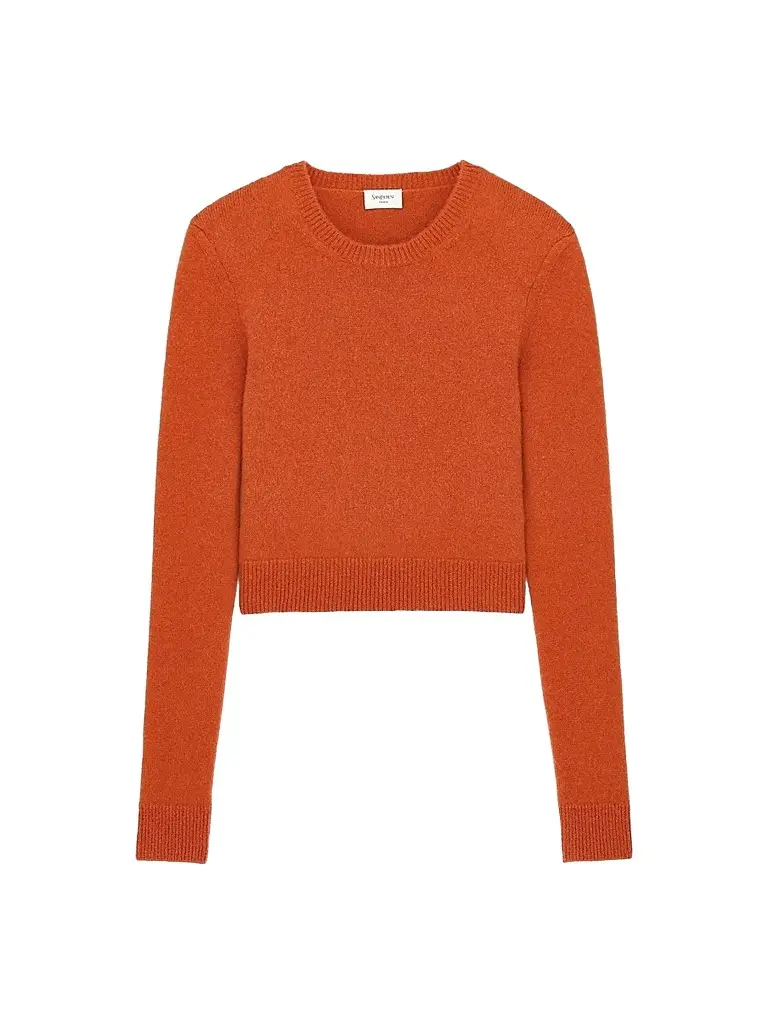
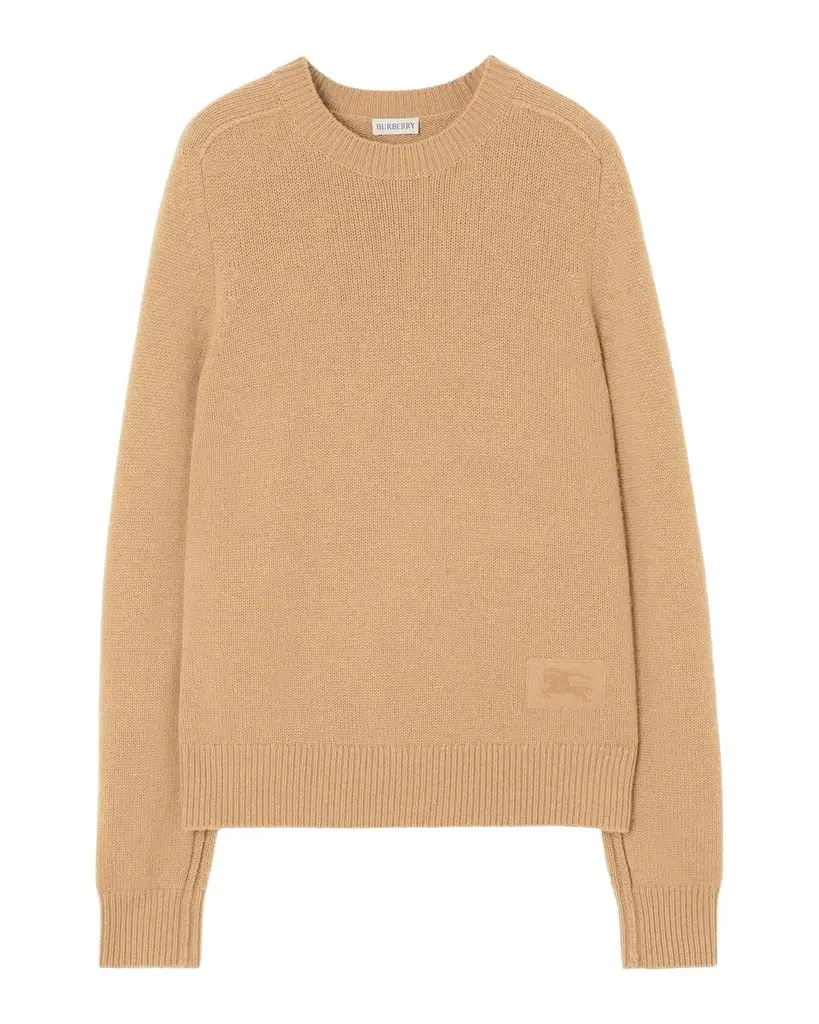
If you buy one cashmere sweater, make it a crewneck in a neutral you already wear with everything: oatmeal, gray, camel, chocolate or black. The choice that matters most is the cut. A fitted crewneck with the shoulder seam on your shoulder bone reads polished and tucks cleanly into trousers; Saint Laurent's is cropped and close, with subtly padded shoulders, so it meets a high waist without bulk. Loro Piana's Parksville and Brunello Cucinelli's crewneck are relaxed, with a dropped shoulder that sits comfortably over a shirt, and The Row's Pato falls between the two. Burberry's Constance, in camel with tonal elbow patches, is 98 percent cashmere with a touch of elastane and polyamide for stretch. If you want a close fit in a shorter length, Khaite's cropped crewnecks are cut to meet a high waist.
Four ways we wear a crewneck this season:
- Crewneck, high-rise wide-leg trousers, loafers: tuck only the front for a defined waist without bulk.
- Crewneck over a bias-cut satin midi skirt: the matte knit against the sheen is what makes it look intentional; add knee-high boots when it's cold.
- Tonal camel: a camel crewneck, cream trousers and a camel coat; vary the textures so the look doesn't flatten.
- Gray crewneck over a white shirt: let the collar and a half-inch of cuff show; it reads sharper than the sweater alone at the office.
The best cashmere crewnecks


The best cashmere cardigans
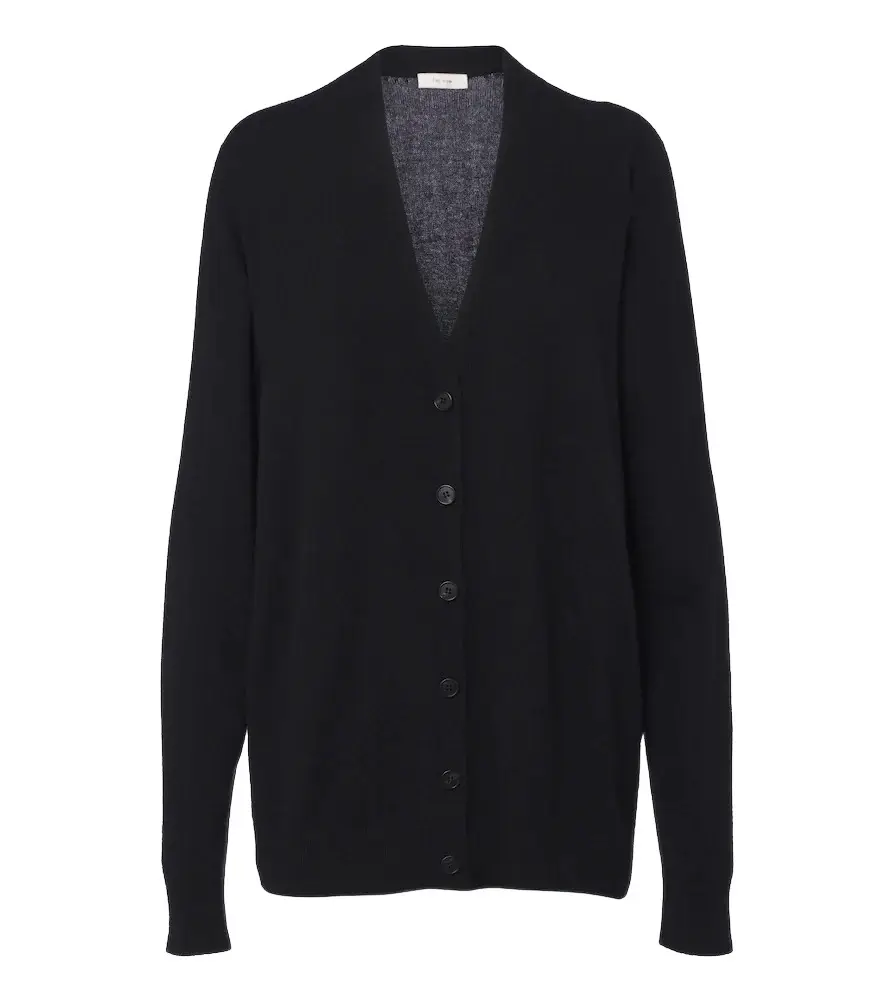
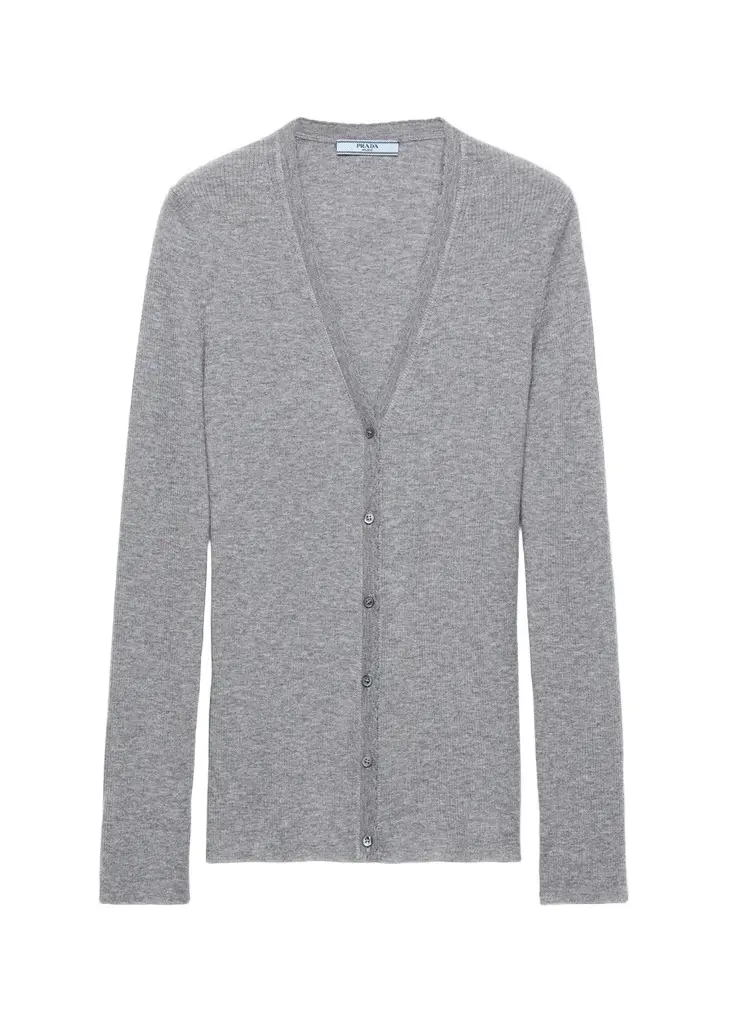
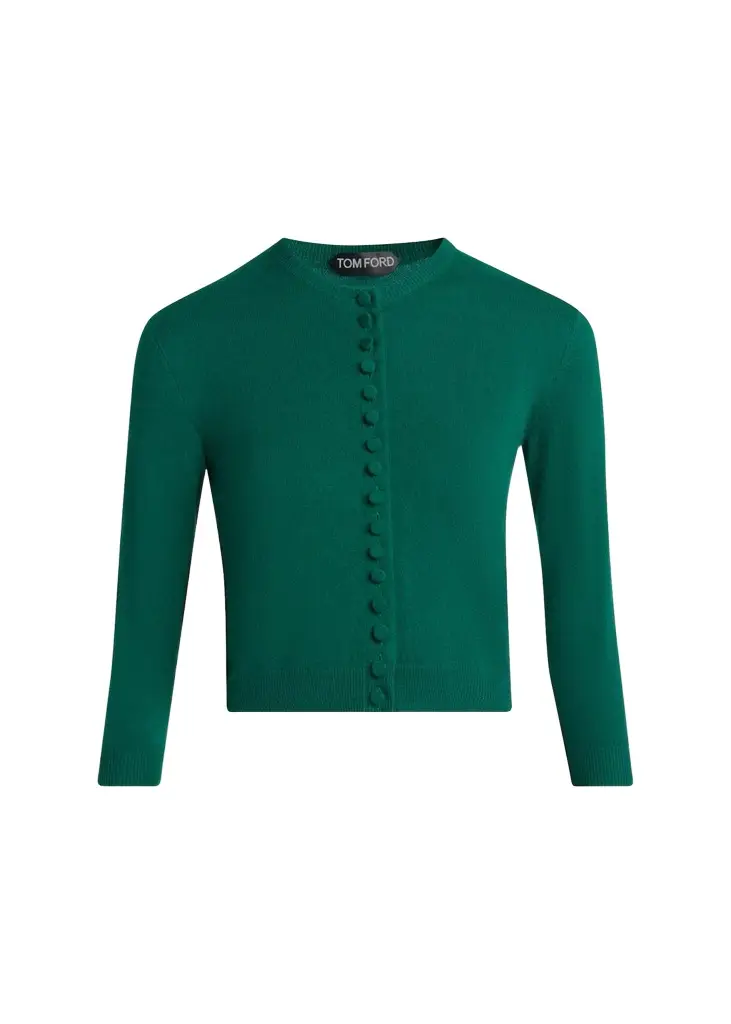
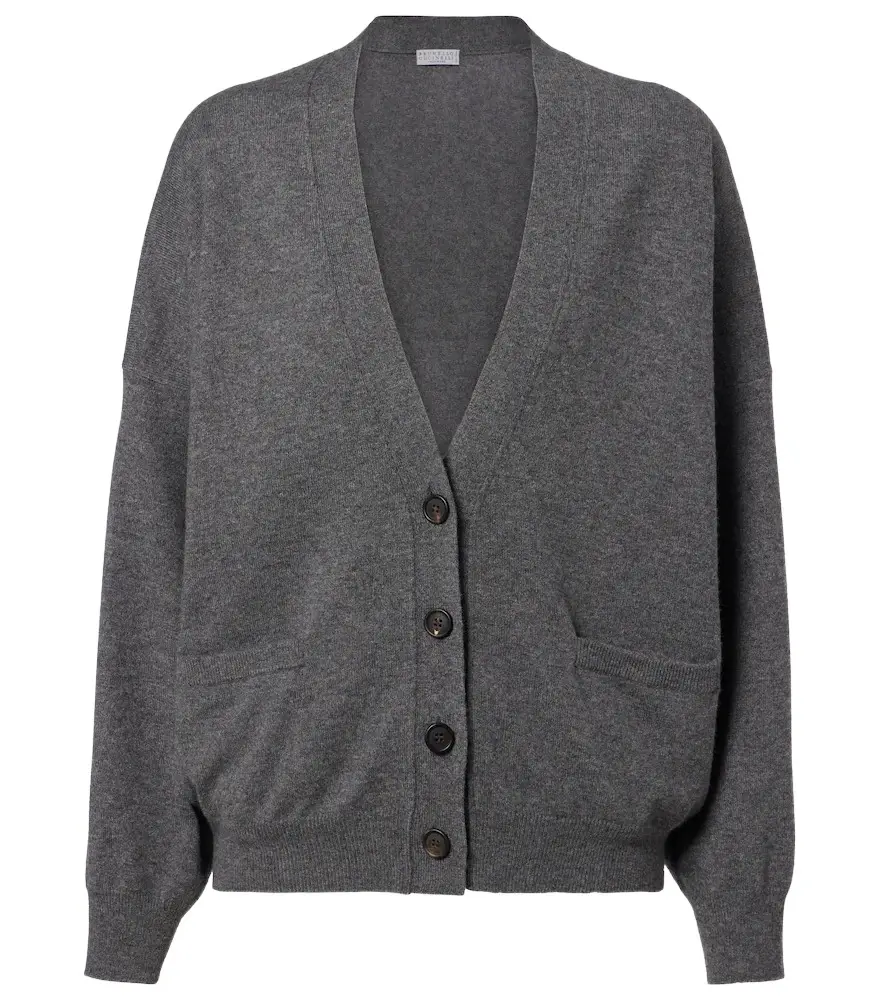
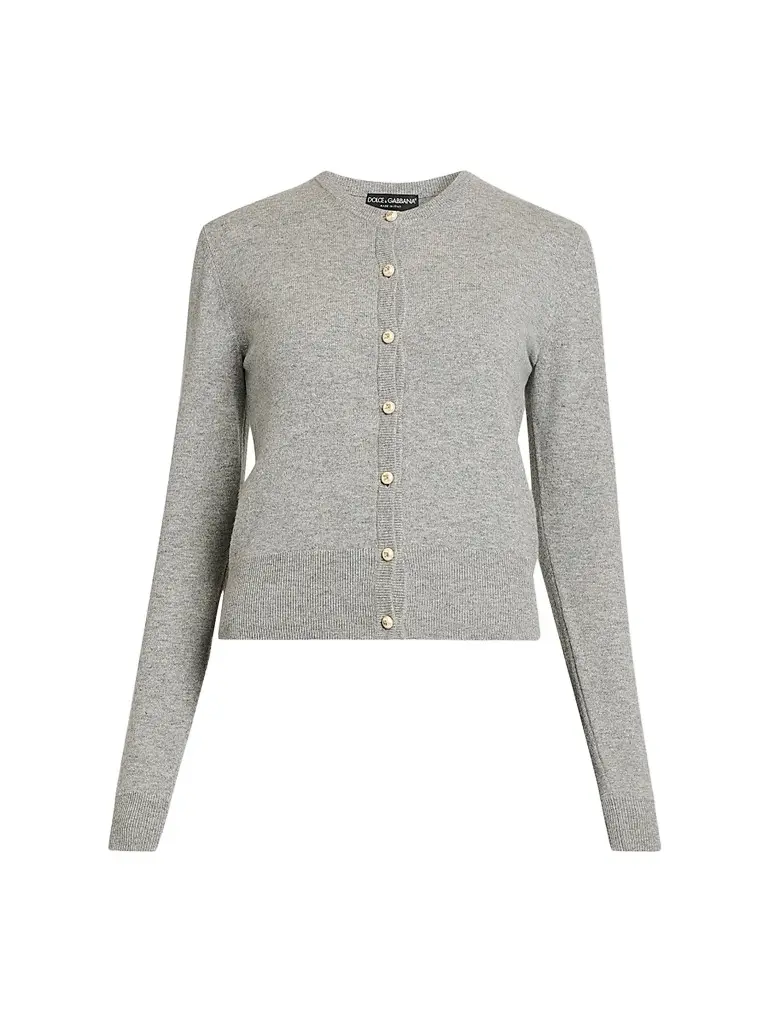
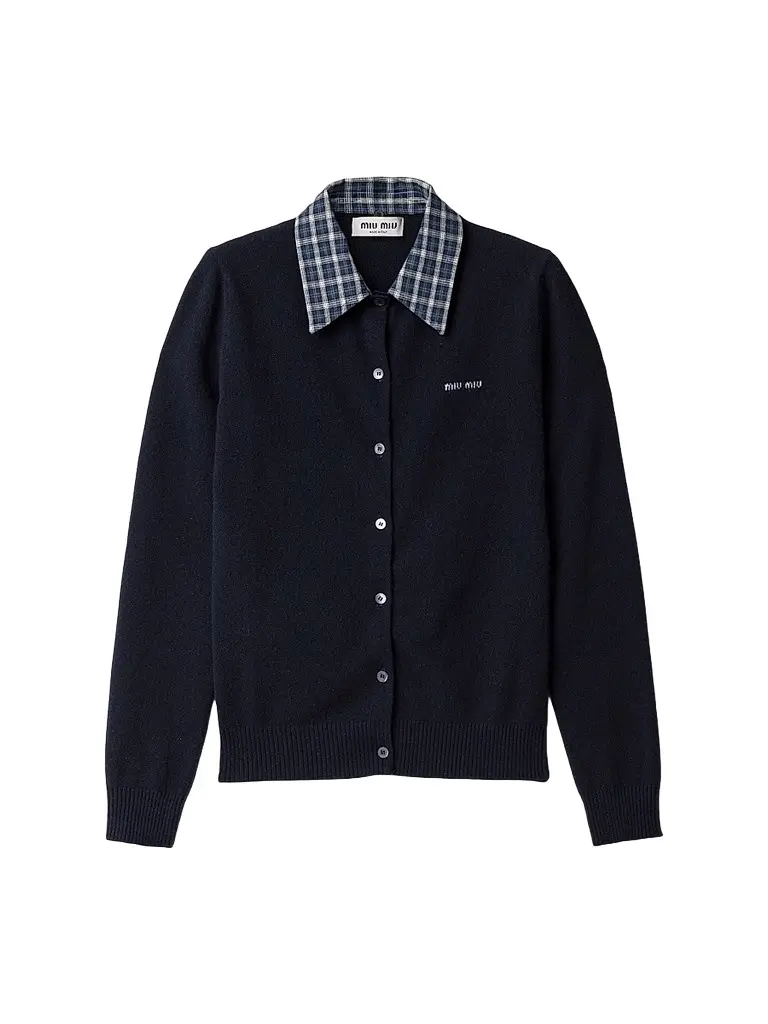
A cashmere cardigan does the job of two garments: buttoned, it's a sweater; open, it's the lightest jacket you own. Choose the neckline by how you'll wear it. A V-neck cardigan in a fine knit (The Row's Pelagia, Prada's slim V-neck) works like tailoring, over a silk shell or a white T-shirt, and lies flat under a coat. A crewneck cardigan, like Dolce & Gabbana's, can be buttoned to the top and worn alone as a knit top, and Miu Miu's navy cardigan comes with a detachable check flannel collar that does the job of a shirt underneath. Cropped cardigans are cut to meet high-rise jeans and skirts at the waist: Tom Ford's shrunken crewneck cardigan, in emerald with three-quarter sleeves and self-covered buttons, is listed as a 14-gauge knit, fine enough to wear under a jacket. An oversized V with patch pockets, like Brunello Cucinelli's, replaces a blazer indoors. Check the button spacing: on a good cardigan the placket lies flat without gaping between buttons when you sit.
- Buttoned cardigan as a top: a crew cardigan buttoned to the neck, tucked into a pleated skirt, with a belt.
- The soft suit: a long V-cardigan over matching or tonal knit trousers, with loafers and a structured bag.
- Cropped cardigan and denim: buttoned, with high-rise straight jeans and ballet flats.
For ten more combinations, see what to wear with cardigans, or ask our AI stylist to build three outfits around a cardigan you already own.
The best cashmere cardigans
The best cashmere turtlenecks
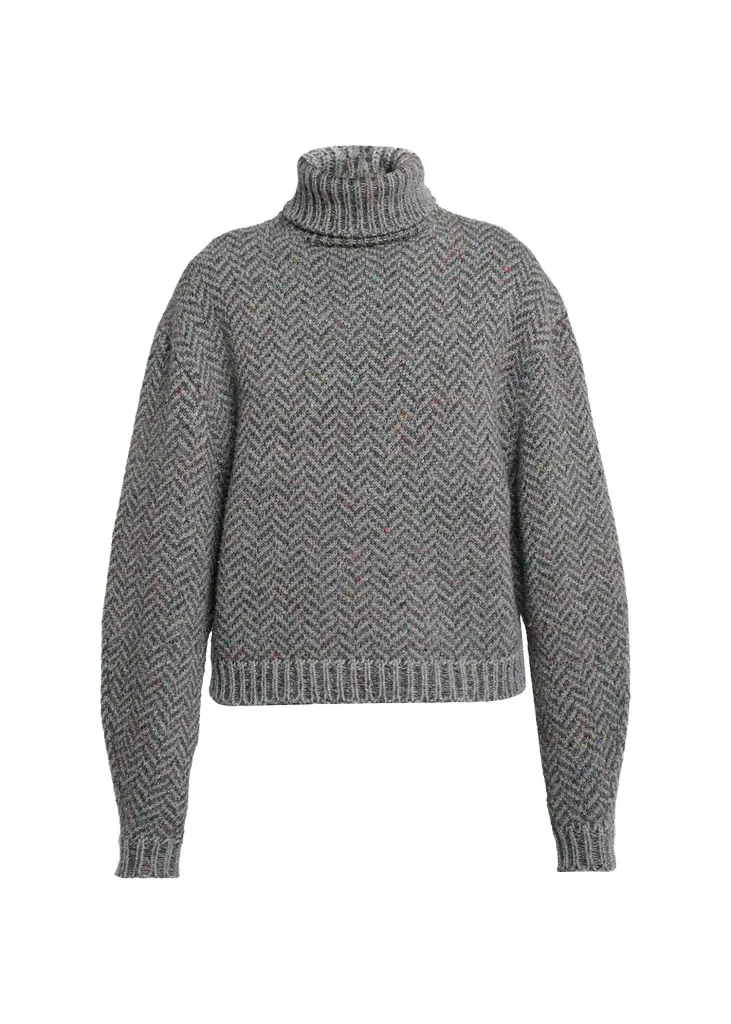
The turtleneck is the most useful layering piece in cold weather, and cashmere is the right fiber for it because it sits against the neck all day. Pick the height and gauge for the job. A slim, fine turtleneck, like Saint Laurent's in taupe, goes under a blazer or coat without adding bulk at the collar. A relaxed rollneck, such as The Row's Plira or Loro Piana's, is a sweater in its own right, and a textured one, like Gabriela Hearst's herringbone Courtney in aran cashmere yarn, carries a whole outfit with just trousers and boots. If your neck is short or you wear your hair down, a mock neck or a turtleneck folded lower keeps the proportions right. Under this season's funnel-neck and cape coats (see our fall and winter coat trends), a fine turtleneck is the neckline least likely to fight the collar.
- Black turtleneck, gray flannel trousers, black loafers: the uniform for dinners and offices alike.
- Burgundy turtleneck with chocolate brown: a warm, dark pairing that reads richer than black; our guide to wearing burgundy has more.
- Ivory or oatmeal rollneck with jeans and a long coat: the weekend version.
The best cashmere turtlenecks



Cable knits, Fair Isle and the oversized sweater
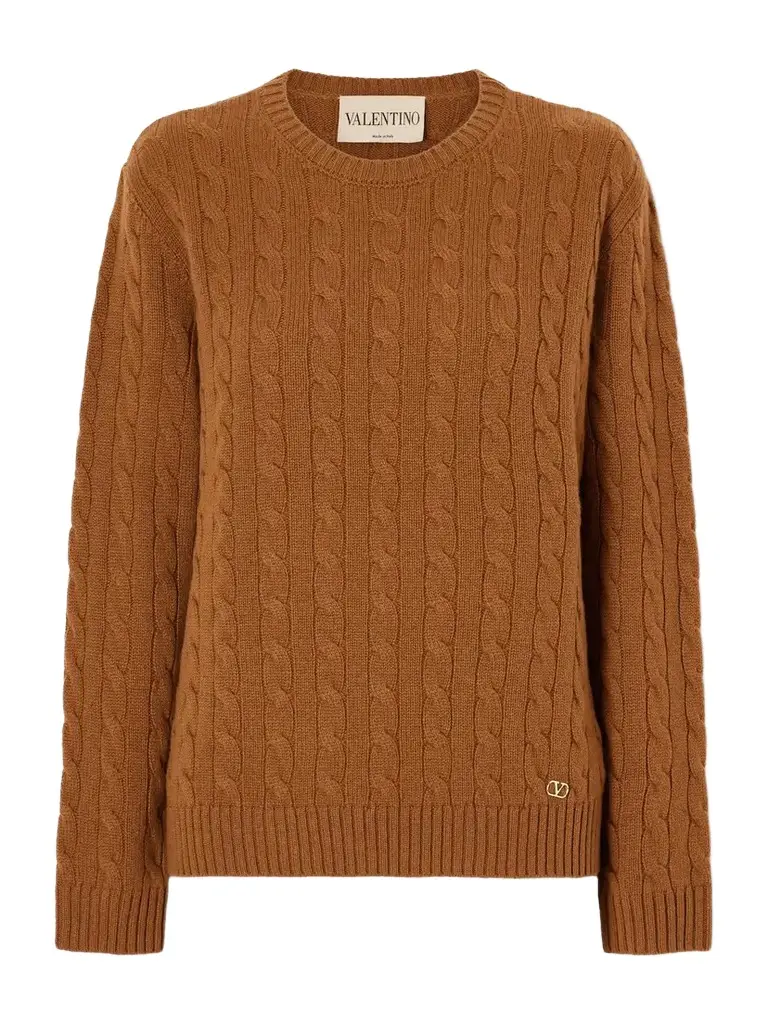
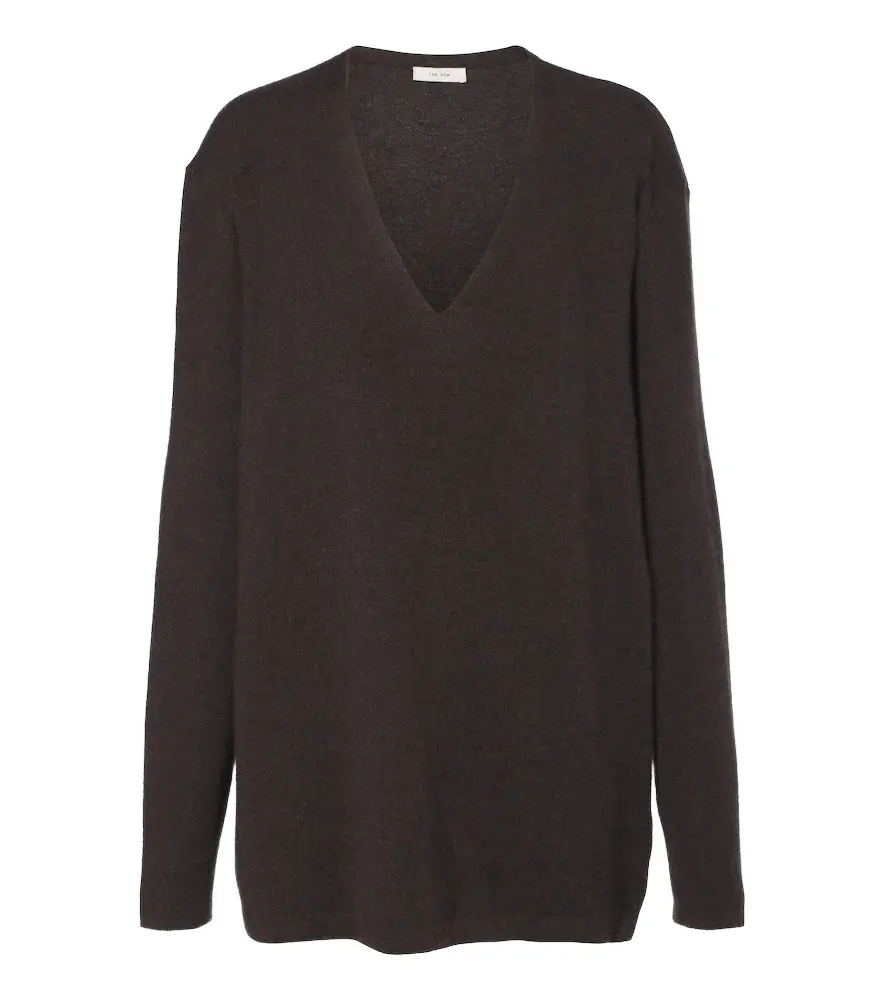
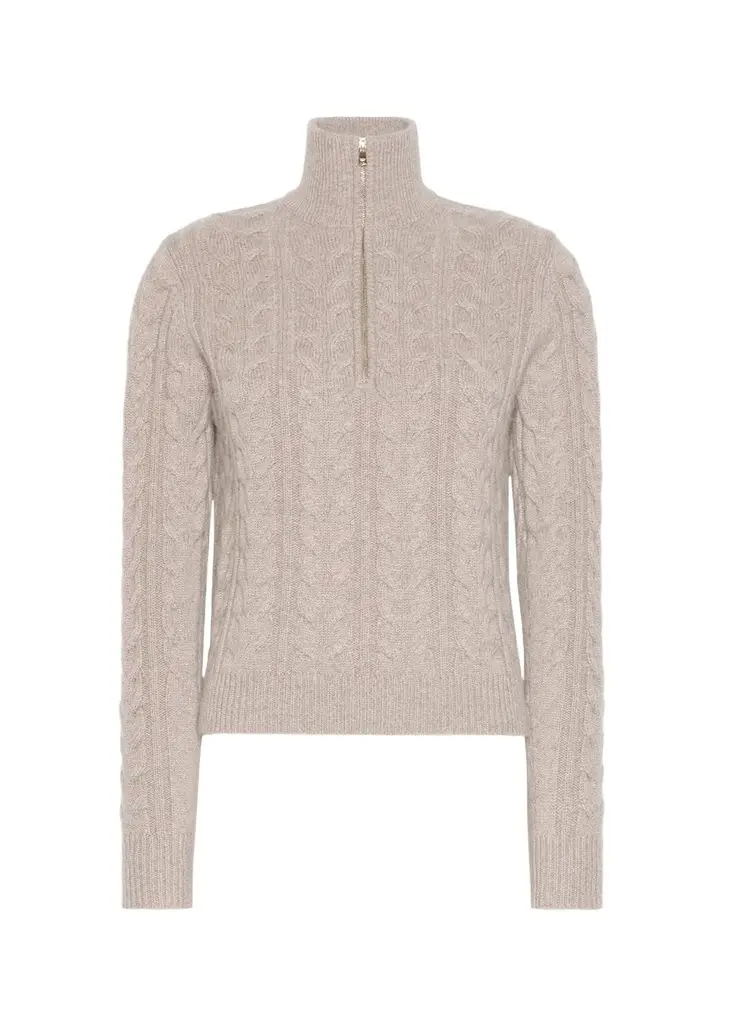
A heavier cashmere knit is for weekends, travel and the coldest days, and the one to buy once you own the basics. The same checks apply, with one addition: a chunky cable should feel springy rather than heavy, because good fiber gives warmth without weight. Loro Piana's Napier is the classic cable crewneck; Max Mara turns the cable into a high-necked half-zip; Valentino Garavani's is a cognac-brown cable crew. Loro Piana's Holiday Noel is Fair Isle all over, jacquard-knitted in bands of red, green and cream below a plain turtleneck, and The Row's Purin is an oversized V-neck in 100% cashmere, best worn with the sleeves pushed up. Balance the volume with something sleek: a leather skirt, straight trousers, a slim knee-high boot.
- Cream cable knit, dark denim, loafers: still the best travel outfit there is.
- Chocolate oversized V-neck with a black leather midi skirt: texture against shine, dark against dark.
- Fair Isle with tailored trousers: for a holiday lunch, it looks festive without looking like a costume.
Cable-knit, Fair Isle and oversized cashmere


Cashmere polos and half-zips
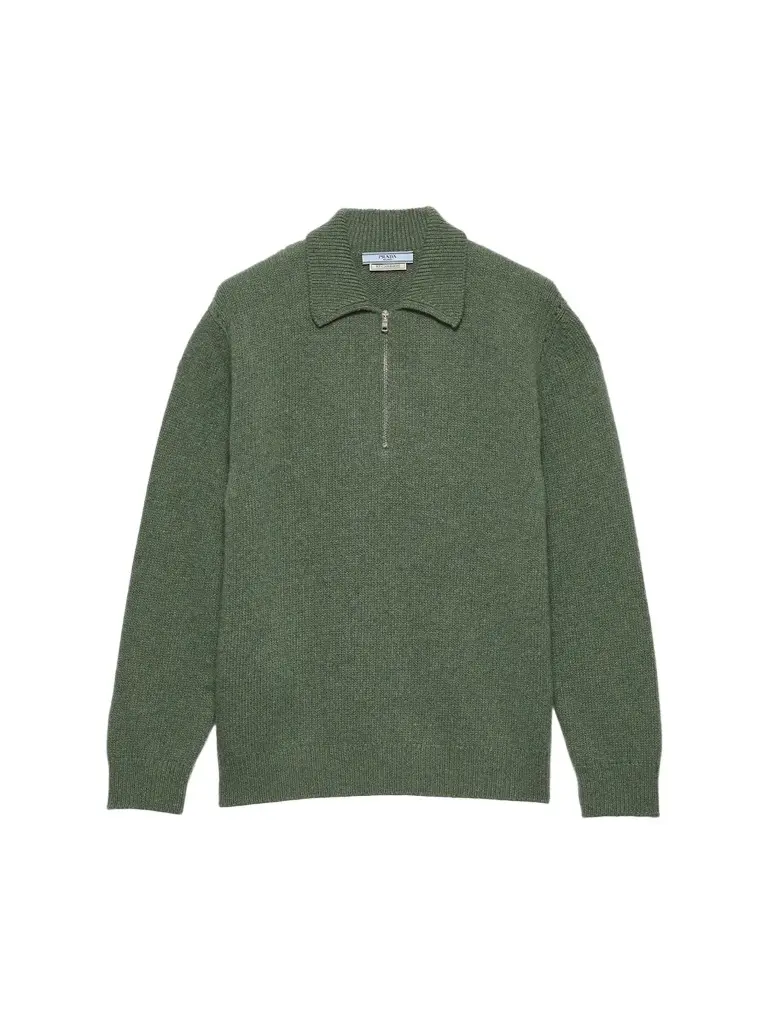
A collared knit sits between a sweater and a shirt: it looks finished with tailoring, and it's softer than a button-down under a coat. In cashmere, the style reads relaxed rather than sporty. Magda Butrym's and Loro Piana's polos are 100% cashmere; Loewe's Double L is a cashmere-silk blend with a little stretch; Proenza Schouler's Vella has an open collar and three-quarter puff sleeves; and Brunello Cucinelli's half-zip is an English-rib turtleneck with a striped hem and cuffs that you can wear zipped up or open over a shirt collar.
- Polo with pleated trousers: collar out, sleeves pushed to the elbow, a slim belt.
- Half-zip over a poplin shirt: zip it halfway so the shirt collar sits inside the knit collar.
- Polo under a camel coat: the knit collar lies over the coat's lapels, softer than a shirt.
Cashmere polos and half-zips


The best cashmere sweaters under $1,000
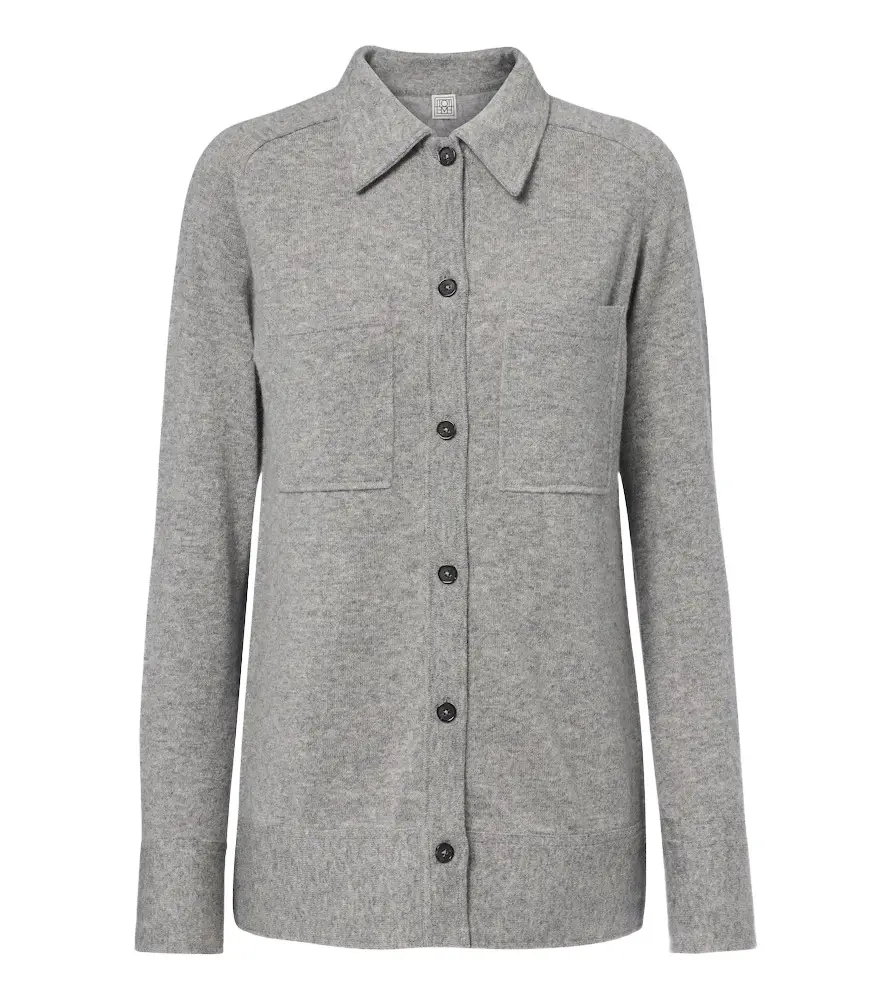
Under $1,000, many luxury houses switch to wool-cashmere blends, so read the label twice. In our edit, two houses still offer pure cashmere at this level: TOTEME, whose shirt-collar cardigan and V-neck below are 100% cashmere, and Gabriela Hearst, whose ribbed Wigman turtleneck is 100% cashmere. TOTEME's fine crewneck and Gabriela Hearst's slim Costa turtleneck are 70 percent cashmere and 30 percent silk: a lighter, smoother knit with the sheen and drape silk adds, though not quite the softness of pure cashmere, which makes them the pair to layer under tailoring. Each costs less than the same house's pure cashmere, which is how the CCMI says a silk blend should be priced.
The best cashmere sweaters under $1,000


How to care for cashmere so it lasts
Good cashmere improves with gentle washing; neglect is what ruins it. The CCMI's garment-care advice comes down to five rules:
- Keep it clean. A dirty sweater attracts moths, so skipping washes doesn't extend its life. Always clean a knit before you store it.
- Wash knits by hand in cold water with a detergent made for wool, cashmere or silk. Never wring or twist; press the water out between towels.
- Dry flat on a fresh, dry towel until completely dry.
- Fold, don't hang. Store knits folded on a shelf, in a sealable bag with moth protection.
- Steam, don't press. For pills, use a cashmere comb, gently.
Then read the sewn-in label, and read it closely. Under the FTC's Care Labeling Rule, clothing sold in the US must carry care instructions, but a label has to give only one safe method, washing or dry cleaning, even when both would work. "Dry clean only" is different: a maker may use it only with evidence that washing will damage the garment, so take it literally (FTC care-label guidance). The CCMI adds that knits may be hand washed and, on some machines with special wool cycles, machine washed; do that only when the label allows it. Two habits of our own: rest a sweater for a day between wears, and deal with friction early. The CCMI says well-made cashmere rarely pills; a little fuzz where a bag strap or a desk rubs can be combed away, but pills that come back wash after wash point to short fibers.
How we chose
We started from what people look for on Vêtir: knitwear has been one of the ten product types searched most often since our search launched in August, and last fall, questions to our AI stylist about knits and cashmere picked up in the first full week of October. We considered only luxury cashmere from top houses, and only pieces that were live on Vêtir, with sizes available, when we published. We favored 100% cashmere, and where we included a blend it's because the blend does something useful (silk for sheen and drape under tailoring, a little stretch in a polo or a crewneck) and the percentages are clearly stated. We read the composition of every piece and looked for a spread of cuts (fitted, relaxed, cropped, oversized), necklines and prices, with a full section under $1,000. Colors lean to the neutrals that will earn their keep, plus a few burgundies, browns and one emerald for fall. Prices and stock move quickly; the modules update when a piece sells out.
Frequently asked questions
How can you tell good cashmere from bad?
Start with the label: in the US, "cashmere" has to meet a legal fineness standard, and a blend must state its cashmere percentage. Then do two quick tests. Rub your palm over the surface a few times: if fibers start to ball up, expect pilling. Stretch the body gently from side to side: good cashmere snaps back. Finally, hold it to the light: the knit should look even and closed, not loose and limp, and the yarn should be at least two-ply.
Is 100% cashmere better than a cashmere blend?
For softness and warmth for its weight, yes. A blend can still be the right buy: cashmere-silk has more sheen and drape for layering under tailoring, and cashmere-cotton is cooler. What to avoid is a blend priced like pure cashmere, or one with less than about 20 percent cashmere, which the CCMI says barely changes how a knit performs. The label must state the percentage, so check it.
What does two-ply cashmere mean, and is four-ply better?
Ply is the number of single strands twisted into the yarn. Two-ply is better than single-ply because the twist balances out, so the sweater doesn't skew. Three- and four-ply yarns make a heavier, warmer knit, but according to the CCMI the extra plies add weight, not quality.
Why is my new cashmere sweater pilling?
Friction raises fuzz, so the first places to look are under the arms and wherever a bag strap sits. Comb it off gently. The CCMI says well-made cashmere rarely pills, so pills that return after several washes point to short fibers, which is exactly what the palm-rub test in the store is meant to catch.
How much should I spend on a cashmere sweater?
Spend what gets you the right fiber, ply and knitting, then the cut. Among the houses in this guide, 100% cashmere starts under $1,000 (TOTEME, Gabriela Hearst) and rises past $2,000 at Loro Piana, Brunello Cucinelli and The Row. A higher price should buy you better fiber, denser knitting and a better cut, so judge it with the two fitting-room tests rather than the logo.
Can you wash cashmere at home?
Usually, yes: the CCMI recommends hand-washing knits in cold water with a wool or cashmere detergent, pressing the water out between towels and drying them flat. Check the care label first. Under FTC rules a label needs to name only one safe cleaning method, but "dry clean only" means the maker has evidence that washing will damage the piece.
Keep reading
- The best cashmere sweaters for men
- What to wear with cardigans: ten looks
- This season's coat trends, and what to wear under them
- How to wear burgundy this season
- The Edit: quiet luxury
Shop more: all sweaters, cardigans and turtlenecks, plus cashmere from Max Mara.