The Best Trench Coats for Women: Fabrics, Fits and Lengths to Know Before You Buy
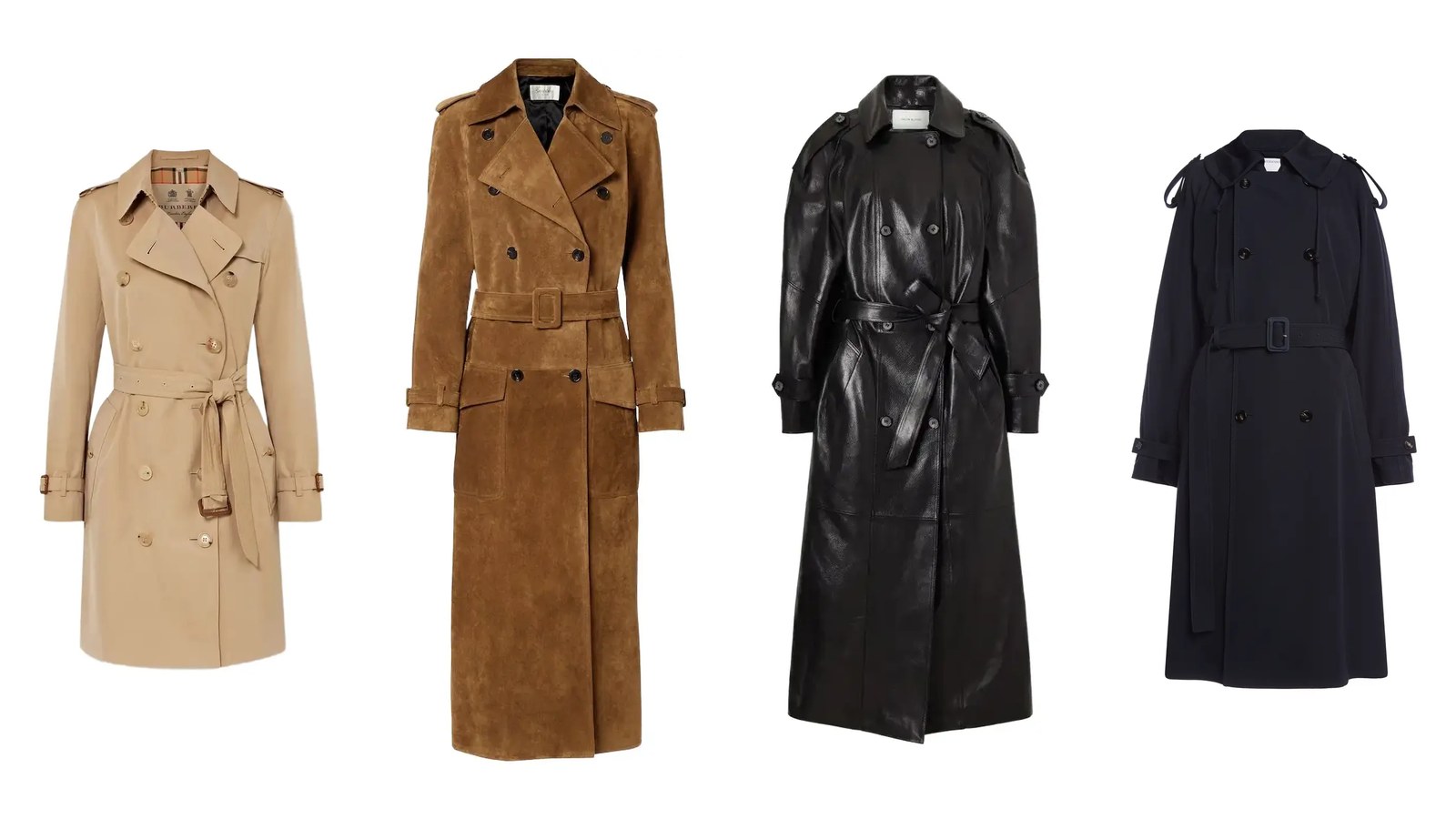
The best trench coats for women are double-breasted, belted and cut from tightly woven cotton gabardine that sheds wind and light rain, with a collar that closes at the throat and a hem at or just below the knee. For your first designer trench coat, buy that classic in honey beige, black or navy from a house that makes it properly, then add a second in leather, suede, wool or silk. This buying guide covers the details that separate a real trench from a trench-shaped coat, how to read the fabric label, how Burberry's trench fits differ, which length suits your height, and the best classic, short, leather and wool trenches from the top houses. For outfit ideas, our guide to how to wear a trench coat covers styling.
The best trench coats for women, by type
| Type | Fabric | Best for | Buy it if |
|---|---|---|---|
| Classic trench | Cotton gabardine | Rain, wind and three seasons of wear | You want one coat that works with everything |
| Short or cropped trench | Cotton gabardine or twill | Wide trousers, jeans and driving | You are petite, or you already own the long version |
| Lightweight trench | Tropical gabardine, cotton poplin, cotton and linen | Warm, showery days | Your spring and early summer are mild and damp |
| Leather or suede trench | Lambskin, calfskin, suede | Dry, cool days and evening | You want a second trench that looks new |
| Wool, cashmere or silk trench | Wool gabardine, cashmere, silk | Late fall and polished dressing | You want the trench shape in colder or drier weather |
What makes a classic trench coat: every detail and why it is there
The trench's details were working equipment first. Thomas Burberry, who founded his business in 1856, invented gabardine in 1879: a breathable, weatherproofed twill made by coating the individual strands of cotton or wool rather than the whole fabric, according to Smithsonian magazine's history of the trench coat. In 1912 Burberry patented the Tielocken, a knee-length weatherproof coat with a belt and broad lapels. During the First World War, British officers, who outfitted themselves, adopted the trench coat; ordinary soldiers did not wear it. The term first appeared in print in 1916, in a tailoring trade journal. Burberry and Aquascutum both claim the original, and the same history concludes that nobody really knows who was first.
What matters when you buy is which details still do a job. The table sets out what each one was for and what to check today.
| Detail | What it was for | What to check now |
|---|---|---|
| Double-breasted front and belt | Tailored to the waist like an officer's uniform, flaring into a skirt that stopped short of the mud | The wrap should cover your chest without pulling; the belt should be long enough to knot |
| Collar that buttons at the neck | Closing out rain and wind; gas masks could be tucked into it | Look for a throat latch, the small strap that fastens across the collar when you turn it up; it is what lets the collar close properly against wind |
| Storm flap, or gun flap | A buttoned flap at the front of the shoulder. Accounts differ: Smithsonian magazine says it allowed ventilation, Sotheby's history of the Burberry trench says it protected against runoff, and it is often said to have cushioned the shoulder for a rifle | It should button down flat and lie smooth when the coat is open |
| Back storm shield | A short cape across the upper back, borrowed from military waterproof capes, that lets rain run off | It should sit flat across the shoulder blades rather than flare |
| Epaulettes | Shoulder straps that carried rank insignia | Decorative now, and they add width, so they flatter narrow shoulders |
| D-rings on the belt | Hooks for binoculars, map cases and weapons | Decorative; check that the belt loops are stitched securely |
| Cuff straps | Tightening the sleeve against the weather | They should buckle closed around your wrist; that is the difference in a downpour |
| Deep pockets | Maps and necessities | A phone should sit flat inside without dragging the hem |
Burberry's Heritage trenches still carry the working set. Its own listing for the long Kensington Heritage trench names a hook-and-eye collar closure, a throat latch, epaulettes, a storm shield at the back, a gun flap at the shoulder and a leather-buckled belt and cuffs. On any other coat, look for the same list in the product details: the more of it a coat keeps, the closer it is to the original.
The Burberry trench, fit by fit
If you are buying a Burberry trench, know the fits before you know the size. Burberry's trench coat collection cuts its classics in gabardine, the shower-resistant fabric Thomas Burberry invented, with epaulettes and D-ring belts, in long, mid-length and short versions and in honey, black and coal blue. On its trench craft page, the house says its Heritage trench coats are crafted in Yorkshire and hand-finished by specialist tailors, and that each shape is named after an area of London. The Yorkshire claim covers the Heritage coats: Burberry's own listings for the tropical gabardine Kensington and Mayfair, for example, say made in Italy, so read the label if origin matters to you.
- Kensington: the classic fit, with set-in sleeves and structured shoulders, in three lengths. It is the shape most people picture, and the easiest over tailoring.
- Chelsea: the slim fit, cut close to the body, also in three lengths. Choose it if you are narrow-shouldered or wear the coat mostly over dresses and fine knits.
- Waterloo: a classic fit with raglan sleeves and soft, curved shoulders, cut long and inspired by the original Burberry trench. Raglan sleeves leave more room for a sweater underneath.
- Fitzrovia: a relaxed A-line with fuller sleeves and a wider skirt, for a softer, more fashion-forward line.
- Mayfair: a cropped trench jacket with relaxed proportions.
The Camden, sold alongside them, is a car coat rather than a trench: single-breasted, with raglan sleeves and concealed buttons, and without the flaps and belt. A simple way to choose between set-in and raglan sleeves: set-in sleeves give a sharper shoulder that looks right over a blazer; raglan sleeves slope with your shoulder, soften a broad or square frame and move more easily. Try both over the thickest layer you plan to wear. Shop every house's classic in our trench coat shop.
The best classic trench coats
 BurberryKensington Organic Cotton-gabardine Trench Coat$2,850
 BurberryChelsea Belted Double-Breasted Trench Coat$2,850
 BurberryWaterloo cotton trench coat$2,850
 Max MaraAlessio cotton-blend gabardine trench coat$1,990
 TOTEMESignature cotton-blend trench coat$1,290
 The RowDester cotton and cashmere trench coat$3,600
 Bottega VenetaIntrecciato-Collar Water-Repellent Trench Coat$5,200
 Victoria BeckhamCotton trench coat$1,585
Gabardine, drill, twill or silk: how to read a trench coat's label
Every classic trench looks similar on a hanger. The composition line on the label tells you how it will behave in weather, so read it before the price.
| Fabric | What it is | In the rain | Wear it |
|---|---|---|---|
| Cotton gabardine | A dense, tightly woven twill with a fine diagonal rib | Sheds showers and wind while it breathes | Early fall to late spring |
| Tropical gabardine | A lighter gabardine; Burberry calls it its lightest signature fabric, shower-resistant and breathable | Showers | Spring and early summer |
| Cotton drill or twill | A sturdy cotton twill, the cloth of khaki uniforms | Depends on the finish; look for "water-repellent" on the listing | Dry, mild days |
| Cotton blends | Cotton mixed with polyester or other fibers | Often water-repellent; check the listing | Easy care: some can even be washed at home, so read the care label |
| Wool gabardine and wool twill | The same tight weave in wool | Sheds light rain and keeps you warmer | Late fall and cold spring days |
| Silk and viscose | Fluid fabrics that drape rather than hold a shape | No real protection | Dry days and evening |
| Leather and suede | Smooth leather or napped suede | Leather copes with a shower; suede marks when wet | Dry, cool days |
Water-repellent is not waterproof. A gabardine trench is built for showers and wind; for a real downpour you need a technical raincoat. The lining matters too: a lined trench layers over knitwear more easily and adds a little warmth, while an unlined one is lighter for spring. For trenches in tropical gabardine, cotton poplin and cotton and linen, see our guide to the best spring jackets.
What length trench coat suits your height?
The original trench ended around the knee, short enough to clear the mud and long enough to cover. That is still the safest length. Burberry cuts its Kensington and Chelsea in three lengths, and its own listings give a sense of scale: in a UK size 10, the women's Kensington measures 87 cm (34.3 in) short, 97 cm (38.2 in) mid-length and 107 cm (42.1 in) long, and the long Waterloo 117 cm (46.1 in). Use the table as a starting point, then check the measurement.
| Your height | Try | Why |
|---|---|---|
| Under 5'4" | A short trench at mid-thigh, or a knee-length coat with slim shoulders | A long coat swamps a petite frame; a hem at or above the knee keeps the leg line |
| 5'4" to 5'7" | Knee-length, or mid-length just below the knee | Covers most skirts and dresses and works with trousers |
| 5'8" and over | Mid-length to long, just above the ankle | A long coat covers a midi skirt and balances height |
Then measure. Stand in the shoes you wear most and have someone measure from the top of your shoulder, where a seam would sit, straight down to where you want the hem. Many listings give a garment length, as Burberry's do: compare the two before you order. Hold that length against your longest skirt too; the hem should cover it or end a hand's width above it. A belted coat blouses slightly above the belt, so allow a little extra length if you always wear it cinched.
Short and cropped trench coats
A short trench keeps every classic detail and loses the length, which makes it the easier choice for petite frames, for wide trousers and for anyone who drives most days. It should end between the hip and mid-thigh; Burberry's cropped fit is the Mayfair. Wear it with high-rise straight trousers, wide-leg jeans or a slip dress that falls below the hem, and keep the belt tied so the coat reads as deliberate rather than short. If you own a long trench already, a cropped one in a second color, such as black, burgundy or khaki, is the obvious next buy.
Short and cropped trench coats
 Max MaraCropped cotton-blend twill trench coat$1,865
 BurberryMayfair Double-Breasted Short Trench Coat$2,950
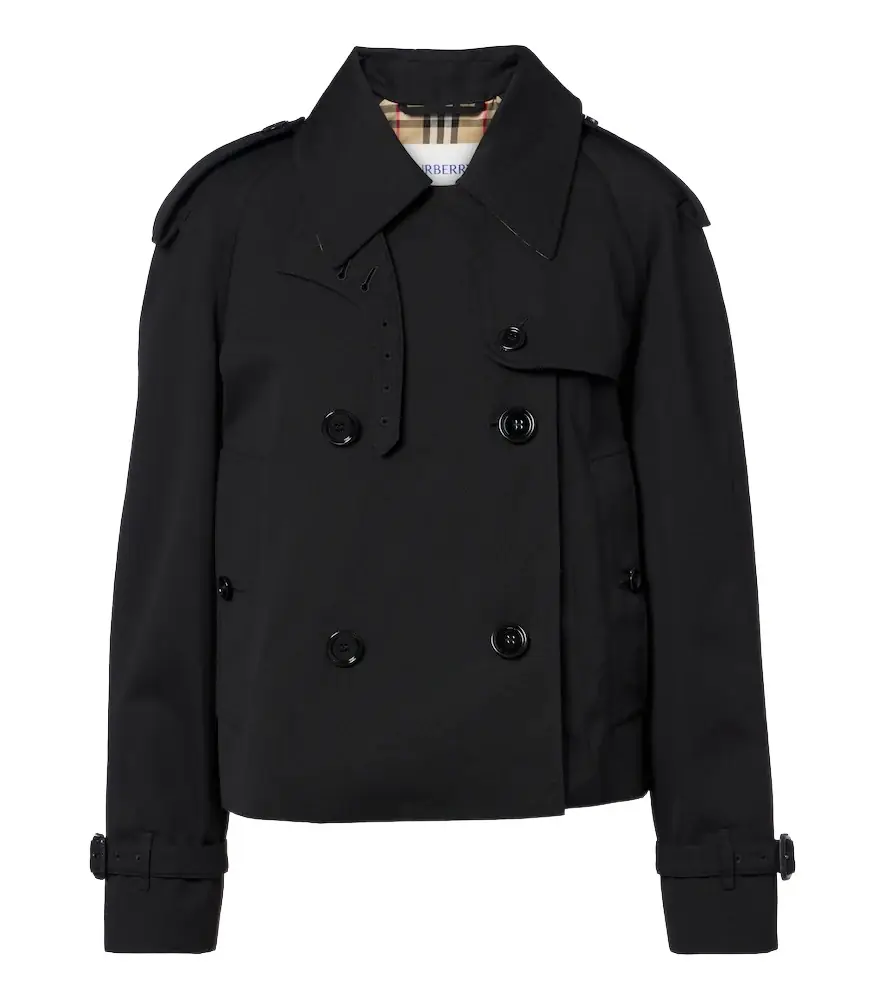 BurberryDouble-breasted cotton gabardine jacket$2,050
 Max MaraThe Cube cotton-blend twill jacket$1,865
 Alexander McQueenWomen's Belted Crop Trench Jacket$3,300
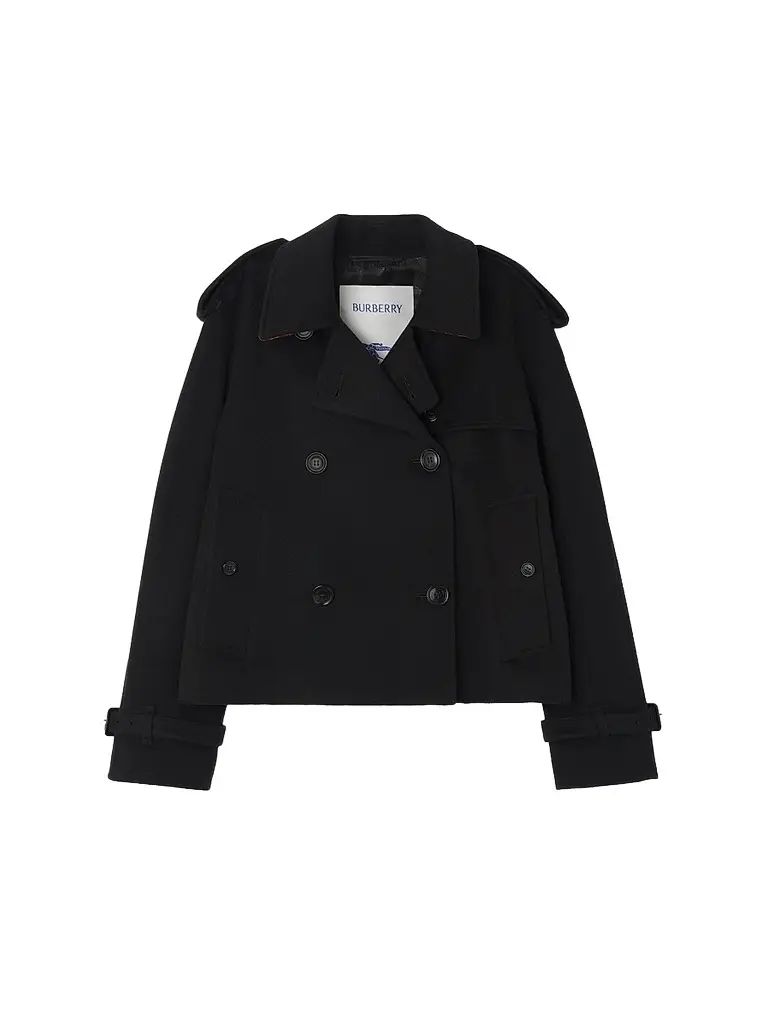 BurberryWomen's Mayfair Cashmere Crop Trench Jacket$3,950
Leather and suede trench coats
A leather or suede trench is the second trench to buy, not the first, because it cannot handle what gabardine can. Smooth leather copes with a shower and blocks wind; suede marks when it gets wet, and Leather UK notes that suede and nubuck need a specialist cleaner when there is a real problem. What leather gives you is weight and drape: a leather trench swings rather than stands, and it turns a plain sweater and trousers into an outfit.
Check the weight on your shoulders before you buy, since a long leather coat is heavy. A hip-length or knee-length cut is easier to wear every day, and it can go over a midi skirt with knee-high boots. Cognac and tobacco suede are the warmest-looking colors; black and dark brown leather are the easiest to wear. Our guide to the best leather jackets explains how to judge the hide, and Saint Laurent, The Row and Magda Butrym are the houses to look at first.
Leather and suede trench coats
 Saint LaurentSuede trench coat$8,900
 Magda ButrymDouble-breasted Full-grain Leather Trench Coat$6,140
 Brunello CucinelliWomen's Vintage Nappa Leather Cropped Trench with Monili - Brown$8,000
 BalenciagaSuede trench coat$8,190
 The RowAmaya belted leather car coat$10,500
 Magda ButrymBelted Leather Trench Coat$5,785
Wool, cashmere and silk trench coats
A wool trench carries the shape into colder weather, with the same double-breasted front, belt and cuff straps in a cloth that keeps you warmer. Wool gabardine keeps the tight weave and fine diagonal rib of the cotton classic; a brushed cashmere or wool twill trench is softer and dressier. Size it for a sweater underneath. Silk trenches, from houses such as The Row and Gabriela Hearst, are the opposite: fluid, light and best kept for dry days and evening, where they replace a blazer over a dress.
Navy and black wool trenches are the most useful in the city, over tailoring in winter and over a dress in the evening. For deeper cold, see our guide to the best cashmere coats or browse our designer coats.
Wool, cashmere and silk trench coats
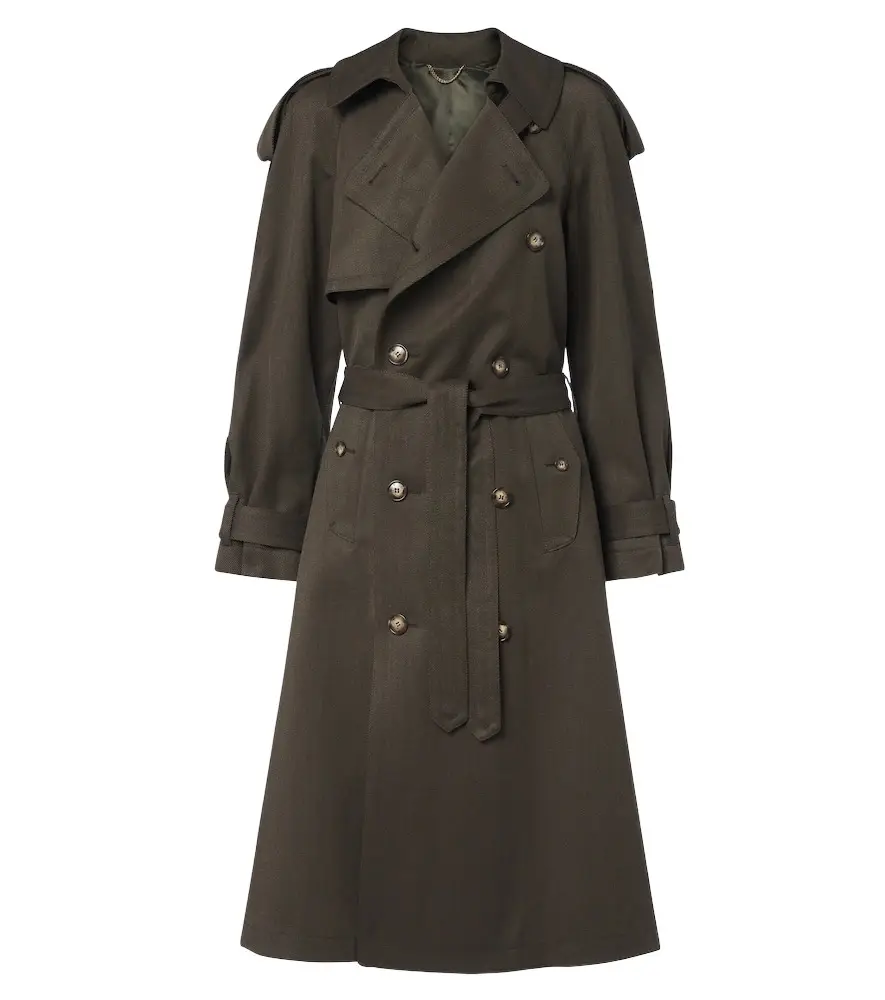 Victoria BeckhamEsmee virgin wool trench coat$2,450
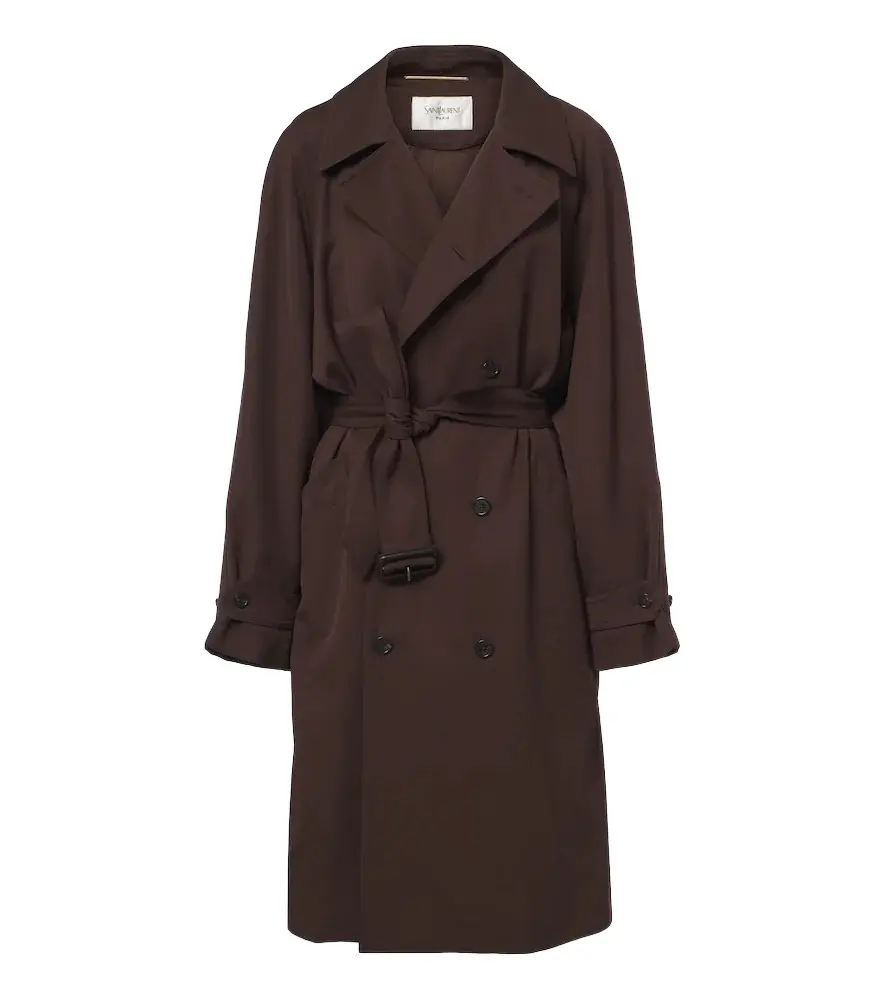 Saint LaurentDouble-breasted wool trench coat$4,800
 The RowAmapola silk trench coat$3,950
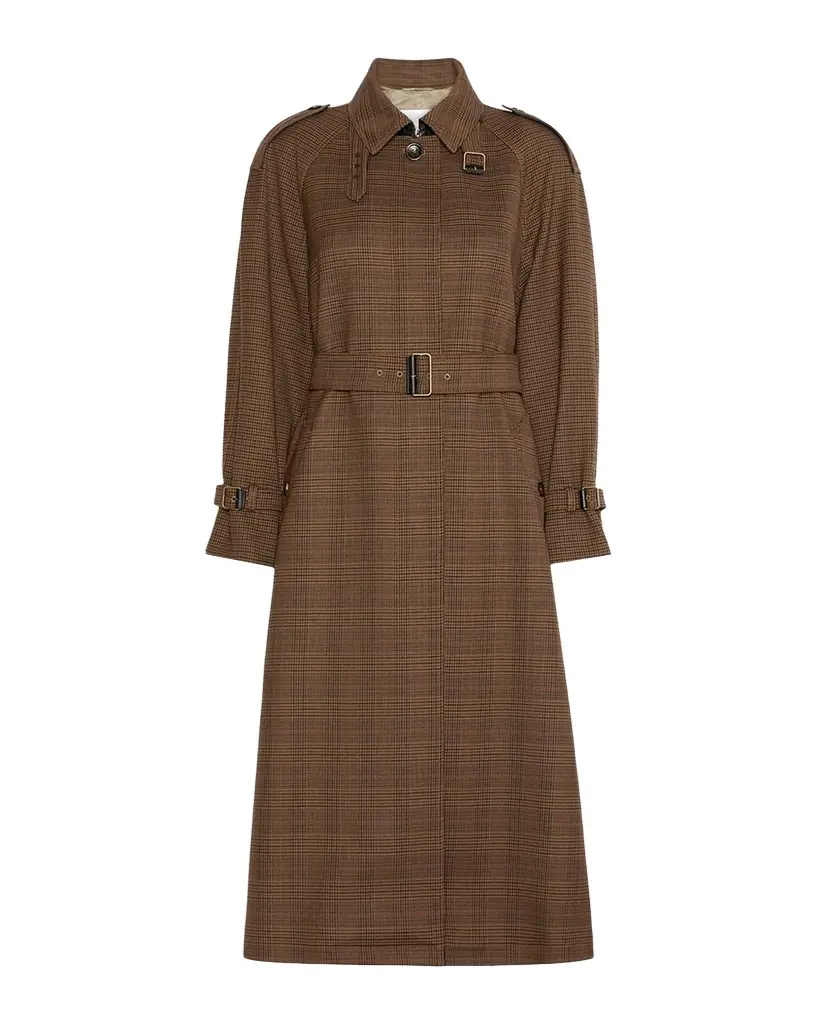 Max MaraPrince of Whales Wool Belted Long Trench$4,090
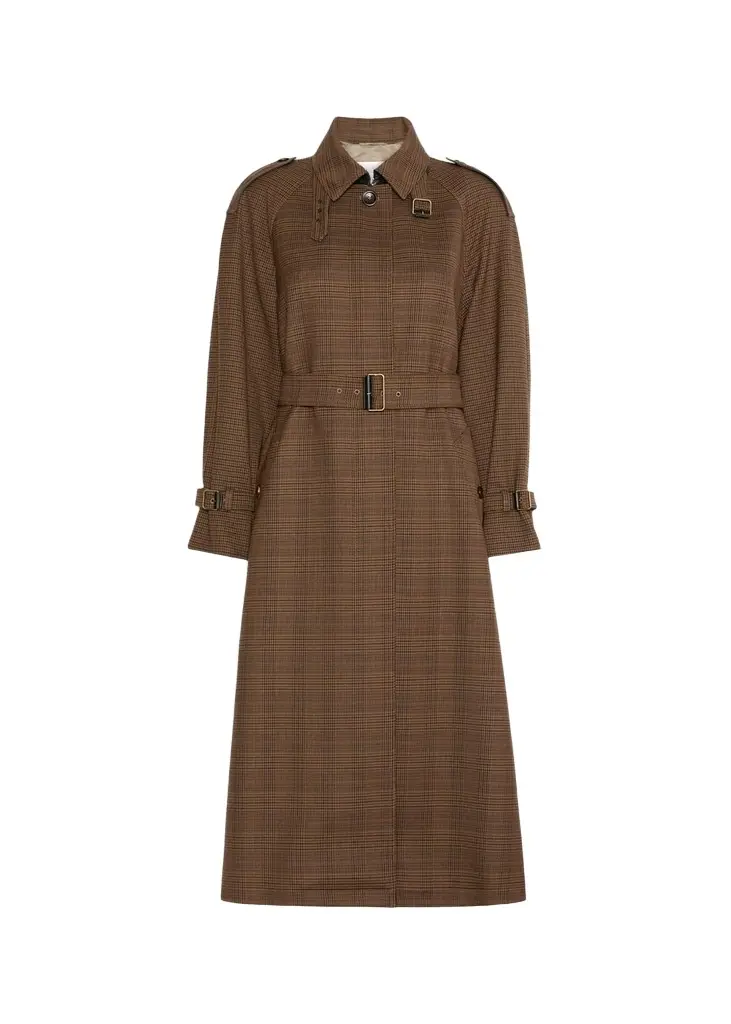 Max MaraPrince of Whales Wool Belted Long Trench$4,090
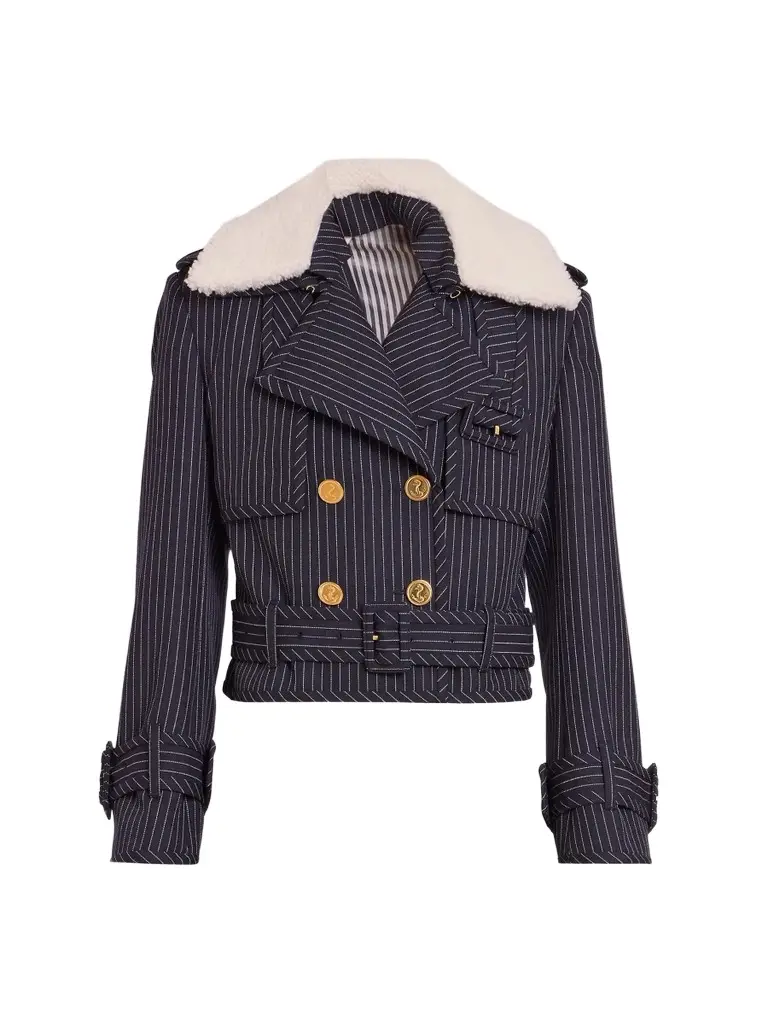 Thom BrowneWomen's Striped Virgin Wool-Shearling Trench Jacket$5,950
How to belt and wear a trench coat
A trench's working details are also its styling tools, and they are worth using before you buy anything to go with it. The same rules apply to any coat in our belted coat shop.
- Find your belt height. On a long coat the belt belongs at your natural waist; on a cropped trench, slightly higher, so the hem flares rather than bunches.
- Use the throat latch on a wet or windy day: turn the collar up and fasten it closed.
- Tighten the cuff straps in rain; on a dry day, push the sleeves up to show a watch or a bracelet.
- Button the gun flap down when the coat is closed; it gives the chest a neater line.
For complete outfits for work, weekends and evening, see our guide to wearing a trench coat, or ask our AI stylist to build a look around the trench you choose. Our report on coat trends for fall and winter covers the trench's move into suede, leather and oxblood.
How we chose
We started with the classic: cotton gabardine trenches with a double-breasted front, a belt and the working details, from houses including Burberry, Max Mara, Toteme, Bottega Veneta and Victoria Beckham. Then we added short, leather and suede, and wool and silk versions. Every coat comes from a house on our luxury list, was live on Vêtir when we checked it, and was compared against its product photographs and composition line. We favored styles in several sizes and spread our picks across price points. If a pick sells out, each edit refills with a similar trench. There are no pre-owned pieces here; when a trench does leave your rotation, you can sell it through Vêtir's pre-owned resale.
Frequently asked questions
Which brand makes the best trench coat?
Burberry is the benchmark for the classic, since Thomas Burberry invented gabardine and the house still makes its Heritage trenches in Yorkshire. Max Mara and Toteme make excellent classics too, and Saint Laurent, The Row and Magda Butrym are our first stops for leather and suede.
Is a Burberry trench coat worth it?
If you want the original details, yes. The Heritage Kensington, for example, is listed with a throat latch, a gun flap, a back storm shield and a buckled belt and cuffs, and the Heritage coats are made in Yorkshire and hand-finished. Choose the fit (Kensington, Chelsea or Waterloo) and the length before anything else.
What is the difference between a trench coat and a raincoat?
A trench is a specific tailored design: double-breasted, belted, with a storm flap, epaulettes and cuff straps, usually in water-repellent gabardine. A raincoat is any coat made for rain, and a technical raincoat will keep out heavier rain than a trench can.
Should you size up in a trench coat?
Not usually. Buy your normal size and try it over the thickest layer you plan to wear under it. If the back strains when you cross your arms, try a raglan-sleeved or relaxed fit before going up a size, since sizing up usually leaves the shoulders too wide.
What color trench coat is the most versatile?
Honey beige, the classic trench color, works with navy, black, gray, white and denim. Black is the sleekest in the city, and navy is the easiest over tailoring.
Can you wear a trench coat in winter?
A cotton trench works into early winter with a sweater underneath; a lined or wool trench goes further. For freezing weather, switch to a wool or cashmere coat.