The Best Boots for Fall: Ankle, Chelsea, Western and Lug-Sole Pairs Worth Buying
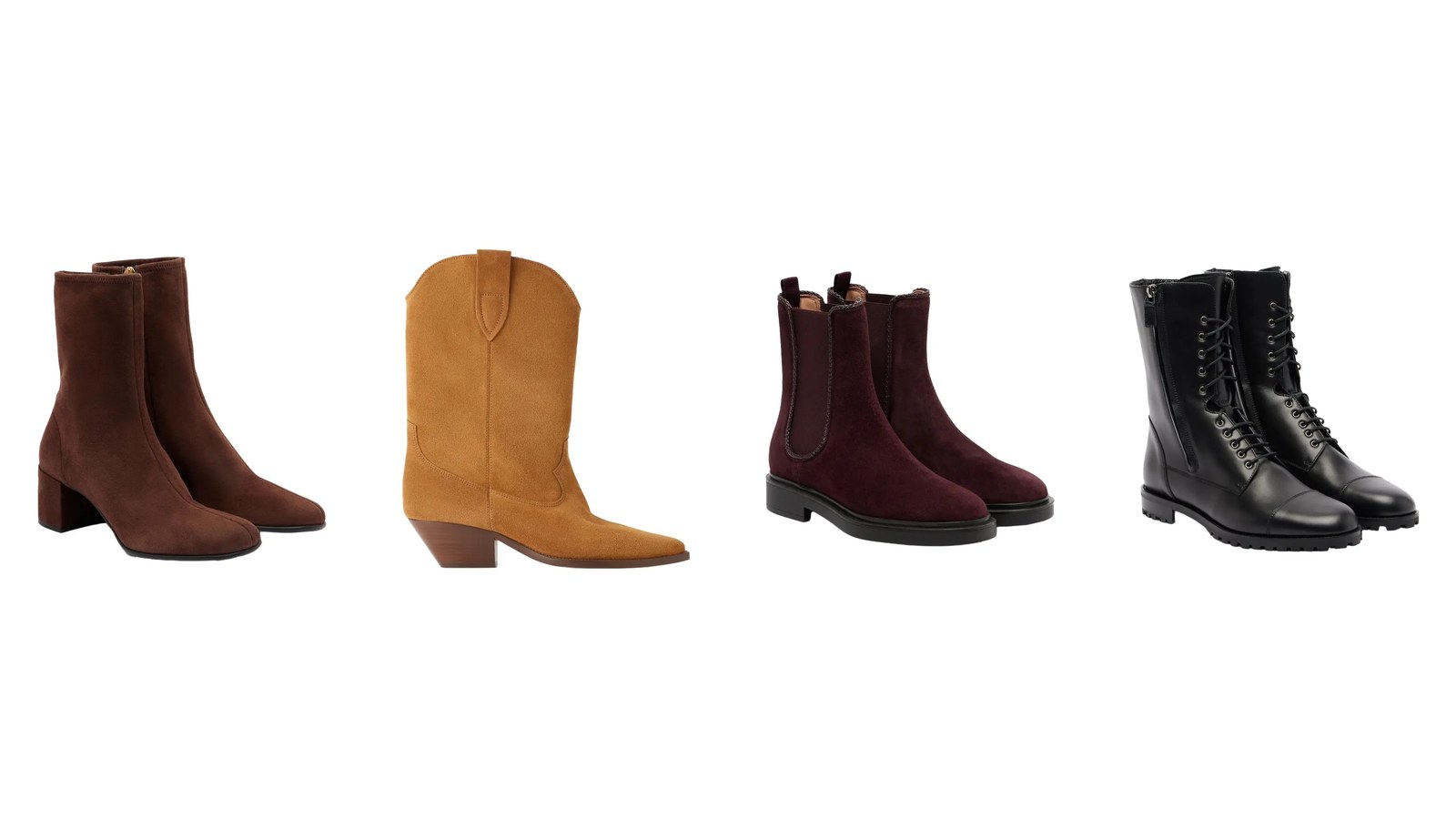
The best boots for fall are four pairs: an ankle boot in suede or leather on a low block heel, a Chelsea boot you can pull on in a hurry, a western boot that stops between the ankle and mid-calf, and a rubber lug-sole boot for wet weeks. Together they cover jeans, trousers and midi skirts from October to the first frost, and a heeled ankle boot looks after the evenings. Start with Prada, Jimmy Choo and The Row for ankle boots, Aquazzura and Tod's for rubber-soled Chelsea boots, Isabel Marant and Khaite for western boots, and Bottega Veneta and Manolo Blahnik for lug soles.
Below: what each style suits, which soles grip in the rain, where your hems should fall, how boots are made, suede care and fit. For tall boots, see our guide to the best knee-high boots.
The best boots for fall at a glance
October swings between dry, warm weeks and wet ones, so choose each pair by where the shaft stops and what the sole is made of, then by color.
| Style | Where the shaft stops | Heel | Sole and weather |
|---|---|---|---|
| Ankle boot | At the ankle bone or a few inches above it | Flat to 60mm for everyday | Leather soles for dry days, rubber for wet ones |
| Chelsea boot | Just above the ankle, with elastic at the sides | Flat, or a low stacked heel | Rubber and lug-soled pairs handle rain |
| Western boot | Ankle to mid-calf, often with pull tabs | Stacked or Cuban, usually 35 to 50mm for walking | Mostly leather-soled: dry and damp days, not downpours |
| Lug-sole or combat boot | Ankle to mid-calf, laced or pull-on | A deep rubber sole with little or no separate heel | Rain, mud and slick sidewalks |
| Heeled ankle boot | Ankle to low calf | 70 to 95mm | Car to door, dinners, short walks |
Ankle boots: the fall boot to buy first
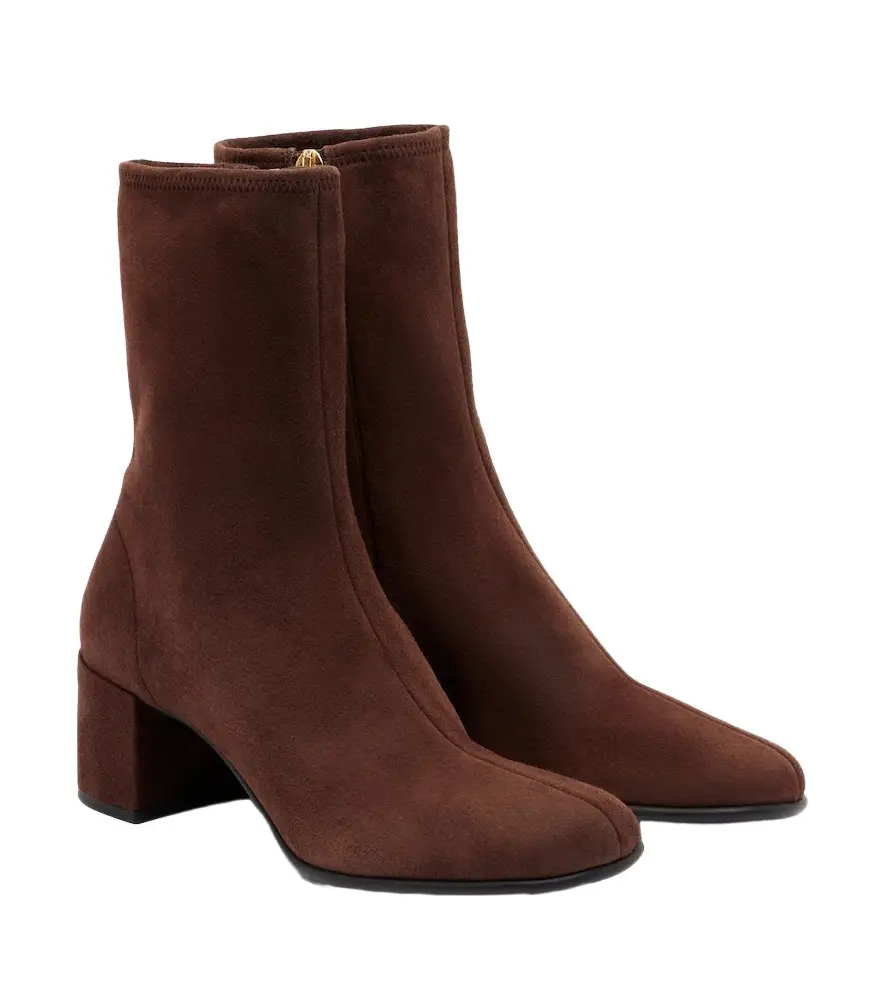
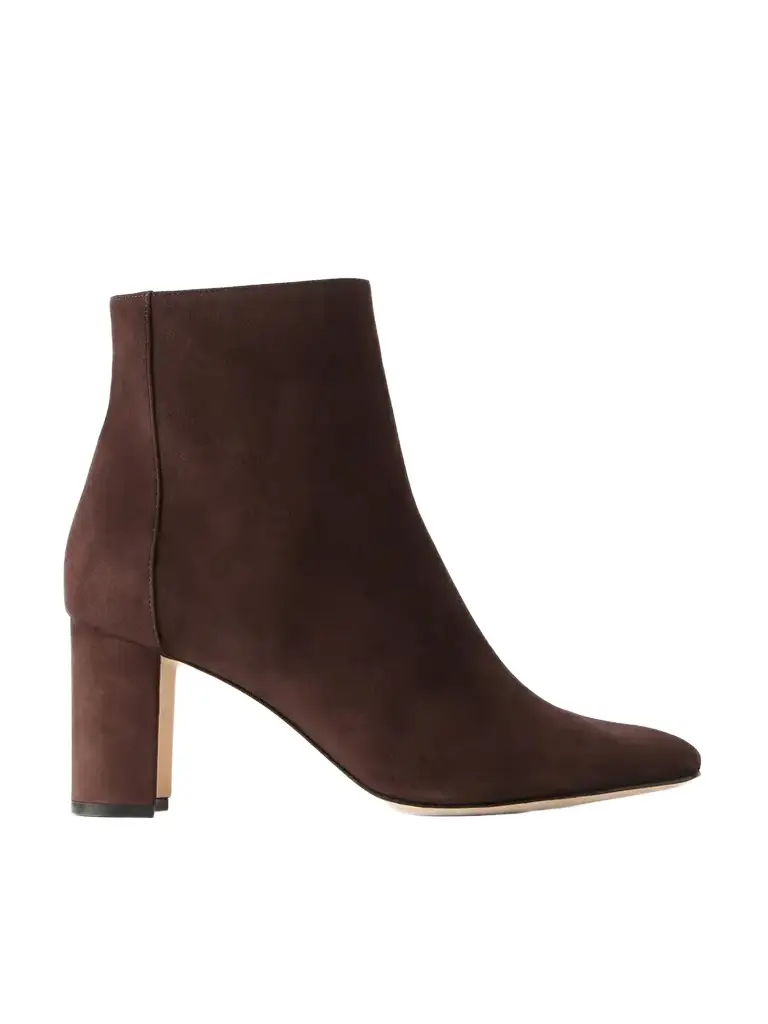
If you buy one pair this season, make it an ankle boot: it goes under full-length trousers, below cropped ones and, once tights go on, with a skirt. A flat or 45mm block heel is an all-day boot, and 55 to 60mm is as high as we would go for a commute on foot. An almond or pointed toe lengthens the leg under tailoring, a square toe suits wide trousers, and a round toe is the easiest with denim.
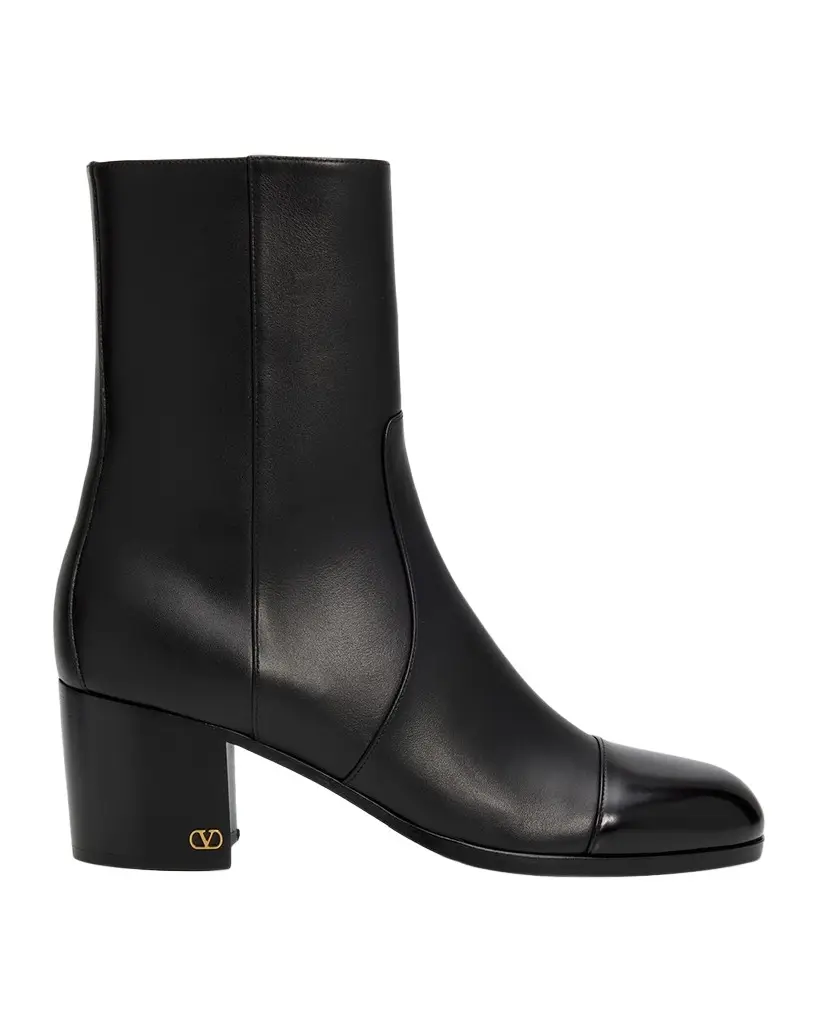
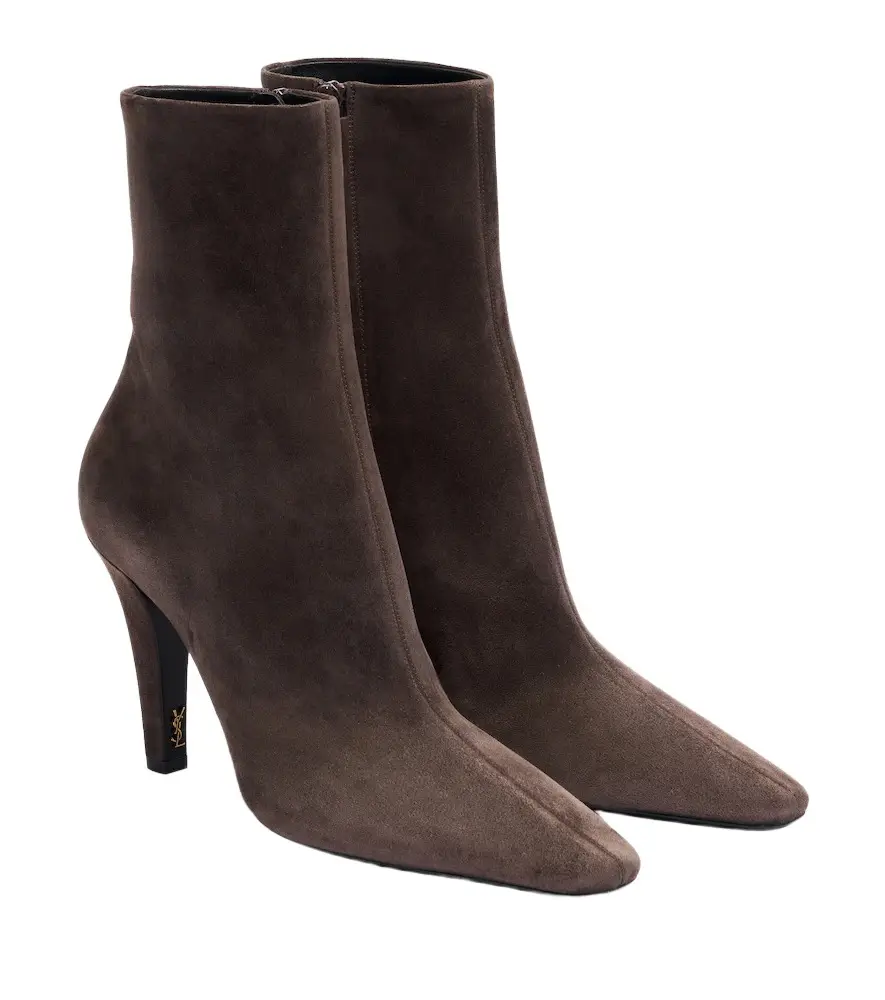
Then read the sole line on the listing: leather is for dry days; rubber, or leather with a rubber insert, is for wet weeks. Prada's chocolate suede boot, on a low block heel and a rubber sole, is the pair we would buy first. Jimmy Choo's Eliot puts chocolate suede on a 45mm block, and The Row's Cindy is the flat, square-toed version on a leather sole. Our stylists wear chocolate suede with camel, cream, gray, olive and burgundy, and it looks soft and warm beside tweed. Black leather, like Valentino Garavani's cap-toed Zimmy, is the pair for black, gray, white, navy and blue jeans, from the office to dinner.
- Chocolate suede ankle boots, cream wool trousers long enough to break over the vamp, a camel crewneck. Tonal and soft from the first cool week.
- Black leather ankle boots, dark straight jeans that just graze the top of the heel counter, a beige trench.
- Low-heeled suede boots, a knee-length gray wool skirt and opaque tights in the boot's color. Matching tights run the leg straight into the boot.
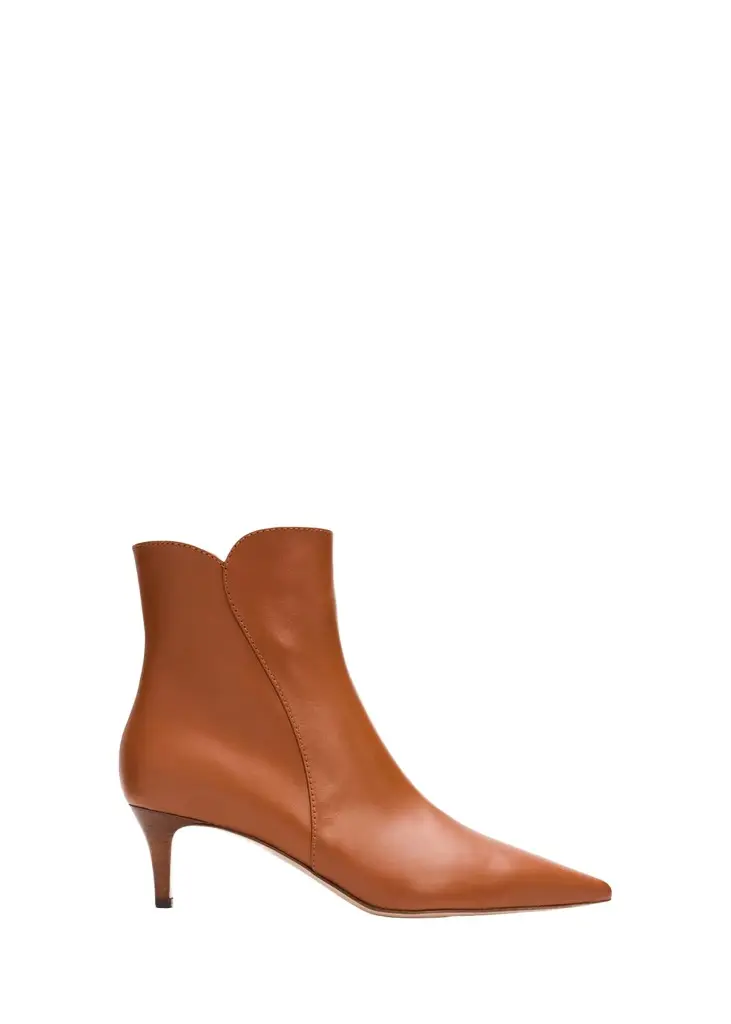
Everyday ankle boots on flat and low heels



Chelsea boots: the pull-on pair
A classic Chelsea boot has no laces or zip: elastic panels at the sides do the work, so the fit has to come from the last, the foot-shaped form the boot is built on. Because the elastic gives only at the sides, a pair that pinches across the top of the foot will not ease there, and a heel that slides up and down with every step will rub.
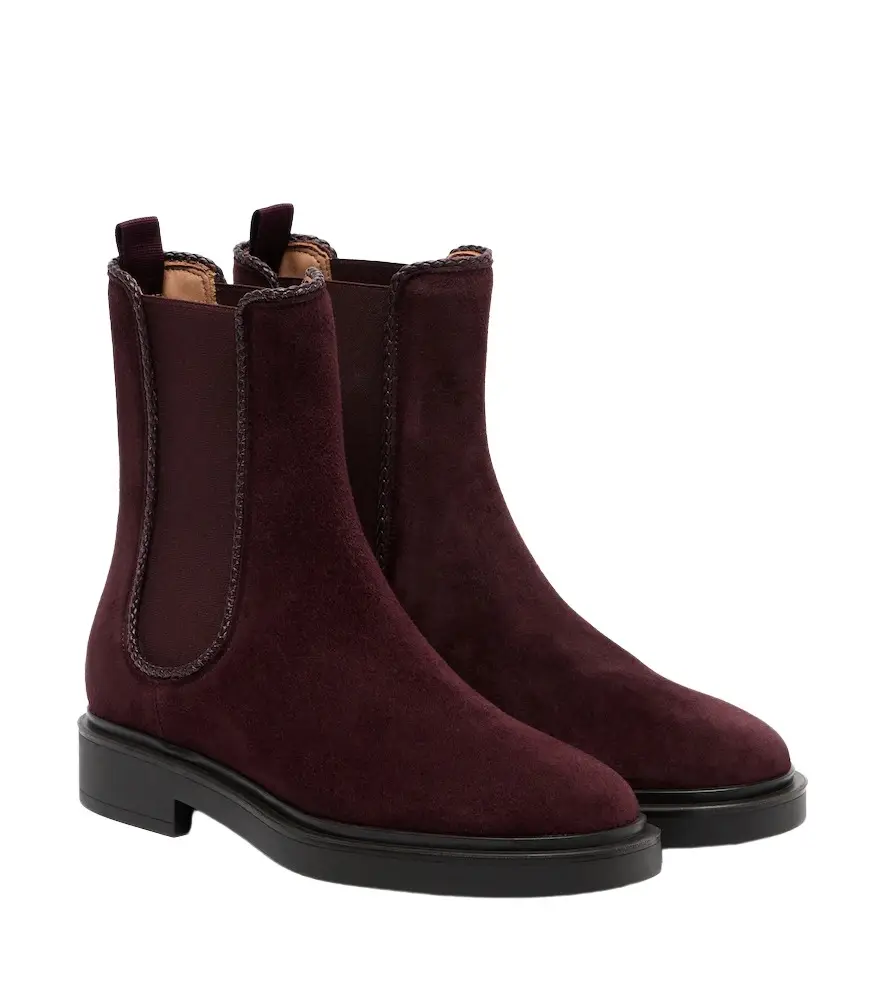
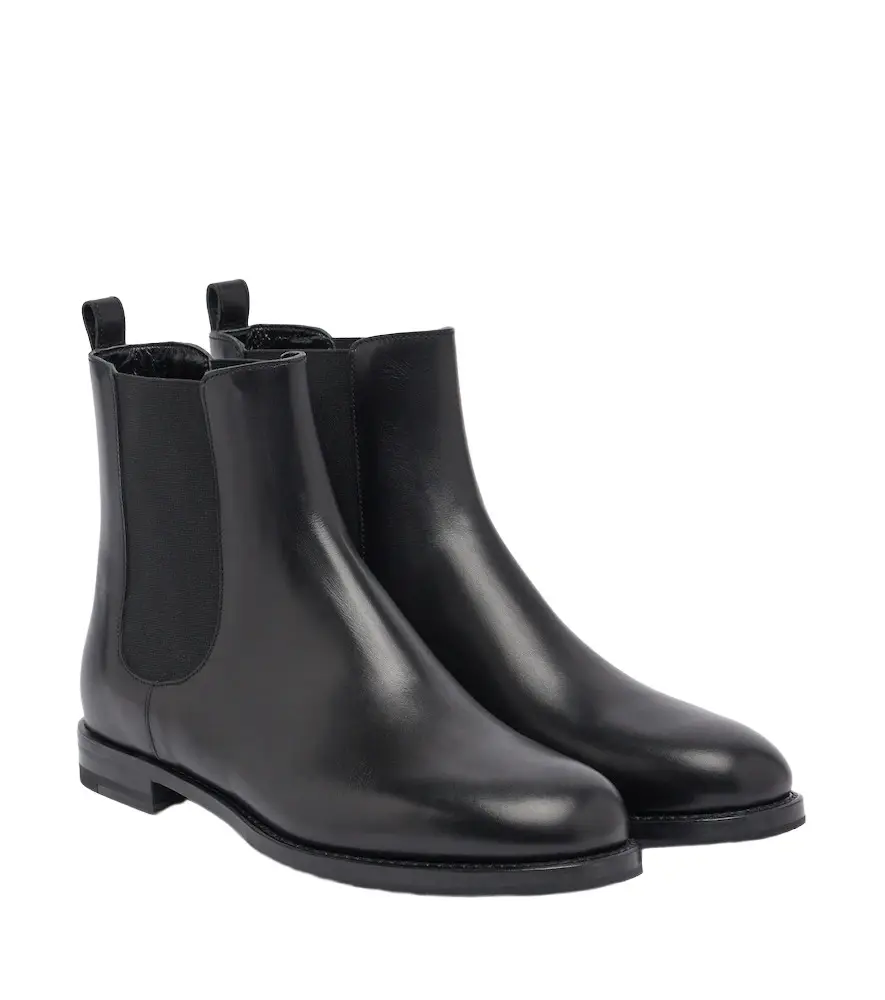
Two kinds are worth owning. The slim Chelsea is the smarter one, for tailoring and dinners: Manolo Blahnik's Chelsa has an almond toe, and Saint Laurent's Vincent adds brogue perforations and a 50mm stacked heel. The lug-soled Chelsea trades polish for grip, and its thicker sole balances a wide trouser: Gianvito Rossi's Chester and Tod's Gomma, with the rubber pebbles of the house's driving shoe on its heel, are both suede on lug soles. Aquazzura's Gaspard, in plum suede on a rubber sole, sits between the two.
- Black leather Chelsea boots, gray flannel trousers, a navy fine knit and a charcoal coat.
- Plum or burgundy suede Chelsea boots, a black midi skirt and black tights. A deep red works like a dark neutral; our guide to wearing burgundy has the color pairings.
- Brown suede lug-sole Chelsea boots, straight ecru jeans, a cream cable knit. The weekend pair, rain or shine.
Chelsea boots, slim and lug-soled


Western boots for women: how to choose and wear them
The western boot began as a working boot. The Texas State Historical Association's Handbook of Texas records that the bootmaker Herman Joseph (Joe) Justin opened a one-room shop at Spanish Fort, on the Chisholm Trail, in 1879, where cowboys ordered boots on the drive north and collected them on the way back. Fashion versions keep the outline: a pointed or snip toe, a stacked heel, pull tabs and stitching across the shaft.
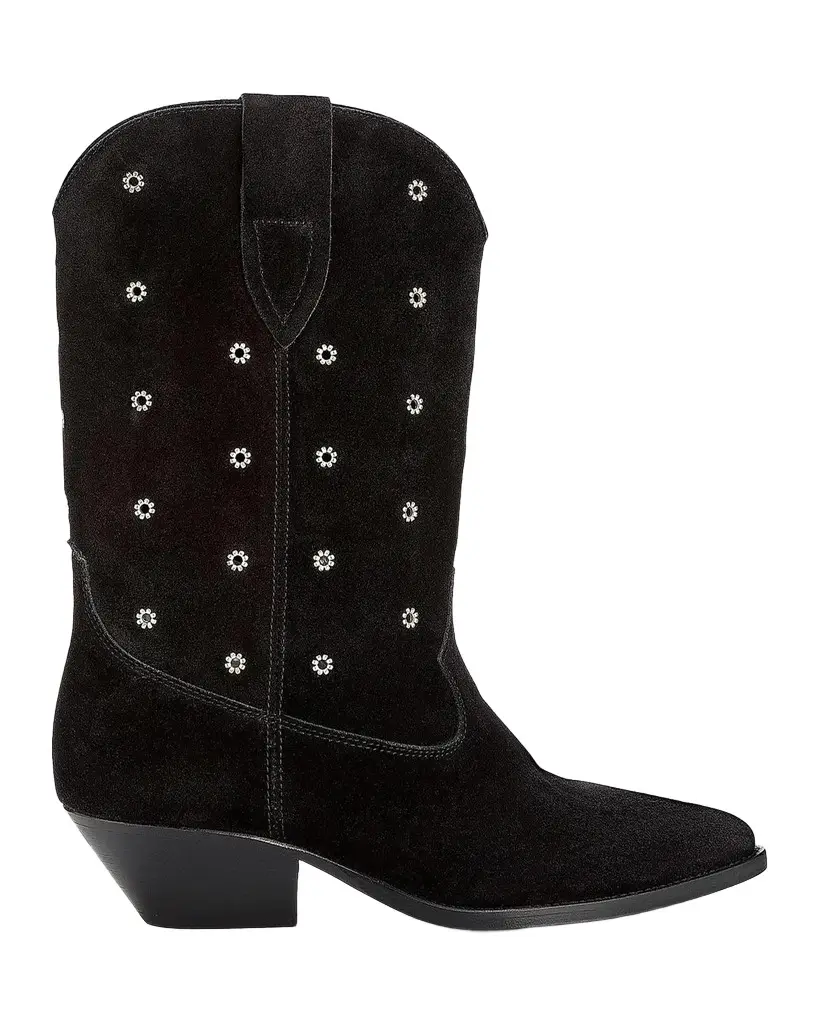
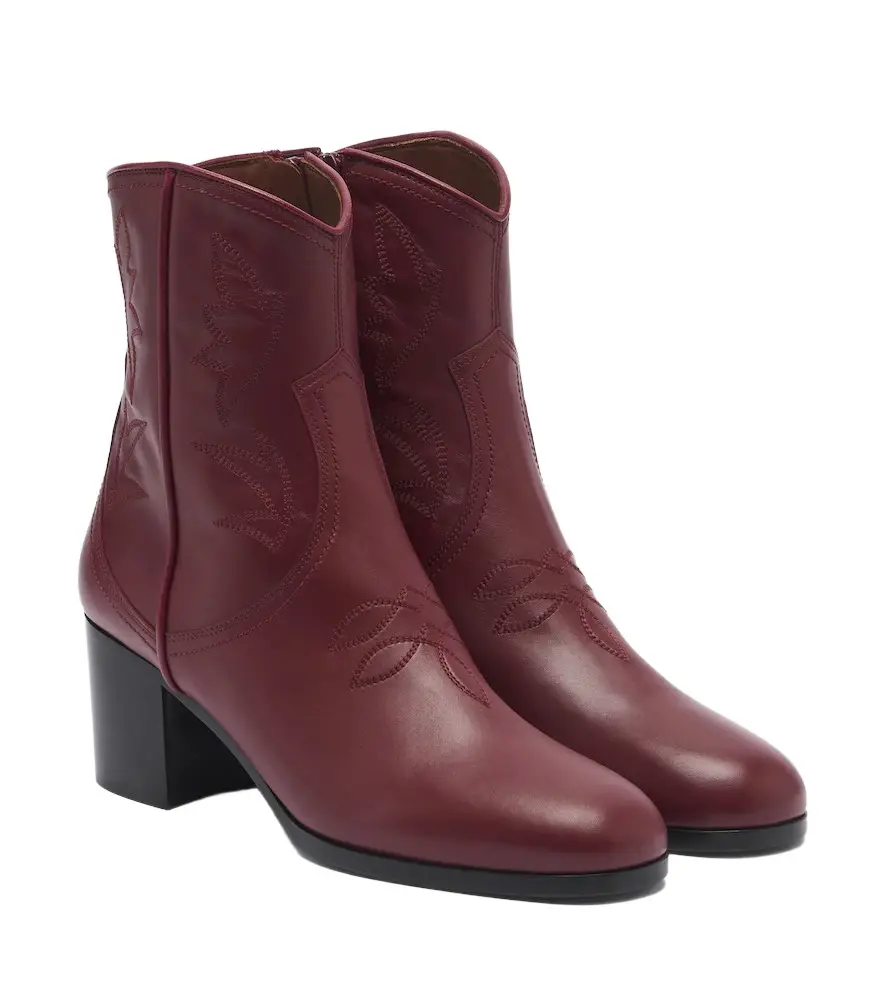
Three choices matter when you buy. Shaft height: a short western boot, like Gabriela Hearst's Cassidy with its elastic sides, works like an ankle boot under jeans. A mid-calf shaft is the classic and the one for skirts, provided it does not stop at the widest part of your calf, which makes the leg look heavier. Heel: 35 to 50mm is the walking height (Khaite's Clive sits on 35mm, the Cassidy on 50mm), and the wider the heel, the steadier the boot. Rabanne's black pair, on a steep, angled heel, is a boot for dinner rather than a day on your feet. Toe: a sharp point is dressier, a snip or rounded toe more relaxed. Tan, cognac or chocolate suede, like Isabel Marant's Duerto, is the most useful in fall. For evenings, the western boot to own is black leather.
- Tan suede western boots, straight ecru jeans worn over the shaft, a white poplin shirt and a camel blazer. The jeans should break on the vamp, so only the toe and heel show.
- Mid-calf western boots, a suede or wool midi skirt that covers the top of the shaft, a fine knit. The hem hides the join, so boot and skirt read as one line.
- Black ankle-height western boots with a charcoal knit dress and sheer black tights for dinner.
Western boots, ankle to mid-calf


Lug-sole boots for rain, mud and wet leaves
A lug sole is a thick rubber sole cut with deep, blocky cleats, which grip on wet pavement and wet leaves and let mud fall away. Loake, the Northamptonshire shoemaker, notes in its guide to its soles that rubber wears harder than leather and suits damp conditions, gripping better on slippery or uneven ground. If your favorite boots have leather soles, Loake's advice is to wear a new pair on dry days for its first few outings, because the fine grit a dry leather sole picks up helps it resist water.
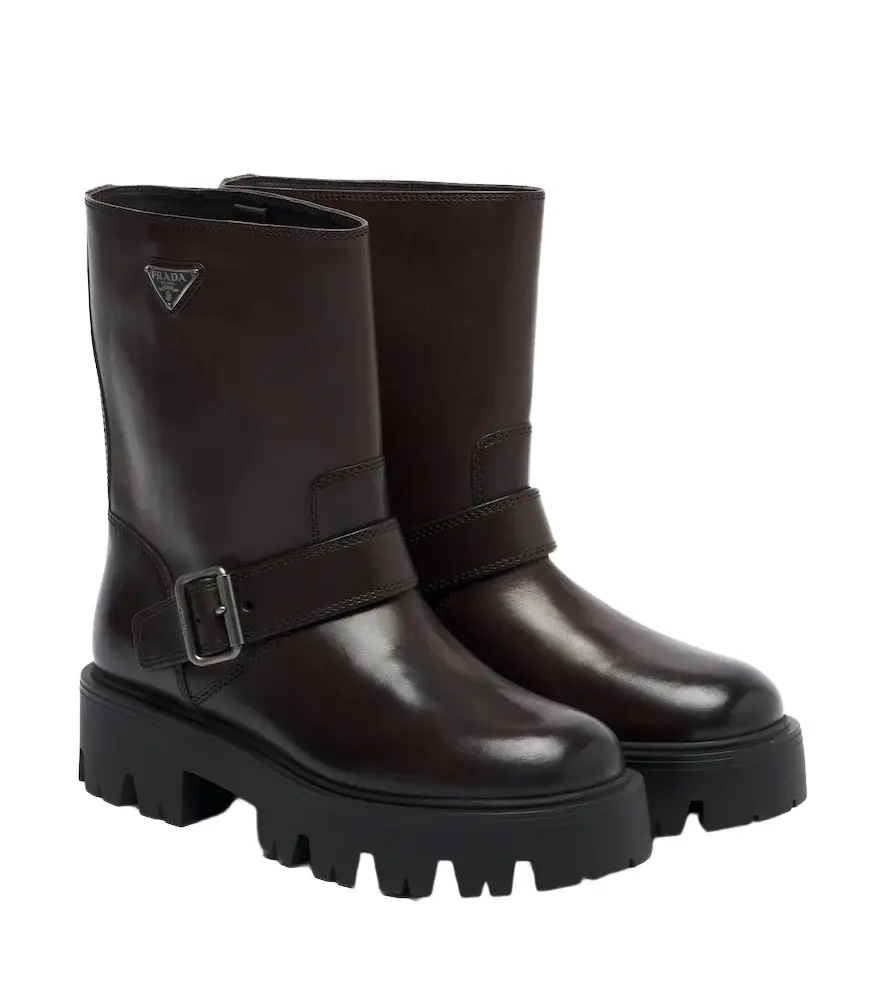
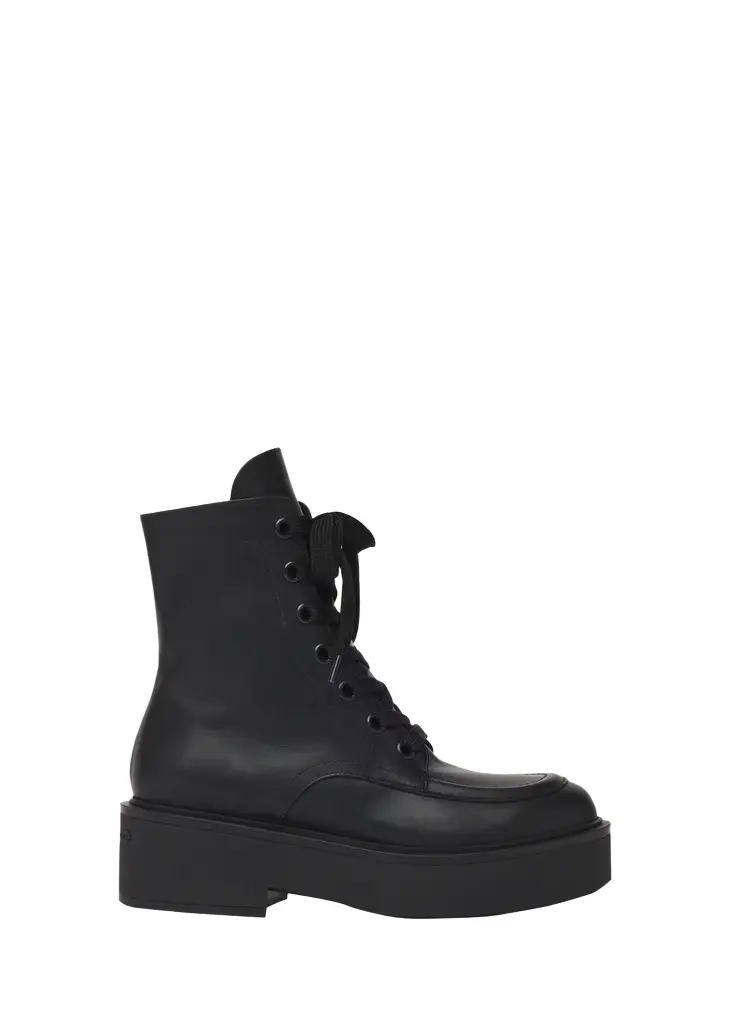
Lug soles add height and weight at the foot, so they suit wide trousers, straight jeans and long knit dresses and look heavy under a slim cigarette trouser. Manolo Blahnik's Lugata laces up the front and zips at the side, so it adjusts over a thick sock without daily lacing; Bottega Veneta's Lug pulls on, and Prada's Stride is the biker version, buckled across the ankle. Leather on a lug sole resists water, but it will not keep out a deep puddle.
- Black lug-sole boots, wide charcoal trousers, a black turtleneck and a long gray wool coat. A long coat and a wide trouser need a heavy sole underneath.
- Brown suede combat boots, a long cream ribbed knit dress, an oversized gray cardigan. Heavy boot, soft dress: the contrast is the point.
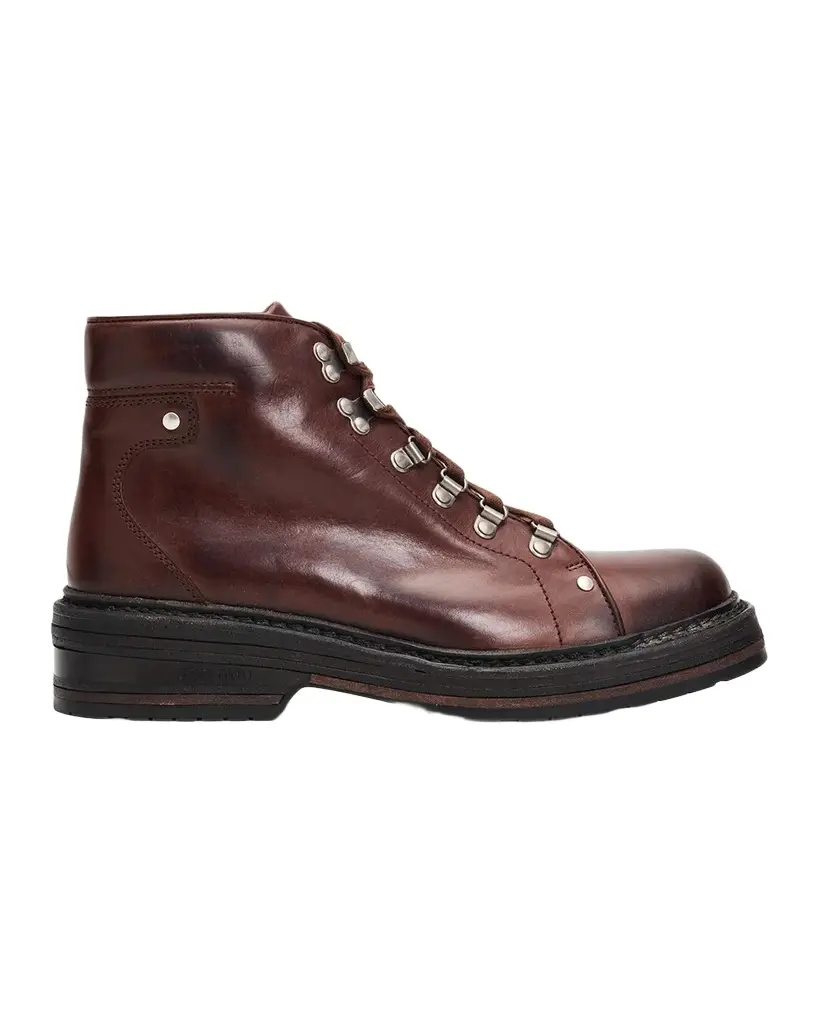
- Burgundy lace-up boots with straight indigo jeans cuffed once, and an olive waxed jacket.
Lug-sole and combat boots for wet days



Heeled ankle boots for the office and evening
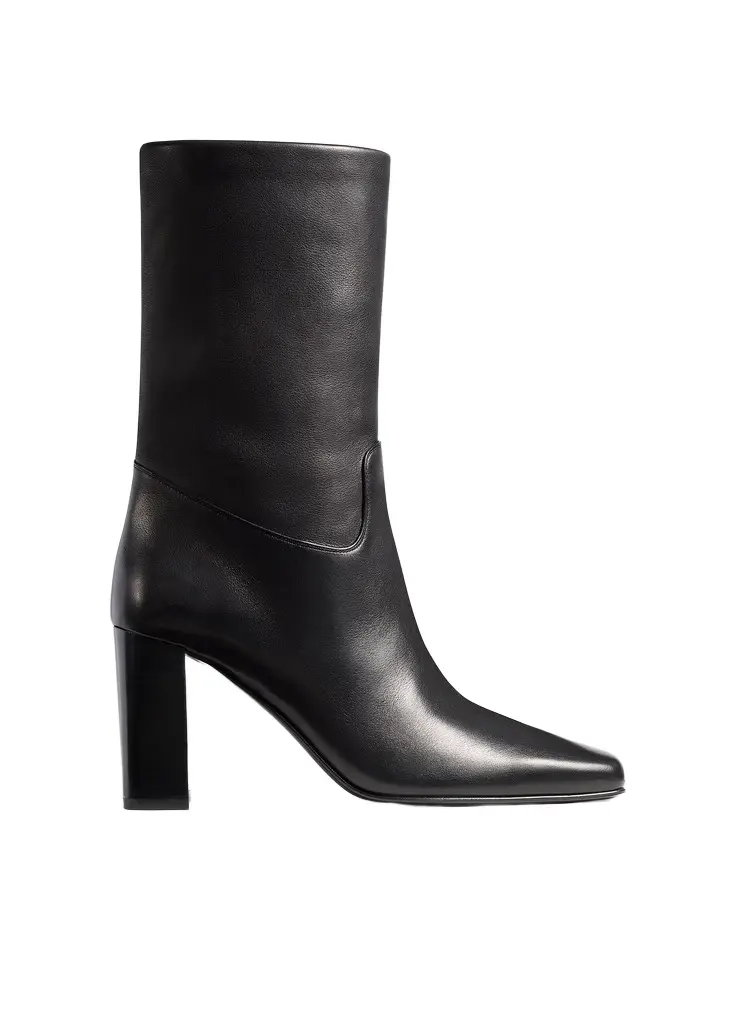
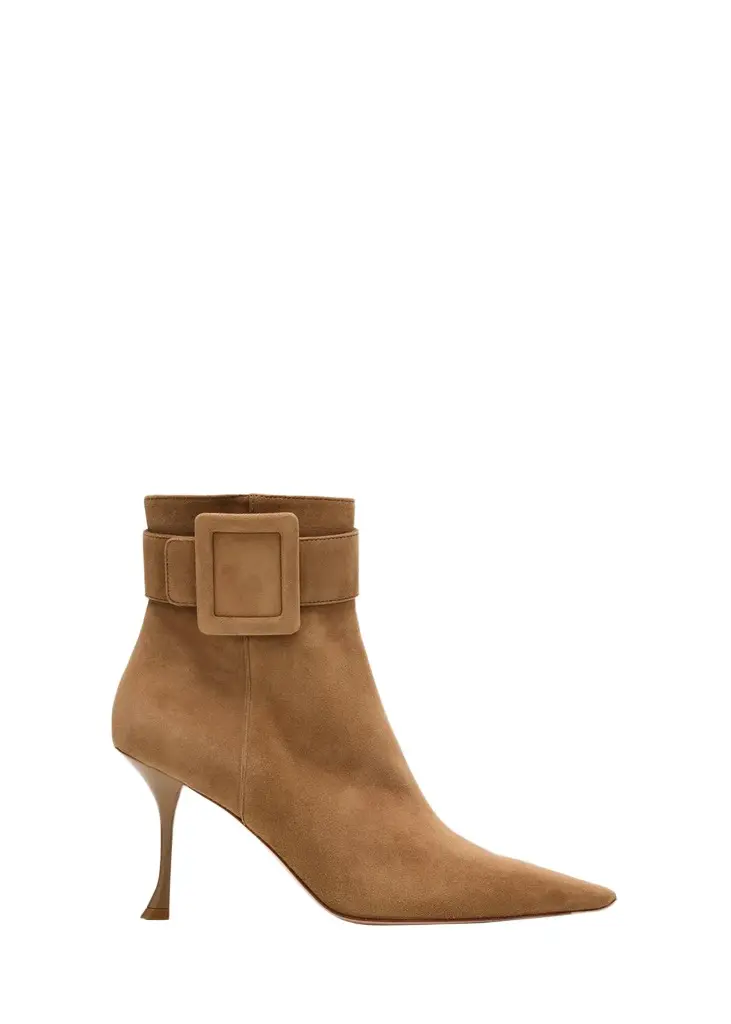
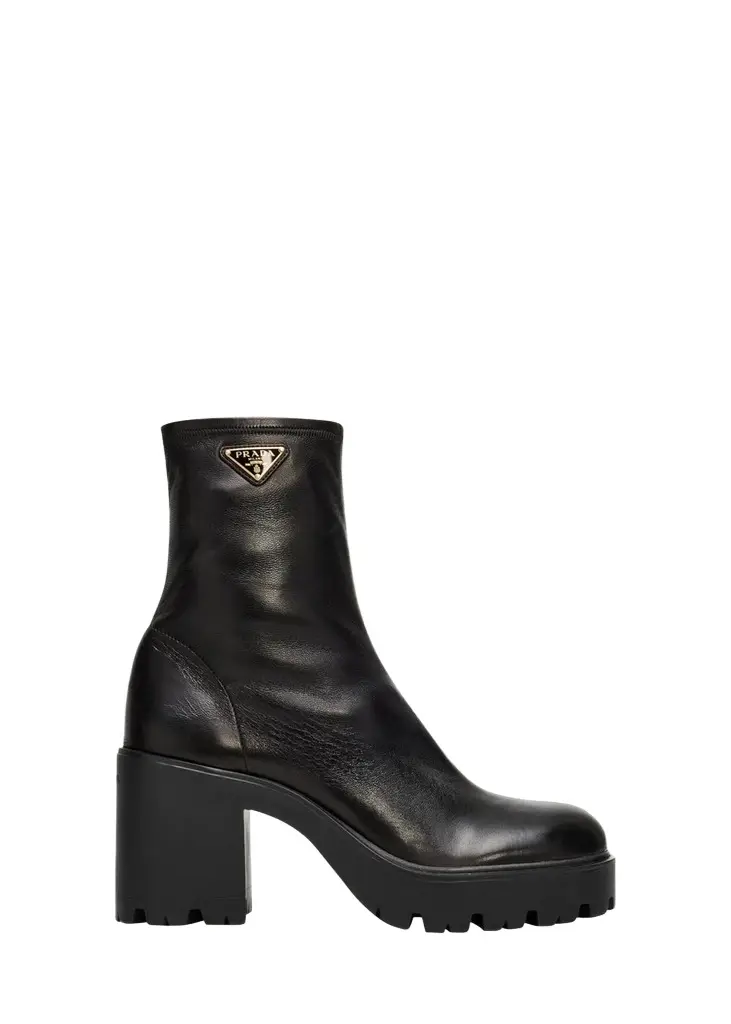
A 70 to 95mm ankle boot is the fall answer to a pump: it covers the ankle, keeps you warmer and looks right under a hem that a pump would leave bare. At this height a block or stacked heel is steadier than a stiletto, and the boot should fit close at the ankle so it does not gape. Keep hems long: full-length trousers that fall to the top of the heel, or a skirt at the knee or below. Khaite's Petra, square-toed on an 85mm stacked block heel, is the one for tailoring. Valentino Garavani's Pattie and Roger Vivier's Viv Ville put an 85mm heel and a buckle on suede, Manolo Blahnik's Rosie is the lowest here at 70mm, and Prada's 85mm boot sets a close nappa shaft on a chunky, treaded sole.
- Black leather 85mm boots, a navy trouser suit, a white shirt. The boot disappears under the trouser and lengthens the leg.
- Tobacco suede boots, a chocolate knit dress, gold earrings for a dinner that starts straight from work.
- Tan suede boots, a camel pencil skirt, a cream turtleneck, with sheer tights close to your skin tone.
Heeled ankle boots for work and evening

How to wear ankle boots with jeans, trousers and skirts
With an ankle-height boot, the hem decides whether an outfit works. It can cover the top of the shaft or stop clearly above it; it should not land on the shaft, where it catches and bunches as you walk.
| Where the shaft stops | Trousers | Jeans | Skirts and dresses |
|---|---|---|---|
| Low, at the ankle bone | Full length, breaking over the vamp, or cropped a clear inch or more above the boot | Straight or kick-flare over the boot, or cropped with ankle showing | Knee-length or midi, with tights in the boot's color |
| A few inches above the ankle (most ankle and Chelsea boots) | Straight or wide legs long enough to cover the shaft as you walk | Straight or bootcut worn over; slim jeans tucked in | A midi that falls well below the knee, with opaque tights to close the gap |
| Mid-calf (western and tall lace-up boots) | Wide or bootcut trousers worn over the boot | Bootcut over, or slim jeans tucked in without bunching | A midi that covers the top of the shaft, or a knee-length hem that shows all of it |
Hem trousers in the boots you will wear with them, because heel height moves the hem: a length cut for a 60mm heel drags behind a flat Chelsea, and one cut for flats looks short over a heel. Our stylists match the boot to the denim, too, and wear blue jeans with black boots. For brown and tan boots, they choose ecru, white or gray denim, gray flannel or cream wool. For the wardrobe around your boots, see our fall wardrobe essentials, and for jeans that sit well over a boot, our designer jeans guide. Not sure which boot suits the clothes you already own? Ask our AI stylist to build fall outfits around a pair before you buy.
Goodyear-welted, Blake-stitched or cemented: how boots are made
How the sole is attached decides how well the seam keeps water out, how slim the sole can be and whether the boot can be resoled. Loake, which has specialized in welting for more than 140 years, compares the welt with the Blake stitch in its guide to Goodyear welting; its sole guide covers cemented construction.
| Construction | How the sole is attached | What it means for you |
|---|---|---|
| Goodyear welt | A strip of leather, the welt, is stitched to the upper and insole around the edge of the boot, and the outsole is stitched to the welt | The seam runs around the outside of the sole rather than under the foot, which helps keep water out; the sole can be replaced; the wider edge adds bulk |
| Blake stitch | The outsole is stitched straight through to the insole | A slimmer sole, but the seam sits under the foot, where Loake says it is more likely to leak |
| Cemented | The sole is bonded to the upper with adhesive, with no stitching through it | Lighter-looking than a welted boot and, in Loake's words, not as robust; whether it can be resoled depends on the boot and the cobbler |
Fashion boots are more often Blake-stitched or cemented, for a slimmer sole and a lighter boot: a trade-off, not a flaw, and a cemented boot on a rubber sole is a sensible city boot. Pay for welting when you want a pair to last many wet seasons and more than one sole, and note that a row of stitches around the edge can suggest a welt without being one.
Suede or leather for fall, and how to keep suede going in the wet
Tricker's, which has made shoes in Northampton since 1829, argues in its guide to suede in autumn and winter that suede, protected properly and brushed regularly, handles fall and winter as well as smooth calf does. It also looks warmer, because, as Tricker's puts it, the nap holds light rather than reflecting it, which suits tweed, flannel and heavy knits; a coarse nap wears harder than a fine one. If you want one pair and little upkeep, smooth leather, which takes wax polish and wipes clean, is the easier choice.
Tricker's routine for its own suede:
- Brush in one direction after each wear, with a rubber suede brush, to lift the nap and clear grit and road salt. Tricker's says a brass brush is definitely not recommended.
- Protect it before the rain. Most of the work, Tricker's says, happens before the shoes ever get wet, and it puts the upkeep at a brush by the door and a can of spray every few weeks.
- Rest them. A full day off between wears, natural wood shoe trees to draw out moisture, and no radiators or heat vents, which dry leather too fast and can flatten the nap for good.
- Dry it slowly. Wet suede is not ruined suede: dry it at room temperature with the trees in, brush the nap back up, and the darker patches even out.
- Let mud dry; brush off salt the same day. Knock off hard mud and brush away the rest, since wiping it wet pushes it into the nap. Road salt draws moisture out of the leather and leaves a pale tidemark if it is left to set.
How fall boots should fit, and how to convert European sizes
Buying boots you cannot try on is an old problem: the same Handbook entry records that in the 1890s Justin and his wife made a device that let cowboys measure themselves, so boots could be ordered by mail. For checking a pair once it arrives, the western bootmaker Lucchese, in business since 1883, sets out useful tests in its fit guide, written for its own cowboy boots:
- A slight slip at the heel is normal in a new pair, not a sign of poor fit; Lucchese says the leather heel, insole and outsole of its boots conform to the foot over time.
- The ball of your foot sits in the widest part of the boot, with your toes resting comfortably.
- Across the instep, it should feel like a firm handshake. Lucchese warns that this can feel uncomfortably tight at first and softens with wear.
- Your western boot size may be slightly smaller than your dress-shoe size, because of how the boot is built.
- Break them in gradually: at least two to three hours at a time for the first six to eight outings, so body heat and moisture soften the leather.
In any pull-on boot, a little heel lift while the sole is stiff is normal, but a heel that slides freely with every step means the pair is too big. Lace-ups and zipped boots forgive a slightly off size; a pull-on boot, whose opening has to pass your heel and then hold the foot, does not. Between two sizes, choose the one that holds your instep without pressing on your toes: leather softens across the foot, but a boot never gets longer.
Convert with each house's own chart, because the charts disagree. Lucchese's women's chart puts a US 7.5 at a European 38, while Khaite's size guide, which uses Italian sizes, makes a 38 a US 8, so the same 38 sits half a size apart at the two houses. Listings on Vêtir come in US, Italian, French and European numbers, so check the system before you compare and read the fit notes (our Khaite guide collects the house's own). Try boots on with the socks or tights you will wear in November.
How we chose
We picked five kinds of boot that between them see a fall through, from dry October afternoons to wet November mornings, and read the sole on every listing: the lug boots all have rubber soles, the ankle and Chelsea edits mix rubber soles with leather ones for dry days, and the western and evening boots are mostly leather-soled. Heels follow each section's purpose, from flat for everyday to 95mm for evenings, with the walking westerns at 35 to 50mm. Most come in the colors of a fall wardrobe: chocolate, tan, cognac, espresso, plum and burgundy. The rest are black. We compared every photograph with its listing and kept a pair only when color and material matched. All come from houses on our luxury list, with a good run of sizes on Vêtir when we chose them, and none is pre-owned.
Frequently asked questions
What are the best boots for fall?
An ankle boot on a low block heel, a Chelsea boot, a western boot that stops between the ankle and mid-calf, and a lug-sole boot for rain, plus a heeled ankle boot for evenings. If you buy one pair, make it a chocolate suede ankle boot on a rubber sole.
What color boots are best for fall?
Chocolate brown suede first: our stylists wear it with camel, cream, gray, olive and burgundy, and with ecru or white jeans. Black leather second, with black, gray, navy or blue jeans, for the office and evenings. Burgundy, plum or tan make a good third pair.
How do you wear ankle boots with jeans?
Let straight or bootcut jeans fall over the boot, breaking on the vamp so only the toe and heel show, or wear cropped jeans that stop a clear inch above the shaft. Slim jeans can be tucked into a boot with room in the shaft. Avoid a hem that lands on the top of the boot.
How should western boots fit?
Firm across the instep, with the ball of the foot in the widest part of the boot and a slight slip at the heel while the boot is new. Lucchese notes that your western boot size can be slightly smaller than your dress-shoe size, so try half a size down as well as your usual size.
Are lug-sole boots good for walking?
Yes. A rubber lug sole grips better than smooth leather on wet pavement and leaves, and the thicker sole softens hard sidewalks. The trade-off is weight, so walk in a pair for a while before you plan a full day in them.
Keep reading
- The best knee-high boots, and how to find a pair that fits
- How to wear burgundy, from boots to coats
- Khaite, explained: the boots, jeans and knits to know
- The best designer jeans, and which leg to wear over a boot
- The Edit: the best fall shoes
Shop more: all ankle boots, Chelsea boots, western boots and combat boots.