The Best Men's Winter Coats: Overcoats, Topcoats and Down Parkas
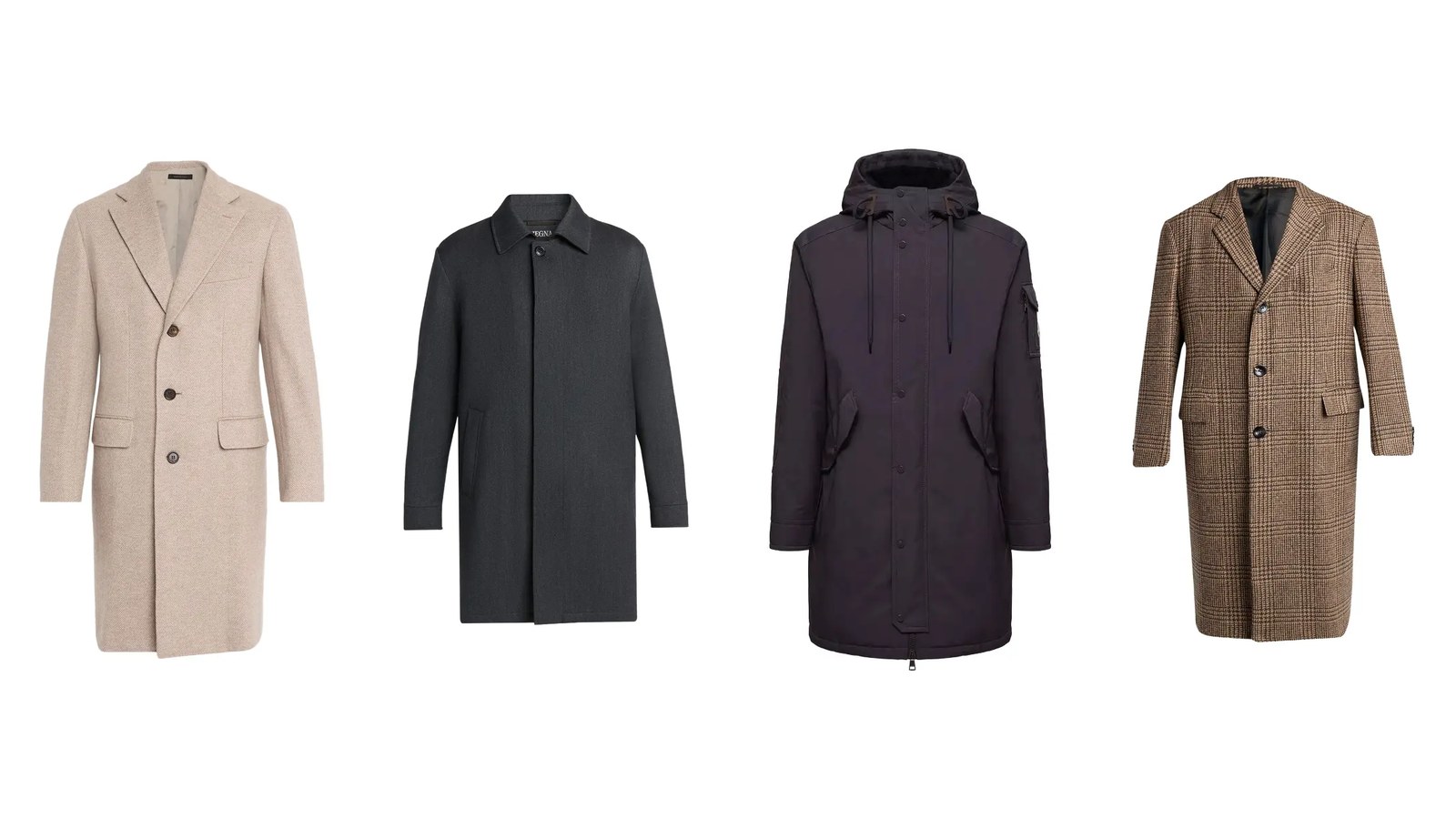
The best men's winter coats start with one piece: a single-breasted overcoat in navy or charcoal wool or cashmere, long enough to cover the knee and cut with room to go over a suit jacket. Add a down parka if you spend long stretches outside below freezing, and a shorter topcoat, car coat or peacoat if you drive or dress casually. This guide explains the difference between an overcoat, a topcoat and a parka, which fabrics are warmest for their weight, and how a coat should fit over tailoring. Then it picks the coats in stock now from Zegna, Brioni, Loro Piana, Kiton, Moncler and more, with the outfits to wear them with.
Overcoat vs topcoat vs parka: which men's winter coat do you need?
The names are used loosely by shops, but the distinction is useful, and it is mostly about cloth. The menswear reference Gentleman's Gazette defines a topcoat as an overcoat cut from cloth of 18 ounces per yard or less, usually worn about knee length, while today's overcoatings weigh around 20 ounces and the coat itself can fall anywhere from just above the knee to the ankle. A car coat stops at mid-thigh, short enough to sit in a car without the coat bunching. The peacoat is naval dress: the US Navy made the pea coat a regular part of its enlisted uniform in 1886, and its Naval History and Heritage Command notes that it was warm and, being short, more practical to move in than a greatcoat.
| Coat | Length | Typical cloth | Warmth | Best worn with |
|---|---|---|---|---|
| Overcoat | From just above the knee to the ankle | Heavy wool, cashmere or a blend, around 20 oz per yard | High | Suits and tailoring; the city commute |
| Topcoat | About the knee | Lighter wool or cashmere, 18 oz per yard or less | Moderate | Tailoring in fall and mild winters; smart casual |
| Car coat | Mid-thigh | Wool, cashmere or a technical shell | Moderate | Knitwear, jeans and chinos; driving |
| Peacoat | Hip | Heavy wool, often melton or felt | High for its length | Knitwear and denim, never a suit |
| Down parka or puffer | Hip to below the knee | Down fill in nylon, wool or cotton | Highest | Real cold, wind and snow; long versions over a suit |
If you wear a suit to work, buy the overcoat first; nothing else looks right over a jacket. If you rarely wear tailoring, start with a car coat or peacoat for everyday and add a down jacket for the coldest weeks.
The best overcoats to wear over a suit
A men's overcoat for tailoring should be single-breasted unless you are tall and slim, because a double-breasted coat adds a layer of cloth across the stomach and looks best buttoned. Notch lapels are the everyday choice; peak lapels, as on Tom Ford's cashmere overcoat and Gabriela Hearst's double-breasted Brannick, are more formal and suit evening and black tie. Keep patterns for coats you will wear over plain suits: Kiton's glen plaid in wool and cashmere is a strong coat over solid navy or gray, and a busy one over a striped suit.
- The business standard: navy or charcoal overcoat, charcoal suit, white shirt, burgundy tie, black cap-toe oxfords.
- The warm neutral: camel or beige overcoat, such as Brioni's Solferino in cashmere herringbone, over a navy suit or a navy crewneck with gray flannels, dark brown suede shoes.
- Evening: charcoal or black overcoat over a black rollneck and charcoal trousers, black Chelsea boots.
The best overcoats to wear over a suit
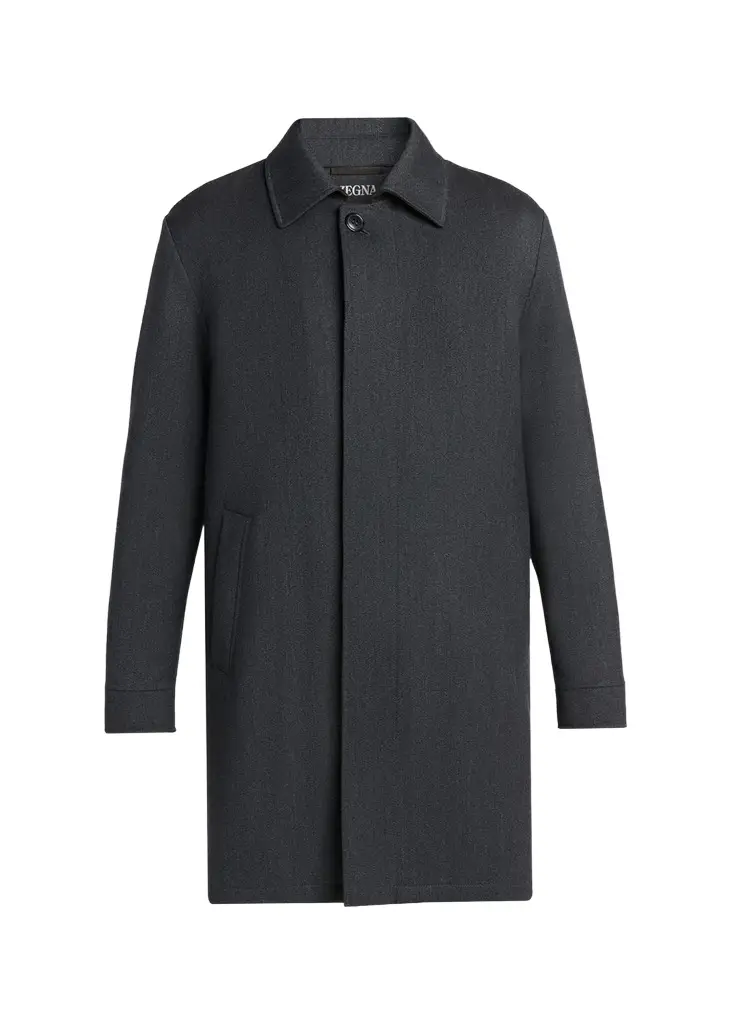 ZegnaMen's Wool Melange Overcoat$5,750
 BrioniMen's Solferino Cashmere Herringbone Overcoat$6,300
 Tom FordMen's Solid Cashmere Overcoat$7,990
 Bottega VenetaMen's Superfine Wool Overcoat$3,300
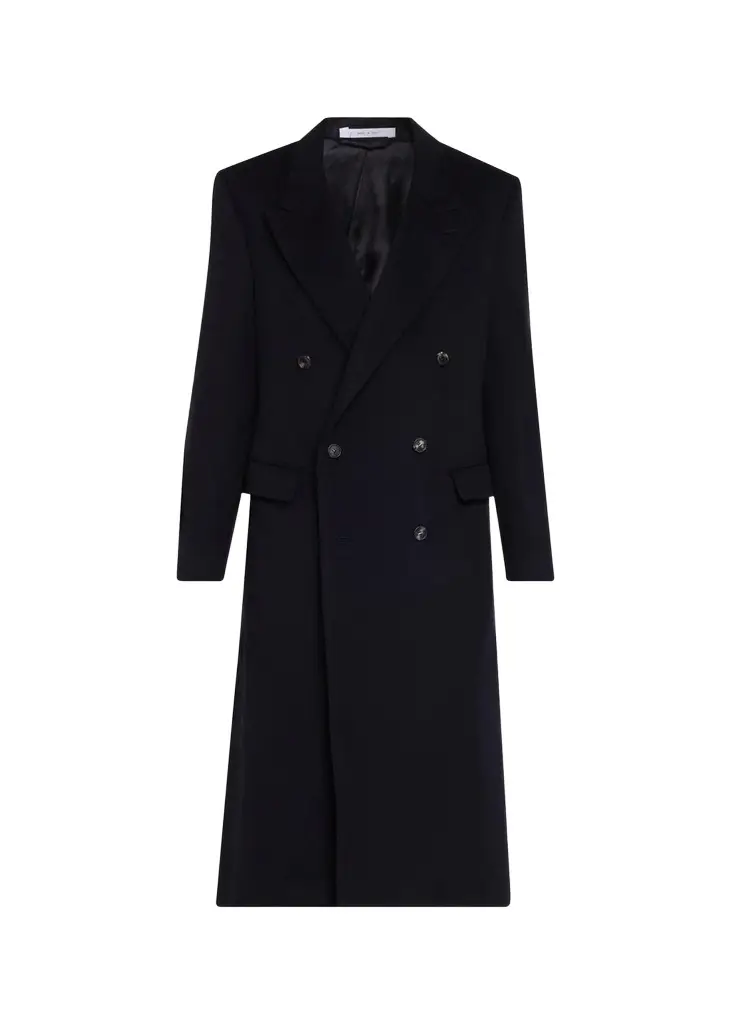 Gabriela HearstMen's Brannick Cashmere Overcoat$5,950
 KitonMen's Glen Plaid Cashmere and Virgin Wool Overcoat$13,250
How a winter coat should fit over tailoring
Most tailored overcoats are cut with room for a jacket underneath, so most men take the same size as their suit jacket. Always try a coat on over the heaviest jacket you will wear beneath it, then check these points.
- Shoulders: the coat's shoulder should sit just beyond the jacket's, with no dent where the jacket's shoulder pushes against the coat's sleeve.
- Chest: buttoned, the front should lie flat with no X-shaped pulls around the buttons. If you see them, go up a size.
- Sleeves: with your arms at your sides, the coat sleeve should cover the jacket sleeve and the shirt cuff completely.
- Length: the coat must cover the hem of the jacket by several inches. On an overcoat, knee length is the modern proportion and just below the knee the classic one.
- Collar: the coat collar should cover the jacket collar and sit close to the neck, with no gap at the back.
- Vent: a long coat needs a back vent or it will restrict your stride.
If you are between sizes, size up for an overcoat and down for a peacoat, which is worn over knitwear rather than a jacket.
Winter coat fabrics, from warmest to lightest
The cloth matters more than the brand name for warmth. Read the composition before the price.
- Down: the most warmth for the least weight, which is why most coats for serious cold are quilted. Down clumps and loses loft when it gets soaked, so the shell matters as much as the fill.
- Shearling: sheepskin with the wool left on, among the warmest coats without down and also among the heaviest. Keep it out of heavy rain.
- Heavy wool, melton and felt: wool fulled until the surface closes up, which stops wind. It is the classic cloth for overcoats and peacoats, warm and hard-wearing but stiffer across the shoulders; overcoatings of around 20 ounces per yard sit here, and anything much lighter is topcoat cloth.
- Double cashmere and double-faced cloth: two layers woven as one. The coat is warm and soft, holds its shape better than single-layer cashmere and often needs no heavy lining.
- Wool and cashmere blends: the wool adds durability and the cashmere adds softness. Check the percentages, because a coat sold as a cashmere blend can contain very little cashmere.
- Technical shells: nylon or microfiber with a waterproof or wind-resistant membrane, like Loro Piana's Storm System and Canali's membrane-backed down jacket. They add weather protection rather than warmth, which comes from the lining or fill underneath.
The best topcoats and car coats
A topcoat or car coat is the coat for October to December, for mild winters and for men who drive. Because it stops at or above the knee, it is lighter and easier to wear over knitwear, but check that it still covers a sport coat's hem if you plan to wear one underneath. Brioni cuts its topcoat from double-faced wool and cashmere, a cloth woven with two faces bound together that is warm for its weight. Loro Piana's Sebring is the choice for wet cities: a Windmate shell treated with the house's Storm System for a waterproof, wind-resistant finish, lined in cashmere and trimmed in suede. Burberry's car coat is reversible, which gives you two coats for travel.
- Smart casual: beige double-faced topcoat, navy cashmere quarter-zip, gray flannel trousers, brown suede loafers.
- Weekend: navy car coat, cream cable crewneck, dark jeans, brown suede boots.
- Rainy commute: black technical car coat over a navy suit, black derbies with rubber soles.
The best topcoats and car coats

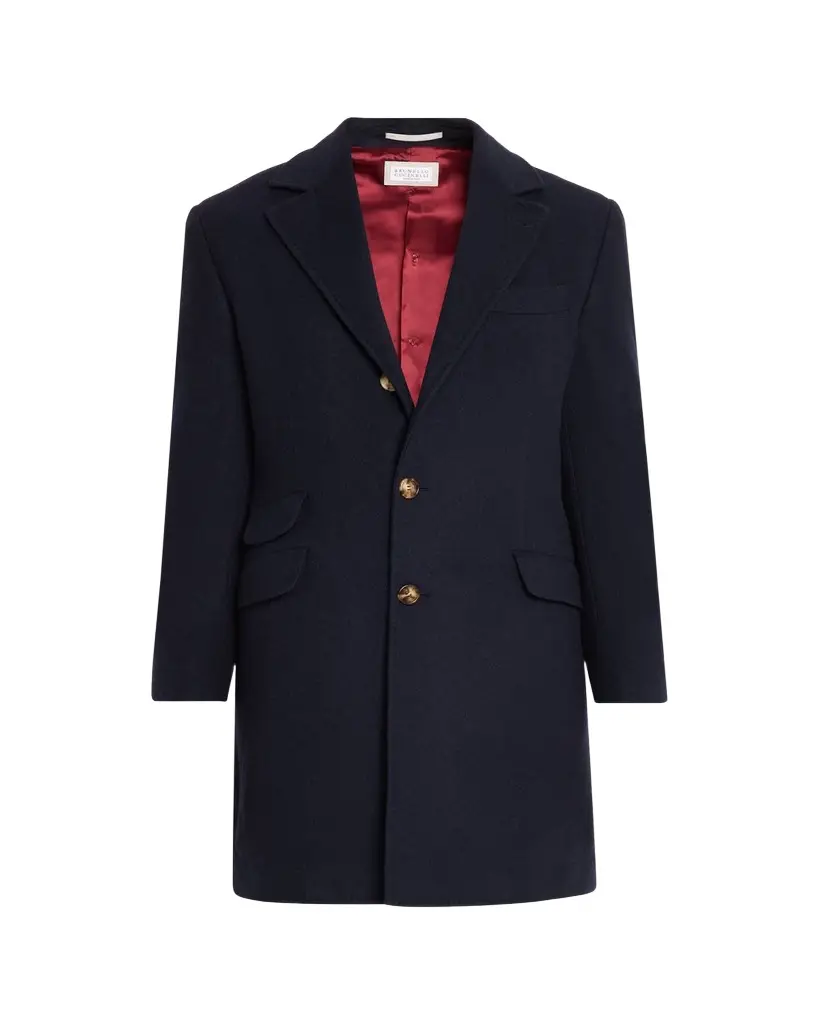


The best men's cashmere coats
A cashmere coat is lighter than a wool coat of the same warmth and softer against the neck, which is why it feels so good on a long walk. The trade-off is durability: pure cashmere wears faster, thinning and pilling at the cuffs, the pocket edges and wherever a bag strap rubs. If you carry a shoulder bag every day, choose a dense double cashmere or a wool and cashmere blend. As with sweaters, the word "cashmere" on a US label is regulated: the fiber must average 19 microns or finer under the FTC's labeling rules.
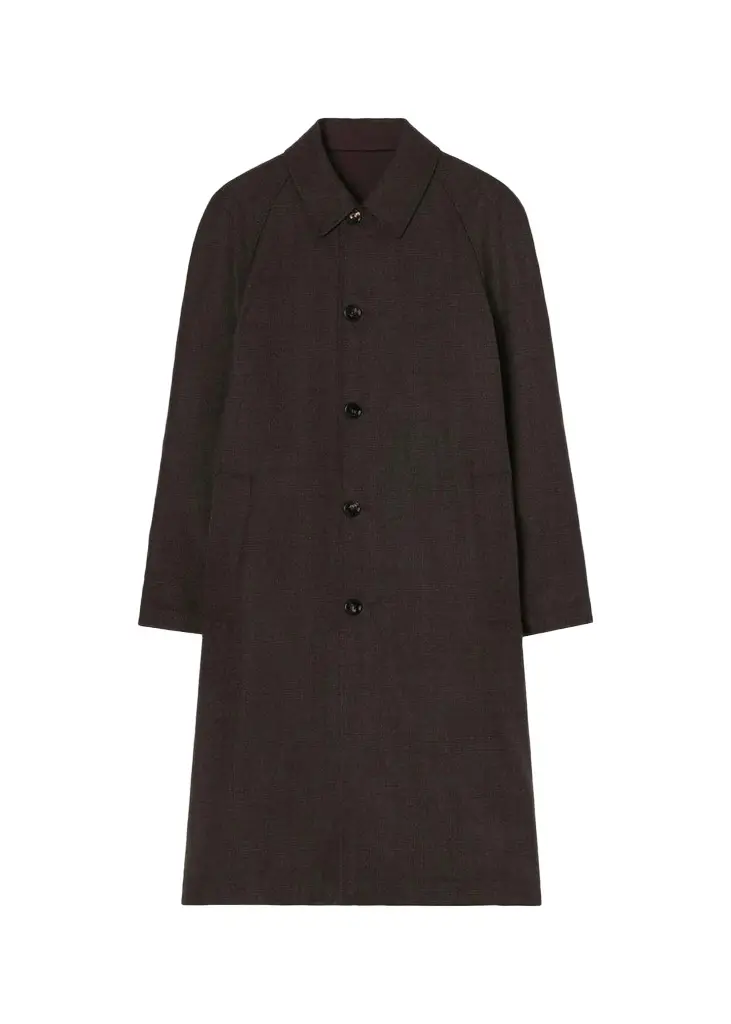
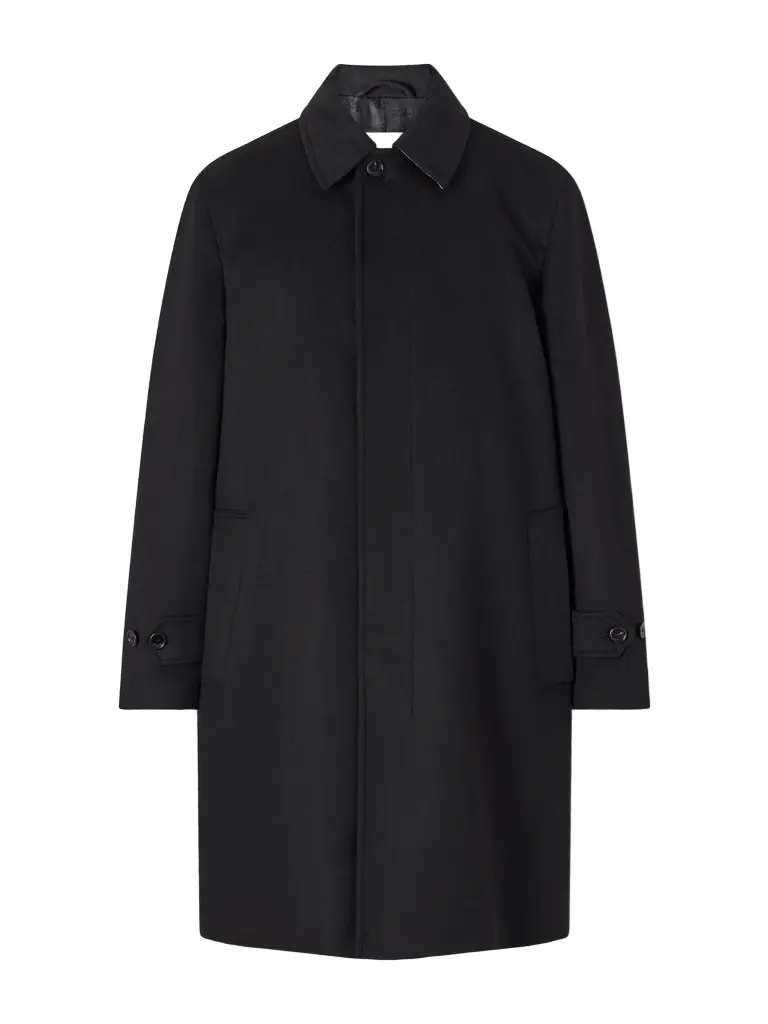
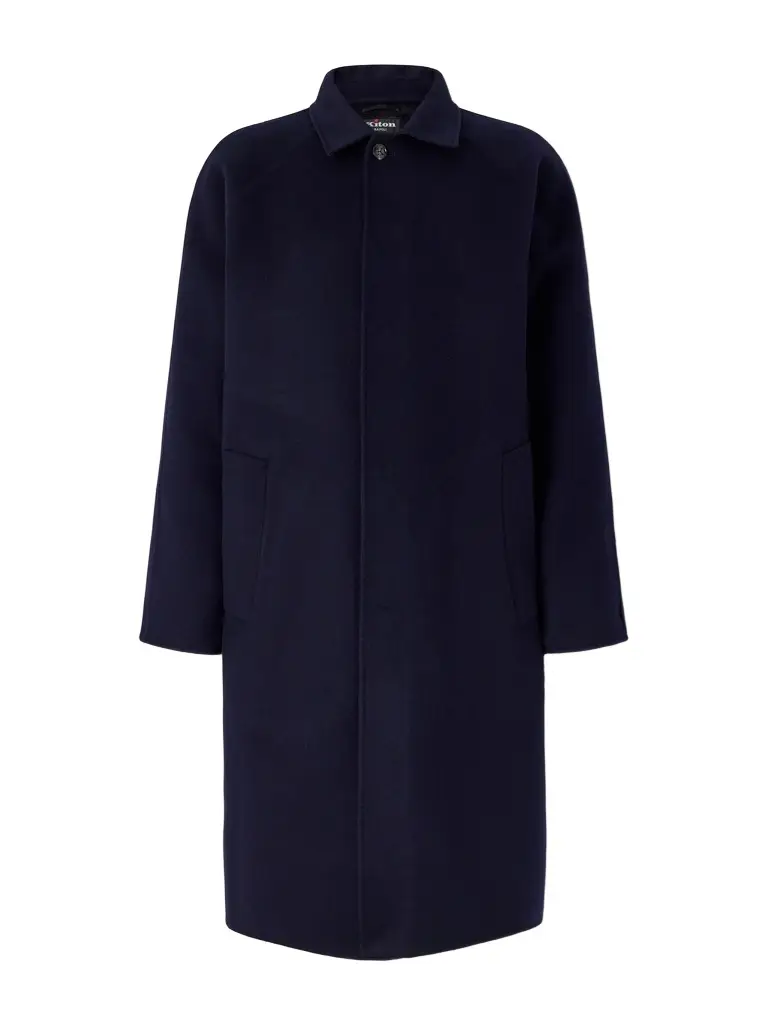
Burberry's cashmere coat takes its line from the house's car coats, single-breasted with a concealed fastening, so nothing interrupts the front; Kiton's navy coat has the same clean front with raglan sleeves and a shirt collar. Brunello Cucinelli gives its sand-colored cashmere coat a water-resistant finish, which makes a pale coat practical in the city. Loro Piana's Narvik is shorter and boxier, cut from double cashmere treated with the house's Rain System finish and finished by hand. Brioni's double-breasted coat in sienna is the one to buy if you already own a navy coat: a warm color that works over gray and navy suits.
- City: black cashmere coat with a concealed fastening, gray flannel suit, black shoes.
- Tonal: taupe cashmere coat, chocolate rollneck, cream trousers, dark brown loafers.
- Color: sienna double-breasted coat over a charcoal suit and a white shirt, no pattern anywhere else.
The best men's cashmere coats



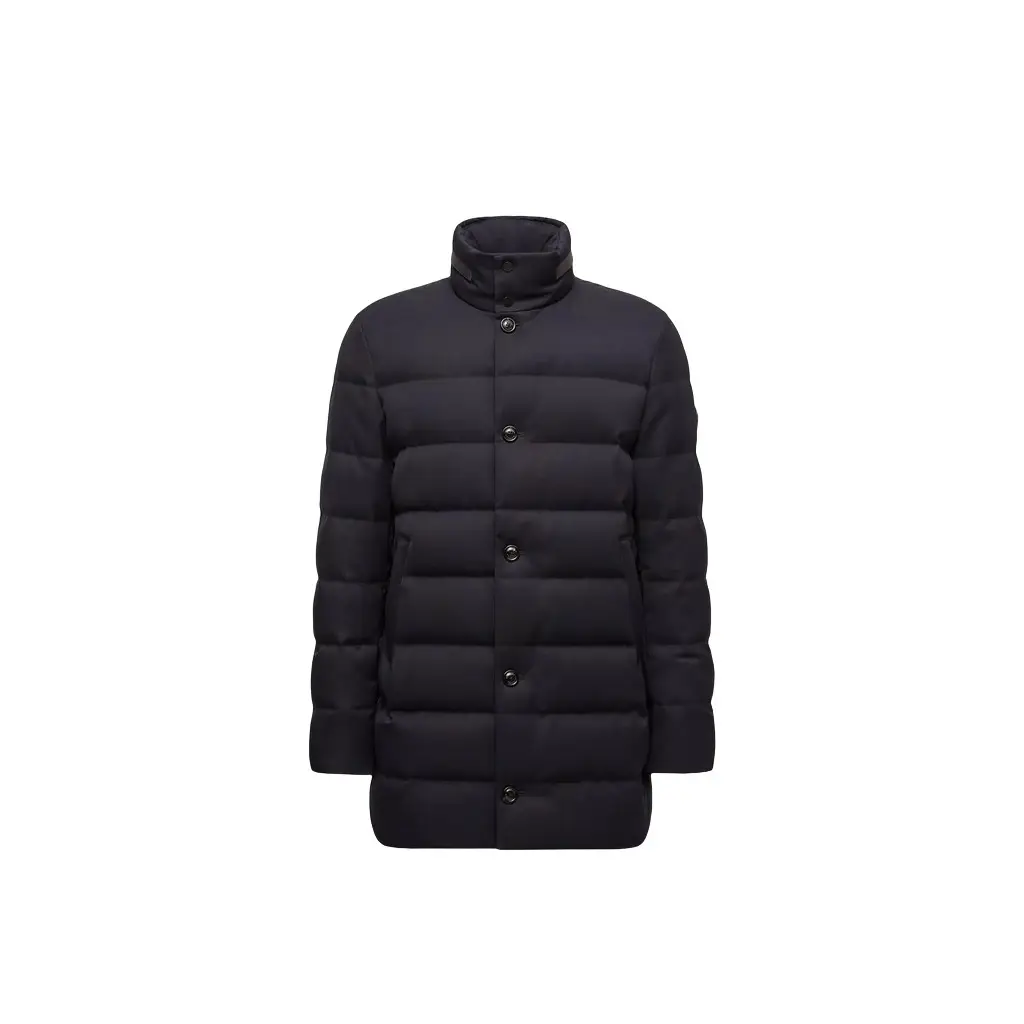
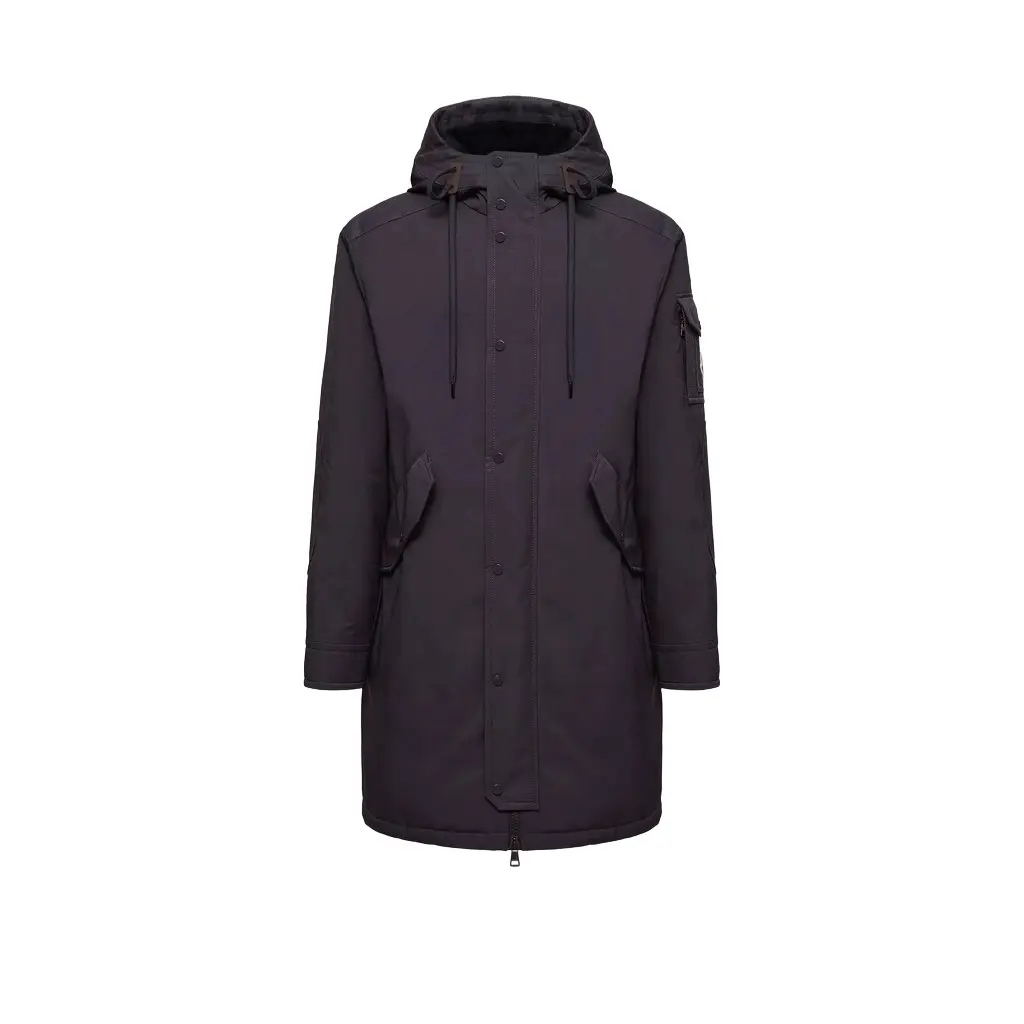
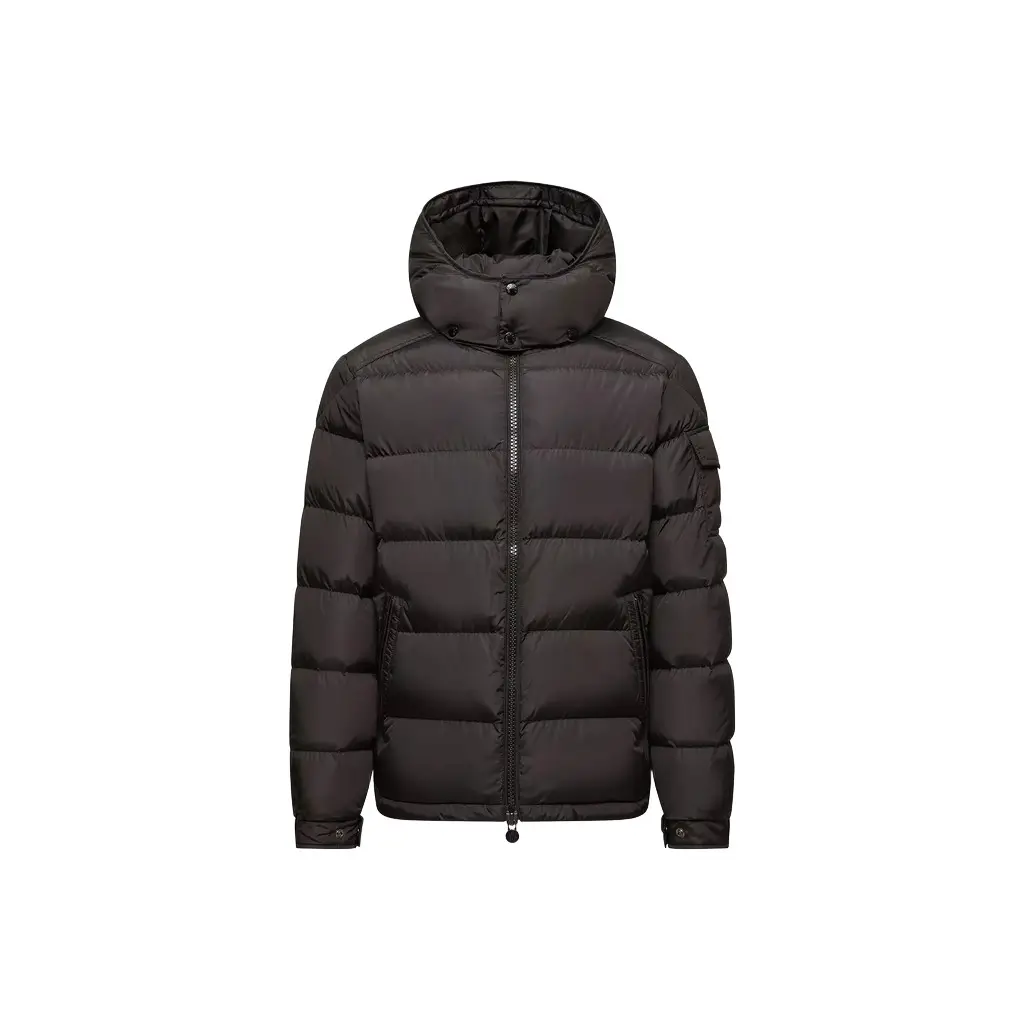
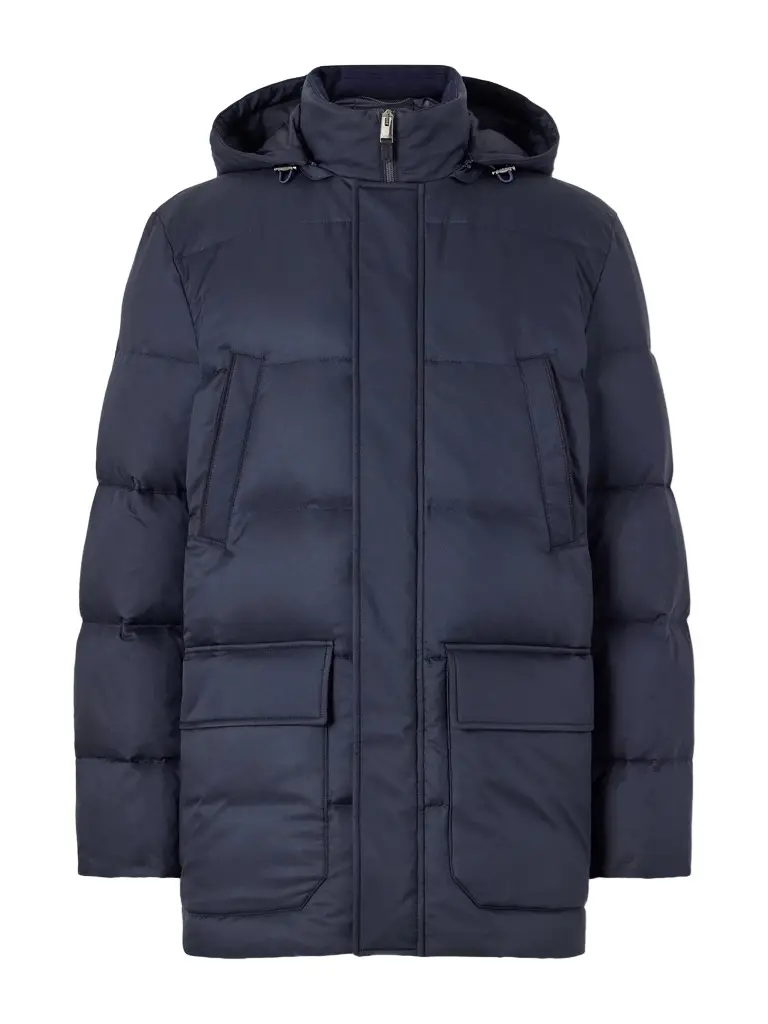
The best men's puffers and down parkas
For long stretches outside below freezing, down beats wool. Two numbers tell you how warm a down jacket is. Fill power measures loft, the space a given weight of down occupies; the higher the number, the greater the insulating capability, according to the International Down and Feather Bureau. The down-to-feather ratio tells you how much of the fill is down clusters rather than feathers: Moncler lists its Maya jackets and Zegna its technical cashmere down jacket at 90% down and 10% feather. Several houses publish that ratio rather than a fill-power number, so it is often the only figure you will find. Our guide to designer puffer coats covers fill and shell fabrics in more depth.
Choose the shell by where you will wear it. A short puffer such as Moncler's Maya is for weekends. A long parka like Moncler's Nahan covers the thighs for snow and wind. Wool shells, such as Moncler's Vallonpierre and Brunello Cucinelli's bonded wool flannel parka, look tailored enough to wear over a suit on the coldest days. Moncler uses numbered sizes rather than letters, so check the house chart and leave room for a sweater underneath.
- Over a suit: long wool-shell down coat, navy suit, rollneck, leather gloves.
- Weekend: short matte puffer, gray cashmere hoodie or crewneck, dark jeans, suede boots.
- Snow: long hooded down parka, cable sweater, corduroys, lug-sole boots.
The best men's puffers and down parkas


See every men's quilted and down jacket in stock.
Peacoats and shearling for the weekend
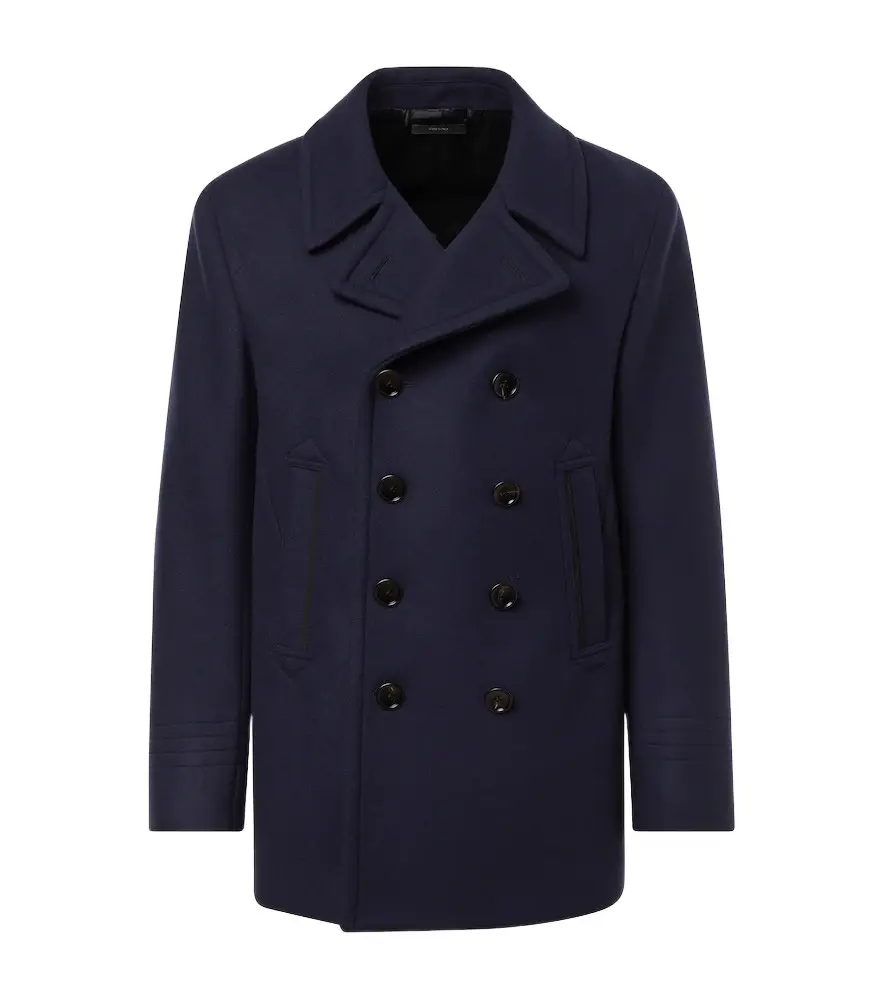
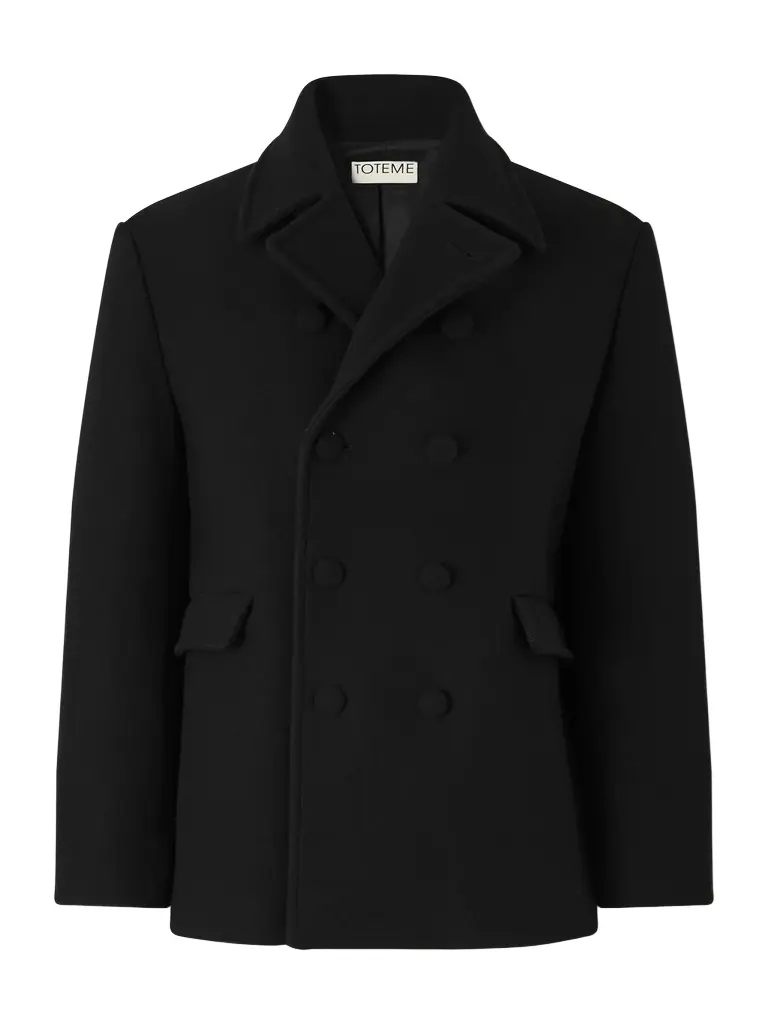
A peacoat is about as warm as a short wool coat gets: heavy wool that stops at the hip, double-breasted with a broad collar you can turn up against the wind. Because it is short, wear it with knitwear, jeans and chinos, never over a suit jacket. Tom Ford makes it in wool felt; TOTEME's version, in heavyweight wool with covered buttons, is the most accessible piece in this guide. Shearling is warmer still and heavier. Zegna's shearling coat is cut long enough to cover the seat, which makes it an everyday coat as much as a weekend one; Loro Piana's Baydan is a leather aviator jacket with a shearling collar.
- Classic: navy peacoat, gray crewneck, dark jeans, brown suede boots.
- Country: shearling coat, chunky rollneck, olive corduroys, lace-up boots.
Peacoats and shearling for the weekend


Browse more men's coats or shearling, or ask our AI stylist to build a winter outfit around the coat you choose.
Navy, charcoal, camel or black: which coat color first?
- Navy is the most useful first overcoat. It works over navy, gray and brown suits, with jeans and at night.
- Charcoal is almost as useful and a little more formal, and it pairs with black shoes as easily as brown.
- Camel and beige lift dark suits and look best with brown shoes. Make camel your second coat, not your first.
- Black is for evening and formal dress. By day, over a navy suit, it can look severe.
How to care for a wool or cashmere coat
Brush the coat with a clothes brush after wearing to lift dust before it settles into the cloth. Hang it on a broad, shaped wooden hanger so the shoulders keep their line, and let it rest a day between wears. If it gets wet, let it dry at room temperature away from radiators. Dry-clean it once at the end of the season rather than after every stain, and store it clean in a breathable cover. For down, follow the care label; most need cleaning only once a season.
How we chose the best men's winter coats
We chose from the top houses Vêtir carries and only coats in stock when we published, most in several sizes. We read each coat's cloth, length and construction, checked every image to confirm the cut and color, and covered each type of coat, from a tailored overcoat to a down parka, across a wide price range, with no more than three coats from one house in any edit. For down, we favored jackets whose composition lists the down-to-feather ratio.
Frequently asked questions
What is the difference between an overcoat and a topcoat?
Mostly cloth weight, then length. A topcoat is cut from lighter cloth, traditionally 18 ounces per yard or less, and usually ends around the knee; an overcoat uses heavier cloth, around 20 ounces, and can run from just above the knee to the ankle. Buy an overcoat for deep winter over a suit and a topcoat for fall, mild winters and smart-casual wear.
What is the warmest type of men's winter coat?
A long down parka with a high down-to-feather ratio and a hood. For tailored coats, dense double cashmere or heavy melton wool is warmest, and shearling is warmer again, though heavy.
Should I size up for an overcoat to wear over a suit?
Usually not. Most tailored overcoats are designed to go over a jacket, so start with your suit size and try the coat on over your heaviest jacket. Size up only if the buttoned front pulls or the jacket's shoulders push into the sleeves.
Is a cashmere coat worth it?
If you want the lightest, softest coat for its warmth, yes. If your coat takes daily wear from a shoulder bag or a car seat belt, a wool and cashmere blend or a dense double cashmere will last longer.
How long should a men's winter coat be?
An overcoat worn with a suit should reach the knee or just below it and cover the jacket completely. A car coat ends mid-thigh and a peacoat at the hip, which is why those two are for casual clothes.