What to Wear to a Winter Wedding: A Guest's Guide to Every Dress Code
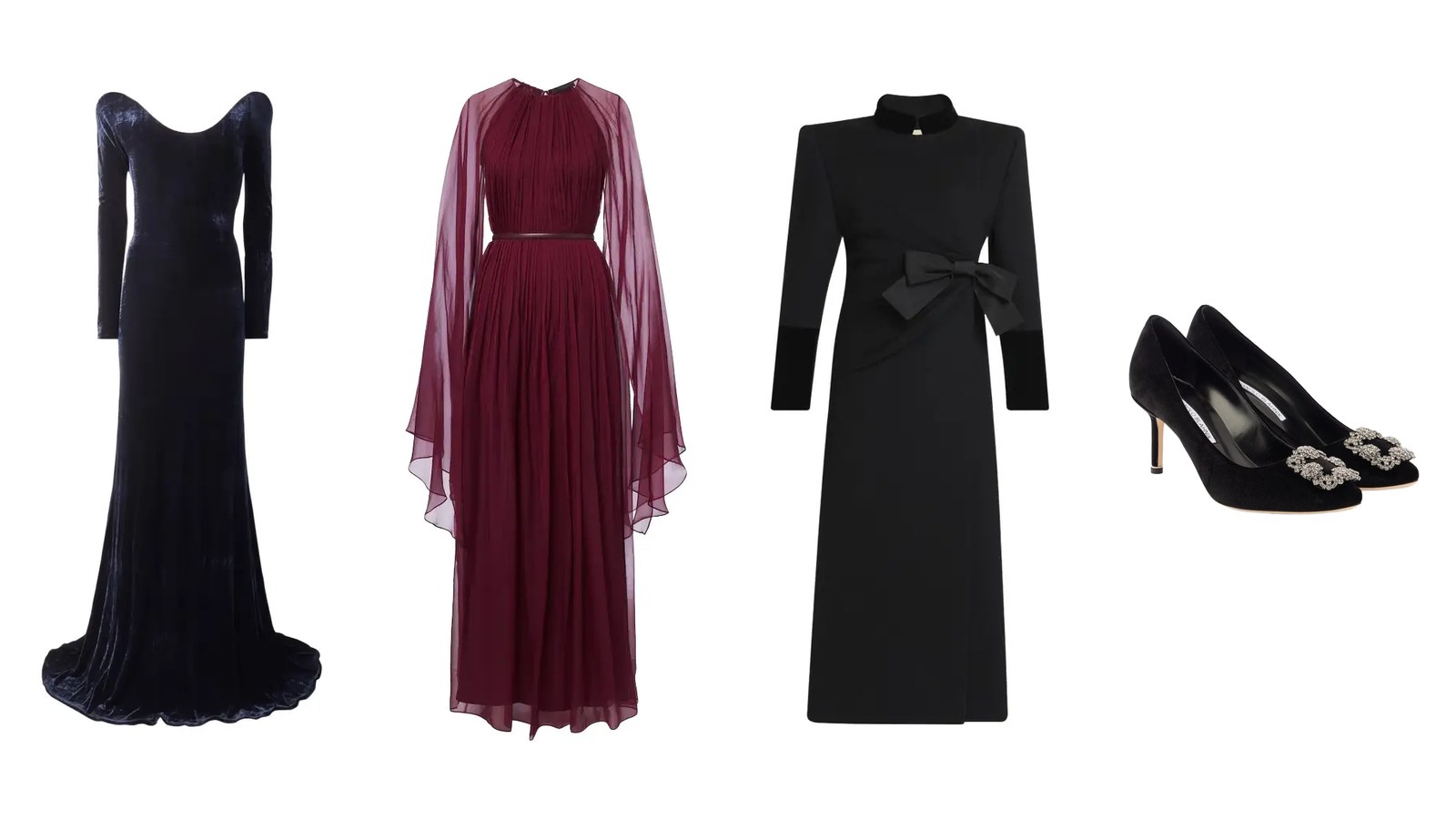
The best winter wedding guest outfits follow the dress code first and the weather second. For a black-tie winter wedding, that means a floor-length gown in velvet, duchess satin or heavy crepe, in a deep jewel tone or black, with a coat long enough to cover the hem. For cocktail attire, choose a knee-to-midi dress in the same weights, ideally with sleeves, worn with sheer tights and closed-toe pumps. A daytime invitation calls for a wool crepe or fine-knit dress, or a suit. Whatever the dress code, leave white, ivory and cream to the bride: the Emily Post Institute counts cream as white.
Below, our editors go through each dress code with outfit formulas, then cover fall weddings, the fabrics that hold up in the cold, the colors to wear and avoid, coverage for religious ceremonies, and the coats, shoes and bags that finish the look.
Winter wedding guest outfits by dress code
Start with the invitation. The Emily Post Institute's wedding guest attire guidance treats the invitation and the time of the ceremony as your best guide to formality, and in a June note on guest manners the Institute adds that a late-afternoon or evening ceremony followed by an evening reception is often a semi-formal or formal wedding. If the couple has a wedding website, read its attire notes before you ask them; they are fielding enough questions already.
Winter adds something the invitation won't mention: it gets dark early. On December 21 this year, US Naval Observatory sun data put sunset at 4:32 pm in New York, 4:23 pm in Chicago and 4:48 pm in Los Angeles, so a 4 pm ceremony lets out at dusk and the whole reception happens after dark. The dress code still comes from the invitation, but favor fabrics with depth or a soft sheen. They read better under candles and low light than flat cotton or linen.
Here is how the usual wording translates, based on the Emily Post Institute's attire guide and its wedding guidance:
| The invitation says | What it asks of women | How to wear it in winter |
|---|---|---|
| Black tie | A floor-length evening gown; a dressy cocktail dress or your dressiest little black dress is also accepted | Go long: velvet, duchess satin or heavy crepe, with sleeves or a wrap for the ceremony |
| Black tie optional | A formal evening gown, a shorter cocktail dress or dressy separates | A gown is still safest; otherwise a velvet or satin midi, or a long satin skirt with fine cashmere |
| Formal (evening) | A long evening dress or a dressy cocktail dress, depending on local custom | Let the venue decide: a ballroom means long, a restaurant or gallery can take a dressy midi |
| Cocktail or semi-formal | A cocktail dress, a little black dress, a long dressy skirt and top, or dressy separates | Knee to midi length, sleeves, sheer tights, closed-toe pumps |
| Daytime | A cocktail or dressy afternoon dress when formal; a dressy afternoon dress, suit or pantsuit when semiformal | Wool crepe, cashmere-silk knits and tailoring in rich colors |
| Creative black tie | Black-tie formality with room for color, texture and statement accessories | A long gown in an unexpected color or fabric, feathers or embroidery, a jeweled bag |
Black-tie winter weddings
Black tie is the dress code named most often in the requests Vêtir's AI stylist receives, and in winter it is the easiest one to get right, because floor length does two jobs at once: it meets the dress code and it keeps you warm between the car and the ballroom. Emily Post also accepts a dressy cocktail dress at black tie, but the strongest winter wedding guest dress for black tie is still a gown.
Choose the fabric for the room. Velvet absorbs light and looks richest by candlelight; duchess satin reflects it and holds the shape of a full skirt; heavy crepe drapes close to the body and survives the car ride without creasing. Then think about sleeves. A long-sleeved or high-necked gown, such as Saint Laurent's turtleneck column in midweight wool ponte or Carolina Herrera's long-sleeved gown with bows down a keyhole front, covers you for a religious ceremony and a cold church without a wrap. Four formulas that work:
- Navy velvet, bare collarbones. Alaïa's velvet gown pairs long sleeves with a curved off-the-shoulder neckline and a low back. Add diamond or pearl studs, black velvet pumps and a small satin clutch, and skip the necklace.
- Burgundy chiffon, sheer sleeves. A pleated silk chiffon gown with sheer cape sleeves, like Max Mara's in bordeaux, veils bare arms in church without hiding the dress. If the congregation expects fully covered arms, add a wrap. Finish with gold drop earrings and a black velvet evening coat.
- The minimalist column. A black long-sleeved gown, sculptural earrings and a jewel-colored bag as the only color.
- Color with restraint. Deep teal, plum or aubergine in satin or crepe, with one metal (all gold or all silver) in the jewelry. A high neck with short sleeves, as on the aubergine satin gown below, needs only a wrap for the church.
Floor-length gowns for a black-tie winter wedding
 AlaïaOff-the-shoulder Velvet Gown$7,450
 Saint LaurentLong Sleeve Turtleneck Gown$3,500
 Carolina HerreraTriple Bow Keyhole Long-Sleeve Gown$2,990
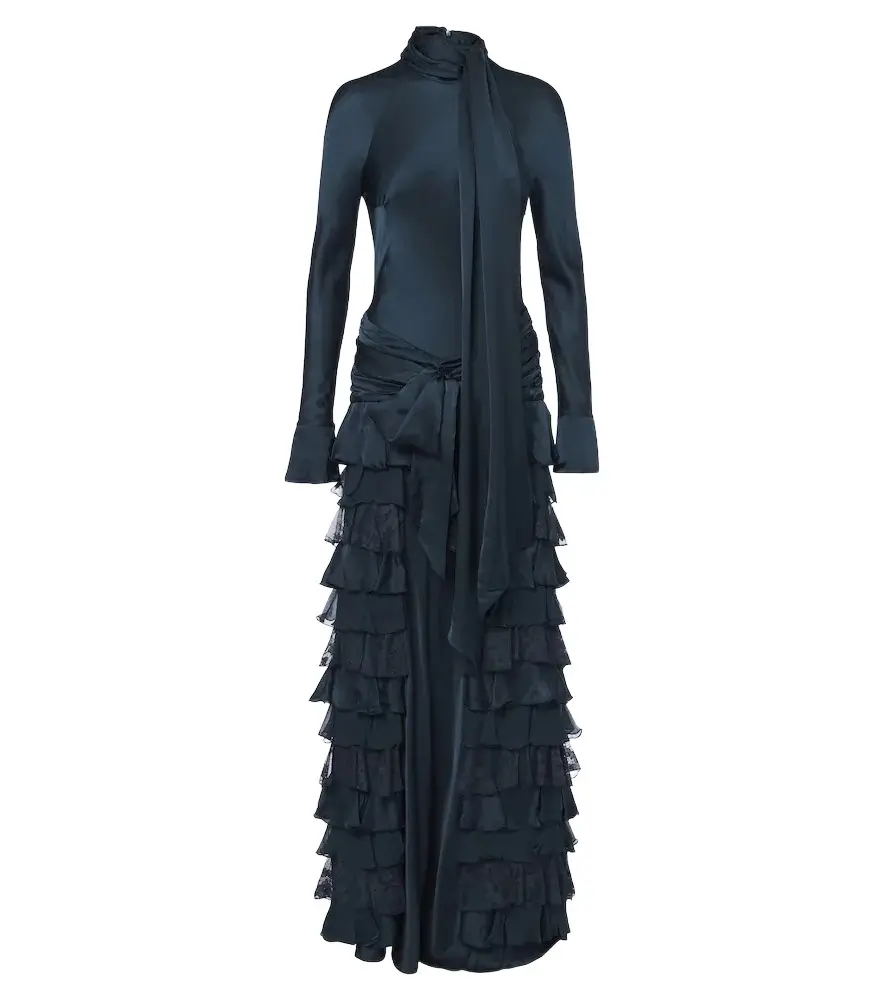 ZimmermannValiant ruffled silk satin and chiffon gown$3,350
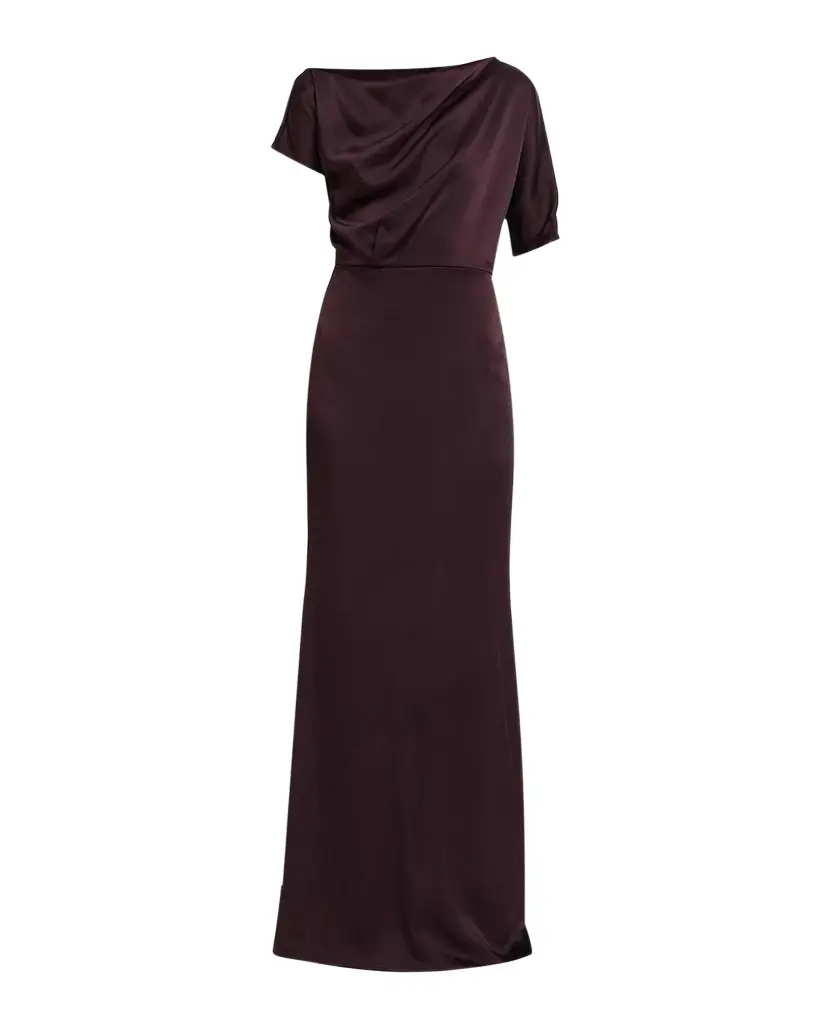 KitonAsymmetric Draped Satin Short-Sleeve Trumpet Gown$3,640
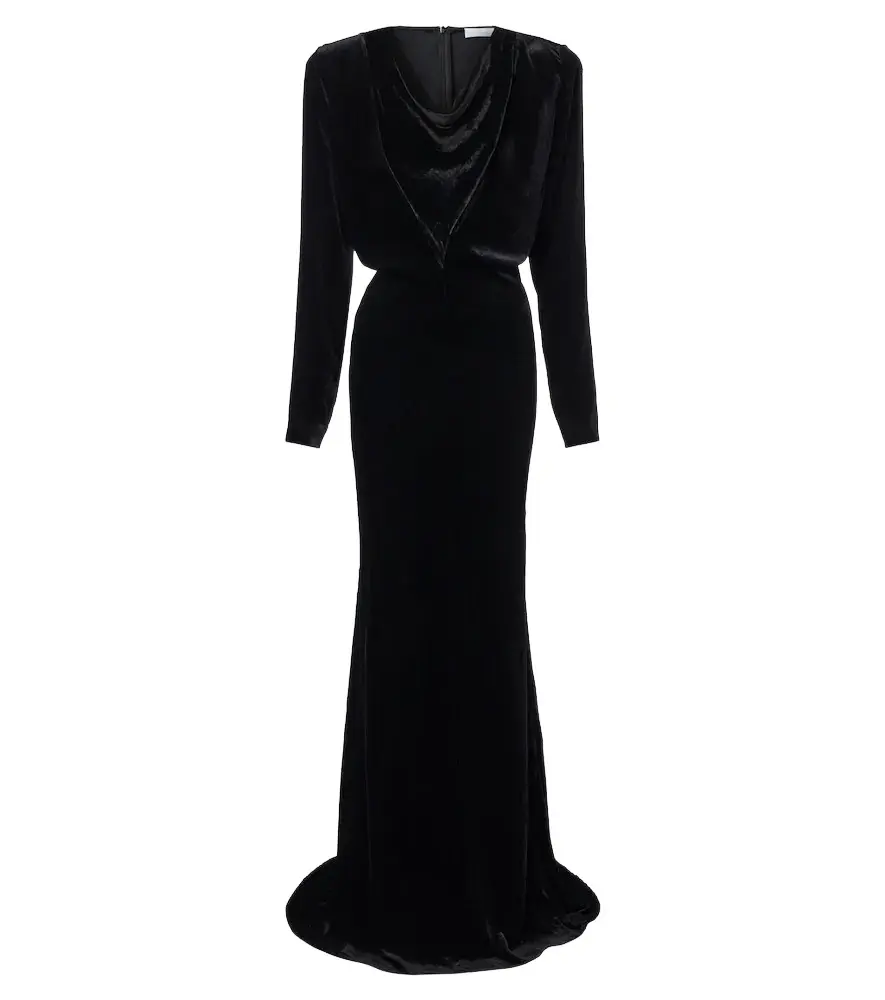 Stella McCartneyDraped velvet gown$2,400
For the finer points of black tie, including fit and tailoring, see our black-tie dress code guide. If the reception feels closer to a charity gala, our guide to what to wear to a gala covers the jewelry and bag decisions.
Black tie optional and formal
Black tie optional gives guests a choice. According to the Emily Post Institute, men may swap the tuxedo for a dark suit, and women may choose a formal gown, a shorter cocktail dress or dressy separates. A gown is still the safest reading at a winter evening wedding. If you go shorter, give it weight: a velvet or satin midi, a tea-length dress in duchess satin, or a floor-length satin skirt with a fine-gauge cashmere top.
"Formal" on its own is looser. Emily Post's guidance for a formal evening wedding is a long evening dress or a dressy cocktail dress, depending on local custom, so let the venue settle it. A hotel ballroom or a country club at 7 pm means long; a restaurant, gallery or loft can take a dressy midi.
The separates formula: a floor-length satin skirt, a fine black cashmere turtleneck tucked in, drop earrings and velvet pumps. It reads as evening, it is warmer than a slip dress, and each piece works again on its own.
Cocktail attire for a winter wedding
Emily Post's attire guide files cocktail dresses under semi-formal, alongside a little black dress, a long dressy skirt and top, or dressy separates, and advises erring toward formality for anything after 6 pm. In winter, the trap is a summer slip dress with a coat thrown over it. Build the look from winter weights instead: velvet, crepe-back satin, cloqué, jacquard, tweed, embellished knit.
Keep the hem between the knee and mid-calf, choose sleeves (long, elbow-length or a structured short sleeve) and add sheer black tights with dark colors. Opaque tights read daytime, so keep them for a lunch reception. Khaite's Harlin dress shows the winter cocktail shape well: crushed satin with a sculpted stand collar and full sleeves, cinched at the waist, so the volume sits on top and the line below stays narrow. The high neck also covers you for a church ceremony.
- Navy jacquard, crystal buckle. A high-necked navy midi in metallic floral jacquard, like Carolina Herrera's, with sheer black tights and black velvet pumps; Manolo Blahnik's Hangisi 70 adds the crystal buckle, so the jewelry can stay small.
- Chocolate satin. An off-the-shoulder satin midi with gold earrings and a burgundy suede clutch.
- Tweed with a jeweled belt. A navy tweed midi with elbow sleeves and a gold belt, like Oscar de la Renta's, with black suede pumps and no necklace. Tweed is the fabric that takes a cocktail dress from a December dinner to a church at noon.
- Crimson knit. A long-sleeved shimmering knit midi with a blouson top, warm enough to skip the wrap at a drafty venue. Keep everything else black.
Cocktail dresses with winter weight
 Carolina HerreraMetallic Floral Jacquard Short-Sleeve Belted Midi Dress$3,290
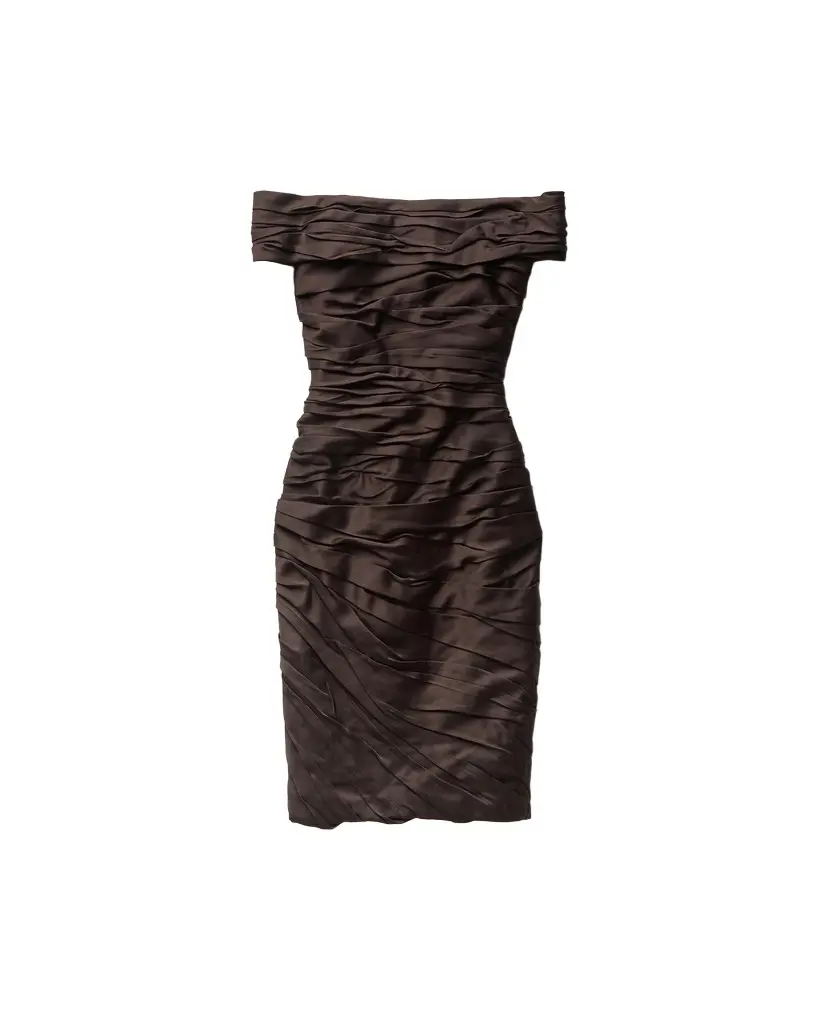 VersaceDraped Envers-Satin Off-Shoulder Midi Dress$7,500
 Oscar de la RentaEmbellished tweed midi dress$4,890
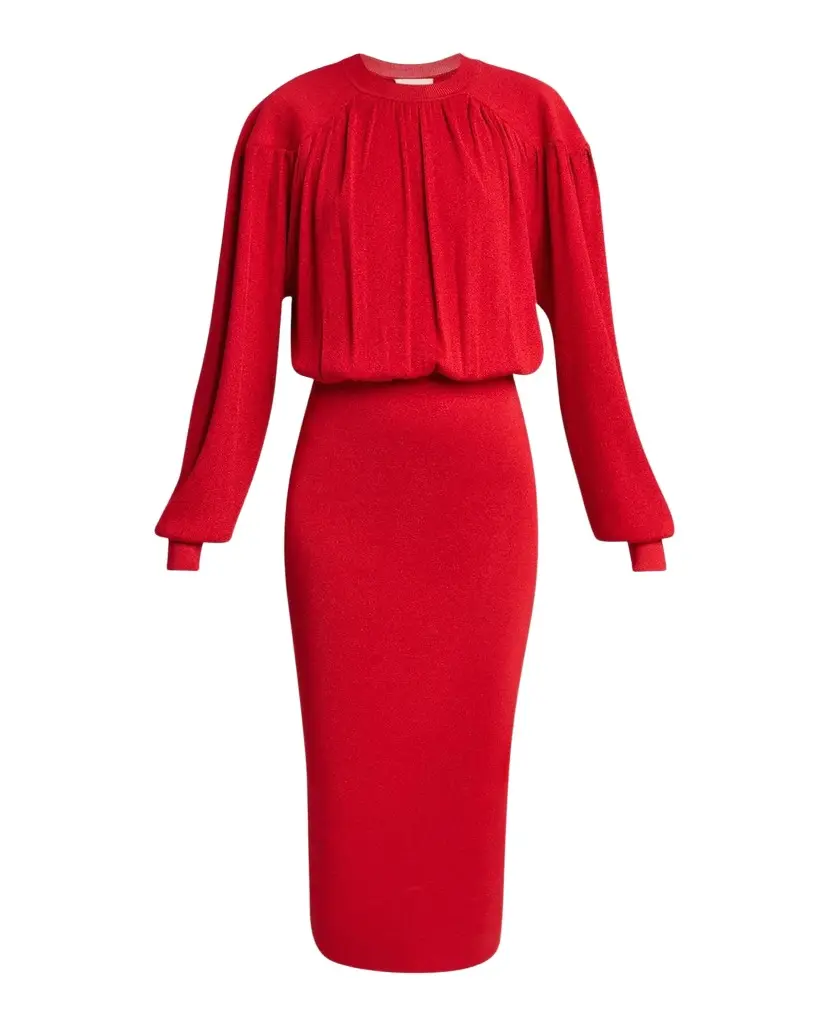 Isabel MarantAliza Shimmering Knit Long-Sleeve Midi Dress$1,190
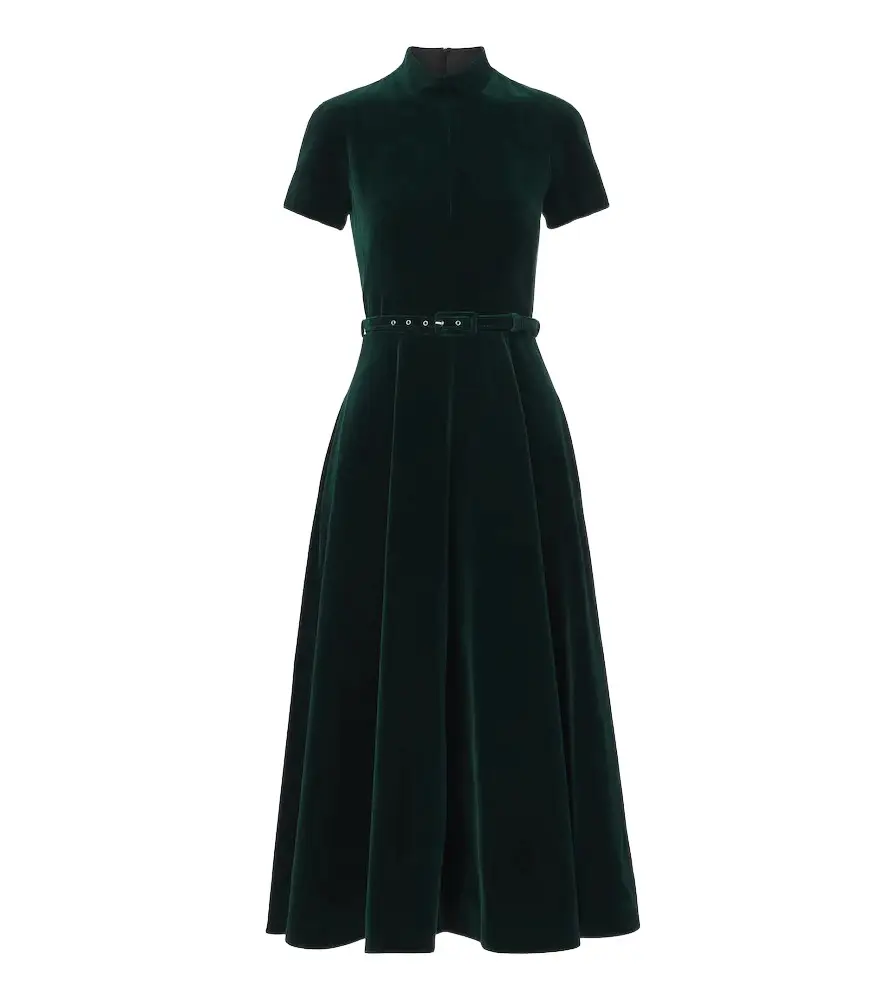 Emilia WicksteadCamilla belted cotton velvet midi dress$2,775
Our cocktail attire guide goes further into hemlines and what separates cocktail from business dress.
Daytime winter weddings
For a formal daytime wedding, Emily Post's guidance is a cocktail or dressy afternoon dress; for a semiformal daytime wedding, a dressy afternoon dress, a suit or a pantsuit. Daylight is less forgiving of shine, so trade satin and sequins for texture: wool crepe, double-faced wool, cashmere-silk knit, bouclé. For a church ceremony followed by a lunch reception, a block or kitten heel handles stone steps and long stretches of standing better than a stiletto.
- Moss wool, camel coat. A stretch-wool dress with a draped neckline, a camel wrap coat and brown suede pumps.
- Red wool crepe. A midi cut like a skirt suit, black pumps and pearl studs.
- Burgundy wool. A belted wool shirt dress, a long wrap coat and knee boots for a country or barn venue.
- Black wool, colored accessories. An A-line wool midi with a jewel-toned bag and leather gloves.
Wool and knit dresses for a daytime wedding
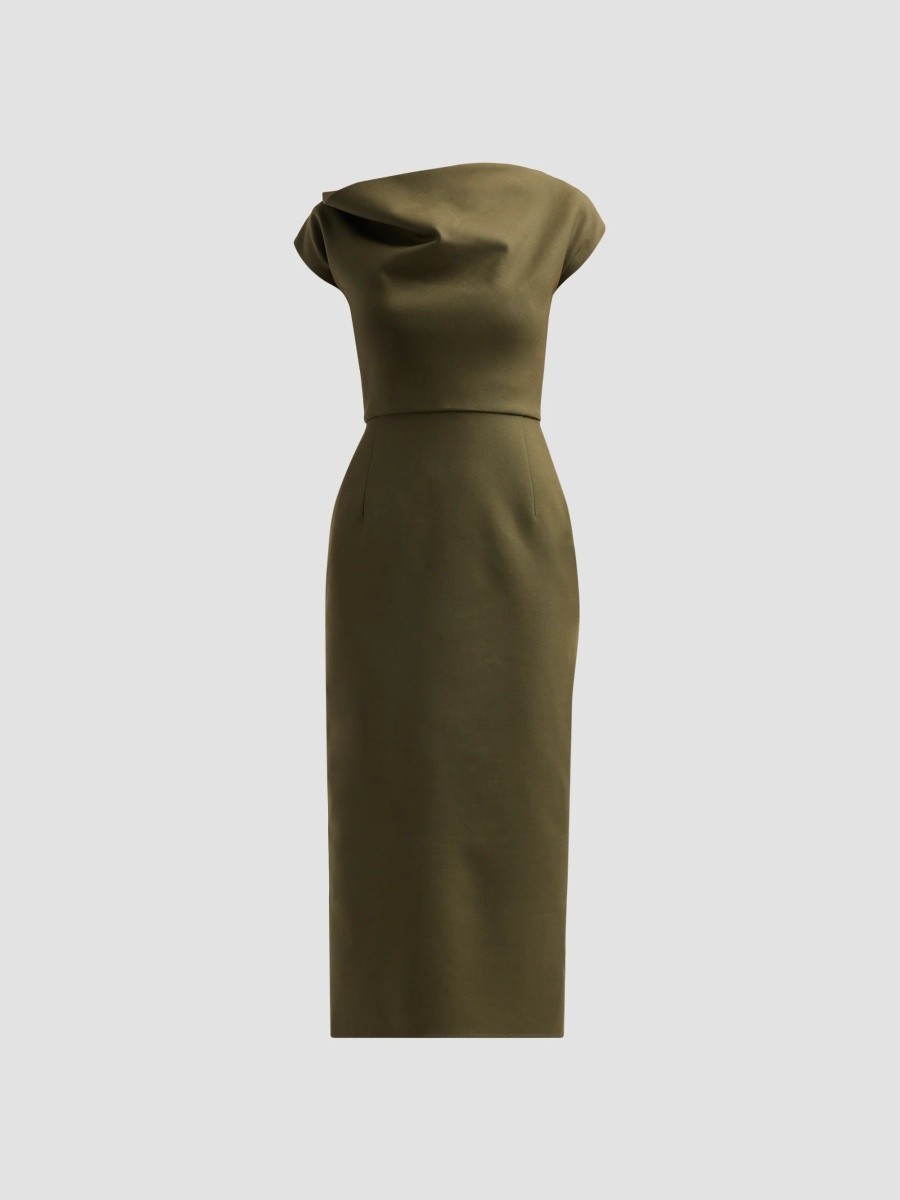 Oscar de la RentaWomen's Draped Neck Stretch Wool Dress$4,290
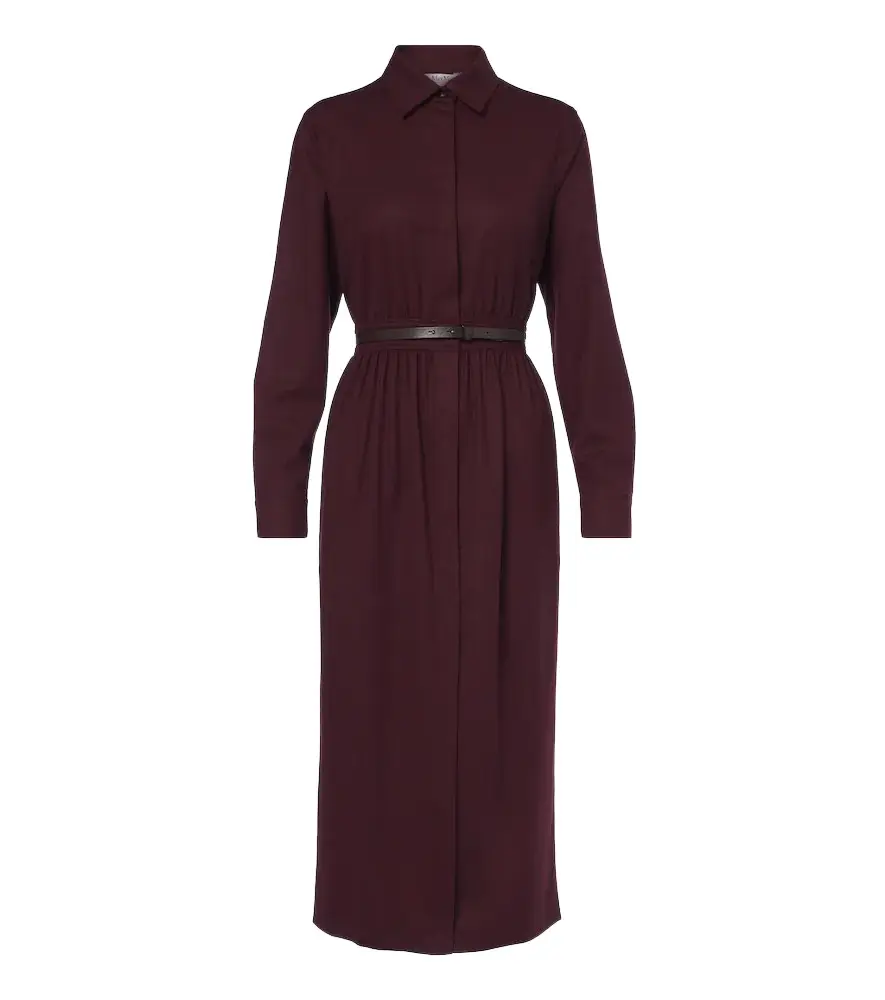 Max MaraBelted wool-blend shirt dress$1,670
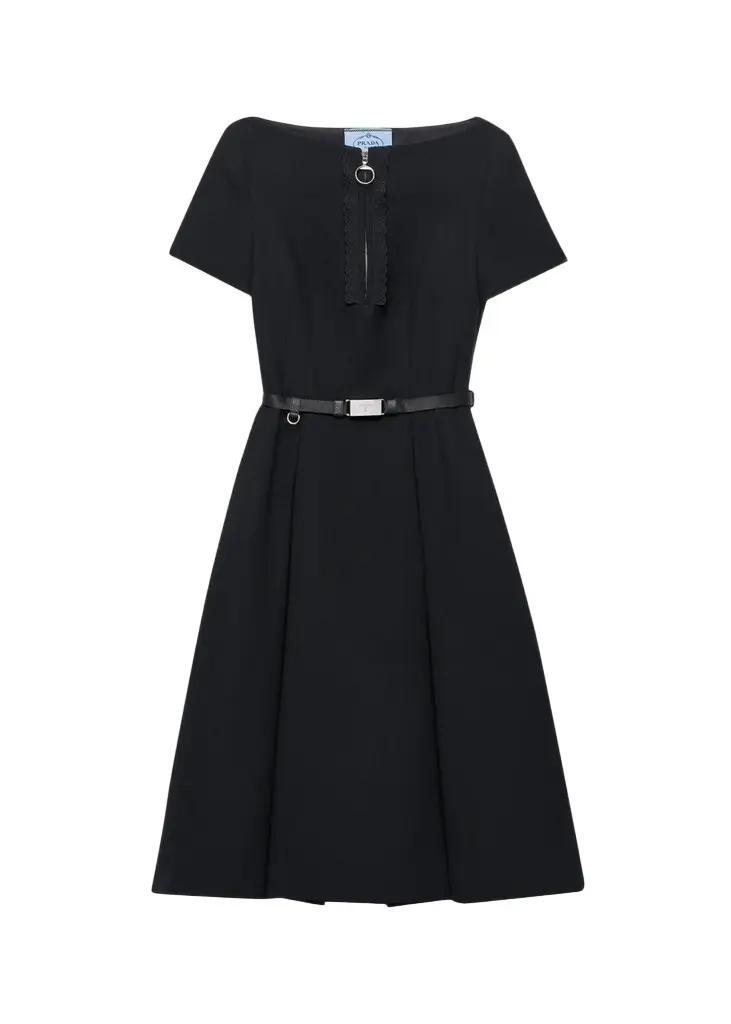 PradaAbiti Wool A-Line Midi Dress$6,400
 Gabriela HearstSeymore Knit Midi Dress in Dark Navy Merino Wool Cashmere$1,790
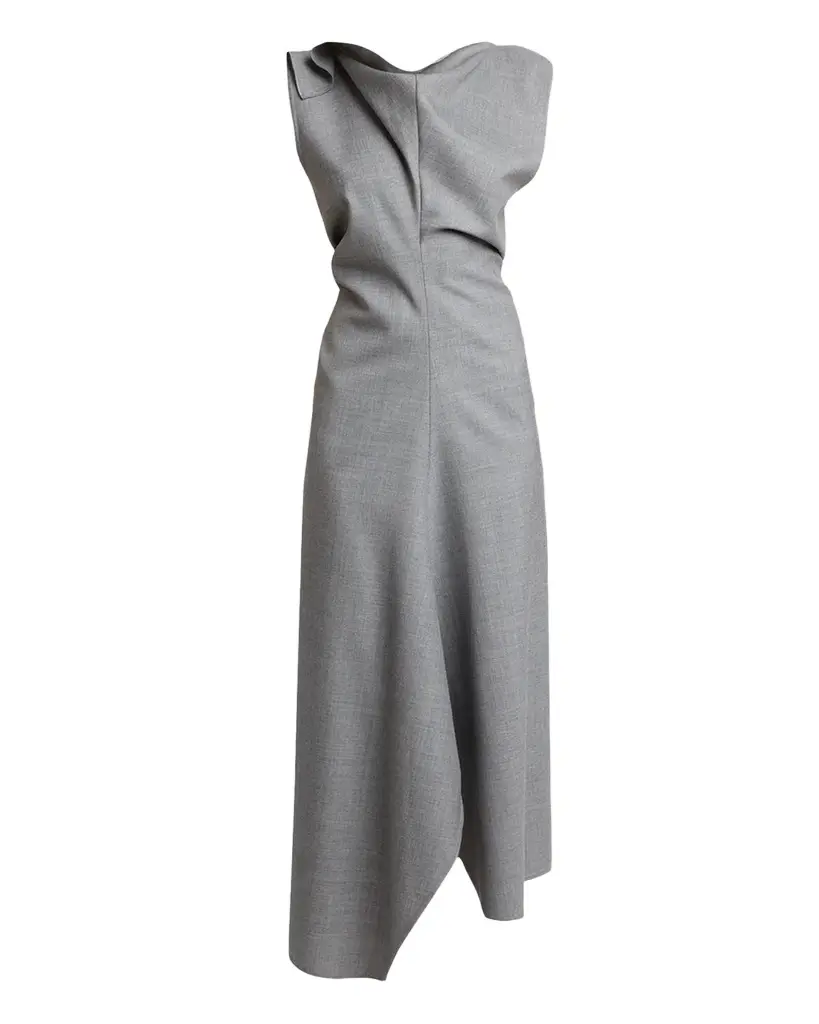 Victoria BeckhamDraped Virgin Wool Midi Dress$1,650
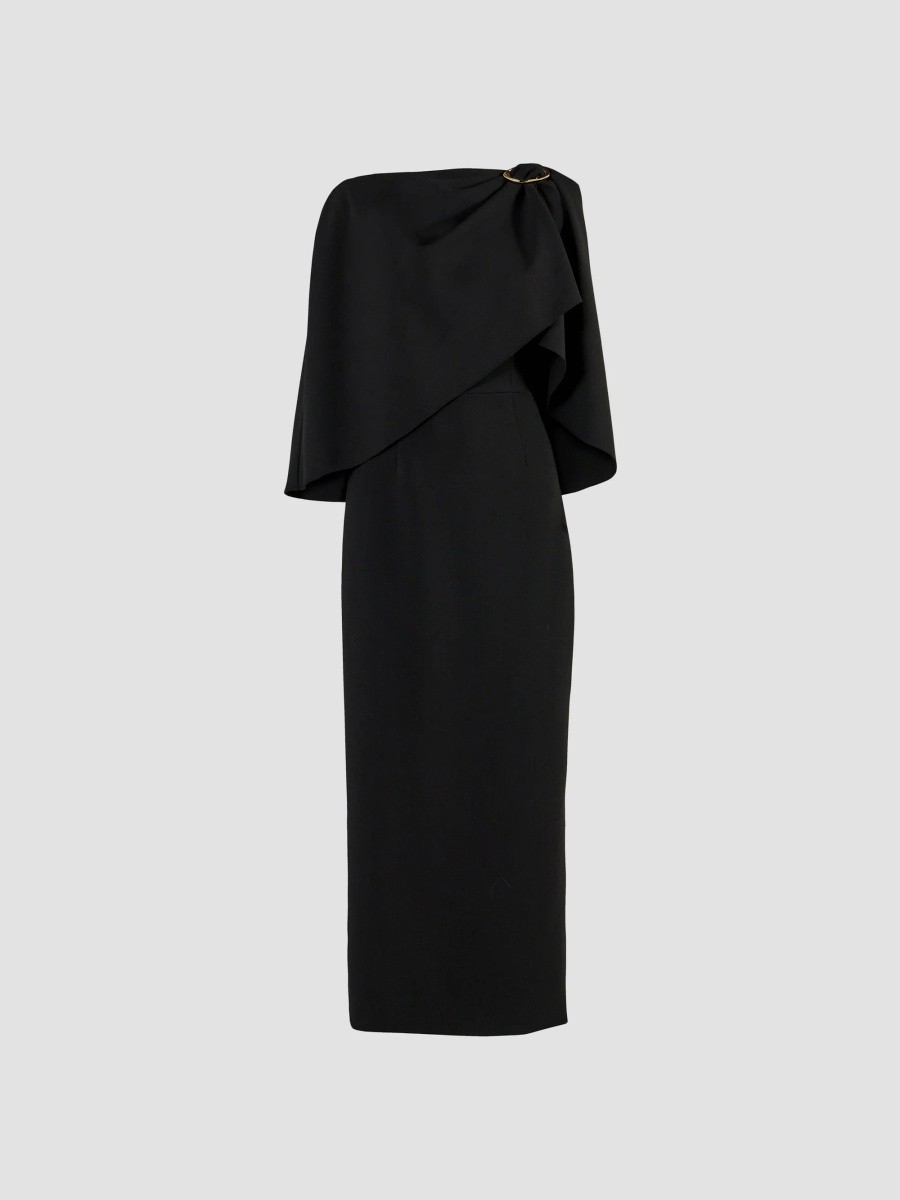 Carolina HerreraWomen's Stretch Virgin-Wool Draped Cape Midi Dress$2,690
Snow, mountain and destination weddings
A ski-town or country wedding is still a wedding, so dress to the code on the invitation and solve the weather with layers you can check at the door:
- Shoes. Satin and velvet mark in snow and road salt. Arrive in lug-sole boots, carry the evening shoes in their dust bag and change at the coat check.
- Hems. Choose a gown that skims the floor rather than pools on it; a train picks up slush between the car and the door. Hold the skirt clear on steps and sidewalks.
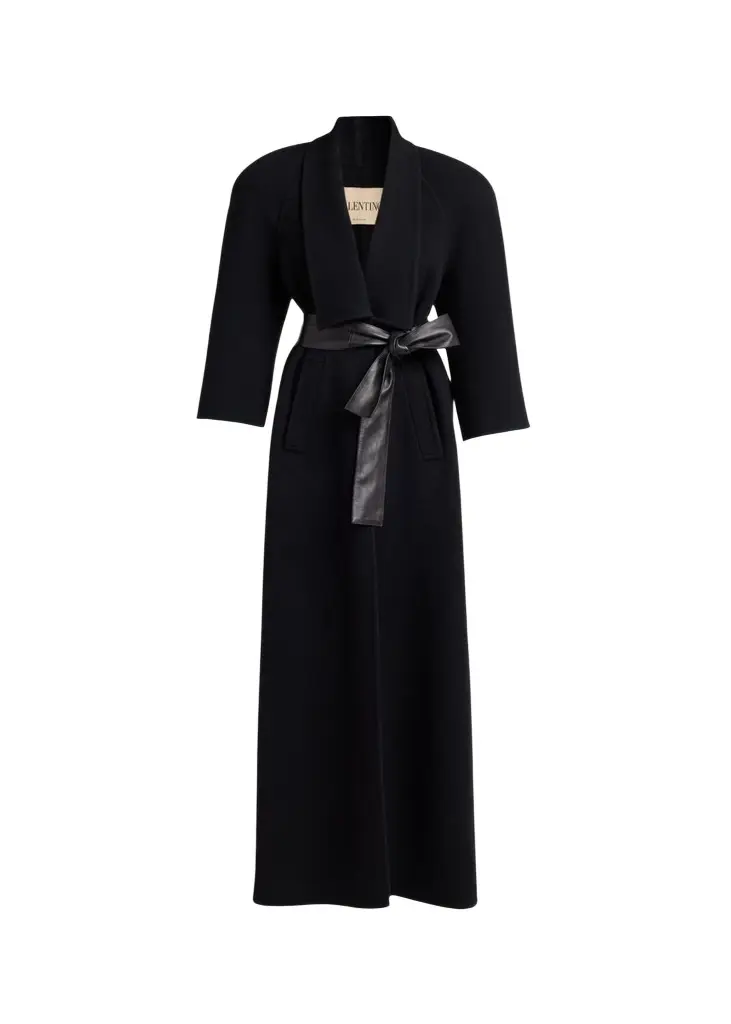
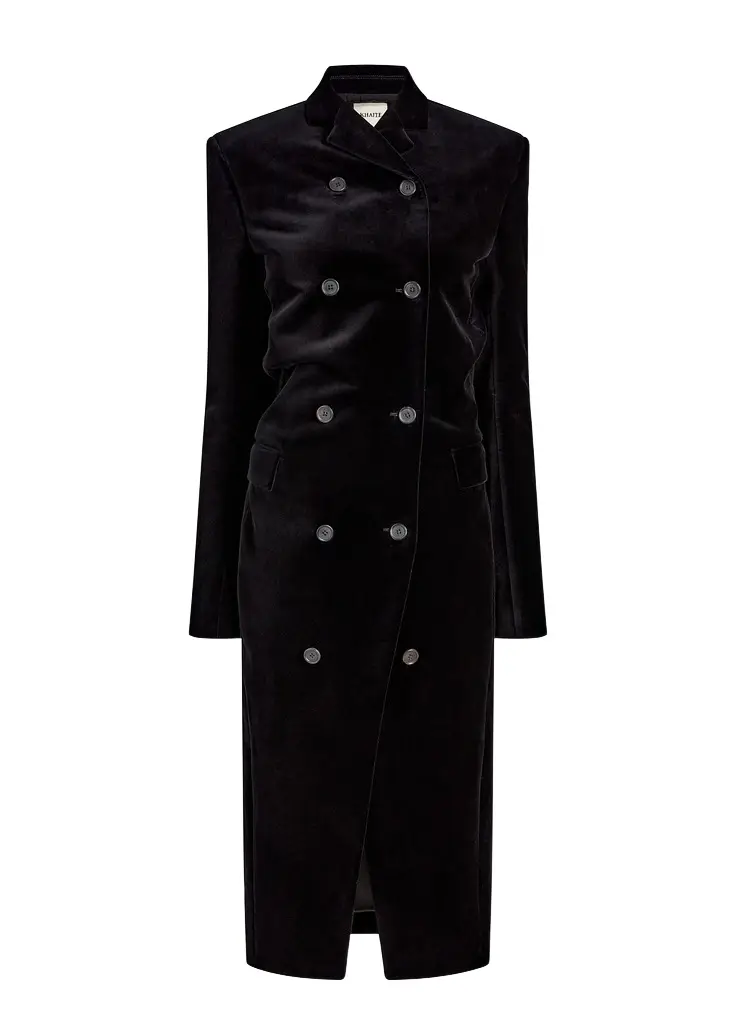
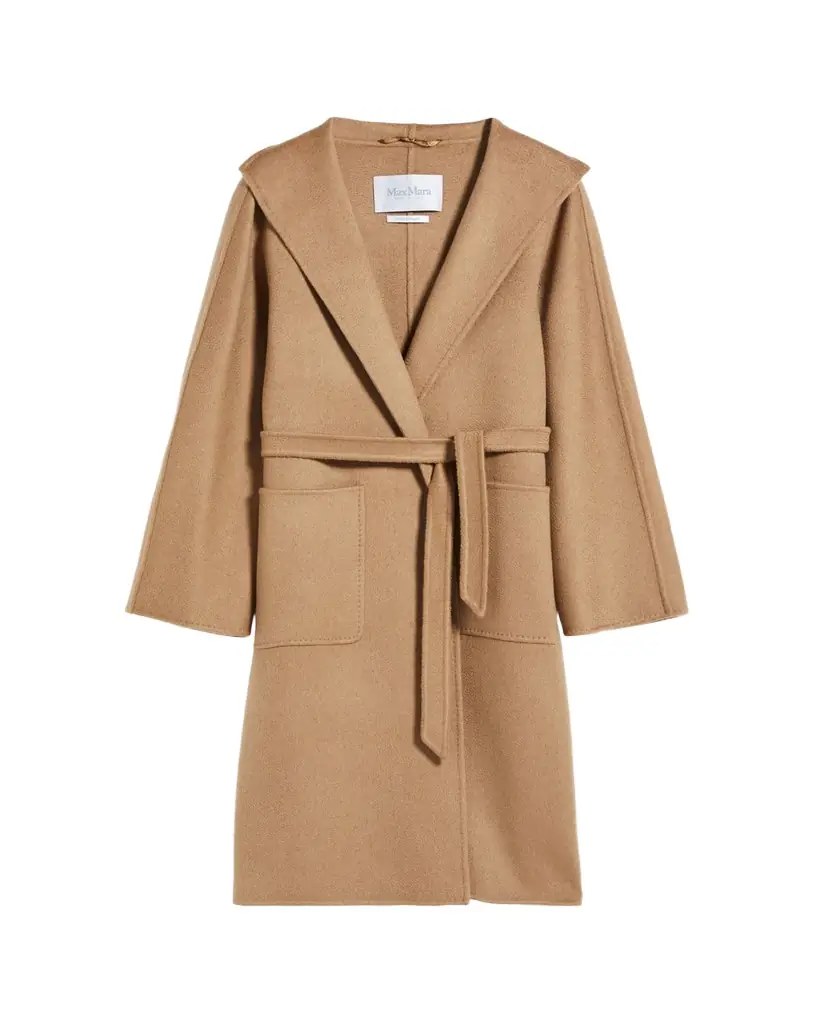
- Outer layers. Over a floor-length gown, a cape or an ankle-length coat, because a cape doesn't crush sleeves or fight a full skirt. Over anything knee-length, a belted wrap coat in double-faced cashmere works.
- Tights. Carry a spare pair of sheer tights. Car doors and chair legs catch them, and a run is the one thing a wrap can't hide.
- Photographs. If portraits are outdoors, bring a coat or wrap you are happy to be photographed in, and leave the puffer in the car.
Not sure how to combine it all? Ask our AI stylist: give it the dress code, the venue and how cold the evening will be, and it will match a coat, shoes and bag to your dress.
Coats and capes that go over eveningwear



What to wear to a fall wedding
Fall is the busiest wedding season: in The Knot's 2025 Real Weddings Study, which surveyed couples married in 2024, fall was the top season and October the most popular month, with 17 percent of weddings. An October or November wedding sits between seasons. Bare legs still work in early fall, velvet comes into its own by November, and the palette shifts to rust, tobacco, chocolate, plum and deep green.
Choose fabrics with a little weight (silk satin, crepe, cloqué, fine wool, fine knits) and consider long sleeves in a light fabric for an outdoor ceremony that turns cool at sunset. At a vineyard, barn or lawn venue, a block heel or a low slingback keeps you out of the grass.
- Rust florals. A long-sleeved printed satin midi from Dries Van Noten, brown suede pumps and gold hoops.
- Chocolate cloqué. A full-skirted textured midi with black velvet pumps and a small gold bag.
- Tobacco silk. A Max Mara silk satin midi with a drawstring waist, plus a cropped jacket once the sun goes down.
- Plum wool, bare arms. A sleeveless gathered midi in deep plum for an October ceremony, with a cropped jacket for the evening and sheer tights once November arrives.
Fall wedding guest dresses in rust, chocolate and plum
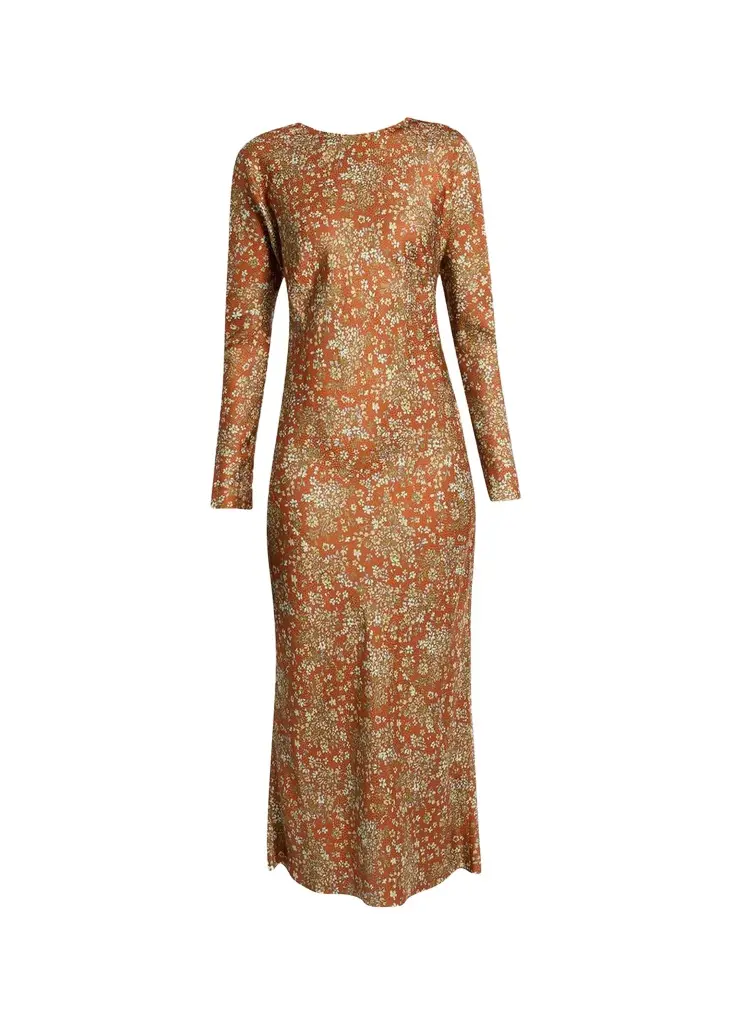 Dries Van NotenFloral Satin Long-Sleeve Midi Dress$2,250
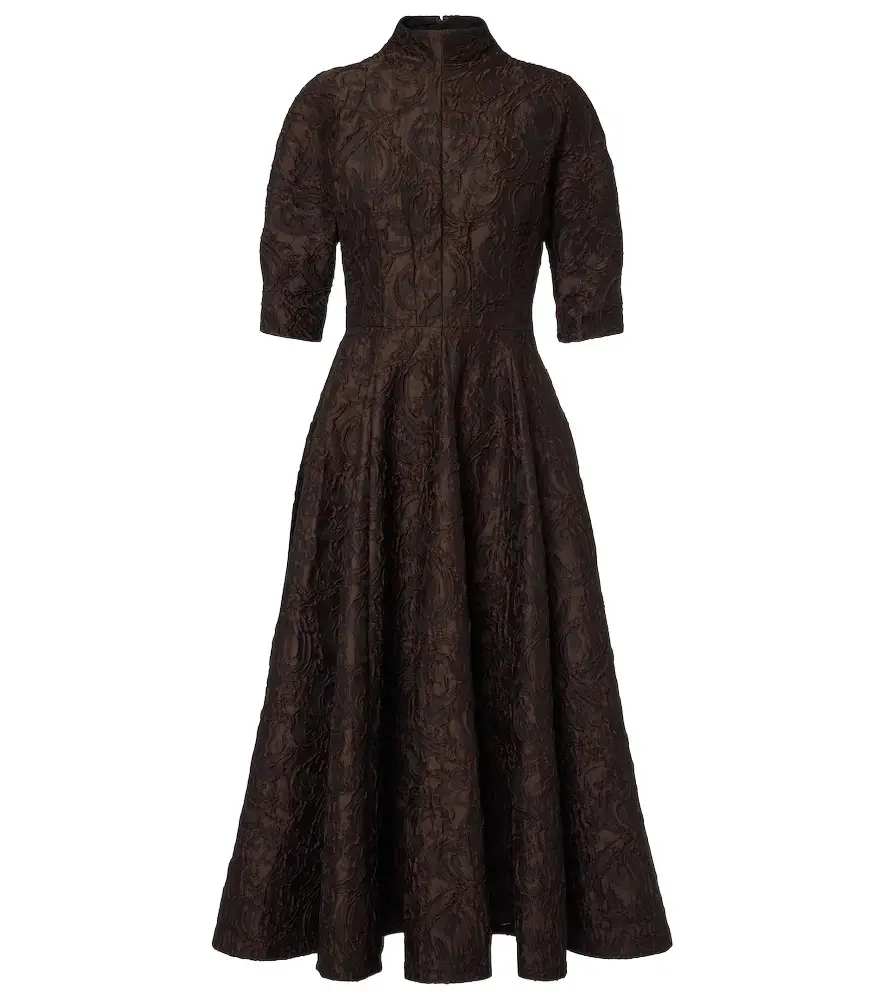 Emilia WicksteadQuinley cloqué midi dress$3,195
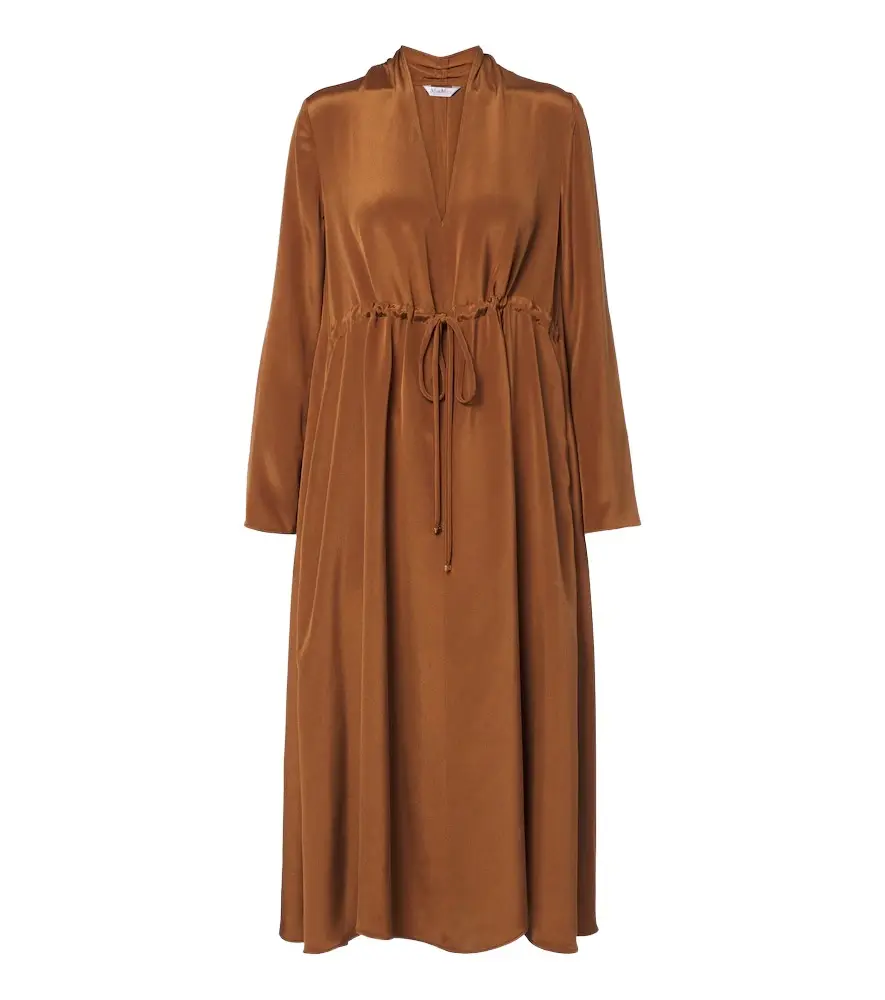 Max MaraSilk satin midi dress$1,890
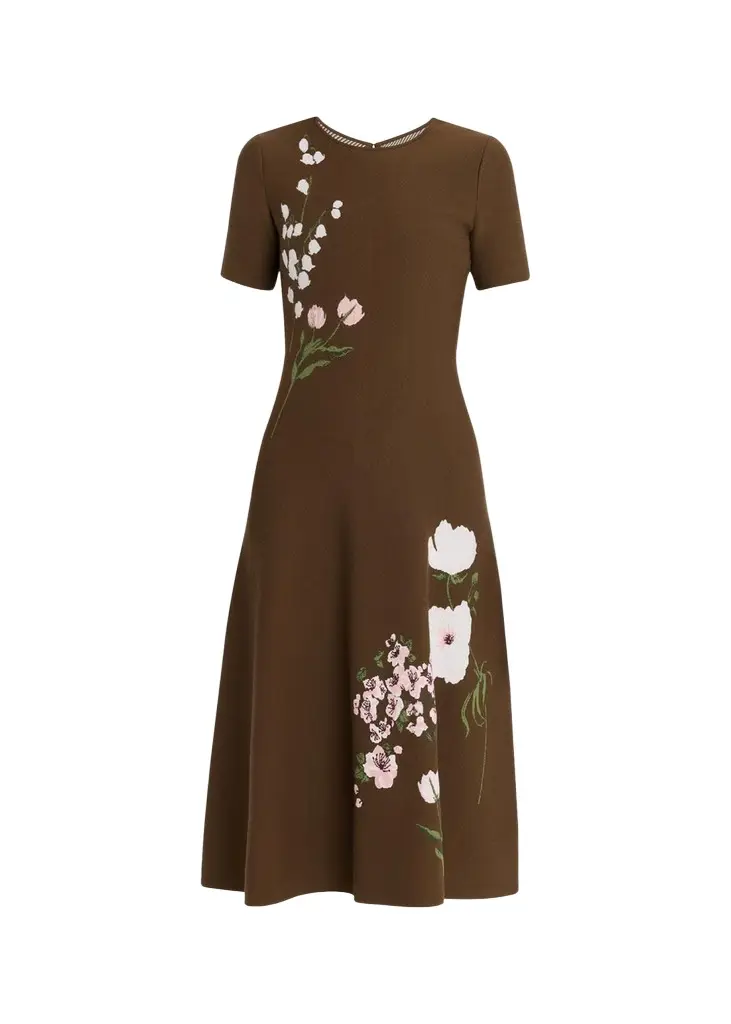 Oscar de la RentaShort-Sleeve Multi Floral Knit Midi Dress$3,290
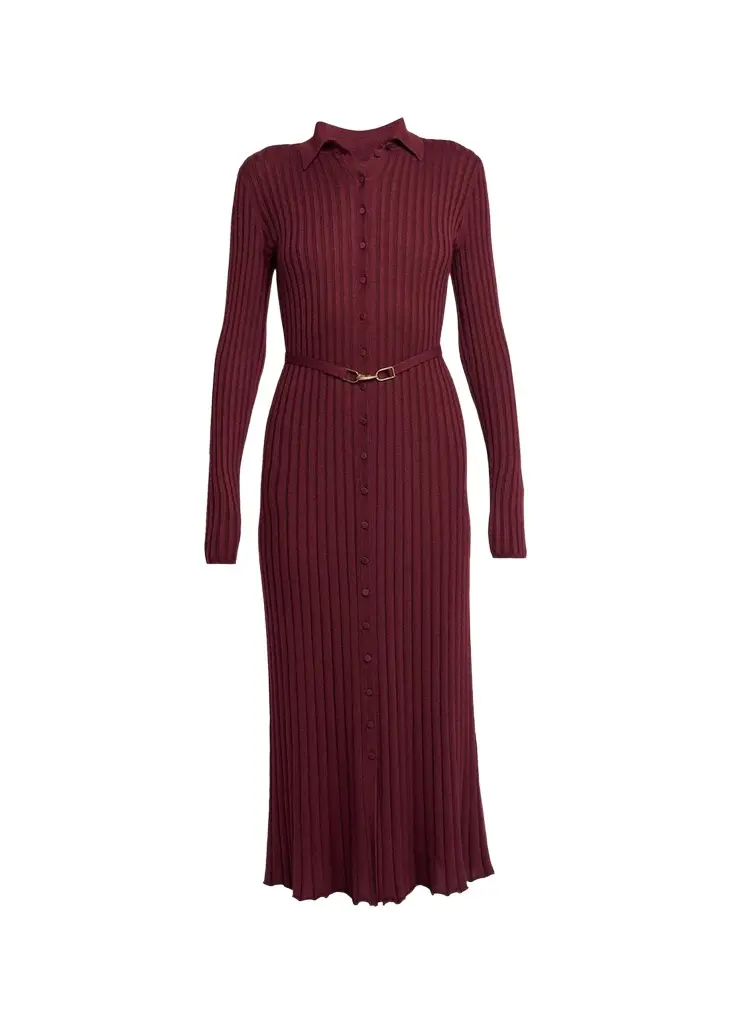 Gabriela HearstTenes Cashmere-Silk Rib Belted Midi Polo Dress$1,950
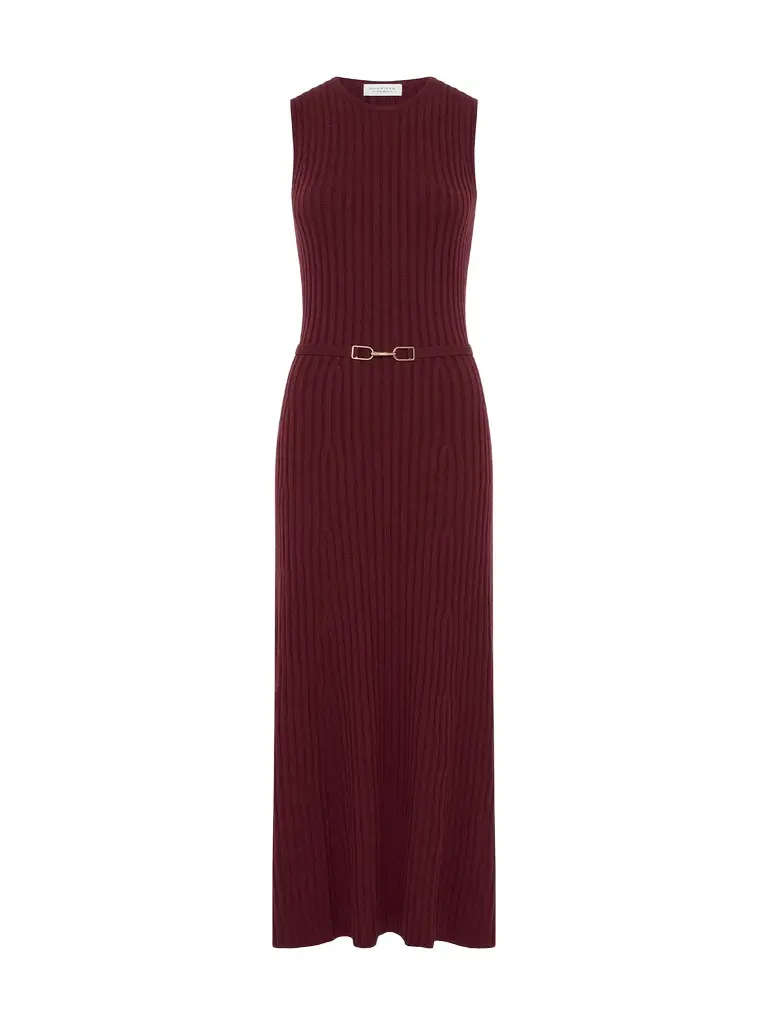 Gabriela HearstMeier Knit Midi Dress$1,550
Fabrics that look right in winter
Fabric is what separates a winter wedding outfit from a summer dress worn under a coat. What to reach for:
- Velvet. Silk-blend velvet drapes softly and catches the light; cotton velvet is denser and more matte, which suits structured jackets and coats. Steam velvet rather than ironing it. Our guide to velvet dresses covers the types in more depth.
- Duchess satin and faille. Heavy, structured weaves that hold a full skirt or a sculpted bodice.
- Crepe and cady. Matte and fluid; the heavier ones hide creases from a long car ride and a seated dinner.
- Wool crepe, tweed and double-faced wool. The daytime workhorses: tailored, warm and serious enough for a church.
- Sequins, lamé and embellished knits. Evening fabrics. At a daytime ceremony, save them for the reception.
- Lace. Lined lace works all year; unlined lace over bare skin reads like summer.
What to skip: linen, cotton poplin, eyelet, seersucker and anything gauzy without a lining. They look like a summer dress in a cold room, however good the coat.
Colors to wear, and the ones to avoid
The rule that matters most is no white. The Emily Post Institute advises guests against a white dress or one that resembles a wedding gown, counts cream as white, and suggests that if your dress is on the light side of beige, the cut and accessories shouldn't look bridal. Only an explicit request from the couple for guests in white overrides that rule. At a winter wedding, be careful with full-length champagne, pale silver and blush sequins too, since they can photograph close to ivory under warm light.
Check the wedding website for color notes, and if you know the bridesmaids' color, choose another. Black is correct at an evening wedding: Emily Post's attire guide lists your dressiest little black dress among the black-tie options. In daylight, black looks best in a textured fabric with warmer accessories.
The winter palette is navy, bottle green, plum, burgundy, chocolate and deep teal, with gold or gunmetal accents at night. It is also where the season is heading: Trendalytics' fall/winter 2026 report describes brown, burgundy and plum replacing black-heavy fall assortments, with burgundy up 46 percent year over year and searches for deep brown up 50 percent. One black-tie request our AI stylist received in the past year asked for wedding guest dresses in navy, chocolate or gold: two of the season's darks and one of its metals.
Bright red draws the eye in photos. It isn't forbidden, and the Institute's own test is simply that your outfit shouldn't draw attention away from the couple. If the wedding is small or traditional and you are unsure, burgundy or oxblood gives the same warmth with less attention. For more on the season's most useful color, see how to wear burgundy.
Coverage, religious ceremonies and the cold
Emily Post's wedding guidance asks guests to consider whether the service is religious, whether head coverings are required, and whether bare shoulders and arms or open-toed shoes would give offense, and it notes that some parts of the country are more conservative than others. Winter makes this easier, because you want sleeves anyway.
- Sleeves or a wrap. A long-sleeved dress needs nothing else. With a strapless, off-the-shoulder or sleeveless dress, bring a cashmere or silk wrap for the ceremony, or a structured jacket that stays on through dinner.
- Head coverings. Where they are required, a silk scarf folded into your bag does the job and doubles as a wrap later.
- Shoes. Closed-toe pumps or slingbacks for the ceremony. If you want sandals for dancing, change afterward.
- Tights. Sheer black with dark cocktail dresses, barely-there sheers with lighter colors, and none with floor length. Opaque tights belong at daytime and country weddings.
For house-of-worship norms in more detail, see our guide to church-appropriate clothes.
Shoes, bags and jewelry for a winter wedding
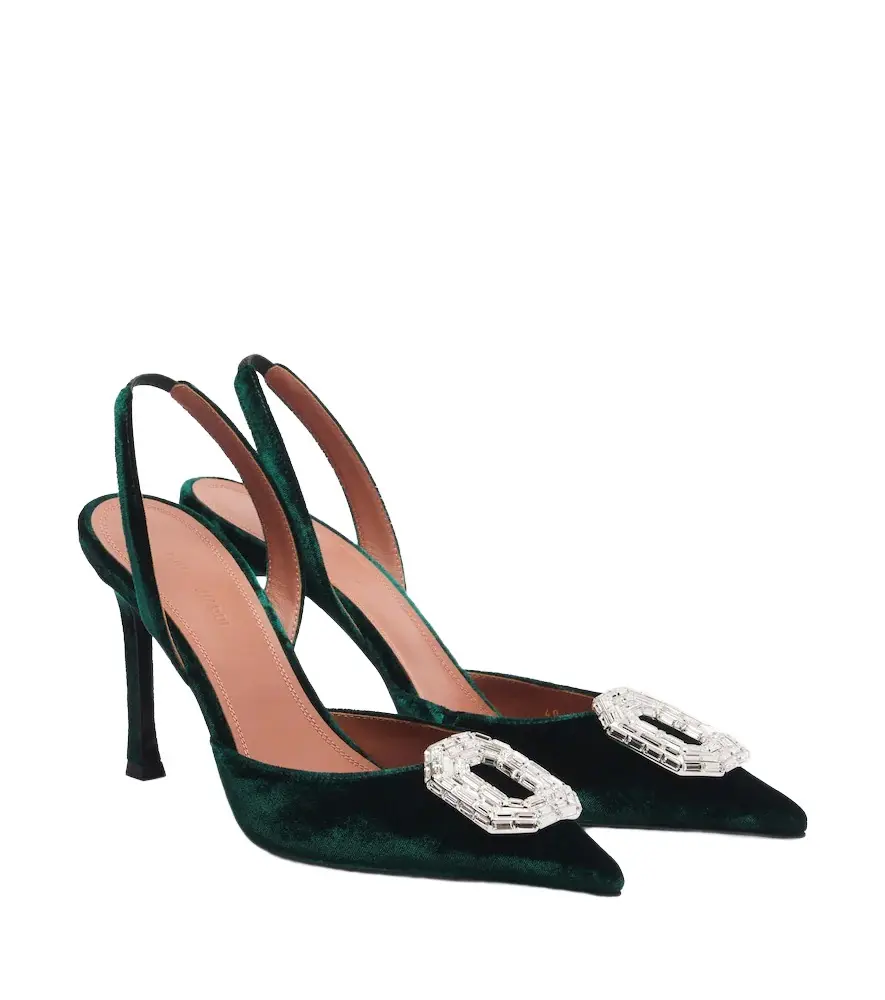
A 70mm heel is the sweet spot for a long winter wedding: high enough to lengthen a gown, low enough for a receiving line, a church aisle and a dance floor. Velvet and satin pumps are evening materials that mark in snow, so carry them in and change. For a daytime ceremony, a velvet slingback on a lower heel works with sheer tights and handles stone steps.
Velvet pumps and slingbacks for a winter wedding



For evening clutches, one that holds a phone, a card and a lipstick is enough. A chain or strap frees your hands for a glass and a plate; a crystal-studded velvet clutch picks up the buckle on your shoes; and a structured minaudière such as Bottega Veneta's woven Knot is the most formal choice.
With a high neck, wear earrings rather than a necklace. Pearls sit well against velvet; gold and diamonds against satin. Emily Post lists gloves as optional for a formal evening wedding; in practice, winter asks only for leather gloves on the walk in.
Evening bags and pearls for a winter wedding


How we chose
Every piece in this guide comes from a top luxury house sold on Vêtir, and every dress, coat, cape and shoe was in stock in three or more sizes when we checked in late September. We left out white, ivory, cream and anything that could read bridal, and we looked at each product's photographs rather than trusting retailer color names, which are not always accurate. We prioritized winter weights (velvet, duchess satin, heavy crepe, wool and cashmere), sleeves and higher necklines for ceremony coverage, and heels around 70mm for long nights. Shop the full edit of evening gowns, midi dresses or coats for more.
Frequently asked questions
What should I wear to a winter wedding as a guest?
Dress to the invitation first. Black tie means a floor-length gown; black tie optional allows a gown, a cocktail dress or dressy separates; cocktail attire means a knee-to-midi dress; a daytime wedding means a dressy day dress or a suit. Then adapt for winter with heavier fabrics, sleeves or a wrap, and a long coat.
Can you wear black to a winter wedding?
Yes, especially in the evening. The Emily Post Institute lists a dressy little black dress among the options for black tie. For a daytime ceremony, choose black in a textured fabric and add warmer accessories so the look feels celebratory.
What colors should you not wear to a winter wedding?
White, ivory and cream (which Emily Post counts as white), plus anything pale enough to look bridal in photos, such as full-length champagne or silver. Avoid the bridesmaids' color if you know it. Jewel tones, black, navy, burgundy and chocolate are all safe.
Is a floor-length dress required for a black-tie winter wedding?
Not strictly. Emily Post also accepts a dressy cocktail dress at black tie. In winter, though, a gown is both the most correct and the warmest choice, and it removes any doubt.
Do you need tights at a winter wedding?
No, but they help. Sheer black tights look polished with dark cocktail dresses and closed-toe pumps; skip them with floor-length gowns. Save opaque tights for daytime or country weddings.
What should I wear over my dress at a winter wedding?
Something long enough to cover the hem: a cape or an ankle-length coat over a gown, a belted wrap coat over a cocktail dress. Add leather gloves, and bring a wrap for the ceremony if your dress is sleeveless or off the shoulder.