The Best Designer Scarves: Silk Squares, Cashmere and How to Tie Them
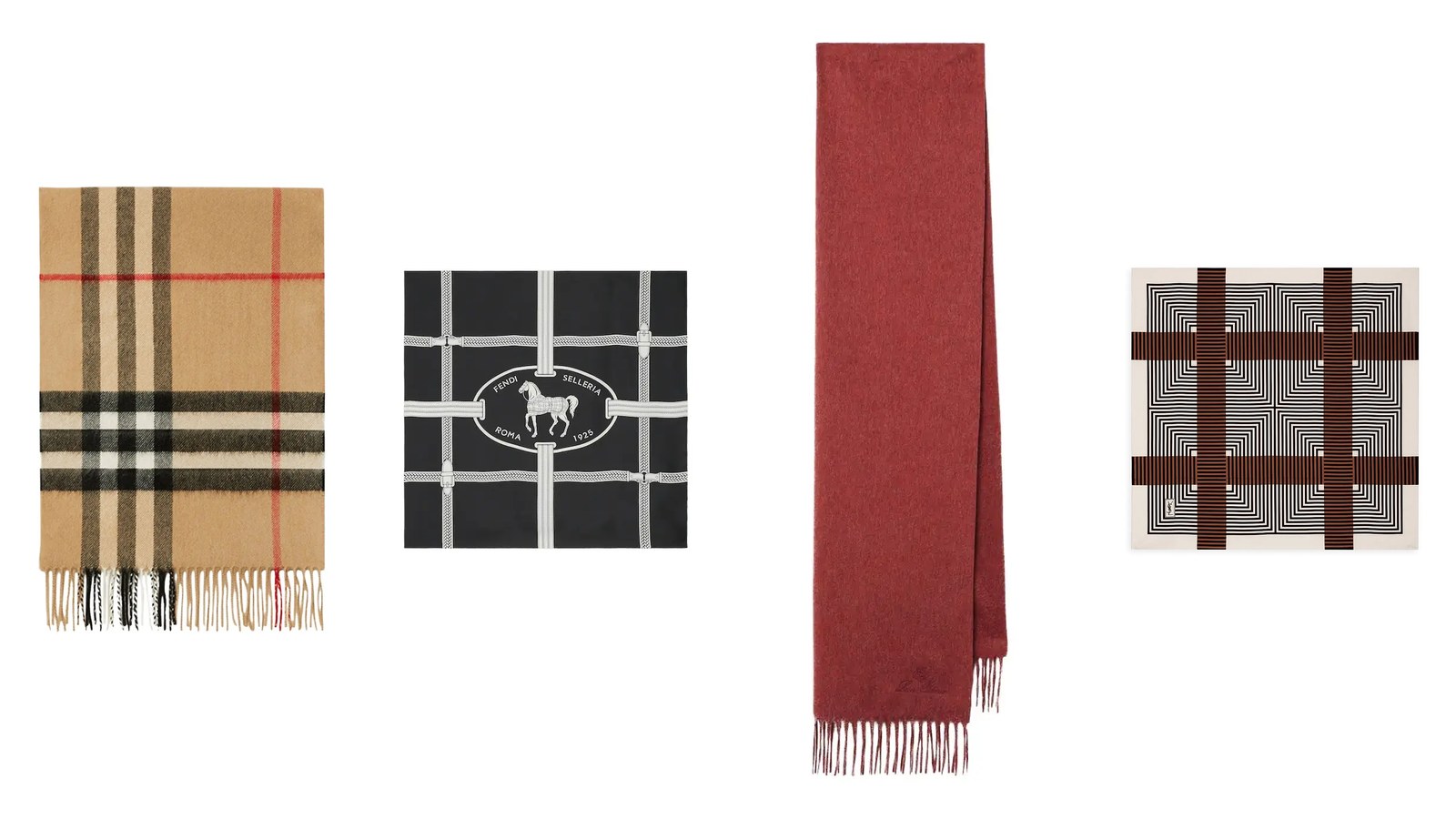
The best designer scarves each do one job well, and the job decides the fabric. To knot at the neck, tie on a bag or wear in your hair, buy a 90 cm (35-inch) silk twill square: the diagonal weave holds a knot and carries a print crisply. For winter, choose a woven cashmere scarf of roughly 66 by 12 inches, long enough to loop under a coat collar. For real cold, or when an outfit needs texture, reach for brushed mohair, alpaca or a ribbed wool knit.
Below, our editors explain how the fabrics and sizes differ, pick the scarves worth buying in each category from houses including Saint Laurent, Loewe and Loro Piana, show seven ties that work with real coats, and finish with gifting advice and care.
Silk, cashmere or wool: how to choose a designer scarf
Start with where the scarf will live. A silk square spends most of its life knotted, so it needs body and a print worth seeing. A cashmere scarf lives under a coat collar for five months, so it needs warmth without bulk. A mohair or alpaca scarf is the statement: it sits on top of the coat and becomes the texture of the outfit.
| Fabric | How it behaves | Best for | Check before you buy |
|---|---|---|---|
| Silk twill | Diagonal weave with body; holds a knot; prints sharply | 90 cm squares, bandeaus, bag handles, spring through fall | Hand-rolled hems; a print that works on both sides if it is double-faced |
| Silk crepe and georgette | Lighter and more fluid; drapes rather than stands up | Loose knots, evening, warm climates | Slips more easily, so tie a firmer knot |
| Cashmere | Warm for its weight, soft against the neck | Long winter scarves and stoles | The fiber percentage on the label; woven for drape, knitted for bulk |
| Wool, virgin wool and blends | Springy, resilient, holds a rib or a tartan well | Ribbed knits, checks, everyday cold | Can feel scratchy on bare skin; wear over a collar |
| Mohair and alpaca | Long fibers brushed into a hairy halo; lofty and warm | Chunky, textured scarves over a coat | Mohair especially sheds and snags; a little polyamide in the blend adds strength |
On cashmere, the label is the only reliable proof. Under the US Wool Products Labeling rules, the Federal Trade Commission defines cashmere as the fine undercoat fiber of the cashmere goat with an average diameter no greater than 19 microns, and when a label names a specialty fiber such as cashmere it must state the percentage (FTC labeling guidance). "Cashmere blend" can mean almost anything, so read the numbers. For how to judge the fiber itself (ply, gauge and hand), our guide to the best cashmere sweaters goes deeper.
Scarf sizes explained: squares, skinnies, long scarves and shawls
Size changes what a scarf can do far more than print does. These are the measurements houses list for the pieces in this edit.
| Shape | Typical size | What it does |
|---|---|---|
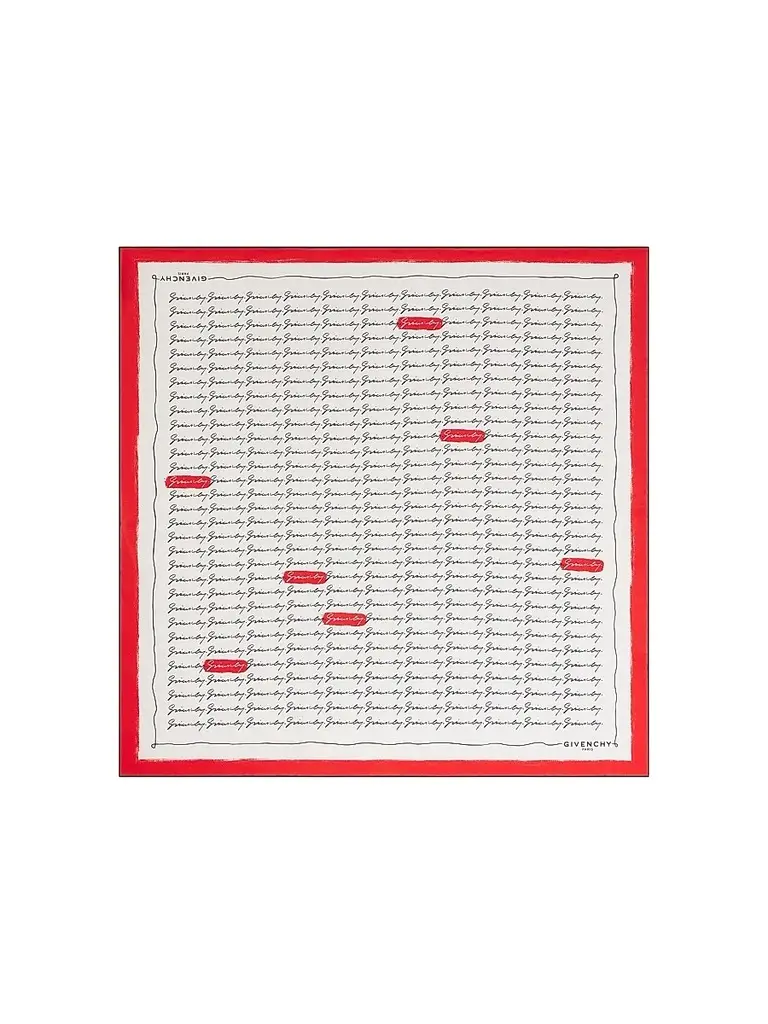
| Small square | About 53 to 55 cm (21 in), e.g. Givenchy's small silk square | Neckerchief, ponytail, bag handle |
| Classic square | 90 cm (35 in), the size Saint Laurent, Prada, Loewe and Valentino Garavani cut | Neck knots, headscarf, tied to a bag |
| Large square | 120 to 140 cm (47 to 55 in): Max Mara, Saint Laurent and Valentino shawls | Folded into a triangle over the shoulders or a coat |
| Skinny or bandeau | About 2 to 3 in wide and 33 to 80 in long | Tied like a tie, wound around a handle, worn in the hair |
| Long scarf | About 66 to 70 in by 9 to 14 in; Saint Laurent's tartan runs to 98.4 in | Wrapped under or over a coat |
| Stole | About 27 by 77 in (70 by 196 cm), like Max Mara's cashmere stole | A wrap for evenings, planes and cold offices |
Two rules help. On a petite frame, a scarf of about 66 inches is plenty; save the 90-inch-plus lengths for wrapping twice. And if you want one silk square for everything, buy the 90 cm size: it is large enough to cover the hair and small enough to knot neatly at the throat. The full range is in our scarves and wraps shop.
The best designer scarves in silk: 90 cm twill squares
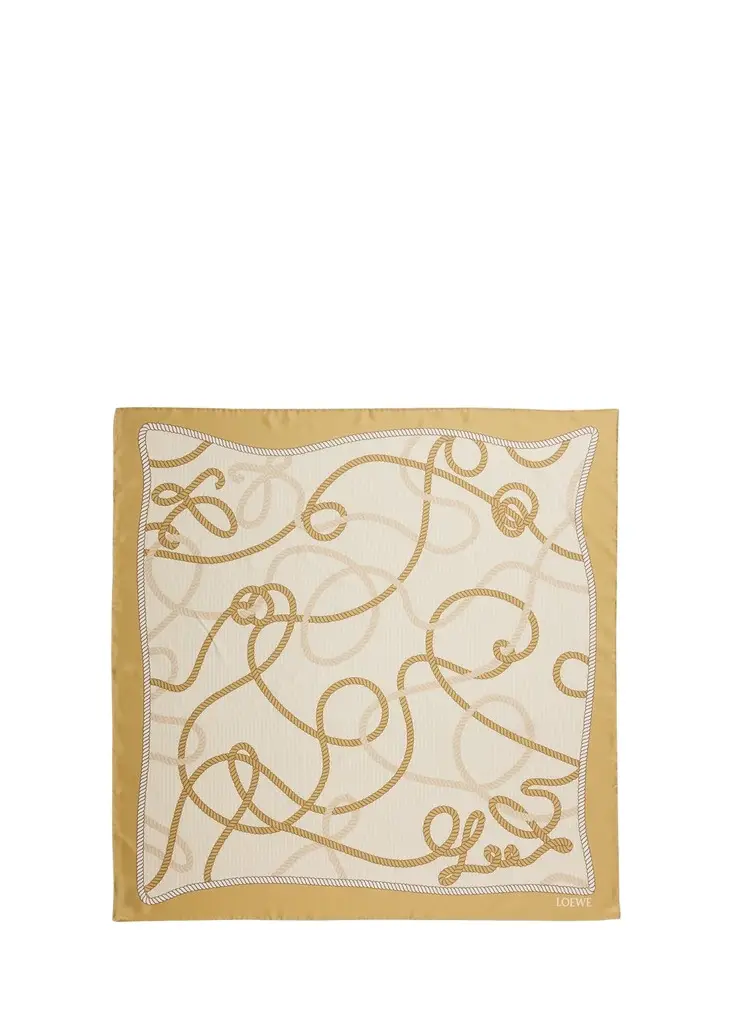
A good square is a small piece of engineering. Look for silk twill rather than a lightweight habotai, because twill has the weight to stay in a knot. Look at the edge: Loewe, Burberry and Fendi all specify hand-rolled hems, which stay rounded and soft instead of pressing a flat stitched line against your neck. And look for double-faced printing, as on Loewe's Double L Anagram square, where the reverse is printed too, so the "wrong" side never shows when you knot it.
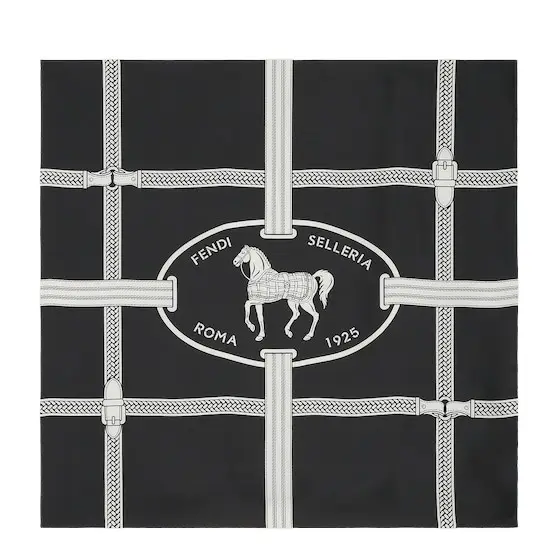
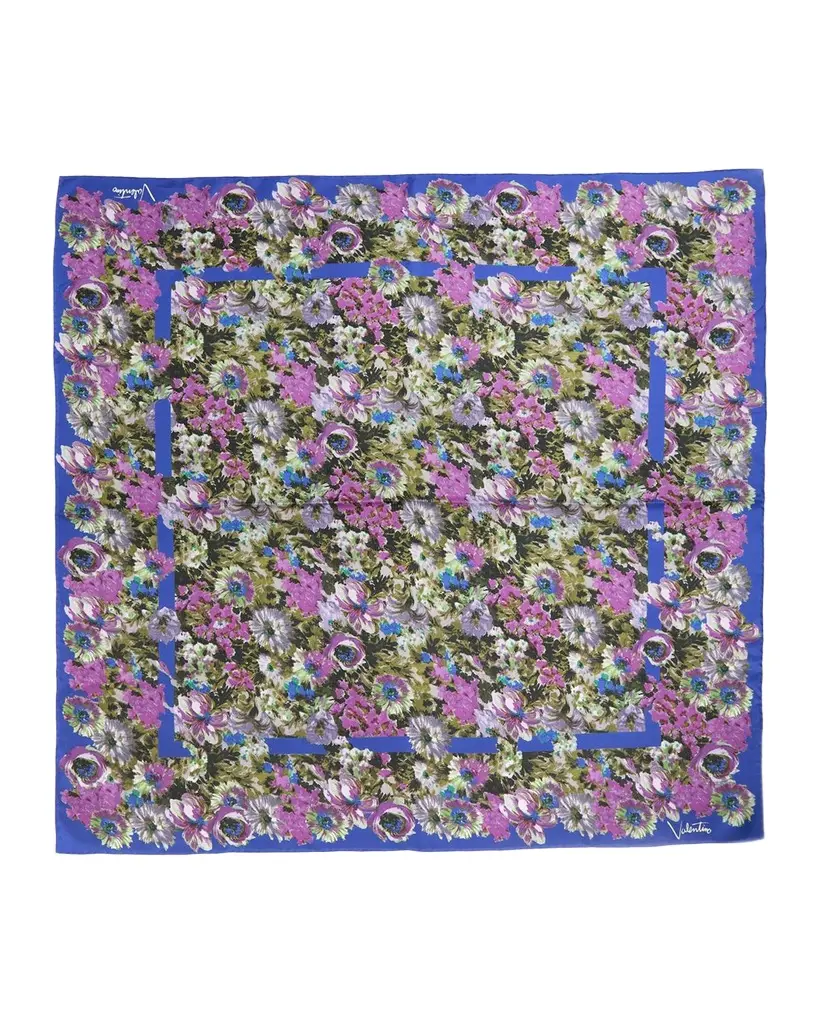
Then think about scale. A large graphic, like Fendi's black-and-white Selleria square or Saint Laurent's striped grid, reads from across a room and suits a plain coat. A dense floral, like Valentino Garavani's foulard or Burberry's Floral EKD, reads best up close, knotted at the neck of a shirt or cashmere crewneck.
- With a trench or camel coat: a 90 cm square that picks up the coat's color and adds one stronger shade, knotted loosely at the side of the neck.
- With a navy blazer: a folded square worn as a neckerchief, knot at the back, point peeking over the collar.
- With a black knit dress: a graphic black-and-white square tied to your bag rather than your neck, so the neckline stays clean.
The best silk twill squares



Skinny scarves and bandeaus: the smallest silk with the most uses
A bandeau is the easiest designer scarf to wear daily, because it asks nothing of your outfit. Check the length before you buy, because it decides the job: Prada's skinny twill is short enough for a bag handle or a ponytail, while Burberry's contrast-check skinny, at about 80 inches with tapered tips, is long enough to tie as a loose bow at the neck. Fendi says its two-sided "wrappy" can go around the neck, the wrist or a bag, and that is exactly the brief. A leopard bandeau, like Givenchy's, behaves as a neutral and works on almost any black, brown or camel bag.
- Collar tie: under the collar of a white shirt, tied in a single knot with the ends uneven, under a V-neck sweater.
- Bag handle: knot one end at the base of the handle, wind it in a spiral, knot the other end. Choose a color your bag does not already have.
- Hair: wrap over a low ponytail and let the ends hang; a two-sided print like Fendi's wrappy looks finished from every angle.
Skinny scarves, bandeaus and small squares
 PradaWomen's Skinny Printed Silk Twill Rectangular Scarf$295
 Valentino GaravaniApres L 'Hiver Poppies Silk Bandeau Scarf$320
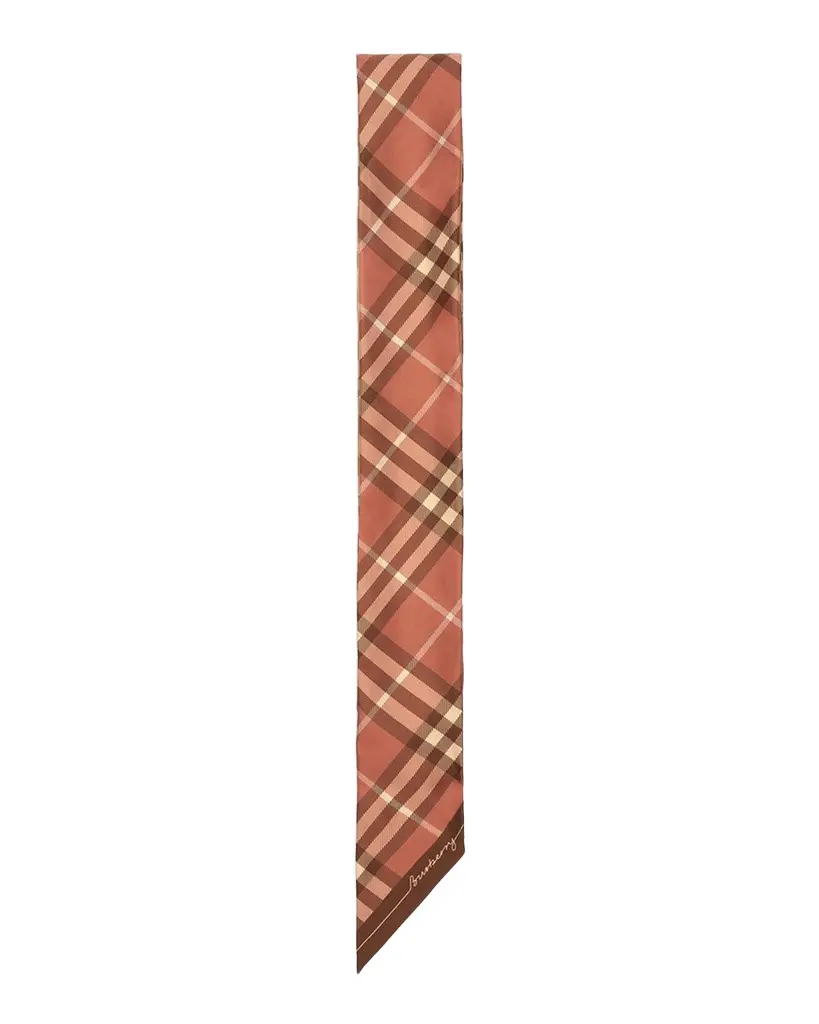 BurberrySkinny Contrast Check Silk Scarf$275
 GivenchyWomen's Bandeau in Silk with Leopard Print - Brown Black$190
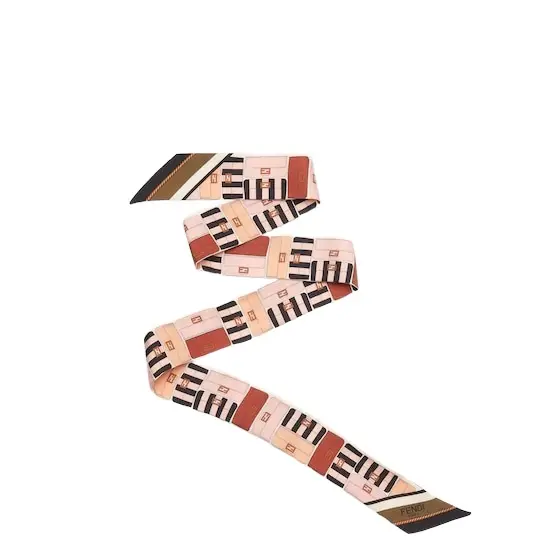 FendiWrappy Silk Skinny Scarf$250
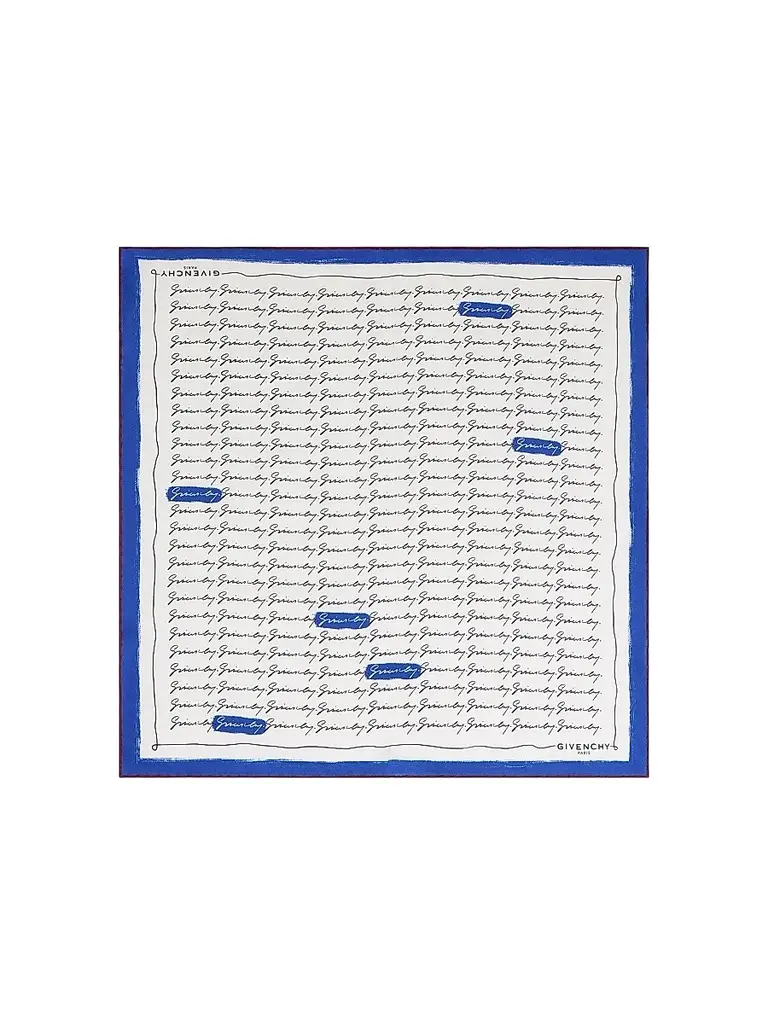 GivenchyWomen's Small Square in Silk with Signature - Blue Multi$275
The best cashmere scarves
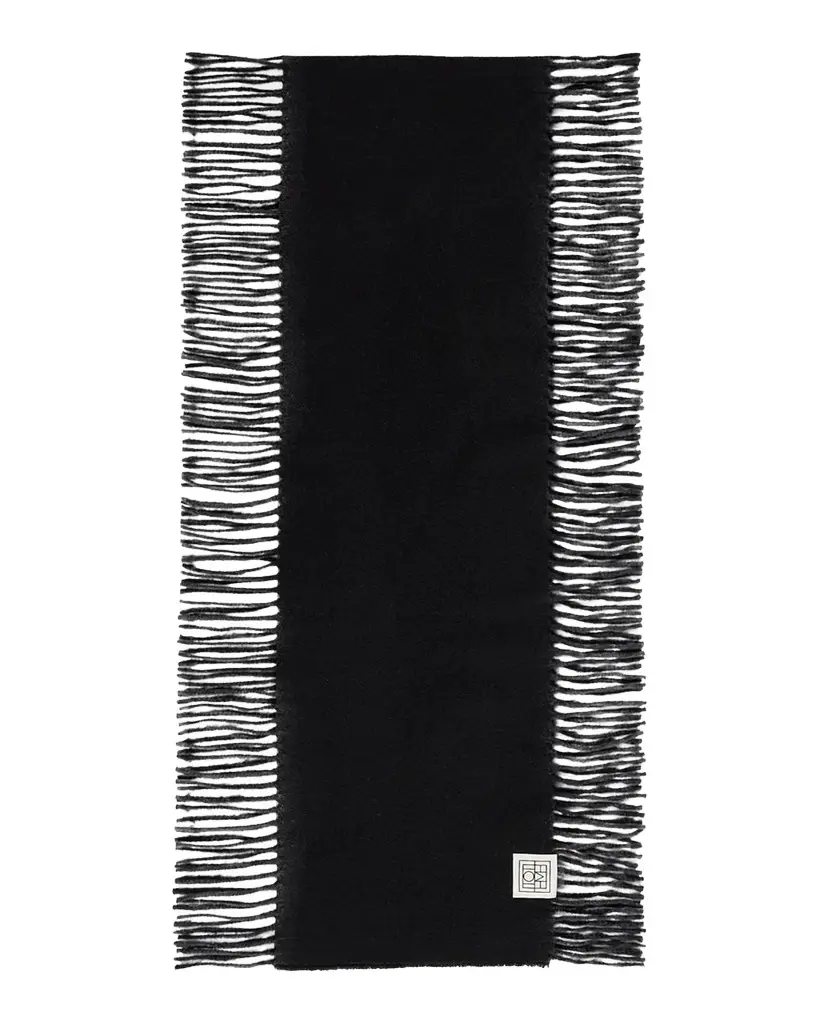
Woven cashmere is what you want under a coat: flat, fluid and thin enough that the collar still closes. Knitted cashmere is chunkier and belongs over a collarless coat. The finish matters as much as the fiber. Burberry's check cashmere scarves are made in Scotland by Johnstons of Elgin, at a mill founded in 1797. The house says each scarf takes more than 30 steps, and that the cloth is washed in local spring water and brushed with teasels, dried flower heads drawn along the surface to raise the cloth, which is where the soft luster comes from (Burberry's own account of how the scarf is made). It is also the scarf of the moment: Burberry's cashmere scarf was the fourth-hottest product in fashion in the last quarter of 2025, according to the Lyst Index.
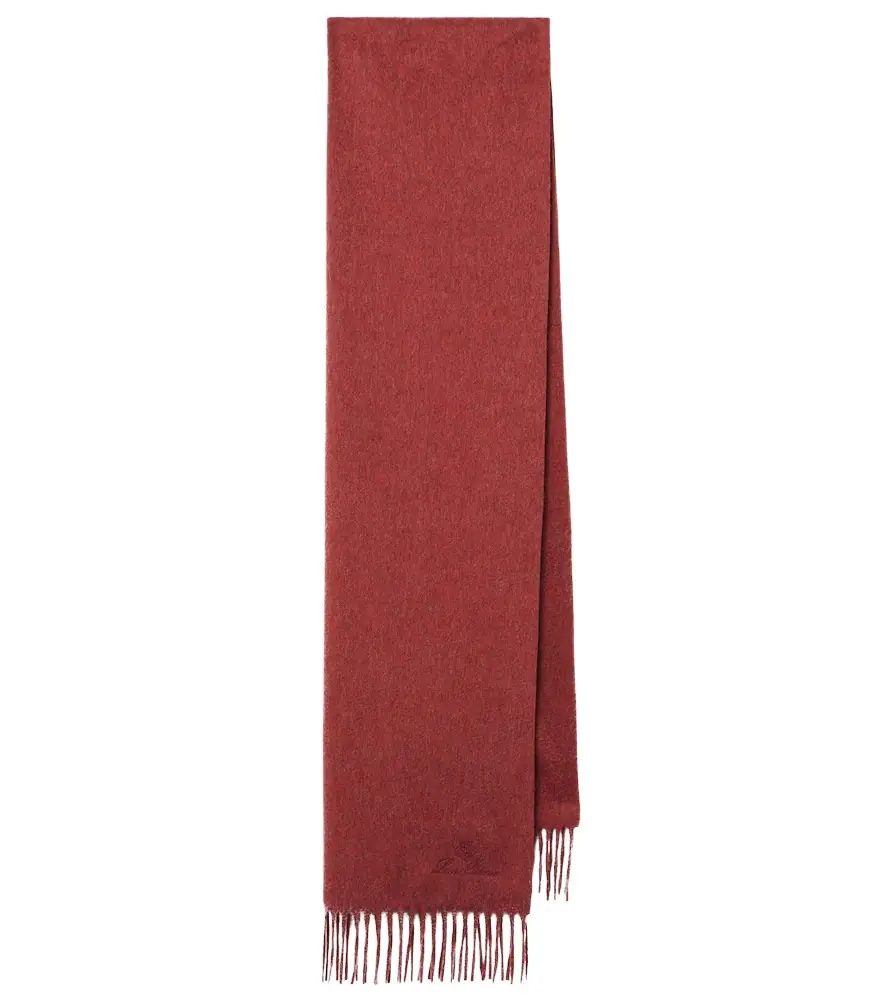
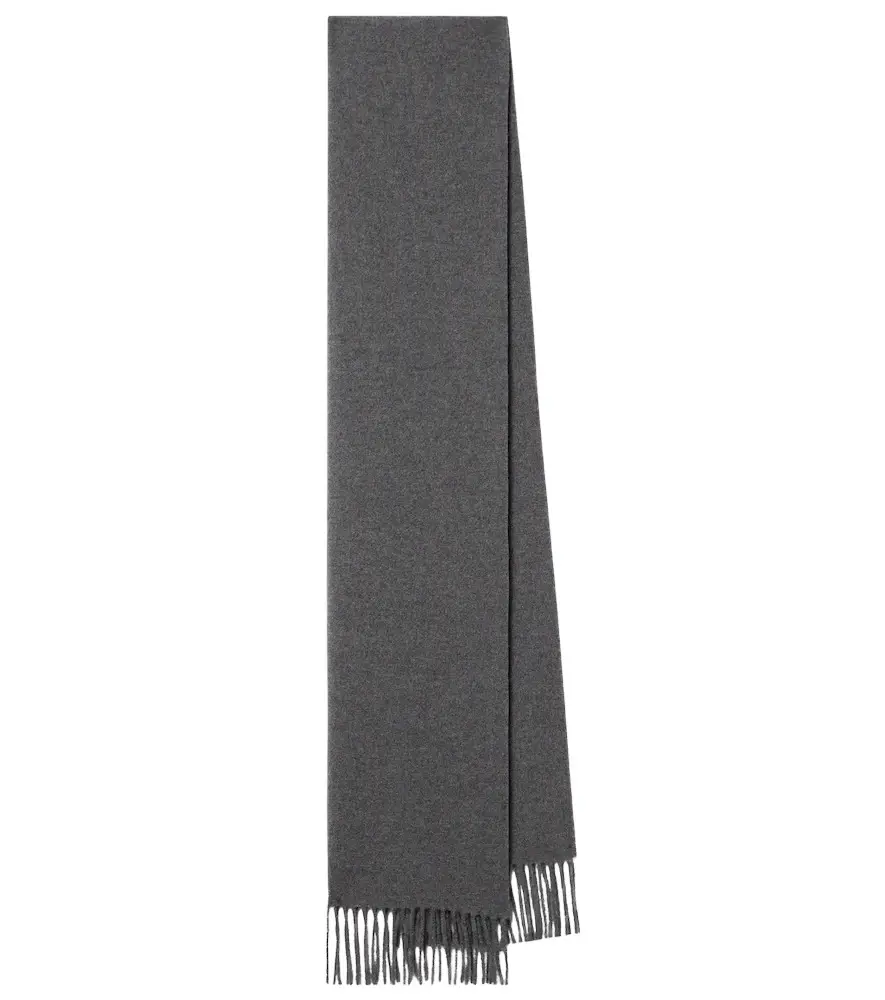
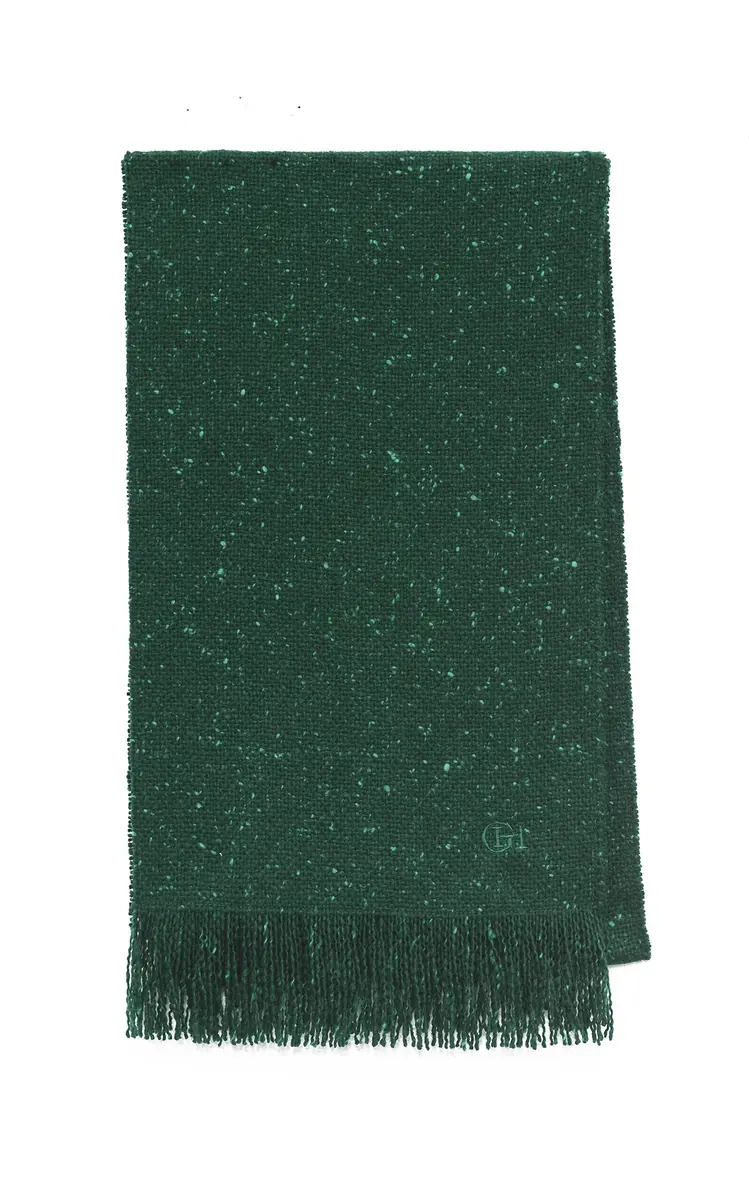
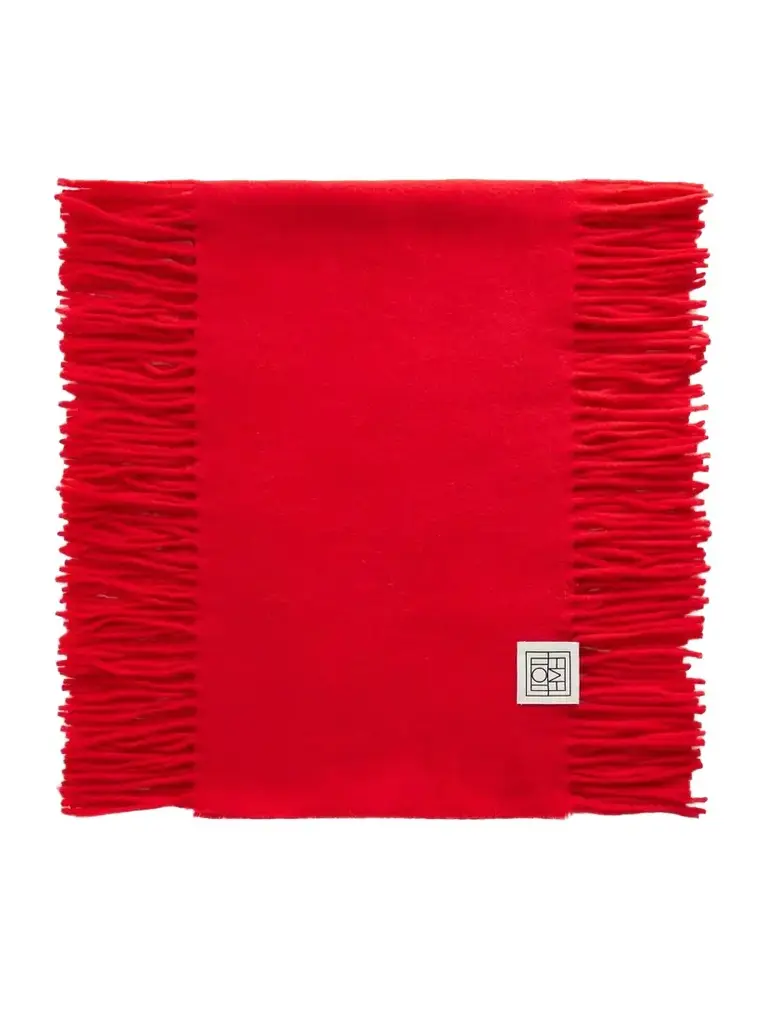
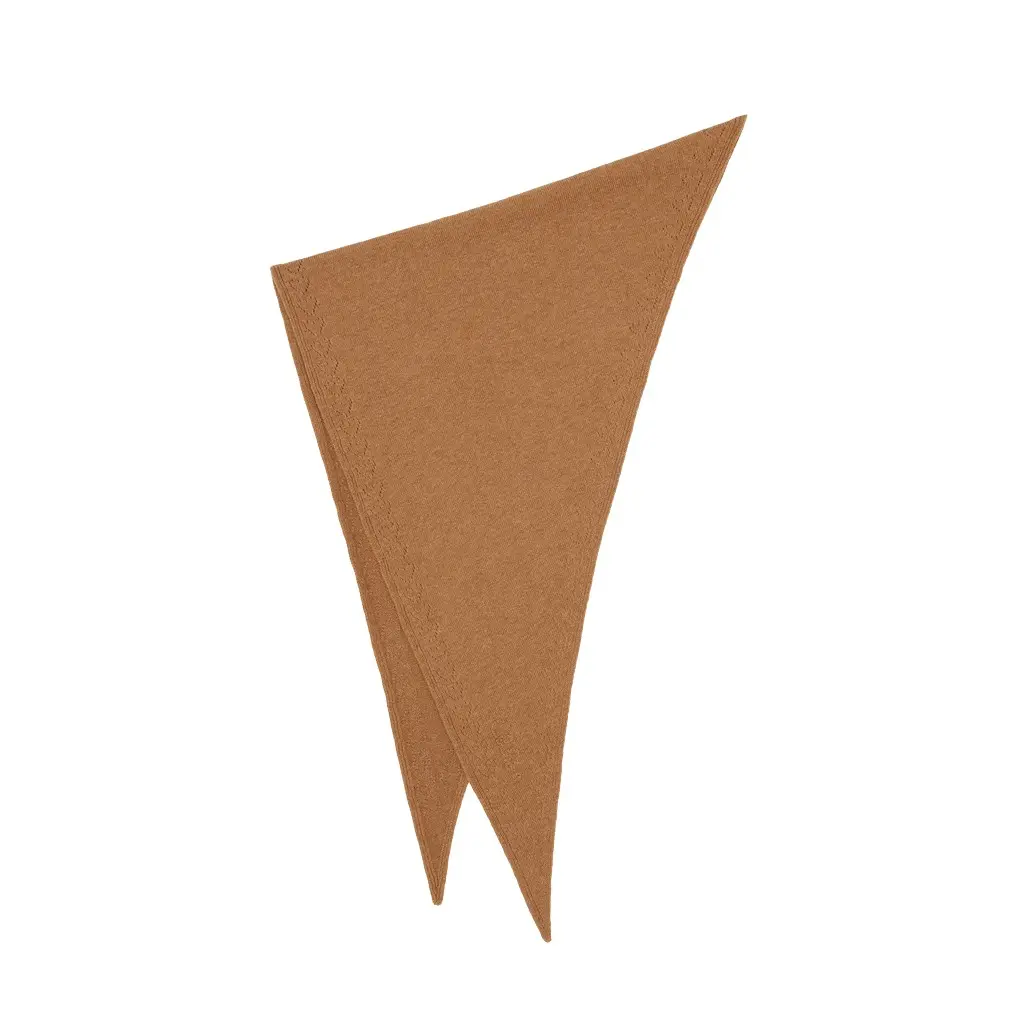
Past the check, buy by color and shape. Loro Piana's Grande Unita in a rose-red melange, Brunello Cucinelli's plain charcoal and Loewe's fringed camel are the quiet ones that go with every coat you own. The Row cuts its Mentas as a large cashmere triangle, which ties like a bandana and sits flat under a lapel. Max Mara's cashmere stole is wide enough to double as a travel wrap, and Gabriela Hearst's Illumina, in speckled cashmere from Inner Mongolia, adds color without a print.
- Camel coat: charcoal or burgundy cashmere, never another camel, which flattens the look.
- Black coat: a check or a color near your face, such as burgundy, bottle green or ivory.
- Navy coat: gray, camel or a tonal navy scarf worn in a Parisian loop.
The best cashmere scarves



The best wool, alpaca and mohair scarves for real cold
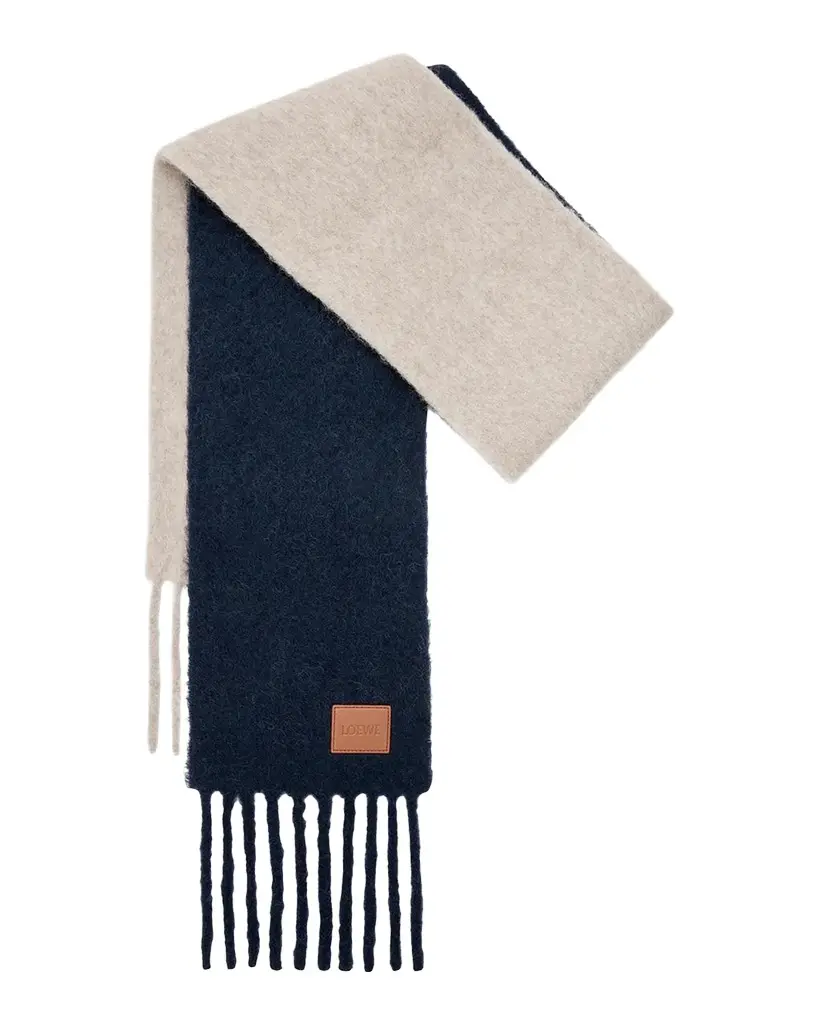
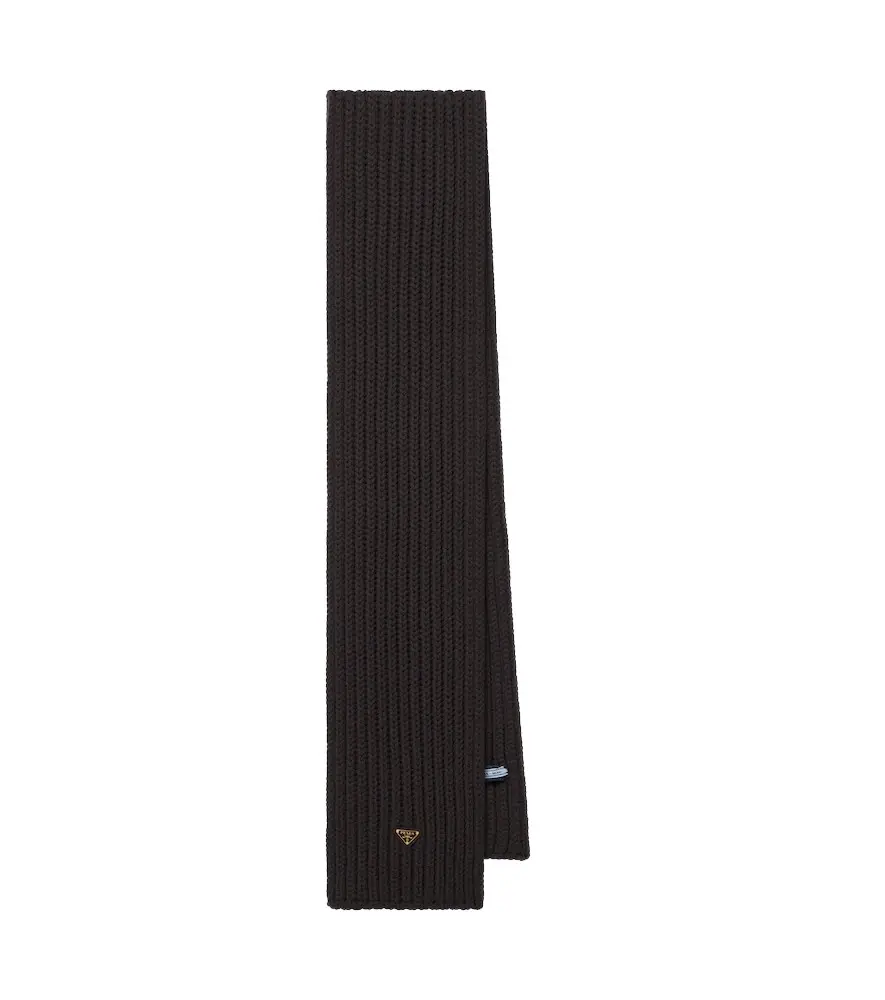
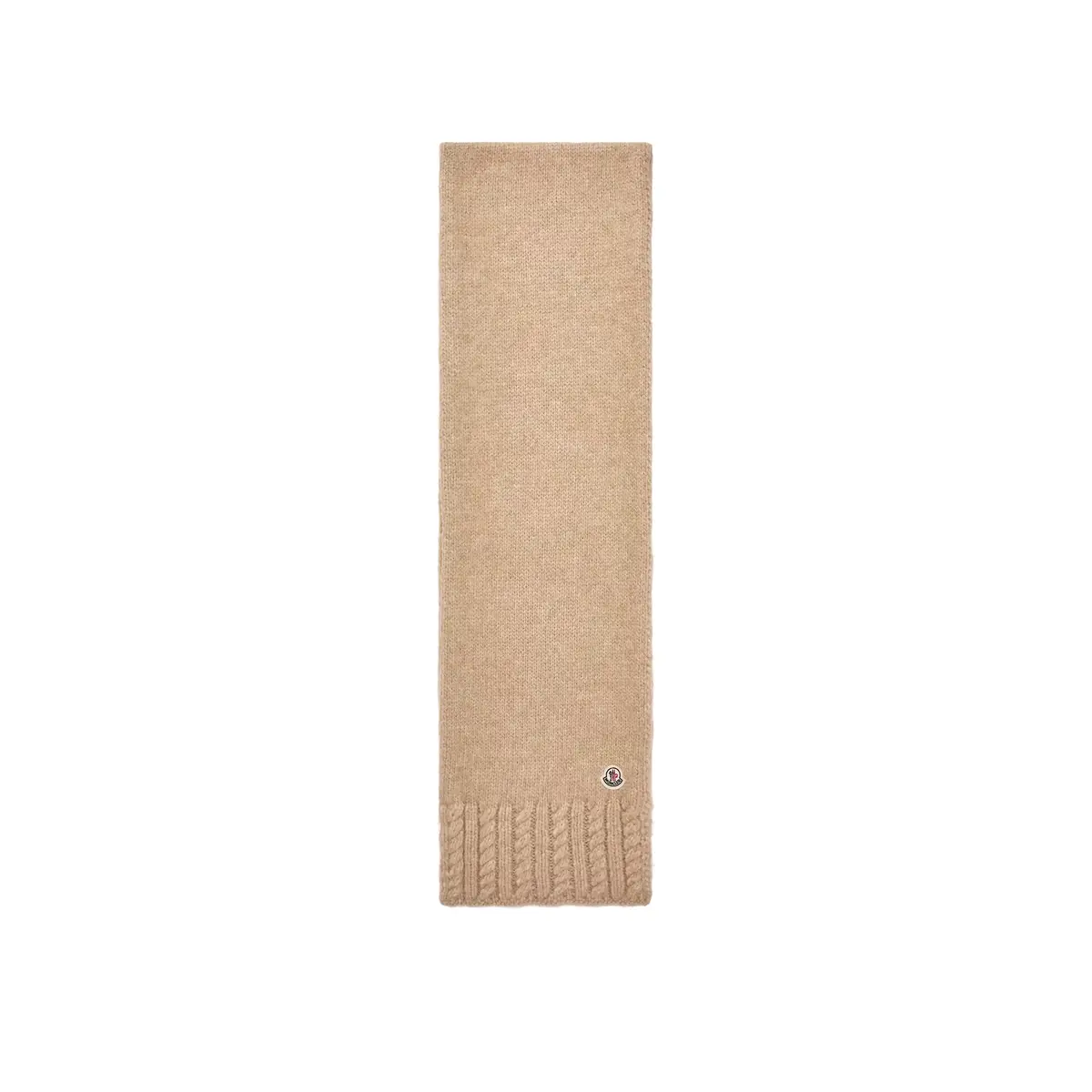
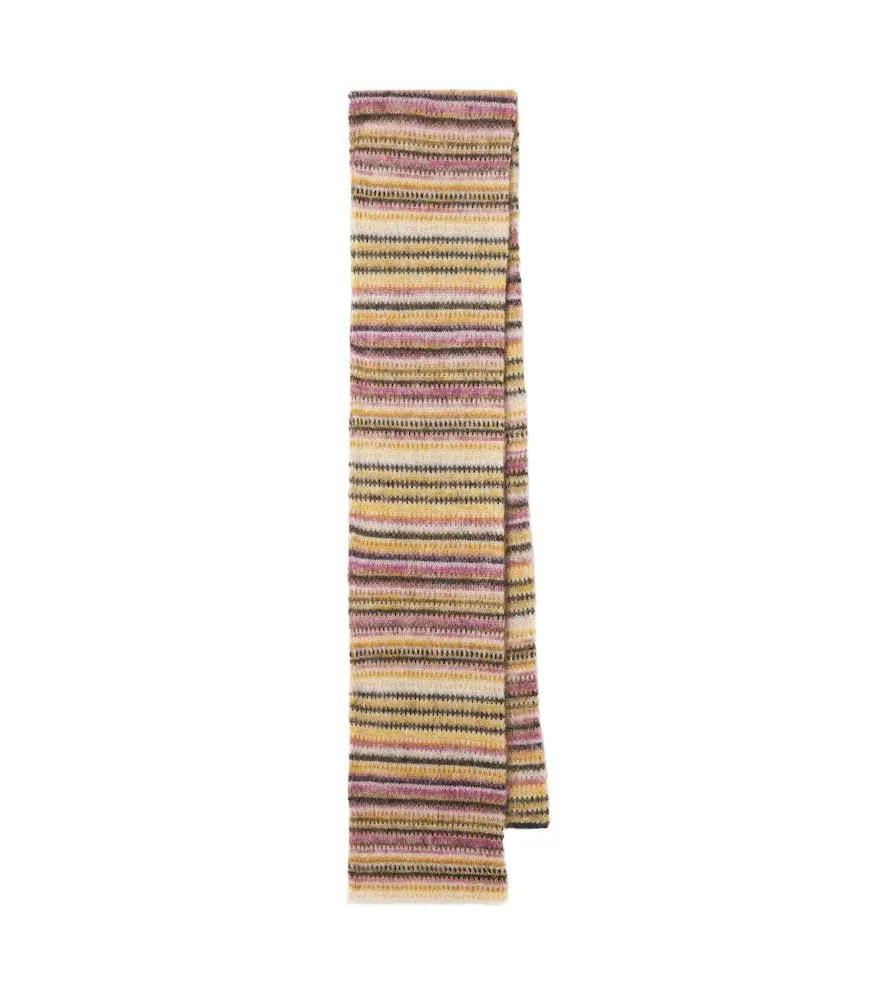
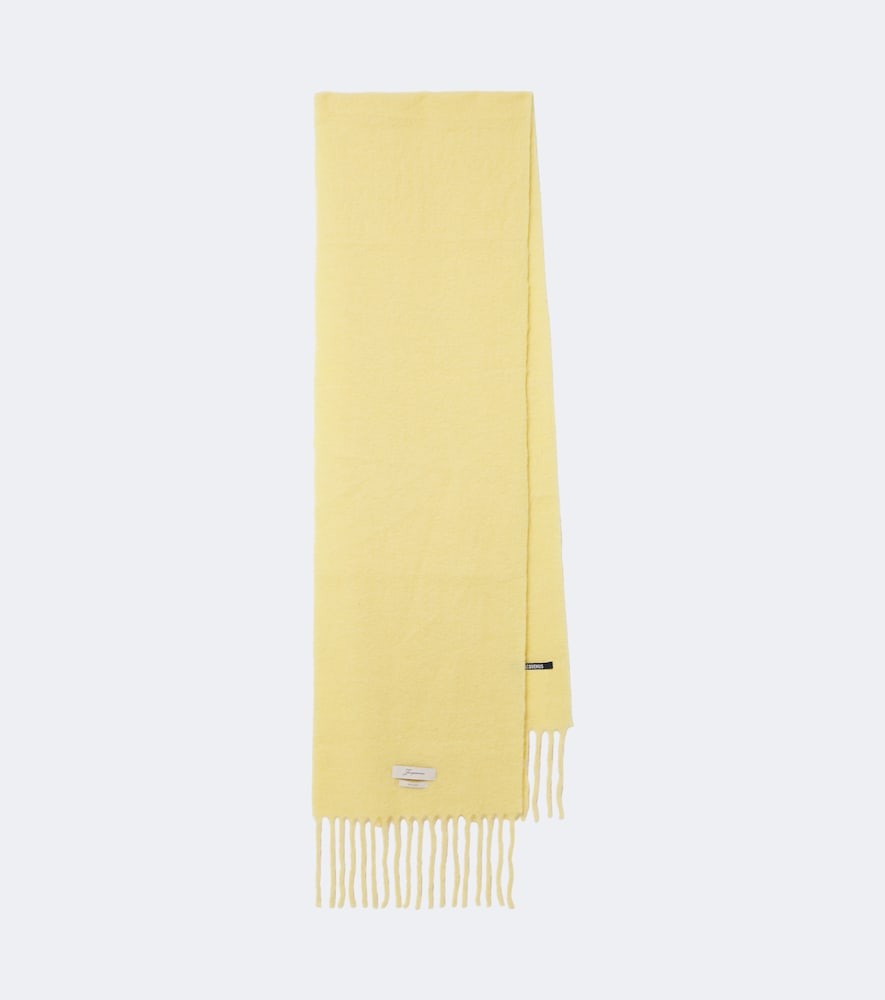
When the temperature drops below freezing, texture beats finesse. Brushed mohair, as in Jil Sander's fringed olive scarf and Miu Miu's striped one, traps air in its halo and looks deliberately undone. Loewe's two-tone alpaca and wool scarf is the neater option. Prada's ribbed virgin wool is the most structured scarf here; the ribs grip, so a single wrap stays put. Saint Laurent's llama-and-wool tartan is long enough to wrap twice, and tartan is one of the season's rising prints: Trendalytics, which tracks search and market data, has classic tartan up 40% year on year in its fall-winter 2026 report. Moncler's alpaca knit lists 36% polyamide alongside the alpaca and wool, which helps a lofty knit keep its shape.
Proportion is the thing to get right. A chunky scarf needs somewhere to go: pair it with a collarless coat, a wide lapel or a cape (capes are one of the season's big coat stories, as our fall and winter coat trends report explains). With a funnel-neck coat, skip the scarf or wear a slim one inside the neck.
Wool, alpaca and mohair scarves


How to wear a scarf: seven ties and when to use them
One rule first: a scarf goes under the collar of a tailored coat, so the lapels frame it, and over the neckline of a collarless coat, where it becomes the collar. After that, choose the tie for the scarf you own.
1. The Parisian loop (long scarves)
Fold the scarf in half, drape it around the neck, and pull both ends through the loop. It works with anything from about 60 in long and is the neatest tie under a lapel.
2. Once around, ends in front
Drape the scarf, wrap one end once around the neck and let both ends fall at different lengths. It is the right tie for fringed cashmere, because the fringe stays visible.
3. The double wrap
For scarves of 80 in or more: wrap twice, then tuck the ends inside the coat or let them hang. It is the warmest tie and suits the tartans and mohairs above.
4. The neckerchief
Fold a small or 90 cm square into a triangle, roll it from the long edge toward the point, and knot it at the side or the back of the neck. Wear it with shirts, blazers and crewnecks.
5. The headscarf
Fold a 90 cm square into a triangle, lay it over the hair and tie it at the nape, under the hair, or under the chin for a 1960s look with sunglasses. Silk twill grips better than silk crepe here.
6. The bag handle
A bandeau or skinny scarf, knotted at one end of the handle and wound in a spiral. It is the easiest way to change a bag you carry every day.
7. The shawl drape
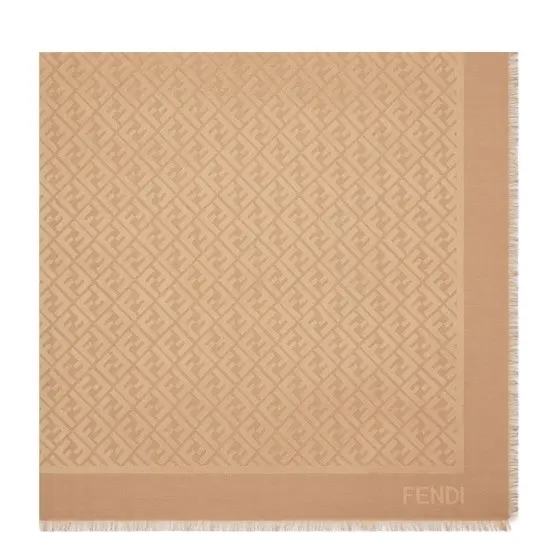
Fold a 120 to 140 cm square, or a stole, into a triangle and drape it over the shoulders with the point down the back. Knot the ends loosely at the front, or leave them open over a coat. Over a sleeveless evening dress, it replaces a jacket.
Shawls, stoles and large squares to drape




Not sure which tie suits your coat and neckline? Ask our AI stylist to pair a scarf with a coat you already own, or photograph your closet and let it choose.
Designer scarves as gifts
Scarves are the safest luxury gift because they have no size. The only judgment you need is fabric and color. Buy silk for someone who wears scarves all year and dresses in plain colors. Buy cashmere in a color that works with the coat she wears most, using the pairings above. Skip logo-heavy prints for a minimalist and choose a solid cashmere, a tonal jacquard or a knit with tonal embroidery, such as Chloé's triangular wool scarf.
On budget, expect bandeaus, small squares and slim knits between about $190 and $500; the core of the market, 90 cm silk twill squares and long cashmere scarves, between about $500 and $1,100; and special pieces, such as Gabriela Hearst's hand-knitted Lauren wrap, well above that. For more ideas at the lower end, see our luxury gifts under $500.
Designer scarves under $500 to give

How to care for silk, cashmere and wool scarves
- Silk: most silk squares are labeled dry clean only, so follow the label. Between cleans, hang it to let creases drop out, steam lightly from a distance, and keep the iron off hand-rolled hems so they stay rounded. Store it loosely folded or rolled, never knotted.
- Cashmere and wool: air them between wears rather than washing often. The Woolmark Company notes that pilling is caused by rubbing during wear and can be removed by hand, with a comb used very gently, or with a small battery-operated pill remover (Woolmark). A scarf pills where it rubs against a coat collar or a bag strap, so check those spots first.
- Washing: follow the label. If it allows hand washing, as The Row's does for the Mentas, use cool water and a wool detergent, then dry flat on a towel away from direct heat and sunlight, which Woolmark also recommends for knitwear.
- Storage: put scarves away clean, folded in a breathable bag with cedar, especially mohair and cashmere over the summer.
How we chose
We considered only houses on Vêtir's luxury list, and every scarf above was in stock for delivery in the US when we checked. We favored pieces whose makers state the fiber content and dimensions, looked for construction details such as hand-rolled hems, double-faced printing and woven rather than printed checks, and balanced prints with plain pieces. Prices run from about $190 for a silk bandeau to about $3,000 for a hand-knitted cashmere wrap. Our shop modules update automatically: if a scarf sells out, the closest in-stock alternative takes its place.
Frequently asked questions
How do you tie a silk scarf?
The simplest tie is the neckerchief: fold a square into a triangle, roll it from the long edge toward the point into a band, wrap it around your neck and knot it at the side. For a headscarf, fold a 90 cm square into a triangle, lay it over your hair and knot it at the nape. A skinny scarf needs no folding: knot it once under a shirt collar and let the ends fall at different lengths.
What size silk scarf is most useful?
A 90 cm (35-inch) square. It is big enough for a headscarf or a loose knot at the neck and small enough to fold into a neckerchief or tie to a bag. Add a bandeau if you want something for the hair and bag handles.
How can you tell if a cashmere scarf is good quality?
Read the label first: in the US it must state the cashmere percentage, and fiber sold as cashmere must average 19 microns or finer. Then look at the weave. A good woven scarf is dense and even when held to the light, and the fringe is neatly twisted rather than loose threads.
What color scarf goes with a camel coat?
Charcoal, burgundy, navy, ivory or a check that contains the camel. Avoid a scarf in the same camel, which makes the coat look flat.
How do you keep a silk scarf from slipping?
Choose silk twill rather than crepe or charmeuse, tie the knot at the side of the neck rather than the front, and make the first knot a little tighter than you think. On a smooth coat collar, a single knot under the collar holds better than a loose drape.
Are designer scarves worth it?
They can be, if you buy for construction rather than the logo: a stated fiber content, a dense even weave and properly finished edges. Worn daily through a winter, a well-made cashmere or silk twill scarf costs little per wear and lasts for years with basic care.