The Best Leather Jackets for Women: Bikers, Bombers, Blazers and How to Judge Quality
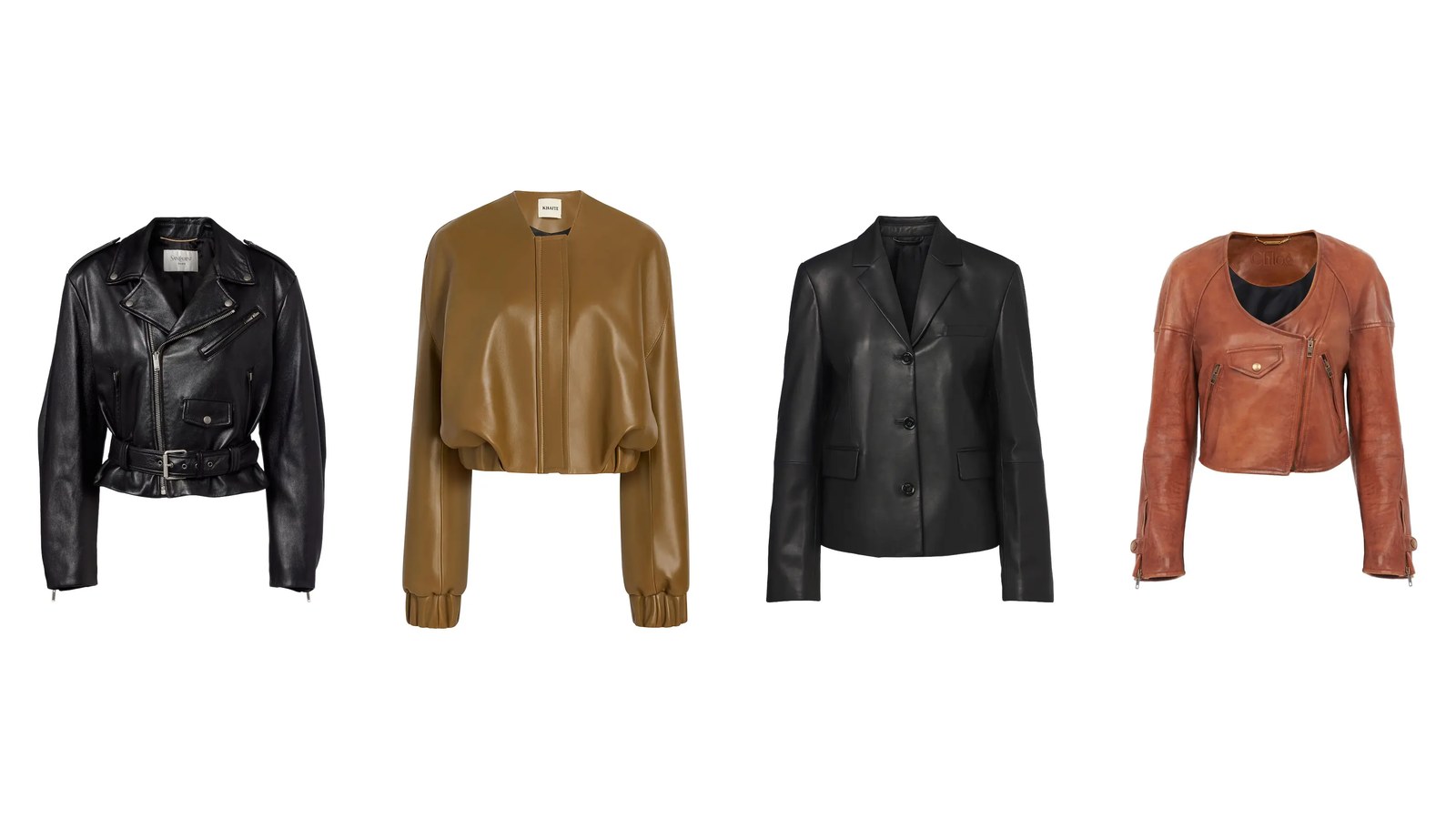
The best leather jackets for women come in four shapes: the biker, the bomber or blouson, the leather blazer and the softer collarless or scarf-neck jacket. For a first designer leather jacket, choose a black or dark brown biker or bomber in lambskin or calfskin, sized so it closes over a fine sweater and the shoulder seam sits exactly on your shoulder bone. Get the hide, the stitching and the fit right and it will work over jeans, tailoring and dresses for years. This guide covers which shape suits you, how lambskin, calfskin and goatskin differ, how to read a finish, the quality checks we make before we recommend a jacket, how it should fit, and how to break it in and look after it.
The best leather jackets for women, by style
Our own users look for leather too. In the first seven weeks of Vêtir's search box, in August and September 2026, leather and denim were the two materials searched for most, almost level: 43 accounts searched for leather and 41 for denim. Start with the shape, because it decides what you can wear the jacket with.
| Style | What defines it | Buy it if | Check before you buy |
|---|---|---|---|
| Biker | An off-center zip, lapels that snap down, zipped cuffs, often a belt | You want one jacket for jeans, dresses and tailoring | It zips over a fine knit without the zip rippling |
| Bomber or blouson | A center zip; a bomber has knit rib at the cuffs and hem, a blouson gathers into a band | You like a relaxed line and wear high-rise trousers or skirts | The hem lands at your waist or high hip, not below it |
| Leather blazer | Lapels, buttons and a tailored shoulder, cut like a wool jacket | You want one jacket for the office and for dinner | It buttons without creases pulling from the button |
| Collarless, cropped or scarf-neck | A round or V neckline, sometimes a tie at the throat, often cropped | You wear dresses, midi skirts and wide trousers | The neckline lies flat and the hem clears your waistband |
The leather biker jacket
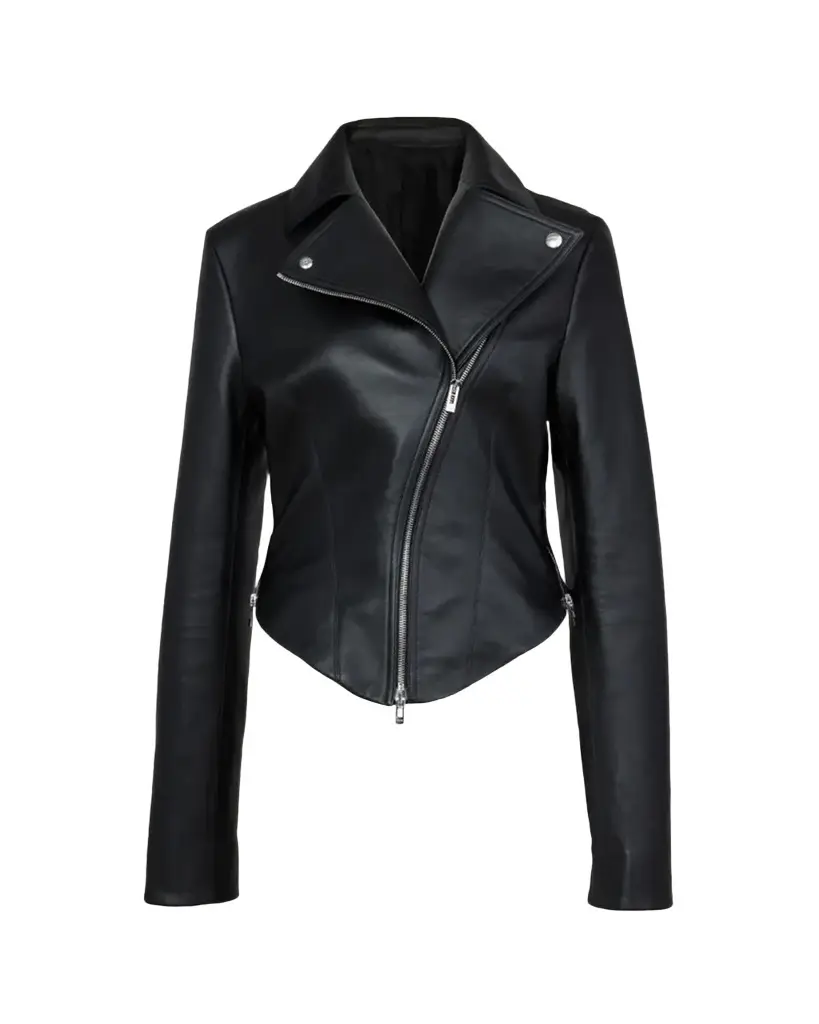
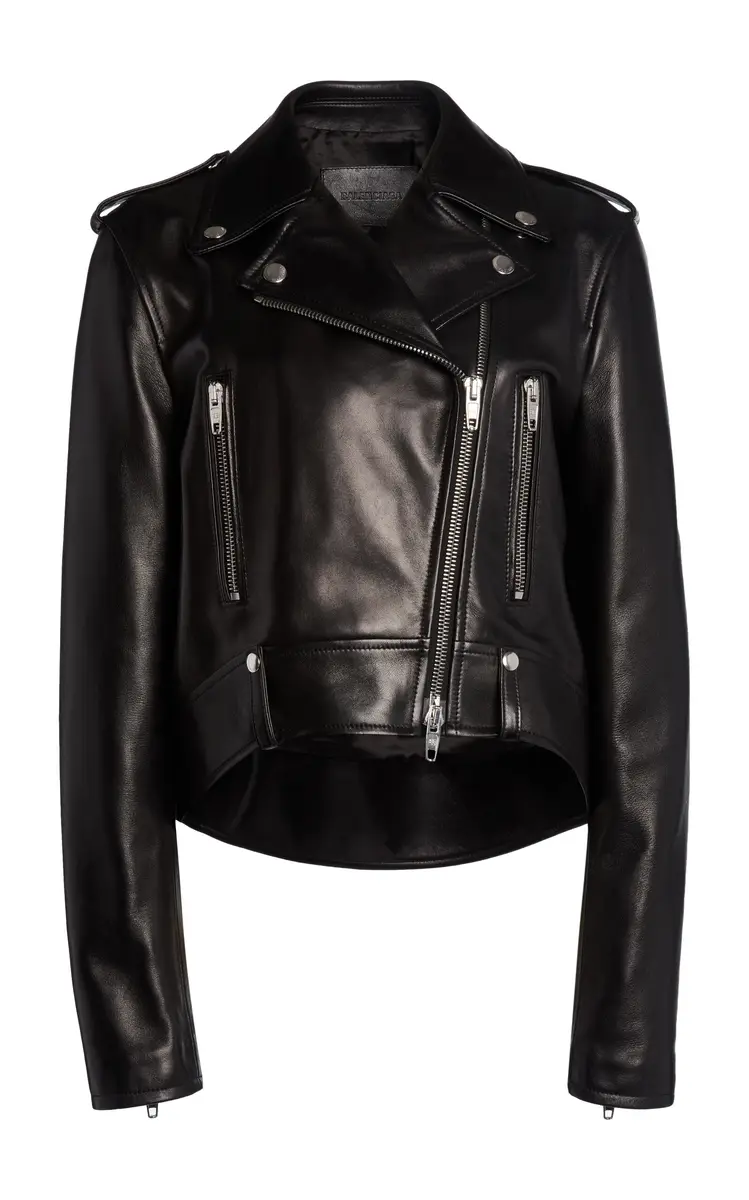
The biker is the leather jacket to buy first, because it looks finished worn open or closed, over jeans or a dress. Its shape was designed for a job. In 1928 Irving Schott introduced what his company calls the first modern leather motorcycle jacket, the Perfecto, built from heavy leather with an asymmetrical front designed to block wind and protect the rider, according to Schott NYC's history of the house. That off-center zip is still the point. Closed, the front overlaps in two layers across your chest; open, the lapels fold back cleanly, so the jacket looks finished either way.
A women's designer biker is a lighter thing than a rider's jacket. Houses such as Saint Laurent and Alaïa cut theirs in lambskin, shorter in the body and closer through the waist, and many, Prada's included, finish the hem with a belt or buckled tab. In the fitting room, open and close the zip several times: it should run without catching the facing, and the zip tape should lie flat when you wear the jacket open. The lapel snaps should hold, and zipped cuffs should close over your wrist without pinching. Worn open over a sweater, the hem should hang straight rather than flare away from your hips.
- The classic: a black biker, a white T-shirt, straight mid-blue jeans and loafers or ankle boots. Our guide to designer jeans brands covers the denim.
- Hard over soft: a biker over a bias-cut silk slip dress with knee-high boots. Our guide to wearing a slip dress in winter covers the length rule for a jacket over one.
- In place of a blazer: a biker over a fine-knit polo and gray tailored trousers.
- Tonal: a dark brown biker with a cream sweater and cream wide-leg trousers.
Browse every style in our biker jacket shop.
The best leather biker jackets




The leather bomber and blouson
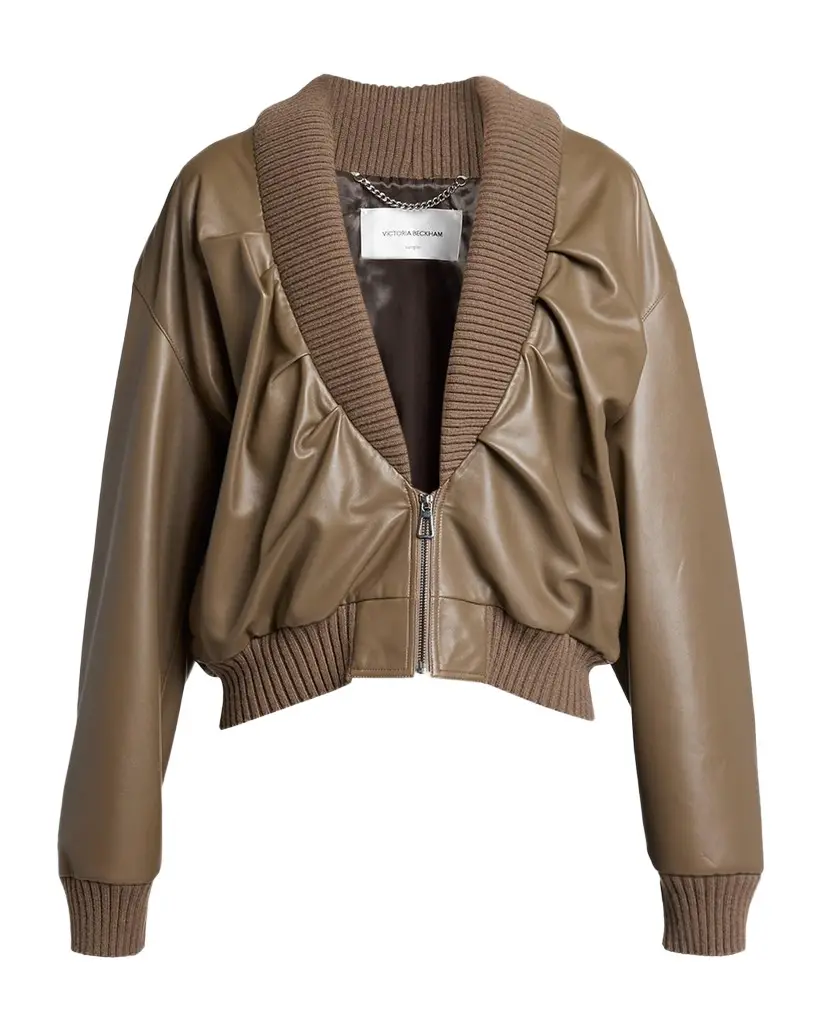
The bomber's knit cuffs and waistband come from flying clothing. In 1931 the US Air Corps ordered an update of its Type A-1 flight jacket, replacing the button front with a zip and the knit collar with a leather one; the result was the Type A-2. The example in the Smithsonian's National Air and Space Museum is the one Chuck Yeager wore on October 14, 1947, the day he became the first pilot to fly faster than sound: a waist-length horsehide jacket with knit wool cuffs and waistband and a brass zip. Knit rib at the hem and cuffs still defines a bomber. A blouson is its fuller cousin, gathered at the hem by elastic, a drawstring or a leather band.
Both end at the waist or high hip, so they work with high-rise trousers, midi skirts and slip dresses and look wrong over low-rise jeans, which leave a gap. The weight of the leather changes the shape completely. A supple leather drapes and falls into folds above the hem, the easy, rounded look of the blousons from houses such as Loewe, Prada and Miu Miu; a firmer calfskin stands away from the body and reads sportier. If you want the classic bomber, check that the knit rib springs back when you stretch it; slack rib at the hem is the first thing to look tired. Quieter houses such as The Row, Gabriela Hearst and Khaite make the pared-back versions that sit most easily with tailoring.
- Weekend: a brown bomber, a cream cable knit, dark straight jeans and loafers.
- Evening: a black blouson over a silk slip skirt with pointed flats or slingbacks.
- Office: a camel bomber over a white shirt with navy wide-leg trousers.
Size a bomber for a sweater: the chest and shoulders need room, but the rib should still hold the hem at your waist. For a warmer version, a shearling collar or lining moves a leather bomber into deep winter; our guide to the best shearling coats explains how real shearling differs from a shearling-trimmed jacket. More styles are in our bomber jacket shop.
Leather bombers and blousons


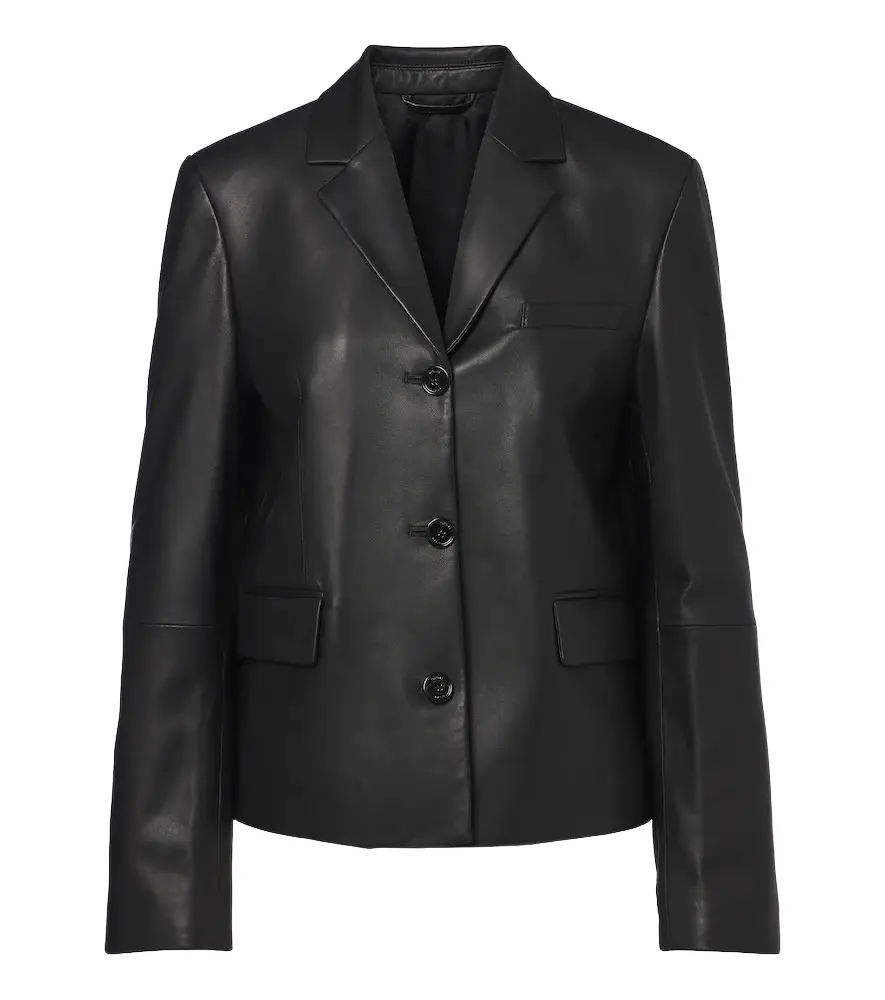
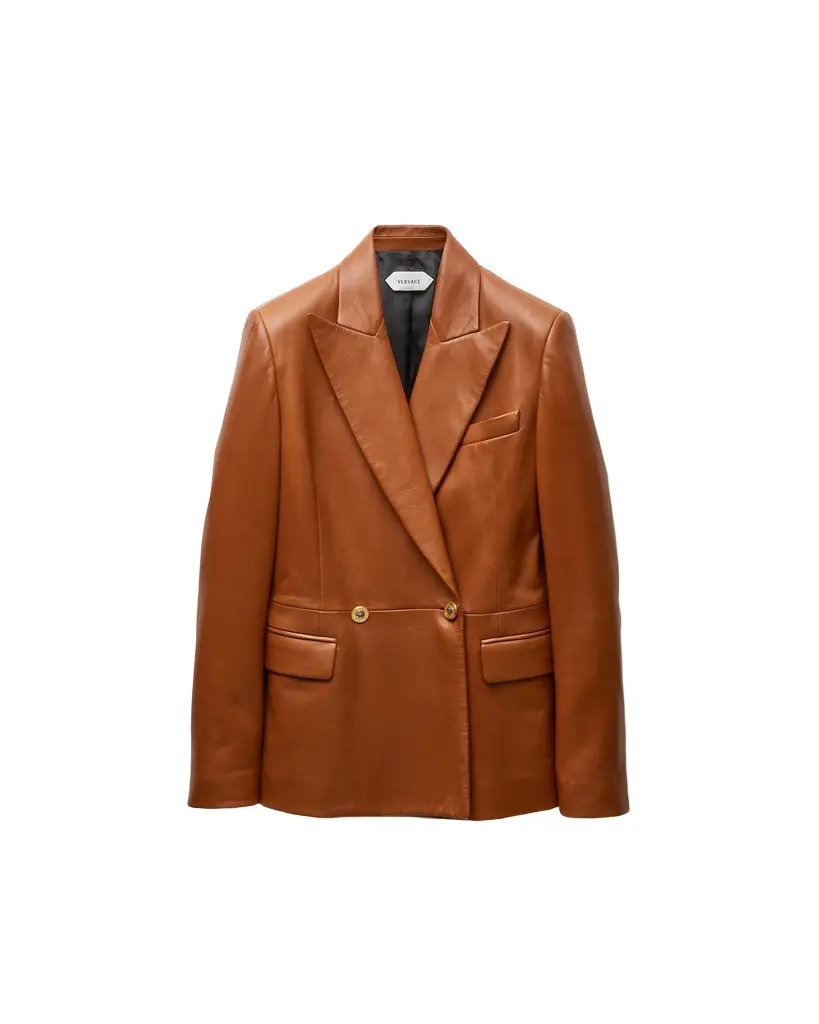
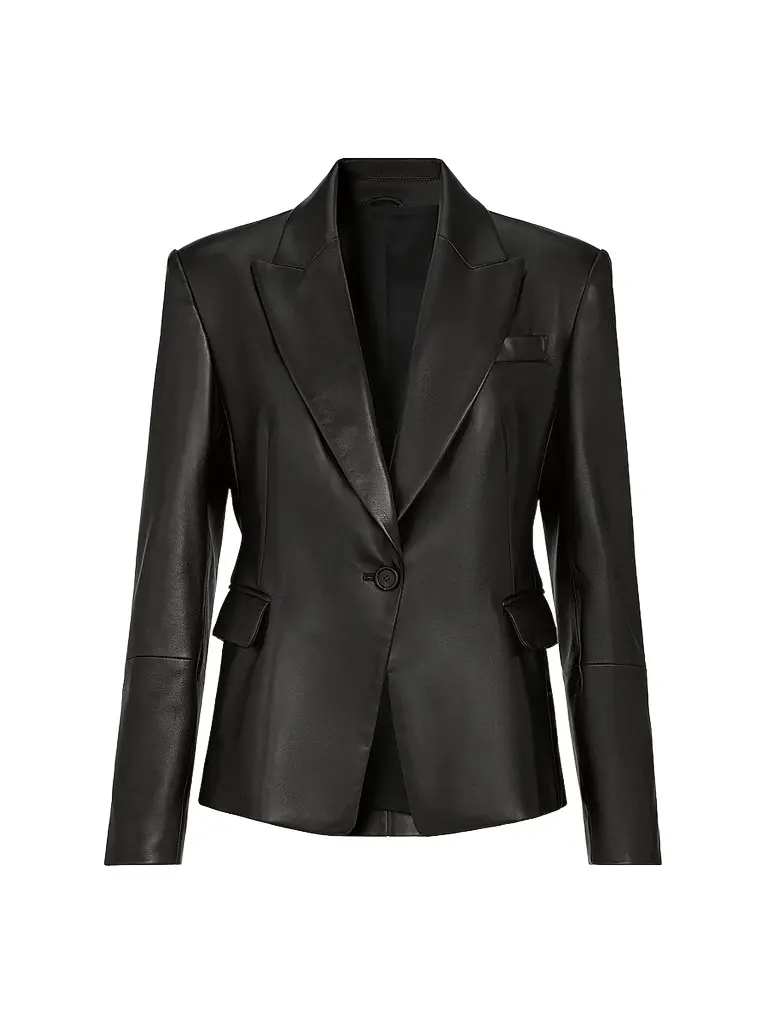
The leather blazer
A leather blazer is the best leather jacket for work, and the one to buy with the most care, because leather is hard to alter. Every needle hole in leather is permanent, so a seam cannot be let out without the old stitch line showing, and there is rarely enough spare leather to lengthen a sleeve. Buy it the way you would buy tailoring. The shoulder seam should end exactly at your shoulder, the lapels should lie flat against your chest, and the jacket should button without X-shaped creases pulling from the button. With your arms relaxed, the sleeves should reach your wrist bone.
Lining matters more here than on a biker, because a blazer goes over shirts and fine knits: a smooth, full lining through the body and sleeves lets it slide on and hang properly. Single-breasted with one to three buttons is the easiest to wear open over a dress or closed over trousers. Double-breasted reads more formal and looks right only buttoned. Black and dark brown are the working colors. Cognac or a brighter color turns a leather blazer into the one statement in an otherwise plain outfit, so keep everything under it quiet. Toteme and Brunello Cucinelli make plain, office-ready versions; Tom Ford's are sharper and more fitted.
- The office: a black leather blazer, a cream turtleneck, wide-leg wool trousers and loafers.
- Dinner: over a black slip dress with sheer tights and slingbacks.
- Weekend: with straight jeans, a white T-shirt and a fine gold chain.
- Monochrome: a brown or cognac leather blazer over a knit and trousers in the same shade, so the texture does the work.
See our full edit of blazers for wool and leather styles.
The best leather blazers


Collarless, cropped and scarf-neck leather jackets
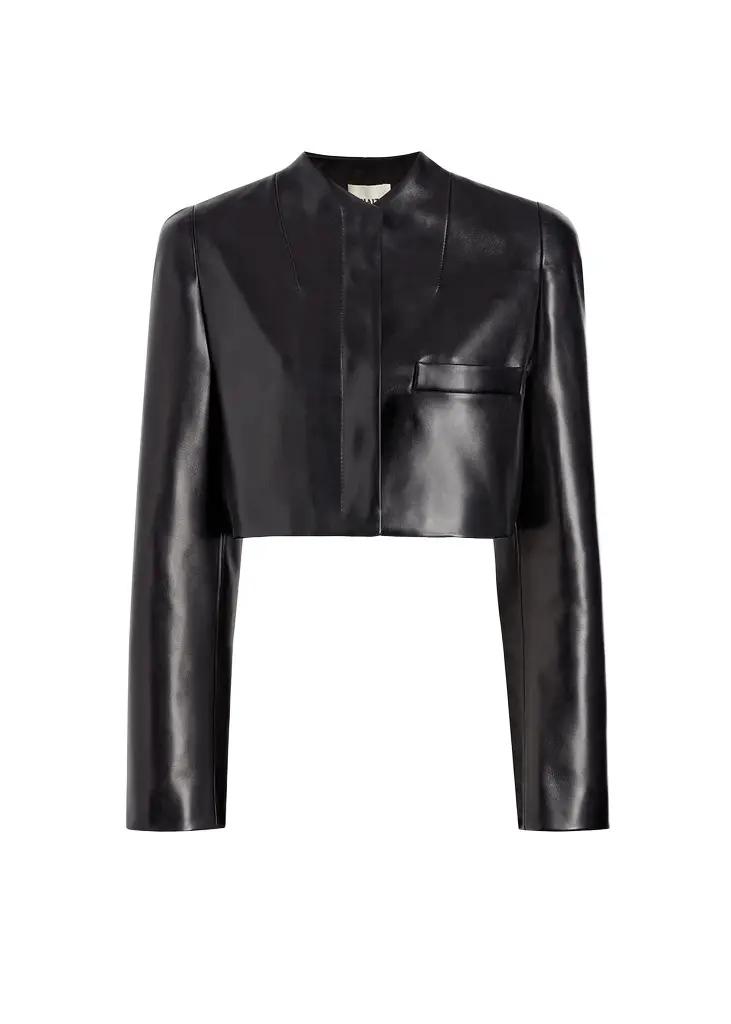
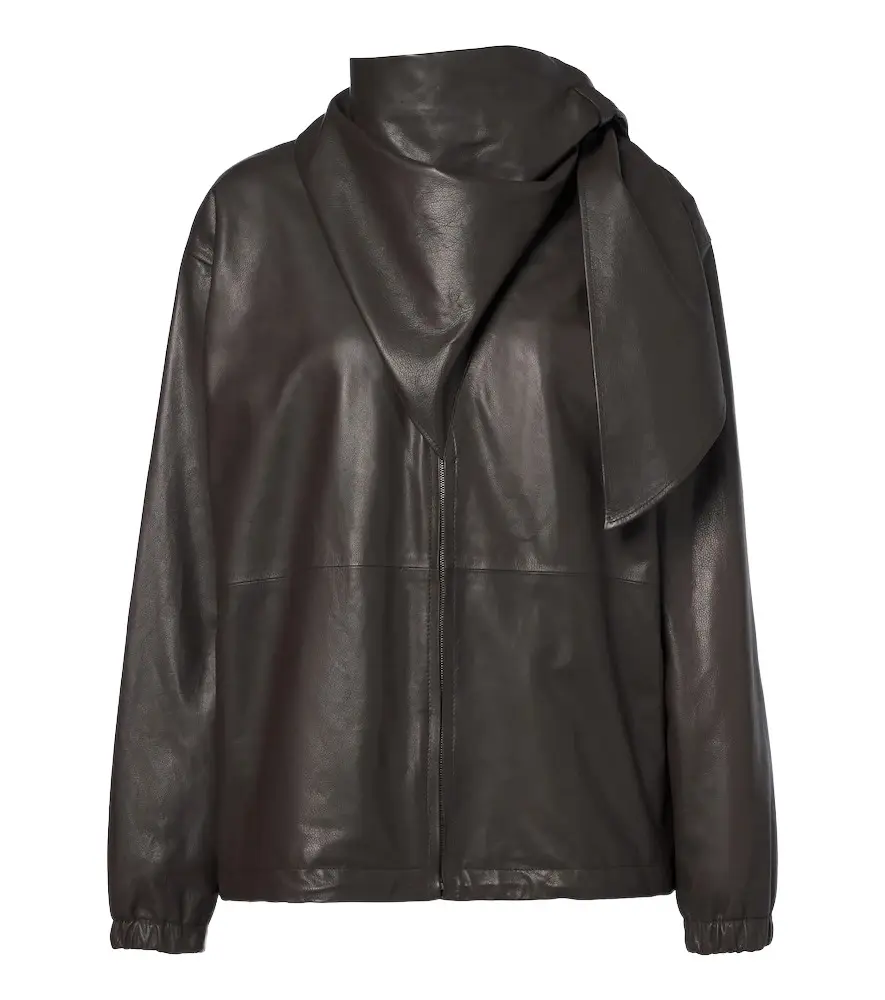
The softer side of leather comes from houses such as Chloé, Toteme and Khaite: collarless jackets that leave room for a necklace, scarf-neck styles with a tie or drape of leather at the throat, and cropped shapes that stop at the waist. They are the easiest leather jackets to wear with dresses and skirts, because no lapels or hardware compete with the neckline underneath.
Proportion decides whether they work. A cropped jacket should end at or just above your natural waist, so pair it with high-rise trousers, a midi skirt or a dress with a defined waist; over a low-rise waistband it cuts you in half. A scarf neck adds volume at the throat, so keep earrings small and leave the necklace off. Collarless styles suit anyone who wears a lot of jewelry, and they leave space for a silk scarf when you want the warmth.
- Cropped cognac: with an ivory silk midi skirt and knee-high boots.
- Scarf-neck black: over a black knit dress with sheer black tights, all one color.
- Collarless: over a striped shirt with wide trousers and pearls.
Shop the complete range in our leather jacket shop.
Collarless, cropped and scarf-neck leather jackets




Lambskin, calfskin or goatskin: which leather is best?
The animal decides how a jacket feels and wears. Lambskin is the lightest and softest of the common hides, but it is not the right choice for every jacket.
| Leather | How it feels | How it wears | Best for |
|---|---|---|---|
| Lambskin | Thin, light and soft, with a fine grain; it drapes | Creases softly; marks and scuffs sooner than heavier hides | Fitted bikers, blousons, cropped and dressy jackets |
| Calfskin | Smoother and firmer, with a finer grain than cowhide | Holds its shape and wears well | Leather blazers and structured bikers |
| Goatskin | A pebbly, distinctive grain | Tough and hard-wearing | Everyday bombers and blousons |
| Cowhide, steerhide or horsehide | Thick and stiff when new | The most protective, with the longest break-in | Riding, and heavy heritage-style jackets |
| Suede and nubuck | Velvety. Suede is leather, or a split of the hide, finished to a velvet-like nap; nubuck is buffed on the grain side, so the grain pattern still shows | Marks in rain and needs a specialist cleaner | Dry days in spring and fall |
You will often see "nappa" on a label. It is not an animal. In the industry definitions the Leather Working Group publishes, drawn from ISO standards, napa (their spelling) is a soft, full-grain leather that has been dyed through and lightly finished. It tells you how the leather was made and how it feels, not which animal it came from, so read the rest of the label for lambskin, calfskin or goatskin.
Aniline, semi-aniline or pigmented: how to read a leather finish
The finish decides how a jacket looks on the first day and how it ages. The same Leather Working Group definitions separate three main types.
- Aniline: the natural grain stays clearly visible, because the leather has no surface coating or only a clear, non-pigmented one. It is the softest and most natural-looking finish and develops a patina, but with nothing on the surface it marks and stains most easily.
- Semi-aniline: coated with a finish that contains a little pigment, so the grain still shows clearly. It keeps much of the softness with more protection.
- Pigmented: the grain is completely hidden under a finish that contains pigment, often over corrected grain, which has been buffed and then finished to look even. It resists wear, stains and fading best, but it feels firmer and less natural.
You will also meet pull-up leather, which is made to lighten in color where it is stretched, so pale creases at the elbows are the look rather than a defect; glazed or polished leather with a high shine; and washed, tumbled or aged-effect finishes that look worn in from the start. To tell what you own, look closely: visible pores and natural marks mean aniline or semi-aniline, while an even, uniform surface means a pigmented finish. If the label does not name the finish, ask before you clean anything, because every care rule below depends on it.
How to judge a designer leather jacket's quality
Price alone won't tell you. These are the checks we make, in the order we make them.
- Read the composition label. It should name the leather: lambskin, calfskin, goatskin. Leather UK's buying guide warns that "vegan leather" can be PU or PVC plastic, and that a "plant-based" leather can contain as little as 10 percent plant material, so trust the label over the marketing name.
- Look at the grain. Real leather shows its grain, with small variations; the same guide notes that an extremely smooth, even surface can signal PVC or PU. Fold a hidden area gently: real leather shows grain along the crease. If a listing says full-grain, none of the surface has been buffed away; corrected grain has been buffed and then finished to look even.
- Look at how it is pieced. Lambskins are small, so some seams are unavoidable, but they should follow the design, such as a yoke or side panels, rather than break up the fronts and back at random. Color and grain should match from panel to panel, sleeves included.
- Inspect the stitching. Stitches should be small, even and straight, with none skipped or loose and no puckering where seams meet. Topstitching should run parallel to the edge.
- Check the edges. Hems and facings should be turned and stitched. Raw-cut edges can be deliberate, but they should be clean and even, and no glue should show anywhere.
- Work the hardware. Zips should run smoothly without catching the lining; snaps should close with a firm click; buckles should feel solid, not hollow.
- Feel the lining. Look for a full lining through the body and sleeves in a smooth fabric such as silk, cupro or viscose, so the jacket slides over knitwear.
- Know what a certification means. Listings sometimes say the leather comes from a certified tannery. Leather Working Group certification means the tannery was independently audited against the group's environmental standards, and the group notes that it applies to the facility where the leather was made, not to individual products. It tells you how responsibly the leather was produced, not how fine it is.
How a leather jacket should fit
- Shoulders first. Unless the jacket is cut with a dropped shoulder, the seam should sit at the edge of your shoulder bone. It is the one thing that cannot be fixed later.
- Sleeves. With your arms relaxed, the cuff should reach your wrist bone, and it should not ride far up your forearm when you reach forward.
- The movement test. Cross your arms, then reach up as if hailing a cab. The back should not strain and the hem should not jump above your waistband.
- Layering. Try it on over what you will actually wear. A biker should close over a T-shirt or fine knit; a bomber or blouson needs room for a sweater.
- Length. Bikers and bombers should end at the high hip or waist; a blazer should cover the seat of your trousers or stop just above it, depending on the cut.
- Between sizes? Size for the shoulders. Leather relaxes a little across the back and at the elbows as you wear it, but it does not get longer.
If you want leather in a longer shape, the leather and suede trenches in our report on coat trends for fall and winter are the next step up. Cropped and waist-length styles keep the leg line long on petite frames; if you are tall, a hip-length biker or a longer blouson balances your proportions. Not sure which shape suits you? Ask our AI stylist to build a full outfit around any jacket on this page.
Breaking in and caring for a leather jacket
Leather needs less care than most people give it, and the wrong product does real damage. These rules come from Leather UK's care advice.
- Know your leather before you clean it. Identify the type first, and never use household products or cleaning tips from the internet, because finishes differ. Suede and nubuck need a specialist cleaner when there is a real problem, and aniline leather may need specialist products to restore.
- Keep pens out of the pockets. Ink cannot be removed from aniline leather, because it re-dyes it.
- Mind the light. All leather fades in UV light to some degree, so store it out of direct sunlight.
- Store it properly. Use a dust cover, never plastic, and keep pale leather away from darker colors.
- Keep suede away from heat. Never dry it next to a heater or in a dryer.
- Keep it out of the washing machine unless a specialist tells you otherwise, even if the label calls it washable.
Two habits of our own. Break a jacket in by wearing it: body heat and movement soften the leather, and the creases that form at the elbows are normal. And hang it on a broad, shaped hanger so the shoulders keep their line; if it gets soaked, blot it and let it dry on that hanger at room temperature. When a jacket leaves your rotation, you can sell it through Vêtir's pre-owned resale.
How we chose
Every jacket here comes from a house on our luxury list, was live on Vêtir when we checked it, and was compared against its product photographs for color, shape and length. We favored hides named on the label, full linings and clean hardware, covered all four shapes, and spread our picks across price points from accessible designer to investment level. If a pick sells out, each edit fills the space with a similar piece from the same category. There are no pre-owned pieces in this guide.
Frequently asked questions
What is the best leather for a women's leather jacket?
Lambskin, for most people: it is light, soft and comfortable from the first wear. Choose calfskin for a blazer or structured biker that should hold its shape, and goatskin if you want a tougher, pebbled grain.
Should a leather jacket be tight or loose?
A biker should be close but not tight, zipping over a T-shirt or fine knit with the shoulder seam on your shoulder bone. Bombers and blousons are meant to be roomy through the body, with the rib or band holding the hem at your waist.
Do leather jackets stretch?
A little, across the back and at the elbows, as the leather relaxes with wear. They do not get longer, so buy the right sleeve and body length from the start.
What color leather jacket is the most versatile?
Black goes with the widest range of clothes, from denim to evening. Dark brown is the softer alternative and looks best with cream, camel and blue denim. Cognac and tan make better second jackets.
Can you wear a leather jacket in the rain?
A light shower won't hurt a finished leather jacket if you let it dry naturally afterward. Aniline leather marks more easily, and suede should stay home on wet days.
Is a designer leather jacket worth it?
If you will wear it for years, yes. You are paying for better hides, careful cutting, fine stitching, a full lining and hardware that lasts, which are also what let a jacket soften with age instead of cracking. Check them against the list above before you buy.