The Best Cashmere Coats: Camel, Wrap and Double-Face, and What the Label Must Say
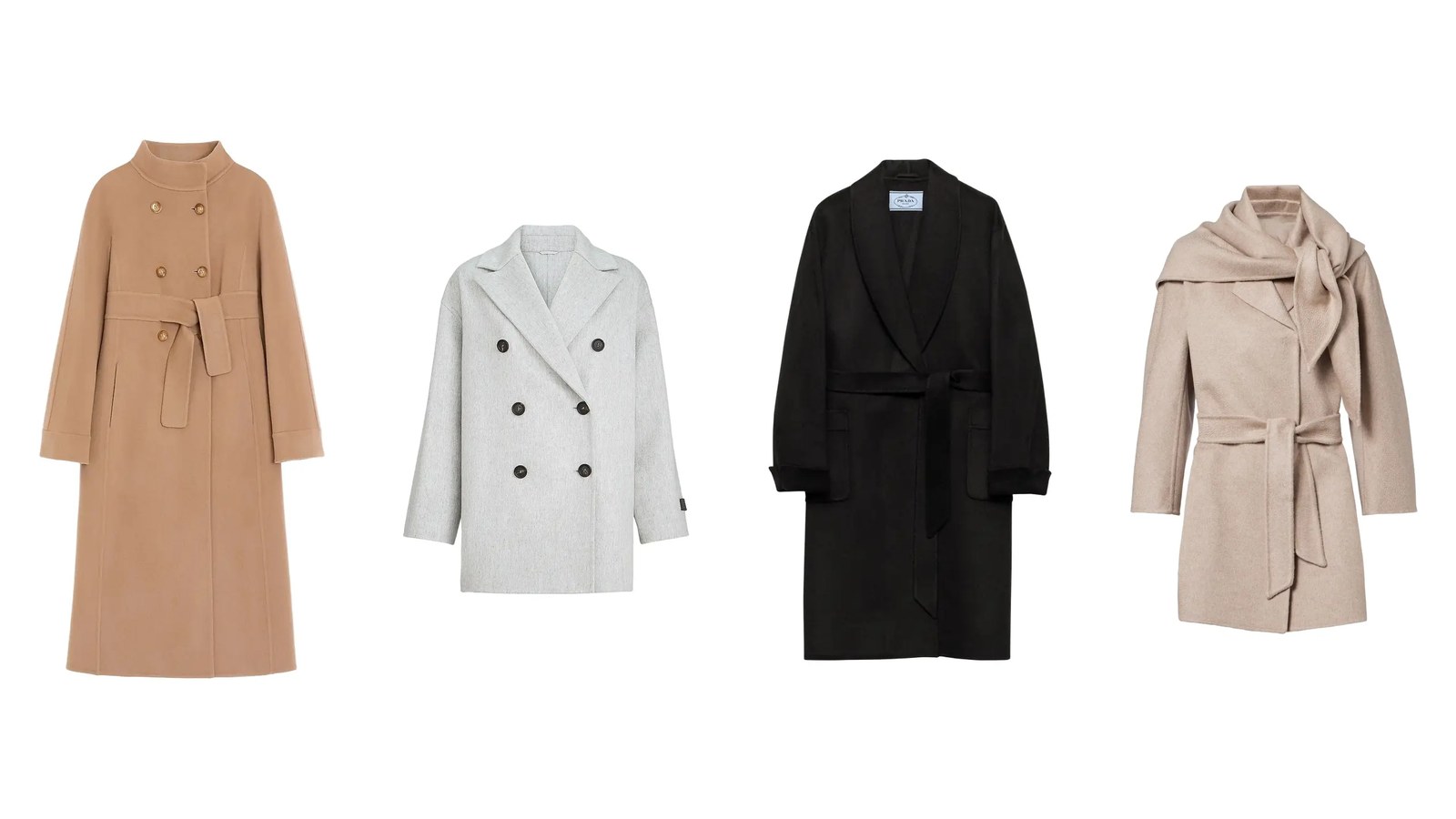
The best cashmere coats are woven from pure cashmere, or from a blend in which cashmere is the main fiber, in a cloth dense enough to spring back when you crush it, and cut with room for a jacket underneath. The three styles worth owning are a camel coat, a belted wrap and a double-face coat, usually made from two layers of cloth woven together so that it needs no lining. Max Mara, Loro Piana, Brunello Cucinelli and The Row are the houses to start with.
Below: how to test a coat in five minutes, what US labeling law requires a coat label to tell you, how double-face construction works, what actually makes a coat warm, the best coats by style and by budget, and how to care for one so it lasts many winters.
How to judge a cashmere coat in five minutes
Price and a famous name tell you little about a coat's cloth. These checks, done in a fitting room or the day a delivery arrives, tell you a lot.
- Read the sewn-in label before the price tag. Look for percentages, not adjectives: "100% cashmere," or cashmere listed first with a clear share. The next section explains what the law requires.
- Crush a corner. Squeeze a fistful of the hem for a few seconds and let go. Dense, good cloth springs back almost smooth; limp cloth stays crumpled and will look tired by February.
- Hold one layer up to the light. The less light comes through, the more wind the cloth will stop. It matters more on a coat than on a sweater, because the coat is your windbreak.
- Look inside. On a lined coat, the lining should be cupro, silk or viscose, with a fold of spare fabric at the center back so it does not pull when you reach forward. On an unlined double-face coat, the inside should look almost as finished as the outside, with edges closed by small, even hand stitches.
- Check buttons and buttonholes. Horn or corozo buttons sewn on a thread shank sit clear of thick cloth and fasten easily; buttonholes should be dense and even, with no loose threads.
- Try it over a jacket. Wear the thickest layer you will put under the coat, then lift your arms, cross them and sit. If the back strains or the sleeves ride above your wrist bone, size up or choose a looser cut.
Cashmere, cashmere blend or wool: what a coat label must tell you
In the US, "cashmere" on a label is a legal term. Under the Wool Products Labeling Act, it may be used only for the fine, dehaired undercoat of the cashmere goat with an average fiber diameter of no more than 19 microns, and fiber that fails the definition has to be labeled wool, according to the Federal Trade Commission's guide to the textile and wool labeling rules. Our guide to the best cashmere sweaters goes further into fineness and knitting. For coats, five more rules from the same guide and its regulations matter.
- A named fiber comes with a percentage. If a label names a specialty fiber such as cashmere, camel or alpaca, it must give that fiber's percentage. "Cashmere" in a product's name tells you it is there, not how much; the percentage on the label does.
- Wool is always declared. Fibers under 5 percent can usually be grouped as "other fiber," but wool and recycled wool must be named, with a percentage, at any amount, so even a trace of wool in a "cashmere" coat shows on the label.
- Warm linings are listed separately. If a lining, interlining or padding is there for warmth, its fiber must appear as its own section of the label, as in "Shell" and "Lining." For wool garments, which include cashmere coats, the federal rules also require any interlining, a layer between the outer shell and the lining, to be listed separately (16 CFR 300.23). The label therefore tells you whether a coat's warmth comes from its cloth or from a layer hidden inside.
- A hang-tag cannot add cashmere the label lacks. If the required label says only "100% Wool," the FTC says "Fine Cashmere Garment" cannot appear on any other label or tag, and a garment that draws attention to a small amount of cashmere must list it with its percentage, as in "97% Wool, 3% Cashmere."
- Recycled fiber must say so. Recycled cashmere or camel hair has to be labeled "recycled." Some houses use it by choice, and it is not a defect in itself; but the Cashmere and Camel Hair Manufacturers Institute notes that nylon in a woven cashmere blend, or a wool, nylon and cashmere mix, may indicate inferior recycled fiber (CCMI fiber facts).
Then do the arithmetic, because product names flatter. Reading labels for this guide, we found a coat sold as "double cashmere" that was 10 percent cashmere, a "wool and cashmere" wrap coat with four times as much polyamide as cashmere, and a "wool, cashmere and silk" coat that was 6 percent cashmere. Several well-known camel and belted coats are 90 percent wool and 10 percent cashmere. None of that breaks a rule, since the labels say so, but it changes what you are buying. The CCMI's purchasing guide warns that small amounts of cashmere, under about 20 percent, do not significantly alter a garment's performance, so judge a 10 percent coat as a good wool coat and pay accordingly.
| The label says | What you are buying | Judge it as |
|---|---|---|
| 100% cashmere | A coat whose cloth is entirely cashmere as the law defines it | Cashmere: pay for the cloth, then the make |
| Cashmere first, 50 percent or more | A true blend; the wool adds body and structure | Near cashmere; it should cost less than pure |
| Wool first, 20 to 30 percent cashmere | A wool coat with a noticeably softer hand | A premium wool coat |
| Wool first, 10 percent cashmere or less | A wool coat | A wool coat, on cut and cloth |
| Nylon or polyamide in the blend | Added strength, or possibly recycled fiber | Test the hand; read the full label |
| Separate "Lining" or "Interlining" sections | Part of the warmth comes from inside layers | Check what they are made of |
Double-faced cashmere coats: how they are made
"Double-face" is used loosely in coat descriptions, and the fabric trade uses two terms for two different cloths. As Mood Fabrics explains, double cloth is two fabrics threaded or fused together into one thicker cloth, so you can peel the layers apart at an edge, while a double-faced fabric is a single layer with two good sides that cannot be separated. The unlined double-face coats at the top of the market are usually the first kind. Brunello Cucinelli, for instance, describes its cashmere double cloth as two thin layers of cashmere made at the same time and joined by cashmere threads.
That construction is what lets a coat go without a lining. At every edge and seam, the maker splits the two layers, turns the raw edges inward and closes them by hand, so the inside is as finished as the outside. It is also why some makers describe such a coat as "100% cashmere (except joining thread)": the exception is the thread used to join the layers, not the cloth. The benefits are a softer drape than a lined coat, an inside as finished as the outside, and no lining to wear through or tear. The trade-offs are real. An unlined coat can catch on a knit where a lining would slide; hand-finished edges make alterations slower and dearer; and not every coat sold as double-faced is unlined, since some add a lining anyway. To check, fold back a cuff or the front edge. Two layers meeting at a fine hand-stitched edge means double cloth; a seam where a lining meets a facing means a lined coat.
Wear a double-face coat over a smooth knit or a shirt rather than a textured sweater, and if you want it over bulky layers, choose a cut with dropped shoulders. Gabriela Hearst makes many of its coats and jackets in double-face cashmere, some of it recycled.
Double-face cashmere coats
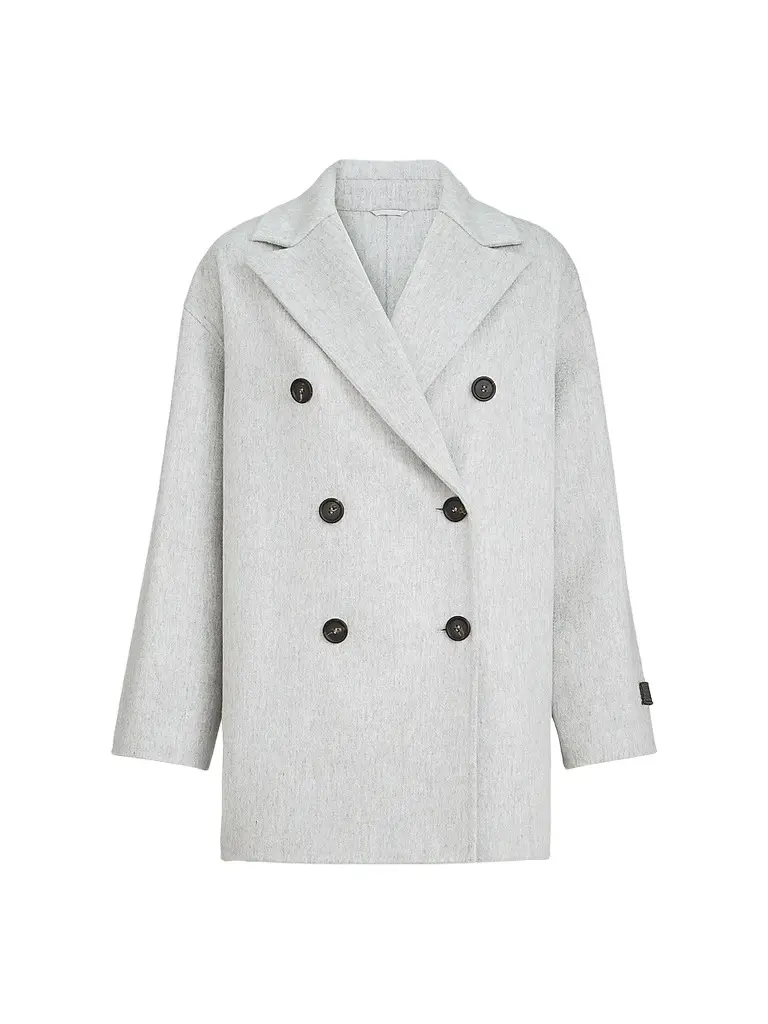 Brunello CucinelliWomen's Cashmere Double Beaver Cloth Pea Coat$8,900
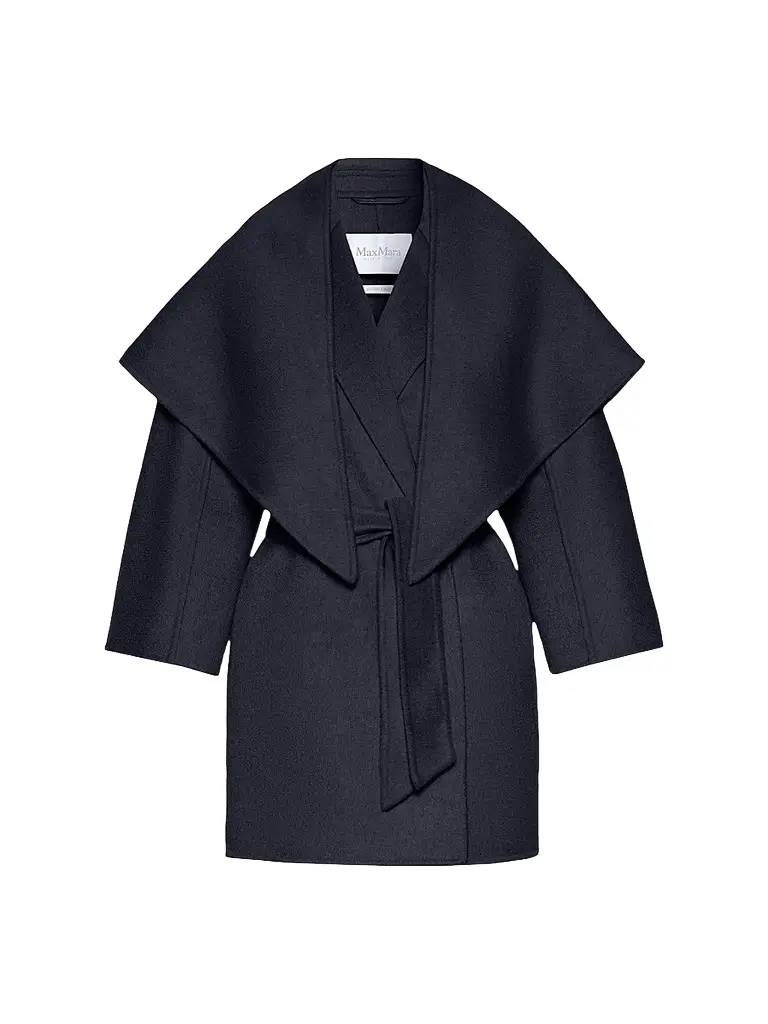 Max MaraWomen's Double Cashmere Coat$6,590
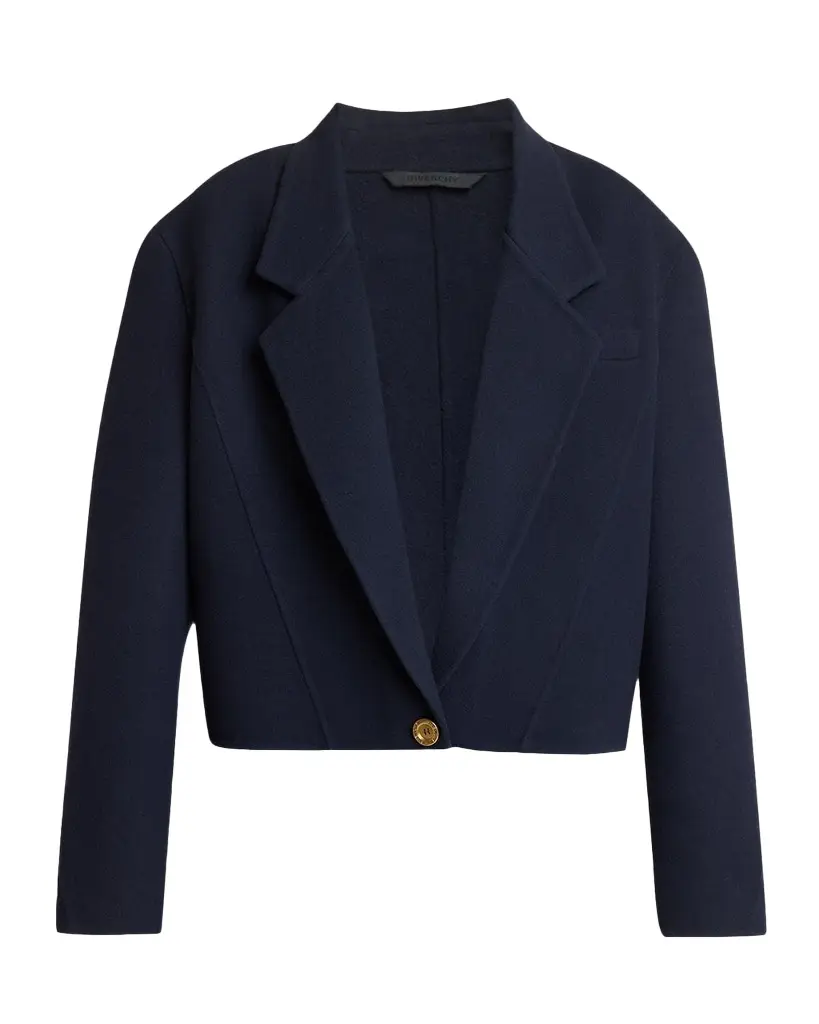 GivenchyDouble Face Wool-Cashmere Crop Boxy Coat$3,850
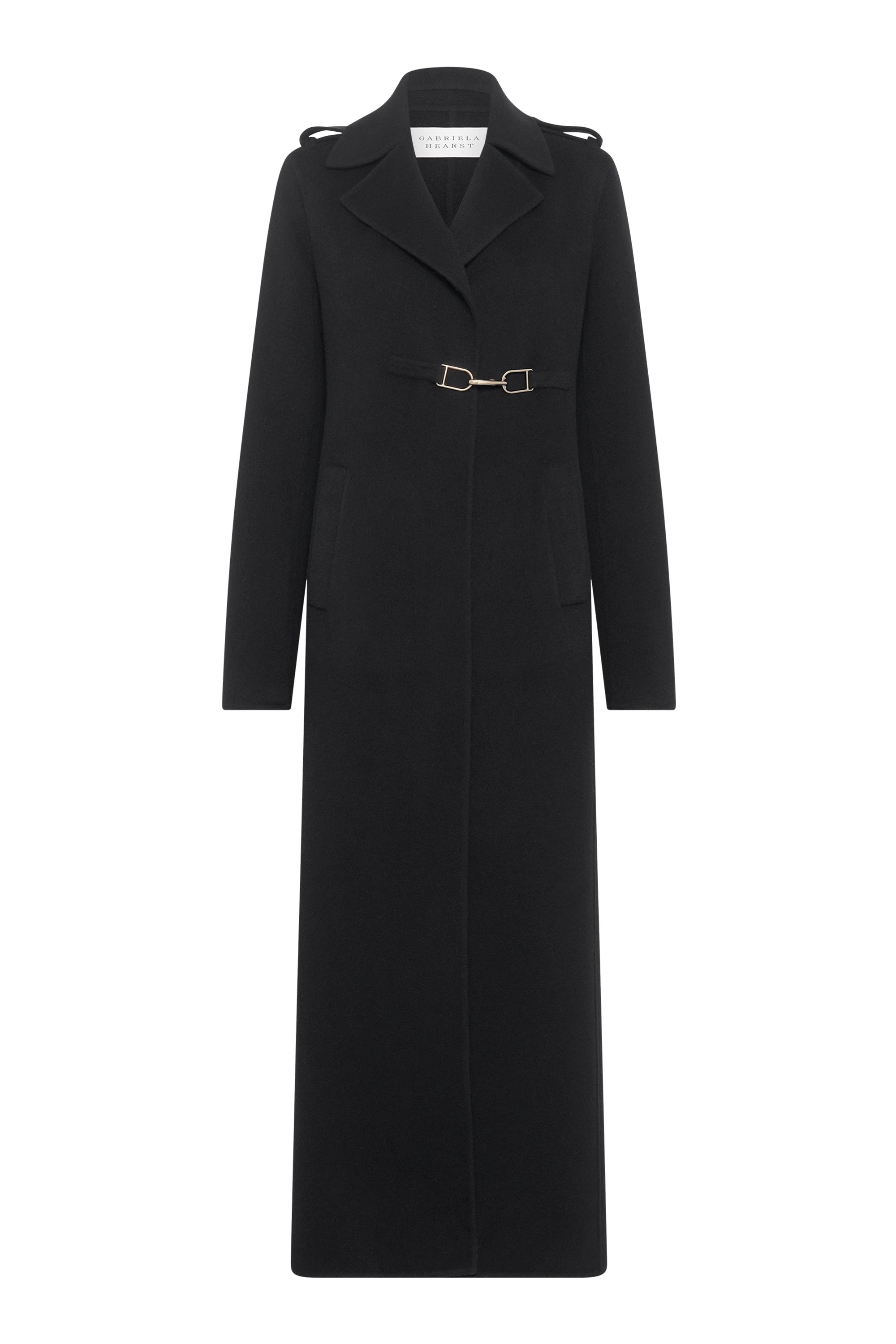 Gabriela HearstDee Coat in Black Double-face Recycled Cashmere$4,950
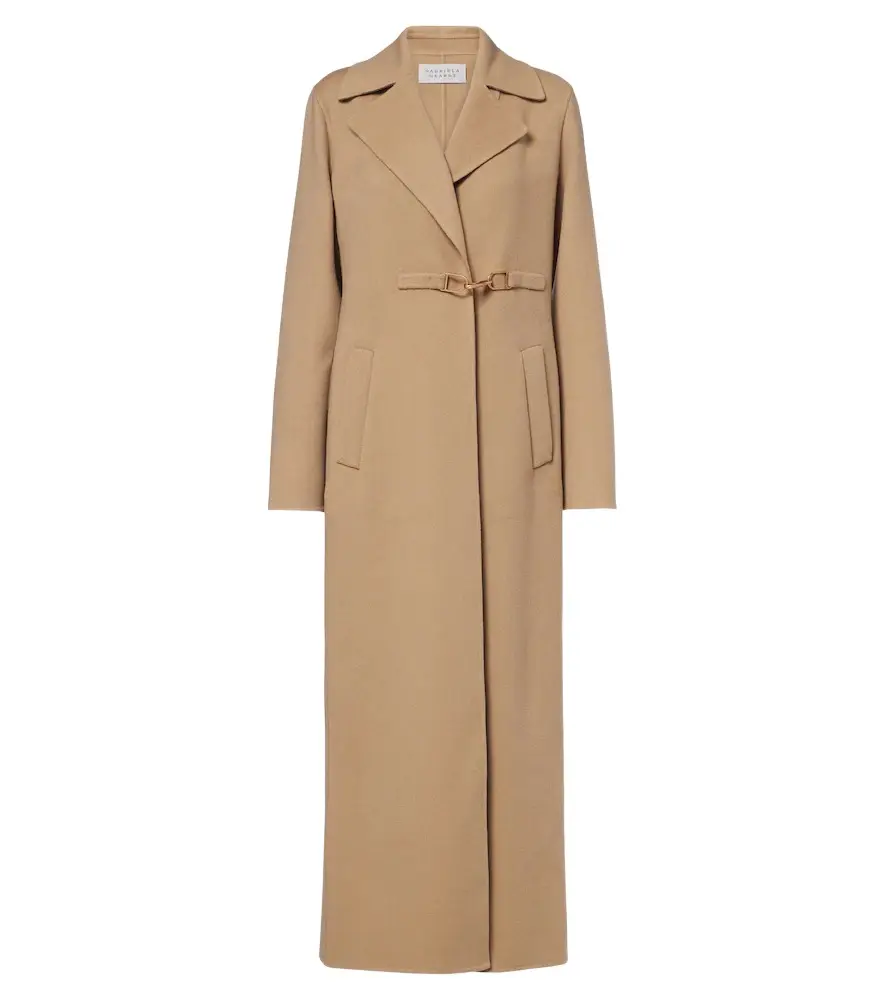 Gabriela HearstDee Coat in Camel Double-face Recycled Cashmere$4,950
Weight and warmth: what makes a cashmere coat warm
Cashmere is warm for its weight: the CCMI calls it extremely warm and, like camel hair and wool, natural lightweight insulation without bulk. The fiber alone does not decide how warm a coat is, though. Four things do.
- Density. A tightly woven, heavily finished cloth blocks wind. This is the light test above, and the main difference between a coat for a walking commute and one for a car.
- Surface. A brushed nap, sold under names such as zibeline, velour or beaver finish, traps a layer of still air and sheds light snow.
- Cut. Length matters most: a coat that reaches the knee or below keeps your core and thighs out of the wind. A double-breasted front or a stand collar closes higher than a wrap or an open cocoon, which need a scarf.
- What is inside. A lining adds a little warmth, an interlining more, and either must be declared on the label if it is there for warmth. A double-face coat relies on the cloth alone.
A cashmere coat over a knit is a city coat. For long walks in hard frost and wind, shearling and down do the job better; see our guides to the best shearling coats and the designer puffer coats worth buying.
The best camel coats
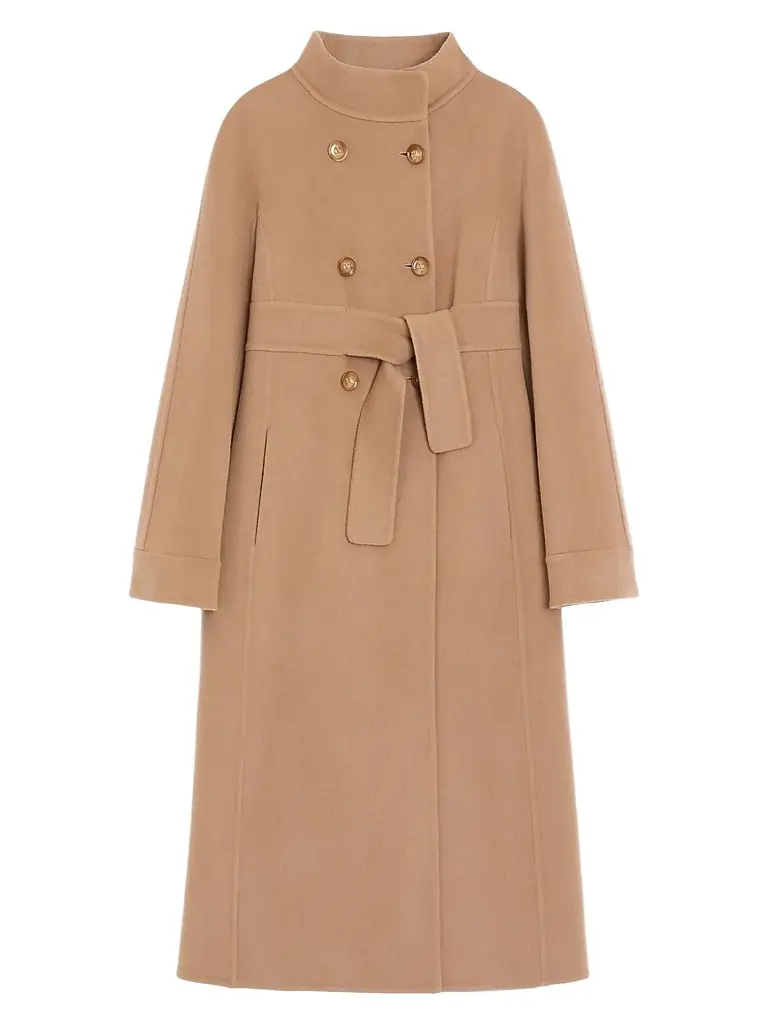
Camel is both a color and a fiber. Camel hair, the fine undercoat of the two-humped Bactrian camel, is naturally golden tan, according to the CCMI, and the color takes its name from the animal. Camel hair and cashmere are both specialty fibers under US labeling rules, so the label will tell you which one a "camel coat" is made of, or whether it is simply camel-colored wool. For this guide we chose camel-colored coats in cashmere, cashmere blends and pure camel hair.
Camel suits almost everything in a winter wardrobe: black, navy, charcoal, cream and chocolate. Deeper caramel shades read richer over black; paler oat and sand shades are softer with gray and ivory. The color does show wear, especially at the cuffs, pocket edges and collar, so brush a camel coat after each outing. For the classic look, wear it over a black turtleneck, black trousers and loafers; for a softer one, over cream knitwear and gray flannel. Max Mara has built its reputation on the camel coat, and Saint Laurent and Gabriela Hearst cut sharper, longer versions.
Camel coats in cashmere and camel hair


The best cashmere wrap coats
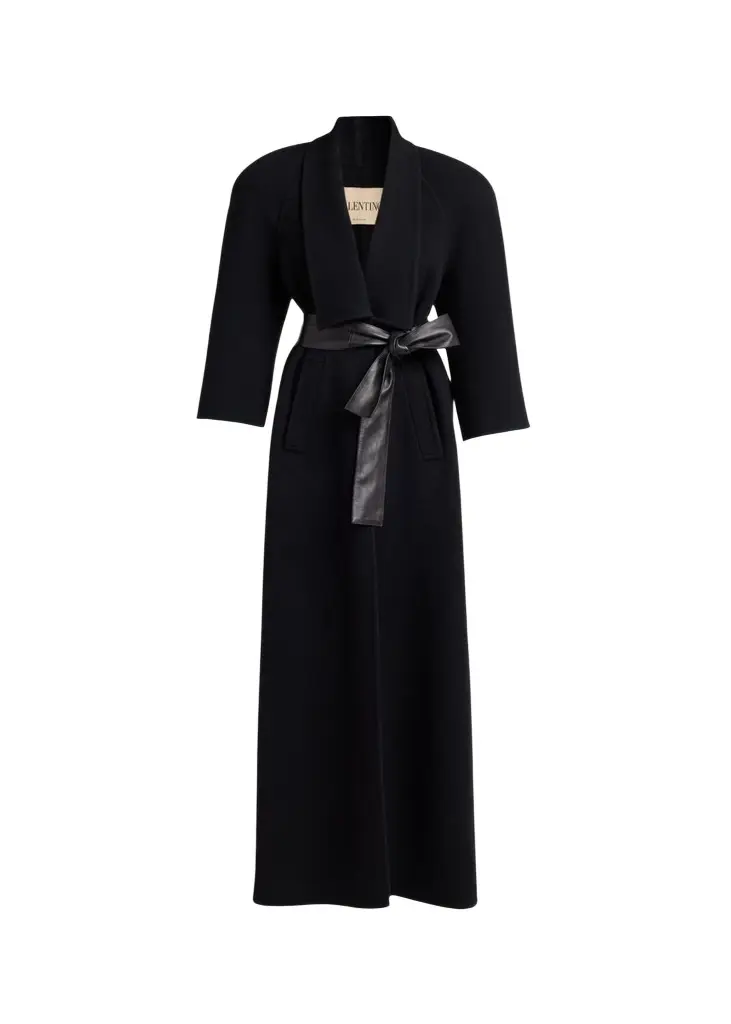
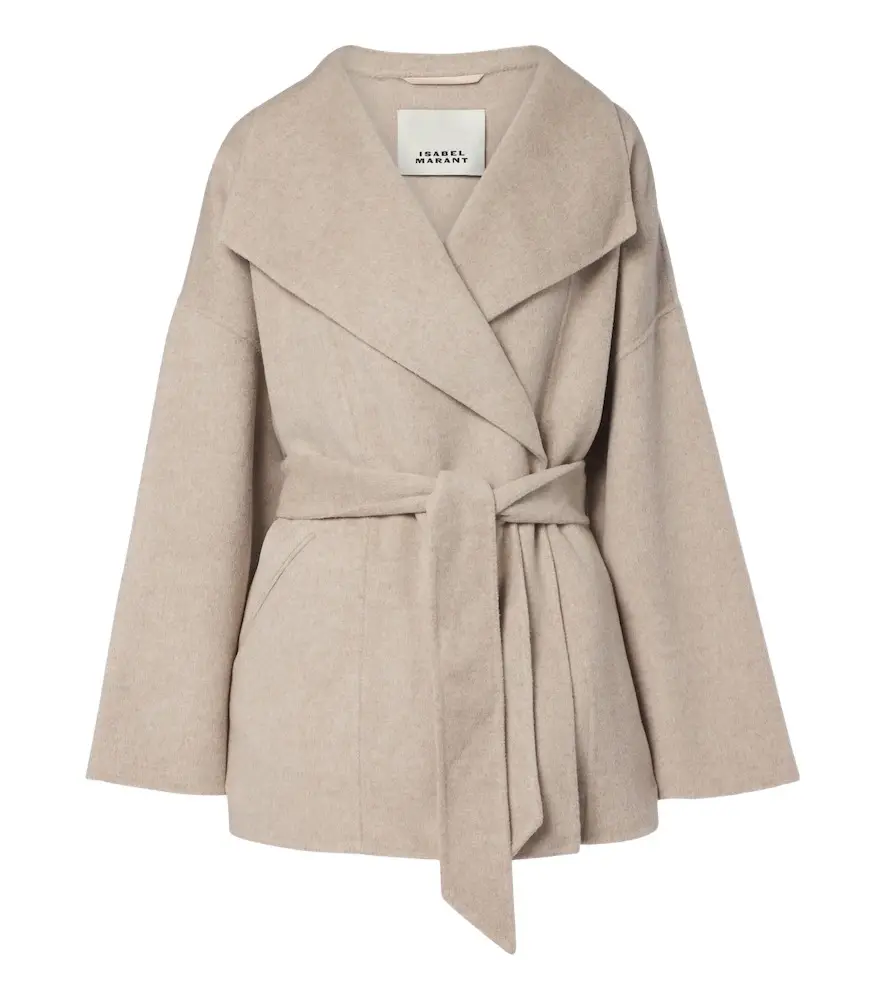
A wrap coat usually has no buttons: a shawl or notch collar, fronts that cross over, and a belt to hold them. It gives a heavy coat a waist, and it goes on over almost anything. Two details decide whether one works. First, the cloth must be soft and heavy enough to drape under the belt without bunching, which is why cashmere and double-face cloth make the best wraps. Second, check the overlap and the fastenings. Front panels that cross well past the center keep wind out when you walk; belt loops at the sides stop the belt from riding up; an inside tie holds the under-panel in place so the coat does not gape when you sit.
Tie the belt at the side rather than tight at center front, and leave room for a finger or two over a knit; a belt pulled tight over thick knitwear creases the cloth. A wrap's weak point is the chest, since there is no top button, so wear it with a turtleneck or a scarf tucked into the neckline. Prada cuts the classic shawl-collar wrap, and Max Mara sells several of its wrap and robe coats with a matching scarf or stole, which fills that gap at the neck. See every belted style in our belted coat shop.
Cashmere and cashmere-blend wrap coats



Single-breasted, double-breasted and cocoon cashmere coats
If you wear a coat over tailoring five days a week, buy a tailored one. A single-breasted coat with a notch lapel gives the cleanest line over a suit and is the easiest to wear open. A double-breasted coat overlaps more cloth across the chest, so it is the warmer of the two when closed. For both, the shoulder seam should sit at or just beyond your shoulder and the sleeve should cover your jacket cuff with your arms relaxed; our guide to winter work outfits covers what to wear underneath.
A cocoon coat, rounded through the back and narrowing toward the hem, and a collarless coat do the opposite job. They go over chunky knits and wide sleeves, and they want a scarf or a turtleneck to finish the neck. The Row covers both ends of this range, Loro Piana makes a collarless version, Loewe and Prada make clean single-breasted coats, and Gabriela Hearst a long double-breasted one. Browse our full coat shop for more lengths.
Tailored and cocoon cashmere coats
 The RowGustaf cashmere coat$8,900
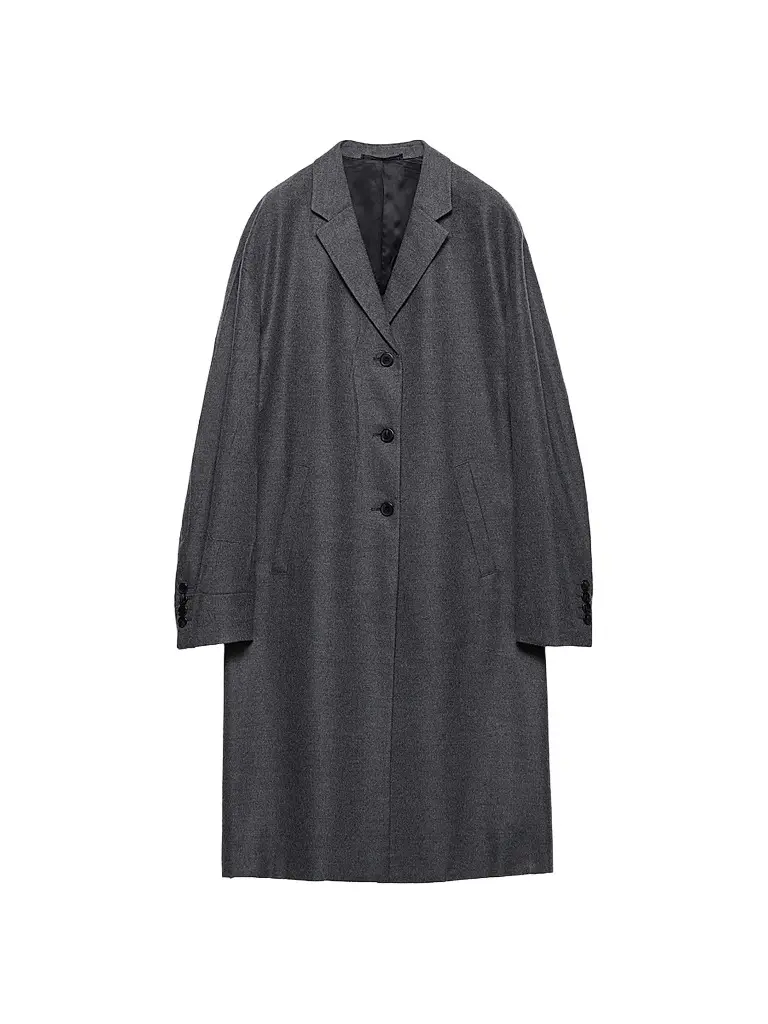 PradaWomen's Single-Breasted Cashmere and Wool Coat - Grey$7,000
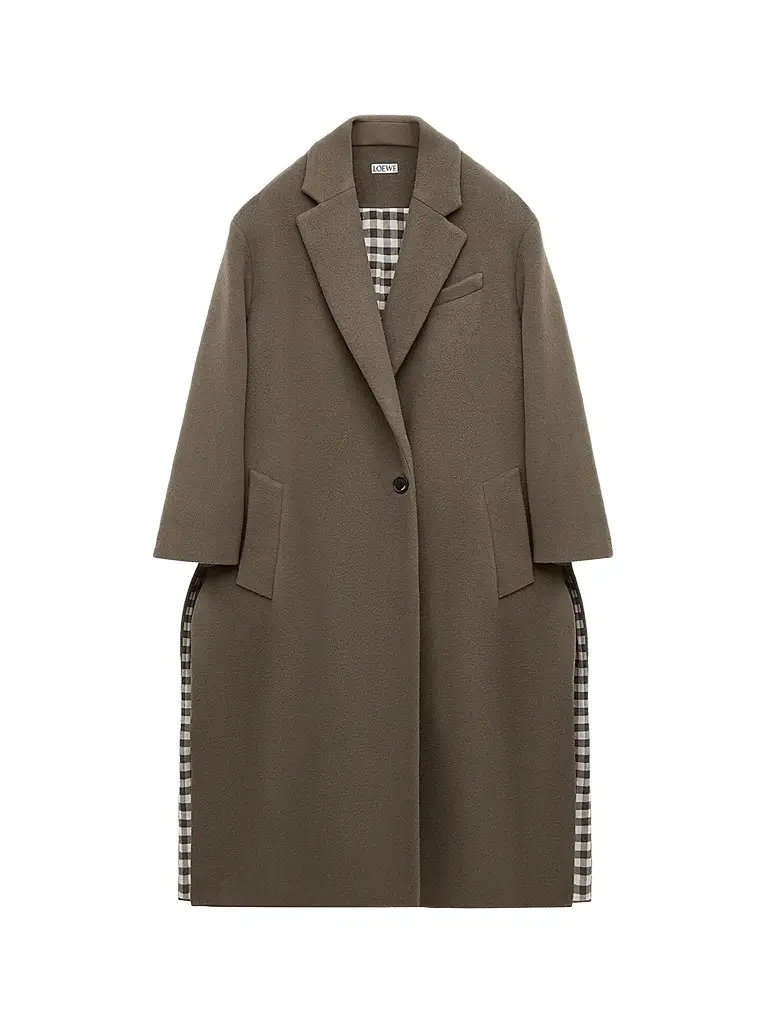 LoeweWomen's Gingham Cashmere Single-Breasted Coat$5,400
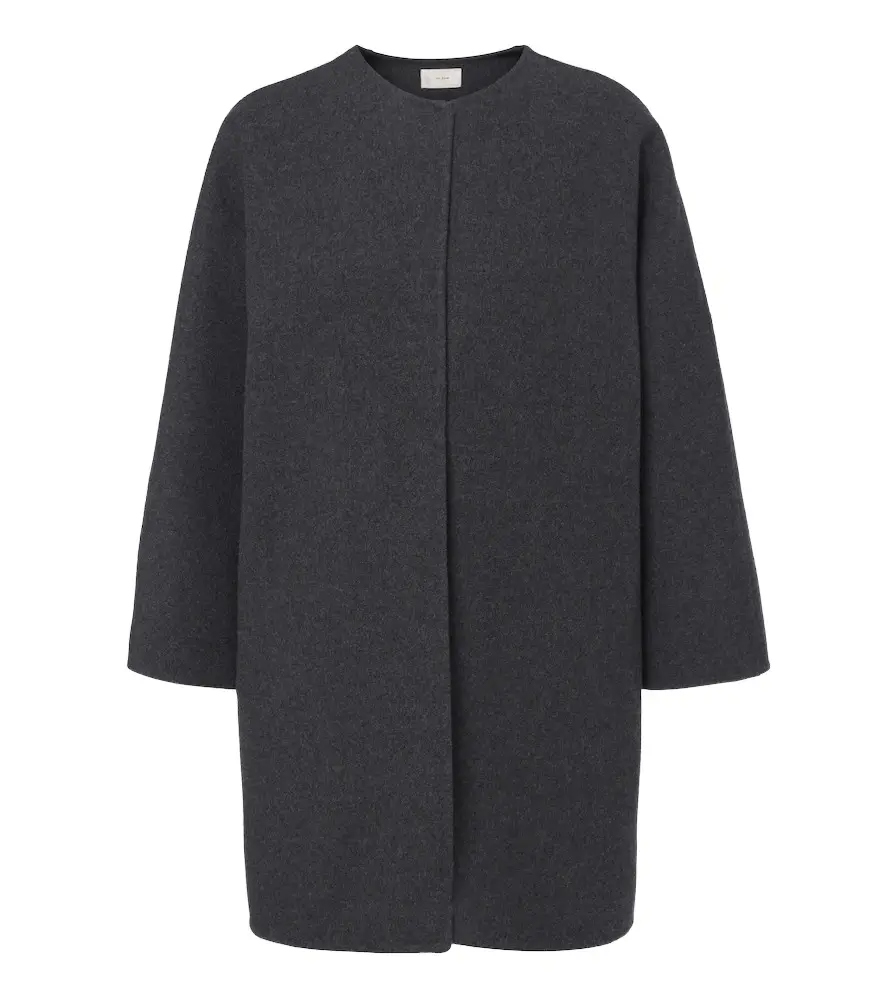 The RowCove oversized cashmere and wool coat$4,950
 Loro PianaKiri Cashmere-blend Coat$7,900
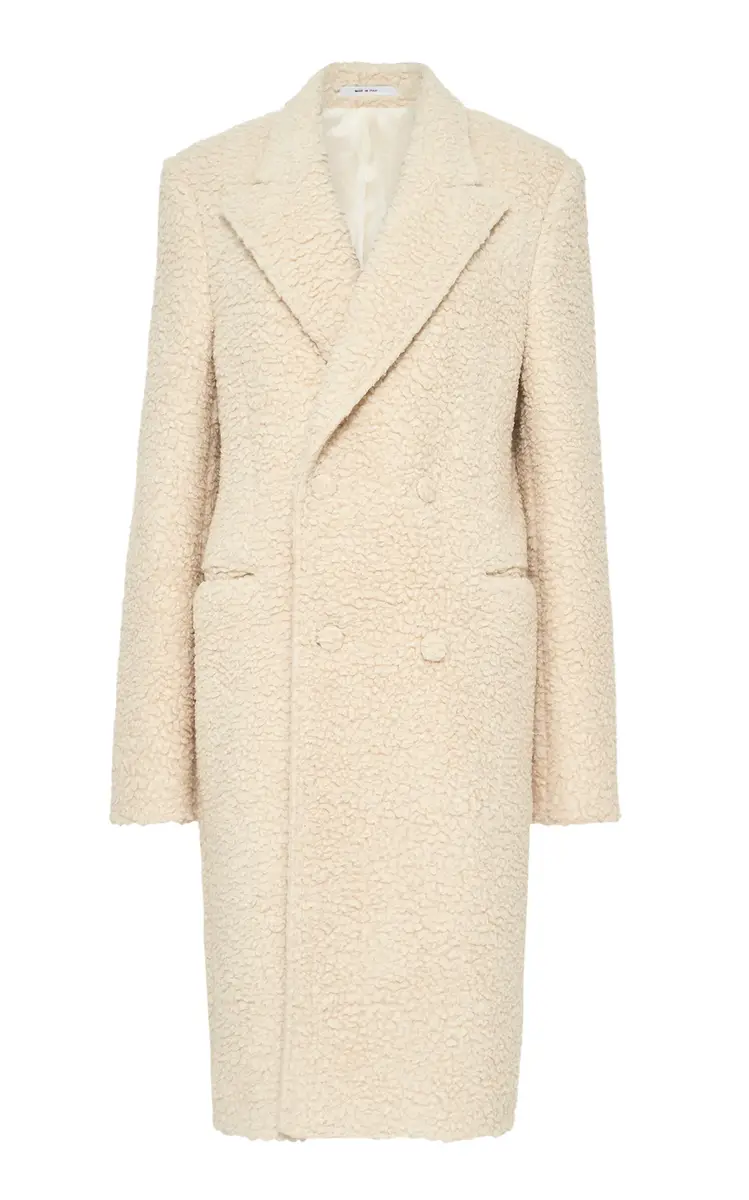 Gabriela HearstMcaffrey Coat in Ivory Cashmere Silk$6,950
The best cashmere coats under $4,000
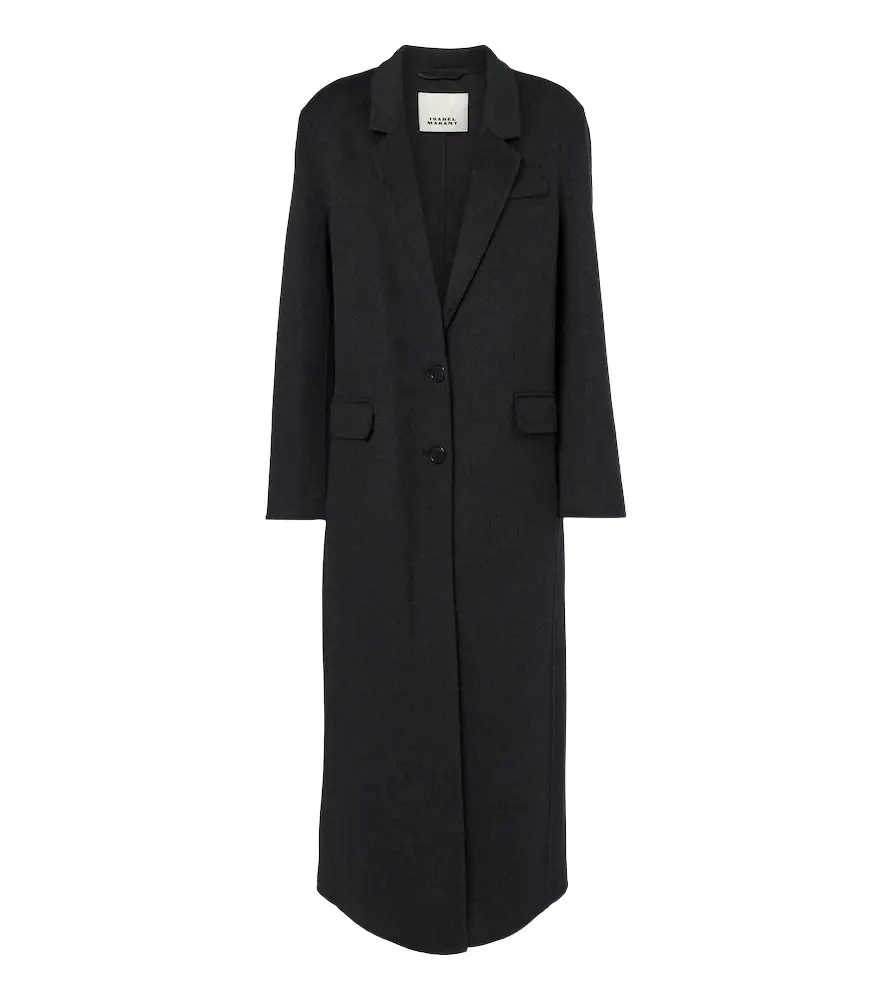
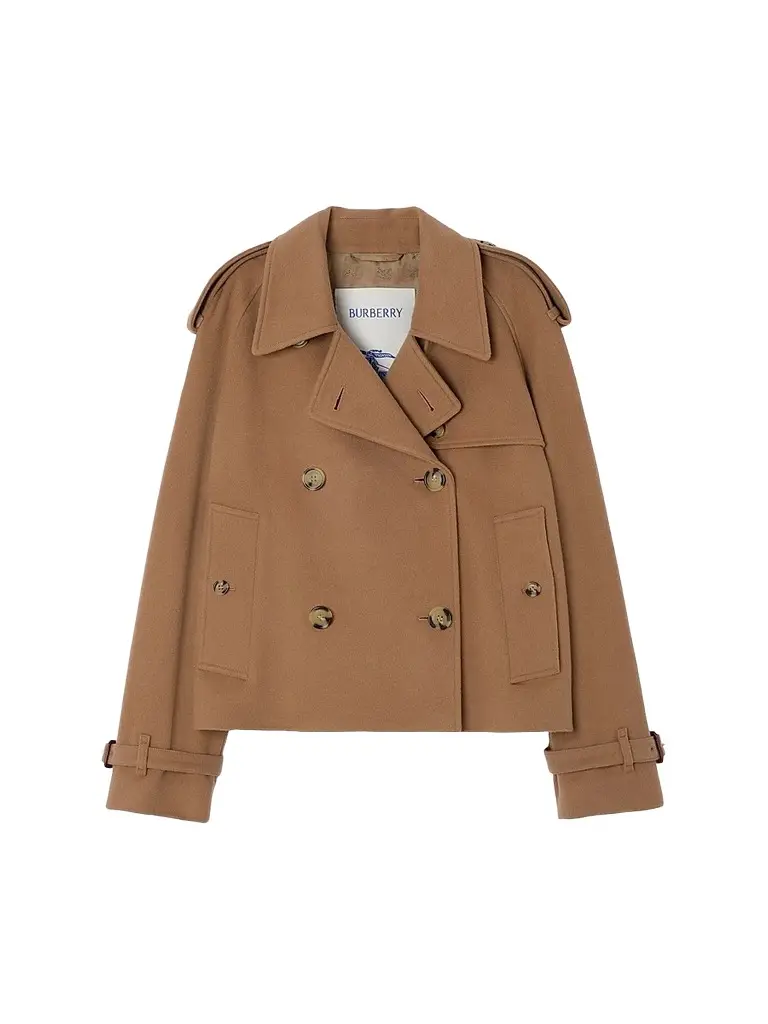
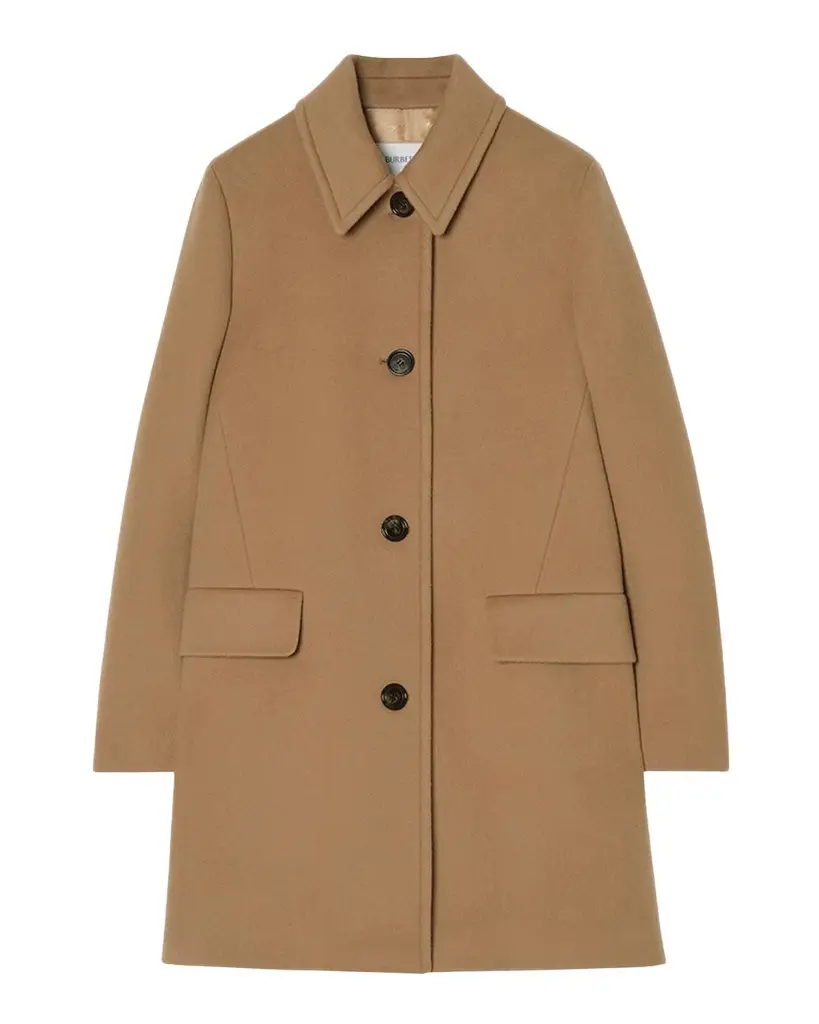
Below about $4,000, most coats with cashmere in the name are wool-cashmere blends, commonly 10 to 20 percent cashmere, from houses such as TOTEME, Isabel Marant and Max Mara. By the CCMI's measure those are wool coats with a softer surface. That is not a criticism: dense wool with a little cashmere is warm, keeps its shape and wears well. Buy them for the cut and the cloth rather than the cashmere. Pure cashmere does exist in this band, usually in shorter or simpler cuts, and the edit below includes two pure-cashmere pieces alongside the blends.
Cashmere and cashmere-blend coats under $4,000


How to care for a cashmere coat
A good coat lasts as long as the routine around it. Most of this comes from the Woolmark Company's wool care advice; under US labeling rules, cashmere counts as a wool fiber, and a woven cashmere coat takes the same care.
- Brush after wearing. Use a soft garment brush and work lengthwise, which lifts surface dirt before it can set as a stain. Woolmark recommends this for woven garments only, so leave your knitwear out of it.
- Hang it properly. Use a shaped or padded coat hanger that fills the shoulders, never a wire hanger or a hook, and leave room around it in the closet.
- Rest it. Woolmark suggests resting wool garments for 24 hours between wears so the fiber can recover its shape.
- Dry it slowly. If the coat gets wet, let it dry at room temperature, away from direct heat and sunlight, on its hanger.
- Steam, do not press flat. Hanging the coat in a steamy bathroom releases creases; if you use an iron, use steam on the wool setting.
- Clean it before you store it. The CCMI advises dry cleaning for woven cashmere, and Woolmark notes that food stains and body oils attract moths, so have the coat cleaned at the end of winter even if it looks fine. Empty the pockets, take out the belt and fasten the buttons before you put it away, and keep a moth repellent nearby but not touching the cloth.
- Watch the friction points. Pilling shows first where a bag strap or seat belt rubs. Lift it with a cashmere comb, and switch the shoulder you carry your bag on.
How we chose
We read the fiber content listed for every coat in this guide. At the top of each style we favored 100 percent cashmere and high-cashmere blends, double-face construction and houses with a long record in outerwear, and we label the blends in the under-$4,000 edit for what they are. Every coat comes from a house on our luxury list, was live on Vêtir with sizes available when we published, and was checked by our editors against its photographs for color, cut and length; we left out a coat whose photographs looked like suede despite a cashmere description, and one whose listing called it brushed wool and cashmere at once. Where a coat was down to a single size, we chose a better-stocked equivalent. Prices span from wool-cashmere blends to double cloth at the top of the market, and each module refills with similar coats when a piece sells out. There are no pre-owned pieces in this edit.
Frequently asked questions
Is a cashmere coat worth the money?
Yes, if the label shows most of the fiber is cashmere, the cloth passes the crush and light tests, and you will wear the coat for several winters. A coat that is 10 percent cashmere is a wool coat: buy it for its cut and pay wool-coat prices for it.
Is a cashmere coat warmer than a wool coat?
Weight for weight, cashmere insulates well without bulk. But a coat's warmth depends more on how dense the cloth is, how long the coat is and how high it closes. A long, dense wool coat can be warmer than a thin cashmere one.
What does double-faced cashmere mean?
In coats it usually means double cloth: two layers of cashmere woven together and joined by threads, so the coat needs no lining and its edges are finished by hand. Strictly, a double-faced fabric is a single layer with two good sides. Unlined construction and hand-closed edges tell you which you have.
How much cashmere should a cashmere coat have?
For a coat sold on its cashmere, look for 100 percent or a clear majority. The CCMI says cashmere under about 20 percent does not significantly change a garment's performance, so treat a 10 percent blend as a wool coat.
Can you wear a cashmere coat in the rain or snow?
Light snow and drizzle are fine: shake the coat off, then let it dry at room temperature on a shaped hanger, away from radiators. In steady rain, switch to a trench coat (our trench coat guide covers how to wear one) or carry an umbrella, because a soaked coat can lose its shape.
What color cashmere coat is most versatile?
Camel, navy and charcoal go with the most. Camel works over black, gray, navy and cream; navy and charcoal suit offices and hide wear; black is the most formal but shows lint and dust.
Keep reading
- This season's coat trends, from capes to funnel necks
- What to wear to work in winter, from the commute to the desk
- The best cashmere sweaters, and how to tell good cashmere
- Kate's Closet: the investment coat edit
Not sure which cut suits your wardrobe? Ask our AI stylist to build three outfits around any coat on this page.