Winter Work Outfits: How to Dress for the Office, the Commute and the Cold
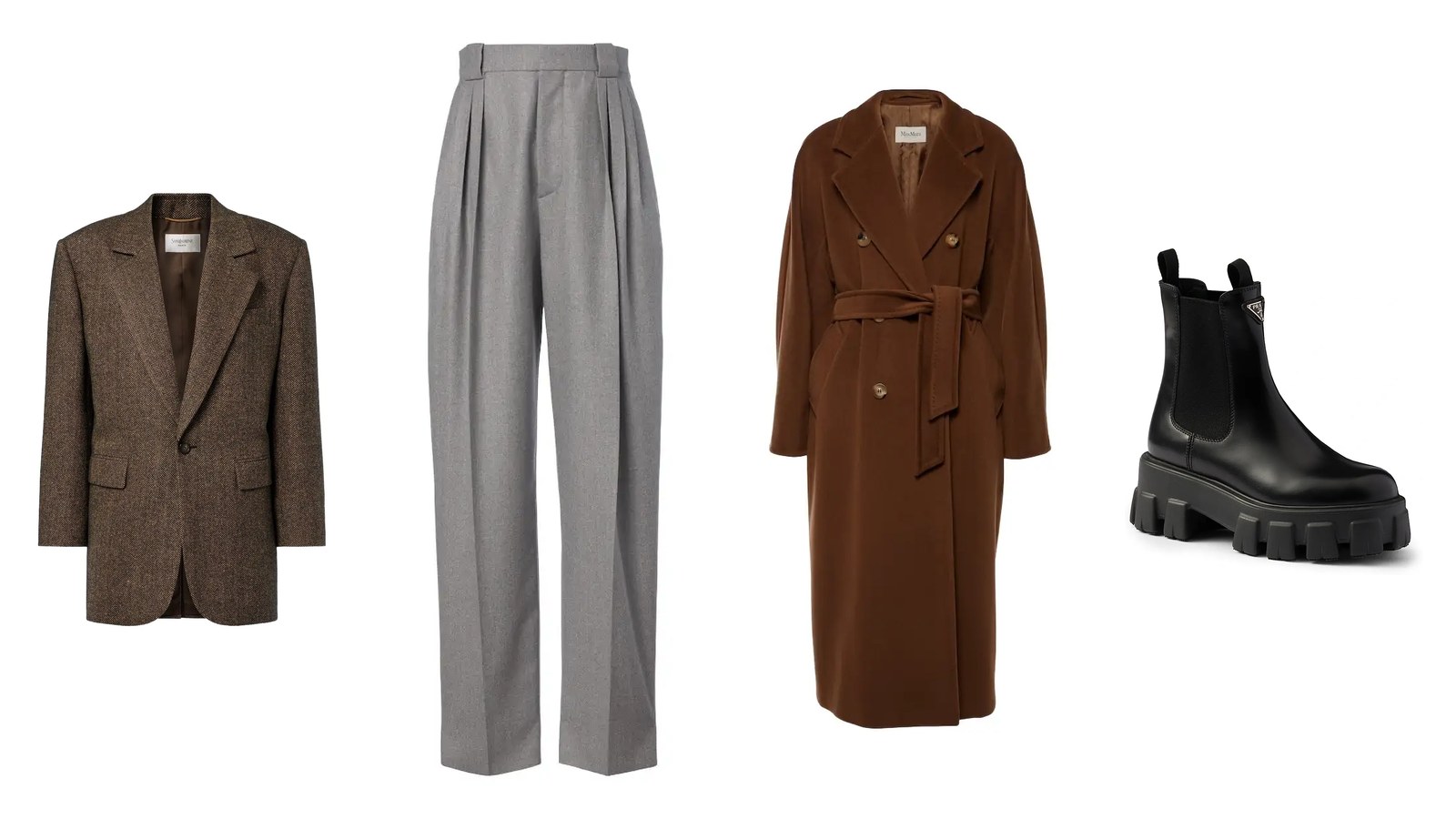
Winter work outfits, in short: build on warm, matte cloth. That means flannel, tweed or herringbone tailoring, a fine cashmere or merino knit, and long-sleeved knit or wool dresses, under a coat long enough to cover your jacket. Commute in leather boots with a rubber or lug sole and keep loafers or low pumps at your desk. Then pitch the outfit to your office: corporate dress codes still expect a suit or a jacket, business casual runs on trousers and knitwear, and creative offices leave room for leather, texture and color.
Below: outfits for each dress code, coats that go over tailoring, layering for a cold commute and a warm office, and the boots, shoes and bags that get you from slush to a meeting. Among the occasions our AI stylist is asked about, work ranks fourth by the number of accounts asking, and over the twelve months to September 2026, work requests were most frequent in November 2025.
Winter work outfits by dress code
A dress code does not change in December, but the cloth does. Find your office in the table, then read its section. If you are unsure where you sit, dress one level up on days with clients or presentations; our work conference guide defines each dress code, from formal to smart casual.
| Office | Winter base | Coat | Commute shoes | At the desk |
|---|---|---|---|---|
| Corporate: finance, law, client-facing roles | Flannel or tweed suit, or a sheath or knit dress with a jacket; a fine knit or blouse underneath; opaque tights with skirts | Tailored wool or cashmere coat, knee length or longer, in navy, charcoal, black or camel | Sleek leather boots with a rubber or lug sole | Pumps or polished leather loafers |
| Business casual | Wool trousers with a knit, knit dresses, a cardigan or blazer as the layer that comes off | Wrap, robe or single-breasted wool coat | Lug-sole ankle or knee boots | Loafers, low pumps or the same sleek ankle boots |
| Creative and smart casual | Wide trousers or dark jeans with chunky knits, leather skirts, suits worn with a sweater | Cocoon, cape or shearling | Boots you can wear all day | The same boots, or loafers for meetings |
Office outfits for winter in a corporate dress code
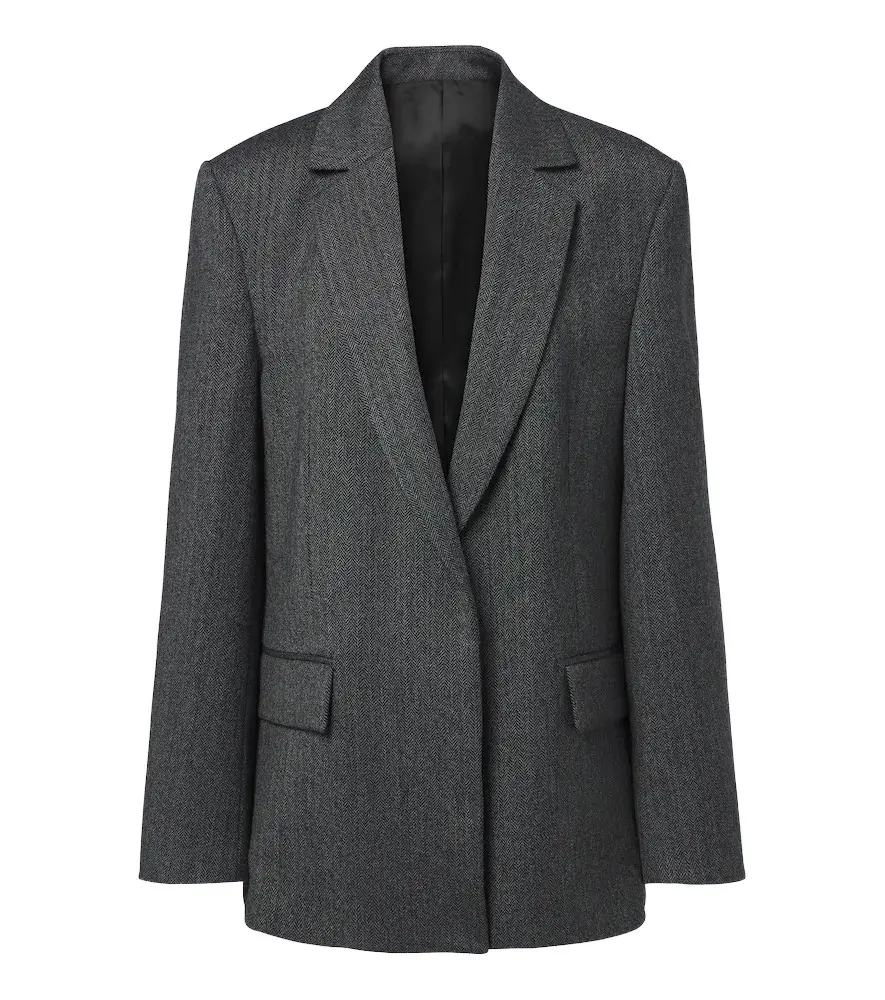
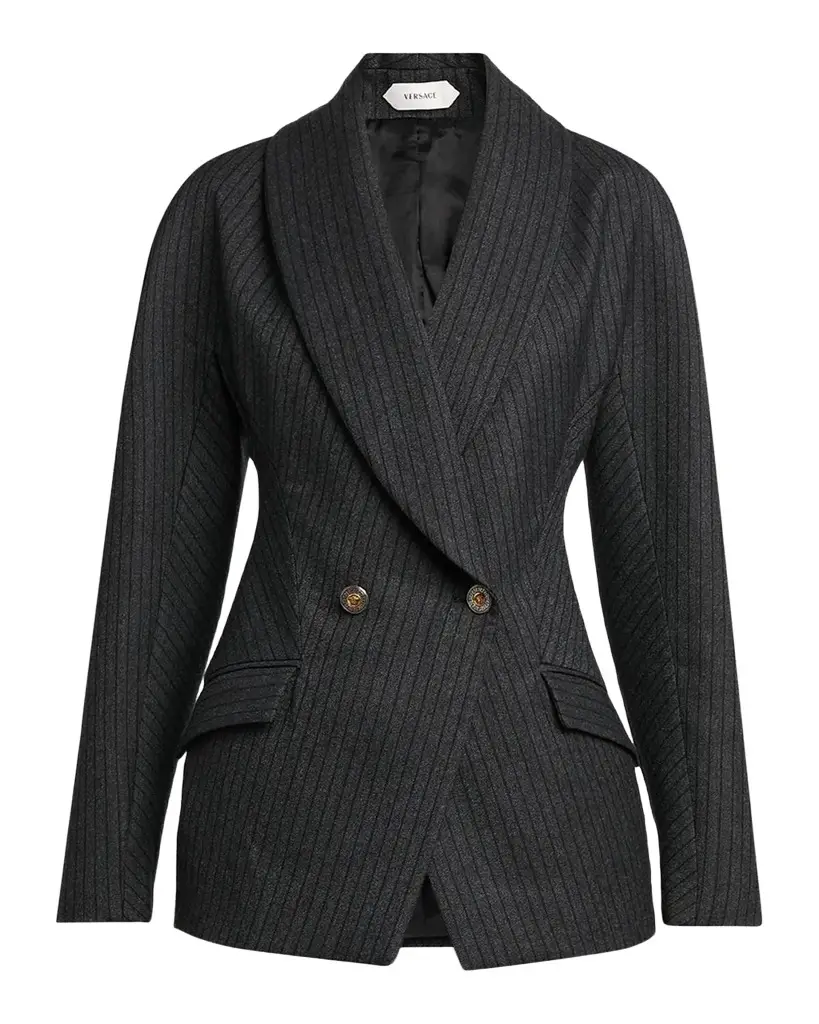
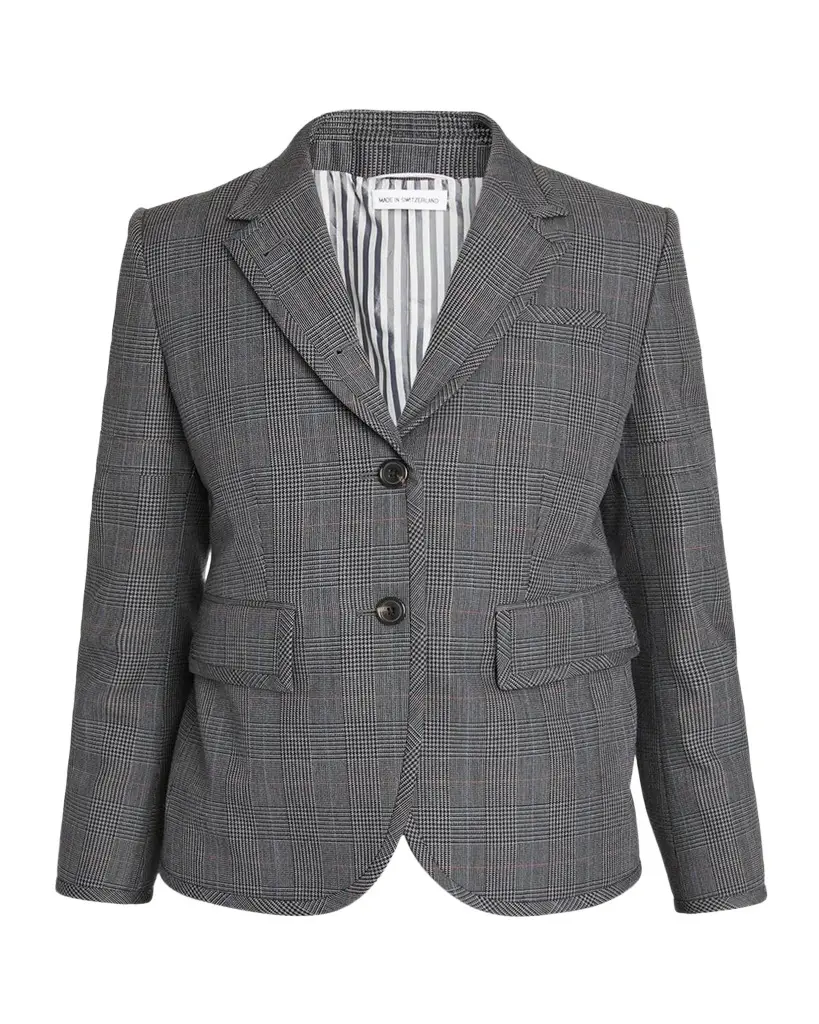
A corporate winter wardrobe is still built on the suit, but the cloth changes. Trade smooth, lightweight suiting for flannel, a woven wool brushed until its surface is soft and slightly fuzzy, or for tweed and herringbone, whose texture looks warmer and hides the creases of a day at a desk. Keep to colors that read as authority: charcoal, navy, black and deep brown. Pinstripe in a heavier wool looks right from November to March.
Under the jacket, a fine-gauge cashmere or merino turtleneck or crewneck is warmer than a shirt and just as sharp. Choose a knit thin enough that the jacket sleeve still slides over it, and try the jacket on with the knit you plan to wear, not over a camisole in a fitting room. If you prefer a collar, wear a poplin or silk shirt under a V-neck sweater. With skirts and dresses, opaque tights in the color of your shoes lengthen the leg and look deliberate in a way bare legs in January do not. For the strongest tailoring, look at Saint Laurent, whose jackets carry a firm, squared shoulder; for quieter cuts, TOTEME and The Row. Browse every style in our blazer shop.
- Charcoal flannel trouser suit, ivory fine-gauge turtleneck, black pumps. The turtleneck replaces both the shirt and the scarf.
- Brown herringbone blazer, gray flannel trousers, white shirt, dark brown loafers. Pairing brown shoes with gray flannel is the warmer, less severe version of black on black.
- Black wool sheath or knit dress, tweed jacket, black opaque tights, leather knee boots with a mid heel. Sleek boots can stay on all day if the skirt covers the top of the shaft when you sit.
- Navy double-breasted blazer over a navy knit, with navy trousers. One color from collar to hem reads formal without the stiffness of a starched shirt.
Winter-weight wool blazers, from herringbone to pinstripe


Business casual in winter: trousers, knits and dresses
Business casual is where winter dressing gets easier, because knitwear can do the jacket's job. Build on wool trousers, pleated or straight in flannel, or wide in a heavier twill; Bottega Veneta and Gabriela Hearst both cut flannel trousers with the drape to fall cleanly over a boot. Cut matters more in winter than in summer because of that boot. A full-length trouser should cover the shaft of an ankle boot when you stand, and a wide leg should fall over the boot rather than catch on it. Cropped trousers leave a band of tights or sock between hem and boot, so save them for loafers.
On top, a cashmere crewneck, a half-zip or a cardigan buttoned to the neck replaces the shirt and blazer; our guide to the best cashmere sweaters explains how to judge one before you buy. Keep a blazer on the back of your chair for meetings, and see ten business casual outfit examples for year-round combinations.
- Gray flannel pleated trousers, camel crewneck, dark brown loafers. Tuck just the front of the sweater to show the pleats.
- Taupe trousers, cream turtleneck, chocolate cardigan, lug-sole loafers. Three shades of one color look richer than a contrast.
- Black wide-leg trousers, burgundy knit, black leather ankle boots. Burgundy behaves like a dark neutral against black.
- Dark straight jeans, where your office allows them, with a navy crewneck over a white shirt and a tweed blazer. The jacket and the collar keep denim at work level.
Wool trousers that work with boots
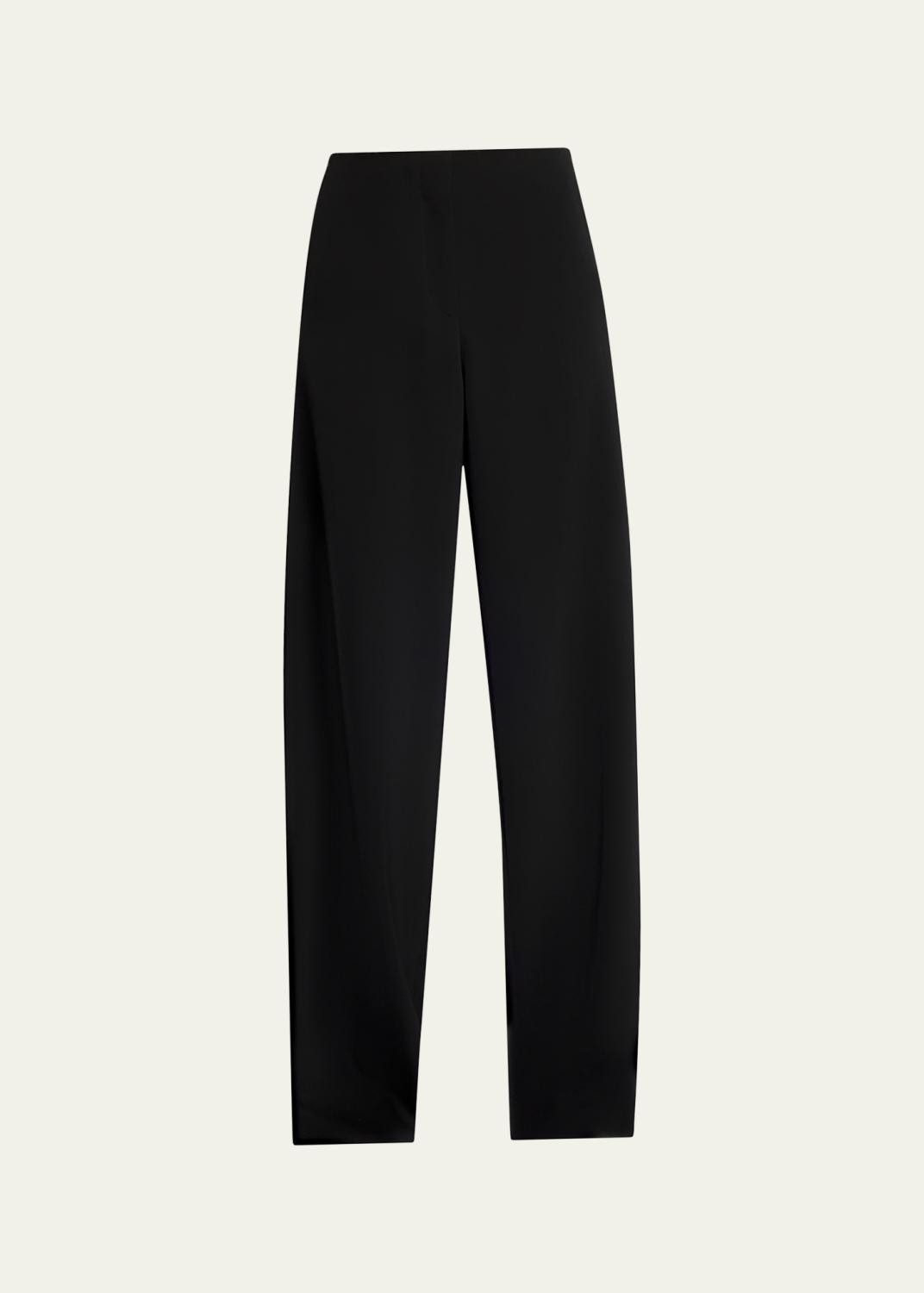 The RowFarah Wool-Cashmere Wide-Leg Pants$1,800
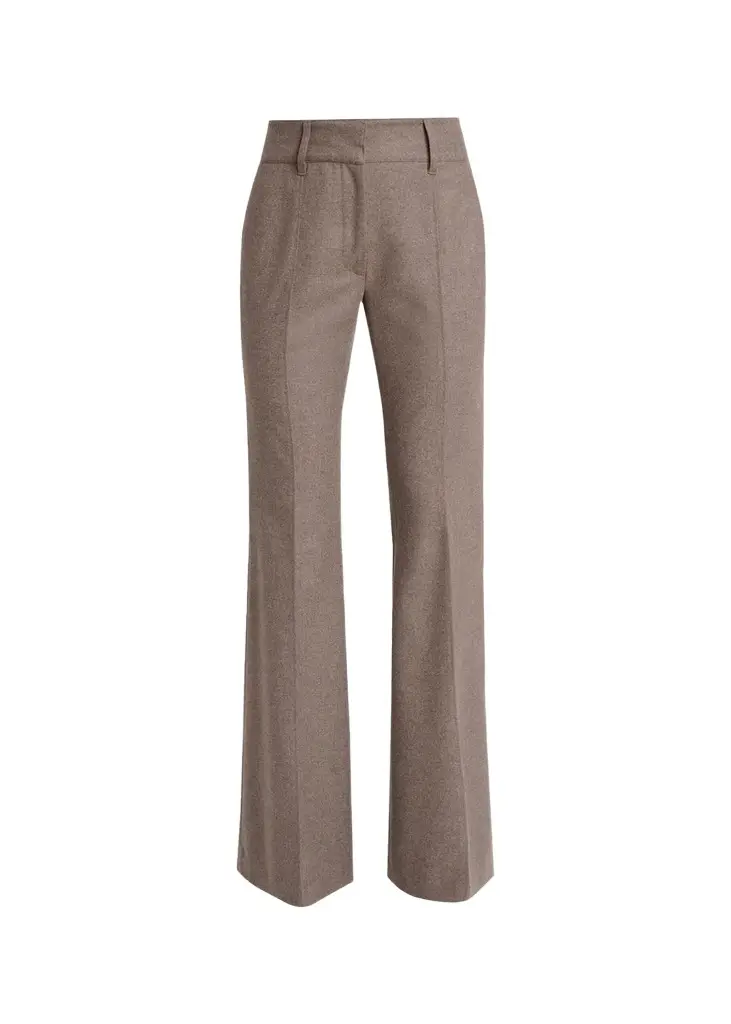 Gabriela HearstRhein Wool-Cashmere Flannel Flare Pants$1,290
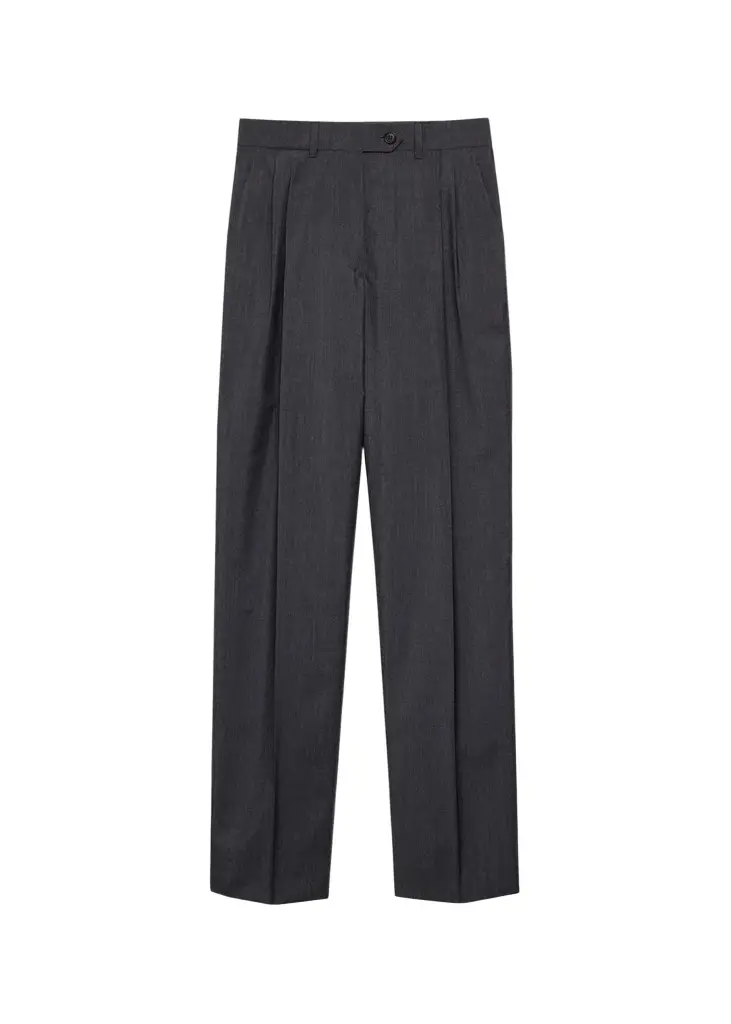 PradaPleated Mohair-Wool Straight-Leg Trousers$2,300
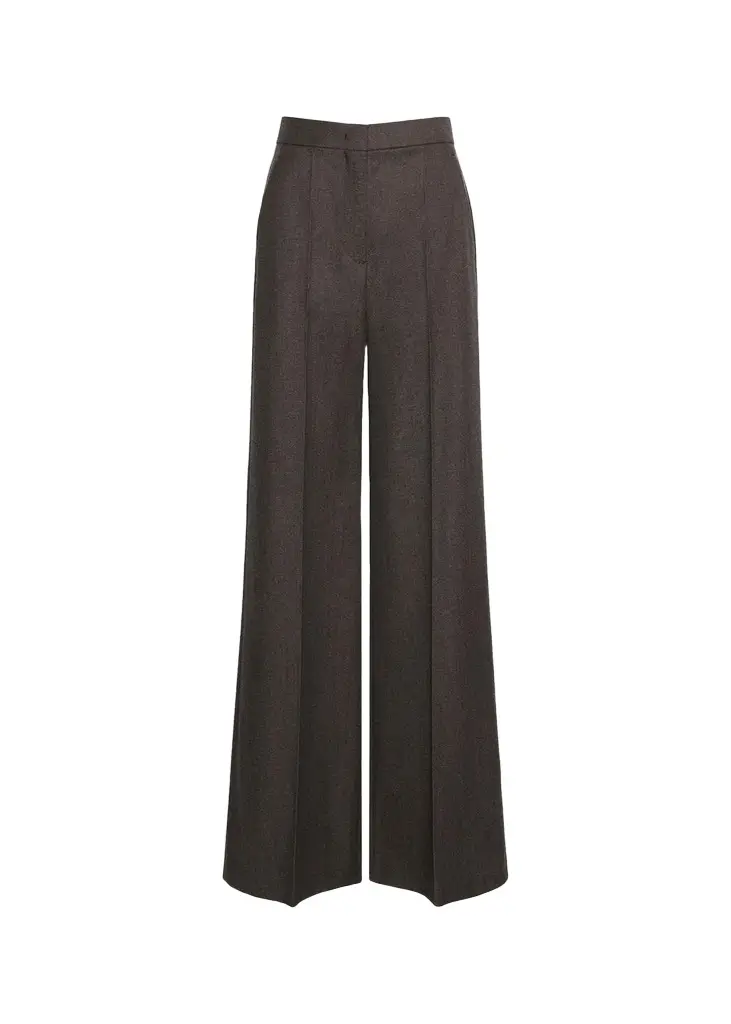 Max MaraWool Twill Wide-Leg Trousers$825
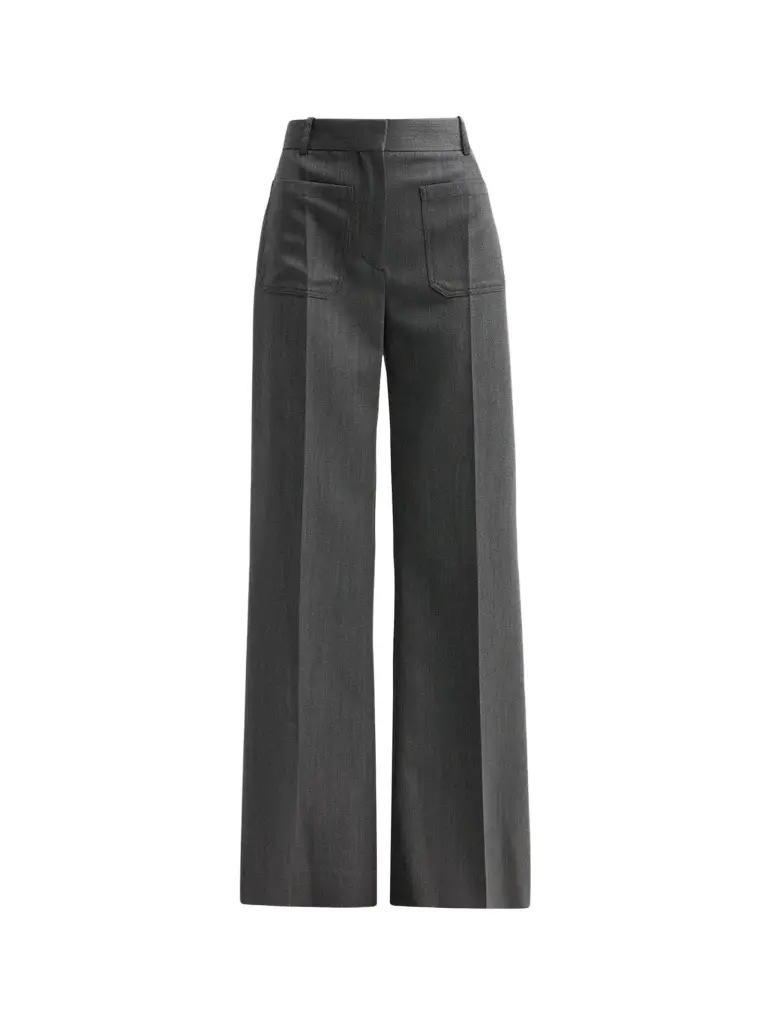 Victoria BeckhamWomen's Alina Crease Wool Trousers$790
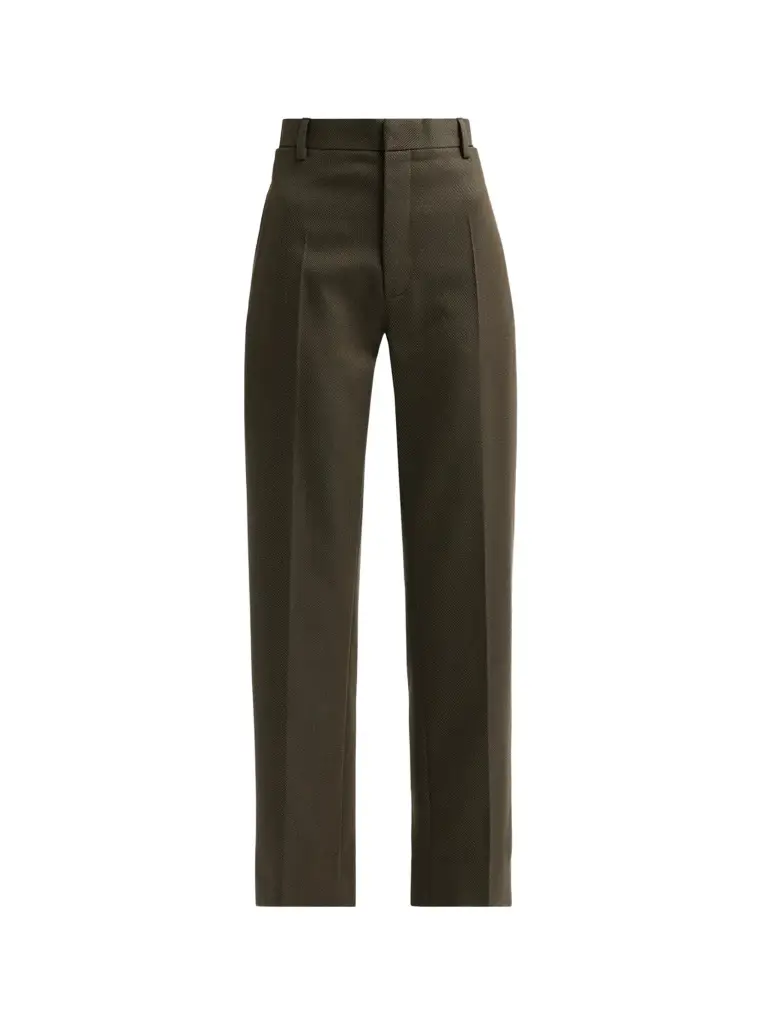 Victoria BeckhamWomen's Extended Wool Trousers$1,150
The knit dress: business casual in one piece
A long-sleeved knit dress is the most useful business-casual piece of the winter: one layer, no waistband to tuck, warm enough on its own. Look for a dense wool, wool-cashmere or wool-silk knit that skims rather than clings, a hem at or below the knee, and a high or crew neck. Max Mara's turtleneck sweater dresses and Alaïa's draped wool knits are the two ends of the range, one relaxed and one sculpted. Wear the dress with knee boots and opaque tights, belt it to break a long column, or add a blazer for a meeting. A long-sleeved dress in woven wool flannel does the same job with more structure.
Knit and wool dresses for the office
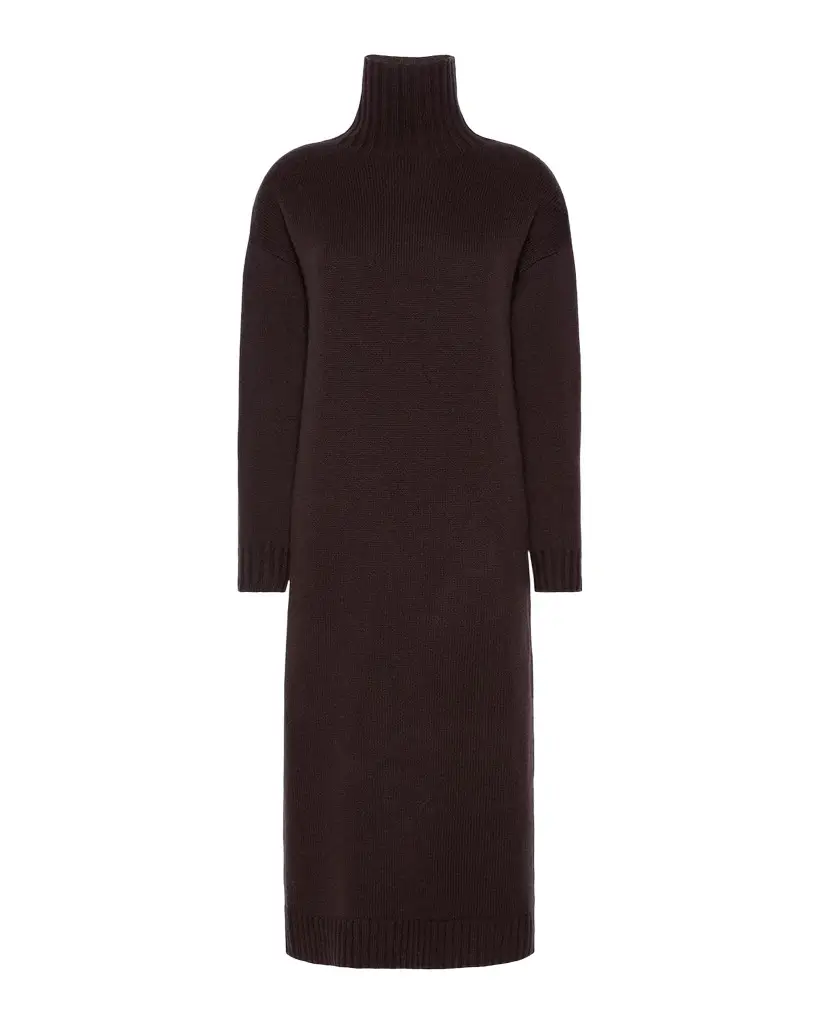 Max MaraWool-Cashmere Turtleneck Midi Sweater Dress$1,390
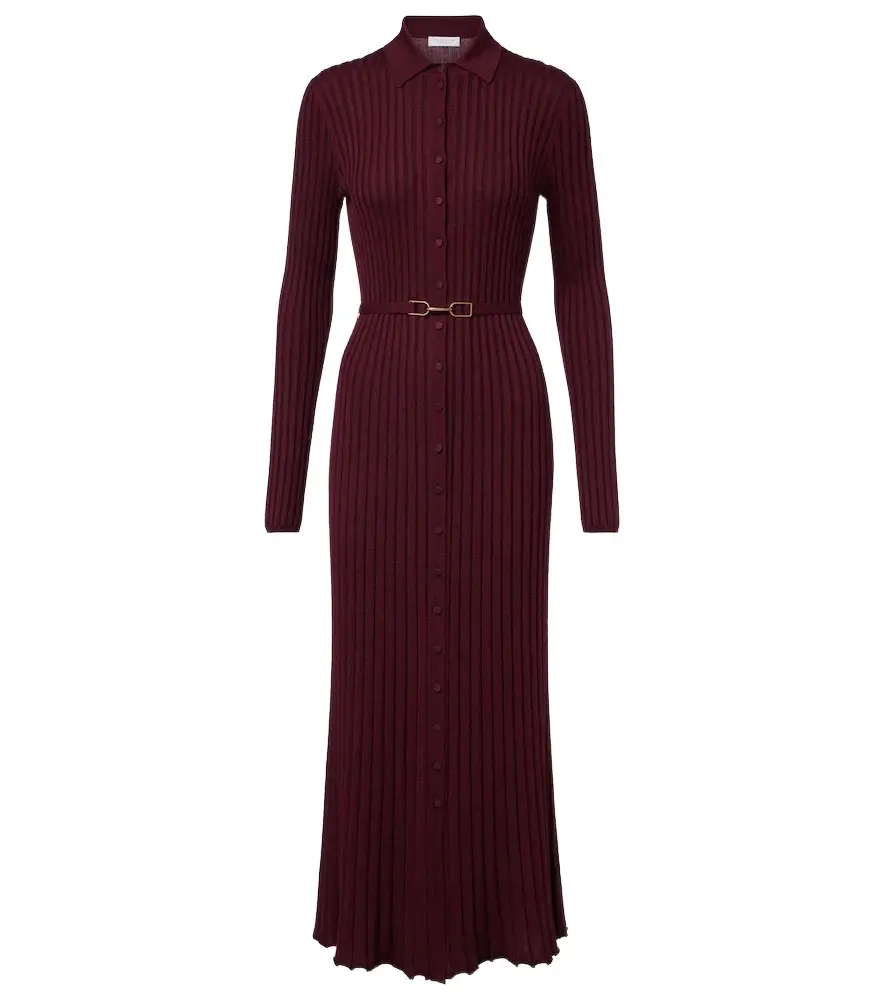 Gabriela HearstTenes wool and silk sweater dress$1,950
 AlaïaAlaïa Draped wool turtleneck dress$2,410
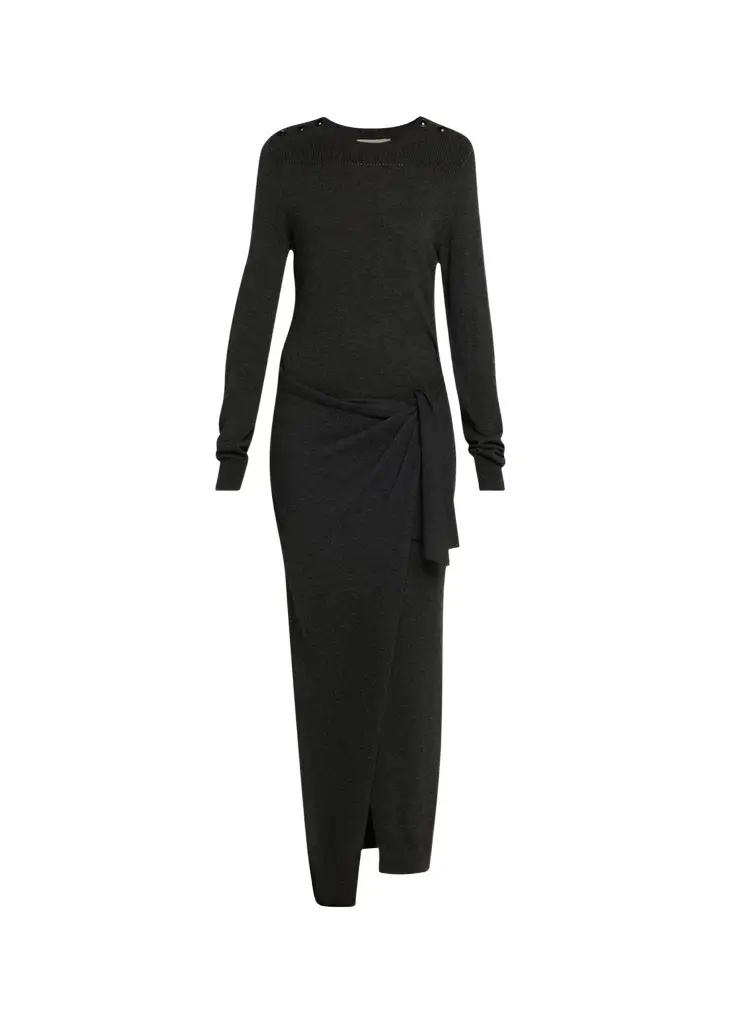 Isabel MarantJozira Button-Shoulder Wrap Maxi Sweater Dress$1,050
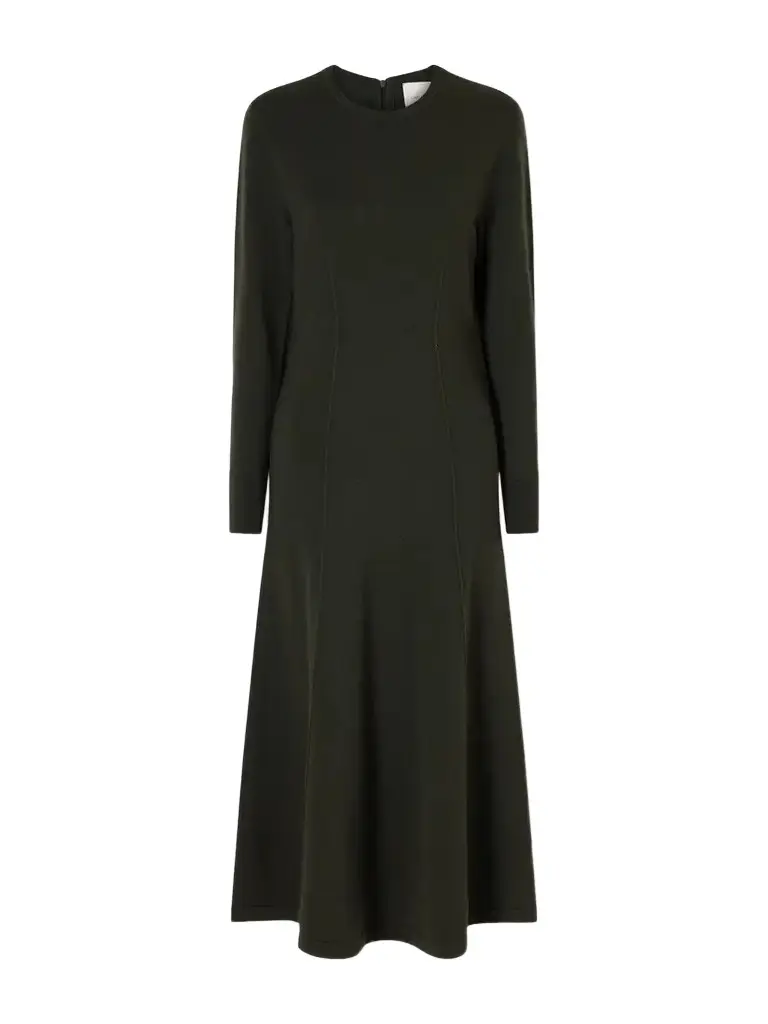 Carolina HerreraWool And Silk-blend Knitted Midi Dress$1,790
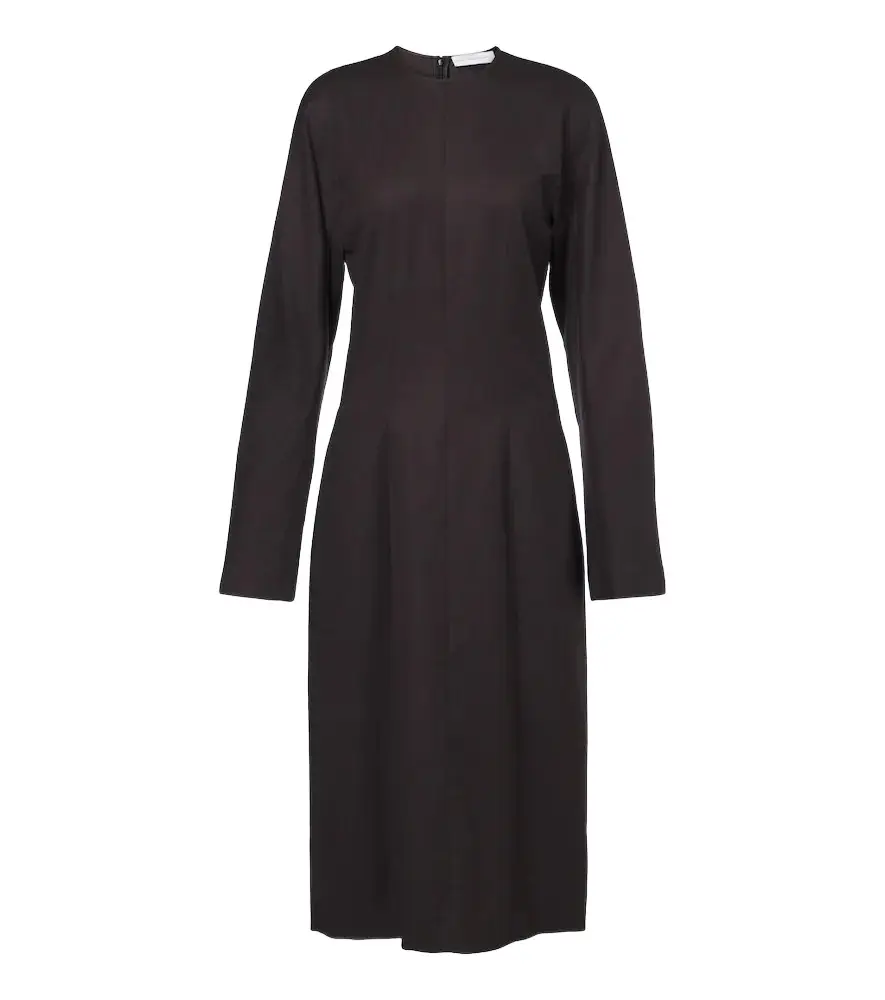 Stella McCartneyWool flannel midi dress$1,785
Creative offices: texture, color and boots all day
In a studio, gallery, agency or start-up the rules loosen, and winter is the season when texture carries an outfit. A leather midi skirt with a chunky sweater, wide trousers with an oversized blazer, or a suit worn with a turtleneck instead of a shirt all read as deliberate. Color works too: burgundy, chocolate and forest green behave like neutrals under a camel or charcoal coat. Lug-sole boots can stay on all day here. The line to hold is condition, not formality: knits without pilling, boots without salt marks and a coat that fits.
- Chocolate suit, black turtleneck, black lug-sole boots. The knit makes the suit look chosen rather than required.
- Black leather midi skirt, cream chunky knit, knee boots. Matte against shine keeps two dark pieces from blurring together.
- Wide gray trousers, oversized navy blazer, burgundy knit, Chelsea boots. Volume on top and bottom works when the shoe is narrow.
What to wear to work in winter when you commute
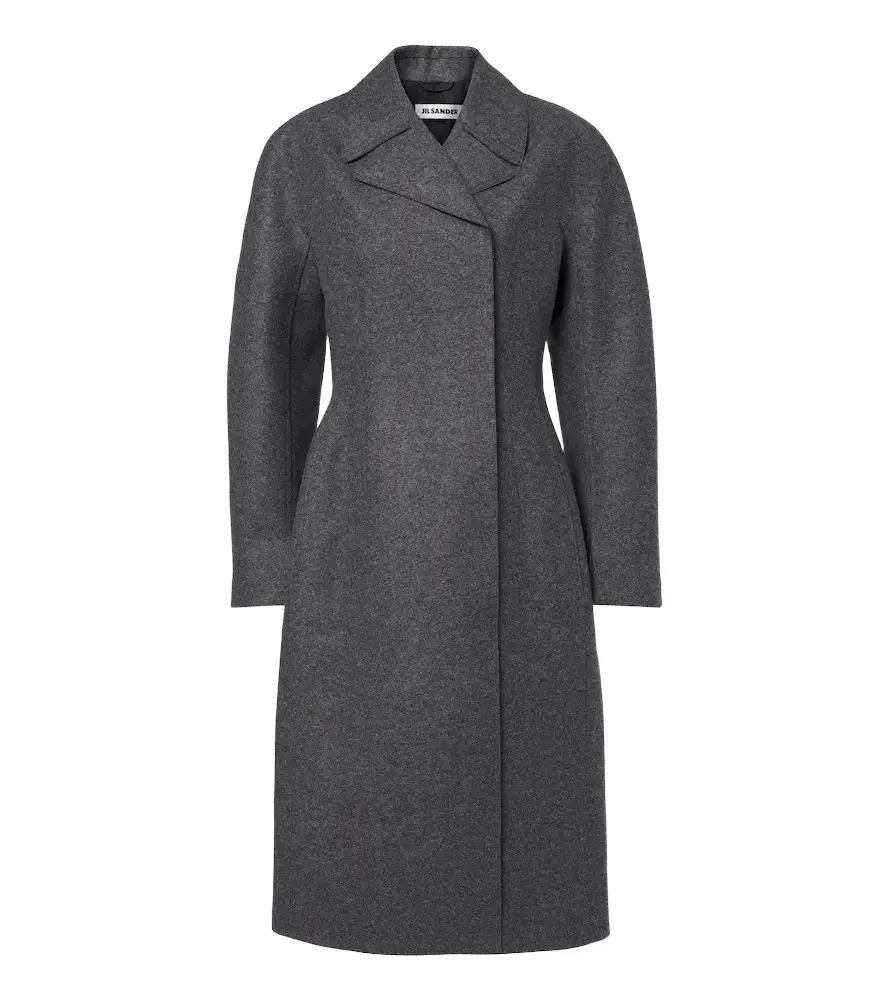
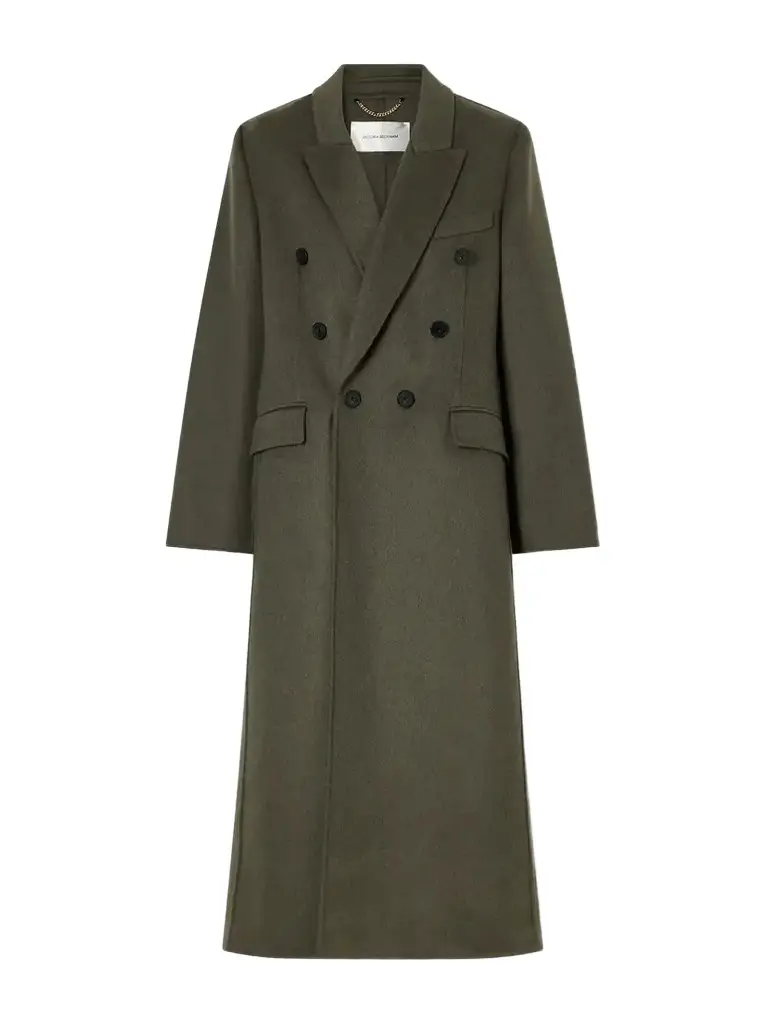
How you get to work decides the coat. If you walk, wait on platforms or cross open plazas, buy a coat that reaches at least the knee, closes at the chest and has a collar you can turn up. A double-breasted front overlaps more cloth across the body than a single-breasted one, and a wrap coat lets you pull the fronts tight in wind. If you drive, a shorter coat is easier to sit in; a hip-length car coat was designed for it. Either way, dress for the morning rather than the afternoon: the National Weather Service notes that the coldest part of the day is typically the early morning, and advises dressing for the outdoors even if you do not expect to be outside for long (National Weather Service).
Then make sure the coat goes over your work clothes. Try it on over the thickest jacket you own: the shoulders need room for a blazer's shoulder pads, and the coat sleeve should cover the jacket sleeve completely with your arms at your sides. Raglan, kimono and dropped-shoulder cuts, common on robe and wrap coats, slide over tailoring more easily than a narrow set-in sleeve. A lining in cupro, silk or viscose helps a coat glide over wool; an unlined double-face coat can catch on a knit. Our coat trends report covers this season's shapes, from funnel necks to belted coats, and our coat shop has every length. For a week of outfits built around the coat you already own, ask our AI stylist, which can style pieces from your digital closet alongside new ones.
Coats long enough to cover a blazer

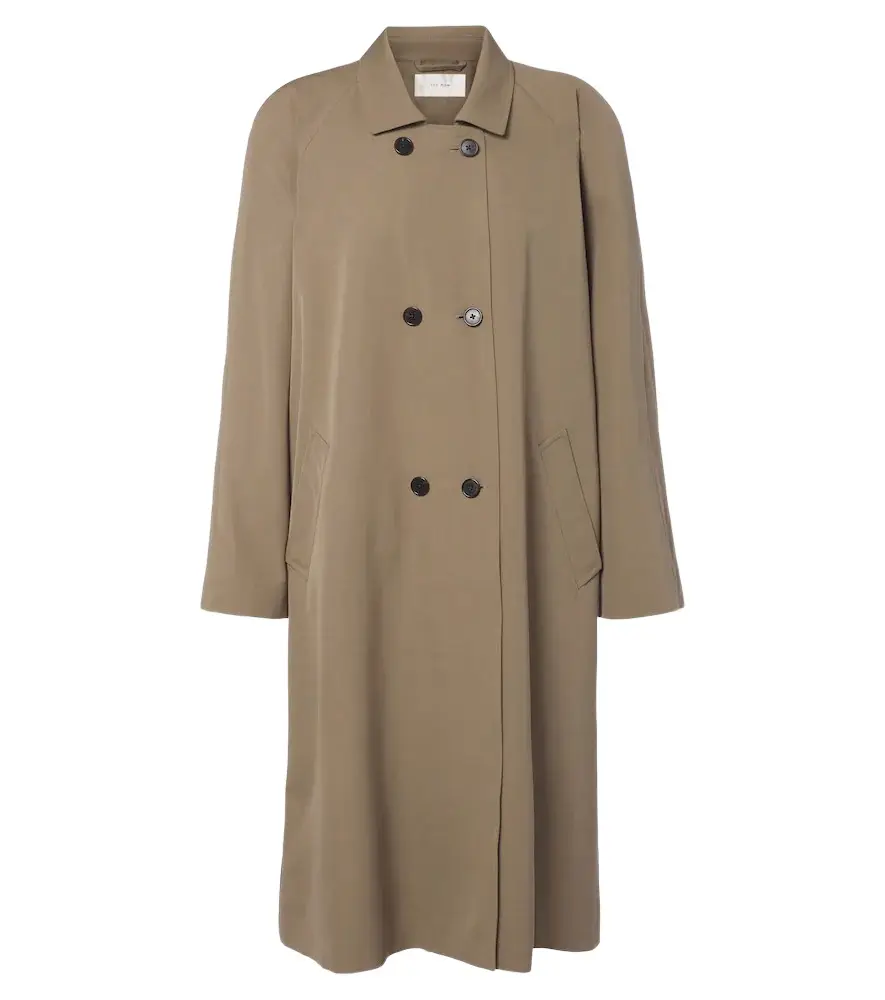

How to layer for a cold commute and a warm office
The hard part of winter office dressing is not the cold outside. It is the swing between the street and the desk. OSHA recommends keeping offices between 68°F and 76°F, although it has no regulation that requires it (OSHA), so twenty minutes after a freezing platform you may be sitting somewhere near room temperature. Dress so the warmth comes off without undoing the outfit underneath.
- Put the warmth in pieces you remove. For extreme cold, the National Weather Service advises dressing in layers and covering exposed skin, and notes that mittens are better than gloves (National Weather Service). For work, let the coat, scarf, hat and gloves carry most of the warmth, and leave them at the door.
- Keep the base thin. A silk or fine merino layer under a shirt or knit adds warmth without bulk under a jacket, and it is the one layer you never need to take off. Under wide trousers, thin silk or merino leggings stay invisible on the coldest days.
- Skip the thick sweater under a fitted blazer. The sleeves bind, the shoulders pull and you overheat indoors. Wear the chunky knit instead of the jacket, or under a roomier coat.
- Cover your head and face. The CDC's list of what to wear outside in winter includes a hat, a scarf or knit mask over the face and mouth, and mittens or gloves (CDC). A cashmere beanie or a knit headband flattens hair less than a structured hat.
- Leave one layer at your desk. A cardigan or a large cashmere scarf kept at work handles meeting rooms that run cold, without adding to what you carry.
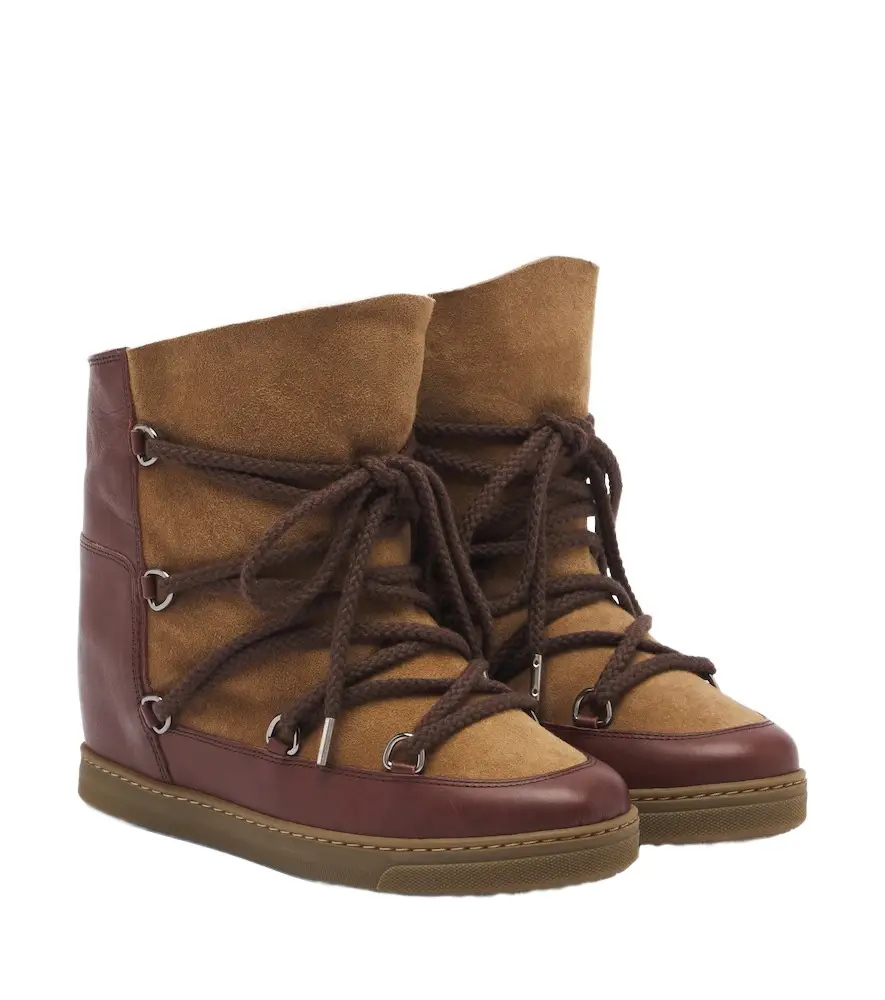
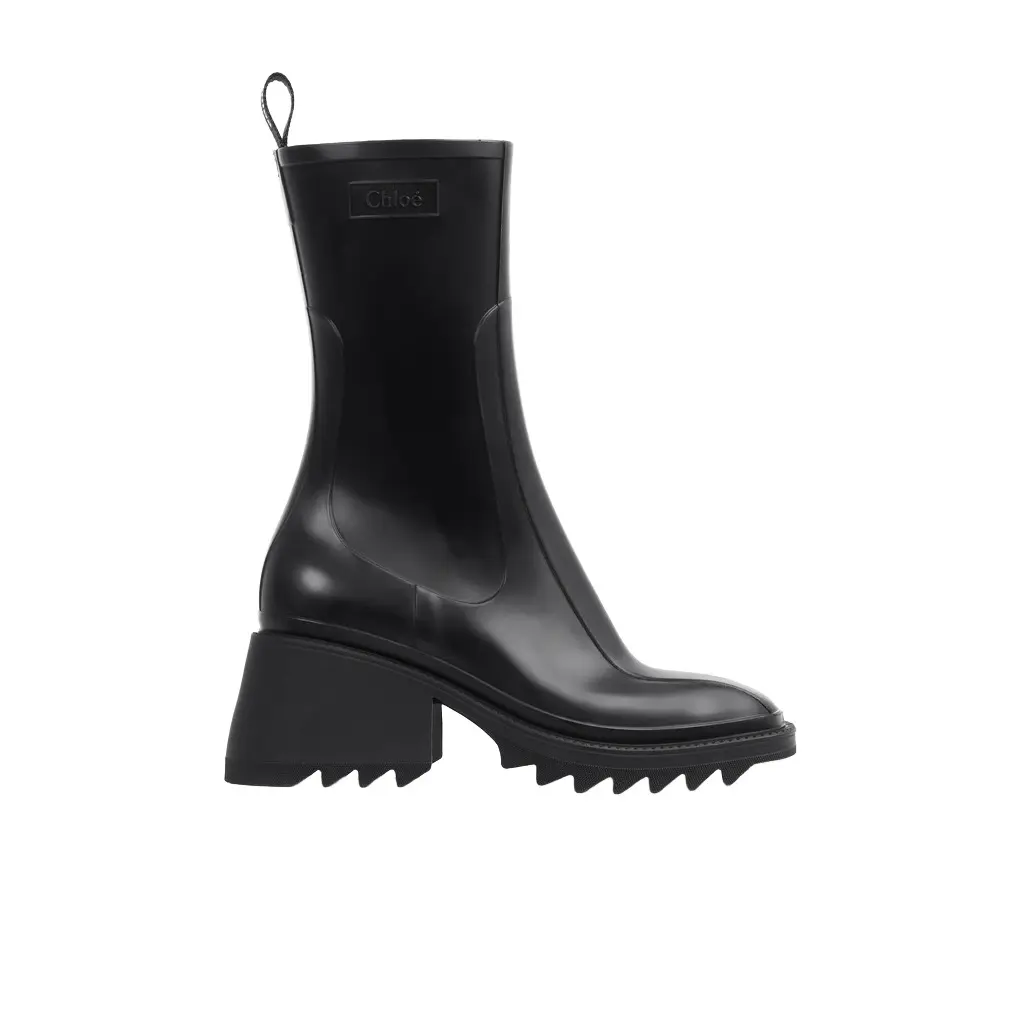
Shoes for snow and shoes for the office
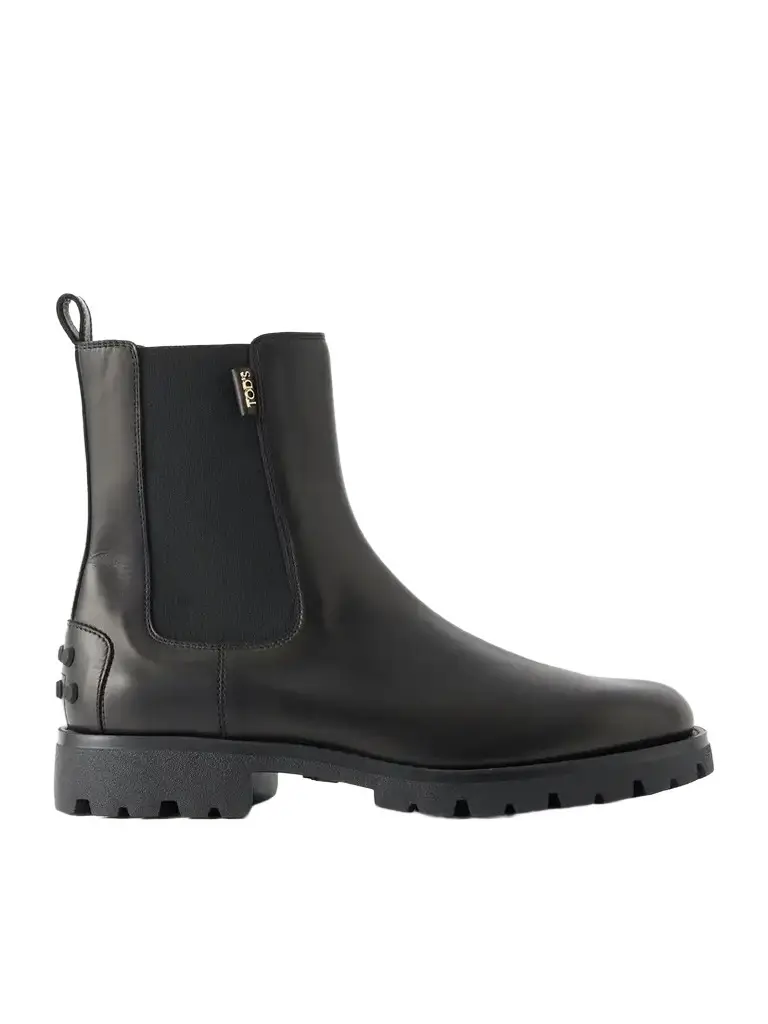
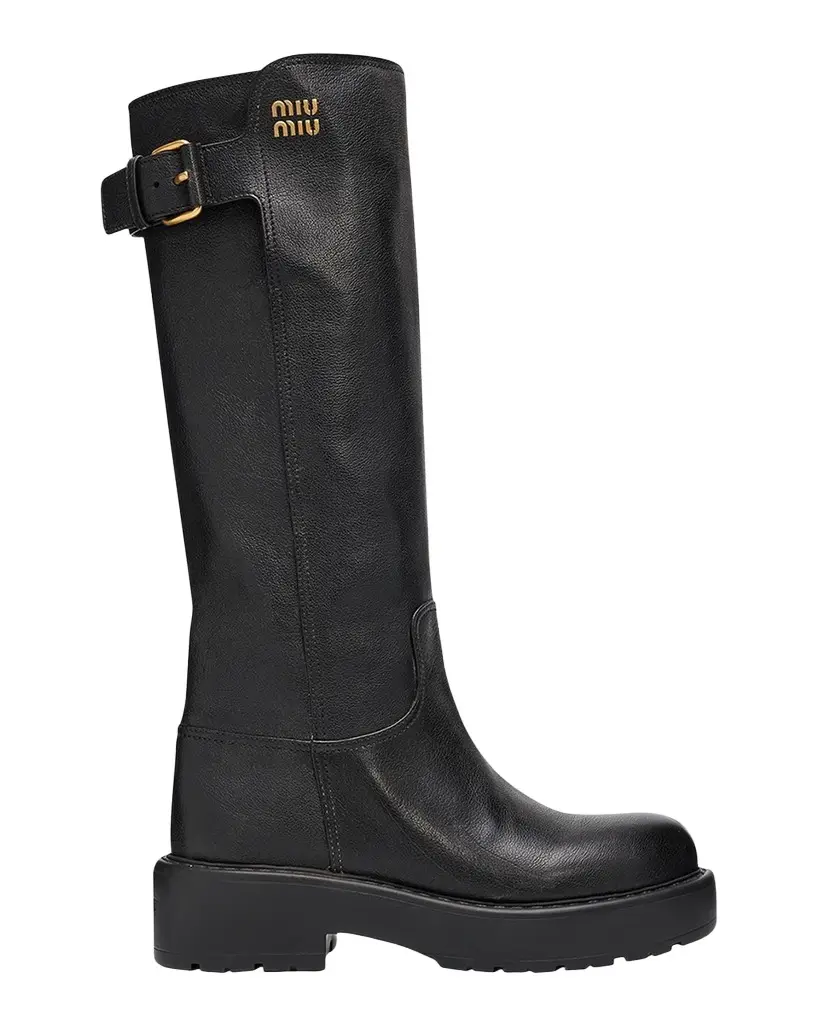
Most offices want polished shoes; most sidewalks in January want grip. Solve it with two pairs. For the commute, choose leather boots with a rubber or lug sole: deep tread holds on slush where a leather sole slides, and smooth leather shrugs off salt better than suede. The same CDC list includes water-resistant boots, so on snowy days or unplowed streets wear a lined snow boot or a rubber rain boot and change at the door. Lug-sole Chelsea and ankle boots from Bottega Veneta, Prada and Tod's are sleek enough for many business-casual offices, so they can often stay on all day. See all our cold-weather boots.
Look after the commuting pair: wipe salt and slush off with a damp cloth the same evening, let leather dry at room temperature away from a radiator, and condition it before it cracks. Salt left overnight dries into white tide marks that are much harder to remove.
Boots for a snowy commute


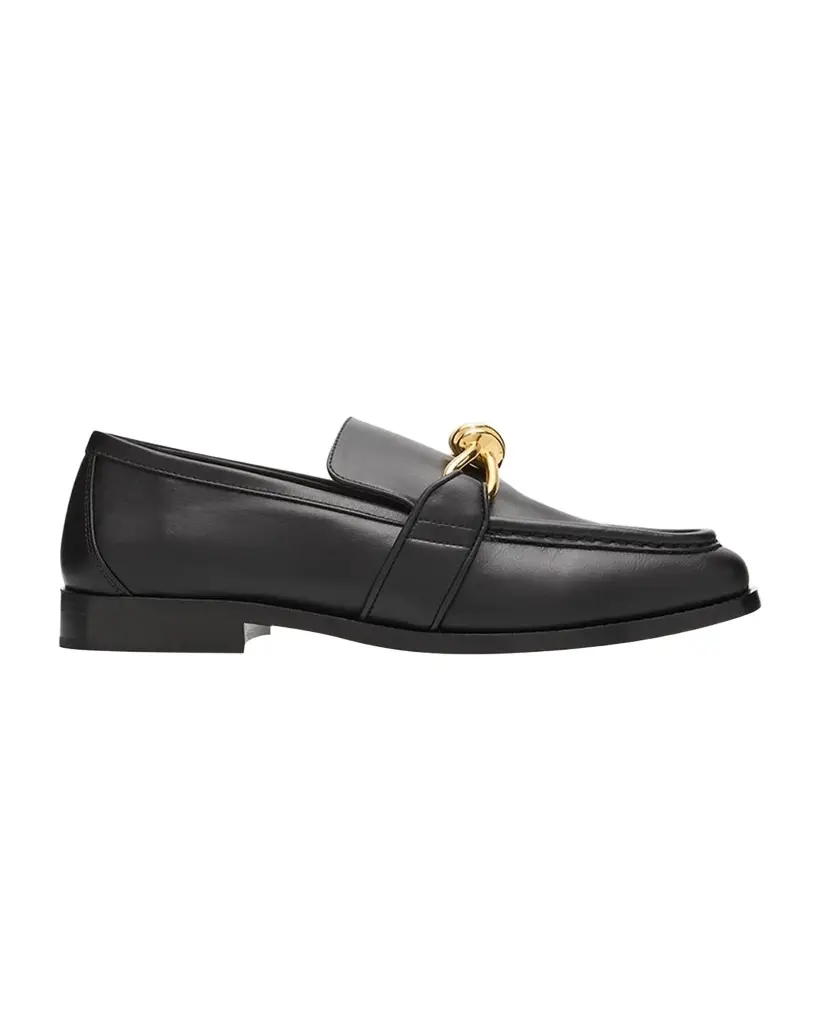
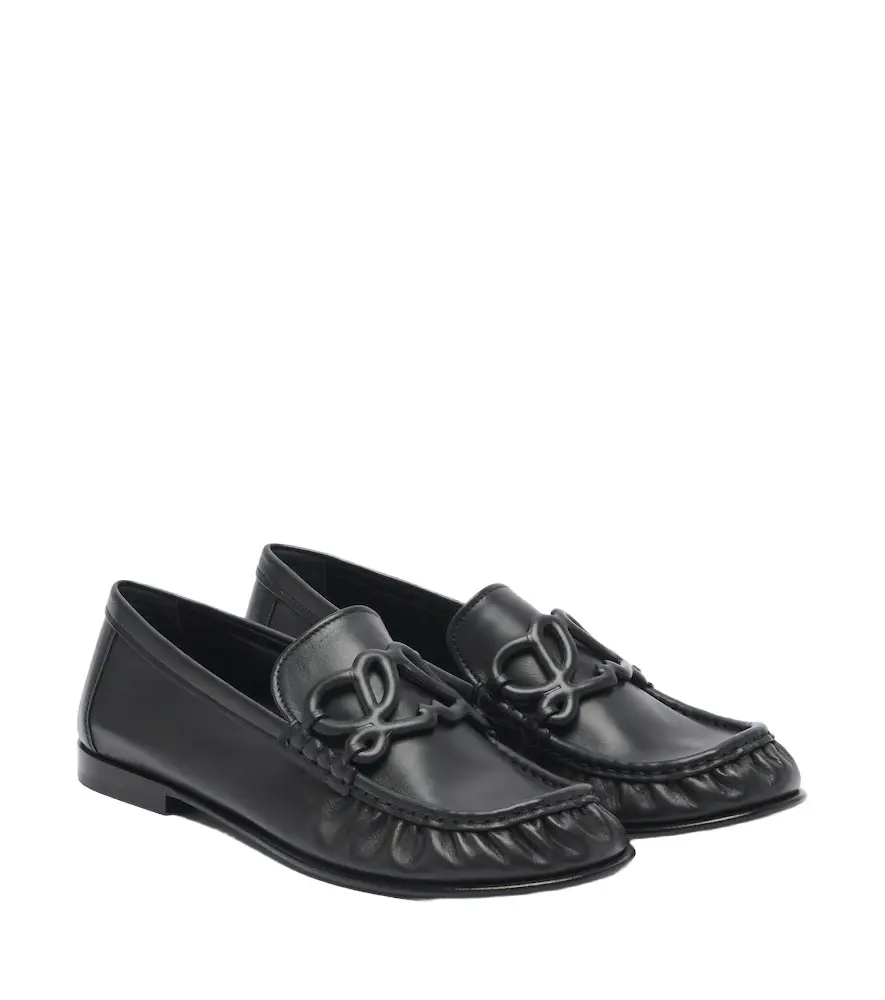
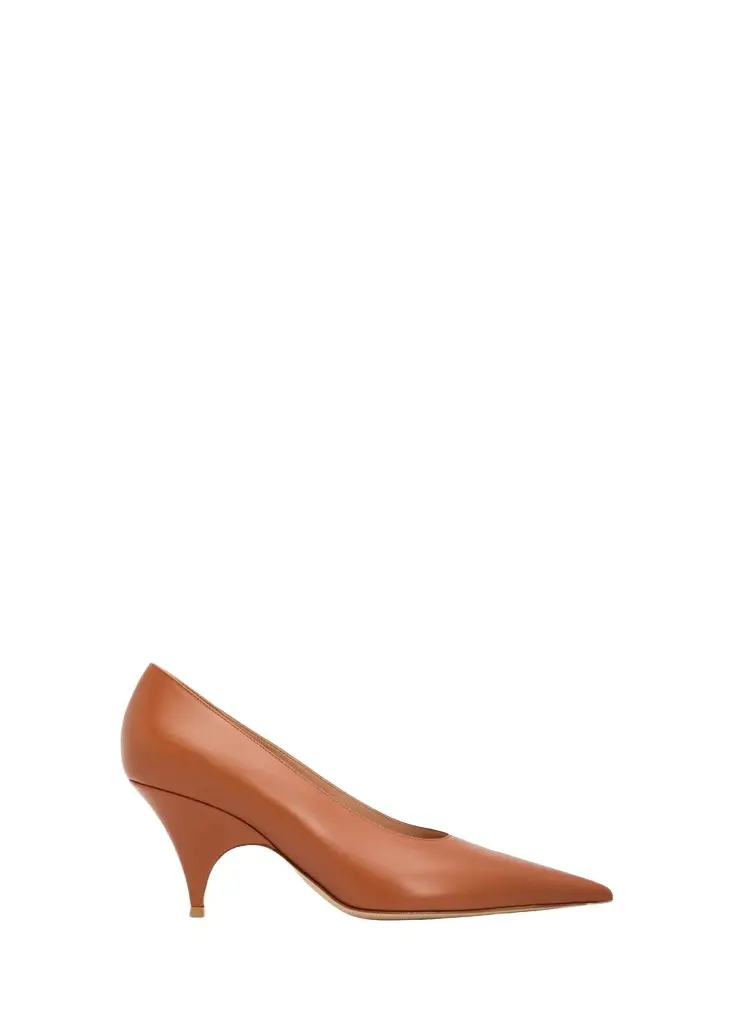
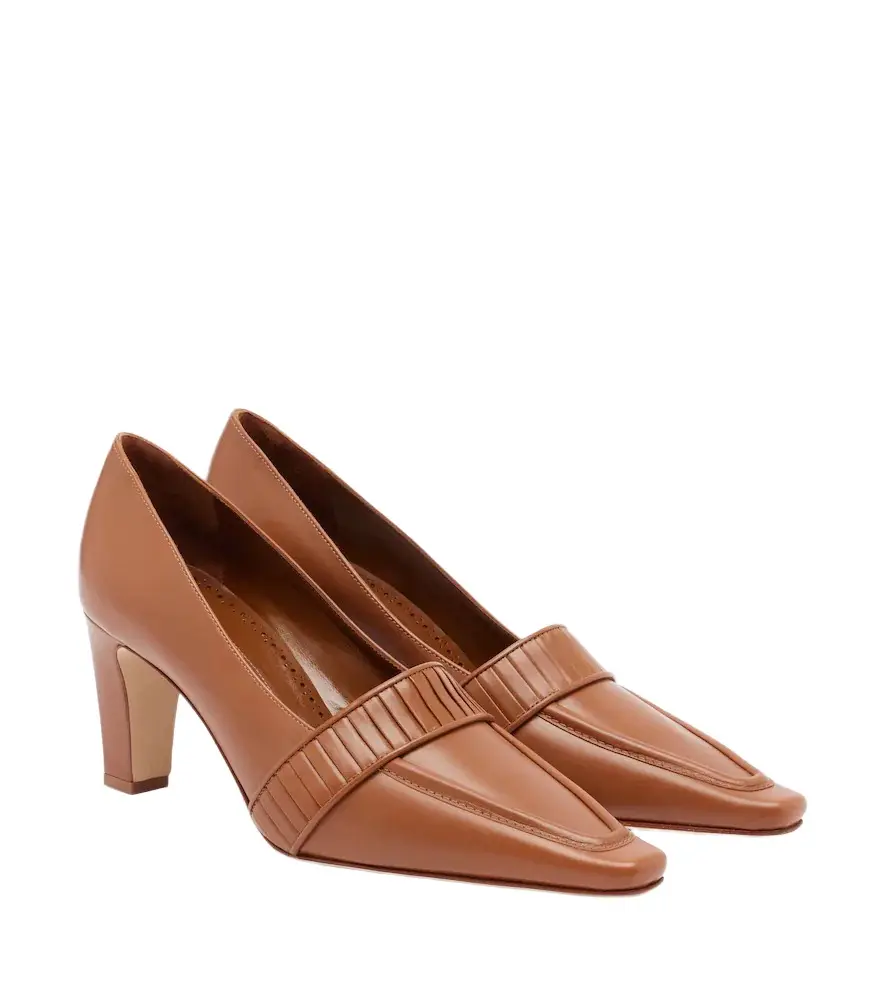
At your desk, keep a pair of leather loafers or low pumps. Loafers suit trousers and business casual; a low pump or a d'Orsay suits skirts, dresses and suiting. Choose them to work with the tights or socks you commuted in, and if you walk in wearing knee boots with a skirt, check that the hem still covers the top of the boot when you sit. Our guide to the best designer loafers covers fit, sizing and lug-sole pairs.
Loafers and low pumps to keep at your desk


The bag that carries the second pair
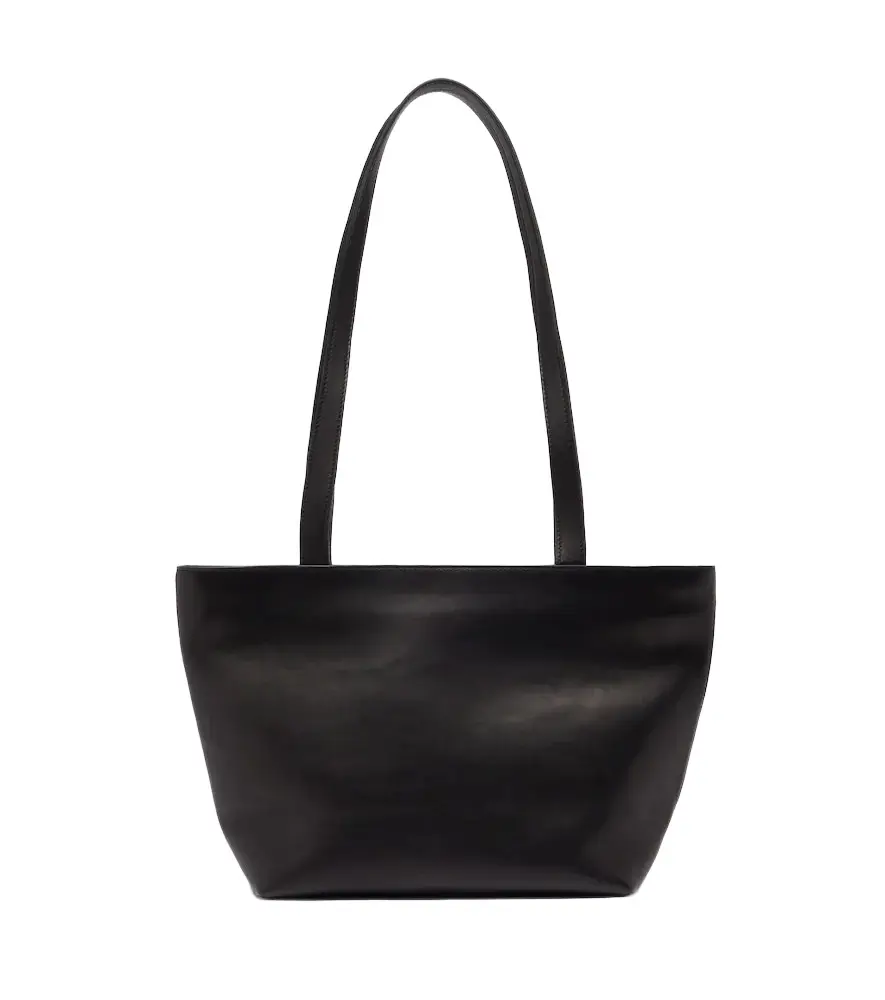
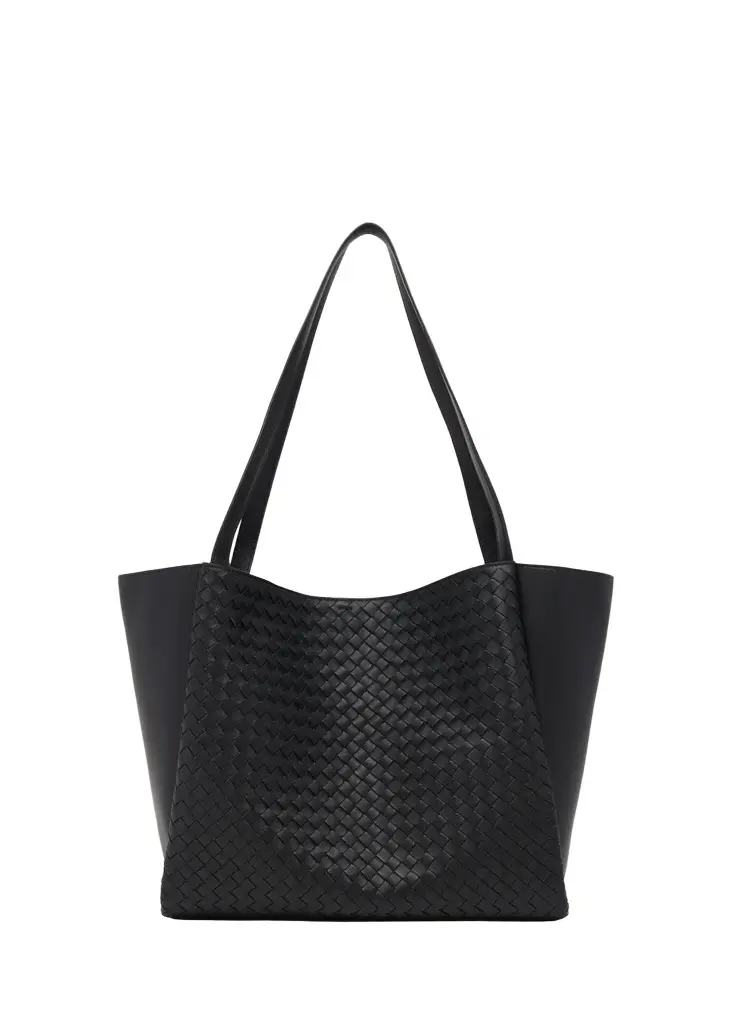
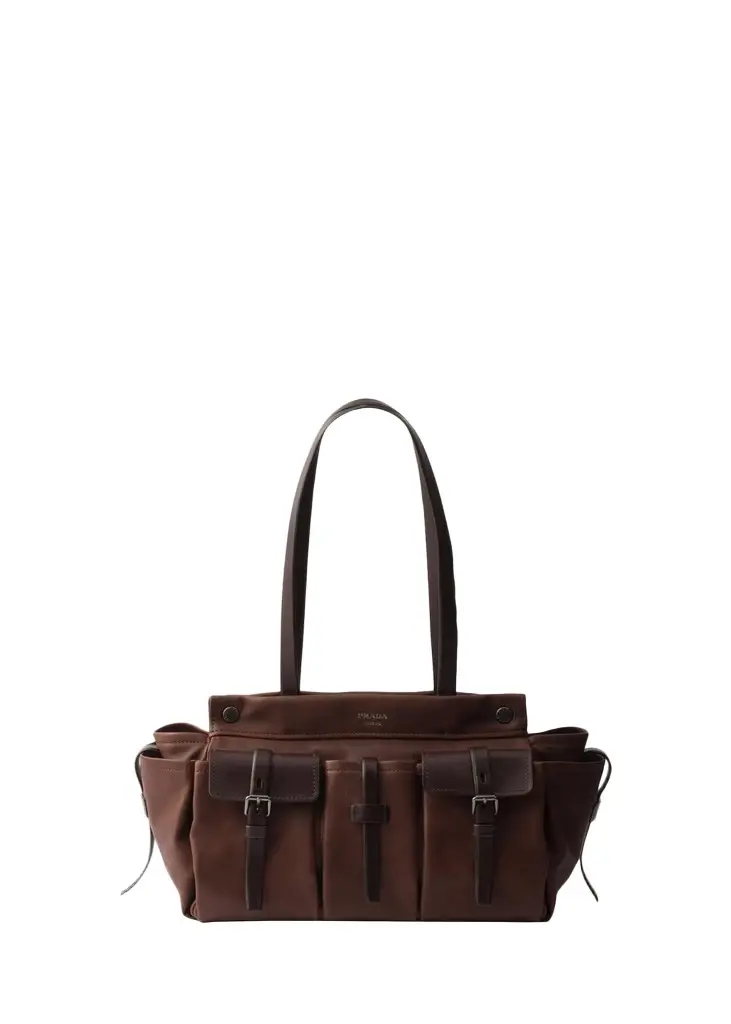
A two-shoe routine needs a bag that can carry the other pair. Choose a structured leather tote big enough to hold your laptop and a pair of flats in a shoe bag, with a flat base so the shoes lie flat and a closure or a deep interior so snow does not land on your papers. Check the handle drop against your coat: a strap that sits comfortably over a sweater can be too short to go over a thick wool shoulder. Smooth or grained leather in black or brown hides salt spray and scuffs better than suede or pale leather, and the shoe bag keeps the soles off your laptop. Browse all tote bags, or read our guide to choosing a designer tote.
Work totes with room for a second pair of shoes


How we chose
Every piece here comes from a house on our luxury list, was live on Vêtir with sizes available when we published, and was checked by our editors against its photographs for color, cut and length. We favored cloth that suits winter (flannel, tweed, herringbone, dense knits, wool and wool-cashmere), boots with soles that grip, coats with room for a jacket and totes big enough for a laptop and a second pair of shoes. We read the fiber content of the coats, trousers and dresses, left out fitted, unlined coats that would drag over a blazer, and dropped a dress whose listed color did not match its photograph. Picks span several houses and price points, and each module refills with similar pieces when something sells out. There are no pre-owned pieces in this edit.
Frequently asked questions
What should I wear to work in winter?
Wool trousers or a flannel suit, a fine cashmere or merino knit, and a wool coat that reaches at least the knee, with rubber- or lug-soled boots for the commute and loafers or low pumps at your desk. In a business casual office, a long-sleeved knit dress with knee boots and opaque tights is the simplest one-piece option.
Can you wear boots to the office?
Yes, in most offices. Sleek leather ankle or knee boots with a modest heel pass in corporate settings when worn under trousers, or with a skirt that covers the top of the boot. Chunky lug soles, snow boots and rain boots are for the commute in formal offices; change into pumps or loafers at your desk.
Are tights appropriate for business casual?
Yes. Opaque tights in black, navy or brown are standard with skirts and dresses in winter, including in corporate offices. Match them to your shoes for the longest line, and keep sheer patterned tights for evenings.
How do you stay warm at work without looking bulky?
Put the warmth in the pieces you take off: coat, scarf, hat and gloves. Underneath, wear a thin silk or merino base layer and a fine-gauge knit rather than a thick sweater under a fitted jacket. OSHA recommends keeping offices at 68°F to 76°F, so an outfit that is warm enough outside will usually be too warm at your desk.
What kind of coat goes over a suit?
One that reaches at least the knee, with room in the shoulders for a jacket and sleeves long enough to cover the jacket sleeve. Raglan, kimono and dropped-shoulder cuts go over tailoring most easily. A wool or cashmere coat in navy, charcoal, black or camel suits every corporate dress code.
Can you wear jeans to a business casual office in winter?
Only where your office allows them. If it does, keep them dark, straight and long enough to cover a boot shaft, and wear them with a blazer or a fine knit and leather loafers or sleek boots.