The Best Designer Belts for Women, and How to Choose the Width, Buckle and Size
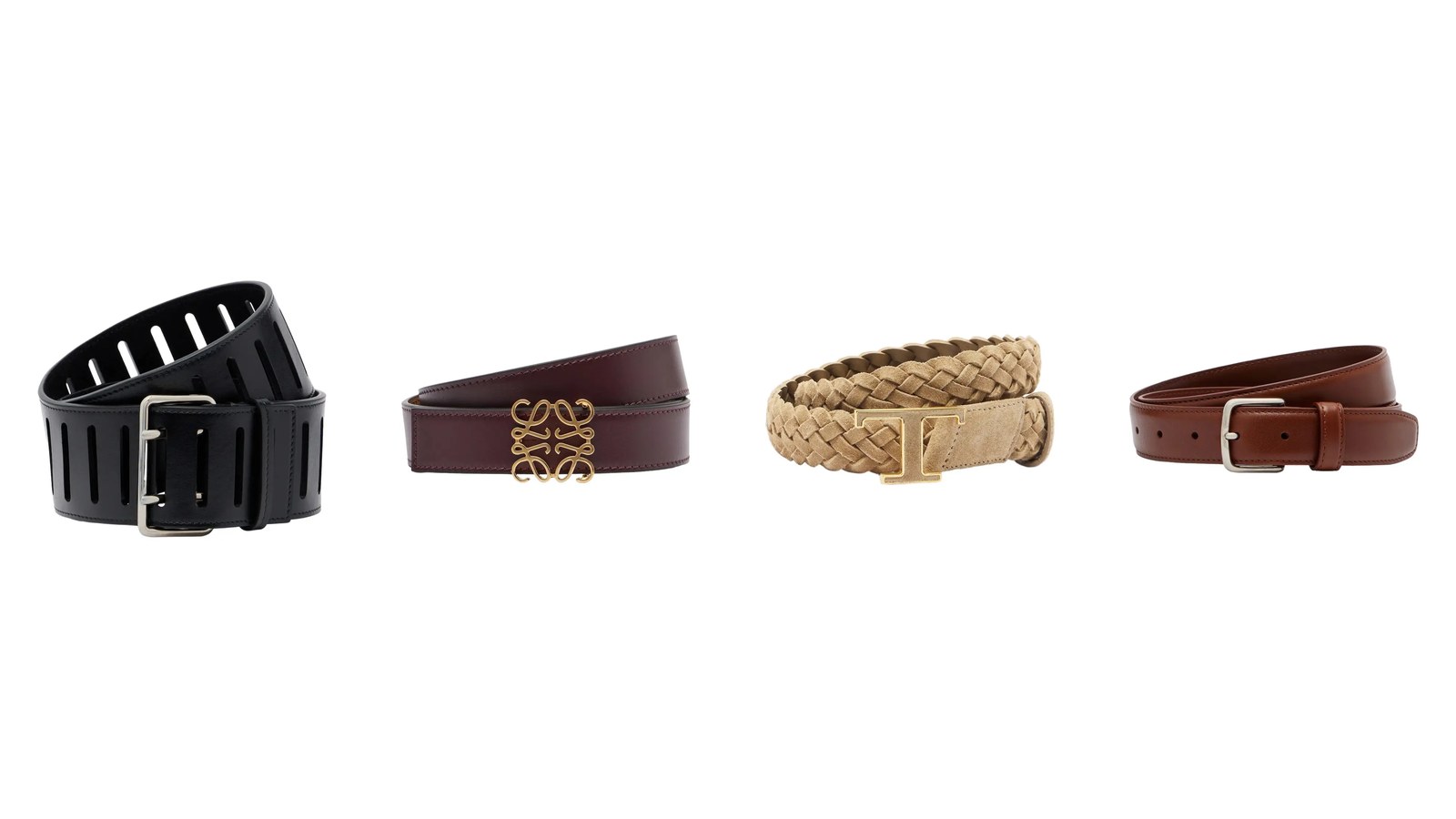
The best designer belts are cut for a specific job. For trousers and jeans, choose a plain leather belt 2.5 to 4 cm (1 to 1½ in) wide with a small buckle, narrower for tailoring and wider for denim. For coats and dresses, choose a wide or corset belt worn at the natural waist. If you want the belt to be the point of the outfit, add one logo buckle in the same metal as your jewelry. Our short list: The Row, Toteme and Khaite for everyday leather; Alaïa for corset and wide belts; Saint Laurent, Gucci and Ferragamo for logo buckles; and Bottega Veneta for woven leather. Below: which width suits which clothes, how to belt a coat, buckles and leathers, how to read European belt sizes, and evening belts for the party season.
Belt widths: what to wear with trousers, jeans, dresses and coats
Width decides where a belt can go. Before you buy a belt for trousers, measure the loops: a belt wider than the loop will curl at the edges and never sit flat. Many houses put the width in the style name, in millimeters or centimeters, which makes comparing easy.
| Width | Where it sits | Wear it with |
|---|---|---|
| Skinny: under 2 cm (¾ in) | Natural waist, over layers | Knit and slip dresses, fine-gauge knitwear, a blazer worn open |
| Trouser: 2 to 3 cm (¾ to 1¼ in) | Through belt loops | Tailored trousers, straight jeans, skirts with loops |
| Jeans: 3 to 4 cm (1¼ to 1½ in) | Through jeans loops or low on the hip | Denim, chinos, utility trousers |
| Wide: 4 to 7 cm (1½ to 2¾ in) | Natural waist | Coats, shirt dresses, long cardigans |
| Corset: 7 cm (2¾ in) and wider | Natural waist, over everything | Wool and cashmere coats, column dresses, oversized shirts |
Two rules hold across all of them. First, scale the belt to the weight of the fabric: a skinny belt disappears on a double-faced cashmere coat, and a corset belt swamps a silk slip dress. Second, the natural waist (the narrowest point of your torso, above the navel) is where you belt anything you want to shape. The hip is for belts that hold trousers up or add a loose, low line to a long knit.
How to wear a belt over a coat
The belt-over-coat trend is one of the styling ideas the fall 2026 runways kept returning to. Reviewing the Paris shows, the retail analytics firm Style Arcade noted Issey Miyake, Carven and Dries Van Noten using belts to clamp down scarves, cloaks and capes against the cold, and cinched, belted waists on leather jackets and trench coats. It is also the most useful trick in winter dressing: a belt gives an unstructured coat a shape, and it stops a wrap coat from blowing open. Our guide to this season's coat trends covers the coats themselves, and you can shop belted coats that come with their own tie. Here is how to belt the rest.
- Wrap and robe coats. Swap the fabric tie for a wide leather belt at the natural waist, and tie the original belt behind you or take it off. On a camel coat, a cognac or chocolate belt looks warmer than black.
- Single-breasted coats. Button the coat first, then belt over it with a 4 to 5 cm belt. Keep the buckle simple so it does not compete with the buttons.
- Double-breasted coats. Set the belt at the natural waist between two rows of buttons, so it never presses over a button, or leave the coat unbelted. A belt laid across buttons adds lumps exactly where you want to look narrowest.
- Capes and oversized coats. Put a wide belt over the cape at the waist and let the volume fall from it. A long scarf wrapped once around the neck and belted in with the coat is the runway version. See how to wear a cape for proportions.
- Leather jackets and long blazers. A belt at the waist gives a longline blazer an hourglass line over a knit or a slip dress. On a leather jacket, choose a belt close to the jacket's color so the waist looks built in.
- Trench coats. Replace the self-belt with a slim leather belt in the color of your shoes, buckled rather than knotted. Our trench coat guide has the rest.
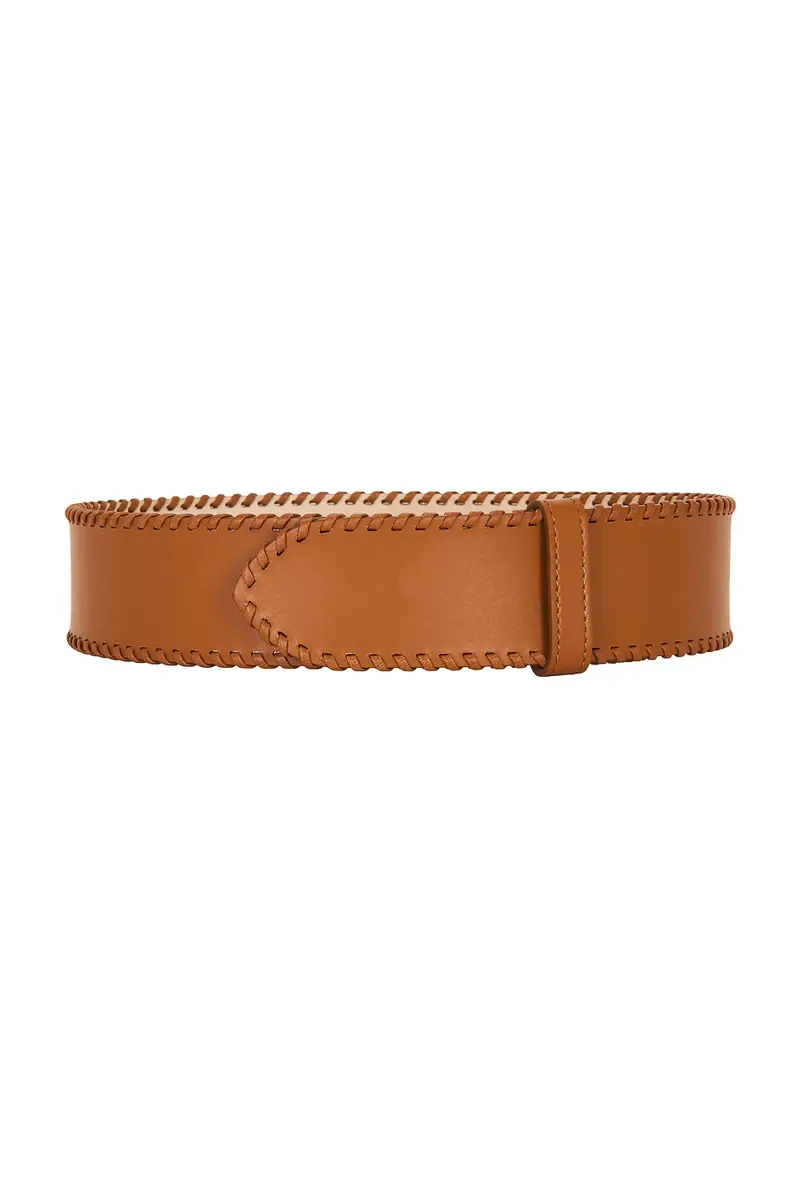
Size up for this. A belt worn over a heavy coat has to go around the coat as well as you, so measure your waist over the coat you will wear it with, not over a shirt. Corset and wide belts with several holes are the most forgiving. For shape, sculpted leather (an Alaïa corset belt, a molded waist belt) holds its line over wool; soft suede folds with the coat.
The best wide and corset belts to wear over a coat





The best designer belts for trousers and jeans
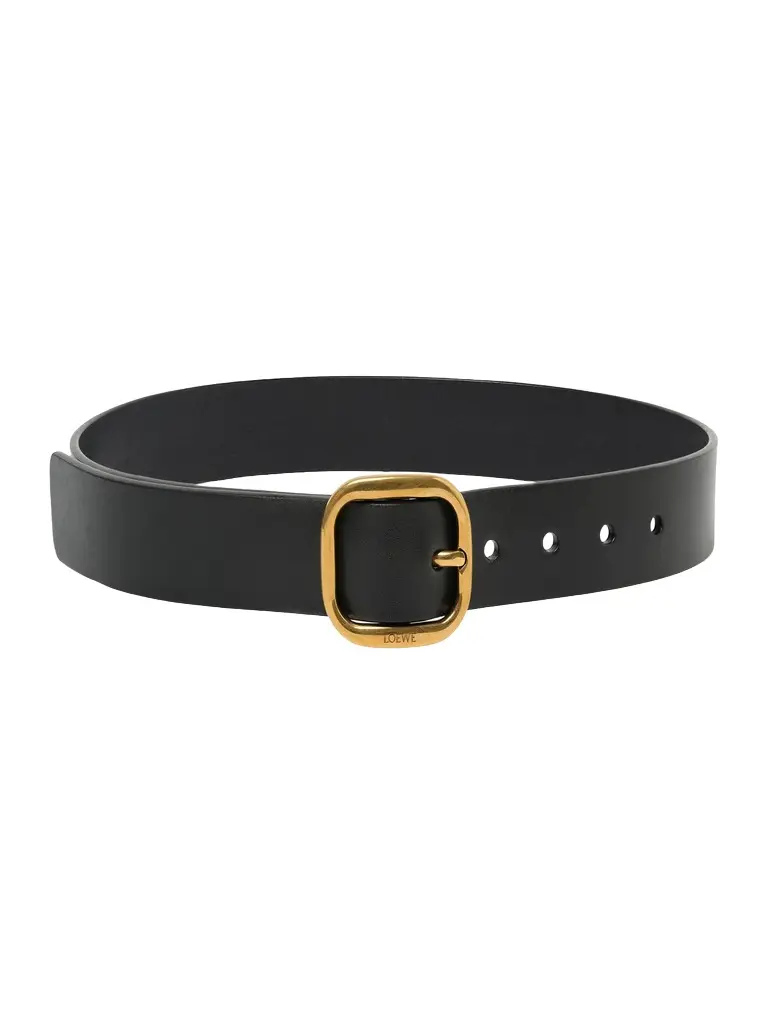
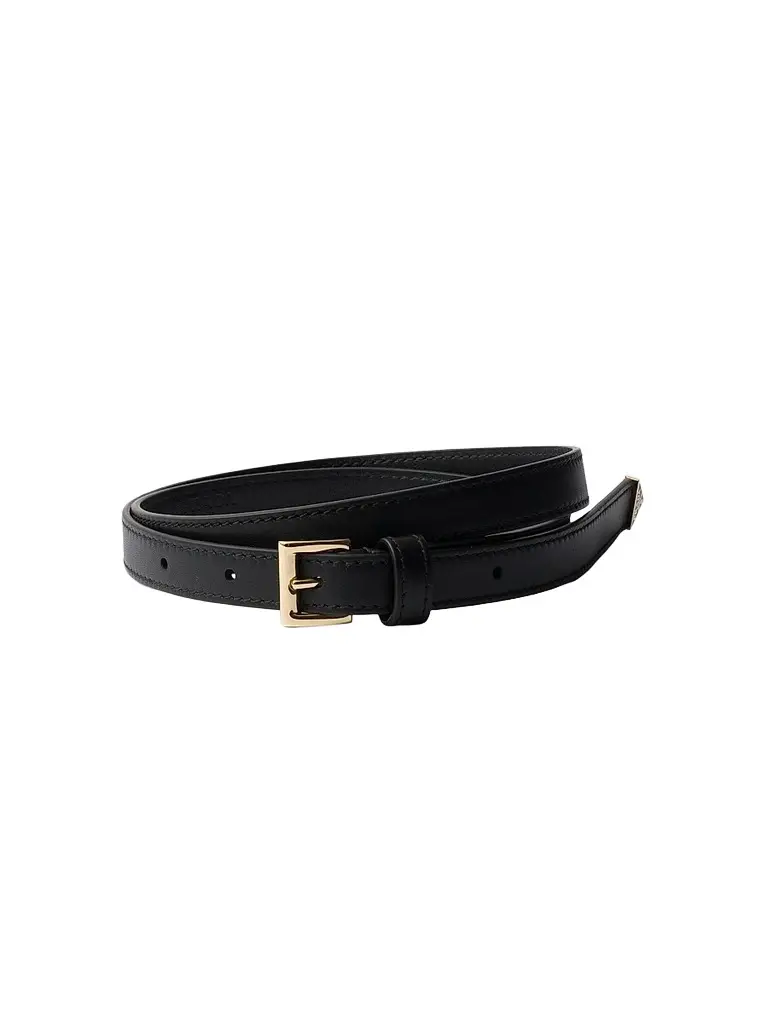
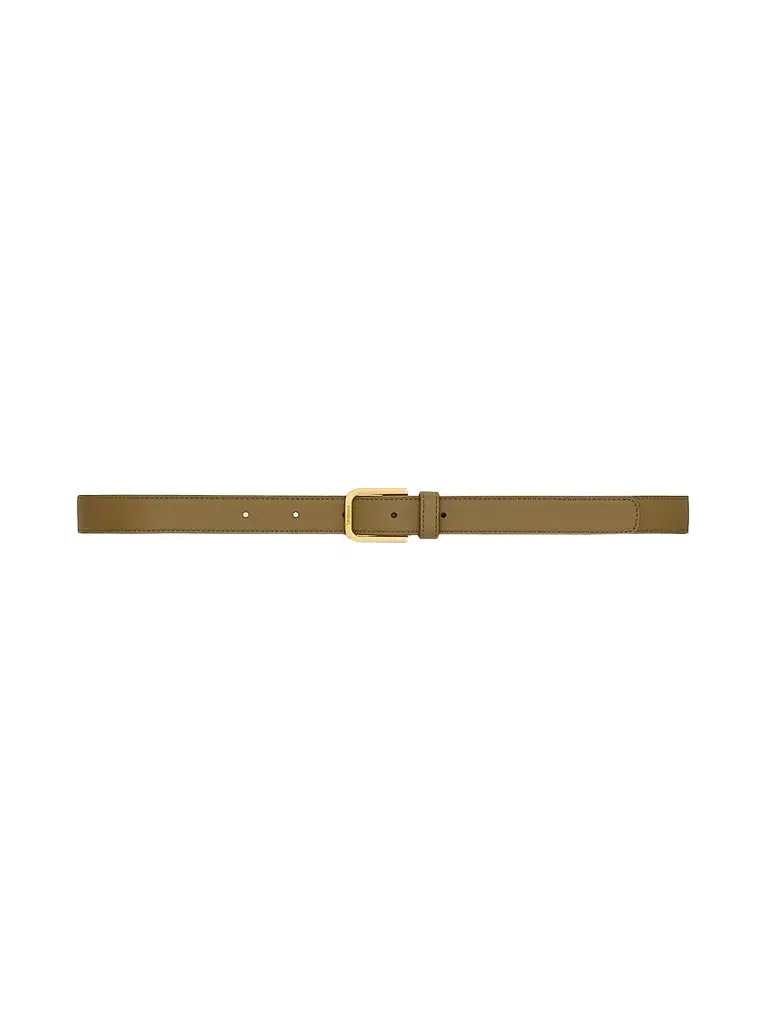
This is the belt you will wear most, so it should be plain enough to disappear: smooth or lightly grained calf, 2 to 3.5 cm wide, with a small buckle. Buy black first and dark brown second. A third belt in burgundy or olive earns its place because both colors sit well with navy, gray and camel. Look at the edges: finished, painted or stitched edges on a firm leather will hold their shape for years, while a thin, soft belt creases at the buckle and starts to curl.
- The office: black wool trousers, a white poplin shirt tucked in, a 2.5 cm black belt with a silver buckle, black loafers. Match the buckle to your watch.
- The weekend: straight dark jeans, a navy crewneck, a brown belt with a brass buckle, brown loafers or boots. For the jeans themselves, see our guide to designer jeans brands.
- Soft tailoring: gray flannel trousers, a camel cashmere knit, a tan or cognac belt. A lighter belt here keeps the outfit from going heavy.
For the plainest version, a pin buckle on firm calf and nothing else, look first to The Row, Toteme and Khaite. Denim can take more weight: a strap of 3.5 to 4 cm with a heavier brass buckle holds its own against thick jeans loops and a chunky knit. A colored belt, in olive, burgundy or tan, looks deliberate with gray and navy tailoring. For the trousers to go with them, browse our designer trousers.
The best slim leather belts for trousers and jeans



Logo belts: choosing the buckle
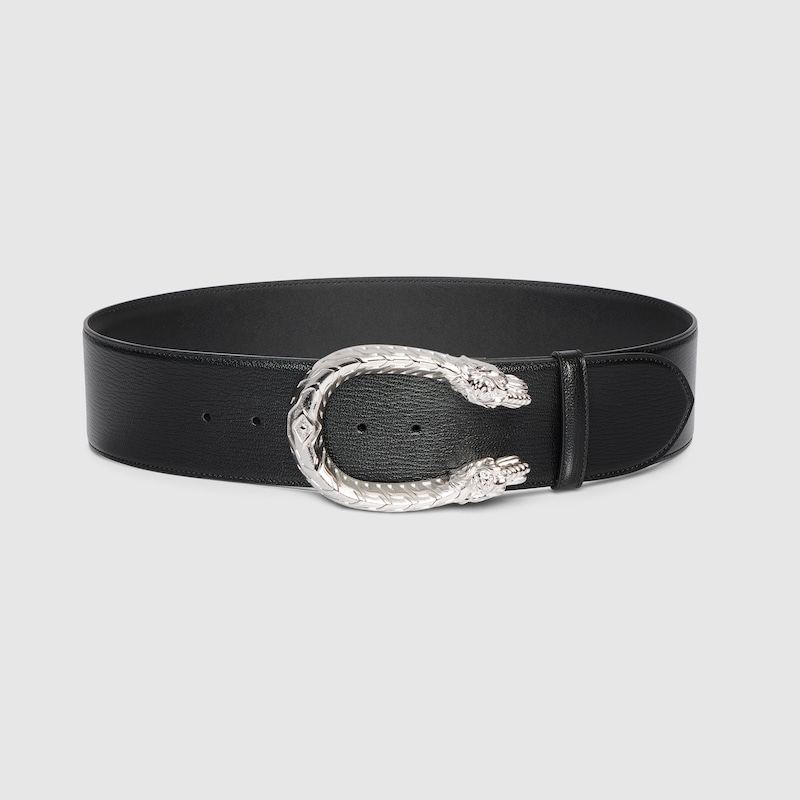
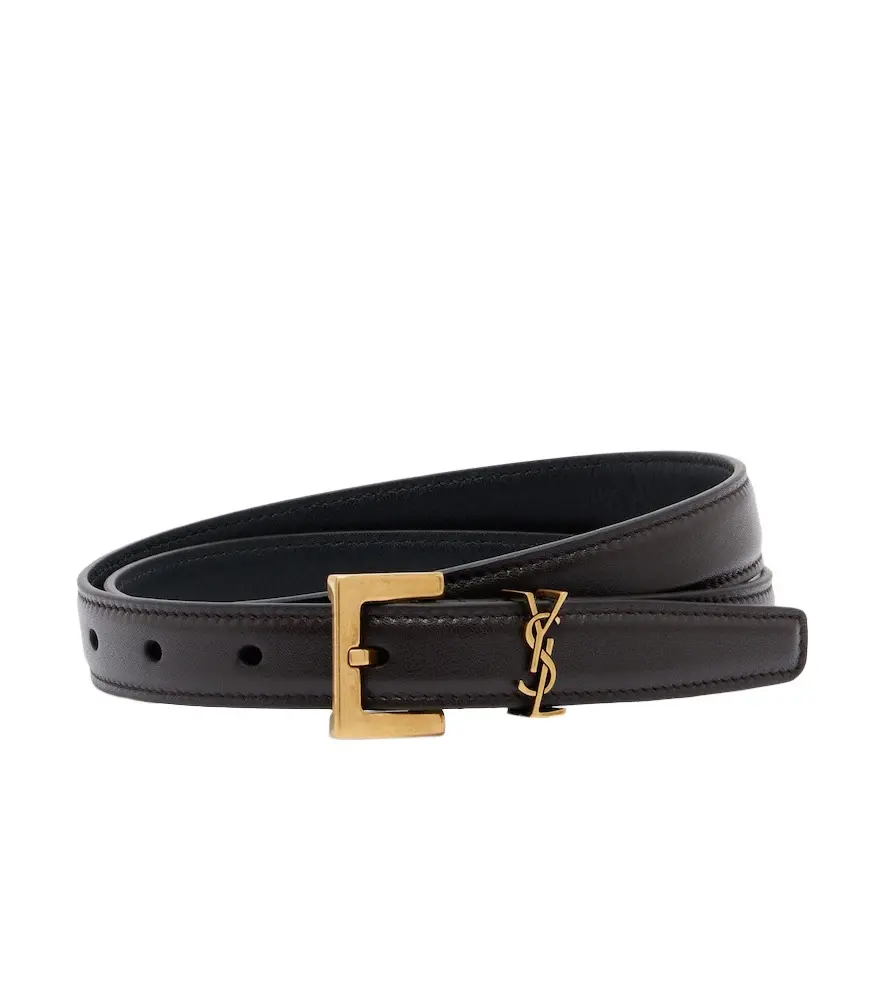
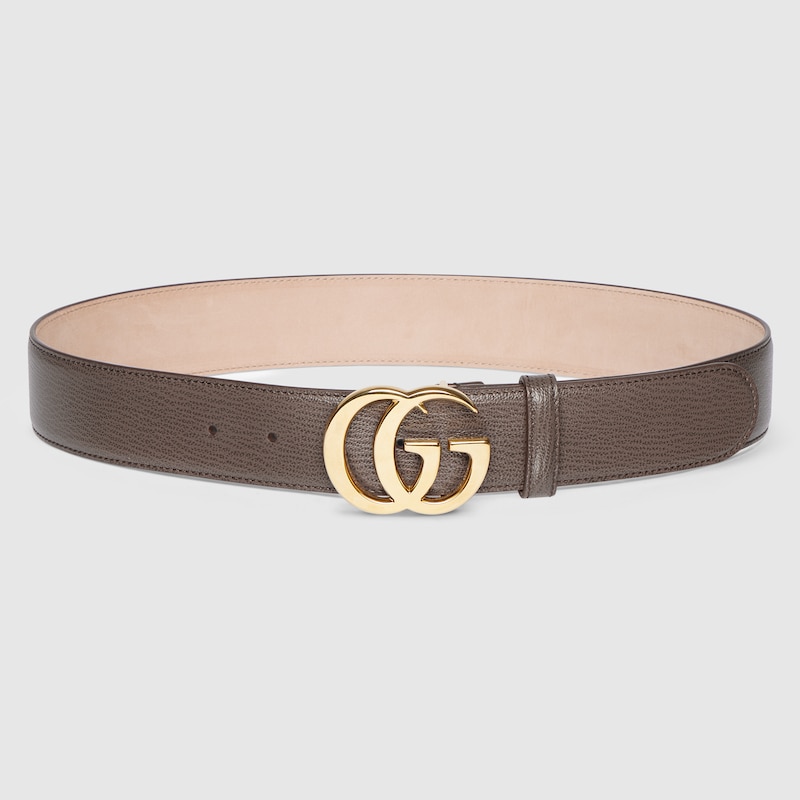
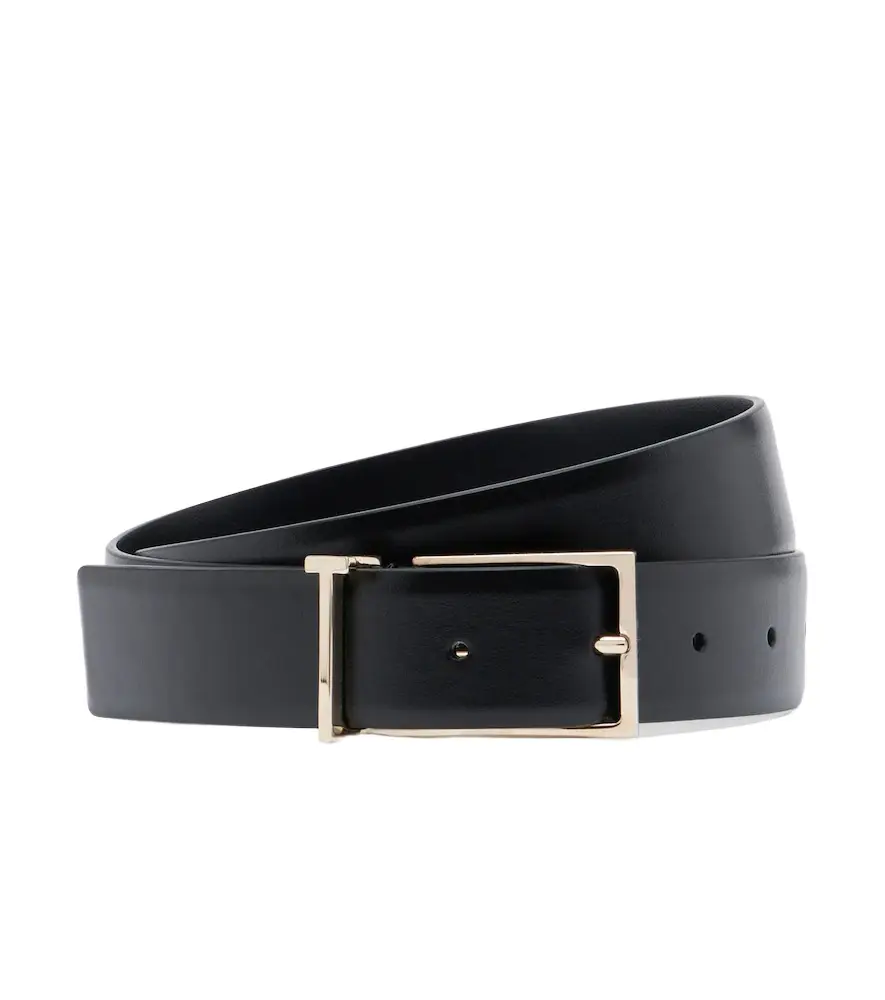
A logo belt is jewelry worn at the waist, so judge it the way you would judge a necklace: by the scale and metal of the hardware first, the name second. A small, flat buckle works with tailoring; a large plaque belongs with plain knits and denim. Most of the well-known logo buckles have a long history in their houses:
- Saint Laurent's Cassandre. The interlocking YSL was designed for the house by the poster artist A. M. Cassandre, whom Yves Saint Laurent and Pierre Bergé commissioned in 1961, the year they founded the house, according to the Musée Yves Saint Laurent Paris. On a belt it sits beside a plain buckle or forms the buckle itself.
- Gucci's Double G and Horsebit. The Horsebit, a double ring joined by a bar, is the hardware of the loafer Gucci launched in 1953, the year it opened its first store in New York, according to its parent company, Kering. The Double G is the louder of the two.
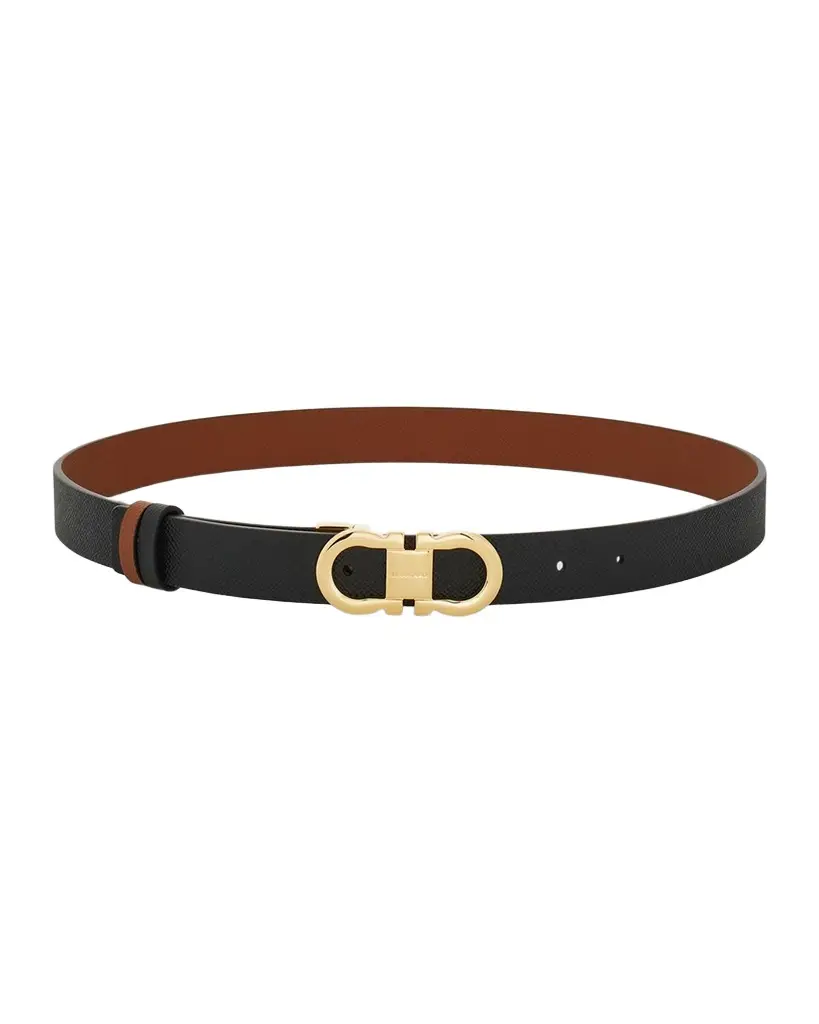
- Ferragamo's Gancini. The horseshoe-shaped hook first appeared in 1972 as the clasp of a Ferragamo handbag photographed by Women's Wear Daily, according to the Fondazione Ferragamo, and has since spread to belts, shoes and scarves.
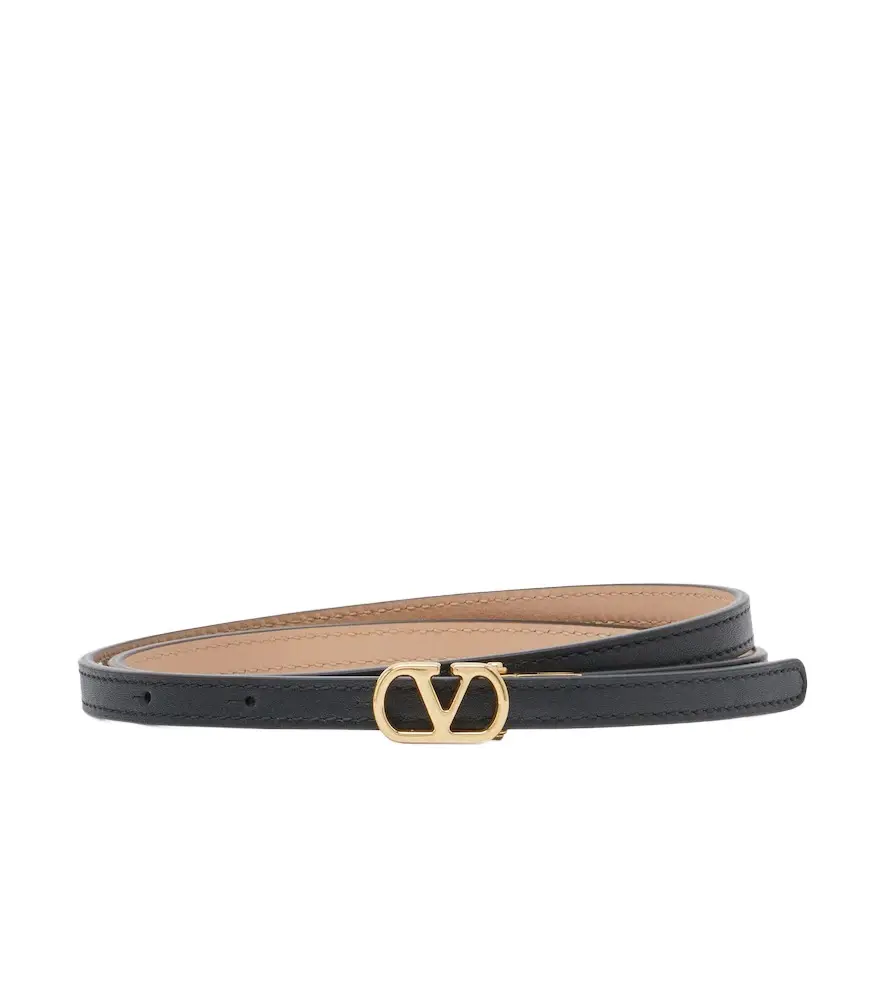
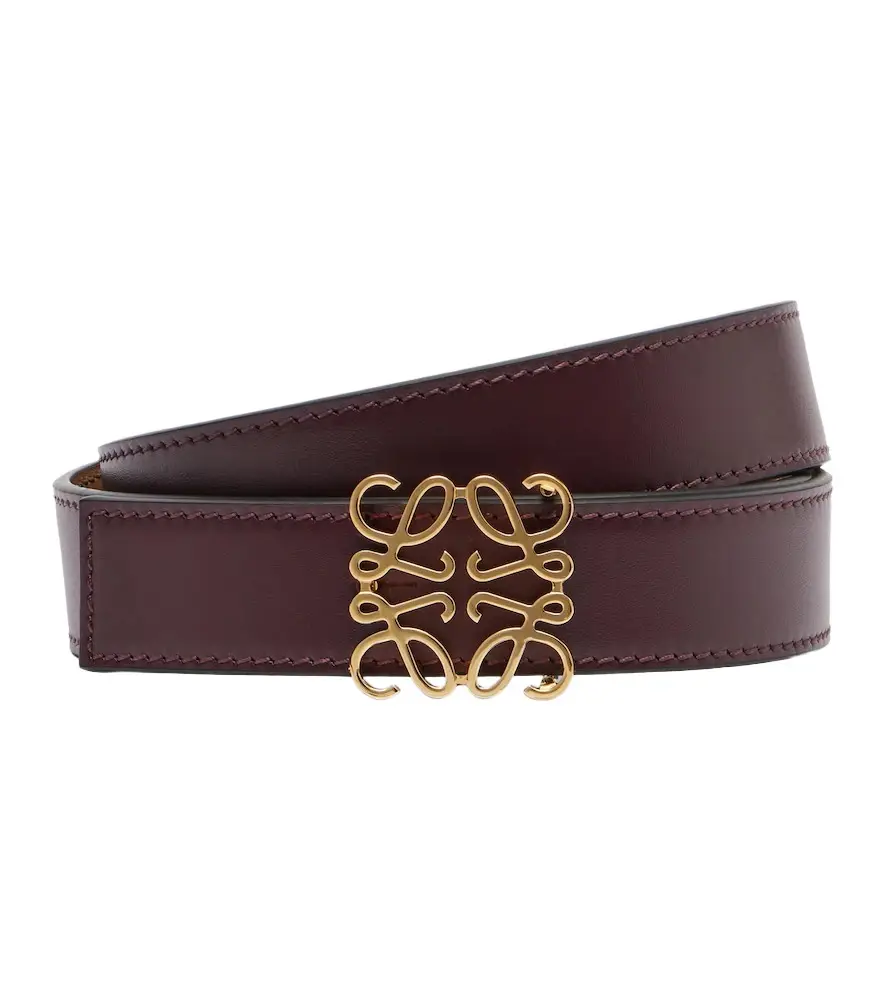
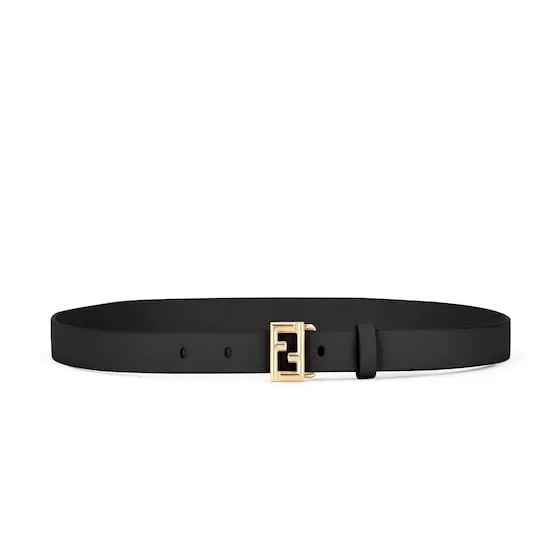
- Valentino's V, Loewe's Anagram, Fendi's FF, Tom Ford's T and Burberry's knight. Five more signatures worth knowing. Loewe's Anagram and Burberry's mounted knight are the most decorative; Tom Ford's T and Valentino's V are the most graphic.
Two buying tips. Many logo belts are reversible, black on one side and brown or tan on the other, so one buckle gives you two belts; check whether the listing says so. And wear one logo at a time: a logo belt with a logo bag and logo shoes reads as a costume. The easiest outfit for a logo buckle is a plain knit tucked into dark jeans or black trousers, where it acts as the one piece of jewelry.
The best logo belts

Braided, woven and suede belts
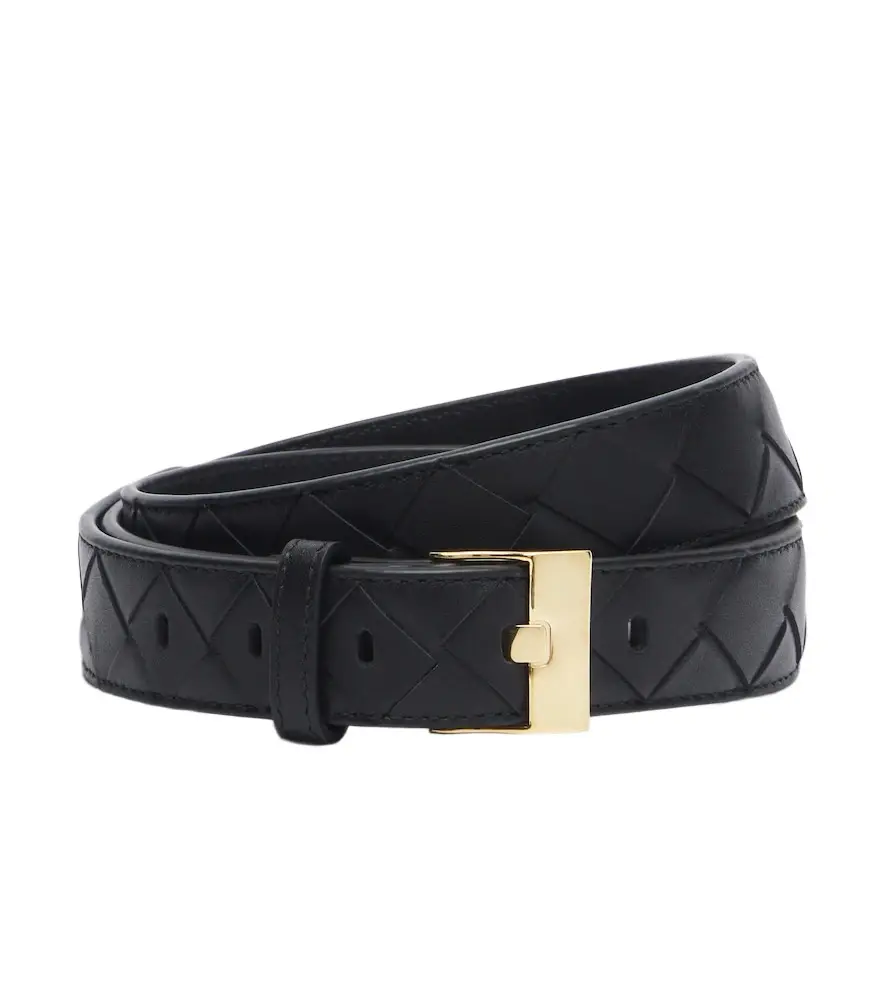
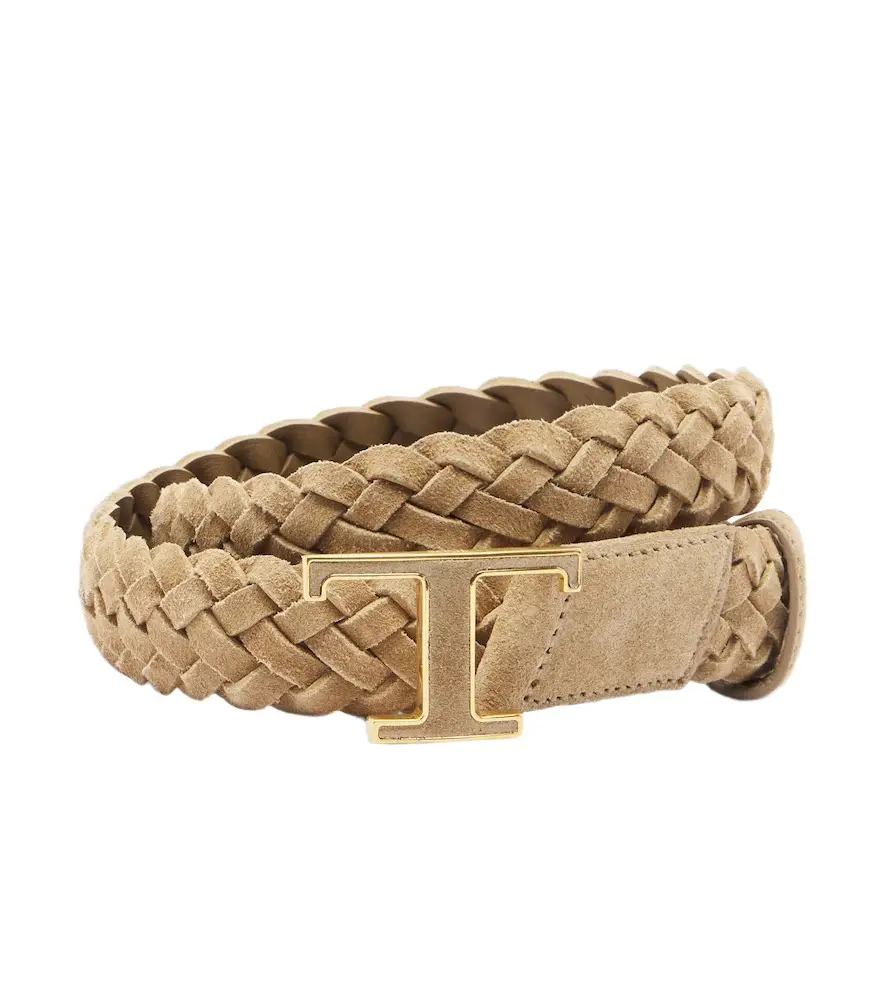
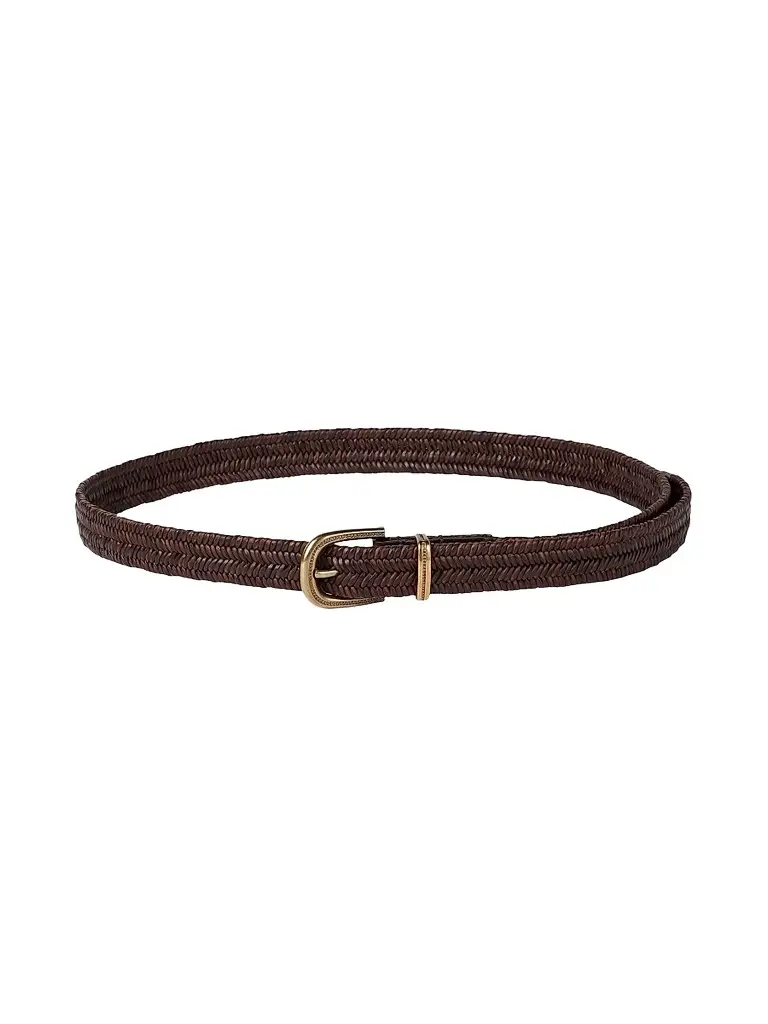
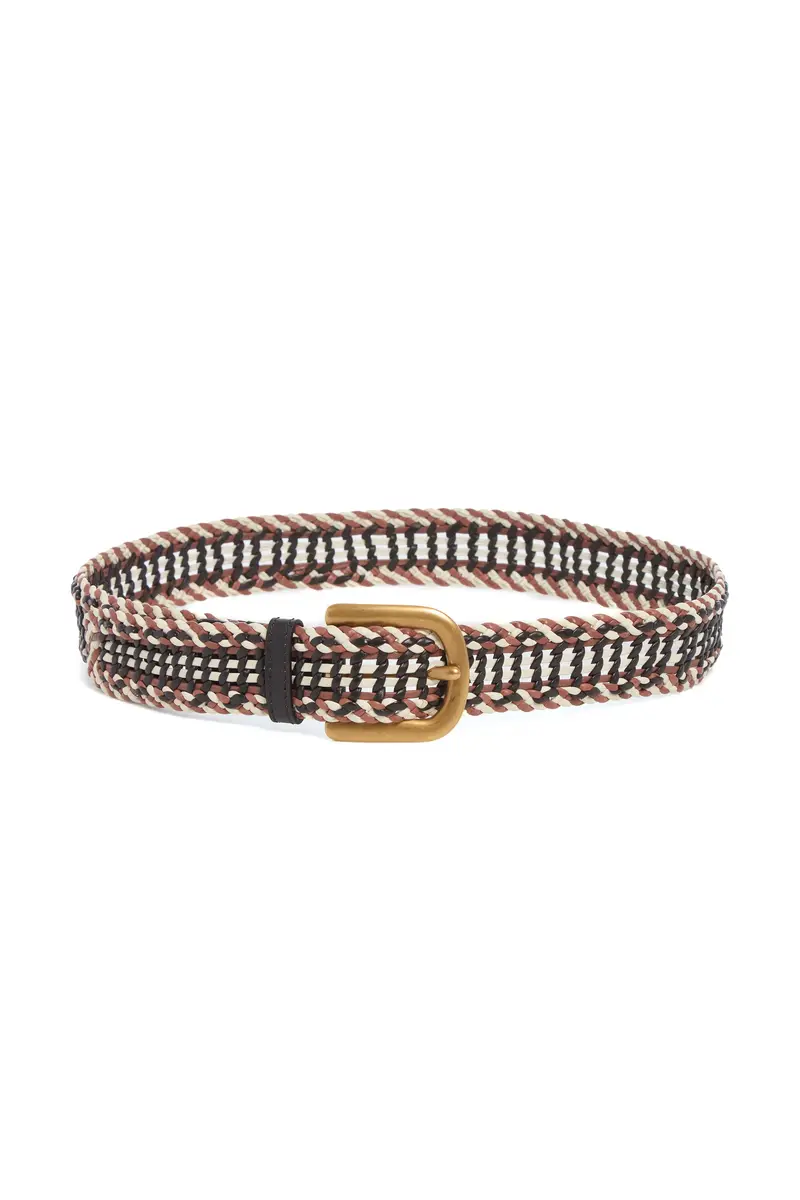
A braided or woven leather belt has no punched holes: the prong passes through the weave wherever you want it, so the fit is exact and the same belt can sit at the waist or on the hip. That makes it the most forgiving belt to buy online. Bottega Veneta's intrecciato weave and Brunello Cucinelli's braided belts are the refined end; a chunky braid in tan or cognac is the relaxed one.
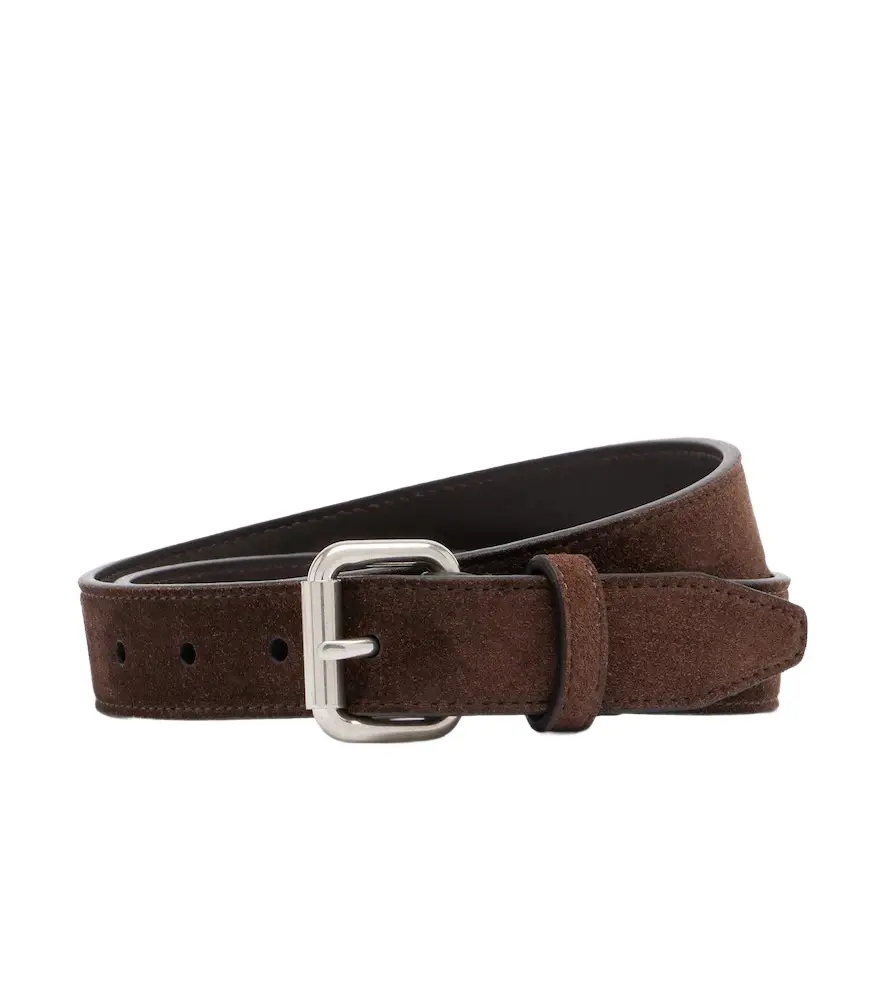
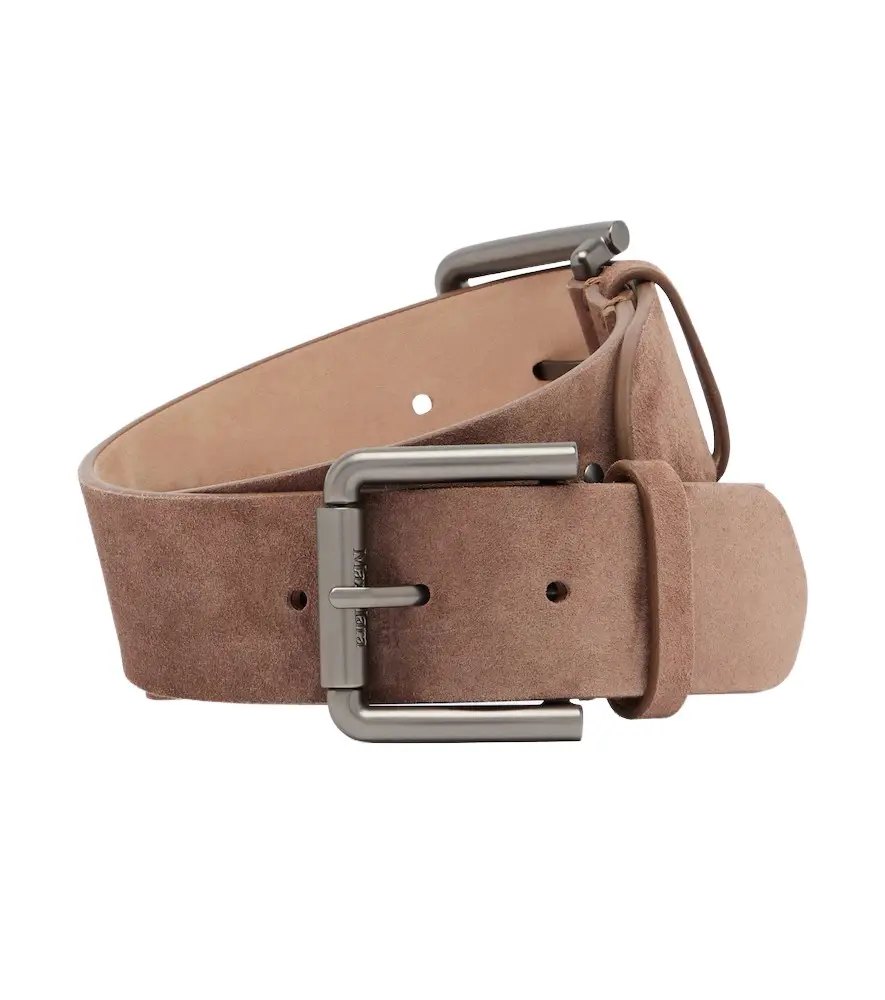
Suede reads softer and warmer than smooth calf, and it is the right texture with knitwear, corduroy, denim and suede boots. It marks in the rain, so brush it after wear and treat it with a suede protector before the first outing. Keep it for dry days and indoor dressing rather than a belt over a wet coat.
- Cream cable-knit sweater, straight blue jeans, a tan braided belt, brown suede boots.
- Denim shirt dress with a chocolate suede belt at the waist, knee-high boots in the same color.
- Olive corduroy trousers, a gray turtleneck, a woven black leather belt with a gold buckle.
The best braided, woven and suede belts

How to size a designer belt
Designer belt sizes confuse people because the number is a length, not a waist size. Here is how to get it right the first time.
- Read the number as centimeters. European houses size belts in centimeters, usually in 5 cm steps, and the number is measured to the middle hole. Berluti's belt size guide spells it out: measure the belt from the end of the buckle to its central notch. The same chart, written for the house's menswear, shows why the number runs larger than the waist it holds: it pairs a size 80 belt with a 28-inch trouser. As a conversion, Khaite's size guide lists a size 70 as 27.6 inches and a 90 as 35.5 inches.
- Measure a belt you already own. Lay it flat and measure from where the leather folds around the buckle to the hole you actually use. Round to the nearest 5 cm and that is your size in most houses.
- No belt to measure? Measure yourself where the belt will sit, over the clothes it will go over, and choose the size that puts that measurement at the middle hole, with holes to spare on either side.
- Size for position. A belt worn on the hip needs a larger size than one at the natural waist, and a belt over a coat needs a larger size again. If you want one belt for both, a braided belt adjusts anywhere.
- Between sizes, go up. A cobbler or leather repairer can punch an extra hole in minutes; nobody can add length.
Conventions vary by house: the same belt may be listed as a 70 or as 27.5 inches, and some houses use letter sizes, so check the size guide on the product page before you order. Once you own the belt, store it rolled loosely or hung from the buckle rather than folded, cream smooth leather when it starts to look dry, and brush suede after wear. Avoid living on the last hole: the strain there stretches the leather. If you are building an outfit around a particular coat or dress, ask our AI stylist to put the full look together, belt included.
Evening belts for the party season
From late November a belt becomes an evening accessory. A slim gold chain or a jeweled buckle does for a plain black dress what a statement necklace does for a neckline, and it is easier to wear with a high collar. Keep the metal consistent with your earrings, and let the belt be the only shine if the dress is velvet or crepe.
- A black velvet midi dress with a slim gold chain belt at the waist and gold earrings.
- A white shirt, a black satin maxi skirt and a red bow belt at the waist: one of the easiest festive outfits to put together.
- A tuxedo blazer worn as a dress, closed with a crystal-buckle belt, with sheer black tights.
For full outfits by party type, see our holiday party outfit guide.
The best evening belts: chain, crystal and bow
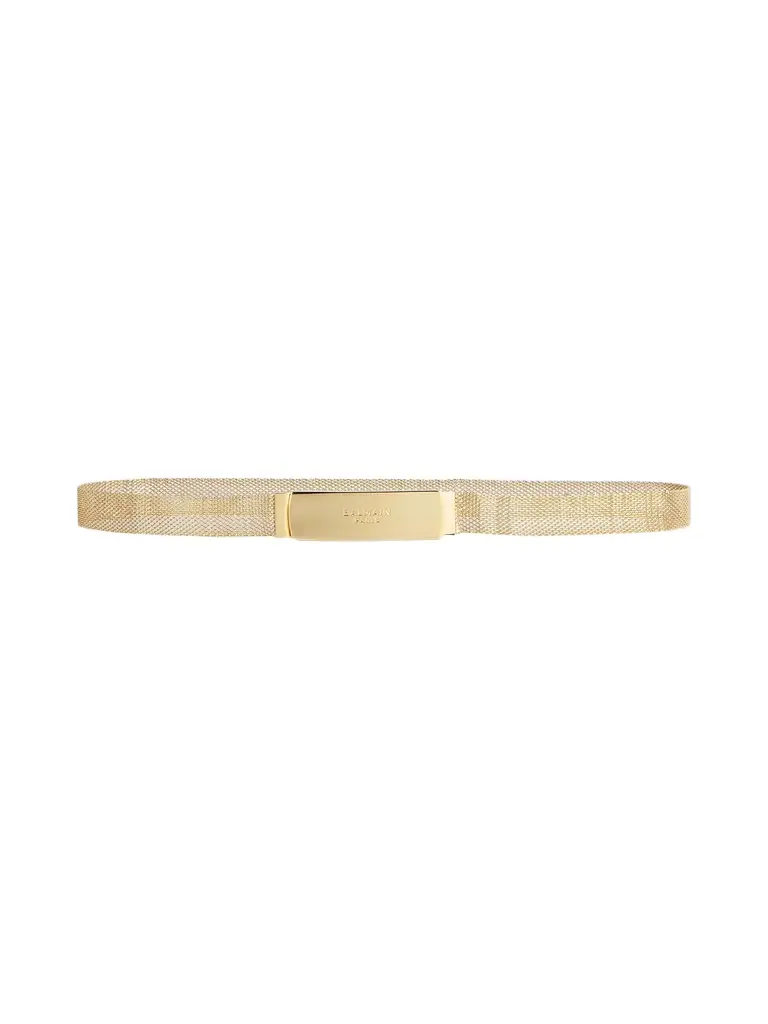 Balmainbraided brass belt$1,195
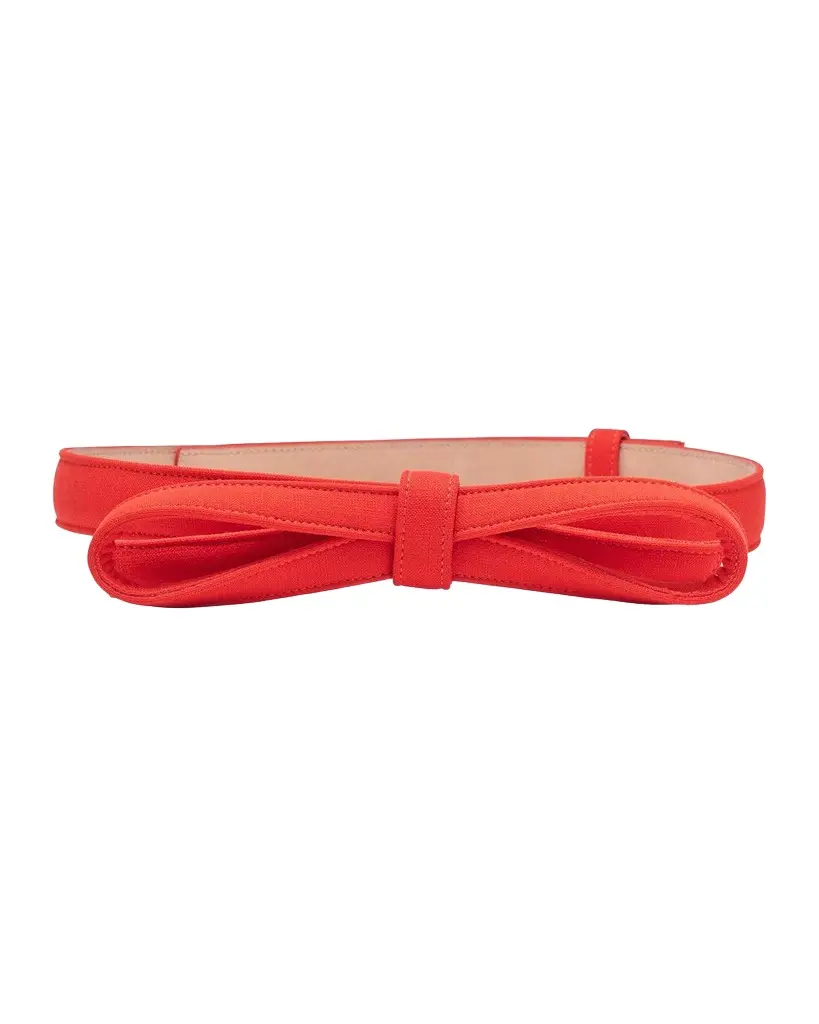 Carolina HerreraBow Belt$690
 Manolo BlahnikHangisi embellished satin belt$835
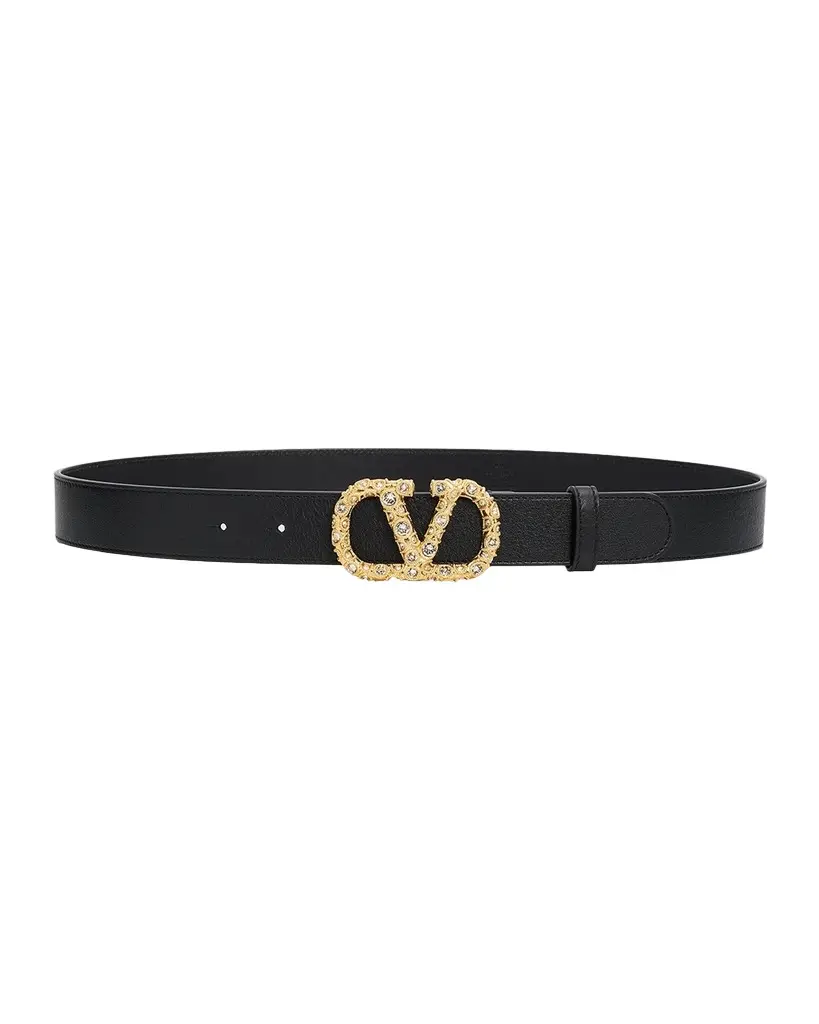 Valentino GaravaniVLogo Signature Belt In Shiny Calfskin with Crystals$890
 Dolce & GabbanaEmbellished Pearly Interlocking DG Leather Belt$725
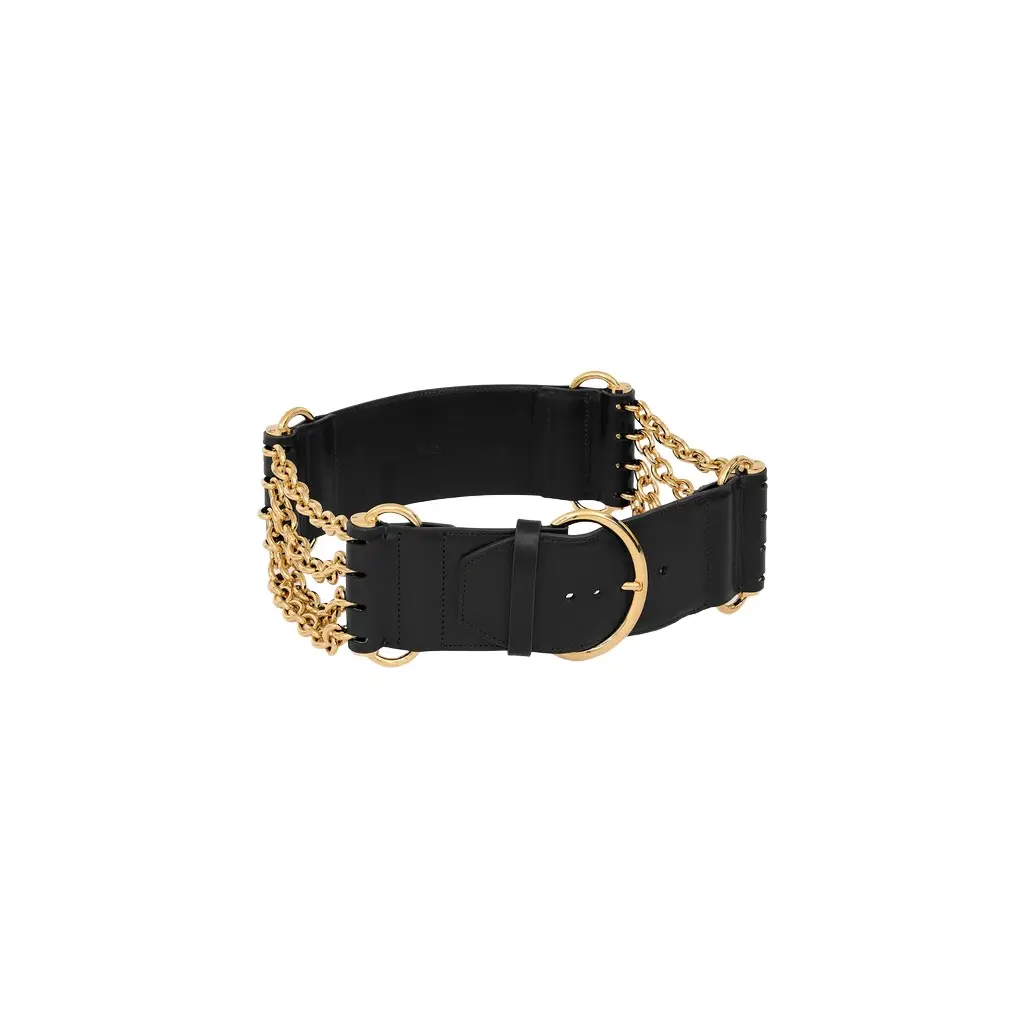 ChloéThe Chloé Camera Chain belt$1,750
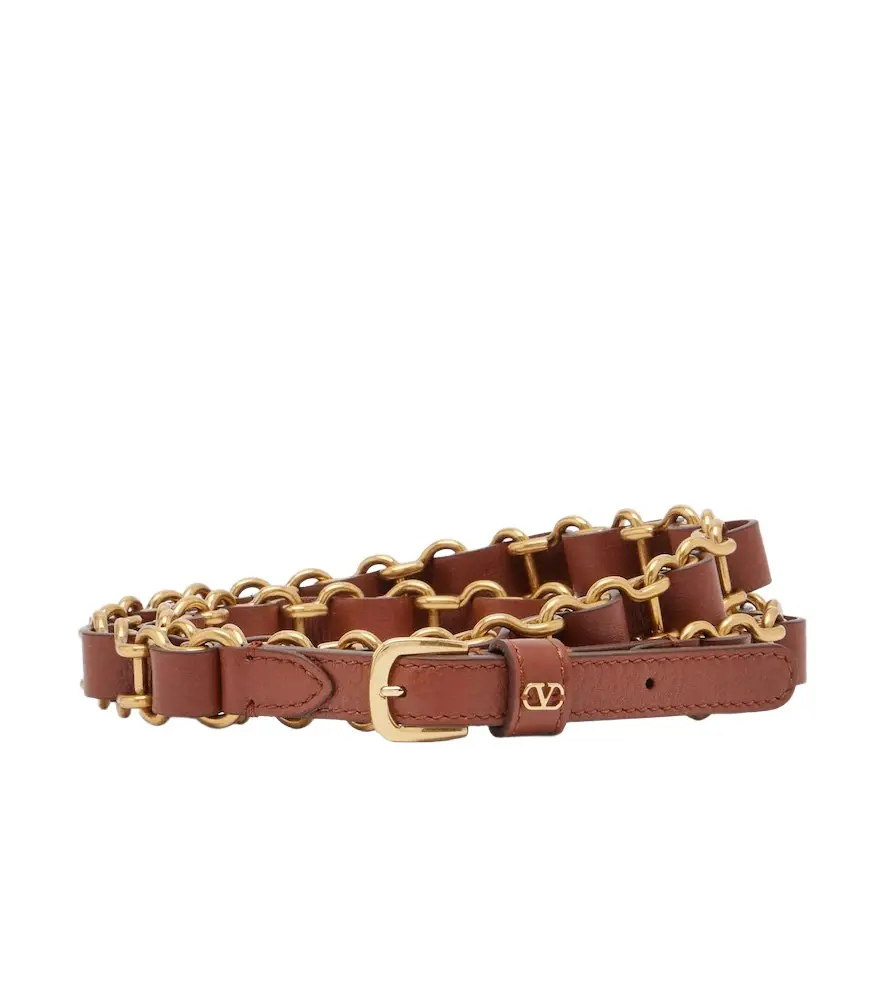 Valentino GaravaniVLogo chain and leather belt$1,290
How we chose
Every belt in this edit of luxury belts for women comes from a house on Vêtir's luxury list, was in stock in at least three sizes when we checked, and was chosen for a specific use: coats, trousers, logo dressing, texture or evening. We checked each listing for the width, buckle and color it describes, favored full leather and suede over coated canvas, and spread the edit across houses and price points, from plain leather belts to sculpted corset belts. For everything else, browse all designer belts on Vêtir.
Frequently asked questions
What is the most versatile belt width?
About 2.5 to 3 cm (1 to 1¼ in), in plain black or dark brown leather with a small buckle. It fits the loops of most trousers and jeans and still looks right at the waist of a dress or knit.
Are logo belts still in style?
Yes, when the logo is the only one in the outfit. A small, flat buckle works with tailoring; a large plaque works with plain knits and denim. Choose the metal to match your jewelry.
How do I find my belt size in centimeters?
Measure a belt you own from the fold at the buckle to the hole you use, then round to the nearest 5 cm. Designer belt sizes are lengths to the middle hole, not waist measurements, and because the belt goes around your clothes as well as you, the right size is usually larger than your trouser size.
Should my belt match my shoes and bag?
Match the color family rather than the exact shade: brown with brown, black with black. Be stricter with metal. The buckle, bag hardware and jewelry read as one, so keep them all gold or all silver.
How do you wear a belt over a coat without looking bulky?
Belt at the natural waist, use a belt at least 4 cm wide, button the coat first, and on a double-breasted coat set the belt between two rows of buttons. Buy a size larger than your usual belt so it closes comfortably over the coat.
How much does a designer belt cost?
Expect to pay several hundred dollars for a plain leather or logo belt from a major house. Sculpted corset belts, chain belts and jeweled buckles often cost more than $1,000.