Fendi, Explained: The Baguette, the Peekaboo, the FF and What to Buy First
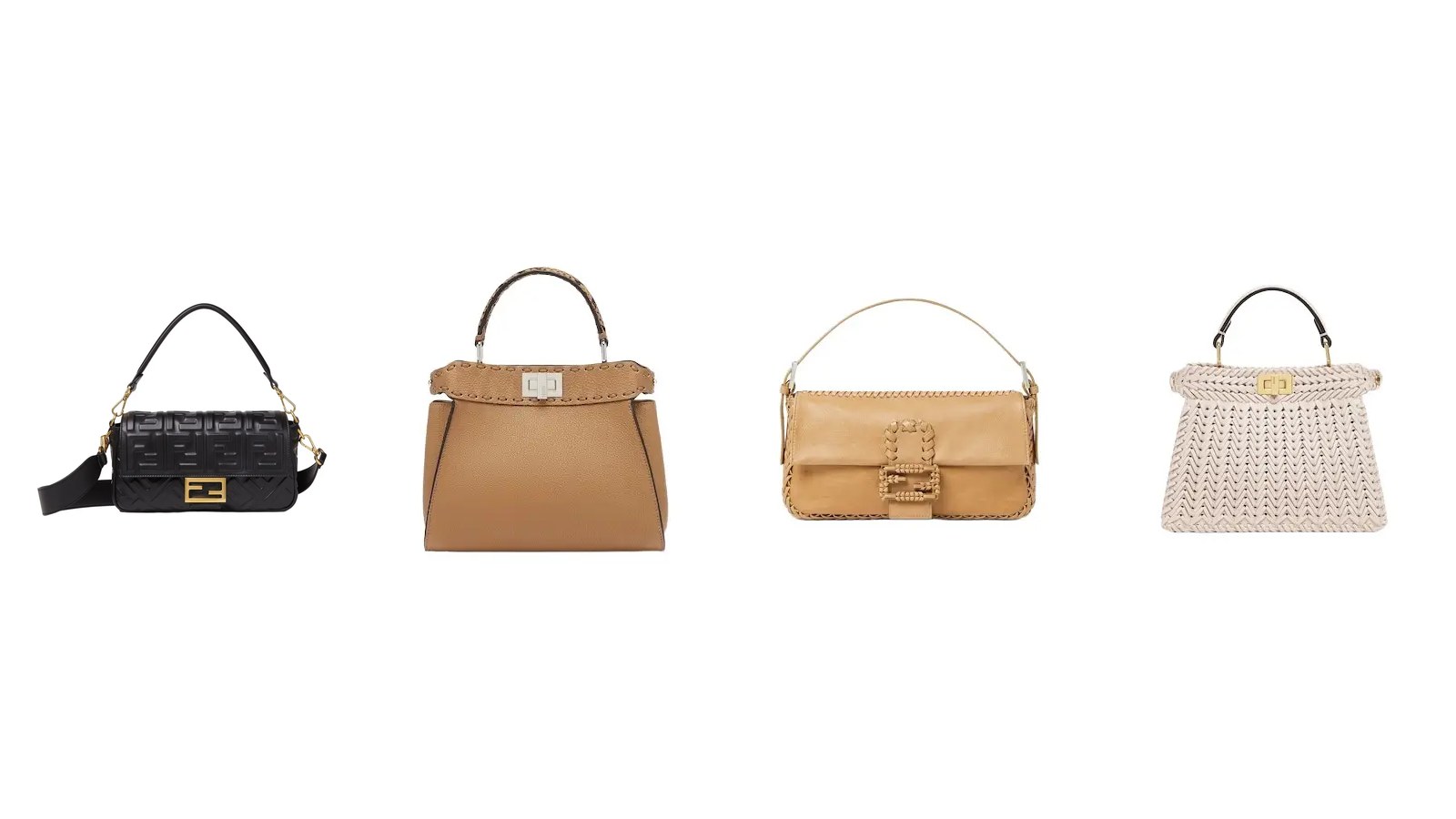
Fendi is the Roman house that Adele and Edoardo Fendi opened in 1925 as a fur and leather workshop, and it is now best known for two bags designed by their granddaughter, Silvia Venturini Fendi: the Baguette (1997), a small flap bag worn under the arm, and the Peekaboo (2009), a structured top-handle bag that opens at the front. If you are buying your first Fendi, choose between those two. The Baguette is the more playful bag, and the one Fendi keeps reinventing; the Peekaboo is the more formal one, and the bag that shows off the house's hand stitching best. Below, our editors cover where Fendi came from and who designs it now, how the two bags differ and which size to buy, what the FF logo means, and what to buy once you have the bag.
Fendi at a glance
| Founded | 1925, in Rome, by Adele Casagrande and Edoardo Fendi, as a fur and leather workshop on Via del Plebiscito |
|---|---|
| Designed by | Maria Grazia Chiuri, chief creative officer since October 2025; Silvia Venturini Fendi is honorary president |
| Owned by | LVMH, which acquired Fendi in 2000 and became its majority shareholder in 2001 |
| Offices | The Palazzo della Civiltà Italiana in Rome, since 2015, with the fur atelier inside |
| Signature bags | The Baguette (1997) and the Peekaboo (2009) |
| Signature codes | The FF logo, Selleria hand stitching, fur |
| Made in | Italy, for every piece we selected, according to Fendi's own descriptions |
A short history of Fendi: five sisters, Karl Lagerfeld and Maria Grazia Chiuri
The house began in 1925, when Adele Casagrande and Edoardo Fendi opened a fur and leather goods workshop on Via del Plebiscito in Rome, according to Fendi. Their five daughters, Paola, Anna, Franca, Carla and Alda, joined the business in 1946, The Week reported, and it was under the sisters that Fendi's designs arrived in North America. In 1965 they hired the house's first artistic director, Karl Lagerfeld, who in his first year gave Fendi a new logo, the FF, for "Fun Fur." He turned fur from heavy, natural-toned coats into light pieces in color and bold patterns, the house added ready-to-wear in 1977, and his partnership with Fendi lasted 54 years, until his death in 2019.
The next generation came into the studio. Anna's daughter, Silvia Venturini Fendi, joined Lagerfeld in the artistic direction in 1992, took charge of accessories in 1994 and later of menswear, as Fendi's own history records, and she designed both of the house's signature bags. LVMH acquired Fendi in 2000 and became its majority shareholder the following year. In 2015 the house moved its offices into the Palazzo della Civiltà Italiana, which it calls one of the most emblematic buildings in Rome, and it keeps its fur atelier there. Kim Jones was artistic director of couture and womenswear from 2020 to 2024, and in 2020 Delfina Delettrez Fendi, the fourth generation, became artistic director of jewelry.
The current chapter opened on October 14, 2025, when Fendi named Maria Grazia Chiuri its chief creative officer, FashionNetwork reported. It was a return: Chiuri began her career at Fendi in 1989 and worked on the Baguette as part of Silvia Venturini Fendi's accessories team, before moving on to Valentino and then Dior, which she left in the spring of 2025. Venturini Fendi, who had led the creative direction since Jones left, was named honorary president. Chiuri's first Fendi collection, for fall 2026, was shown in Milan in February 2026 and put the Baguette at its center; W Magazine listed versions in beading, paillettes, embroidery, animal prints, crackled leather and saddle stitching.
The Fendi Baguette: the bag you carry under your arm
The Baguette is a small, rectangular flap bag on a short handle, shaped to sit under the arm the way a French loaf is carried, which is where the name comes from. Fendi dates it to 1997, credits it to Silvia Venturini Fendi and says it was the first bag ever to have a waiting list. Whatever it is made of, it keeps one defining detail: a front flap closed with the FF buckle. The house has remade it constantly since, in sequins, beading, denim, jacquard, raffia and printed leathers, so a Baguette can be as plain or as decorated as you like, and some versions are re-releases of archive designs.
Baguette sizes, in words
The classic Baguette is made in mini, small and medium, and Fendi presents the medium as the 1997 original. According to Fendi's descriptions, the medium takes a 6.7-inch smartphone, a large wallet or a sunglasses case, and small things such as keys and headphones; the small and the mini take the same phone with a card holder or compact wallet, keys and a lipstick. There is also a softer, deconstructed Baguette, with a drawstring under the flap, in small, medium and large. Almost every Baguette we looked at comes with both a detachable handle and a detachable shoulder strap, so one bag can be worn under the arm, on the shoulder or crossbody.
- For a first Baguette, choose the medium in black or brown leather, or in the brown FF jacquard if you want the pattern to show.
- Carry it the original way, tucked under the arm on its short handle, with a slim sweater and wide trousers, so the bag sits against the waist rather than swinging at the hip.
- With a heavy coat, clip on the long strap and wear the bag over the coat, where it will not be squeezed under a padded shoulder.
- Treat a beaded or sequinned Baguette as jewelry: with a plain black dress it is the only accessory you need.
The Baguette, from plain leather to sequins
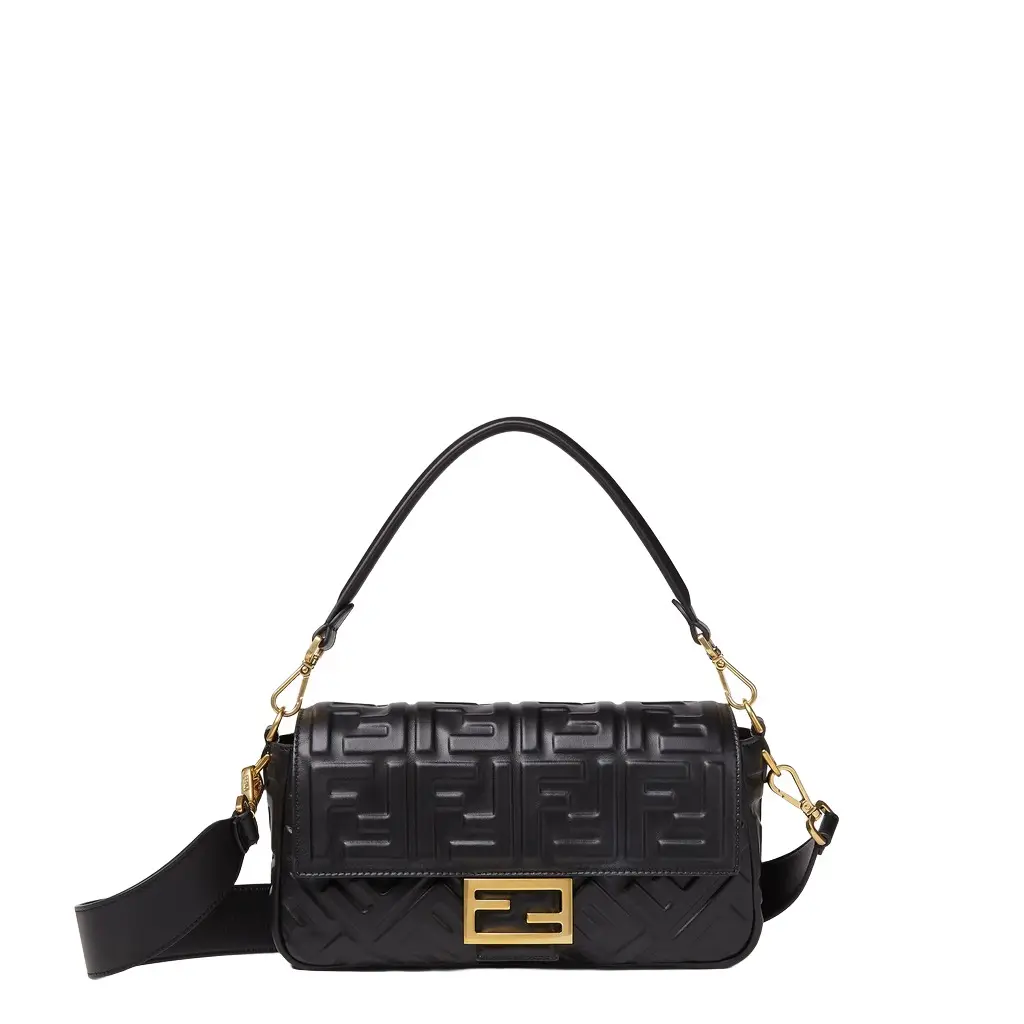 FendiBaguette Leather Bag$3,850
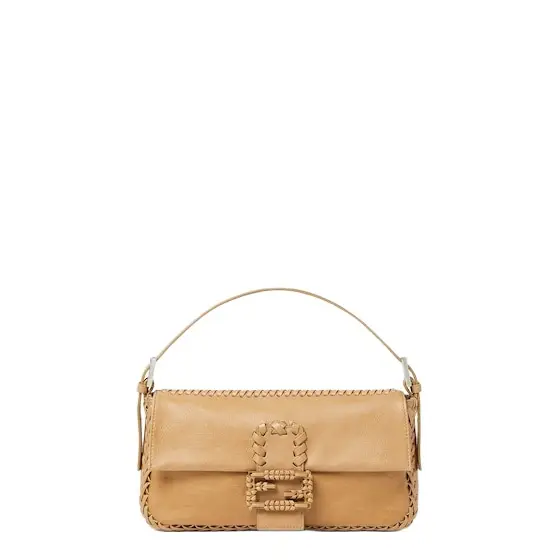 FendiBaguette 26424 Honey Leather Bag$4,100
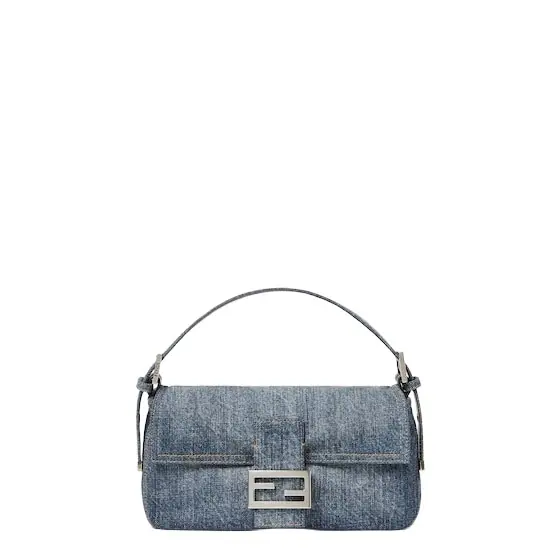 FendiBaguette 26424 Denim Bag$3,100
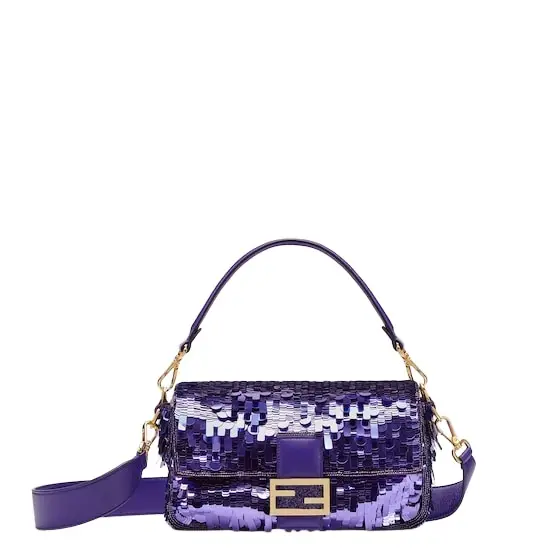 FendiBaguette Sequined Bag$5,900
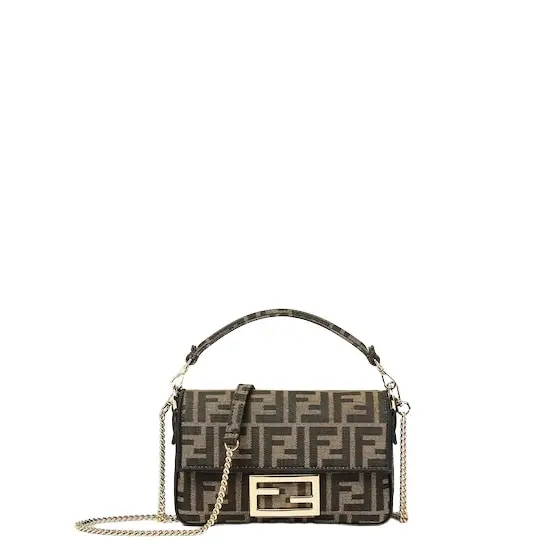 FendiBaguette Mini FF Jacquard Fabric Bag$2,500
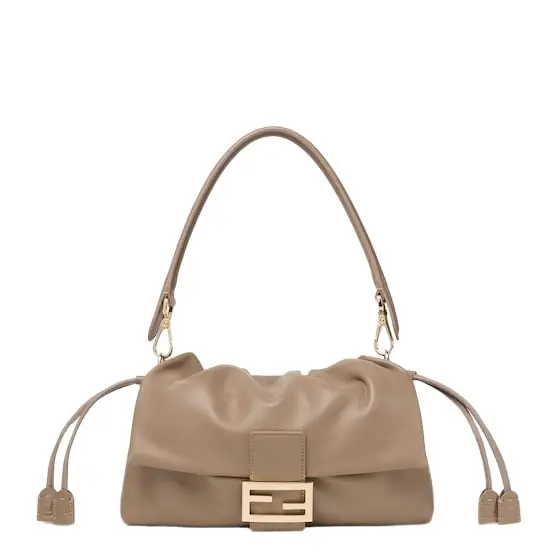 FendiBaguette Soft Medium Nappa Leather Bag$3,700
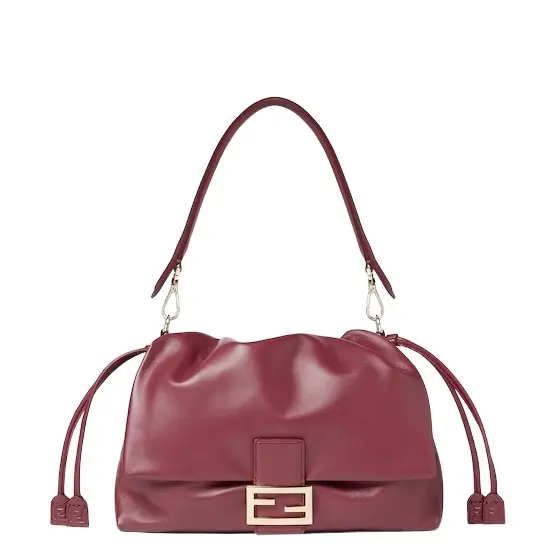 FendiBaguette Soft Large Nappa Leather Bag$4,300
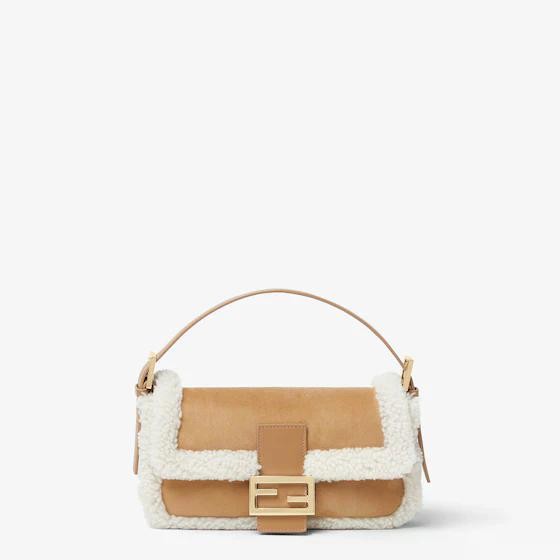 FendiBaguette 26424 Shearling Bag$3,900
To compare other shapes, browse our designer shoulder bags or read our guide to the best crossbody bags.
The Fendi Peekaboo: the bag that opens at the front
Fendi introduced the Peekaboo at its spring 2009 show in Milan, The Week reported, and the models Lara Stone and Anja Rubik carried it in monochrome finishes including black patent leather. Fendi's own descriptions date the bag to 2009; spring collections are shown the autumn before, which is why some accounts give 2008. The Week read it as a return to minimalism after the heavily decorated Baguette, and quoted Silvia Venturini Fendi saying the bag was born from her desire "to go back to a subtler luxury." The name describes the construction. A stiff partition divides the bag into two halves, with a twist lock on each side, and when the front is left unfastened it folds down to reveal that partition, which Fendi often uses as a canvas for decoration. The classic version has a top handle and a detachable shoulder strap.
Peekaboo sizes, in words
As a matter of history: when The Week wrote about the bag in 2018, the regular Peekaboo was 33 centimeters (13 inches) long, and the range had grown to include a large of 40 centimeters (about 15.7 inches), a mini of 23 centimeters (about 9 inches) and a micro of 16 centimeters (about 6.3 inches). Today's listings use different names, among them small, petite and extra-small, so treat those 2018 names as history rather than a buying guide. The size to start with today is the small: Fendi's descriptions say it holds a 6.7-inch smartphone, a large wallet, a sunglasses case and small things such as keys and headphones. Smaller sizes, down to petite and extra-small, suit evenings and wearing on the strap. There are also softer, lighter Peekaboos and a tote that keeps the twist lock and adds a long double handle.
- For a first Peekaboo, choose the small in plain grained leather in black, brown or gray; it looks right with a camel coat and tailored trousers.
- If you want to see the handwork, look for the Selleria versions, where large topstitches sewn by hand run around the edges of the bag.
- Carry it by the handle with tailoring, and switch to the strap on weekends, crossbody over a sweater and jeans.
The Peekaboo in small, petite and extra-small
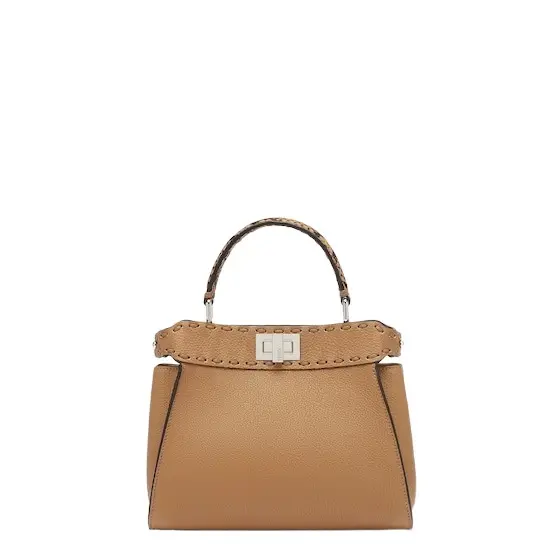 FendiPeekaboo Mini Selleria Bag with 220 Hand-Sewn Stitches$5,900
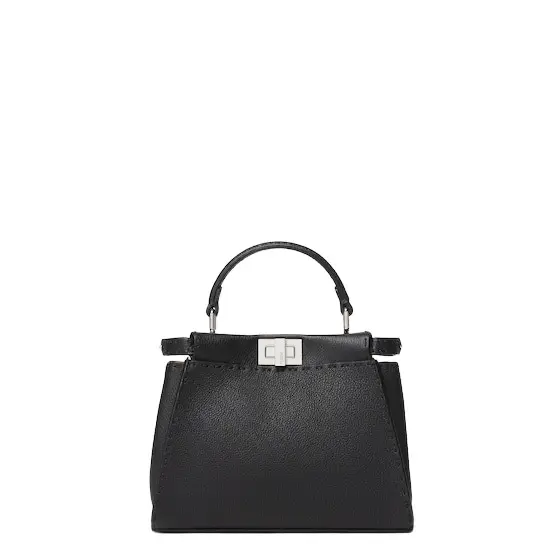 FendiPeekaboo Mini Selleria Bag with 1048 Hand-Sewn Topstitches$5,900
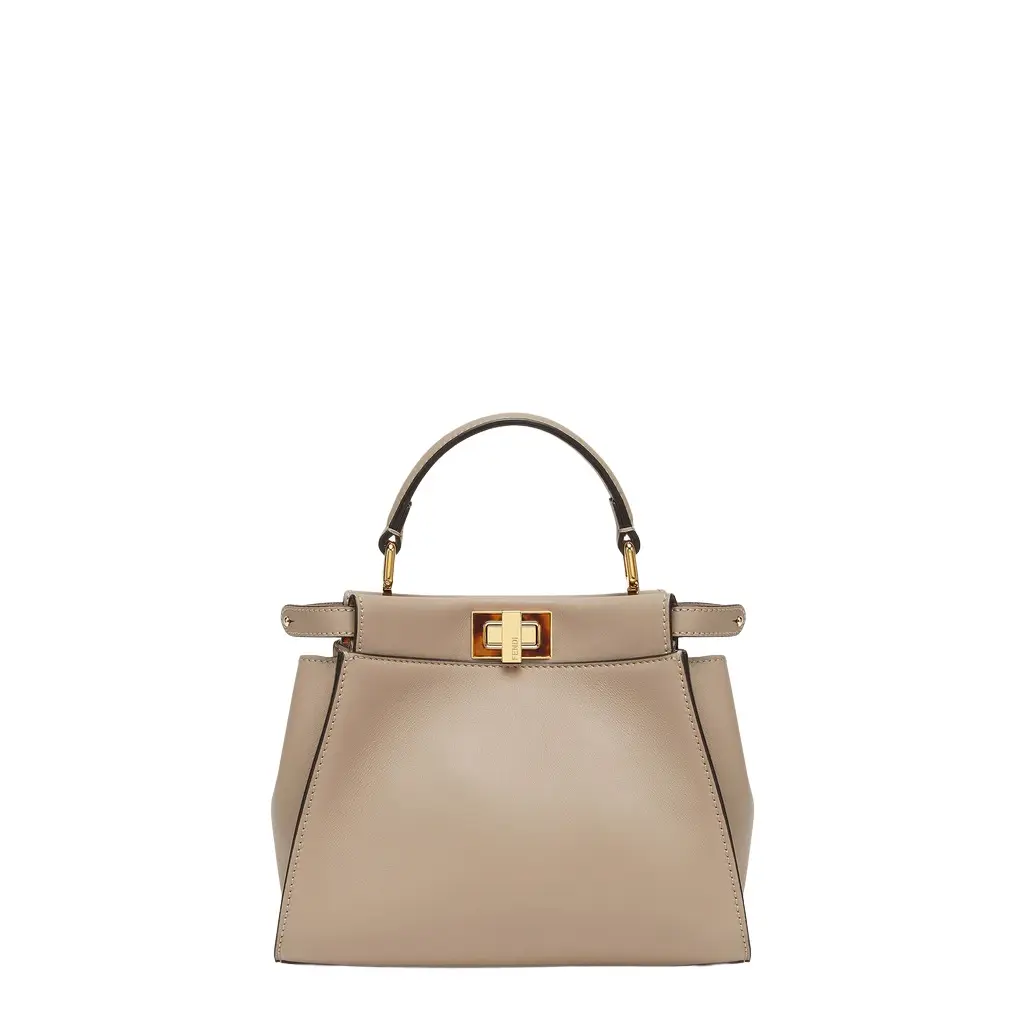 FendiPeekaboo Mini Leather Bag$5,450
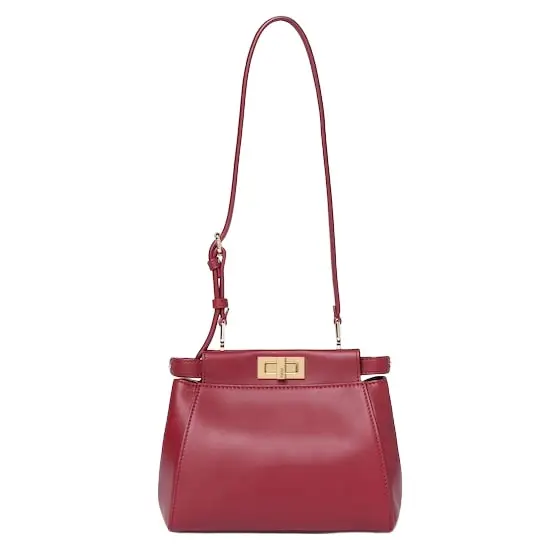 FendiMy Peekaboo XS Leather Bag$4,300
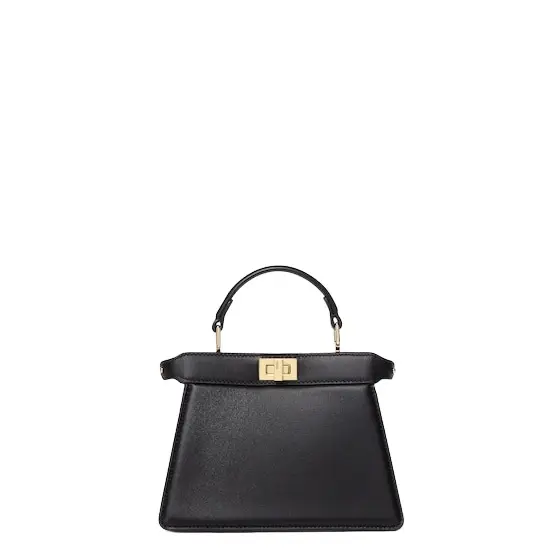 FendiPeekaboo ISeeU Petite Padded Nappa Leather Bag$4,700
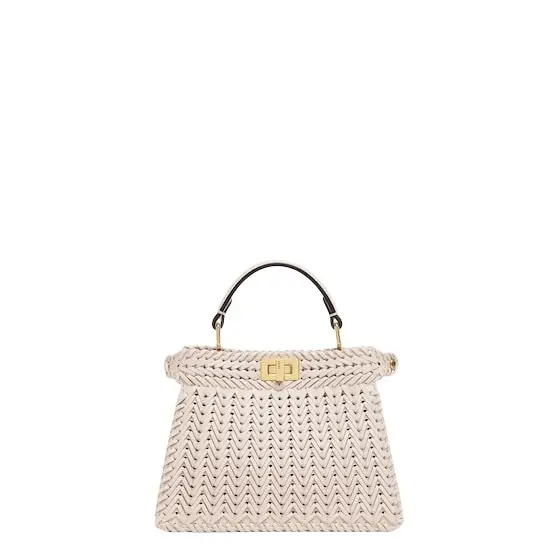 FendiPeekaboo ISeeU Petite Camellia Interlace Leather Bag$5,300
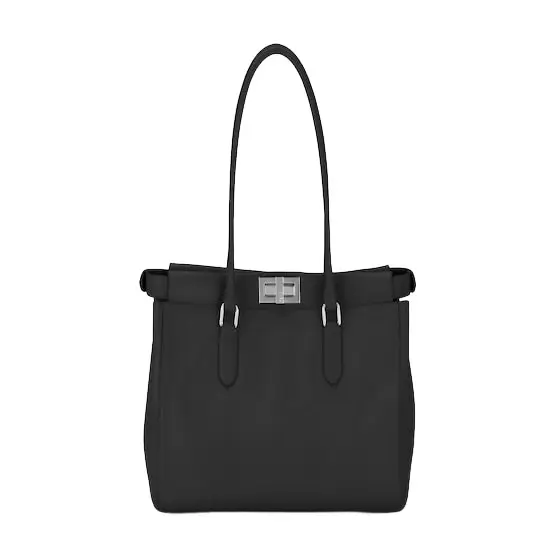 FendiPeekaboo Tote Small Leather Bag$3,750
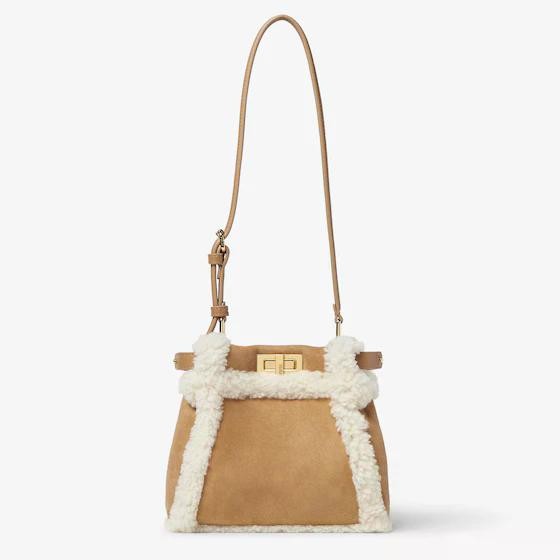 FendiMy Peekaboo XS Shearling Bag$5,100
For more structured shapes, browse our designer top-handle bags.
Baguette or Peekaboo: which Fendi bag to buy first
| If you want | Choose | Why |
|---|---|---|
| One bag from day to evening | A medium Baguette | It takes a phone plus a large wallet or a sunglasses case, and its handle and strap both detach |
| A structured bag to carry by hand | A small Peekaboo | A top handle, a twist lock on each side and a stiff partition that splits the inside in two |
| The most recognizable Fendi | A Baguette in FF jacquard | The house pattern and the FF buckle on one small bag |
| Handwork you can see | A Selleria Peekaboo | Large topstitches sewn by hand on naturally grained Cuoio Romano calfskin |
| Something small and hands-free | A mini Baguette, or a petite Peekaboo on its strap | Fendi says the mini takes a 6.7-inch phone, a card holder, keys and a lipstick; both can be worn crossbody |
The FF logo, Selleria and Fendi's other codes
- The FF. Karl Lagerfeld drew the double F in 1965, his first year at the house, as a new logo and mantra: "Fun Fur," according to Fendi's account of its fur atelier. As a repeating pattern, which Fendi calls Zucca, the FF is woven into brown jacquard, embossed into leather and used for linings; as a buckle, usually in metal but sometimes in leather, it closes every Baguette.
- Selleria. The name comes from the Italian for saddle, and Fendi traces the technique to its first workshop in 1925. It means large topstitches sewn by hand, usually on Cuoio Romano, a calfskin with a natural grain that Fendi says is tanned without metals. Fendi's descriptions count the stitches on each piece, and Selleria pieces carry a silver Selleria plaque.
- The twist lock and the buckle. The Peekaboo's twist lock and the Baguette's FF buckle identify each bag at a glance, even in plain black leather.
- The Cuneo. In Italian, cuneo means "wedge". Fendi uses it as the name of a small detail on some of its shoes, including knee boots and loafers, and says the design is inspired by the punctuation marks on ancient Roman columns.
- Fur. Fur and leather were the house's first trades. Fendi still runs a fur atelier inside its Rome headquarters, and for her first collection Chiuri proposed upcycled furs, collaging existing coats with master tailors, W Magazine reported.
How to wear the logo: one FF piece per outfit, set against plain textures. A jacquard bag with a camel coat and a cream sweater looks deliberate; the same bag with a logo scarf is one logo too many. If you would rather not show a pattern at all, choose a Peekaboo in plain leather, where the twist lock is what people recognize.
Other Fendi bags: hobos, shoulder bags and the shopping bag
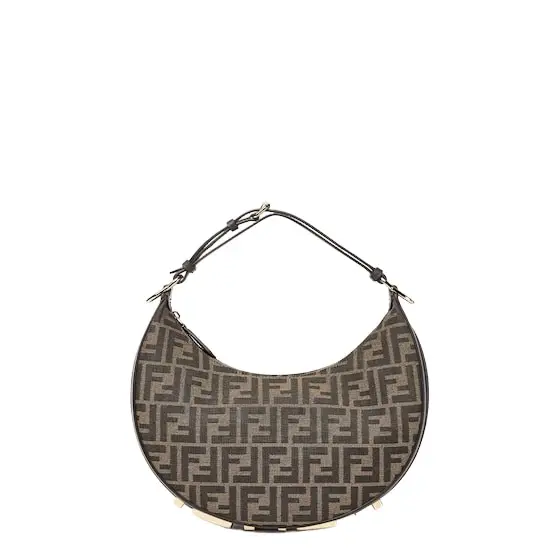
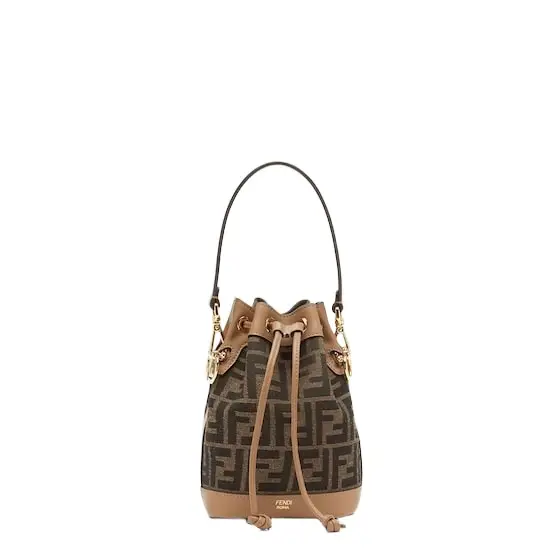
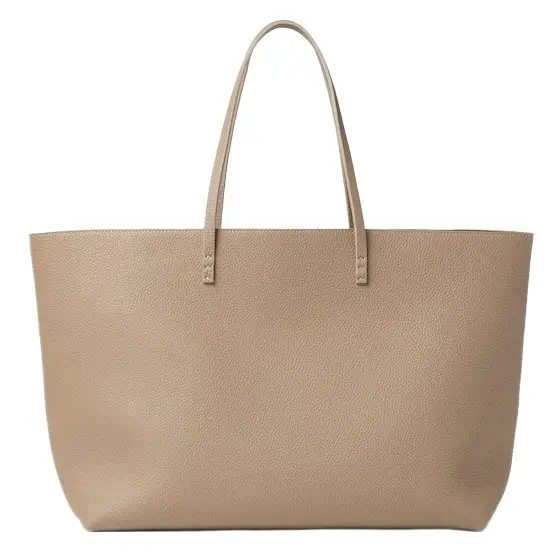
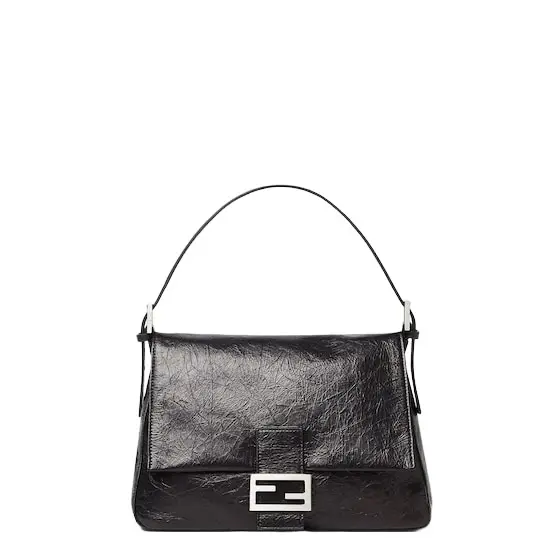
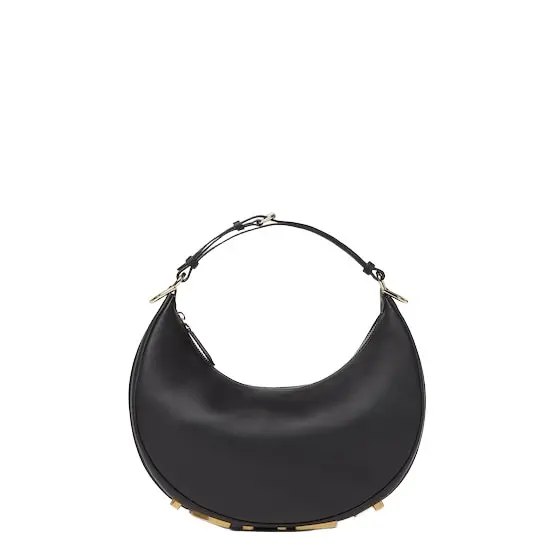
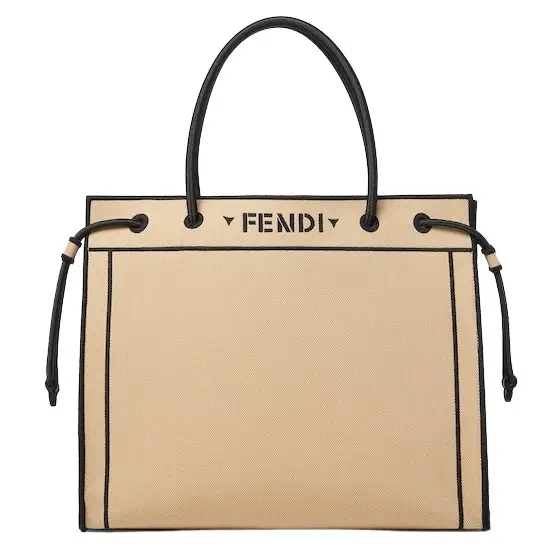
Beyond the two signature bags, Fendi's everyday bags are softer and simpler. Its hobos are cut to be worn under the arm, like the Baguette, and some carry FENDI lettering on the base, which shows only when the bag is worn that way. There are bucket bags in the FF jacquard, soft shoulder bags that revisit the house's 1990s shapes, and a leather shopping bag that Fendi says it created in 1997 as the Baguette's companion, the practical choice for work. For the most visible Fendi, choose one of these in the brown jacquard; for the quietest, choose black or taupe leather.
Fendi hobos, shoulder bags and shoppers
Fendi wallets and small leather goods
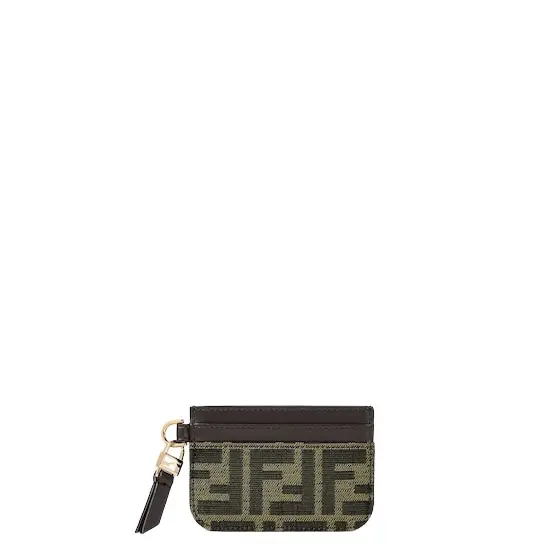
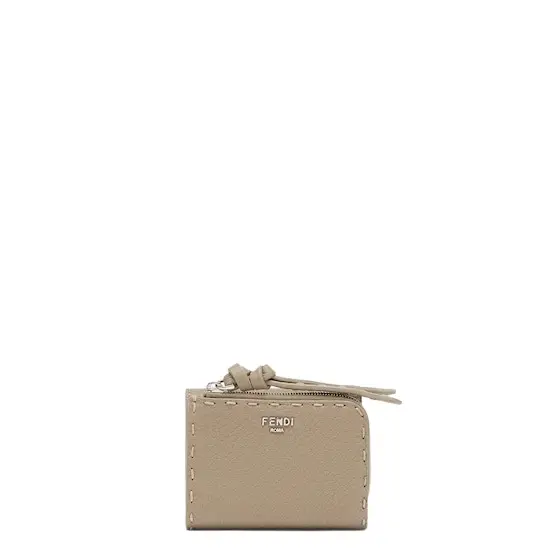
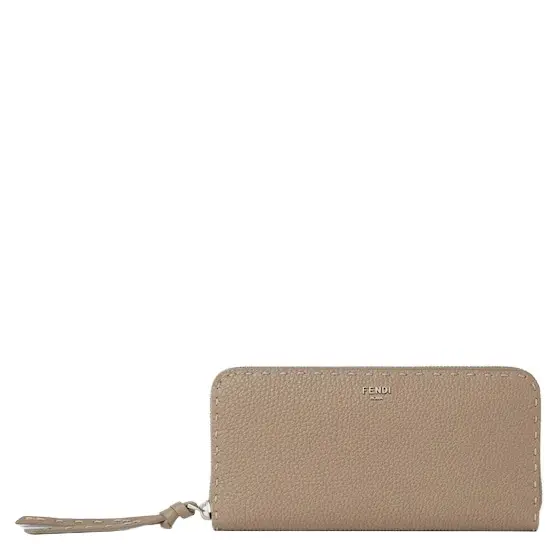
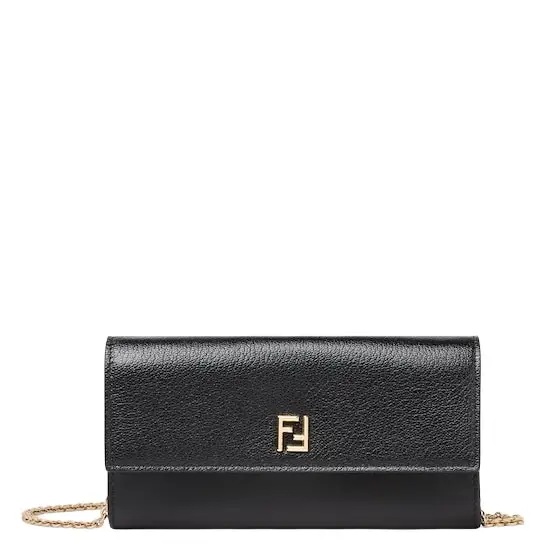
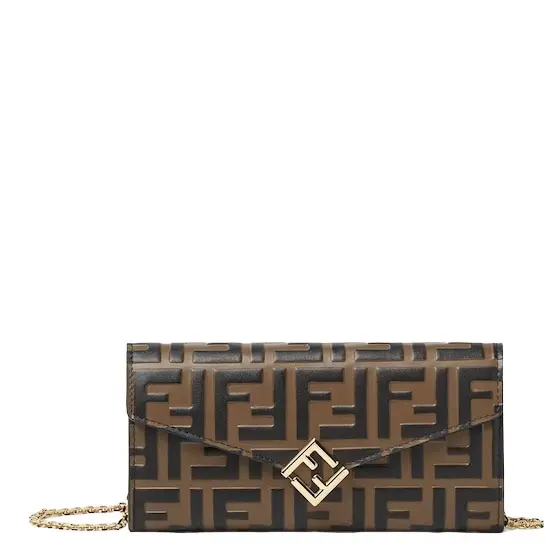
A card case or a wallet on a chain costs a fraction of a bag, and it is a sensible way to find out whether you like living with the FF, or with Selleria stitching, before spending more. Fendi makes card cases and wallets in the brown FF jacquard, Peekaboo wallets in Cuoio Romano with hand-sewn topstitches, and flap wallets on a detachable chain that work as evening bags. Choose a wallet on a chain for dinners when a bag feels like too much; an FF jacquard card case is an easy present for someone who already owns a Baguette.
Fendi wallets, card cases and chain wallets
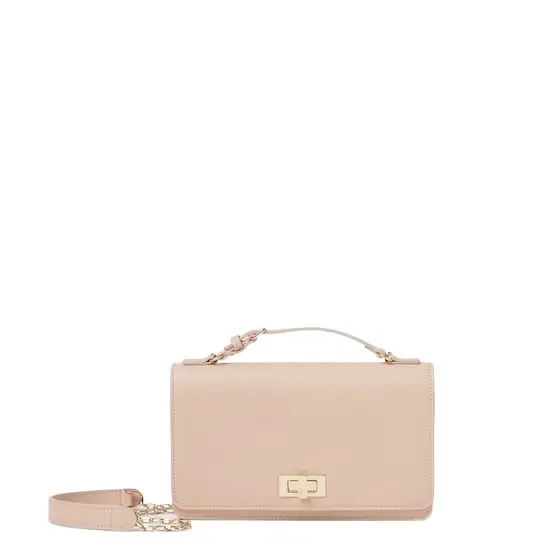
See more designer wallets and cardholders.
Fendi shoes: slingbacks, riding boots and flats
Fendi's shoes follow the logic of its bags: a clean shape and one detail you can recognize. Recent collections have leaned on slingbacks with slim heels and narrow straps, equestrian knee boots, square-toe loafers and ballet flats. Fendi sizes its shoes on the European scale; the pairs we chose run from 35 to 42, and several come in half sizes. Check each listing's size chart against a pair you already wear, and before ordering knee boots, measure the widest part of your calf.
- Slingbacks with a midi skirt and a fine-gauge sweater, for the office or dinner.
- Knee boots under a long coat, with a Baguette tucked under the arm.
- Ballet flats with straight jeans and a trench, for a day of walking.
Fendi slingbacks, boots and flats
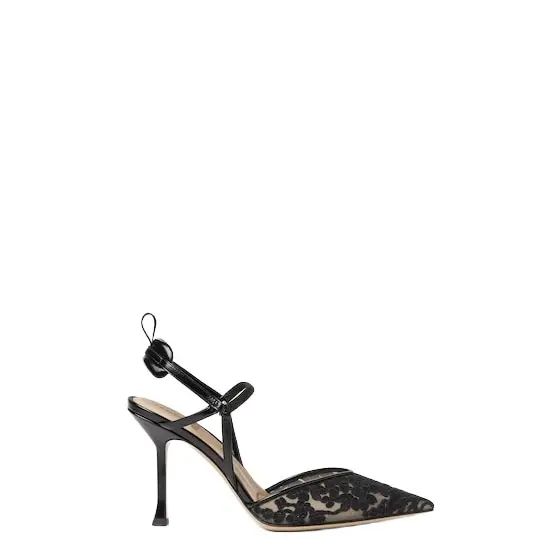
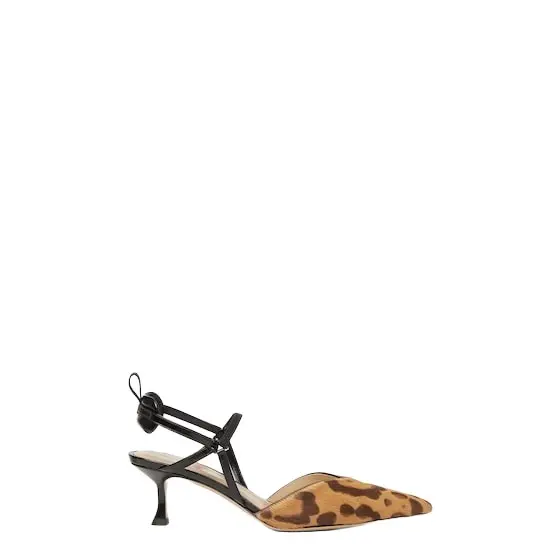
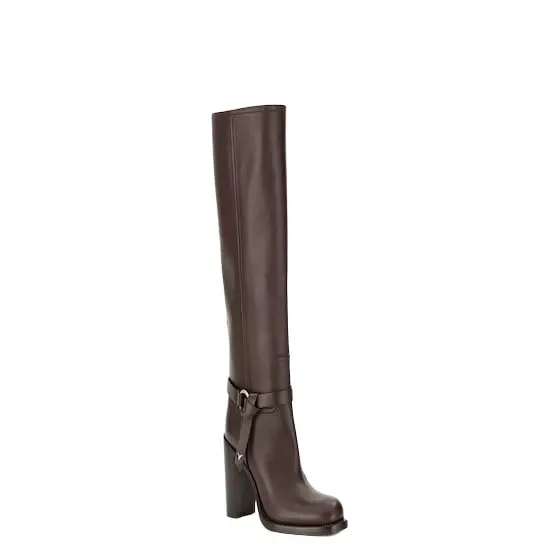
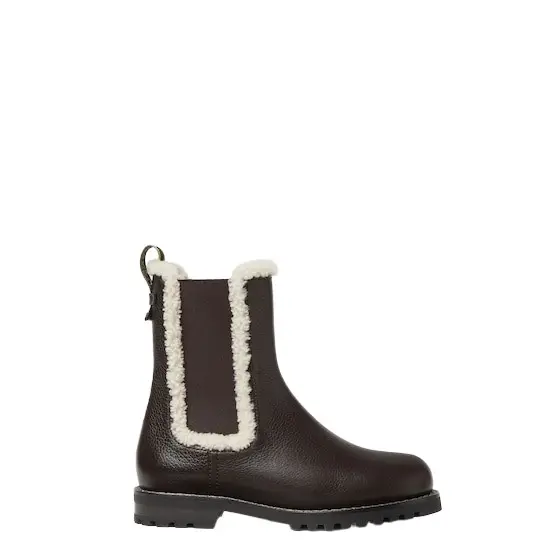
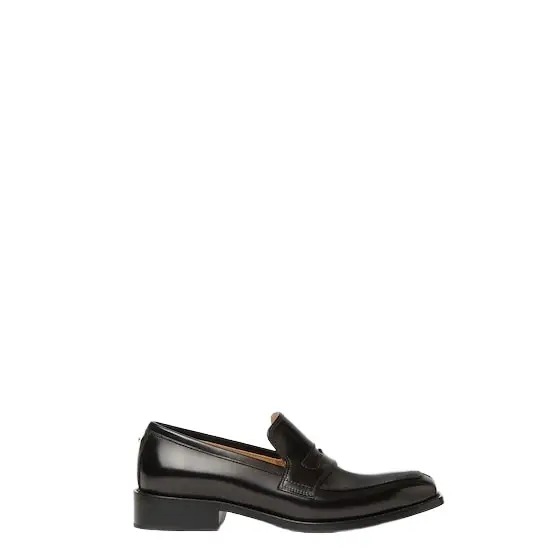
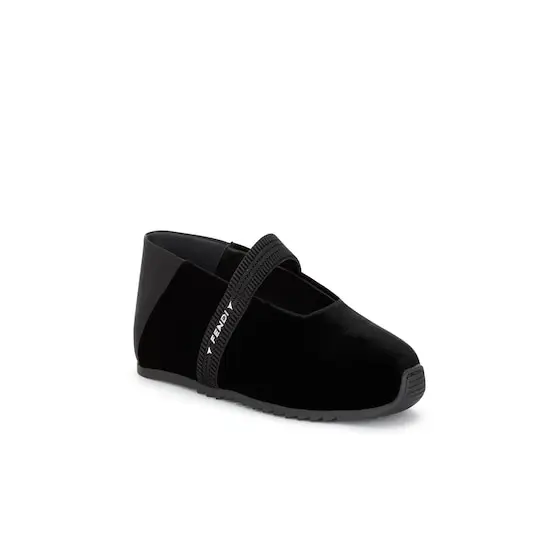
Compare heel heights among our designer slingbacks.
Fendi ready-to-wear: coats, tailoring and knits
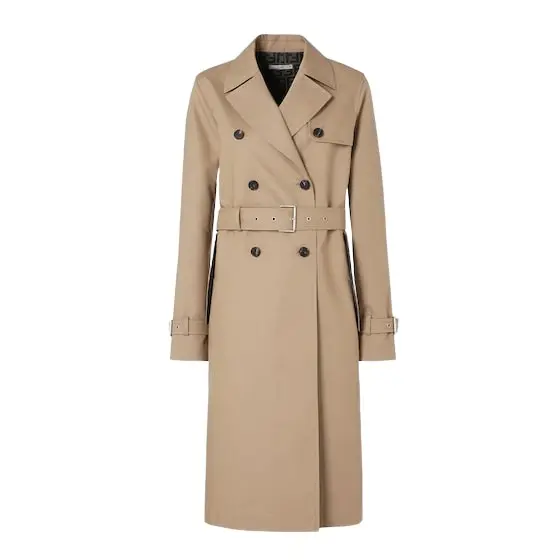
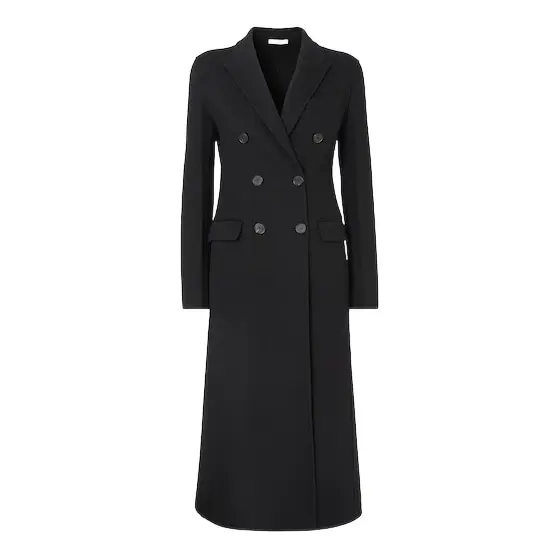
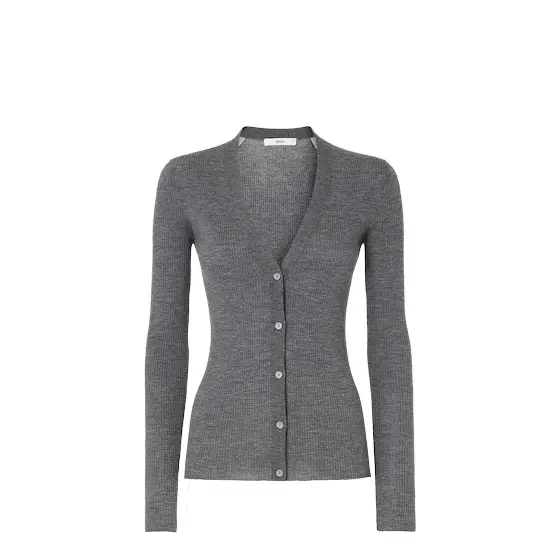
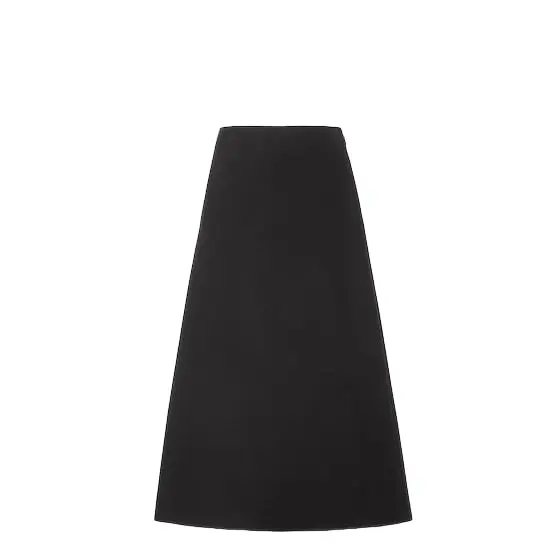
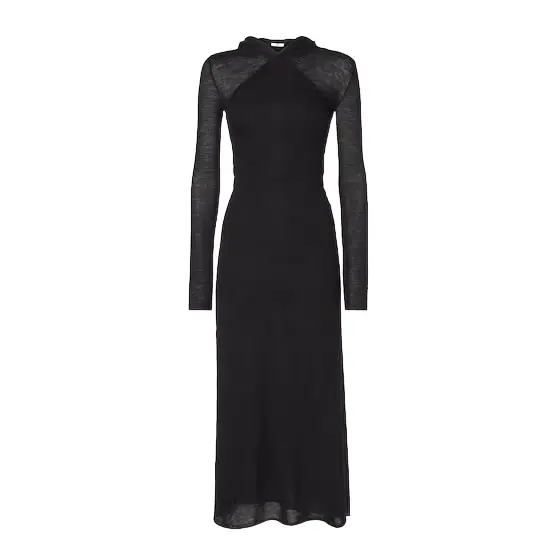
In ready-to-wear, W Magazine notes, Fendi is most associated with two signatures, the slip dress and the statement coat, and Chiuri's first collection added softly structured suits. That makes coats and tailoring the place to start: a double-breasted coat or blazer cut close at the waist, a trench, and fine wool knits to wear underneath. Fendi's clothing is labeled in European sizes, not US ones (34 to 48 among the pieces we chose), so read the size chart on each listing. In a tailored jacket, fit the shoulders first, since a tailor can take in a waist but cannot rebuild a shoulder.
- A double-breasted coat with wide trousers, a fine black sweater and a Peekaboo carried by hand.
- A slip dress under a long coat, with slingbacks and a small Baguette on its chain.
- A fitted blazer over a knit midi dress, with knee boots.
Fendi coats, tailoring and knits

Is Fendi worth the price? Where to spend
For the Baguette and the Peekaboo, we think so. Both have been in the collection for years, Fendi keeps making them, and both are built to be carried every day. If you want visible handwork, choose a Selleria piece, where the stitches are sewn by hand on naturally grained leather. Seasonal embellishment, runway prints and fashion colors are for pleasure rather than for keeps. Whatever you buy, keep the box, the dust bag and the receipt, since they help if you ever resell; when you are ready to part with a piece, Vêtir's pre-owned resale service can help you sell it.
How to care for a Fendi bag
- Leather: wipe it with a soft, dry cloth, stuff it with tissue, and store it upright in its dust bag so the base keeps its shape.
- Peekaboo: store it closed, with both twist locks fastened and tissue in each compartment, so the two halves hold their line.
- FF jacquard and canvas: brush off dust and spot-clean with a barely damp cloth; take real stains to a leather and textile specialist.
- Beading, sequins and printed calf hair: keep them away from rough surfaces and zipped pockets, and store them flat, apart from other bags.
If you like Fendi, look at these houses too
- Prada, the other great Italian bag house, known for the Galleria and its Re-Edition nylon bags; see our Prada guide.
- Bottega Veneta, for woven leather and no visible logo; read our Bottega Veneta guide.
- Miu Miu, younger and more playful, with the same taste for embellishment; our Miu Miu guide covers its bags and ballet flats.
- Loewe, leather goods with a sense of humor; start with our Loewe bags guide.
- Valentino and Dior, the houses where Maria Grazia Chiuri designed before she returned to Fendi.
How we chose
Every piece in this guide is by Fendi and new, and each was in stock when we checked it in late September 2026. Fendi reaches Vêtir only through the house's own feed, so nothing here comes from a reseller. We weighted the bag edits toward the Baguette and the Peekaboo, and within them picked one example of each material or technique a buyer should know (plain leather, Selleria, FF jacquard, embroidery) rather than several colors of one bag. We read Fendi's descriptions for construction, capacity and country of manufacture, looked at every photograph to confirm color and shape, and chose clothing and shoes that still had at least five sizes available. For an earlier selection, see our story The Fendi Edit.
Frequently asked questions
Who designs Fendi now?
Maria Grazia Chiuri, chief creative officer since October 2025, whose first Fendi collection was shown in February 2026. Silvia Venturini Fendi, who designed the Baguette and the Peekaboo, is honorary president.
When did the Fendi Baguette come out?
In 1997. Silvia Venturini Fendi designed it to be carried under the arm like a French loaf, and Fendi describes it as the first bag with a waiting list.
When did the Fendi Peekaboo come out?
It was first shown at Fendi's spring 2009 show in Milan, and Fendi dates it to 2009. Spring shows take place the autumn before, so you will also see 2008.
What does the FF logo stand for?
"Fun Fur." Karl Lagerfeld created the FF in 1965, his first year as the house's artistic director.
Which is better, the Baguette or the Peekaboo?
The Baguette if you want one small bag for day and evening; the Peekaboo if you want a structured bag to carry by hand and a top handle that suits tailoring.
What size Peekaboo should I buy?
The small for everyday use, since Fendi says it holds a 6.7-inch phone, a large wallet, sunglasses and keys. Choose a smaller size for evenings or to wear on the strap.
Already own a Baguette or a Peekaboo? Our AI stylist can suggest coats, knits and shoes to wear with the one you have.