Men's Spring Jackets: Seven Styles Worth Owning and How Each Should Fit
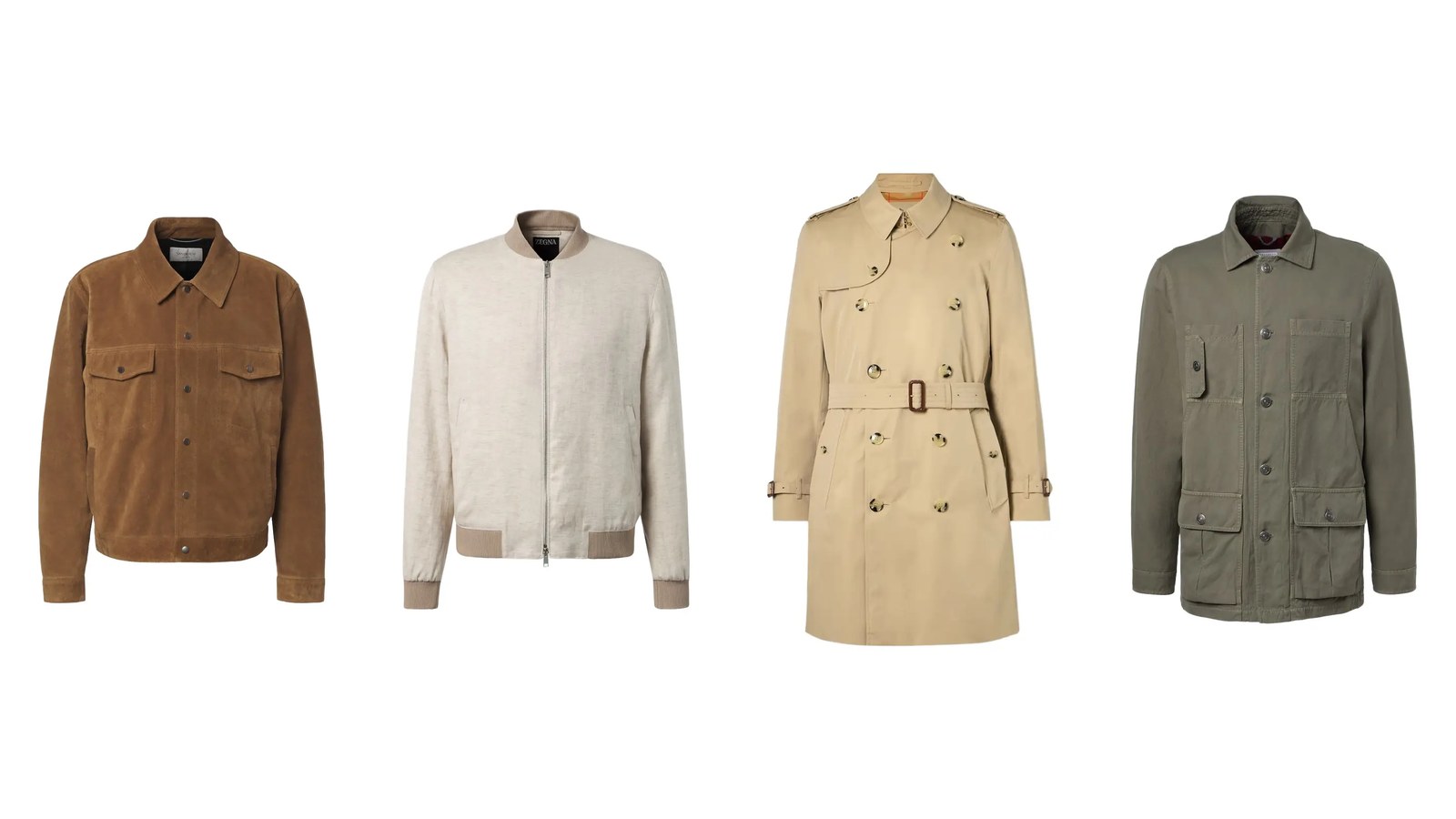
The best men's spring jackets are lighter versions of the jackets you already trust, and there are seven worth knowing: the field jacket, the chore coat, the overshirt, the bomber (with its neater cousin, the Harrington), the suede jacket, the trench or mac, and the unstructured blazer. Before style, choose by two things: the temperature you'll wear it in and what goes underneath. A spring jacket works hardest between about 50°F and 65°F, over a shirt or a fine knit, so it should be unlined or half-lined, fit neatly through the shoulders and leave room for one thin layer. Below, our editors cover each style, the fabrics and weights that suit it, how it should fit, and which jacket to wear at which temperature.
Men's spring jackets by temperature
Spring is a season of wide daily swings. In New York, NOAA's 1991 to 2020 climate normals for Central Park put the average high at about 50°F in March, 62°F in April and 71°F in May, with average lows 14 to 16 degrees cooler. That gap is why the right spring jacket is one you can wear open at lunch and buttoned at 8 p.m. Our rule of thumb:
| Temperature | Jacket | What goes underneath |
|---|---|---|
| 40s°F | Trench or mac, wool overshirt, lined field jacket | A merino or cashmere crewneck |
| 50s°F | Suede jacket, field jacket, chore coat | An oxford shirt or a fine knit polo |
| 60s°F | Bomber or Harrington, cotton overshirt, unstructured blazer | A T-shirt, a polo or a shirt |
| Low 70s°F and up | An unlined linen blazer or linen overshirt, often carried until evening | A T-shirt or a linen shirt |
| Rain | Cotton-gabardine trench or a technical mac; leave the suede at home | Anything |
The field jacket
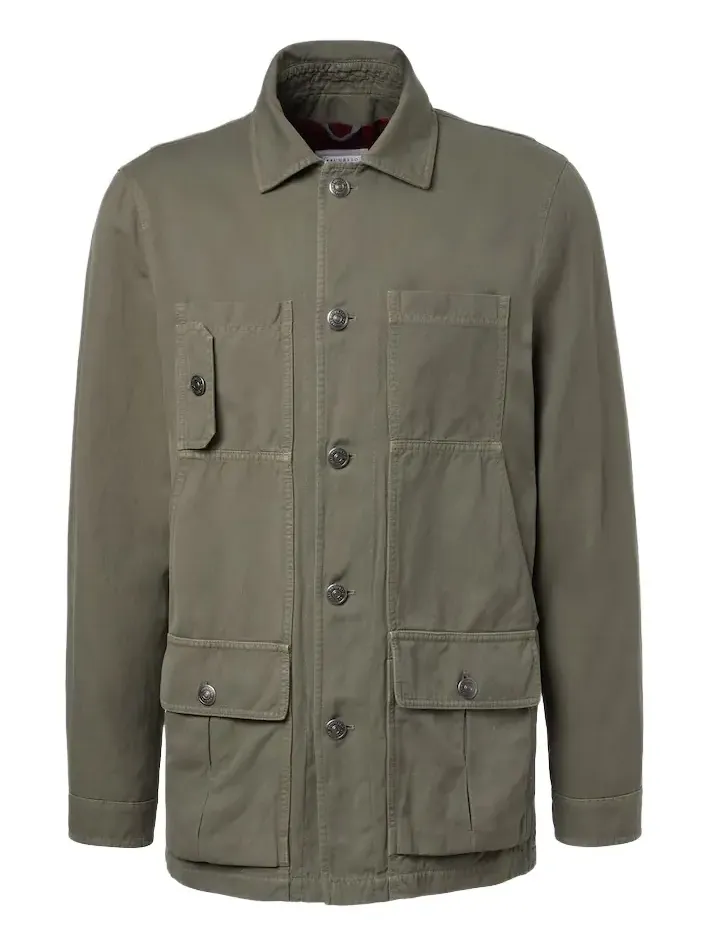
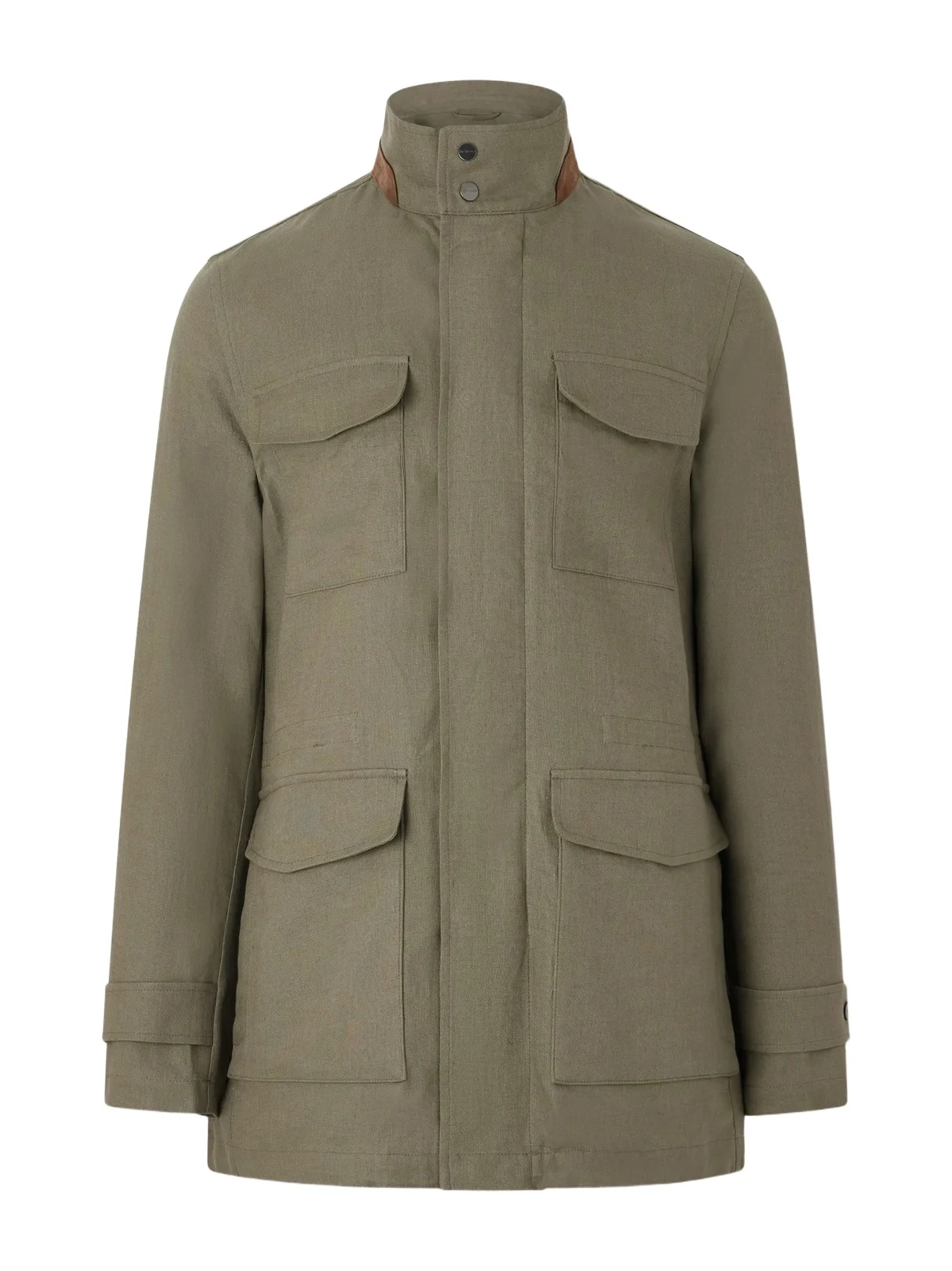
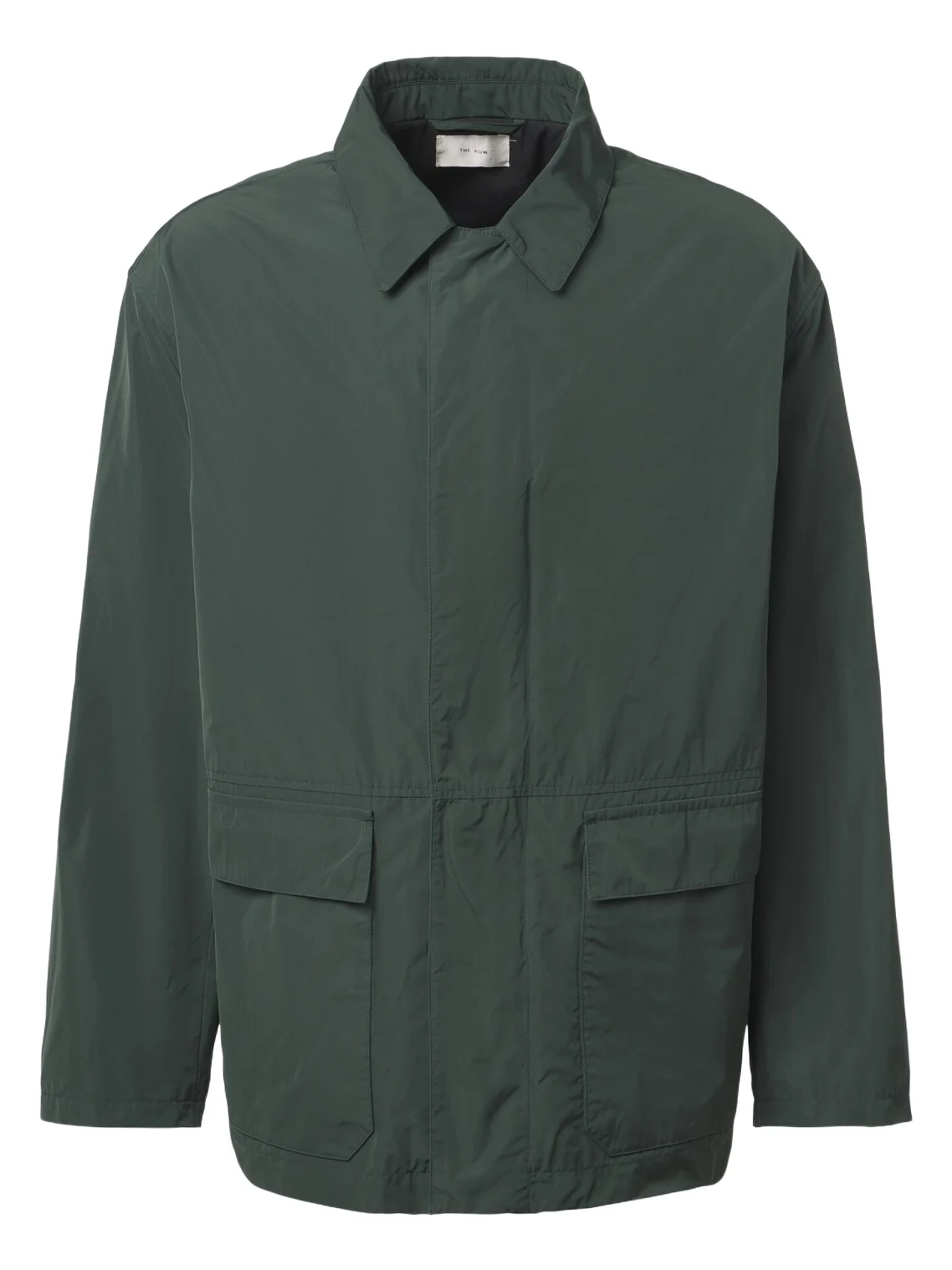
The field jacket is the most useful of the seven because it is built for changeable weather: four flap pockets, a front that closes with both zip and buttons, a collar you can turn up and, on many, a drawcord at the waist; some even hide a hood in the collar. It descends from military field jackets, and that utilitarian background is why it sits so easily with chinos, jeans and knitwear. For spring, look for cotton twill, cotton-linen, pure linen or a light technical cloth rather than the waxed cotton and wool of autumn. Italian houses such as Brunello Cucinelli, Zegna and Kiton cut theirs in cotton-linen and linen, some with suede trims.
Fit: the shoulder seam should sit at the edge of your shoulder or just past it, with room across the back for a knit. The body should cover your seat, and the sleeves should end at the wrist bone so a shirt cuff barely shows. If you'll wear it over a sweater in March, try it on over one.
- Olive cotton-linen field jacket, white oxford shirt, stone chinos, brown suede loafers.
- Navy field jacket, gray merino crewneck, dark jeans, white leather sneakers.
- Sand linen field jacket, navy polo, cream trousers, for the first warm weekend.
Field jackets in cotton and linen
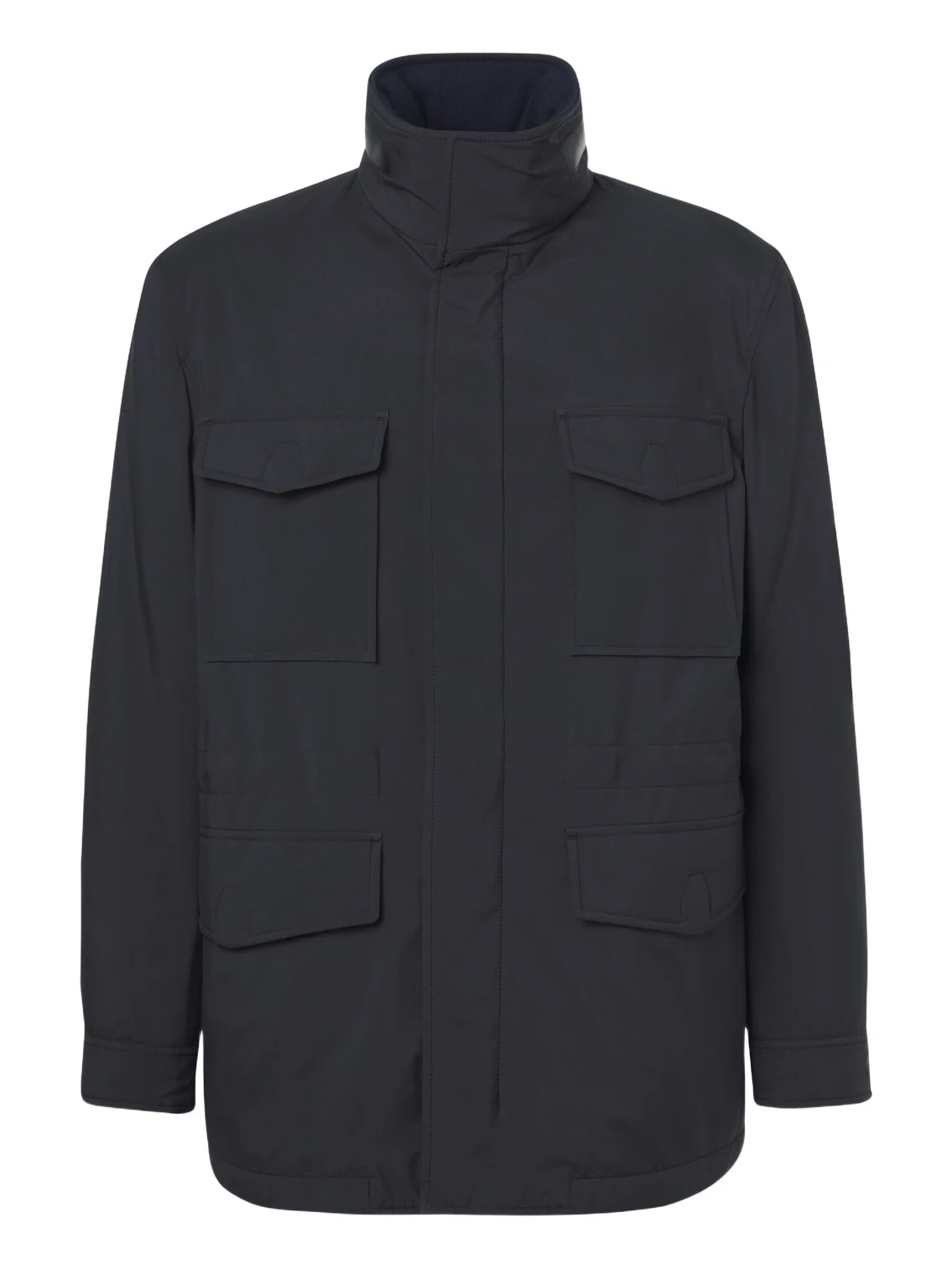
The chore coat and the overshirt
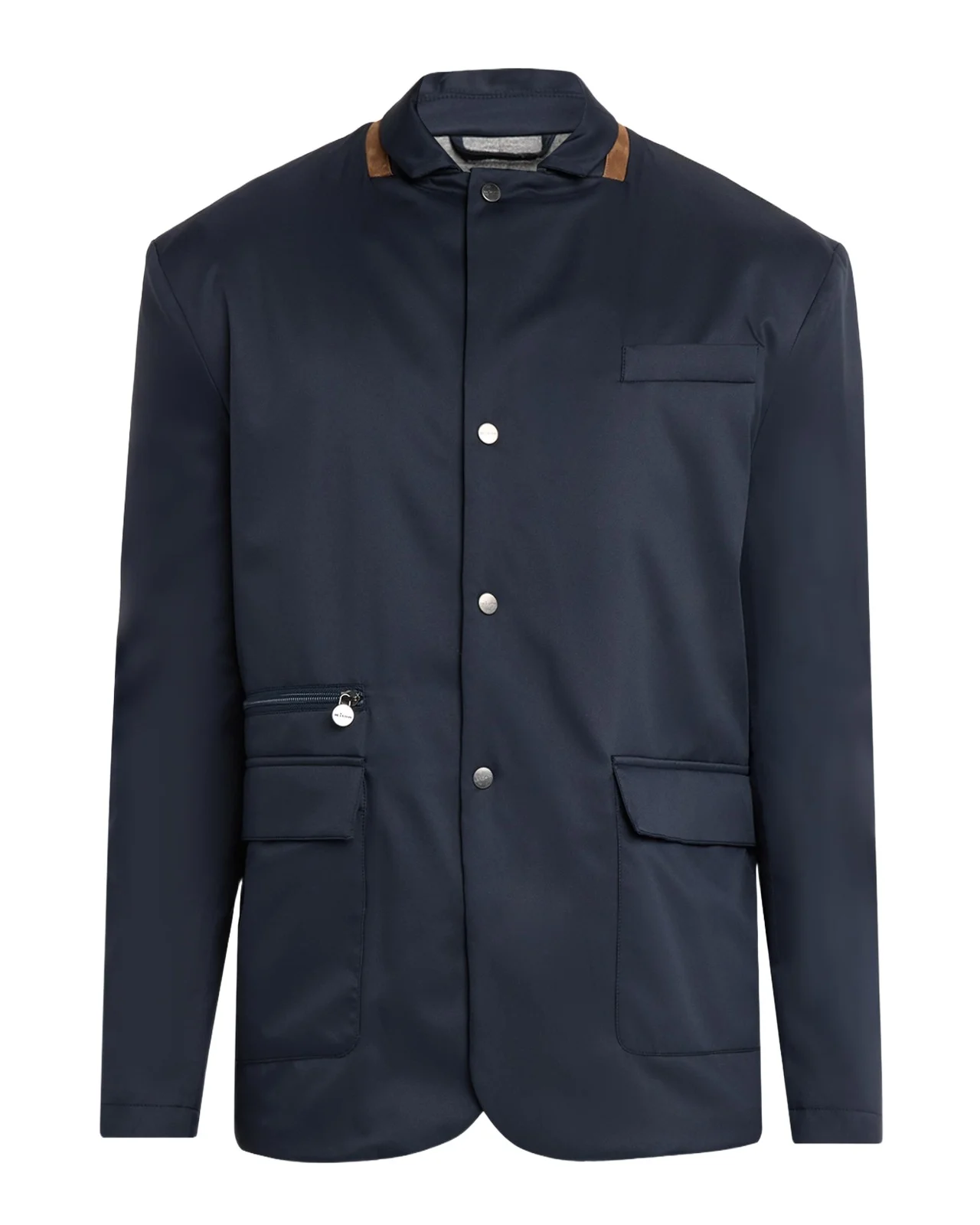
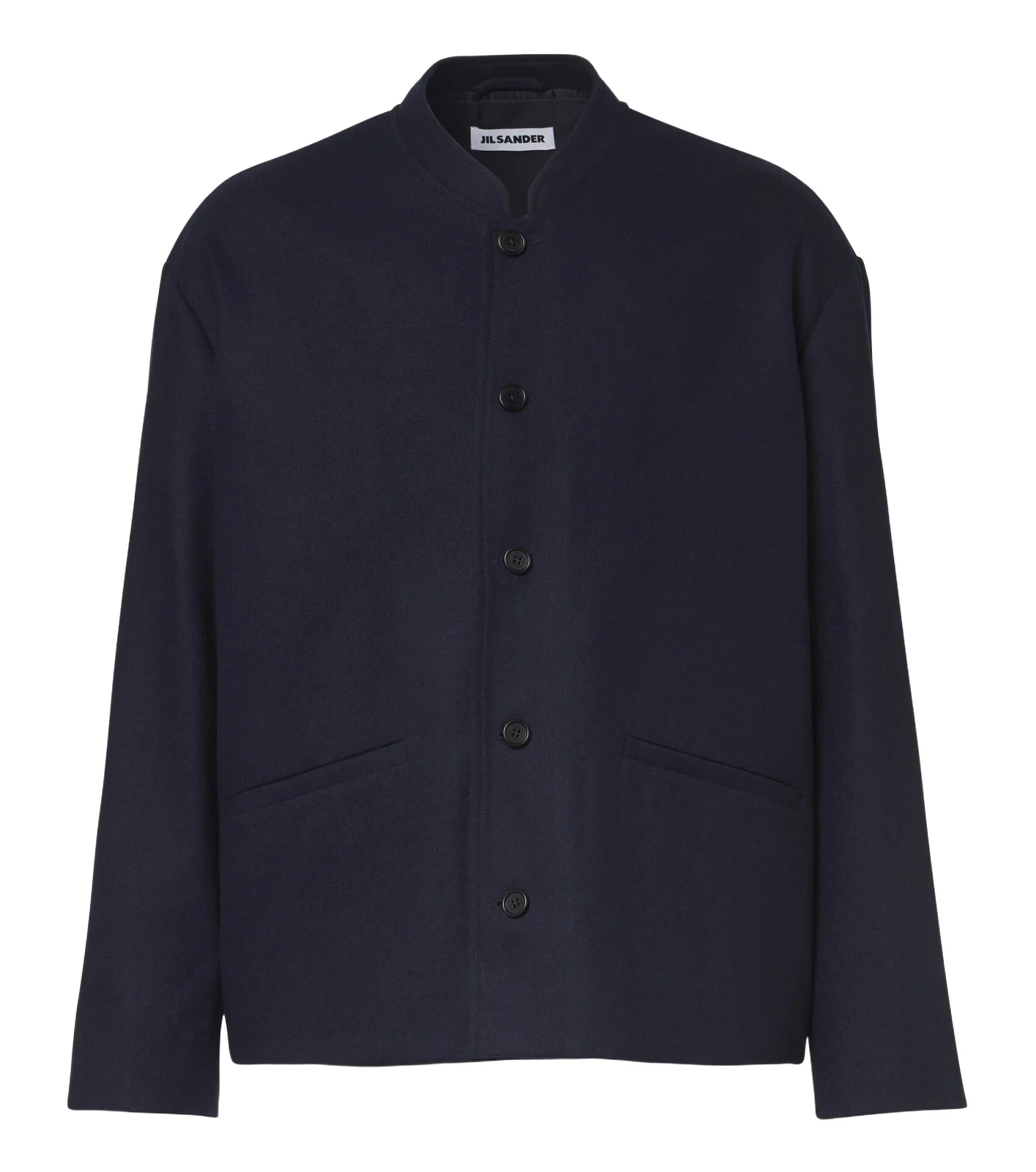
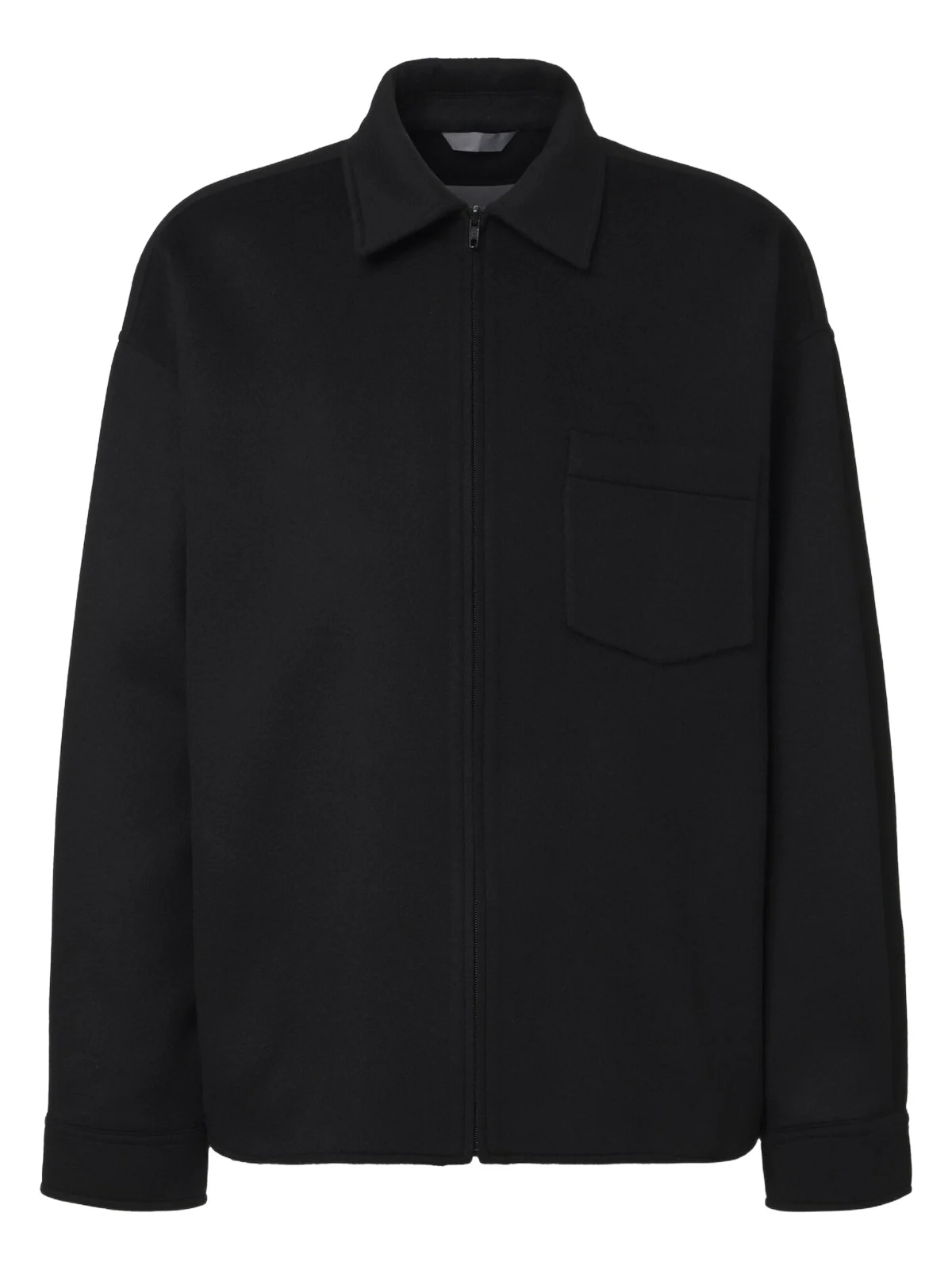
The chore coat descends from French workwear: a square, hip-length jacket with a point collar, a button front and three or four patch pockets, usually unlined or half-lined. It is the least formal jacket here and the easiest to layer, because it is cut straight and roomy on purpose. Canvas and cotton twill soften with wear; linen and cashmere-linen-silk blends dress it up enough for a restaurant.
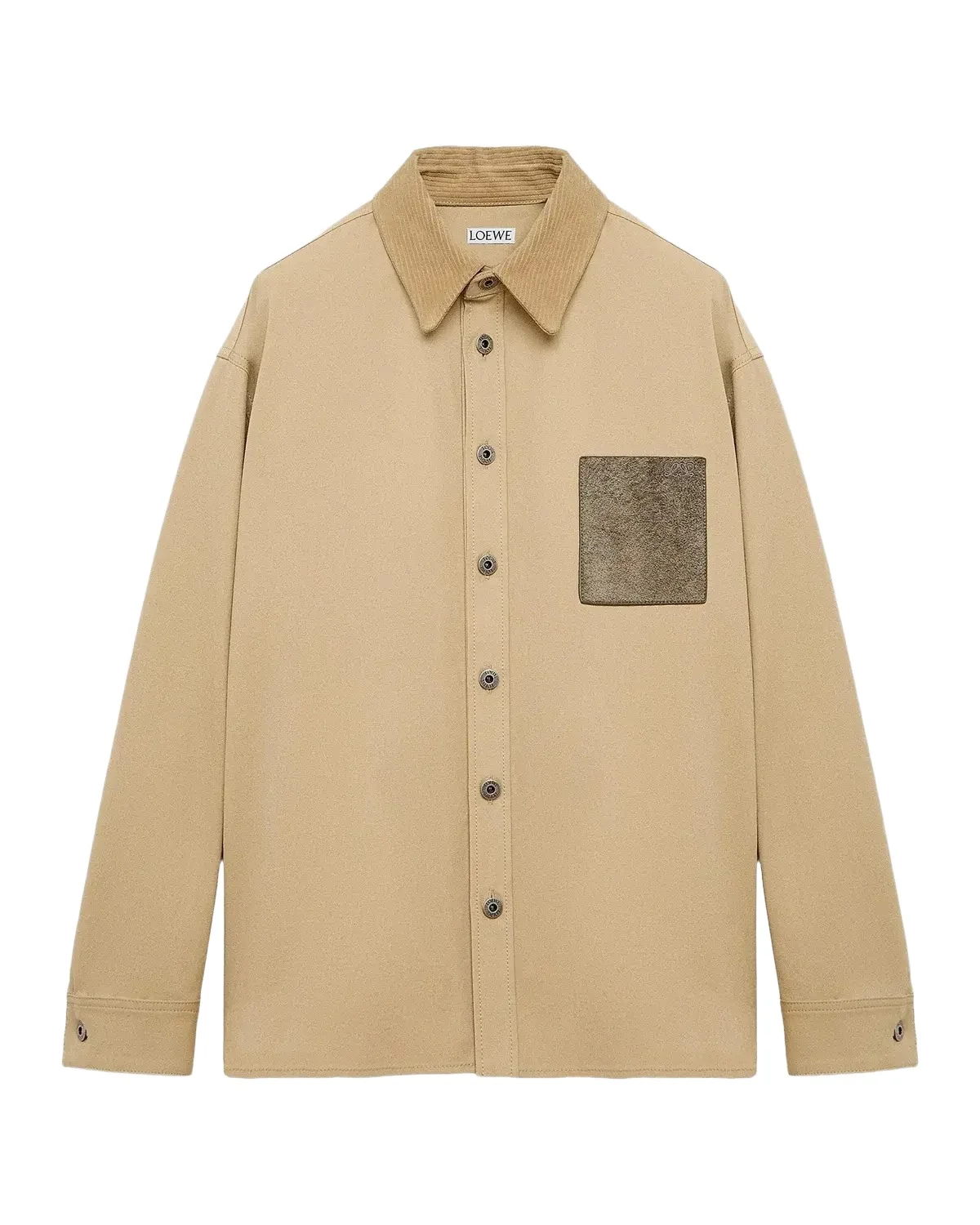
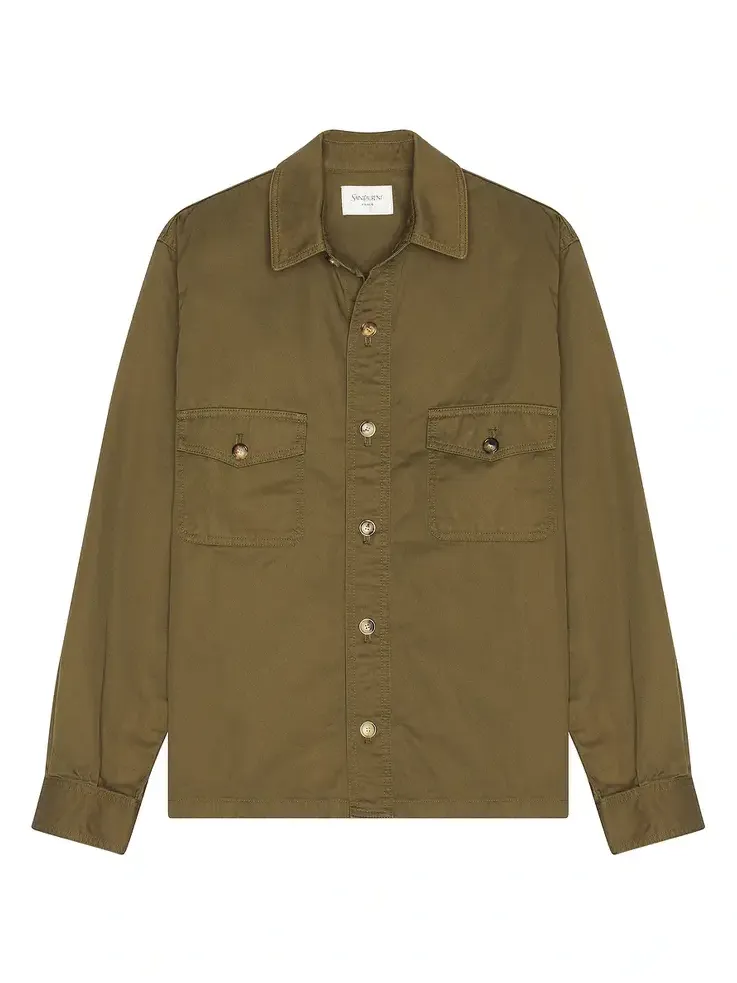
The overshirt sits between a shirt and a jacket: shirt construction (collar, cuffs, a button placket) in a heavier fabric, cut to go over a T-shirt or a light shirt. Wool overshirts cover March; cotton twill and linen take you into May. Worn buttoned, an overshirt reads as a shirt; open, it's a light jacket.
Fit: a chore coat's shoulder often drops below your own by design, so judge it by the chest (it should close over a sweater without pulling) and by sleeve length. An overshirt should fit like a shirt one size roomier: the shoulder seam at the shoulder bone and enough room to button it over a T-shirt without strain across the chest.
- Taupe linen chore coat, white T-shirt, navy trousers, suede loafers.
- Navy wool overshirt, gray T-shirt, olive chinos, white sneakers.
- Olive cotton overshirt, open, over a striped Breton top and jeans.
Chore coats and overshirts


The bomber jacket and the Harrington jacket
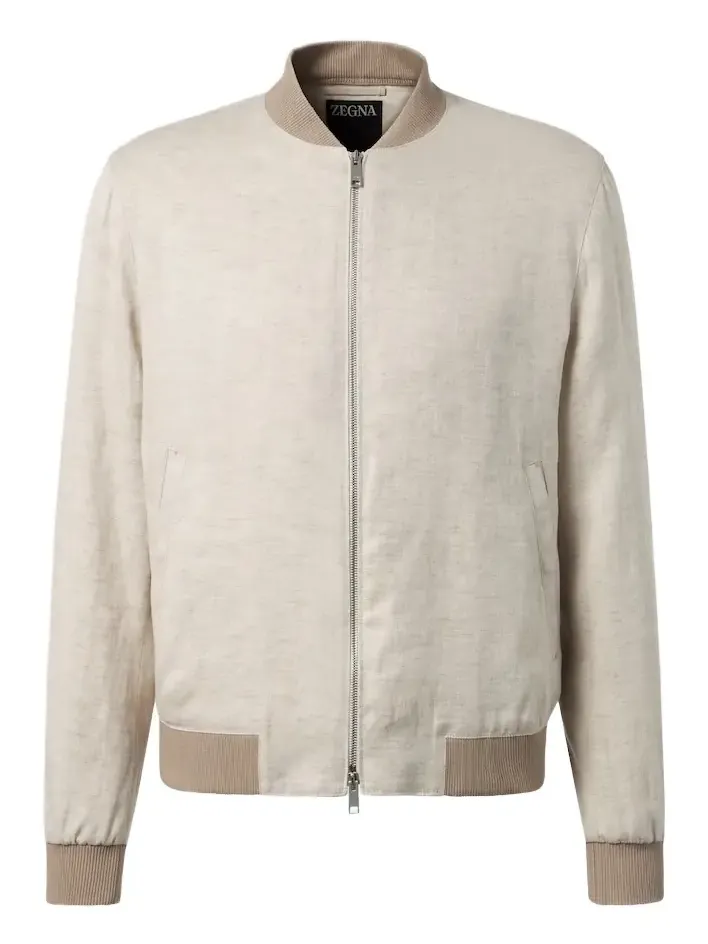
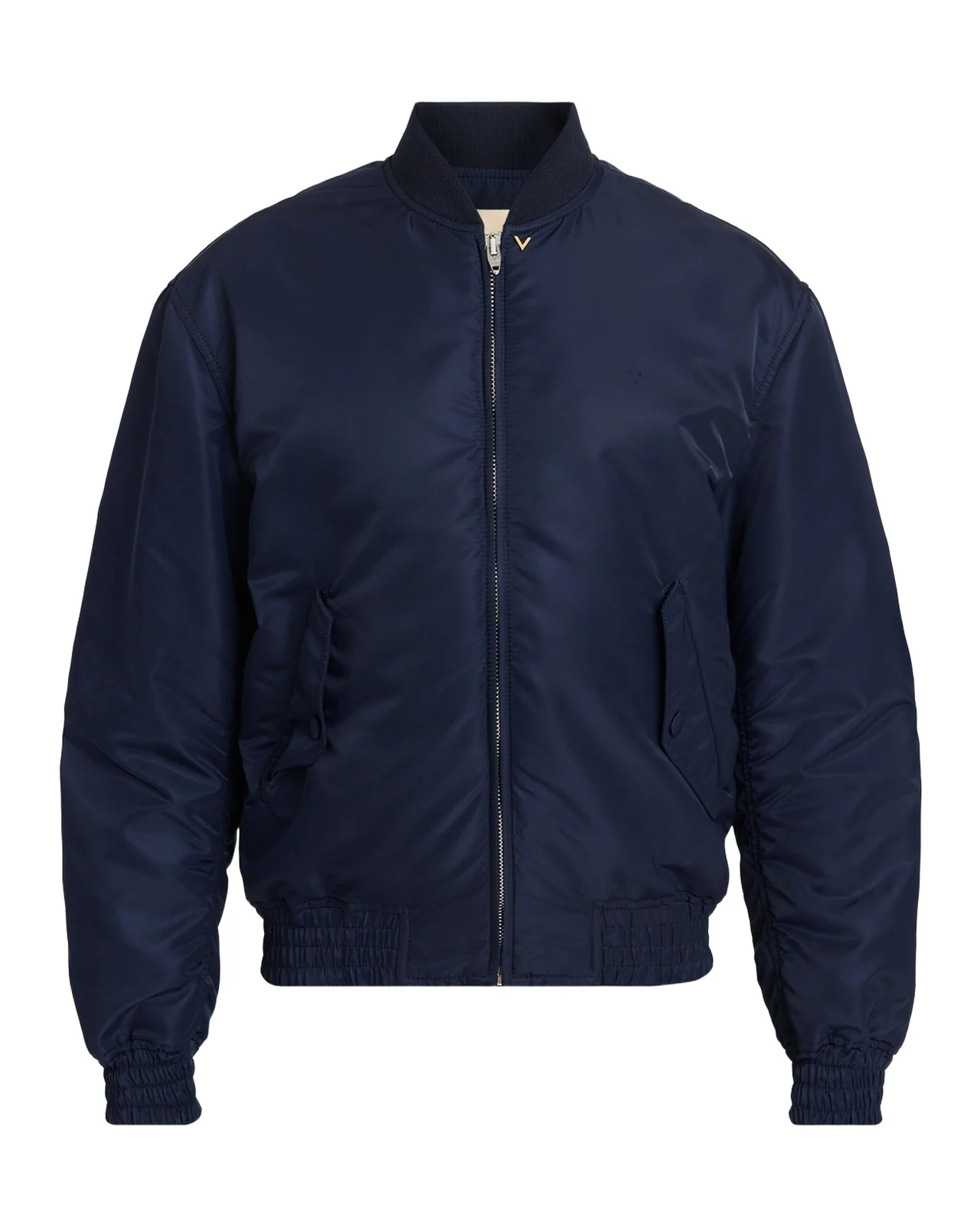
The bomber is the flight jacket gone civilian: a zip front, a ribbed knit collar, ribbed cuffs and a ribbed hem that sits at the belt. In spring it works best in cotton gabardine, nylon or linen rather than leather or padding.
The Harrington is the bomber's neater cousin, and it has a precise origin. According to Baracuta's history of its G9, the brothers John and Isaac Miller designed it in Manchester in 1937 as a golf jacket: a ribbed hem and cuffs, a collar that fastens at the throat with two buttons, slanted pockets that close with a single button (sized, Baracuta says, to hold two golf balls), and an umbrella-shaped yoke across the back with a vent, which lets air out and sends rain off. From 1938 it was lined in Fraser tartan. The name came later: in 1964, Ryan O'Neal wore a G9 in almost every episode of Peyton Place as the character Rodney Harrington, and a menswear shop, the Ivy Shop, began displaying the jacket in its window as the "Harrington Jacket."
So the difference is the collar and the details: a bomber has a knit collar, a Harrington has a fabric stand collar that buttons, a check or tartan lining and often that umbrella yoke. Burberry makes its Harrington in cotton gabardine with the house check inside, and tailoring houses such as Tom Ford cut the shape in fine wool blends to wear with trousers and loafers.
Fit: both jackets should end at your belt, with the rib sitting on the hip bone without blousing over it. The front should zip over a shirt without pulling across the chest, and the sleeves should end at the wrist where the rib can grip. Too long, and either jacket looks borrowed.
- Stone Harrington, blue oxford shirt, navy chinos, penny loafers.
- Navy nylon bomber, gray T-shirt, white jeans, white leather sneakers.
- Beige linen bomber, linen shirt, pleated cream trousers, for May evenings.
Bombers and Harringtons for spring



The suede jacket
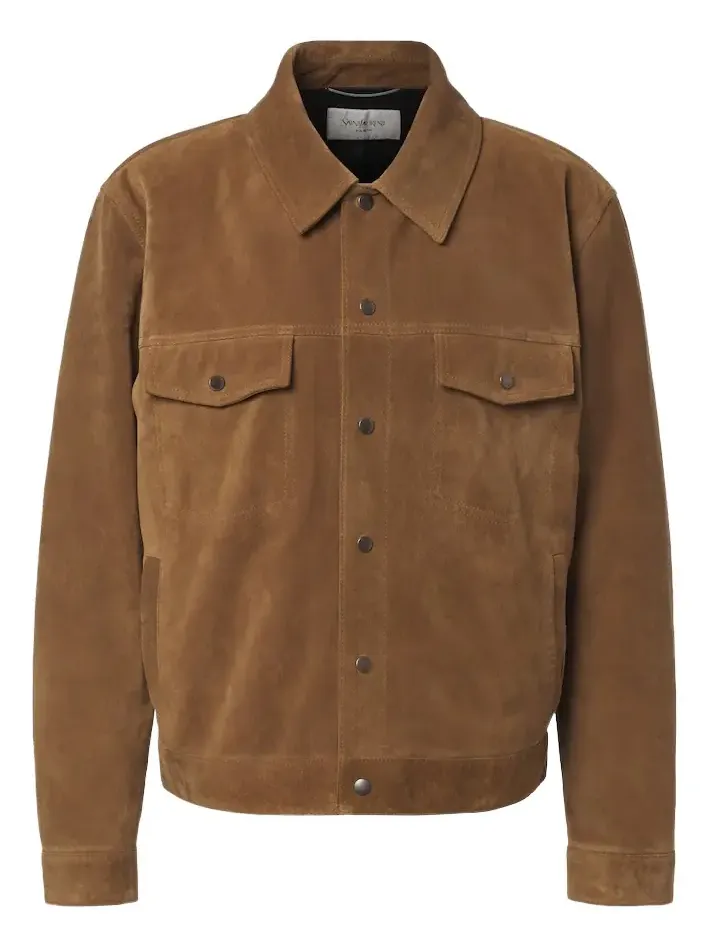
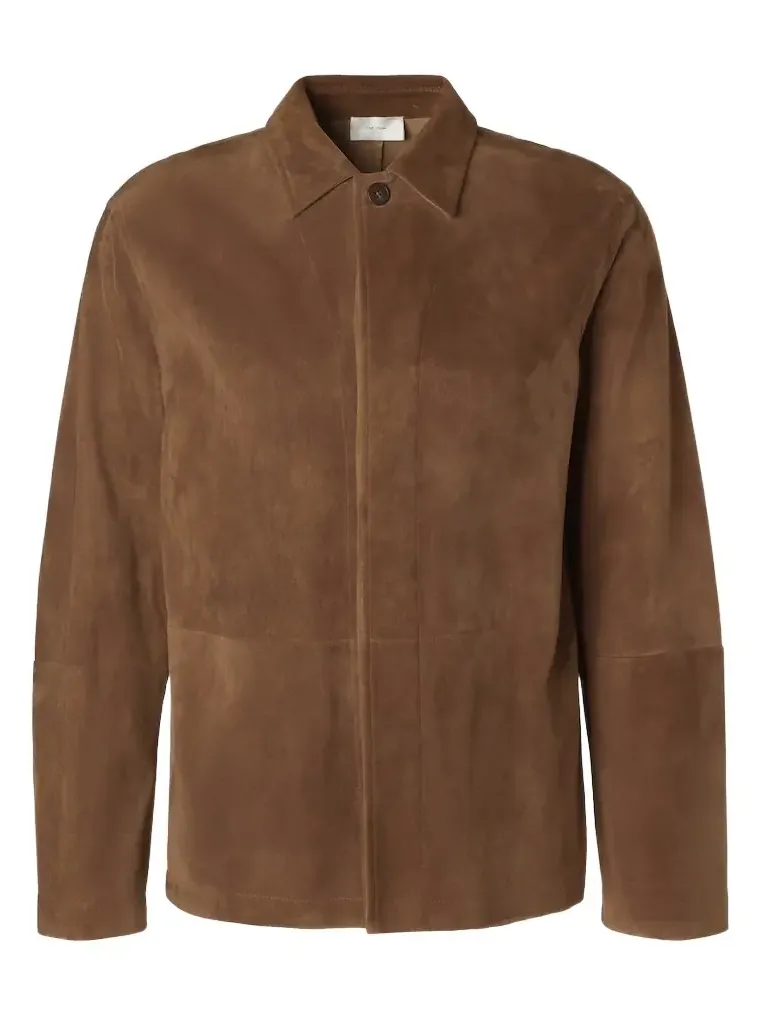
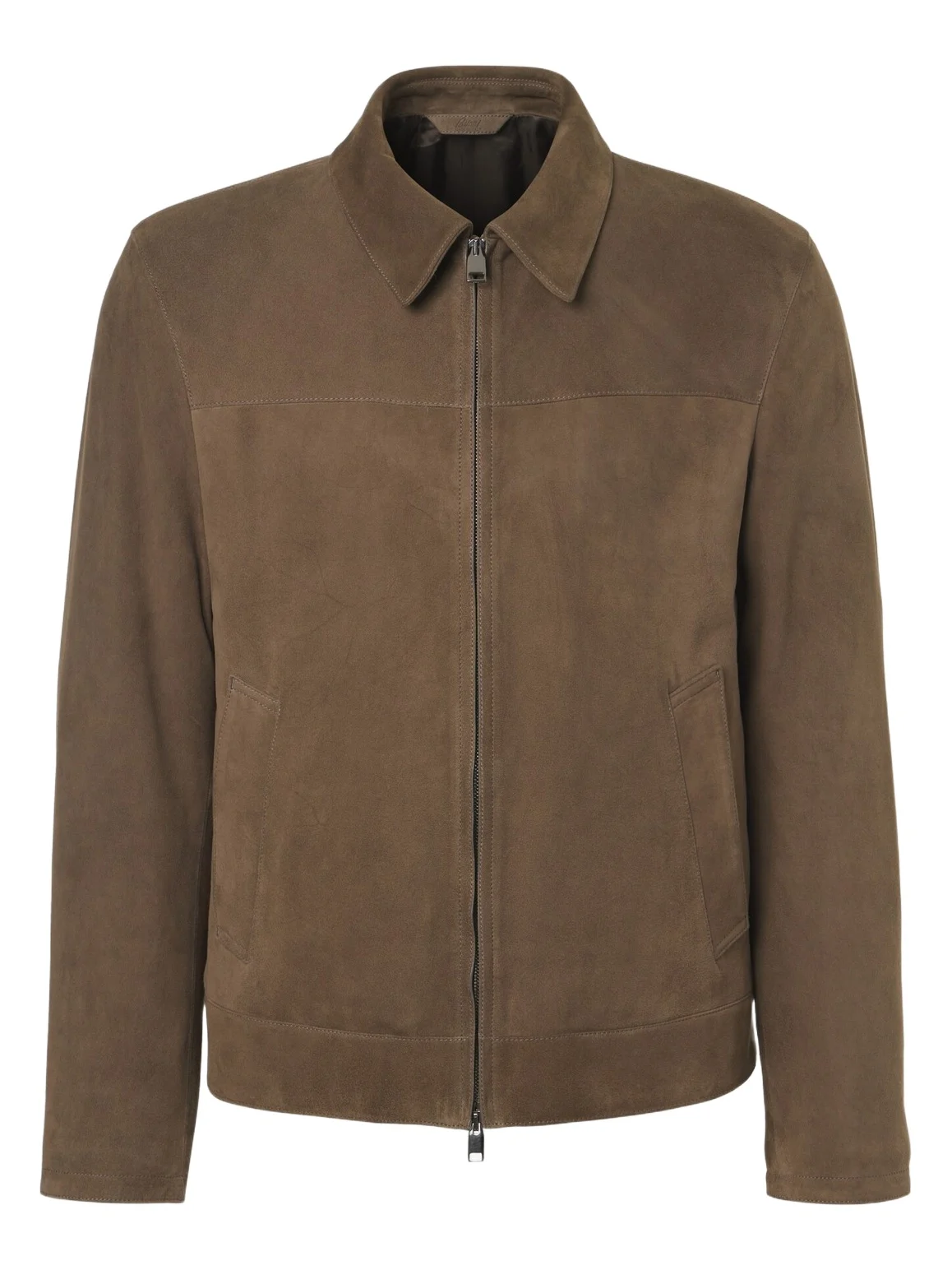
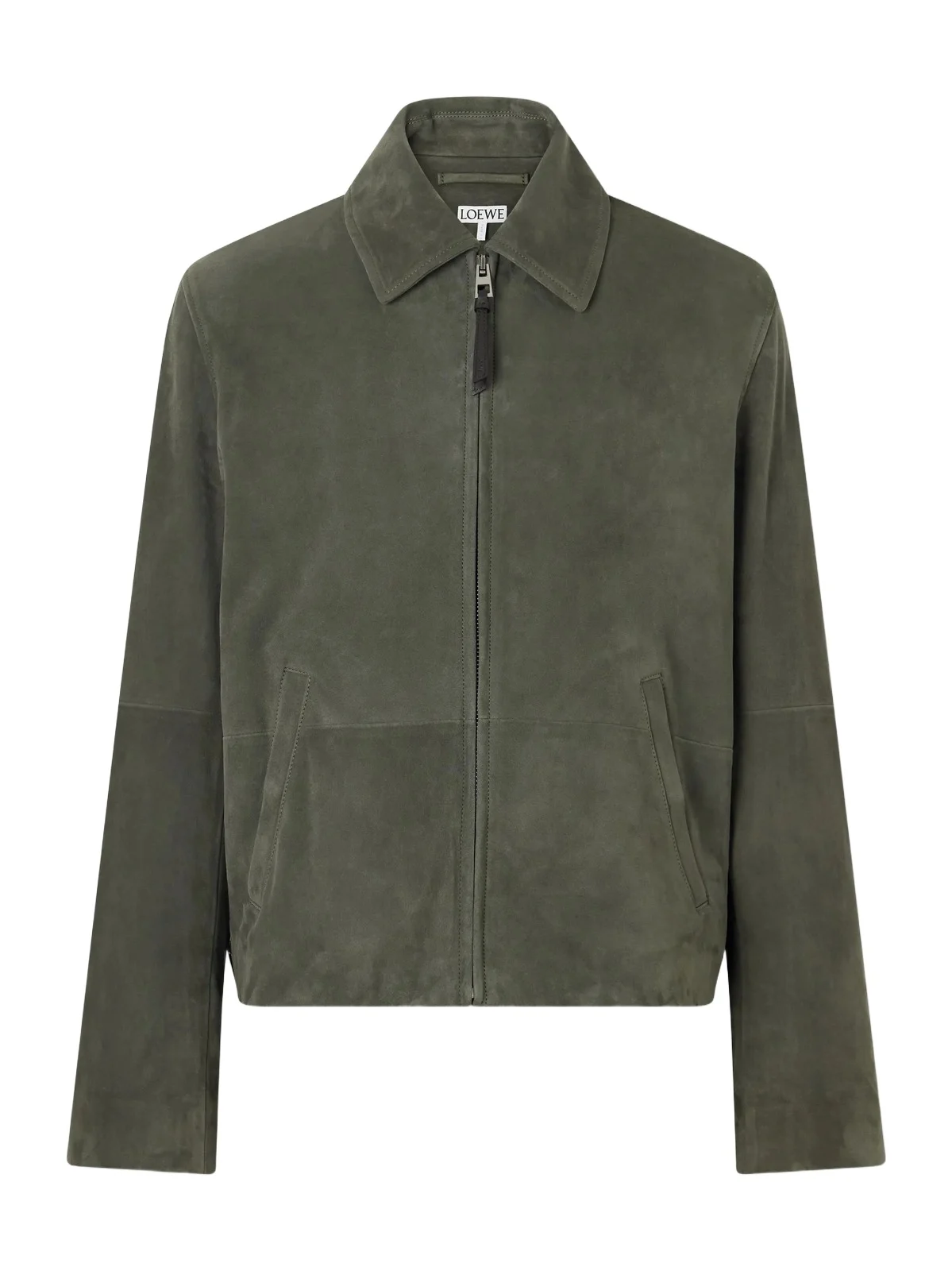
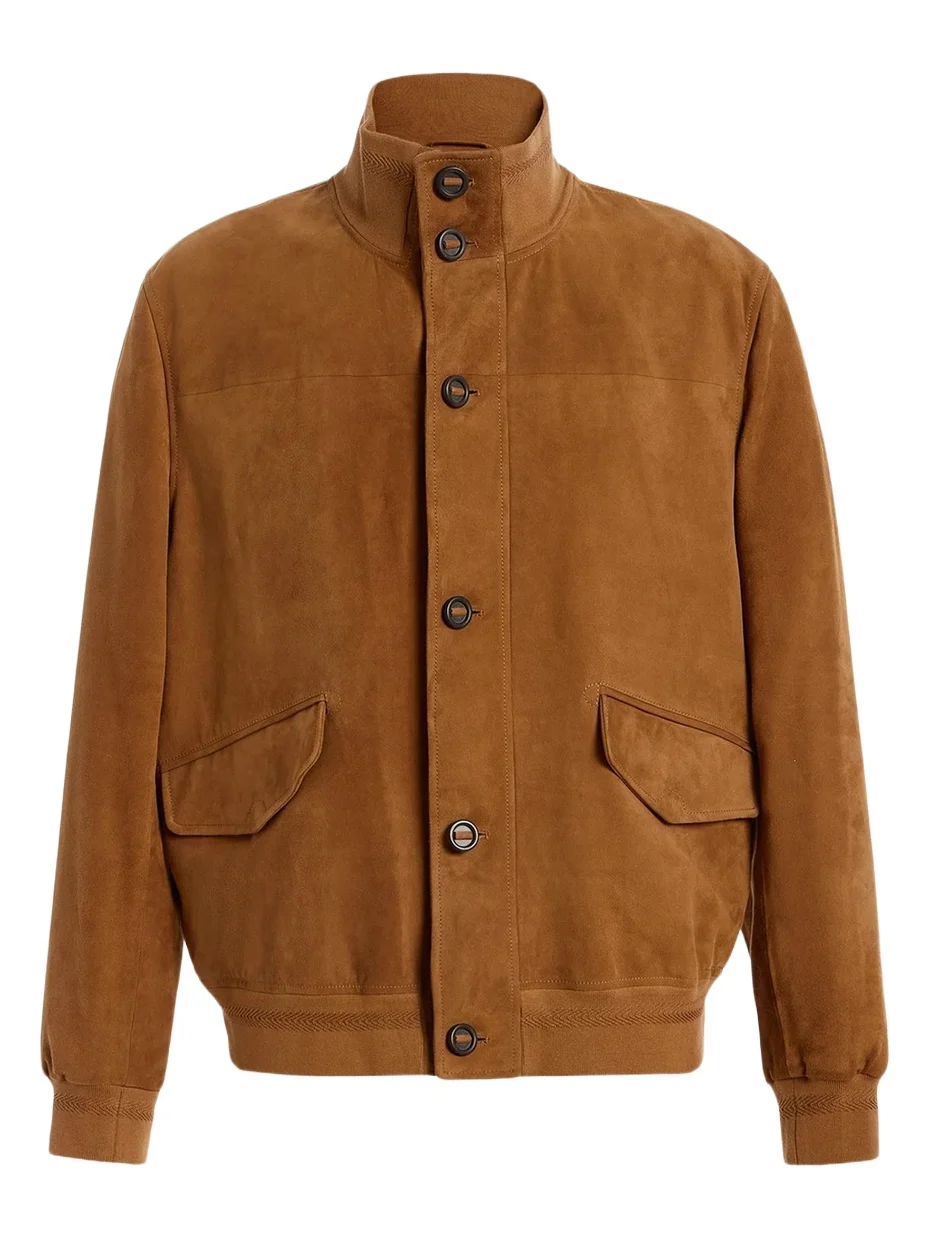
A suede jacket is the richest spring layer: it blocks wind like leather but looks softer, and it takes color beautifully, from tobacco and sand to olive and navy. Four shapes dominate:
- The suede trucker, cut like a denim jacket with chest flap pockets and a button or snap front. It is the most casual and the easiest with jeans, and Saint Laurent cuts one of the sharpest.
- The suede blouson, which closes with a zip or buttons and gathers at the hem, often on a ribbed stand collar, cuffs and hem. Tailoring houses such as Brioni and Zegna make theirs in soft suede, to wear with trousers and loafers.
- The suede shirt-jacket, cut like an overshirt with a concealed placket, a shape The Row does with particular restraint.
- The suede Harrington, the classic shape above in a warmer material, as tailoring houses such as Canali make it.
Skins and care. Lamb suede is lighter and softer; calf suede feels denser and holds its shape. Either way, suede and rain don't mix: water can darken and stiffen the nap. Treat a new jacket with a protector made for suede, brush it with a suede brush after wearing, let it dry naturally away from heat if it gets wet, and store it on a broad hanger under a breathable cover.
Fit: suede can't be let out much, and sleeves are hard to lengthen, so buy for the shoulders and the sleeve length first. A trucker should end at or just below the belt; a blouson a little lower, over the hip.
Suede jackets: truckers, blousons and a Harrington

The trench coat and the mac
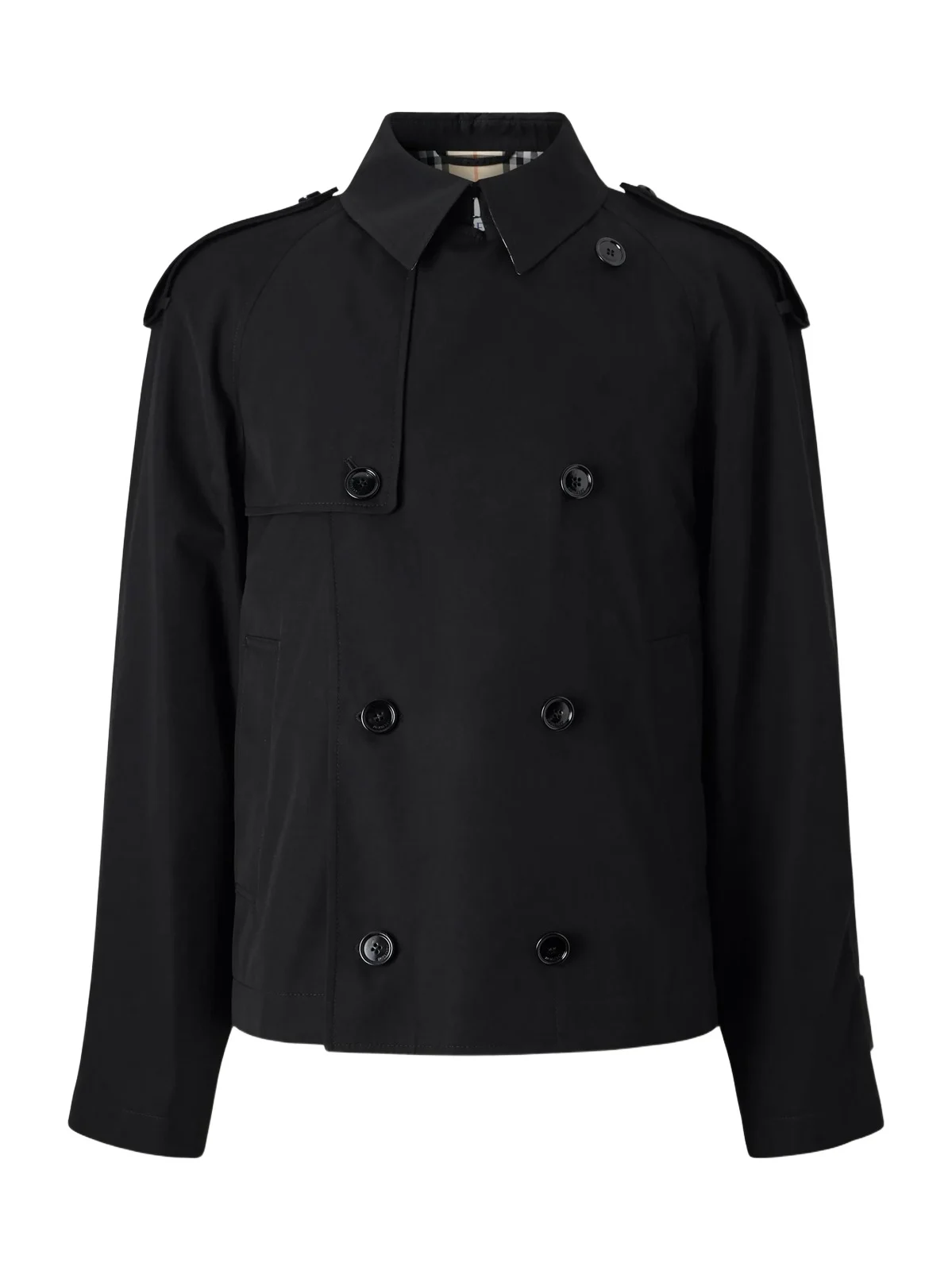
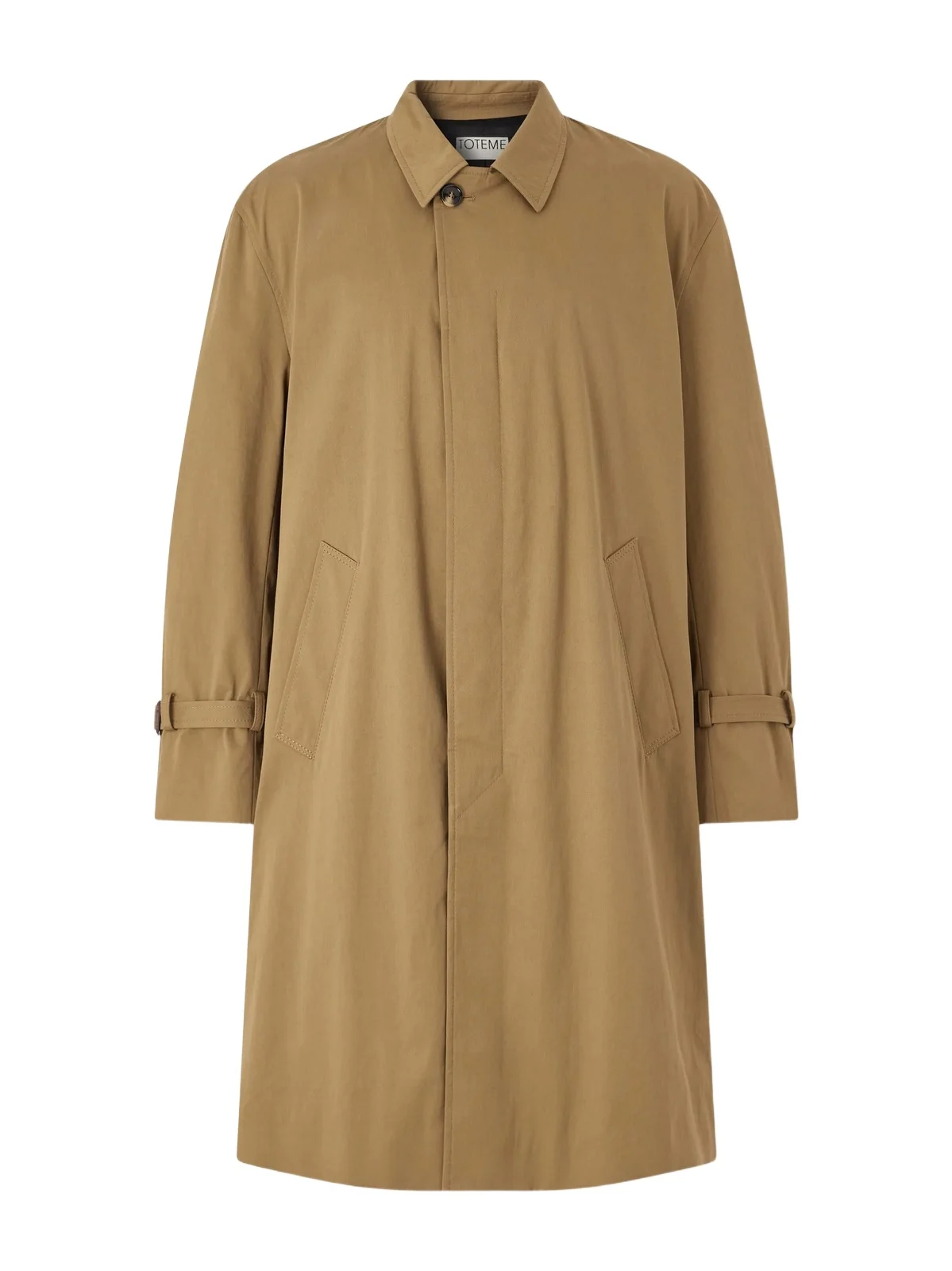
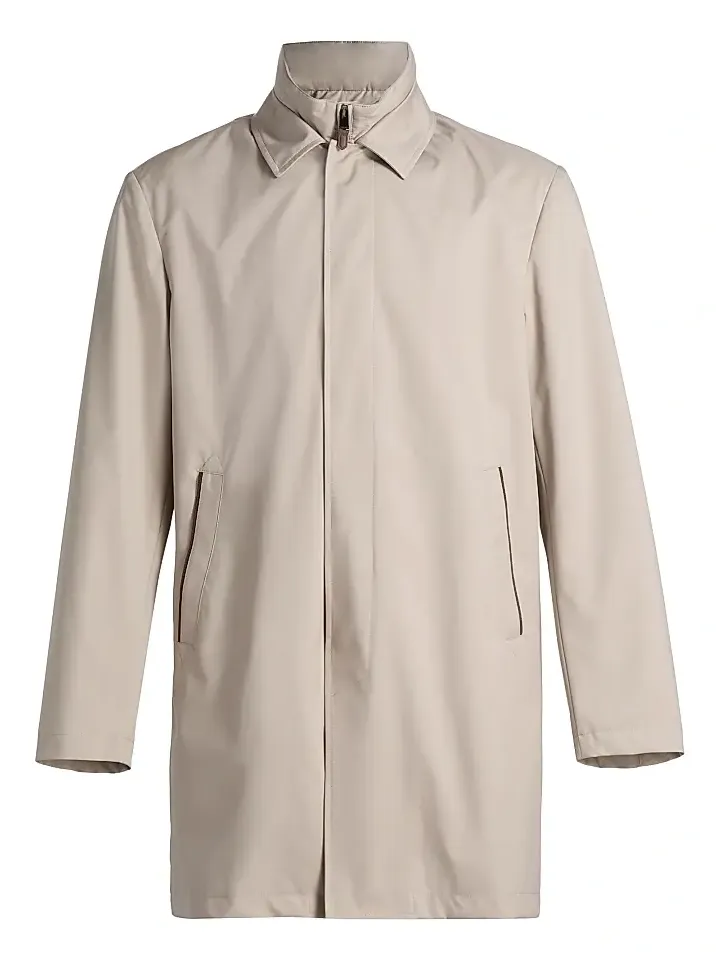
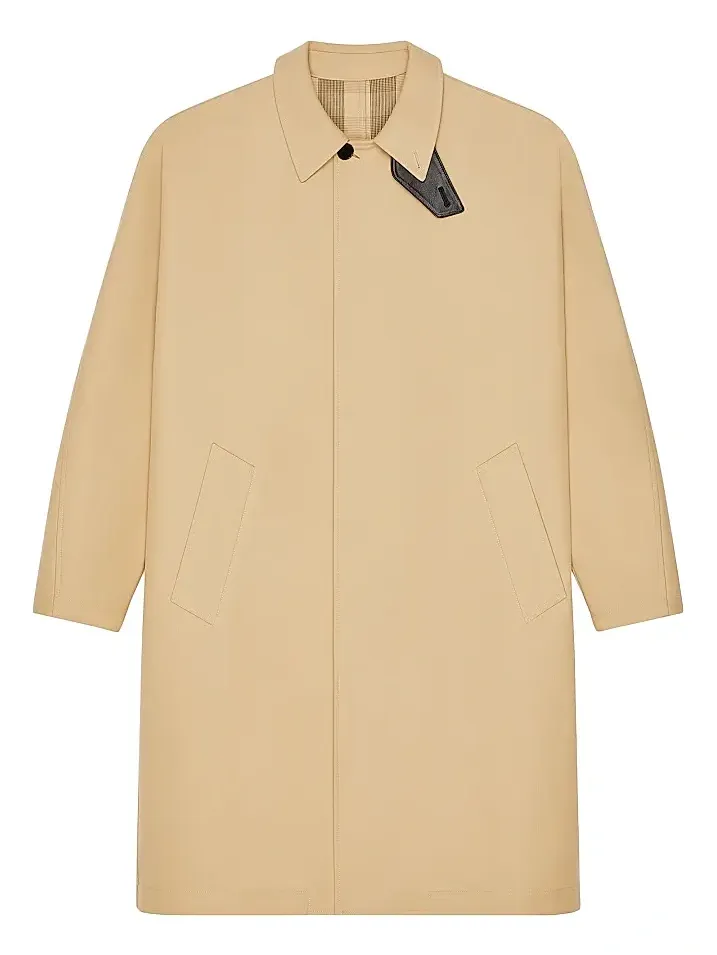
For rain, the answer is still gabardine. According to Burberry's own heritage page, its founder invented gabardine in 1879, a weave that lets the body breathe while repelling the weather. The trench built from it keeps the details Burberry still uses on its heritage coats: a belt, epaulettes and a check lining. A double-breasted, belted trench is the dressier choice and looks right over a suit. A mac, single-breasted with no belt and a plain collar, is cleaner and easier over knitwear and jeans; technical versions are lighter and pack flat.
Length: for spring, choose a trench that ends at or just above the knee; a cropped trench that ends at the upper thigh is sharper on men under about 5 foot 9. Fit: try it on over the heaviest thing you'll wear under it, a blazer if you wear tailoring. The sleeves should cover a shirt cuff, and the belt should sit at your natural waist when fastened.
- Honey trench, navy suit, white shirt, brown suede loafers.
- Black cropped trench, white oxford, gray trousers, black loafers.
- Tan mac, navy knit polo, stone chinos, white sneakers.
Trench coats and macs for spring rain

The unstructured blazer
An unstructured blazer has little or no shoulder padding and a light or partial canvas, and it is often unlined or half-lined. It follows your shoulder rather than building one, weighs little and breathes, which makes it the jacket for a warm office, dinner outside or a spring wedding with a relaxed dress code (our men's wedding guest guide covers the rest). Linen and linen blended with wool and silk are the spring fabrics; the blends wrinkle less. Patch pockets and horn buttons signal the relaxed intent. Brunello Cucinelli and Zegna both make unlined versions in linen and linen blends, and Jacquemus cuts a boxier, deconstructed one.
Fit: with no pad to hide behind, fit is everything. The shoulder seam should end exactly at the edge of your shoulder; if the sleeve head collapses into a dent, the jacket is too big. Sleeves should show about a quarter to half an inch of shirt cuff, and the body should cover your seat. Button it: if the button pulls into an X, size up.
- Shell linen blazer, white T-shirt, navy linen trousers, suede loafers.
- Navy-striped cotton jacket, white shirt with an open collar, stone chinos, white sneakers.
- Olive unstructured jacket, cream knit polo, gray trousers, brown loafers.
Unstructured blazers in linen and cotton
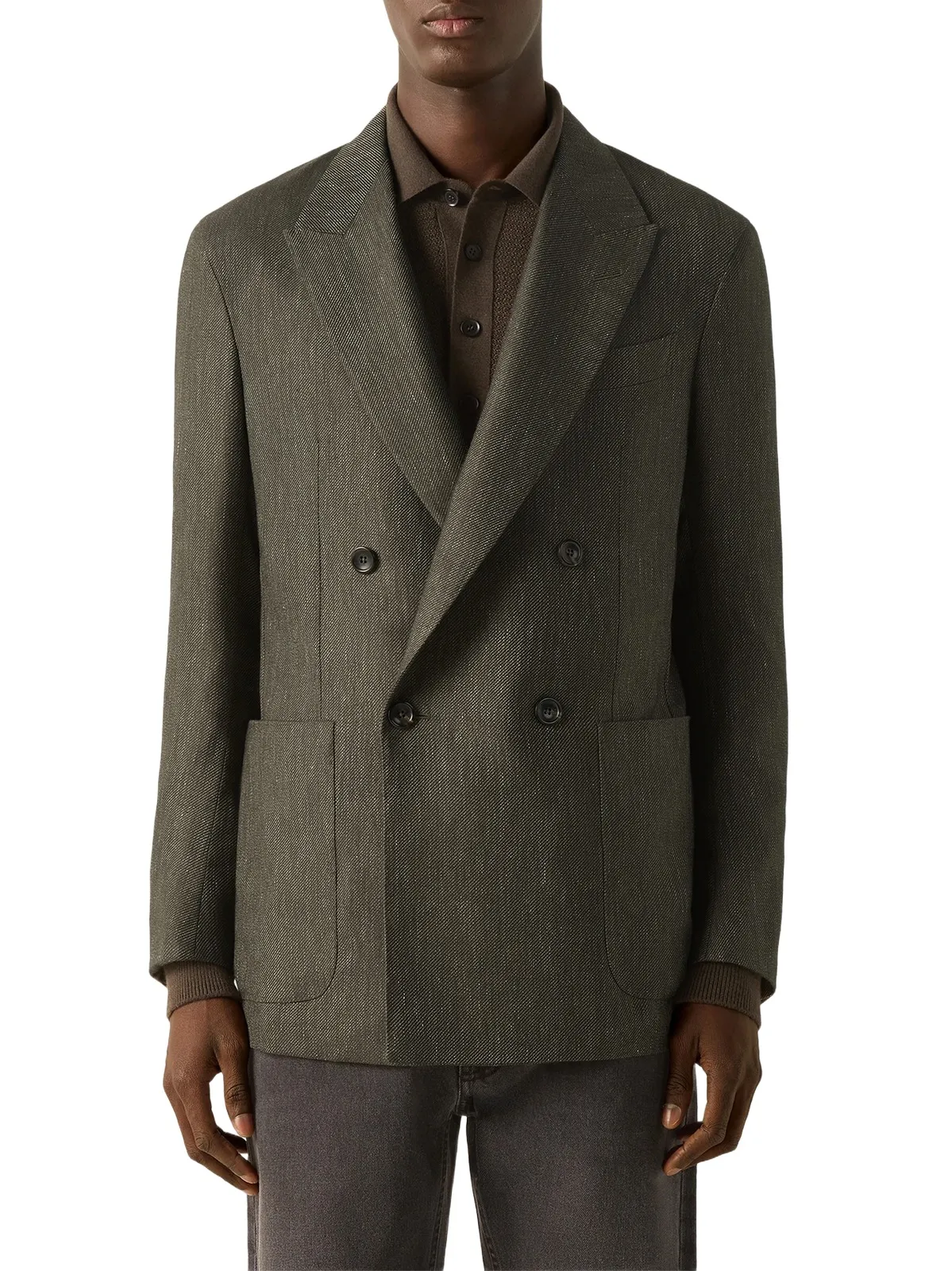 ZegnaMen's Cashmere Silk and Linen Jacket - Dark Olive Green$6,350
 GivenchyMen's Single-Breasted Deconstructed Striped Jacket in Cotton - White Navy$3,050
 CanaliKei Linen and Wool-Blend Blazer - Men$2,295
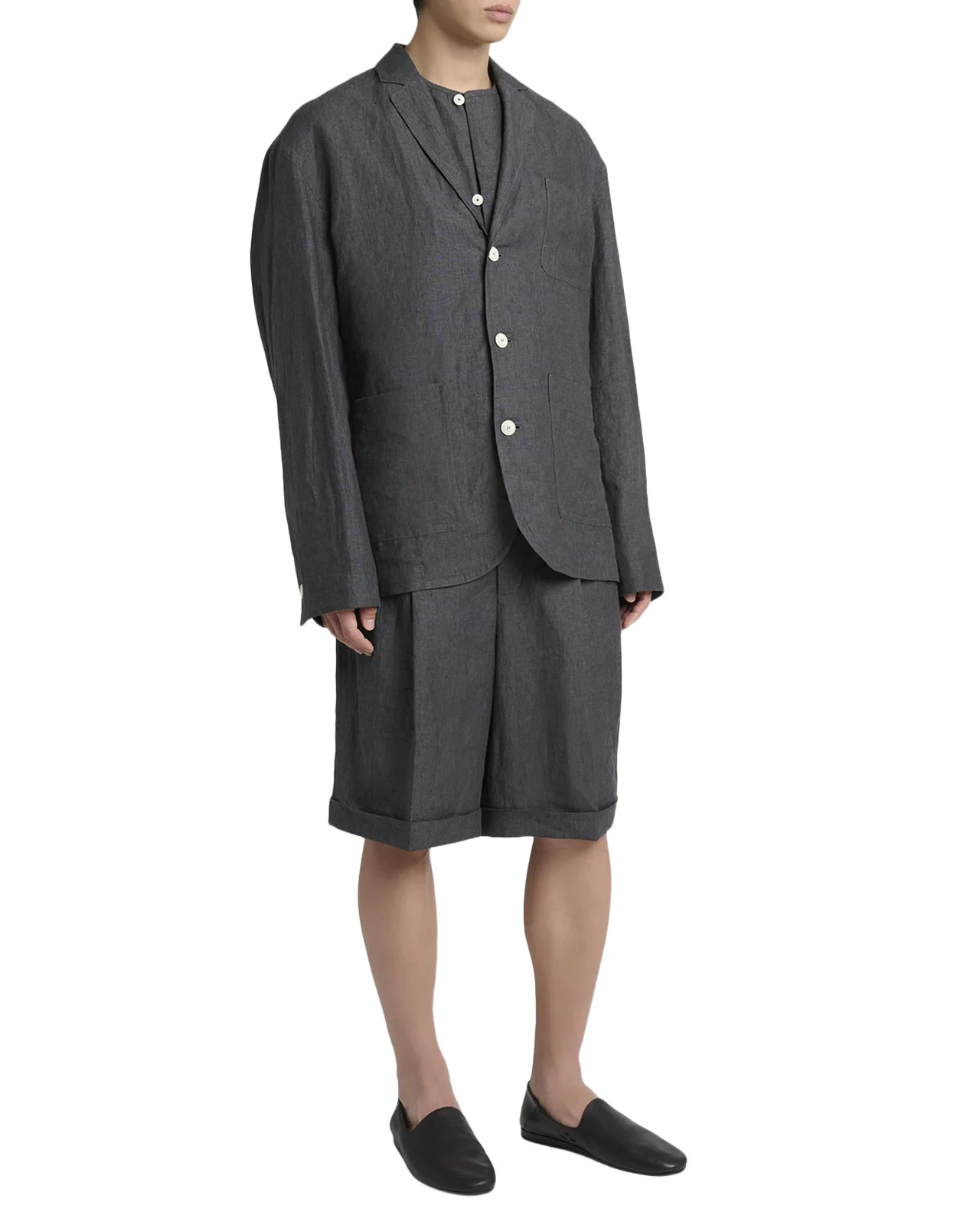 JacquemusMen's La Veste Linen Micro-Stripe Deconstructed Sport Jacket$1,150
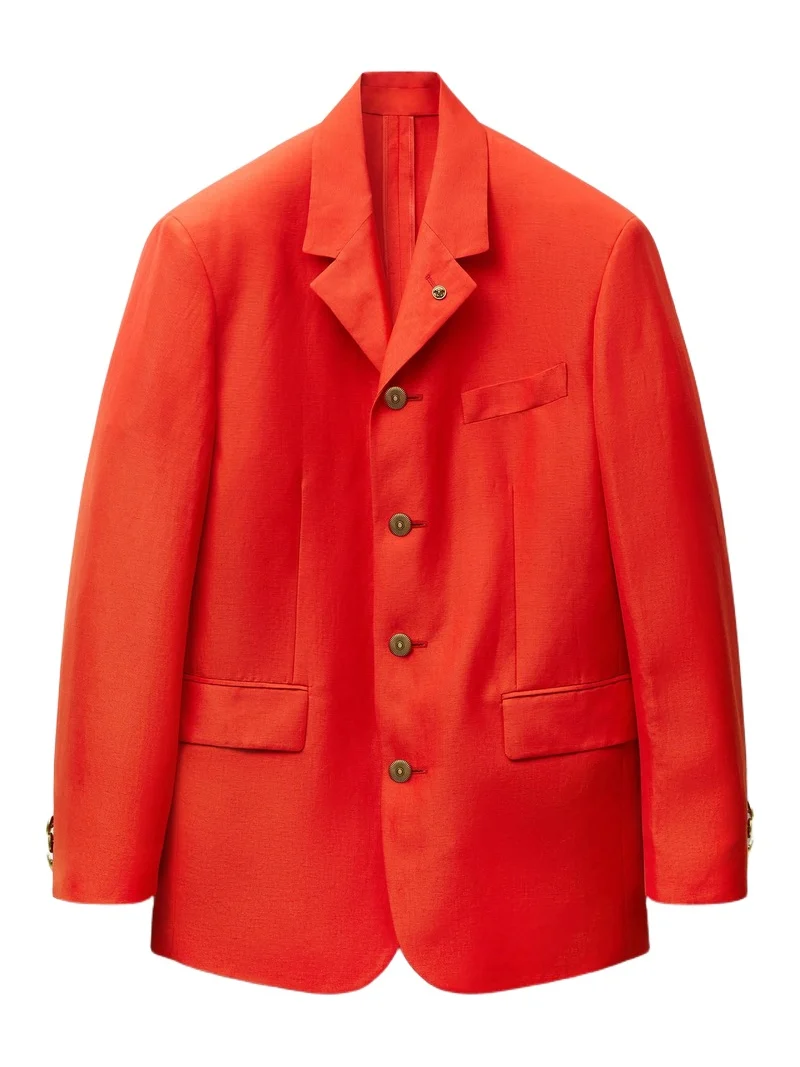 VersaceWool-Linen Blazer$3,250
How a spring jacket should fit through the shoulders
The shoulder is the one part of a jacket a tailor can't really fix, so check it first. How it should look depends on the sleeve:
- Set-in sleeves (blazers, Harringtons, truckers, most field jackets): the seam should end at the edge of your shoulder bone. Past it, the jacket is too big; if it pulls across your back when you reach forward, it's too small.
- Dropped shoulders (chore coats, many overshirts and some suede jackets): the seam sits below your shoulder by design, so judge by the chest and the sleeve length instead.
- Raglan sleeves, with a seam running from the collar to the underarm, are common on trench coats and macs and fit a wider range of shoulders.
Then run three quick tests: cross your arms in front of you (the back shouldn't strain), raise your arms (the hem shouldn't ride up past your belt), and close the jacket over what you'll actually wear under it.
Fabrics and weights for spring
- Cotton gabardine: a dense twill that sheds a shower and holds a crease; the fabric of trenches, Harringtons and dressier bombers.
- Cotton twill and canvas: sturdy workwear cloth for chore coats and field jackets; canvas softens with every wear.
- Linen and linen blends: the coolest options. Pure linen wrinkles readily; blends with cotton, wool or silk wrinkle less and drape better.
- Suede: warm for its weight and windproof, but not waterproof.
- Technical fabrics: nylon, polyester and microfiber are the lightest, pack flat and resist rain; they suit macs, bombers, field jackets and travel.
Lining matters as much as weight. Unlined and half-lined jackets are cooler and lighter and suit April and May; a full lining helps a jacket slide on over knitwear in March. If you can only have one, choose half-lined.
How we chose
We chose jackets from top luxury houses for spring fabrics (cotton, linen, gabardine, suede and technical cloth rather than winter wools and padding), for construction we could confirm on each listing (lined, half-lined or unlined), and for classic colors that pair with most wardrobes. Nothing here is pre-owned, each piece was live on Vêtir when we built the guide, and any edit that loses a jacket to a sell-out refreshes with a close alternative. Not sure which jacket your wardrobe needs? Ask our AI stylist to build three outfits around one of them, or browse bombers, shirt and utility jackets, leather and suede jackets, trench coats and blazers.
Frequently asked questions
What is the best spring jacket for men?
If you buy only one, make it a field jacket in cotton or cotton-linen in olive, navy or stone. It layers over a sweater in March and a T-shirt in May, and works with chinos, jeans and knitwear. A suede jacket is the best second jacket.
What is the difference between a bomber and a Harrington jacket?
Both are waist-length with ribbed cuffs and hem. A bomber has a ribbed knit collar and a zip. A Harrington has a fabric stand collar that buttons at the throat, a check or tartan lining and, in its original Baracuta G9 form, an umbrella-shaped back yoke.
Can you wear a suede jacket in spring rain?
Not by choice. Rain can darken and stiffen suede. Treat it with a suede protector, avoid downpours, and if it gets wet, let it dry naturally away from heat and brush the nap once it's dry.
What temperature is a spring jacket for?
Roughly 50°F to 65°F. Below that, choose a trench or a wool overshirt over a knit; above it, an unlined linen blazer or overshirt.
Should a spring jacket be fitted or relaxed?
Fitted through the shoulders, relaxed through the body. The shoulder should fit exactly (except on dropped-shoulder chore coats and overshirts), with enough room in the chest for one thin layer.
What colors work best for men's spring jackets?
Stone, sand, olive, navy and tobacco. They go with denim, chinos and gray trousers, and they look lighter than the black and charcoal of winter.