The Luxury Ski Trip Packing List: Layers, Gear and What to Carry On
A ski trip packing list for a week comes down to four layers and two wardrobes. On the mountain you need two or three base layers in merino or wool, two mid layers (a fleece or cashmere half-zip and a light down vest), one insulated, waterproof jacket, one pair of ski pants or a bib, three or four pairs of thin ski socks, a helmet, goggles, waterproof mittens, a balaclava or neck warmer, and sunscreen. Off the mountain you need snow boots with a lug sole, two knits, a pair of trousers, one dinner look and a swimsuit for the spa. Rent the skis and poles; bring your boots if you own a pair that fits.
Below: the full list with counts, what to rent and what to bring, how to choose each layer, the accessories that make a cold chairlift bearable, and how to pack it all, including what the TSA and the FAA say about your ski poles and batteries. The pieces come from Moncler Grenoble, Loro Piana, Prada, Balenciaga and other houses. For the terrace and dinner, see our après-ski outfits guide.
The ski trip packing list at a glance
The counts below assume a week away with five or six days on the snow, and one mid-week wash of base layers and socks in the hotel sink or laundry.
| What | How many | Why |
|---|---|---|
| Base layer tops | 2–3 | Fitted, long-sleeved merino or wool; wear one while another airs out |
| Base layer bottoms | 2 | Wool leggings or tights, thin enough not to bind at the knee |
| Mid layers | 2 | A fleece or cashmere half-zip and a light down vest |
| Ski jacket | 1 | Insulated for mid-winter; a shell if you run warm or ski in spring |
| Ski pants or bib | 1 | Waterproof, with inner gaiters that seal over the boot |
| Ski socks | 3–4 pairs | Thin, over-the-calf wool blend; one pair at a time |
| Helmet | 1 | Bring your own or rent one at the resort |
| Goggles | 1 pair, 2 lenses | A dark lens for sun and a light one for flat, snowy days |
| Mittens or gloves | 1 waterproof pair, plus thin liners | Mittens for cold days; liners for phones, zips and buckles |
| Balaclava or neck warmer | 1 | For wind on the lifts |
| Sunscreen and SPF lip balm | 1 each | UV at altitude and off the snow is strong even on cold days |
| Snow boots | 1 pair | A lug sole for the village and après |
| Evening knits and trousers | 2 knits, 1–2 trousers | Stirrups, knit flares or velvet over the snow boots |
| Dinner look | 1 | A knit dress or velvet trousers and a fine turtleneck |
| Swimsuit | 1 | For the hotel spa or hot tub |
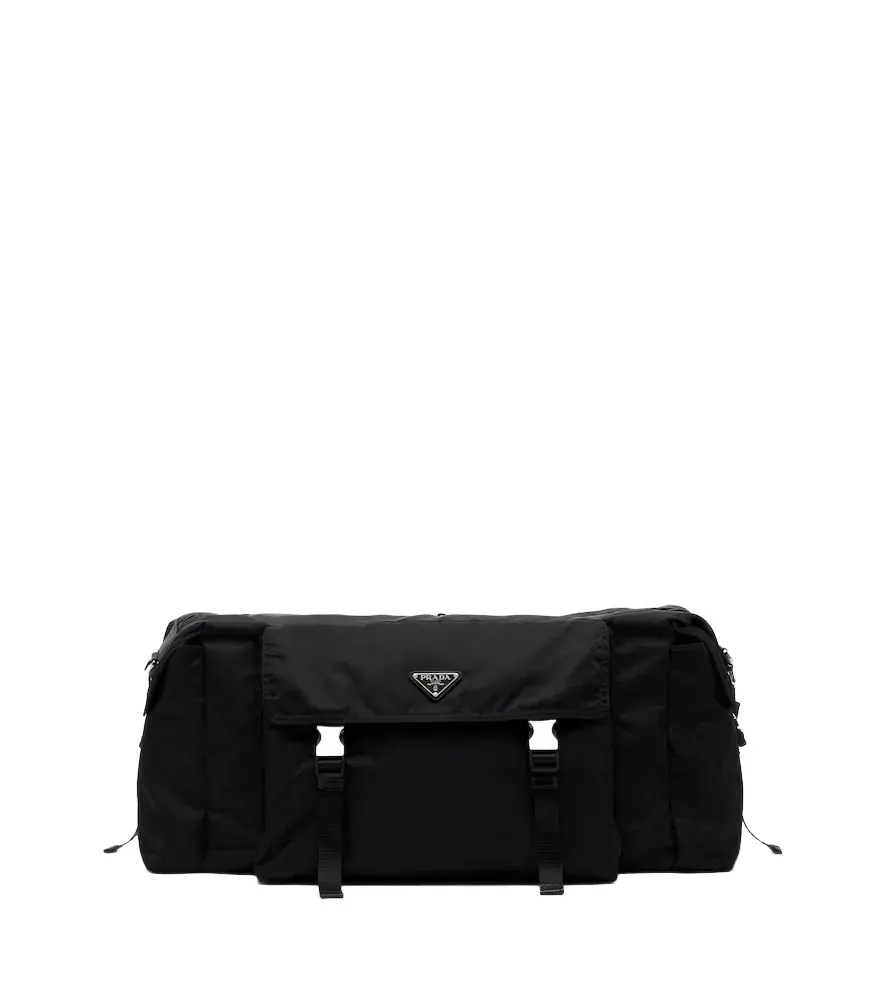
| Small backpack or belt bag | 1 | A spare base layer, sunscreen and your phone |
What to pack for a ski trip, and what to rent
Split the list in two before you open a suitcase. Gear (skis, poles, boots and helmets) is what ski shops rent; clothing is not something you want to buy in a hurry at the base of the mountain. Our rules:
- Skis and poles: rent. They are the most awkward things to fly with, and the TSA allows ski poles only in checked bags, not in the cabin (TSA: ski poles). If you own skis you love, weigh your airline's sports-equipment fee against a week of rental.
- Boots: bring them if you own a fitted pair. Fit decides whether a ski week is a pleasure or a trial, and boots are the one piece of gear worth carrying on board if your airline's size limits allow.
- Helmet: bring or rent, but wear one. The National Ski Areas Association, the US ski-area trade group, reports that the share of skiers and riders wearing helmets rose from 25 percent in the 2002/03 season to 90 percent in 2023/24 (NSAA helmet safety). Your own fits better and holds your goggles properly; a rented one saves space.
- Goggles: bring your own. They pack inside the helmet, and a pair that fits your face and your helmet is not something to leave to chance.
- Clothing: bring all of it. A good layering system is what makes a cold day comfortable, and it is the part no rental shop can fix.
Base layers: what goes next to the skin
Our après-ski guide explains why wool and synthetics beat cotton once you stop moving. For packing, three rules matter more than the fiber debate:
- Fitted, long-sleeved and high-necked. A base layer only works in contact with the skin; a loose one lets cold air circulate. A turtleneck or mock neck closes the gap between collar and helmet strap.
- Two or three tops for a week. Wear one, air one overnight, and wash one mid-week.
- Thin bottoms. Wool leggings or wool tights under ski pants; anything thicker bunches at the knee and inside the boot cuff.
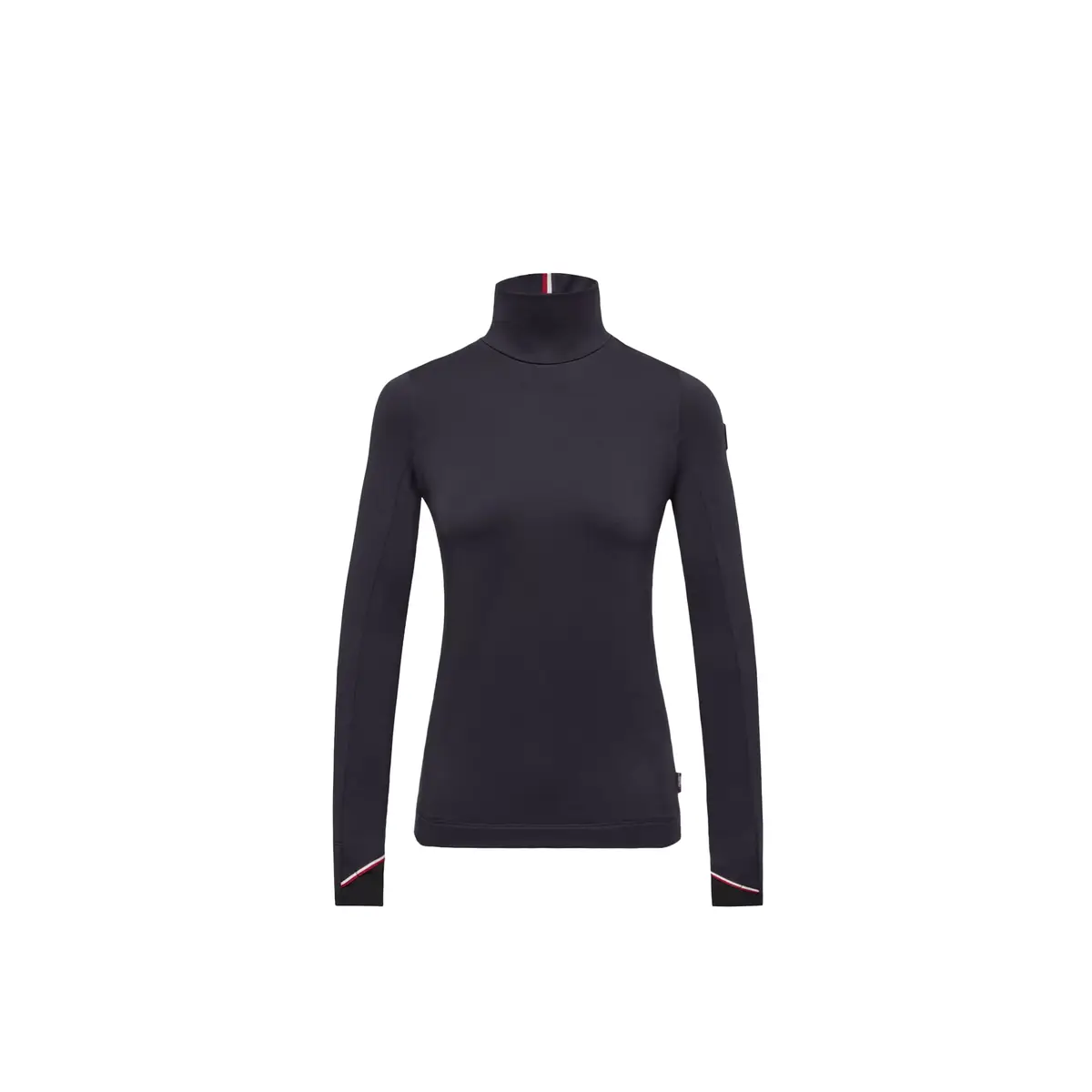
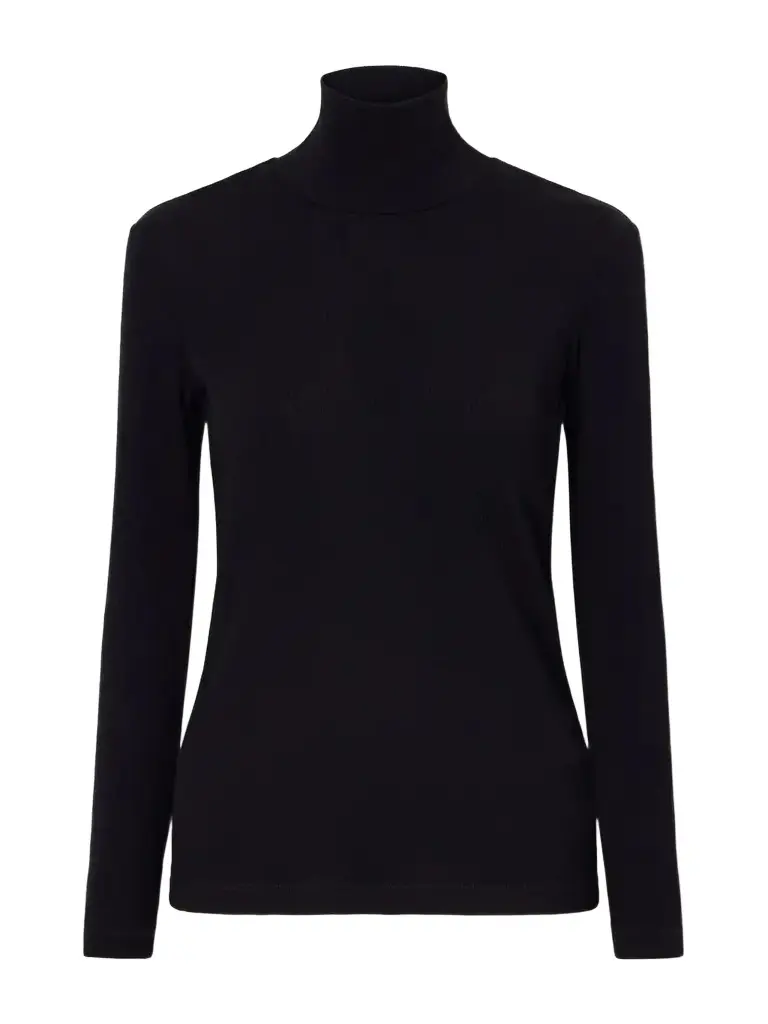
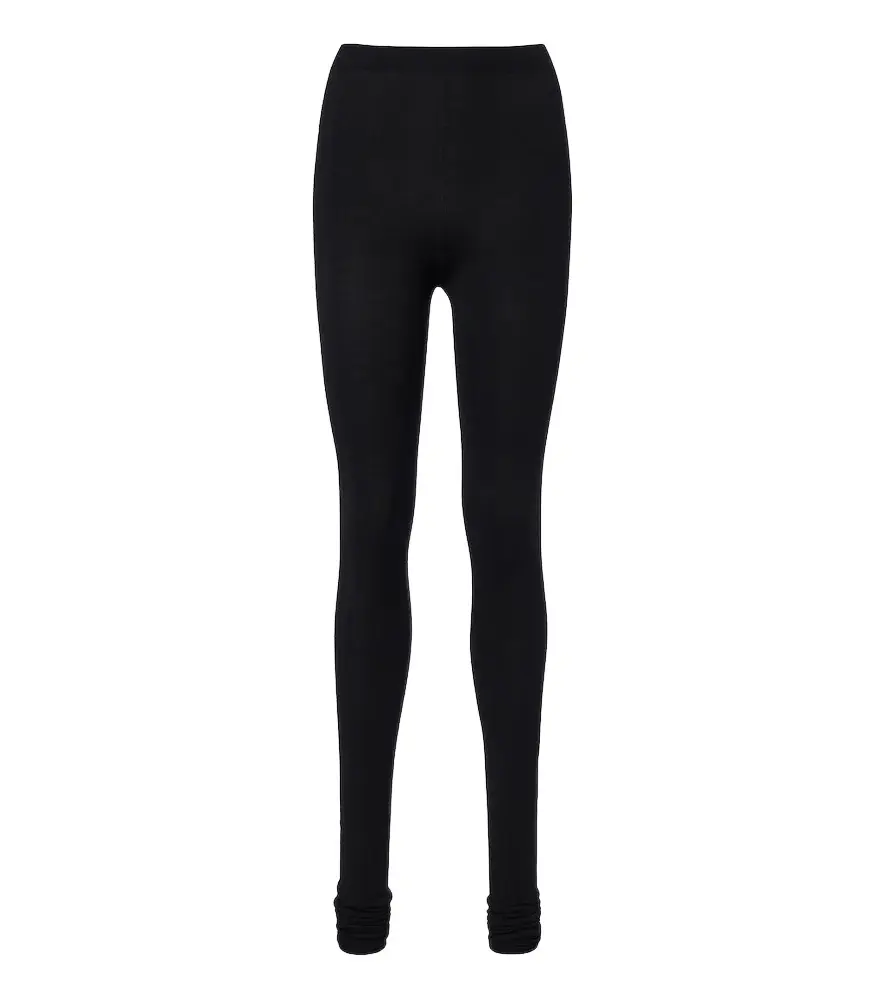
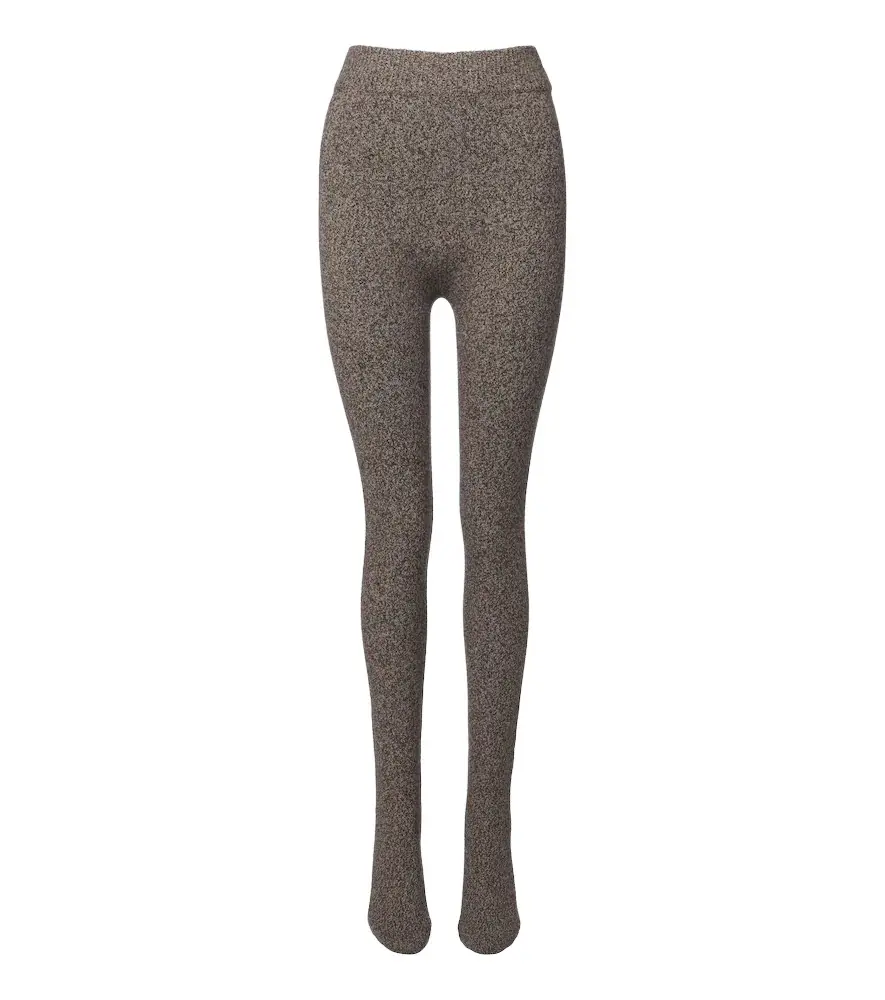
Luxury houses make few true base layers. Moncler Grenoble's technical-fleece turtlenecks are the exception built for the purpose. Otherwise, a close-fitting wool or wool-cashmere turtleneck, from Max Mara's wool jersey to Gabriela Hearst's fine knits, and wool leggings or tights from Bottega Veneta or Magda Butrym do the same job under a technical jacket, and look better at lunch. Browse more designer leggings.
Base layers: fitted turtlenecks, technical fleece and wool leggings


Mid layers: the piece that doubles as your après look
The mid layer holds the warmth, and it is the piece people see when the jacket comes off at lunch. Pack two that can be worn together on the coldest days.
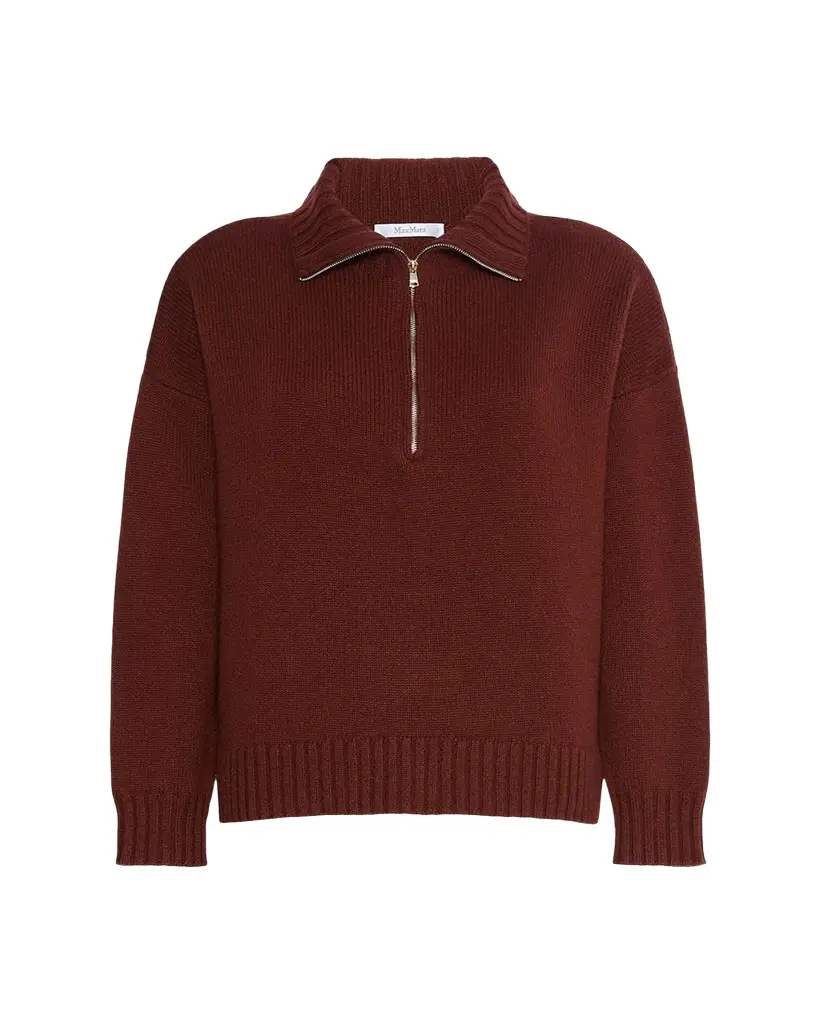
- A half-zip in cashmere, wool or technical fleece: open the zip on the chairlift and close it before the run.
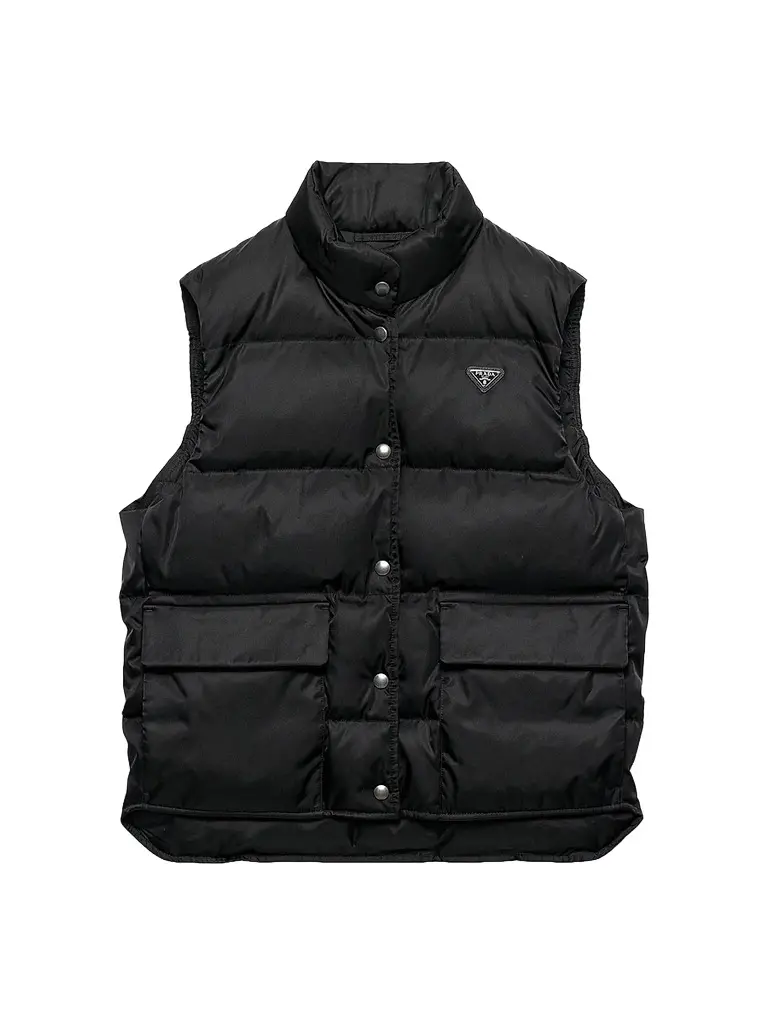
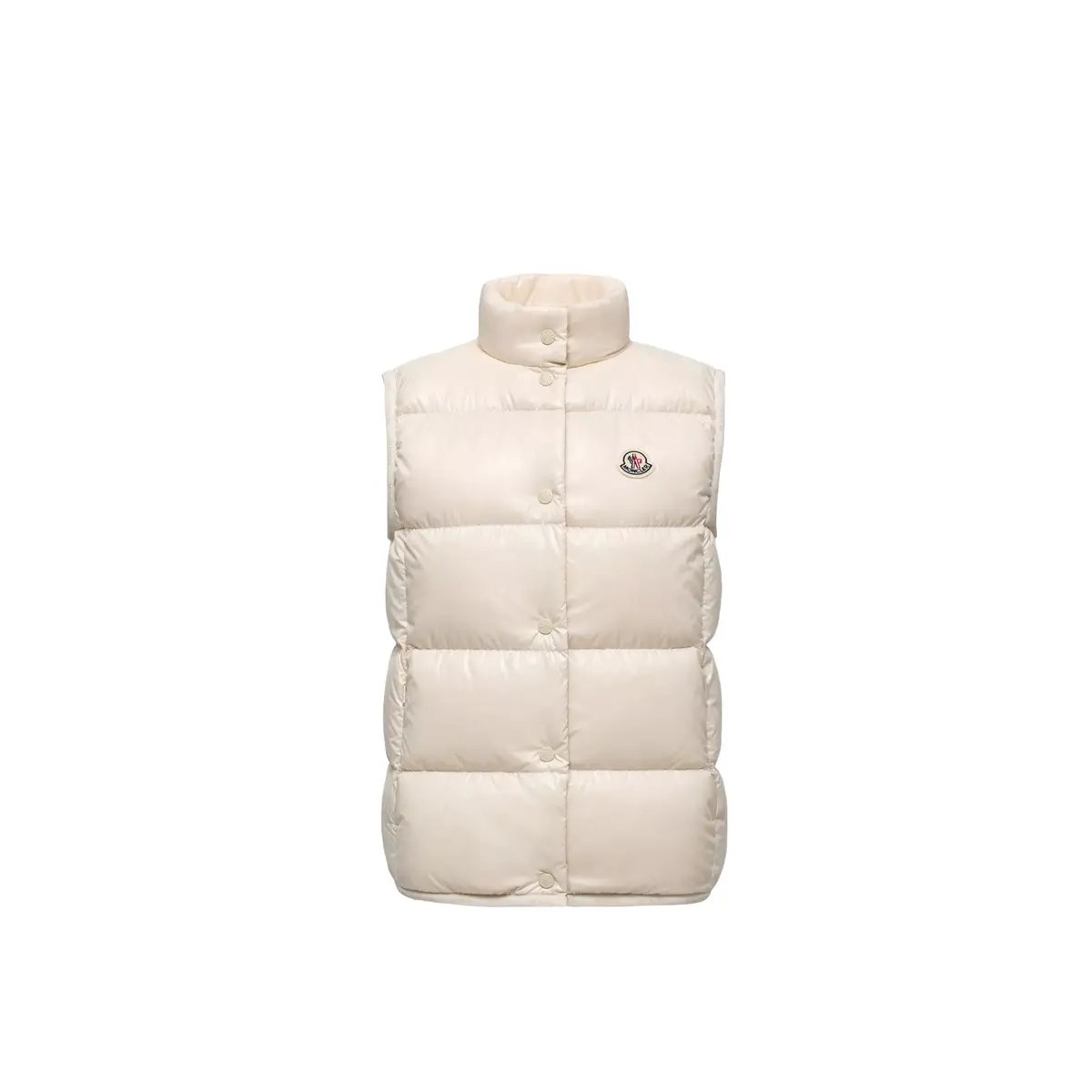
- A light down vest: warmth at the core without sleeves binding under the jacket, and it works alone on a sunny terrace.
- Keep it smooth: chunky cables and big collars bunch at the shoulders under a fitted ski jacket. Save them for the lodge.
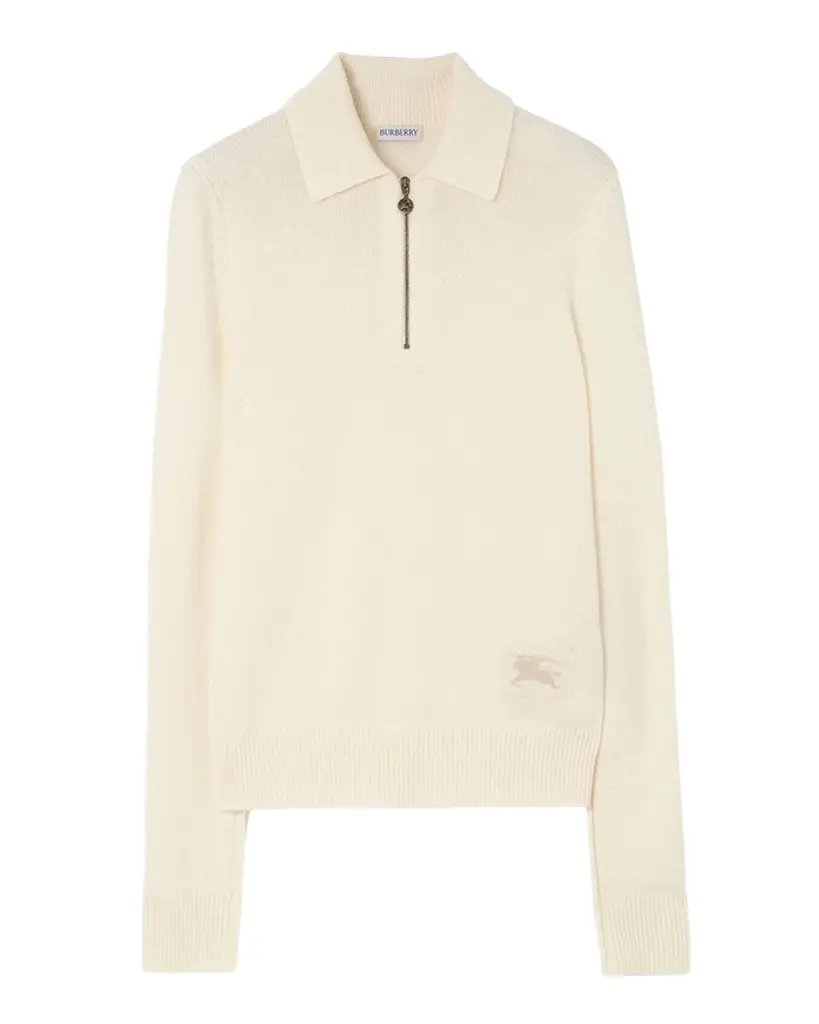
- Cold morning: a merino base layer, an ivory cashmere quarter-zip, a black down vest and an insulated jacket.
- Spring skiing: a base layer and a brown cashmere-and-silk half-zip under a shell, with the vest in your backpack for the afternoon chill.
- Lunch on the terrace: jacket on the back of the chair, a grey ribbed half-zip turtleneck and an ivory down vest.
Burberry's cashmere quarter-zips, Tod's fine cashmere-and-silk half-zips and the down vests from Prada and Moncler are the pieces we would pack; for fill and fit, see our guide to designer puffer coats.
Mid layers: cashmere half-zips and light down vests


Luxury ski wear for women: the jacket, the pants and the one-piece
The outer layer keeps out snow and wind. The first decision is whether it also keeps you warm.
- Insulated jacket: down or synthetic fill built in. The right choice for mid-winter and for high, cold resorts, and the simpler one to pack.
- Shell: a waterproof outer with no insulation, so the layers underneath set the warmth. Better for spring skiing, for anyone who runs warm, and for wet snow.
- What to look for: a waterproof, breathable membrane (Gore-Tex is the best-known name), a powder skirt that snaps shut inside the jacket, a hood that fits over a helmet, underarm vents, and a sleeve pocket for the lift pass.
- Length: to the hip or just below, so the jacket still covers the waistband when you bend to buckle a boot.
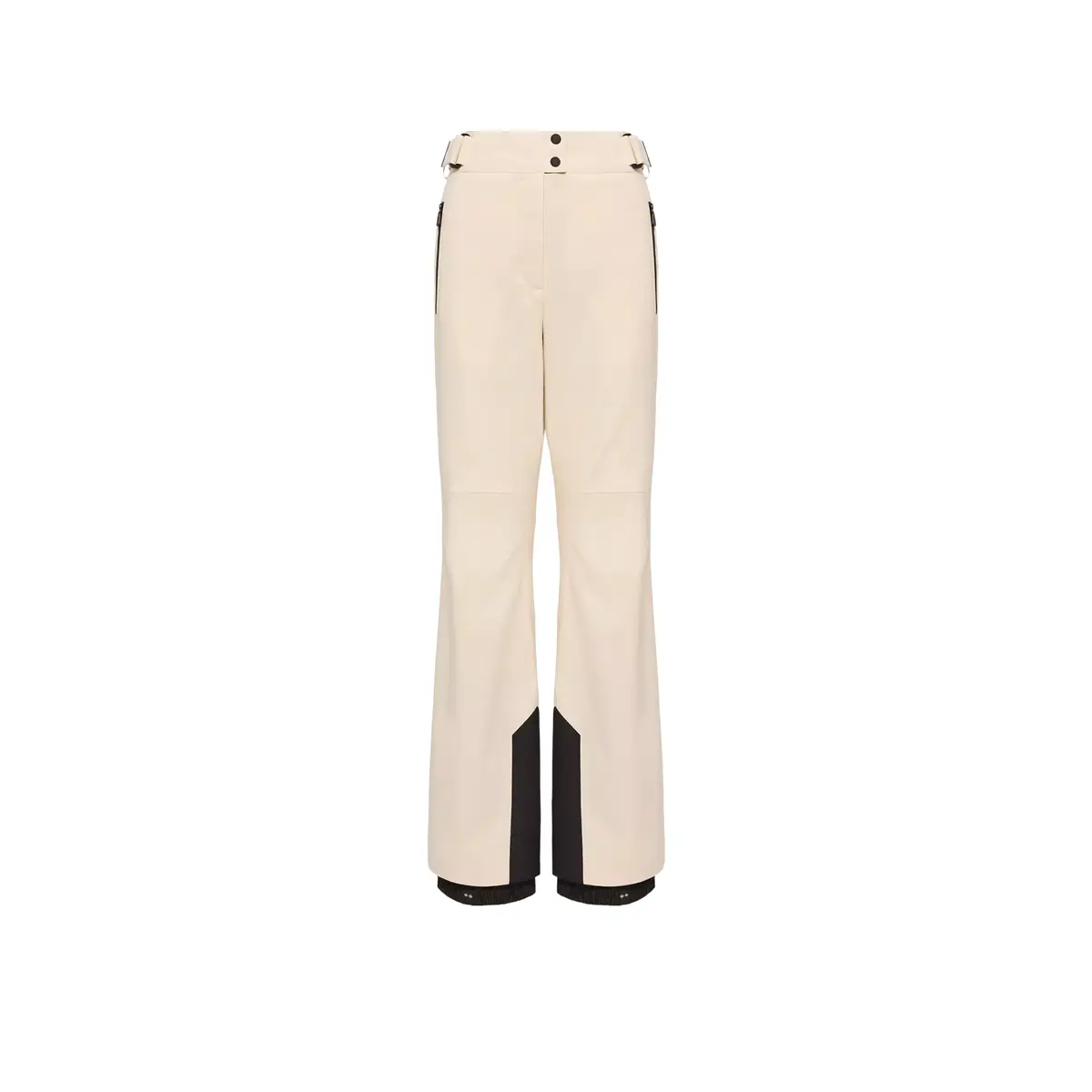
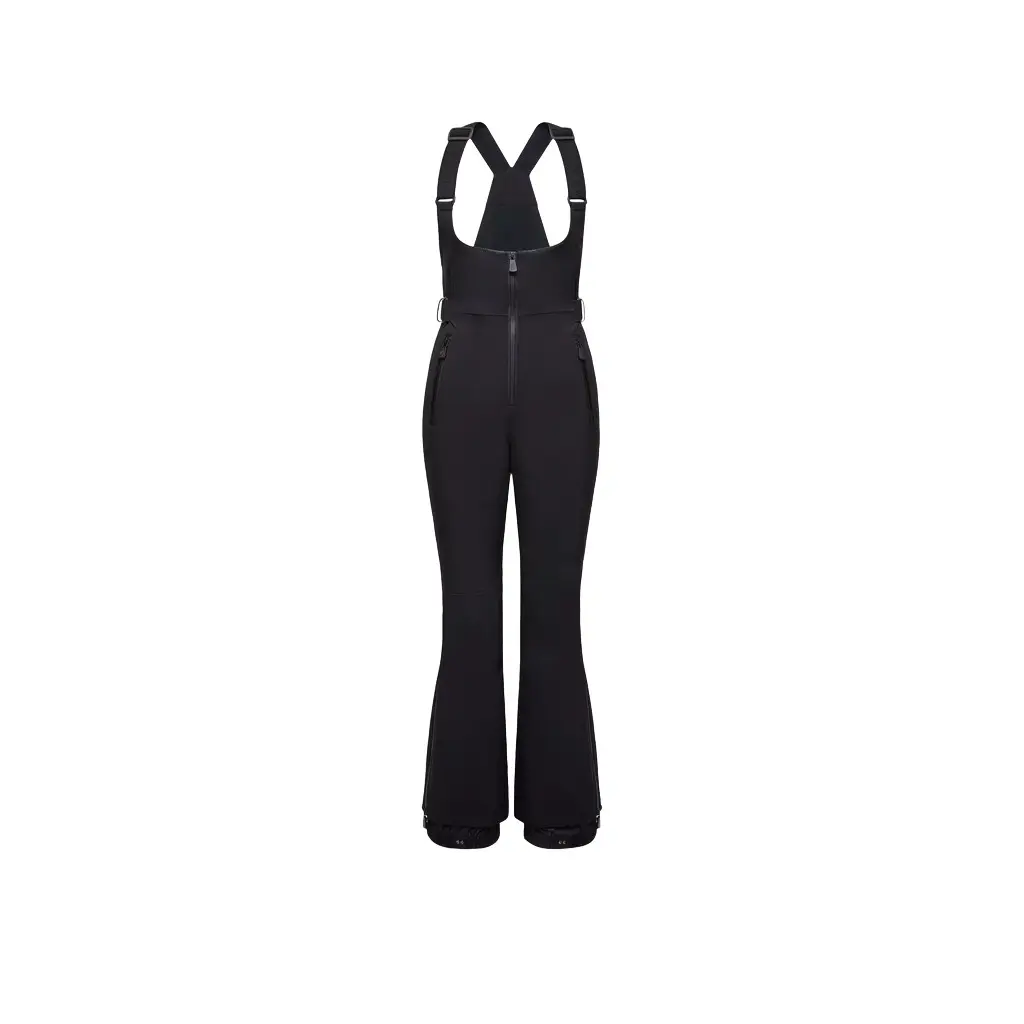
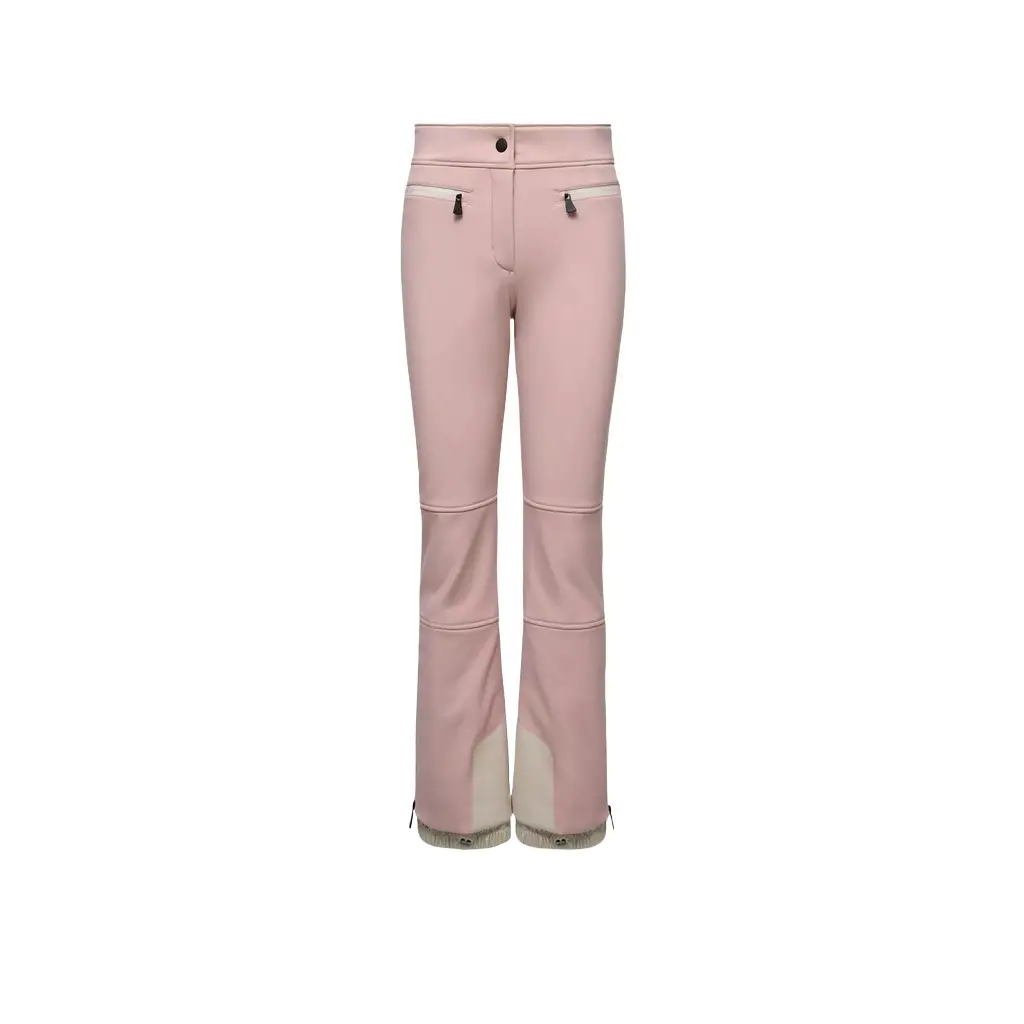
Below the waist you have three choices. Ski pants are the easiest to wear and to take off at the end of the day. A bib keeps snow out of the back when you fall and looks finished over a turtleneck at lunch. A one-piece suit closes the gap at the waist entirely and is the boldest option on the mountain. Whichever you choose, look for inner gaiters that seal over the boot, reinforced hems, and a leg long enough to cover the top of the boot.
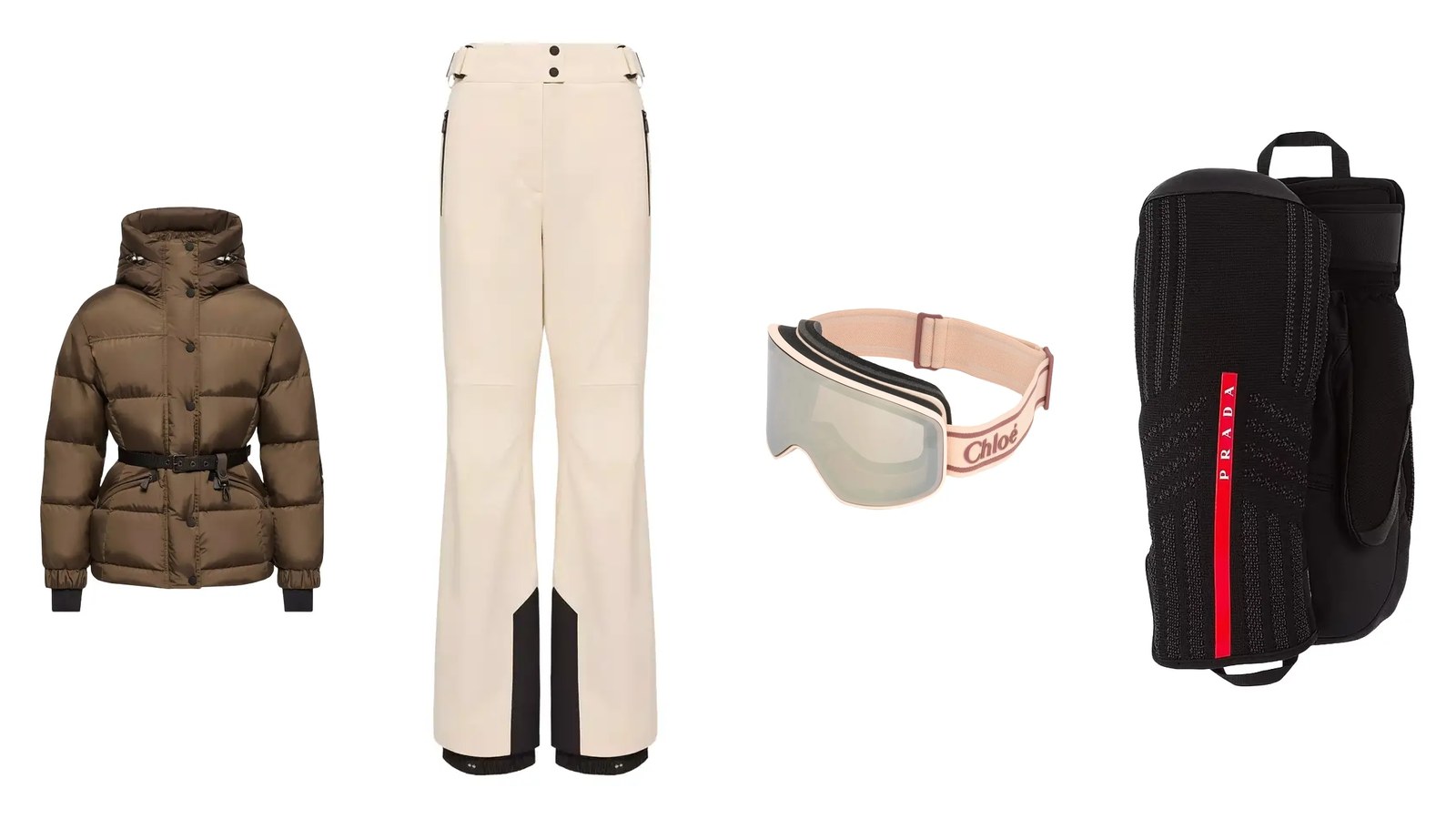
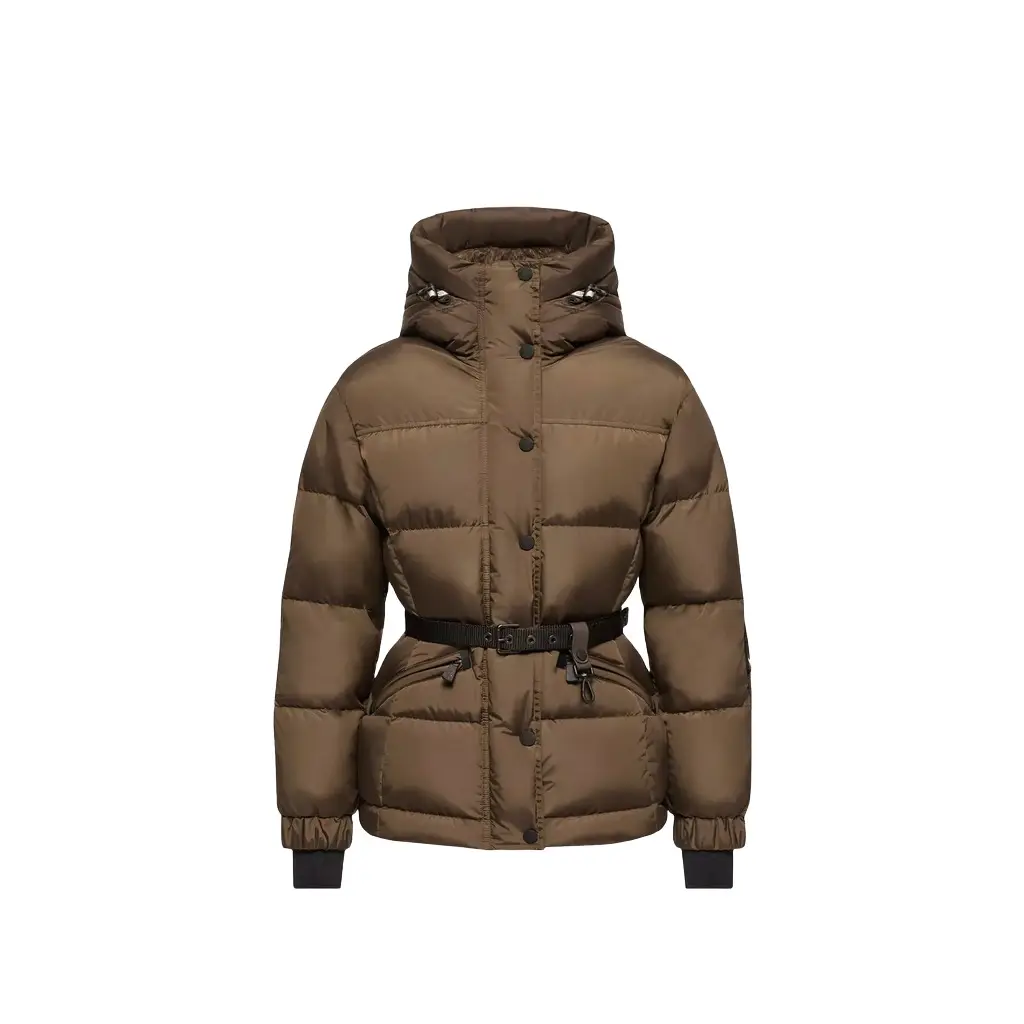
- Chocolate and ivory: a chocolate belted, hooded jacket over ivory ski pants, with a black helmet and blush goggles.
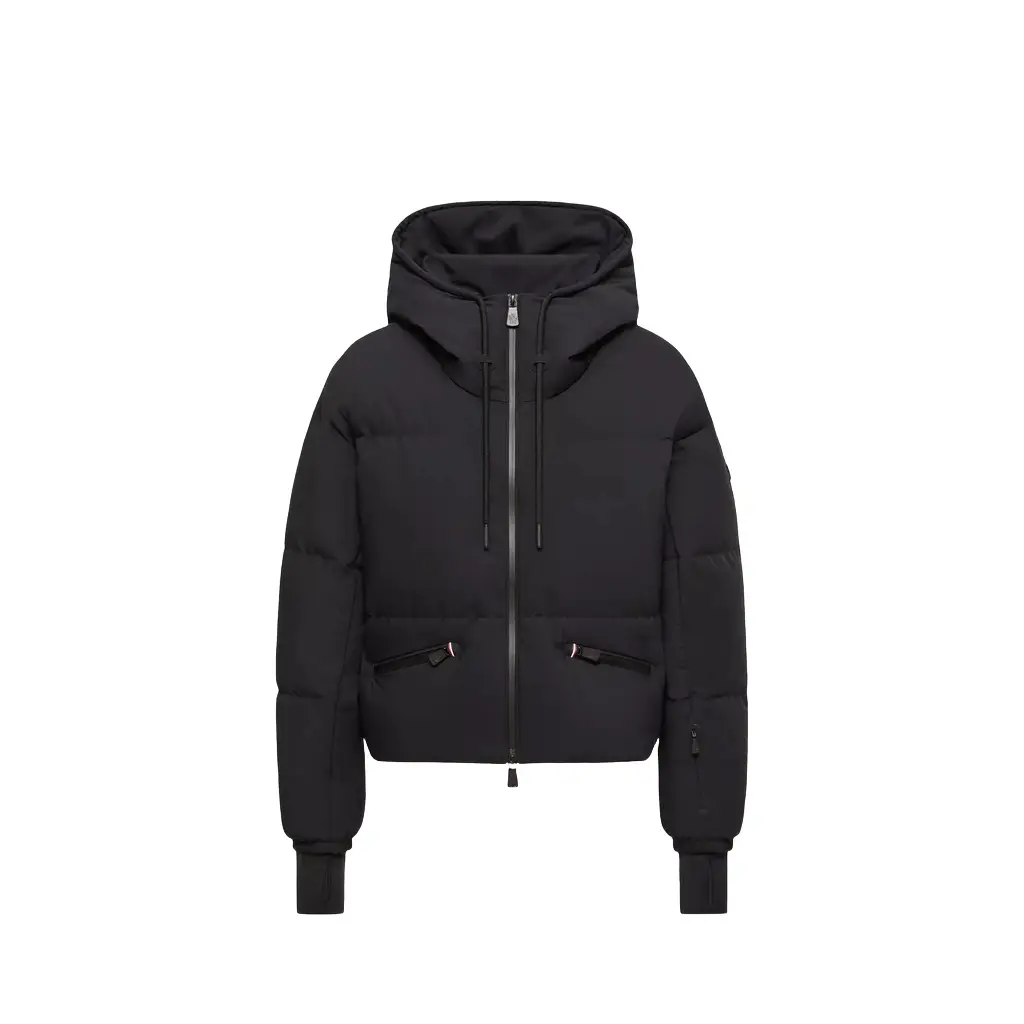
- All black: a black hooded insulated jacket over a black bib, with a grey cashmere balaclava and mirrored goggles.
- All in one: a lavender belted one-piece over an ivory cashmere quarter-zip, with blush goggles.
Moncler Grenoble, the house's skiwear line, cuts many of its insulated jackets to be belted and fitted; Loro Piana's belted ripstop one-piece is the quieter alternative. See more ski clothing on Vêtir, and our stylists' Ski Shop edit.
Ski jackets and a one-piece suit

Ski pants and a bib
Helmet, goggles, mittens and sun protection
- Helmet and goggles together: try them as a pair. There should be no gap between the top of the goggle frame and the helmet brim, and the strap should sit flat on the back of the helmet.
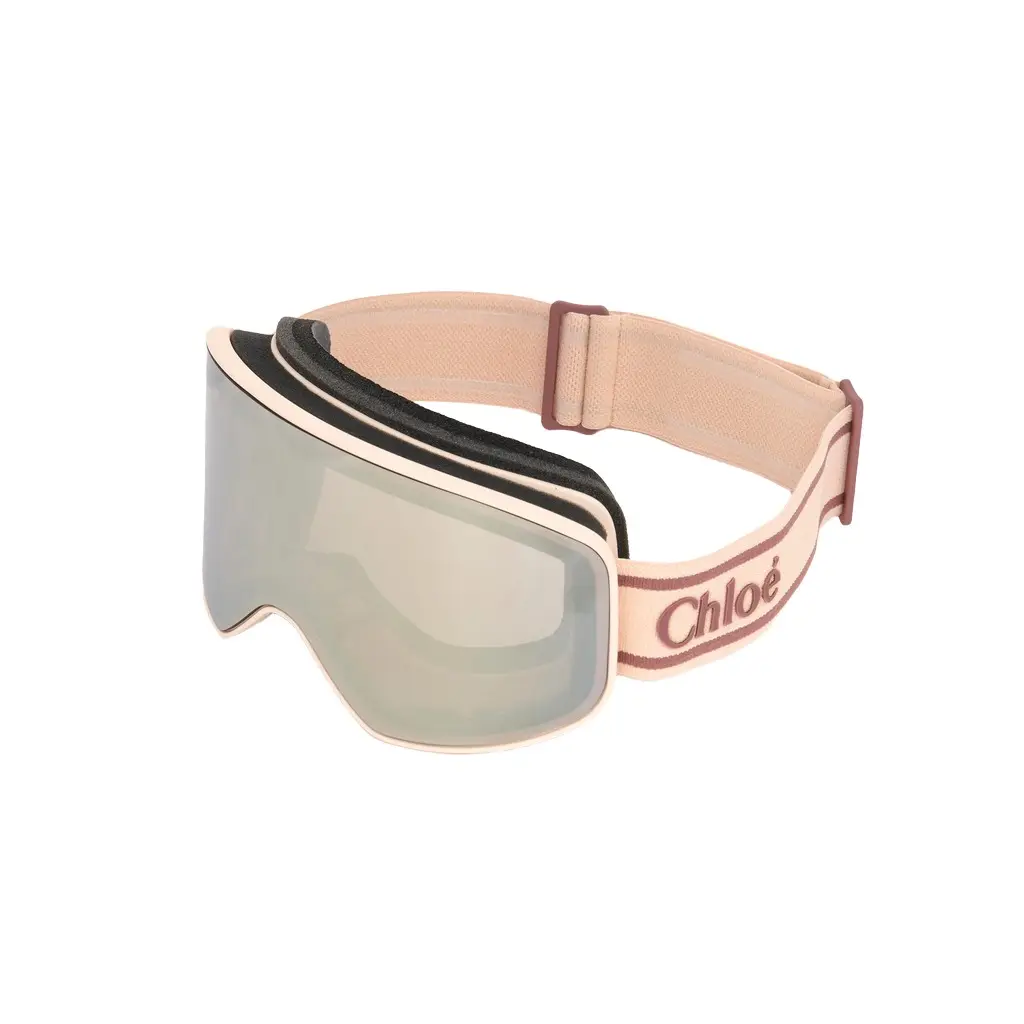
- Two lenses, or one that adapts: a dark lens for bright days and a light one for flat, snowy light, or a photochromic lens that changes with the conditions.
- Mittens over gloves on cold days: fingers kept together share their warmth. Look for a waterproof shell and a leather palm, and pack thin knit gloves as liners for your phone, zips and buckles. Our guide to the best designer gloves covers the town pairs.
- A balaclava or neck warmer: in thin wool or cashmere, so it fits under the helmet and pulls up over your nose on a windy lift.
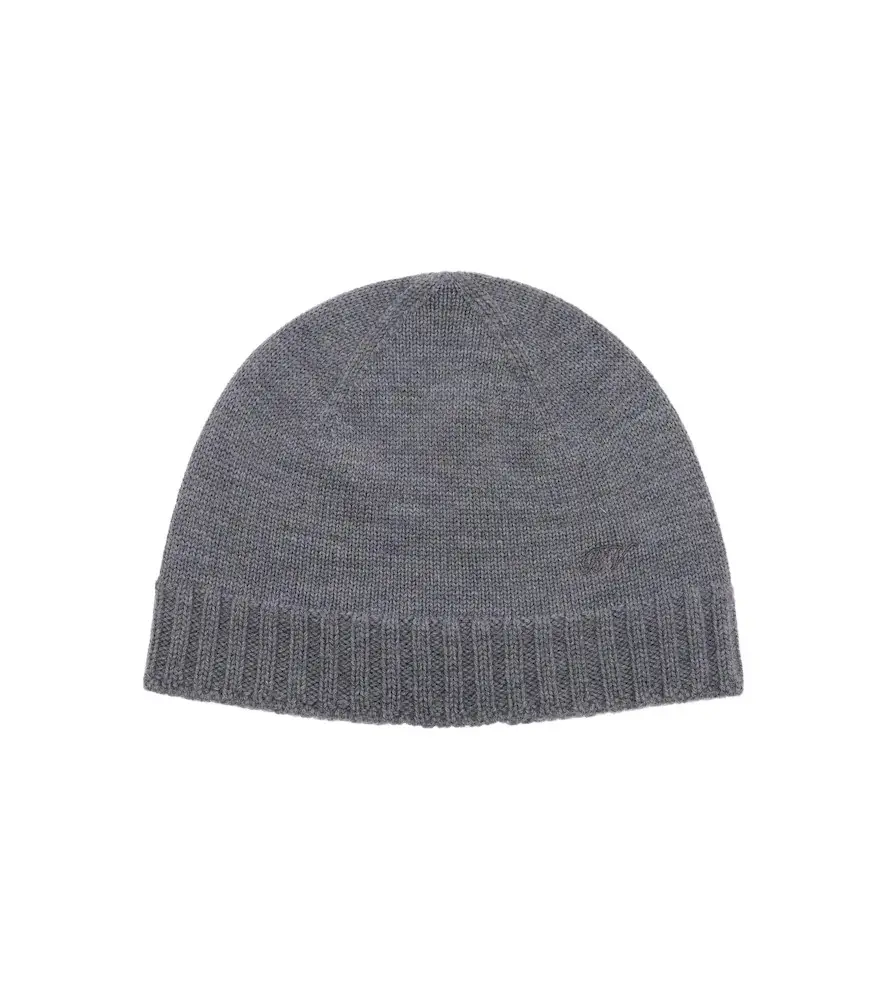
- A hat that is not your helmet: a fine wool beanie for the walk to the lift and the village after.
- Sun protection: the Skin Cancer Foundation notes that UVB rays can damage skin year-round, especially at high altitudes or on reflective surfaces such as snow and ice (Skin Cancer Foundation). Pack a broad-spectrum sunscreen and an SPF lip balm, and reapply at lunch.
- Socks: one thin pair of over-the-calf ski socks. Two pairs, or one thick pair, crowd a ski boot and cause pressure points.
Chloé makes ski goggles in soft blush tones, Prada's knit and Gore-Tex mittens are made for the mountain, and Brunello Cucinelli and Max Mara knit the balaclavas. Browse more designer gloves and mittens.
Helmet, goggles, mittens, liners and hats




Off the mountain: the lodge and dinner wardrobe
Pack less for the evenings than you think. You will spend most of them in the same snow boots, so the wardrobe is built around what goes over them.
- Snow boots with a deep rubber lug sole, for the walk from the lift to the hotel and every evening after. Browse cold-weather boots.
- Two knits that stand on their own: a Fair Isle or cable crewneck and a fine turtleneck.
- One or two pairs of trousers that work with the boots: stirrups, knit flares or velvet.
- One dinner look: a knit dress with opaque tights, or velvet trousers with a fine cashmere turtleneck.
- A swimsuit for the spa, and a warm hat that is not your helmet liner.
Our après-ski outfits guide covers the terrace, the lodge and the dinner change in detail, and our guide to what to wear in Aspen adds the town and restaurant wardrobe for one resort.
How to pack it: the ski bag, the boot bag and the carry-on
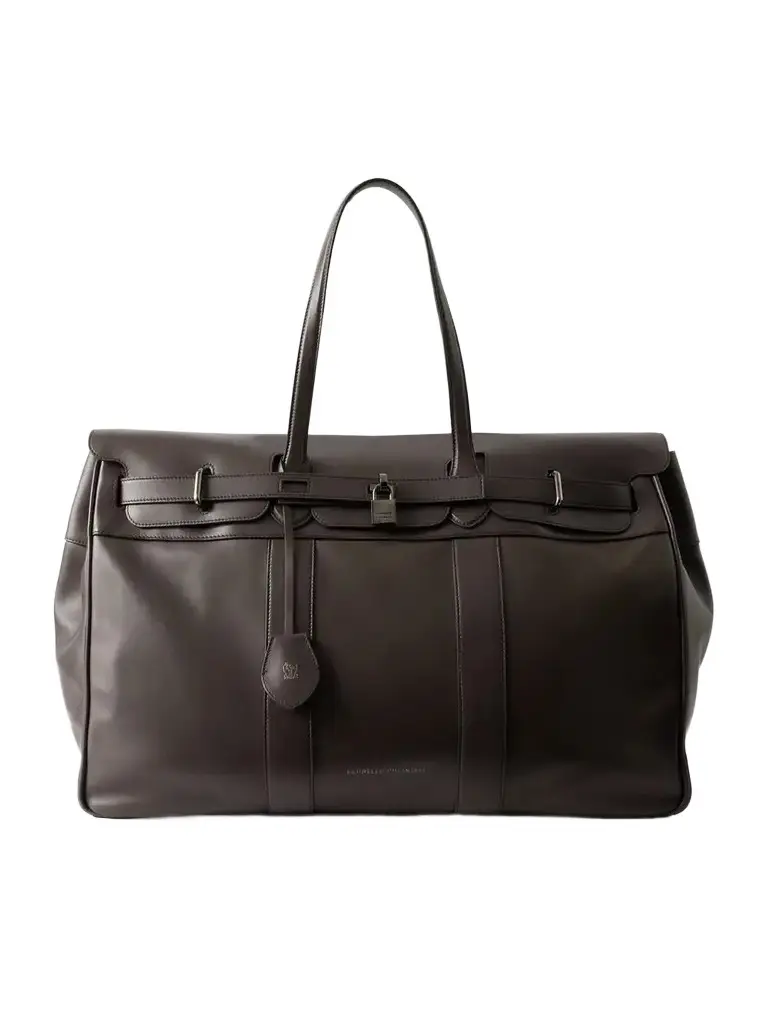
- Checked: skis and poles in a padded ski bag if you bring them, and a soft duffel for clothes, which folds into a car trunk or a shuttle van more easily than a hard case.
- Boot bag: boots, helmet, goggles and gloves together, so the kit for day one travels as a set.
- Carry-on: your boots if your airline's carry-on limits allow, plus goggles, one base-layer set, gloves and any spare batteries. If a checked bag goes astray, you can still ski the next morning on rental skis.
- Batteries: heated gloves, socks and jackets run on lithium-ion packs, and the FAA requires spare lithium batteries to travel in carry-on baggage only, with the terminals protected from short circuits by tape, a case or their original packaging (FAA PackSafe: lithium batteries).
- Airline rules: each airline sets its own policy on ski bags, including whether a boot bag travels with the skis as one item, the weight limit and the fee. Read your carrier's sports-equipment page before you pack, not at the check-in desk.
- Wear the bulk: travel in your ski jacket or down coat and your snow boots, which frees the bulkiest space in the suitcase.
More on the method in our guide to packing efficiently for travel, and browse weekend bags on Vêtir.
Duffels, weekenders and a carry-on for a ski week


Want the list built from what you already own? Ask our AI stylist to check your closet against it and fill the gaps.
How we chose
- Houses: top luxury houses throughout, matched to the job: ski clothing from Moncler Grenoble and Loro Piana, mountain accessories from Prada and Chloé, and base and mid layers from knitwear houses.
- Construction: insulated or Gore-Tex pieces where the product itself says so, fitted base layers, and luggage that can take a week of kit.
- Fabric: wool, cashmere and technical fleece next to the skin; down and cashmere in the middle; windproof, water-resistant or waterproof outer layers.
- Price: accessories are the least expensive way in; the jackets, the one-piece and the leather luggage are the investment pieces.
- Availability: from the base layers to the luggage, the whole kit list was live on Vêtir in late September 2026, and any piece that sells out is replaced in its module with a close alternative.
- Fit notes: size the jacket to go over a mid layer, try helmet and goggles together, and check that ski pants cover the boot.
Frequently asked questions
What should I pack for a ski trip?
For a week: two or three base layer tops and two bottoms, two mid layers, one insulated waterproof jacket, one pair of ski pants or a bib, three or four pairs of thin ski socks, a helmet, goggles, waterproof mittens, a balaclava, sunscreen, snow boots, two knits, trousers, one dinner look and a swimsuit.
How many base layers do I need for a week of skiing?
Two or three tops and two bottoms. Wear one set, air one overnight, and wash mid-week. If you run warm, carry a spare top in your backpack and change at lunch.
Should I rent or bring my own skis?
Rent skis and poles unless you own a pair you love and your airline's sports-equipment fee makes sense. Bring boots if you own a fitted pair: fit matters more than any other piece of gear.
Can I bring ski poles and ski boots on a plane?
The TSA allows ski poles only in checked bags. A boot bag that meets your airline's carry-on size and weight limits can go in the cabin, so check the airline's rules before you fly.
What do you wear under ski pants?
A thin base layer: wool leggings, merino long johns or wool tights. Avoid cotton and anything thick enough to bunch at the knee or inside the boot cuff.
Do I need a helmet to ski?
Wear one. The National Ski Areas Association reports that 90 percent of skiers and riders wore helmets in the 2023/24 season. Rent one with your skis, or bring your own for a better fit with your goggles.