What to Wear Skiing: The Luxury Guide From Base Layer to Goggles
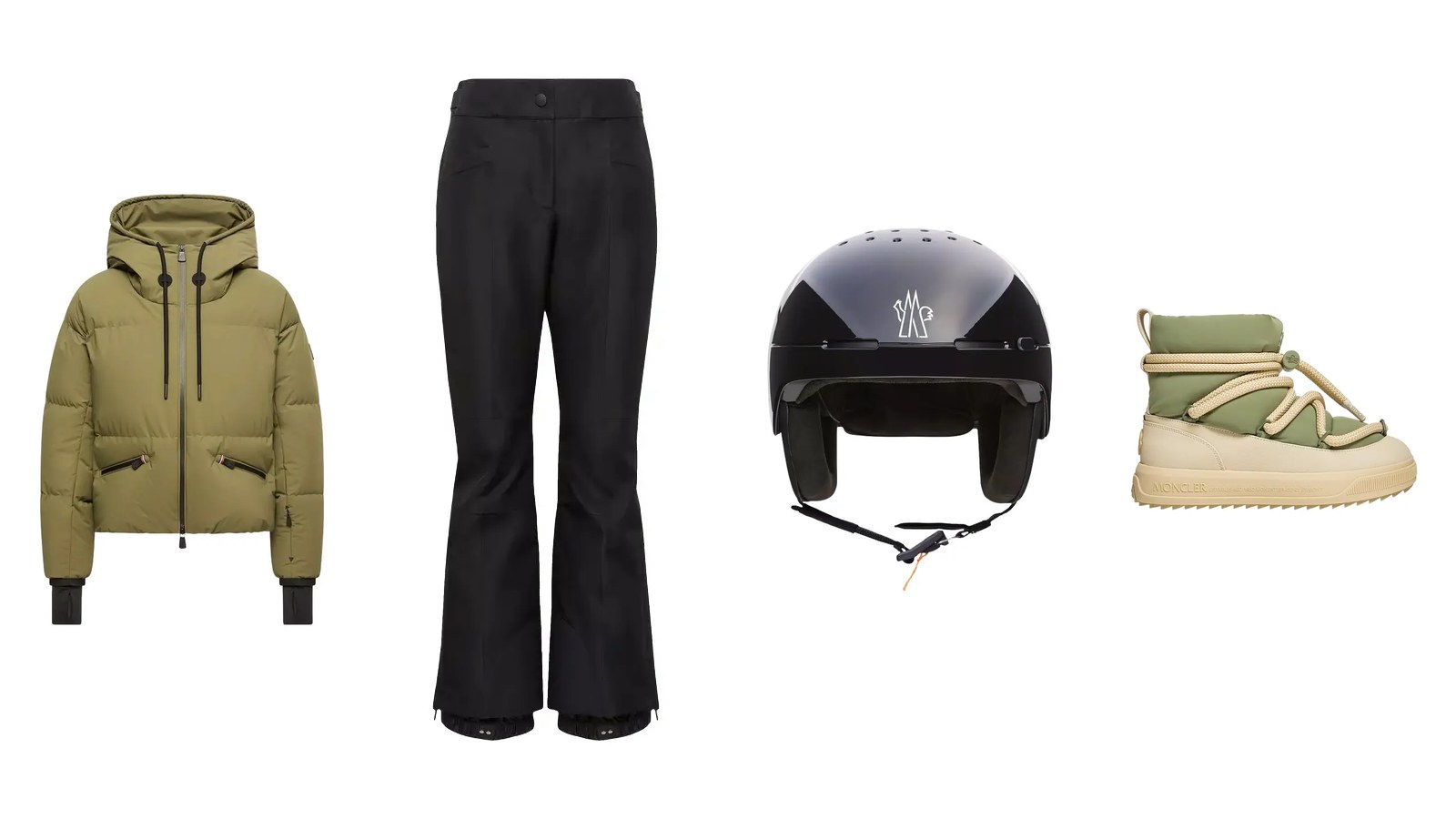
What to wear skiing comes down to three layers and a handful of details that do real work. Next to your skin, a fitted base layer in merino, wool-silk or a technical synthetic, never cotton. Over it, a thin mid layer of fleece, fine cashmere or down. On top, a waterproof, breathable ski jacket with ski pants, a bib or a one-piece suit. Then the gear: a certified helmet, goggles with a lens matched to the light, waterproof mittens or gloves, one pair of wool-blend ski socks, a neck warmer and sunscreen.
Below: each layer, waterproof ratings, jacket features, pants versus bibs and one-piece suits, helmets, lenses, color, fit and a men's edit. The edit leans on Moncler Grenoble, Moncler's skiwear line, because among the top luxury houses we carry it is the one making a full technical ski wardrobe, from base layer to helmet. Goggles, one-piece suits and a few other pieces come from Tom Ford, Loro Piana and other houses.
What to wear skiing: the three-layer system
A ski day swings between hard work and sitting still: a fast run that warms you through, then ten minutes on an exposed chairlift. Layering handles that swing, with each layer doing one job.
| Layer | Its job | Choose | Skip |
|---|---|---|---|
| Base | Moves sweat off your skin and keeps a dry, warm layer against it | Fitted merino, wool-silk or a technical synthetic, with long sleeves and a high neck | Cotton, loose fits, anything thick |
| Mid | Traps warm air; the layer you add or remove as the day changes | Fleece, fine cashmere, a padded cardigan or a down vest | Chunky cables that bunch under a fitted jacket |
| Outer | Keeps out snow, wind and wet while letting vapor escape | A waterproof shell or insulated ski jacket, with ski pants, a bib or a one-piece suit | Fashion puffers with no powder skirt or sealed zips |
Cotton fails on the hill because it soaks up the sweat of a hard run and then sits cold and damp against you on the lift; our après-ski guide explains why wet cotton stops insulating. The rule is about what touches your skin. On the outside, treated cotton blends can work: Loro Piana cuts its belted one-piece from a treated cotton-blend ripstop, and Moncler Grenoble makes ivory ski pants from a two-layer stretch corduroy it calls water-resistant and breathable.
Ski layering by temperature
These are our starting points, not rules; adjust them for wind, sun and how warm you run.
- Spring sun, above freezing: a lightweight base layer under a shell or a lightly insulated jacket, with a packable vest in a pocket for the lift.
- Typical midwinter, roughly 10°F to 30°F: base layer, one mid layer (fleece, fine cashmere or a padded cardigan) and an insulated ski jacket.
- Below about 10°F, or hard wind on the lifts: a heavier merino base, a down vest over your mid layer, an insulated jacket, a balaclava and mittens rather than gloves.
Base layers: merino, silk or synthetic
A base layer only works in contact with your skin, so fit matters as much as fiber.
- Merino stays warm when damp and resists odor, so one top can manage two days. It dries more slowly than a synthetic. Versace's seamless merino mock neck fits close enough to wear as one.
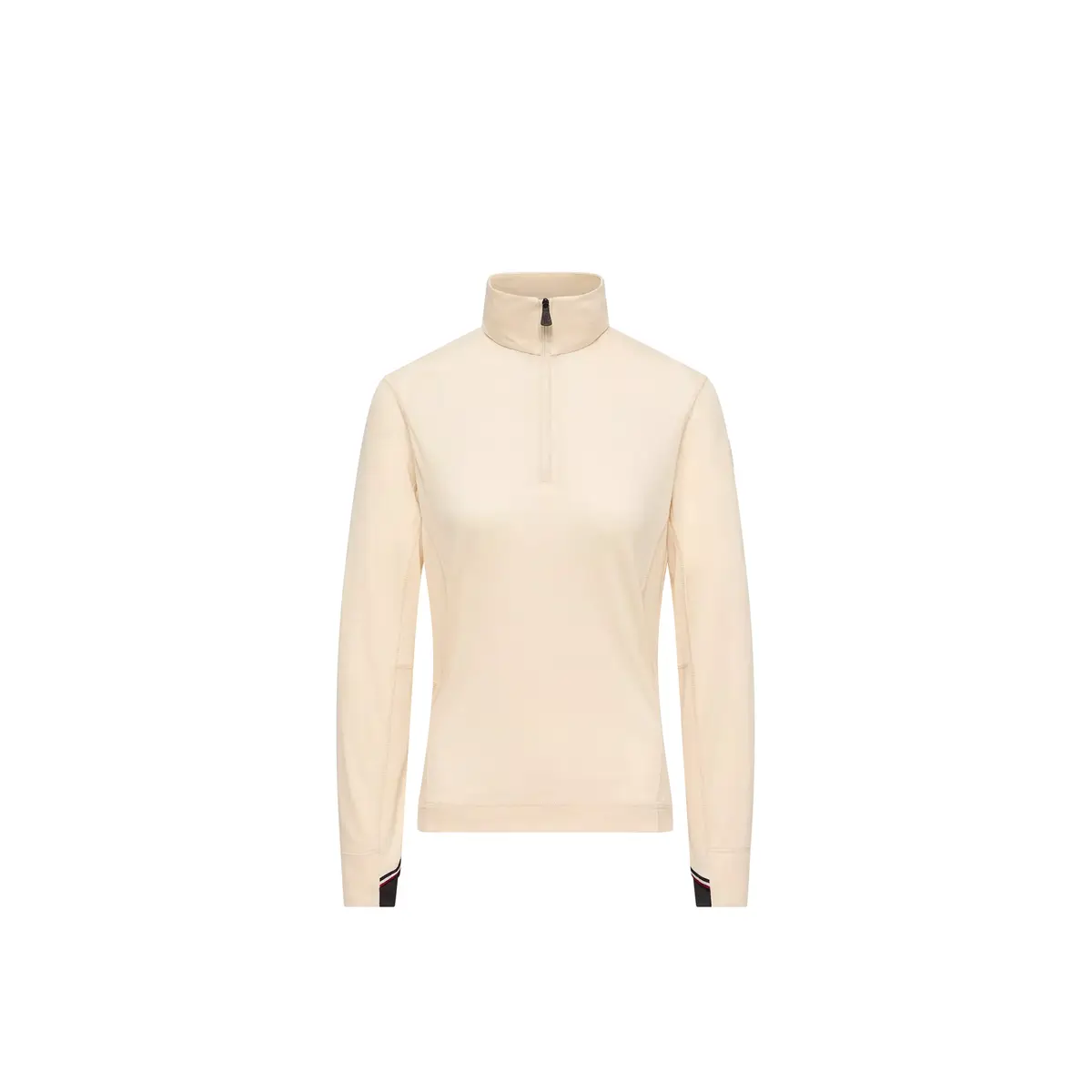
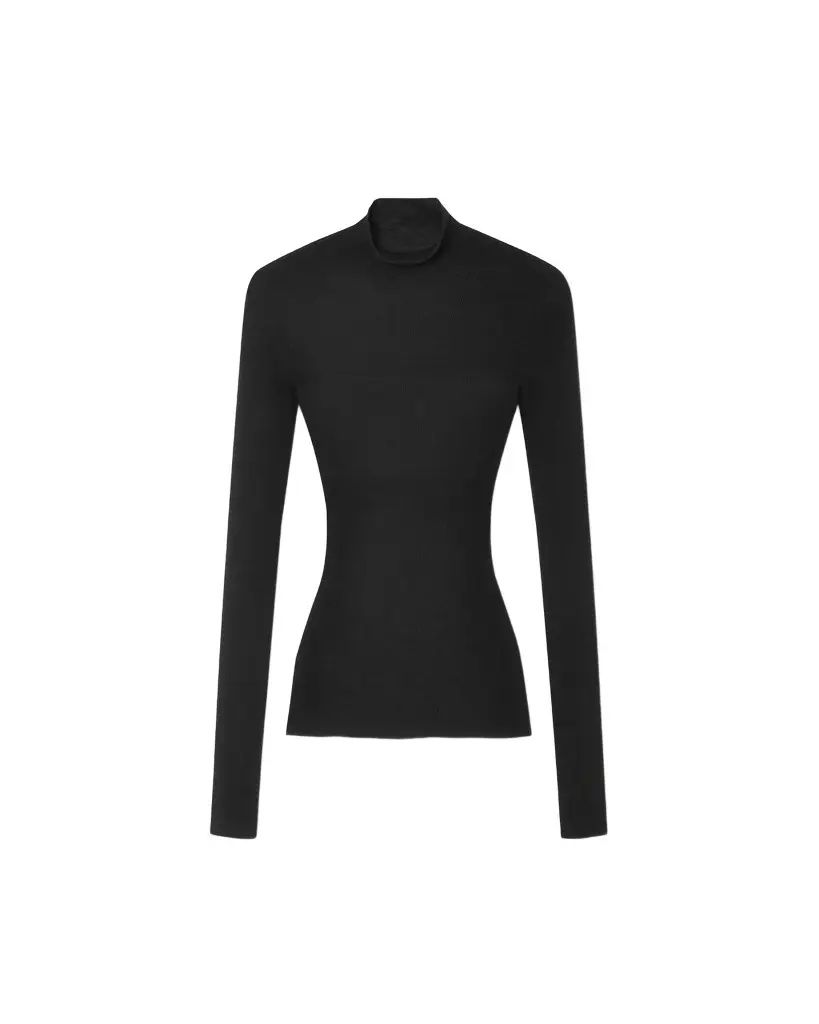
- Wool-silk blends are thinner and smoother under a close-cut jacket. Moncler Grenoble's ivory turtleneck, 64 percent wool and 36 percent silk, adds a zip neck and wrist gaiters: one of the few luxury base layers designed for skiing rather than borrowed from the city.
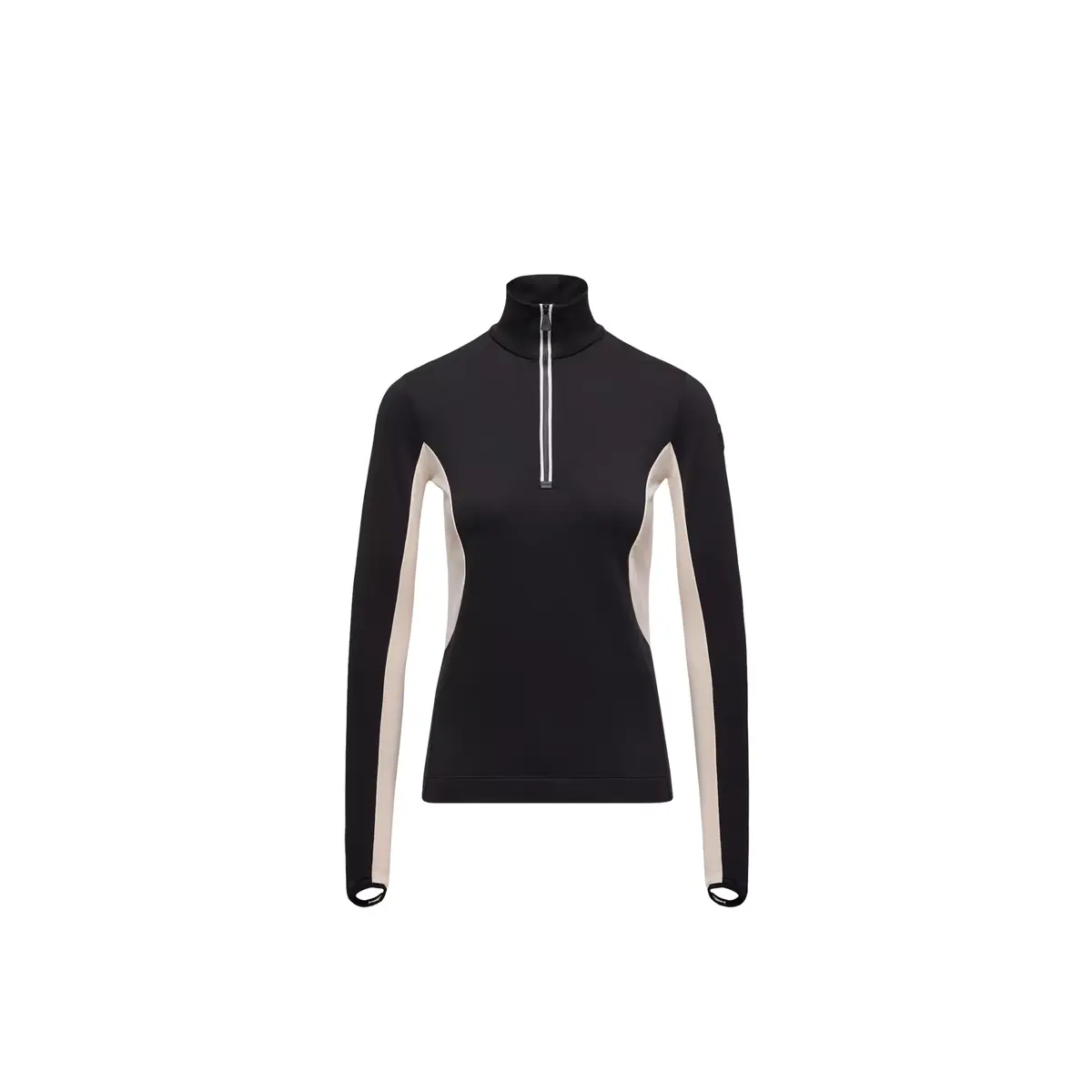
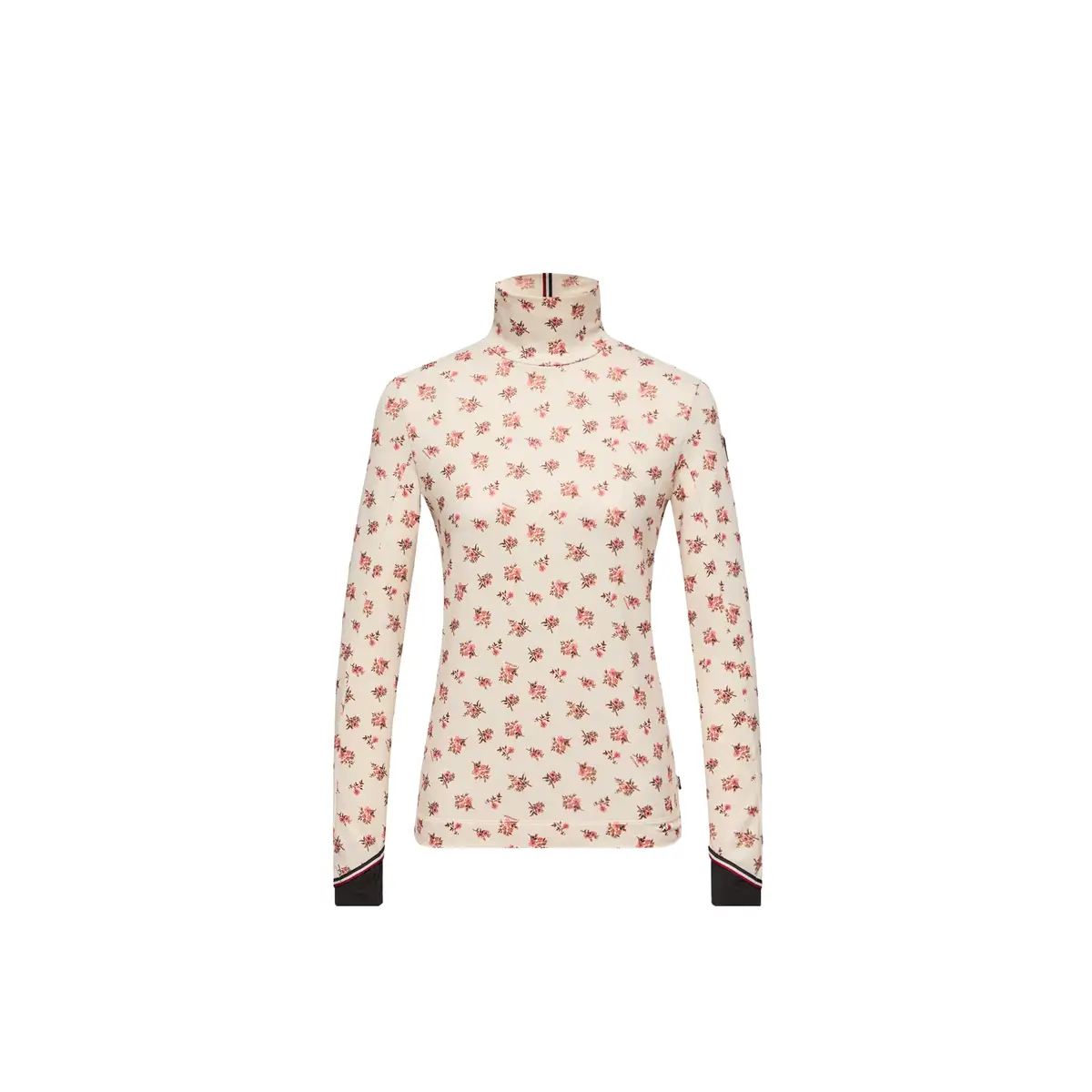
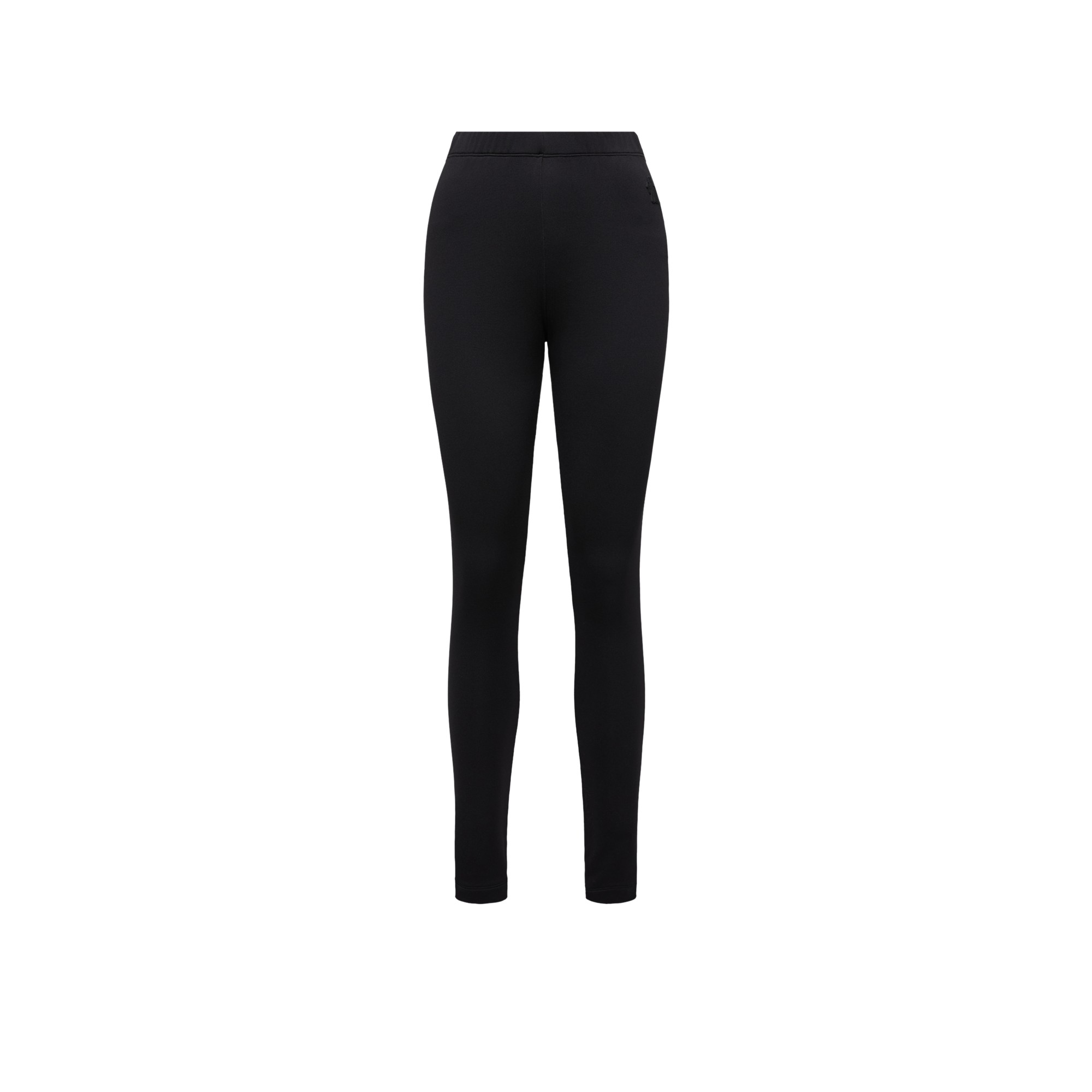
- Technical synthetics dry fastest and suit spring skiing and anyone who runs hot. Moncler Grenoble's black half-zip and leggings are Polartec Power Grid, which the house describes as warm and moisture-wicking; its floral turtleneck adds wrist gaiters.
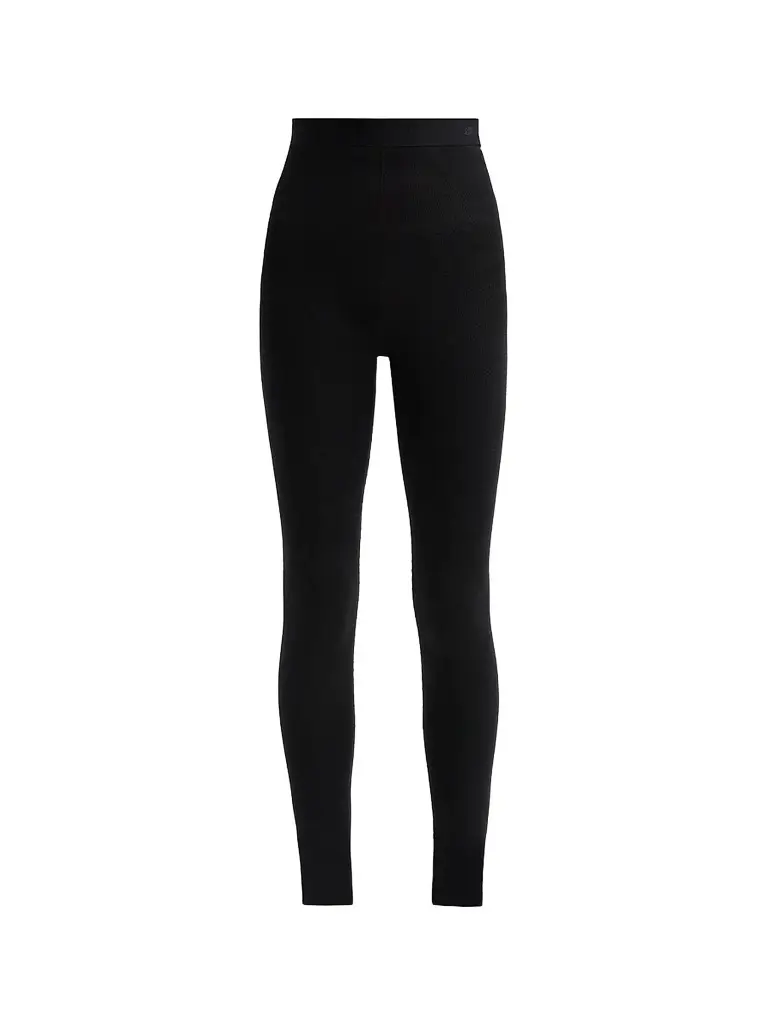
Three fit checks. Sleeves should reach your wrist with your arm stretched forward. A high neck should close the gap between collar and chin strap. On the legs, thinner is better: ideally only your sock goes inside a ski boot, so push leggings above the boot cuff or choose a three-quarter length. For wool on the legs, Bottega Veneta's seamless leggings are 100 percent wool.
Base layers: Polartec, wool-silk, merino and wool
Mid layers: fleece, fine cashmere or down
The mid layer is your thermostat: zipped to the chin on a cold lift, opened or stowed when the sun comes out, and chosen for how warm you run and how close your jacket is cut.
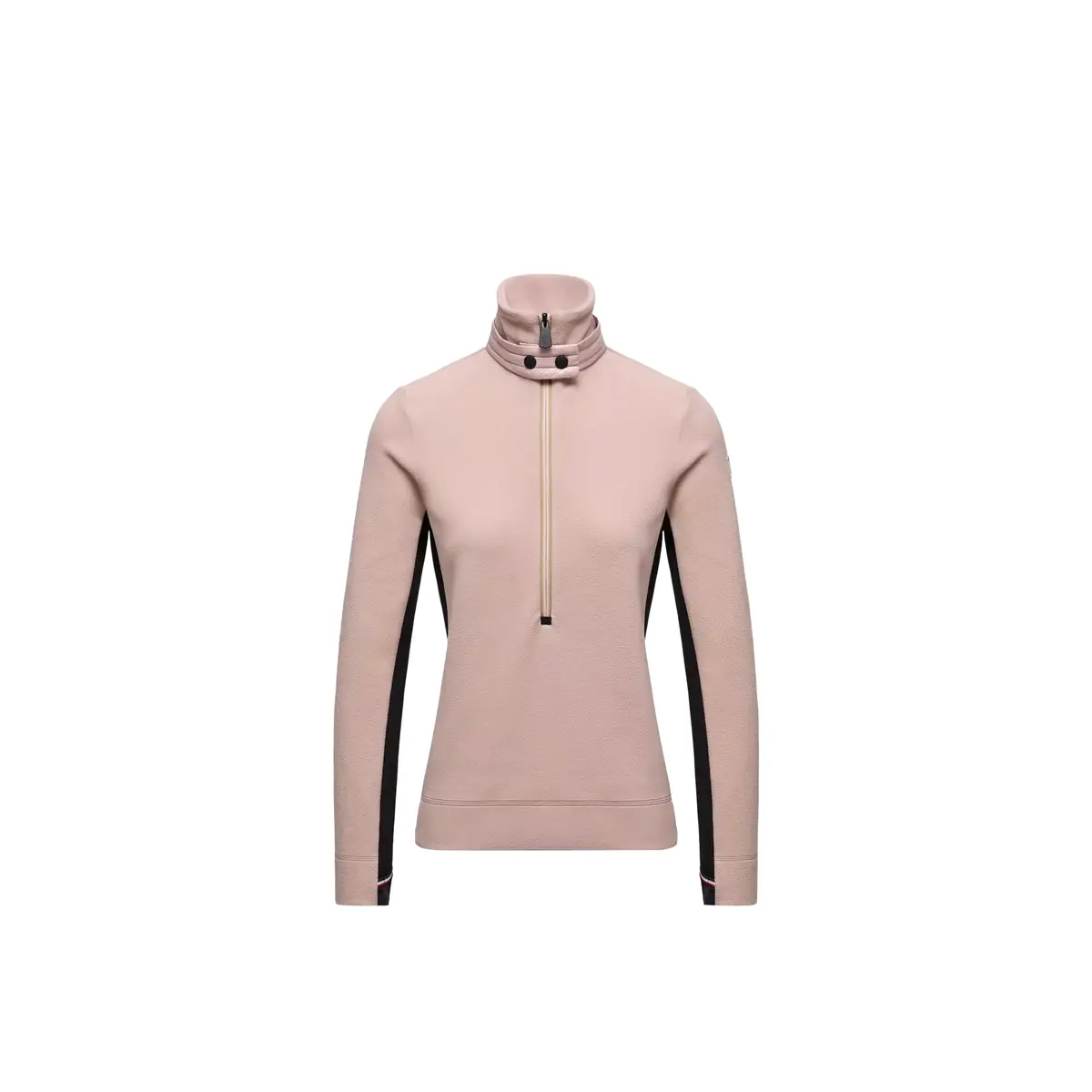
- Fleece breathes and dries quickly, but wind blows through it, so it needs a shell on top. Moncler Grenoble's blush half-zip is stretch fleece with a padded collar, made to wear under heavier layers.
- Fine cashmere is warm for its weight and soft at the neck. Pick a thin, flat knit such as Brunello Cucinelli's cashmere-silk turtleneck (70 percent cashmere, 30 percent silk), and keep it under a shell: cashmere pills wherever straps and chairlift bars rub.
- Down and padded layers give the most warmth for the least bulk, and a vest keeps your arms free for poles. Moncler Grenoble's zip-up hoodies put a down-filled front on stretch or Polartec fleece, and its olive cardigan sets a square-quilted down front into a virgin wool knit.
Mid layers: fleece, down-front hybrids, a down vest and fine cashmere
 Moncler GrenobleHalf-zip Turtleneck$810
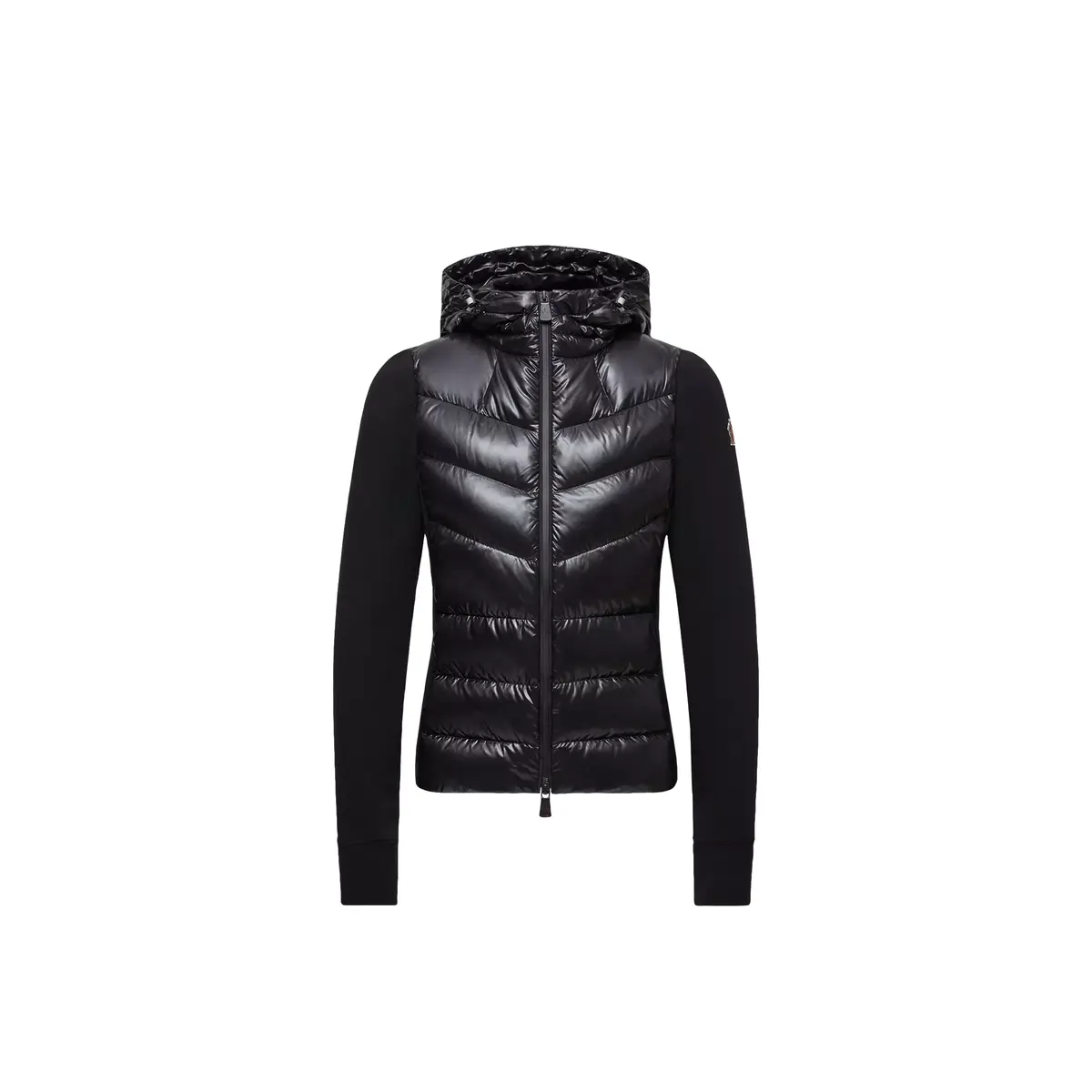 Moncler GrenoblePadded Zip-up Hoodie$1,295
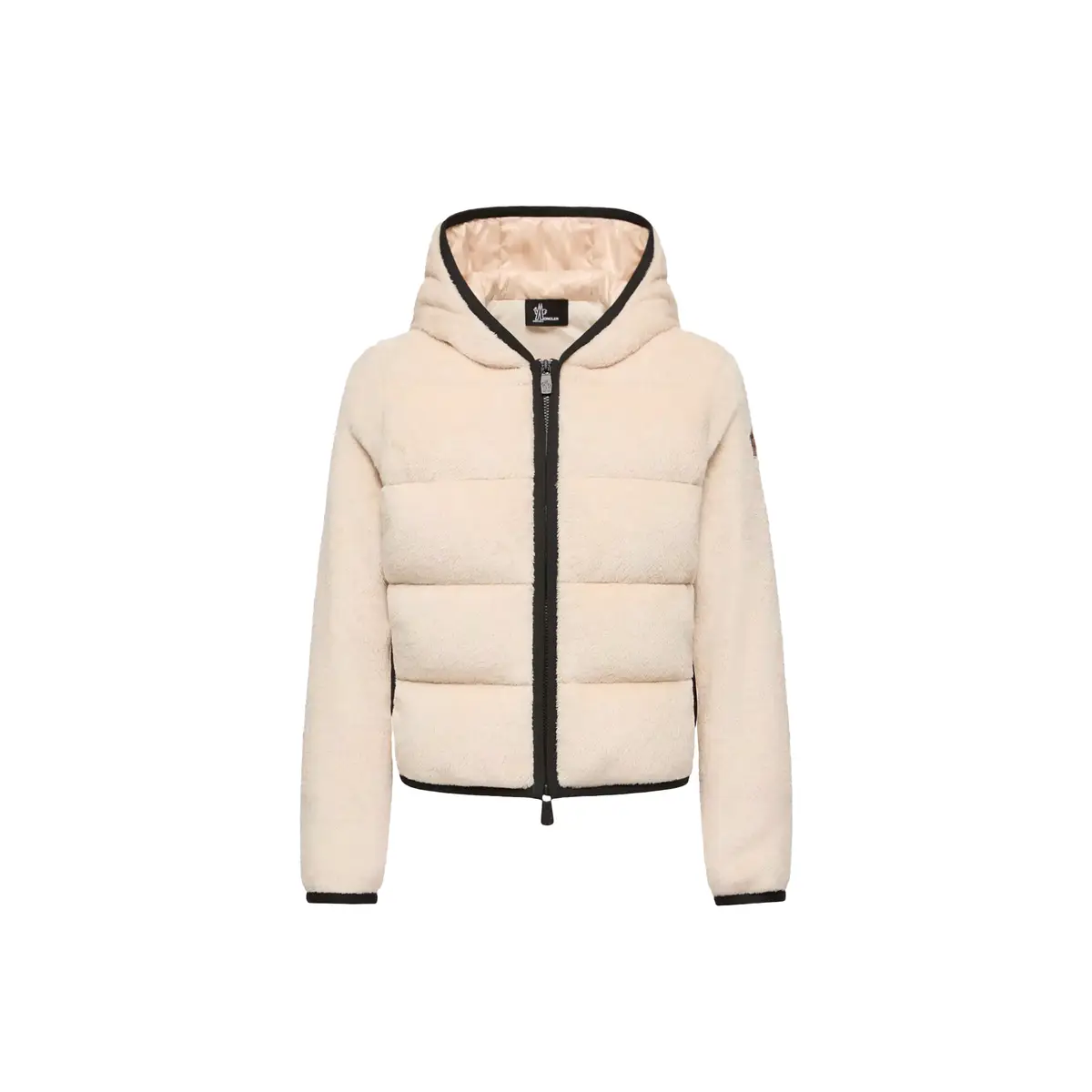 Moncler GrenoblePolartec Padded Zip-up Hoodie$1,295
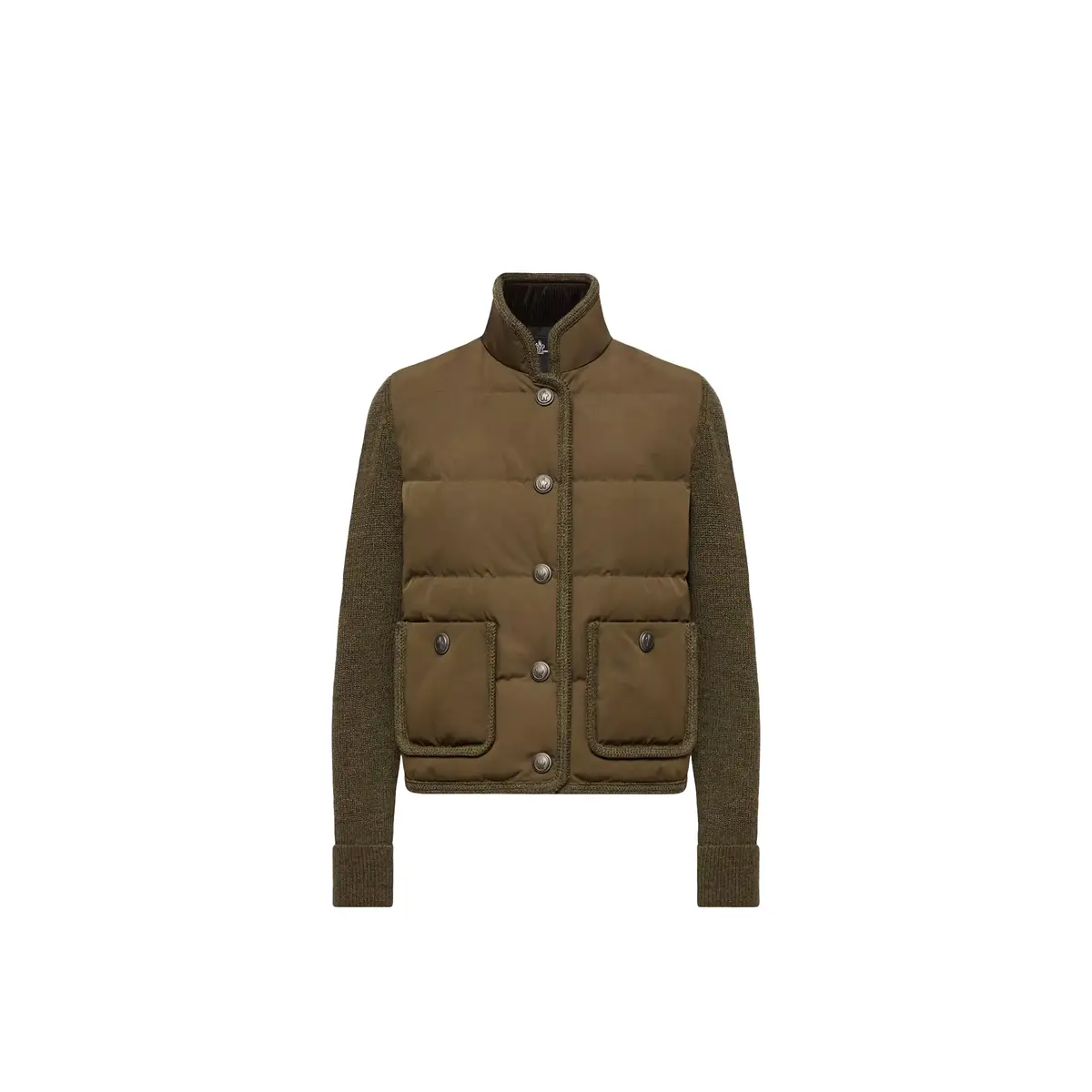 Moncler GrenobleWool Padded Cardigan$1,695
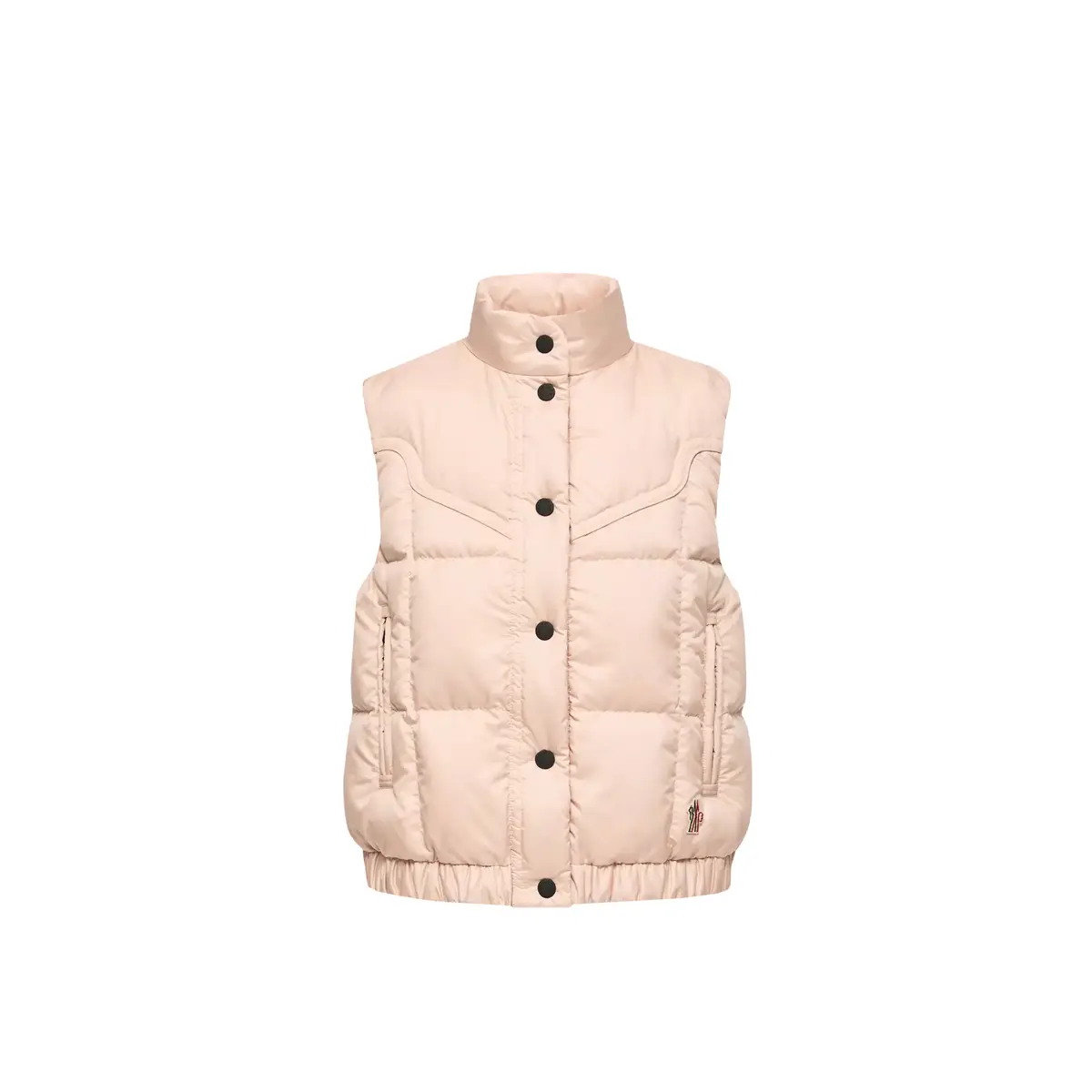 Moncler GrenobleDoucy Square-quilted Down Vest$1,695
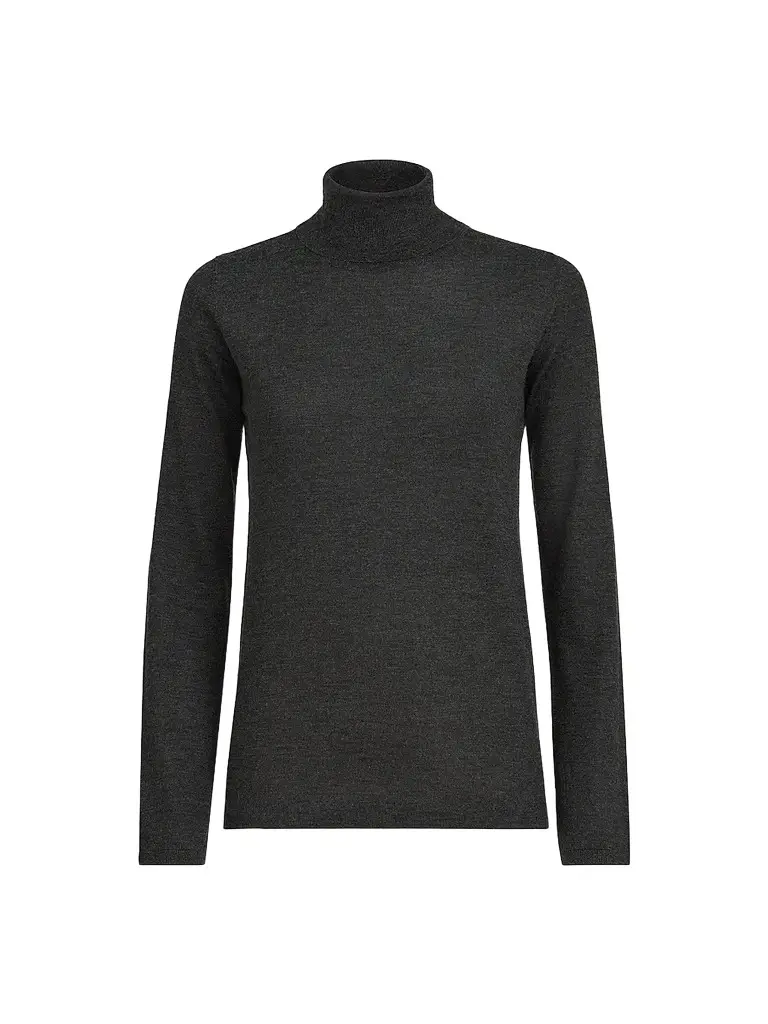 Brunello CucinelliWomen's Cashmere and Silk Lightweight Turtleneck Sweater$1,600
Down, synthetic or both: choosing insulation
Down gives the most warmth for its weight and packs small. Its quality is expressed as fill power: the International Down and Feather Laboratory calls fill power a volumetric measurement and says the greater the volume, the better the down insulates. Luxury ski listings rarely print it; Moncler Grenoble gives its padding as 90 percent down, 10 percent feather instead.
Down's weakness is water. It warms you by lofting, and anything that flattens it, wet snow included, costs warmth. Synthetic fill answers that: PrimaLoft, whose Active Insulation Moncler Grenoble uses in its Chanavey jacket and its Dermizax ski pants, says it was born as a "warm-when-wet" alternative to down. On cold, dry days, down under a good outer fabric is hard to beat; where storms bring heavy, wet snow, favor synthetic fill or a shell over layers you can adjust. For town, see our guide to designer puffer coats.
Waterproof and breathability ratings, decoded
Waterproofing is measured as hydrostatic head: the height, in millimeters, of a column of water a fabric holds back before it leaks. Toray rates its Dermizax fabric at 20,000 mm, which it says keeps the fabric waterproof in the most testing storms.
Breathability comes either as grams of water vapor a square meter of fabric lets through in 24 hours, where higher is better, or as RET, a resistance figure where lower is better. Most luxury listings skip the numbers and describe the build instead:
| The listing says | What it means | Enough for |
|---|---|---|
| GORE-TEX or Dermizax laminate; heat-sealed or taped seams | A waterproof, breathable membrane, with the stitching sealed against leaks | Any day, including wet snow and rain at the base |
| Two-layer construction; waterproof and windproof | A waterproof layer bonded to the outer fabric | Most resort days |
| Water-repellent or water-resistant, with no membrane named | Usually a treated fabric that sheds snow and light moisture | Cold, dry days; add a shell when the weather turns wet |
Our rule of thumb for resort skiing: on a cold, dry day, almost any real ski jacket sheds the snow. For wet snow, spring slush or rain at the base, choose a named membrane or a stated 10,000 mm or more, with sealed seams. Pressure matters too: sitting on a snowy chairlift or kneeling in snow forces water through fabric harder than falling snow does.
Designer ski jackets: the features that matter
- A hood that fits over a helmet. Put the helmet on and raise the hood: it should close without dragging the collar into your throat, and turn with your head.
- A powder skirt. The elasticated band inside the hem that snaps around your waist and keeps snow from traveling up your back in a fall or in deep snow.
- Wrist gaiters. Stretch inner cuffs that seal the gap between sleeve and glove.
- Pit zips. Underarm vents release heat without opening the front. Of the jackets here, only the men's Hinterburgs shell lists them; otherwise, let the mid layer regulate.
- A RECCO reflector. A passive reflector built into many ski jackets and pants. According to RECCO, it needs no battery or activation, and rescue professionals and ski patrollers around the world search with its detectors. RECCO is explicit that it does not replace an avalanche transceiver.
The best ski jackets for women, by build
The seven jackets below are all Moncler Grenoble, a line with real mountain roots. According to Moncler's own history, the house was founded in 1952 in Monestier-de-Clermont, a mountain village near Grenoble; its coats equipped the Italian expedition to K2 in 1954; and at the 1968 Winter Olympics in Grenoble it was the official supplier of the French downhill ski team. The Grenoble skiwear line debuted in New York in 2010.
- Chanavey, black: the most weatherproof, with waterproof, breathable Dermizax, PrimaLoft Active Insulation, heat-sealed seams, jersey wrist gaiters and RECCO. Our pick for wet snow.
- Laplance, ivory: a GORE-TEX laminate under a water-repellent face, a belted waist, a ski pass pocket, an avalanche reflector and shearling hood trim that comes off for rain or wet snow.
- Danses, blush: down under four-way-stretch poplin in a two-layer build the house calls waterproof and windproof, with a powder skirt, wrist gaiters and RECCO.
- Guyane, black: two-layer stretch nylon with fleece inserts, a windproof collar, a powder skirt and wrist gaiters.
- Karshi, ivory floral: the edit's one print, on water-repellent nylon over down, with a powder skirt, wrist gaiters and ski pockets.
- Tolima, black: belted like the Laplance, with a powder skirt and a ski pass pocket, but no named membrane: four-way-stretch nylon over down, for cold, dry days.
- Allesaz, olive: down under water-repellent four-way-stretch poplin, with a powder skirt and wrist gaiters; also a cold, dry-day jacket.
Browse all ski clothing on Vêtir.
Women's ski jackets, from Gore-Tex and Dermizax to stretch down
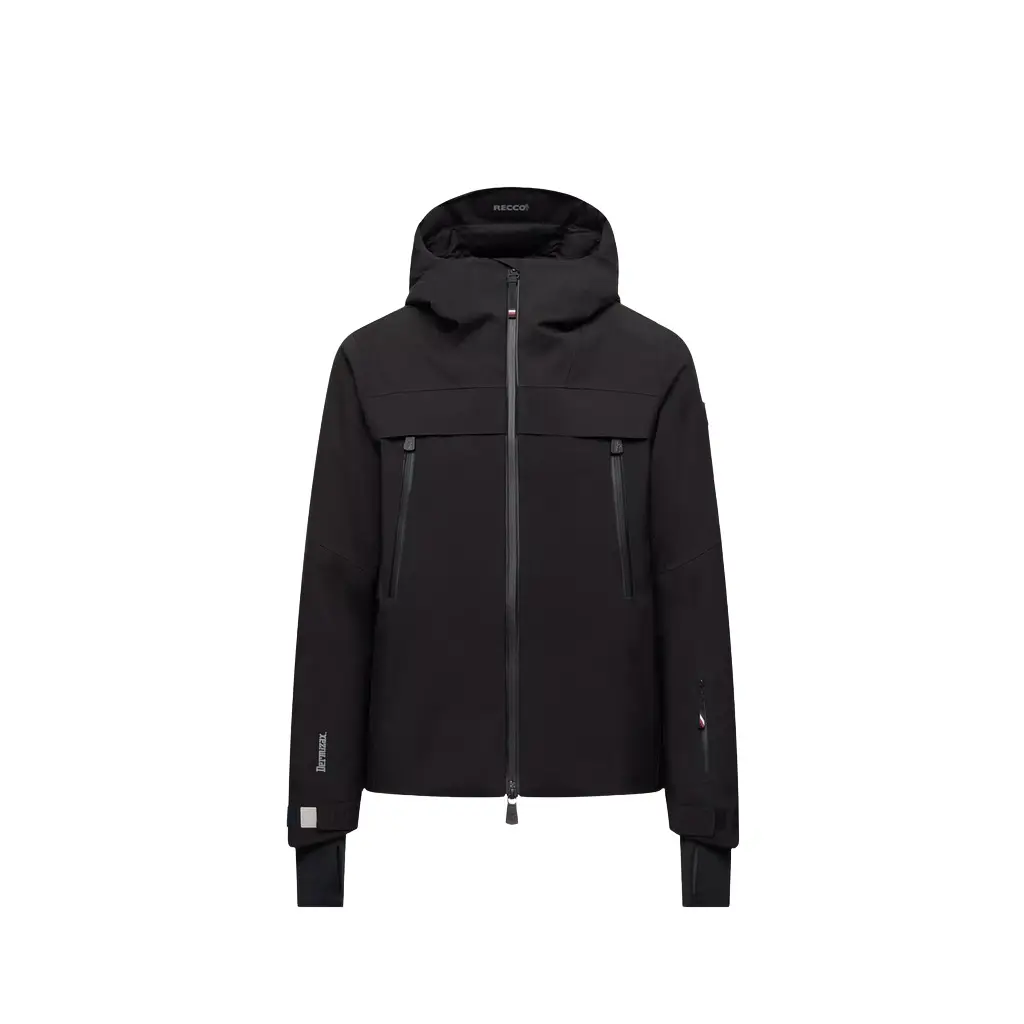 Moncler GrenobleChanavey Hooded Ski Jacket$2,995
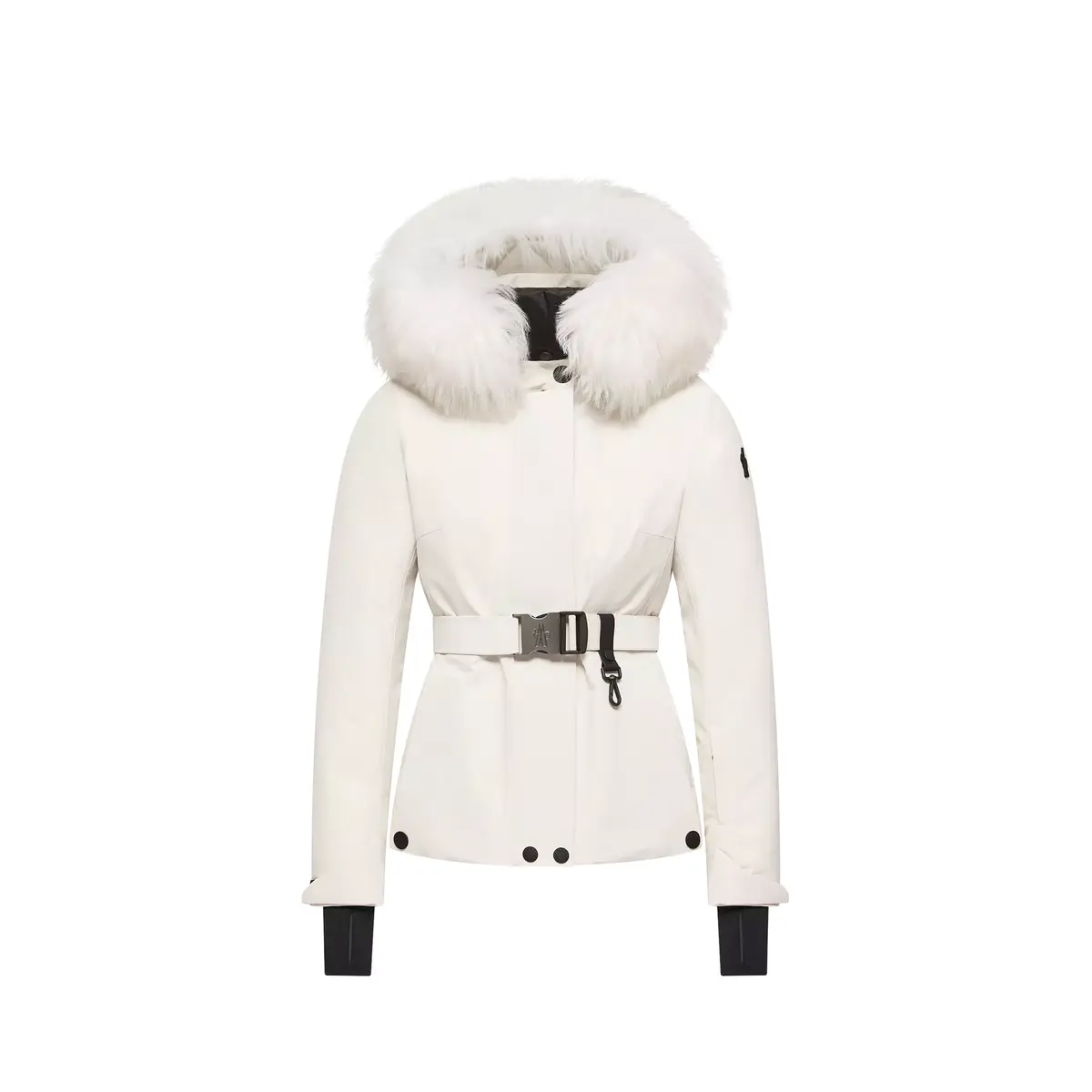 Moncler GrenobleLaplance Gore-tex Shearling-trimmed Hooded Insulated Ski Jacket$4,040
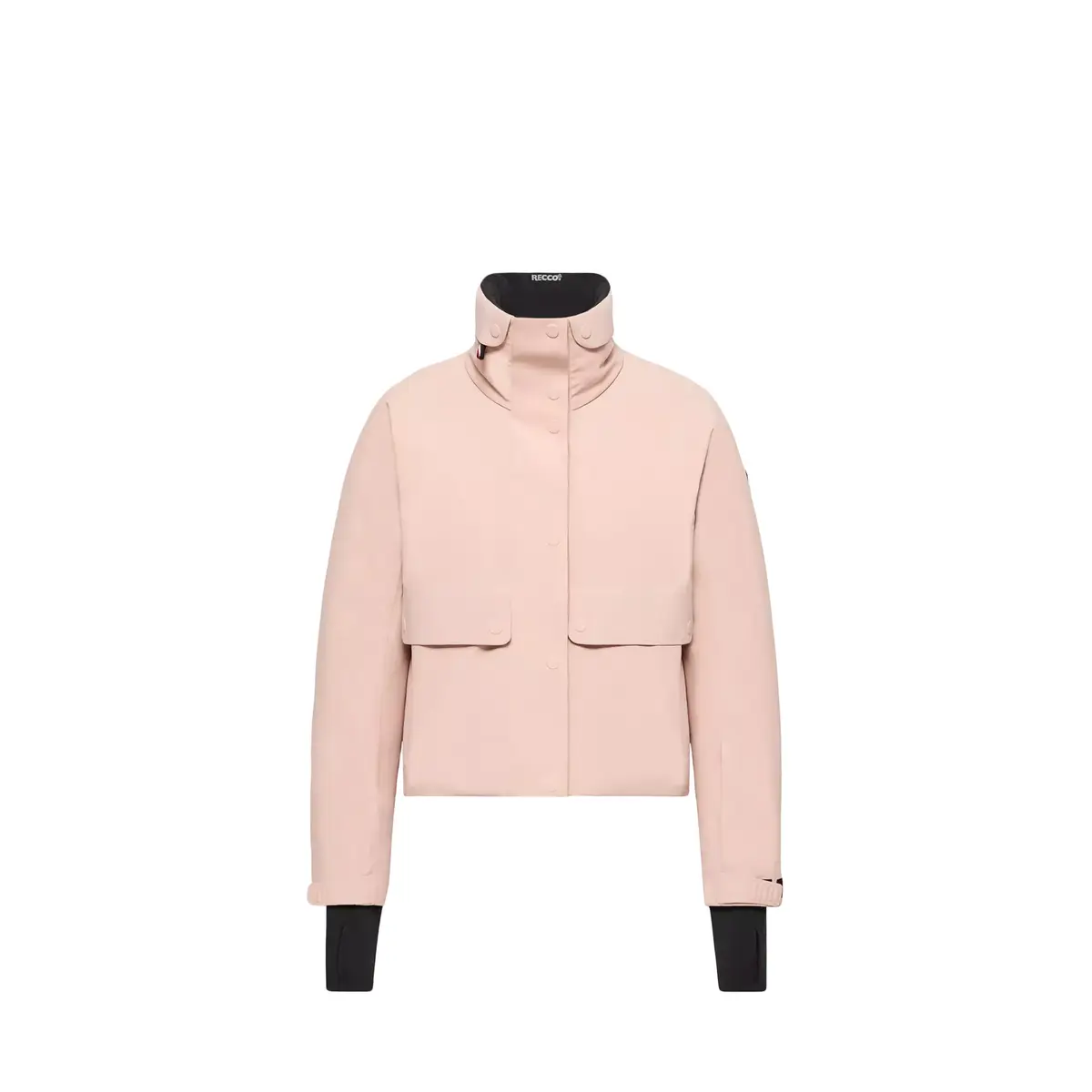 Moncler GrenobleDanses Insulated Hooded Ski Jacket$2,745
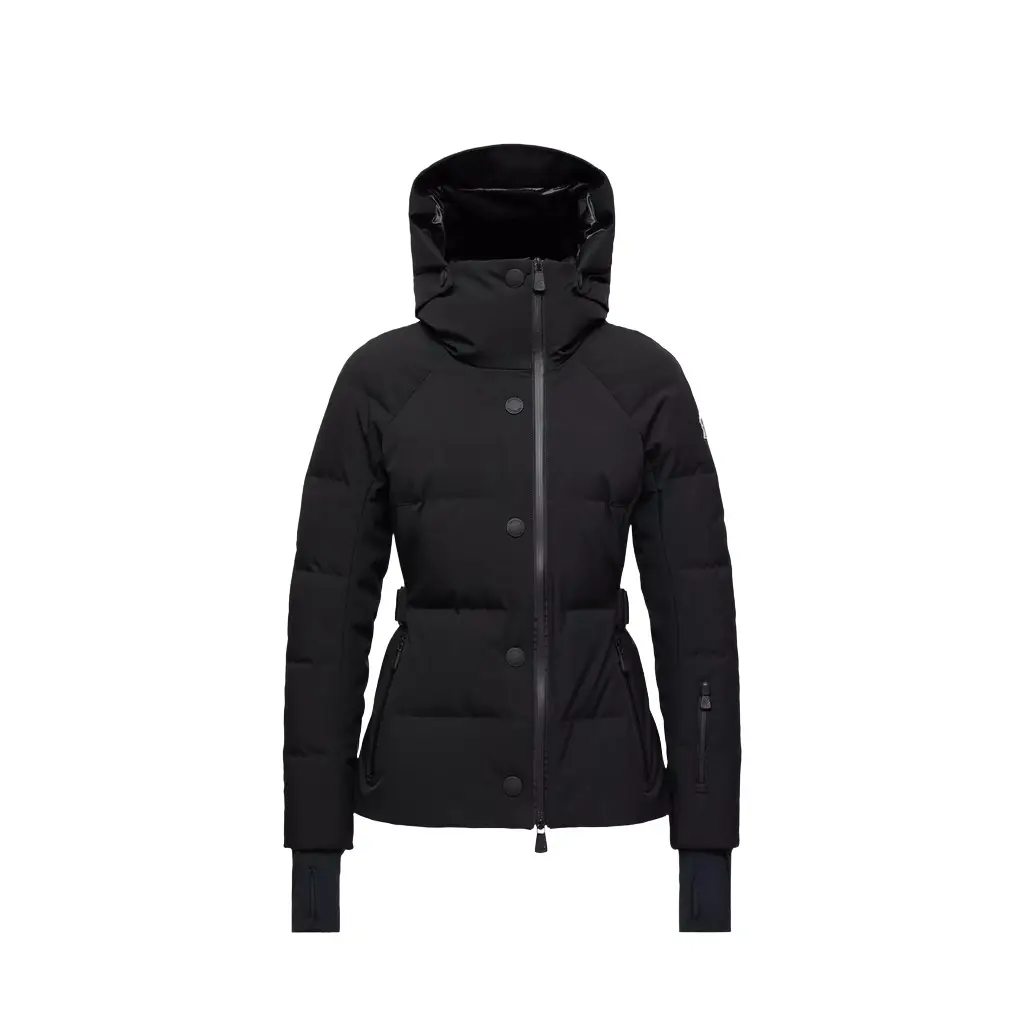 Moncler GrenobleGuyane Hooded Insulated Ski Jacket$2,900
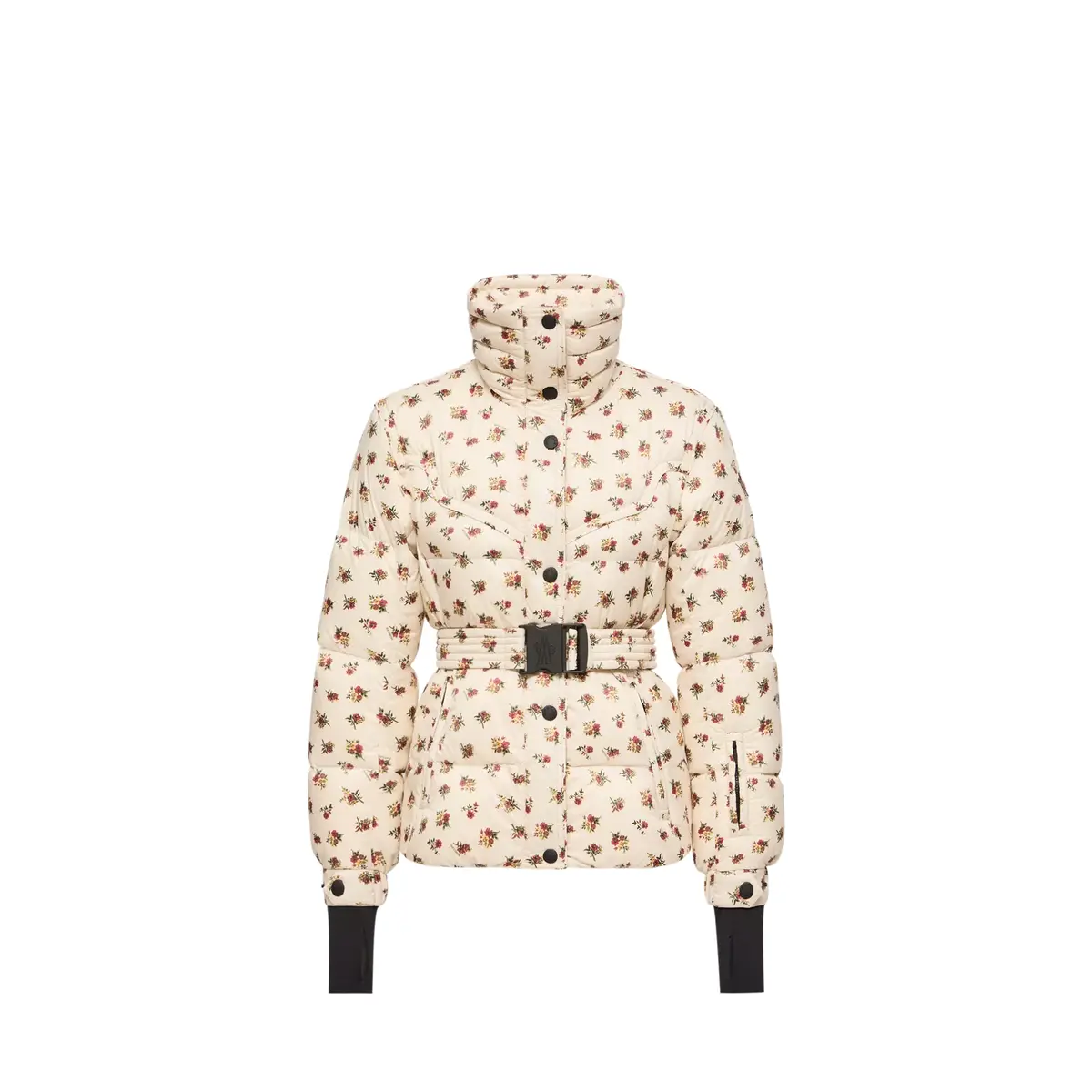 Moncler GrenobleKarshi Floral Insulated Ski Jacket$3,100
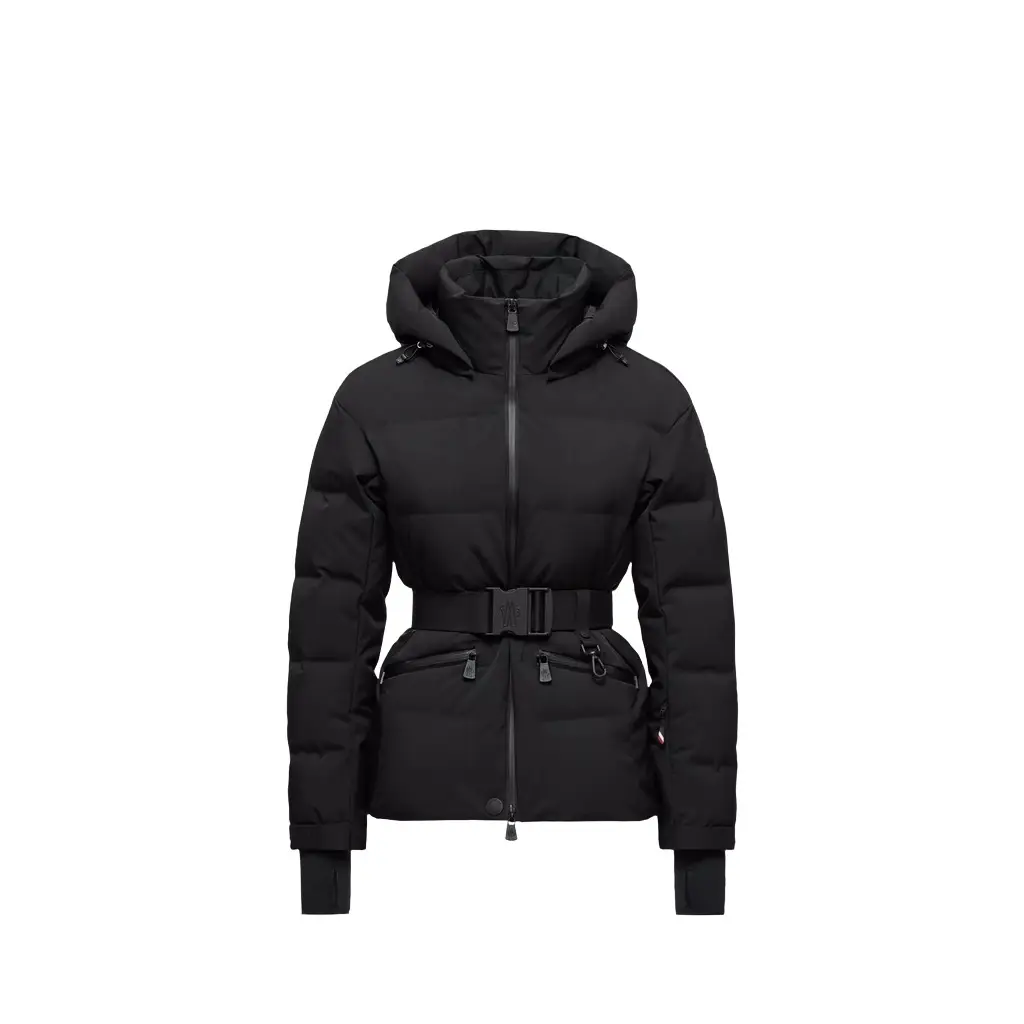 Moncler GrenobleTolima Hooded Insulated Ski Jacket$3,695
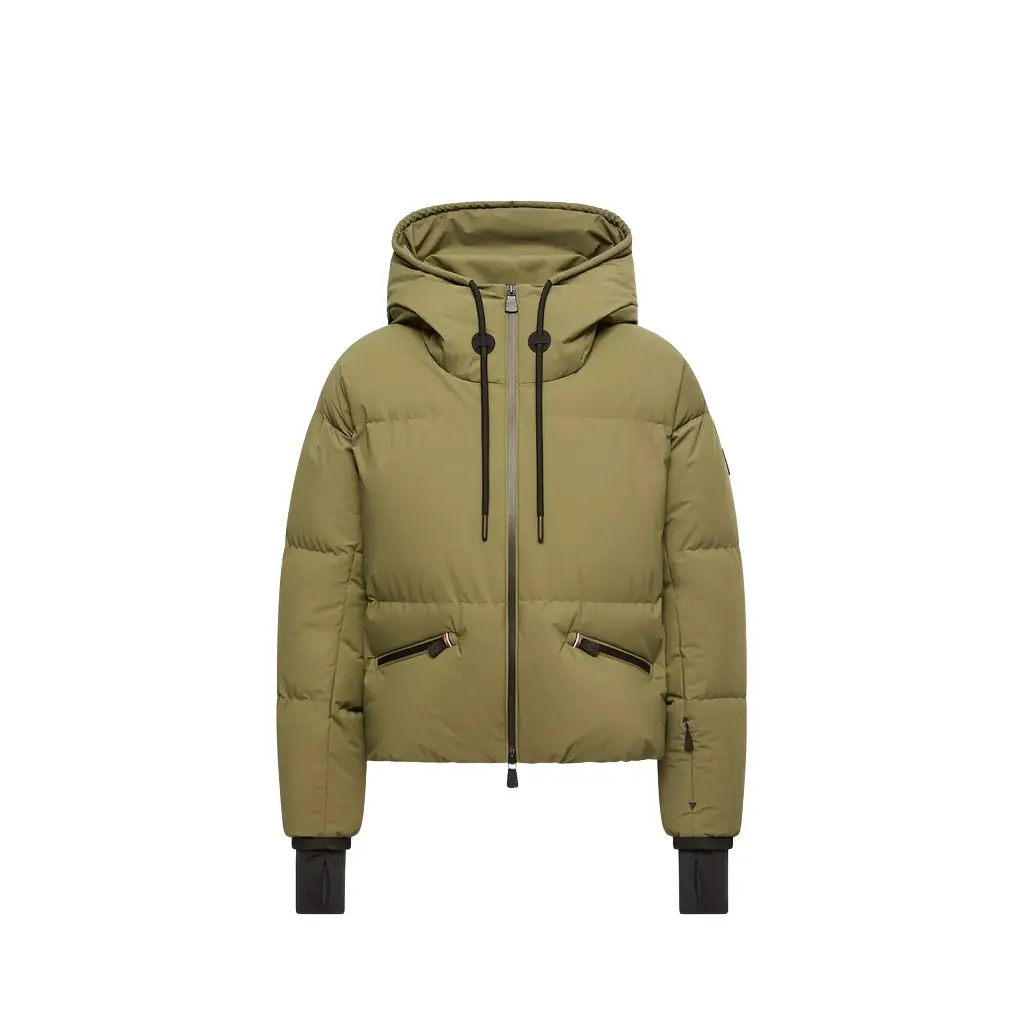 Moncler GrenobleAllesaz Hooded Insulated Ski Jacket$3,200
Ski pants, bibs or a one-piece ski suit
- Ski pants are the simplest to wear and to get out of. Look for inner gaiters or powder cuffs that close over the boot, a reinforced inside hem where ski edges strike, and adjustable cuffs. Moncler Grenoble's black Padded Gore-Tex pants have the hem protection and adjustable cuffs, its olive Dermizax pants have powder cuffs, and both carry a RECCO reflector.
- Bibs and salopettes rise to the chest on straps, so snow cannot reach your back when you fall or sit in powder, and your core stays warmer. Moncler Grenoble's insulated bib is four-way-stretch nylon with heat-sealed seams, powder cuffs and a RECCO reflector.
- A one-piece ski suit closes the waist gap completely, which makes it the warmest and most snowproof option. The costs are bathroom breaks and warm spring afternoons; on those, ski it unzipped to the waist with the sleeves tied.
Moncler Grenoble offers no one-piece among the pieces we carry, so ours is Loro Piana's belted suit, in black or lavender: cotton-blend ripstop its listing calls windproof, water-resistant and breathable, with zipped hems that fit over boots.
Ski pants, a ski bib and one-piece ski suits
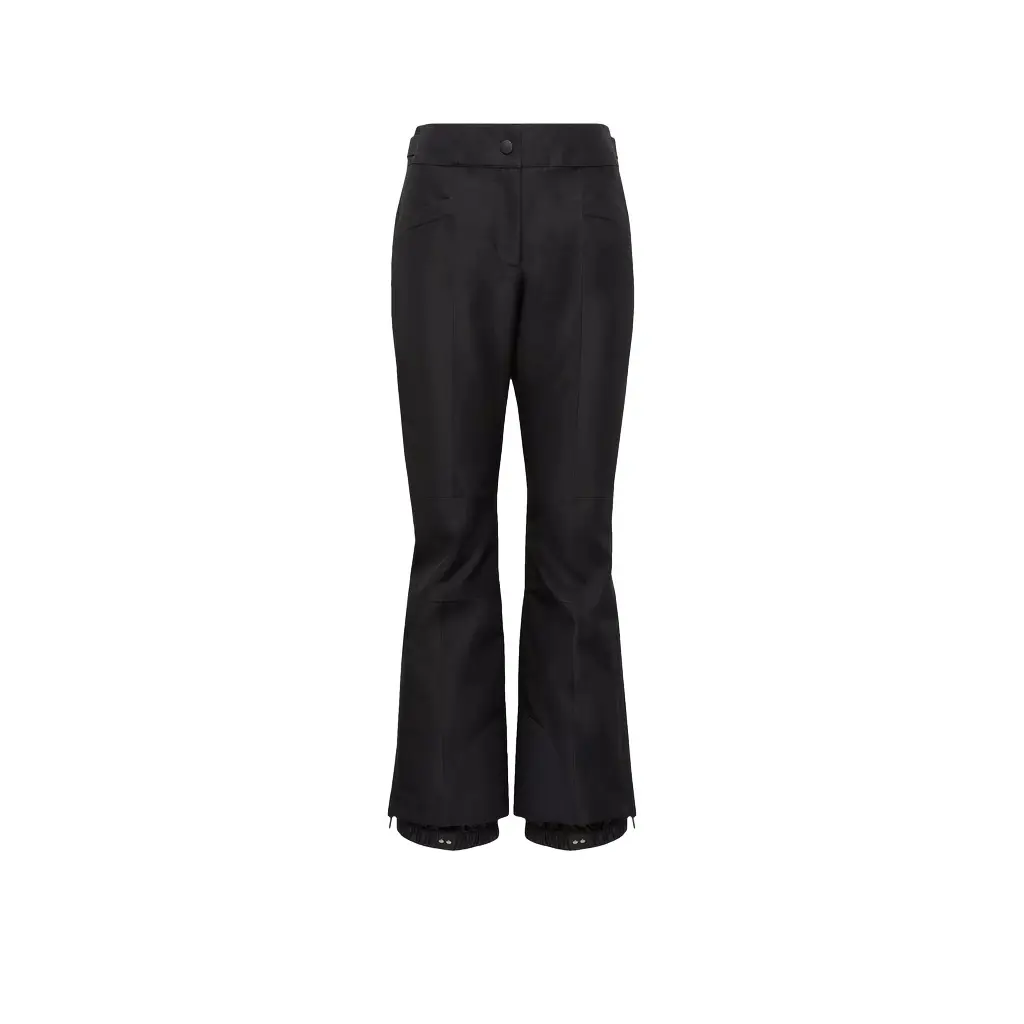 Moncler GrenoblePadded Gore-tex Ski Pants$1,310
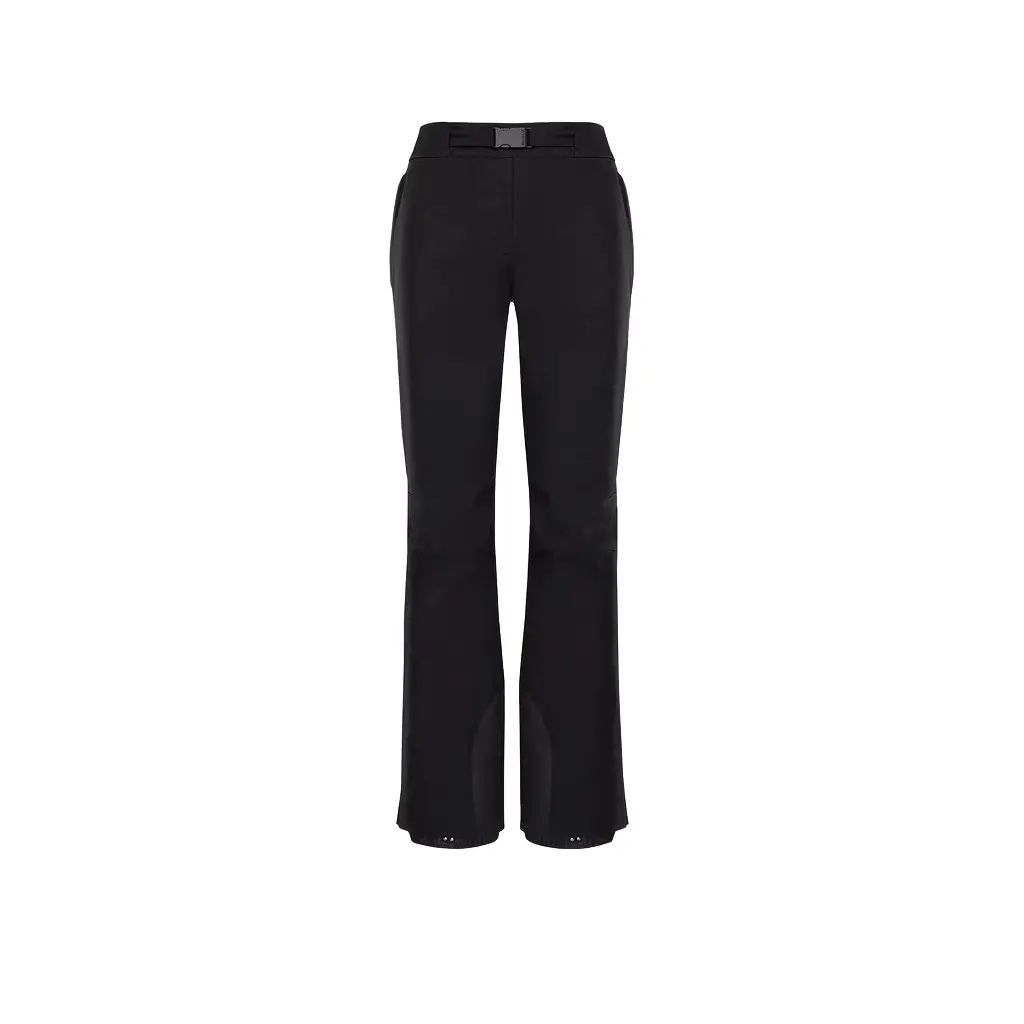 Moncler GrenobleInsulated Ski Pants$1,430
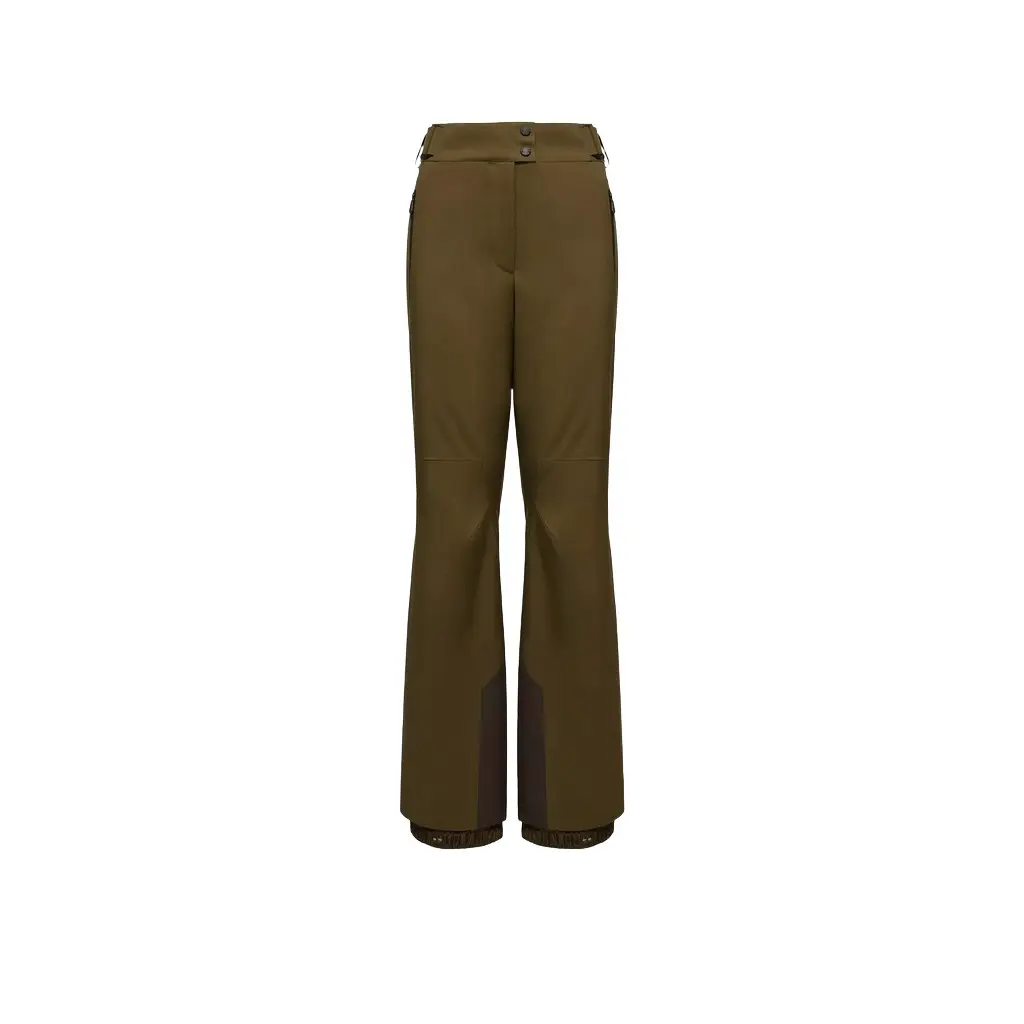 Moncler GrenobleInsulated Ski Pants$1,520
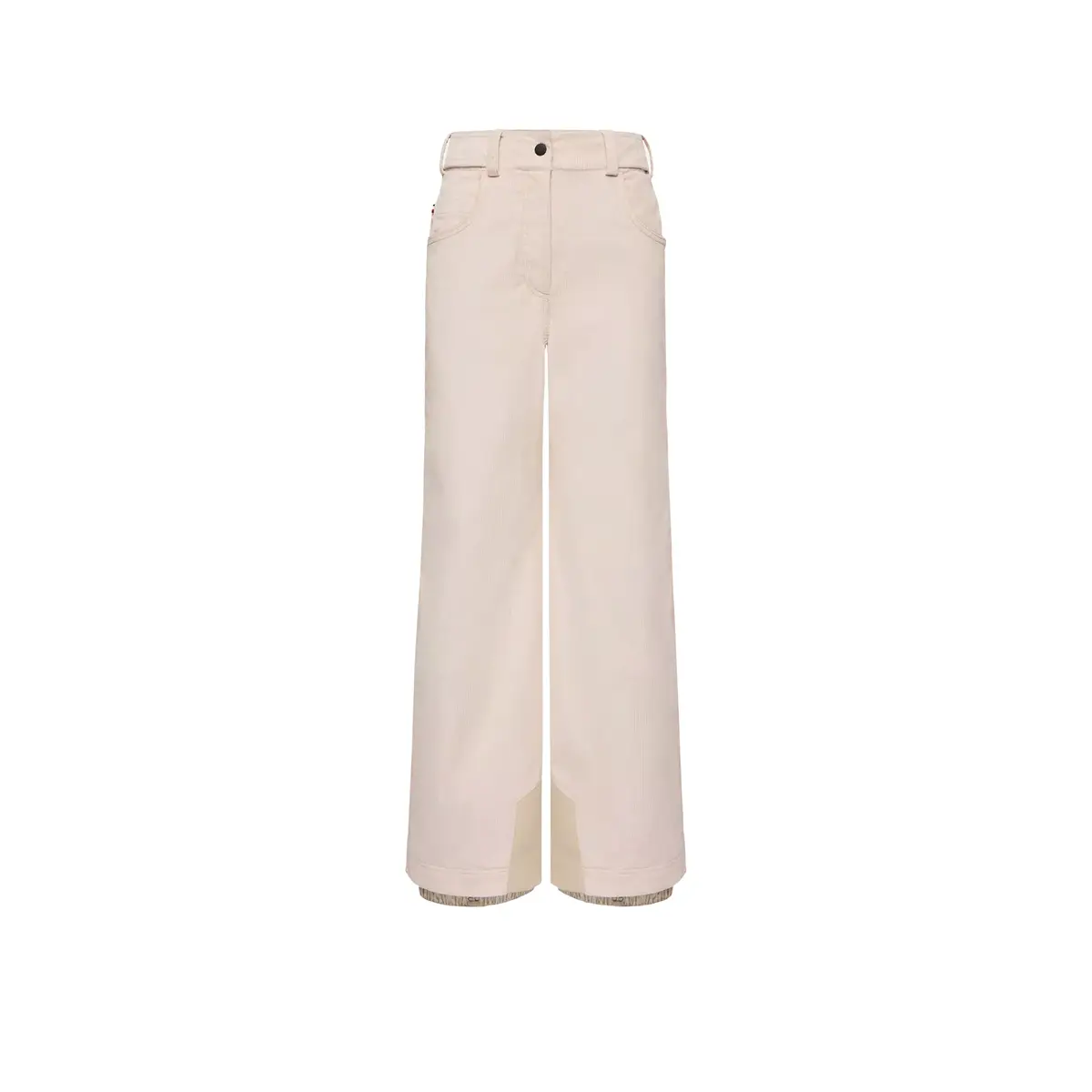 Moncler GrenobleInsulated Ski Pants$1,695
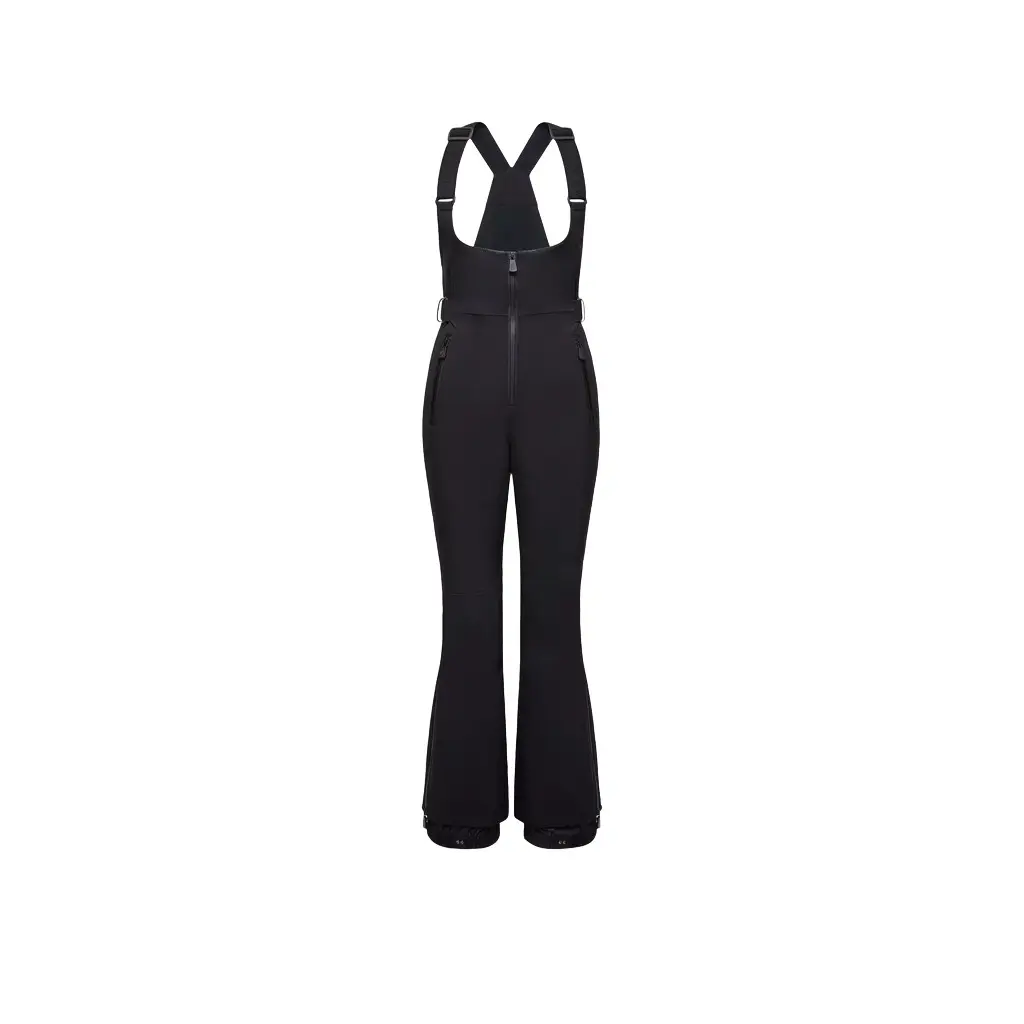 Moncler GrenobleInsulated Ski Bib$1,810
 Loro PianaBelted Cotton-blend Ripstop Hooded Ski Suit$8,975
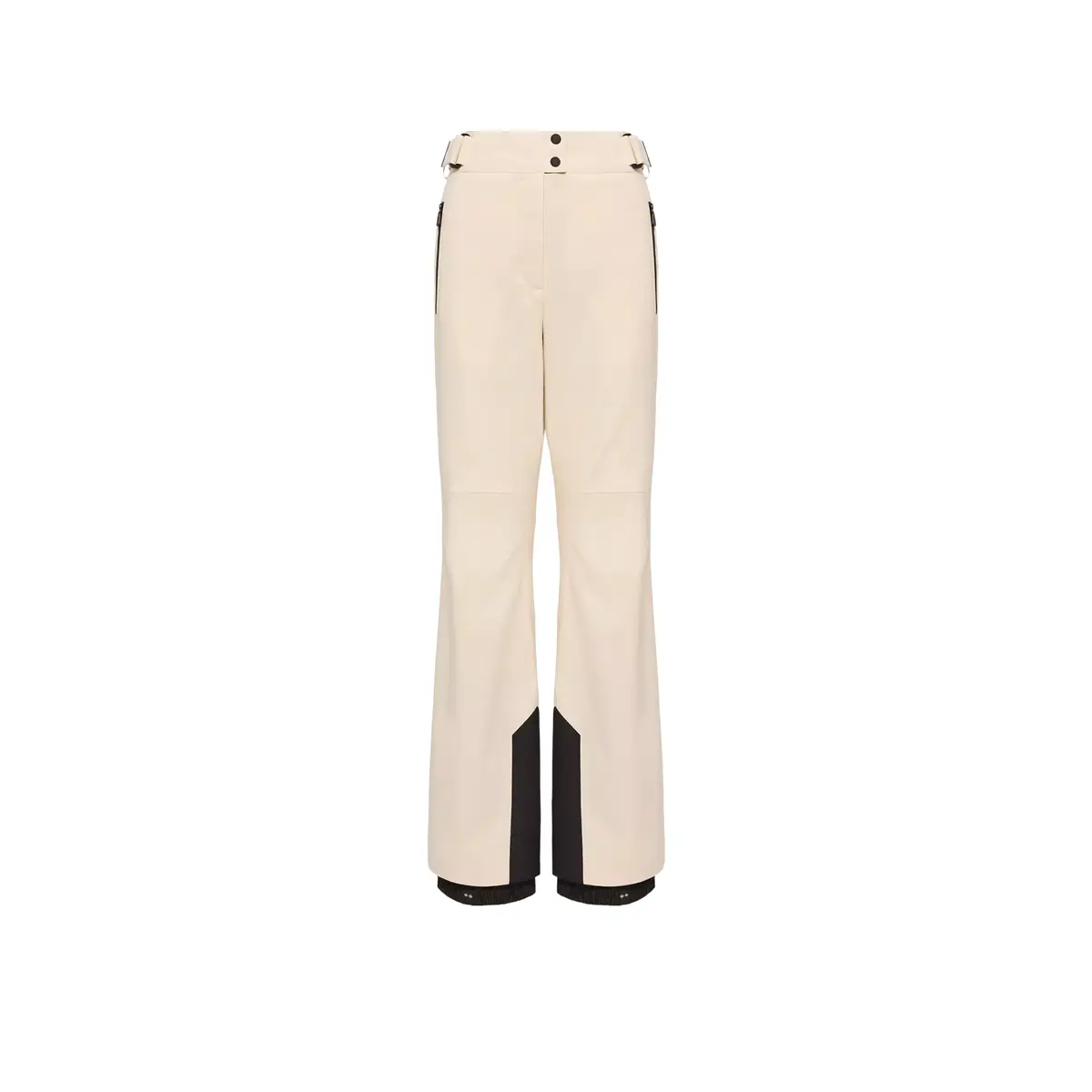 Moncler GrenobleInsulated Ski Pants$1,520
Helmets: certification and Mips
Wear a helmet, and check the certification label inside the shell. ASTM F2040 is the snow sports helmet standard used in the US and EN 1077 the European one; Health Canada lists both, along with Canada's CSA Z263.1 and Snell RS-98, and treats a ski or snowboard helmet that meets none of them as likely unsafe.
Mips is not a certification but an added system. In the company's description, a low-friction layer inside the helmet allows a small amount of movement in certain angled impacts, to help reduce rotational force to the head. Moncler Grenoble's helmet, made with POC, pairs an ABS shell with adjustable vents and a RECCO reflector; its listing names neither Mips nor a standard.
- Snug, with no pressure points. Shake your head: the helmet should move with it, not after it.
- Level. The front edge should sit low enough on your forehead to meet the top of your goggles, with no strip of skin between them.
- Sized for what goes under it. A thin balaclava or nothing at all; a thick beanie changes the fit.
Goggles: lens categories and the right tint for the light
Lenses are graded by how much visible light they let through, published as VLT (visible light transmission). The ski goggle standard, ISO 18527-1 (EN ISO 18527-1 in Europe), sorts them into five tint categories, S0 to S4. The light ranges are the standard's; the uses are our guide:
| Category | VLT | Best for |
|---|---|---|
| S0 | Over 80% | Night skiing |
| S1 | 43–80% | Overcast skies, falling snow, flat light |
| S2 | 18–43% | Mixed sun and cloud; the one-lens choice |
| S3 | 8–18% | Full sun |
| S4 | 3–8% | Extreme sun |
Flat light is the day that catches people out: cloud erases the shadows that show you the snow's texture. Choose a high-VLT S1 lens, often in a warm tint such as persimmon or yellow. For a bluebird day, an S3 lens with a mirror coating. If you own one pair, make it S2, or a photochromic lens that darkens as the sun comes out. Tom Ford's mirrored goggles, sold with 100 percent UV protection, are in the edit below; whichever pair you choose, it should sit flush under your helmet's brim. Between runs, keep goggles on your face or on the helmet, not pushed up on your forehead, where warm skin fogs them.
Gloves or mittens, socks and neck warmth
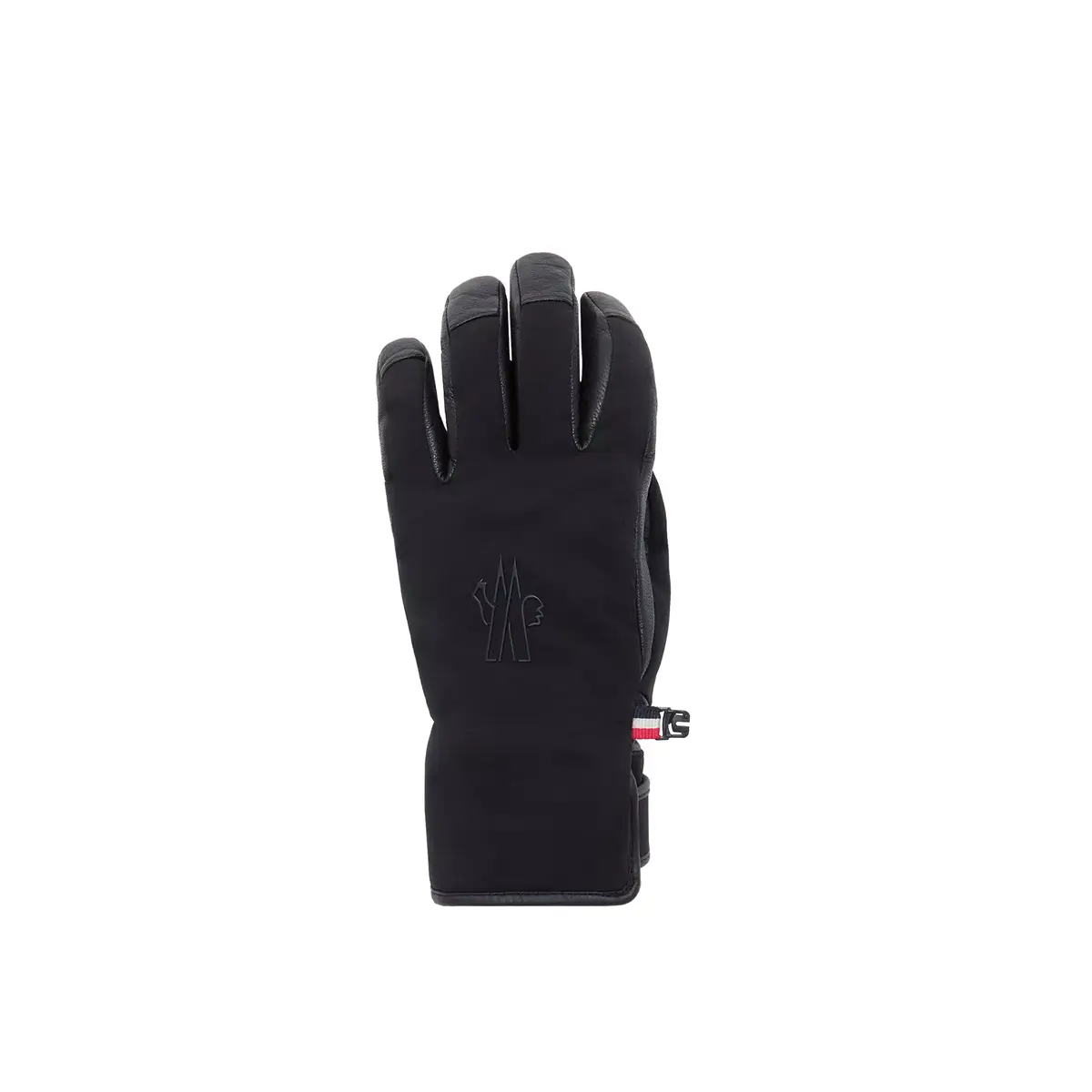
- Mittens keep your fingers in one compartment, where they warm each other; choose them for cold days. Gloves win on dexterity for buckles, zips and poles. Moncler Grenoble's padded gauntlet mittens, made with the glove specialist Reusch, add leather at the palm and fingertips and a zip-and-hook closure at the wrist; its padded soft-shell gloves attach to a belt or bag.
- Cuffs: a long gauntlet closes over the jacket sleeve and keeps out powder; a short cuff tucks under the sleeve and its wrist gaiter.
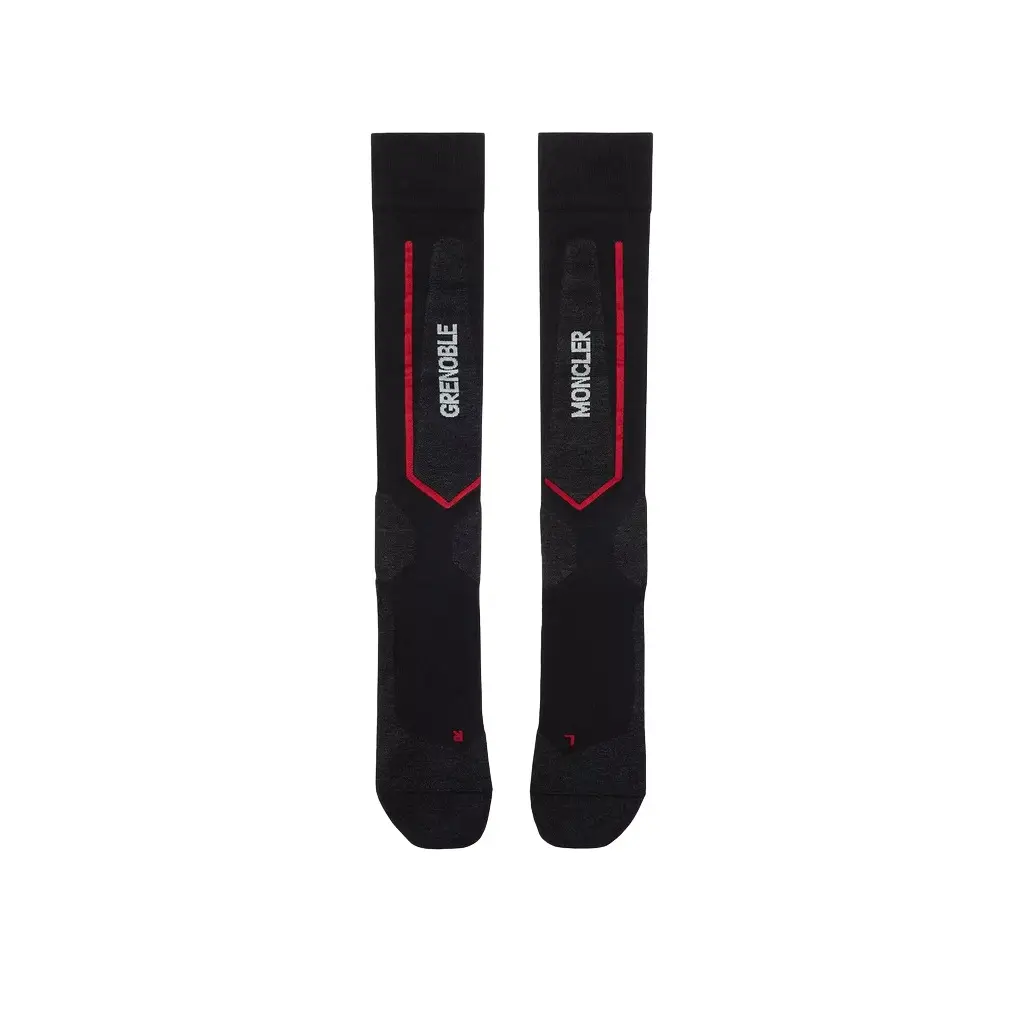
- Socks: one pair, thin to medium weight, over the calf, in a wool blend. Moncler Grenoble's technical socks, made with the German sock maker FALKE, are 55 percent wool. Cotton socks hold sweat, and doubling up crowds the boot.
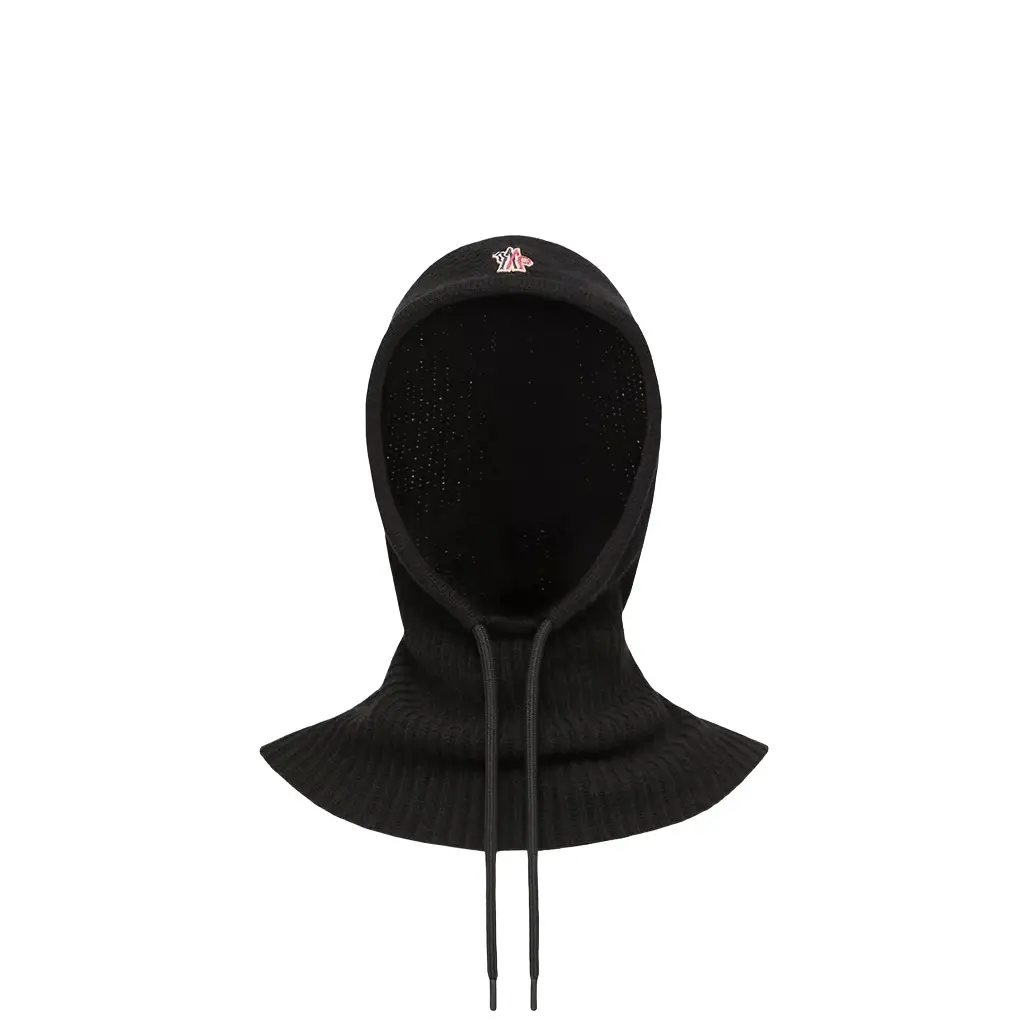
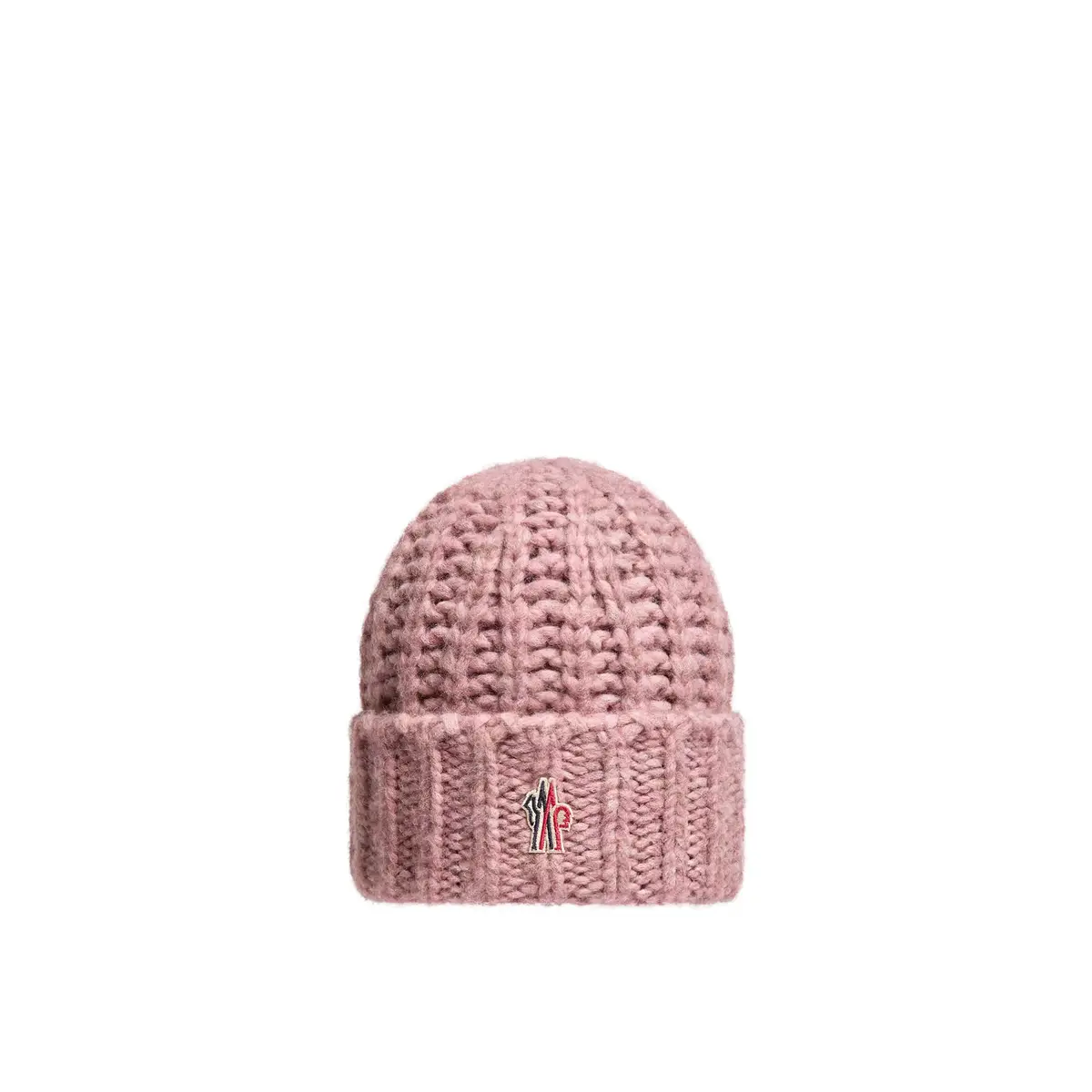
- Neck and face: a wool or cashmere neck warmer or balaclava for the lifts; Moncler Grenoble's balaclava is 70 percent virgin wool and 30 percent cashmere. Leave long scarves at the hotel: loose ends and chairlifts do not mix.
Browse every pair of designer gloves and mittens on Vêtir.
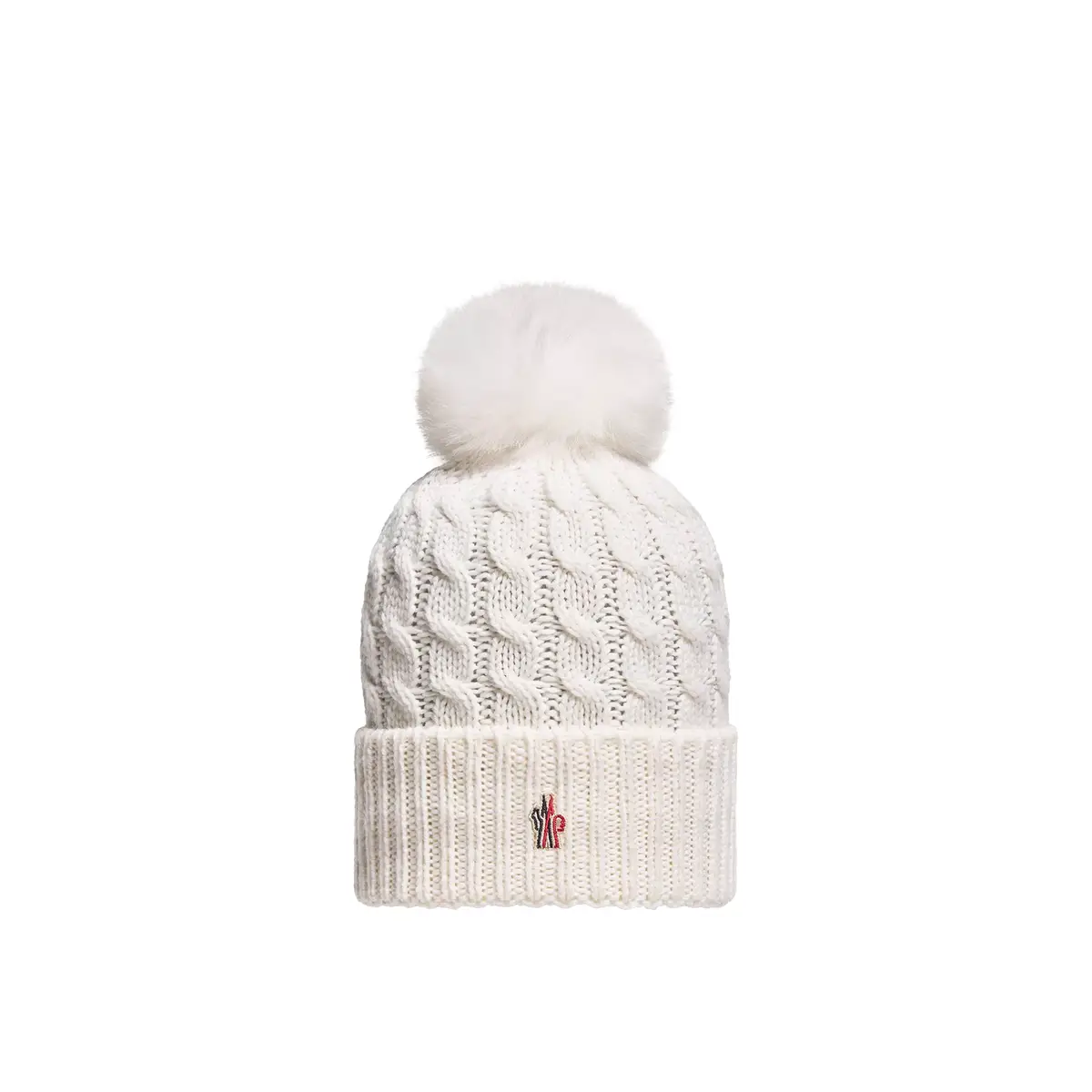
A helmet, goggles, mittens, gloves, a balaclava, a beanie and ski socks
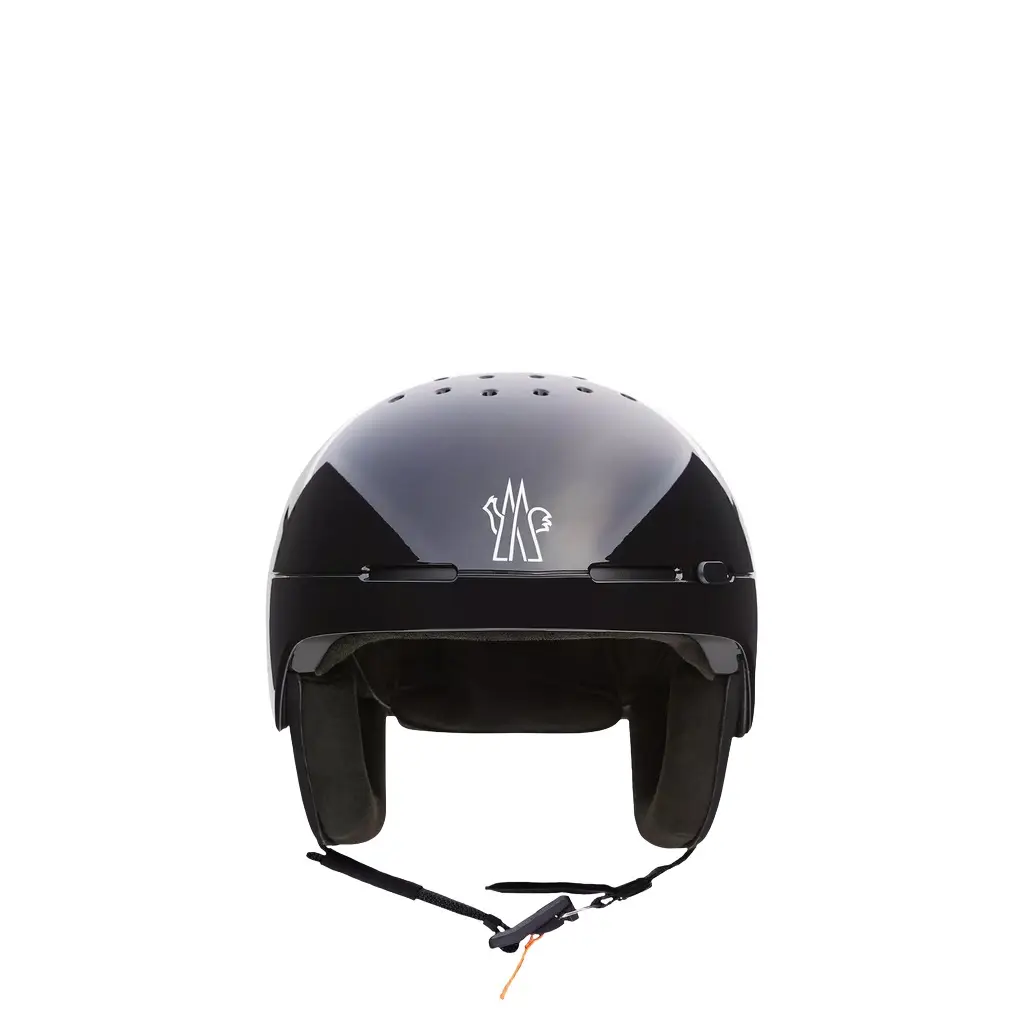
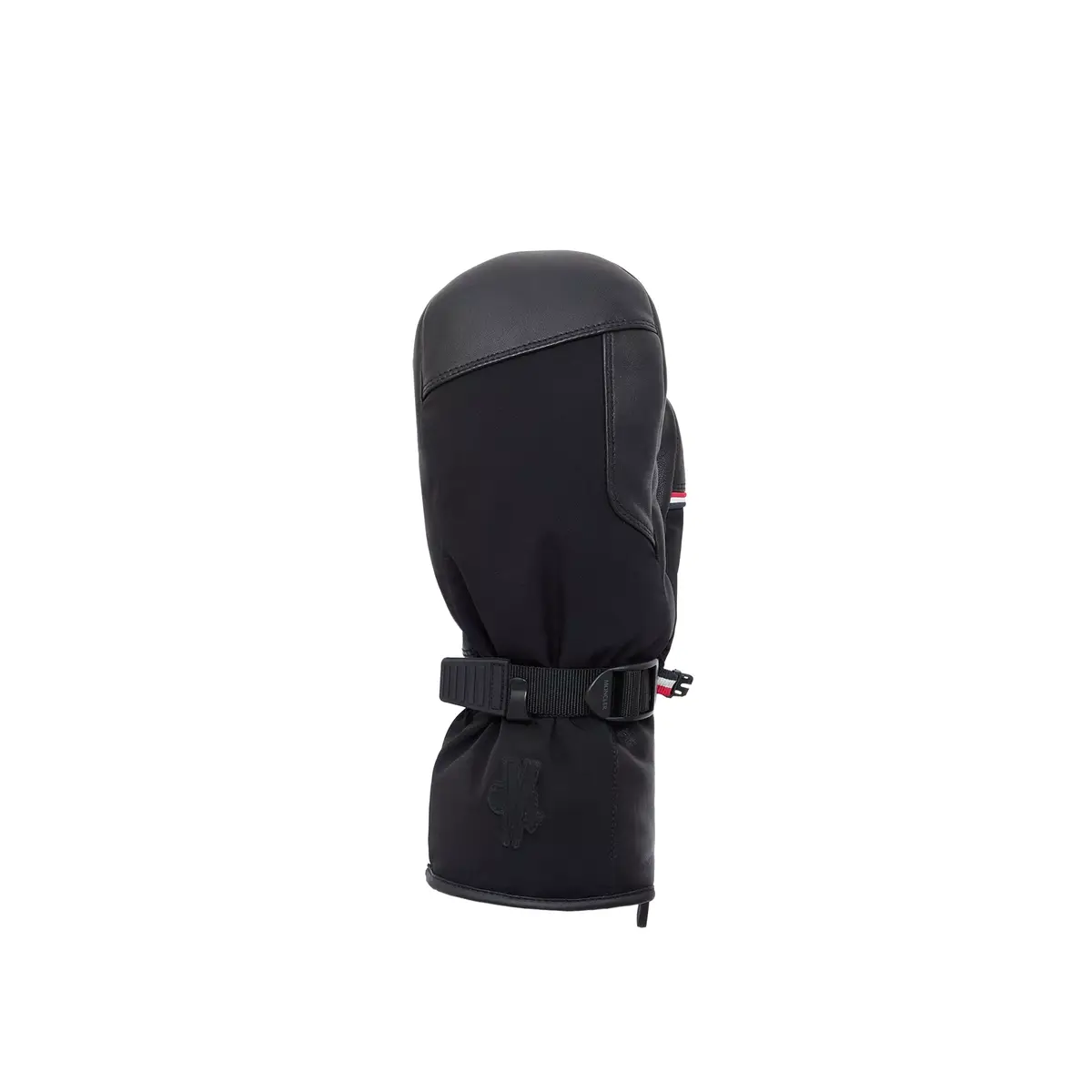
Sun protection at altitude
Mountain sun is stronger than it feels. The World Health Organization notes that skiers and climbers can meet extreme UV levels at altitude, that fresh snow can reflect up to 80 percent of incoming UV, and that the result can be snow blindness: an extreme, painful form of photokeratitis, or inflammation of the cornea. Wear goggles or wraparound sunglasses with full UV protection on every run, gray days included. Put sunscreen on your face and ears, including under the chin and nose, where light bounces up off the snow, and reapply it with an SPF lip balm at lunch.
Ski outfits for women: color and visibility
On a white mountain, color is partly a safety decision. In flat light or falling snow, head-to-toe white or pale gray can vanish against the slope, making you harder for friends, or a patroller, to pick out. One dark or saturated piece fixes it; you do not need neon. Build from one strong piece and keep the rest quiet.
- Blush and black: the blush Danses jacket, black Gore-Tex pants, a black helmet, black mittens and mirrored goggles.
- Ivory with olive: the ivory Laplance over the ivory wool-silk base layer, with olive Dermizax pants and a black helmet to give the pale jacket an edge against the snow.
- All black, one piece: Loro Piana's black belted suit, Tom Ford's mirrored goggles and Moncler Grenoble's black wool-cashmere balaclava.
- Olive and black: the olive Allesaz over the anthracite cashmere-silk turtleneck, black Gore-Tex pants and a black helmet, then olive Altive Mid boots for the walk back.
"Style ski looks for Aspen" is one of the requests our AI stylist has received; last season, ski asks appeared only from December to March. Get ahead of the season: ask our AI stylist to build a head-to-toe ski look around a jacket you already own, or browse our stylists' Ski Shop edit.
How a ski jacket should fit
- Try it over your layers. Wear the base and mid layer you will ski in; a jacket that closes neatly over a T-shirt binds over a fleece.
- Reach and crouch. Reach forward as if planting a pole: your sleeves should still cover your wrists. Drop into a tuck: the hem should stay over the waistband and the back should not ride up.
- Athletic or relaxed. Belted, close-cut jackets such as the Laplance leave little spare room, so size for your thickest mid layer; relaxed cuts trade shape for room.
- Pants in ski boots. Check the length with boots on: the hem should cover the top of the boot, and the inner gaiter should close around the boot's cuff.
From the last run to après
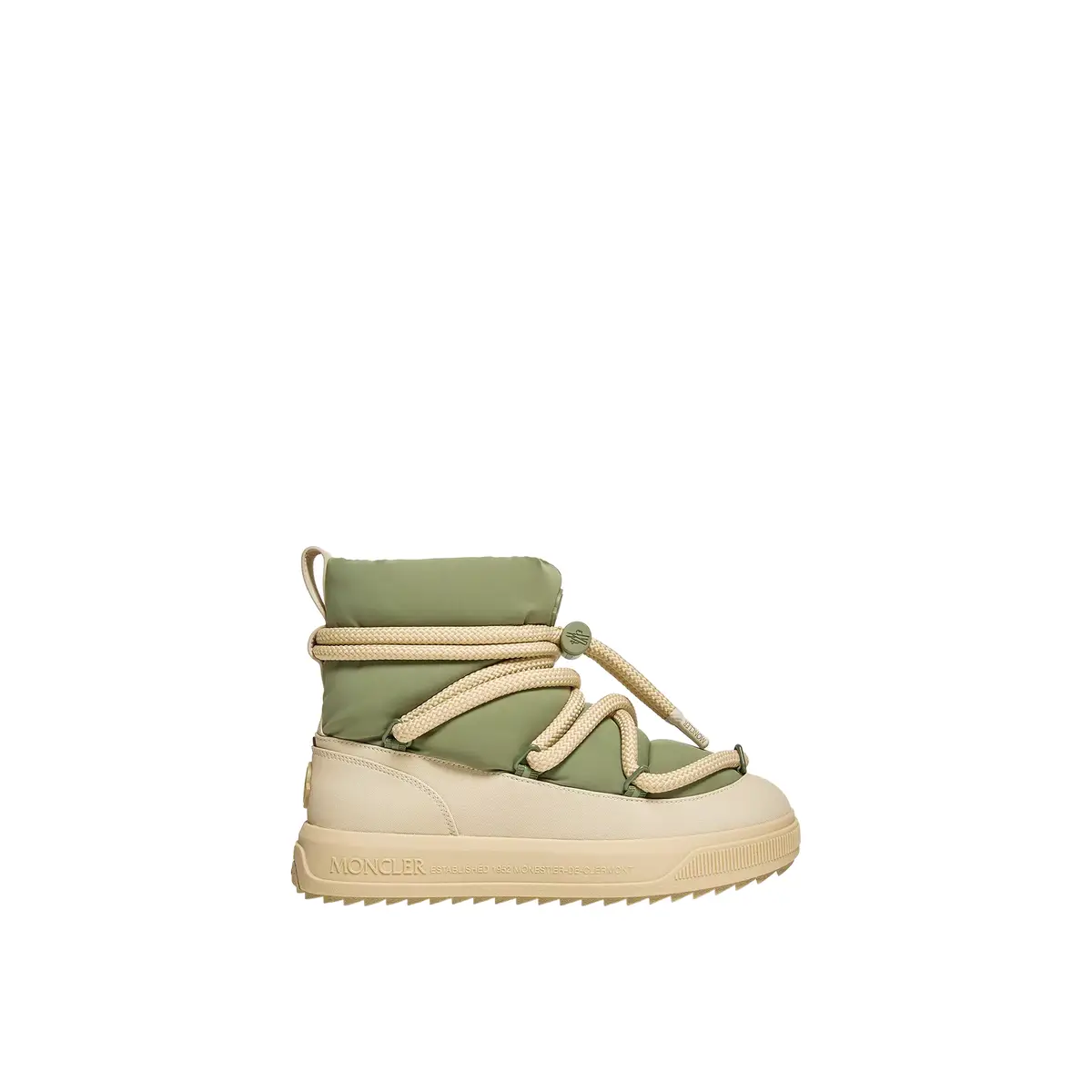
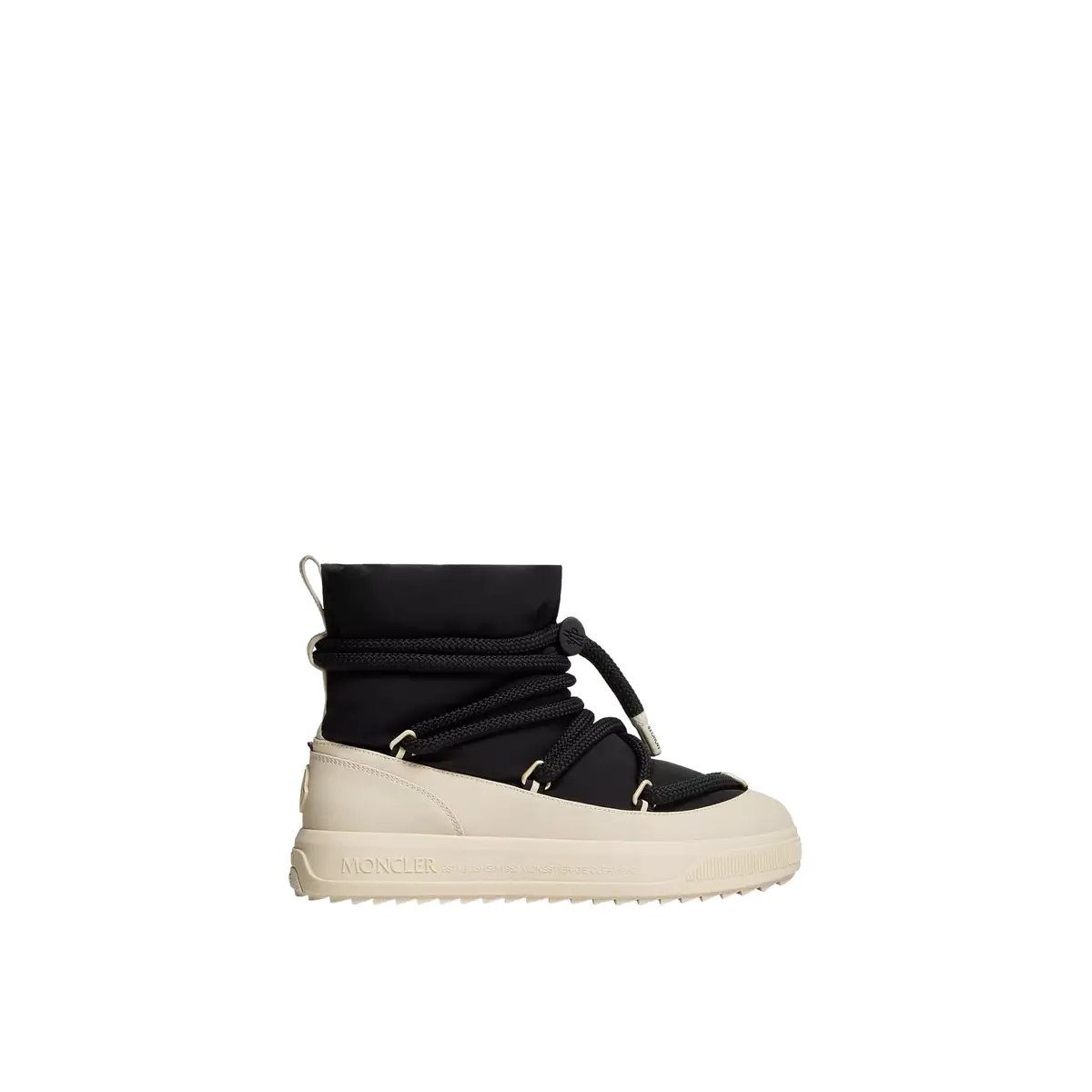
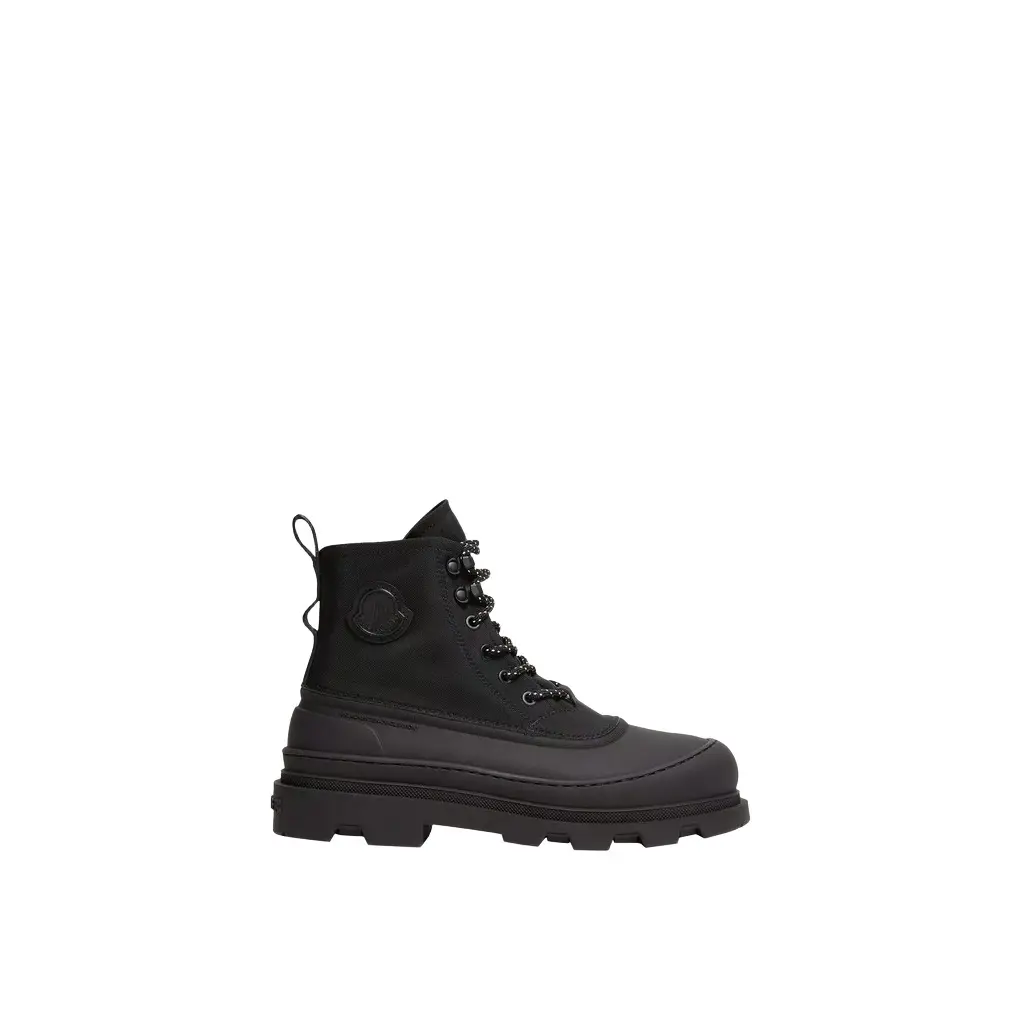
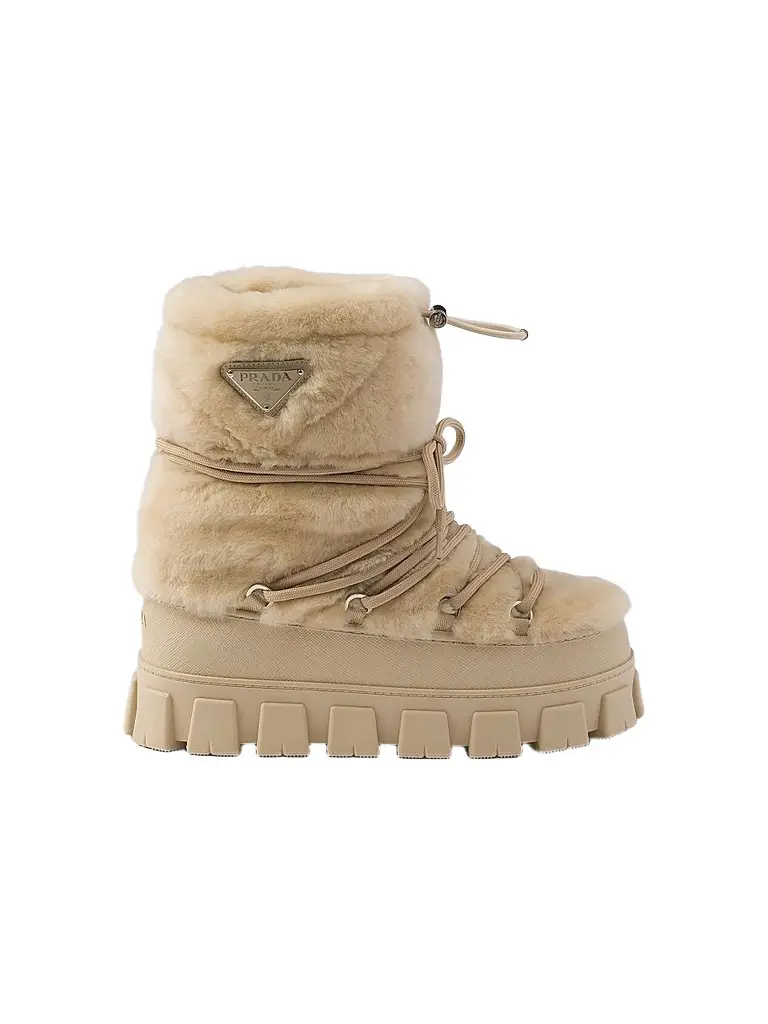
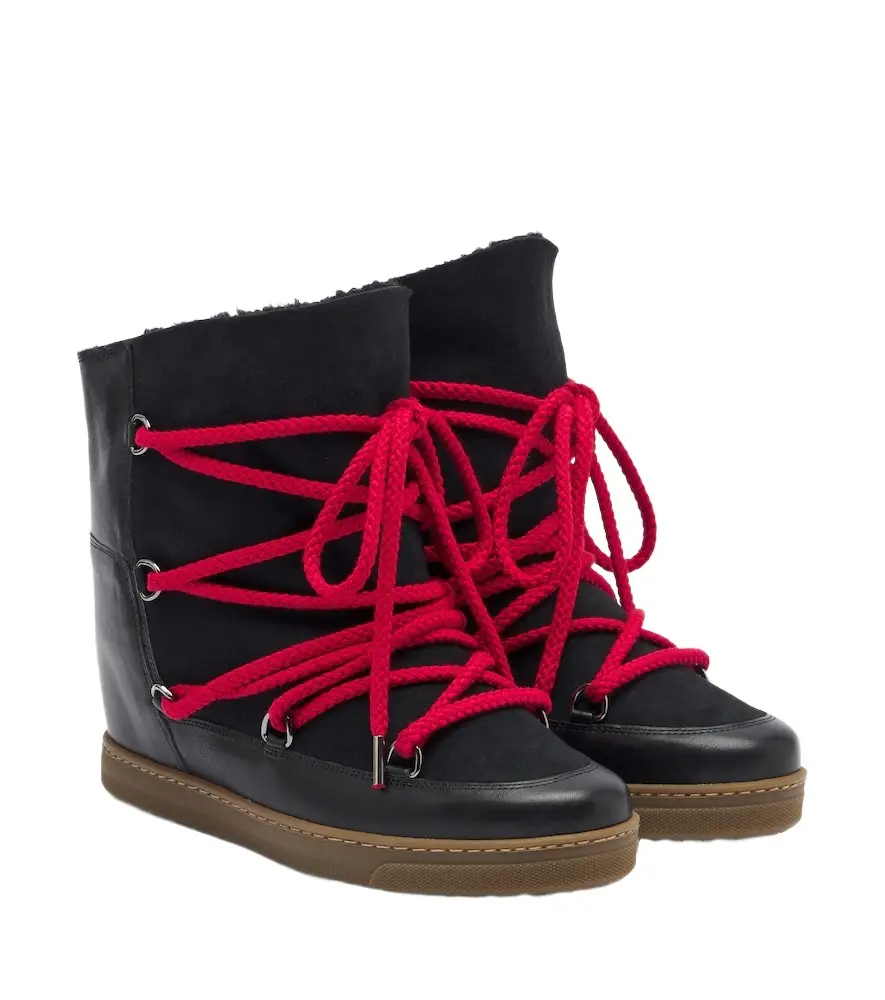
When the lifts close, the ski boots come off first. They are rigid and treacherous on stone steps, so change at the base, a ski locker or the car into snow boots with a rubber sole. Moncler's quilted Altive Mid grips on Vibram MegaGrip rubber, and its Vera Sheal lace-up sets a nylon upper on a rubber lower, lined in fleece and leather. Prada's shearling après booties add a lug tread and a removable padded fleece lining; Isabel Marant's Nowles are shearling-lined lace-ups.
Our après-ski outfits guide covers the terrace, the lodge and the change for dinner. For resort dress codes, see what to wear in Aspen and what to wear in St. Moritz; for quantities and flights, our ski trip packing list. Browse more cold-weather boots.
Snow boots for the village after the last run
What to wear skiing for men
The layers are the same, and so is the lead house. Moncler Grenoble's Hinterburgs is a true shell, a GORE-TEX laminate with heat-sealed seams, underarm vents and a RECCO reflector. The Balmhorn sets down insulation behind a GORE-TEX laminate, with a powder skirt; the Montgetech is stretch nylon over down, for cold, dry days. Below the waist, the GORE-TEX bib is insulated with PrimaLoft Active, or choose the stretch ski pants. Tom Ford supplies the goggles. Browse the men's ski shop, and for town, our guide to the best men's winter coats.
Men's ski jackets, a bib and ski pants from Moncler Grenoble, plus goggles
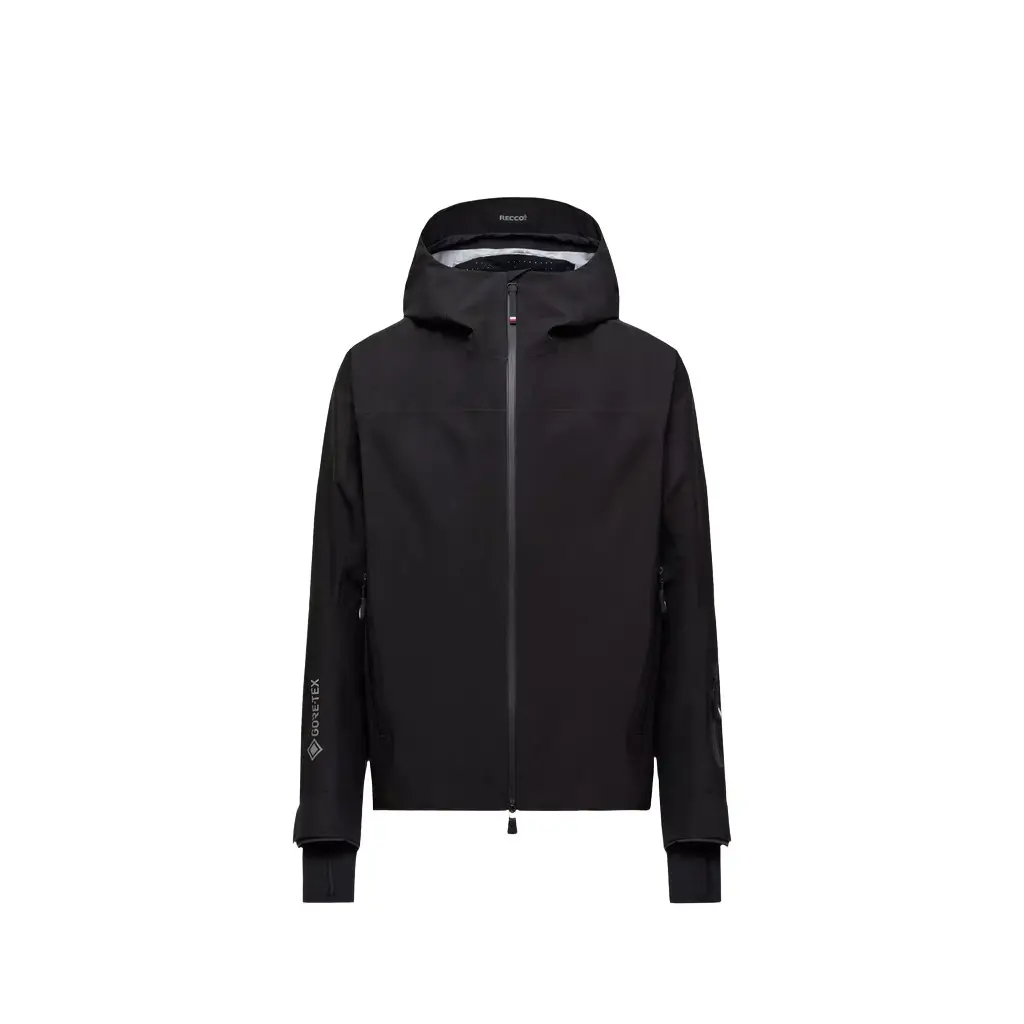 Moncler GrenobleHinterburgs Hooded Gore-tex Ski Shell Jacket$2,295
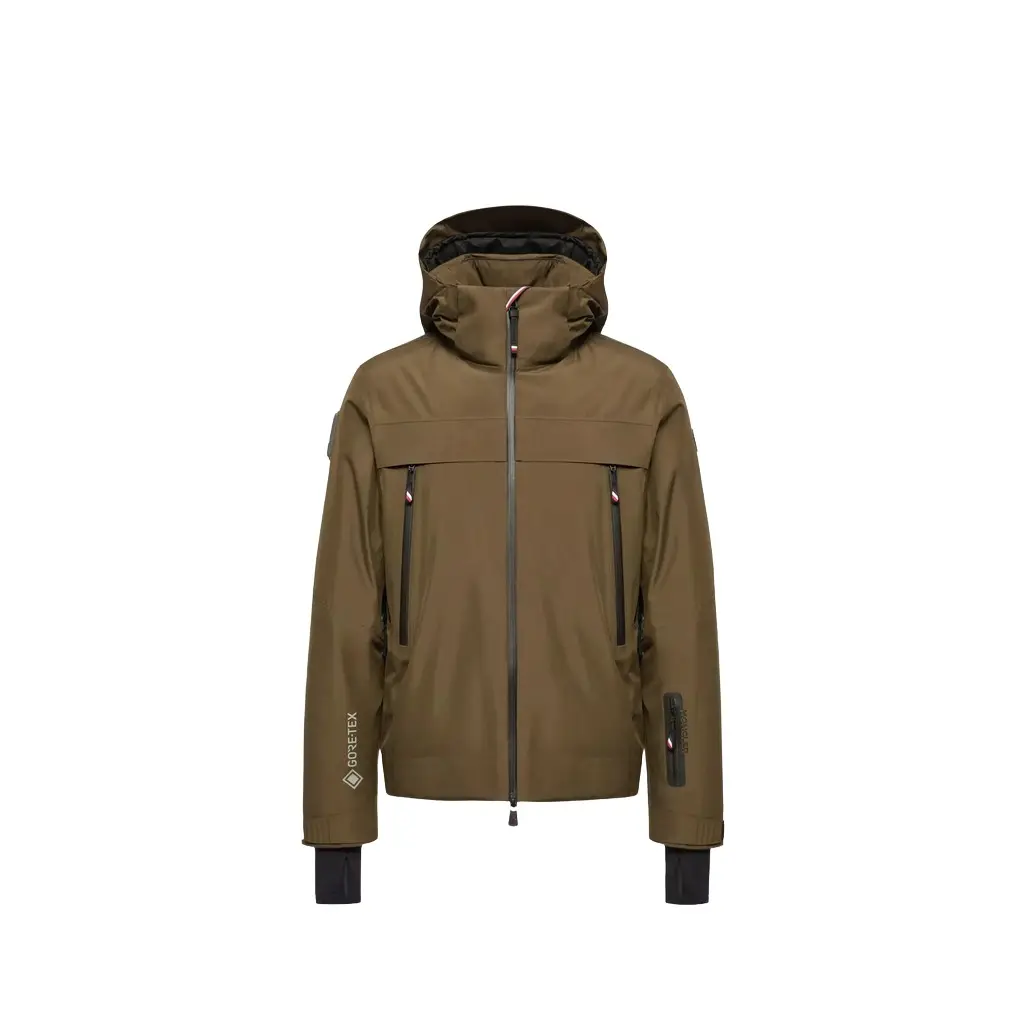 Moncler GrenobleBalmhorn Hooded Gore-tex Insulated Ski Jacket$3,250
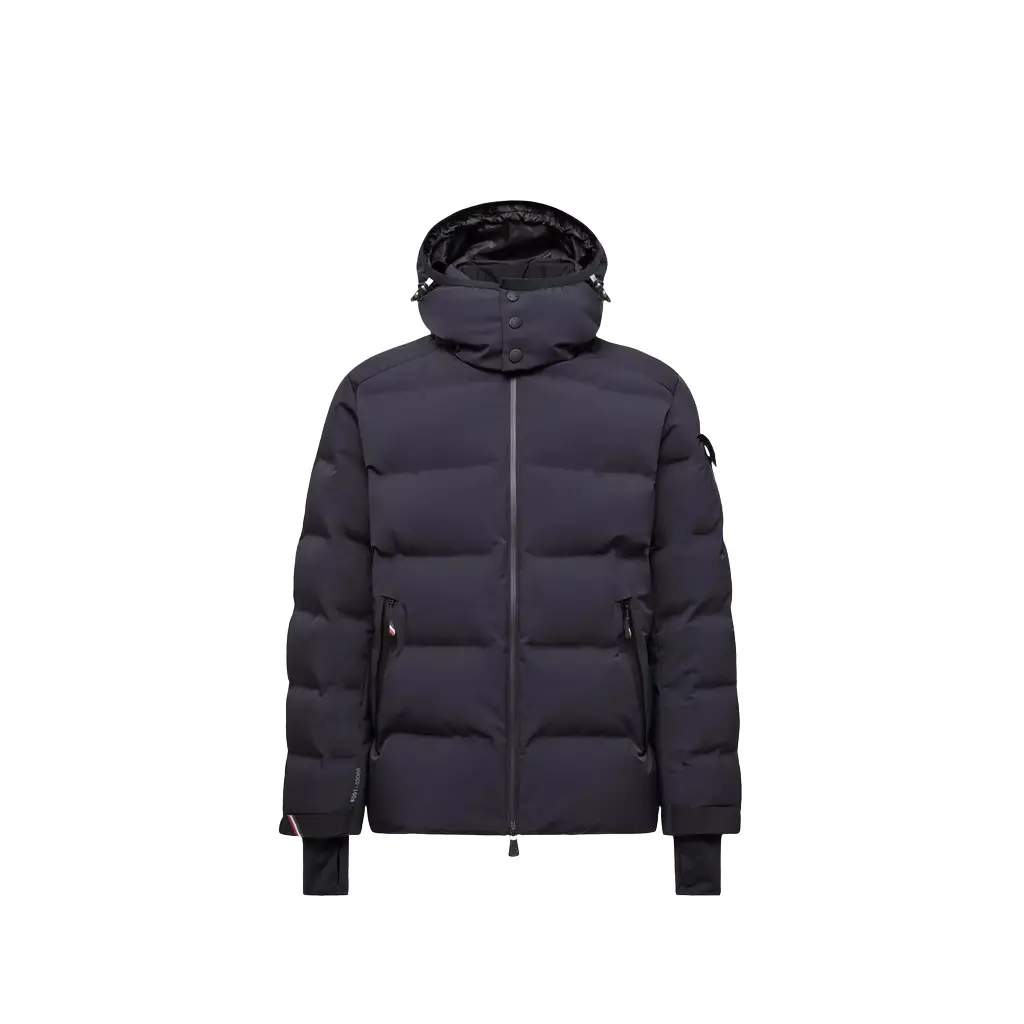 Moncler GrenobleMontgetech Hooded Insulated Ski Jacket$3,395
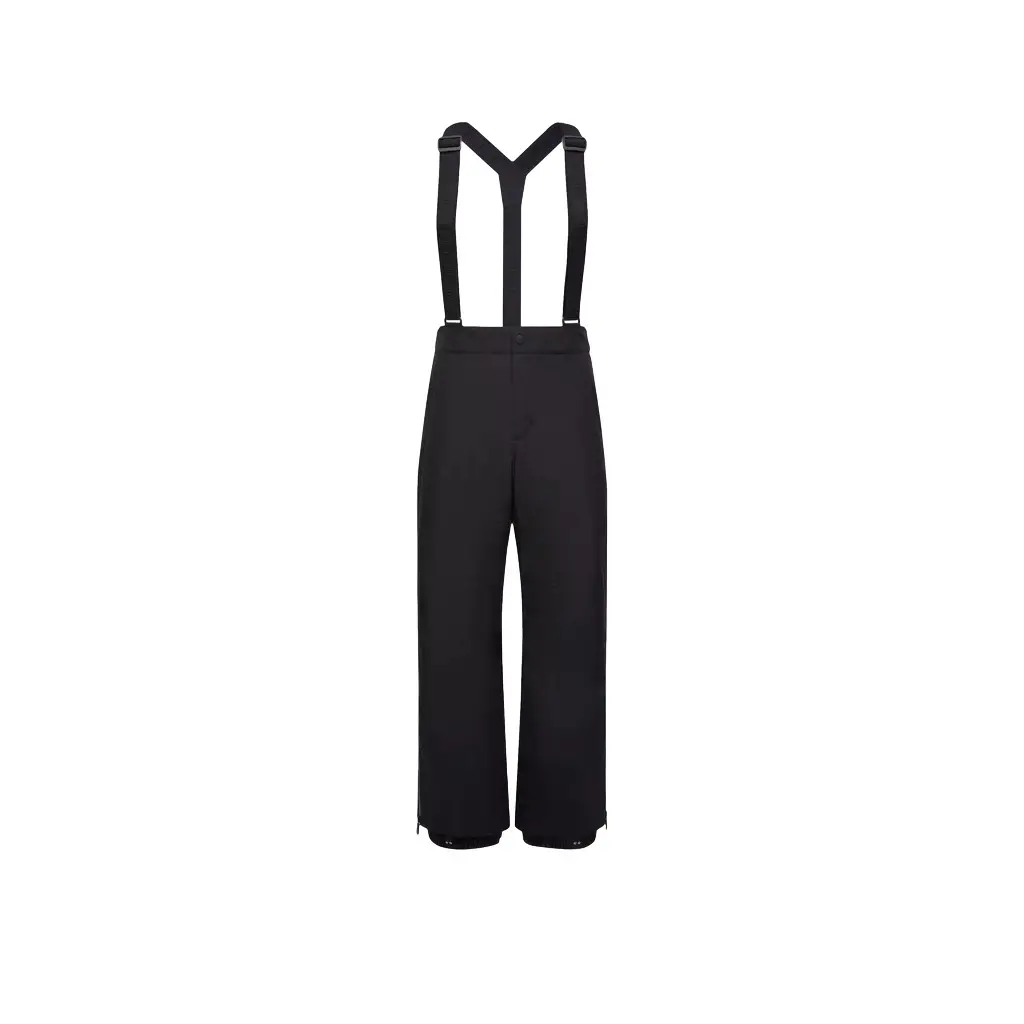 Moncler GrenobleInsulated Gore-tex Ski Bib$1,740
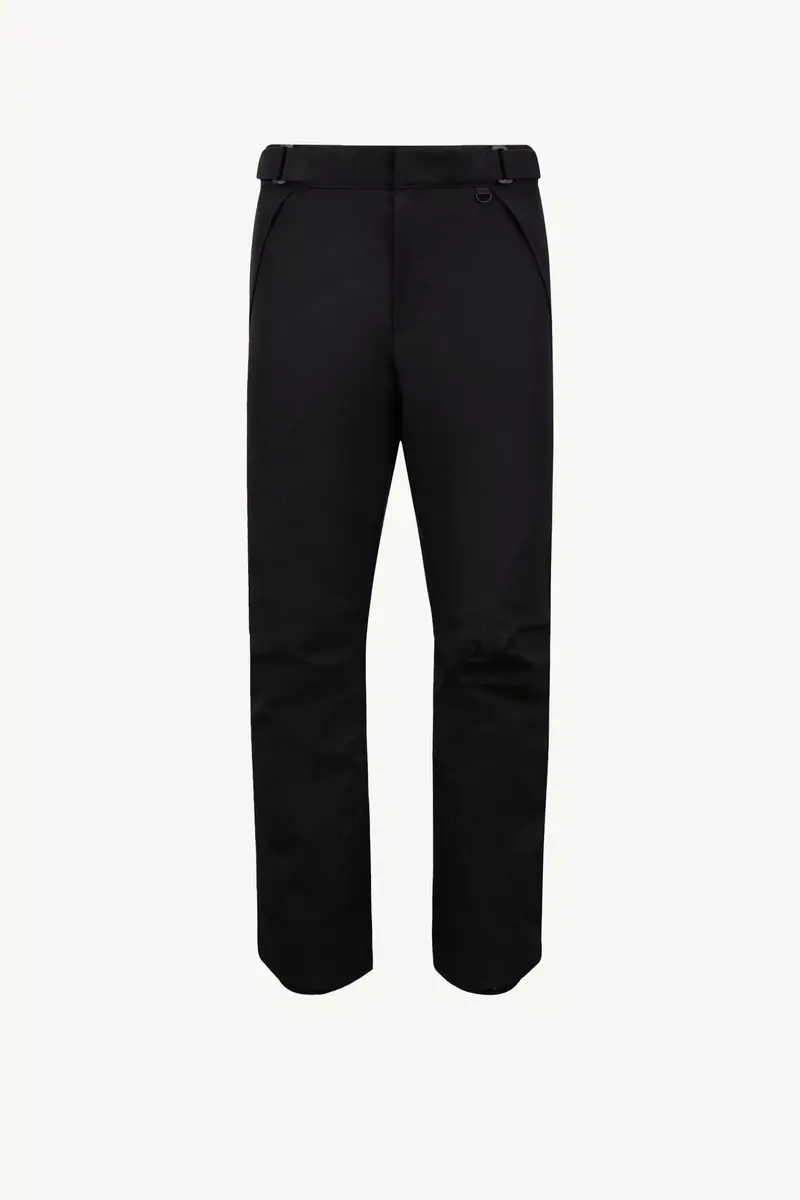 Moncler GrenobleInsulated Ski Pants$1,430
 Tom FordWebbing-Trimmed Mirrored Ski Goggles - Men$870
How we chose the luxury ski wear
- Built for snow: every jacket, pant and suit here states a membrane, a waterproof or water-resistant construction, or ski-specific features such as a powder skirt, inner gaiters or a RECCO reflector. Fashion puffers without them stayed out.
- Layers that layer: base layers are close-fitting and cotton-free; mid layers are fleece, fine knits or down-fronted hybrids made to go under a ski jacket.
- Houses: the edit leans on Moncler Grenoble because, of the top luxury houses we carry, it is the one that builds a complete technical ski wardrobe. Other houses fill in around it: Tom Ford for goggles, Loro Piana for one-piece suits, Versace and Bottega Veneta for merino and wool base layers, Brunello Cucinelli for fine cashmere, and Prada and Isabel Marant for shearling snow boots.
- Price: from ski socks at about $265 to Loro Piana's one-piece near $9,000; the seven women's ski jackets run from about $2,750 to just over $4,000.
- Stock notes: Loro Piana's one-piece suits and Tom Ford's women's goggles each came in a single size when we checked in late September 2026.
Frequently asked questions
What should I wear skiing for the first time?
A fitted base layer that is not cotton, a fleece or thin sweater, waterproof ski pants and jacket, waterproof mittens or gloves, one pair of ski socks, goggles and a helmet. Rent skis, boots, poles and, if needed, the helmet; buy the layers, which have to fit.
How many layers should you wear skiing?
Usually three: a base layer, a mid layer and a jacket. Drop the mid layer on warm spring days; add a down vest in deep cold or wind.
What do you wear under ski pants?
Thin leggings or long johns in wool or a technical synthetic, plus one pair of over-the-calf ski socks. End the leggings above the boot cuff so only the sock goes into the boot. Skip jeans and sweatpants: cotton holds sweat and snowmelt and stays cold. Under an uninsulated shell, choose a midweight base on cold days.
Is a ski jacket waterproof enough for rain and wet snow?
Not always. A jacket that lists only a water-repellent or water-resistant finish sheds dry snow but can wet through in rain, slush or on a wet chairlift seat. For those days we look for a named membrane such as GORE-TEX or Dermizax, or a stated 10,000 mm or more, with taped or heat-sealed seams.
Should you wear a helmet or a hat skiing?
A helmet. A beanie keeps you warm but protects nothing, and a thick one worn under a helmet spoils its fit. If your head runs cold, add a thin balaclava or liner under the helmet and save the beanie for the walk to lunch or après.