Après-Ski Outfits: What to Wear From the Last Run to Dinner
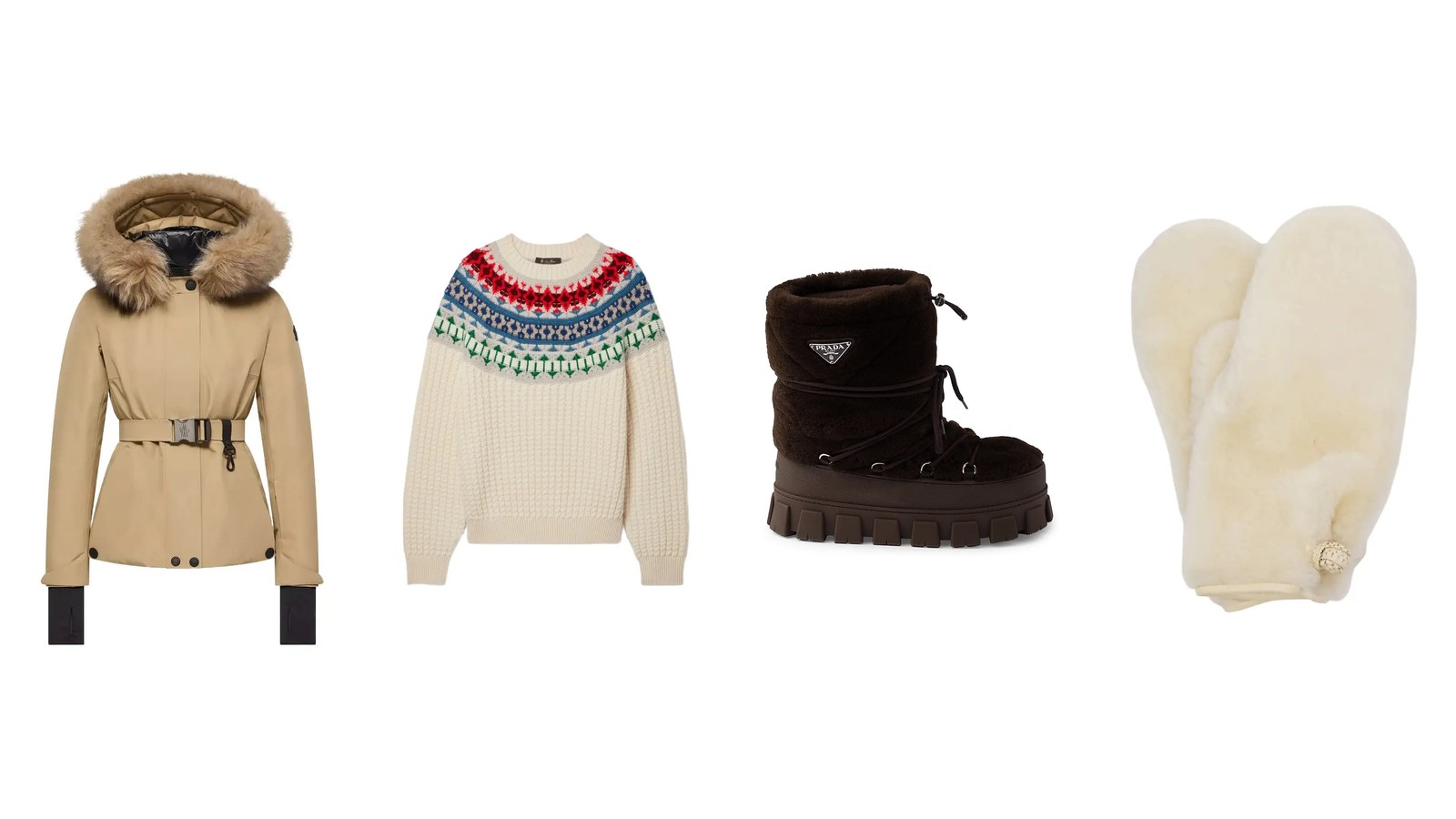
The best après-ski outfits are built from what you skied in. Keep your merino base layer and your ski pants or bib, trade the helmet for a cashmere beanie and the goggles for wraparound sunglasses, open the shell, and make sure the knit underneath can stand on its own once you are indoors. Before you walk anywhere, swap ski boots for snow boots with a rubber lug sole. If you are changing before dinner, stirrup trousers or a knit dress with the same boots will carry you through the evening.
Below, we take après in the order it happens (the terrace, the lodge, then dinner), explain the layering that keeps you warm once you stop moving, and show the pieces we would pack from Moncler Grenoble, Loro Piana, Prada, Fendi and other houses. For the technical kit on the mountain itself, see our ski trip packing list.
Après-ski outfits for the terrace, the lodge and dinner
Après is three climates in one afternoon. On a slopeside terrace you sit still in cold air and strong sun. In the lodge you are in a heated room, and the jacket comes off within minutes. At dinner you face a cold walk and a warm restaurant. Dress for the transitions rather than for the photograph.
| Setting | Keep on | Change or add | On your feet |
|---|---|---|---|
| Terrace, straight off the lift | Base layer, ski pants or bib, mid layer | A beanie for the helmet, wraparound sunglasses for the goggles, a down vest; open the shell | Ski boots, unbuckled, if you are skiing down; snow boots if you are done |
| Lodge or hotel bar | Base layer, plus ski pants if you are going back out | A knit that works as your top layer; stirrups or knit flares if you can change | Snow boots with a rubber lug sole |
| Dinner | Nothing from the day except dry boots | A knit dress, velvet or wool trousers, fine cashmere and a long down or shearling coat | Lug-sole ankle or knee boots, flat or with a low block heel |
One detail matters more than the name on your jacket: the layer under it. Most après happens with the shell unzipped or hung on a chair, so the sweater you skied in is, in practice, the outfit. Choose it first and build everything else around it.
The ski outfit that works on the terrace
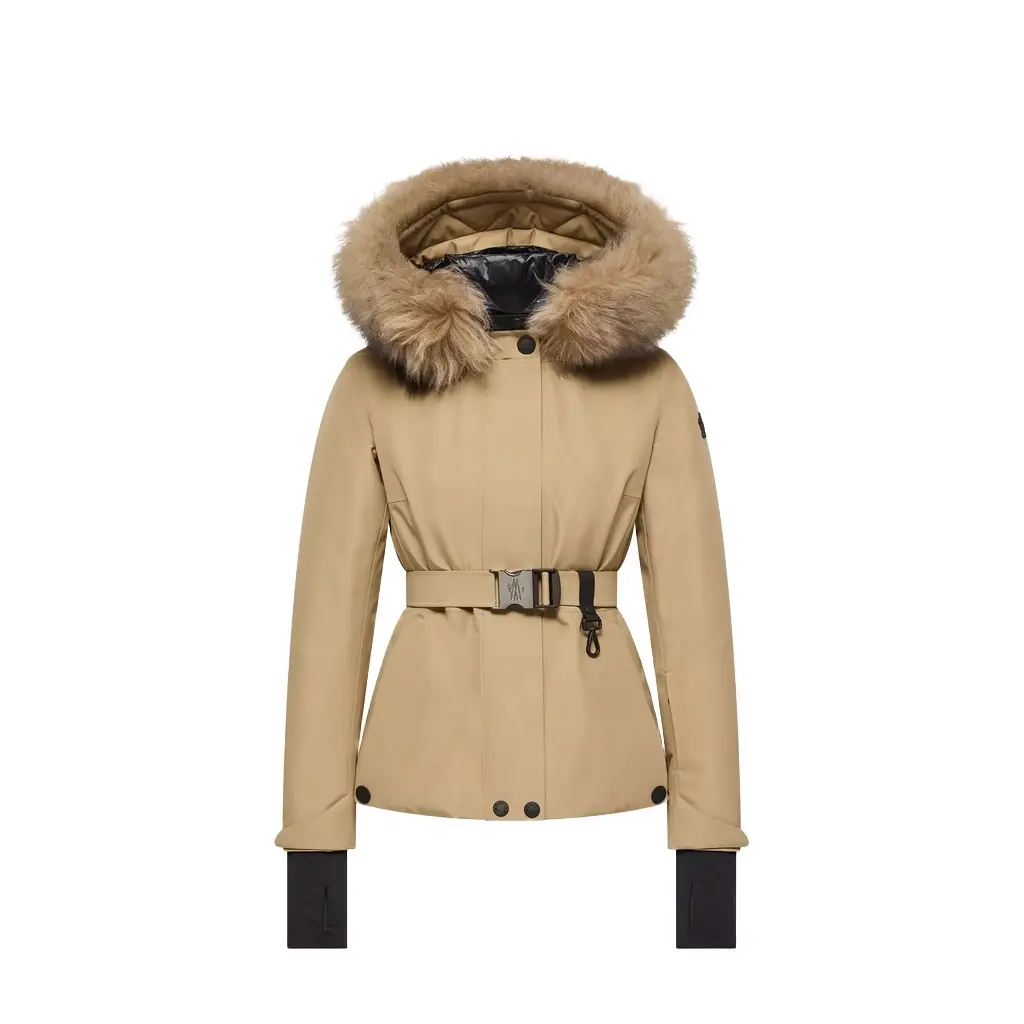
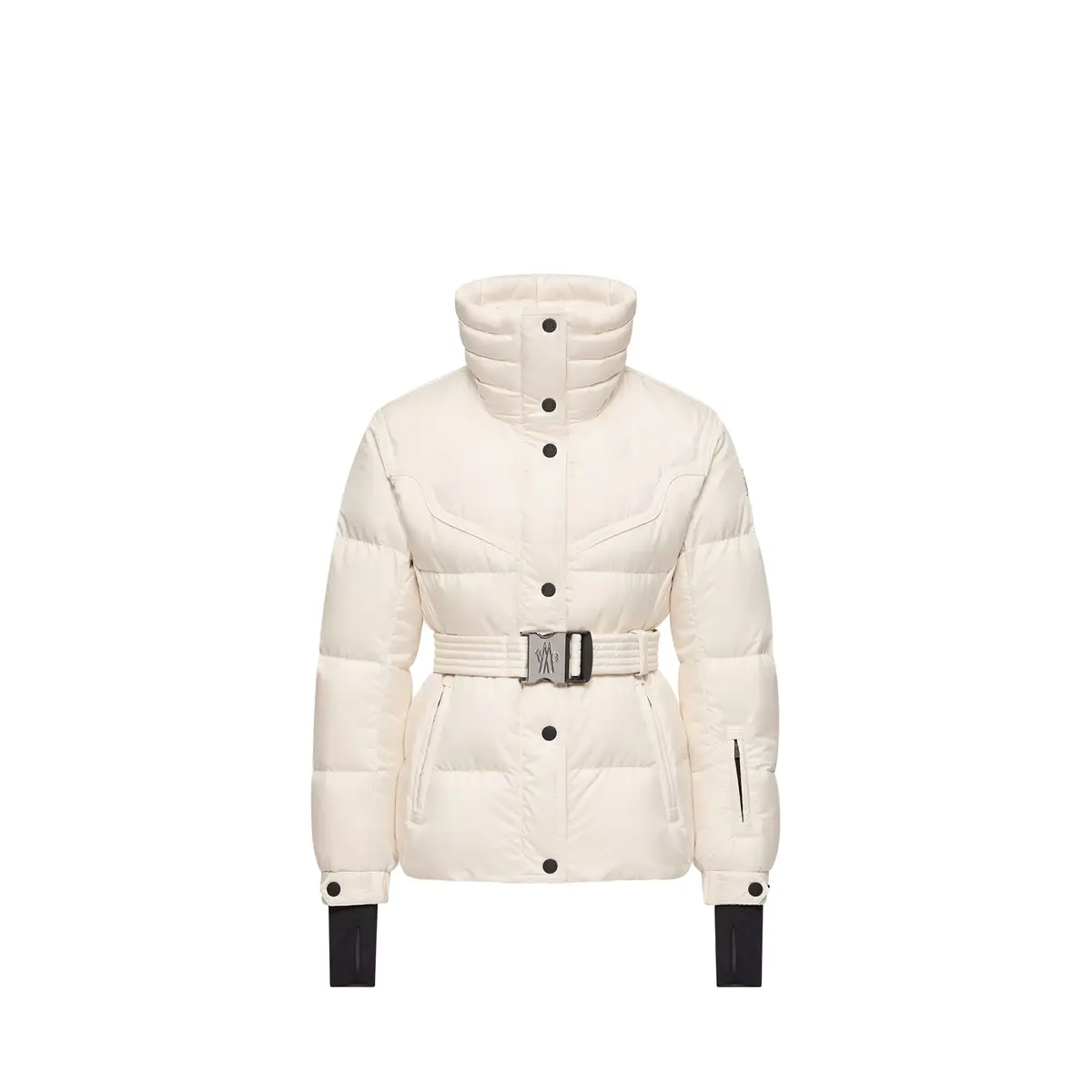
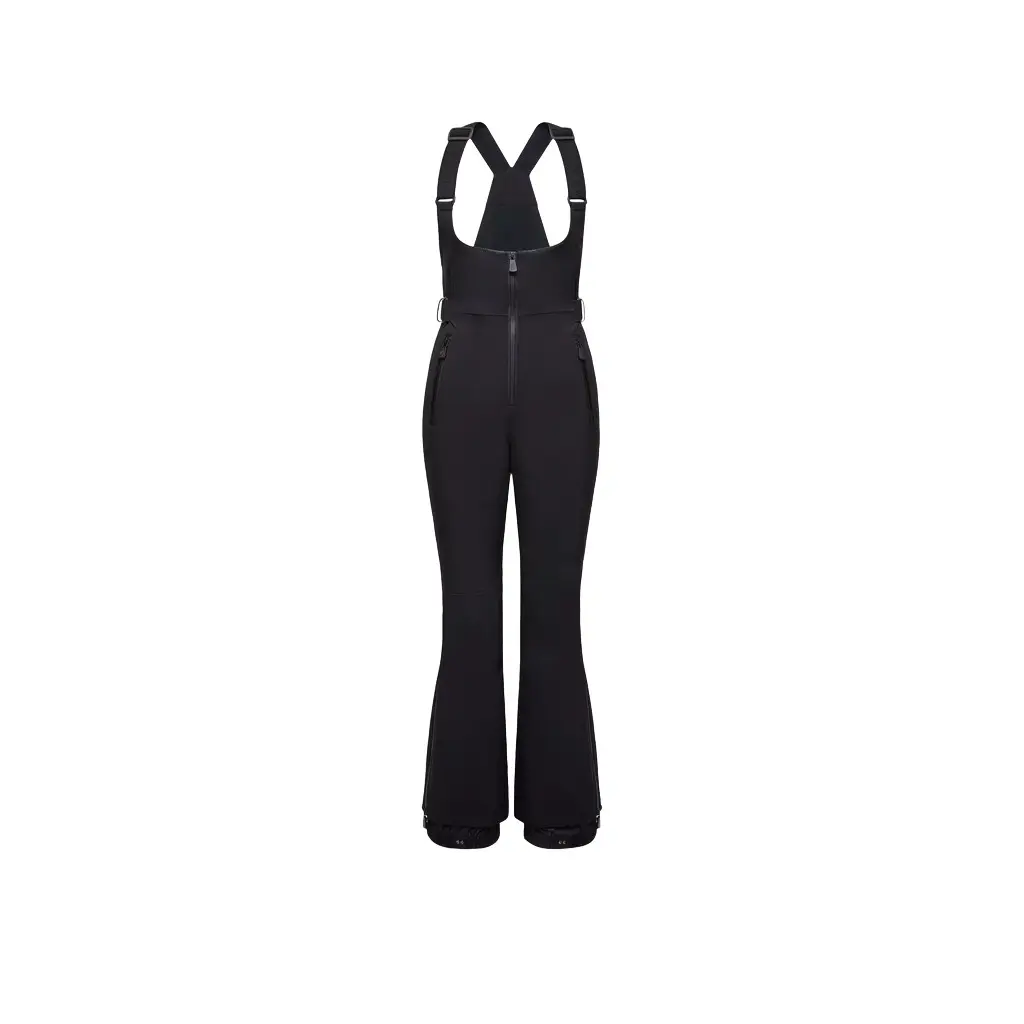
If you stop for a drink before the last run, you will be in ski clothes, so it helps when they read as clothes. A belted, insulated jacket in a solid color (camel, off-white, chocolate) looks deliberate with the zip open. Moncler Grenoble's belted jackets, such as the off-white Karshi and the shearling-trimmed Laplance, are cut that way. A bib or a one-piece suit solves the indoor problem: when the jacket comes off, bib straps over a cream turtleneck look finished, where a waistband over a bunched base layer does not. Moncler Grenoble's insulated bib is the straightforward version; Loro Piana's wool-blend salopettes and its belted ripstop ski suit are the polished ones. You can see more in our edit of ski clothing.
Keep the lower half dark if you can. Black ski pants or a black bib hide the grey slush that collects at the hem by late afternoon and let a pale jacket or sweater do the talking.
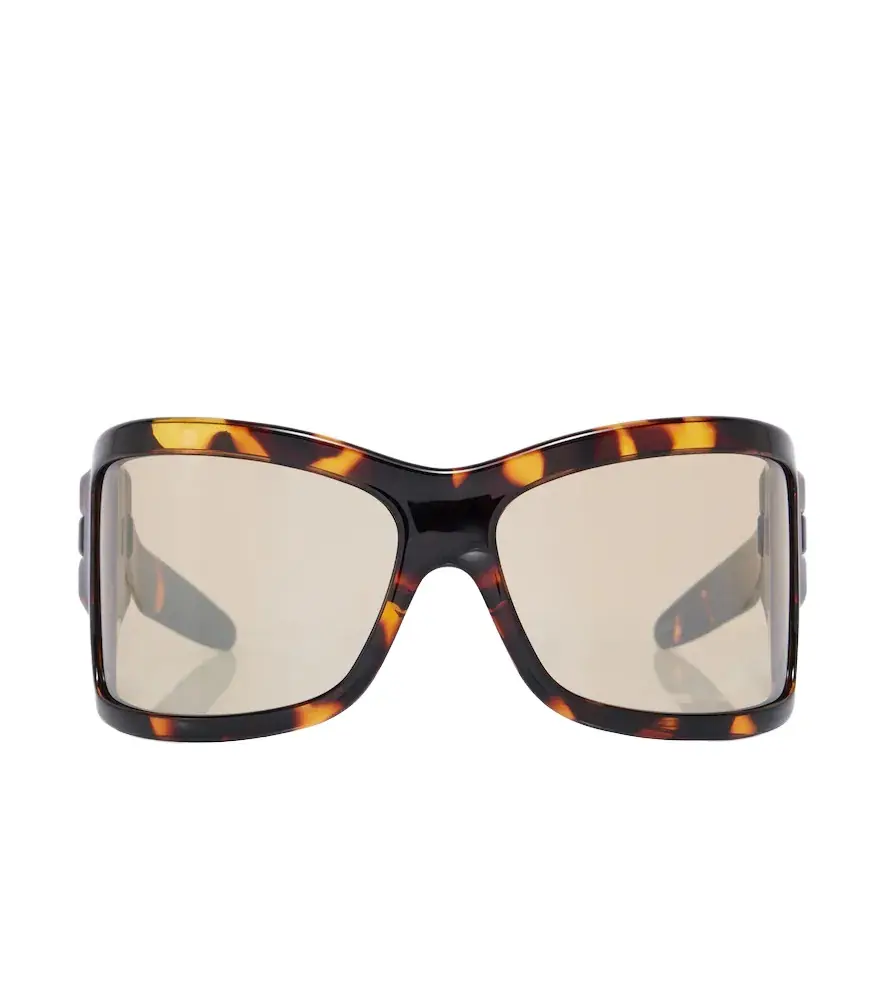
Then swap the goggles. The World Health Organization notes that UV levels increase with altitude, because thinner air absorbs less of it, and that fresh snow raises exposure further; it recommends wraparound sunglasses that block 99 to 100 percent of UV-A and UV-B. A shield frame covers the sides as well as the front, which is exactly what you want on a white terrace.
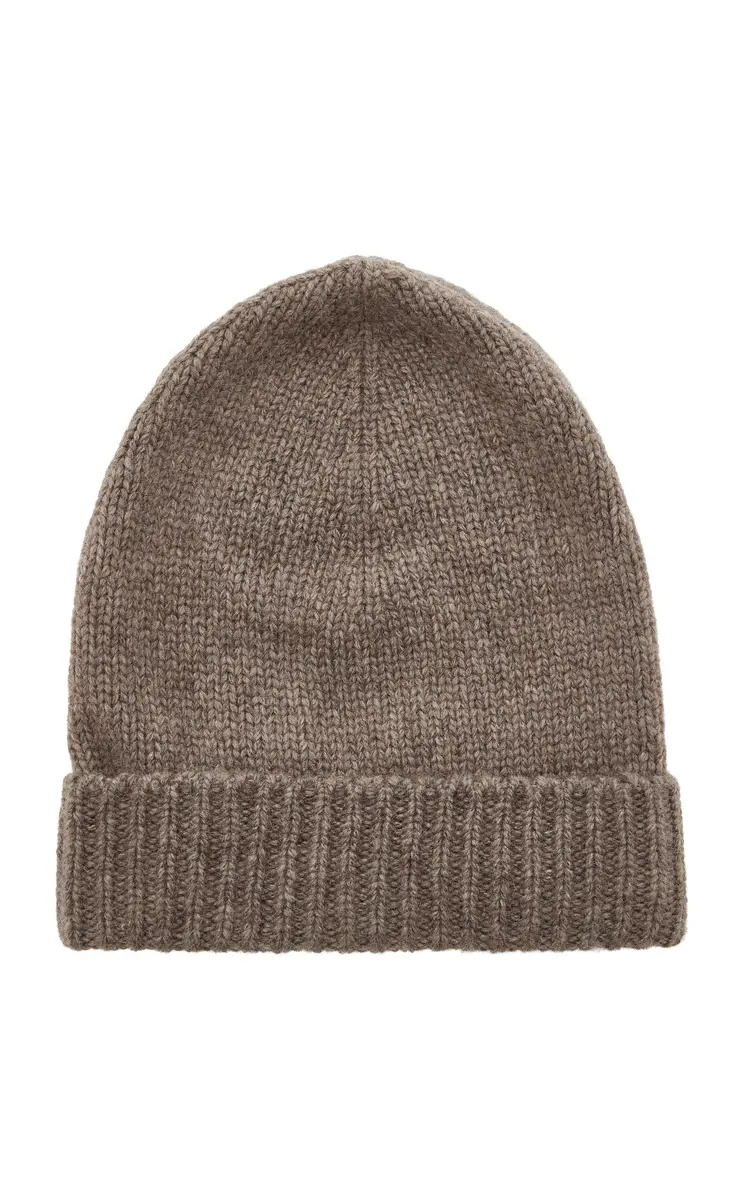
- Camel and black: a camel belted ski jacket, a black insulated bib, a taupe cashmere beanie and tortoiseshell shield sunglasses.
- Sage and cream: sage wool-blend salopettes over a cream Fair Isle sweater, with ivory shearling mittens.
- One piece, all black: a black ski suit belted at the waist and unzipped to show an ecru cable-knit roll neck, with silver shield sunglasses.
In Aspen, that terrace might be the patio at Ajax Tavern beside the Silver Queen Gondola or the Sundeck, 11,212 feet up at the top of Aspen Mountain; both are listed on Aspen Snowmass's Aspen Mountain page. For the town itself, see our guide to what to wear in Aspen.
Ski jackets, bibs and suits that work on the terrace
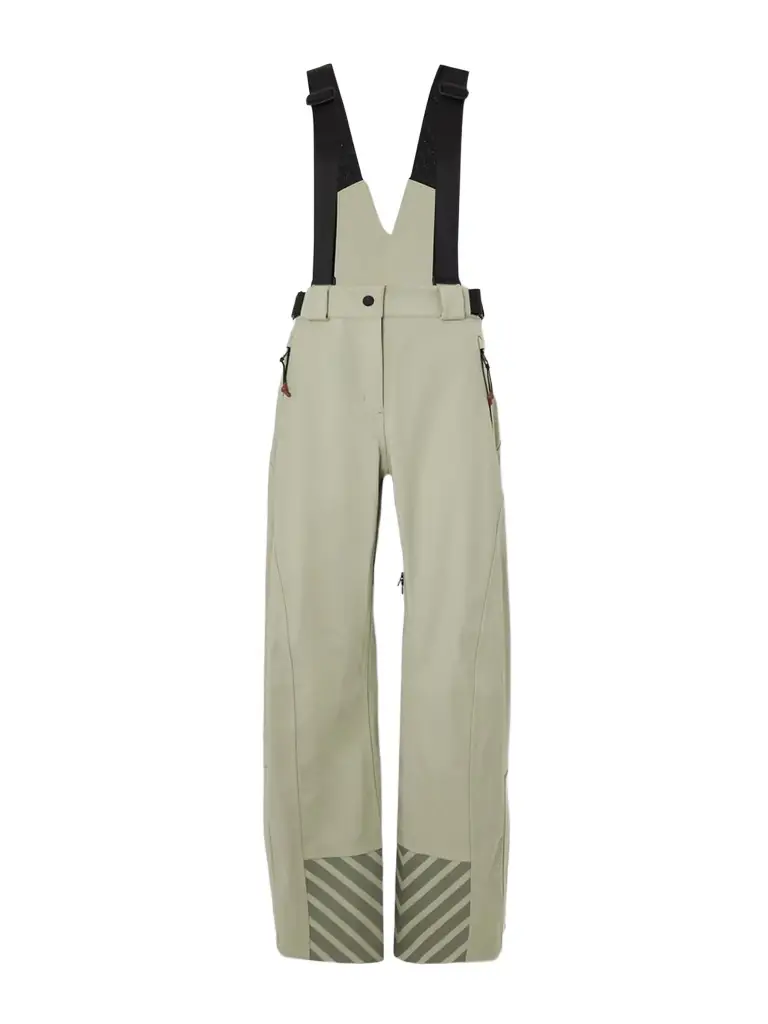
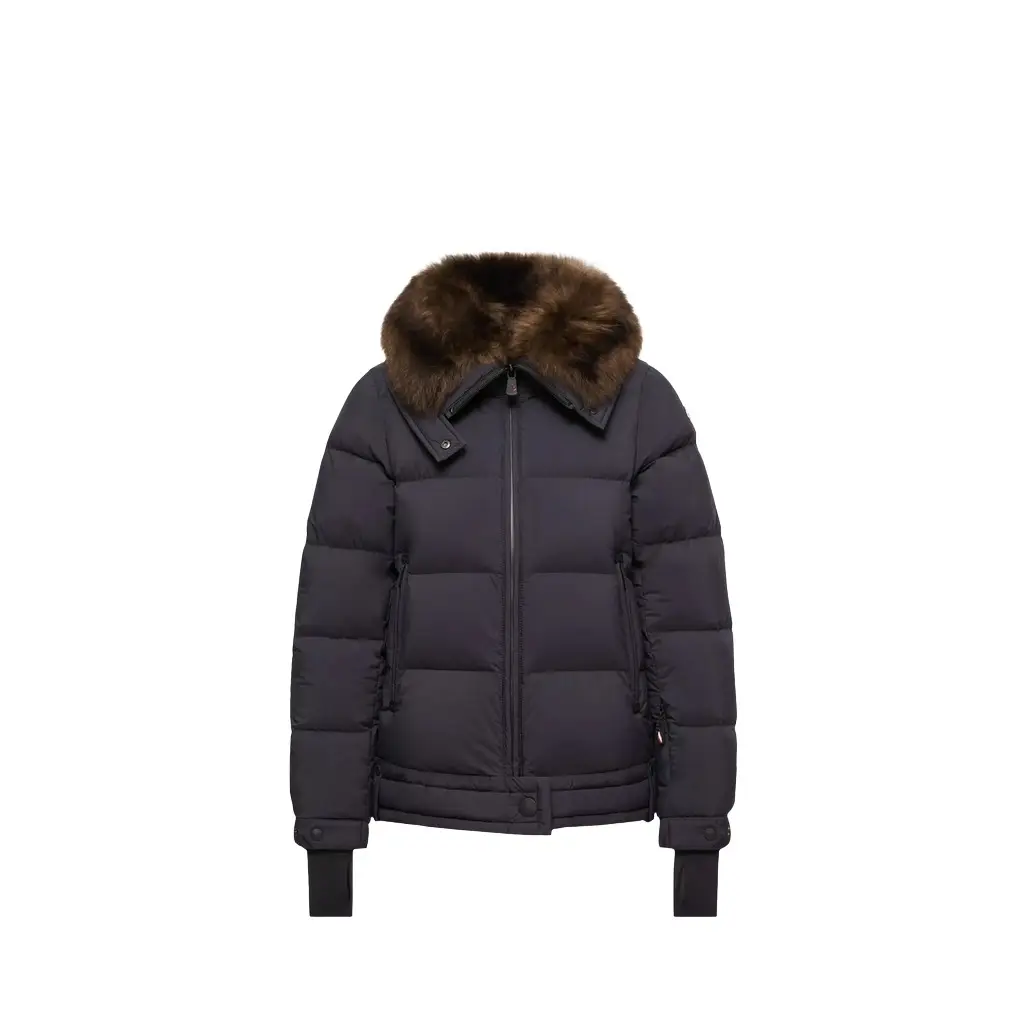
How to layer for après-ski, and why you get cold when you stop
Skiing is exercise, and exercise means sweat. Once you sit down, that moisture starts to cool you, which is why a terrace can feel colder than the run you just finished. Fabric fixes it, layer by layer.
Base layer: merino or synthetic, never cotton
The National Park Service advises choosing wool or synthetic fabrics over cotton, because cotton absorbs moisture easily and won't keep you warm once it is wet. Between the two, merino suits a day that ends sitting outside: it takes up moisture without feeling clammy against the skin, and it does not hold on to odor the way many synthetics do. Synthetics dry faster, which makes them the better choice if you plan to change before après.
Mid layer: the piece you will be seen in
Cashmere or a wool-cashmere blend traps warm air without bulk, and a Fair Isle or cable knit in a real color reads as an outfit when the shell comes off. A down vest over it keeps your core warm outdoors and comes off inside without leaving you in a base layer.
Outer layer: open it before you remove it
On a sunny terrace, a zipped insulated jacket can be too hot and no jacket too cold. Open the zip and the vents first. The NPS frames layering exactly this way: add layers when you are cold, and remove them to prevent overheating.
If your base layer is damp when you sit down, change it. The National Weather Service is blunt about it: change into dry clothing immediately if you are wet. A spare merino top rolled into a backpack or ski locker is the most useful thing you can bring to après.
- Classic terrace: merino crew base, cream Fair Isle cashmere sweater, taupe down vest and black ski pants.
- Windy afternoon: merino turtleneck base, ecru cable-knit turtleneck, sage bib and a shearling-trimmed jacket worn open.
- Spring skiing: merino base and a lighter cable knit, shell off and sunglasses on.
Ski lodge style: sweaters that pass as your top layer
Inside, the jacket goes on a hook and the sweater becomes the outfit. This is where ski lodge style is decided, and texture does most of the work: Fair Isle yokes, bobbled cables, brushed mohair, a glint of metallic yarn for the evening. Keep the silhouette simple so the knit can carry it. A cropped or boxy sweater sits well over high-waisted ski pants or stirrups; a longer knit works over leggings.
Two fit notes. Size for a base layer underneath, which usually means your normal size in a relaxed cut rather than a fitted one. And remember that a turtleneck is warmer on the terrace but hotter by the fire; a crewneck over a merino roll neck lets you adjust as the room warms up.
- Cream on black: Loro Piana's cream Noel Fair Isle sweater with black stirrup leggings and dark brown après boots.
- Navy and ivory: a navy Fair Isle sweater with ivory ski pants and camel shearling mittens.
- Dark red and brown: a burgundy Fair Isle sweater with brown knit flares and a taupe beanie.
For how to judge the knit itself, from ply to gauge, see our guide to the best cashmere sweaters, or browse every designer sweater on Vêtir.
Knits that pass as your top layer indoors
 Loro PianaNoel Fair Isle Cable-knit Cashmere Sweater$2,500
 PradaFair Isle wool and cashmere sweater$3,200
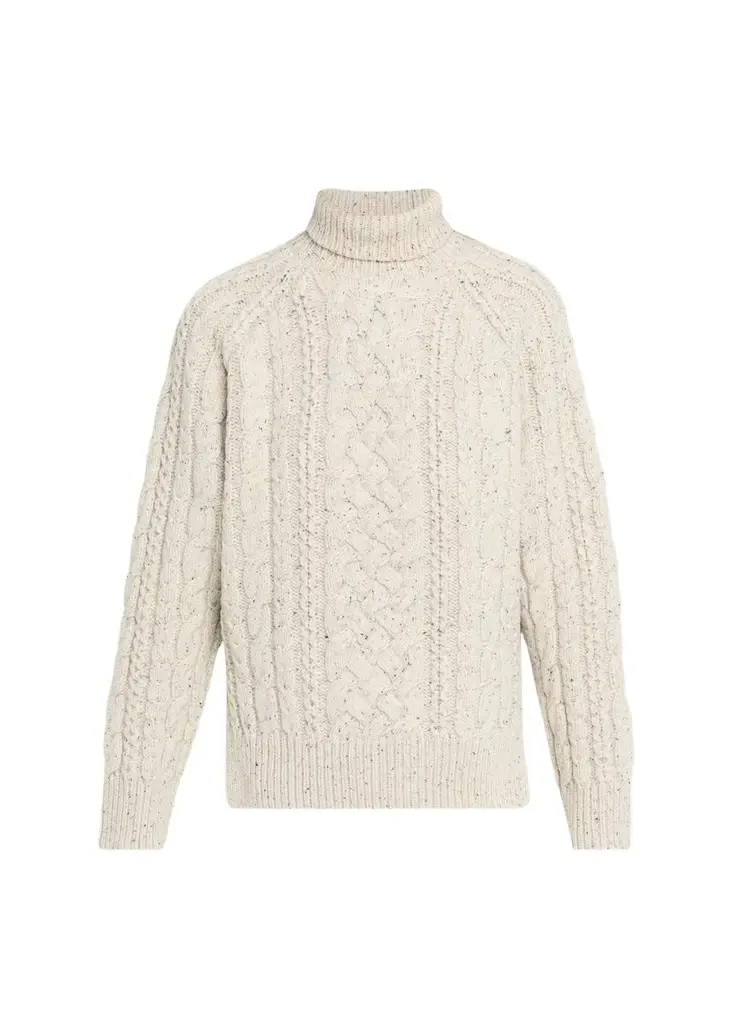 TOTEMECable-Knit Turtleneck Sweater$830
 Stella McCartneyBobble Cable Knit Turtleneck Sweater$1,290
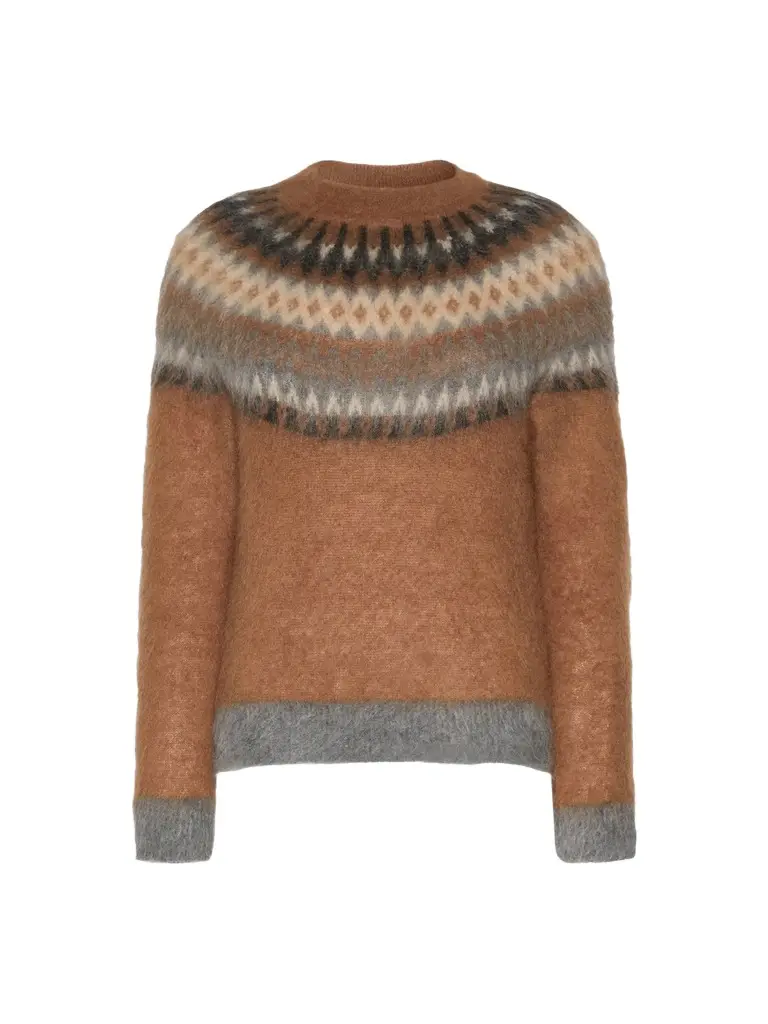 Max MaraWomen's Fair Isle Wool and Mohair Sweater - Tobacco$660
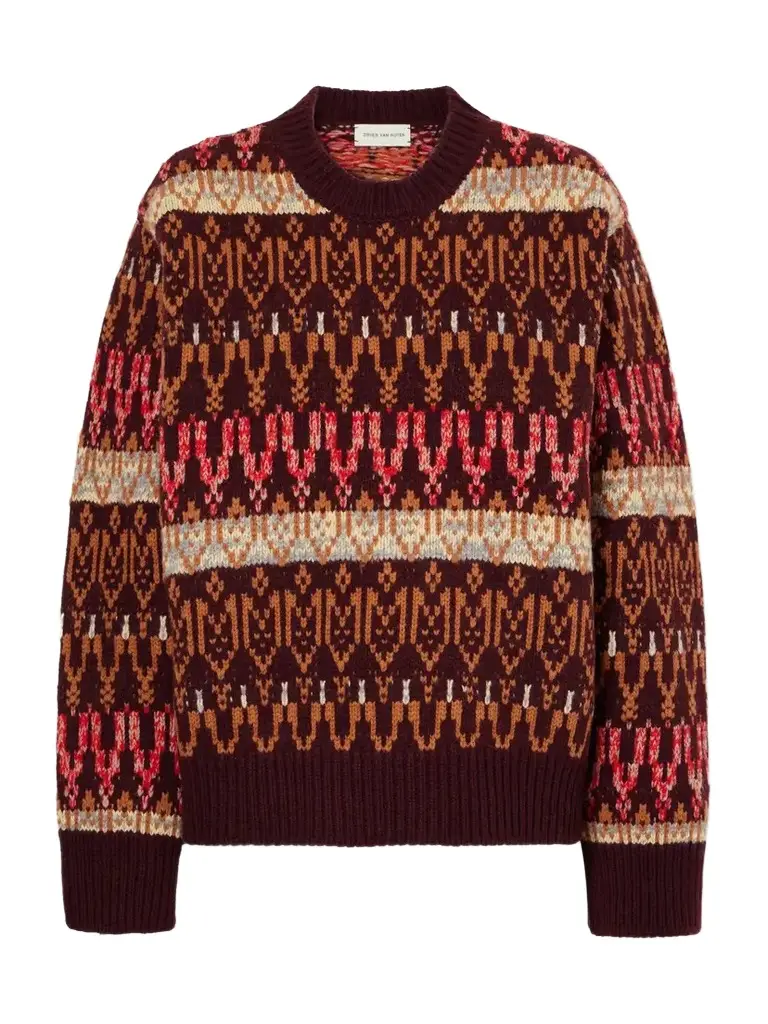 Dries Van NotenFair Isle Intarsia-knit Wool And Cashmere-blend Sweater - Burgundy$1,025
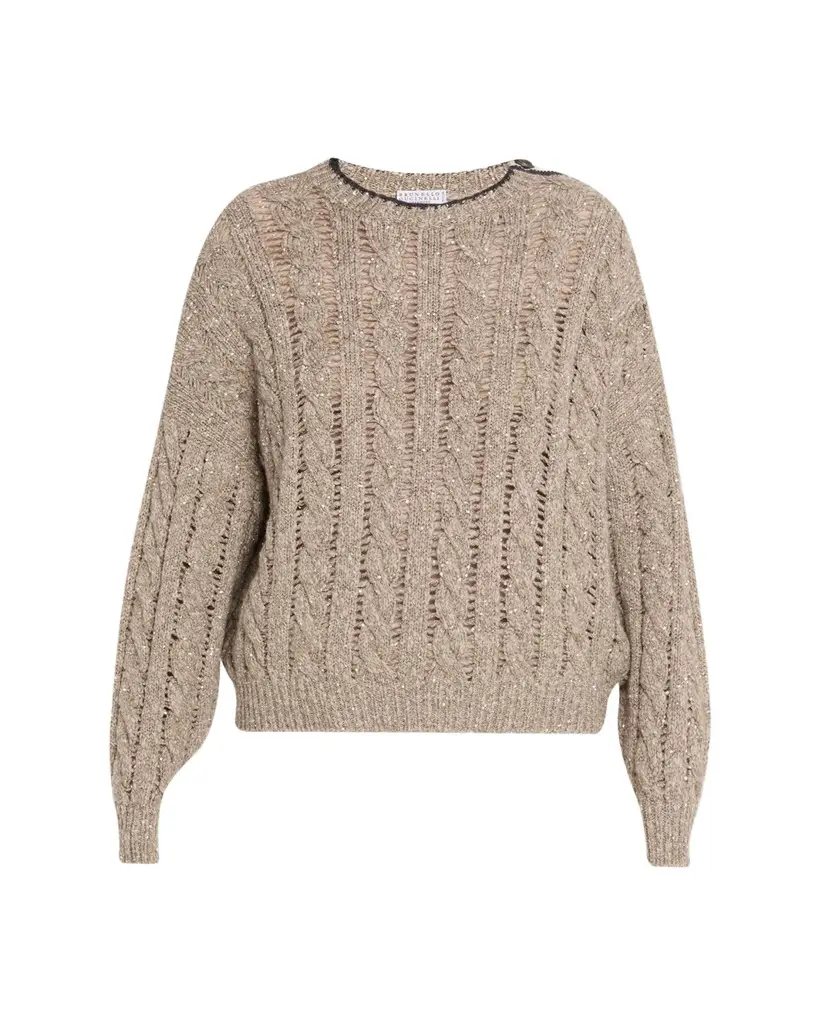 Brunello CucinelliSparkly Cable-Knit Sweater$5,200
Après outerwear: short puffers, shearling and down vests
If you are not in ski clothes, the coat you wear to après should be short enough to sit in. A hip-length puffer or shearling jacket lets you perch on a terrace bench or a bar stool without folding a long coat under you, and it clears the top of a snow boot. Save long down coats for walking around town at night.
Fabric decides the weather each piece can handle. Nylon and technical shells shrug off wet snow; shearling and suede prefer dry, cold days and can water-spot in slush. A reversible puffer in cashmere from Max Mara or a down vest knitted in cashmere from Brunello Cucinelli gives you a puffer's warmth with a softer, dressier surface, which matters once you are indoors and the coat stays on the back of your chair.
- Bordeaux and cream: a burgundy cashmere puffer, a cream roll neck and ivory ski pants.
- The vest: a taupe cashmere-blend down vest over a navy Fair Isle sweater, with black stirrups.
- Shearling: a palomino shearling wrap jacket with a chocolate turtleneck and knit flares, on a dry, bright day.
Our guide to designer puffer coats goes deeper on fill, length and fit.
Short puffers, shearling and down vests for après
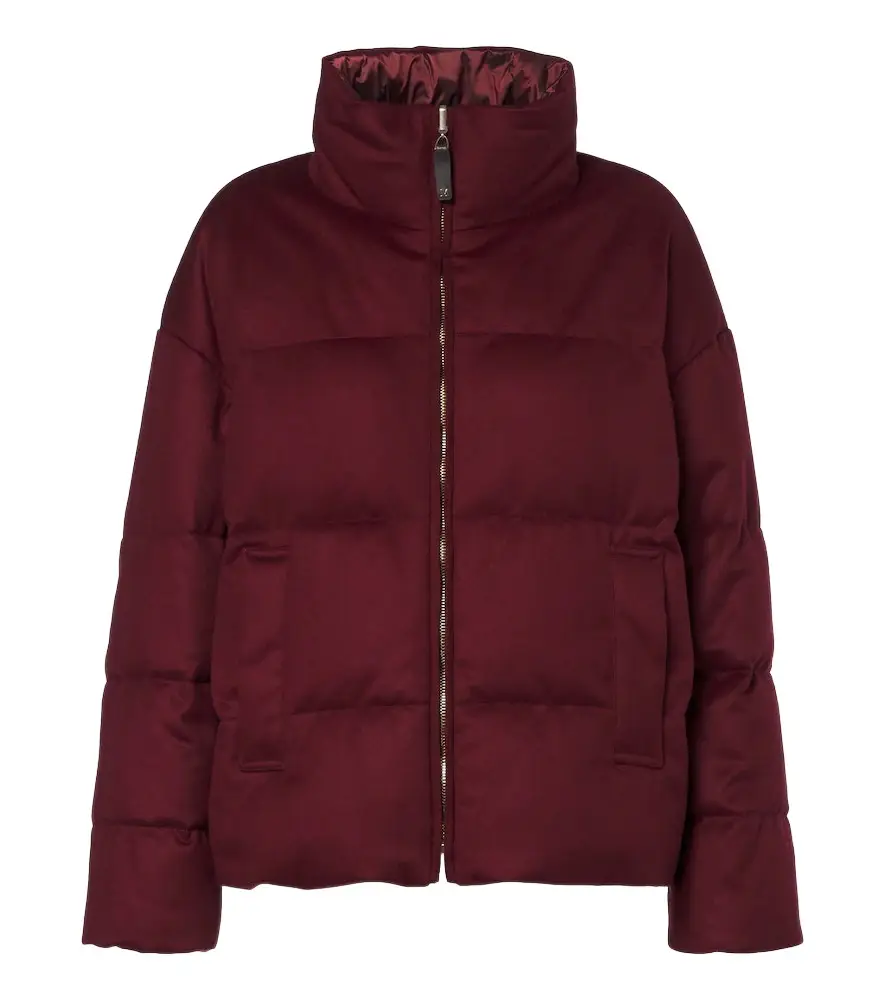 Max MaraReversible cashmere puffer jacket$2,090
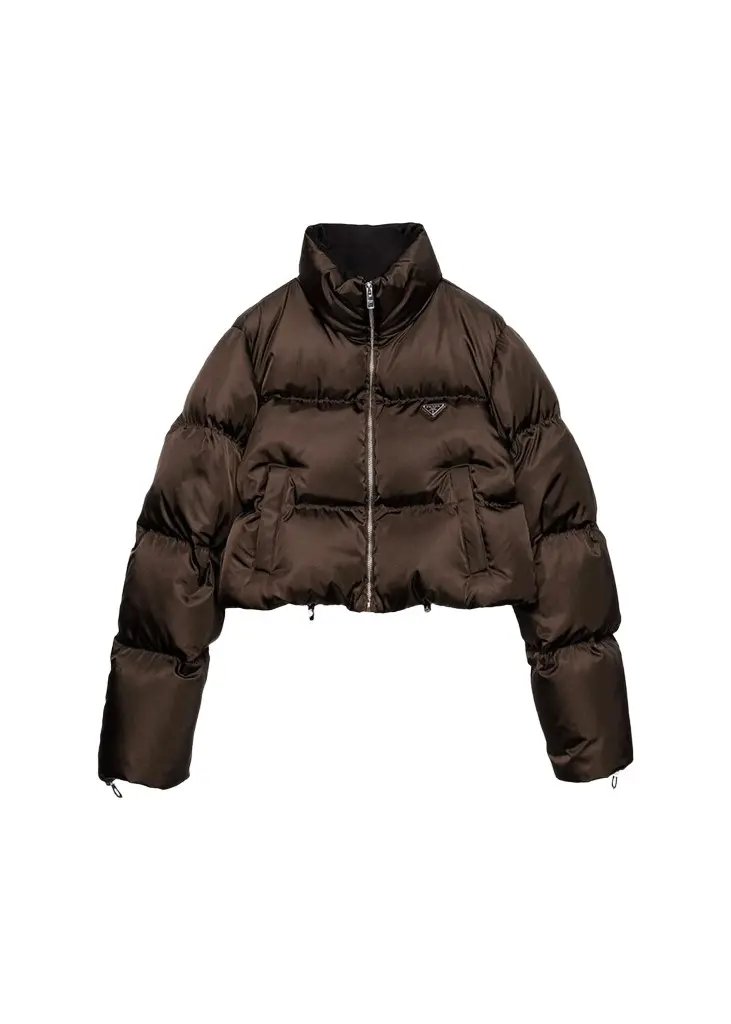 PradaRe-Nylon Crop Puffer Jacket$3,050
 LoeweShearling-lined cotton-blend puffer jacket$5,400
 ZimmermannWomen's Valiant Shearling Wrap Jacket$4,700
 Max MaraCashmere-blend down vest$1,925
 Brunello CucinelliWomen's Cashmere Feather Yarn Reversible Knit Down Vest$4,600
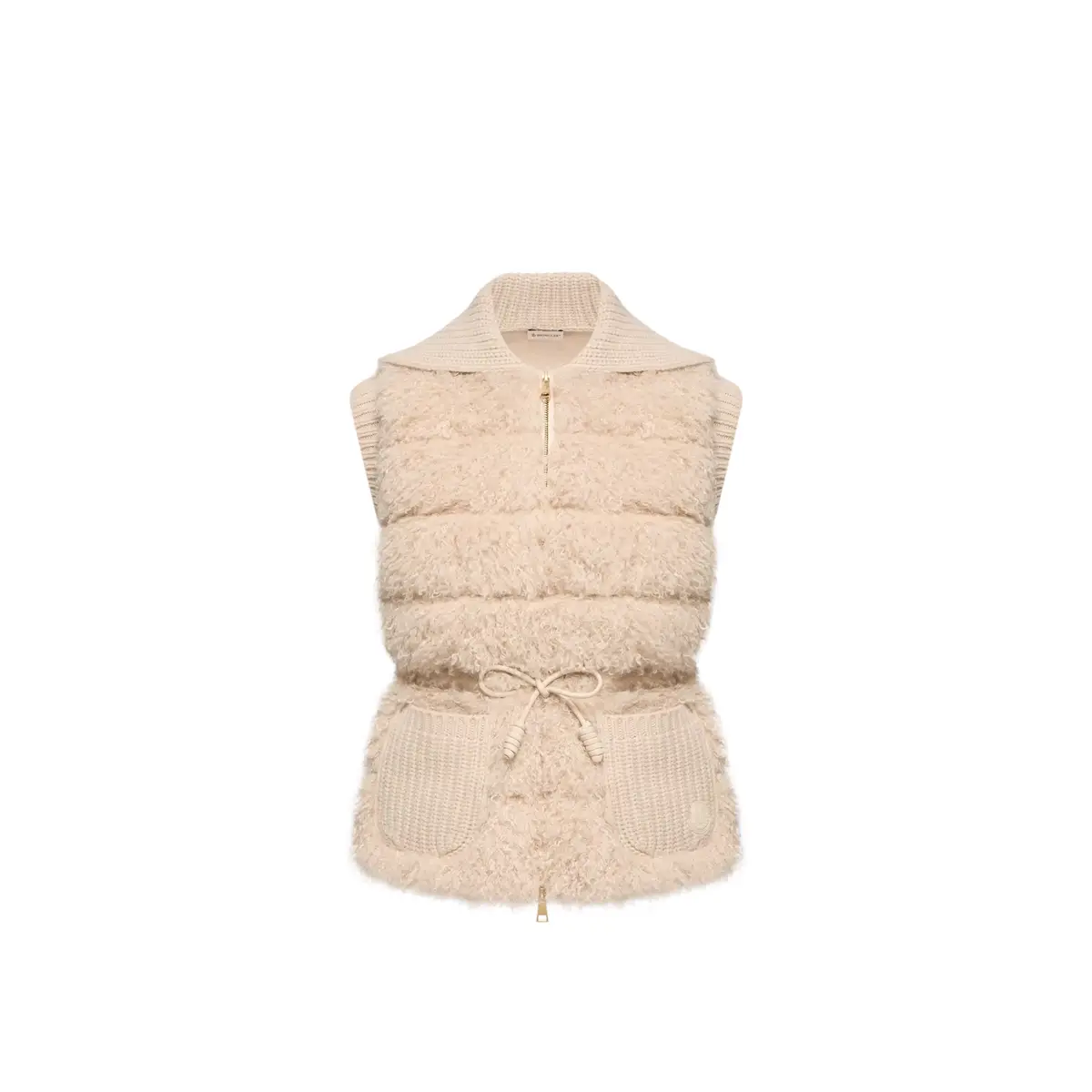 MonclerWool & Cashmere Blend Down Vest$1,460
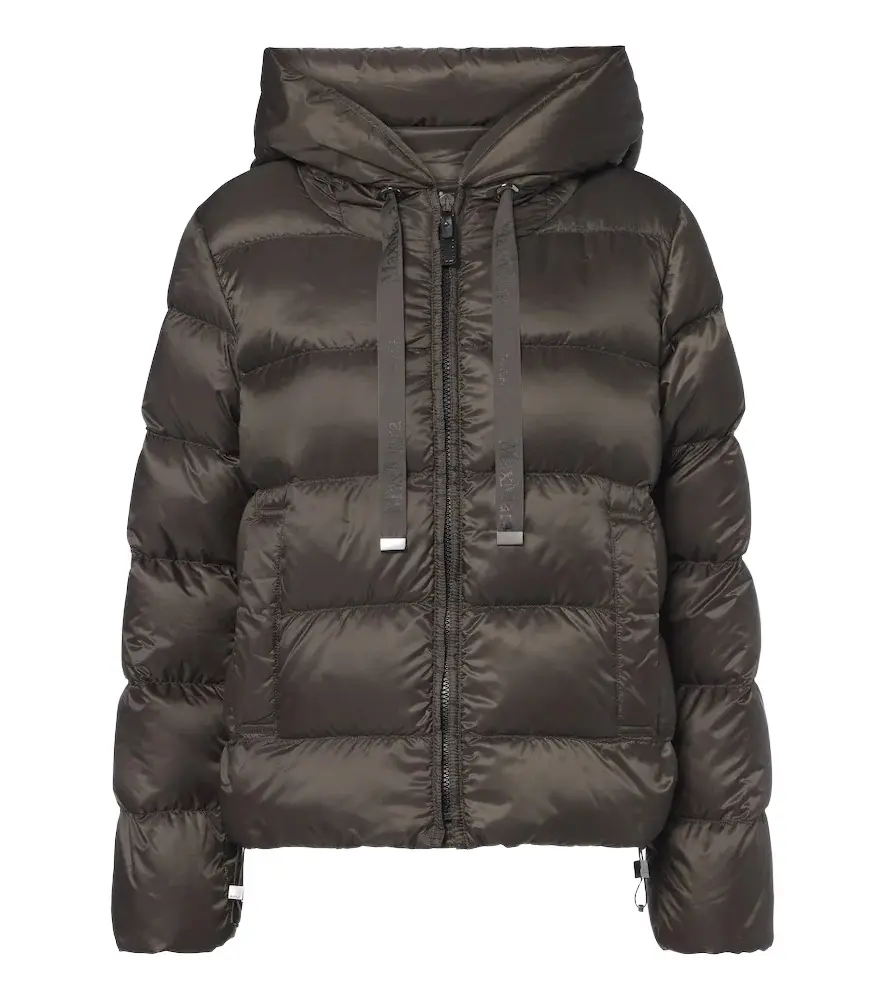 Max MaraThe Cube hooded puffer jacket$1,280
Après-ski boots: grip first, then warmth
Do not walk far in ski boots. They are stiff, slippery on wood and stone, and hard work on stairs. Change at the base, at a ski locker or at the car, and choose the boot you change into for its sole before its style.
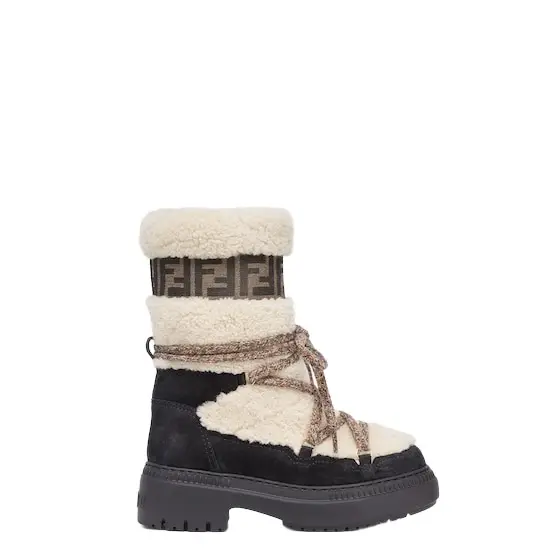
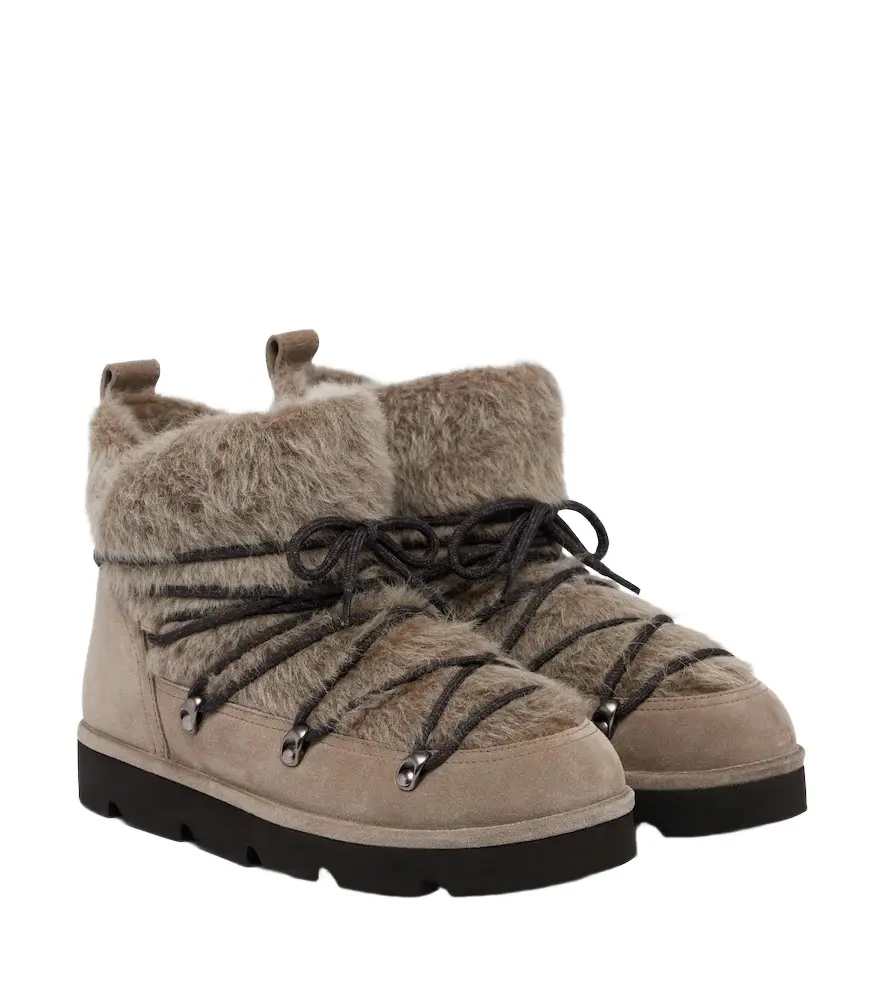
Snow and ice are different problems. Deep rubber lugs bite into snow; ice defeats most soles. At the KITE Research Institute in Toronto, participants walk on an ice floor that is tilted a little more at a time until they slip, and the institute's Rate My Treads program reports that 67 percent of the boots it tested did not make its list. None of the fashion boots below appears in KITE's published list of tested footwear, so treat a lug sole as snow grip, walk flat-footed on icy paths, and pack slip-on traction cleats if the walk back to your hotel is icy.
- A rubber lug sole with deep, widely spaced lugs that shed packed snow. Leather soles and smooth platforms slide.
- A low, wide base. Flat or a low block; the wider the sole, the steadier you are on uneven snow.
- A water-resistant lower. Nylon, rubber or treated leather around the foot, with suede or shearling higher up where slush does not reach.
- A closure that seals. Laces or a drawstring cuff keep snow out when you step off the path.
- A shaft that meets your hem. Stirrups and leggings tuck in; flares and ski pants go over.
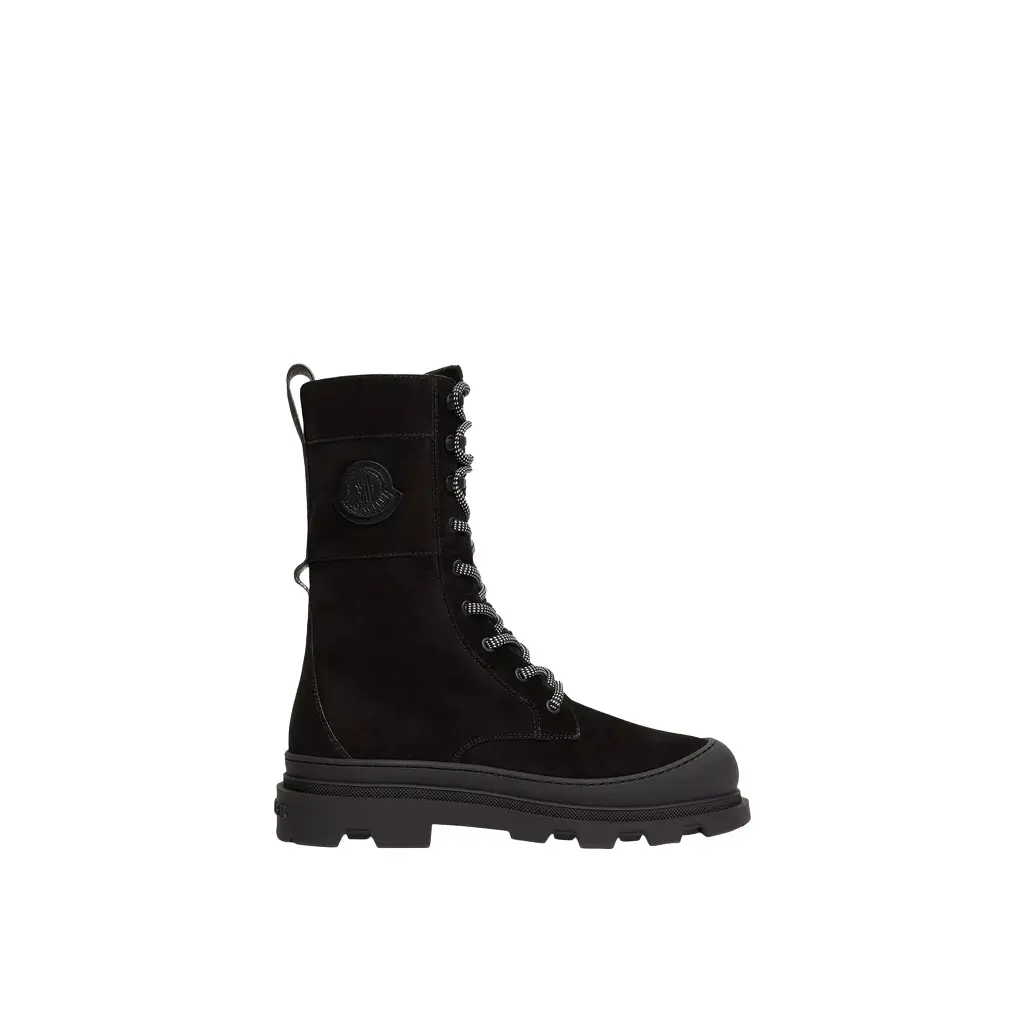
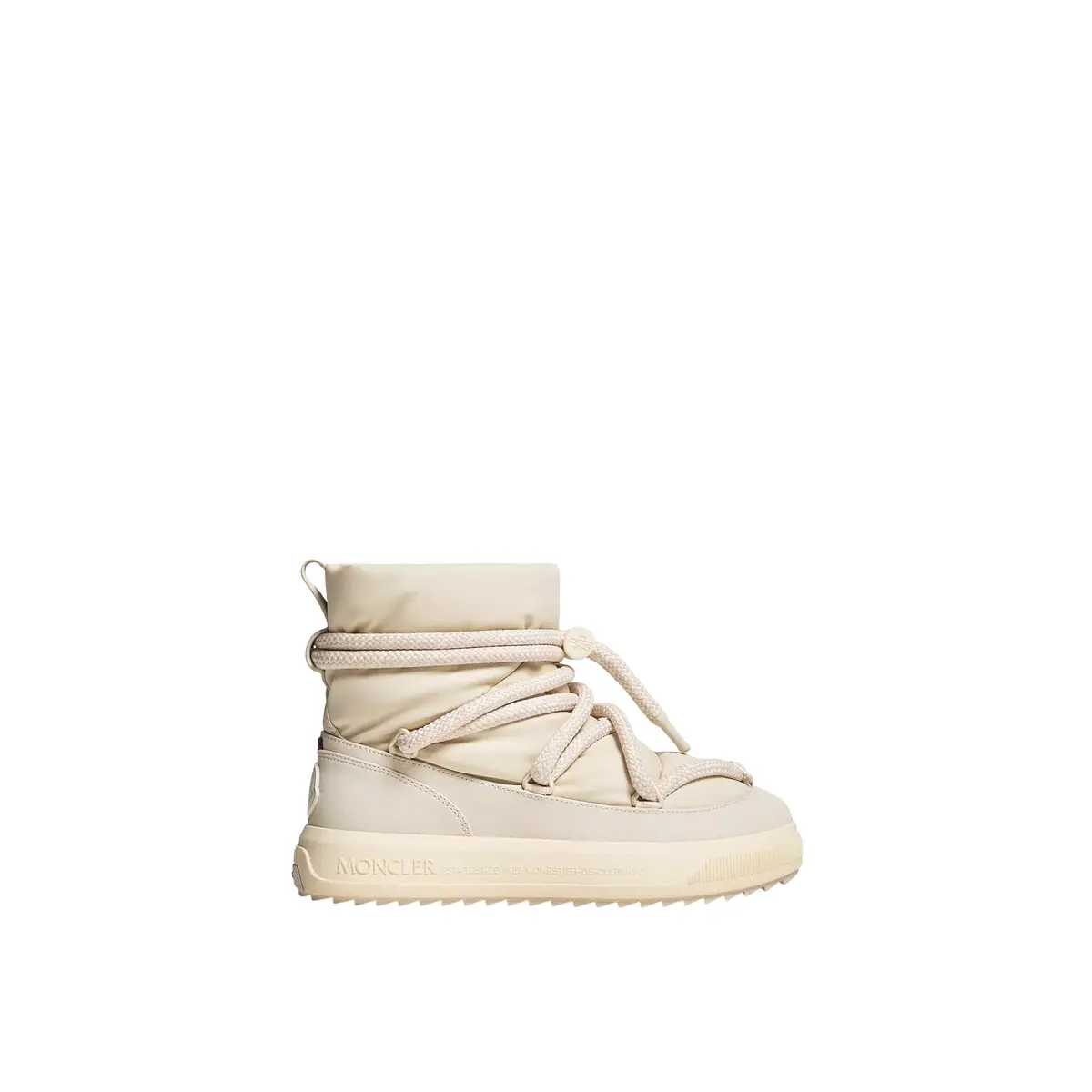
Fendi's après-ski boots and Prada's shearling après booties both sit on deep lug soles, and Moncler's lace-up Vera High is the slimmest option if you want to wear trousers over it. Browse more cold-weather boots on Vêtir.
Après-ski boots with a real lug sole


What to wear to après-ski if you're not skiing (and the trouser question)
"Pants for après-ski" is one of the requests our AI stylist has received, and it is the right question to ask: the trouser decides whether the whole outfit works with snow boots. Three shapes do.
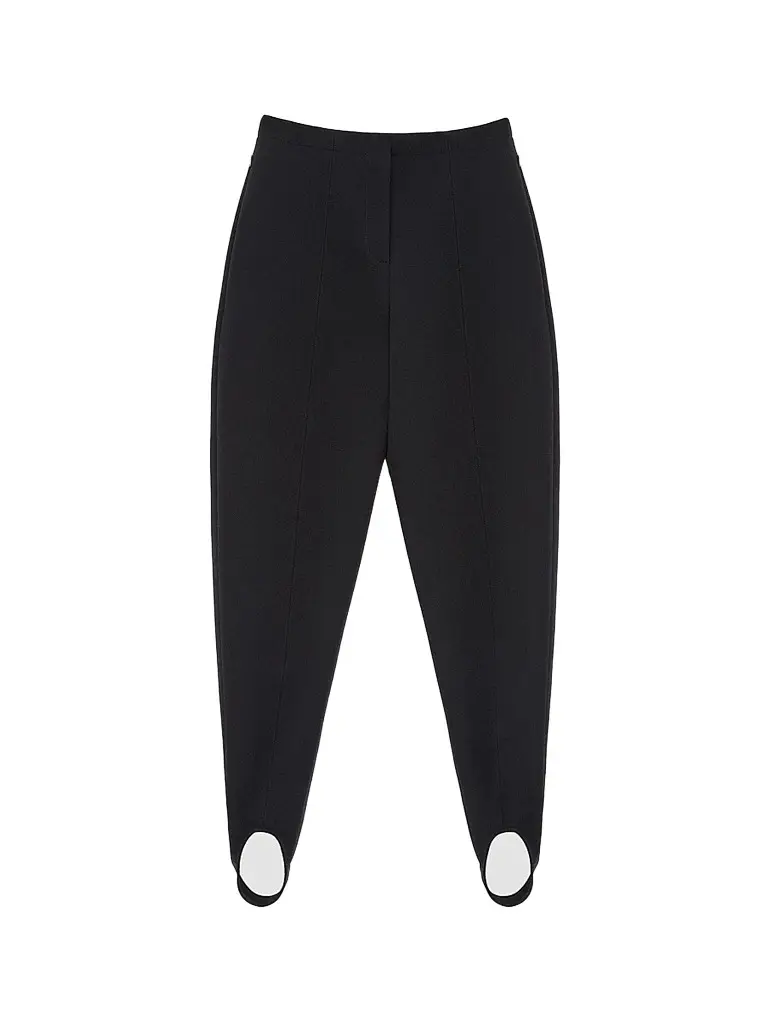
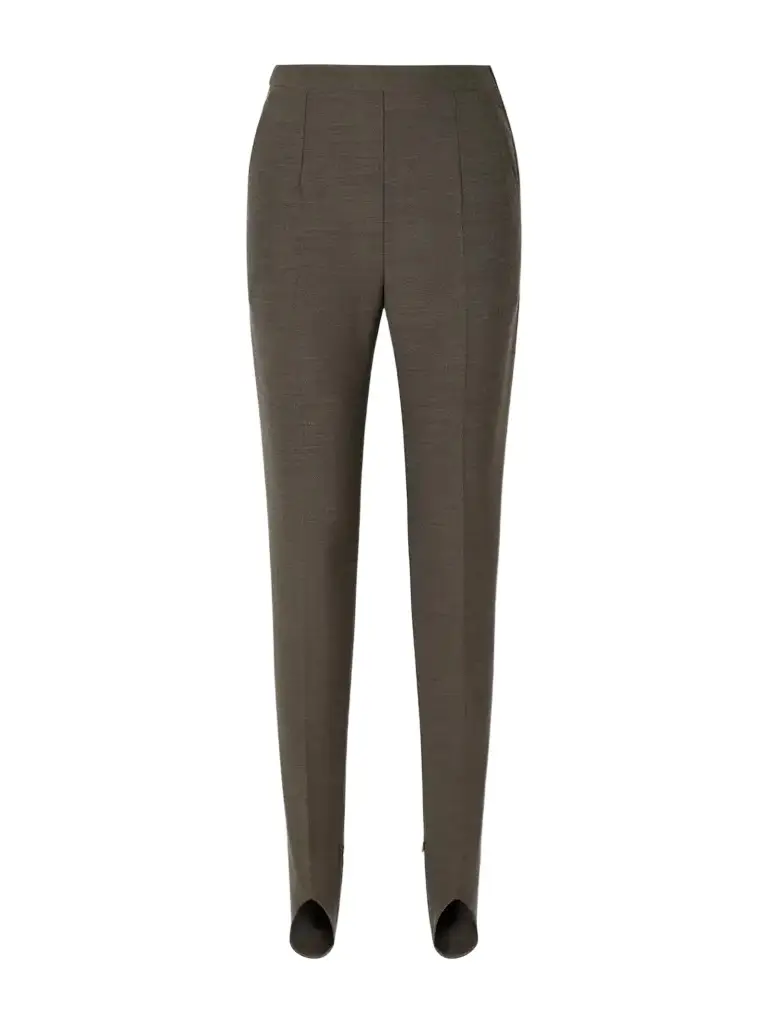
- Stirrups. The strap under the foot keeps the leg smooth inside a boot shaft and stops it riding up when you sit. Stirrup pants are also among the ten womenswear trends Tagwalk lists for fall/winter 2026, so they look current off the mountain too.
- Knit flares. A wool or cashmere flare falls over the boot and keeps the shaft, and any snow on it, out of sight. Merino-cashmere blends are warm enough for a short walk outdoors.
- Cashmere leggings under a long knit. The softest option for an evening in the lodge, worn with a sweater that covers the seat.
Leave jeans for dry days. Denim is cotton, and a cotton hem that drags through slush stays wet, which is precisely when, as the NPS points out, cotton stops keeping you warm.
- Non-skier's terrace: black stirrup leggings, a cream Fair Isle sweater, a burgundy cashmere puffer and lug-sole snow boots.
- Grey and camel: grey wool stirrup pants, a camel fleece puffer and ivory shearling mittens.
- Burgundy flares: merino-cashmere flares with a navy Fair Isle sweater and dark brown après booties.
- Chocolate knit: chocolate jacquard-knit stirrups with a cream cable turtleneck and white shearling après boots.
From Loewe's wool stirrups and Chloé's jacquard-knit pair to The Row's cashmere-blend leggings and Stella McCartney's jersey stirrups, these are the pairs we would pack.
Après trousers: stirrups, flares and cashmere leggings
 Stella McCartneyHigh-rise Jersey Stirrup Leggings$890
 LoeweWomen's Wool Stirrup Trousers$1,500
 Jil SanderWool-blend Stretch-gabardine Straight-leg Stirrup Pants$2,150
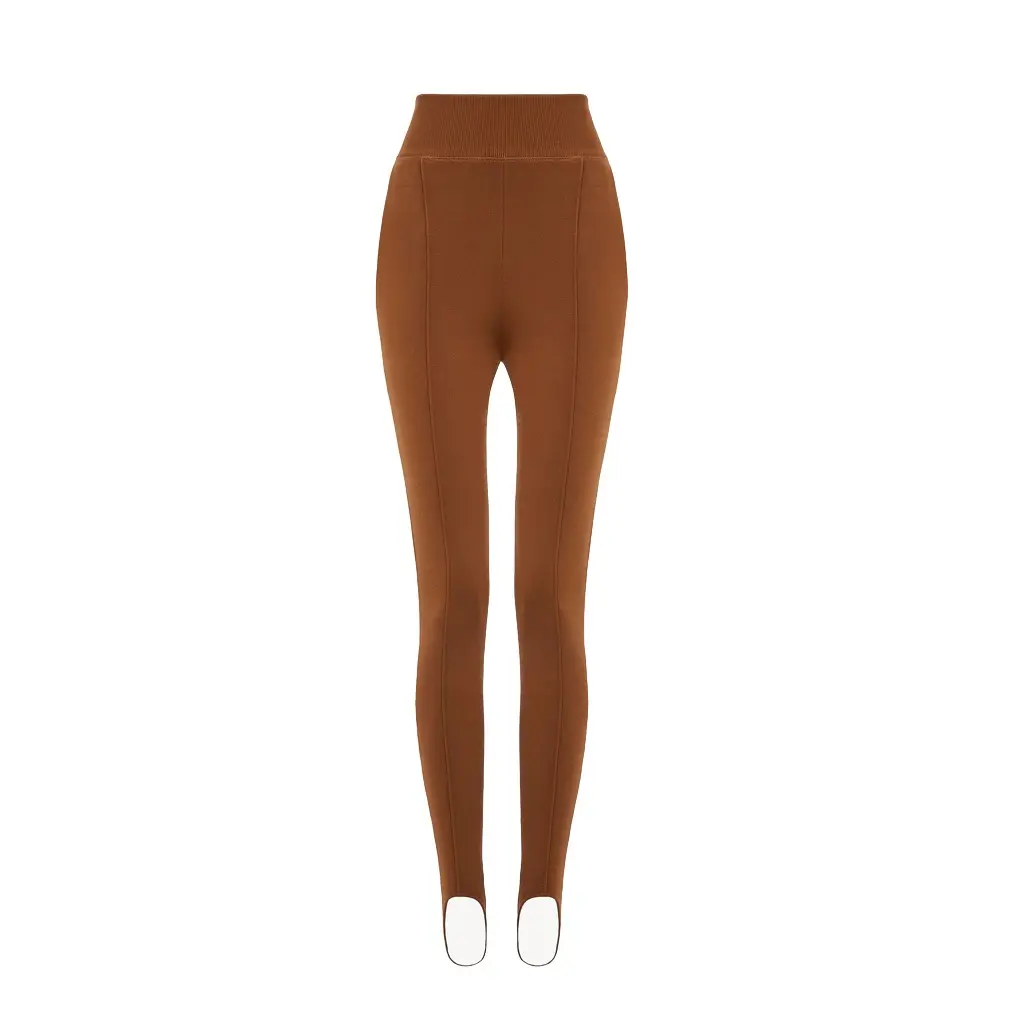 ChloéStirrup pants in a jacquard knit$1,190
 The RowMumuka cashmere-blend leggings$1,000
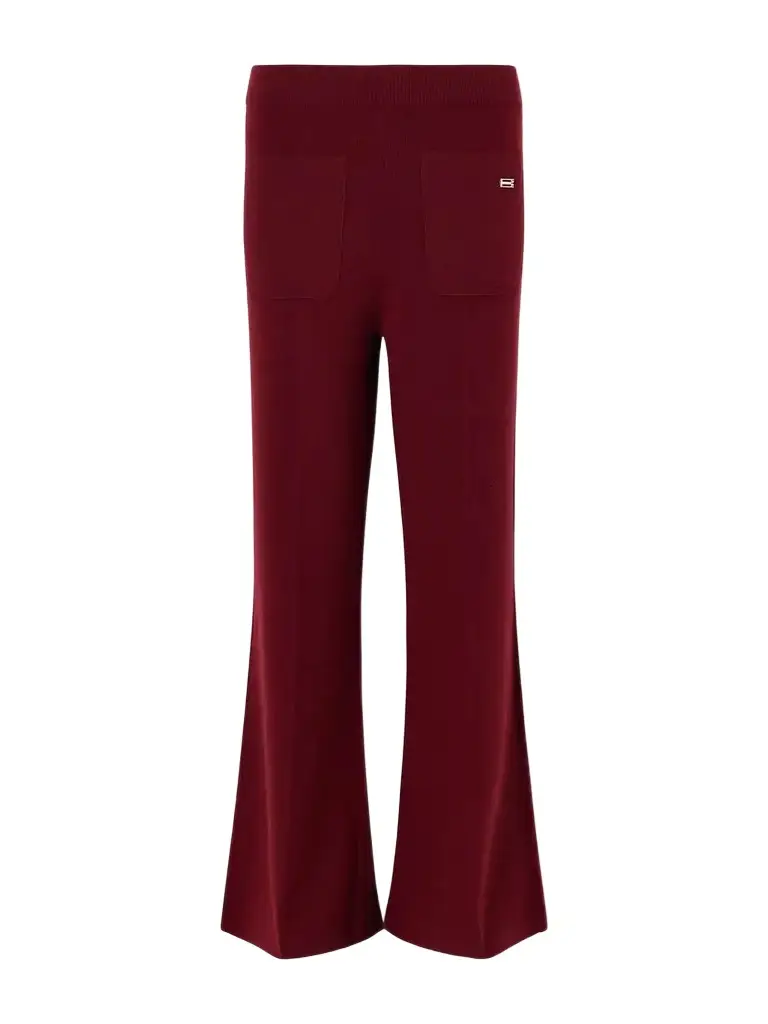 Victoria BeckhamAlina Merino Wool And Cashmere-blend Flared Pants$690
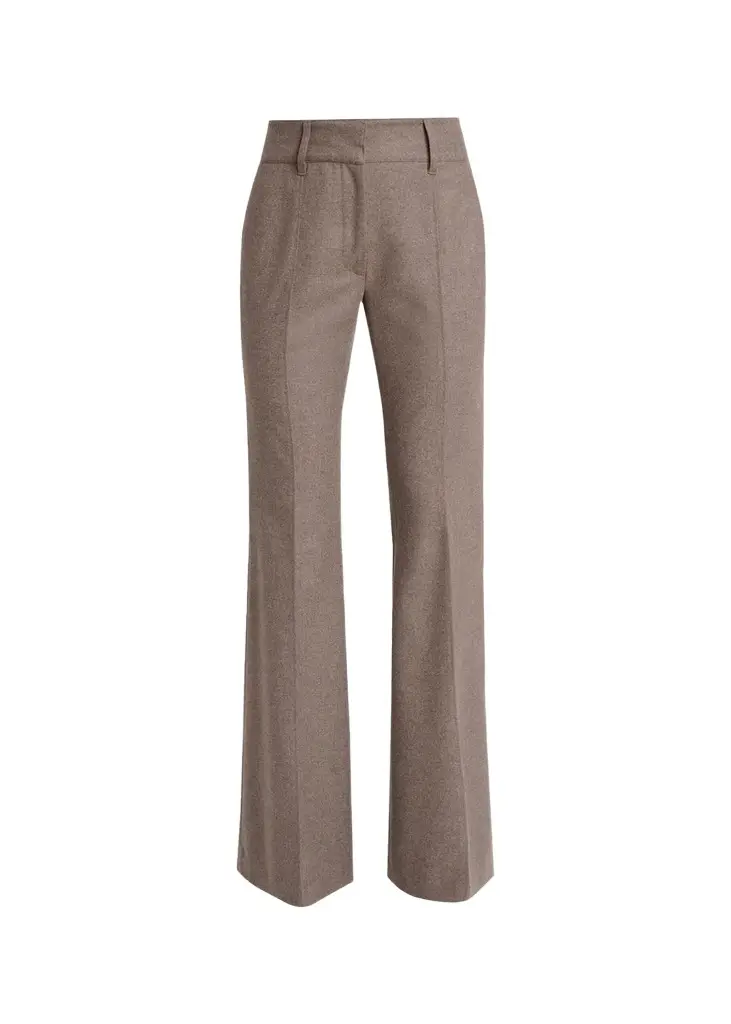 Gabriela HearstRhein Wool-Cashmere Flannel Flare Pants$1,290
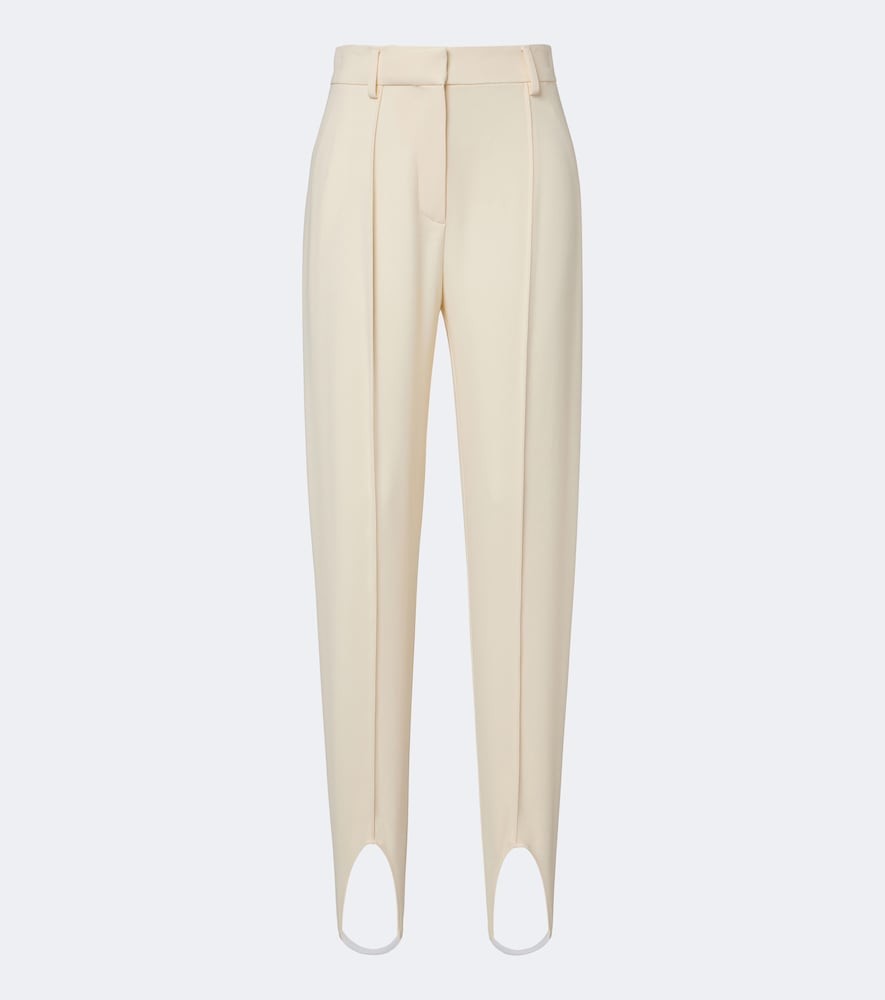 Stella McCartneyCady stirrup pants$920
From après to dinner: what to change
If you have time to go back to your room, change everything except the boots, and keep those only if they are dry. Dinner in a ski town means a cold walk and a warm restaurant, so the rules flip: fewer, finer layers under one serious coat, and a boot you can trust on a frozen sidewalk.
- Knit dress: a fine rib or pointelle knit midi, opaque tights, lug-sole knee boots and a long down coat.
- Velvet: velvet wide-leg trousers, a fine cashmere turtleneck, lug-sole Chelsea boots and a shearling coat.
- Leather: straight leather trousers, a shimmering cashmere-silk turtleneck and a hip-length puffer.
For the knee boots, look for a lug sole and a heel no higher than a low block; our guide to the best knee-high boots covers shaft widths and fit. We cover the dinner wardrobe, along with coats and boots for walking around town, in our Aspen guide. For an Alpine resort, see what to wear in St. Moritz.
Hats, mittens and sunglasses
Accessories carry most of the warmth at après, and a good share of the style.
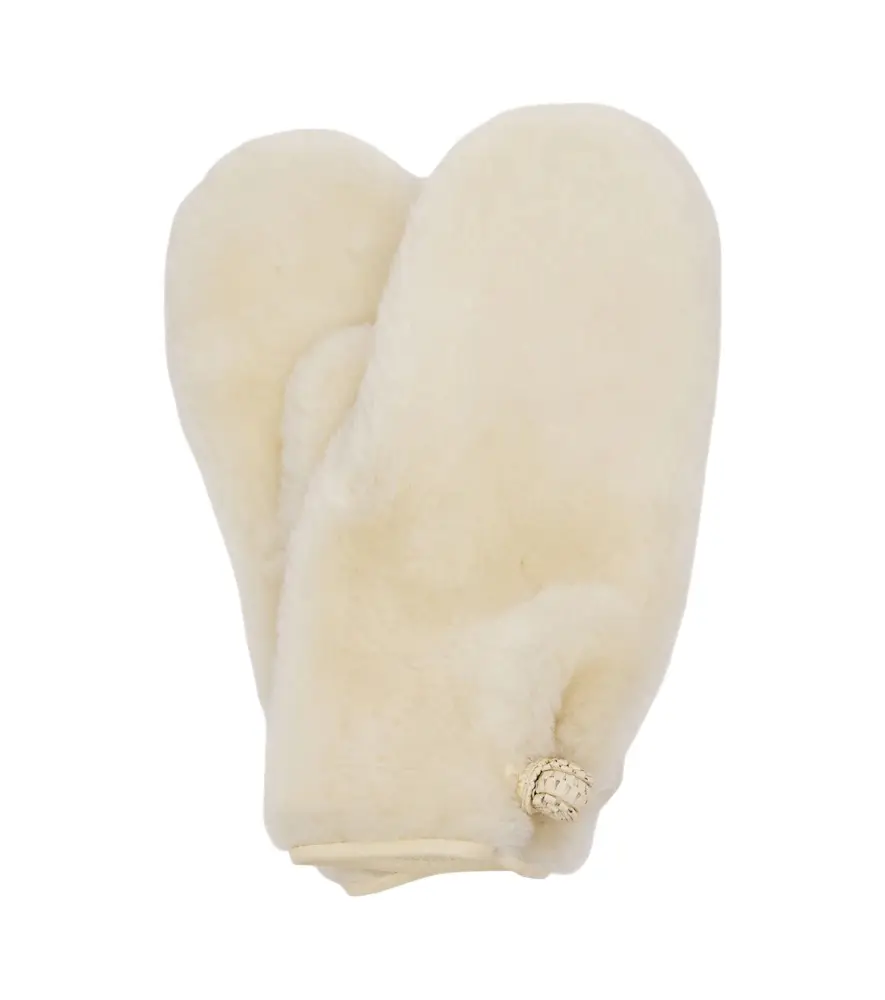
- Mittens over gloves. The National Weather Service states it plainly: mittens are better than gloves. Shearling mittens are the pair for a long sit on a terrace; keep thin gloves for when you need your fingers.
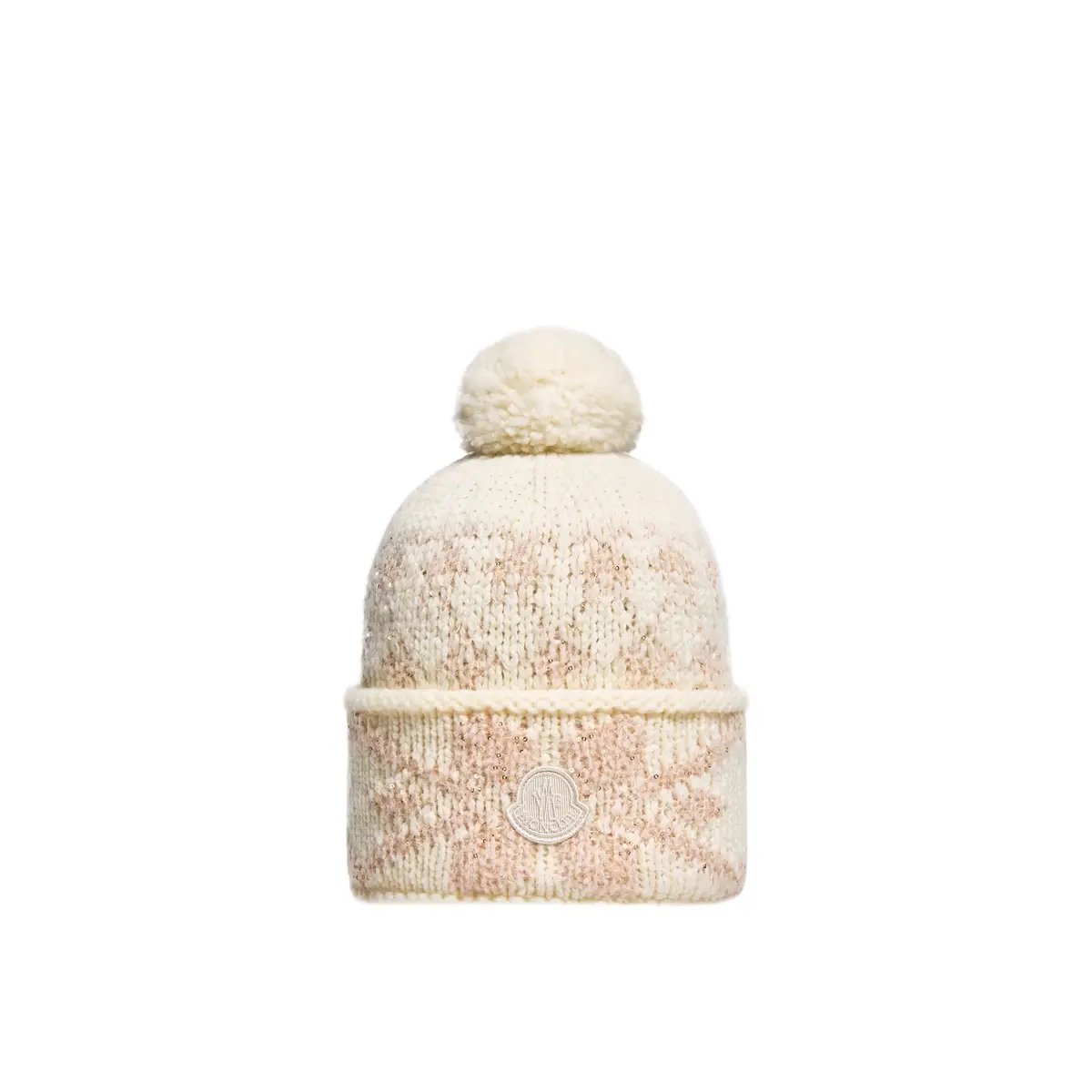
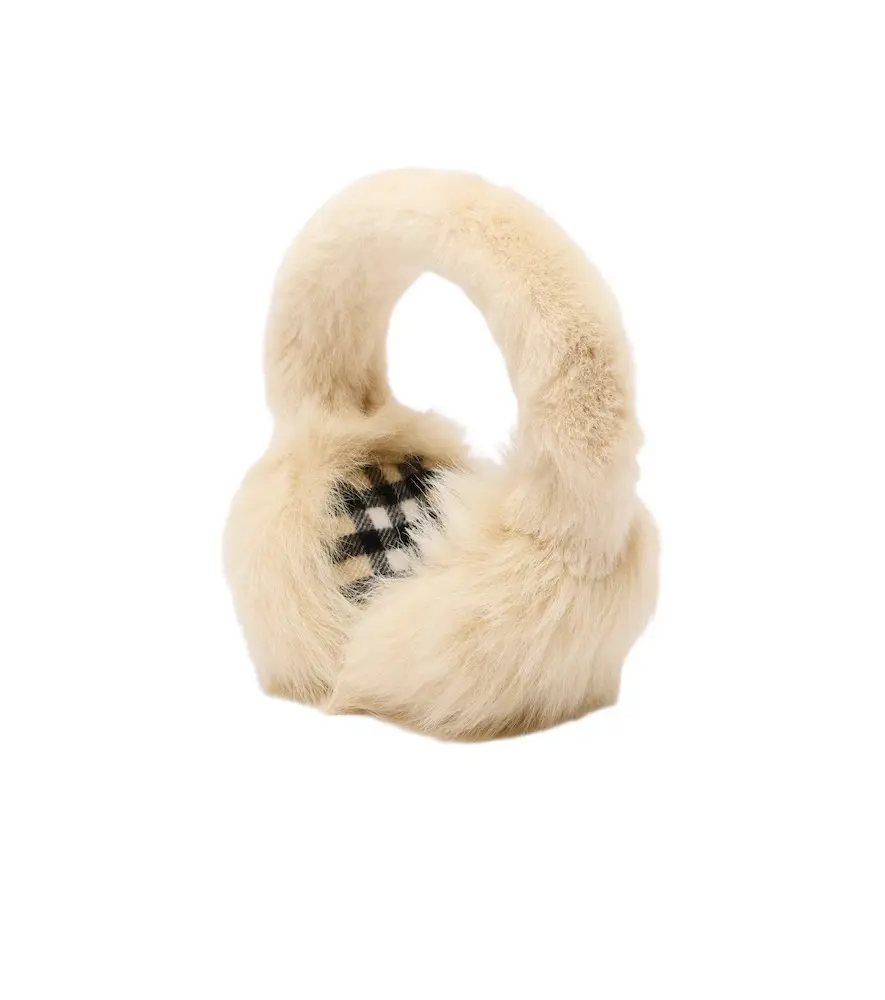
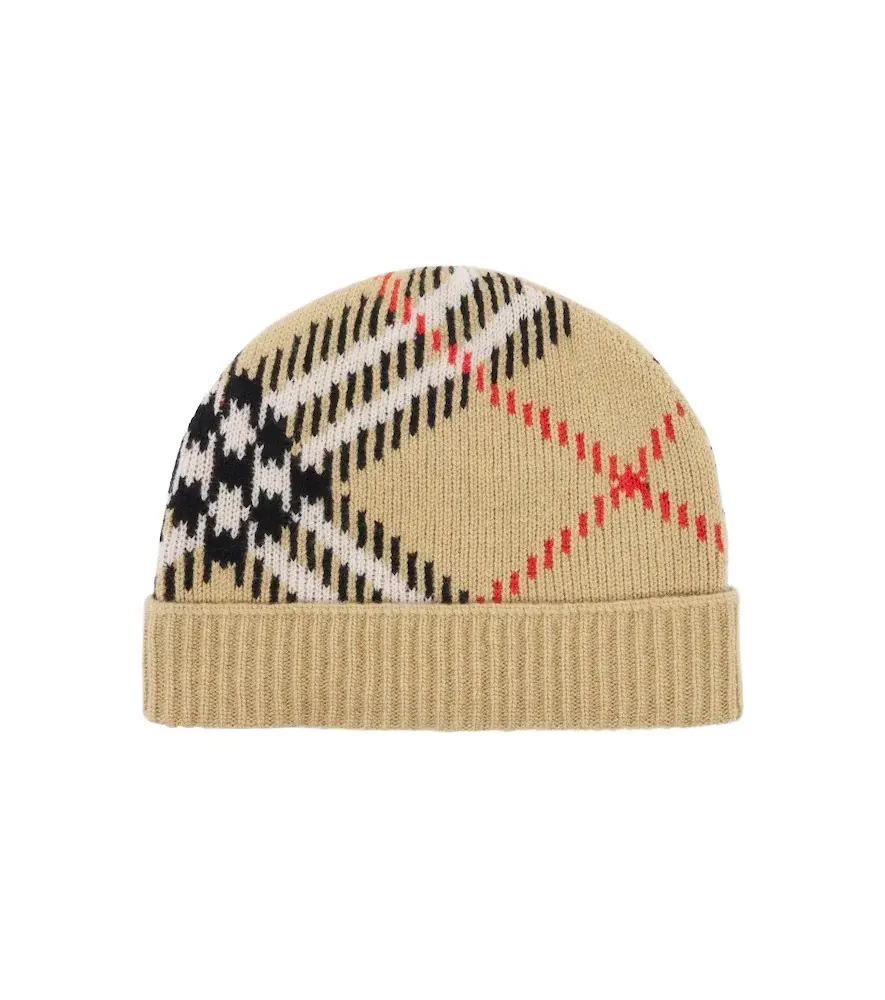
- A beanie for the terrace, earmuffs for dinner. A cashmere beanie covers helmet hair; shearling earmuffs keep your ears warm without flattening a blow-dry.
- Wraparound sunglasses. Shield frames cover the sides, which is the WHO's point about UV and glare at altitude. A mirrored lens cuts the glare off snow further.
- Goggles clipped, not perched. Hook them to a jacket loop or bag strap when you sit down rather than pushing them up on a beanie.
Browse more designer hats and beanies, or ask our AI stylist to build terrace, lodge and dinner looks around the jacket or boots you already own.
Beanies, mittens and wraparound sunglasses


How we chose
- Houses: top luxury houses only, with specialists where it matters: Moncler Grenoble and Loro Piana for ski clothing; Prada, Fendi, Moncler and Brunello Cucinelli for boots; knitwear from Loro Piana, Prada, Max Mara, TOTEME and others.
- Construction: insulated and Gore-Tex pieces where the product itself says so, a rubber lug sole on every boot, and shearling or knit for the accessories that touch your skin.
- Fabric: wool, cashmere, merino blends, down and shearling first. We avoided cotton for anything that meets snow.
- Price: the middle half of the edit costs about $850 to $2,800; beanies start the range at roughly $550 and a one-piece ski suit tops it near $9,000.
- Availability: every piece, from the Moncler Grenoble ski jackets to the shearling mittens, was live on Vêtir when we checked in late September 2026; if one sells out before the season, its module swaps in a close alternative.
- Fit notes: buy knitwear in a relaxed cut that fits over a base layer, and ski pants long enough to cover the top of your boot.
Frequently asked questions
What do you wear to après-ski?
Wear what you skied in, adjusted: base layer and ski pants or bib, a good-looking knit as your mid layer, the jacket open or off, a beanie instead of a helmet, wraparound sunglasses and snow boots with a lug sole. If you have changed, stirrup trousers or knit flares with a Fair Isle or cable sweater and a short puffer.
Can you wear ski boots to après-ski?
At a slopeside bar, yes, with the buckles open. Change before walking any distance or taking stairs: ski boots are stiff and slippery off the snow.
What shoes should you wear to après-ski?
Snow boots with a rubber lug sole, a low and wide base and a water-resistant lower: lace-up shearling-lined boots, nylon snow boots or lug-sole hiking boots. Avoid leather soles, smooth platforms and heels, and add slip-on cleats for icy paths.
What should I wear to après-ski if I don't ski?
Stirrup trousers or knit flares, a cashmere or Fair Isle sweater, a hip-length puffer or shearling jacket, snow boots and a beanie. Skip jeans on slushy days, because wet cotton stays cold.
Is après-ski dressy?
Terrace après is casual and happens in ski clothes. Evening après in a hotel bar is closer to smart casual: knitwear, good trousers or a knit dress, and boots. If après runs into dinner, the restaurant sets the dress code, so ask when you reserve.
How do you stay warm at après-ski?
Start dry, with a merino base layer that you change if it is damp. Add a down vest over your knit, wear mittens rather than gloves, keep your head covered, and open your jacket before you overheat rather than after.