Winter White Outfits: How to Wear Ivory, Cream and White When It's Cold
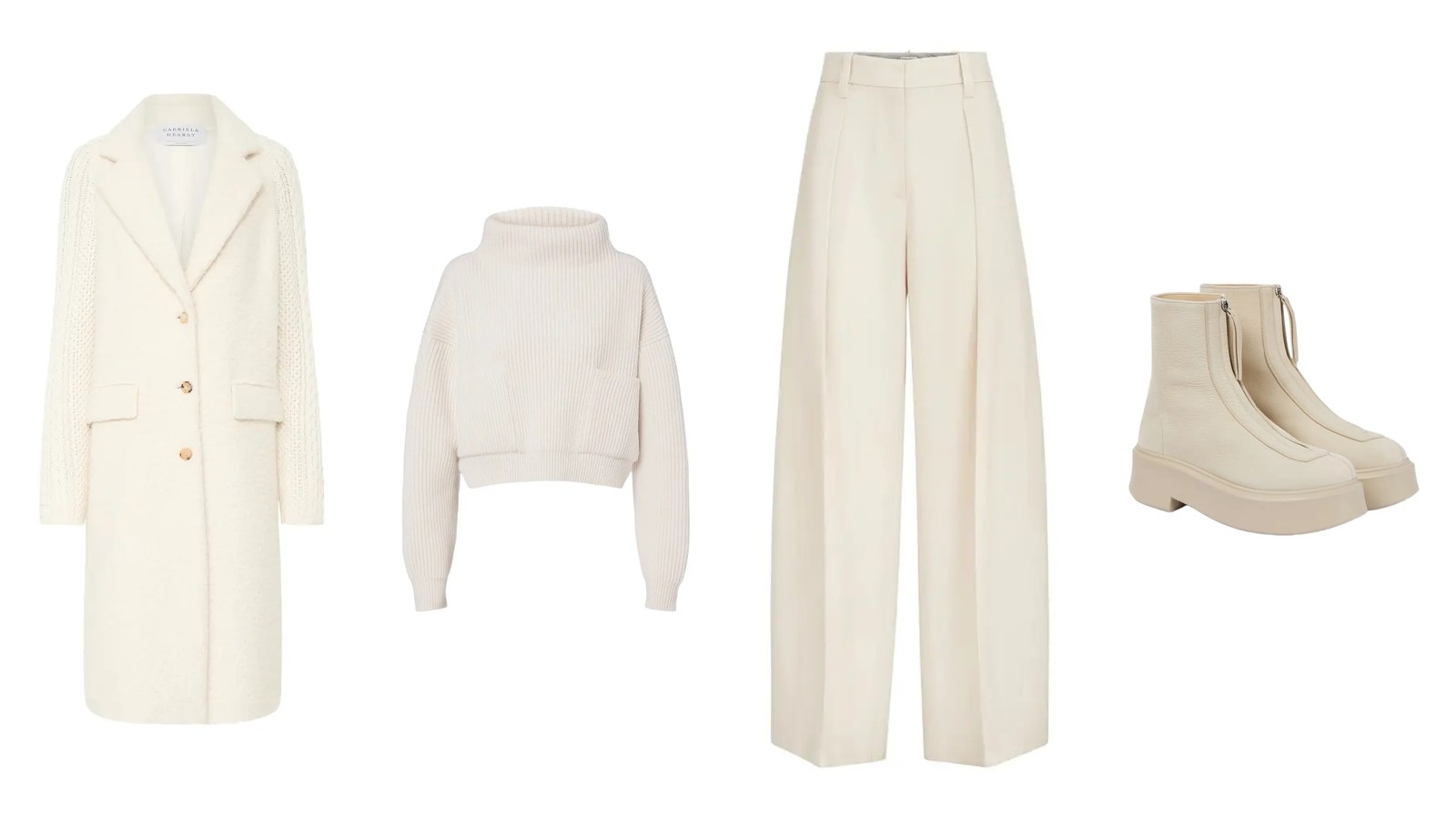
Winter white outfits, in short: yes, you can wear white all winter. Three things change from summer: the shade, the fabric and the texture. Choose softer whites such as ivory, cream and bone over bright optic white. Choose weight: wool, cashmere, bouclé and shearling instead of linen and poplin. Then mix textures, so an all-white outfit has depth instead of looking like a uniform. The old rule against white after Labor Day was a social convention, and the Emily Post Institute now says the question is fabric more than color.
Below: the shades and who they suit, the fabrics that make white look seasonal, how to build an all-white outfit, formulas for work, weekends, New Year's Eve and winter evenings, the boots that cope with slush, and how to keep white clean until spring.
Can you wear white after Labor Day?
Yes. The Emily Post Institute explains where the rule came from: in the early 1900s the summer season ran from Memorial Day to Labor Day, society decamped from the city to the shore or the mountains in lighter, whiter clothes, and “no white after Labor Day” marked the return to city dress. Today, the institute says, white after Labor Day is fine, and the choice is more about fabric than color; it points out that in northern New England, stylish people wear white wool, cashmere, denim and down parkas through the coldest months.
History.com adds that the origins are murky. One popular theory is that old-money New York families used rules like this to keep the newly rich out; another is practical, since before air conditioning white clothes in light fabrics kept people cool in summer and would have been ruined on the city's dirty streets. Mid-century fashion magazines reinforced the switch to darker colors in the fall, and style figures such as Coco Chanel and Audrey Hepburn ignored it.
The one place white still sends a message is a wedding. The Emily Post Institute's advice for wedding guests is not to wear a white dress or anything that resembles a wedding gown, and it counts cream as white. For everything a winter wedding guest can wear instead, see our winter wedding guest guide.
Winter white shades: ivory, cream, bone and ecru
Winter white is not one color. The names below are the common ones, but houses apply them loosely, so judge the photograph rather than the label.
| Shade | What it looks like | Most flattering on | Wear it with |
|---|---|---|---|
| Optic white | The brightest white, with a slight blue cast | Cool, high-contrast coloring: very dark or very fair hair | Black, navy, silver; best kept to shirts, sneakers and ski wear |
| Ivory | White softened with a trace of warmth | Almost everyone, which makes it the safest near the face | Camel, chocolate, black, gold |
| Cream | Warmer and yellower than ivory, close to butter | Warm and olive undertones | Brown, tan, burgundy, gold |
| Bone | An off-white with a touch of gray | Cool undertones and gray or silver hair | Charcoal, navy, gray flannel, silver |
| Ecru and oatmeal | The beige-leaning white of unbleached cotton and undyed wool, often flecked | Anyone, as the deepest layer in a tonal outfit | Denim, camel, the paler whites above |
The practical rule is to stay within one temperature. A blue-white next to a yellow-cream makes each look slightly dirty, while three warm whites together look intentional. If you are unsure, hold the piece under your chin in daylight: the right white makes your skin look even, the wrong one makes it look sallow or gray.
The fabrics that make white look like winter
White looks seasonal when the fabric has weight and a surface that catches light and shadow. The same color in thin cotton reads as summer.
- Wool: dense, matte melton and double-face wool hold a coat's shape and read warm. Double-face cloth is woven as two layers joined together, so a coat needs no lining and drapes softly.
- Cashmere: its soft surface diffuses light, so a white cashmere sweater looks less stark than white cotton. It is the best choice next to the face.
- Bouclé: looped yarn breaks up the surface with tiny shadows, which gives an all-white outfit texture without adding a color.
- Shearling, alpaca and teddy: the warmest whites, and usually cream or ivory rather than bright white.
- Heavy silk, crepe and liquid jersey: for evening. Weight matters here too; a fluid, opaque fabric looks like December, a thin chiffon like June.
- Leather: the most practical white for boots and bags, because smooth leather wipes clean in a way suede does not.
Save white linen and lightweight poplin for spring. A crisp white shirt still belongs in winter, but under a sweater or a jacket rather than on its own.
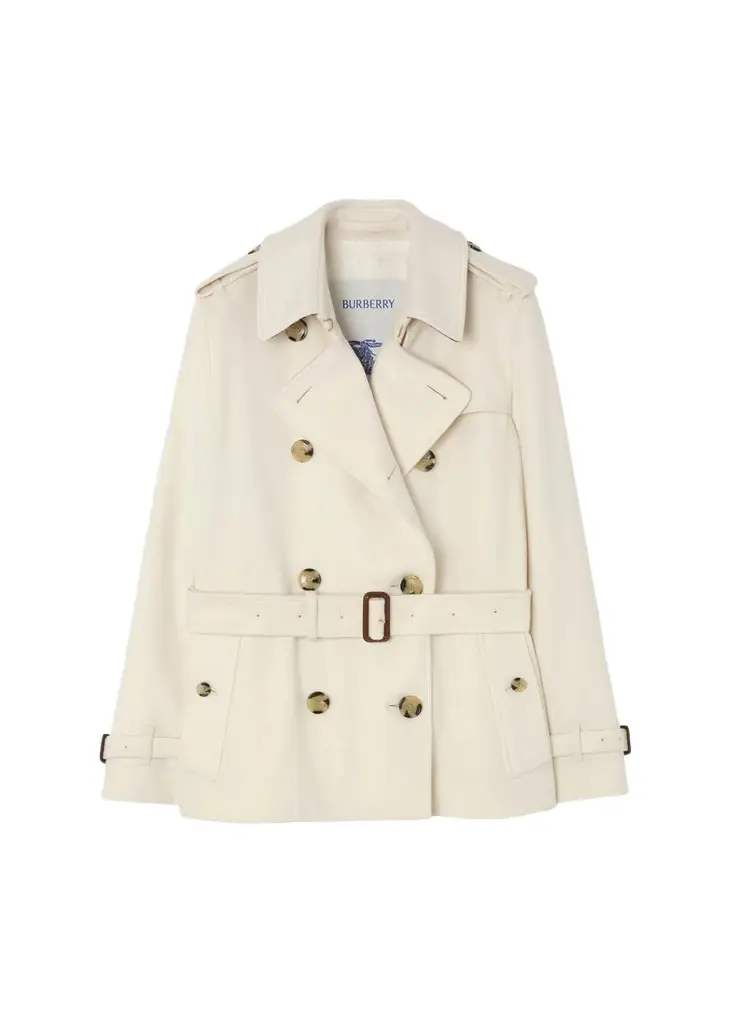
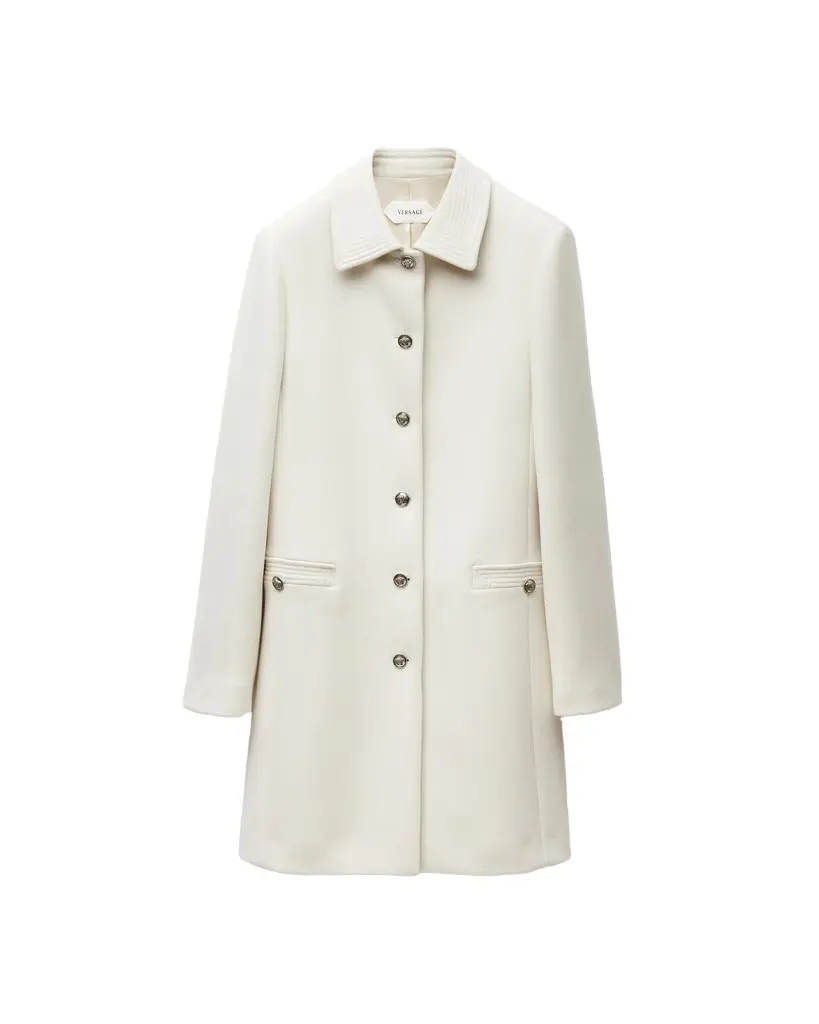
Coats are where these fabrics matter most. Max Mara is best known for its coats, Gabriela Hearst uses recycled cashmere, including in bouclé, and Burberry, the house of the trench coat, makes the shape in cashmere as well as gabardine. For more, browse our designer coats.
Ivory and white coats in winter weights




How to wear an all-white winter outfit
An all-white outfit looks expensive when it has depth: different textures, a small range of shades and one clear shape. Five rules get you there.
- Stay in one temperature. Warm whites with warm whites, cool with cool.
- Mix at least three textures. A bouclé coat, a cashmere knit and a leather boot give the eye something to read; three flat wools in the same white look like a uniform.
- Step the shades. Put the lightest white near your face and let the deeper cream or ecru sit lower, in the trousers or the boots.
- Keep one strong shape. A column of knit and straight trousers under a roomy coat, or a fitted coat over wide trousers, but not volume everywhere.
- Add one accent, or none. Gold jewelry, a camel bag or chocolate suede boots warm the white; black gives graphic contrast. Pick one.
Fit matters more in white than in darker colors, because white shows every seam, pocket bag and lining. Choose opaque weights, check the garment in daylight, and wear skin-tone underlayers rather than white ones, which show through white fabric more than you would expect. For plain white cashmere, the Italian houses Loro Piana and Brunello Cucinelli are the classic names, and Alaïa's ribbed knits give a white sweater a sharper, more sculpted shape. For knitwear that anchors the whole look, see our guide to the best cashmere sweaters, and browse designer sweaters.
Ivory and white knits to layer
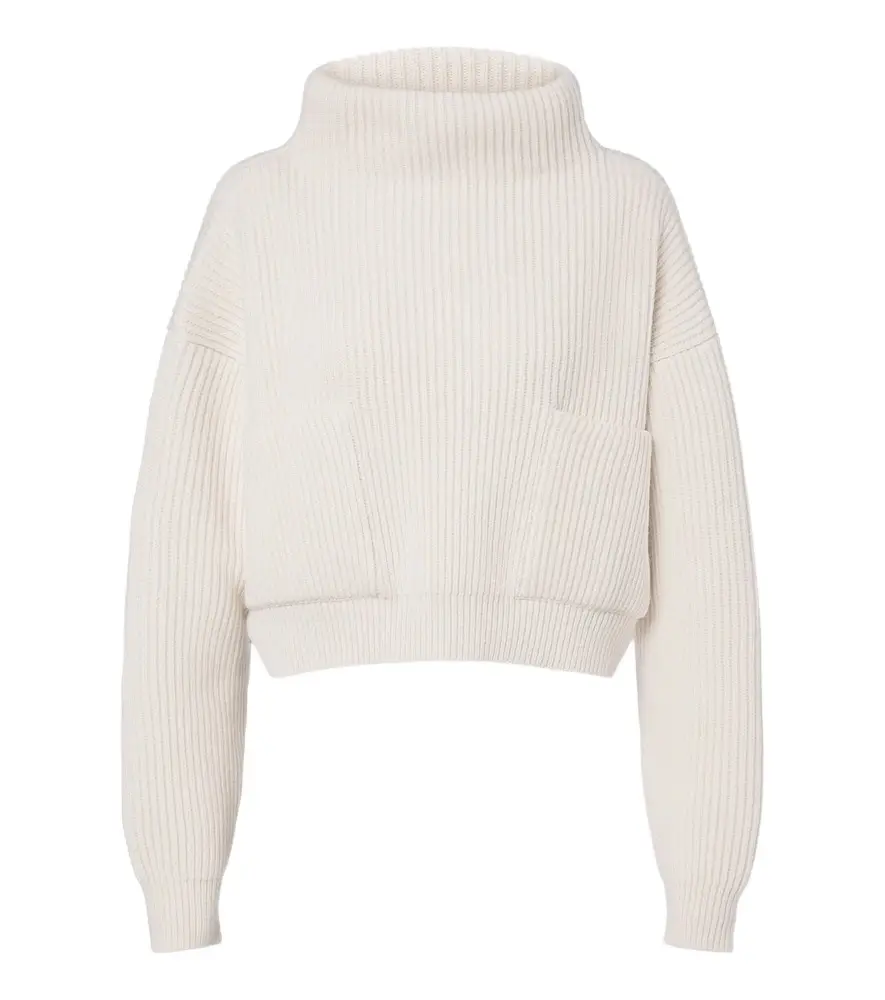 AlaïaAlaïa Ribbed-knit wool and cashmere sweater$2,350
 Loro PianaParksville cashmere sweater$3,400
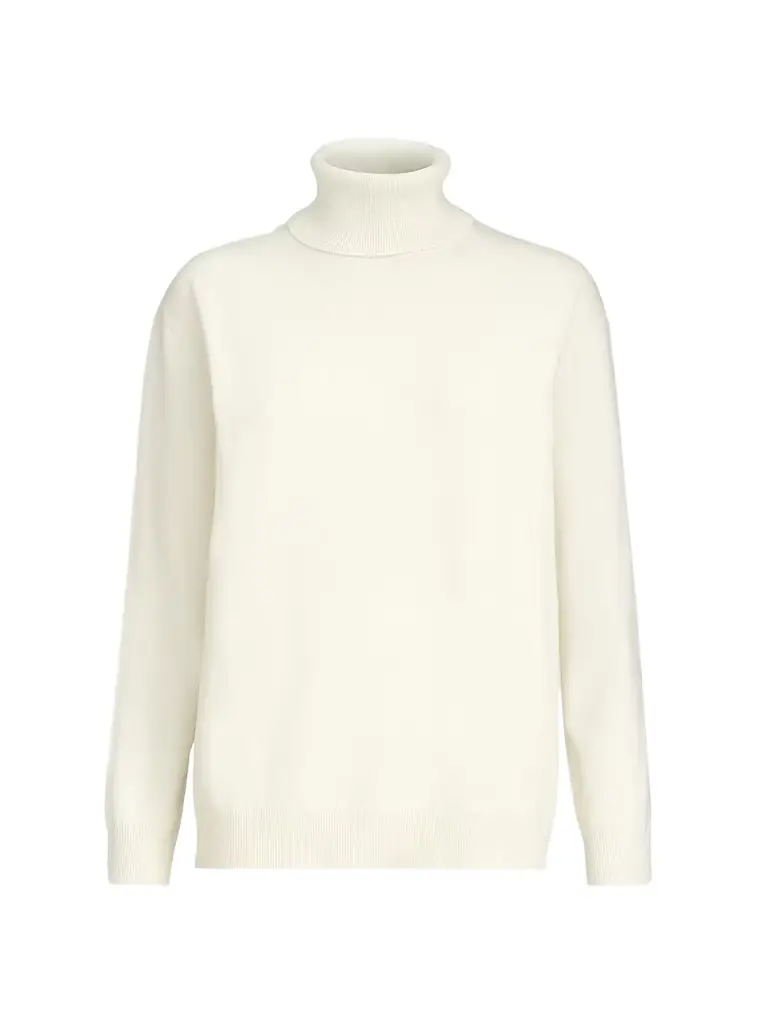 Brunello CucinelliWomen's Cashmere Turtleneck Sweater with Monili - White$1,900
 Gabriela HearstVeralune Knit Crewneck Sweater in Off White Welfat Cashmere$2,890
 Gabriela HearstTitus Knit Sweater in Off White Cashmere$1,990
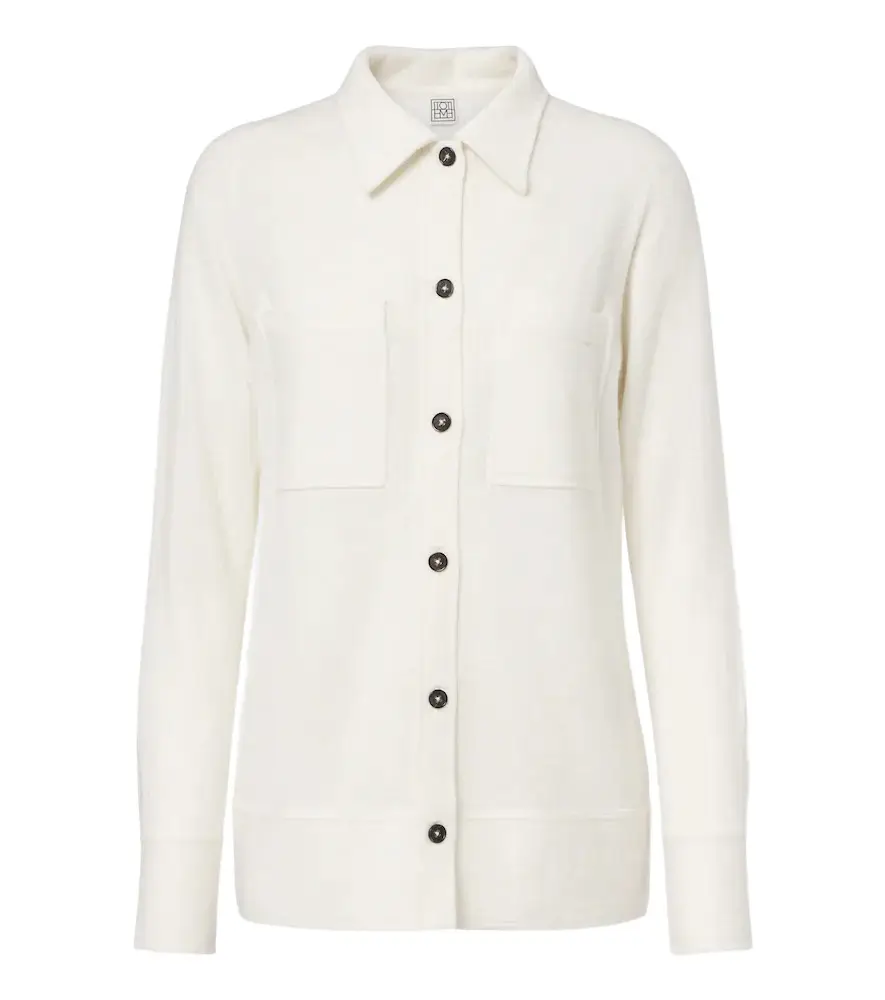 TOTEMECashmere cardigan$780
Winter white outfits by occasion
For work
- Ivory wool trousers, a cream cashmere turtleneck, a camel coat and dark brown loafers.
- A white shirt under an ivory crewneck with gray flannel trousers and black boots.
- An ivory knit dress with a black blazer and black knee boots, for the office and dinner after.
At a desk, white cuffs take the most wear, so roll them back or let the sweater cover them. For more ideas, see our winter work outfits.
Cream outfits for the weekend
- Ecru or white jeans, a cream fisherman sweater, a shearling coat and white leather boots.
- White jeans, a camel coat, a chocolate suede boot and a gray cashmere scarf.
- Cream wide-leg trousers, a white T-shirt under an ivory cardigan and a pale leather sneaker.
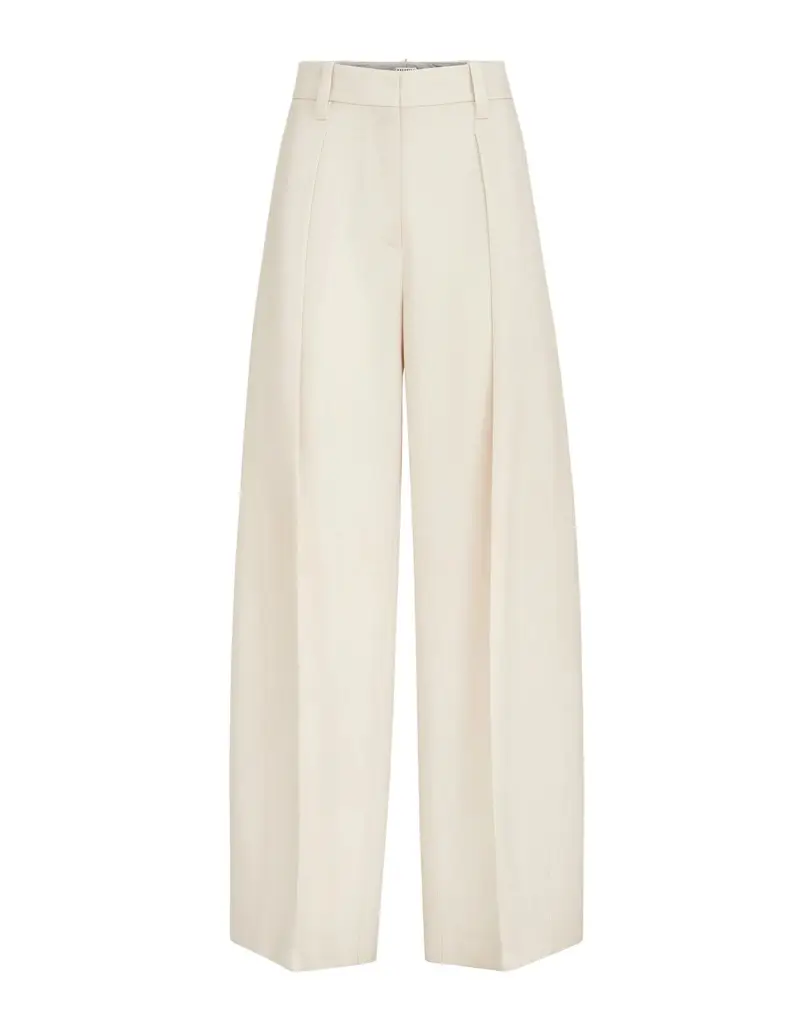
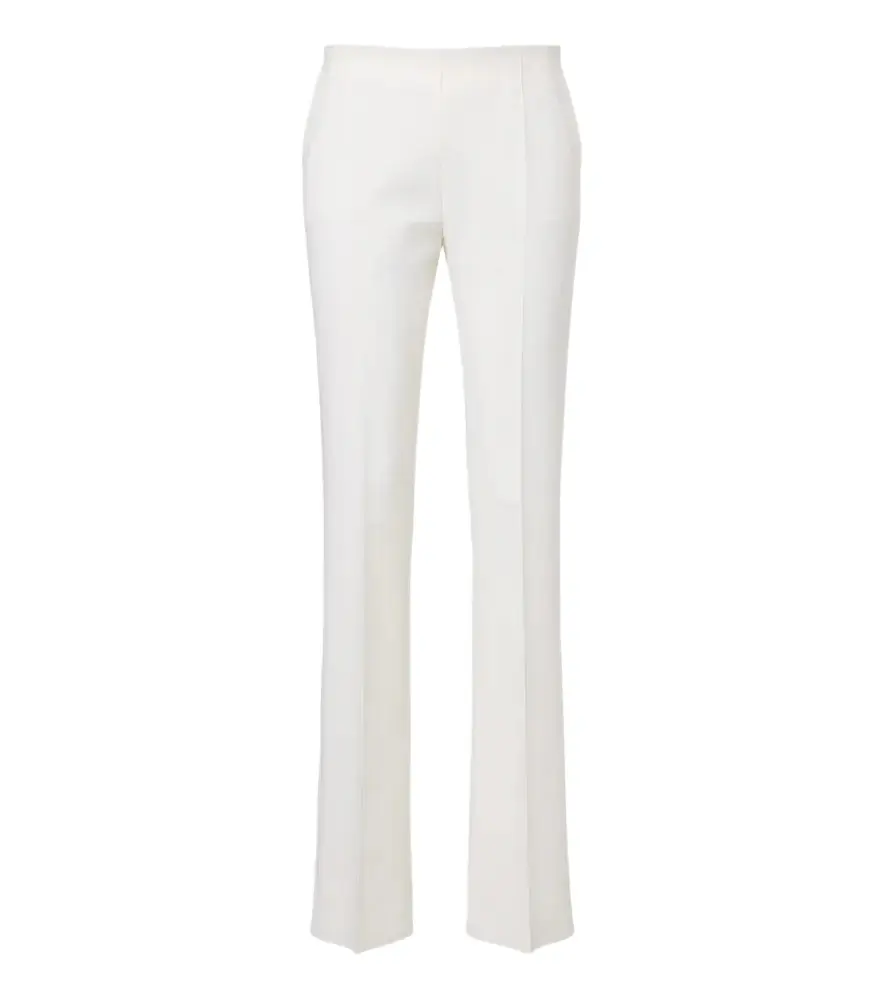
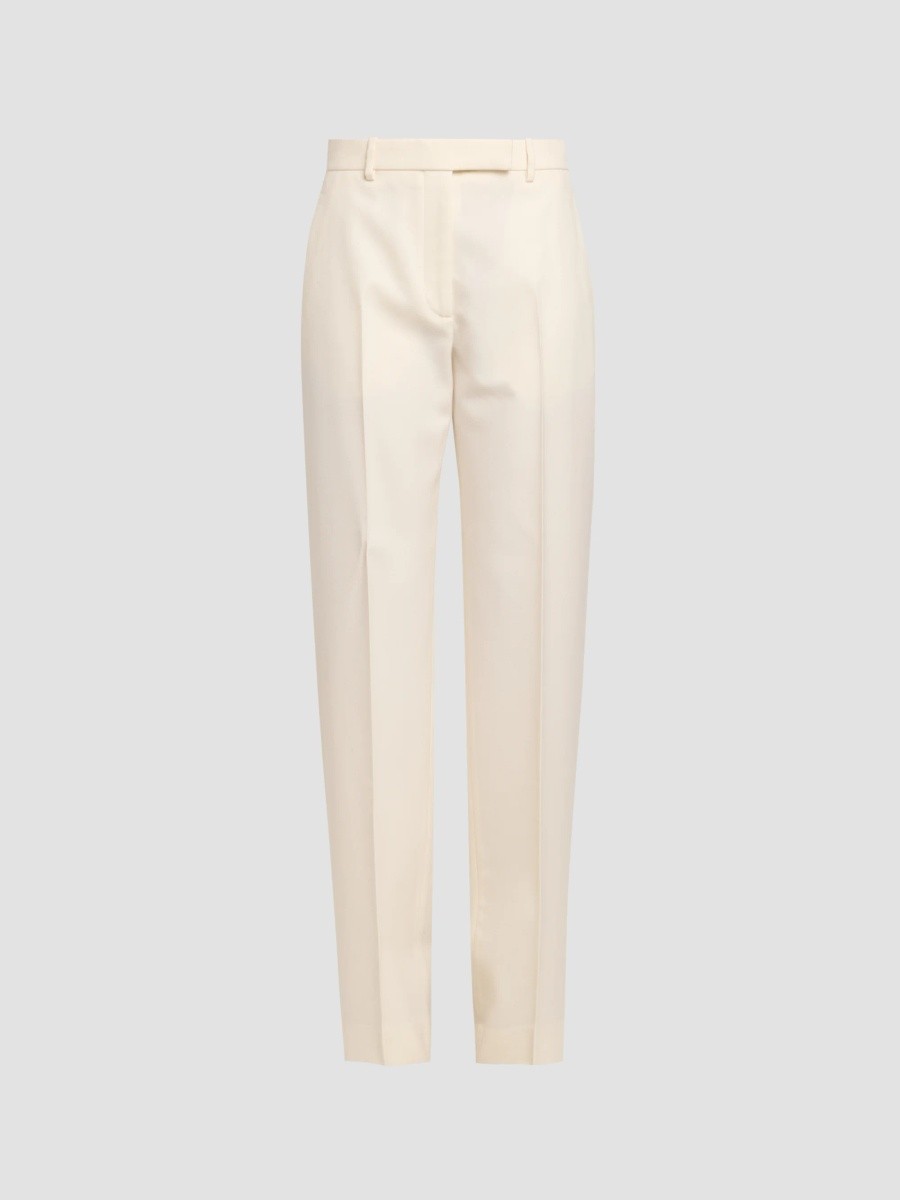
Cream outfits are the easiest way into the look: cream is softer than bright white and hides small marks better. Browse our designer trousers for more cuts.
Ivory trousers and winter-white denim



For New Year's Eve and winter evenings
- An ivory crepe midi dress, crystal earrings and a metallic sandal or pump.
- An ivory jacket with a little sparkle over a black slip dress and sheer black tights.
- A white liquid-jersey gown for black tie, with a white or cream wrap rather than a dark coat over it.
White at a party reads fresh against a room full of black and red. If you want a full guide to the night, see our New Year's Eve outfits.
Ivory for New Year's Eve and winter evenings
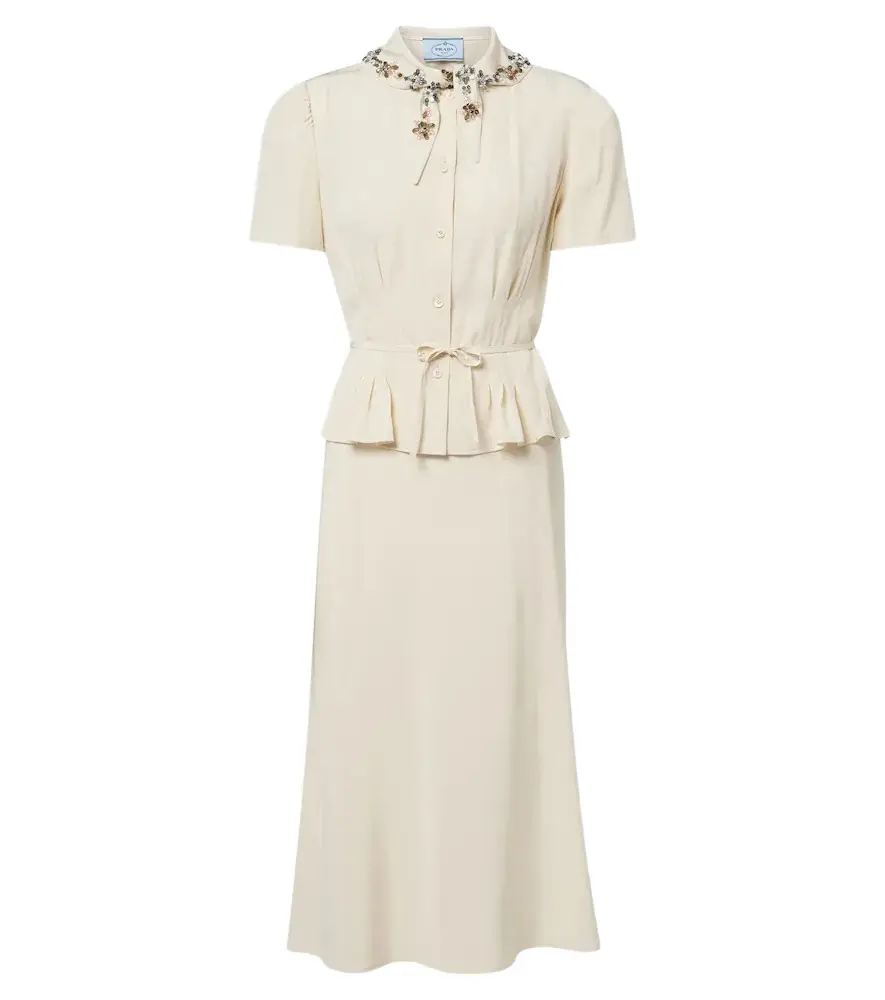 PradaEmbellished silk crêpe midi dress$5,100
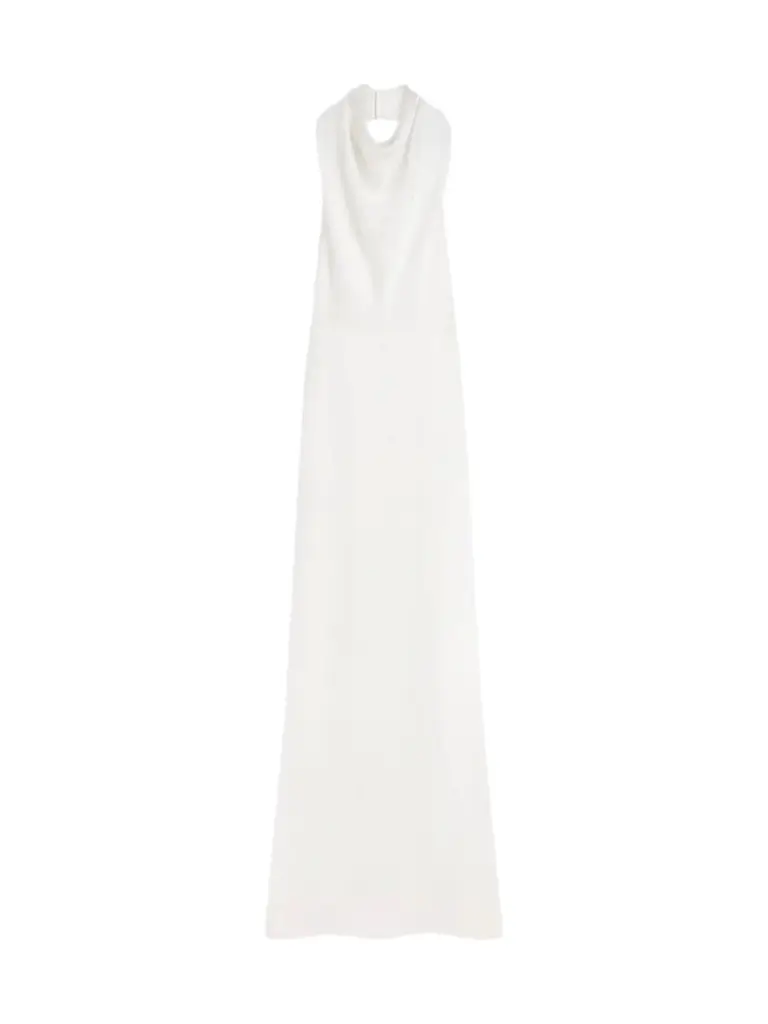 GivenchyWomen's Long Draped Halter Neck Dress in Satin Crepe - Off White$4,950
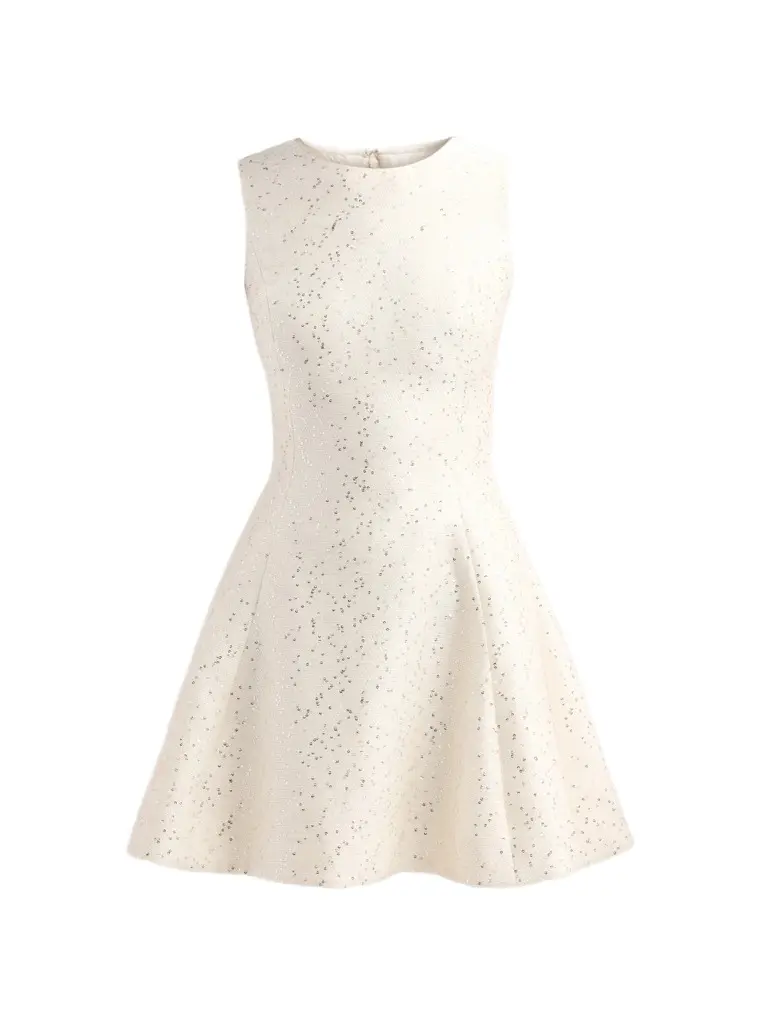 Oscar de la RentaWomen's Sequin Tweed Sleeveless Day Dress$4,690
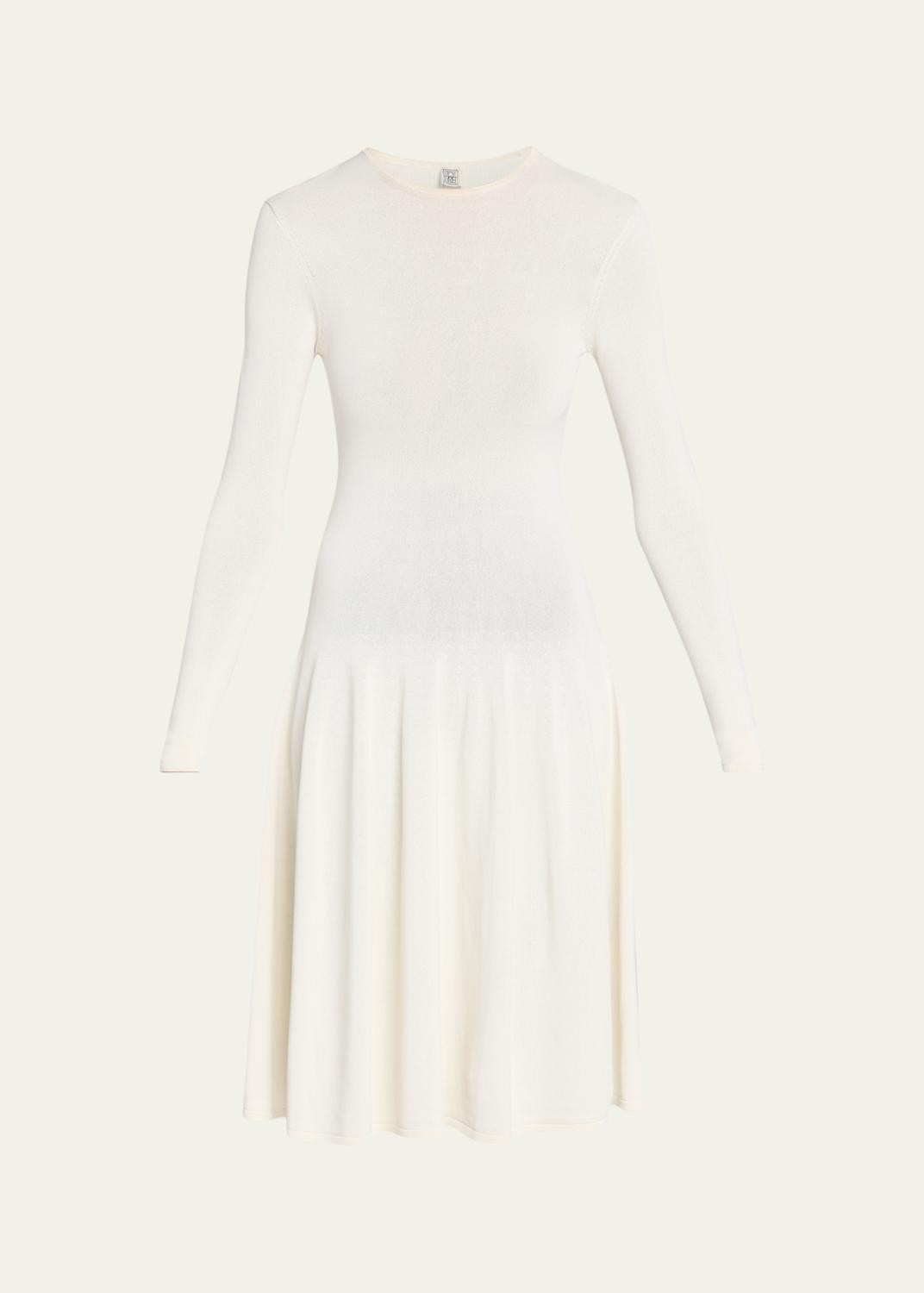 TOTEMESculpted Knit Long-Sleeve Midi Dress$940
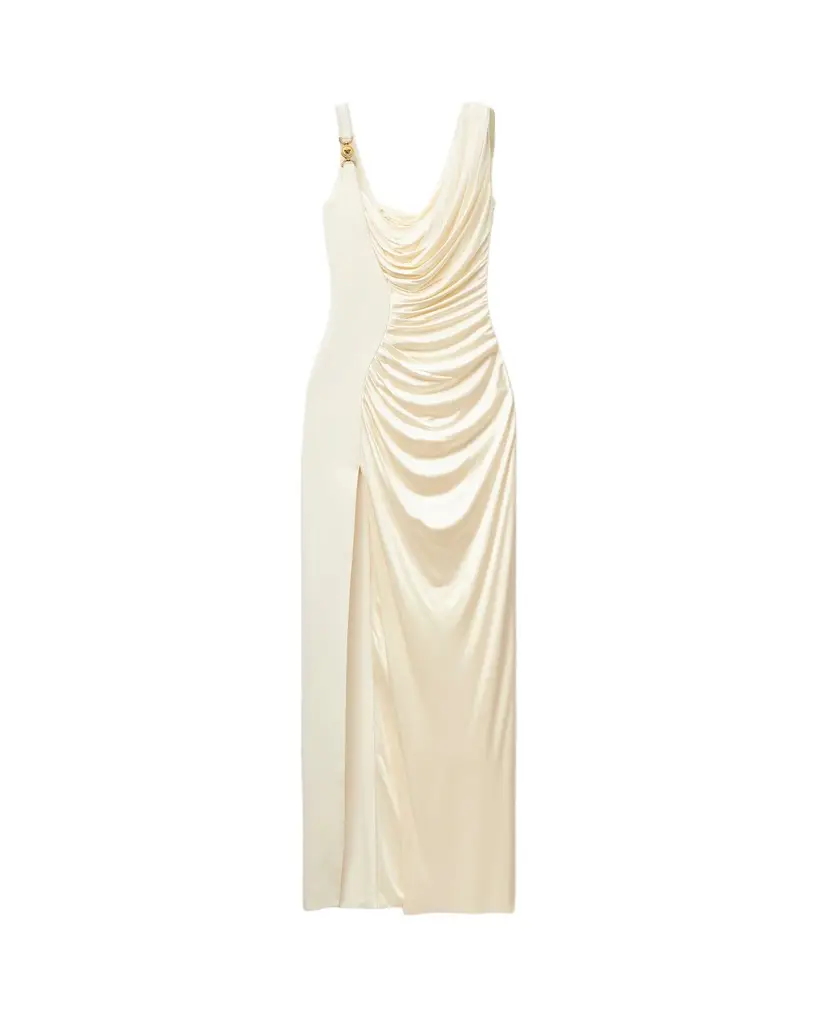 VersaceViscose Liquid Jersey Draped Gown$4,390
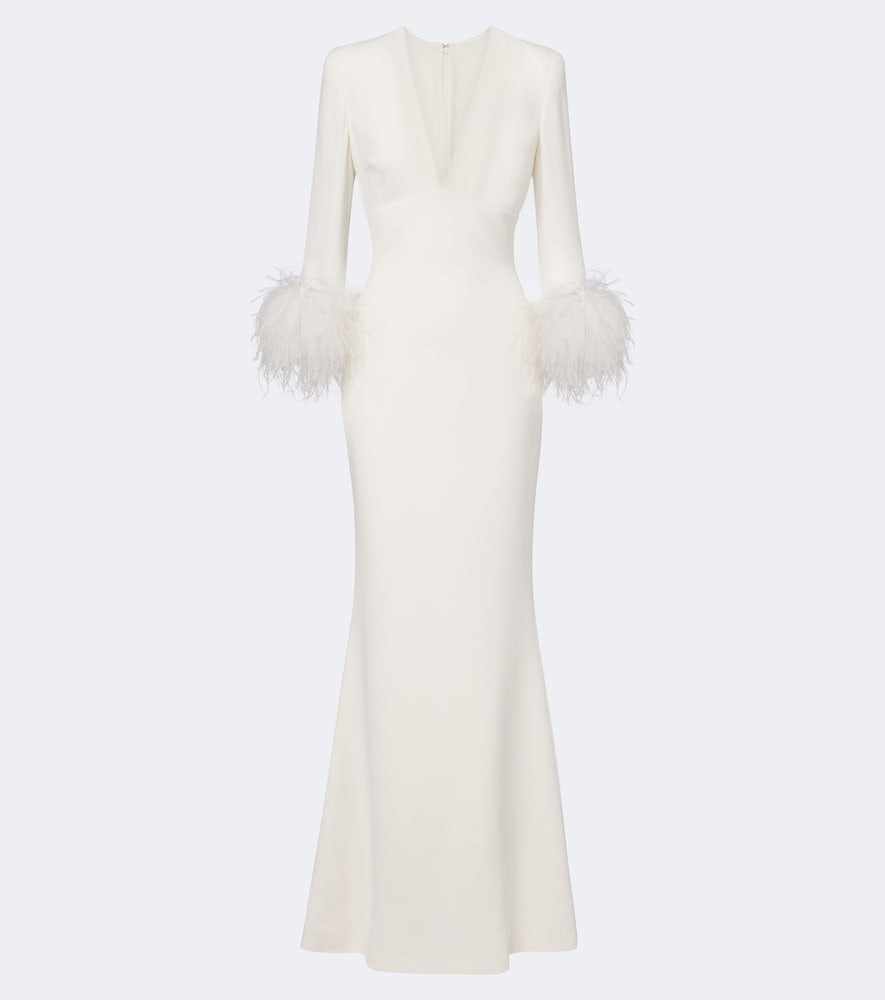 Elie SaabFeather-trimmed cady gown$4,570
For dinner and date night
- An ivory knit dress, chocolate brown boots and gold hoops.
- A cream silk blouse, ivory wide trousers and a pointed pump.
For a winter wedding
As a guest, skip it. White, ivory and cream belong to the bride unless the couple asks guests to wear white.
Boots and bags for winter white
Slush, salt and dark denim are the three enemies of white accessories. Smooth leather is easiest to keep clean, because salt and water wipe off before they set, while pale suede stains and needs a brush and patience. A lug or rubber sole lifts the upper away from wet pavements, and a pale boot with a darker sole hides street dirt longer. Keep pale leather bags away from dark jeans, whose dye can rub off onto them, and choose a slightly deeper cream bag over optic white if you carry it daily.
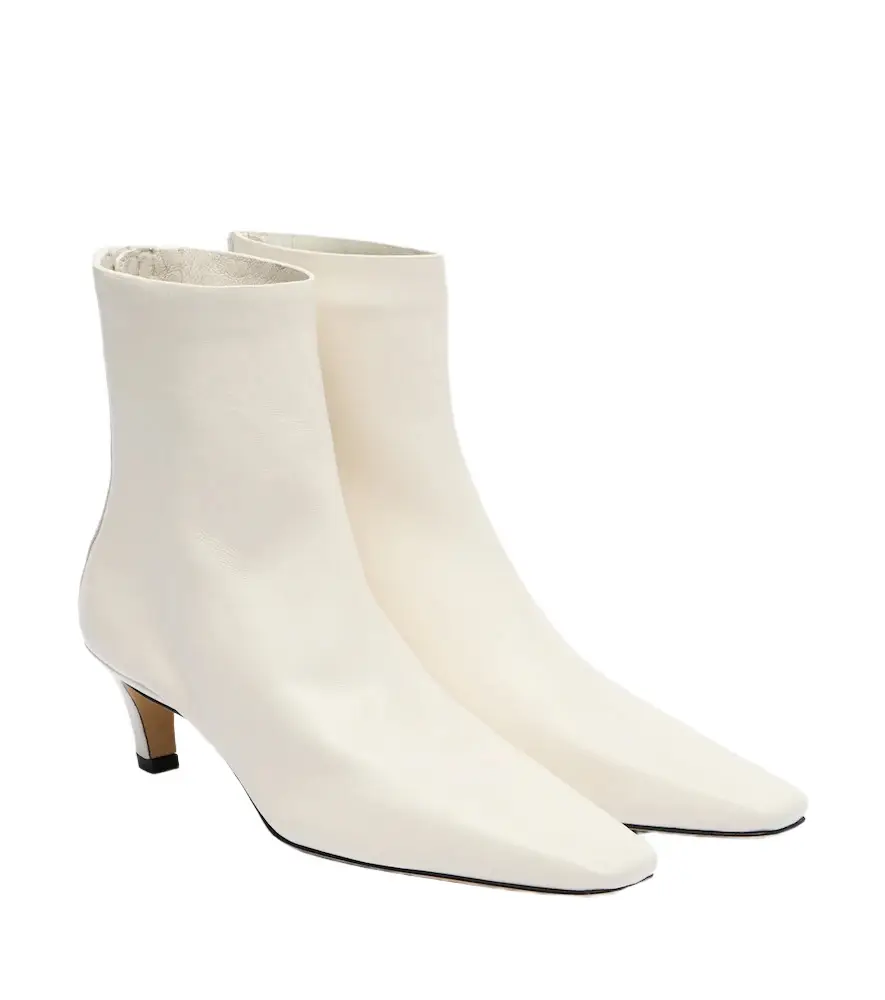
The Row, Toteme and Alaïa all make pale leather ankle boots with a clean line. White boots look most deliberate with white or cream trousers worn over them, so the leg reads as one long line, or with a knee-length skirt and opaque tights in the same shade. Browse our designer ankle boots for more.
Winter-white boots, from sleek to lug-soled




How to keep winter white clean
Winter whites tend to be wool, cashmere or silk, and the care rules for those fibers differ from the ones for a white cotton T-shirt.
- Read the care label first. The American Cleaning Institute notes that chlorine bleach works on many whites but not on wool or silk, and that fibers such as wool, silk, mohair and spandex affect whether any bleach is safe. Oxygen bleach is gentler and, the institute says, better at keeping white white than at restoring it.
- Wash wool less. The Woolmark Company points out that wool resists odors and stains, so it needs less washing than other fibers. Air a sweater overnight between wears instead.
- Treat spills at once. For red wine or fruit juice on wool, Woolmark advises rinsing out as much as you can with clean water, then applying a wool detergent diluted in tepid water.
- Store it clean. Woolmark's storage guidance is to clean garments before putting them away, wrap them in tissue paper to prevent yellowing, fold knits rather than hanging them, and use cedar rather than mothballs. For leather and fur, it suggests lavender sachets instead, because cedar can dry them out, so store white leather boots away from the cedar.
- Dress in the right order. Put on a white knit before your makeup, or cover the neckline with a scarf while you do it, and let perfume and lotion dry before a white collar goes near them.
- Send coats to a specialist. For a white wool or cashmere coat, follow the care label, which usually means professional cleaning, and have it cleaned at the end of the season rather than stored with a winter's worth of city dust.
To build a full winter-white look around a piece you already own, ask our AI stylist for an outfit in ivory and cream for your next dinner or weekend away.
How we chose
Every piece here is visibly white, ivory or cream in its product photographs, which we checked one by one, because color names on product pages are not always reliable; we left out pieces labeled ivory that photographed beige, gray or printed. We chose winter weights, such as double-face wool, cashmere, bouclé, alpaca and heavy crepe, from houses on our luxury list, and spread the picks across price points within each category. None is pre-owned, and each module refills with similar pieces as items sell out.
Frequently asked questions
How do you wear white in winter?
Choose warm shades such as ivory and cream, winter weights such as wool, cashmere and bouclé, and mix textures. And yes, you can: the Emily Post Institute says the old Labor Day rule no longer applies and that the choice is more about fabric than color.
What is winter white?
A warm off-white, usually ivory or cream rather than bright optic white, worn in heavier winter fabrics. The warmth in the shade and the texture of the fabric are what separate it from summer white.
What colors go with winter white?
Camel, chocolate brown, black, navy, charcoal and burgundy, plus gold jewelry. Keep to one accent color so the white still leads.
Can you wear white to a winter wedding?
Not as a guest. The Emily Post Institute advises guests against a white dress or anything that looks bridal, and it counts cream as white. Your winter whites belong at the wedding only if the couple asks guests to dress in white.
How do you keep a white wool coat clean?
Spot-clean spills at once by blotting, air it between wears, follow the care label, which usually means professional cleaning, and never use chlorine bleach on wool. Clean it before storing it for the summer.
Is ivory or cream better for winter?
Both work. Ivory suits most skin tones and is the safer choice near the face; cream is warmer and flatters warm and olive undertones. They combine well, with ivory near the face and cream lower down; what looks off is either one next to a bright optic white.