What to Wear in St. Moritz: Town, Slopes, Dinner and the Frozen Lake
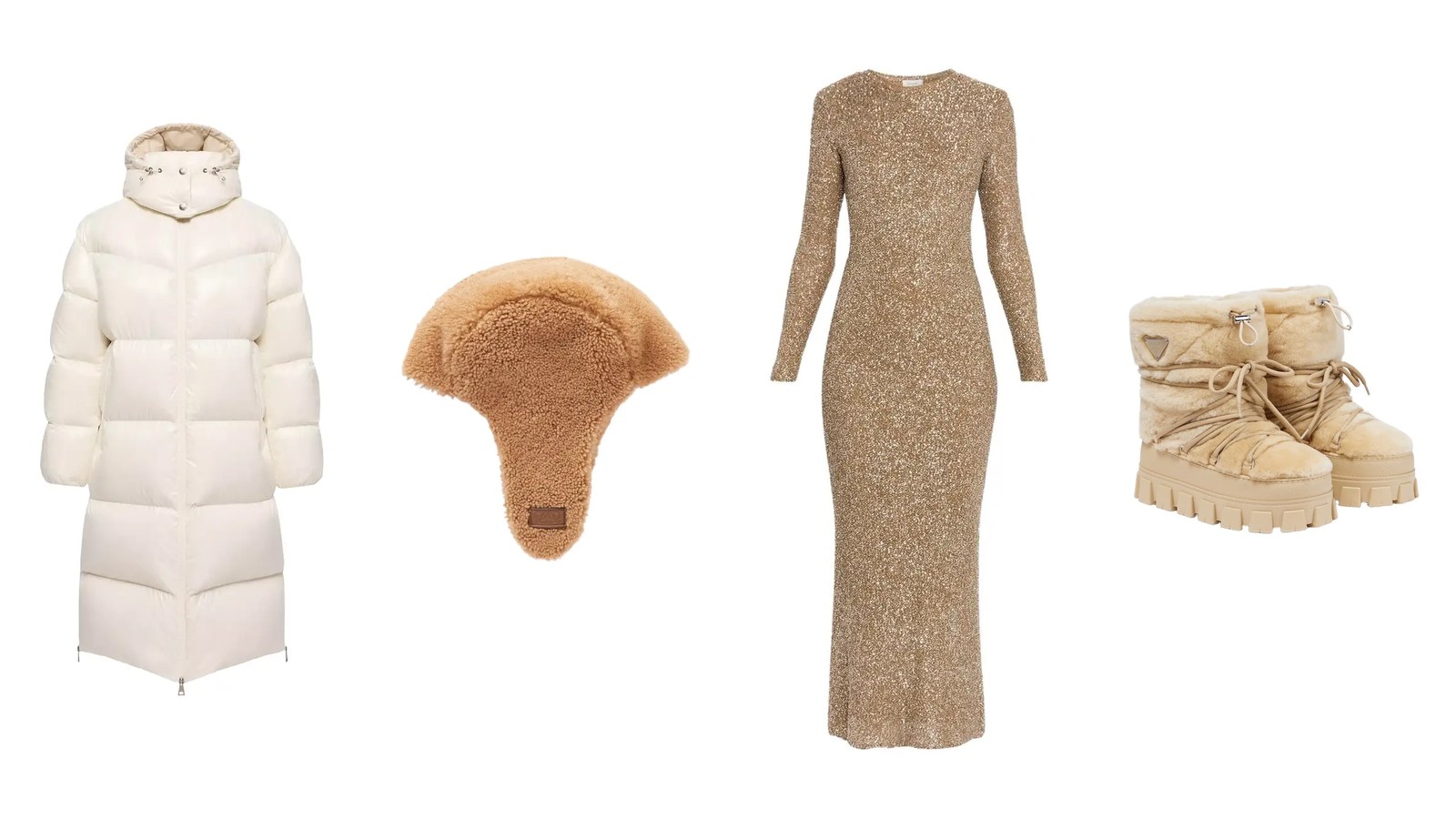
What to wear in St. Moritz is decided by altitude and ice. The town sits at 1,856 meters (about 6,090 feet), and at MeteoSwiss's station in Samedan, just down the valley, January averages a high just below freezing and a low of about 4°F. On roughly 19 days that month the temperature never climbs above freezing, so packed snow and ice stay on the streets. Pack a long down or shearling coat with a hood, boots with deep rubber lugs, a hat that covers your ears, wraparound sunglasses for bright sun on snow, fine cashmere layers, and one smart-elegant look for dinner at the grand hotels. For the events on the frozen lake, dress to stand on ice for hours.
Below: St. Moritz weather month by month, what to wear in town and on the slopes, how to dress for the Snow Polo World Cup and White Turf, what the hotels ask for at dinner, how the wardrobe changes for Gstaad, and a week's packing list. The pieces come from Moncler, Max Mara, Prada, TOTEME, Loewe and other houses.
What to wear in St. Moritz, month by month
MeteoSwiss, Switzerland's federal weather office, does not publish long-term averages for a station in St. Moritz itself, so the table uses its 1991–2020 averages for the two nearest valley stations, Samedan and Segl-Maria, on either side of the town (MeteoSwiss climate normals). Both sit a little lower than St. Moritz, which the St. Moritz tourism board puts at 1,856 meters. Where the two stations differ, the table shows the range.
| Month | Average high | Average low | What it means for your suitcase |
|---|---|---|---|
| December | 31°F | 8–15°F | A long down coat, lug-soled boots and a hat that covers your ears |
| January | 30°F | 4–9°F | The coldest month: a thin base layer under dinner clothes, too |
| February | 32–33°F | 4–9°F | Nights as cold as January's, with longer, brighter days |
| March | 37–39°F | 15–17°F | Spring skiing: a lighter mid layer by day, the down coat at night |
Two more facts from the same tables explain the St. Moritz wardrobe. At Samedan it freezes on almost every night from December to March, yet rain or snow of 1 mm or more falls on only four to six days a month, so most days are dry, cold and bright. And January there brings more hours of sunshine than MeteoSwiss records at Davos or Zermatt. Dry cold suits down, shearling and suede; bright sun on snow calls for wraparound sunglasses in town as well as goggles on the mountain.
What to wear in St. Moritz town: ice underfoot, sun overhead
With so many days below freezing, the snow that falls stays, and pavements pack down to ice. The village center also sits on the slope above the lake, so many walks involve a climb. Choose the coat for warmth and the boot for grip, in that order.
- The coat: down or shearling, long enough to cover your thighs when you sit on a cold bench, with a hood or a high collar. Save the cashmere wrap coat for car-to-door evenings.
- The boot: a rubber sole with deep, widely spaced lugs and a flat or low, wide base. On ice even good lugs slip, so pack slip-on traction cleats for icy walks.
- The layers: fine cashmere under the coat rather than chunky knits, because hotels, shops and restaurants are warm.
- Morning in the village: an ivory long down coat, a camel cashmere turtleneck, dark wool trousers tucked into lace-up snow boots, and wraparound sunglasses.
- Shopping afternoon: a chestnut shearling coat, a cream cashmere crewneck, black stirrup trousers, shearling-lined ankle boots and a trapper hat.
- Bright and very cold: a belted hooded puffer coat over a cream turtleneck and wool leggings, with cream snow boots and shearling earmuffs.
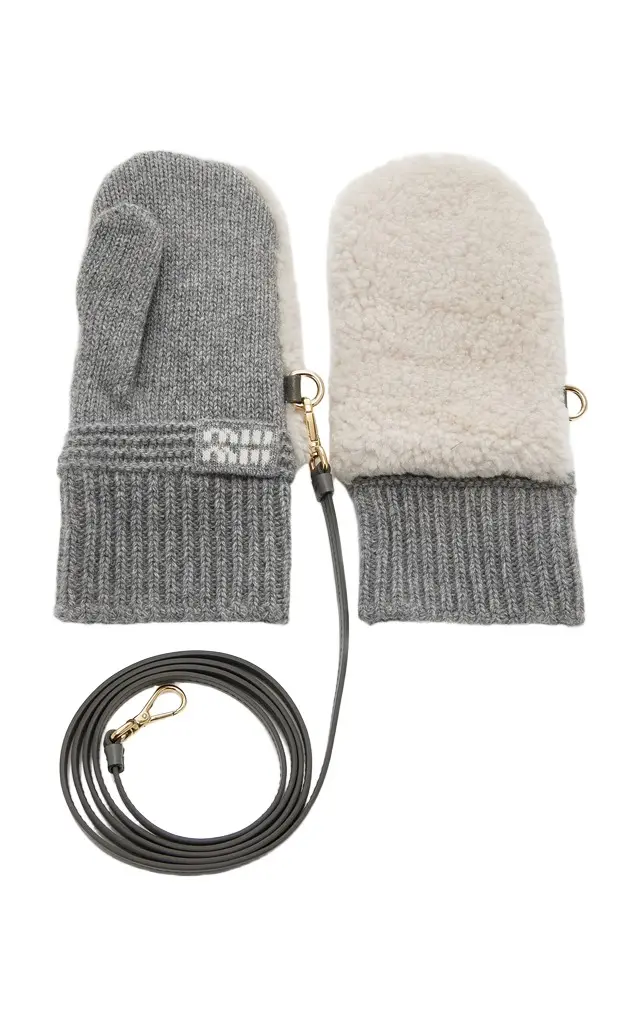
Moncler's long hooded down coats and parkas, Max Mara's belted puffers and TOTEME's long-haired shearling are the coats we would pack for the day. For the lake events and dinner, add Max Mara's teddy coat in alpaca and wool, or a wool coat with a faux-fur collar from Zimmermann. For more on skins and fit, see our guide to the best shearling coats, and browse every designer coat.
Long down, shearling and teddy coats for St. Moritz
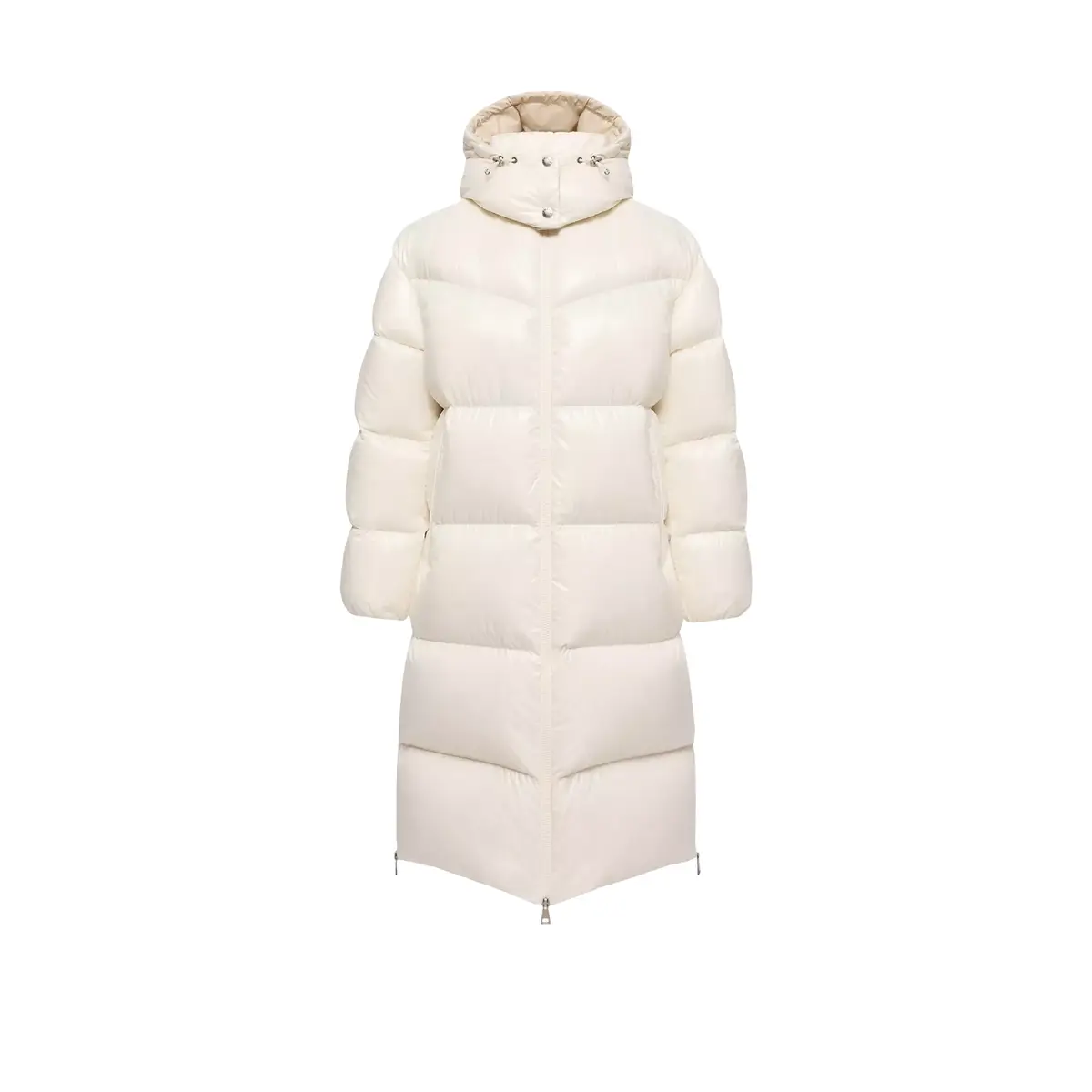
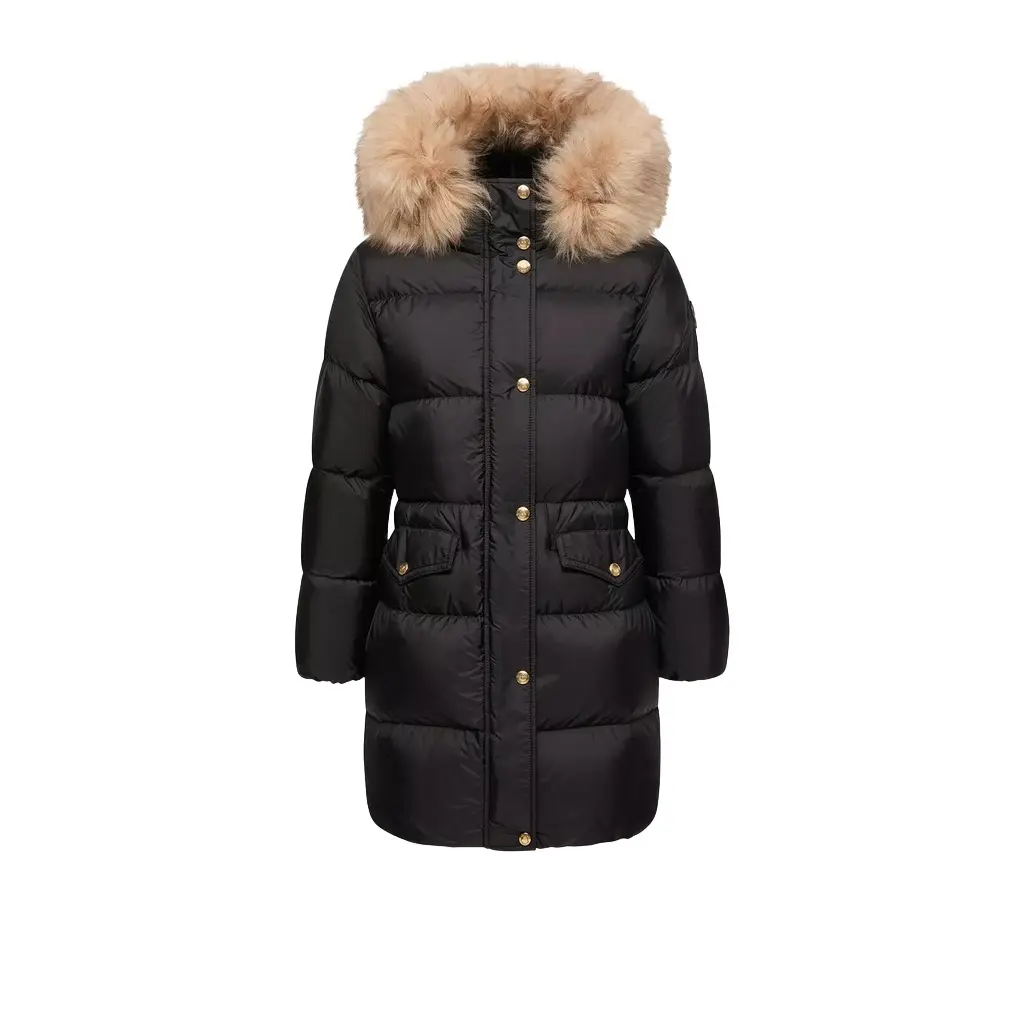
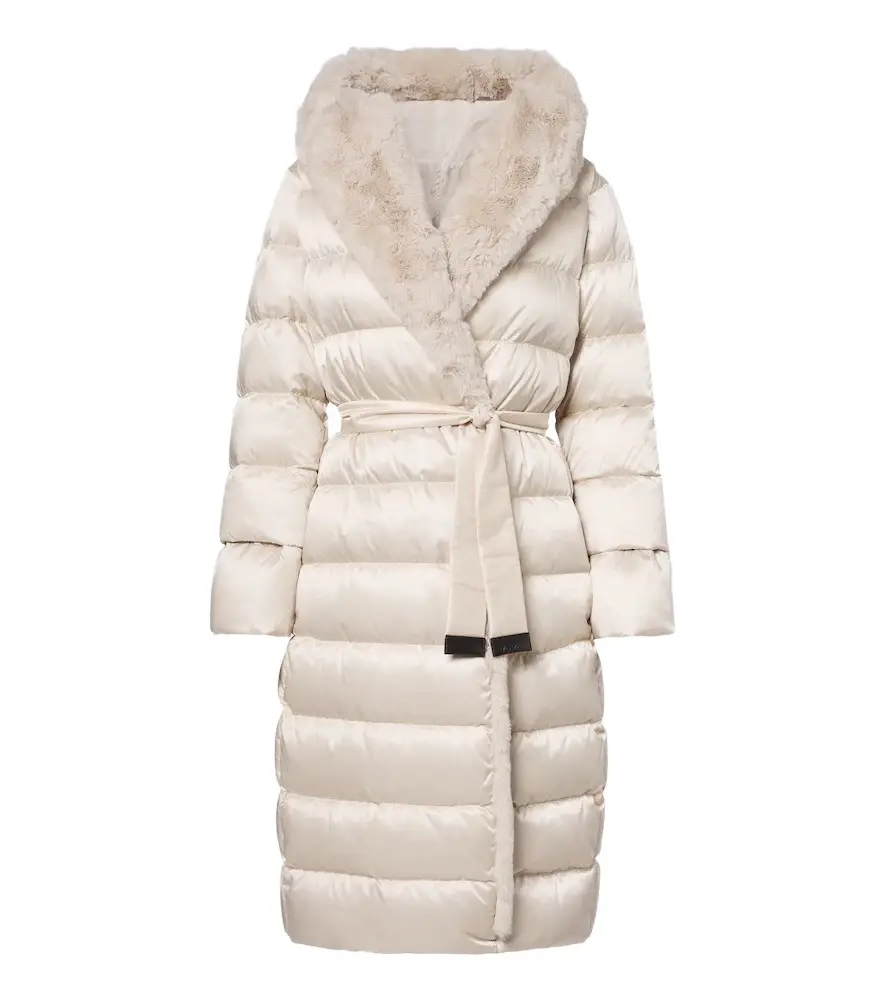
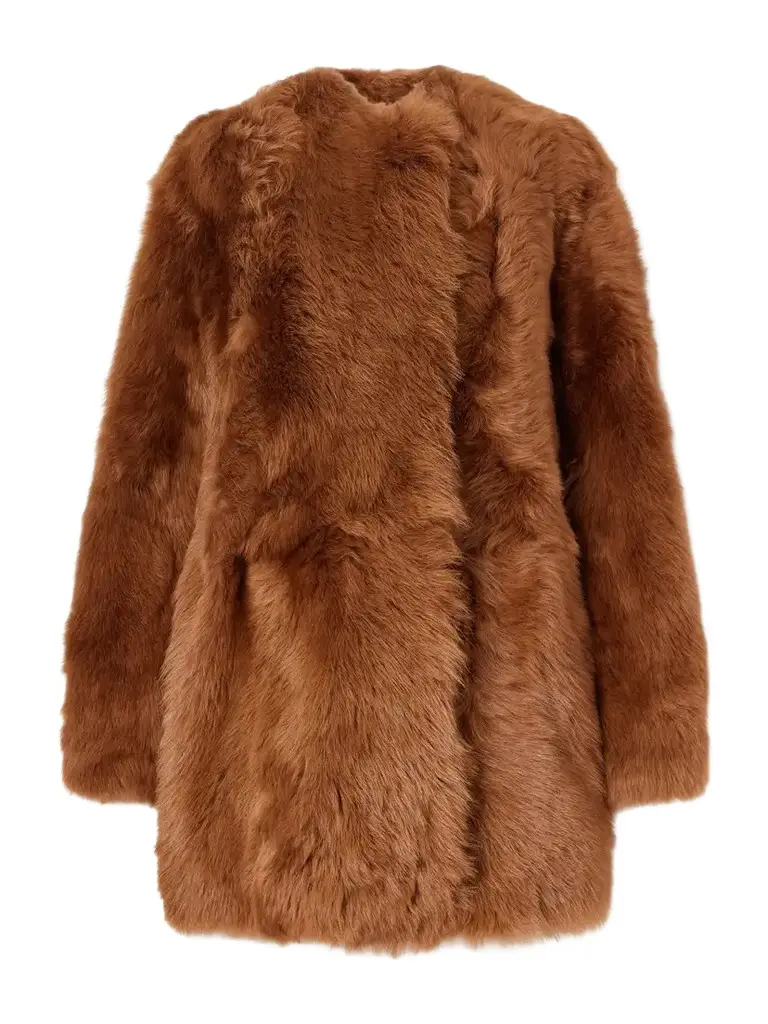
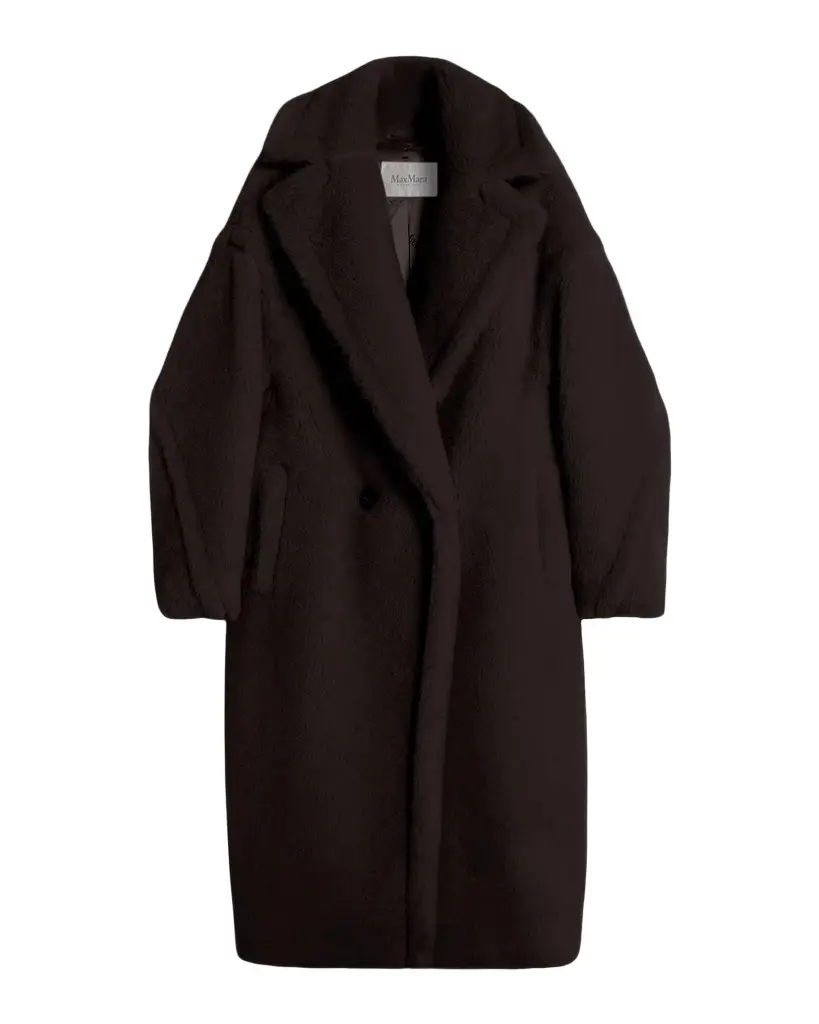

For the boots, Prada and Moncler make snow boots on deep rubber lugs, while Gianvito Rossi and Brunello Cucinelli line sleeker lace-ups with shearling, which work with trousers at dinner. Browse more cold-weather boots.
Boots for icy streets: snow boots and shearling-lined lace-ups
 PradaShearling and leather snow boots$1,990
 PradaWomen's Re-Nylon Gabardine Apres-Ski Boots$1,650
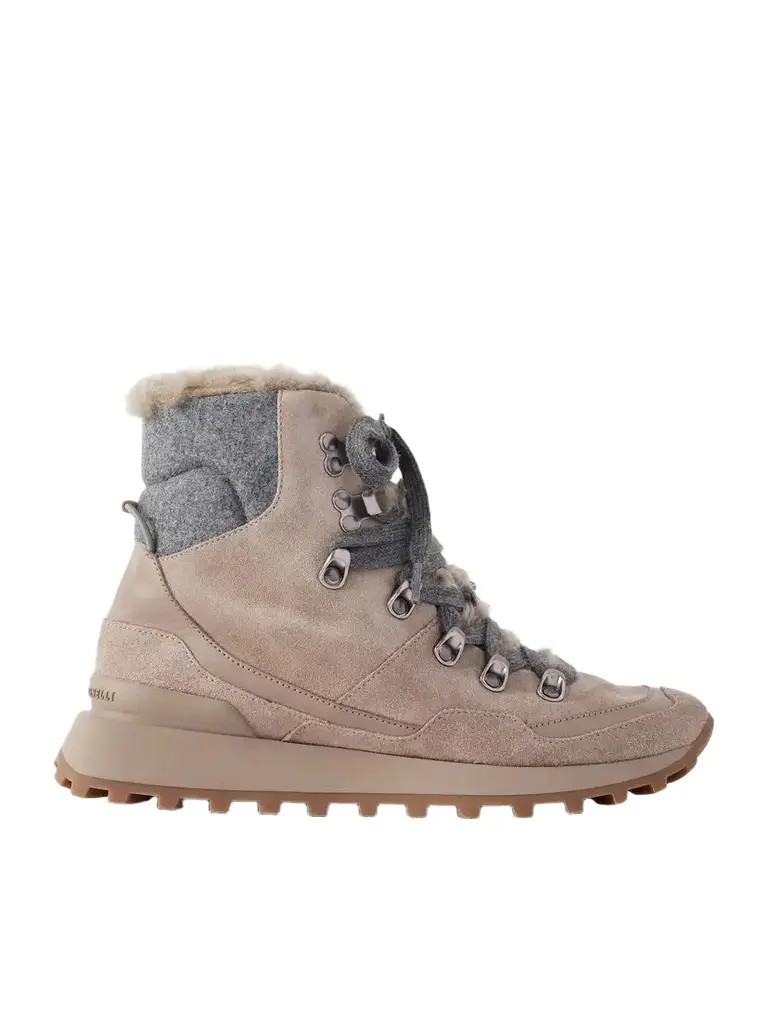 Brunello CucinelliShearling-lined Wool-trimmed Suede Ankle Boots$2,950
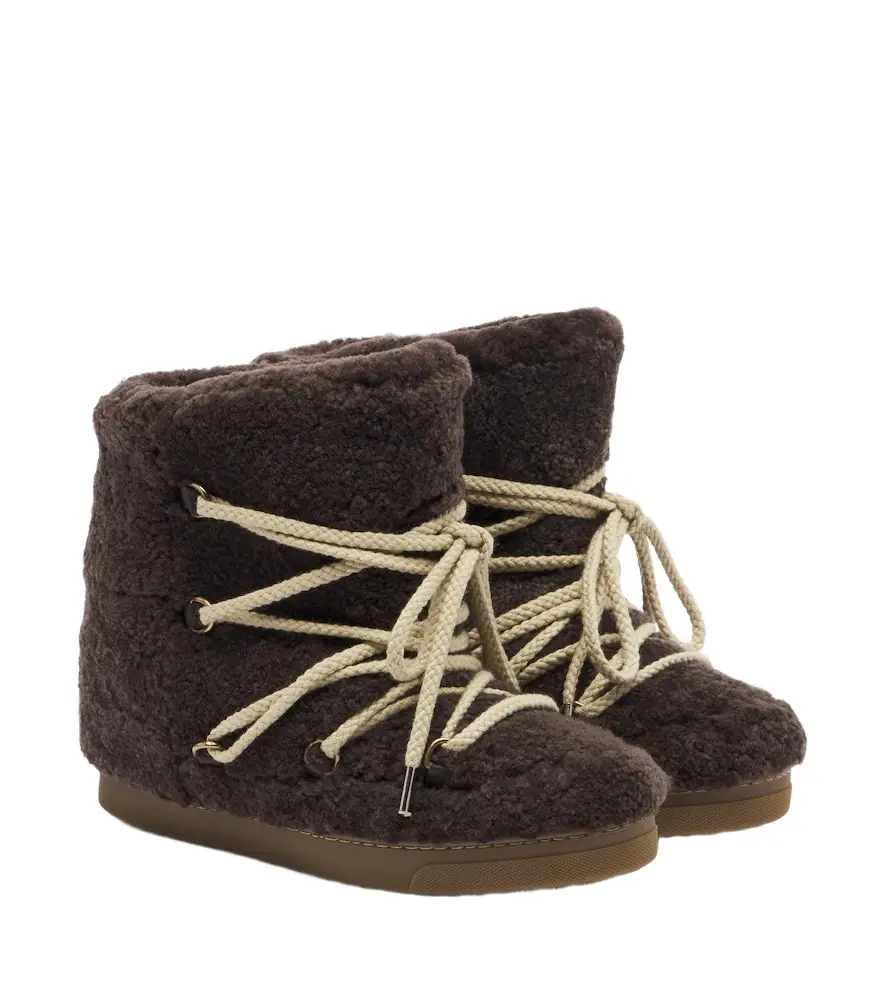 Isabel MarantNowles shearling snow boots$945
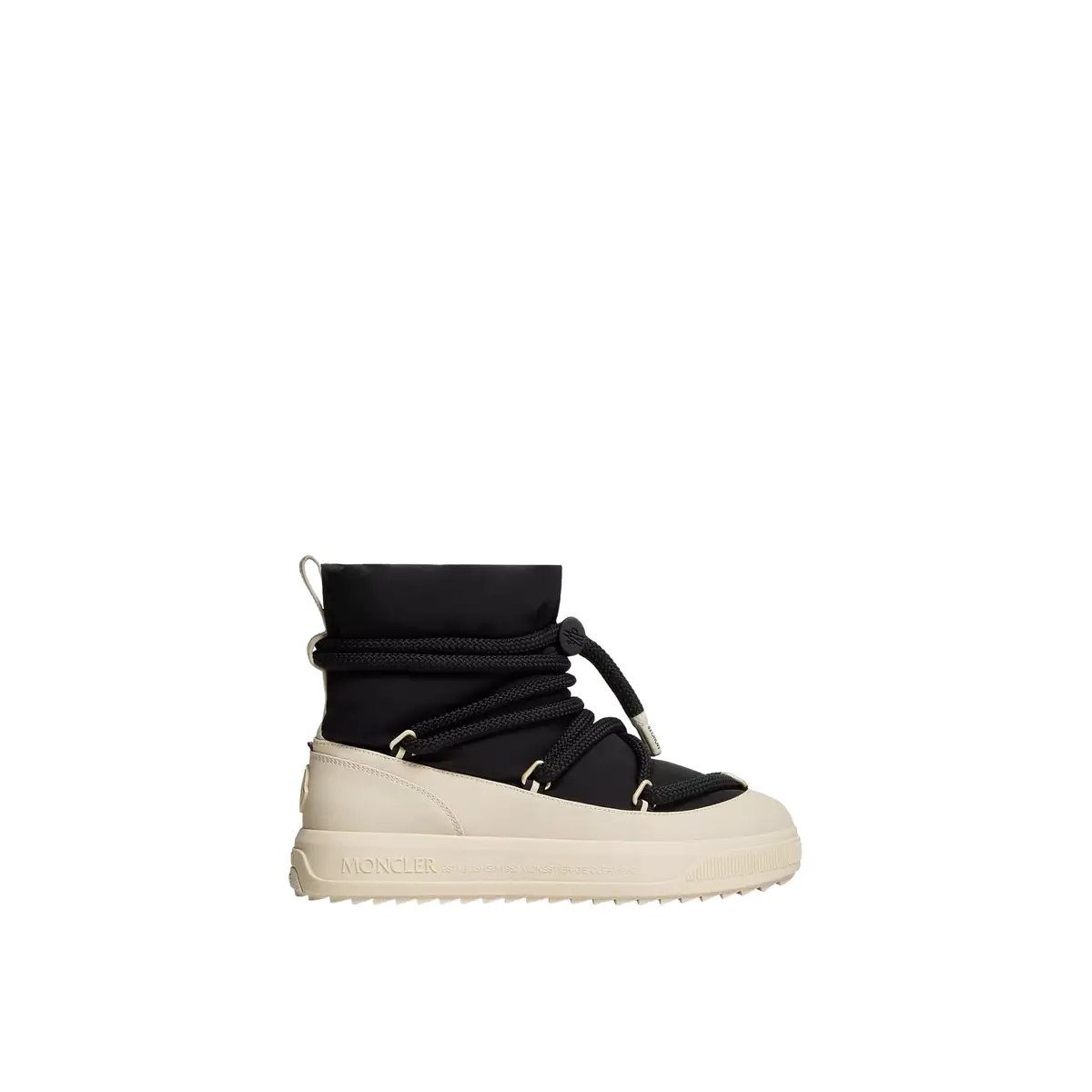 MonclerAltive Mid Snow Boots$800
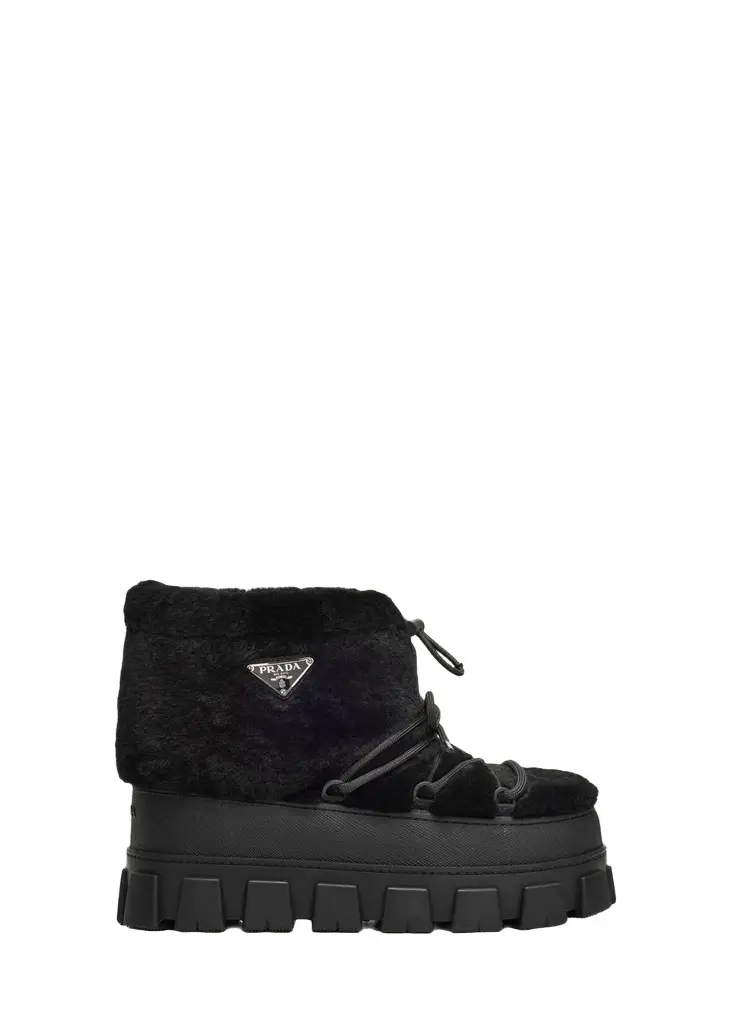 Prada40mm Triangle Logo Shearling Lace-Up Snow Boots$1,650
On the slopes: Corviglia, Corvatsch and a summit colder than town
The St. Moritz tourism board's mountain report tracks the lifts on Corviglia, above the town; Corvatsch, across the valley; and Diavolezza and Lagalb, toward the Bernina Pass (St. Moritz mountain report). Dress for the top rather than the village. MeteoSwiss's Piz Corvatsch station, at 3,294 meters, records a January average high of about 17°F, some 13°F colder than the high in the valley.
The technical kit is the same as anywhere cold: a fitted base layer, a warm mid layer and an insulated jacket, laid out in our ski trip packing list. What changes is the lunch. If your day includes a long one on a sunny mountain-restaurant terrace, the jacket comes off, so the belted jacket and the knit underneath are chosen to be seen. Our après-ski guide covers what to keep on and what to change.
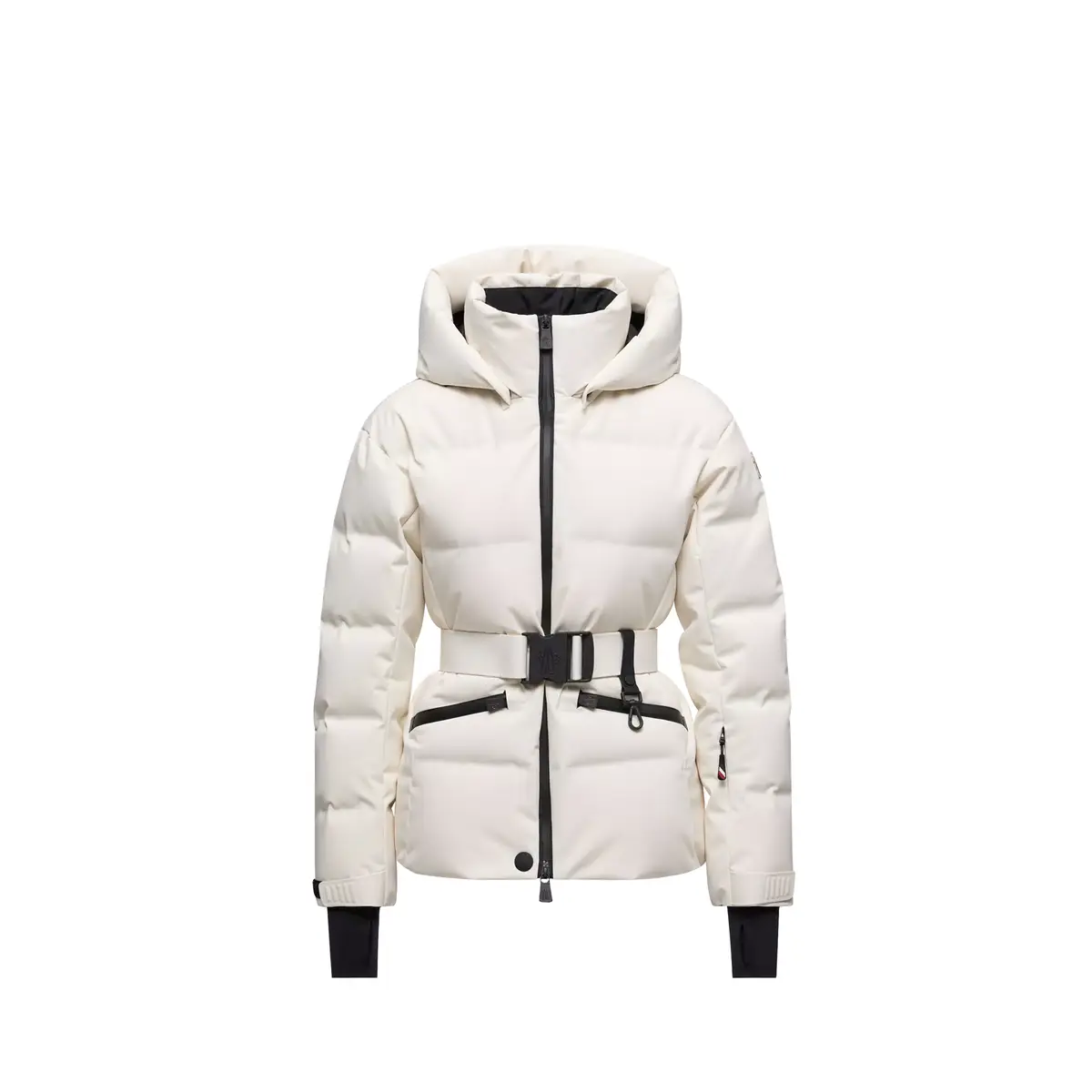
- Terrace lunch: an ivory belted ski jacket, black ski pants, a cream cashmere half-zip and tortoiseshell sunglasses in place of goggles.
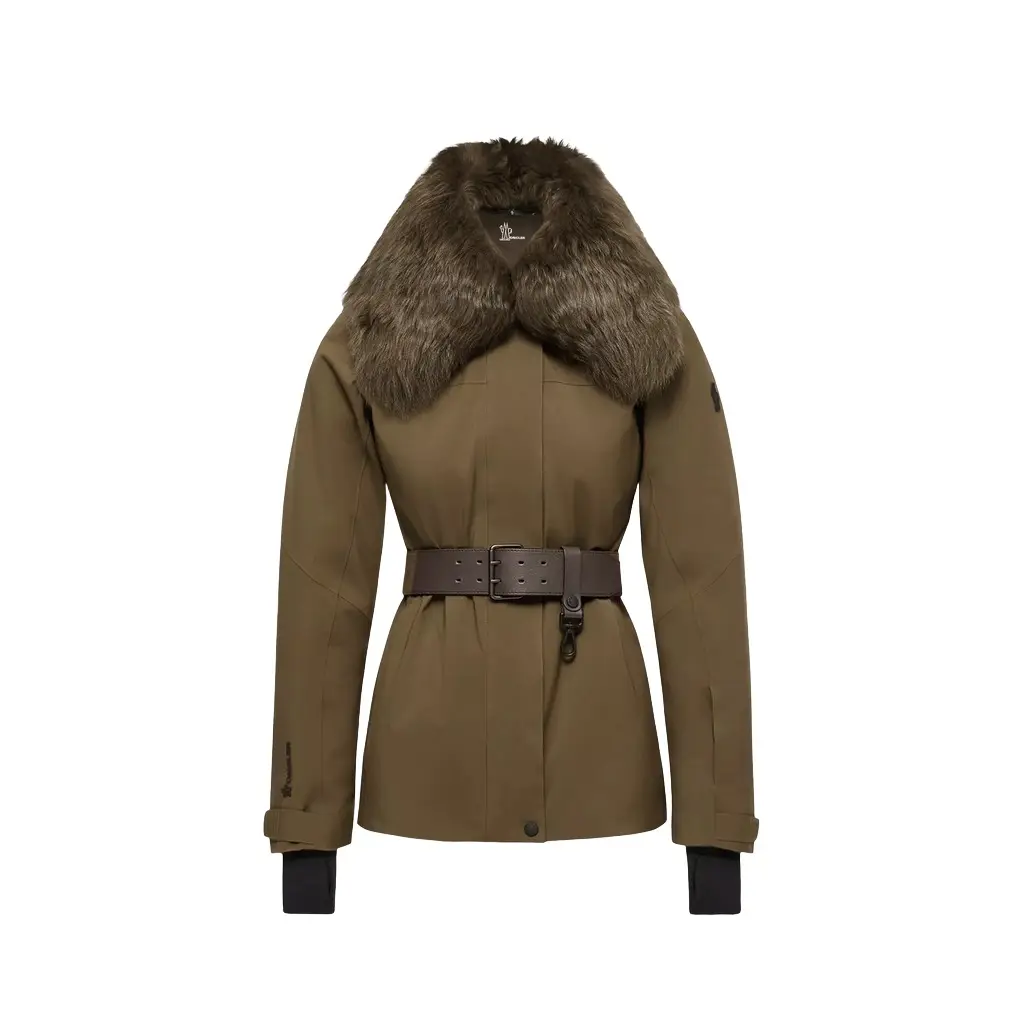
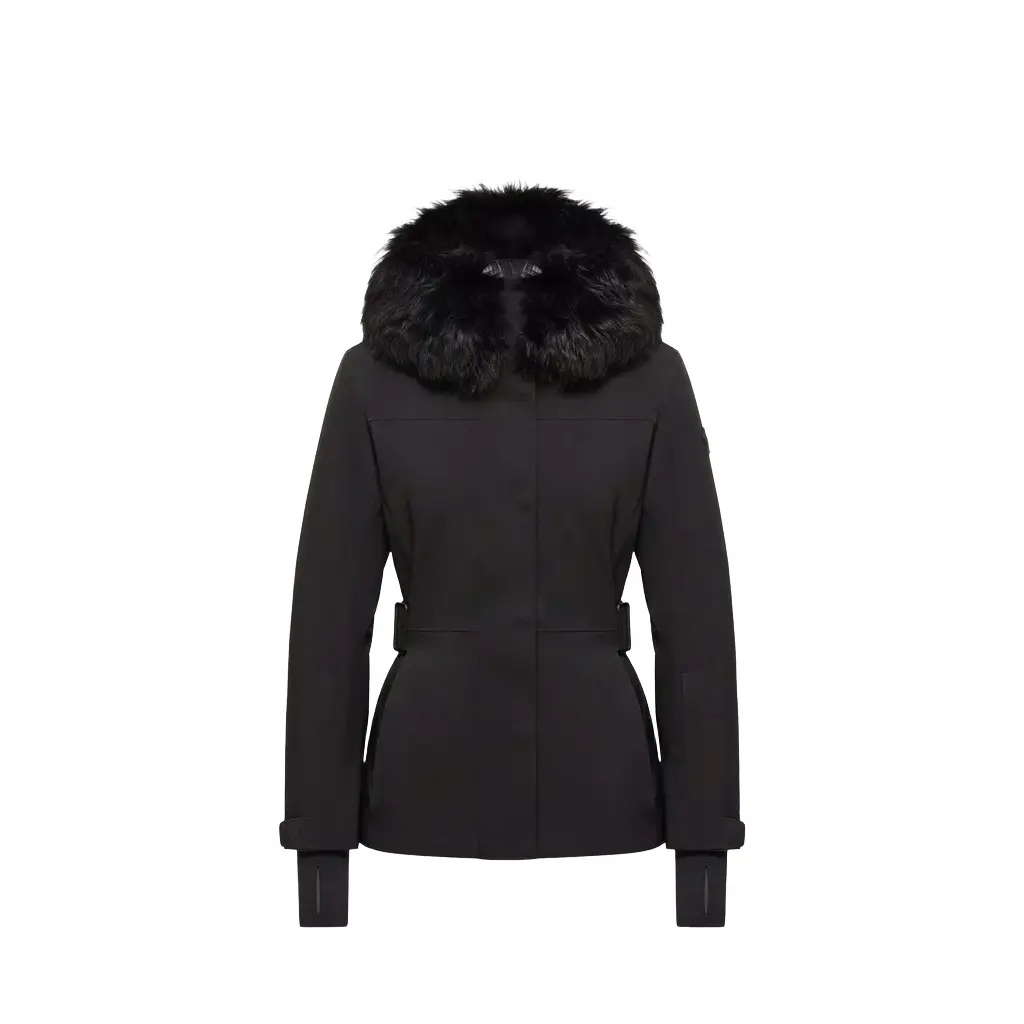
- Olive and black: an olive ski jacket with a shearling-trimmed collar, black ski pants and a fine black turtleneck, with the collar left open at lunch.
Moncler Grenoble, Moncler's skiwear line, cuts its insulated jackets to be belted, some with a shearling-trimmed collar or hood. See more ski clothing on Vêtir.
Belted ski jackets for Corviglia
What to wear to White Turf and the Snow Polo World Cup
St. Moritz's two best-known winter events both take place on the frozen lake. The Snow Polo World Cup St. Moritz runs January 22–24, 2027; its organizers date it to 1985 and describe it as the only high-goal polo tournament played on snow (Snow Polo World Cup St. Moritz). White Turf, international horse racing on the frozen lake since 1907, holds its 2027 race days on February 7, 14 and 21, with flat racing, trotting and skikjöring, in which skiers are towed behind galloping horses (White Turf St. Moritz). Check both official sites before you book.
White Turf serves its catering in a tented area, but much of either day is spent outdoors on the ice. That decides the outfit more than any idea of race-day glamour:
- A long coat you can sit in: down, shearling or a thick teddy pile to below the knee, because standing still is colder than skiing.
- Boots, never heels: the lake surface is packed snow and ice. Lug-soled snow boots, and a thin wool sock rather than a thick one.
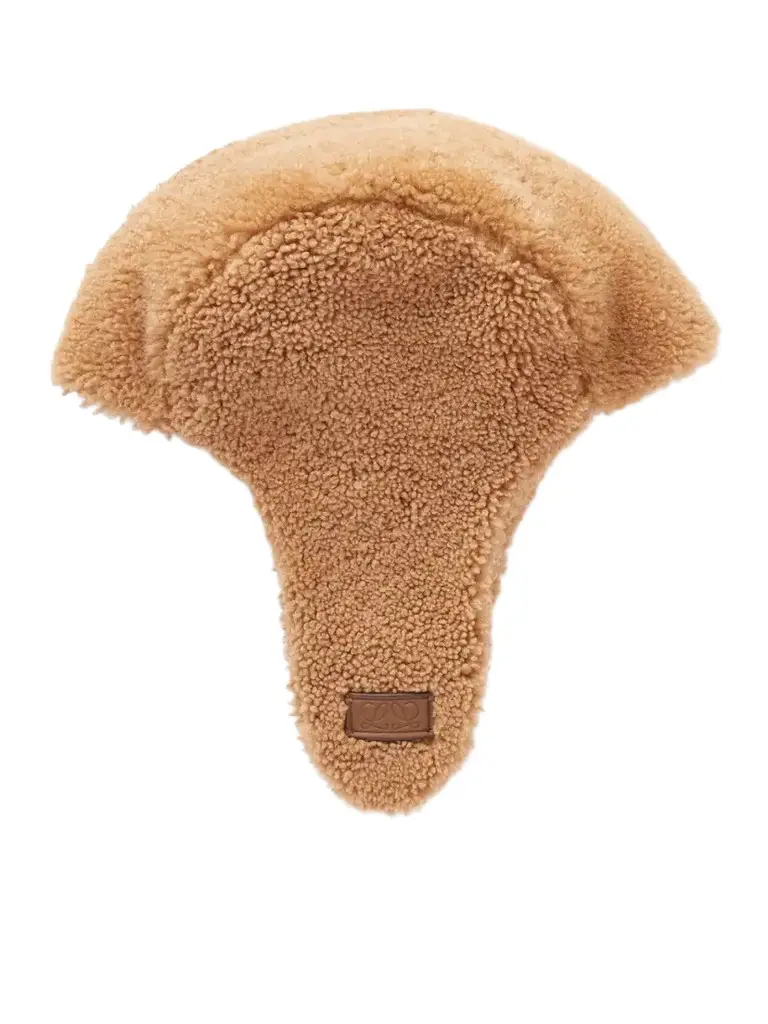
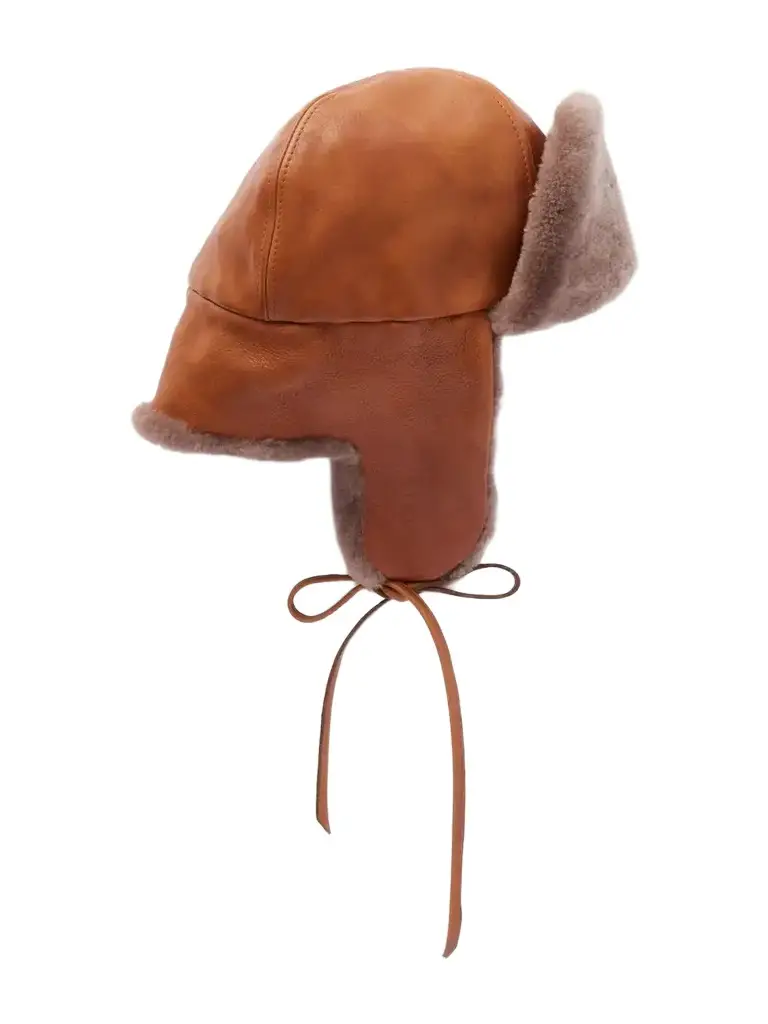
- A hat that covers the ears: a shearling trapper, a felt or cashmere hat with earmuffs, or a down hood.
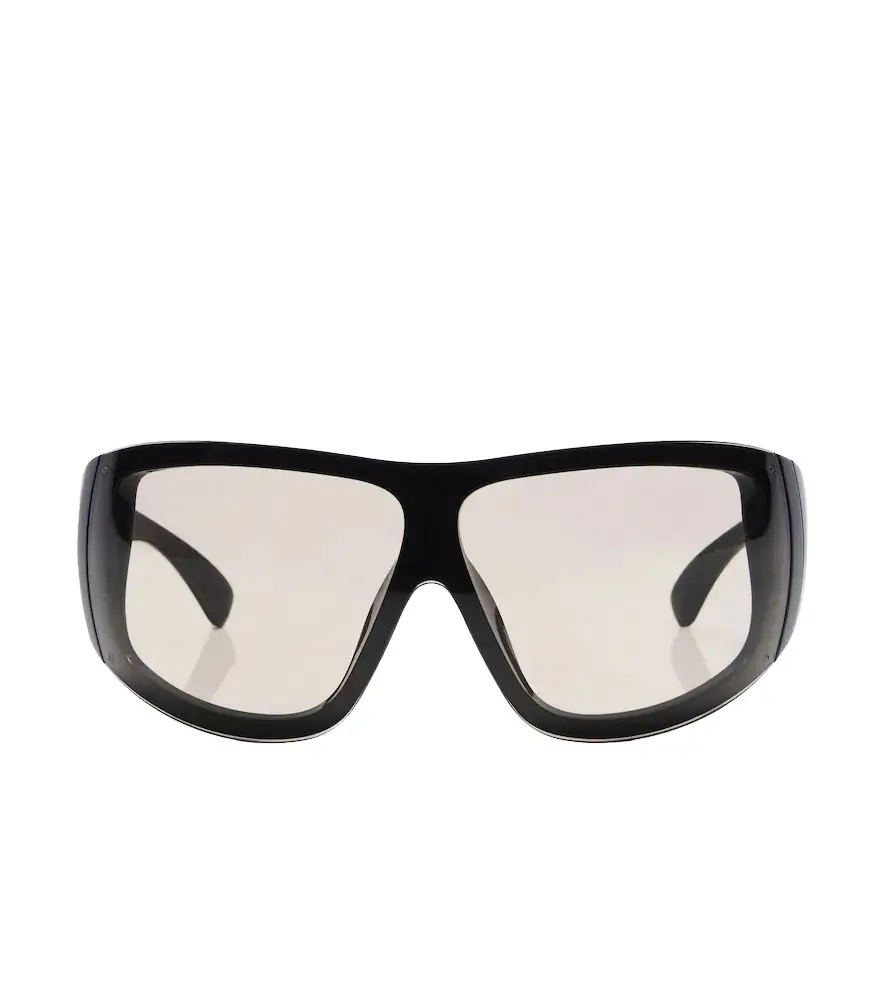
- Sunglasses that wrap: snow glare on an open lake is hard on the eyes all afternoon.
- A base layer under everything: merino or silk under a cashmere turtleneck and wool trousers.
- Snow polo: an ivory long hooded down coat, a camel shearling trapper hat, cream lace-up snow boots, a camel turtleneck and wraparound sunglasses.
- White Turf Sunday: a chocolate teddy coat over a black cashmere turtleneck and black stirrup trousers, black snow boots, ivory shearling earmuffs and shield sunglasses.
- In the tent: the same coat over a knit dress with opaque tights and snow boots, with leather gloves in your pocket for the walk out.
Browse more designer hats, from shearling trappers to cashmere felt.
Hats, earmuffs and wraparound sunglasses for the frozen lake



What to wear to dinner in St. Moritz
Some of St. Moritz's grand hotels publish dress codes for dinner. The Kulm Hotel's Grand Restaurant, which serves six-course dinners to live piano music, asks for "smart elegant" (Kulm Hotel Grand Restaurant). Suvretta House is more specific: under the heading "Suvretta House Tradition", its Grand Restaurant asks ladies to appear elegant and gentlemen to wear a dark suit and tie, and younger gentlemen a jacket and tie, with no sneakers (Suvretta House Grand Restaurant). Other restaurants set their own rules, so ask when you book.
For women, "elegant" in a grand hotel dining room means a dress or dressy separates: velvet, a sequined or metallic knit, silk, or sharp tailoring, and never ski or après clothes. The walk there is the problem, so treat evening shoes as indoor shoes.
- The walk: wear lug-soled boots and your long coat, and change into heels in the cloakroom, or take a car.
- The legs: sheer or opaque tights under every dress; January nights average below 10°F in the valley.
- The coat: the same long down or shearling coat you wear by day; at these temperatures, warmth wins over a wool evening coat.
- Grand Restaurant: a champagne sequined knit midi dress, sheer tights, a long ivory down coat, with heels carried in a pouch.
- Velvet: a navy gathered velvet midi or a black fitted velvet dress, a gold cuff over a leather glove on the walk, and shearling-lined ankle boots.
- Trousers: black velvet trousers, an ivory silk blouse and a cashmere wrap, with the snow boots left at the door.
From Saint Laurent's sequined knits to Victoria Beckham's and Alaïa's velvet, these are the pieces we would pack for a grand-hotel dinner. Browse more evening wear.
Velvet and sequins for a grand-hotel dinner
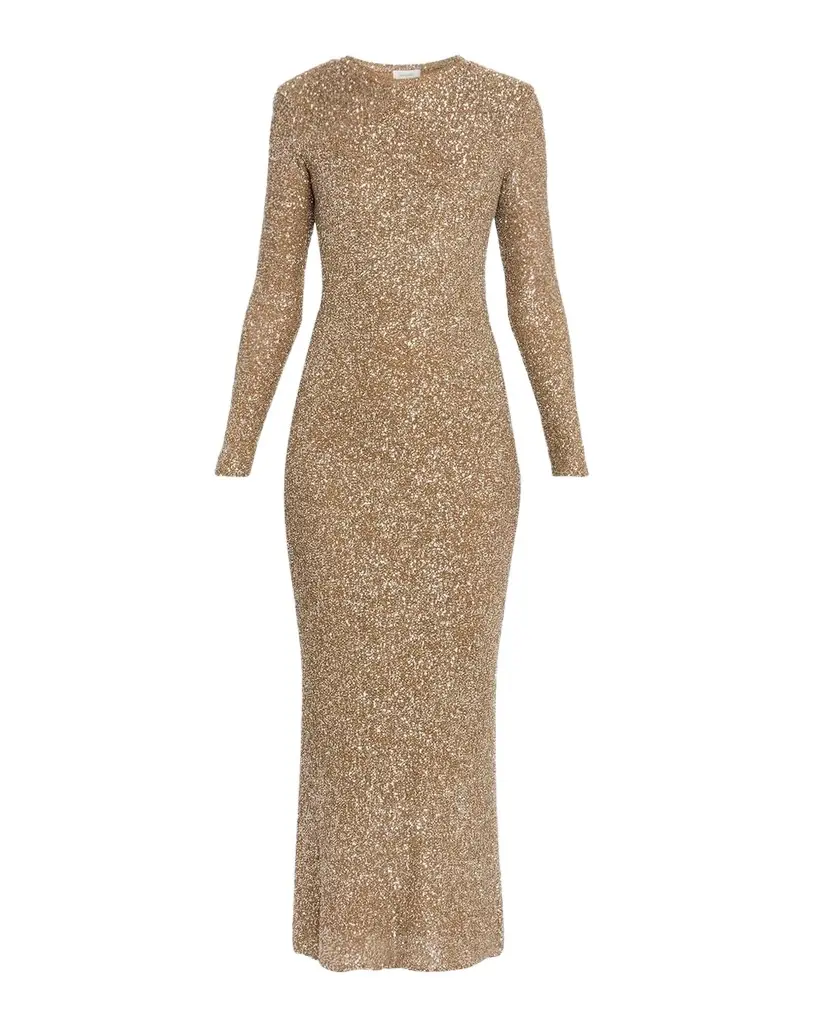 Saint LaurentMaille Sequin Knit Long-Sleeve Midi Dress$5,200
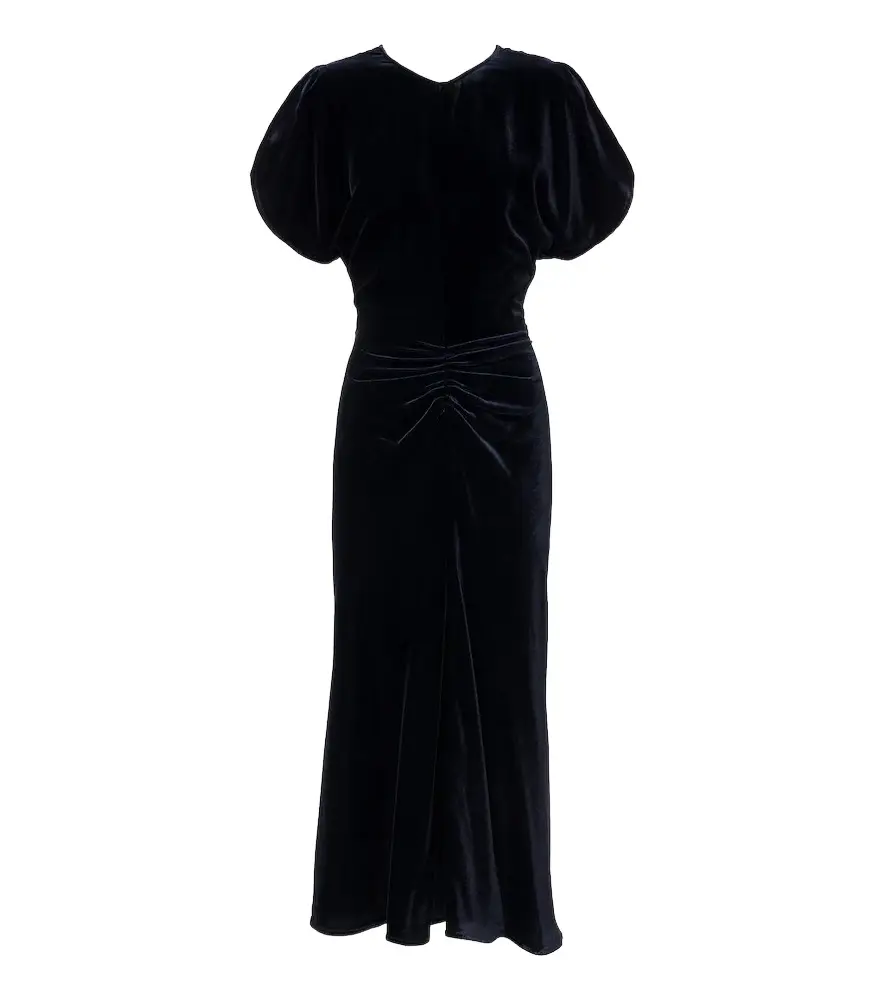 Victoria BeckhamBela gathered velvet midi dress$1,590
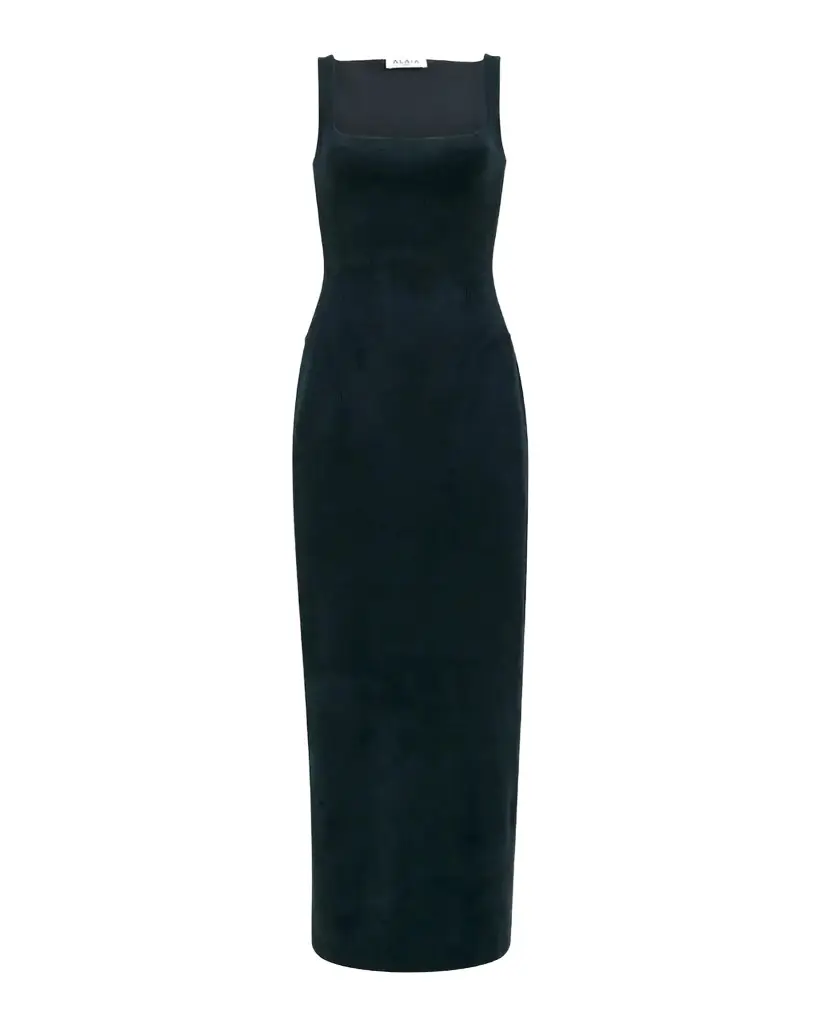 AlaïaSleeveless Velvet Bodycon Midi Dress$5,300
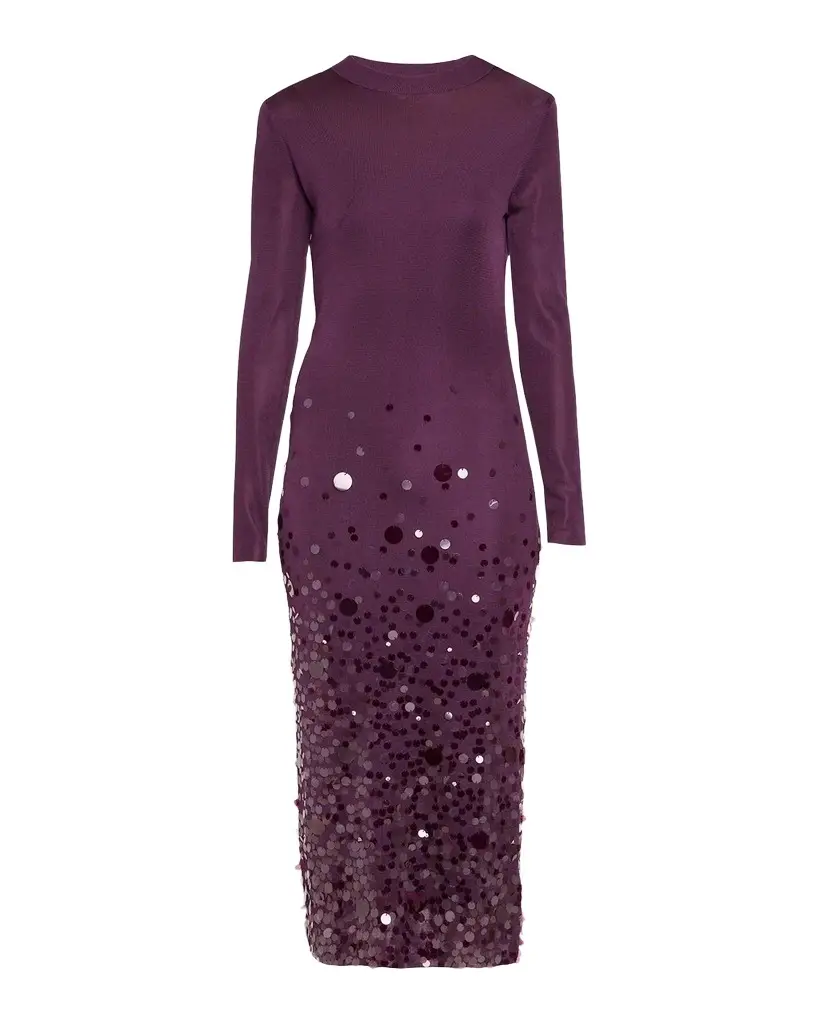 Carolina HerreraEmbellished Knit Long-Sleeve Midi Dress$1,990
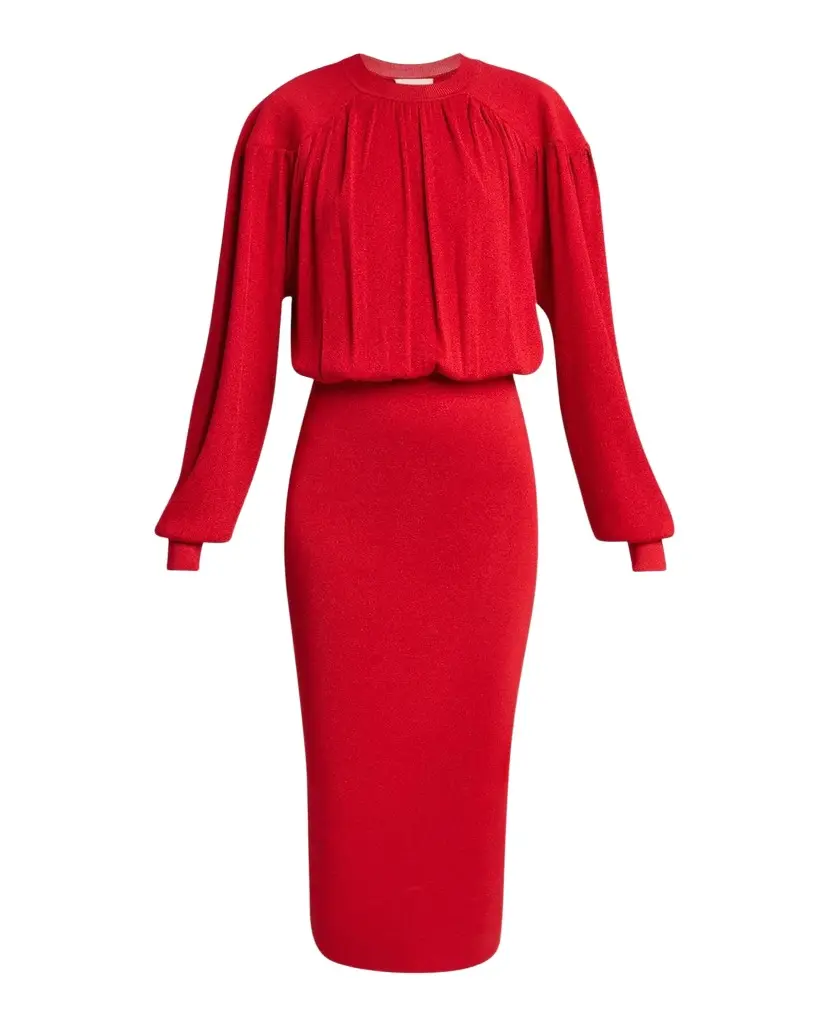 Isabel MarantAliza Shimmering Knit Long-Sleeve Midi Dress$1,190
 Dolce & GabbanaWomen's Velvet Skinny Pants$1,595
St. Moritz vs. Gstaad: adapting Alpine resort outfits
Gstaad winter style shares St. Moritz's cashmere, shearling and snow boots, but the climate asks for different fabrics. MeteoSwiss's nearest station with temperature averages, Château-d'Oex, sits down the valley from Gstaad, some 800 meters below St. Moritz, and its January days average about 37°F: several degrees milder than the Engadine, with far milder nights. It is also much wetter. MeteoSwiss's gauge at Gsteig, just up the valley from Gstaad, collects more than four times as much January rain and snow as Samedan, spread over about twice as many days.
- In Gstaad: more wet snow and slush at village level, so choose waterproof lowers on boots, water-repellent down, and fewer suede pieces.
- In St. Moritz: drier, colder and brighter, so down, shearling and suede on dry days, plus wraparound sunglasses every day.
- In both: warm hotels and chalets, so fine knits under a serious coat, and boots you can wear to dinner.
The same logic travels to any Alpine resort: dress for its altitude and its moisture before its reputation. For an American equivalent, see what to wear in Aspen.
A week in St. Moritz: the packing list
- One long down or shearling coat with a hood; add a teddy, shearling or faux-fur-collared coat for the lake events if you like a second look.
- Two pairs of boots: lace-up snow boots with deep lugs, and a sleeker shearling-lined boot for evenings, plus slip-on traction cleats.
- Four fine knits (cashmere turtlenecks and crewnecks) and two thin base layers.
- Three pairs of trousers: wool, stirrups and velvet.
- Two dinner looks: one sequined or metallic, one velvet, with sheer and opaque tights and heels in a pouch.
- If you ski Corviglia or Corvatsch, pack the kit from our ski trip packing list.
- Accessories: a hat that covers your ears, earmuffs, leather and shearling gloves, wraparound sunglasses and sunscreen.
- A small evening bag and a crossbody for the day.
Short on time? Ask our AI stylist to build these looks around the coat and boots you already own.
How we chose
- Houses: top luxury houses only, led by outerwear and skiwear specialists (Moncler, Moncler Grenoble, Max Mara, TOTEME, Prada) and evening houses for dinner (Saint Laurent, Alaïa, Victoria Beckham).
- Construction: down, shearling, teddy pile or a faux-fur collar on every coat, a treaded rubber sole on every boot, and trappers or earmuffs that cover the ears.
- Fabric: down and shearling outside, cashmere and wool in the middle, and velvet and sequined knits for evenings, because they add warmth instead of losing it.
- Price: hats and sunglasses are the least expensive way in; the coats and ski jackets are the investment.
- Availability: nothing went into this edit that was not live on Vêtir in late September 2026, and a close alternative takes the place of any pick that sells out before your Engadine trip.
- Fit notes: size coats to go over a sweater and to cover the thigh when you sit, and try snow boots with the socks you will wear.
Frequently asked questions
What should I wear in St. Moritz in January?
Plan for highs near 30°F and nights between about 4°F and 9°F in the valley. Pack a long down or shearling coat with a hood, lug-soled snow boots, a hat that covers your ears, wraparound sunglasses, fine cashmere knits with a thin base layer, and one elegant dinner look.
How cold is St. Moritz in winter?
MeteoSwiss's 1991–2020 averages for Samedan, just down the valley, put January at a high of about 30°F and a low of about 4°F, with about 19 days that never rise above freezing. The upper slopes are colder: the Piz Corvatsch station averages a January high of about 17°F.
What do you wear to White Turf in St. Moritz?
Dress for hours outdoors on a frozen lake: a long down, shearling or teddy coat, lug-soled snow boots rather than heels, a hat that covers your ears, a base layer under cashmere, and wraparound sunglasses. Tights and a knit dress work in the tents.
Is there a dress code at St. Moritz hotels?
Some grand hotels publish one. The Kulm Hotel's Grand Restaurant asks for smart elegant dress, and Suvretta House's Grand Restaurant asks ladies to appear elegant and gentlemen to wear a dark suit and tie. Check with each restaurant when you book.
Do I need snow boots in St. Moritz?
Yes. With frost almost every night and more than two weeks a month below freezing all day in December and January, streets stay snowy and icy. Choose deep rubber lugs and a low, wide base, and pack slip-on cleats for icy walks.
How is Gstaad different from St. Moritz for packing?
Gstaad is lower, milder and much wetter in winter, so favor waterproof boots and water-repellent down over suede. St. Moritz is higher, colder, drier and sunnier, which suits down, shearling and wraparound sunglasses.