The Fall Work Wardrobe: What to Wear to the Office, From Dress Codes to the Commute
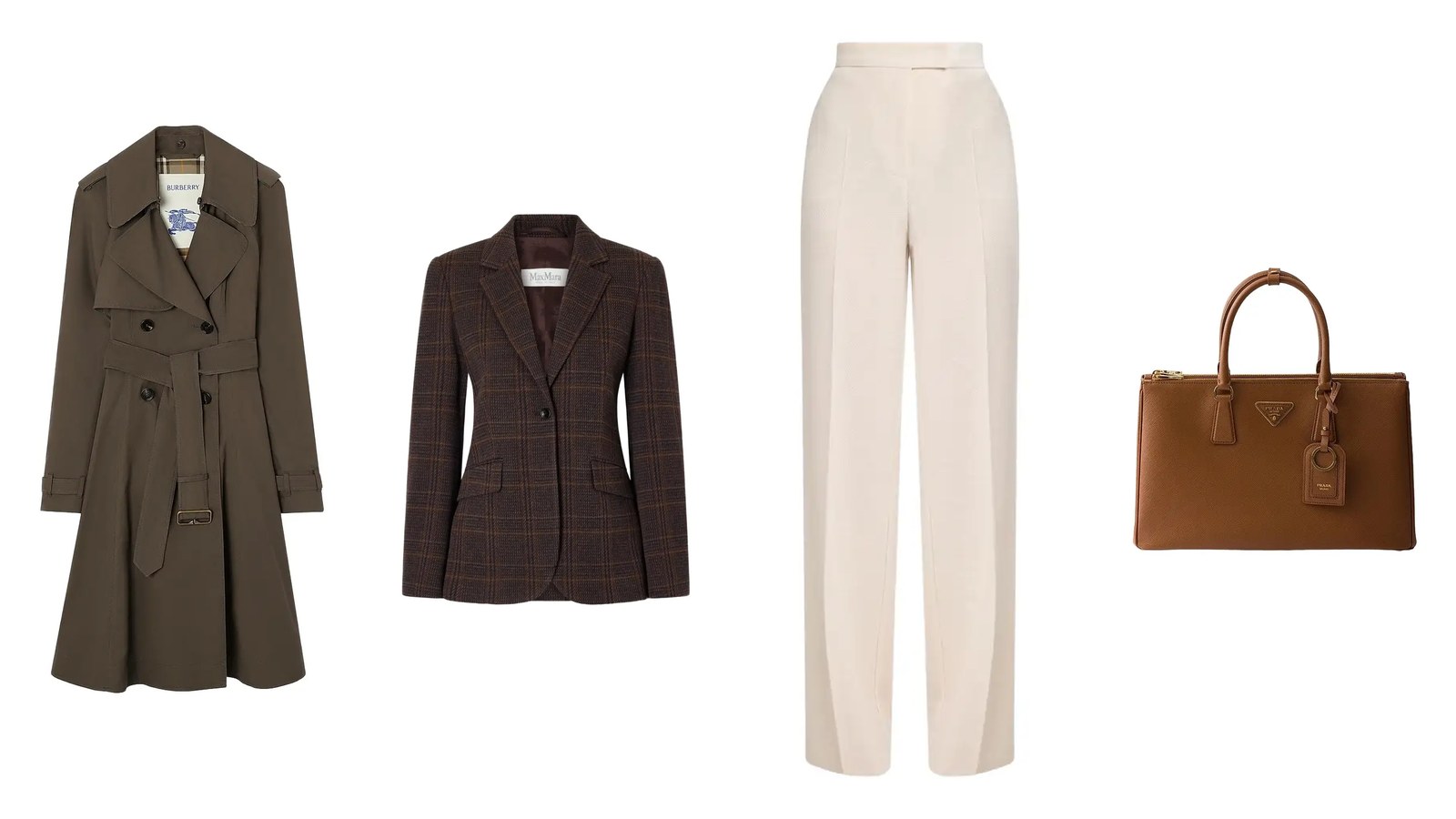
Build a fall work wardrobe around suiting that works as separates, cut in wool light enough for a warm October afternoon. Add three fine knits that fit under a jacket, a poplin shirt and a silk blouse, one skirt or knit dress, leather loafers and a low heel you can stand in all day, a trench for the rain and a leather tote that closes. Keep to two base neutrals from one color family, such as navy and gray, so every jacket goes with every trouser. Plan for rain as much as cold: in Central Park, October is on average as wet as any month outside summer, and its normal afternoon high of 64.5°F drops to 54°F in November, according to the National Weather Service's 1991 to 2020 normals.
Below: the core pieces, what the common dress codes mean, how to buy suiting as separates, which knits go under a jacket, fall office outfits for warm and cold weeks, and the coats, shoes and bags for a wet commute.
What a fall work wardrobe needs: the core pieces
A fall work wardrobe does not need to be large. It needs pieces that combine, in cloth that works in both months: October's normal high is in the mid-60s, November's normal low in the low 40s. Plan it around one test: every top should work with every bottom, and every jacket with at least three of those outfits. The list below comes to sixteen to eighteen pieces, which pass that test far more easily than forty bought one at a time.
| Piece | How many | What to look for |
|---|---|---|
| Blazer | 2 | One plain dark jacket in your base color and one with texture or color, such as a pinstripe, a check or burgundy. Single-breasted is easier to wear open over a knit. |
| Trousers | 3 | A light wool for warm October days, a denser gabardine or grain de poudre for November, and one wide leg that sits well over loafers. |
| Skirt or dress | 1 to 2 | A midi in wool crepe or a fine knit, long enough to sit in without tugging at the hem. |
| Knitwear | 3 | A short-sleeved fine knit, a crewneck and a turtleneck or mock neck, all thin enough to slide into a jacket sleeve. |
| Shirts | 2 | A cotton poplin shirt and a silk blouse, each worn alone on warm days and under a jacket later. |
| Outer layer | 1 to 2 | A trench or car coat for rain, then a wool coat once mornings drop into the 40s. |
| Shoes | 3 | Leather loafers, a low-heeled pump or slingback, and a leather ankle boot with a rubber sole; our guide to the best boots for fall covers heeled pairs that pass in an office. |
| Bag | 1 | A leather tote with a closure, wide enough for the laptop you carry. |
Choose the colors before the pieces. Vêtir's stylists build work wardrobes in two color families that stay apart within an outfit. The cool family is anchored in navy and black. The warm family is anchored in chocolate and camel. Gray, cream, ivory and burgundy work in both, so a gray trouser or a burgundy knit earns its place whichever family you choose. It is how our stylists dress clients rather than a rule of dress, and it makes a small wardrobe feel larger: every jacket in a family works with every trouser in it.
If you are buying over several weeks, start with the pieces that last. Duke's career center, advising students on a budget, suggests investing first in shoes, a blazer and possibly a work bag, which it notes change less with trends and with weight than trousers or shirts. For the fall pieces that live outside the office, see our guide to fall wardrobe essentials.
Work is among the occasions people most often name when they ask our AI stylist for an outfit, from a conservative work outfit to business-casual looks for a conference abroad. If you would rather start from what you already own, ask our AI stylist to plan a week of work outfits from the pieces in your digital closet.
Business casual vs. business professional: what the career centers say
There is no single standard for office dress. The clearest public definitions come from university career centers; treat them as those centers' definitions rather than rules, and adjust to what your colleagues wear.
In its guide to interview and career-fair attire, the career center at the University of North Carolina at Chapel Hill describes business professional as a structured jacket or blazer, a collared or modest high-neck top, dress pants or a skirt at the knee or longer, and loafers, oxfords, simple heels, flats or ankle boots, and places it in government, banking, consulting, law and formal corporate roles. Its business casual pairs trousers or midi skirts with sweaters, button-ups or simple blouses, with a blazer or cardigan as an optional layer, and is common in tech, education, creative fields, nonprofits and startups (UNC Career Center).
Duke's career center sorts office dress into levels, from ultra casual up to business formal, and names the workplaces where each is usually found (Duke Career Hub attire guide). The four levels that cover most offices, with how we would dress each one this fall:
| Level, in Duke's terms | Where Duke places it | What Duke lists | How we would dress it this fall |
|---|---|---|---|
| Business formal (boardroom) | Fortune 500 companies, senior management, board meetings. | A dark charcoal or navy suit, a collared blouse, black closed-toe heels no higher than 4 inches. | A navy suit in lightweight wool or grain de poudre, an ivory silk blouse, black kitten-heel pumps. |
| Traditional business attire | Finance, banking, consulting, law, government. | Dark, subtly patterned suits with trousers, a skirt or a dress; blouses or professional tops; closed-toe shoes. | A charcoal pinstripe suit worn as separates, a fine knit or silk blouse, black loafers or low slingbacks. |
| Business casual | Education, most established businesses, internal and client meetings. | A blazer or sweater, slacks, knee-length skirts or dresses, flats, slingbacks or boots; mostly solid, neutral colors; dark denim where a company allows it. | Wool trousers with a fine knit in early October and a turtleneck in November, leather loafers, a jacket saved for meetings. |
| Creative casual | Creative firms, arts and entertainment, publishing, PR and communications. | Jackets, color and pattern, fashionable silhouettes, dressy trousers or possibly denim, loafers, slides and mules. | A chocolate suit with a cream crewneck in place of a blouse, or an olive jacket over a burgundy knit and ecru trousers. |
Two details from Duke's guide apply at any level: hemlines no higher than the top of the kneecap, checked by sitting down in the skirt before you buy it, and subdued colors in conservative fields, with more color in creative ones. For everyday combinations, see our business casual outfit examples.
Back-to-work outfits for a new job or a return from leave
Duke advises dressing one level above the everyday norm for an interview or a career fair, and UNC's rule of thumb is to go slightly more formal when unsure, since it is easier to dress an outfit down than to fix being underdressed. We apply the same logic to the first two weeks in a new office, or back after time away: wear a jacket every day until you have seen what the room wears on a Monday and on a Friday, then drop a level where it fits. A navy or charcoal suit worn as separates covers both ends, because the jacket can come off by lunch.
Suiting separates: how to buy the jacket and trousers apart
Duke's guide makes a point most shoppers learn the hard way: it is common to need a different size in a blazer than in trousers, skirts or dresses, so instead of buying a suit as one size, look for several cuts from one brand in the same fabric and color. That is also the most efficient way to build a fall work wardrobe. Buy the jacket to fit your shoulders and the trousers to fit your hips, and you have a suit on the days that need one and two separates on the days that don't.
Get the jacket right first. Sleeves and waists can be altered, but the shoulders cannot be meaningfully changed once a jacket is made, as the Paris tailoring atelier Steven Passaro explains. In the fitting room, check that the shoulder seam ends where your shoulder does, with no dent below it; that the jacket buttons over the knit you plan to wear without pulling into an X at the button; and that you can reach forward, as if across a desk, without the back straining.
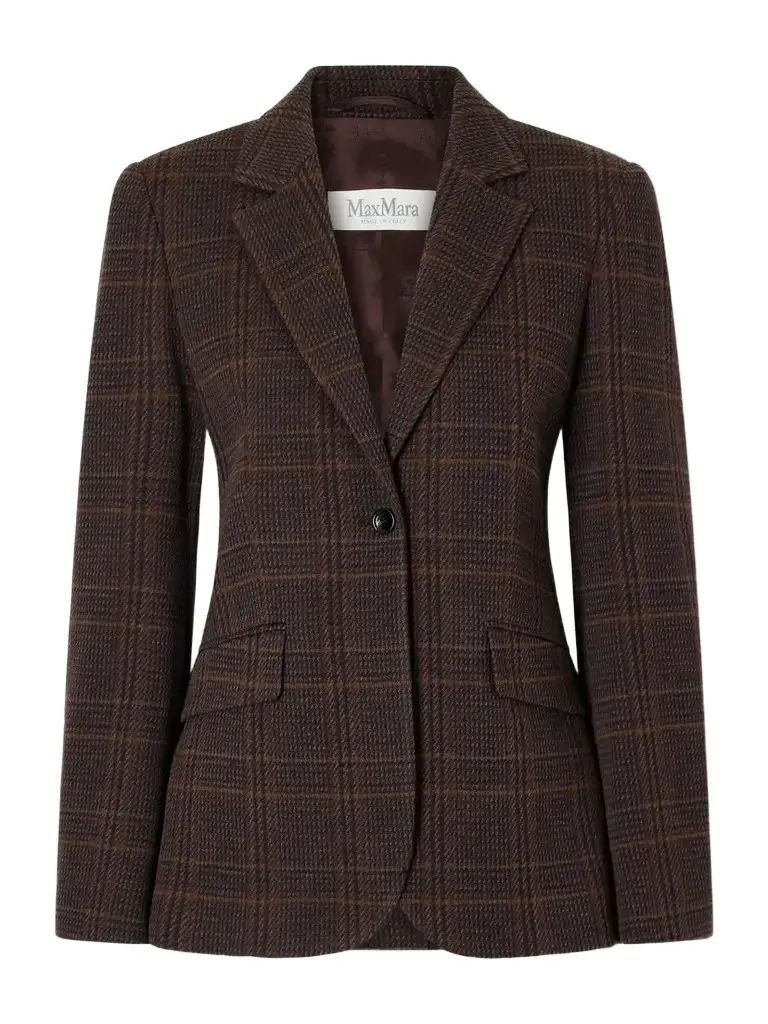
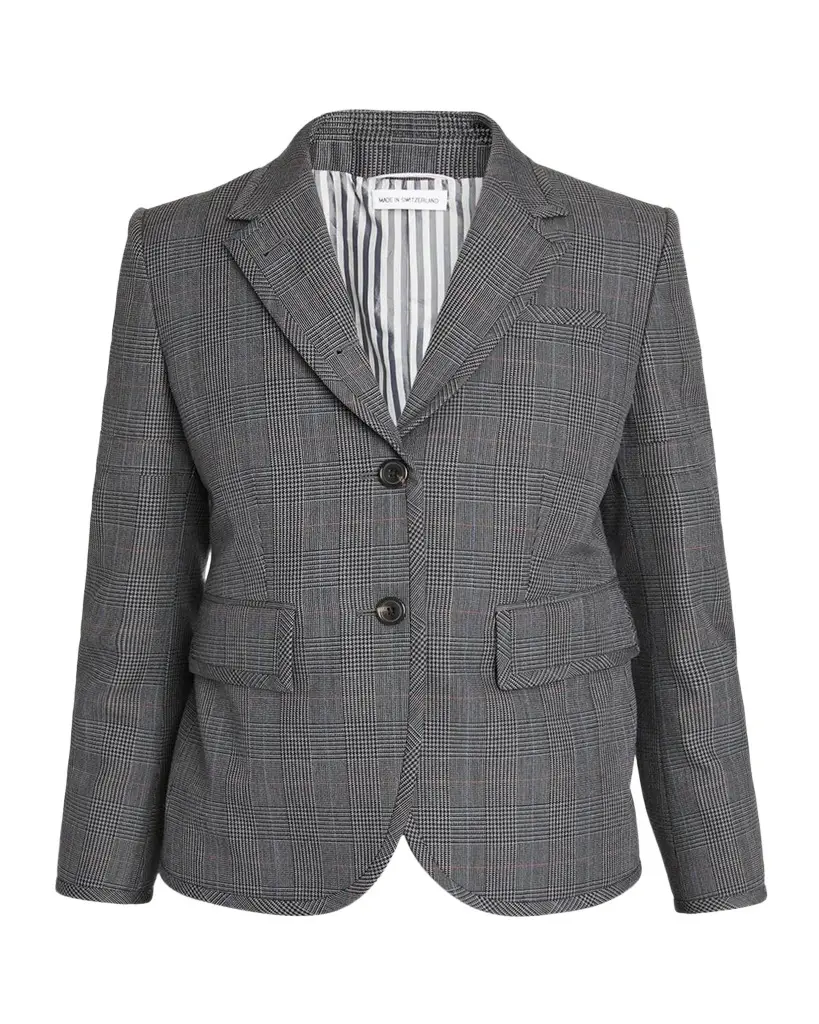
When the pieces don't match, make the difference obvious. A navy jacket over gray trousers looks deliberate, and so does charcoal over black; two navies or two blacks a shade apart look like a mistake under office lights. Max Mara sells its Abate blazer, a brown Prince of Wales check in wool and cotton, to wear alone or with matching trousers as a suit. For the cool family, Alexander McQueen's single-button navy jacket and TOTEME's gray wool blazer go with every gray, black or cream trouser in this edit.
The cloth is what carries separates from early October to late November. For the warm first weeks, look for tropical wool, a lightweight wool in an open weave that lets air through; Brunello Cucinelli's double-pleated tropical wool trousers are made for exactly those afternoons. Wool crepe, with its slightly pebbled surface, drapes well and hides the creases of a day at a desk. From mid-October, gabardine, a tight twill, and grain de poudre, a close-woven wool with a fine, grainy surface, add body without bulk: Bottega Veneta cuts straight-leg trousers in grain de poudre, and McQueen's navy jacket is made from it too. Save flannel and tweed for December; our guide to winter work outfits covers them.
- Navy jacket, gray tropical wool trousers, ivory silk blouse, black loafers. The classic fall suit, built from two separates, and softer than navy on navy.
- Chocolate double-breasted jacket, cream wide-leg trousers, cream fine knit, tan loafers. Cream near the face and brown at the edges looks warm on a gray morning.
- Charcoal pinstripe jacket, black trousers, black knit, black slingbacks. The stripe is the only pattern, so everything else stays plain.
- Burgundy blazer, navy trousers, pale blue poplin shirt, black pumps. Burgundy and navy are both dark enough to share an outfit without a neutral between them, and the pale shirt keeps it crisp.
Wool blazers to buy as separates




Trousers take the most wear in a work wardrobe, so this is where the best cloth goes. Hem a full-length trouser to reach the top of your shoe when you stand, and a wide leg to just clear the floor in the heel you wear most; if you switch between flats and a low heel, hem for the heel and save the flats for straight legs. Browse every cut in our trouser shop.
Wool trousers, from tropical wool to grain de poudre
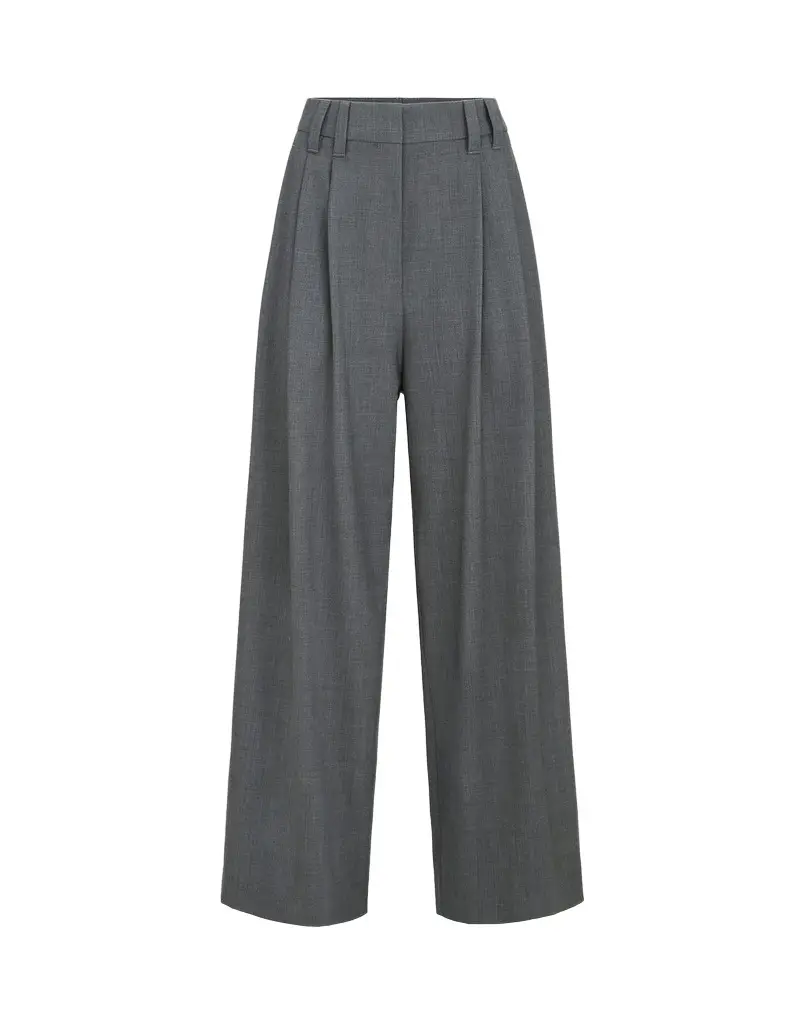 Brunello CucinelliTropical luxury wool trousers$2,800
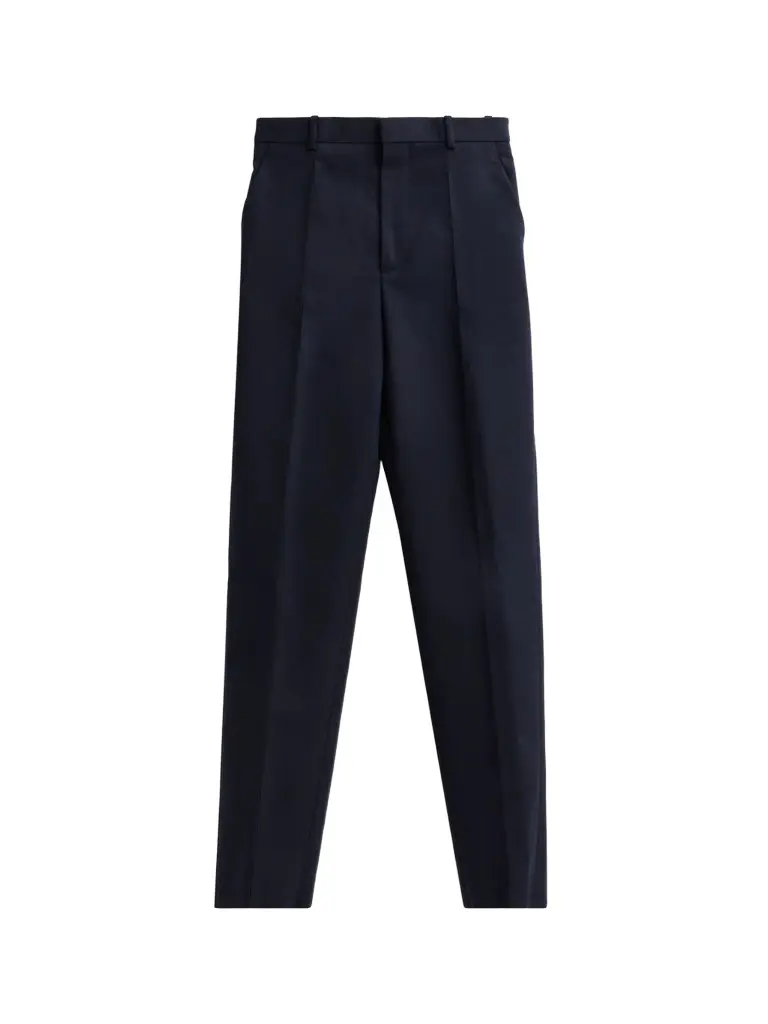 Bottega VenetaWomen's Wool Grain De Poudre Trousers$1,650
 Max MaraAttinia Wide-Leg Wool Pique Trousers$1,020
 ChloéTailored cigarette pants in wool gabardine$1,200
 PradaSuperfine Wool Tailored Pants$1,920
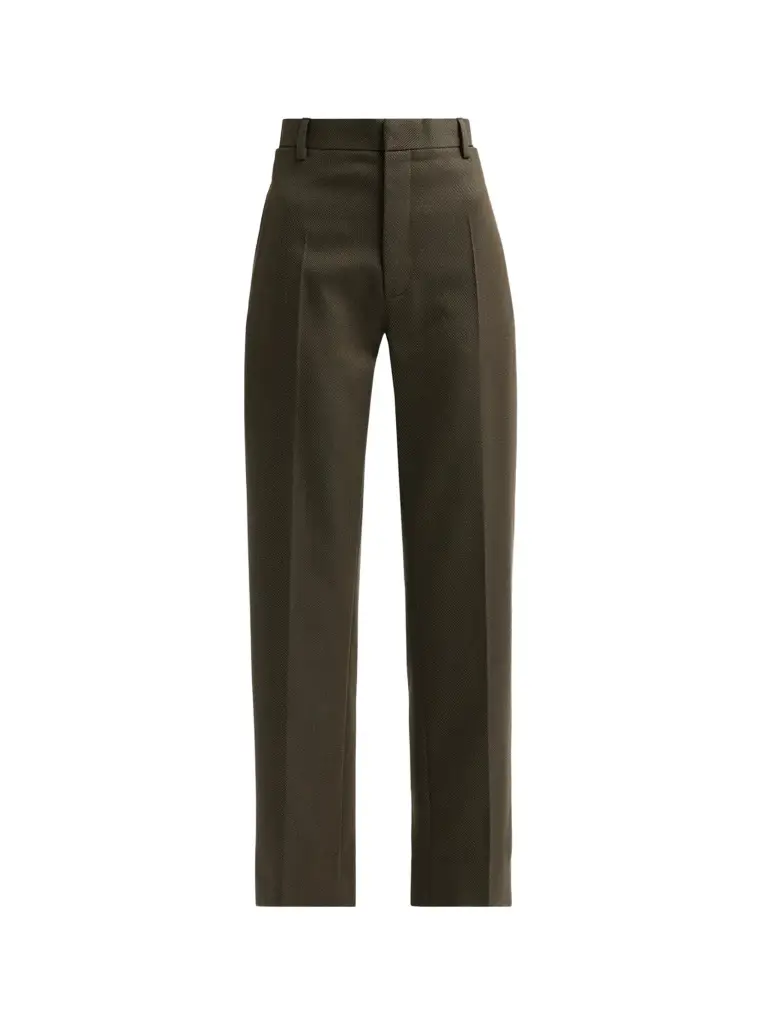 Victoria BeckhamWomen's Extended Wool Trousers$1,150
Knitwear under a jacket: which weight for which week
Knitwear bridges October and November because the same fiber comes in a weight for each stretch of weather. To wear under a jacket, buy fine-gauge knits, meaning thin yarn knitted closely, in merino, cashmere and silk, or wool and silk: they lie flat and slide into a blazer sleeve. Test it in the fitting room. Put the jacket on over the knit, reach forward and bend your elbow; if the sleeve catches or the knit ridges at the elbow, it is too heavy for that jacket.
Early October is short-sleeve weather for knits. Max Mara's Aceti, in silk and cashmere with elbow-length sleeves, looks finished with trousers on its own and goes under a jacket without the bulk of a shirt collar. By mid-October, move to a long-sleeved crew or scoop neck in extra-fine wool; Ferragamo knits one seamlessly, so no side seams show through a fitted jacket. In November a mock neck or turtleneck takes the place of the shirt, and The Row's Nari, in lightweight ultrafine wool, is thin enough to wear under tailoring.
In a business casual office, a knit can stand in for the jacket. Saint Laurent's polo-collared wool cardigan, buttoned and with a patch pocket at the chest, reads as tailored, and a close-fitting rib such as Gabriela Hearst's Browning crewneck in wool and silk adds texture without bulk. See every style in our sweater shop.
- Black short-sleeved knit, charcoal tropical wool trousers, black slingbacks. Carry the blazer and put it on only for the meeting room.
- Navy crewneck over a white poplin shirt, collar out, gray trousers, black loafers. The shirt collar and cuffs make a sweater read as office wear.
- Ice-blue mock neck under a charcoal blazer, with gray trousers. A pale color under a dark jacket lifts the face on a gray November morning.
- Olive turtleneck, chocolate trousers, dark brown loafers. Two warm darks and no contrast: quiet, and very fall.
Fine knits that fit under a jacket
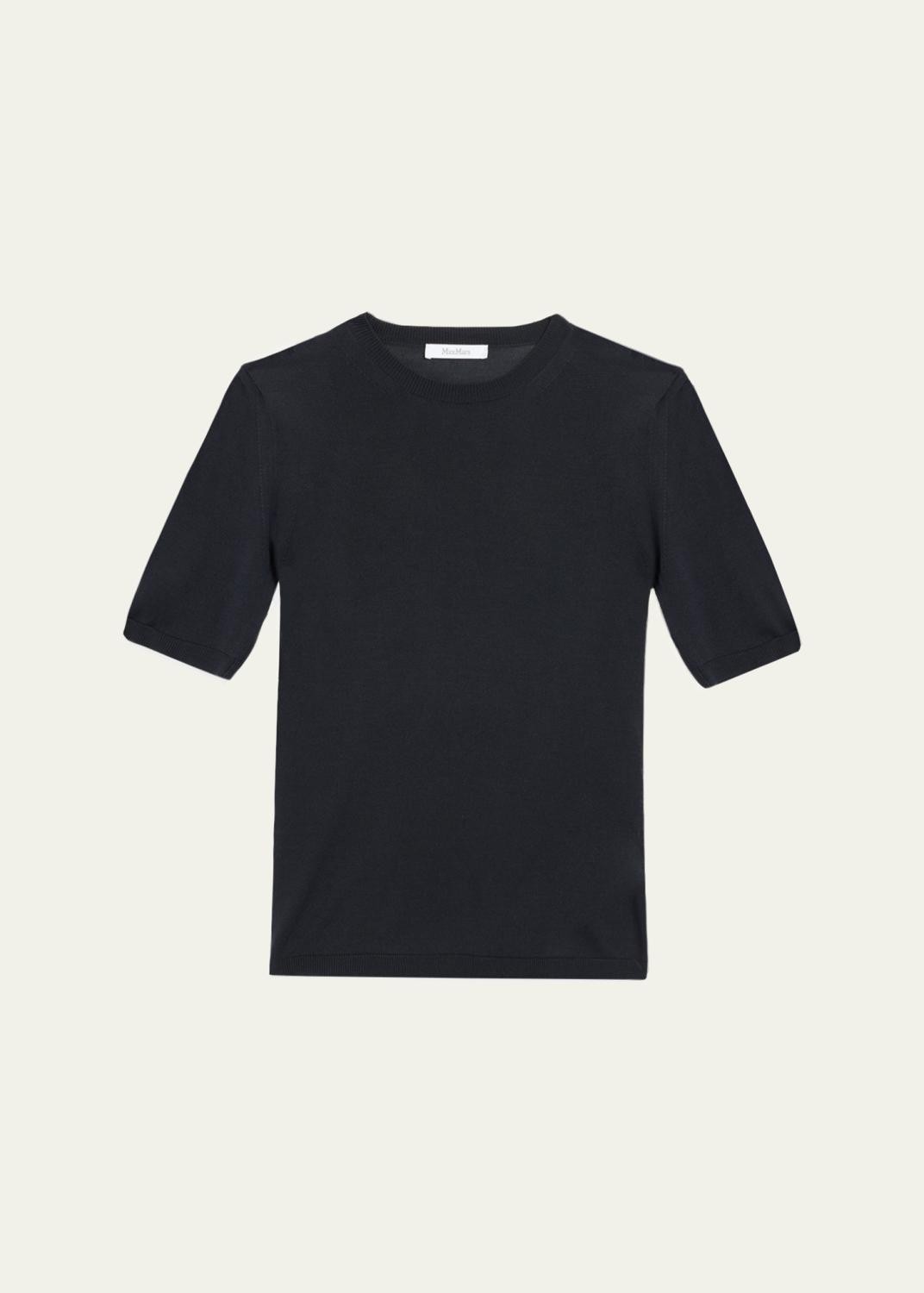 Max MaraAceti Short-Sleeved Cashmere-Silk Sweater$695
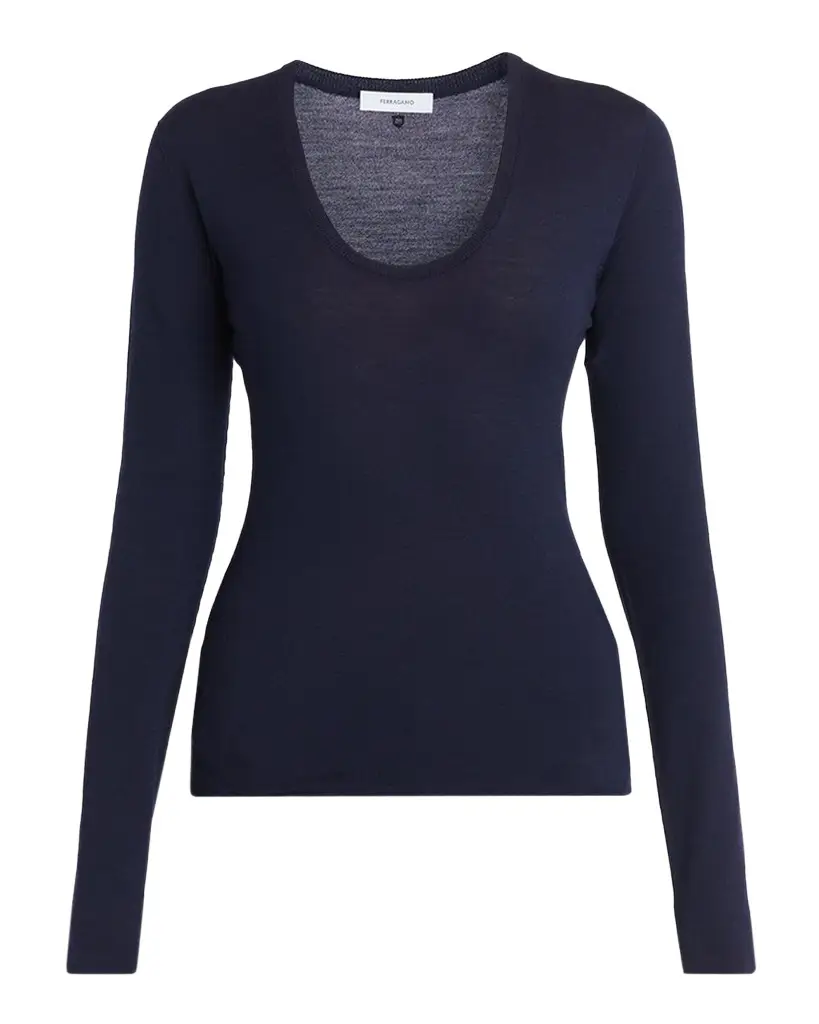 FerragamoExtra-Fine Virgin Wool Seamless Sweater$990
 The RowNari Mock-Neck Merino Wool Sweater$1,750
 Gabriela HearstBrowning Ribbed Wool And Silk-blend Sweater - Burgundy$850
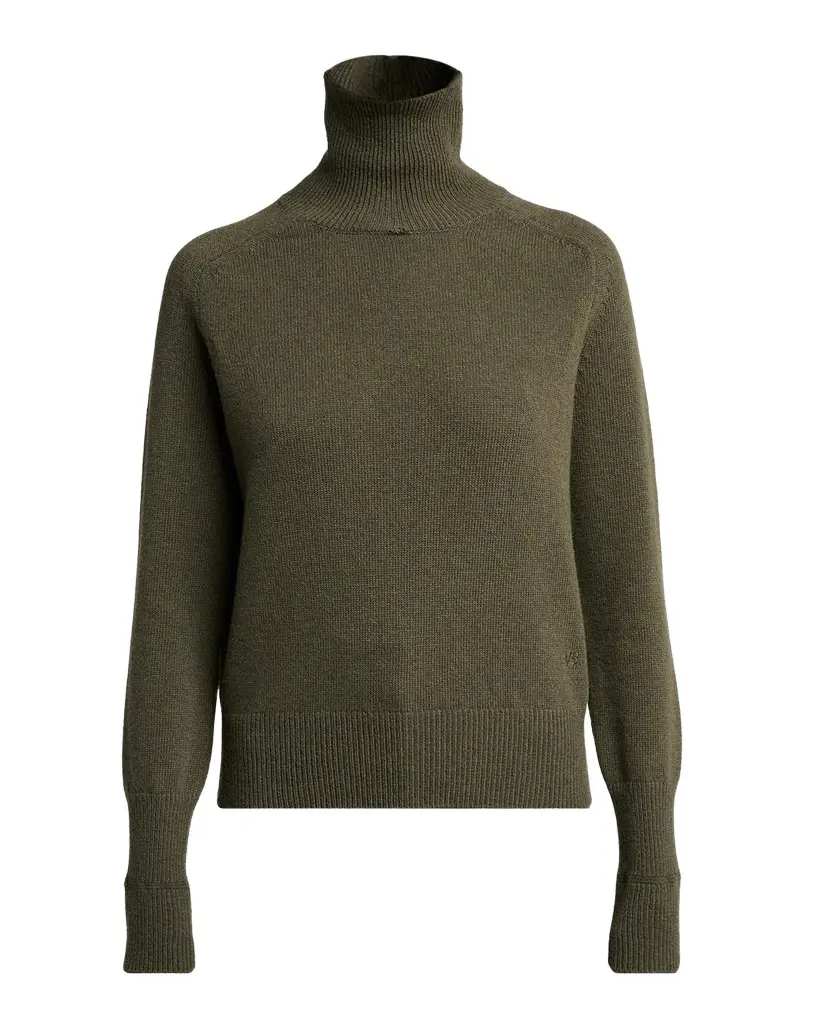 Victoria BeckhamMarie Merino Wool Turtleneck Sweater$850
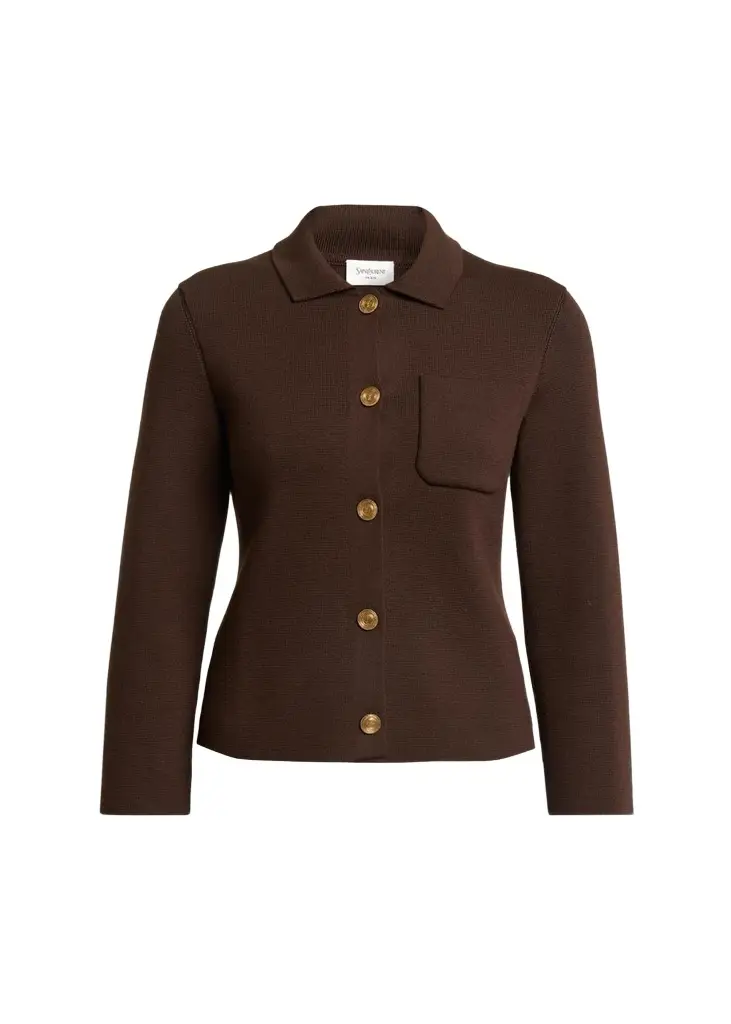 Saint LaurentWool Polo Cardigan$2,500
Fall office outfits for October and November
Early October: dress for the afternoon, carry the jacket
The first half of October still runs warm: the National Weather Service's daily normals for Central Park put the afternoon high near 70°F in the first days of the month. Dress for the afternoon and carry a layer for the walk in and the meeting room. A week of outfits from the core pieces:
- Monday: ivory short-sleeved knit, gray tropical wool trousers, black slingbacks. The navy blazer goes on for the first meeting of the week.
- Tuesday: white poplin shirt with the sleeves turned back twice, camel gabardine trousers, tan loafers. In business casual, a crisp shirt does the job of a jacket.
- Wednesday: silk blouse tucked into a wool crepe midi skirt, kitten-heel pumps. Add the jacket over your shoulders if the office runs cold.
- Thursday: the full suit, with a fine knit in place of a shirt. Wear the separates together for a presentation or a client day.
- Friday: dark straight jeans where your office allows them, a gray fine knit, a navy blazer and black loafers. The tailored jacket is what makes denim look like a choice rather than a day off.
For these weeks, unlined or half-lined jackets breathe better than fully lined ones, and on the warmest afternoons a cotton or silk shirt is cooler than a knit.
Late October and November: warmer knits, closed shoes and a coat
From late October the walk in calls for a coat, and November's normal low in Central Park is 42°F. The knits get warmer, the shoes close up and the coat goes on. Four fall office outfits for those weeks:
- Charcoal blazer over an ivory turtleneck, black trousers, black leather ankle boots. Ivory at the neck keeps an all-dark outfit from looking heavy.
- Chocolate trousers, cream crewneck, camel coat, dark brown loafers. A tonal outfit in one warm family is as hard to get wrong as a suit.
- Navy blazer, burgundy fine knit, gray trousers, burgundy slingbacks. Repeating one color at the neck and the feet ties the outfit together.
- Brown check blazer, cream turtleneck, chocolate trousers, tan loafers. A patterned jacket can be the only interesting piece; keep everything under it plain.
The commute: rain, cold mornings and a coat over your tailoring
Fall commuting means dressing for a wide gap within the day, and for rain. The monthly normals for Central Park show both:
| Month | Normal high | Normal low | Normal precipitation | What to wear over the outfit |
|---|---|---|---|---|
| October | 64.5°F | 51.4°F | 4.38 in | A trench on most mornings; a light wool coat by the last week |
| November | 54.0°F | 42.0°F | 3.58 in | A wool coat over the jacket from mid-month; the trench on rainy days |
Source: National Weather Service, 1991 to 2020 normals for Central Park. Other cities run warmer or colder, so check your own city's normals on the NWS site before you decide how much coat you need.
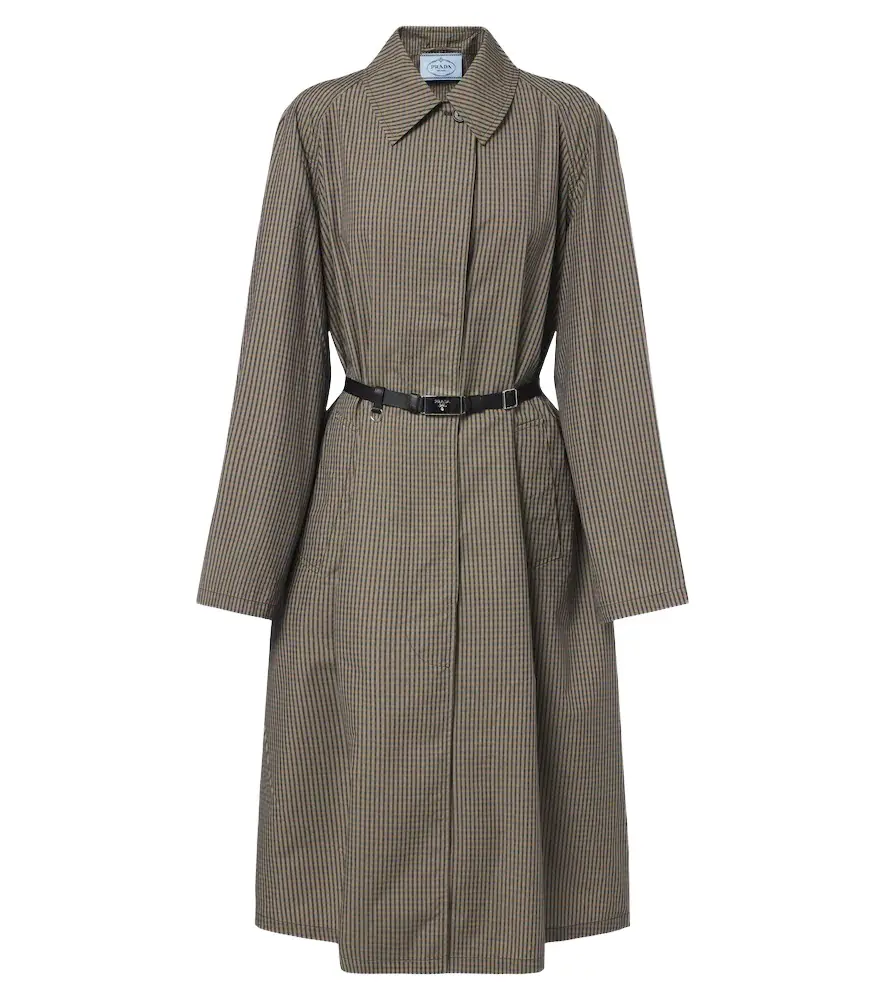
A cotton gabardine trench is the October work coat: the tight twill turns a shower, it goes over a blazer, and it looks right belted over a dress or open over a suit. Burberry makes double-breasted trenches in water-resistant cotton gabardine and, for colder weeks, a cashmere Kensington listed as waterproof and windproof. Before you buy one, put it on over the blazer you wear most and cross your arms: if the back pulls tight or the sleeves ride up past your wrist bone, it is cut for knits, not tailoring. It should cover the jacket's hem by at least a hand's width, with a collar that stands up and fastens against rain. If you drive to work, a car coat, straighter and shorter than a trench and with no belt to sit on, is the easier choice; The Row cuts one in cotton gabardine. See every style in our trench coat shop.
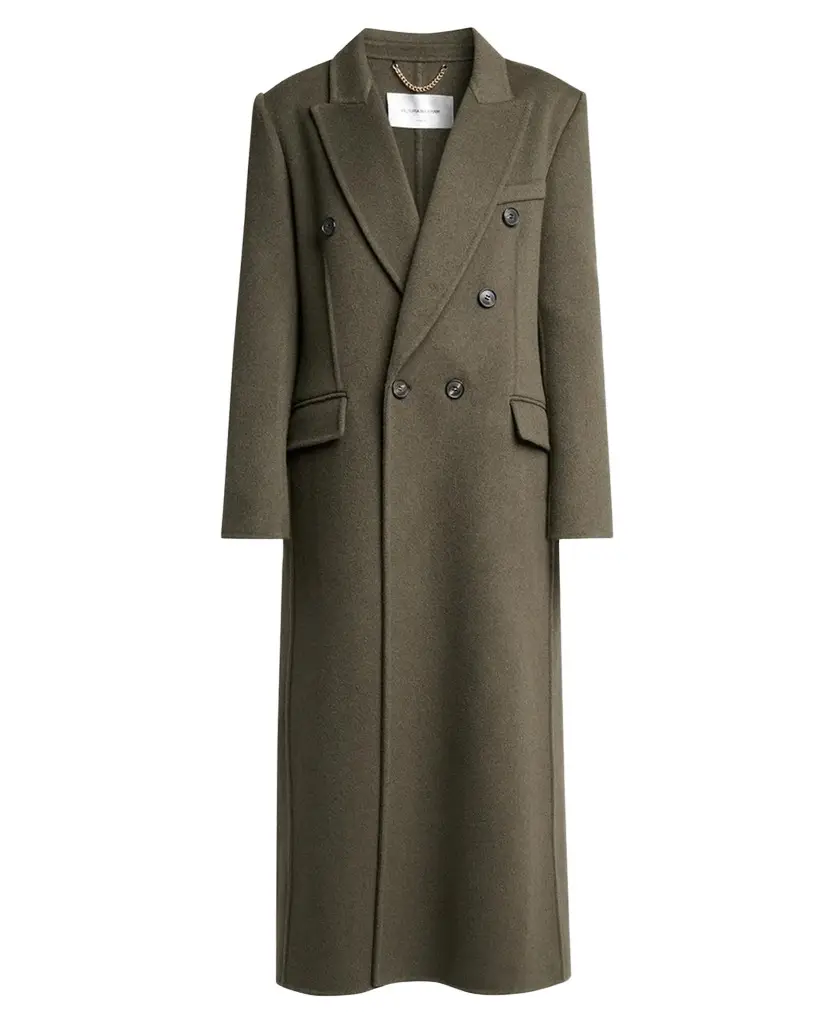
With November's normal low at 42°F, a wool coat goes over the jacket for most of the month. For the camel coats many offices will see all winter, our guide to Max Mara coats compares the house's classics.
Trench coats and light coats for the fall commute


Office shoes you can stand in all day
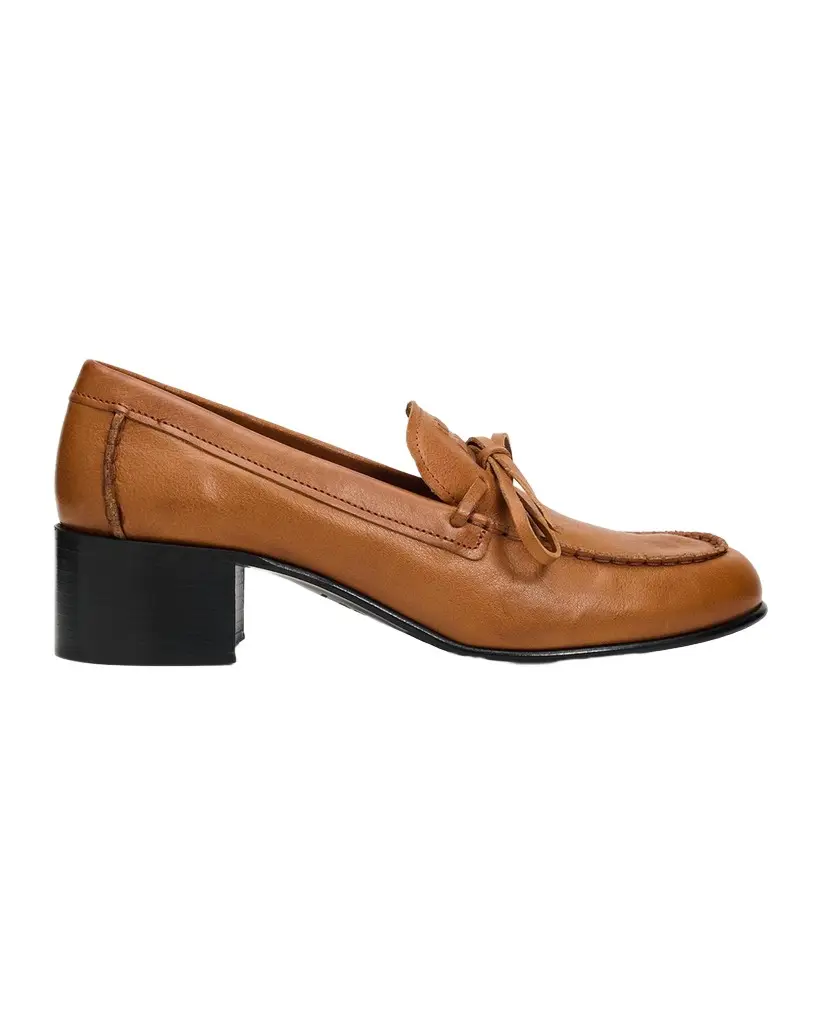
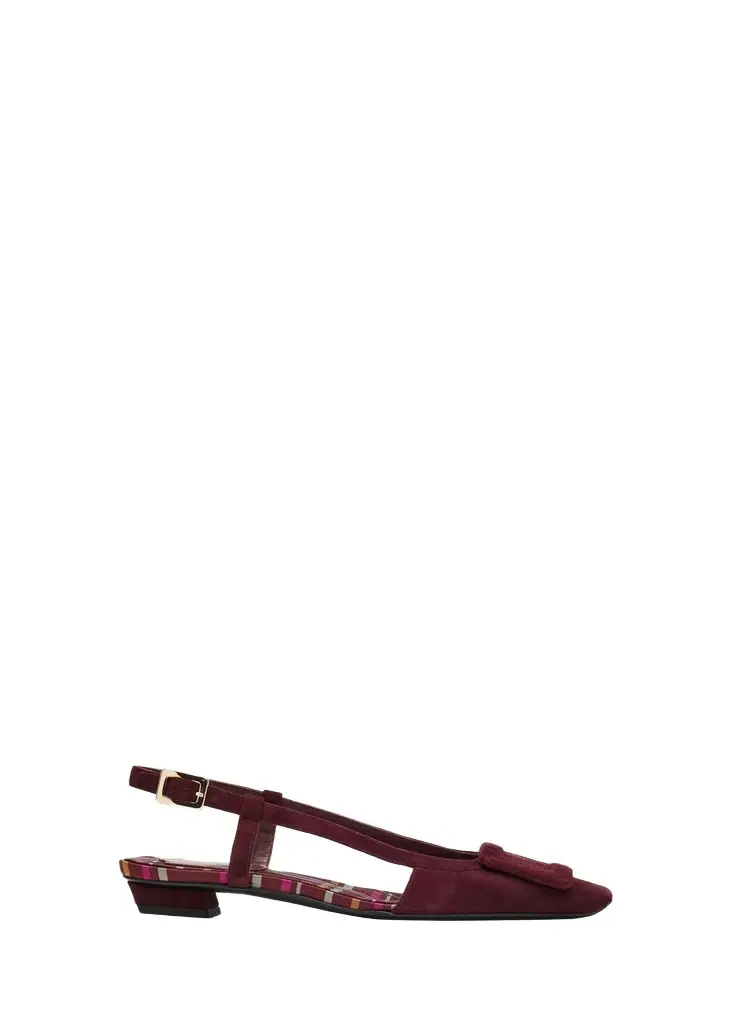
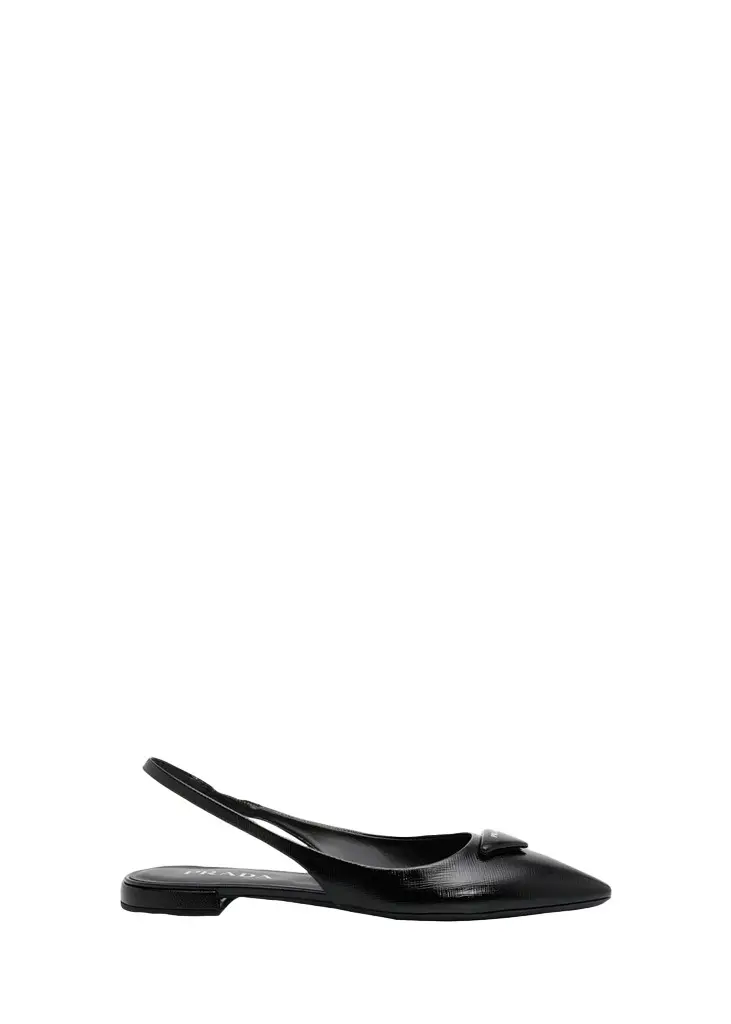
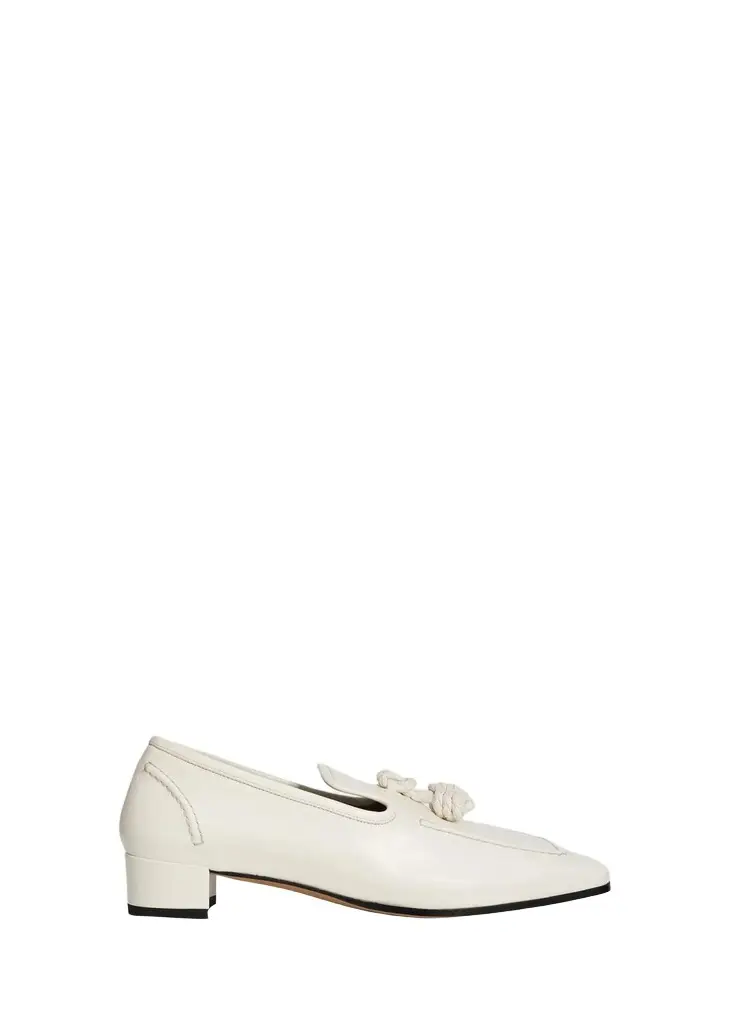
Between them, the two career centers list loafers, flats, simple heels, slingbacks and ankle boots, so the real questions in fall are the sole and the heel. A leather sole looks sleekest but slides on wet pavement. On rainy days wear a rubber sole, or ask a cobbler to add a thin rubber sole guard, and keep suede for dry days, because rain leaves water marks on it that are hard to brush out.
For a day on your feet and a walk to the train, we keep heels to a block or a kitten heel of about two inches or less and leave anything higher at the desk. The American Podiatric Medical Association's advice on choosing shoes applies to work pairs too: buy for your larger foot, since the two are rarely the same size, and look for a shoe that is stiff through the middle but bends at the ball of the foot. Miu Miu's loafer on a 40mm block heel and Manolo Blahnik's Srila pump on a 50mm kitten heel sit in that range; The Row's lace-up leather derbies stand on a treaded rubber sole for wet days, and Prada's Saffiano slingback flats wipe clean.
Own two pairs of loafers, one for each color family. Wear black ones with navy, gray and black. Wear brown ones with chocolate, camel, cream and olive. A slingback or low pump is the dressier choice for skirts, dresses and business professional days, and a leather ankle boot with a rubber sole covers the wettest mornings. Browse every style in our loafer shop.
Loafers, low heels and slingbacks you can stand in


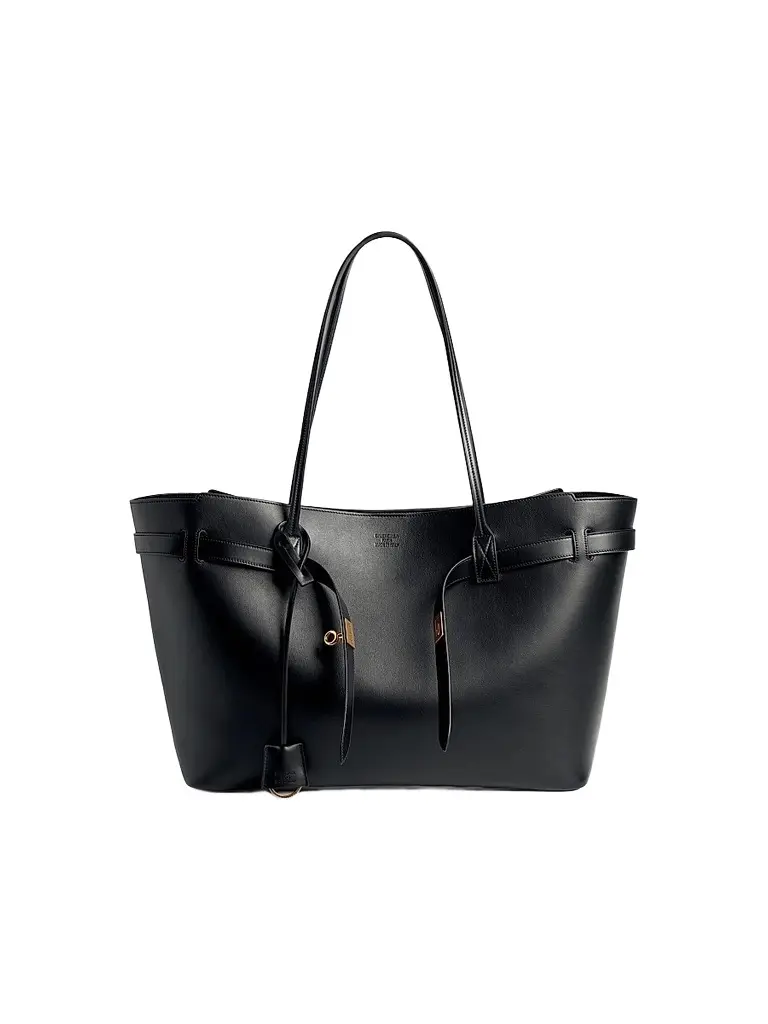
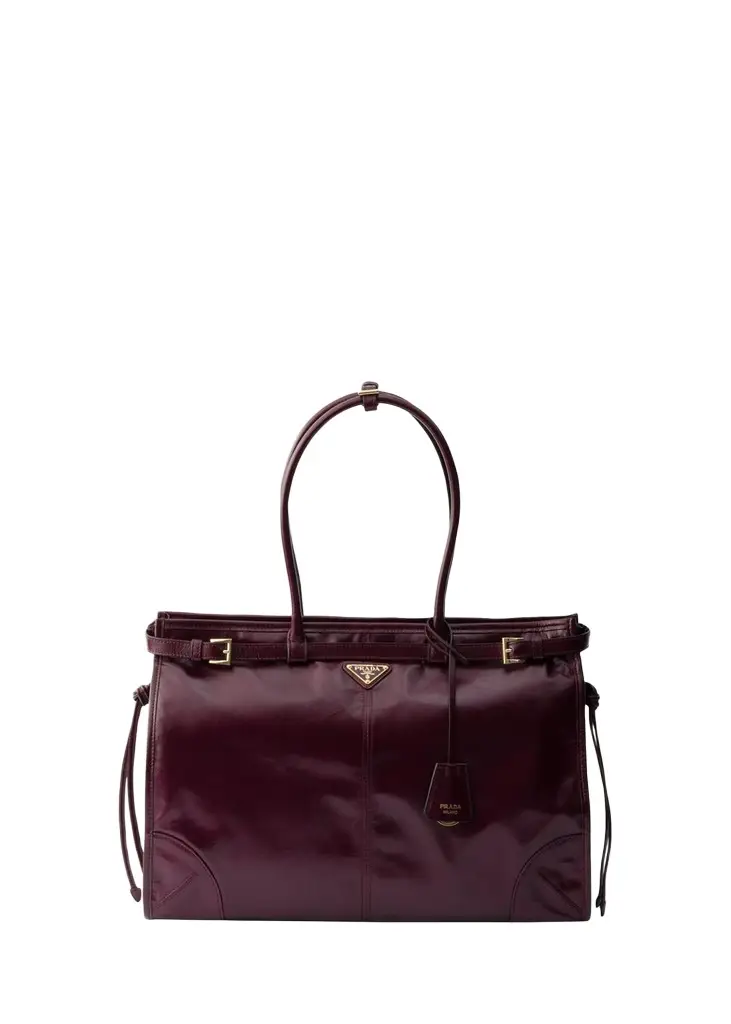
What a fall work bag has to hold
In October a work bag carries more than it did in July: a laptop and its charger, a compact umbrella, the knit or scarf you took off at lunch and a notebook. It needs a closure, such as a zip, a clasp or a turn-lock, because an open tote collects rain on the walk to the train. It needs a surface that wipes dry: Saffiano, grained and glossy leather all do, while suede and nubuck are for dry days. And it should stand on its own base, so the laptop and papers stay upright under a desk.
Match the bag to the family too. In the cool family, carry black. In the warm one, carry tan or chocolate. Check the strap over a trench rather than a T-shirt, since a handle that sits on a bare shoulder in summer can be too short over a coat. Prada's Galleria in Saffiano zips shut and stands on protective feet, and Balenciaga's Bel Air closes with a turn-lock and is listed as large enough for a computer. For sizing a tote to your laptop, our guide to the best work bags for women has a measurement table, and our tote bag shop has every shape.
Leather work totes that close and hold a laptop



How we chose
We chose for the two months between the first cool mornings and the end of November, and for an office rather than a weekend. On tailoring we read the fiber content of every listing and kept to wool cloths of October-to-November weight: tropical wool, gabardine, twill, grain de poudre, wool piqué and a Prince of Wales check, which meant passing on a well-cut blazer made of triacetate and polyester. We checked each listing's size run and description to confirm the piece is cut for women. Knits had to slide into a blazer sleeve; the shoes are flats, block heels or kitten heels of two inches or less, with one treaded rubber sole for rain; every tote closes and is listed wide enough for a 13-inch laptop. All the pieces are new, from houses on our luxury list and in stock when we chose them, and each edit spans at least five houses and both color families.
Frequently asked questions
What should be in a fall work wardrobe?
Two blazers, three pairs of wool trousers, a skirt or knit dress, three fine knits, a poplin shirt and a silk blouse, a trench or light coat, leather loafers, a low-heeled pump or slingback, a leather ankle boot and a leather tote that closes. Keep to two base neutrals from one color family, plus an accent such as burgundy.
What is the difference between business casual and business professional?
In the definitions university career centers teach, business professional means a structured jacket, a collared or high-neck top, dress trousers or a skirt at the knee or longer, and closed, polished shoes, and is most common in law, finance, consulting and government. Business casual makes the jacket optional, with a sweater, shirt or blouse over trousers or a midi skirt. Your own office's habits outrank either definition.
Can you wear a sweater instead of a blazer to work?
In a business casual office, yes: both UNC's and Duke's definitions list a sweater as an alternative to the jacket. Choose a fine knit with a clean neckline or a polo-collared cardigan, wear it with tailored trousers or a midi skirt, and keep a blazer at work for meetings.
What are the most comfortable shoes to wear to the office all day?
Leather loafers and flats, or a block or kitten heel of about two inches or less, are what we recommend for a full day on your feet. Choose a rubber or leather-and-rubber sole for wet commutes, buy for your larger foot, and look for a shoe that bends at the ball of the foot but stays firm through the middle, as the American Podiatric Medical Association advises.
What should I wear to work when October is still warm?
Dress for the afternoon and carry the jacket: a short-sleeved fine knit or a poplin shirt, tropical wool or light gabardine trousers, and loafers or slingbacks. Unlined or half-lined jackets are cooler, and a silk-and-cashmere knit is enough for a cool morning without leaving you too warm by lunch.