The Best Winter Coats for Women: Every Type, From City Wool to Polar Down
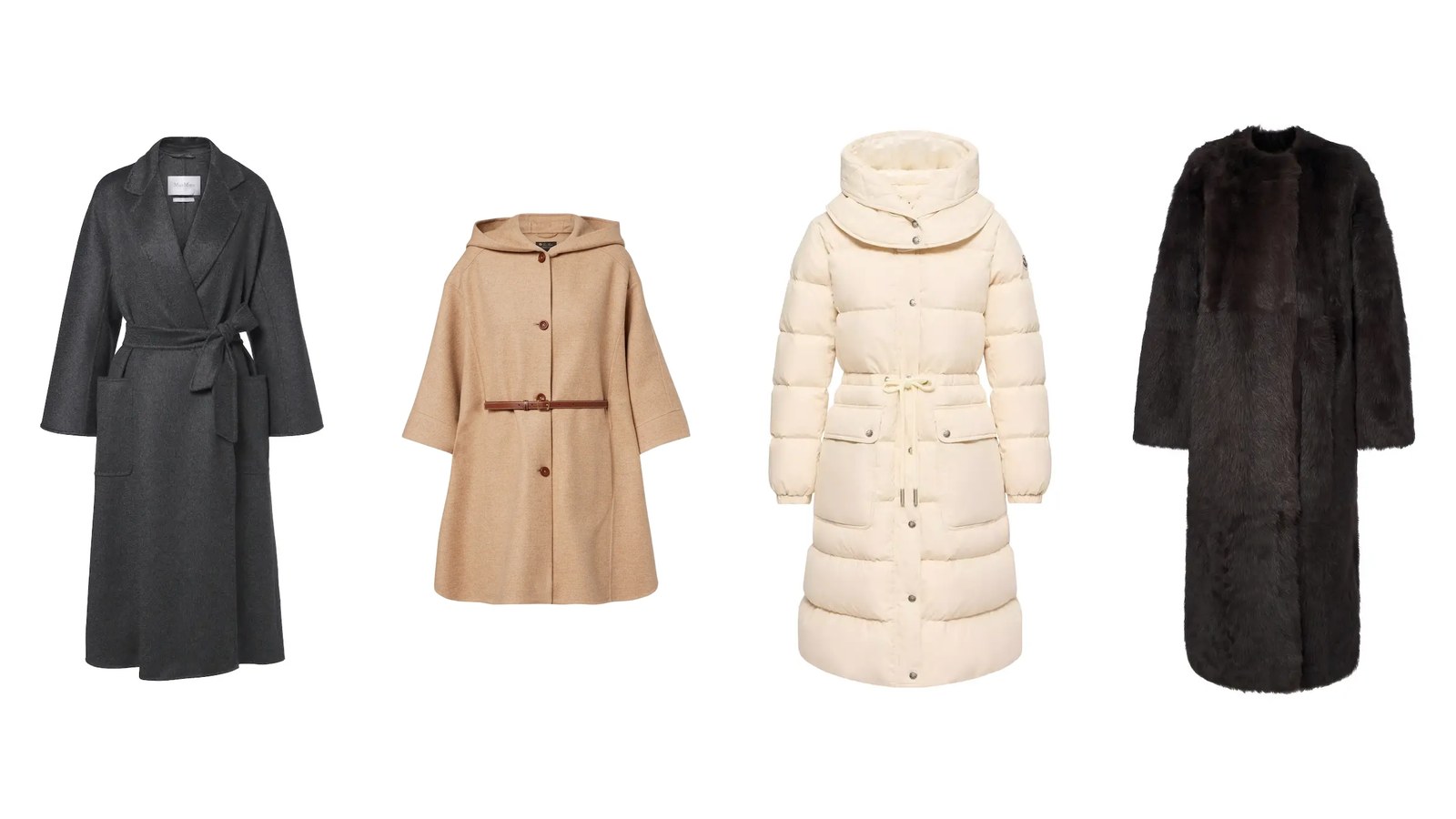
The best winter coats for women come down to two questions: how much cold the coat has to stop, and how you move through your day in it. For a city winter of short walks and heated trains, buy a wool or cashmere coat in dense cloth that reaches at least the knee and closes at the neck. Max Mara's 101801, The Row's tailored coats and Toteme's wraps set the standard. For real cold, with wind, long waits outdoors or temperatures in the teens, buy down: a hooded parka or long puffer that covers your thighs, from Moncler, Max Mara's The Cube line or Brunello Cucinelli. Shearling sits between the two, warmer than wool and heavier than down.
Below: every coat type and how warm it really is, how to judge cloth, down and construction, the right length for your height, what each budget buys, and more than a hundred coats from the top houses, sorted by type.
The best winter coats for women at a glance
Start here if you already know your winter. The warmth column assumes a coat that reaches the knee; shorten any coat and it drops a level.
| Coat | Warmth | Feels on the body | Best for |
|---|---|---|---|
| Hooded down parka | The coldest days | Light for its warmth | Wind, snow, waiting outdoors |
| Long puffer coat | Real cold | Light | Walking commutes, school runs, travel |
| Down coat with a wool or leather shell | Real cold, tailored look | Medium | Offices and dinners in hard winters |
| Long shearling coat | Real cold, best when dry | The heaviest | Cold, dry cities and weekends |
| Teddy or faux-fur coat | Cold, sheltered days | Light to medium | Casual dressing, evenings out |
| Double-faced wool or cashmere coat | City cold | Light for its warmth | Smooth knits, dresses, travel |
| Wool overcoat or topcoat | City cold | Medium to heavy | Wearing over tailoring every day |
| Wrap or belted coat | City cold, open at the neck | Medium | Knitwear and dresses |
| Car coat or short coat | Cool to cold | Light | Driving, petite frames, wide trousers |
| Duffle, hooded or pea coat | Cold, with a hood or high collar | Medium | Weekends, jeans and knits |
| Cape or cape coat | Warm core, cool arms | Medium | Short walks over tailoring |
Our deeper guides take each family further: the best cashmere coats for labels and double-face construction, designer puffer coats, the best shearling coats, our Max Mara coat guide, how to wear a cape coat and, for the rainy weeks either side of winter, the best trench coats.
City cold or real cold: how warm a winter coat needs to be
Three things decide how warm a coat is, and fiber is only one of them. Insulation is still air held close to your body: the loft of down, the pile of shearling or teddy, the brushed surface of a dense wool. Wind resistance comes from the outer layer: tightly fulled wool, a closed nylon shell, leather or suede. Coverage is length and closure. A coat that stops at the hip leaves your thighs in the wind, and one that leaves your neck open loses heat exactly where a collar should be working.
Wind matters more than most shoppers expect. On the National Weather Service's wind chill chart, a 0°F day with a 15 mph wind has a wind chill of -19°F, and at that wind chill exposed skin can freeze in 30 minutes. That is why a beautiful open-front wool coat can be perfect at 35°F and miserable at 20°F with a breeze off the river.
City cold
Our working line: if your coldest regular days sit around freezing, you rarely spend more than fifteen minutes outdoors at a stretch, and you move between heated trains, cars and buildings, a wool, cashmere or double-faced coat to the knee is enough, with a scarf and gloves doing the rest. A down coat in these conditions mostly makes you hot on the subway.
Real cold: the winter coat for very cold weather
If you see the teens and single digits, wait at bus stops or school gates, walk twenty minutes to work, or live with wind off a lake or the sea, buy down. The coat for very cold weather is a hooded parka or long down coat that covers your seat and thighs, closes up to the chin, and grips at the wrists. Shearling is the alternative if your cold is dry and you do not mind the weight.
| Your winter | Buy | Why |
|---|---|---|
| Around freezing, short walks, heated transit | Wool, cashmere or double-faced coat to the knee or below | Enough warmth without overheating indoors |
| Teens and lower, wind, long stretches outside | Hooded down parka or long puffer | The most insulation per pound, and a hood |
| Wet cold: sleet, slush, rain near freezing | Down coat with a water-repellent shell, or smooth leather | Suede, pale shearling and brushed cashmere mark when soaked |
| Door to door by car | Car coat or short down coat | Long coats bunch in the seat and overheat on short hops |
| Cold, dry and bright | Long shearling or a down coat with a wool shell | Warmth with a dressier surface |
| A bit of everything | A roomy wool coat with space for a thin down vest underneath | One coat that adds a layer on the worst days |
If your winter is mostly cold rain that rarely freezes, a wool or cashmere trench over knitwear may be all you need; our trench coat guide covers both.
The warmest winter coats, in order
Comparing coats of similar length, this is how we rank them for warmth, from the most to the least:
- A hooded down parka that reaches the knee, with a drawstring waist and a high collar.
- A long shearling coat that closes at the neck.
- A long puffer without a hood, or a down coat with a wool or leather shell.
- A dense double-faced or heavyweight wool coat below the knee, buttoned to the throat.
- A teddy or faux-fur coat: warm in still air, less so in wind.
- A wrap coat in wool or cashmere, which leaves a V at the neck.
- A car coat or pea coat, warm at the core but short.
- A cape, warm at the shoulders and open at the arms.
How to judge a winter coat's construction
Wool cloth: weight, density and finish
Coat cloth is sold by weight, and mills publish the numbers: the higher the figure, the heavier the cloth. Fox Brothers, the English cloth maker, gives its Exmoor overcoating as 560 to 590 grams (20 to 21 ounces) and calls that a relevant weight for contemporary tailoring; its large herringbone, specified at 680 to 710 grams (about 24 to 25 ounces), is the cloth it calls ideal for an overcoat. Designer coat listings rarely print a cloth weight at all, so you have to read the words that stand in for it:
- Melton: wool fulled until the weave closes into a felt-like surface that stops wind. Bottega Veneta's listing for its light-gray coat calls the cloth heavyweight melton, and Proenza Schouler cuts its Alix coats in compact melton.
- Beaver cloth: a dense cloth with a raised, brushed face. Max Mara's 101801 is in wool and cashmere beaver cloth, and Brunello Cucinelli makes a cashmere double beaver cloth.
- Felt and felted wool: fibers matted together, or a cloth shrunk until it behaves that way, so cut edges barely fray and the coat holds a sculpted line, as in Bottega Veneta's stretch-wool felt long coat.
- Herringbone, donegal and tweed: textured weaves whose warmth depends on their weight. They hide wear well, and Brunello Cucinelli uses a virgin wool donegal as the shell of a down coat.
- Crepe and gabardine: smooth, tight and often lighter. Lovely tailoring, but on their own they are fall-to-early-winter cloths.
Some listings name the mill. Loro Piana's listing for a cashmere-twill jacket says the cloth is milled and woven on-site in Italy; Burberry's check cashmere-wool cape is made at a Scottish mill founded in 1797, according to its listing, and Gabriela Hearst's listing for a double-face cashmere jacket says the cloth is woven at a family-owned Italian mill. Where a listing says only "wool blend," ask for the full composition before you buy.
Two quick checks work in any fitting room. Hold a fold of the front against your mouth and blow: the harder it is to push air through, the better the coat stops wind. Then lift the coat off its hanger by the shoulders. A long coat in true overcoating has a weight you notice, and the hem hangs straight down instead of swinging.
Double-faced and double cloth
A double-faced coat is cut from cloth with two finished sides, so it needs no lining. Strictly, double cloth is two layers woven together and joined by binding threads, and double-faced cloth is a single layer with two good faces, but listings use the names loosely; Max Mara calls its version hand-sewn double wool and cashmere broadcloth. The edges are finished by hand, so the coat is warm for its weight, drapes softly and looks finished inside and out; the trade-off is that those edges make it hard to shorten. Our cashmere coat guide explains how to tell the two cloths apart, and both from a lined coat.
Down: fill power, down content and the shell
Fill power measures loft. The International Down and Feather Bureau describes it as the amount of space a specific weight of down occupies: the higher the number, the greater the insulating capability. Luxury houses rarely print it, and none of the down coats in this guide lists one, so judge a down coat by what its listing does publish:
- The down-to-feather ratio. Every Moncler down piece in this guide lists 90 percent down and 10 percent feather, as do Burberry's Kent and Max Mara's The Cube reversible down coat; Thom Browne's hooded coat lists 80 percent down and 20 percent feather. The higher the down share, the lighter and loftier the fill. Where a listing just says "goose down padding," as Prada's and Miu Miu's do, ask before you buy if the number matters to you.
- How much down, not just how good. Fill power is quality, not quantity. A coat with deep, plump channels holds more down than one with thin, flat quilting, whatever its fill power.
- The quilting. Stitch lines are where a down coat is thinnest. Wide horizontal channels, such as the boudin quilting Moncler uses on the Cavettaz, read sleek; square quilting holds the down in place and looks more sculptural.
- The shell. Down loses its loft when it is soaked through, so the outer fabric does real work. Moncler describes several of its shells as water-repellent nylon, and its glossy nylon laqué as a house signature; brushed cotton and wool flannel shells look softer and dressier but stay home in heavy rain.
- Where the down comes from. Moncler's DIST protocol, in place since 2015, requires down from farmed geese as a by-product of the food chain, bans live-plucking and force-feeding, and is checked by independent auditors.
Shearling, teddy and faux fur
Real shearling is a single sheepskin tanned with its fleece on, so the warm layer and the outer layer are one piece; it is usually the warmest coat without down, and among the heaviest coats you can buy. Teddy is a pile fabric, usually alpaca and wool on a silk base at Max Mara, and faux fur is synthetic pile. Both are warm in still air and much lighter than shearling. Our shearling guide shows how to tell the three apart.
The details that keep heat in
- The neck. A stand collar, funnel neck, buttoned throat tab or hood closes the biggest gap in any coat. A shawl or notched collar worn open needs a scarf.
- The wrists. Inner rib-knit cuffs, snap cuffs or elasticated cuffs stop cold air running up your arms.
- The zip. A two-way zip lets a long down coat open from the hem when you sit, drive or climb stairs, without opening at the chest.
- The waist and hem. Drawstrings at the waist and hem, as on Prada's and Miu Miu's long down coats, trap warm air the way a belt does on a wool coat.
- The back. A long coat needs a vent or side slits to let you stride. A deep vent lets wind in, so on a coat for real cold look for a short one or an overlapping pleat.
- What comes off. Detachable hoods, collars and linings stretch a coat across more of the season: Burberry's Kent and Brunello Cucinelli's hooded down coat take their hoods off for town, and Brunello's alpaca and cashmere down jacket has a detachable collar.
Luxury winter coats worth knowing by name
In 2026, as in most seasons, a handful of designer winter coats are the reference points every other coat reacts to.
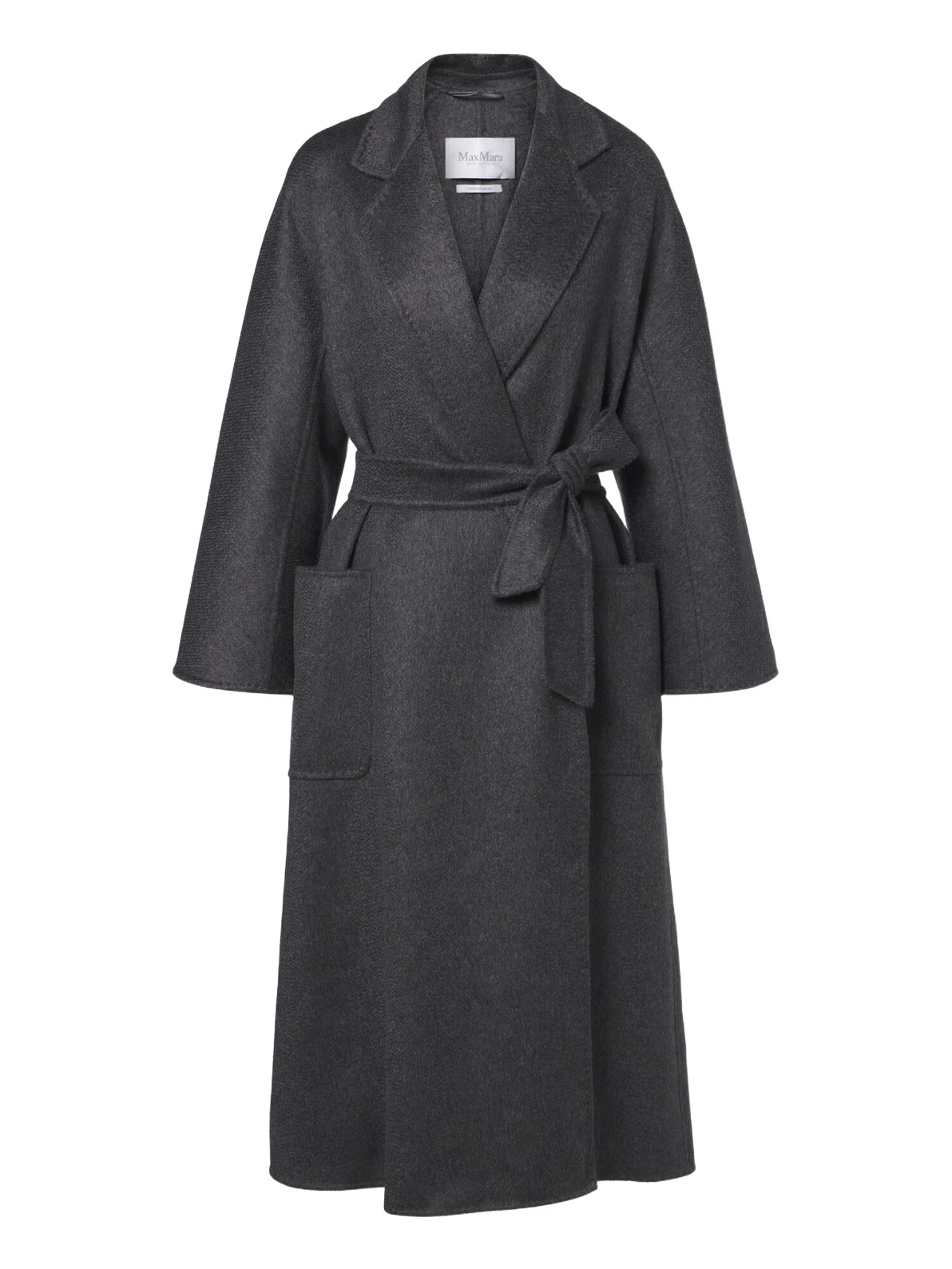
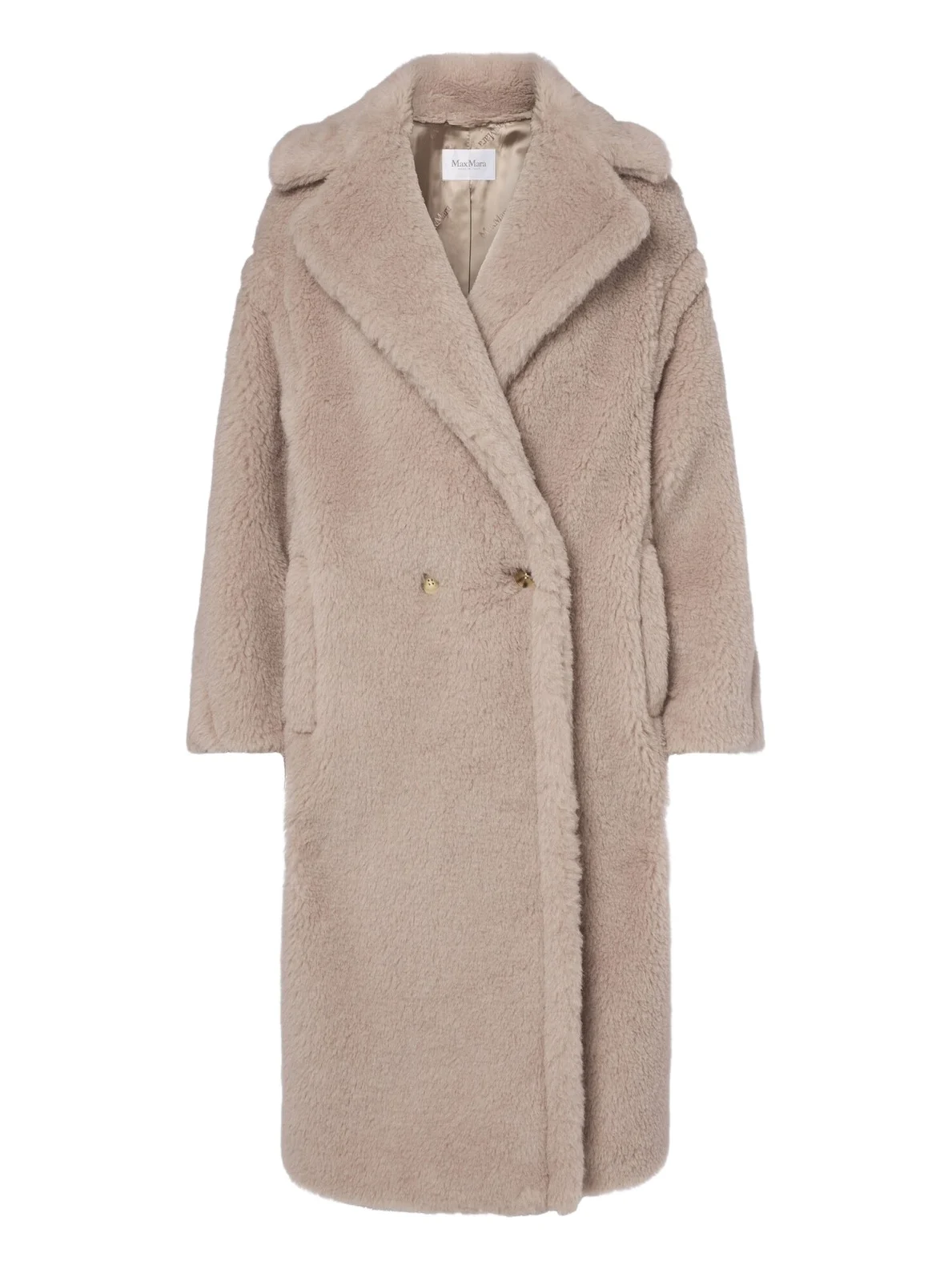
- Max Mara 101801. Anne-Marie Beretta designed it in 1981, and Max Mara describes wool and cashmere beaver cloth, oversized kimono sleeves you turn back to your arm's length, and a length of 120 centimeters, about 47 inches. Its oversized cut leaves room for a jacket underneath. Max Mara's Ludmilla is its pure cashmere wrap, and the Teddy Bear is its pile coat in alpaca, wool and silk. Our Max Mara guide compares all of them.
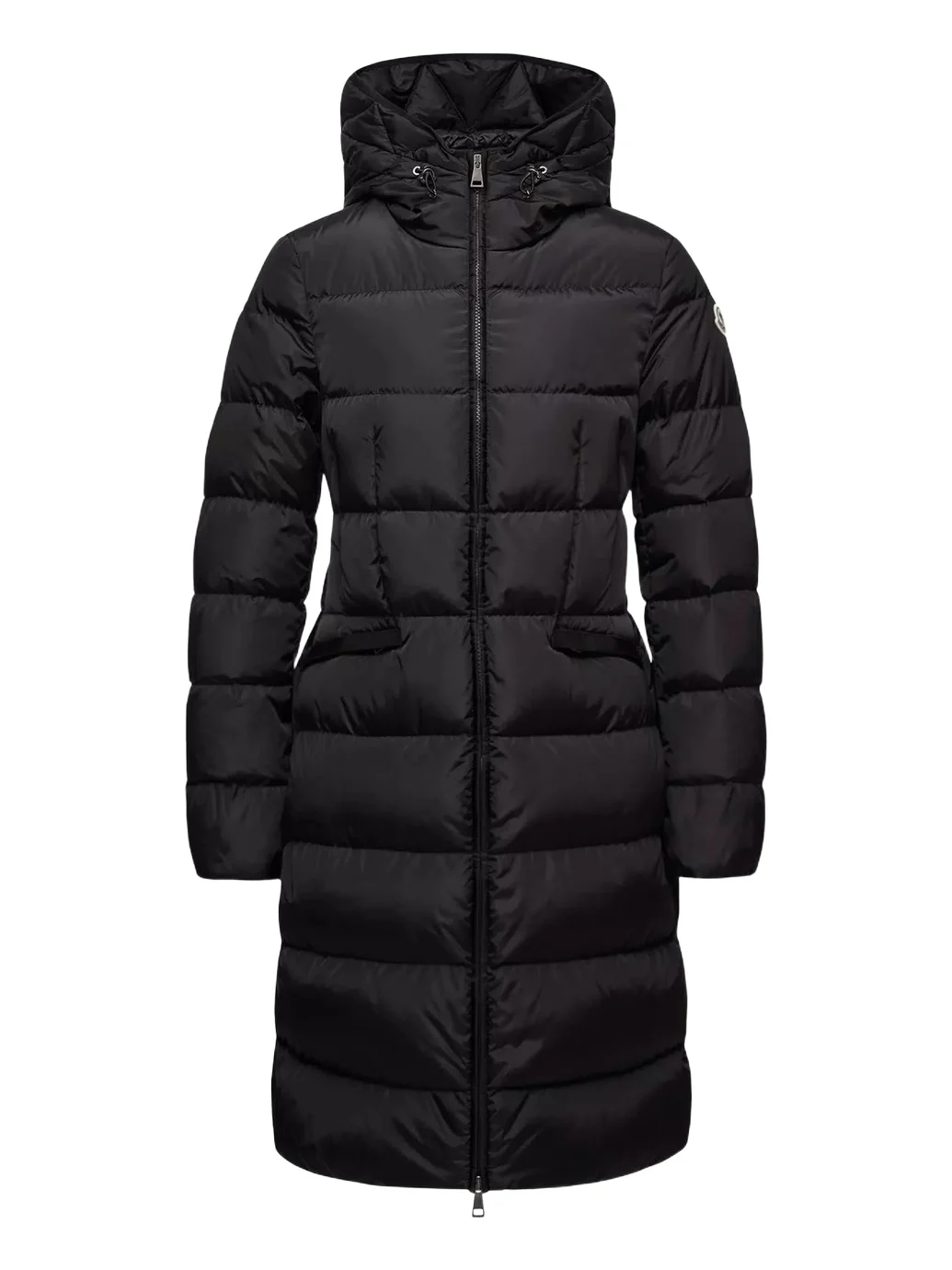
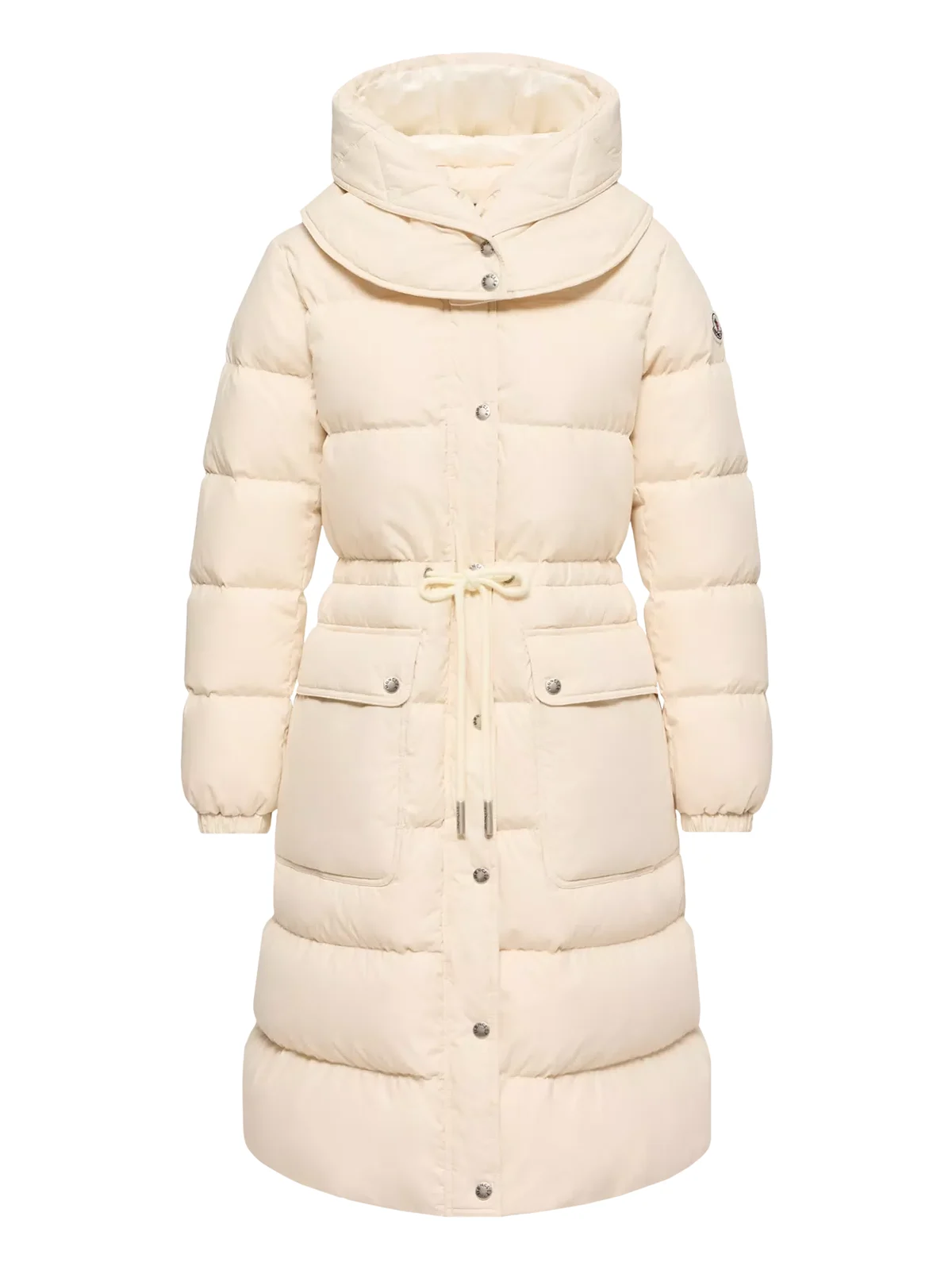
- Moncler's long down coats. The reference for a down coat that looks right on a city street. Every Moncler down coat here lists 90 percent down; the Avocette pairs a water-repellent nylon shell with a light lining, and the Pic swaps nylon for a brushed technical cotton with a high, hooded collar.
- The Row. Tailoring with nothing added. The Malika is a long, open-front wool coat tied at the waist and lined in silk; the Ina, with the car coats below, closes with knotted leather buttons.
- Toteme. The house's signature coat is a long, oversized wool and cashmere coat with a draped shawl collar, dropped shoulders and no fastening; it is in our cashmere coat guide, and the hooded Toteme coats below share its easy shape.
- Loro Piana. Best known for cashmere, the house also makes some of the most wearable winter capes. The hooded belted cape below is wool and cashmere with leather details, snap cuffs and a detachable belt.
The icons: Max Mara, Moncler, The Row and Loro Piana



The best wool coats: overcoats and topcoats
Menswear separates a topcoat, cut from lighter cloth and worn around the knee, from an overcoat in heavier cloth that can run longer. Our men's winter coat guide sets out the tailoring rules. Women's coats rarely use the words, but the idea is useful: a lighter, knee-length coat in crepe or fine wool carries you from November into a mild December, and a heavy, longer coat in melton, beaver or felt is the one for January.
Then choose the shoulder. A set-in sleeve with a padded shoulder, as on Balenciaga's long chunky wool coat, gives the sharpest line over a jacket, and Dior's flared coat, built on the shape of the Bar jacket, adds a cinched waist to it. A dropped or kimono shoulder, as on Jil Sander's runway coat, slides over chunky knits without strain and suits broad shoulders. A double-breasted front gives you two layers of cloth across the chest when closed; a single-breasted coat sits flatter under a shoulder bag. Gabriela Hearst's William coat, 52 percent cashmere in a charcoal herringbone with a self-tie belt, is the one here that does both city and country.
- Office: charcoal overcoat over a charcoal turtleneck, gray flannel trousers and black loafers, so the coat reads as part of the suit.
- Weekend: olive double-breasted coat over a cream cable knit and ecru jeans, with burgundy suede boots.
- Evening: a fitted black coat with a flared skirt, such as Alaïa's, over a black knit dress, sheer tights and pumps.
Wool overcoats and topcoats
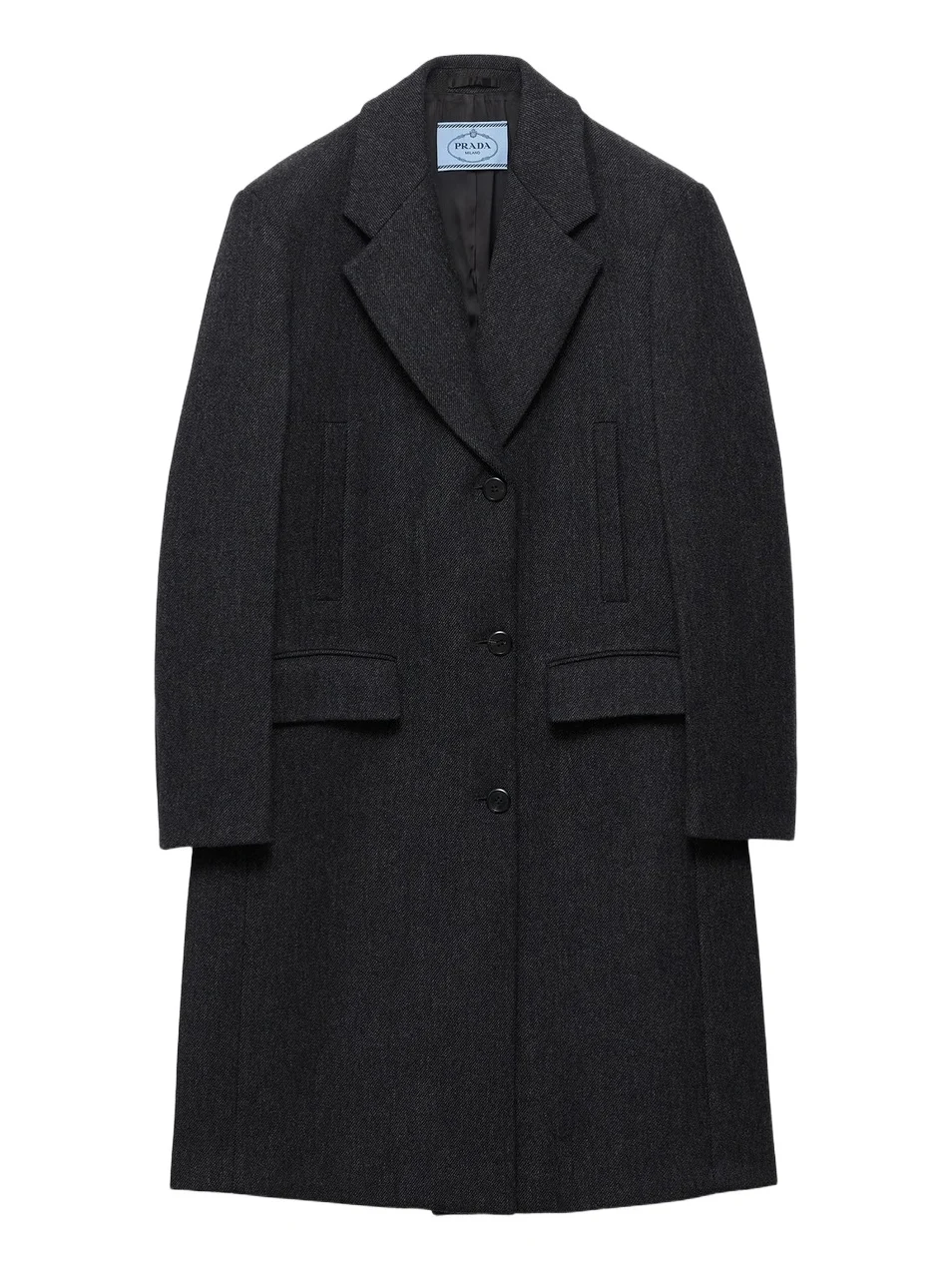 PradaWomen's Single Breasted Double Wool Coat$6,100
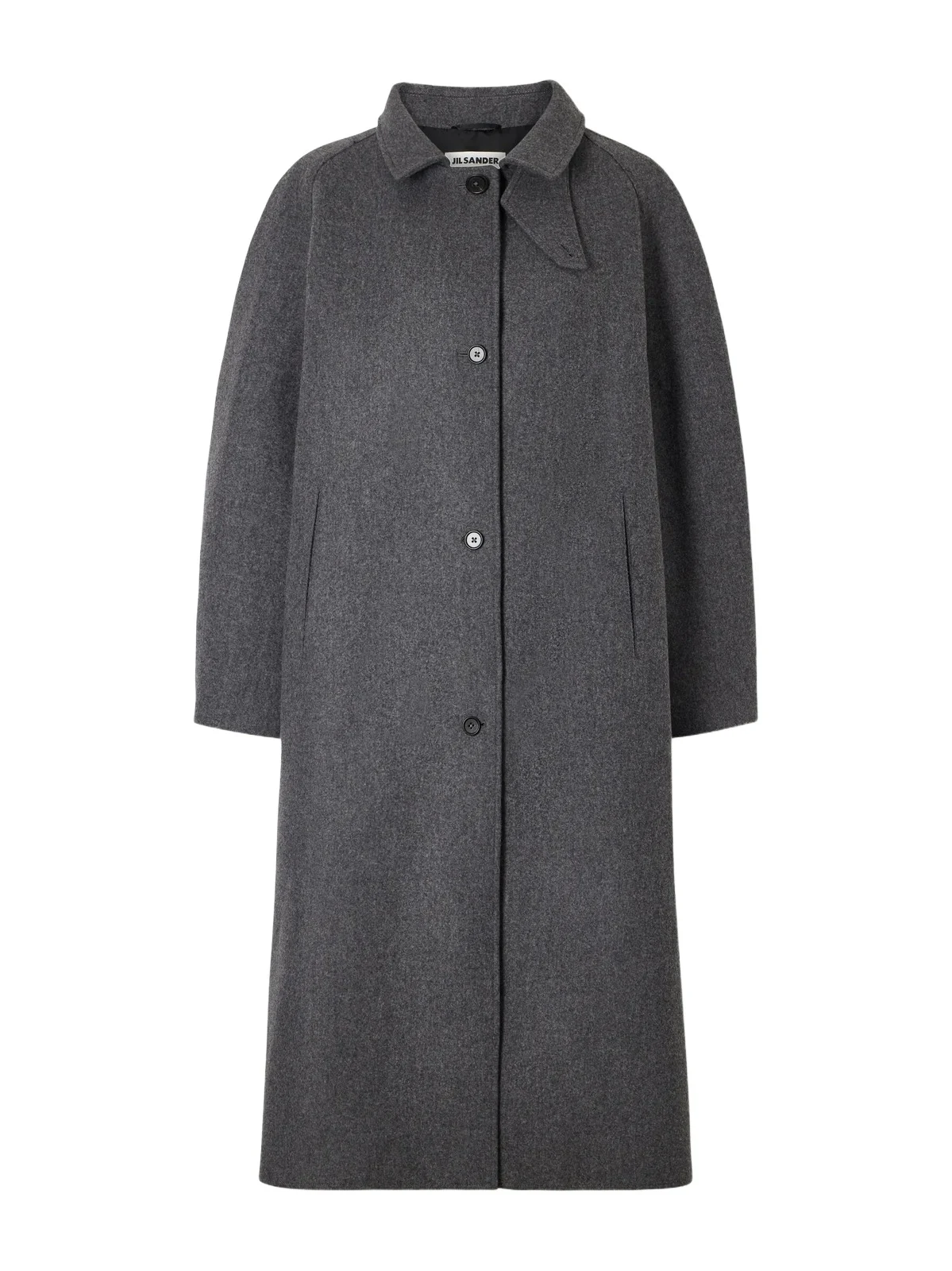 Jil SanderWool-blend Coat$6,790
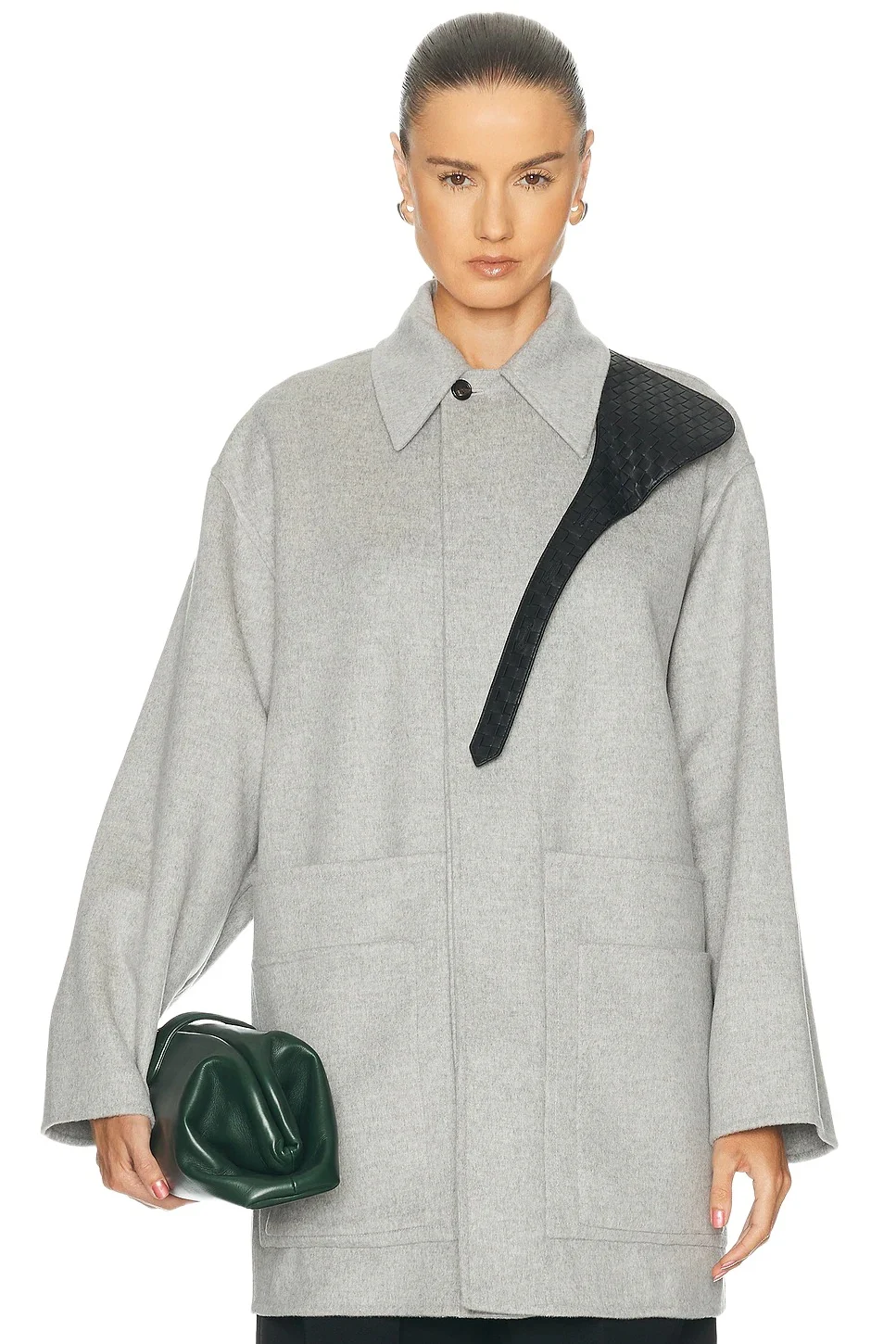 Bottega VenetaCashmere Coat$4,500
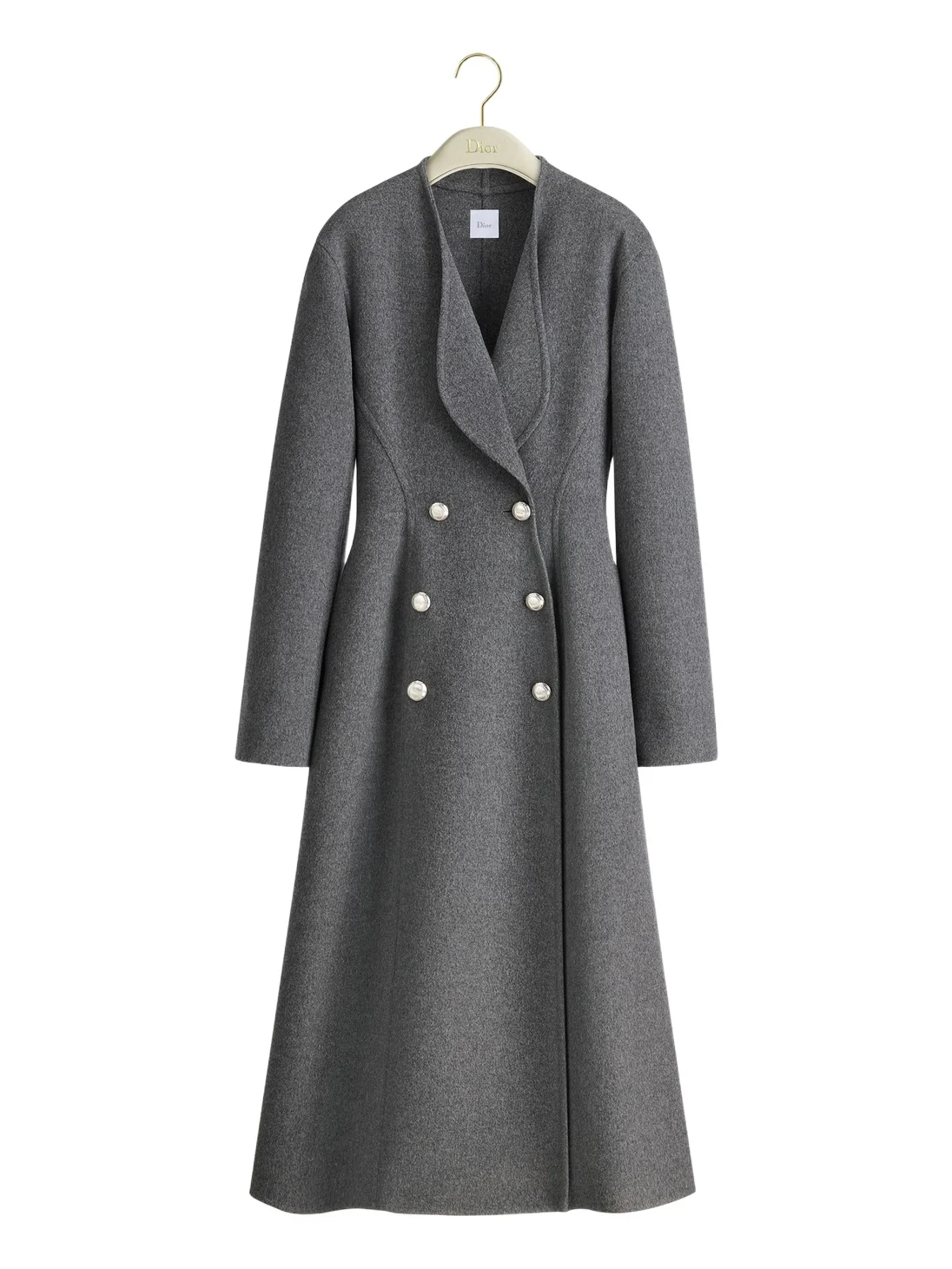 DiorCoat$6,500
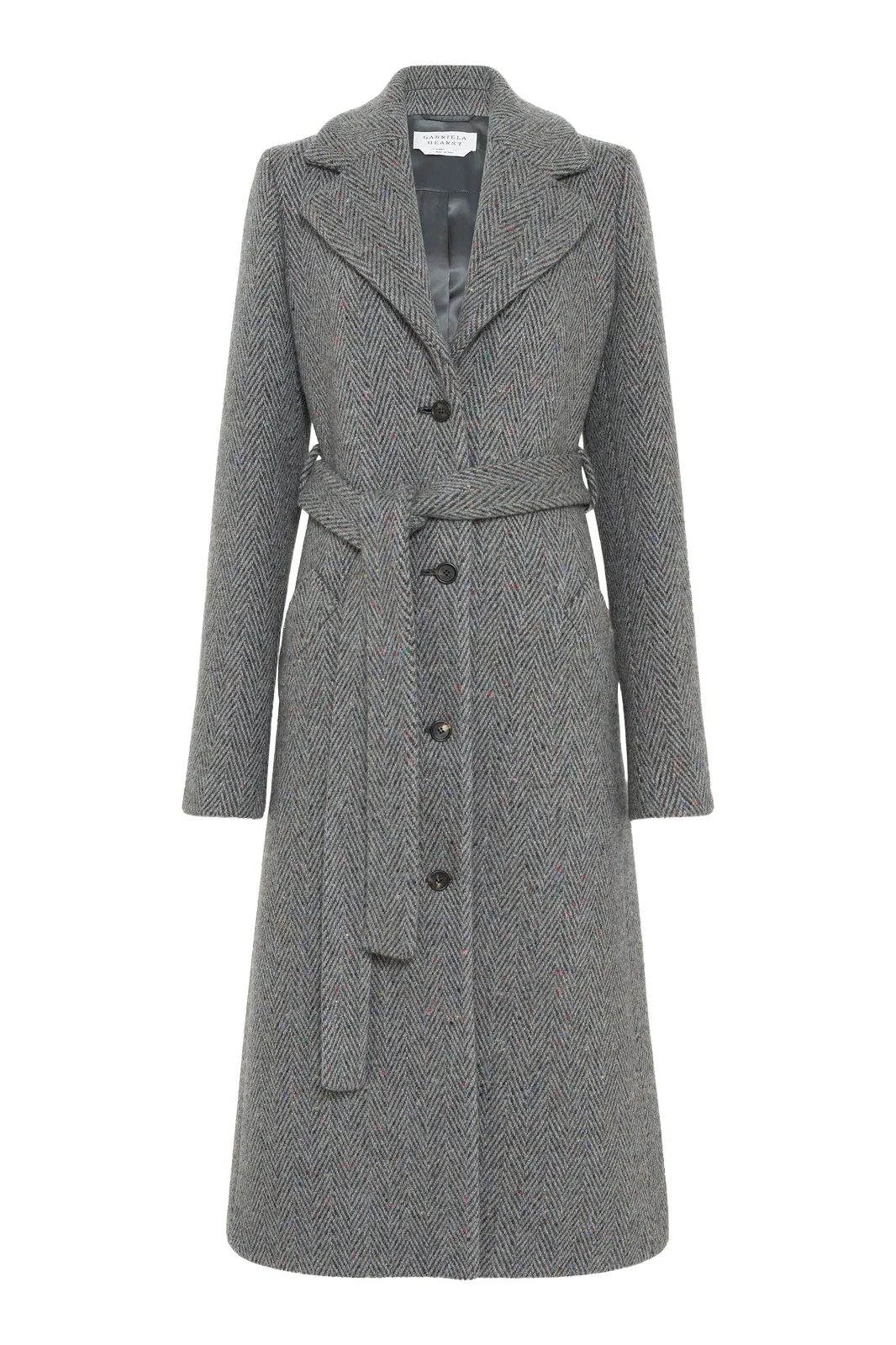 Gabriela HearstWilliam Coat in Charcoal Multi Cashmere Wool Herringbone$4,640
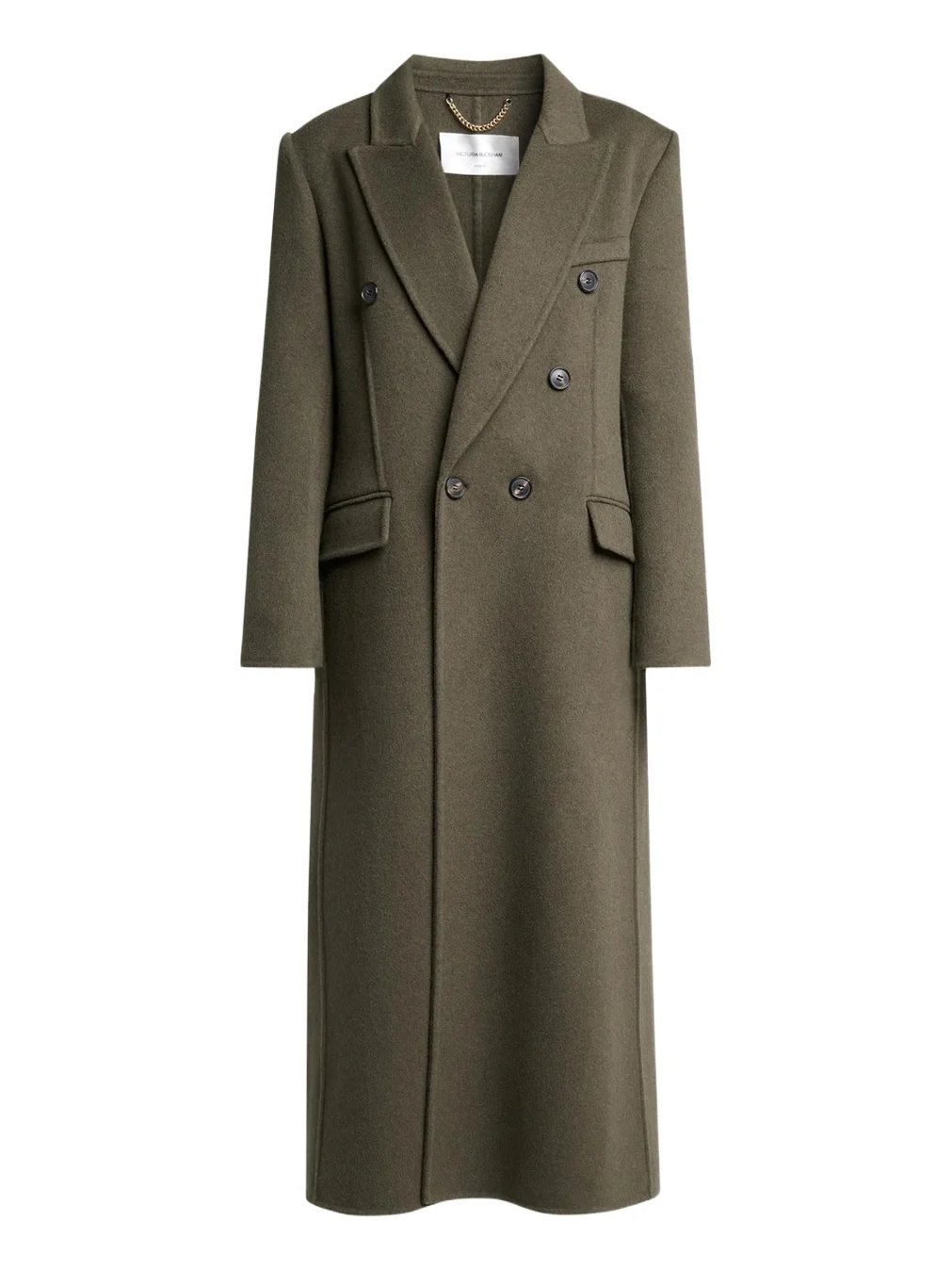 Victoria BeckhamCatriona Wool-Blend Double-Breasted Coat$2,250
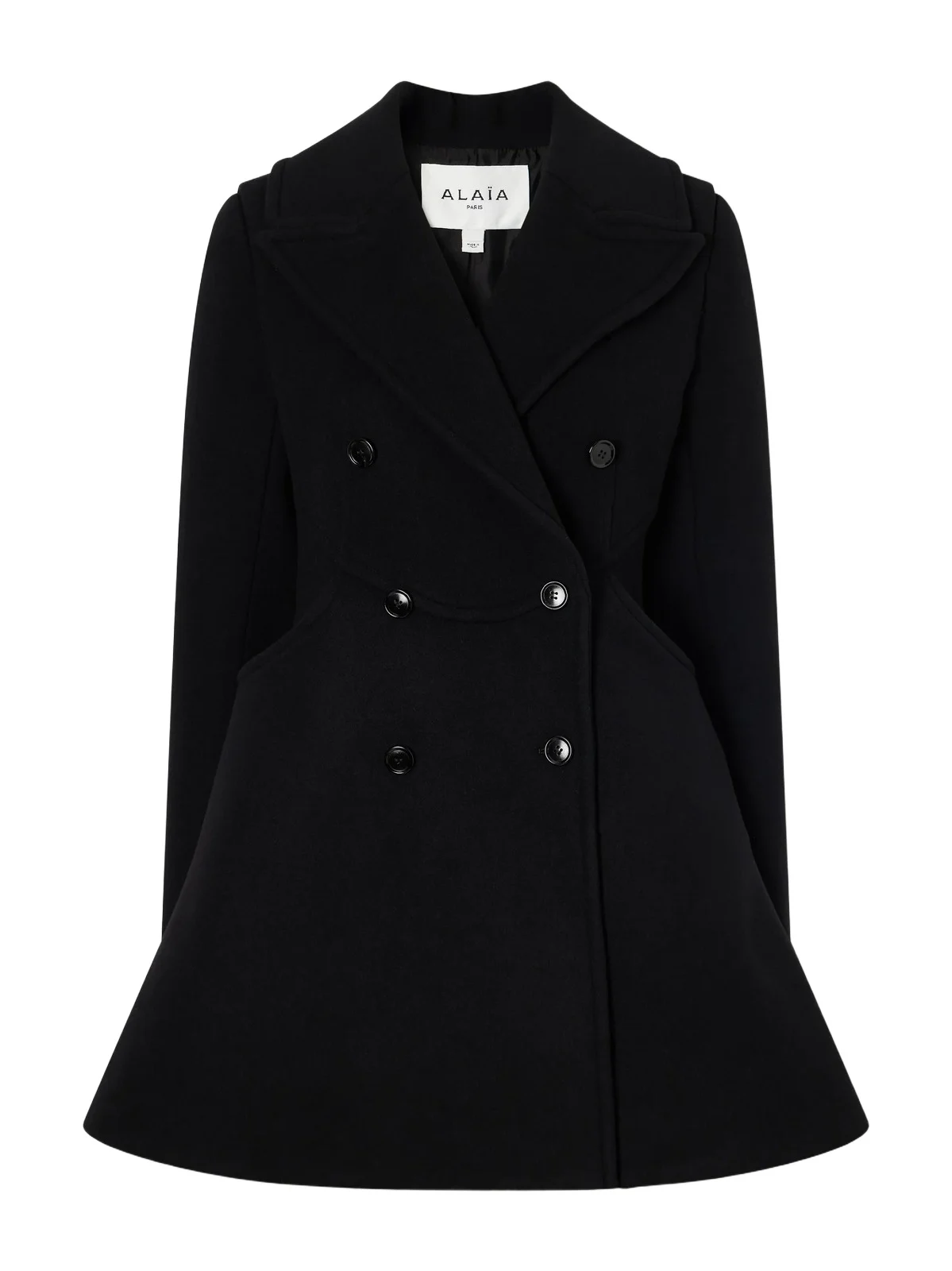 AlaïaDouble-breasted Wool-woven Coat$7,800
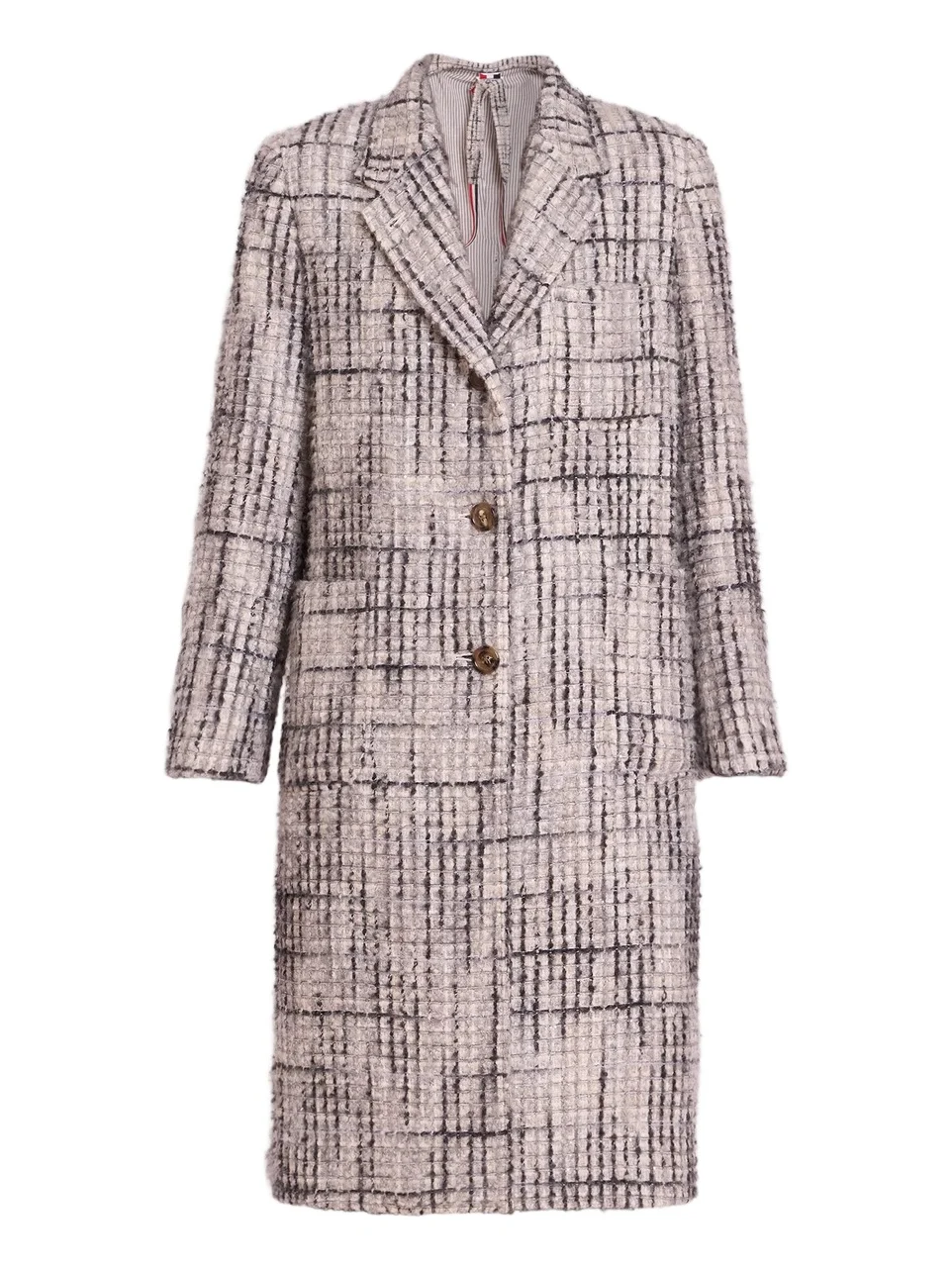 Thom BrowneWomen's Textured Cashmere-Blend Single-Breasted Overcoat$7,650
Wrap and belted coats
A wrap coat is held by its belt rather than its buttons, which makes it the most forgiving coat over changing layers and the most flattering on a defined waist. Its two weaknesses are the neck, which stays open in a V, and the front, which wind can lift on a long walk. On the coldest days, wear it with a turtleneck and keep one hand on the belt, or choose a belted coat that also buttons, such as Brunello Cucinelli's double-breasted macro-check alpaca coat or Valentino Garavani's herringbone coat with shearling cuffs. Khaite's Romare is cut in double-faced wool with a high stand collar, which closes the V for you.
Belt height changes your proportions more than any other detail. Tie at your natural waist if you are long in the leg, slightly lower if you are long in the torso, and loosely at the back if you wear the coat open. If you are petite, a belt is the easiest way to make a long coat look intended rather than borrowed. See every style in our belted coat shop.
- Camel wrap over a cream turtleneck, gray flannel wide-leg trousers and chocolate suede boots.
- Black belted coat, such as Valentino Garavani's with its bow at the waist, over a burgundy silk dress and black pumps for evening.
- Espresso camel-hair wrap over an ivory knit and ecru trousers, tonal from collar to hem.
Wrap and belted winter coats
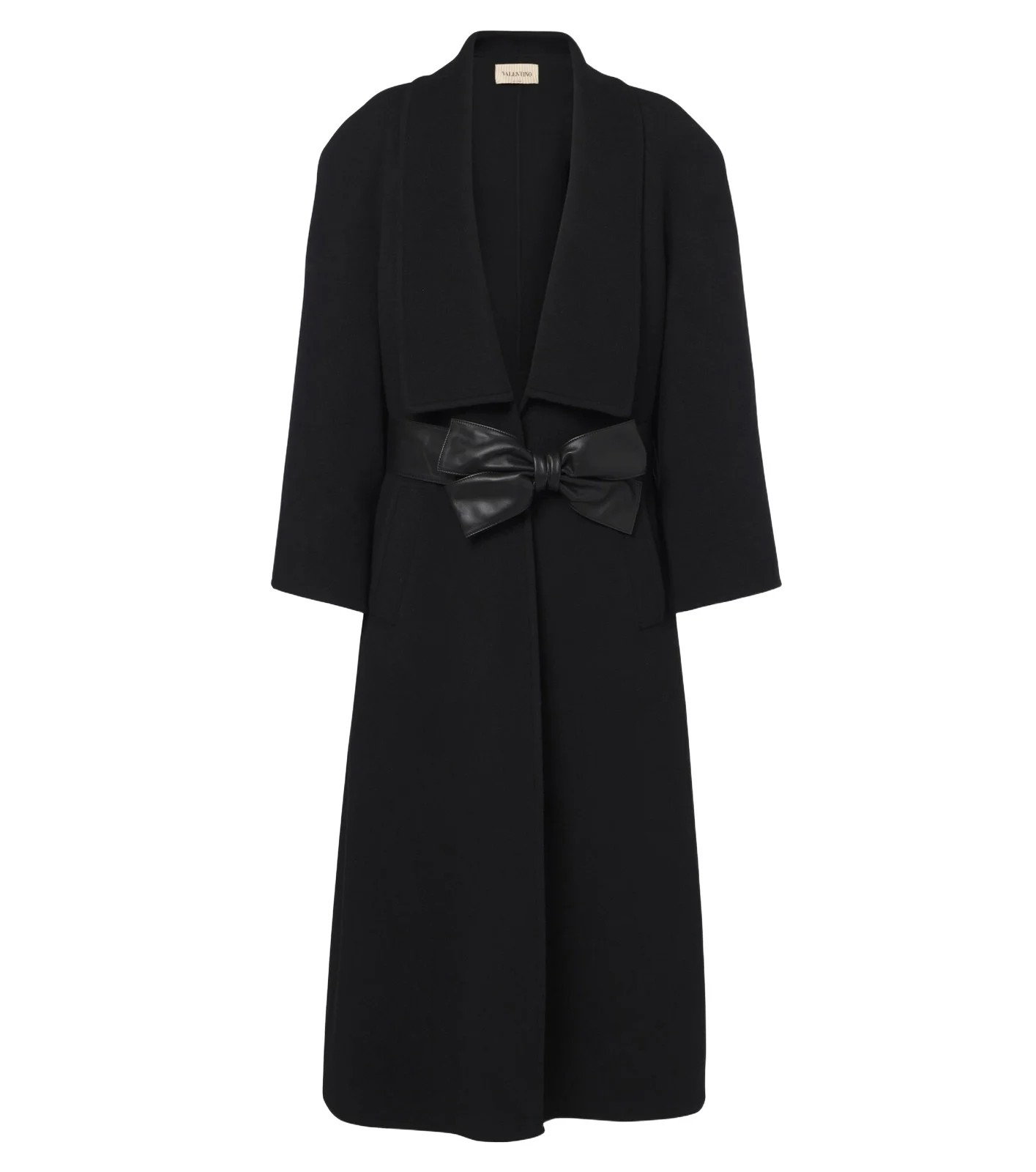 Valentino GaravaniBow-detail wool and cashmere coat$7,700
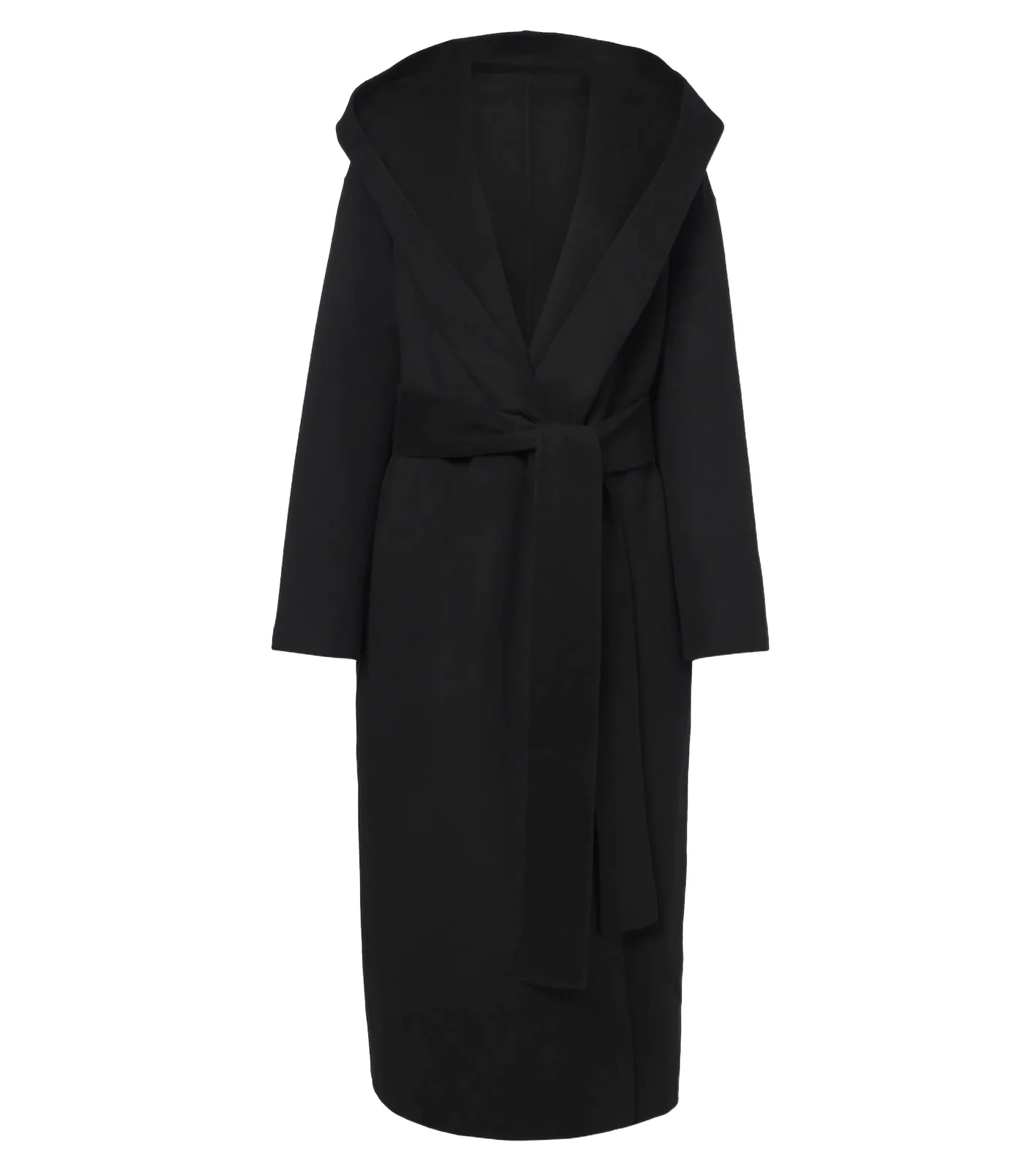 TotemeHooded wool wrap coat$1,680
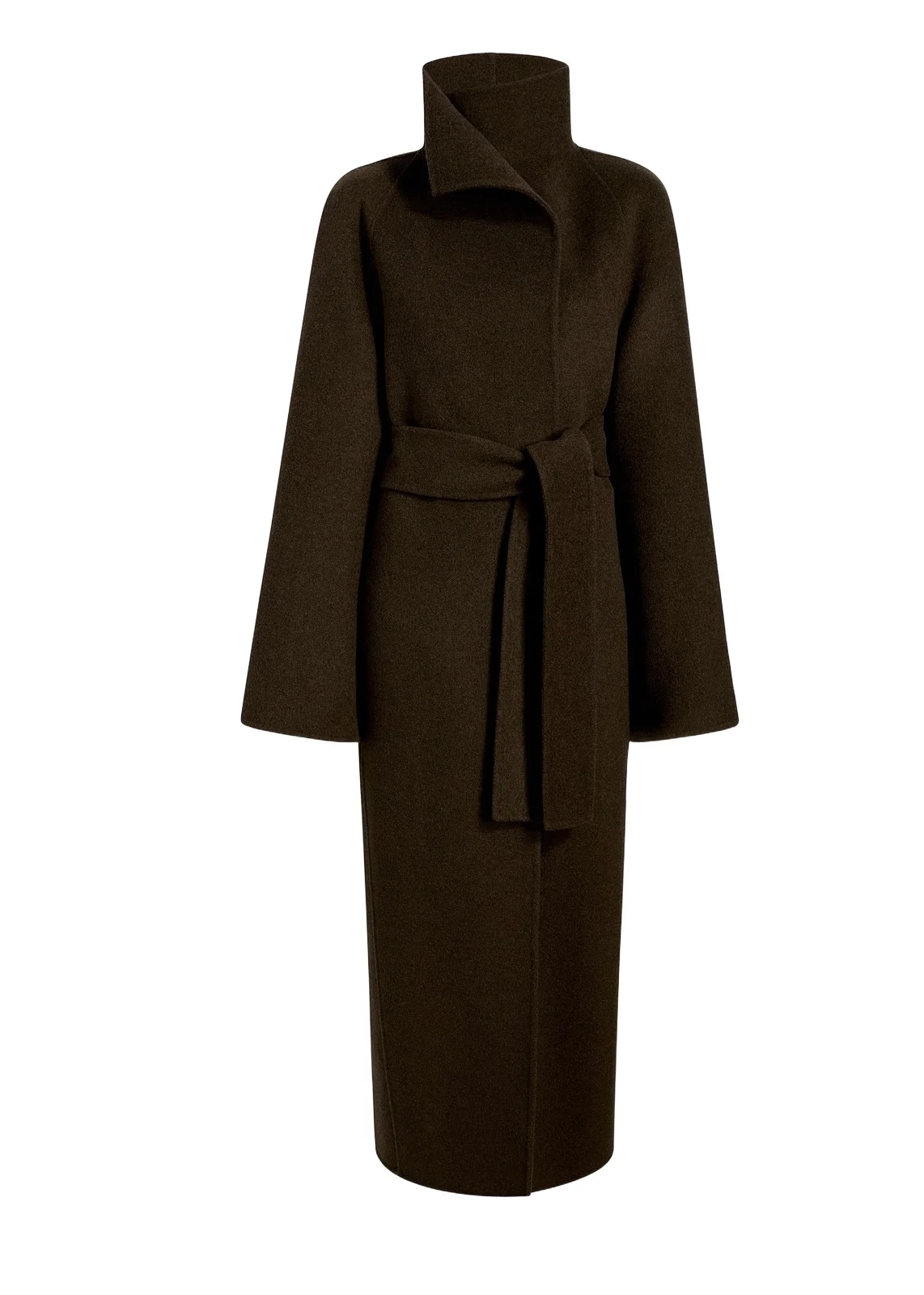 KhaiteRomare Coat In Army Melange$4,400
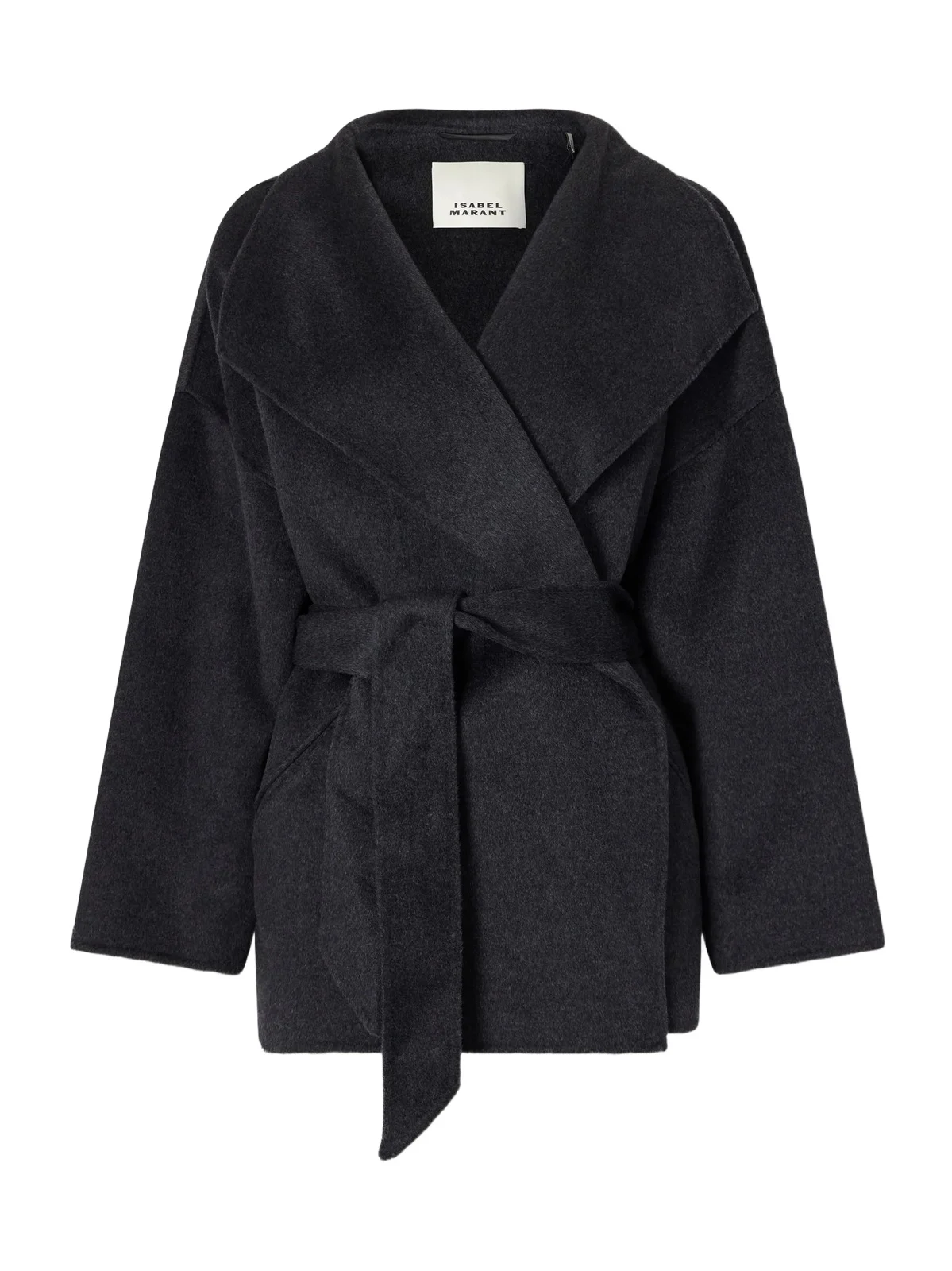 Isabel MarantCeaton Belted Wool And Cashmere-blend Coat - Gray$1,690
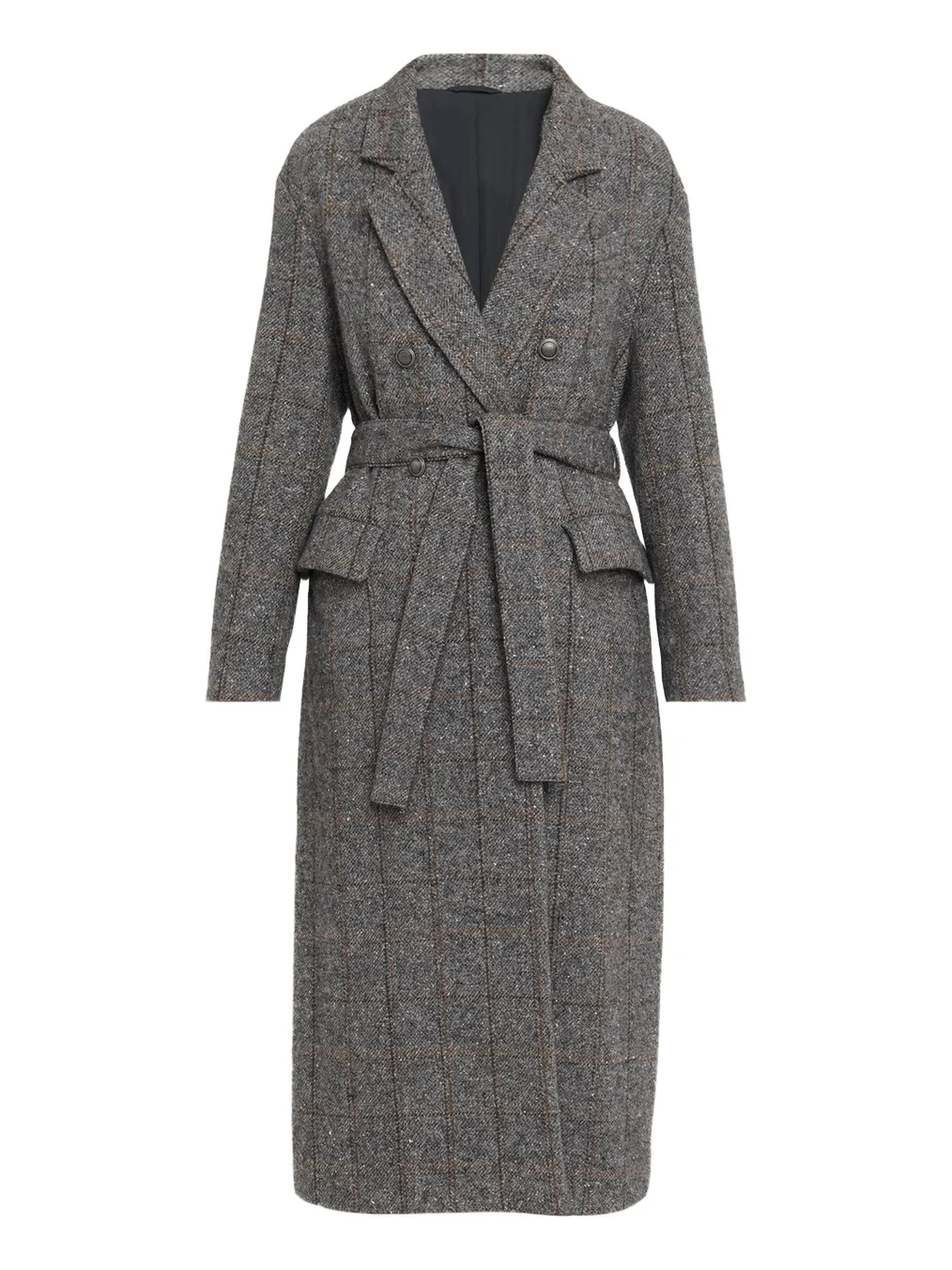 Brunello CucinelliMacrocheck Alpaca Long Coat$7,500
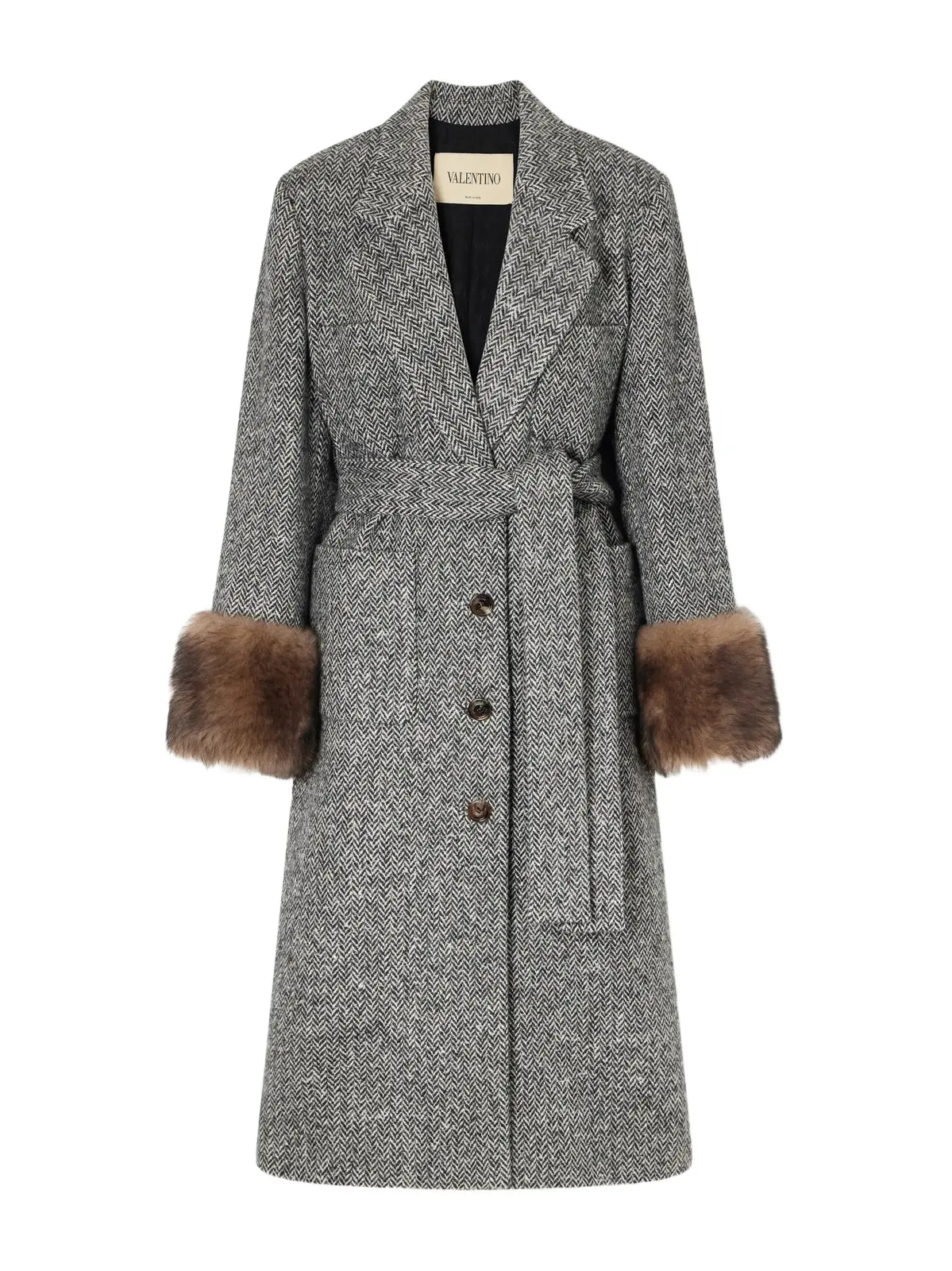 Valentino GaravaniBelted Shearling-trimmed Herringbone Wool-blend Coat$9,400
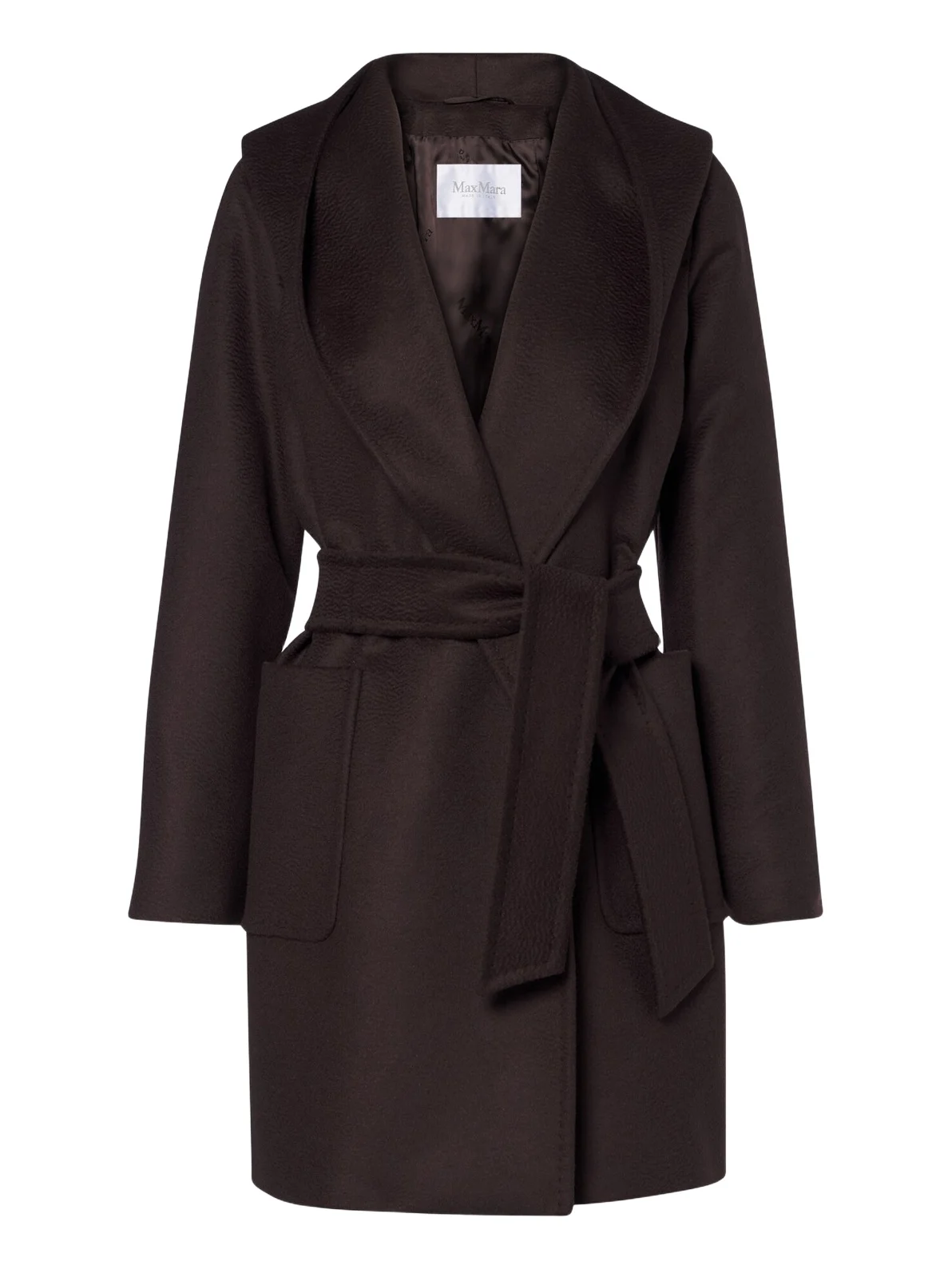 Max MaraCamel hair wrap coat$3,590
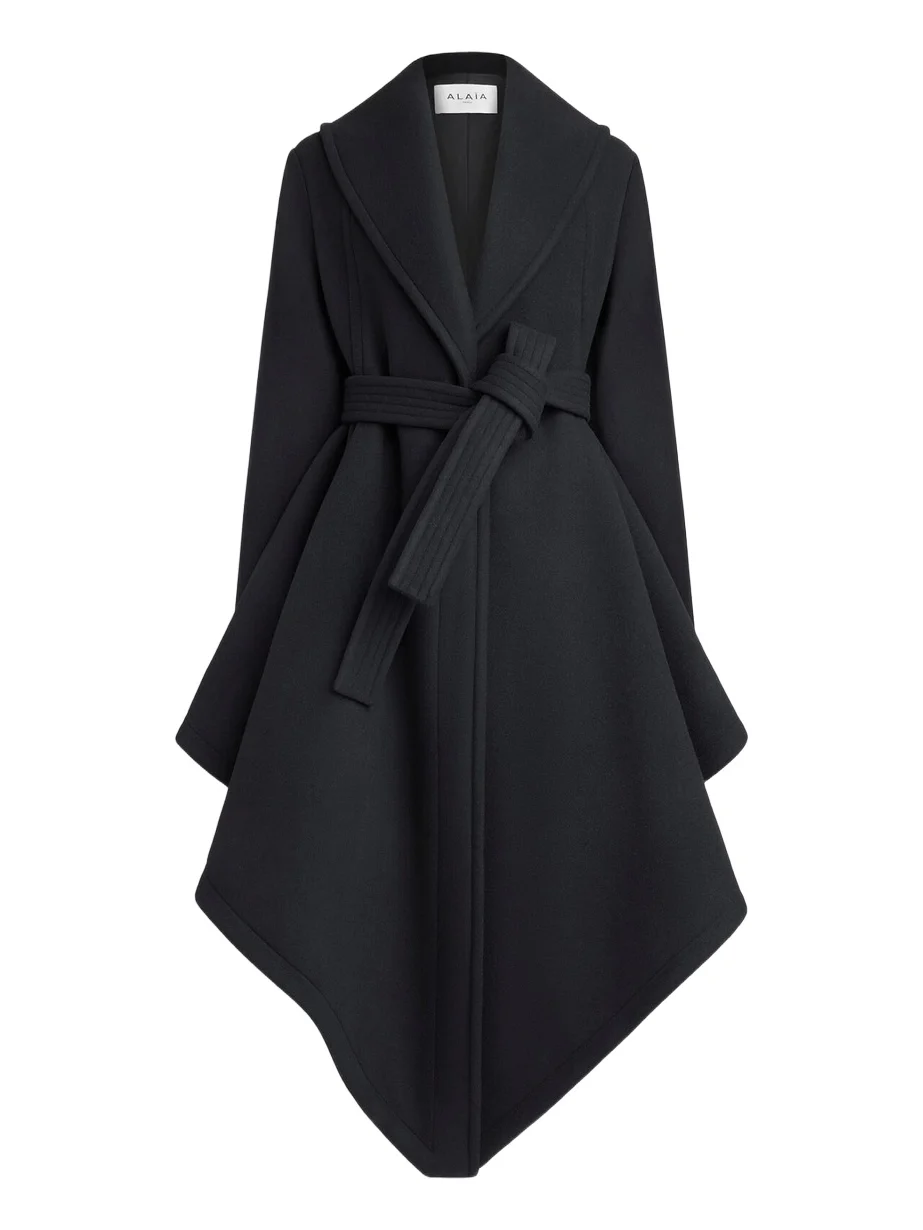 AlaïaDouble Face Wool Wrap Coat$8,250
Double-faced wool and cashmere coats
Buy a double-faced coat if you want warmth without bulk: it drapes over a knit dress or a fine sweater and packs into a suitcase better than most lined coats. Wear it over smooth layers, since an unlined coat can catch on a textured knit. The range runs from Max Mara's midnight-blue robe coat in double wool and cashmere, which comes with a matching scarf, to Brunello Cucinelli's hand-crafted cashmere double beaver cloth at the top of the market. Fendi's FF Zucca coat is black double-sided wool with the monogram inside, Alaïa shapes double-face wool into a narrow waist with curved pockets, and Ferragamo cuts an oversized double-faced wool and cashmere coat with a high stand collar and a single horn button at the waist.
Because double cloth is finished by hand at every edge, buy the length you want rather than planning to alter it.
Double-faced wool and cashmere coats
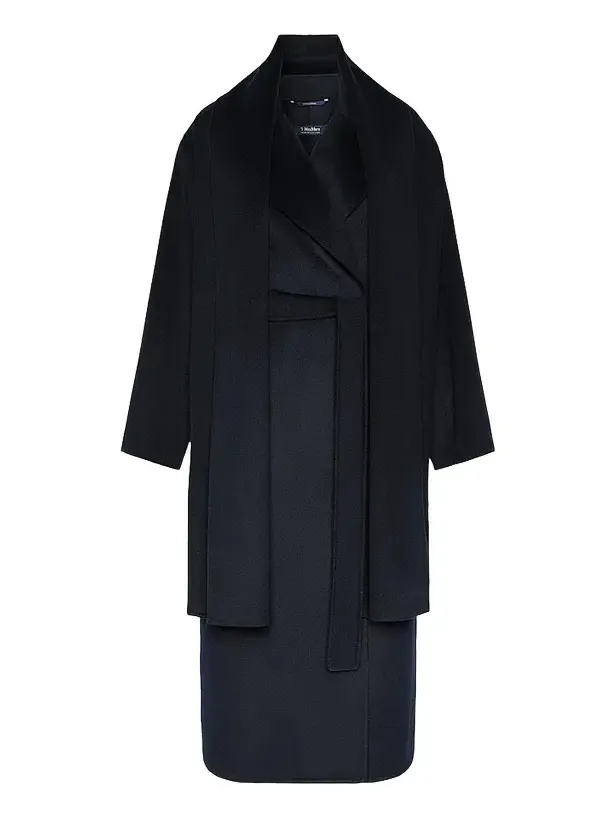 Max MaraWomen's Double Wool and Cashmere Robe Coat$3,390
 Max MaraDouble Cashmere Cropped Coat$4,590
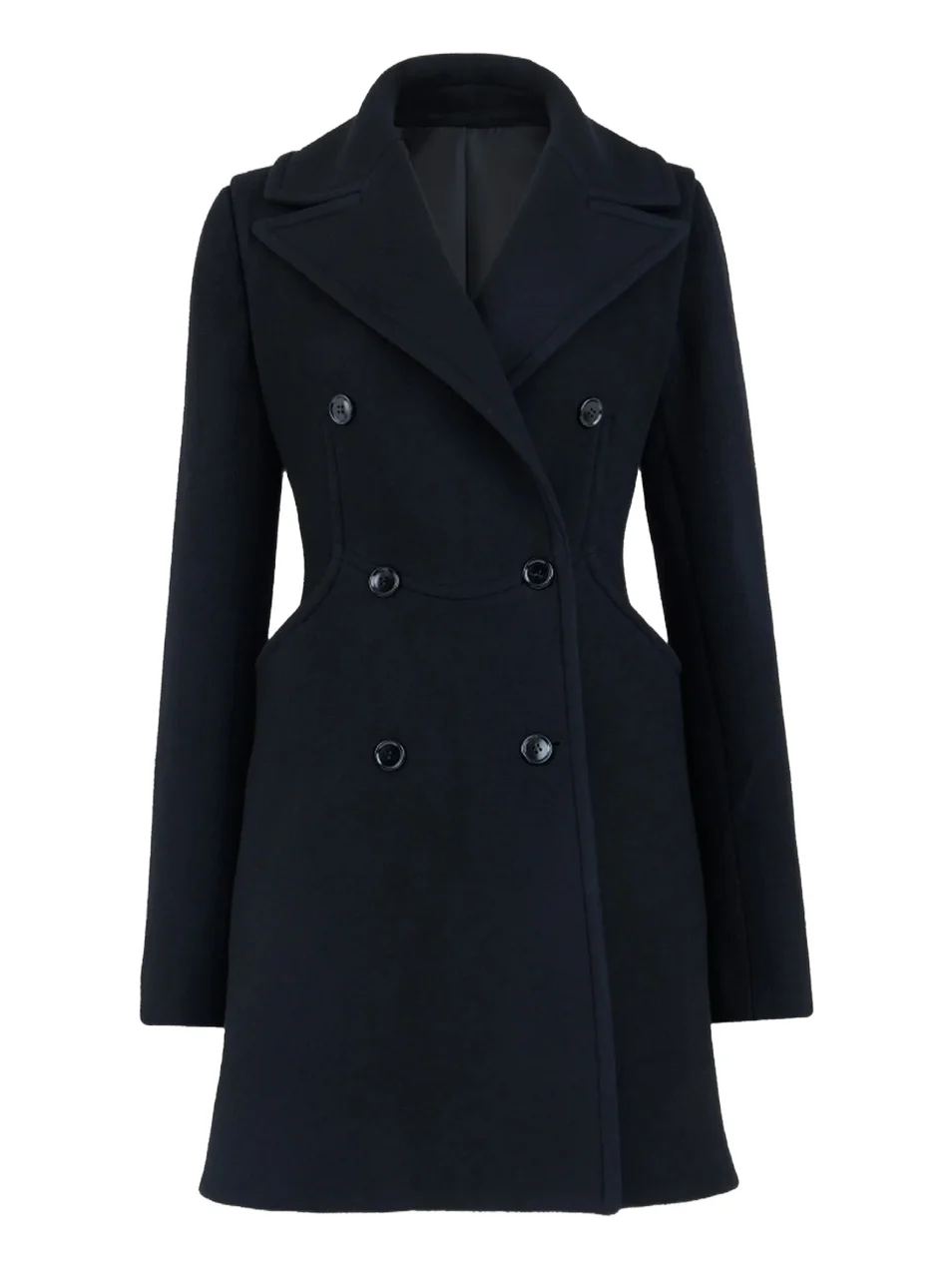 AlaïaWomen's Curved Pocket Double-Face Wool Coat$7,800
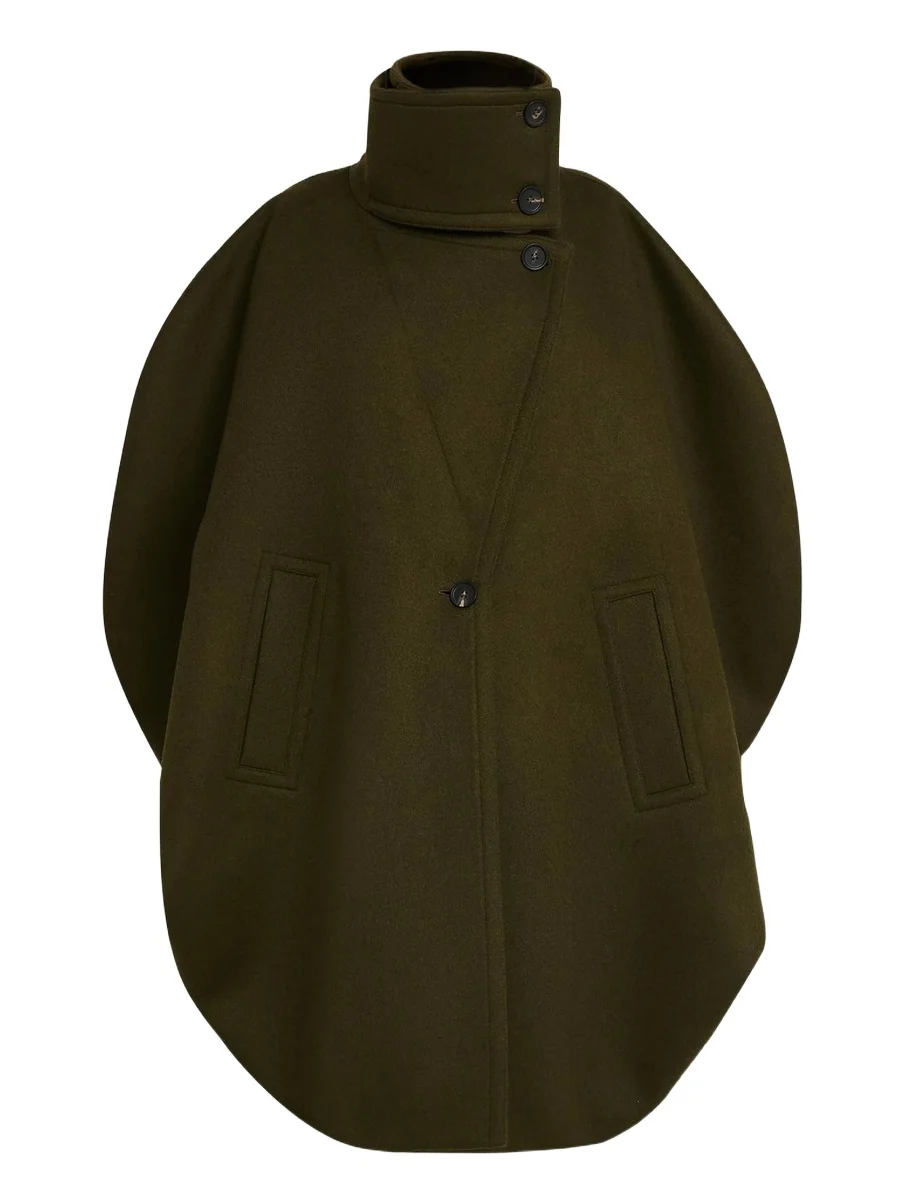 FerragamoWomen's Wool-Cashmere Single-Breasted Coat$4,800
 Stella McCartneyIconic Double-breasted Wool Coat$2,500
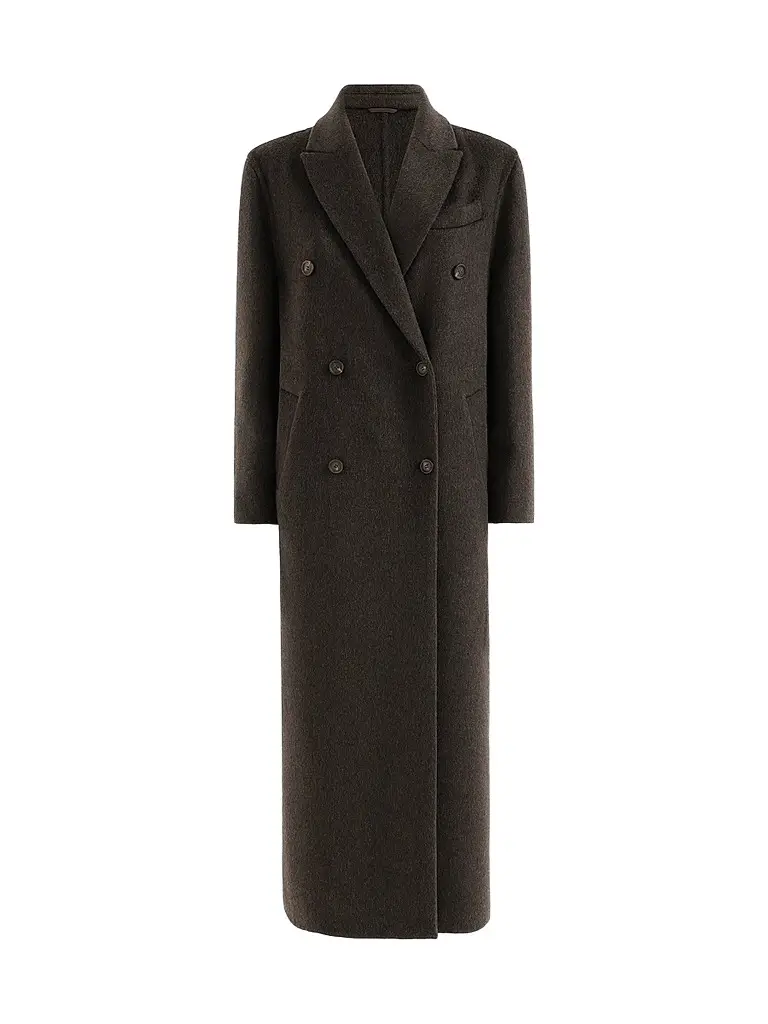 Brunello CucinelliWomen's Hand-Crafted Cashmere Double Beaver Cloth Coat$14,500
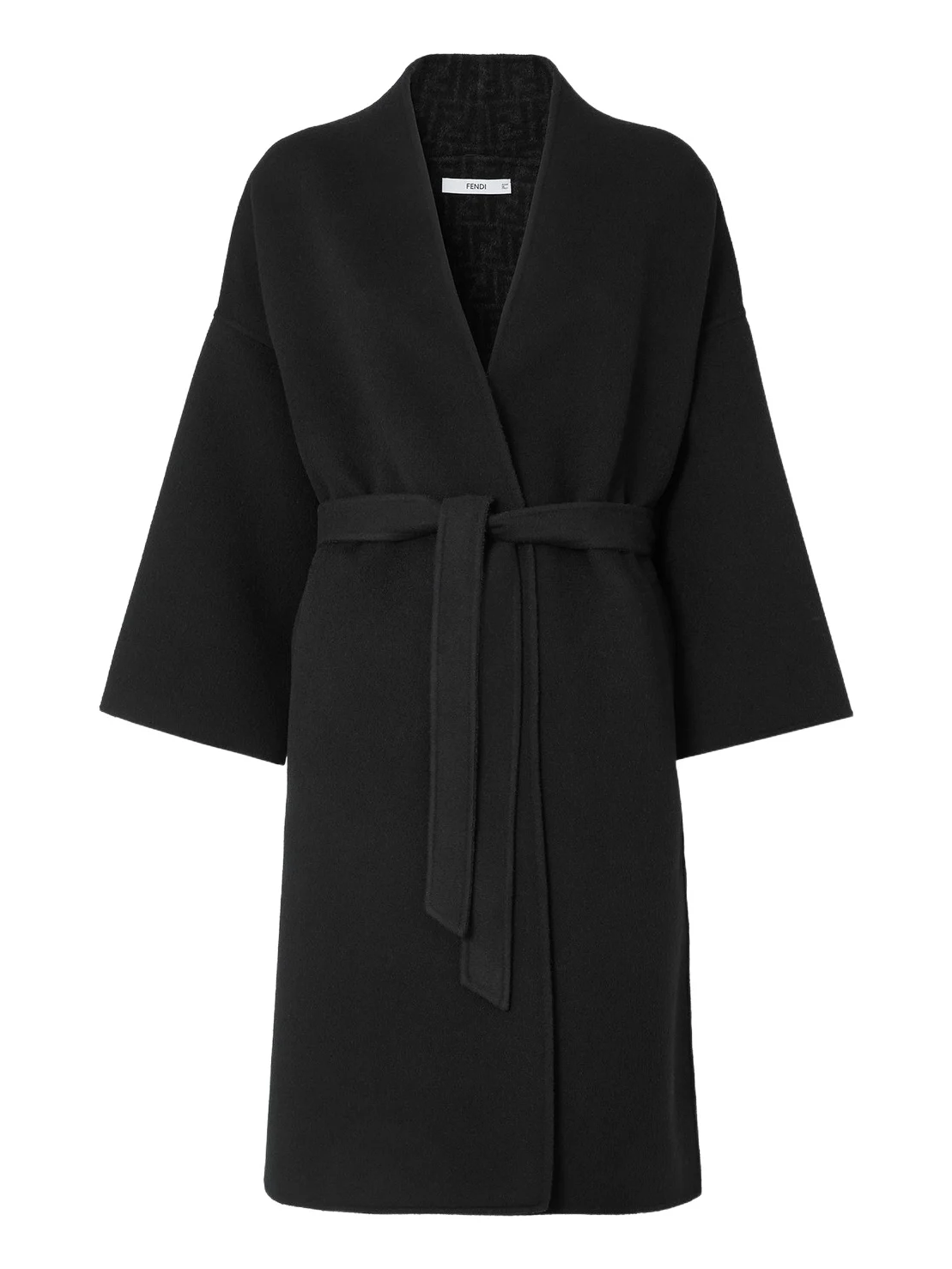 FendiFF Zucca Wool Coat$5,800
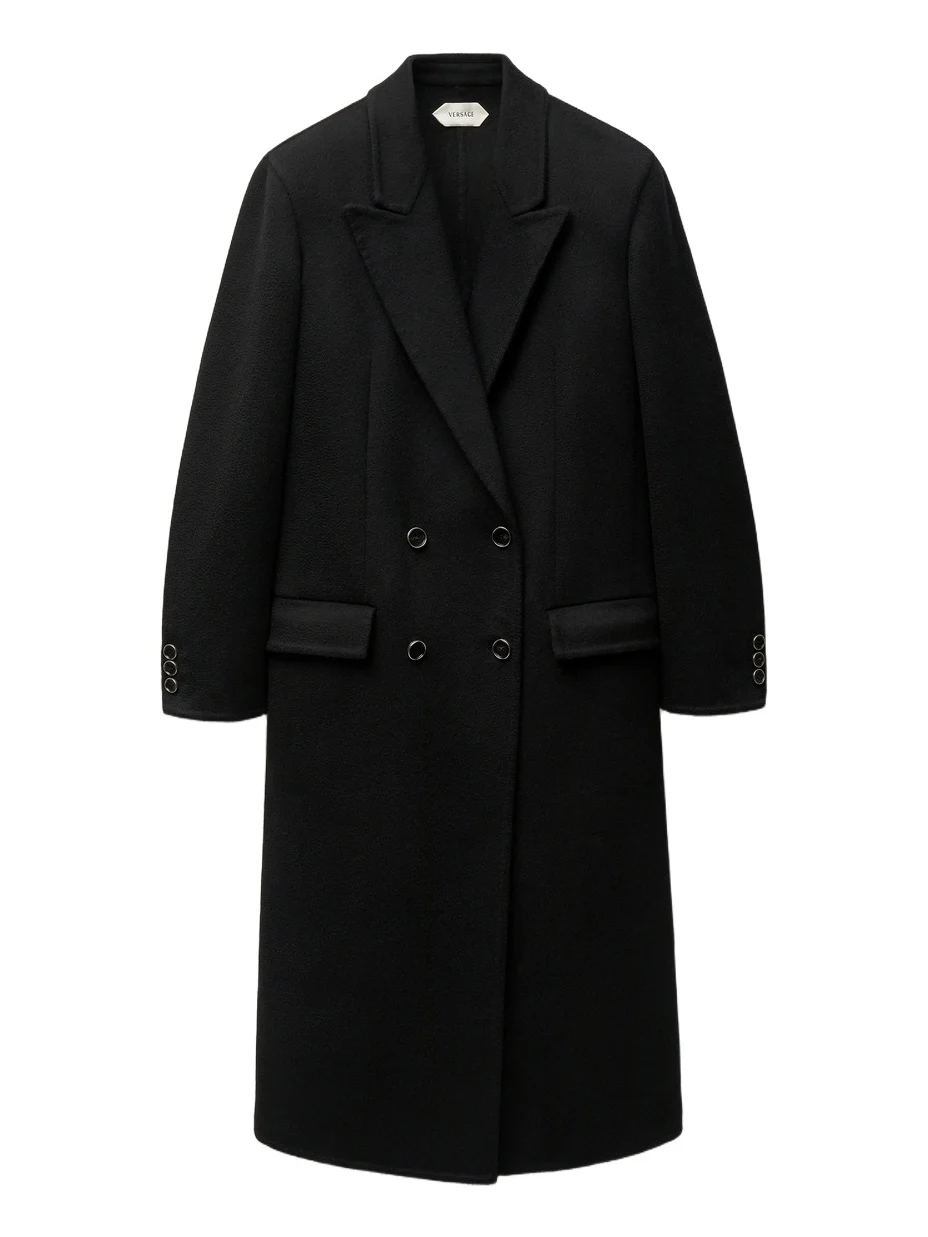 VersaceDouble-Wool & Cashmere Coat$5,990
The best puffer coats for women: long and mid-length down
The best puffer coats for women cover the seat at least, and the warmest reach the knee. Length is the single biggest decision: a hip-length puffer is a jacket for brisk days, while a long one keeps your thighs warm on a platform or a sideline. After length, look at the shape. A belt or drawstring at the waist, as on Max Mara's The Cube reversible down coat, Prada's down coat and Burberry's Audley, stops a long puffer looking like a sleeping bag and holds warm air in. A matte or brushed shell looks dressier than a high shine; Moncler's lacquered nylon is the exception that looks deliberate.
Two practical checks: zip the coat fully over your thickest sweater and cross your arms. If the quilting flattens across your back, size up, because compressed down does not insulate. And try it with your usual bag; a crossbody strap pressed across a puffer squashes the down at your shoulder and chest. More in our guide to designer puffer coats and our quilted and down jacket shop.
- City: long black puffer over a black turtleneck and black straight jeans, with black leather gloves and black lug-sole boots.
- Soft neutrals: ivory puffer over a cream knit and ecru jeans, with white leather sneakers on dry days.
- Dressed up: a belted champagne down coat over a burgundy knit dress and burgundy knee boots.
Long and mid-length puffer coats
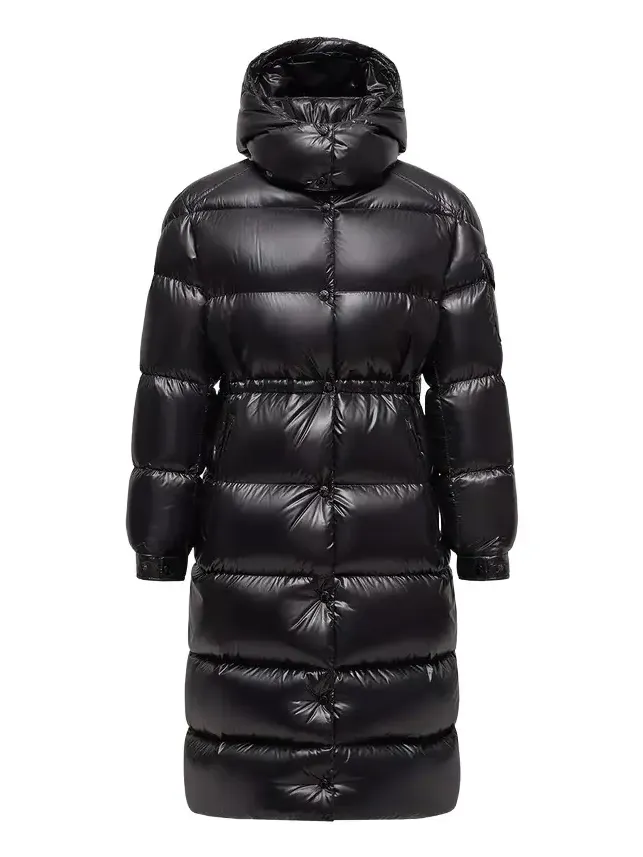 MonclerCavettaz Hooded Long Down Jacket$3,030
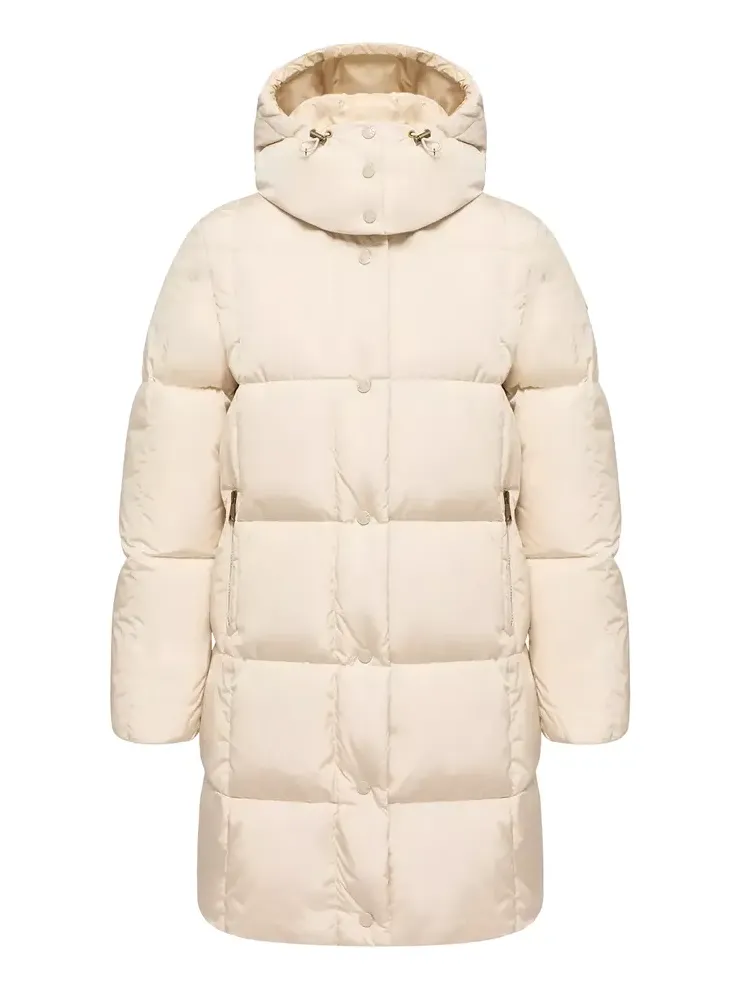 MonclerLitte Square-quilted Hooded Long Down Jacket$2,800
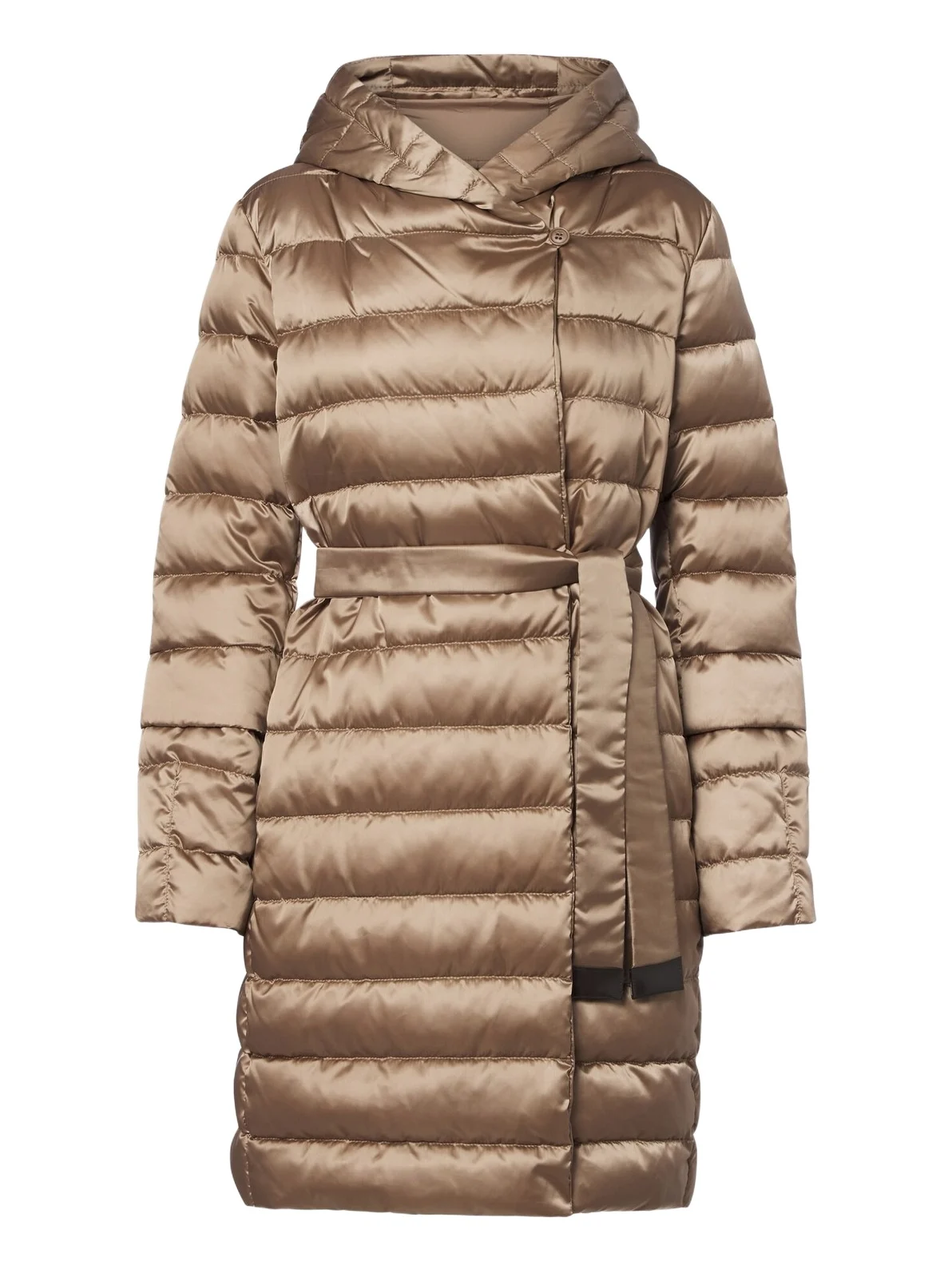 Max MaraThe Cube reversible down coat$1,860
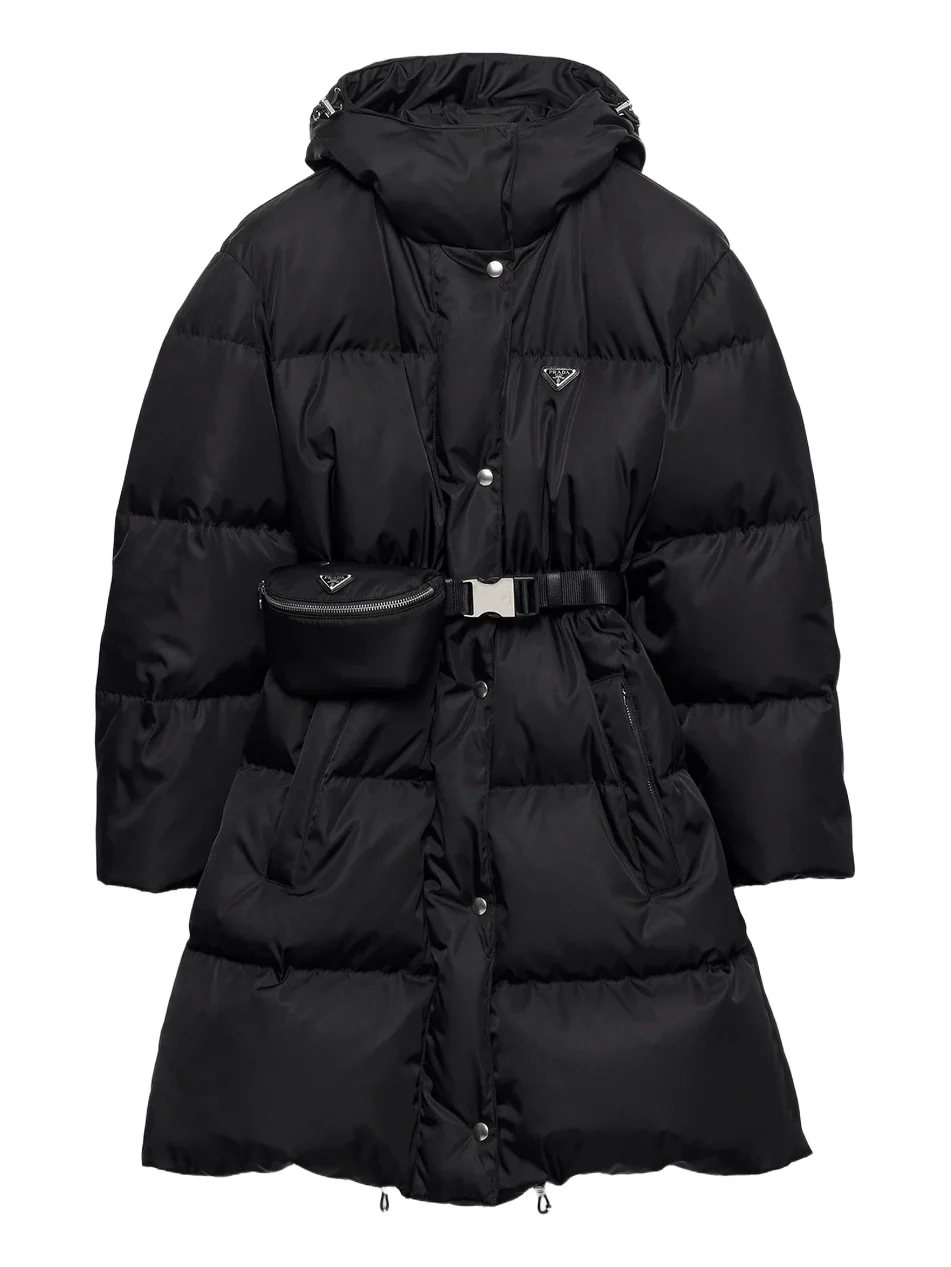 PradaWomen's Nylon Down Coat$4,200
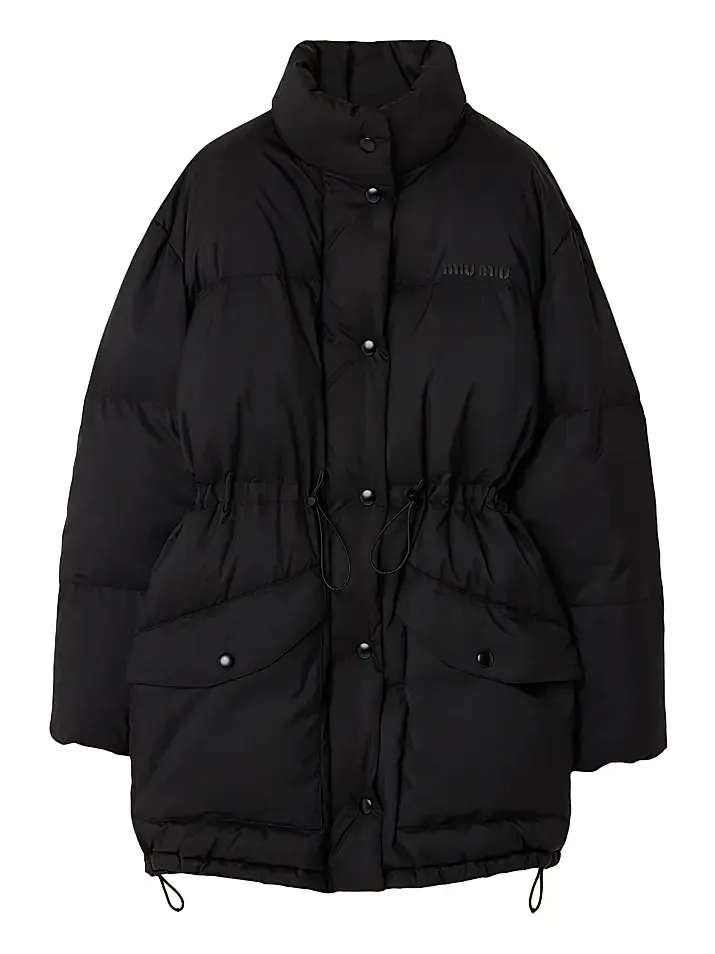 Miu MiuWomen's Technical Pongé Down Long Coat$3,550
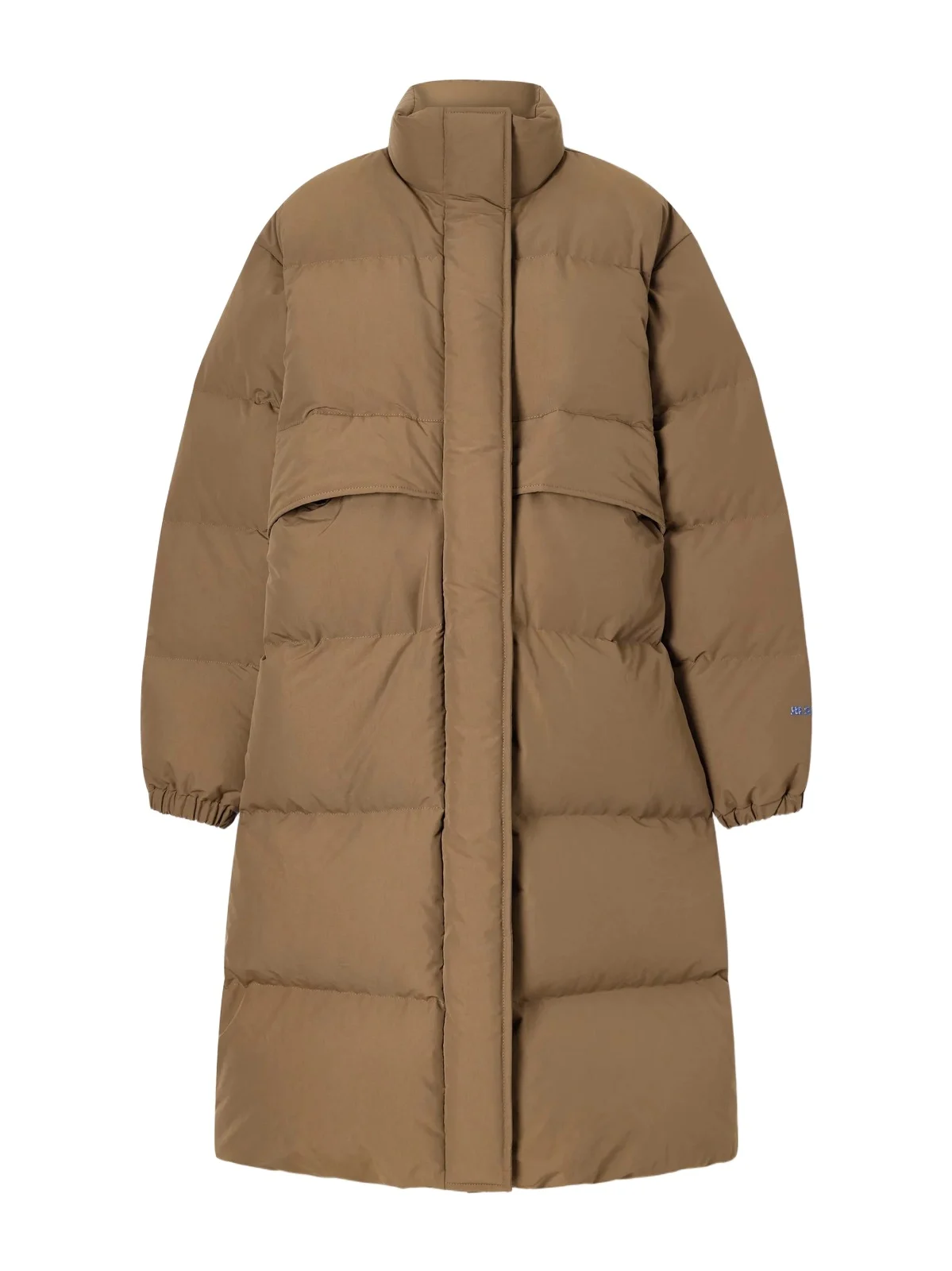 Jil SanderLogo-appliquéd Quilted Shell Down Coat$3,990
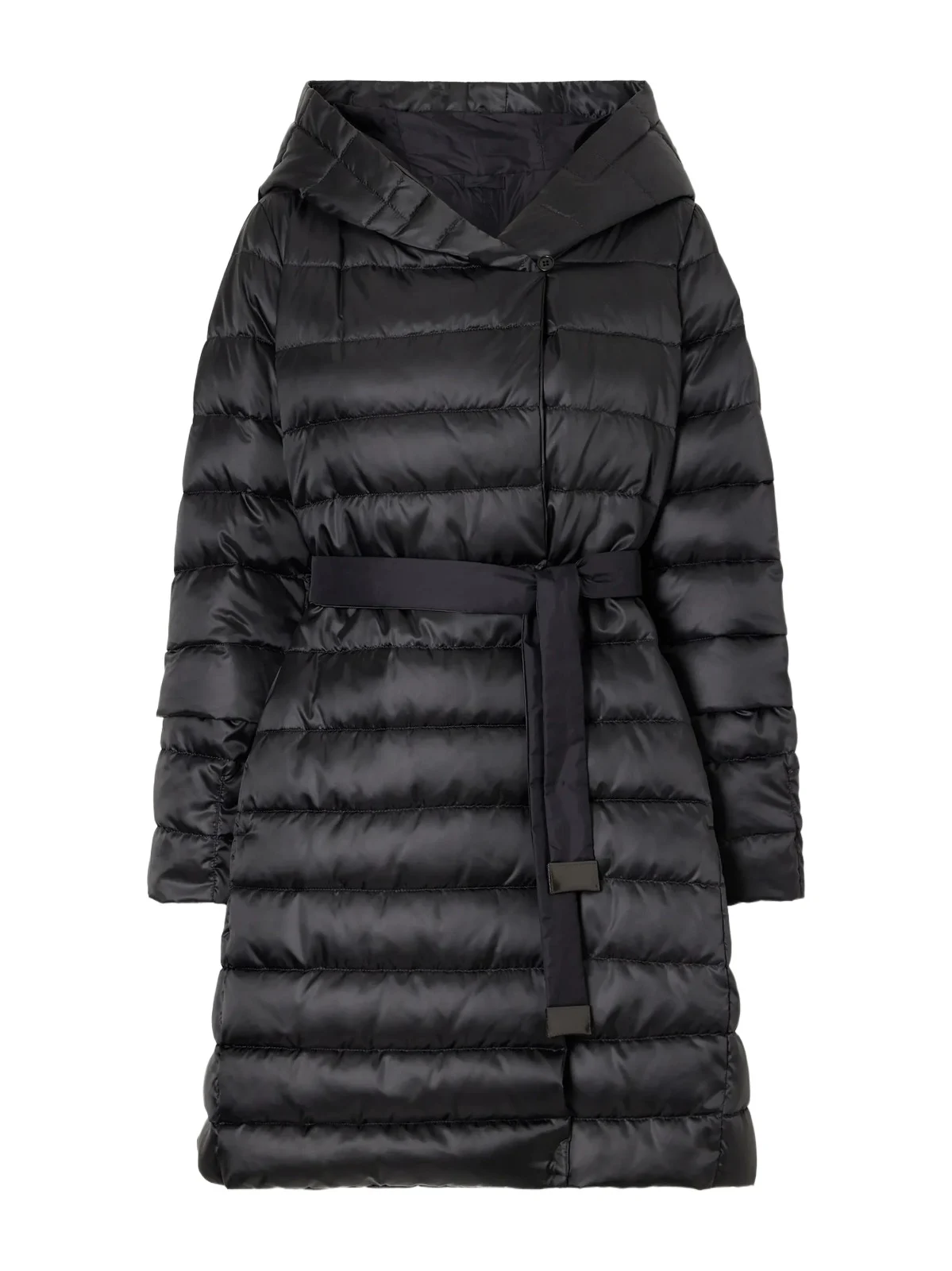 Max MaraNovef Reversible Quilted Satin Down Coat$1,860
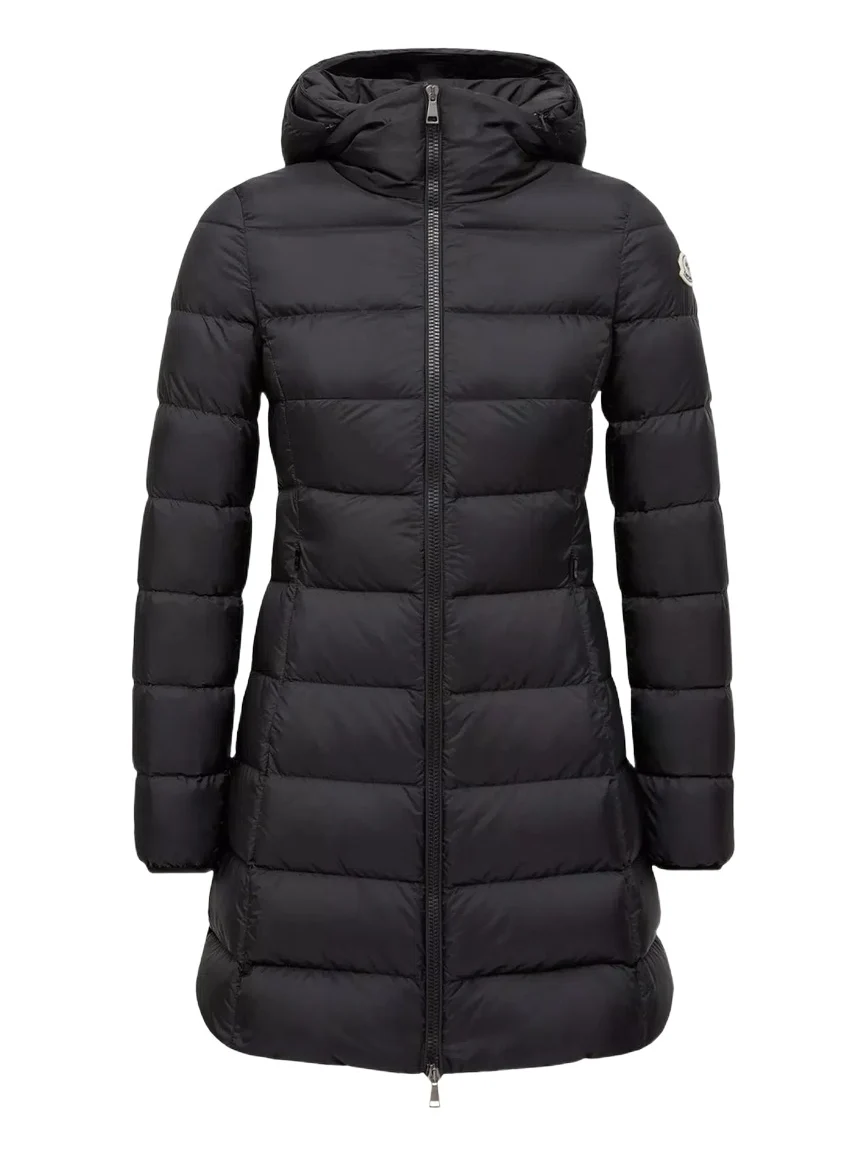 MonclerGie Hooded Long Down Jacket$2,310
Down parkas: the winter coat for very cold weather
A parka is cut to go over layers, and its hood is built for weather rather than show. Look for a hood that stands up on its own and sits close to your cheeks, a drawstring waist, inner cuffs, and a hem that covers your seat, ideally the knee. Fur and shearling trims are not decoration: a ruff around a hood breaks the wind before it reaches your face. Moncler lists sheep shearling trim on the Moustique and Khloesse and a faux-fur interior on the Halicte, so check which you are buying. Brunello Cucinelli's belted cotton-blend down coat and Burberry's Kent both have detachable hoods, Max Mara's Medusa adds a plush-trimmed hood to a coat shape that still looks polished in town, and Burberry's Audley puffer trench keeps the trench's double-breasted front and belt and adds a detachable hood. Thom Browne's long down coat draws its hood closed with a drawstring.
- Commute: olive parka over a gray roll-neck, charcoal wool trousers and waterproof black boots.
- Snow day: black hooded parka, cream fisherman sweater, black ski-style leggings and black shearling-lined boots.
Hooded down parkas and coats for very cold weather
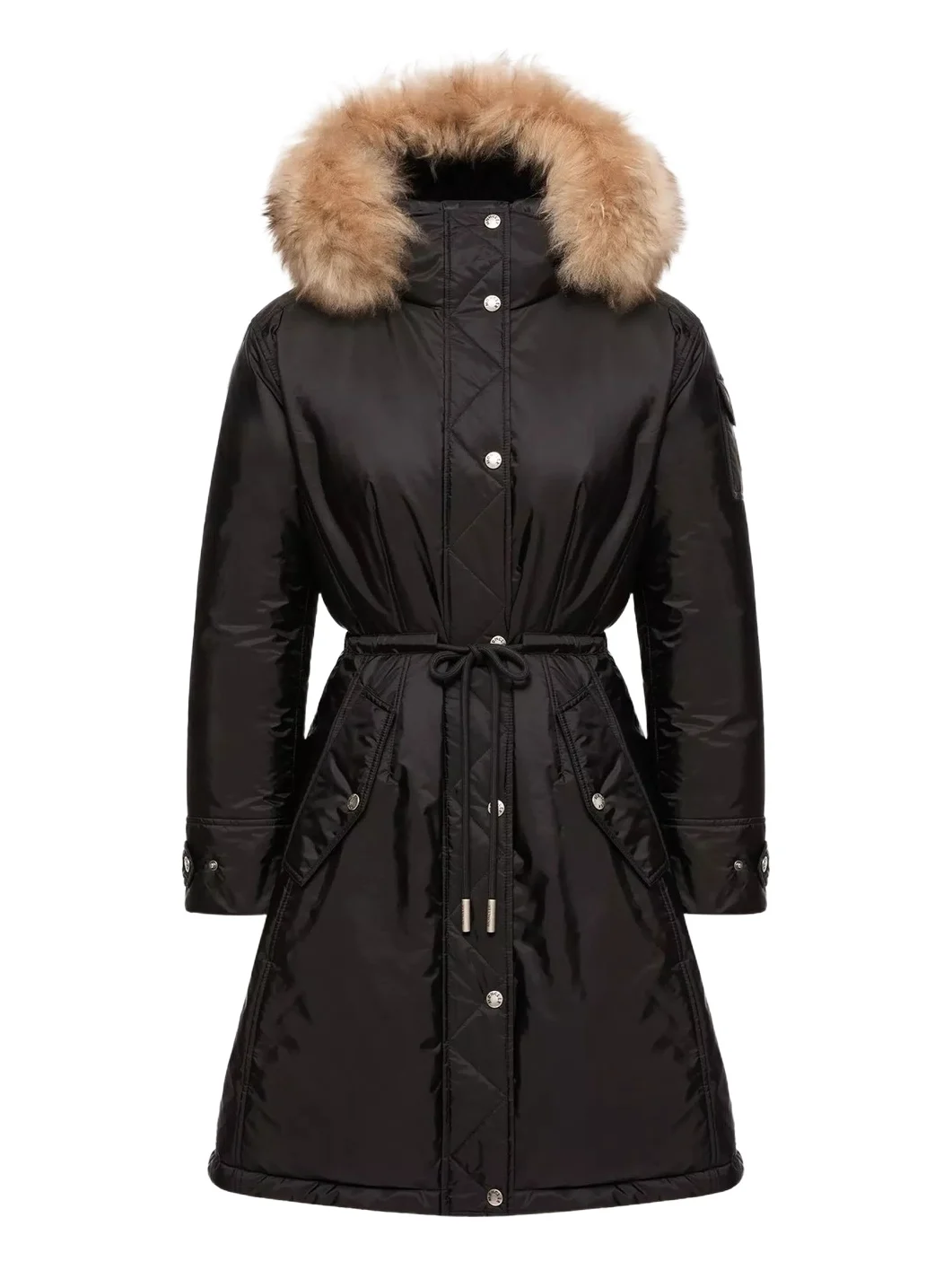 MonclerMoustique Hooded Shearling Trimmed Long Down Parka$3,595
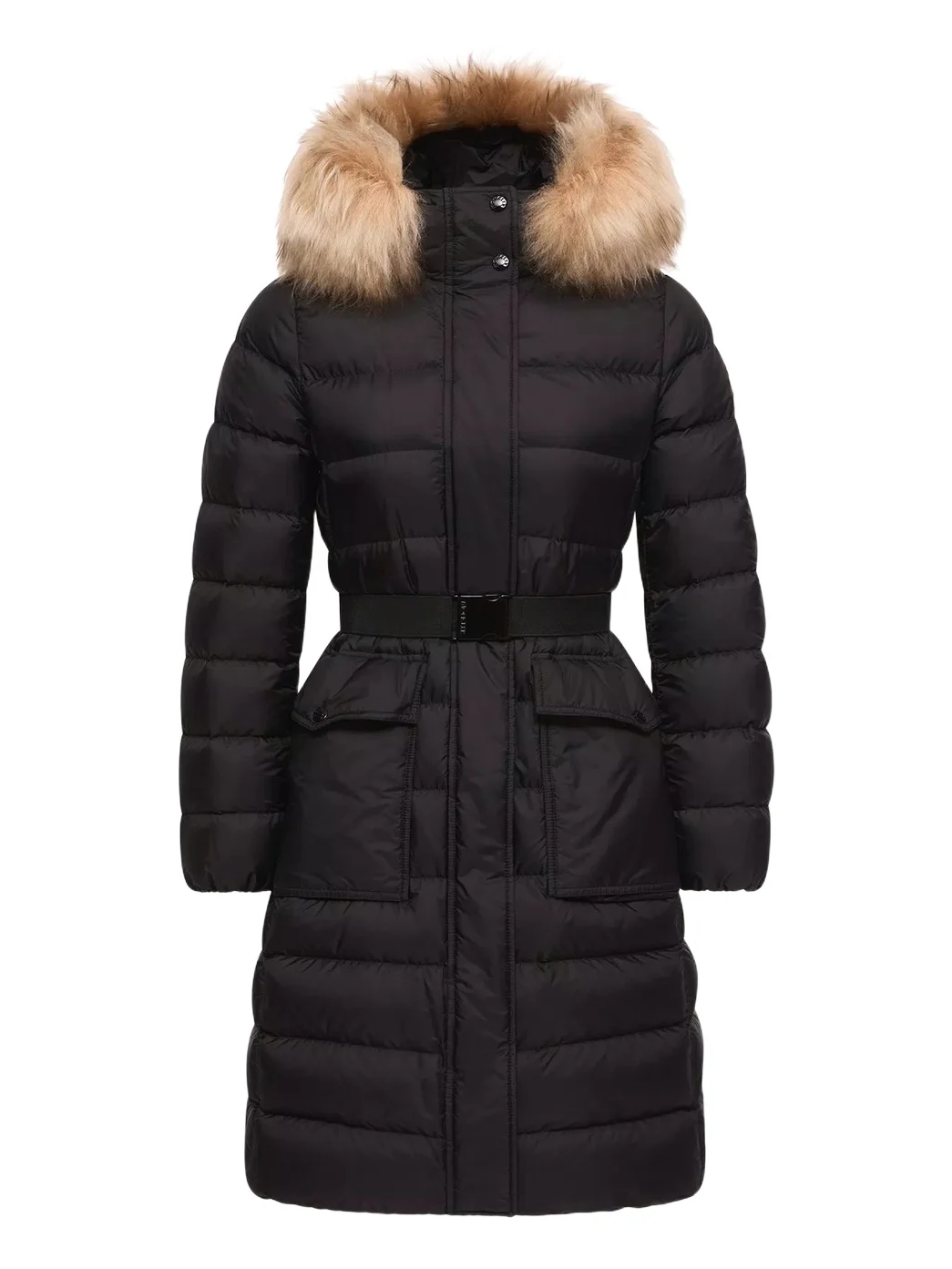 MonclerKhloesse Shearling-trimmed Hooded Long Down Jacket$3,520
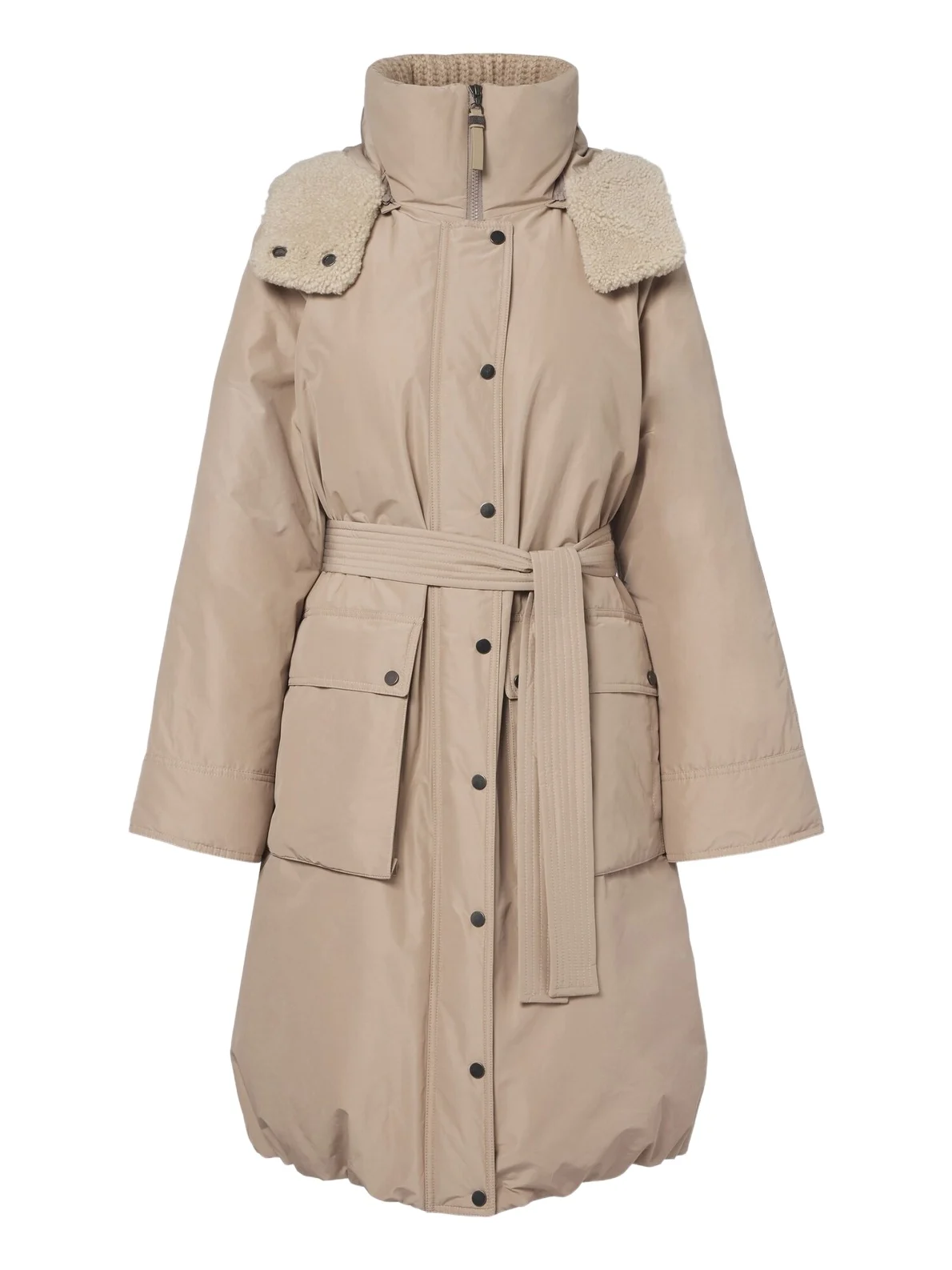 Brunello CucinelliMonili hooded cotton-blend down coat$11,900
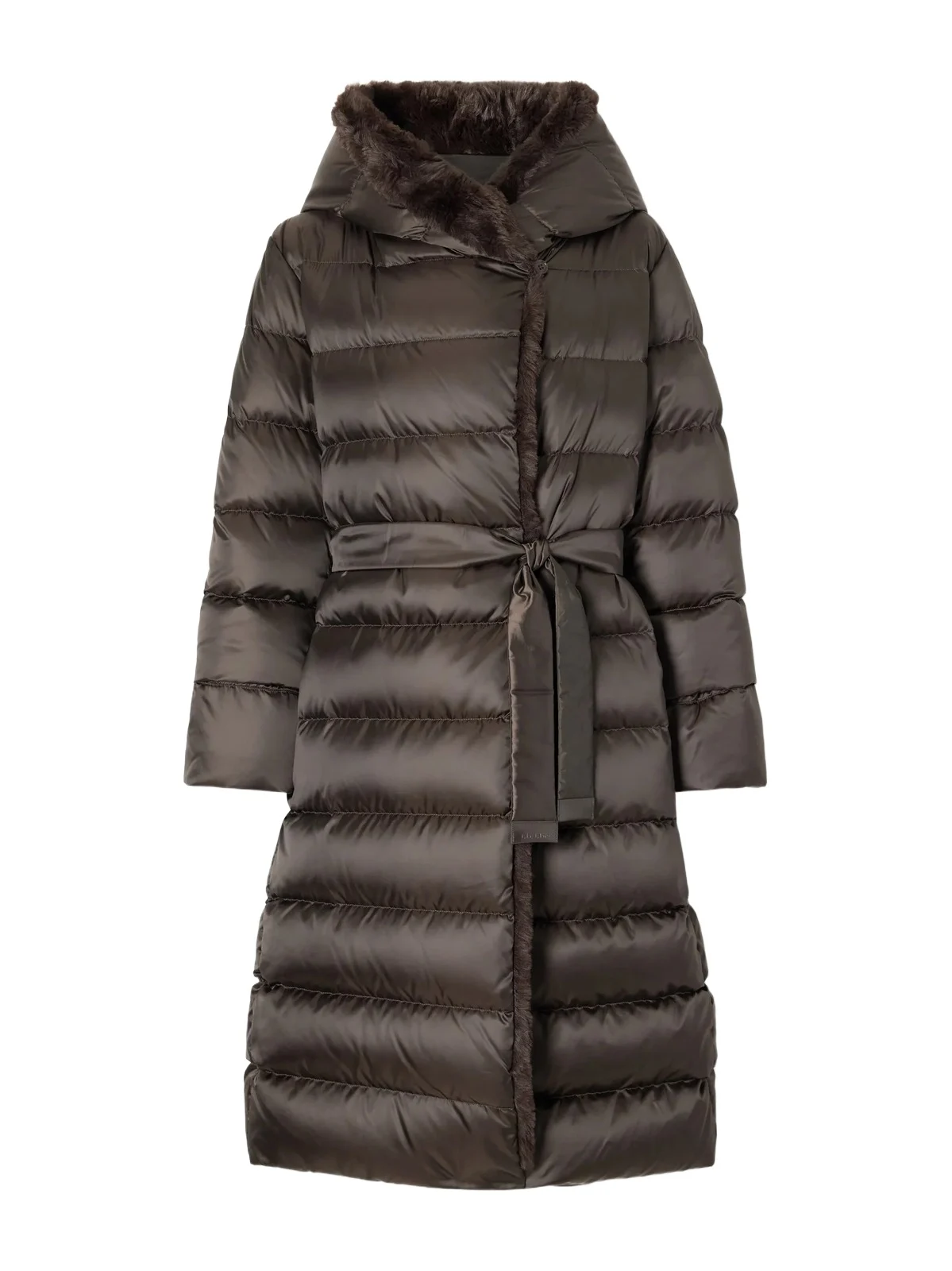 Max MaraMedusa Hooded Belted Quilted Plush-trimmed Shell Down Coat$2,290
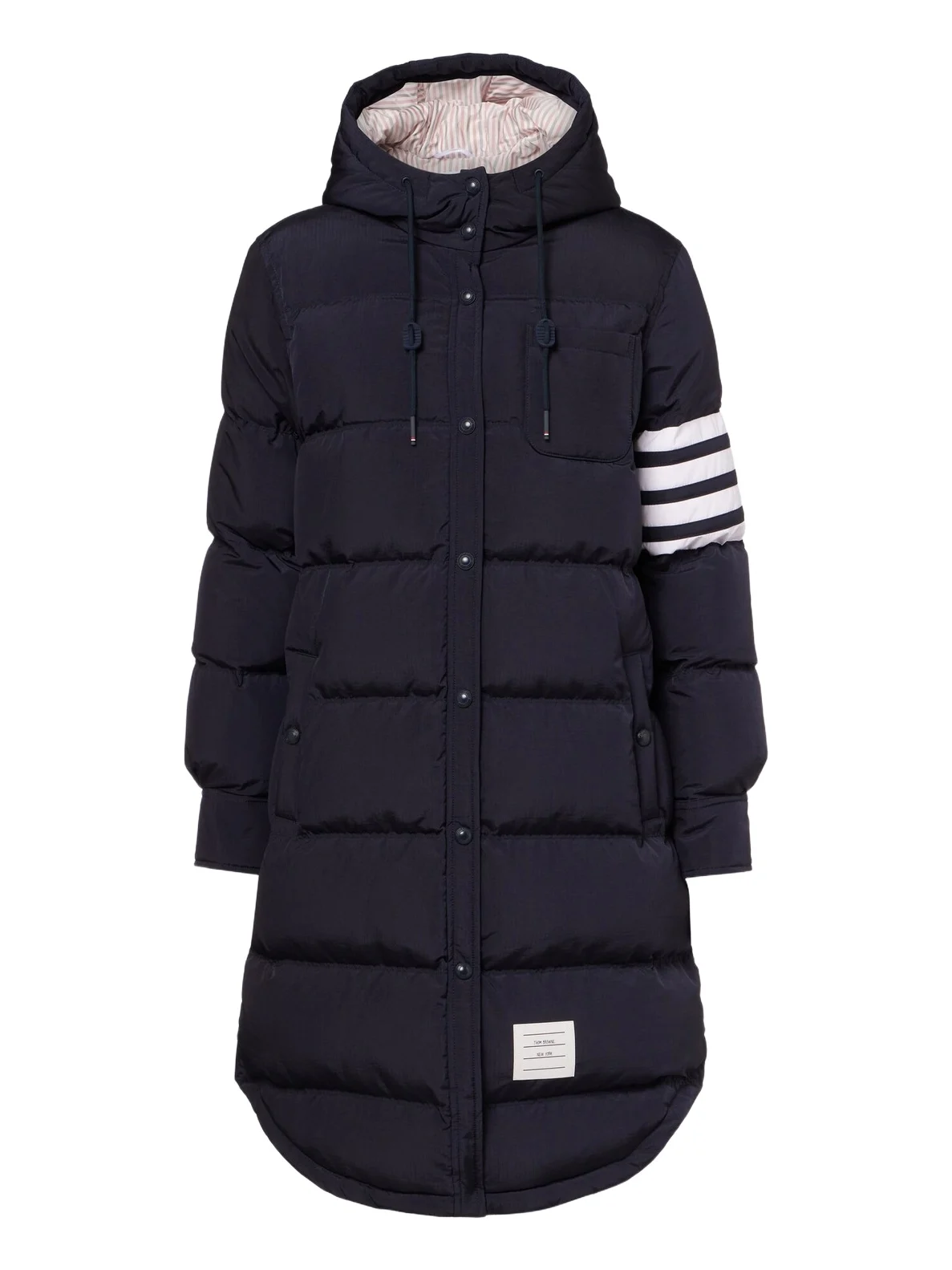 Thom Browne4-Bar hooded down coat$2,950
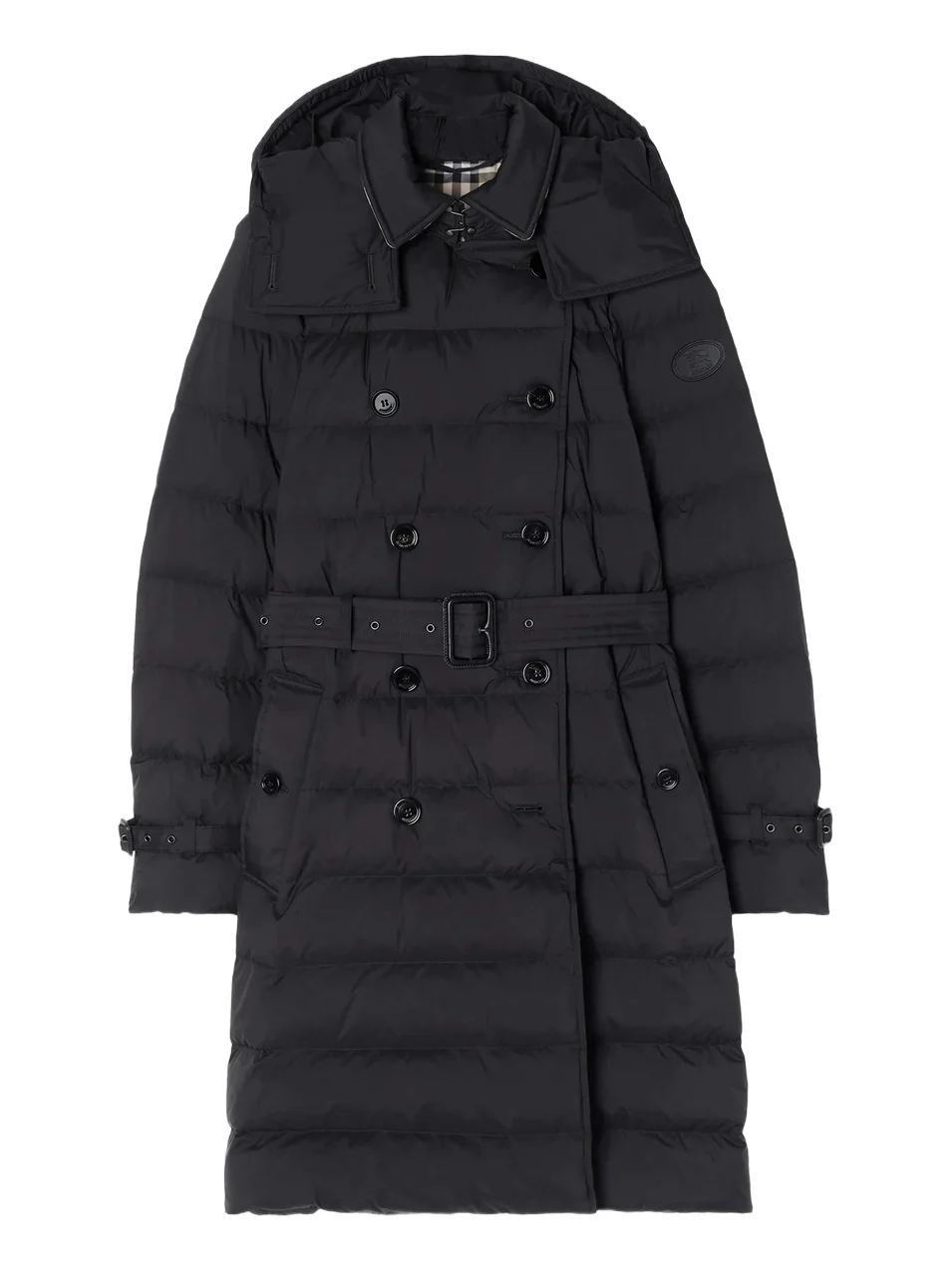 BurberryWomen's Audley Puffer Trench Coat$1,795
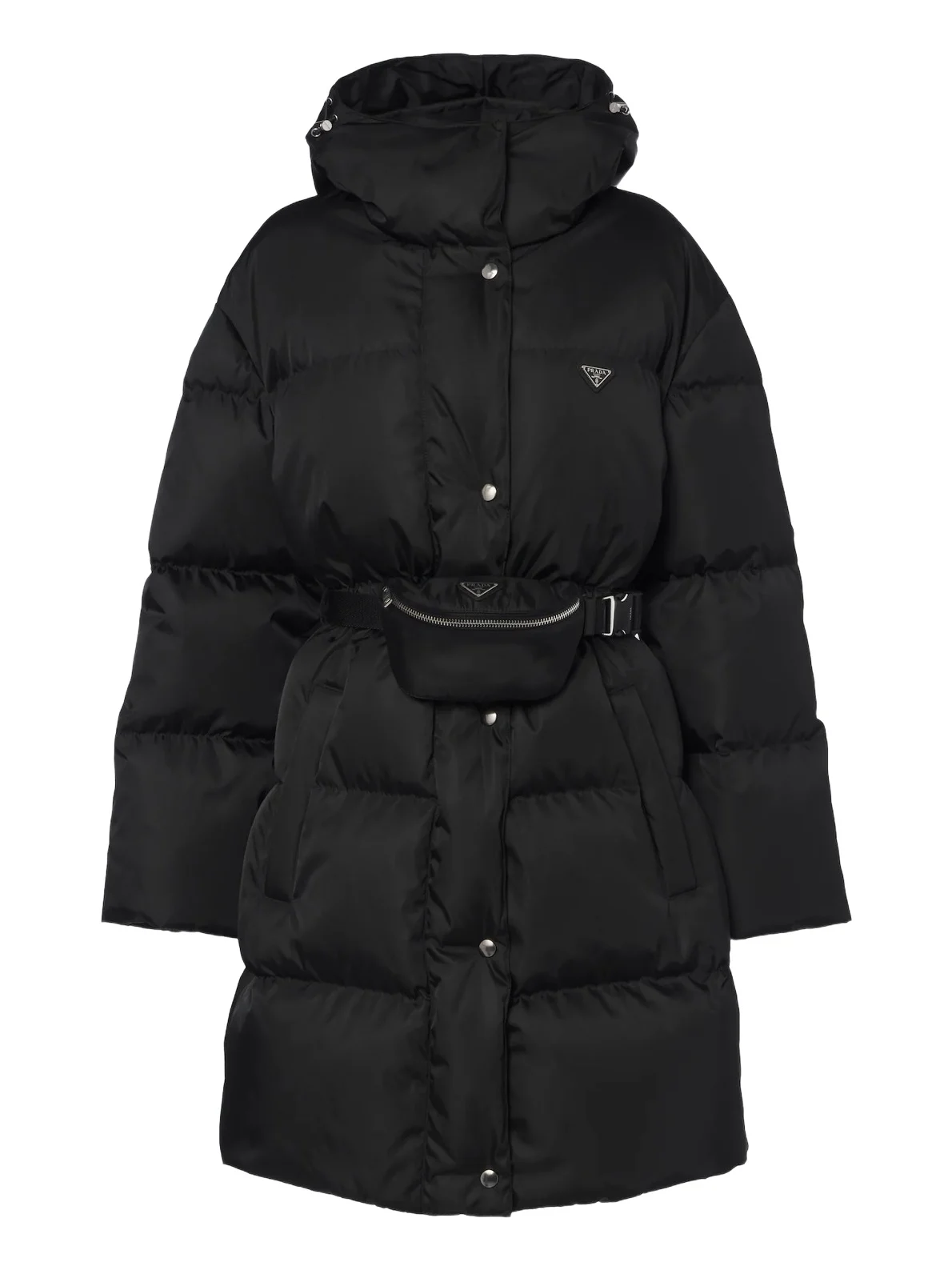 PradaBelted hooded Re-Nylon down coat$4,200
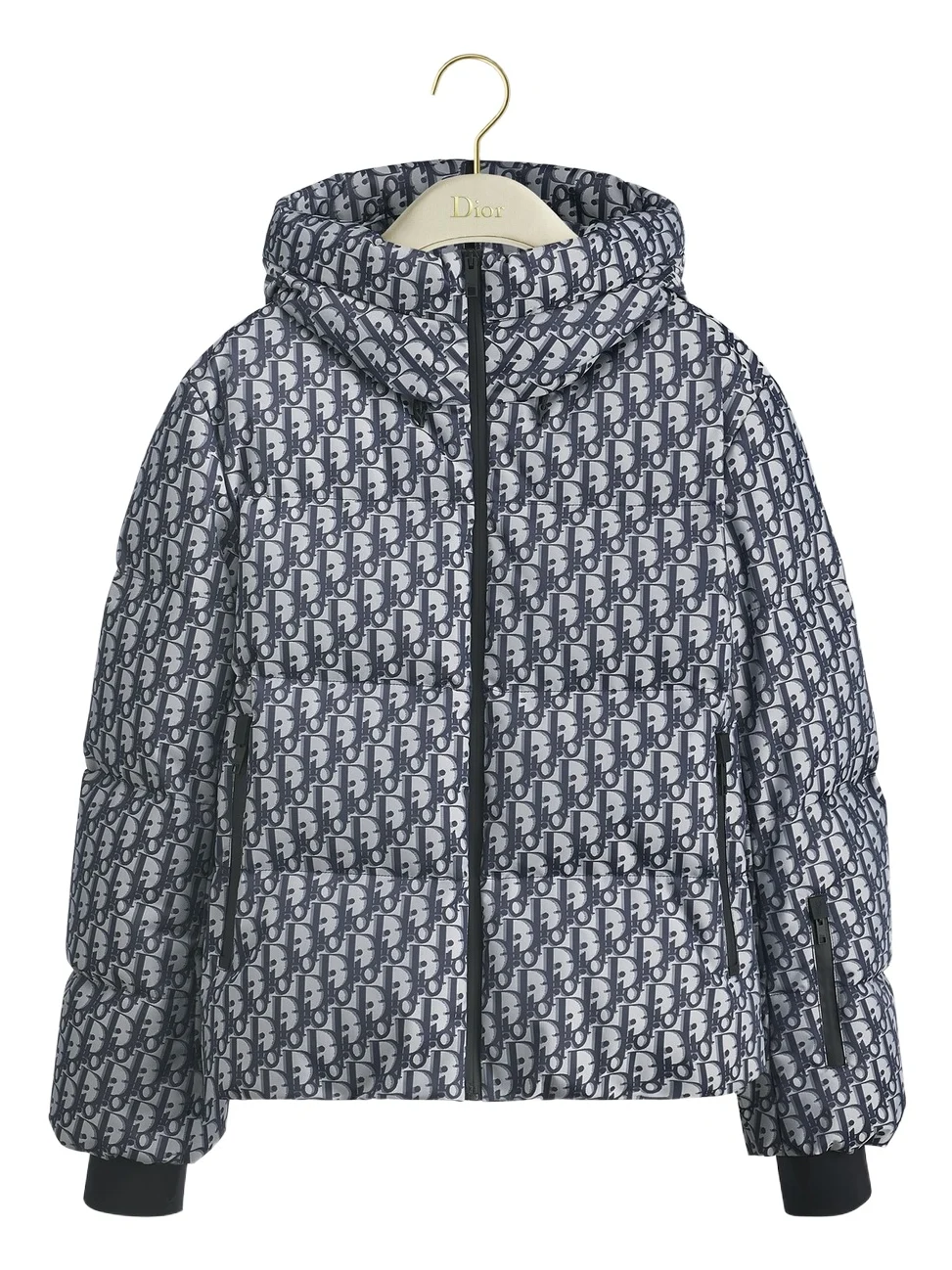 DiorDiorAlps Dior Oblique Hooded Down Jacket$5,900
Down under wool, cashmere and leather
The hybrid coat is the answer for anyone who needs a parka's warmth and a tailored coat's face. Brunello Cucinelli puts down under a virgin wool donegal and under a wool-blend shell trimmed in shearling; Moncler lines a wool and cashmere flannel with down in the Vivante; Khaite fills its Wilson coat, in grained nappa lambskin with a curly shearling collar, with duck down; Prada's loden down jacket is fleece wool over goose down. These look at home over trousers and a knit at the office and keep you warm on the walk there. Expect them to be heavier than a nylon puffer and less resistant to a downpour, since wool and leather shells are not built for steady rain.
Down coats and jackets with wool and leather shells
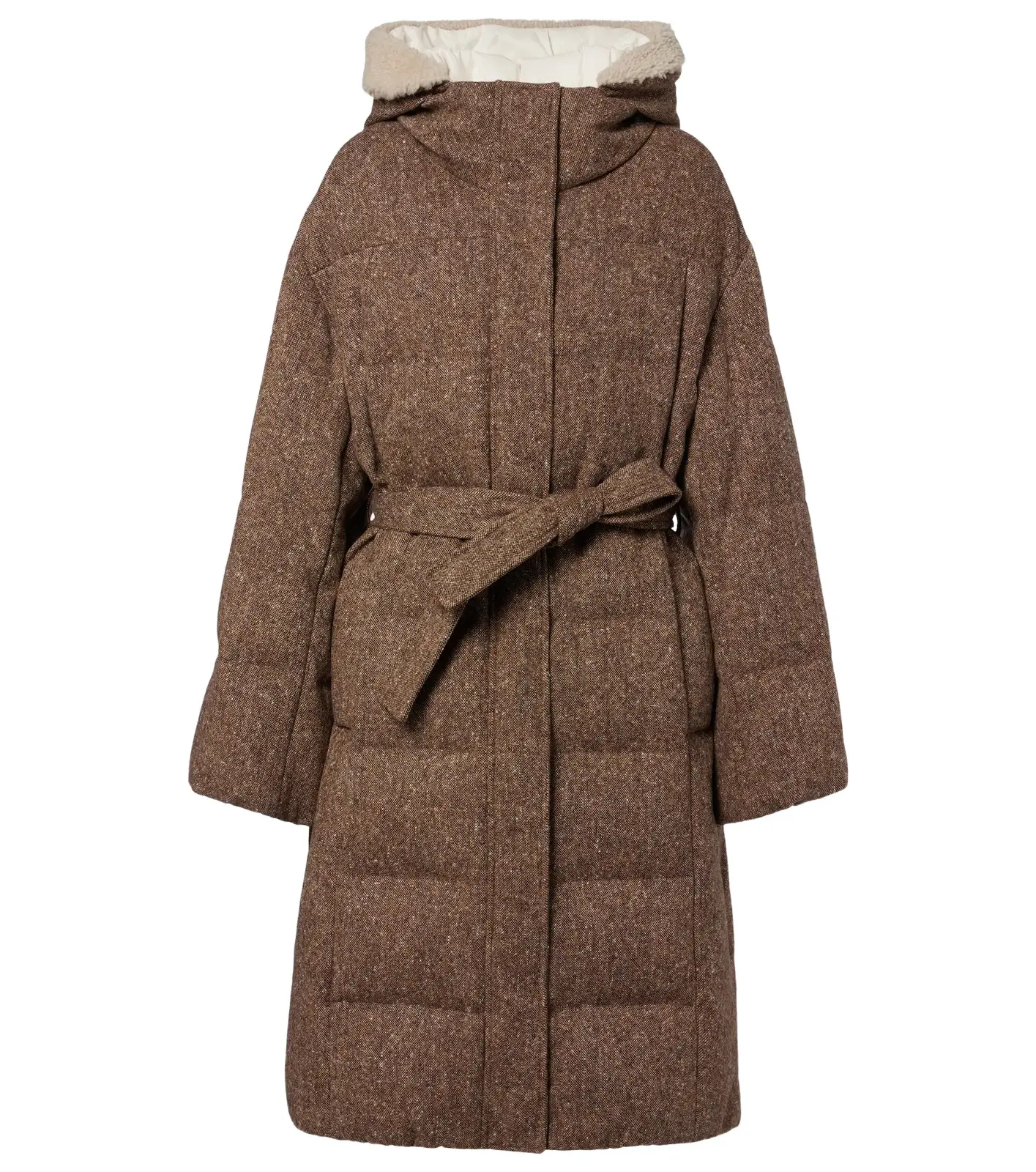 Brunello CucinelliShearling-trimmed wool-blend down coat$12,500
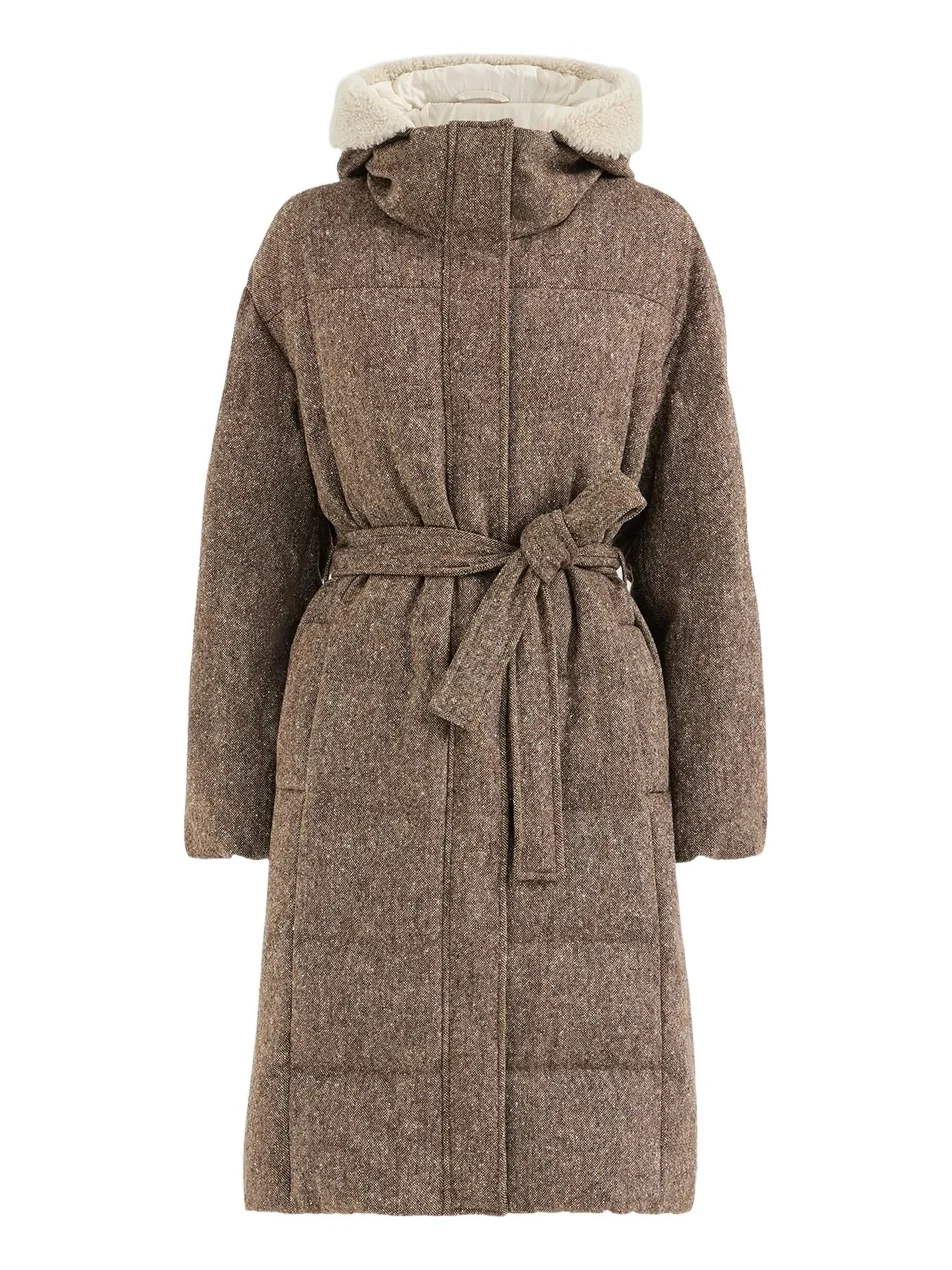 Brunello CucinelliWomen's Virgin Wool Donegal Down Coat with Shearling Inserts and Monili - Brown$12,500
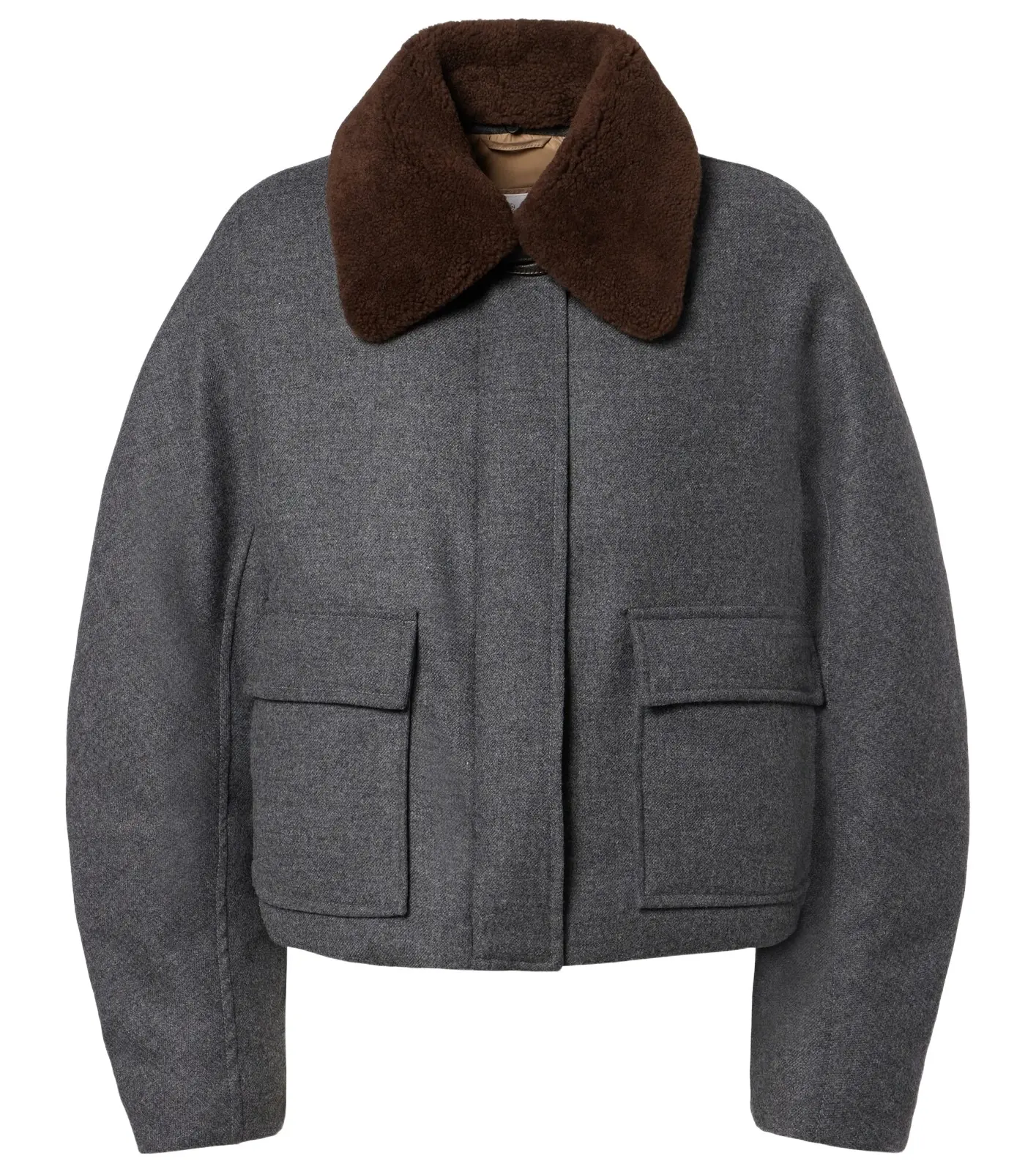 Brunello CucinelliAlpaca and cashmere down jacket$7,100
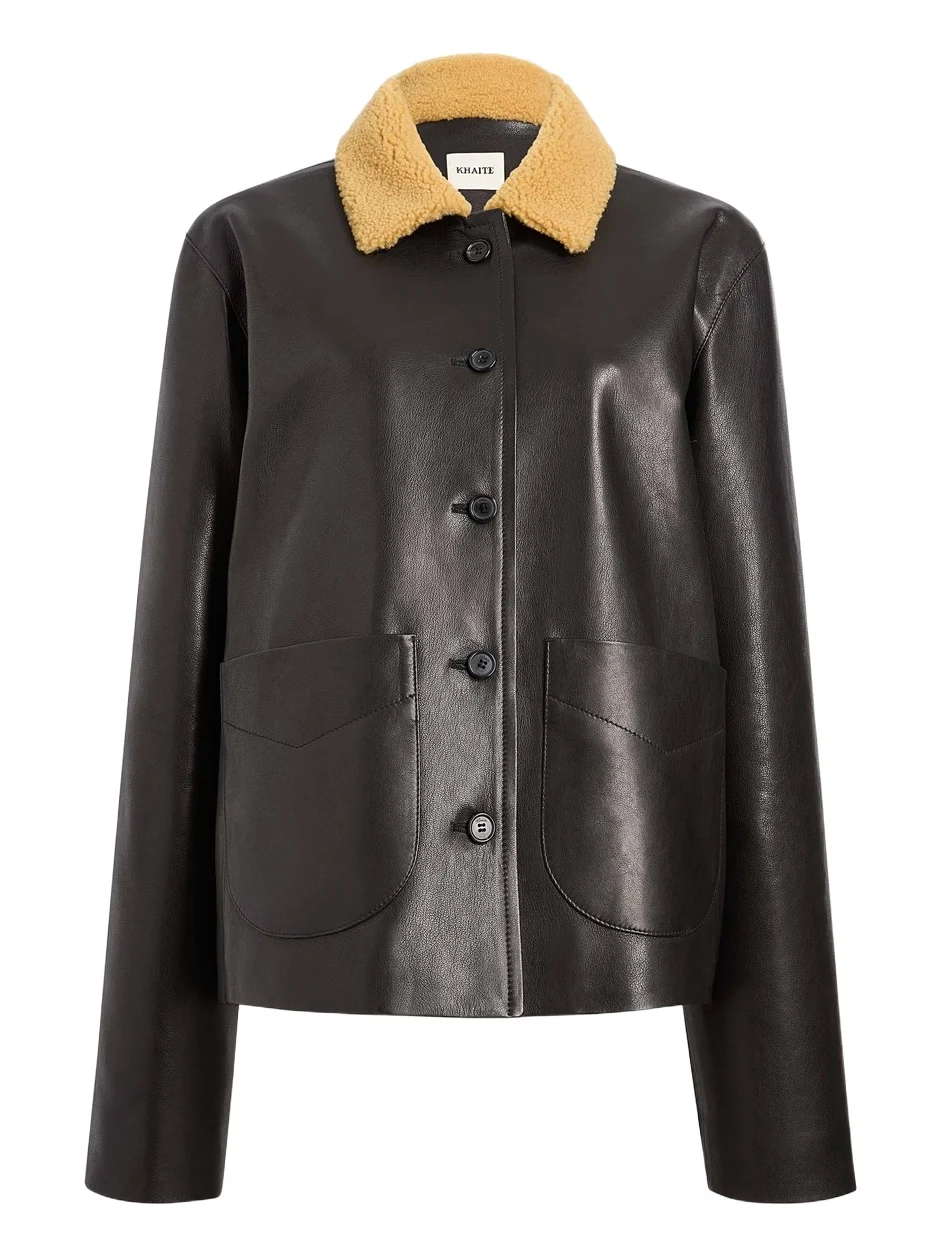 KhaiteWilson Coat In Black$6,400
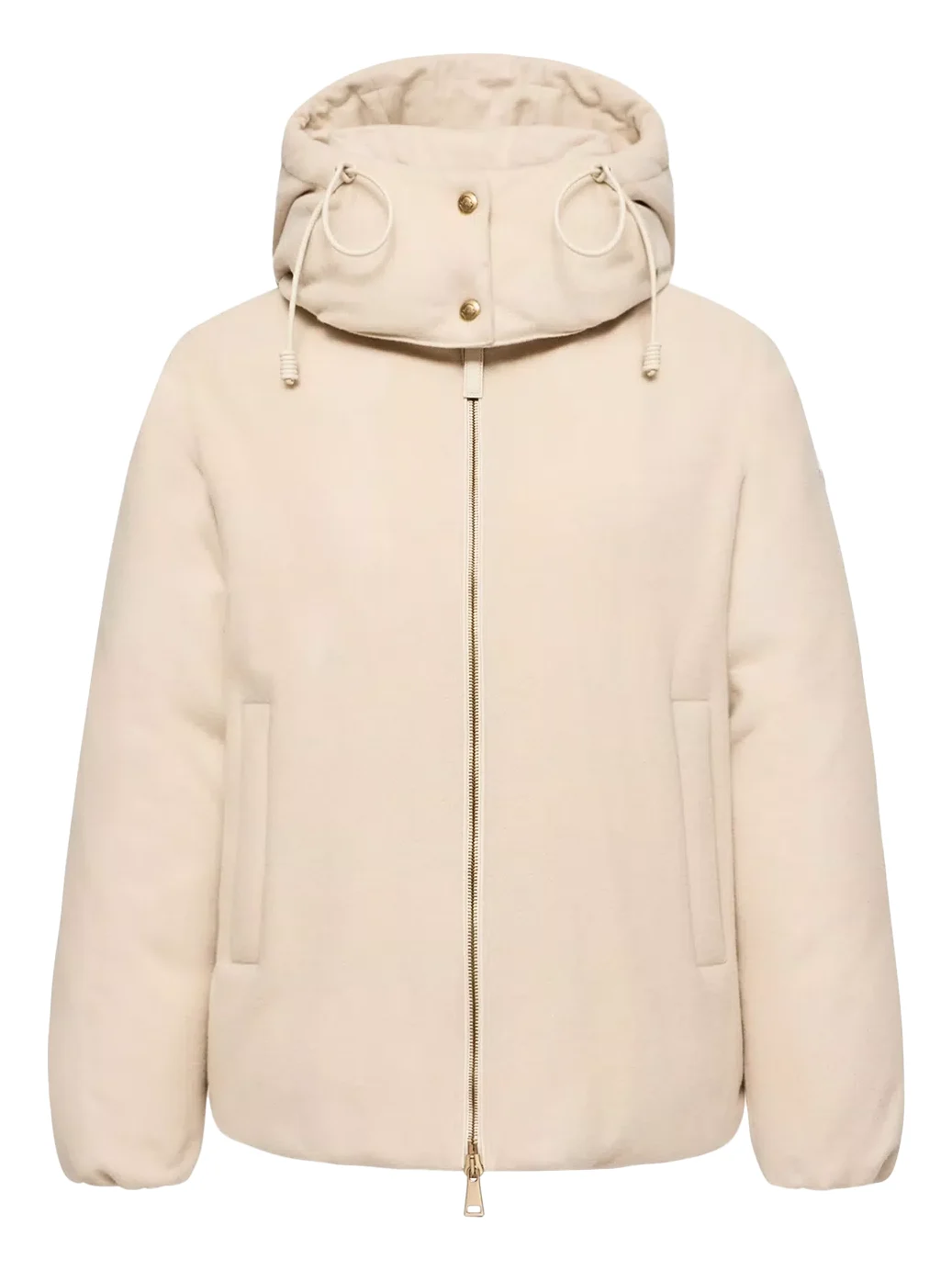 MonclerVivante Hooded Wool & Cashmere Short Down Jacket$3,970
 PradaWomen's Loden Down Jacket$4,600
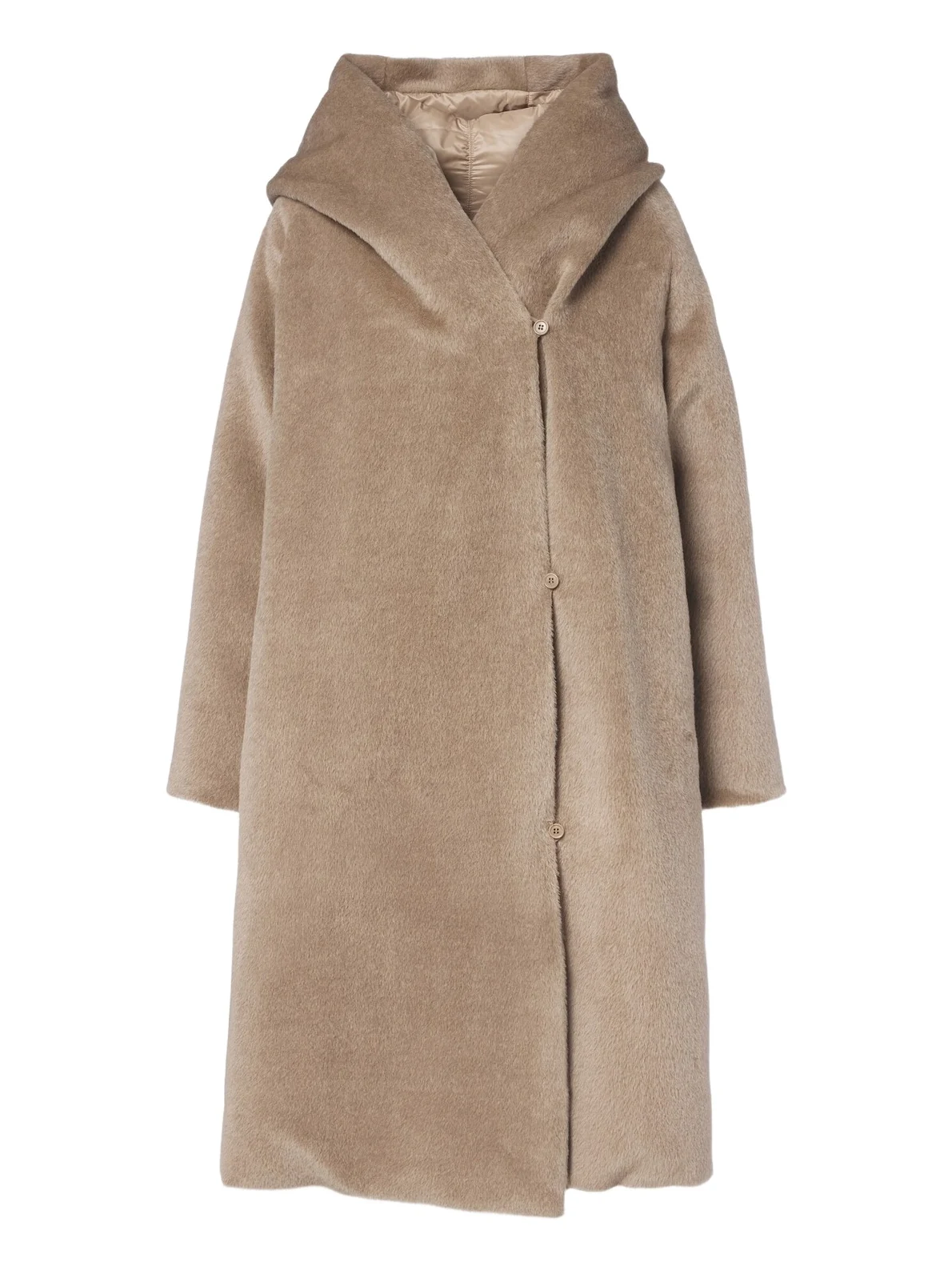 Max MaraThe Cube reversible alpaca and wool down coat$2,860
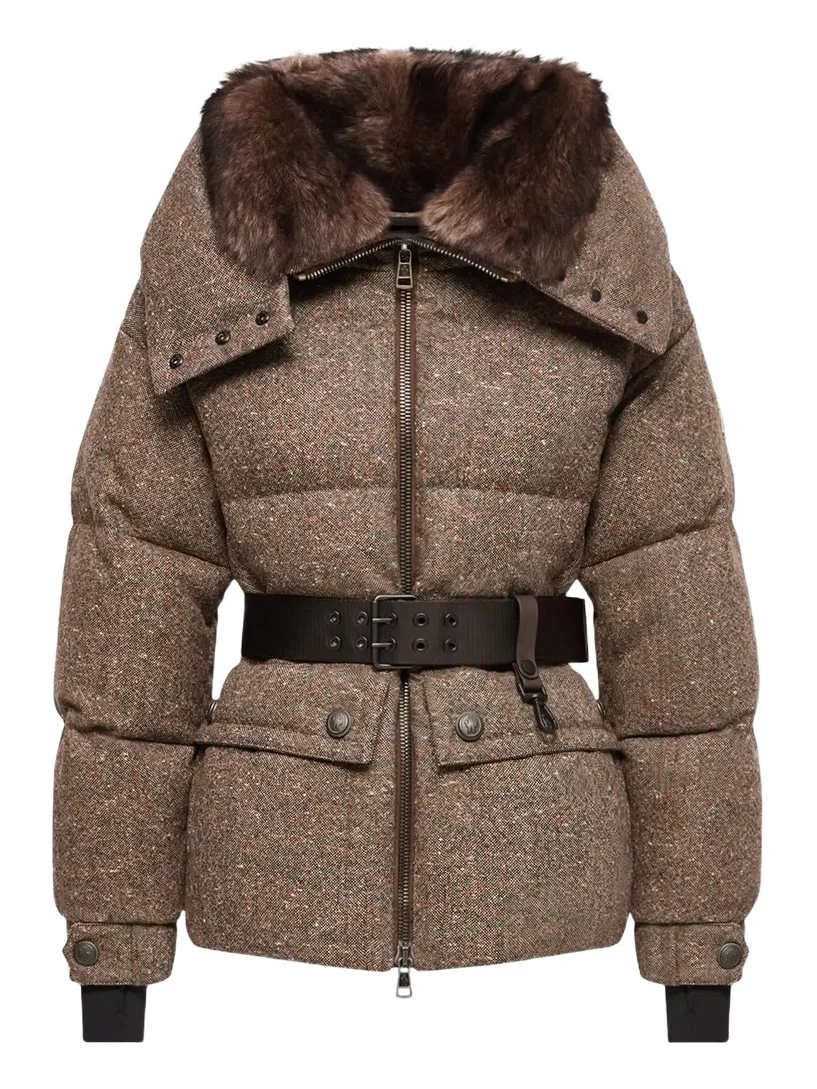 Moncler GrenobleGelise Shearling-trimmed Belted Down Jacket$4,995
Shearling coats
Buy a long shearling if your winters are cold and dry and you walk a lot. The long styles here are Toteme's three (a dark brown shearling coat, a collarless coat in long, silky shearling, and a shearling-lined leather coat, smooth outside and better on a damp day) and Tom Ford's reversible cocoon coat. The Row's zipped Sheeran, Isabel Marant's toggle-front Camber in cracked leather and Brunello Cucinelli's reversible curly shearling are shorter, better if you drive or sit for much of the day. A shearling coat is heavy, so try it on with your daily bag and walk across the room before deciding. Darker colors hide wear far better than pale ones, which belong to a second coat. Our shearling guide covers the aviator, cropped styles, care and real versus faux; browse more in our faux fur and shearling shop.
- Dark brown long shearling over a cream knit, ecru straight trousers and chocolate boots.
- Black zipped shearling, such as The Row's Sheeran, over a gray roll-neck and charcoal trousers, with black ankle boots.
Shearling coats
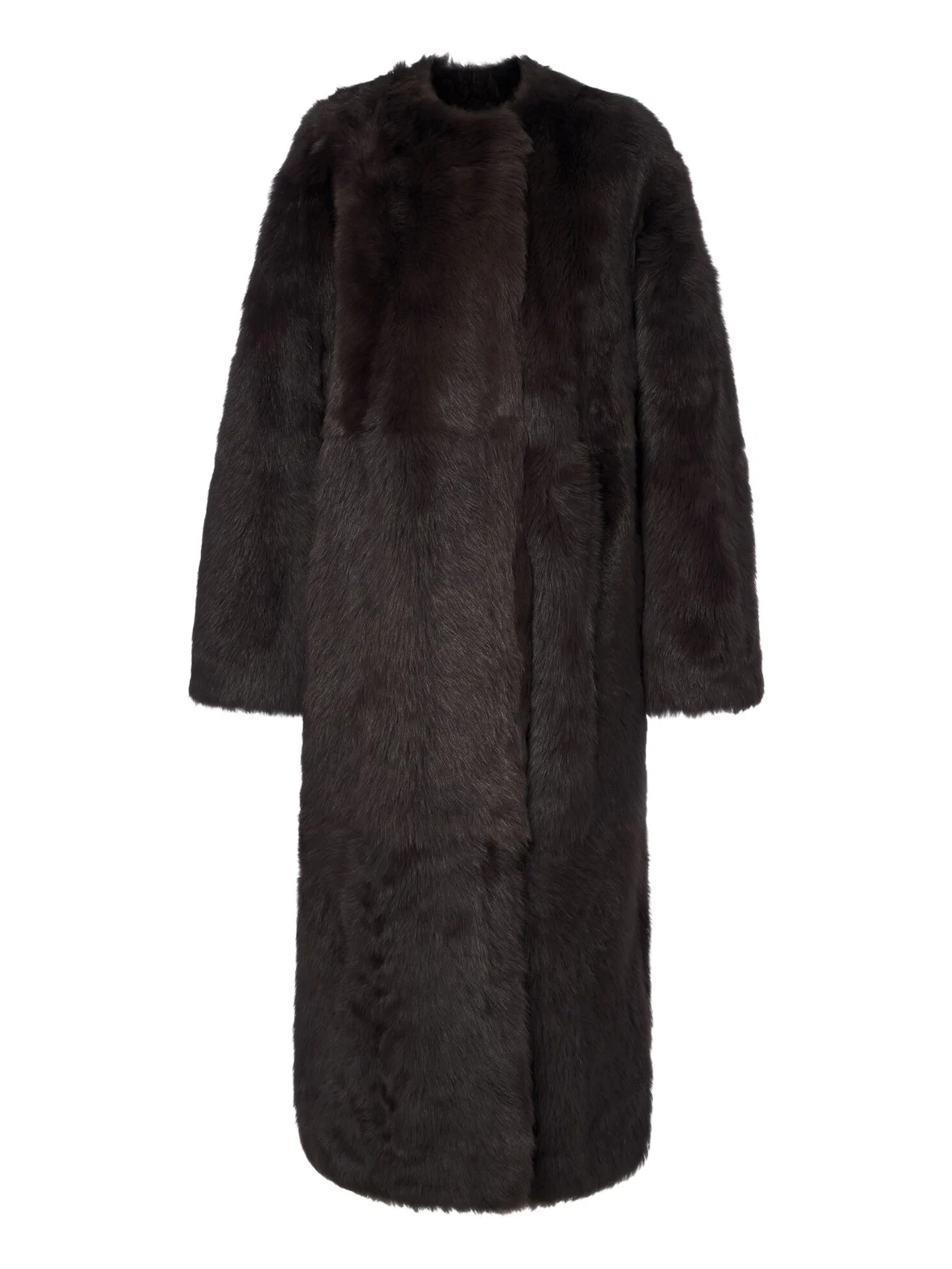 TotemeShearling coat$5,600
 TotemeShearling-lined leather coat$5,200
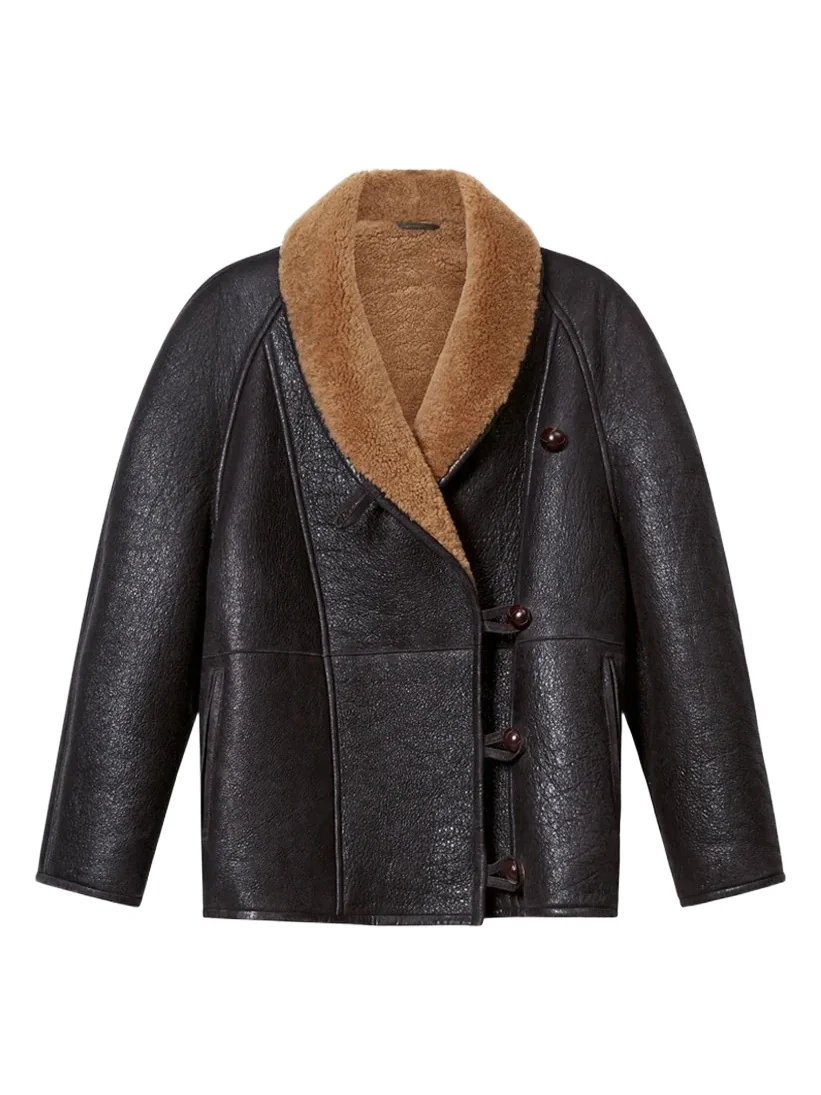 Isabel MarantCamber Shearling Coat$4,490
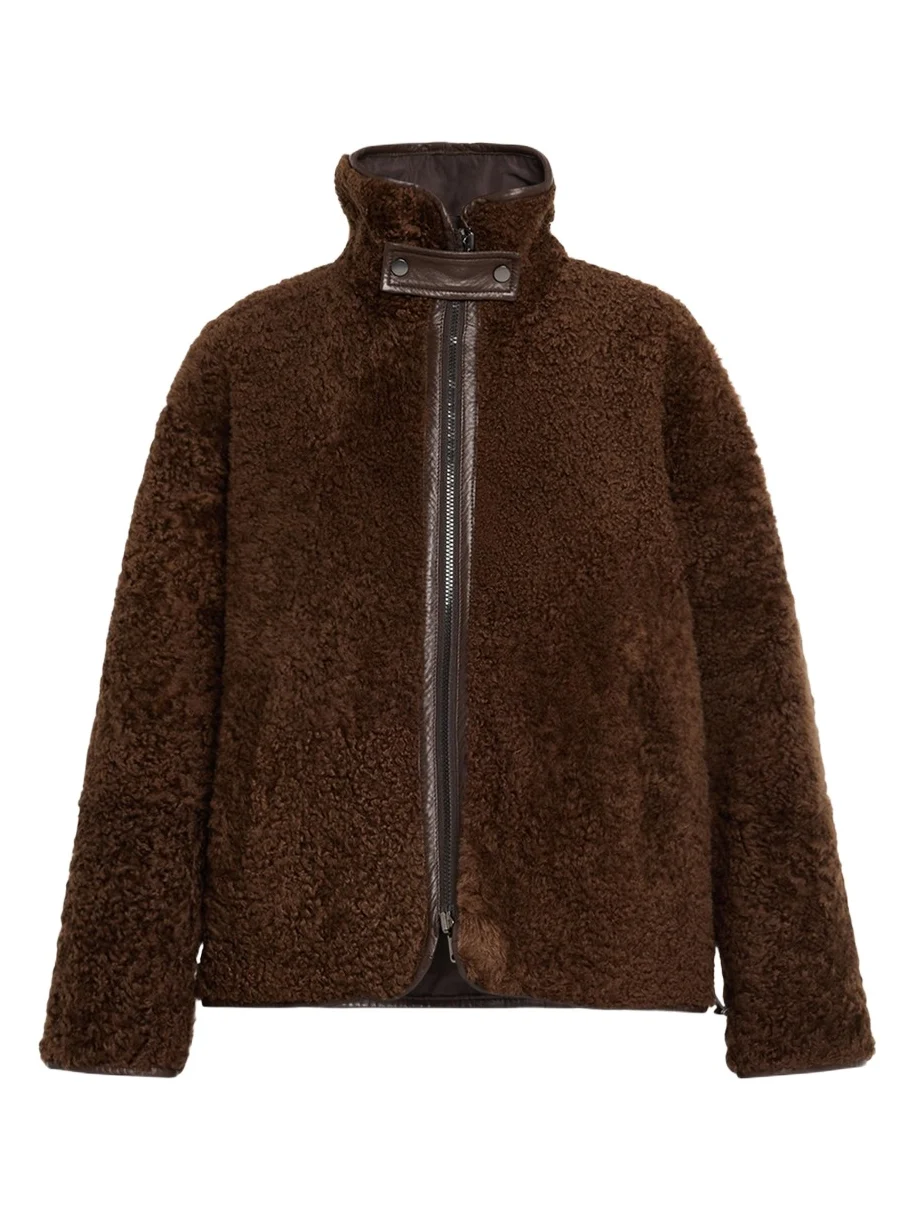 Brunello CucinelliCurly Shearling Reversible Coat$14,800
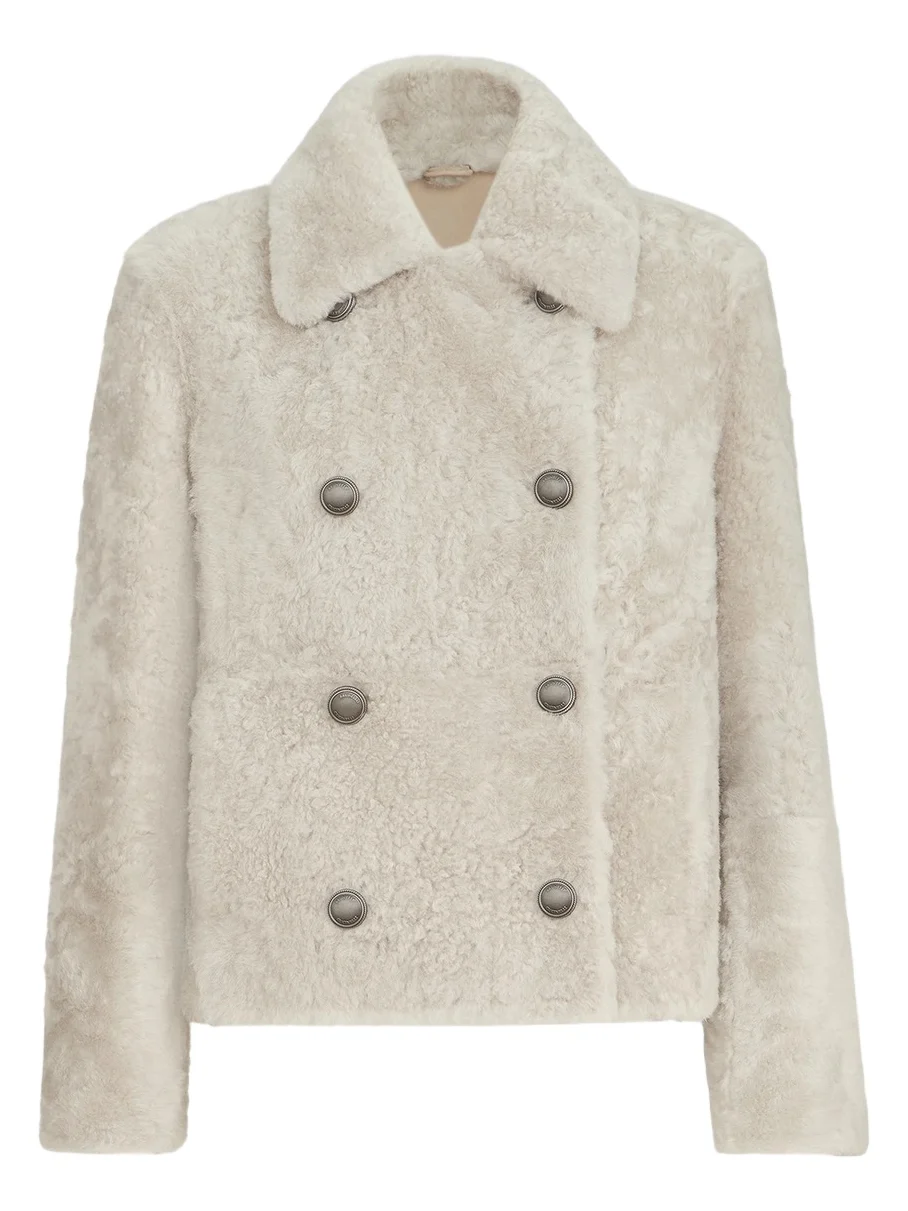 Brunello CucinelliWomen's Fuzzy Shearling Pea Coat$13,000
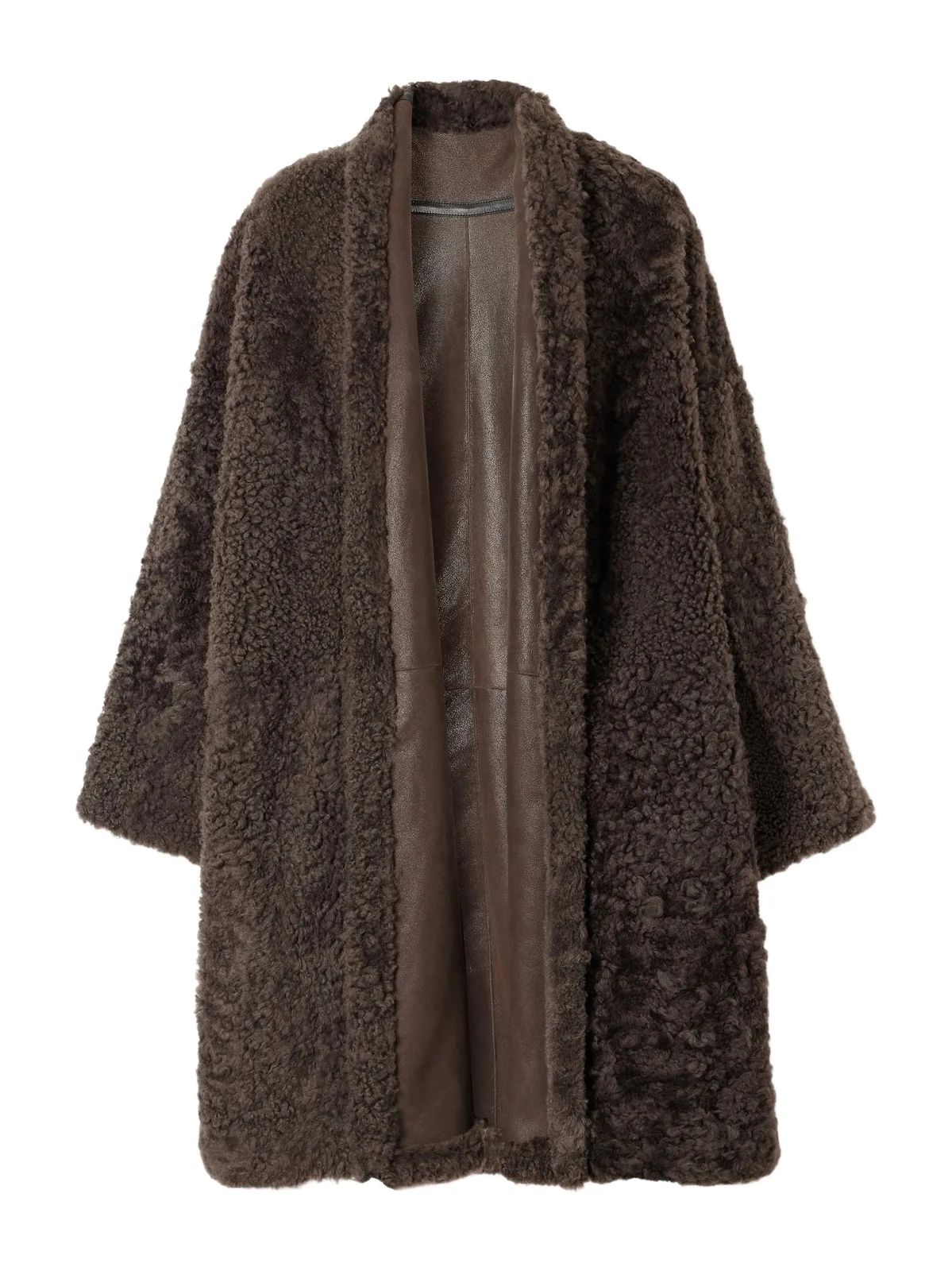 Tom FordReversible Full-grain Leather-trimmed Shearling Coat$9,980
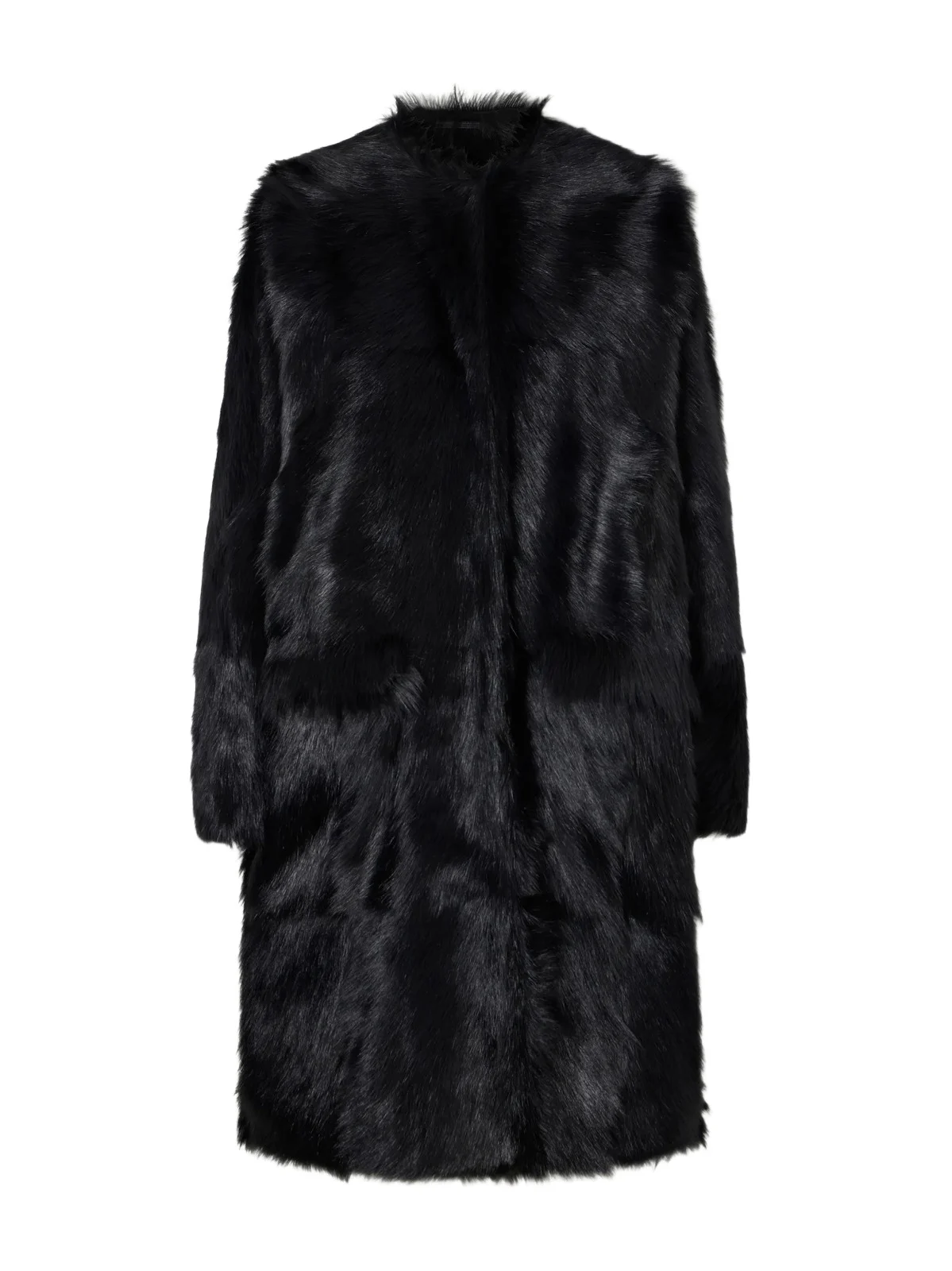 TotemeCollarless Shearling Coat$5,120
 The RowSheeran shearling coat$9,750
Teddy and faux-fur coats
Pile coats are the warmest-looking coats you can own and among the lightest to wear, but they are happiest in still, dry cold. Max Mara's Teddy Bear Icon also comes in cashmere and silk; its Spadino is a short hooded teddy with a zip front. Loewe's teddy coat is wool and silk, and Balmain, Magda Butrym, Givenchy, Isabel Marant and Burberry make the faux-fur versions, from Balmain's structured olive jacket-length coat to Burberry's belted Belvedere car coat. Keep the rest of the outfit plain, keep them away from radiators, and carry your bag in your hand: a strap rubs pile flat.
- Ivory hooded teddy over a gray sweatshirt, ecru jeans and white sneakers.
- Leopard faux fur over a black knit dress and black boots, with nothing else patterned.
Teddy and faux-fur coats
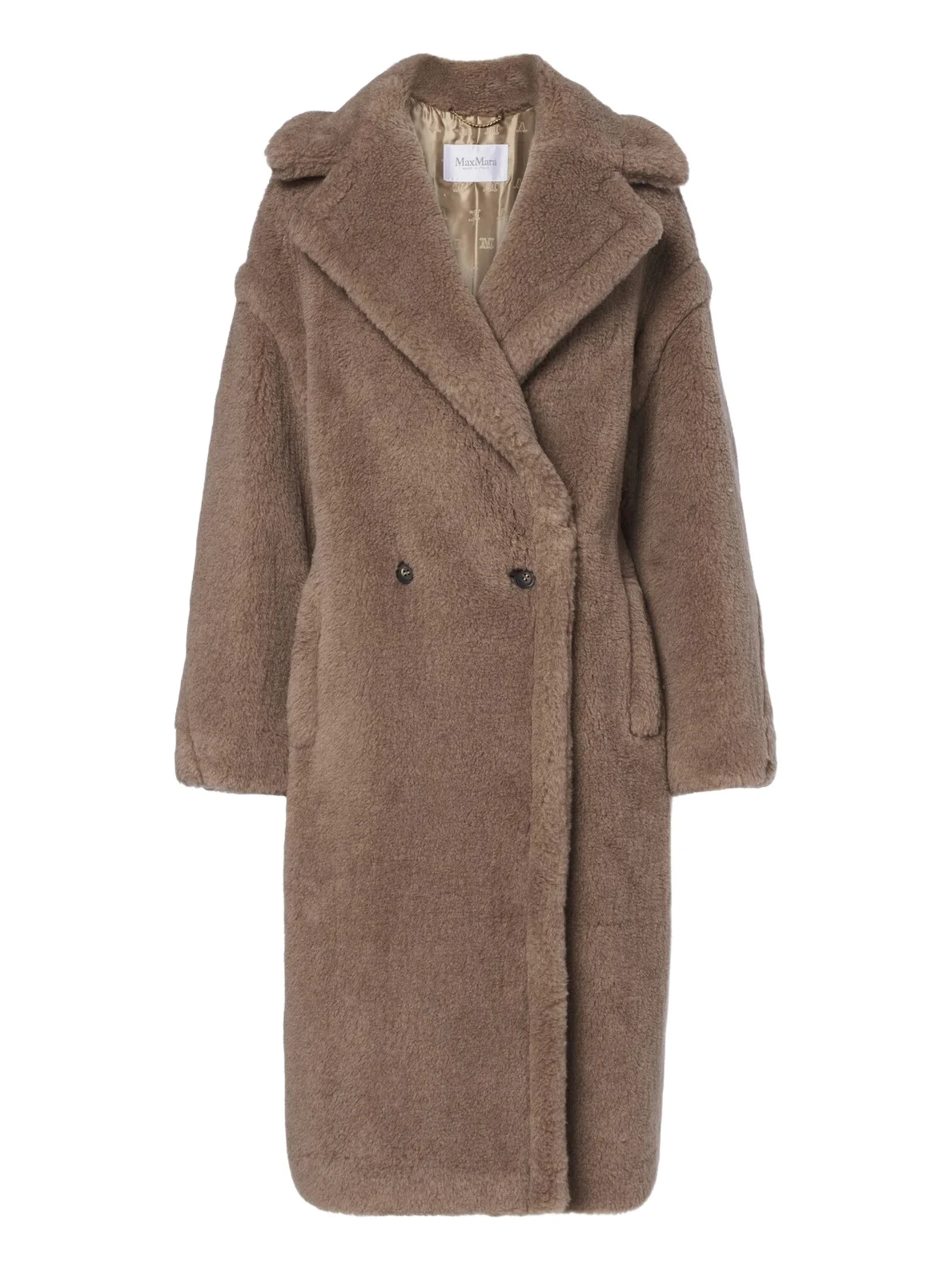 Max MaraTeddy Bear Icon cashmere and silk coat$9,150
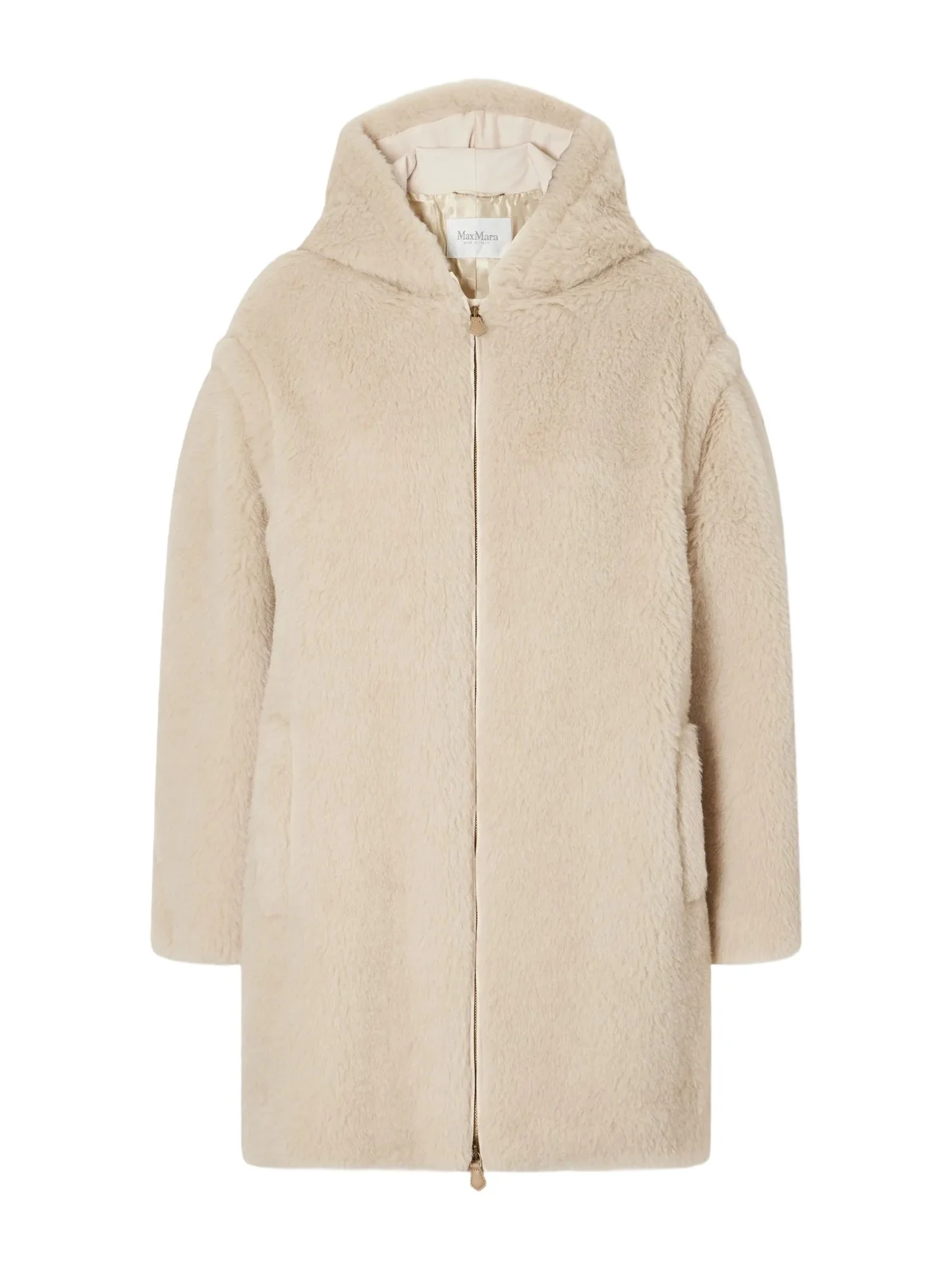 Max MaraSpadino Teddy Hooded Alpaca, Wool And Silk-blend Coat - Neutrals$3,890
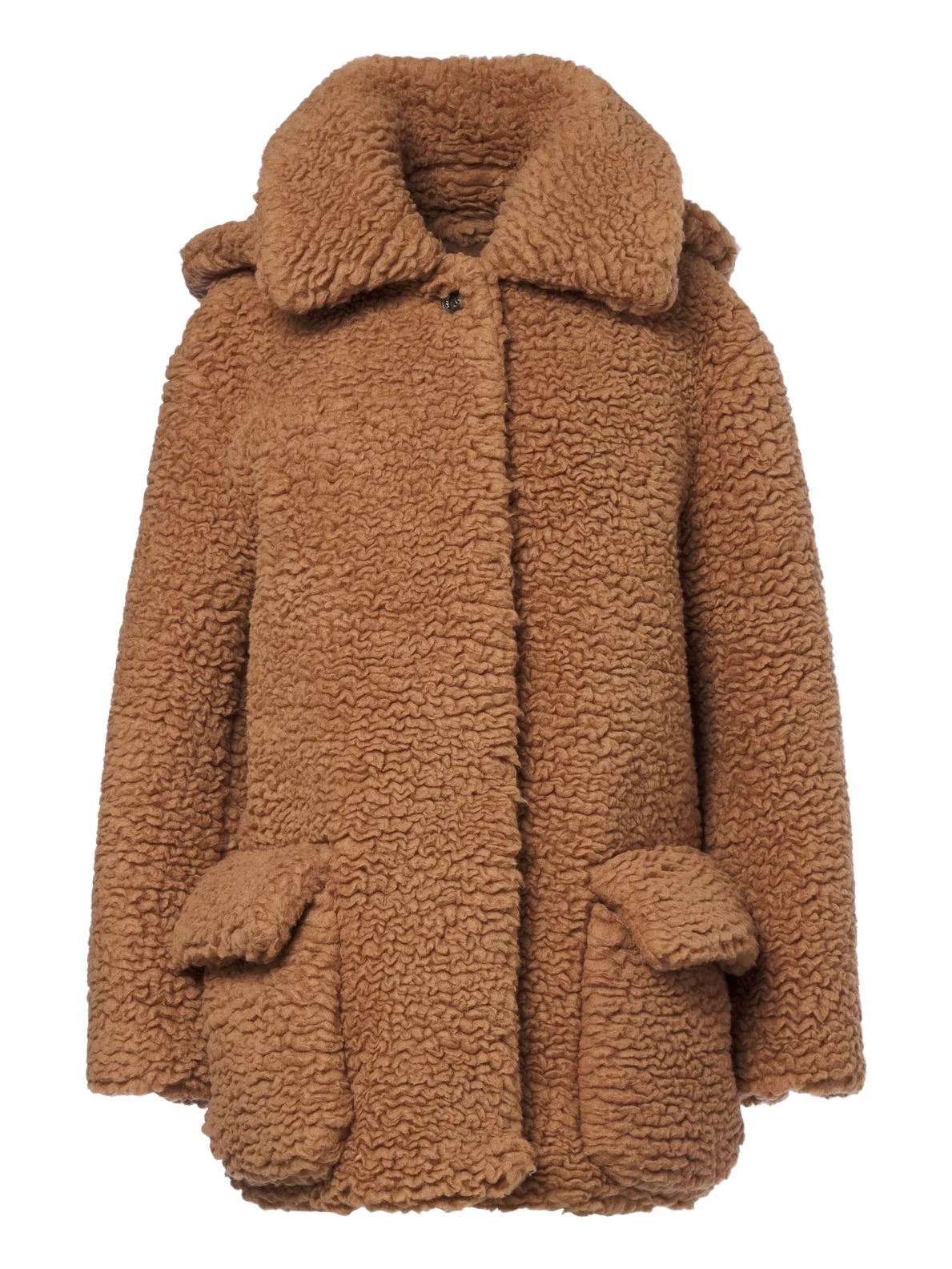 LoeweWool and silk teddy coat$6,750
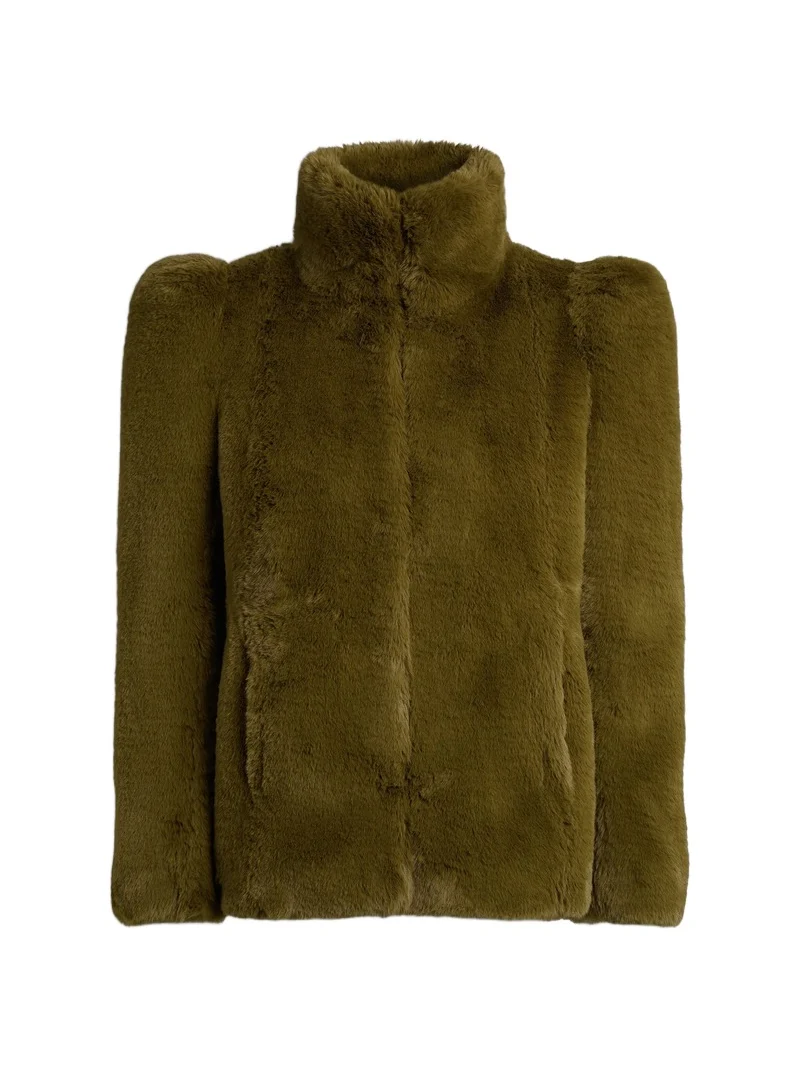 BalmainShort faux fur coat$3,990
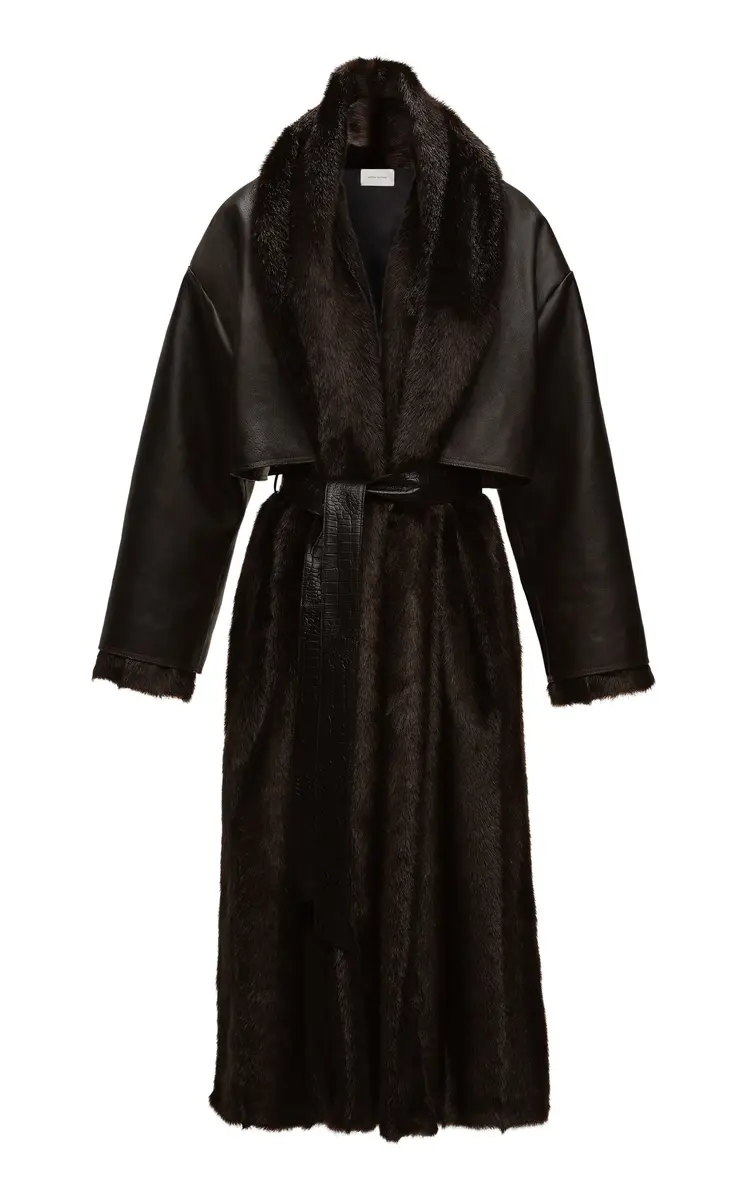 Magda ButrymLayered Faux-Fur Coat$3,955
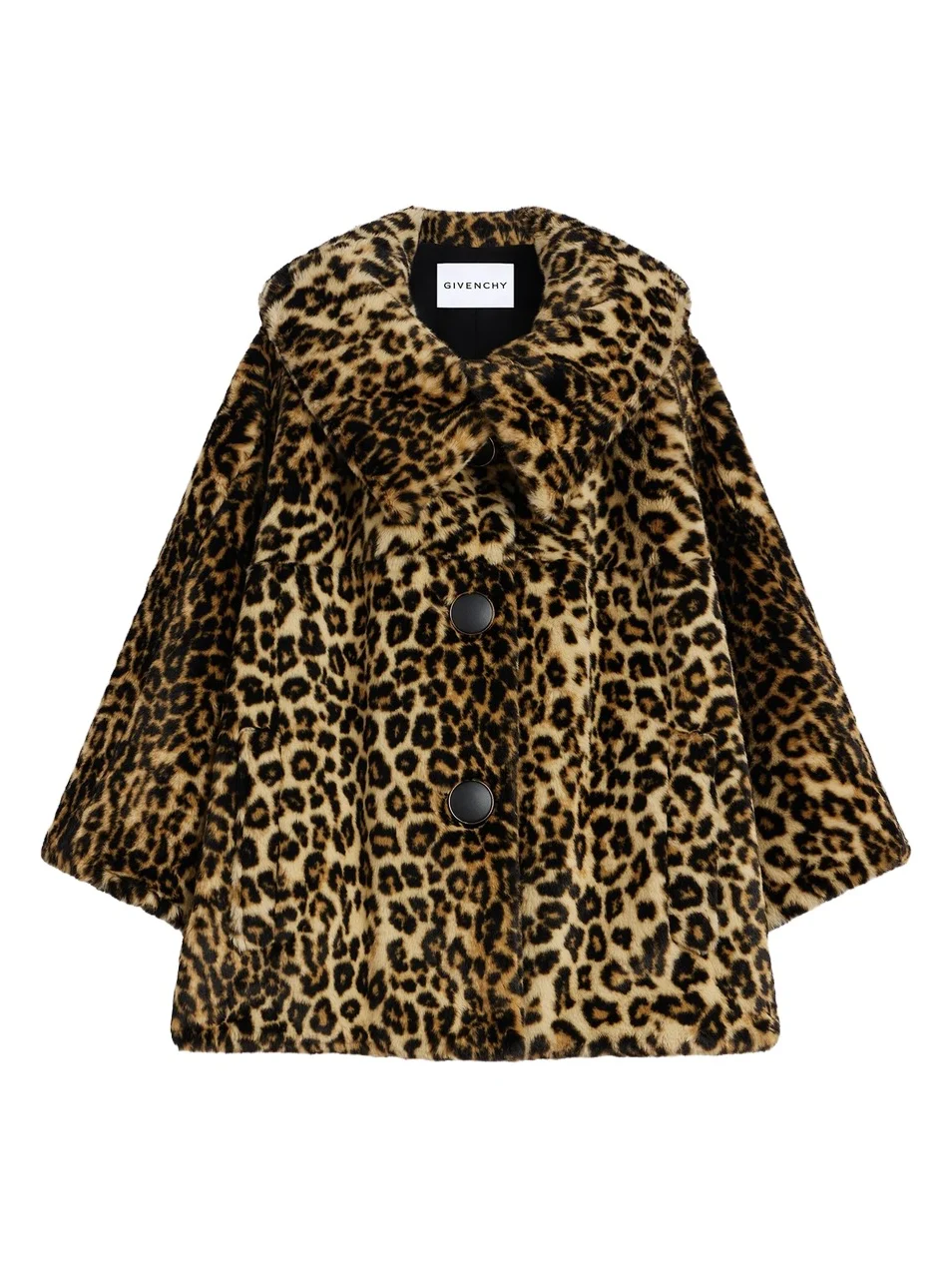 GivenchyWomen's Short Coat in Leopard Faux Fur$3,850
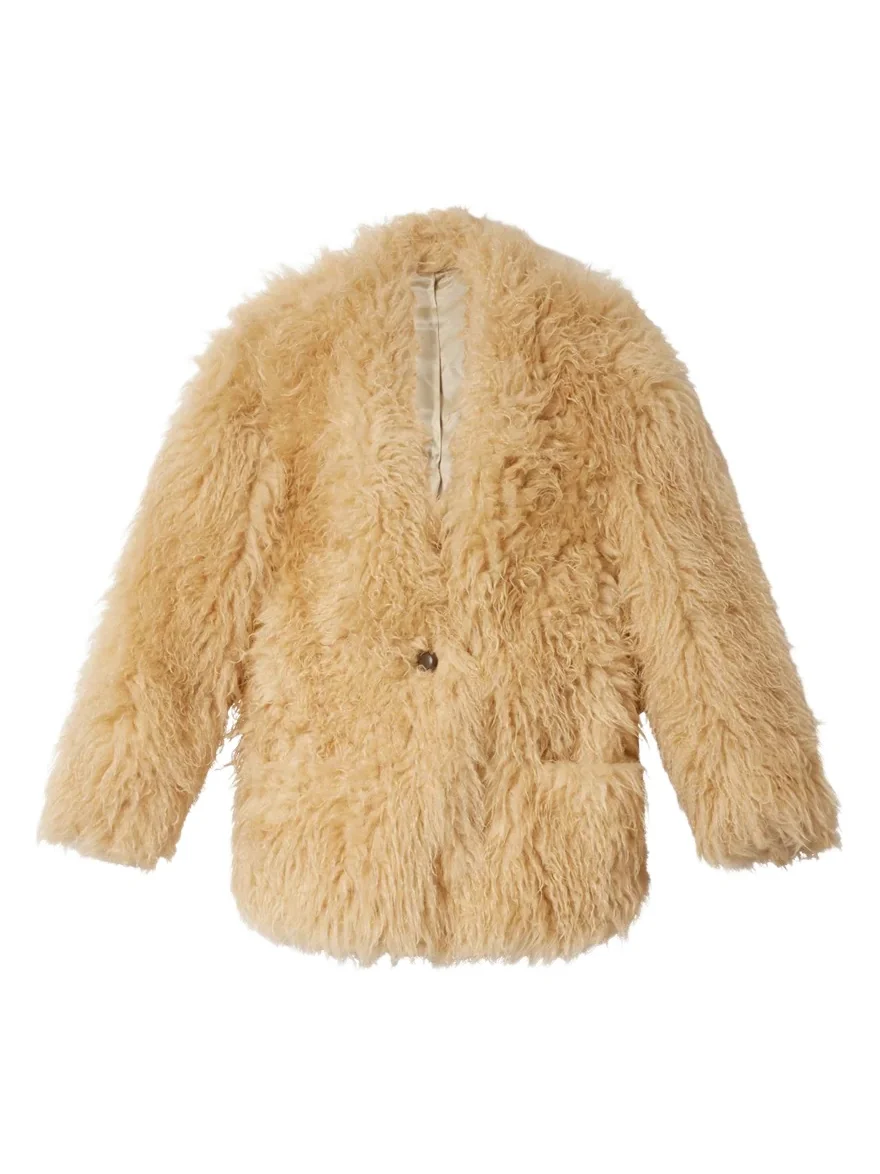 Isabel MarantMylae Coat$1,990
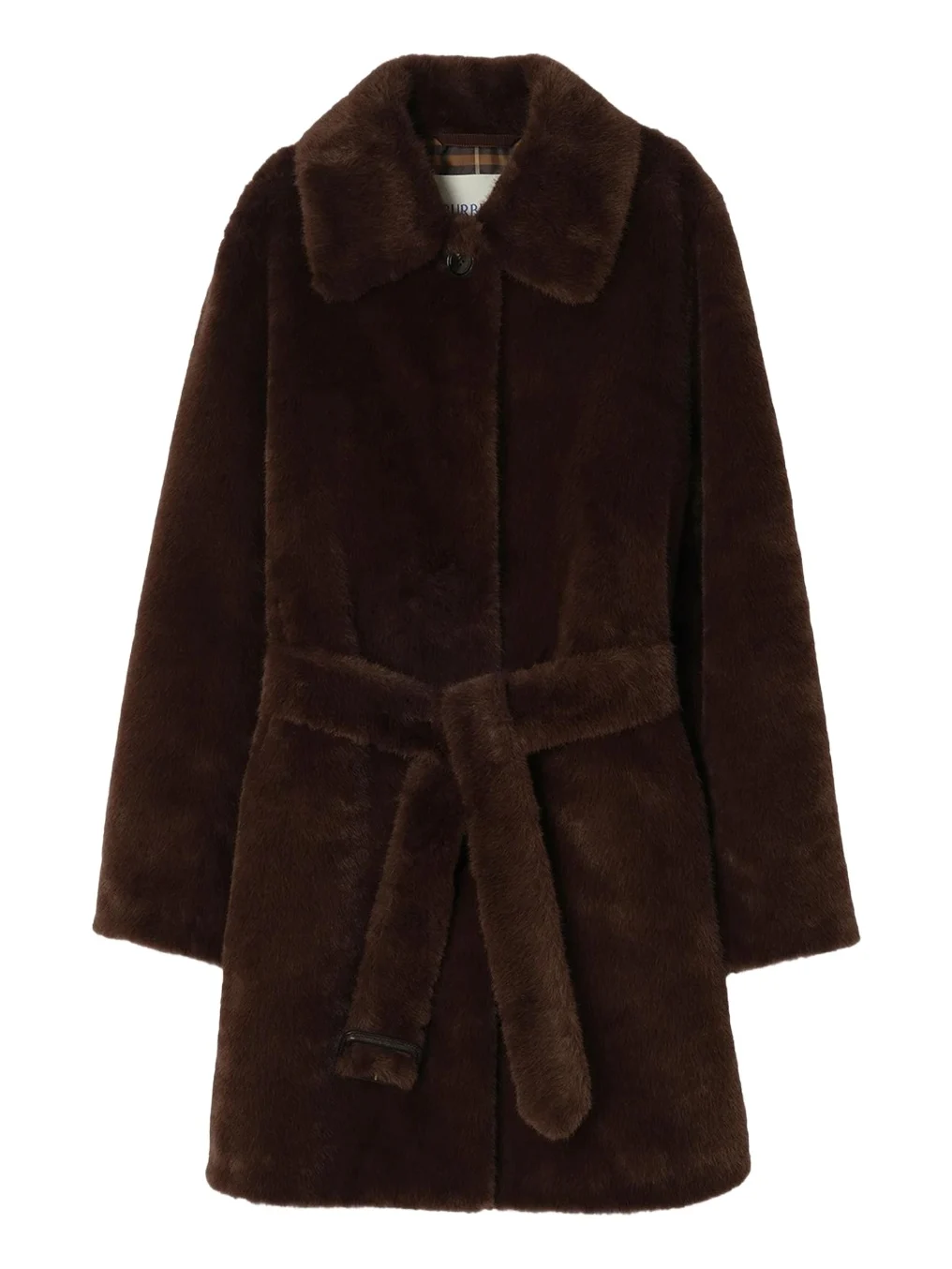 BurberryBelvedere Faux Fur Car Coat$2,795
Capes and cape coats for winter
A cape is warm at the core and open at the arms, so in winter it works best for short walks, over tailoring, with long gloves. Dense cloth makes the difference between a cape that holds its shape in the wind and one that flaps: Loro Piana's Gilda is double-layer cashmere, and Burberry's Belmont reworks the trench in brushed cashmere with a belt and epaulettes. For more warmth, look at Moncler's down-filled cape, or Chloé's short cape coat in check wool and alpaca, whose high chin-strap collar closes the neck. Our guide to how to wear a cape coat covers proportions, bags and gloves, and the full range is in our cape shop.
Capes and cape coats for winter
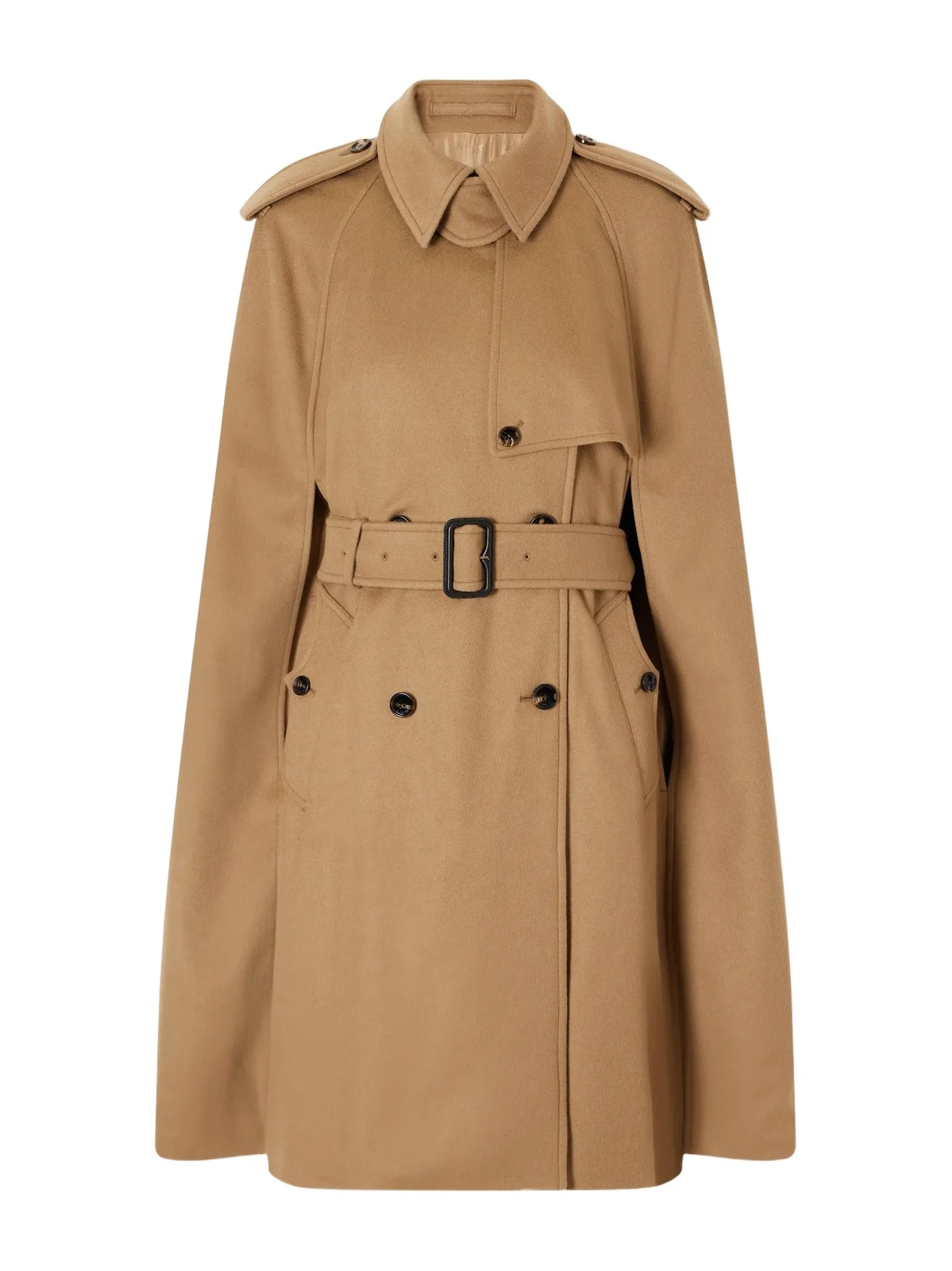 BurberryBelmont Belted Cashmere Cape$4,195
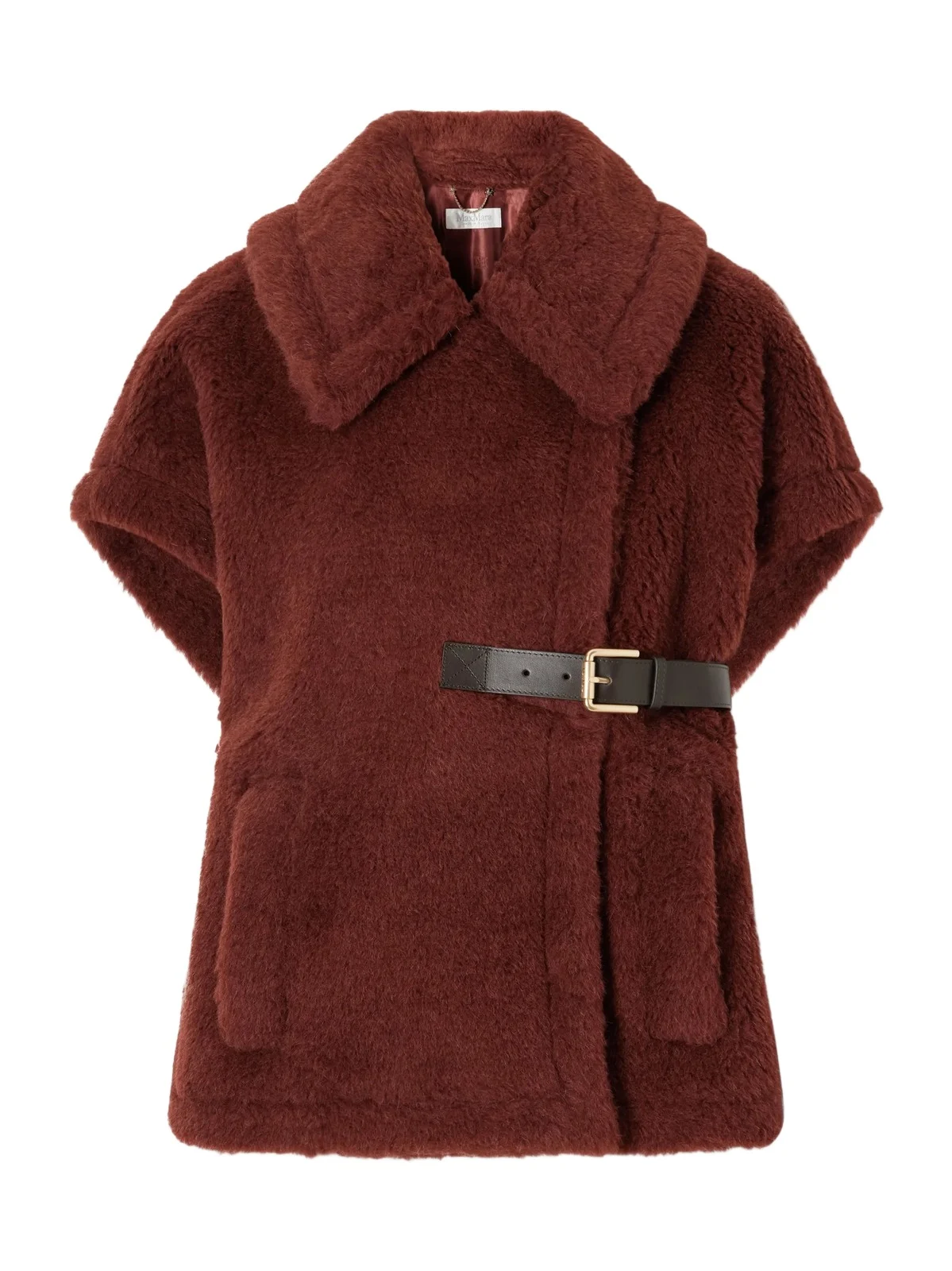 Max MaraAbavo Buckled Alpaca, Wool And Silk-blend Fleece Cape$2,090
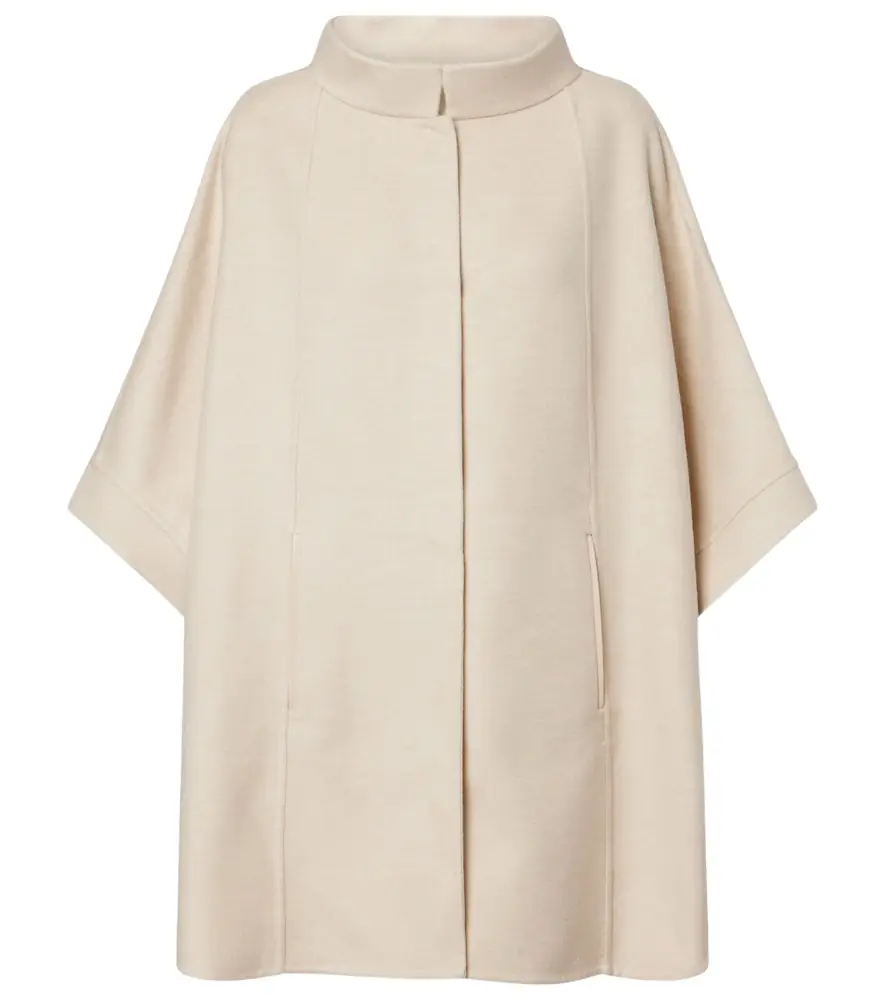 Loro PianaSalzburg leather-trimmed cashmere cape$6,150
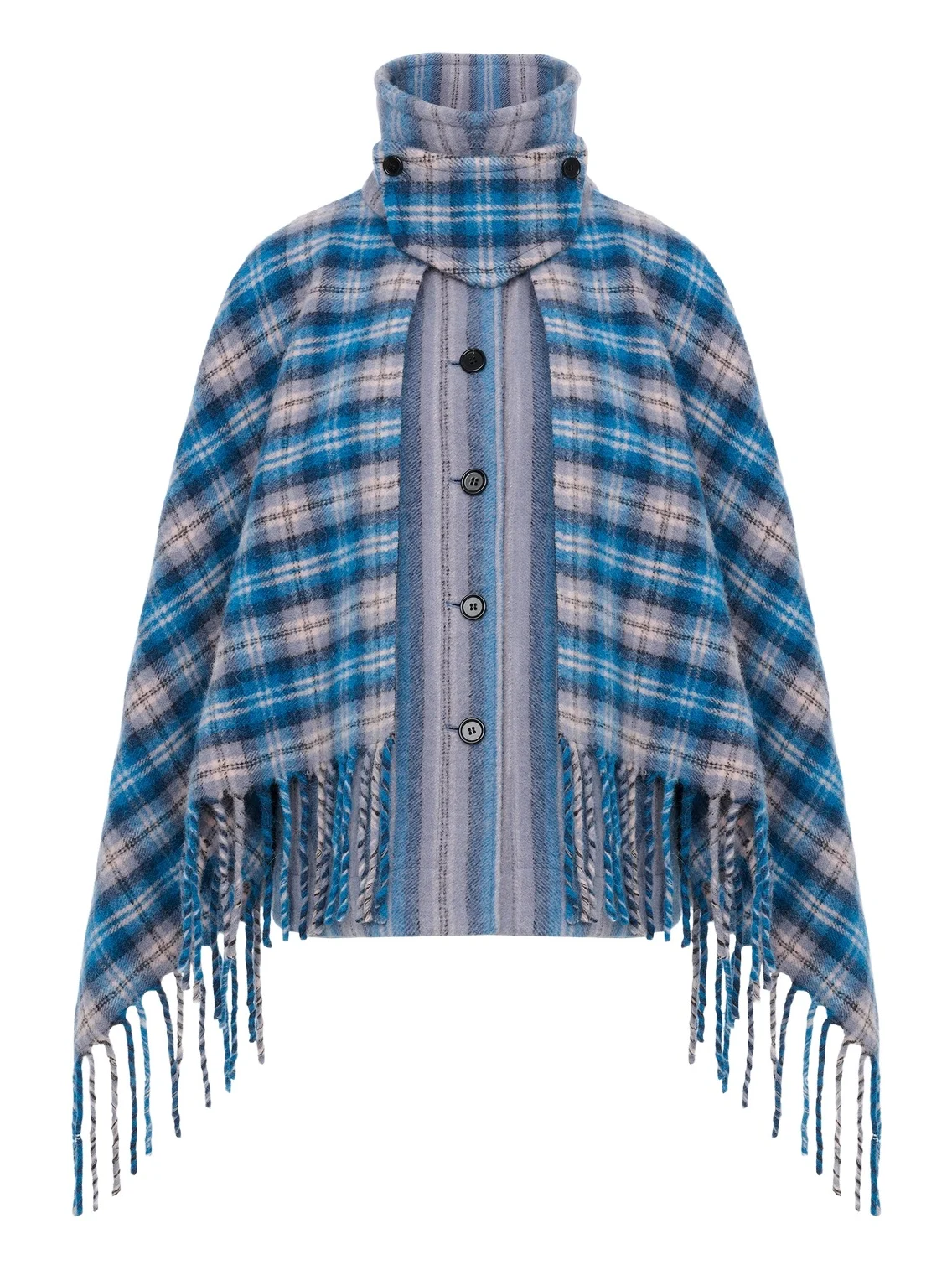 ChloéHigh-neck short cape coat in check wool & alpaca$4,290
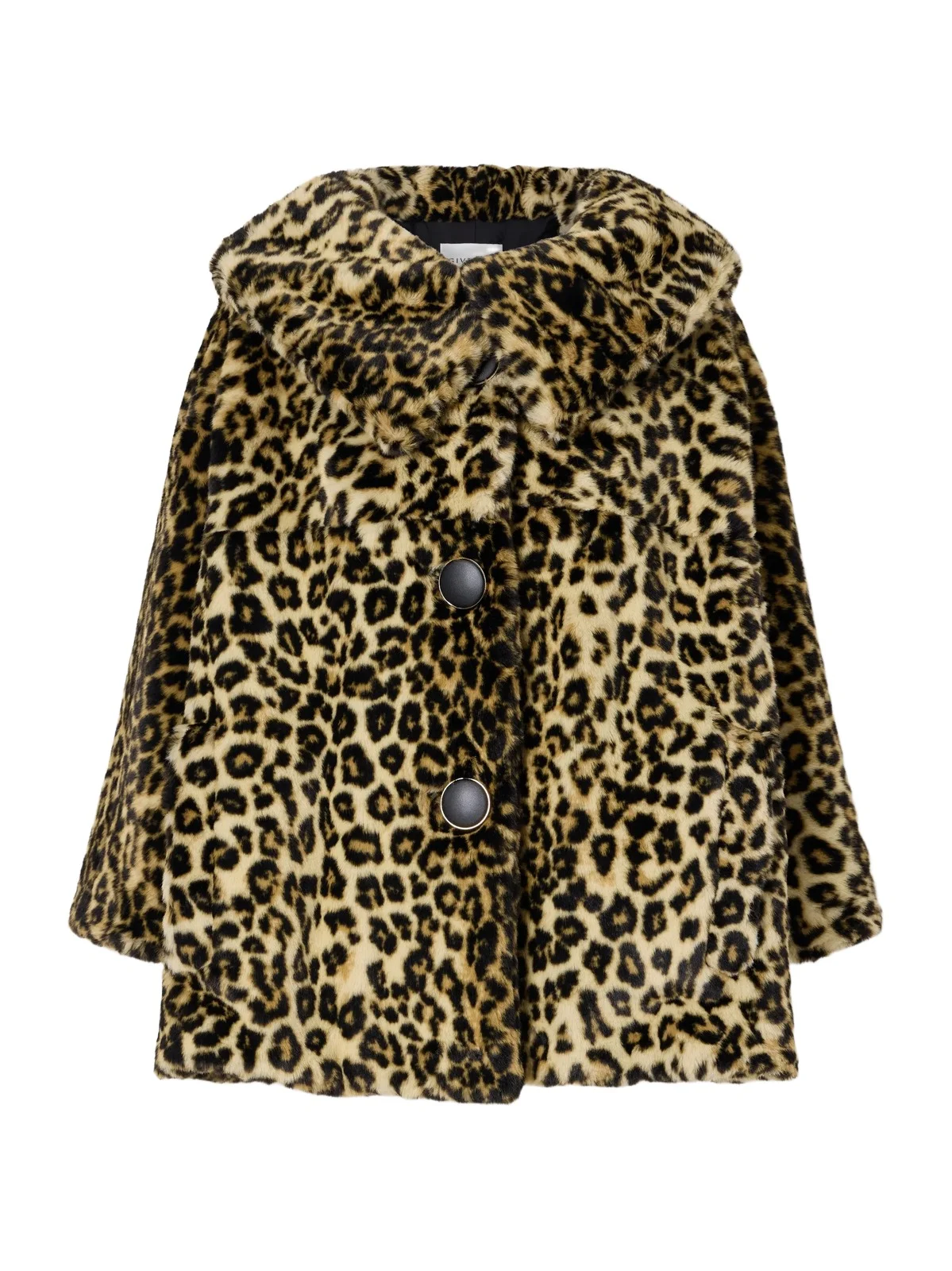 GivenchyCape-effect Leopard-print Plush Coat$3,850
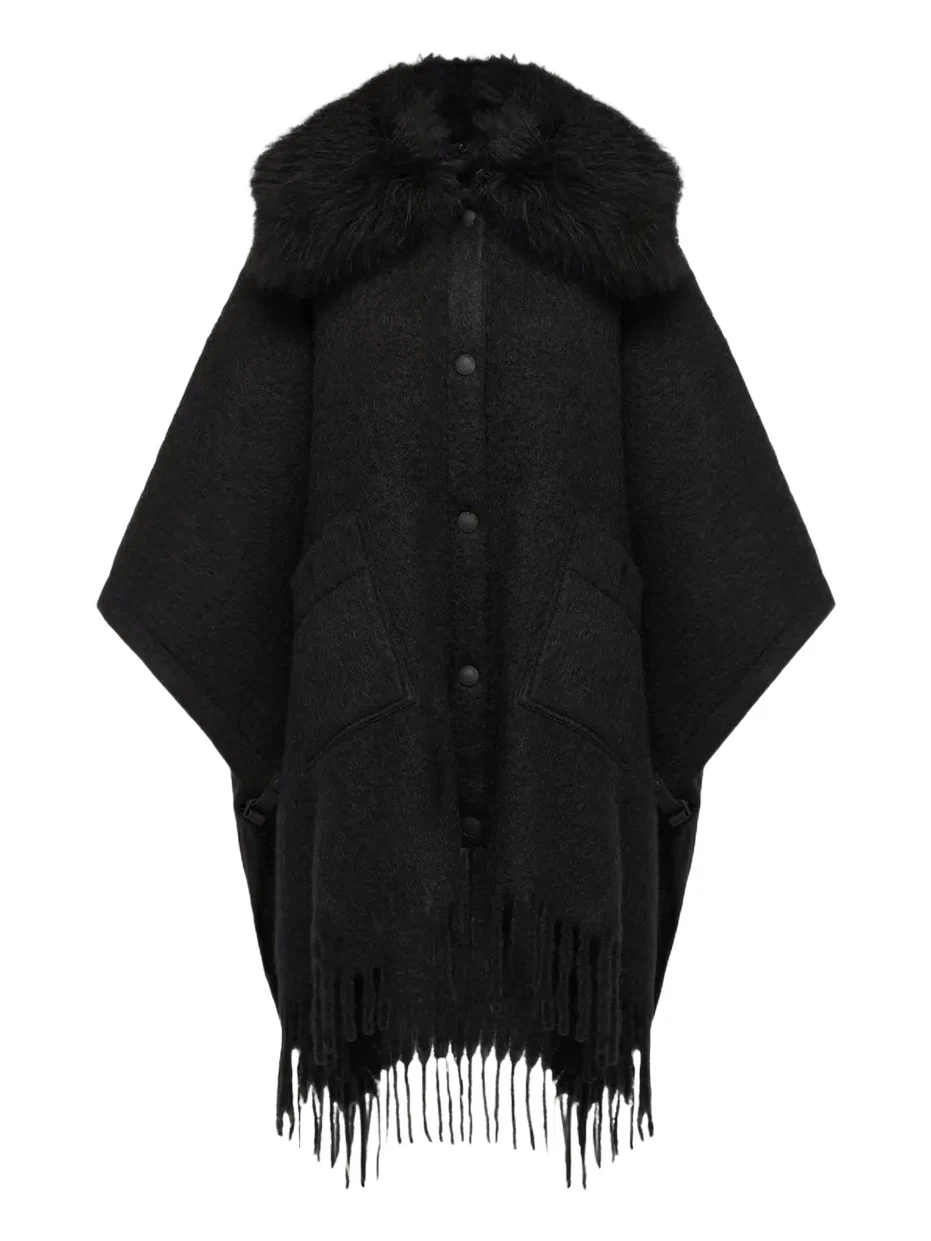 Moncler GrenobleShearling Collar Mohair, Alpaca & Wool Blend Cape$2,295
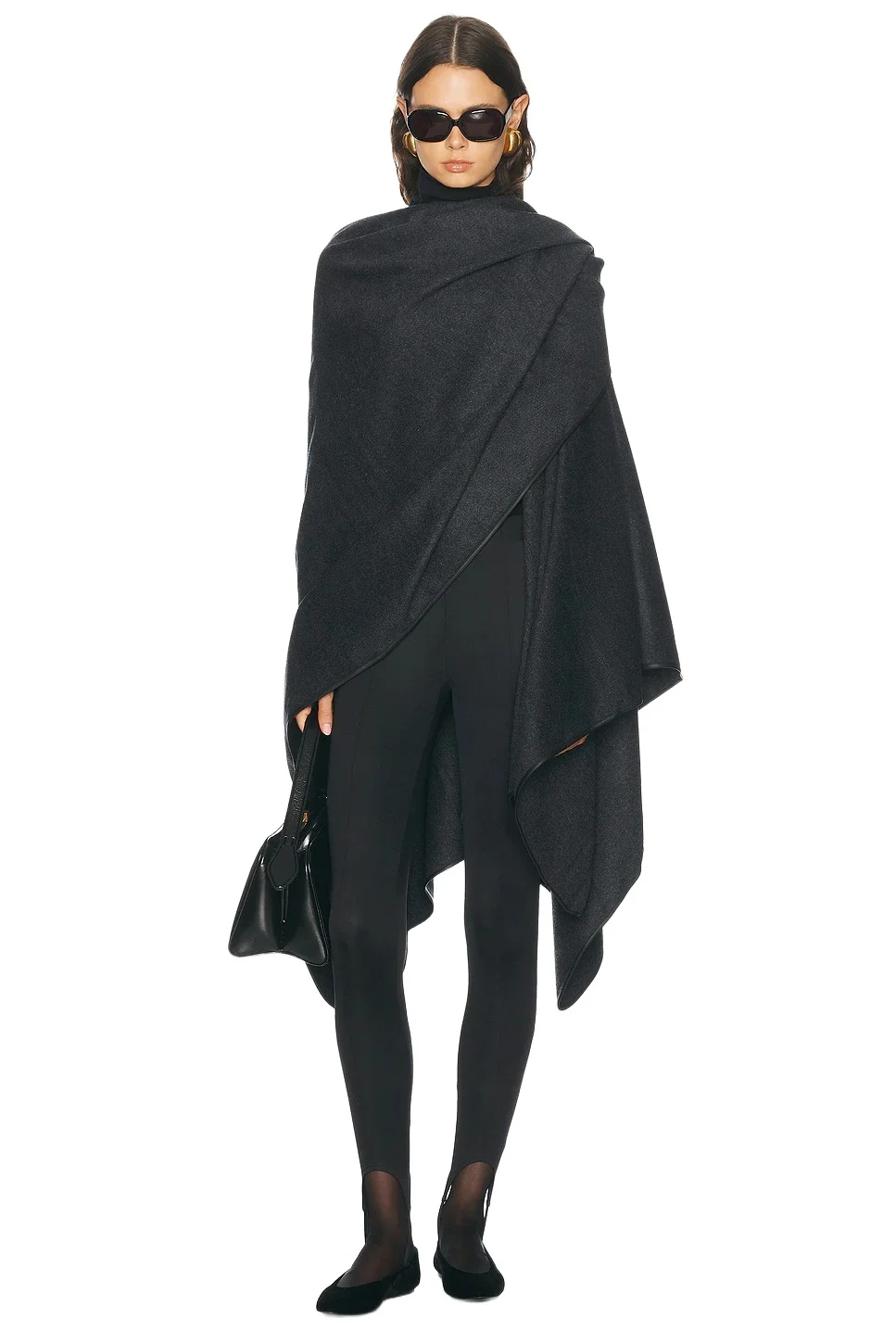 TotemeWinter Flannel Cape$1,520
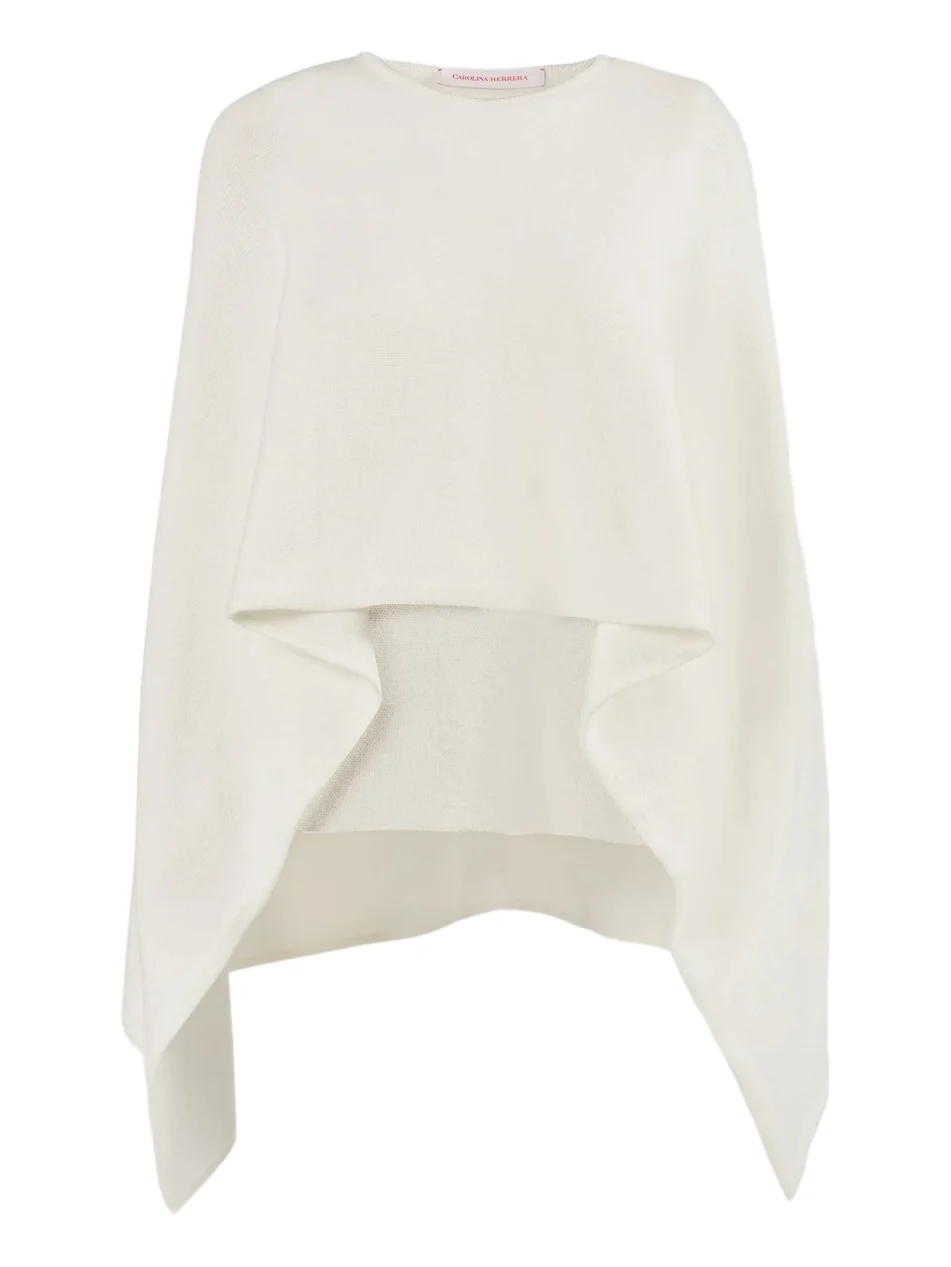 Carolina HerreraWomen's Virgin Wool Jewel-Neck Cape$1,490
The car coat and short winter coats
The car coat was cut to sit in a car without bunching, and it still solves the same problem: it ends around the upper thigh or the knee, opens without fuss, and goes over wide trousers that a long coat would hide. The Row's Ina is a wool and cashmere blend with leather knotted buttons; Valentino Garavani's is a straight wool and cashmere coat with patch pockets; Burberry's Gosford is a softly A-line wool and cashmere coat that ends below the hip. Short coats are also the obvious choice for petite frames. Kiton's seamed wool and cashmere coat and Chloé's oversized short coat both close high at the neck, one with a stand collar and the other with a chin-strap collar, and Max Mara lists its short alpaca and wool coat at 90 centimeters.
- Short camel coat over a cream turtleneck and gray wide-leg trousers that break on the shoe.
- Black car coat over a white shirt, a gray V-neck and black cigarette trousers.
Car coats and short winter coats
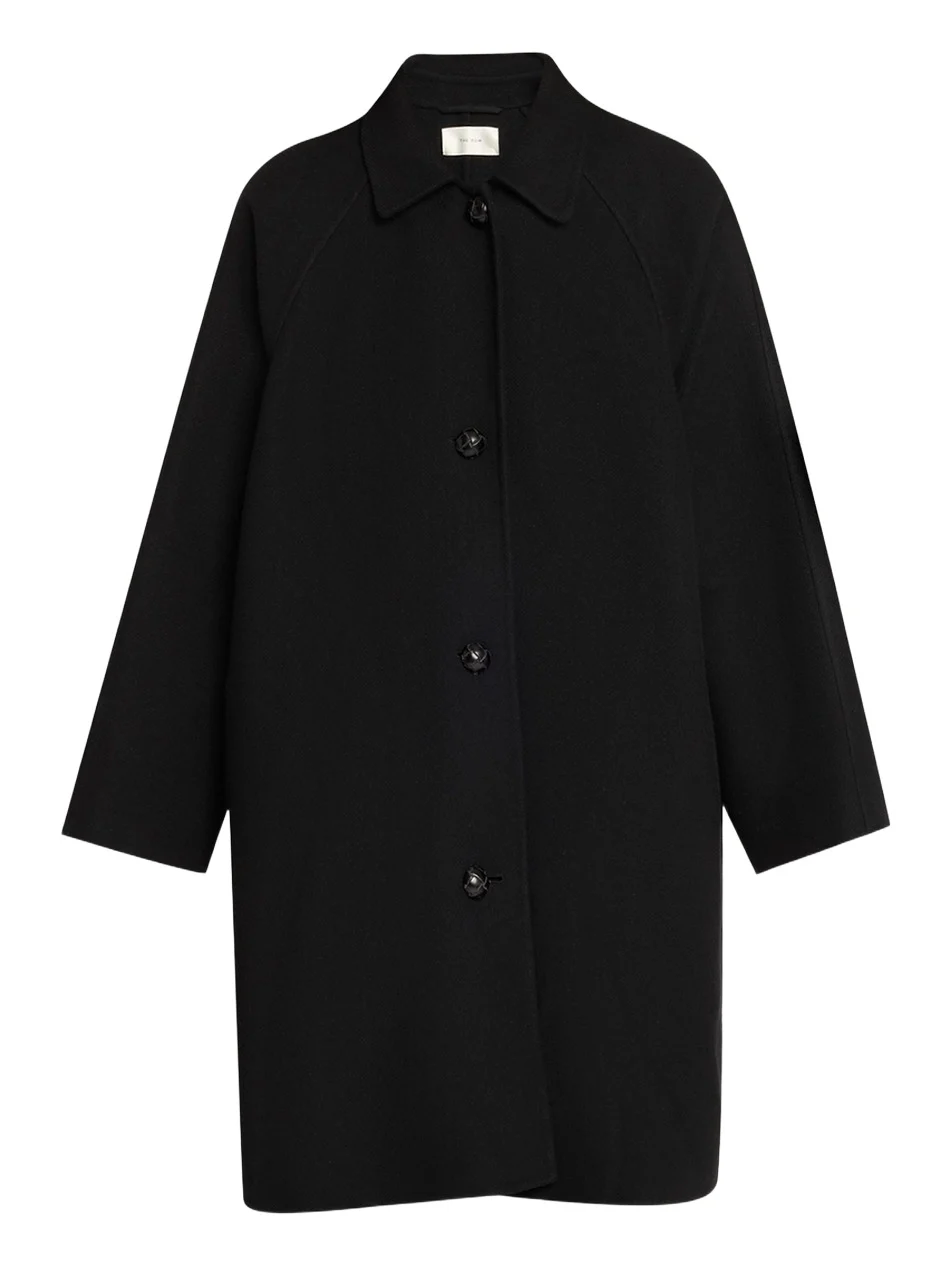 The RowIna Wool-Cashmere Single-Breasted Car Coat$3,600
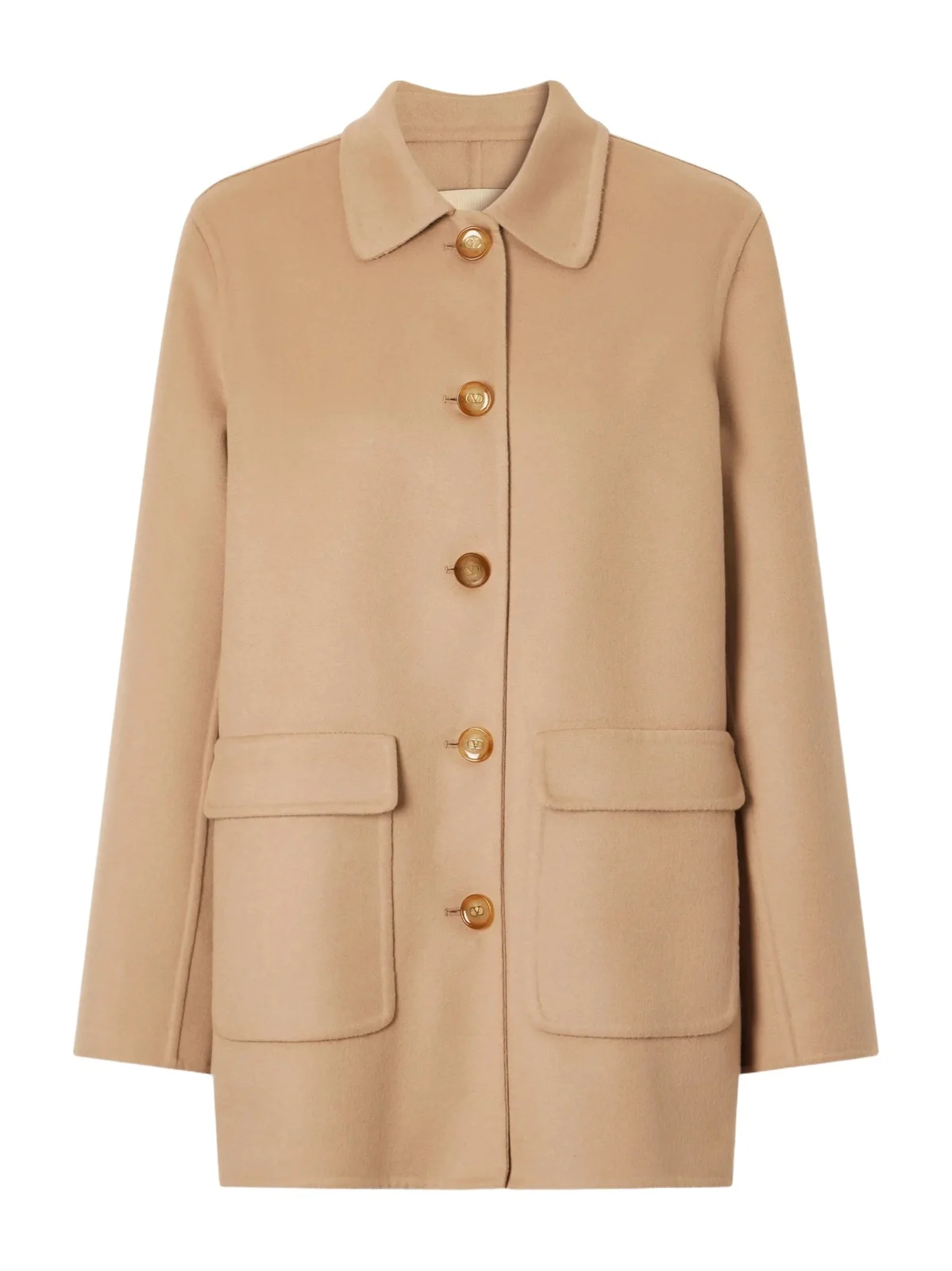 Valentino GaravaniWool And Cashmere-blend Coat - Brown$5,300
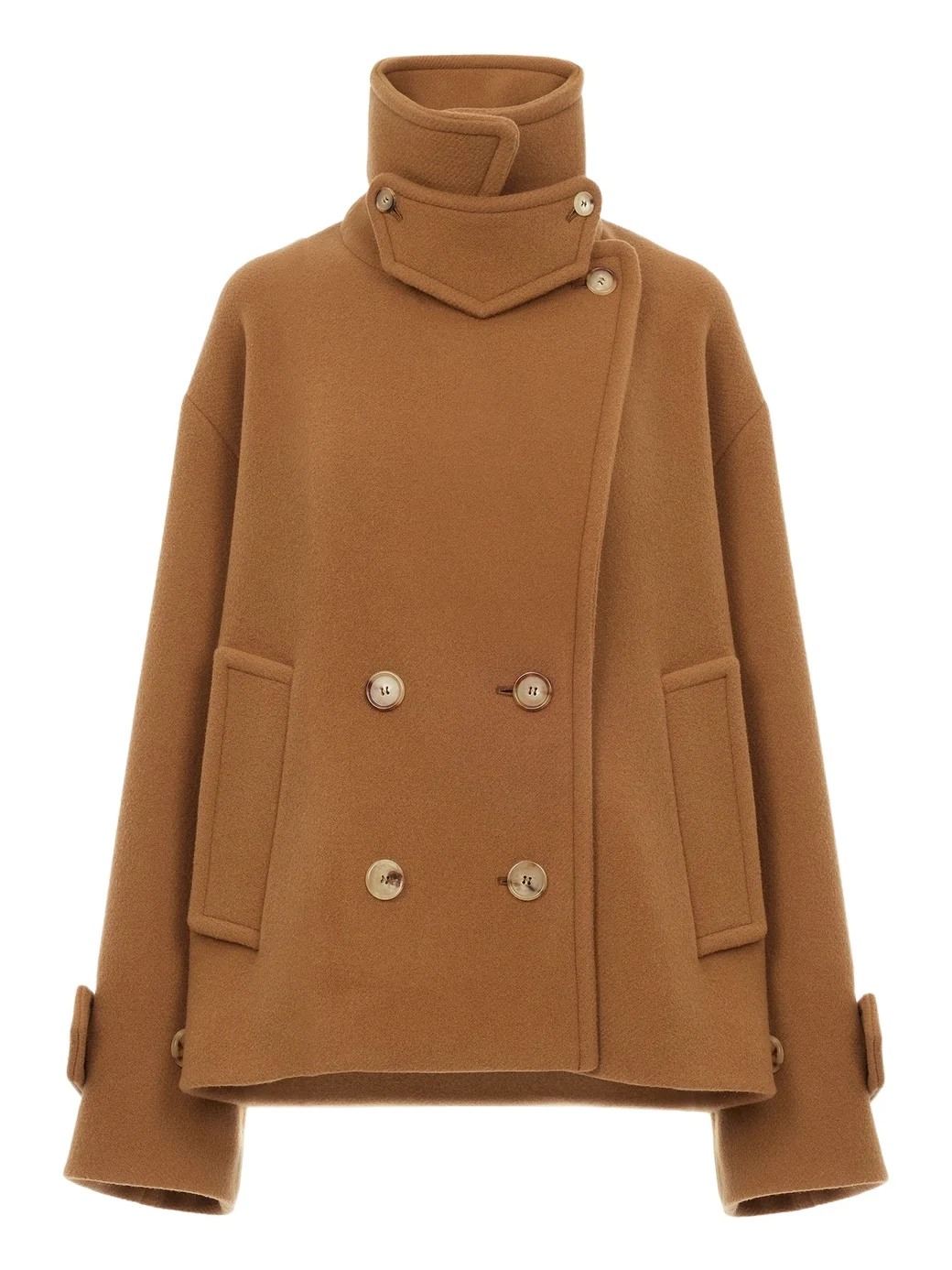 ChloéOversized short coat in wool$2,850
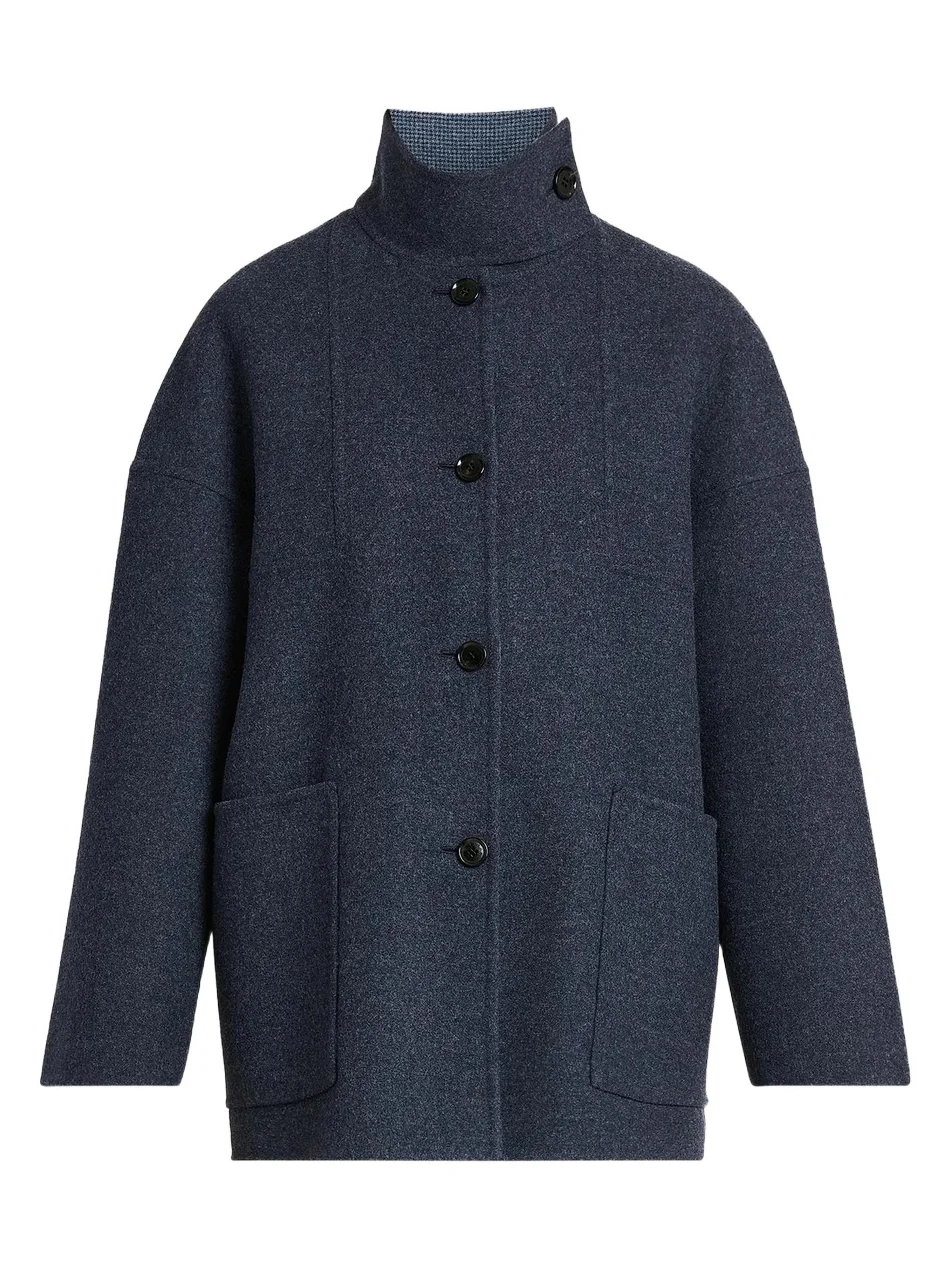 KitonWomen's Seamed Wool-Cashmere Coat$6,195
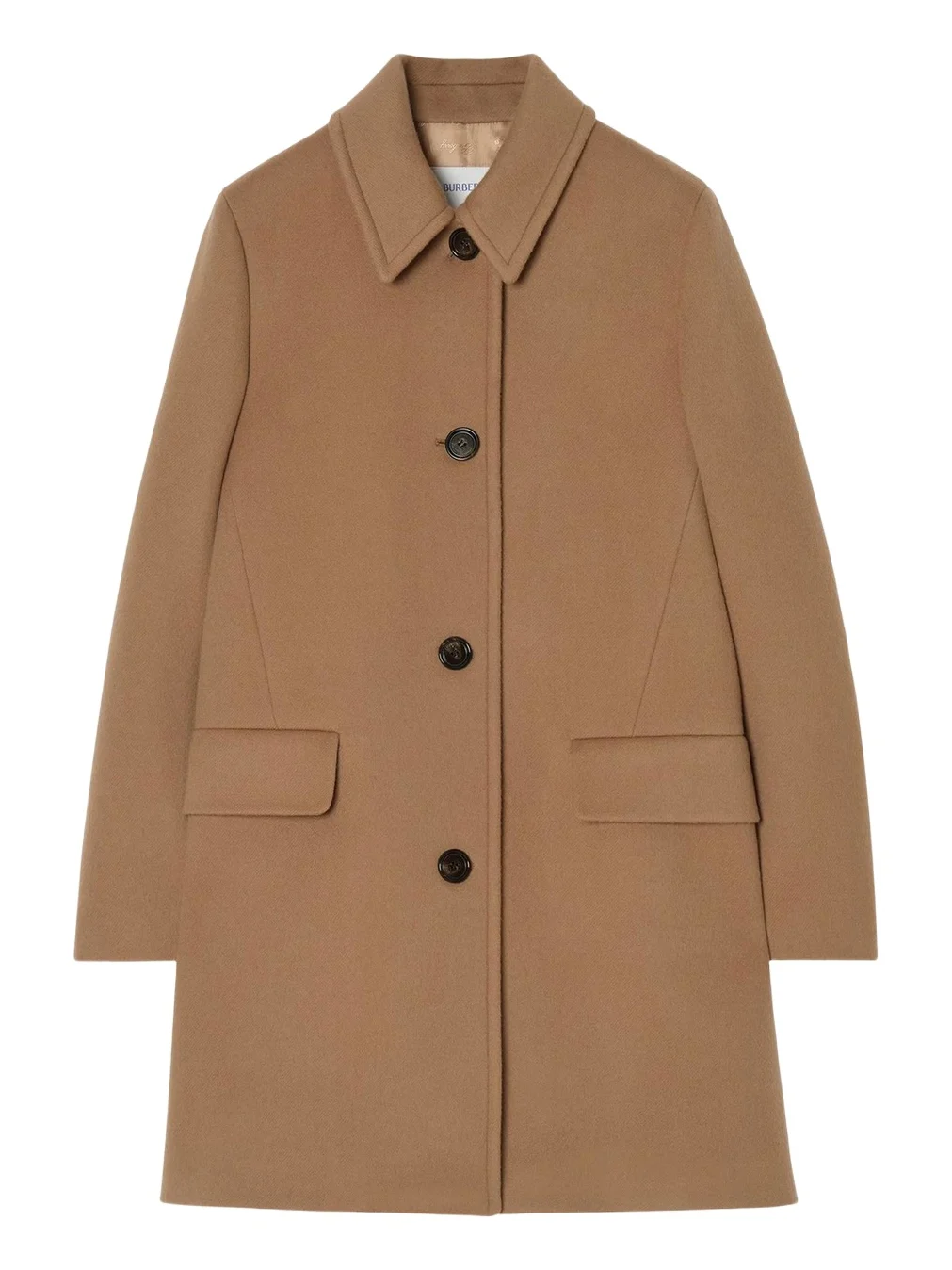 BurberryGosford Wool-Cashmere Single-Breasted Coat$3,395
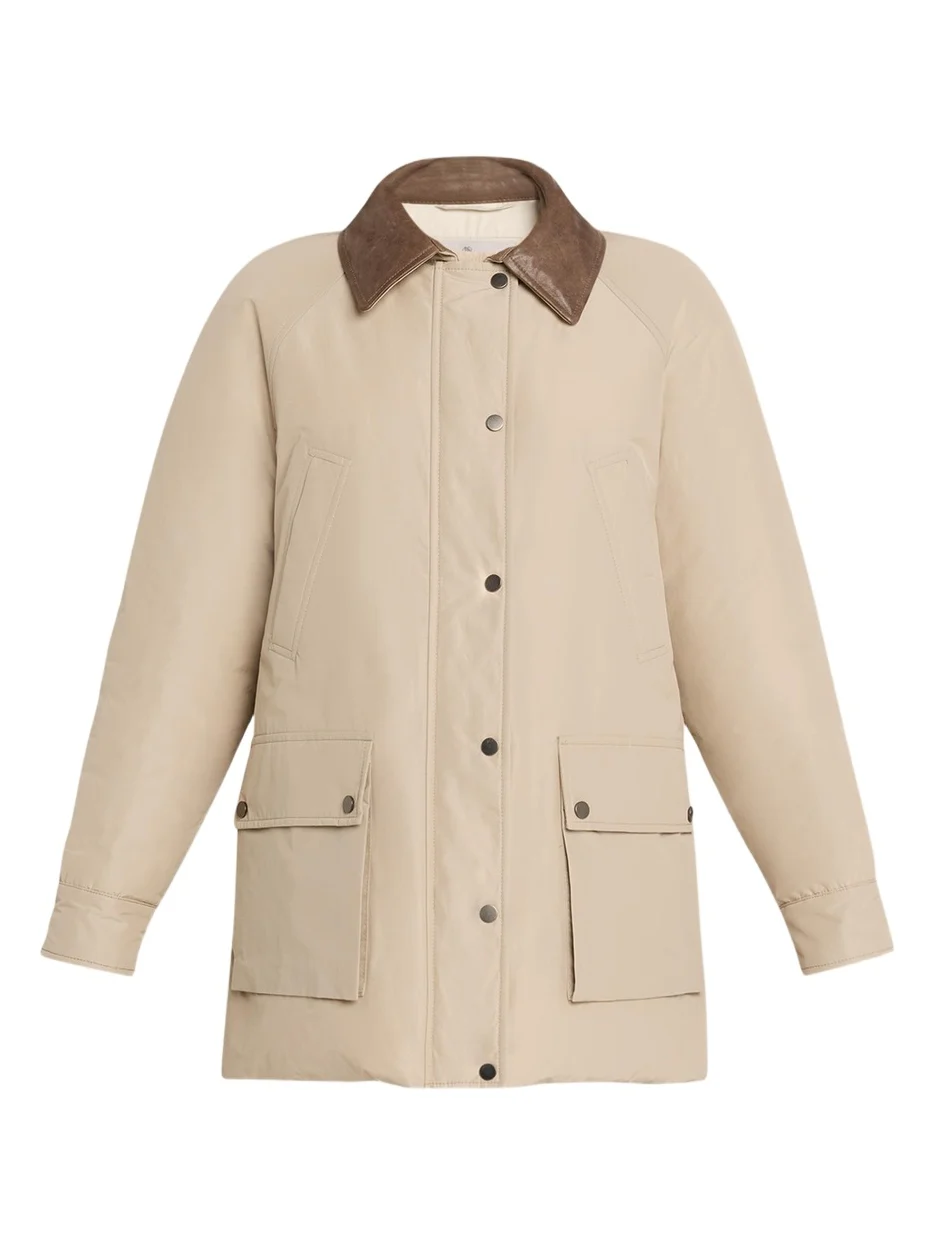 Brunello CucinelliLeather-Collar Padded Cotton Techno Car Coat$8,500
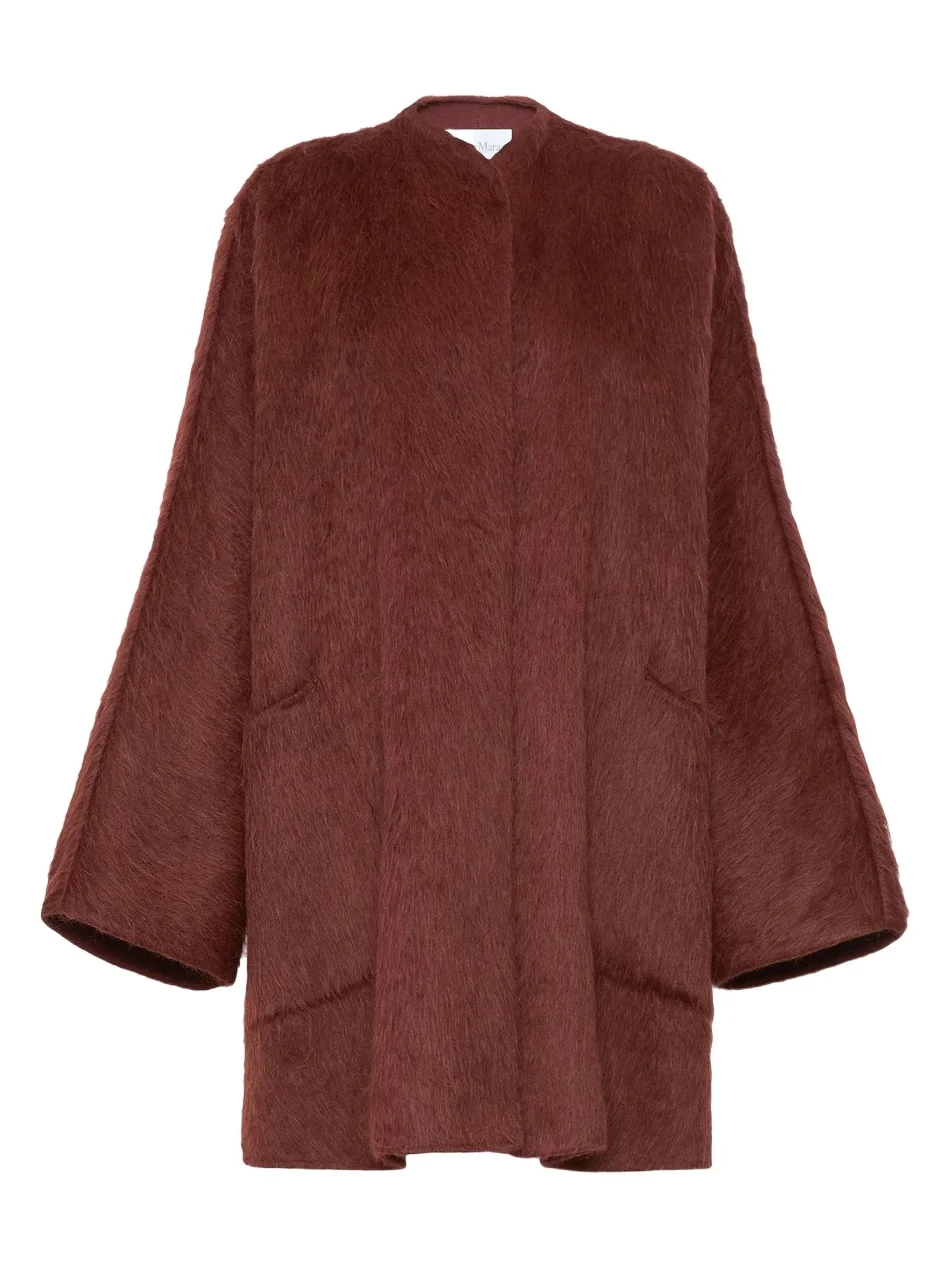 Max MaraWomen's Short Alpaca and Wool Coat - Rust$4,390
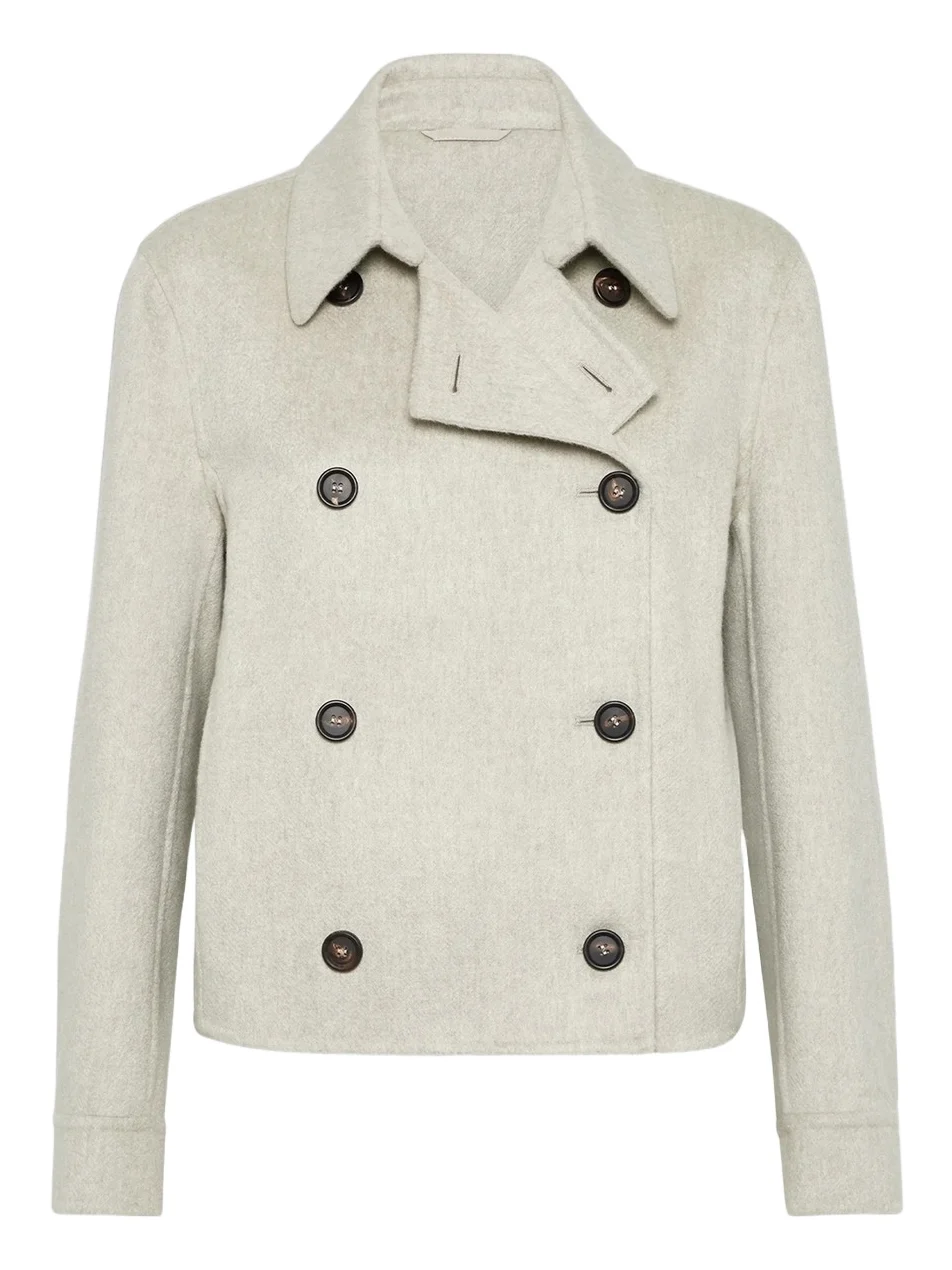 Brunello CucinelliWomen's Hand-Crafted Cropped Pea Coat$9,400
The duffle coat, hooded wool coats and the pea coat
The duffle is the classic hooded wool coat, and the British maker Gloverall tells its story on its heritage page. Gloverall says it was founded in London in 1951 by Harold and Freda Morris, who began by selling surplus Royal Navy duffle coats. By its account, the coat takes its name from Duffel, a town in Belgium where thick wool cloth was woven from the 17th century, and the Royal Navy adopted the design during the Second World War for sailors on the Arctic and North Atlantic convoys. The toggle-and-loop fastening, Gloverall says, was a working detail, simple to use with gloved hands in extreme cold.
The luxury versions tend to borrow the duffle's parts rather than copy it whole. Isabel Marant's Trixie comes closest: a cropped, hooded coat in wool and cashmere that closes with duffle-style toggles. Max Mara's hooded coat in wool, alpaca and silk zips up under a deep hood; Toteme's hooded wool coat and Alaïa's draped hooded coat put a generous hood on a city shape; Balmain's oversized pea coat adds a hood to a cross-over front. The pea coat is the naval cousin: double-breasted, hip-length, with a collar that turns up against the wind, here from Stella McCartney, Loewe and Isabel Marant. Wear all of them with knits and trousers rather than tailoring.
- Cream pea coat over a navy cable knit, white jeans and black loafers.
- Charcoal hooded coat over a black turtleneck and black trousers, with the hood down in town and up on the walk home.
Hooded wool coats and pea coats
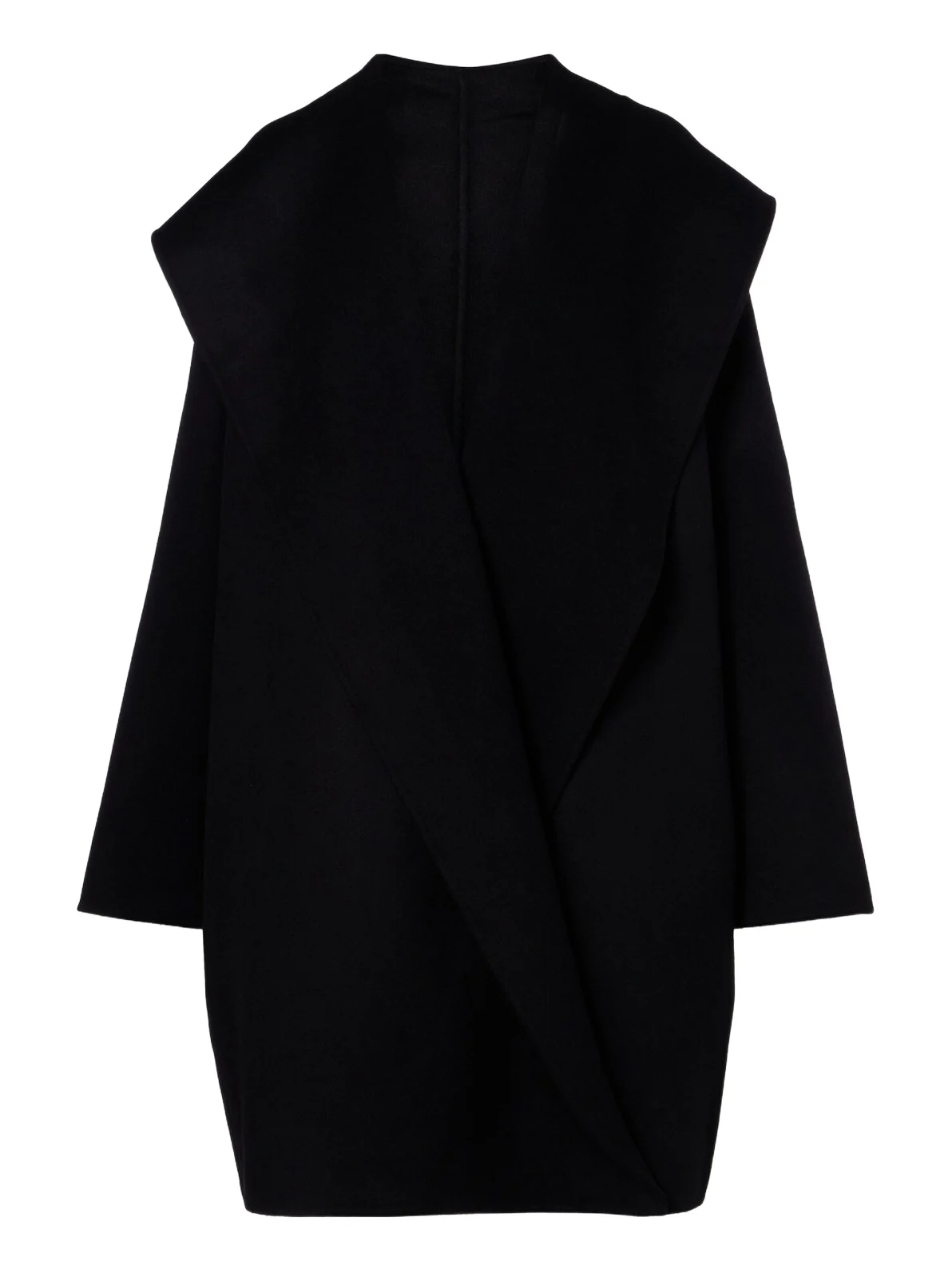 TotemeHooded wool coat$1,390
 AlaïaHooded Wool Coat$6,950
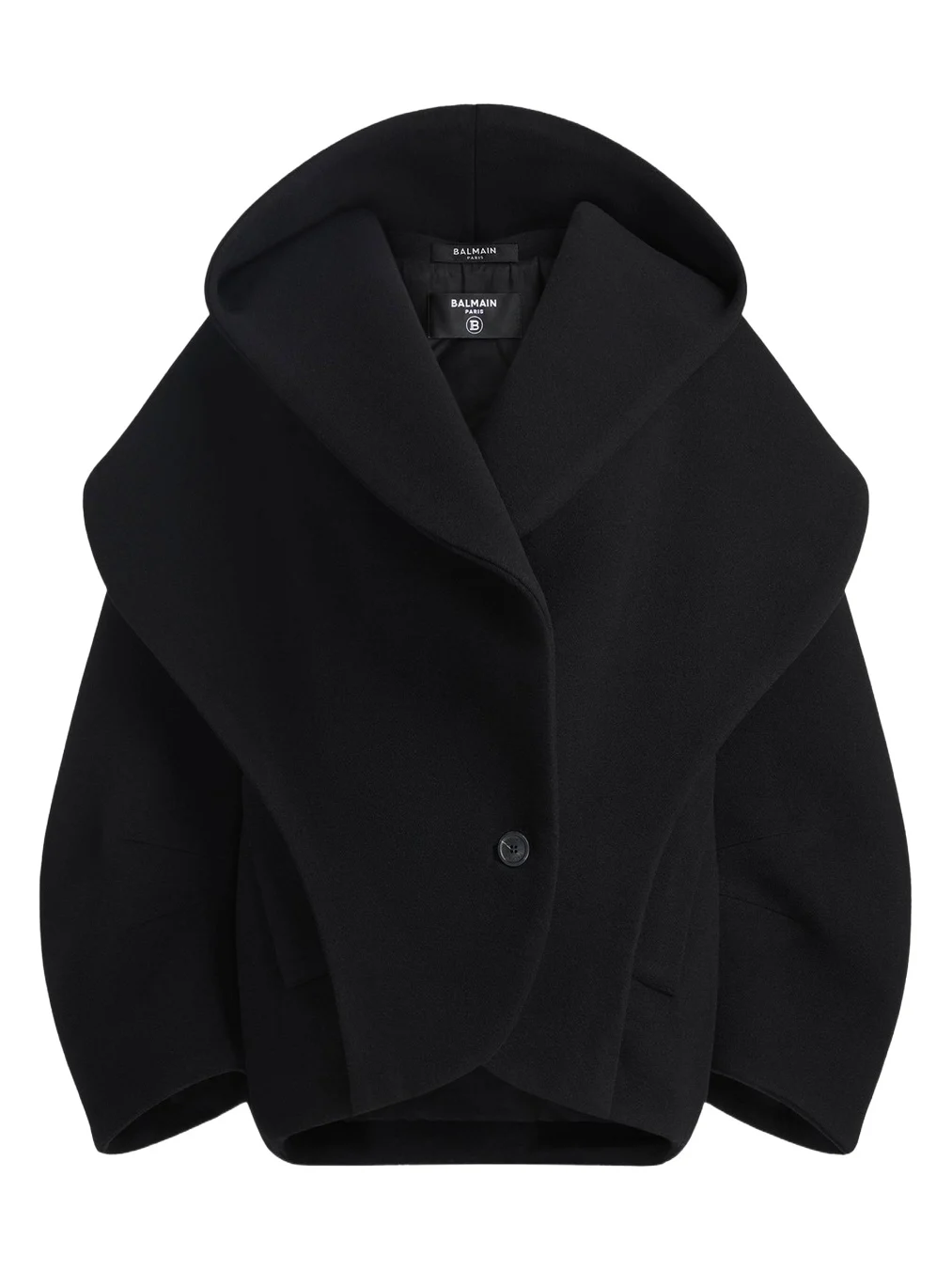 BalmainOversized wool pea coat with hood$4,450
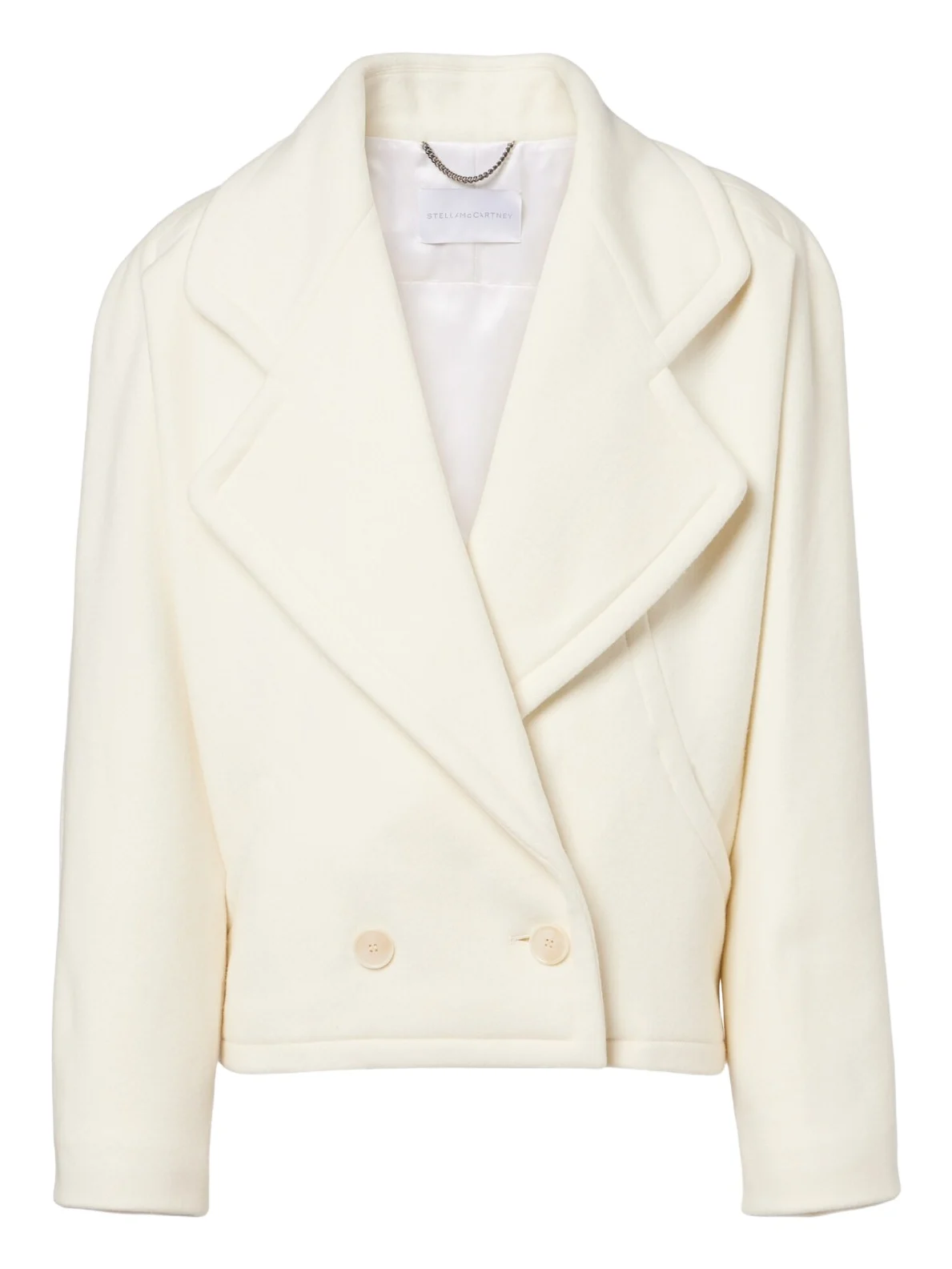 Stella McCartneyWool peacoat$2,300
 LoewePebble double-breasted wool peacoat$3,800
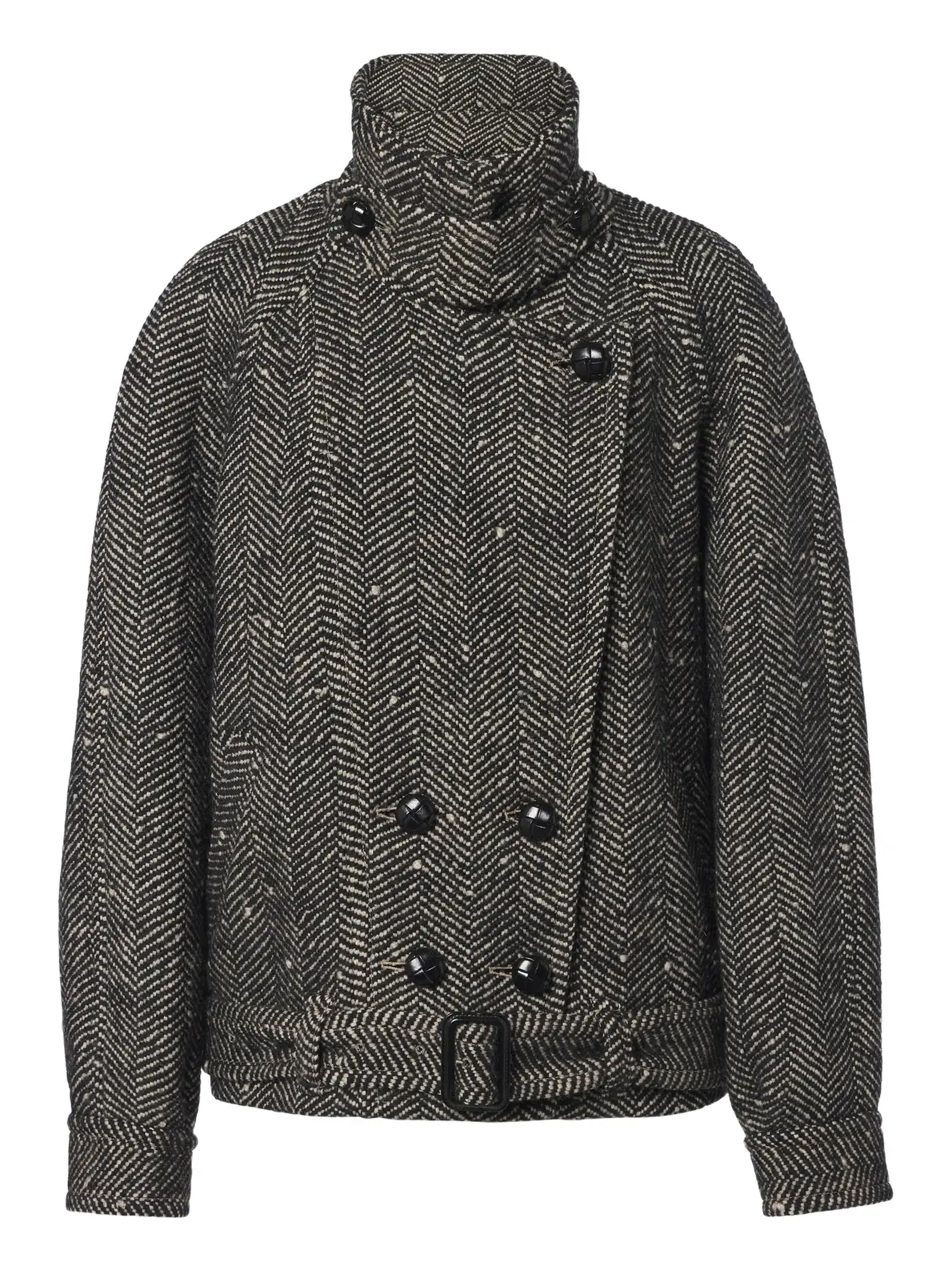 Isabel MarantElvane herringbone wool peacoat$2,195
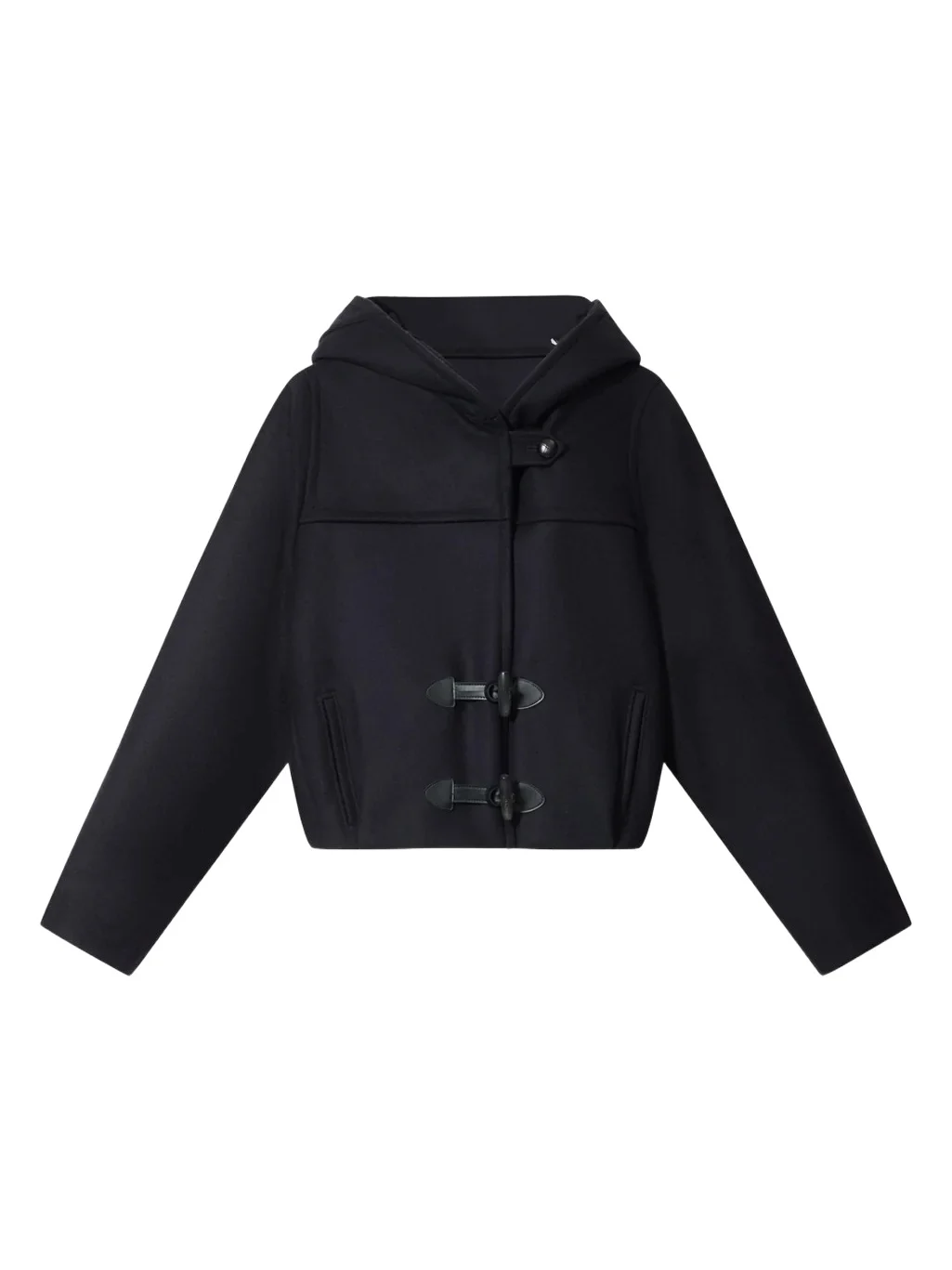 Isabel MarantTrixie Wool Coat$1,390
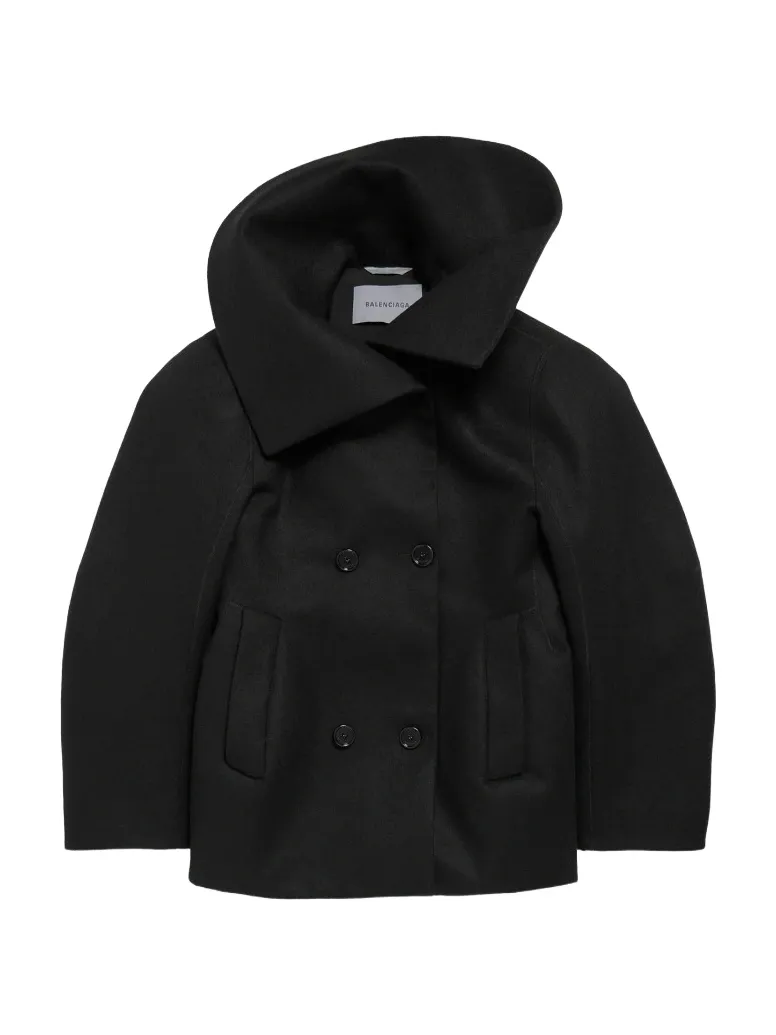 BalenciagaWomen's High Collar Peacoat$5,450
Winter coats by height and proportion
Length decides whether a coat looks bought for you. The rule we use: the hem should land just below the knee, below the widest point of the calf, or near the ankle; never across the widest part of the calf itself. Use the listing's length when it gives one. Max Mara lists its 101801 at 120 centimeters (about 47 inches) and its short alpaca coat at 90 centimeters. Stand in the boots you will wear, have someone run a tape from the bone at the base of your neck down your back, and see where those numbers land.
| Your frame | Choose | Avoid |
|---|---|---|
| Petite, about 5'3" and under | Hip to knee length; a belted long coat worn with one color below it; kimono sleeves you can turn back | Dropped-shoulder cocoons that add width, and hems that stop mid-calf |
| Average, about 5'4" to 5'7" | Just below the knee to mid-calf; any closure | A hem an inch or two past your skirts and dresses |
| Tall, 5'8" and over | Mid-calf to ankle; maxi coats, long parkas, oversized shapes | Cropped coats over long skirts, which cut you in half |
| Full bust | Single-breasted or wrap fronts with a deep V when closed; soft shoulders | Wide lapels on a double-breasted front buttoned high |
| Broad shoulders | Raglan, kimono or dropped sleeves; dark, plain cloth | Epaulettes and padded, extended shoulders |
| Narrow shoulders | Set-in sleeves with light padding, peak lapels | Very dropped shoulders that slide off |
Tall readers can wear the long coats shorter women find overwhelming. All of them fall below the knee and most reach mid-calf or lower, from Zimmermann's maxi coat with its matching scarf and Gabriela Hearst's full-length Houstt in cashmere corduroy to Balenciaga's long wool coats and Max Mara's long wrap coats in cashmere and double wool drap.
Long coats for tall frames
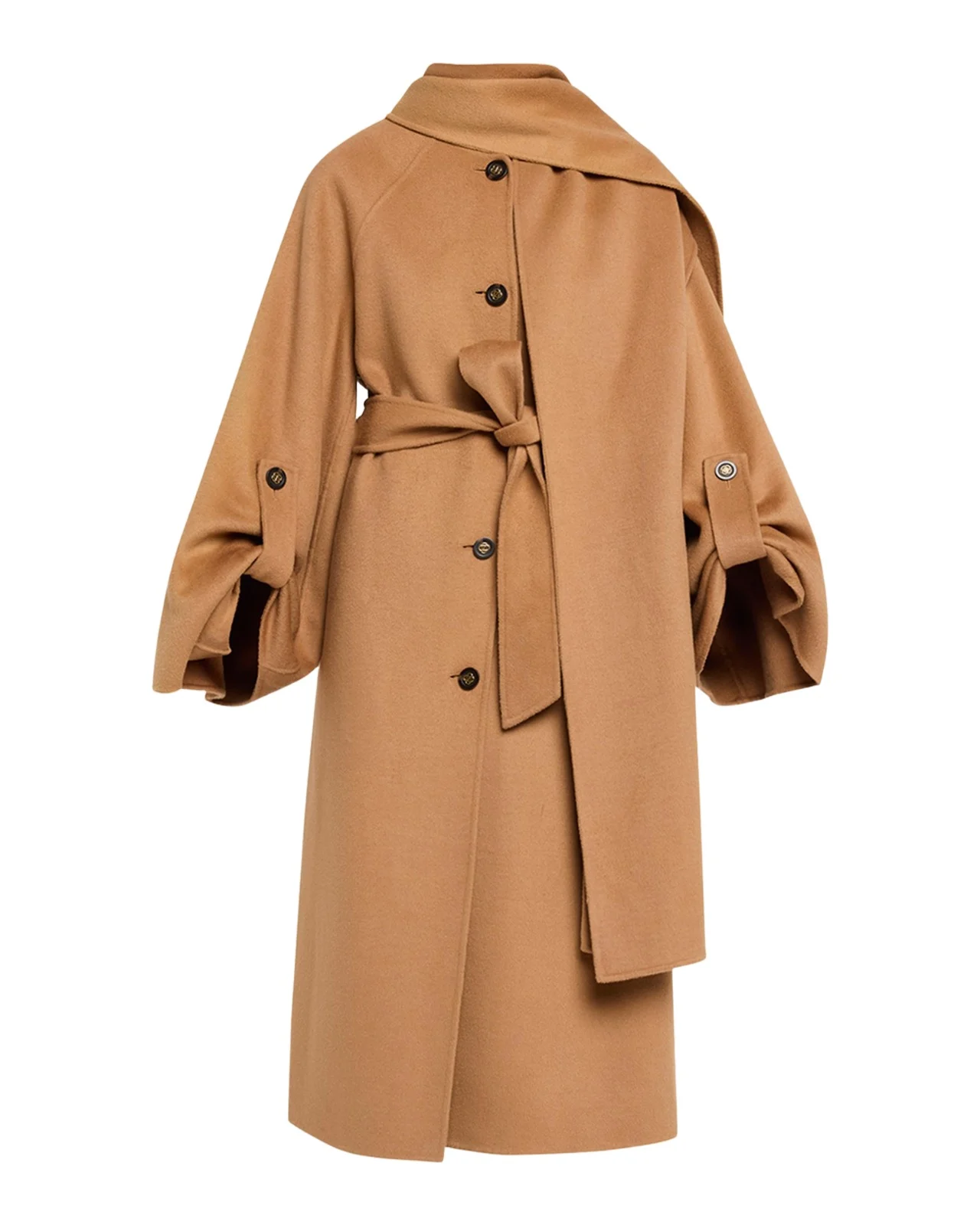 ZimmermannValiant Wool Scarf Maxi Coat$1,950
 BalenciagaLong Chunky Wool Coat$4,550
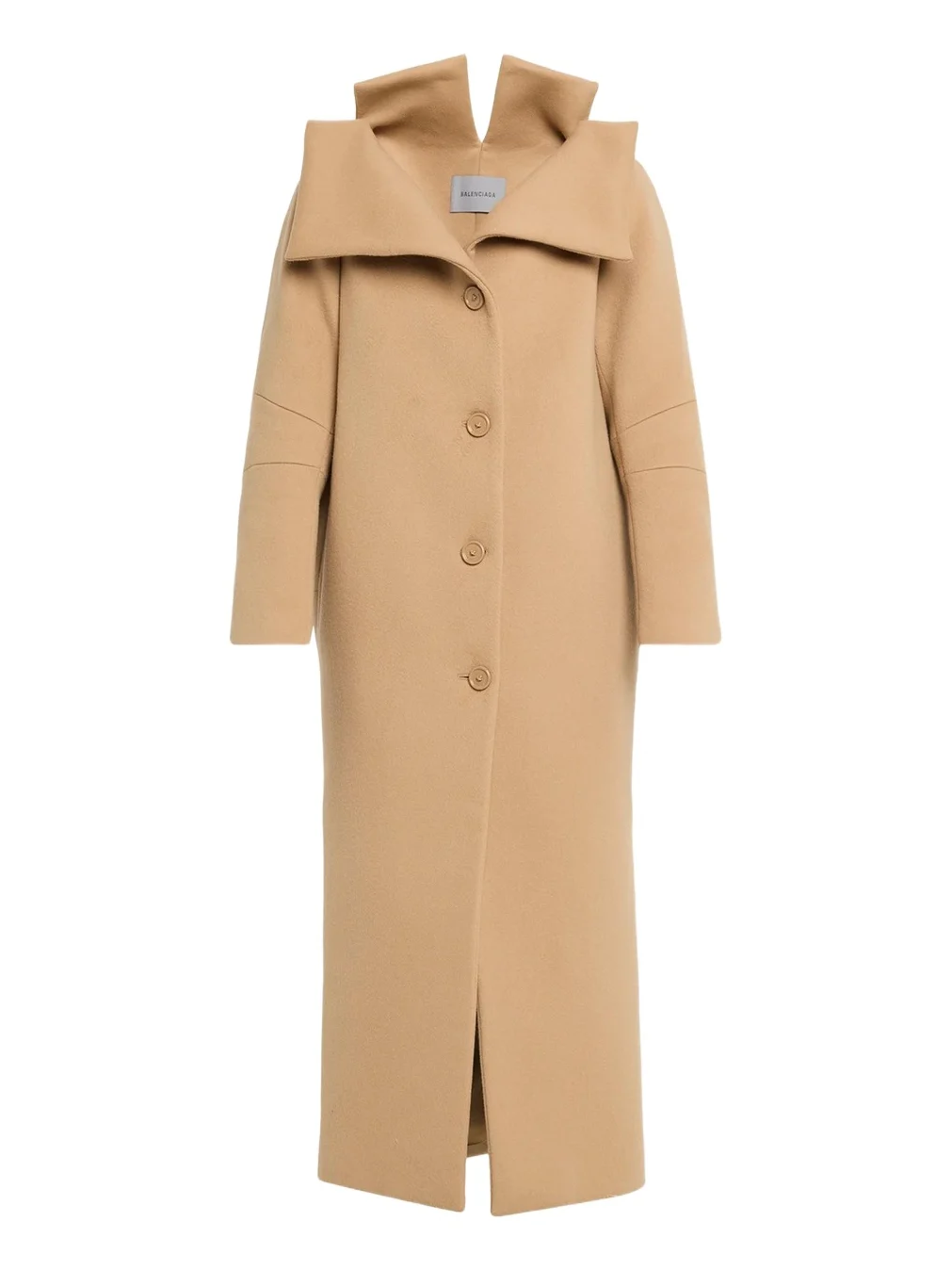 BalenciagaArchitectural Vareuse Collar Wool Long Coat$5,990
 Bottega VenetaStretch-Wool Felt Long Coat$5,600
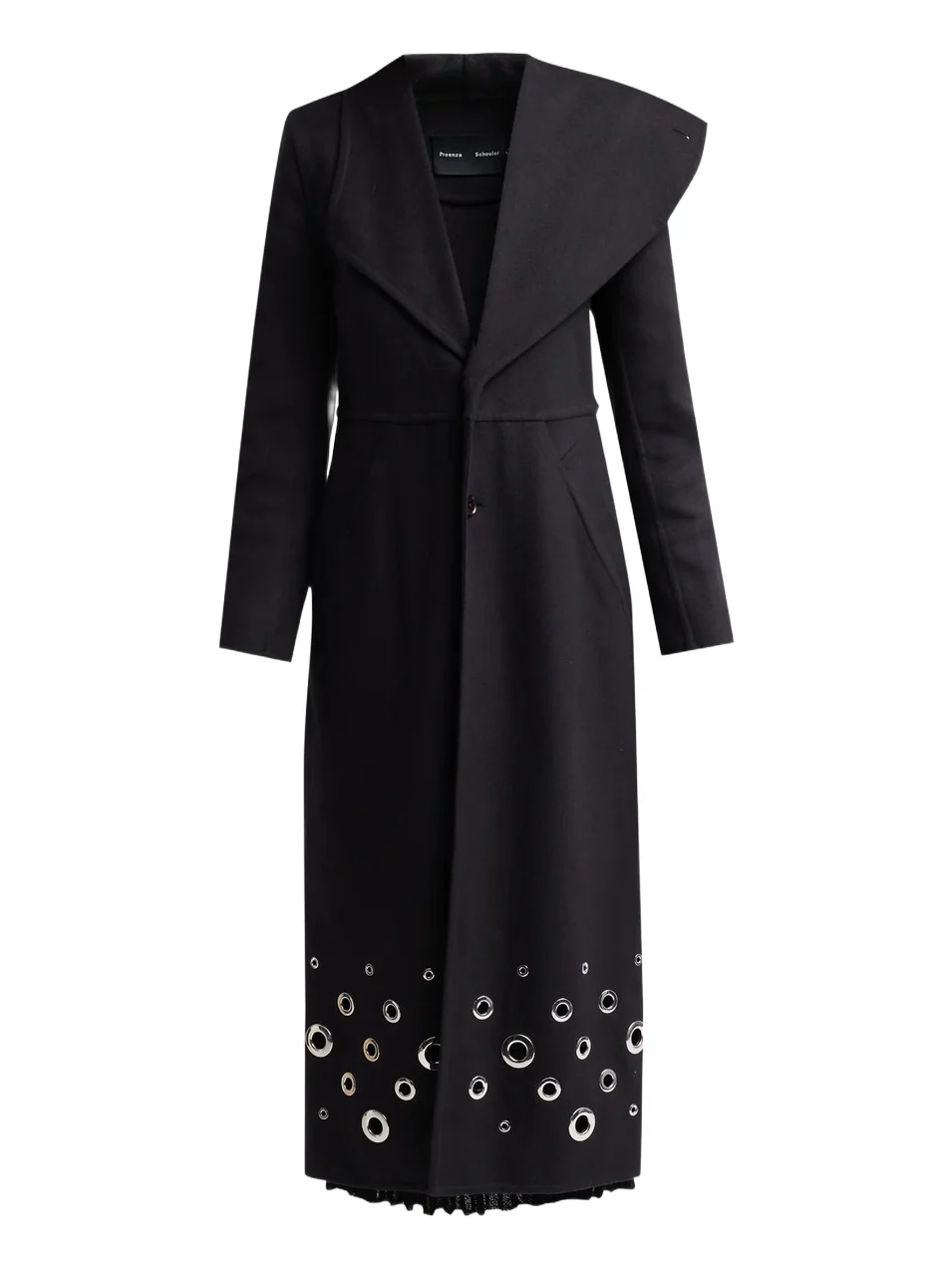 Proenza SchoulerWomen's Alix Compact Melton Wool Coat$3,490
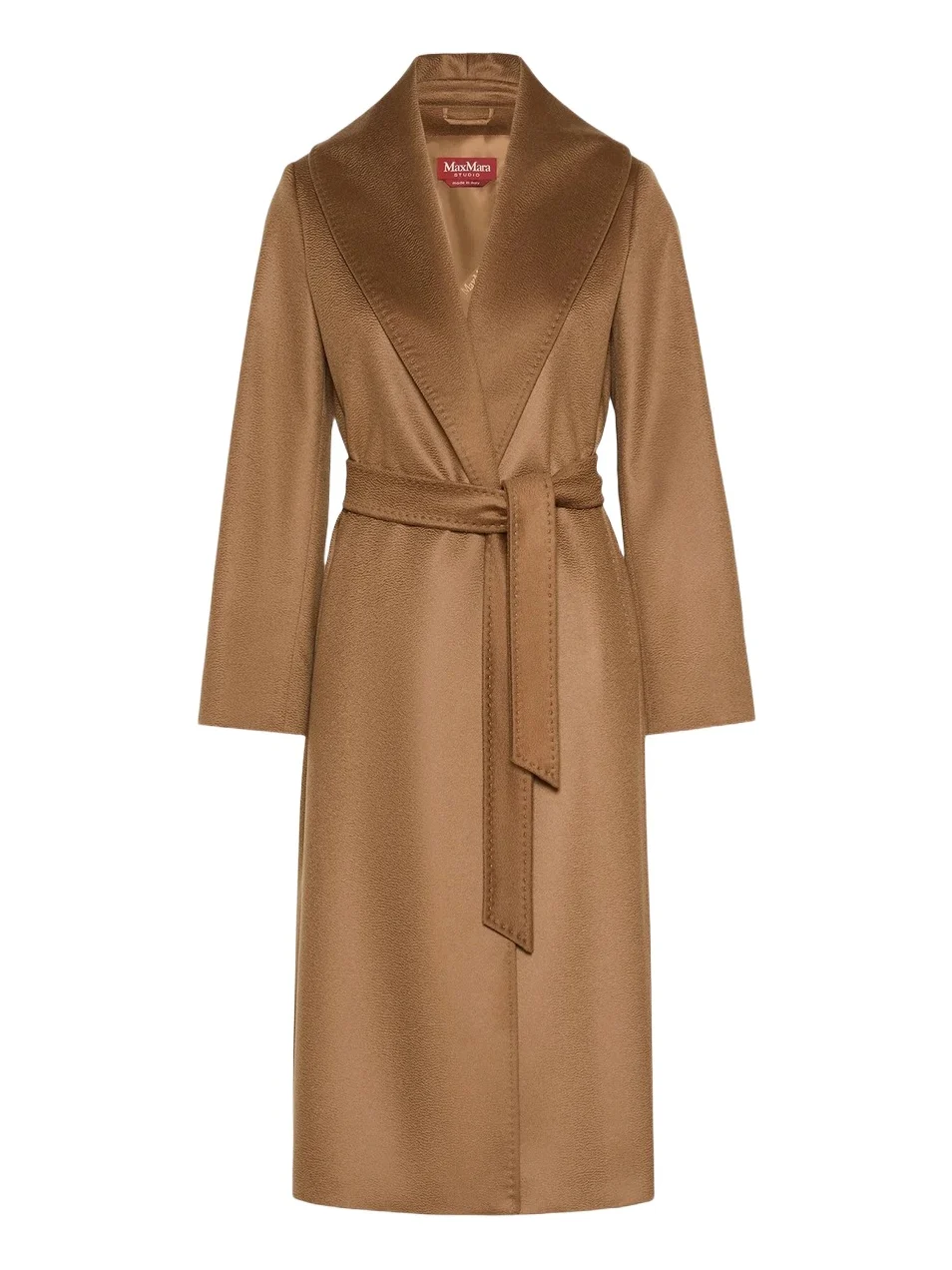 Max MaraWomen's Long Cashmere Robe Coat$3,410
 Max MaraWomen's Long Wool Drap Wrap Coat$1,990
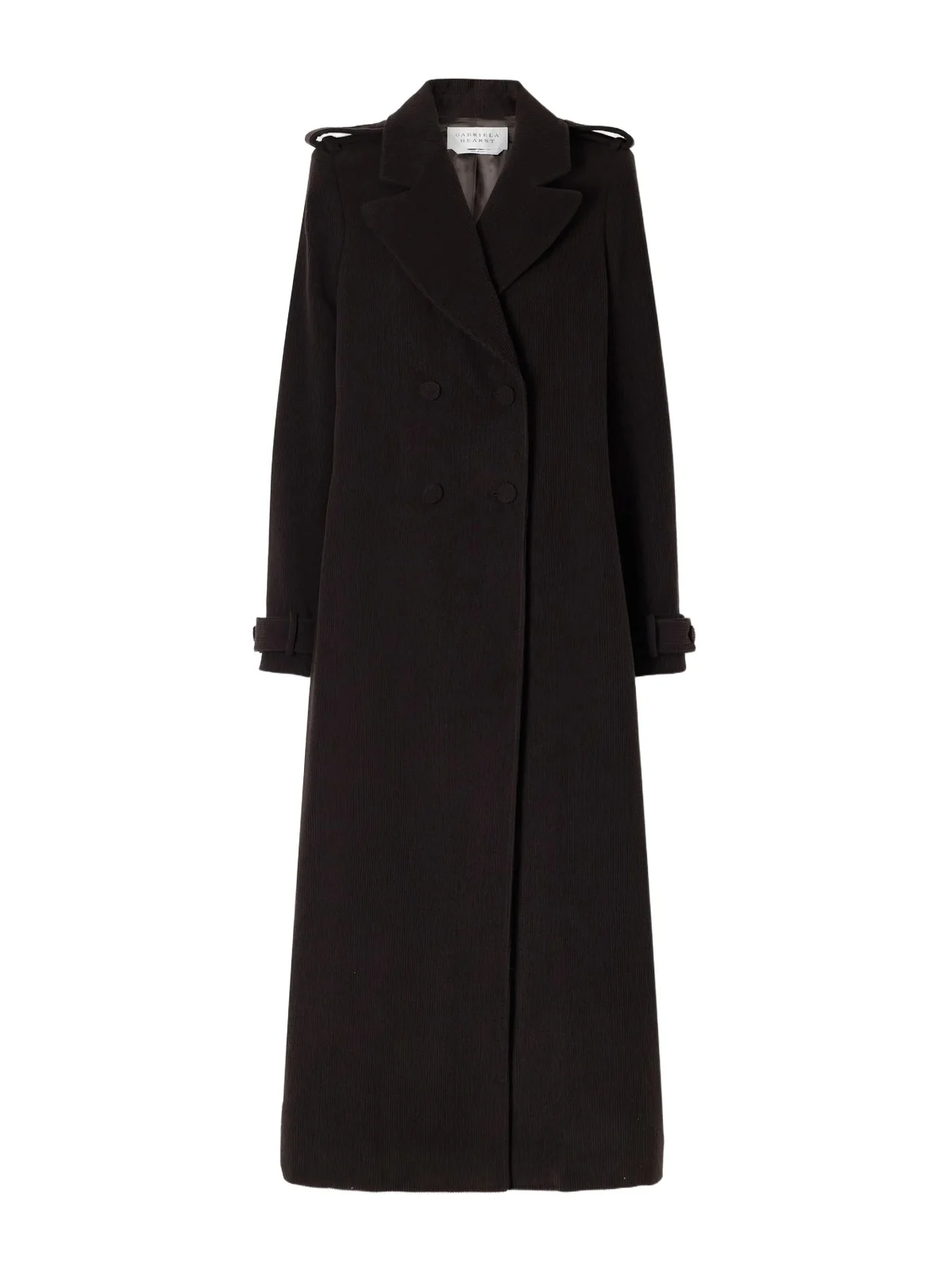 Gabriela HearstHoustt Double-breasted Cashmere-corduroy Coat$8,900
Winter coats by budget
What you pay for, as the price rises, is fiber, cloth weight and handwork. These bands match the coats in this guide.
| Budget | What it buys | Where to look |
|---|---|---|
| Under $2,000 | Wool and wool-cashmere blends (often with some polyamide), double-face wool, and well-made down | Toteme, Max Mara, Isabel Marant, Burberry, Zimmermann |
| $2,000 to $5,000 | The icons in wool and cashmere or camel hair, long Moncler down, tailored coats from The Row and Khaite, faux fur from the main lines | Max Mara, Moncler, The Row, Khaite, Stella McCartney, Burberry |
| $5,000 to $10,000 | Pure cashmere, double cloth, real shearling, runway tailoring | Max Mara's Ludmilla, Loro Piana, Toteme shearling, Jil Sander, Prada, Alaïa |
| Above $10,000 | Hand-crafted cashmere double cloth, the finest shearling, down coats with wool shells and shearling trim | Brunello Cucinelli above all |
Under $2,000, read the composition line closely: the best buys here are pure wool or high-wool blends, Max Mara's double-cloth robe coat, and down coats that publish their down content. A high share of polyamide usually means less wool doing the insulating.
The best winter coats under $2,000
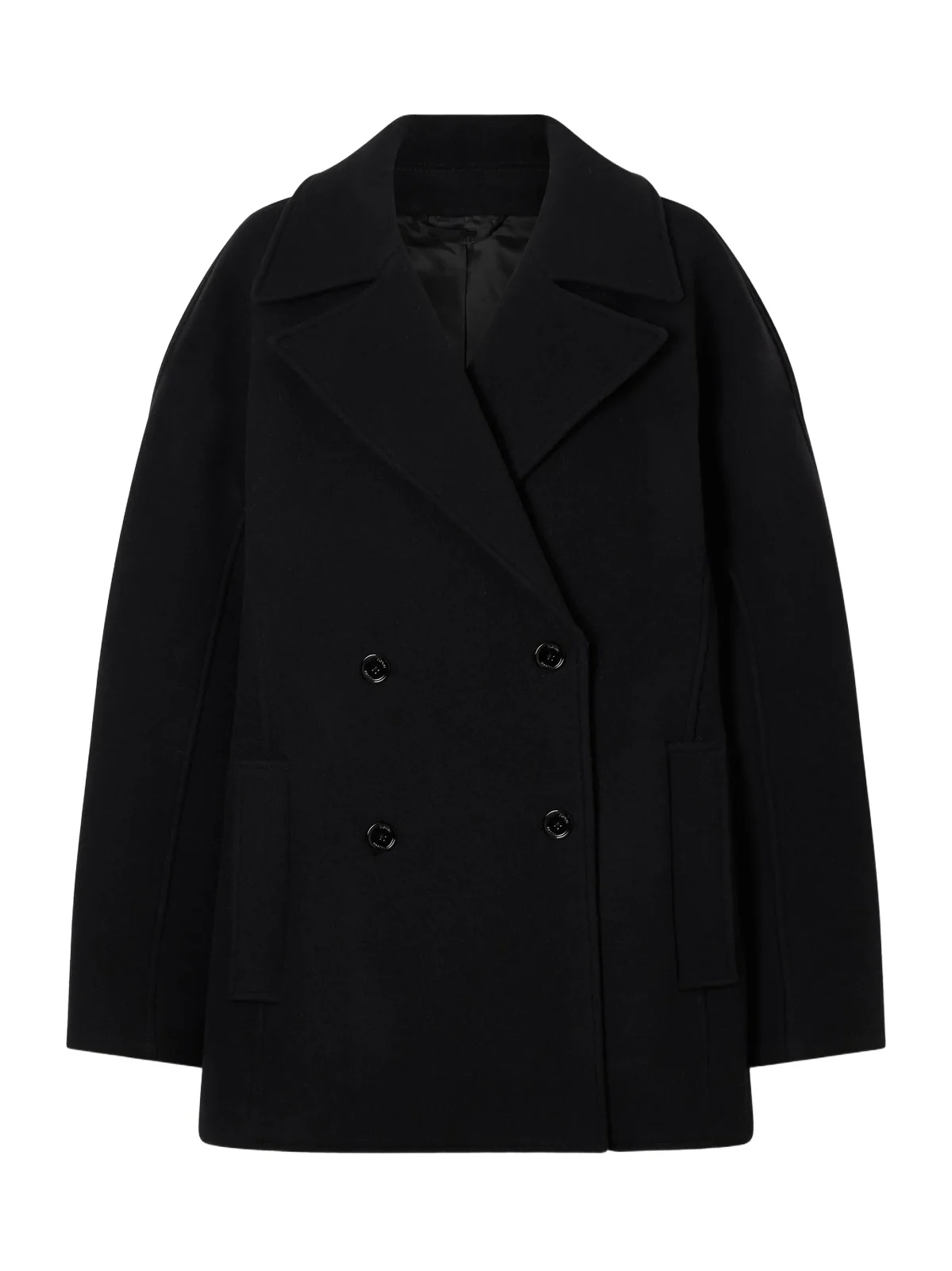 TotemeDouble-breasted Wool-blend Coat$1,520
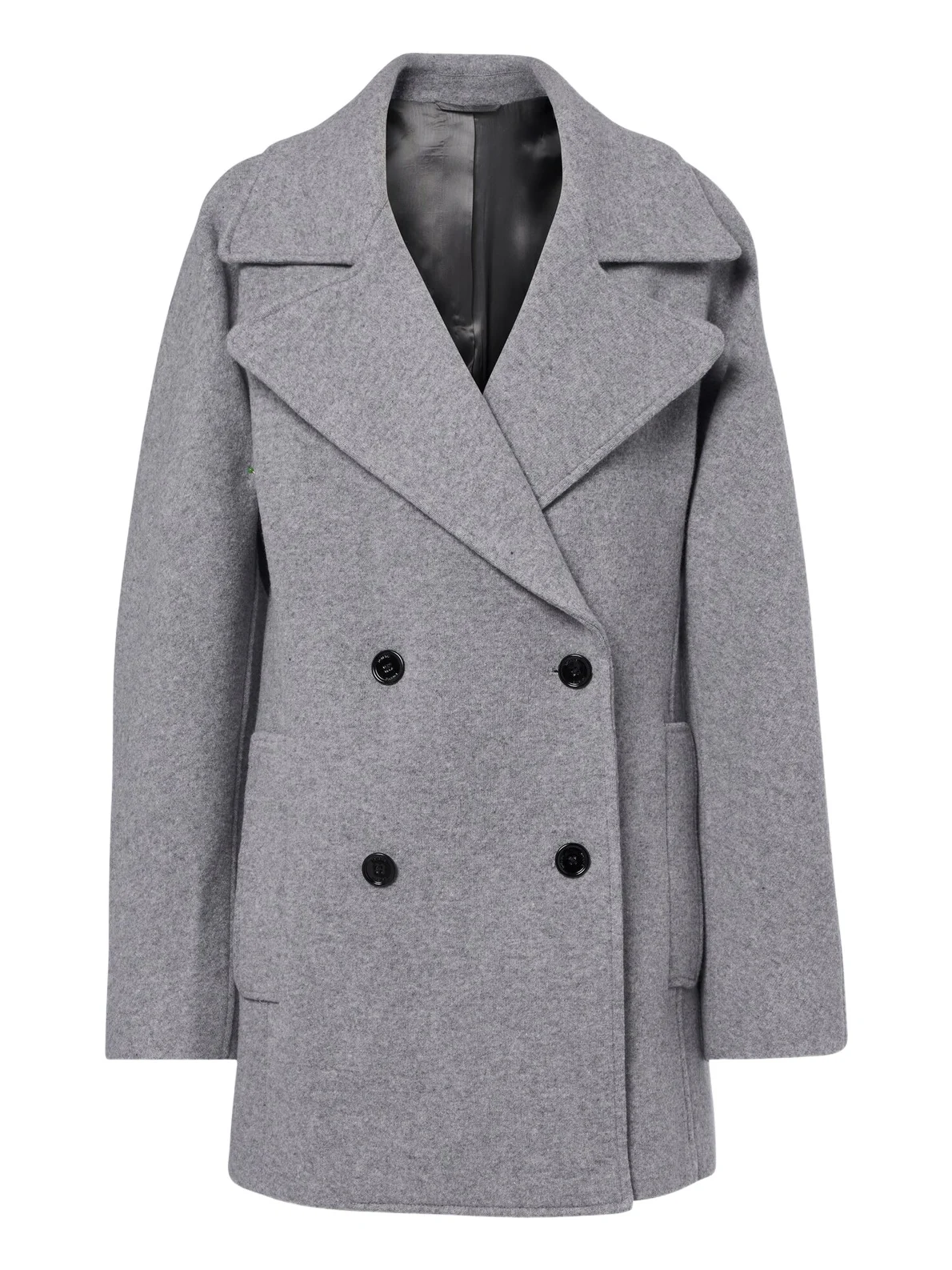 TotemeWool and cashmere-blend peacoat$1,520
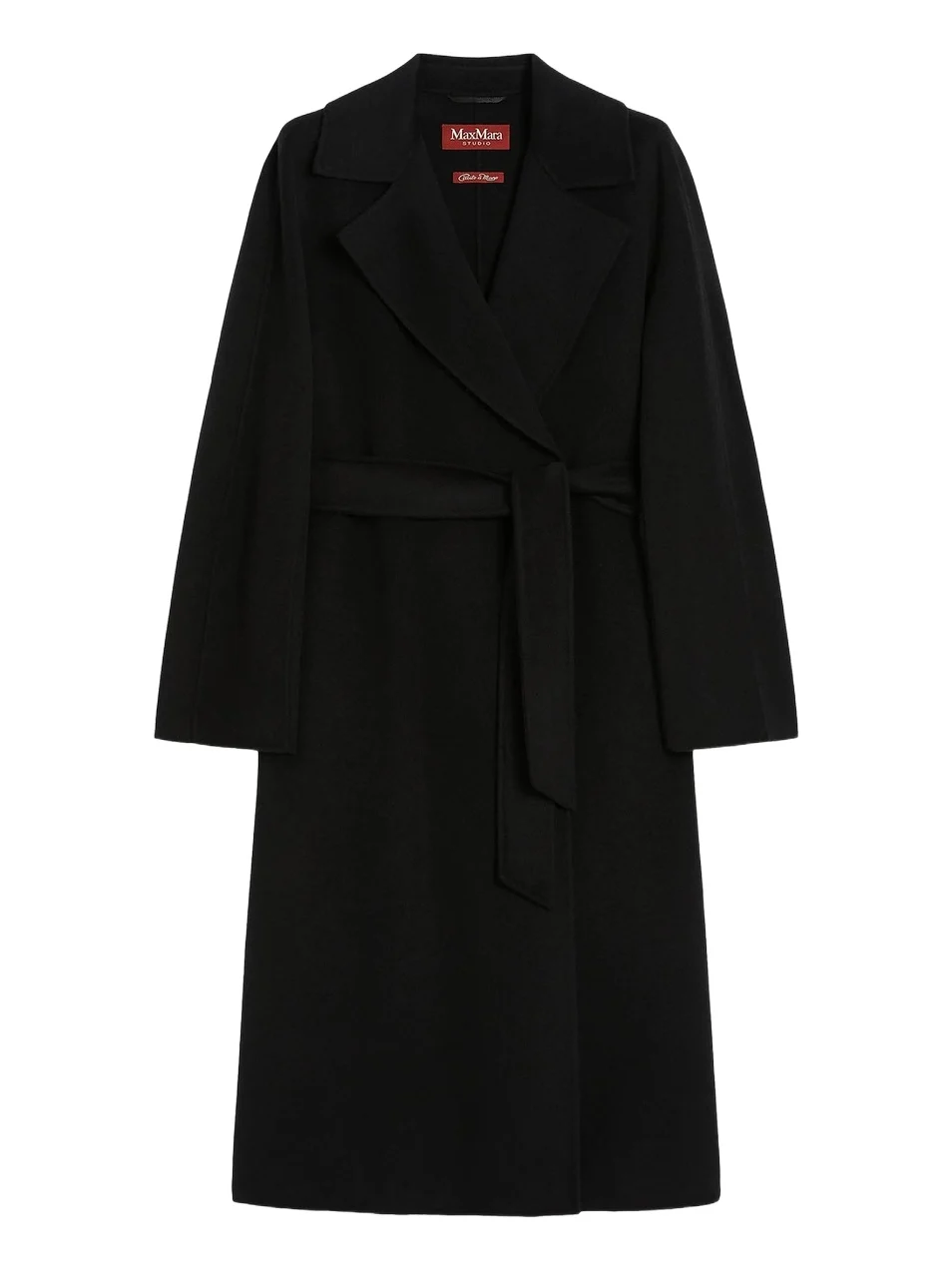 Max MaraWomen's Wool Cashmere and Silk Coat - Black$1,695
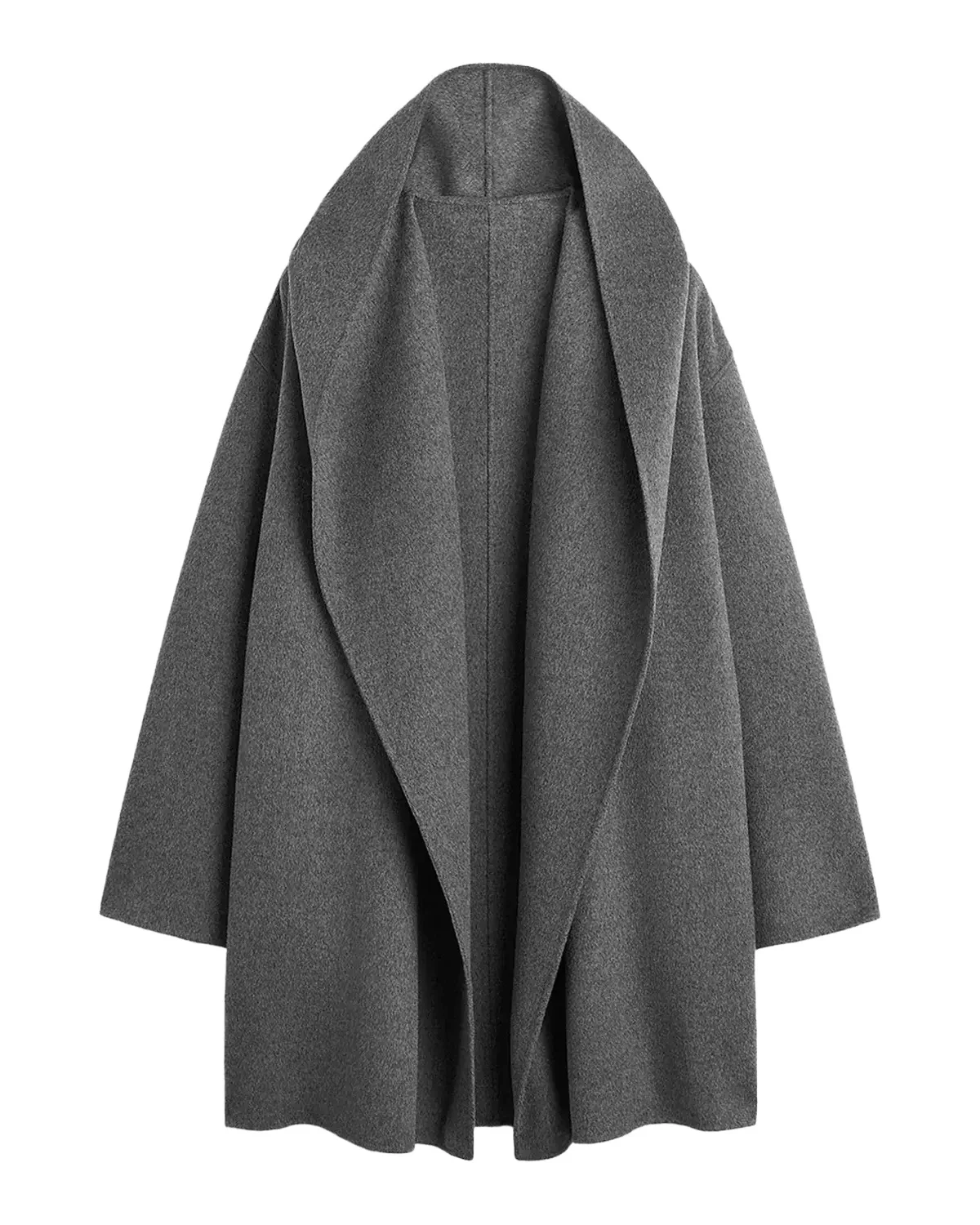 TotemeHoodie Wool Coat$1,390
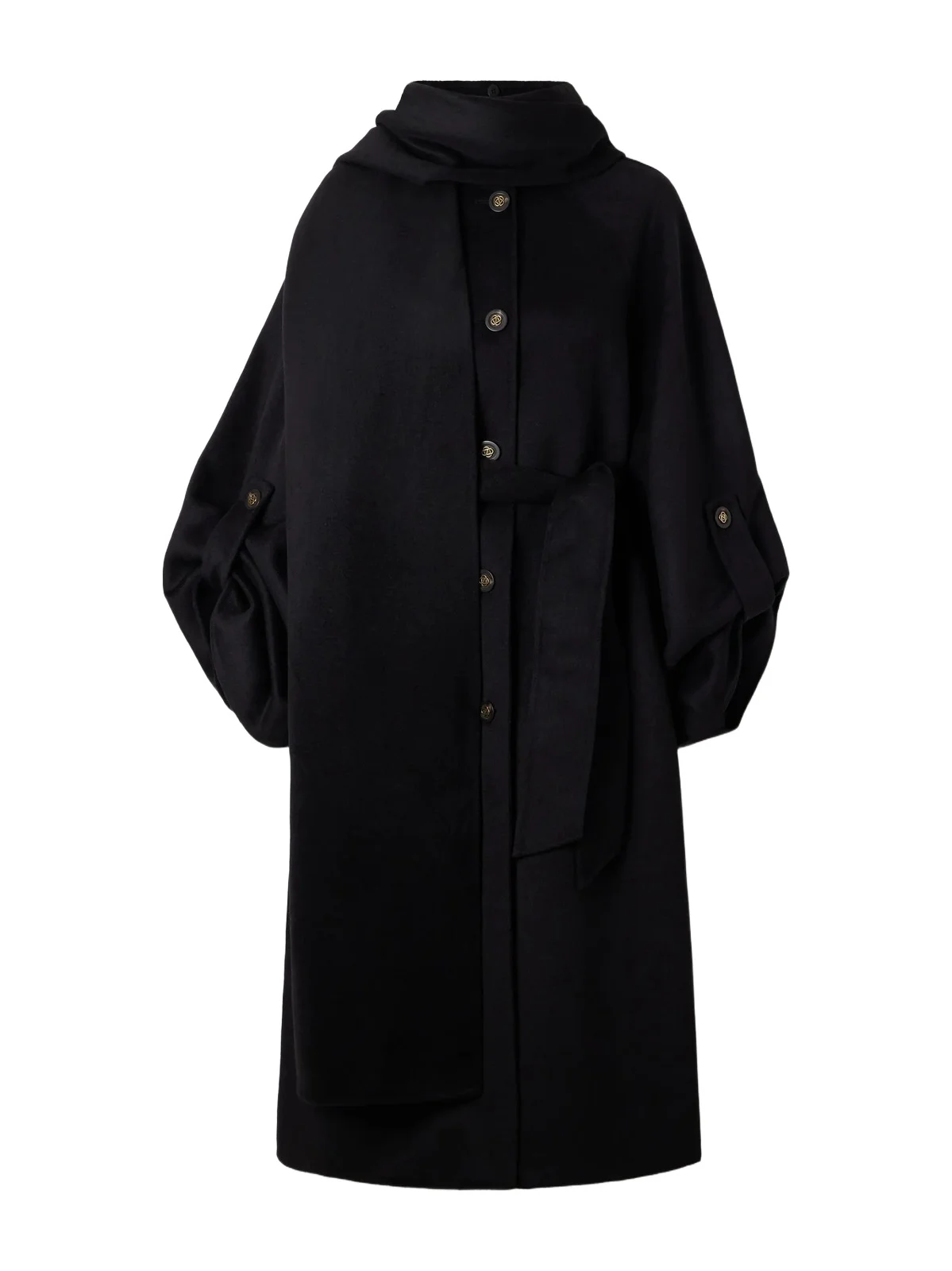 ZimmermannValiant Scarf-detailed Wool-blend Coat$1,950
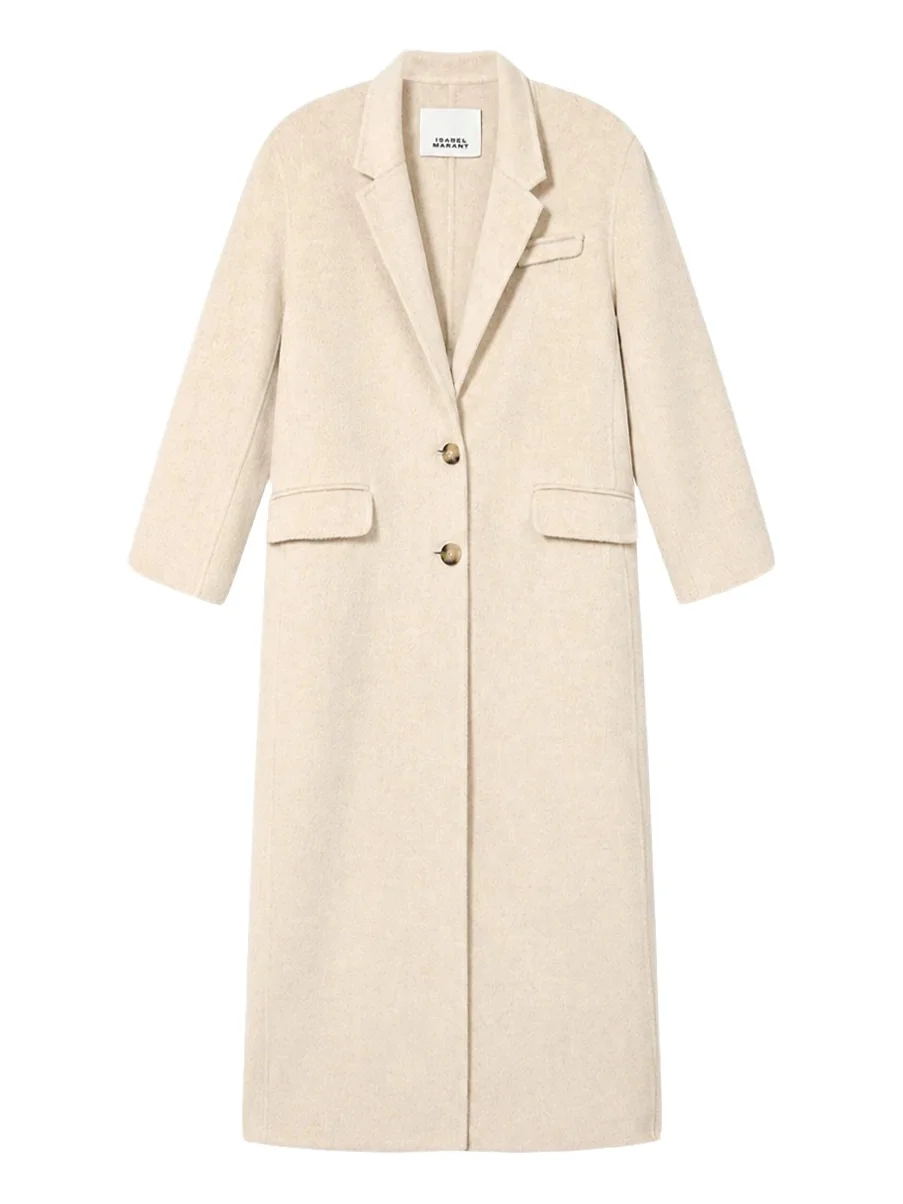 Isabel MarantClesa Wool Coat$1,990
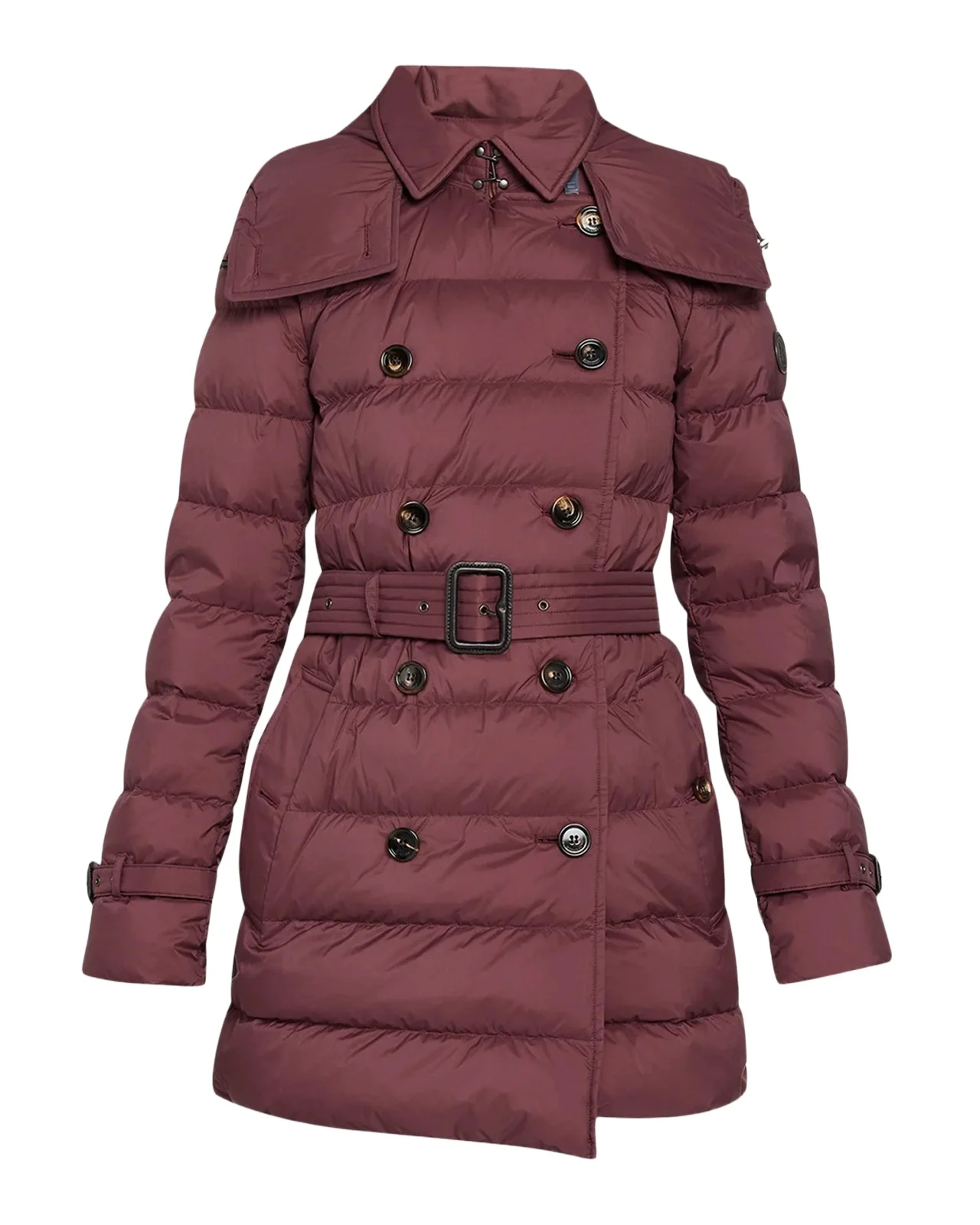 BurberryAudley Mid-Length Nylon Puffer Coat$1,695
 Max MaraWomen's Wool Robe Coat$1,715
What to buy once, and what to buy for one season
Buy once: a wool coat in dense cloth, in a dark neutral or camel, that reaches below the knee and fits over a blazer. Add a long, hooded down coat in a dark color and, if you live with real cold, a long shearling, also dark. Those three cover almost any winter for many years, and they look better with age as long as you brush and store them well.
Buy for one season, and enjoy it: leopard faux fur, a sculptural hooded pea coat, a color-blocked statement coat, a fringed check cape, pale shearling for everyday wear. They make the outfit, but you will reach for them less once the novelty wears off, so spend accordingly.
The mistakes people make with winter coats
- Buying for the coldest day of the year. A polar parka worn on a 40°F morning is a coat you take off on the train and carry all day. If your winter is mostly mild, buy a wool coat roomy enough for a thin down vest underneath and save the parka for real cold.
- A hem that fights your hemlines. A coat that ends an inch past your skirts looks borrowed. Cover them completely or stop well above them.
- Forgetting the neck. If you dislike scarves, buy a stand collar, funnel neck or hood. An open shawl collar without a scarf is the coldest coat in the closet.
- Sizing up a coat that is already oversized. The 101801, cocoon coats and dropped-shoulder shapes are cut with room built in; going up a size drowns you.
- Choosing a pale coat for a slushy commute. Ivory down and pale shearling show grime at the cuffs and hem within weeks. Keep the pale coat for the second coat.
- Skipping the movement test. In the fitting room, raise an arm as if hailing a cab; the hem should barely rise. Sit down in a long coat; it should not strain at the last button. Reach forward as if for a steering wheel; the back should not pull.
Caring for a winter coat, by type
| Coat | Between wears | Cleaning and storage |
|---|---|---|
| Wool, cashmere, camel hair | Brush it, rest it a day, hang it on a broad shaped hanger | Clean it at the end of winter before it goes away |
| Down | Hang it loose; let it dry fully away from heat if it gets wet | Follow the label: Burberry's Kent lists a 30-degree machine wash, while Moncler's listings ask for professional cleaning; store it uncompressed |
| Shearling | Keep it out of heavy rain; let it air-dry | Specialist cleaning only; Toteme's listing reads "specialist clean" |
| Teddy and faux fur | Shake it out; keep heat and irons away | As the label says; a breathable cover, never plastic |
Not sure which coat suits your city, your frame and the clothes you already own? Ask our AI stylist to build three outfits around any coat on this page before you decide.
How we chose
For each type we asked one question first: will this coat keep someone warm in the conditions its section describes? So we read the composition of every coat and left out the ones that only look wintry, among them a lyocell belted coat, a cotton canvas maxi coat, a cotton car coat and a recycled-polyester gabardine one. We dropped listings that contradicted themselves, such as a coat named for calf hair whose composition said camel hair. For down we favored coats that publish their down-to-feather ratio, and we say where a house does not. We preferred long size runs (most capes are cut in one or two sizes, which is how they are made), kept to three coats or fewer from any house in each edit, and covered prices from about $1,200 to about $15,000. Every coat is from a house on our luxury list and is new; none is pre-owned.
Frequently asked questions
What is the warmest type of winter coat for women?
A hooded down parka that reaches at least mid-thigh, with a high collar, inner cuffs and a drawstring waist. A long shearling coat comes next. Among tailored coats, a dense double-faced or heavy melton wool coat below the knee is the warmest.
Is a wool coat warm enough for winter?
For a city winter around freezing with short walks, yes, if the cloth is dense, the coat reaches the knee and you add a scarf and gloves. For long stretches outdoors in the teens or below, or in strong wind, switch to down or shearling.
What fill power should a winter coat have?
A higher fill power means loftier, more insulating down, but luxury houses rarely publish it. Look for the down-to-feather ratio instead: 90 percent down, which Moncler lists on every down coat in this guide, is a good sign. Then check that the channels are deep and the coat is long enough.
How long should a winter coat be?
Below the knee for most women, so it covers skirts and keeps your thighs warm. Petite frames look best in a coat that ends between the hip and the knee, and tall women can go to mid-calf or the ankle. Avoid a hem that lands on the widest part of your calf.
How much should you spend on a good winter coat?
Spend on the coat you will wear most days. Well-made wool and down coats from the top houses start under $2,000; the icons in wool and cashmere and long designer down sit between $2,000 and $5,000; pure cashmere and real shearling cost more.
Should you size up in a winter coat?
Only if it is a fitted coat and you wear thick layers. Try it over your heaviest knit or blazer: if the back pulls when you reach forward, or a puffer's quilting flattens when you cross your arms, go up a size. Leave oversized cuts in your usual size.
Keep reading
- The best cashmere coats, and what the label must say
- Our guide to designer puffer coats
- The best shearling coats, and how to tell real from faux
- This season's coat trends and the shapes worth buying
- Shopping for him: the best men's winter coats
Browse every style in our coat shop.