Men's Designer Scarves: The Right Fabric, Length and Knot for Every Coat
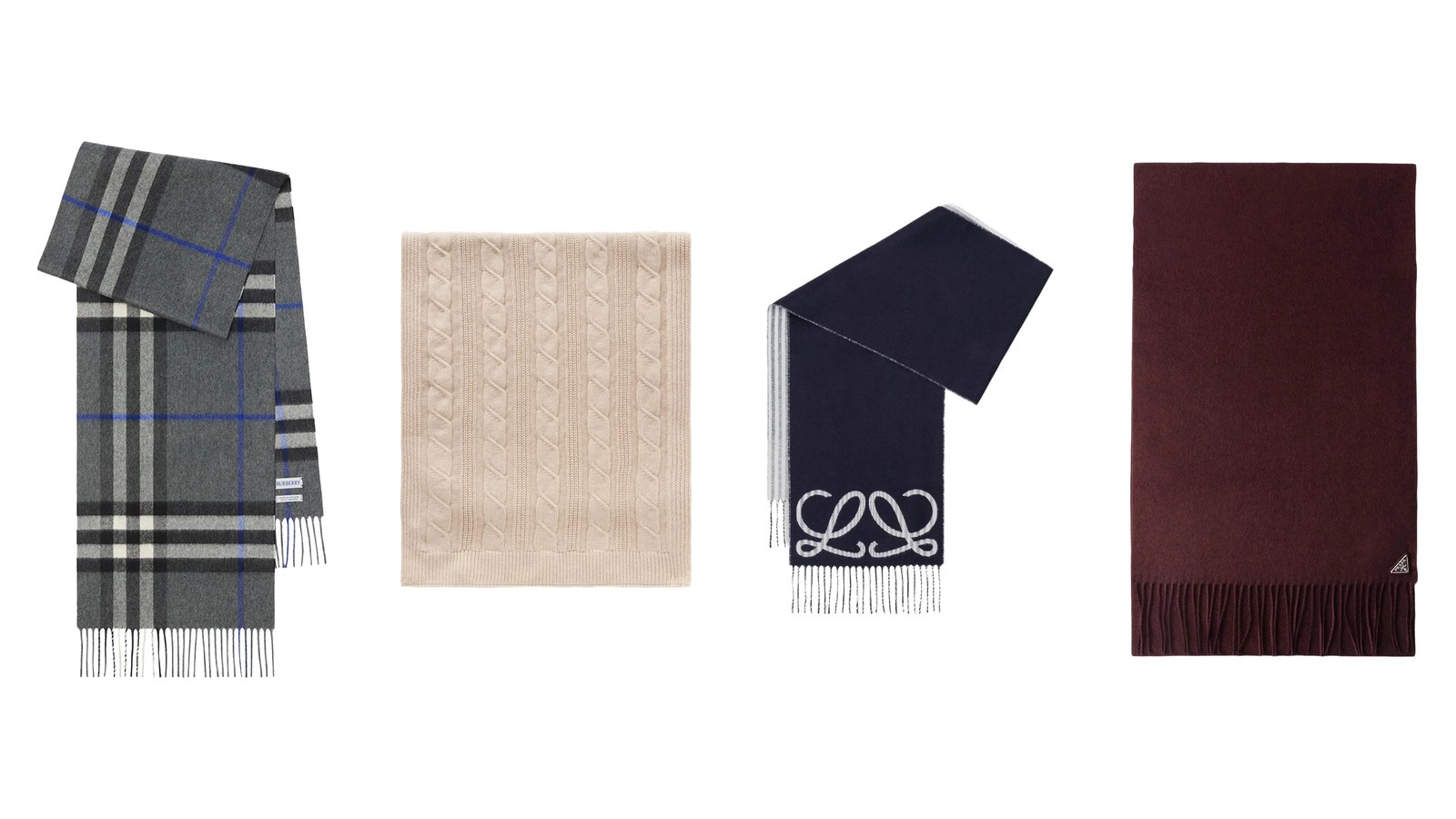
Of all men's designer scarves, the one we would buy first is plain woven cashmere in charcoal, navy or camel. Our stylists' rule of thumb for its size is about 65 to 70 inches long and 11 to 14 inches wide: enough to tie a neat knot under an overcoat's lapels without pushing the collar off the neck. Woven cashmere is also warm for its bulk. The second scarf follows the coat you wear most: a rib or cable knit for a puffer, silk and cashmere for a suit, alpaca or mohair for the deepest cold. Below, we explain what each fabric does, list the sizes the houses publish, show five ties and their warmth trade-offs, match scarves to coat colors and pick close to 80 luxury scarves for men from Zegna, Loro Piana, Brunello Cucinelli, Burberry, Prada, Loewe and more.
Men's designer scarves by fabric: what each one is for
Fabric decides how flat a scarf lies, how warm it is for its bulk and how it ages. Read the composition line before the price: a scarf with "cashmere" in its name can be mostly wool.
| Fabric | How it wears | Wear it with | Check on the listing |
|---|---|---|---|
| Woven cashmere | Thin and fluid; folds into a flat band | An overcoat, under the lapels | Cashmere percentage, width |
| Knitted cashmere | Thicker and springier; ribs grip | A puffer, a peacoat, a collarless coat | Width: a wide rib folds into a thick roll |
| Silk and cashmere | Lighter, with a low sheen | A suit or blazer; a mild day | The silk share |
| Wool and virgin wool | Tough; less soft on bare skin | The commute, a puffer, a quilted jacket | What "virgin" means |
| Alpaca, mohair, bouclé | Lofty and hairy; the warmest-looking | Over a coat, never under a lapel | The polyamide share |
| Silk squares, bandeaus | Almost no warmth; color at the neck | An open-collar shirt, a blazer | The size in centimeters |
"Virgin wool" is a legal claim, not a quality grade. Under the Wool Products Labeling Act rules, a seller may call wool "virgin" or "new" only if the fiber has never been reclaimed from a spun, woven, knitted or felted product (16 CFR 300.20). It means the wool is not recycled, not that it is fine. And in our experience a blend behaves like its main fiber: Gucci's tartan is listed at 85% wool and 15% cashmere, Loewe's Anagram jacquard at 90% wool, so expect wool's spring rather than cashmere's drape.
How long and how wide should a men's scarf be?
Length decides which knots you can tie; width decides how thick the knot sits. These sizes come from the scarves' own listings.
| Scarf | Listed size | What that size does |
|---|---|---|
| Burberry cashmere with EKD label | About 5.9 x 66.5 in | Narrow: lies flat under any lapel, unfolded |
| Brunello Cucinelli contrast-trim cashmere | About 12 x 60 in | On the short side: drape it or wrap it once |
| Brunello Cucinelli cashmere rib knit | 30 x 167 cm (11.8 x 65.7 in) | A single wrap or a loose Parisian knot |
| Gucci tartan | About 12.5 x 78.7 in | Long enough to wrap twice |
| Zegna wool, cashmere and silk | 48 x 192 cm (18.9 x 75.6 in) | Wide: fold it lengthwise before you knot it |
| Balenciaga Big B | 35 x 220 cm (13.7 x 86.6 in) | The listing says it can be doubled around the neck |
| Burberry lightweight wool large check | About 27.6 x 78.7 in | Stole width: fold it in thirds |
Our stylists' rules of thumb, which are judgement rather than house standards: 63 to 66 inches covers a drape, a single wrap and a Parisian knot on most men; above six foot two, or for a double wrap, look for 70 inches or more. In our experience a width of 11 to 14 inches folds into a tidy band under a lapel, and from about 18 inches a scarf behaves like a wrap, warm but bulky inside a tailored collar.
The best cashmere scarves for men: woven, to wear under a coat
A plain woven cashmere scarf is the one to buy once and keep for a decade. Zegna's fringed charcoal is 100% cashmere, made in Italy, according to its listing, and Loro Piana's camel is plain cashmere with a short fringe. Brunello Cucinelli cuts two very different shapes: a navy scarf with a contrasting edge at about 60 x 12 inches, short enough to drape, and a medium-gray one at 48 x 170 cm, wide enough to fold in half and still cover the throat. For a black coat, The Row's Raphael and Saint Laurent's scarf with a tonal Cassandre at one end read as plain black from a few feet away, and Burberry's narrow EKD-label scarf suits a slim lapel.
Buy the neutral you will wear most days of the winter first and save the bright color for the second scarf. Under a buttoned overcoat, the ends should finish around mid-chest; longer ends bunch.
- The commute: a navy overcoat over a charcoal flannel suit, a white shirt and black oxfords, with the charcoal Zegna in a Parisian knot.
- The weekend: a camel overcoat over a gray roll-neck, mid-gray flannels and dark brown suede chukkas, with Brunello Cucinelli's gray cashmere wrapped once.
- Tonal black: a black overcoat, a black merino crewneck, charcoal trousers and black boots, with The Row's scarf under the lapels.
Woven cashmere scarves to buy once
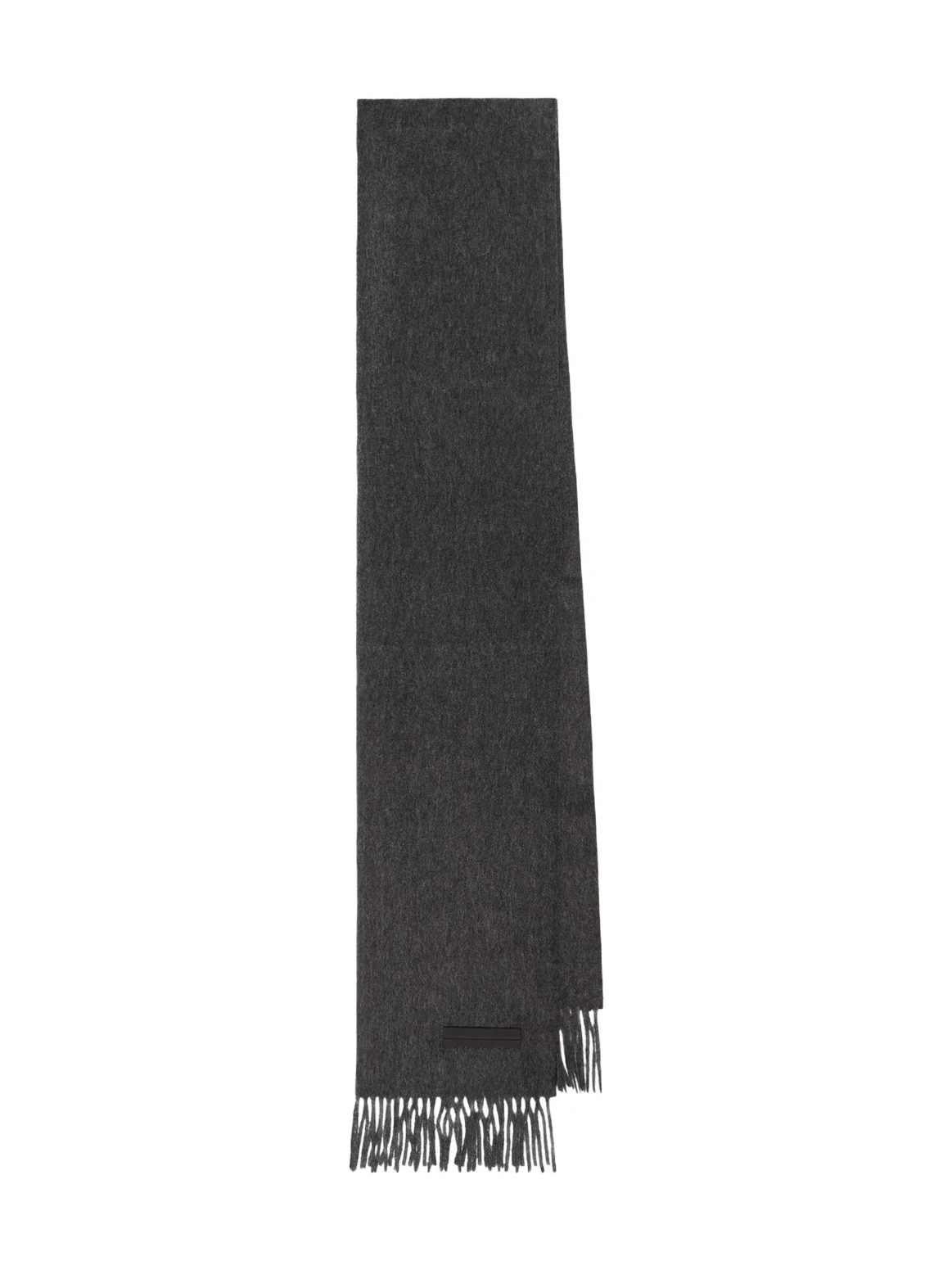 ZegnaFringed cashmere scarf$730
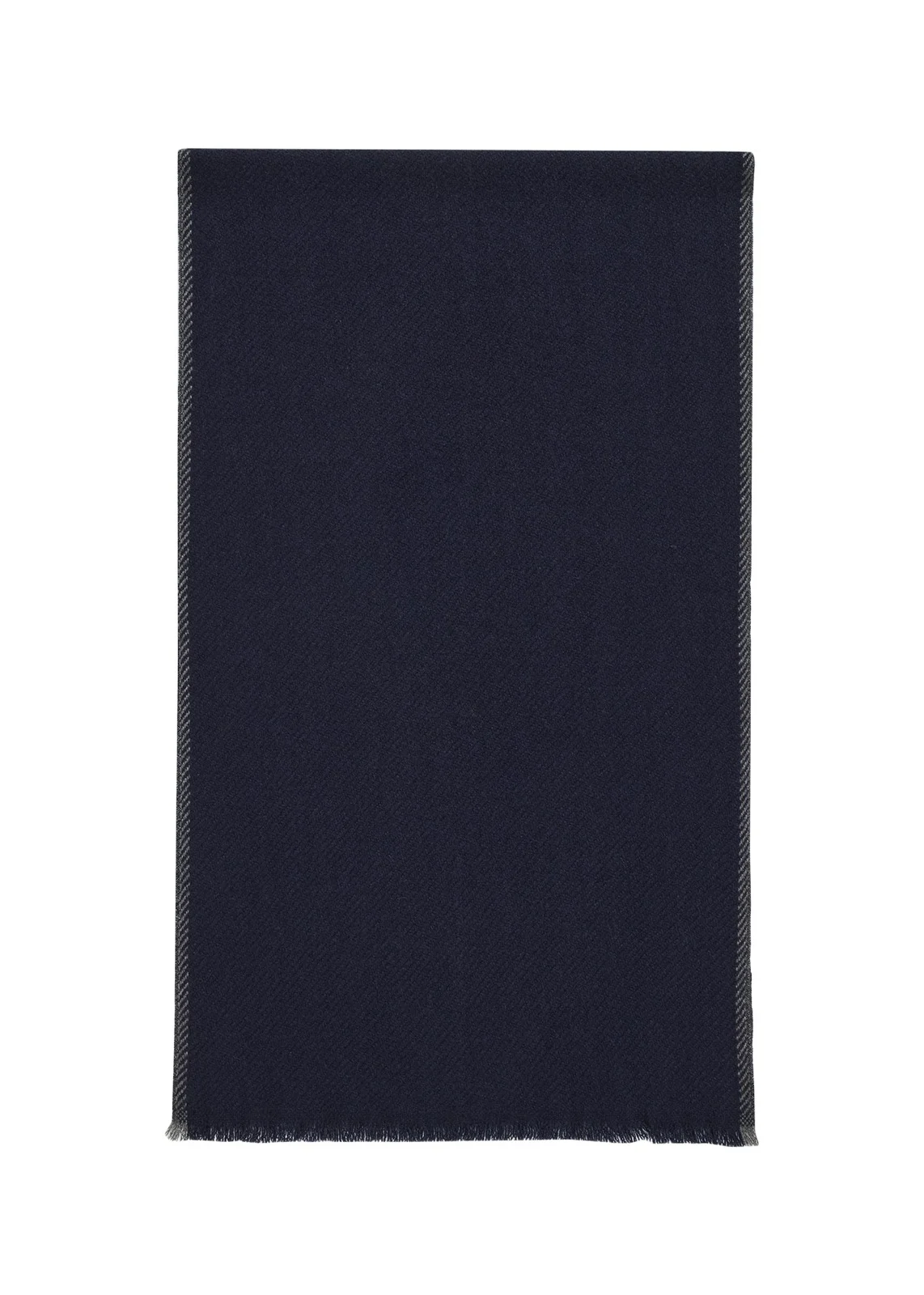 Brunello CucinelliMen's Cashmere Contrast-Trim Scarf$1,800
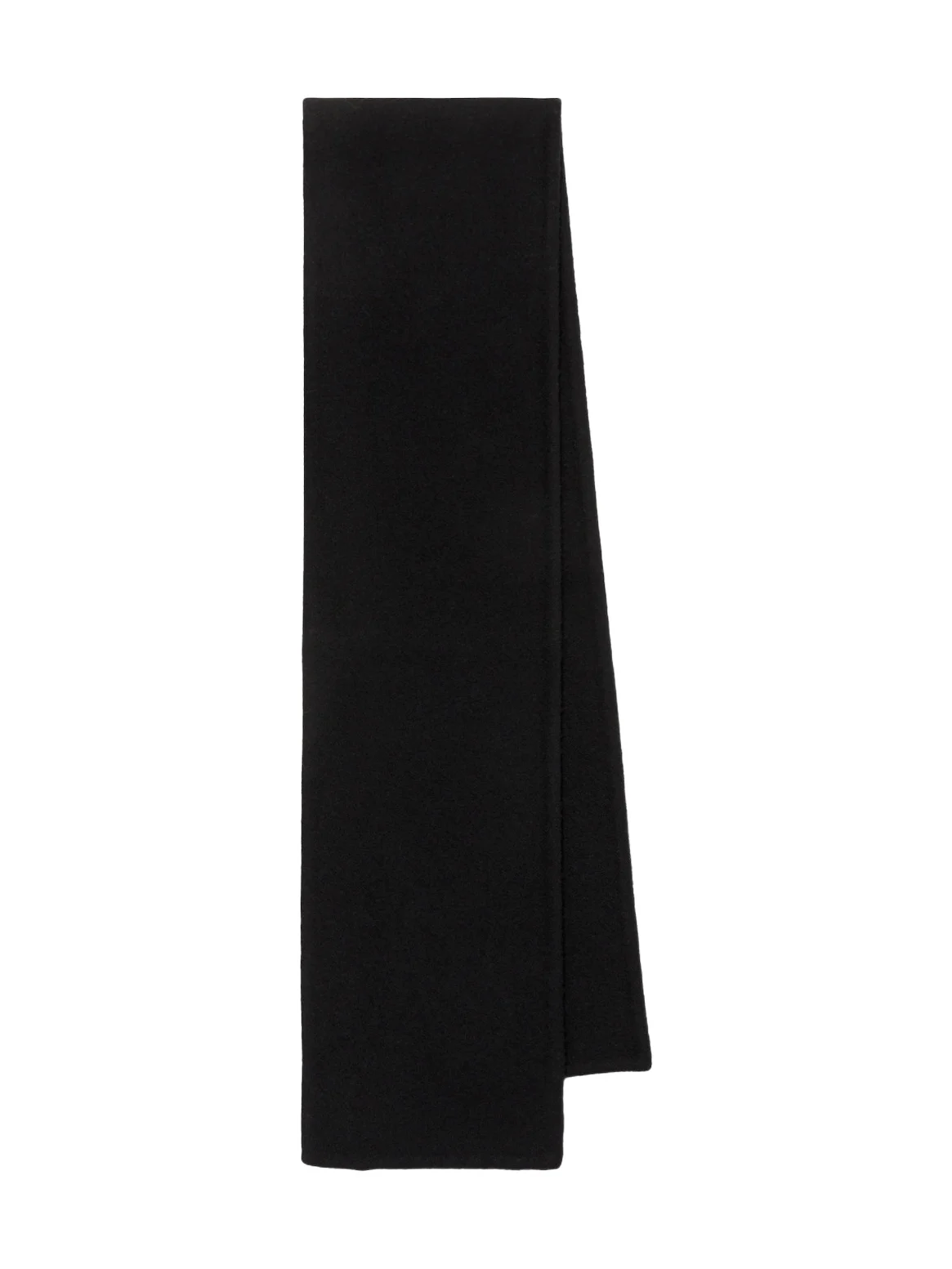 The RowRaphael cashmere scarf$890
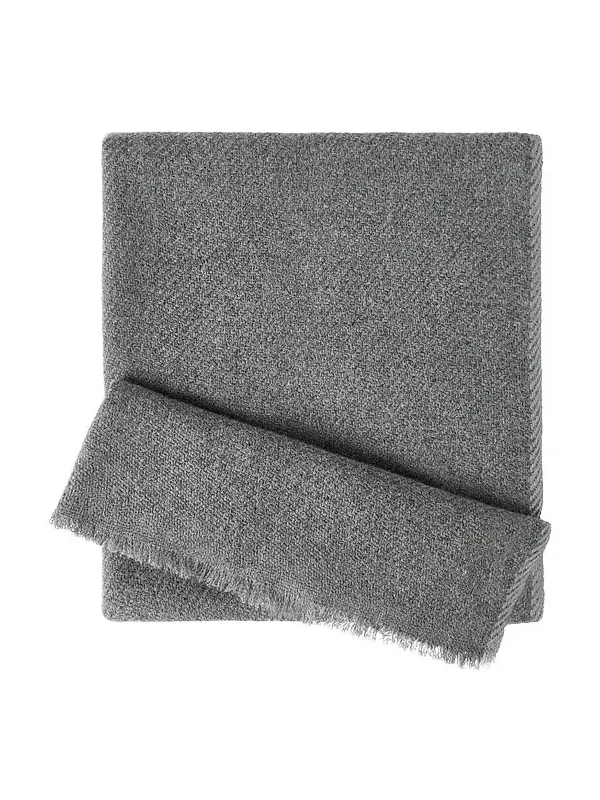 Brunello CucinelliMen's Cashmere Scarf$1,950
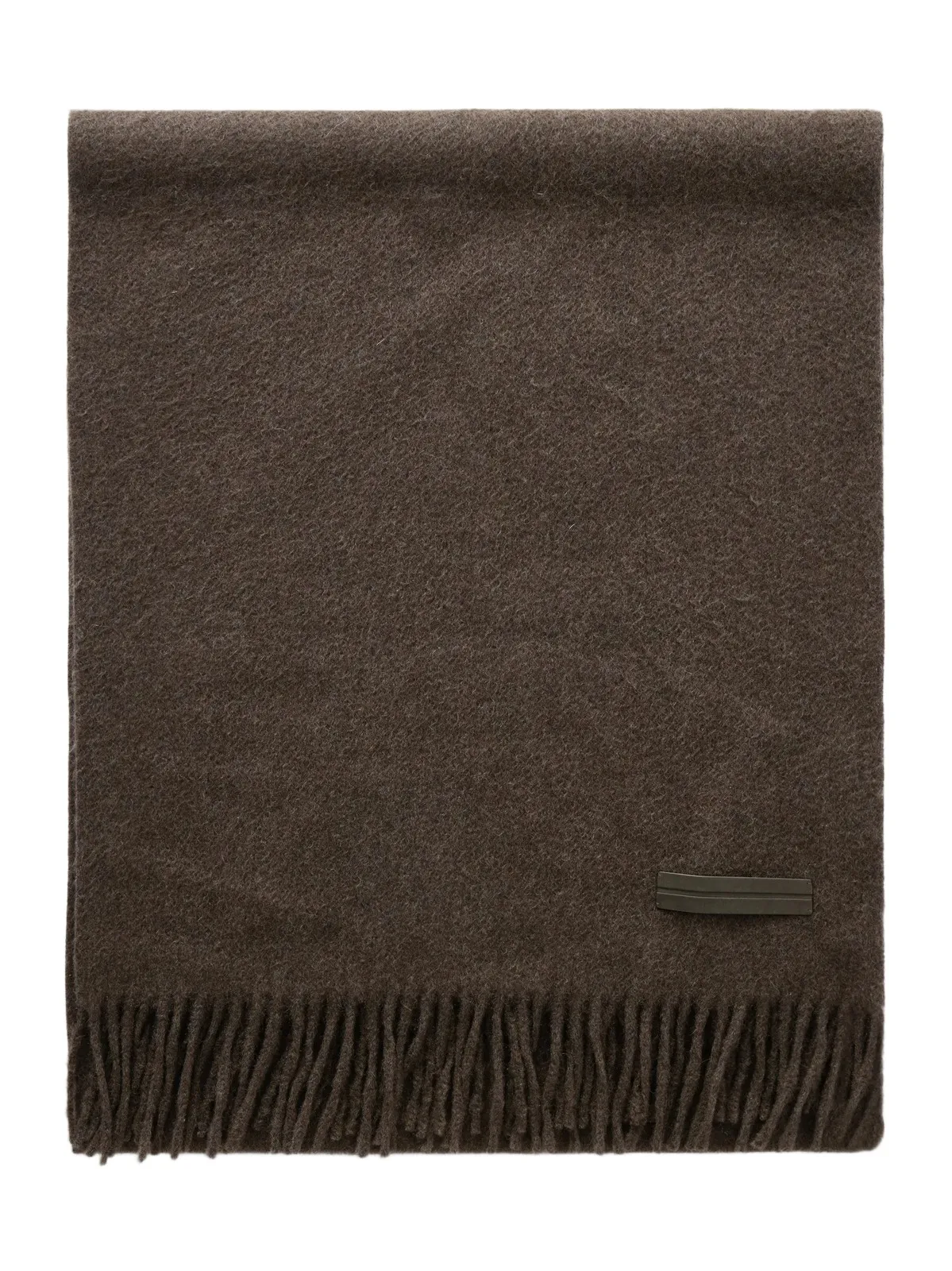 ZegnaOasi Fringed Cashmere Scarf - Men$730
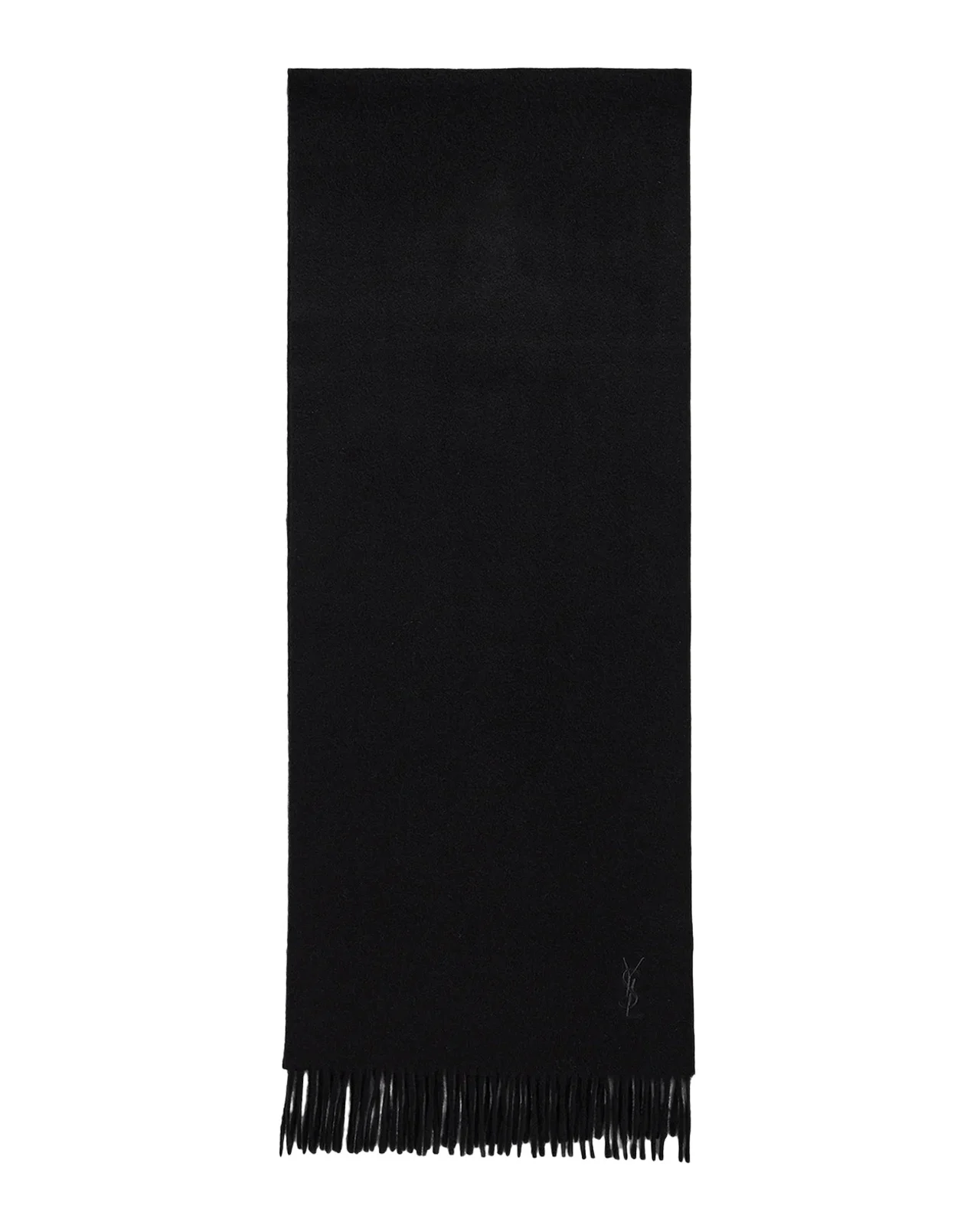 Saint LaurentMen's YSL Cashmere Embroidered-Cassandre Scarf$780
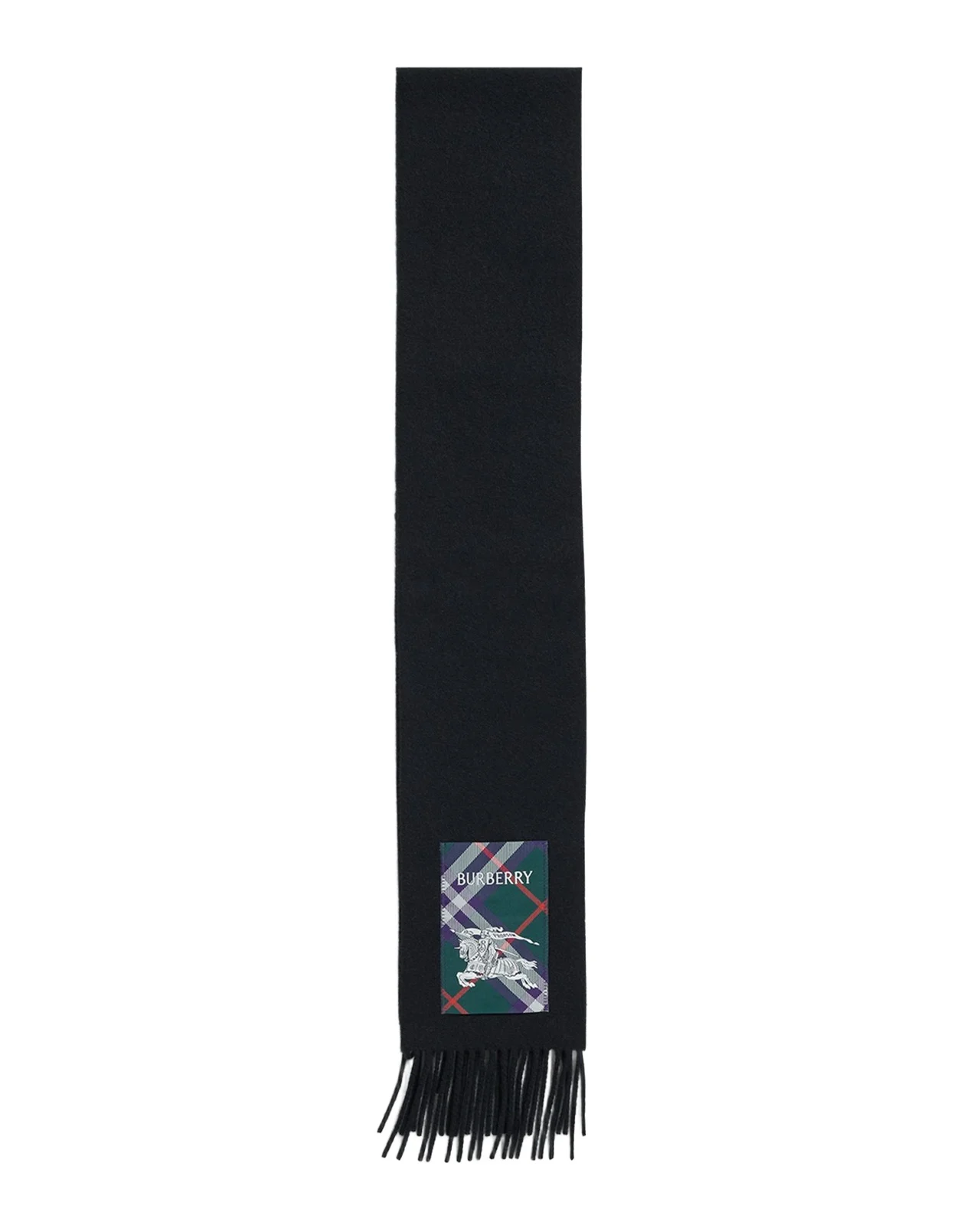 BurberryMen's Cashmere Scarf with EKD Label$545
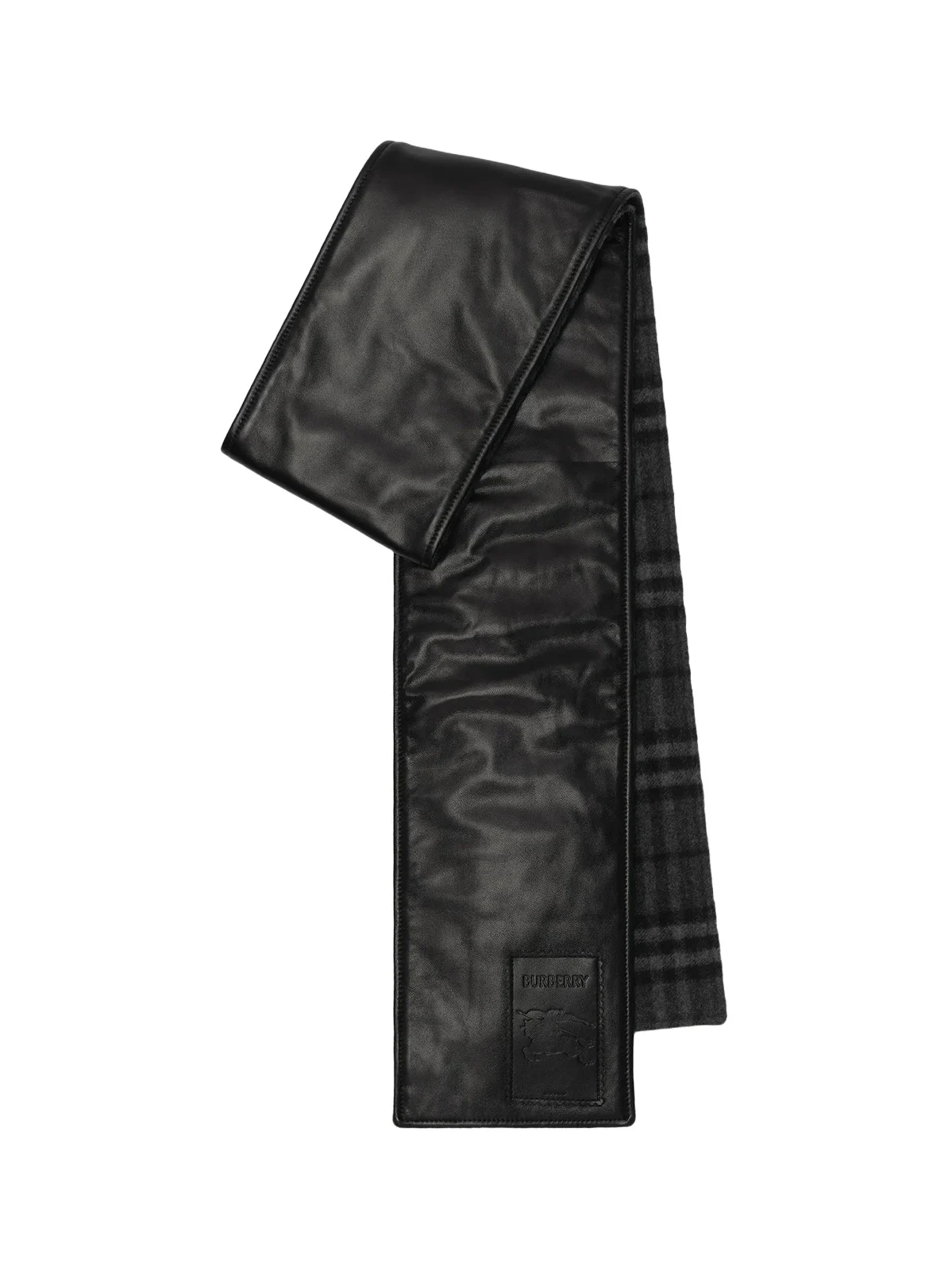 BurberryMen's Leather to Check-Cashmere Scarf$1,450
Ribbed and cable-knit cashmere: the scarf for a puffer
Knitting turns the same fiber into a thicker, springier fabric. Under a tailored lapel that is a problem, because a cable pushes the collar off the neck. With a puffer, a peacoat or a collarless coat it is the point: there is room for the bulk, and the bulk is the warmth. In our experience a rib holds a single wrap better than a cable, because the ribs grip; a cable looks best worn loose over a coat.
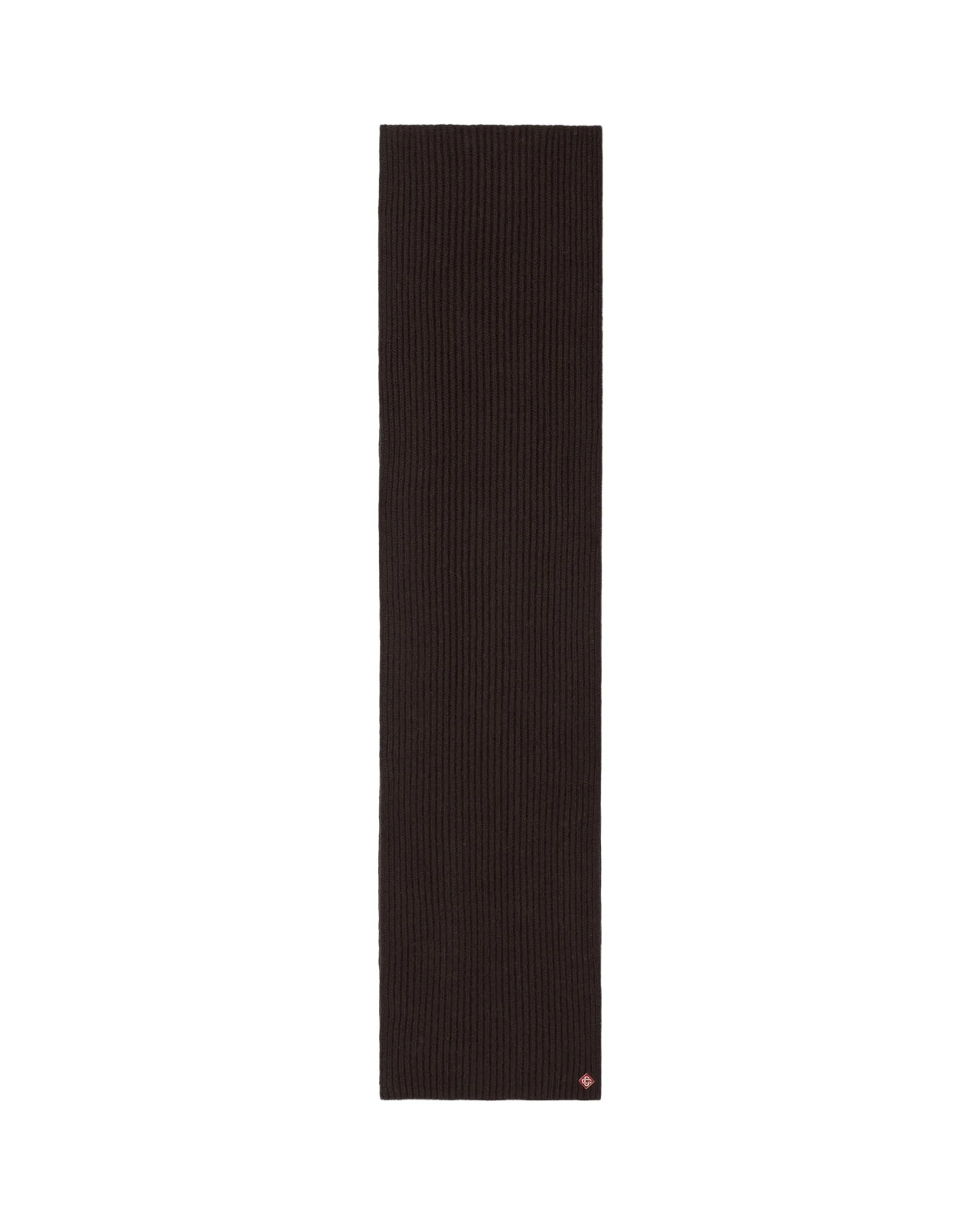
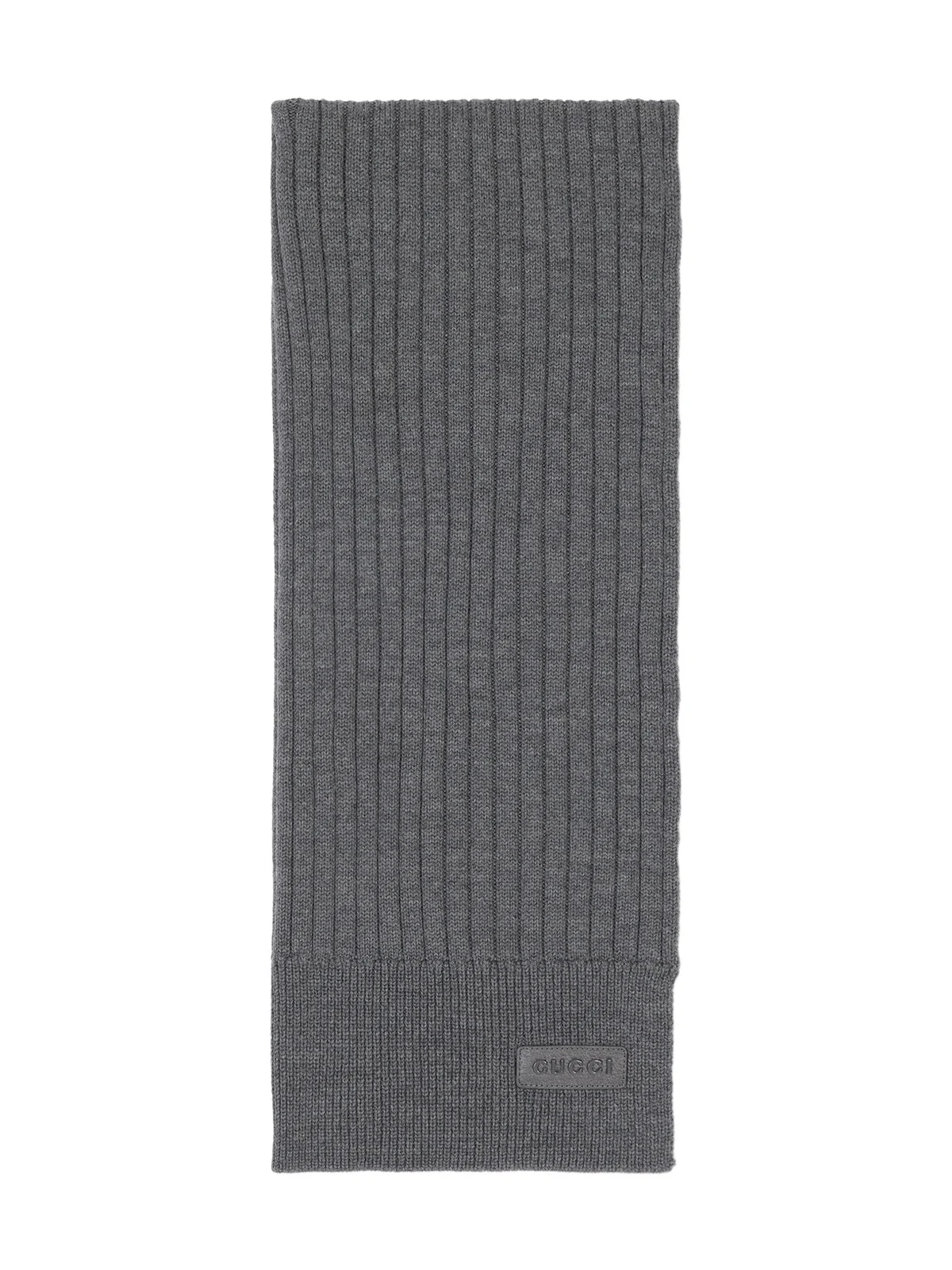
Brunello Cucinelli's rib knit may be hand washed, by its listing, and its vanisé rib, which the listing calls two-tone, photographs navy on one face and gray on the other. Brioni's charcoal rib is the plainest, finished only with a grained leather label at one end. Zegna's oatmeal alternates cable and rib stripes, Fendi's gray melange is picked out in yellow topstitching, and Gabriela Hearst's Pyke is knit from the house's Welfat cashmere. Brunello Cucinelli's navy snood photographs as a short ribbed tube with no ends to bunch, the neatest answer to a zipped collar.
- Cold commute: a black down jacket, a gray turtleneck, charcoal flannels and black lug-sole boots, with Brioni's rib wrapped once and the collar zipped over it.
- Coast weekend: a navy peacoat, an ecru fisherman sweater and gray chinos, with Brunello Cucinelli's navy and gray vanisé rib knotted loosely outside the coat.
Ribbed and cable-knit cashmere scarves
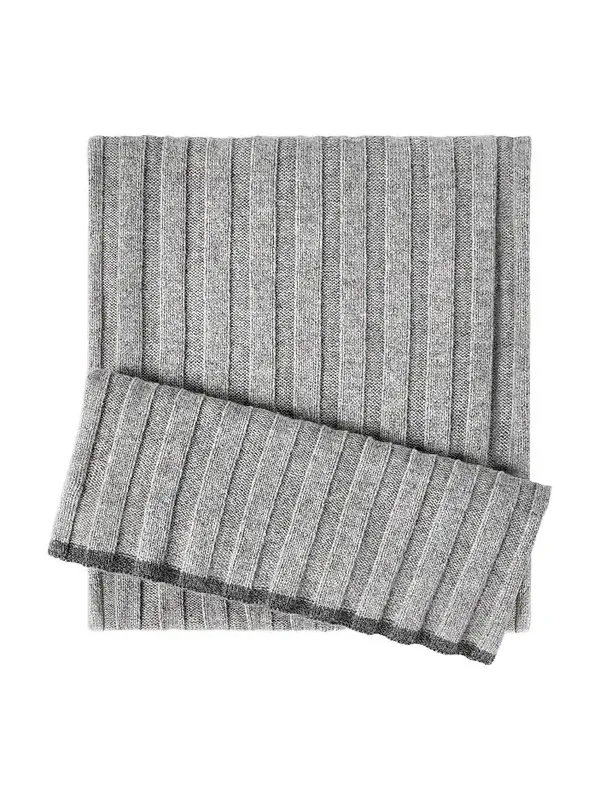 Brunello CucinelliMen's Cashmere Rib Knit Scarf$810
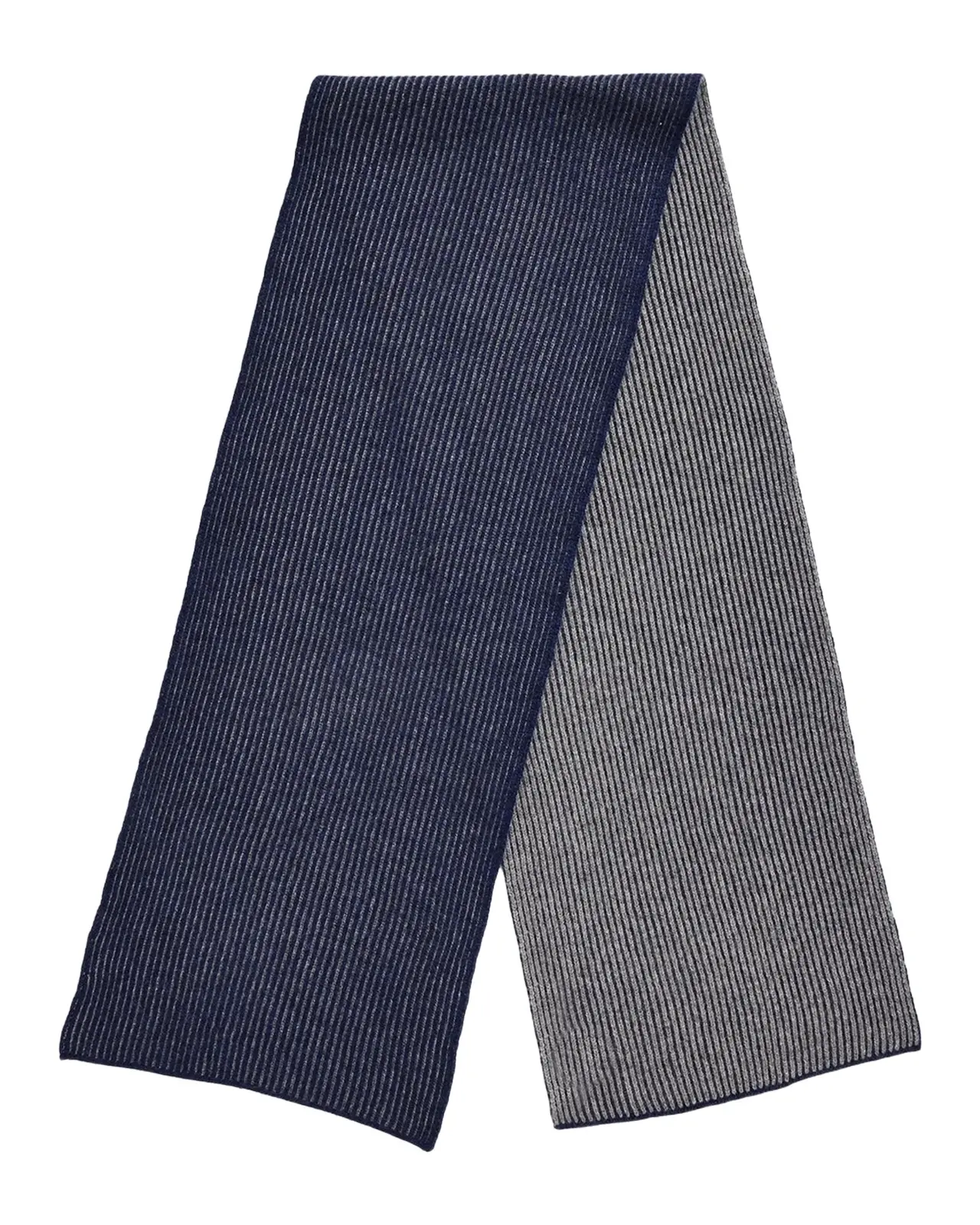 Brunello CucinelliMen's Vanise Cashmere Ribbed Scarf$950
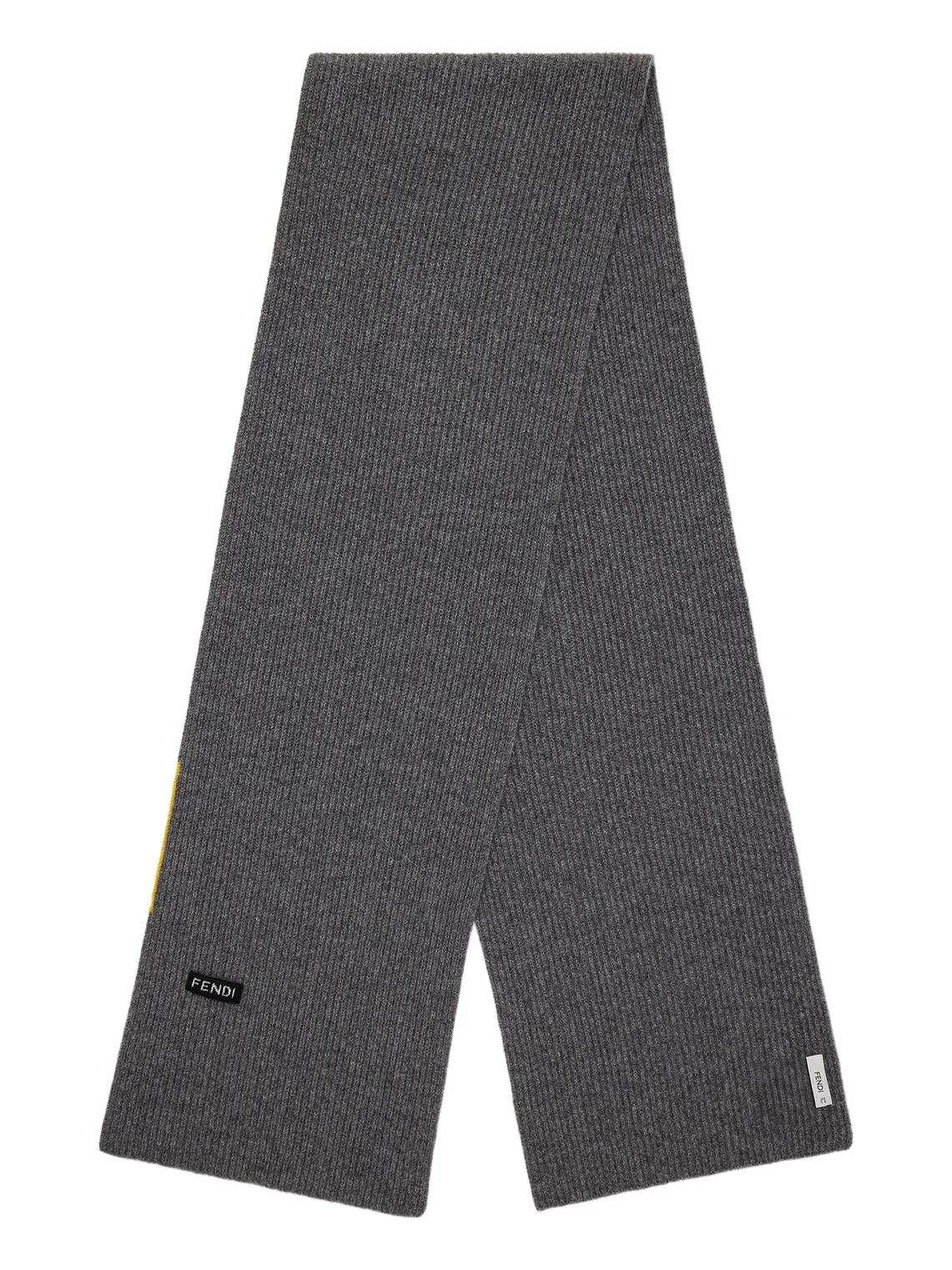 FendiMelange Cashmere Scarf$970
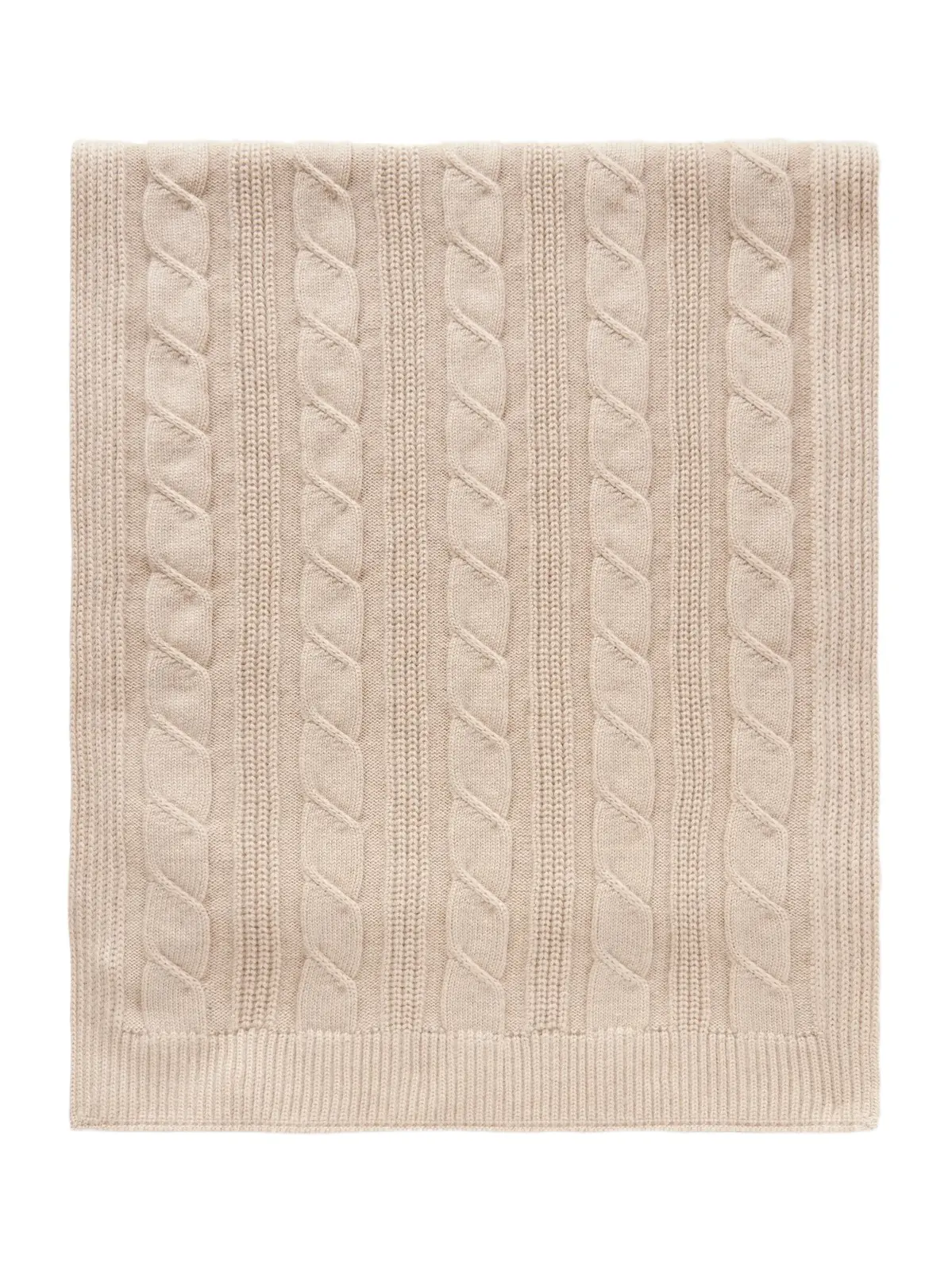 ZegnaCable-Knit Cashmere Scarf - Men$1,100
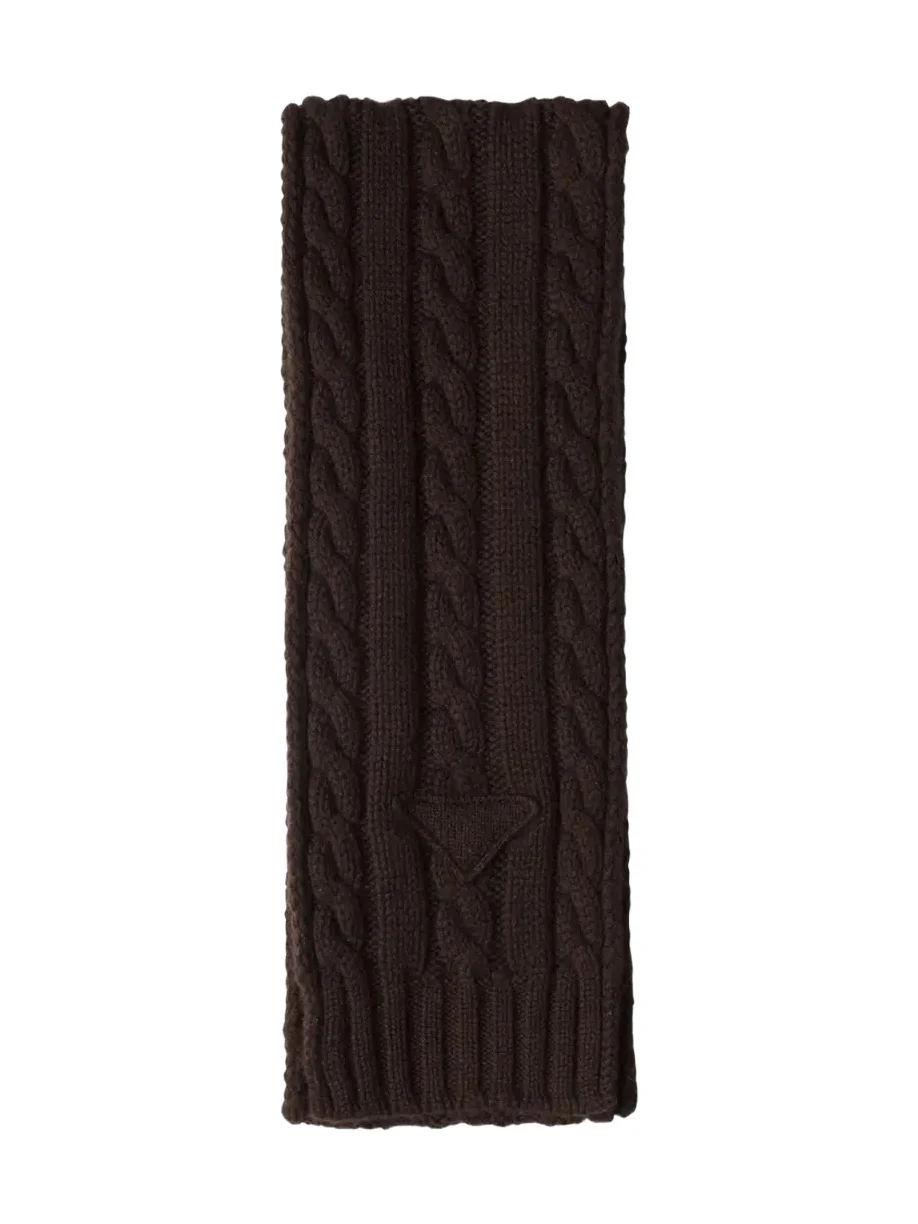 PradaMen's Cable-Knit Cashmere Scarf$1,020
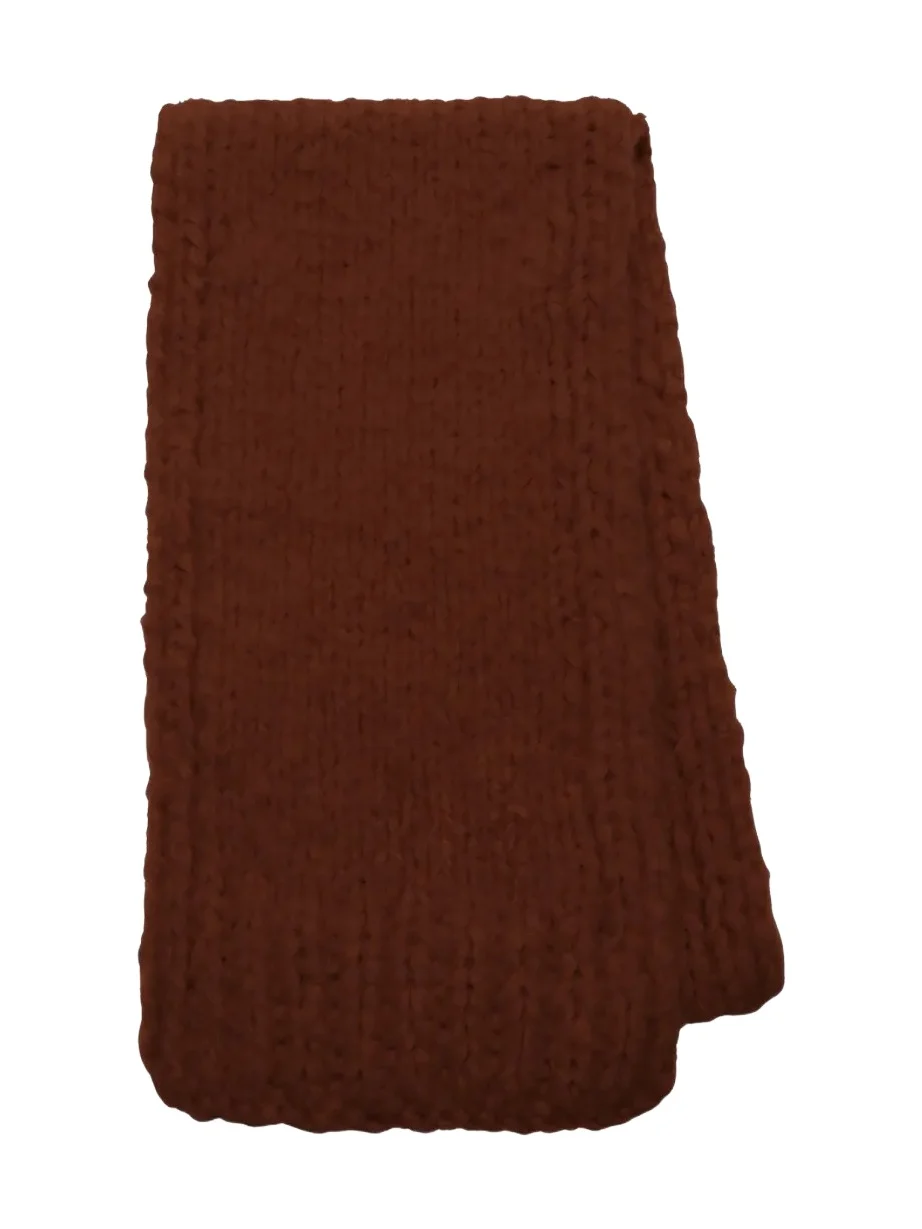 Gabriela HearstMen's Pyke Cashmere Scarf$1,590
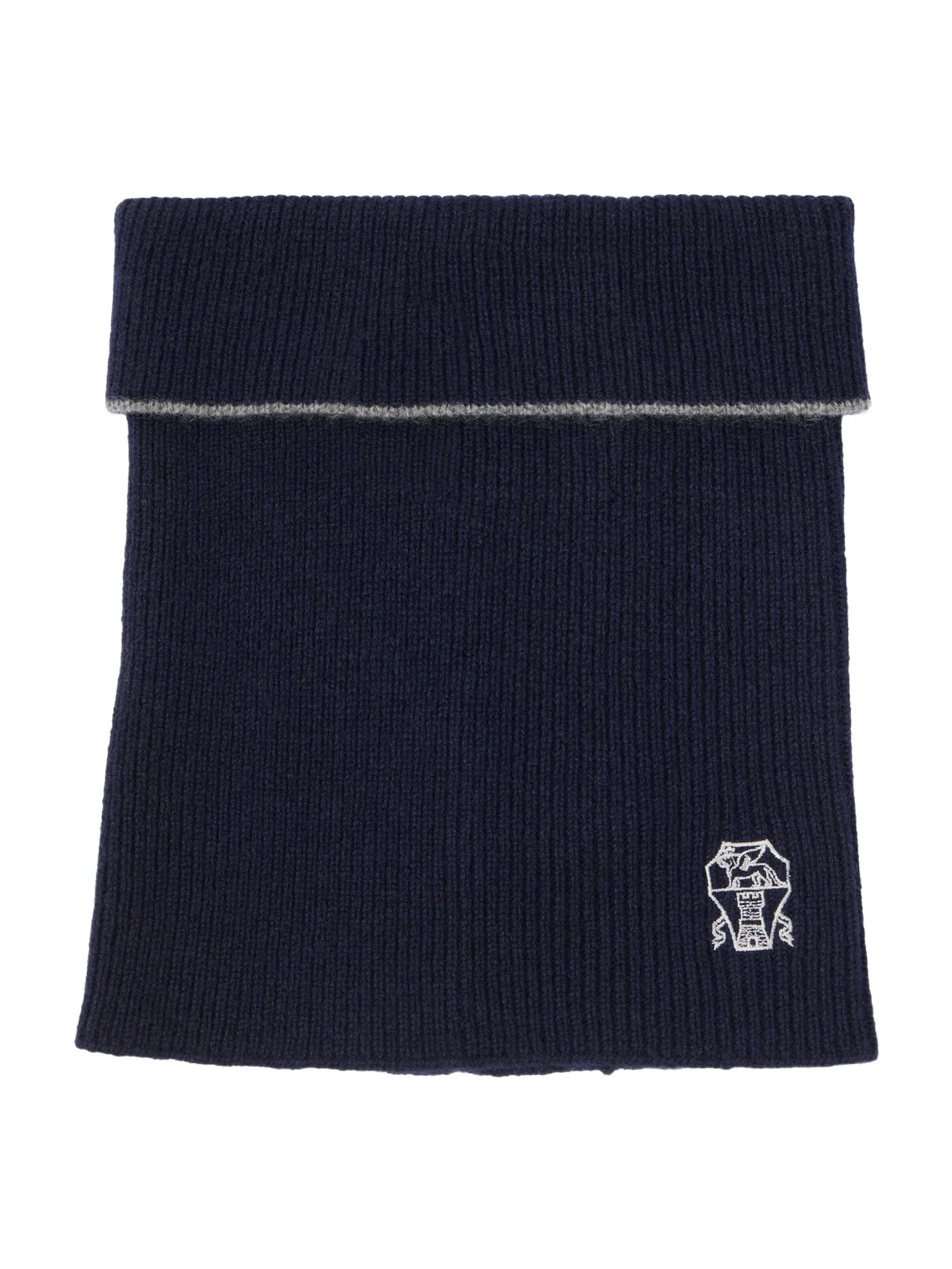 Brunello CucinelliLogo cashmere snood$730
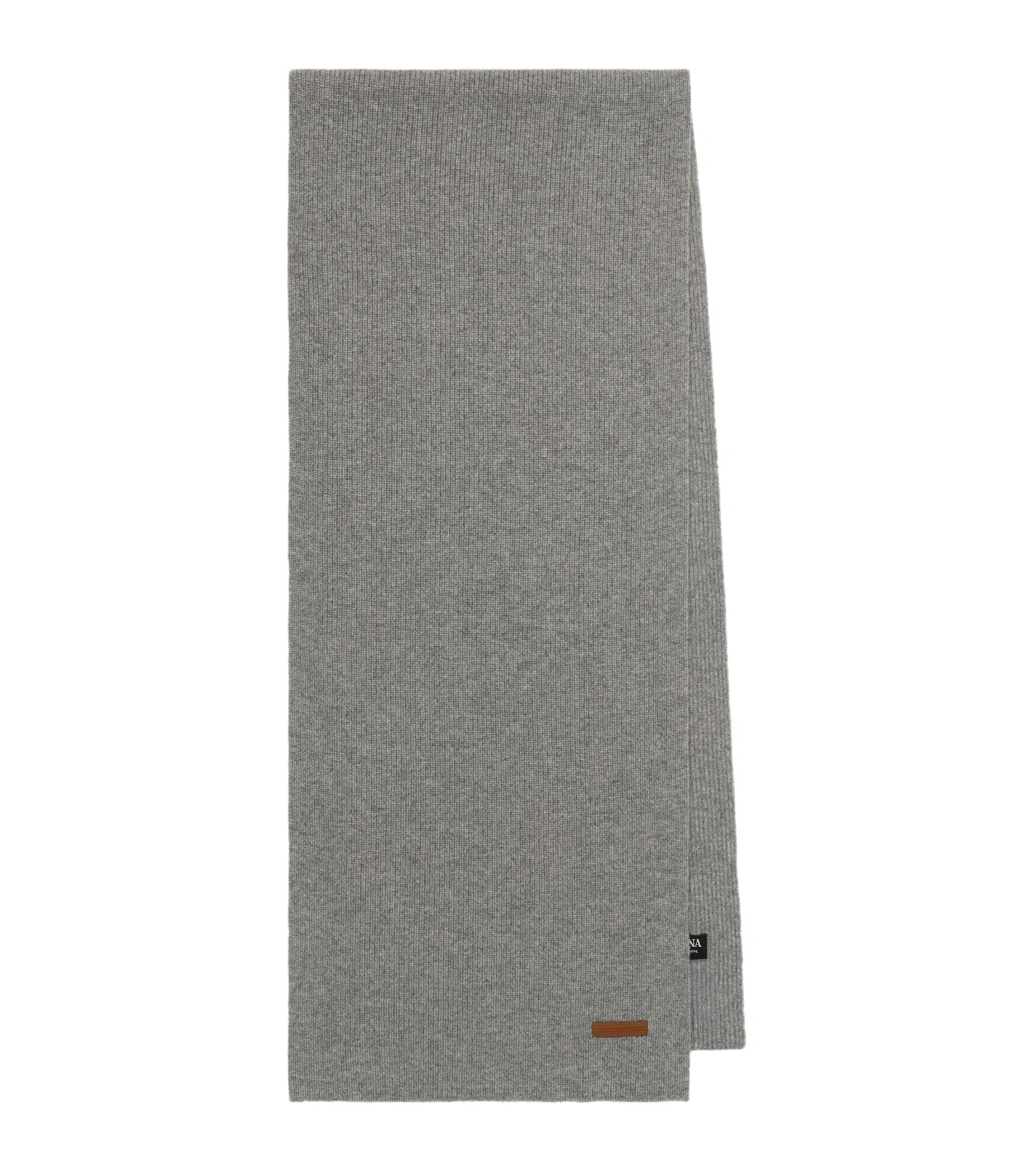 ZegnaRibbed-knit cashmere scarf$990
Silk and cashmere: the scarf to wear with a suit
Silk makes a scarf lighter and gives it a low sheen that sits well with worsted suiting; in our experience it also ties a smaller knot, which matters when a tie is already at the throat. Loewe's Anagram scarf is 52% silk and 48% cashmere; Prada's fringed scarves are 51% silk, and the dark red one, which photographs as burgundy, measures 35 x 170 cm. Prada's three-fiber scarf adds wool, Zegna's navy is 48% wool, 36% cashmere and 16% mulberry silk, and Gucci's gray pinstripe is 70% wool and 30% silk. Brunello Cucinelli's color-block scarf is mostly cashmere and stole-sized at 70 x 180 cm, and its light gray scarf is all silk.
With a tie, keep the scarf's knot loose and above the tie knot. For black tie, our guide to tuxedos covers the white silk evening scarf.
Silk-blend scarves to wear with a suit
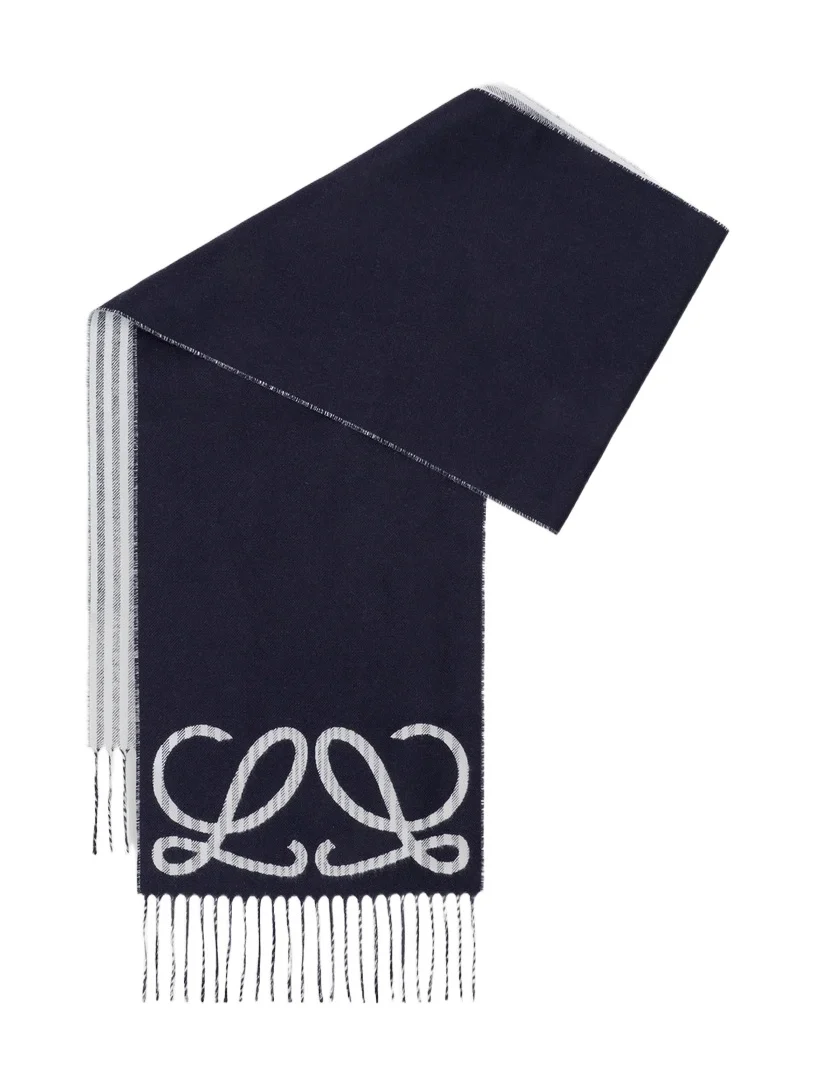 LoeweMen's Anagram Silk-Cashmere Scarf$690
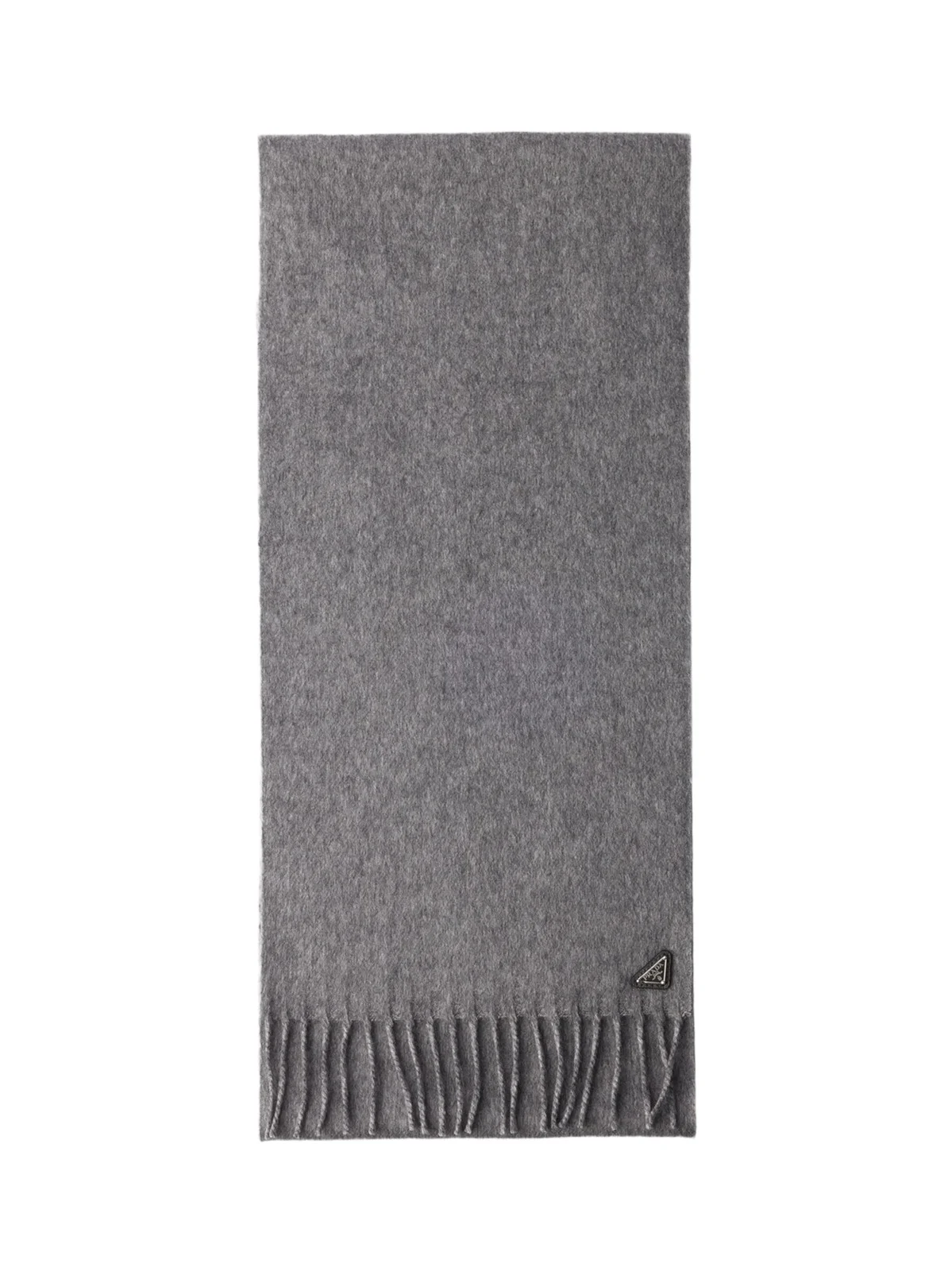 PradaMen's Silk and Cashmere Scarf - Grey$575
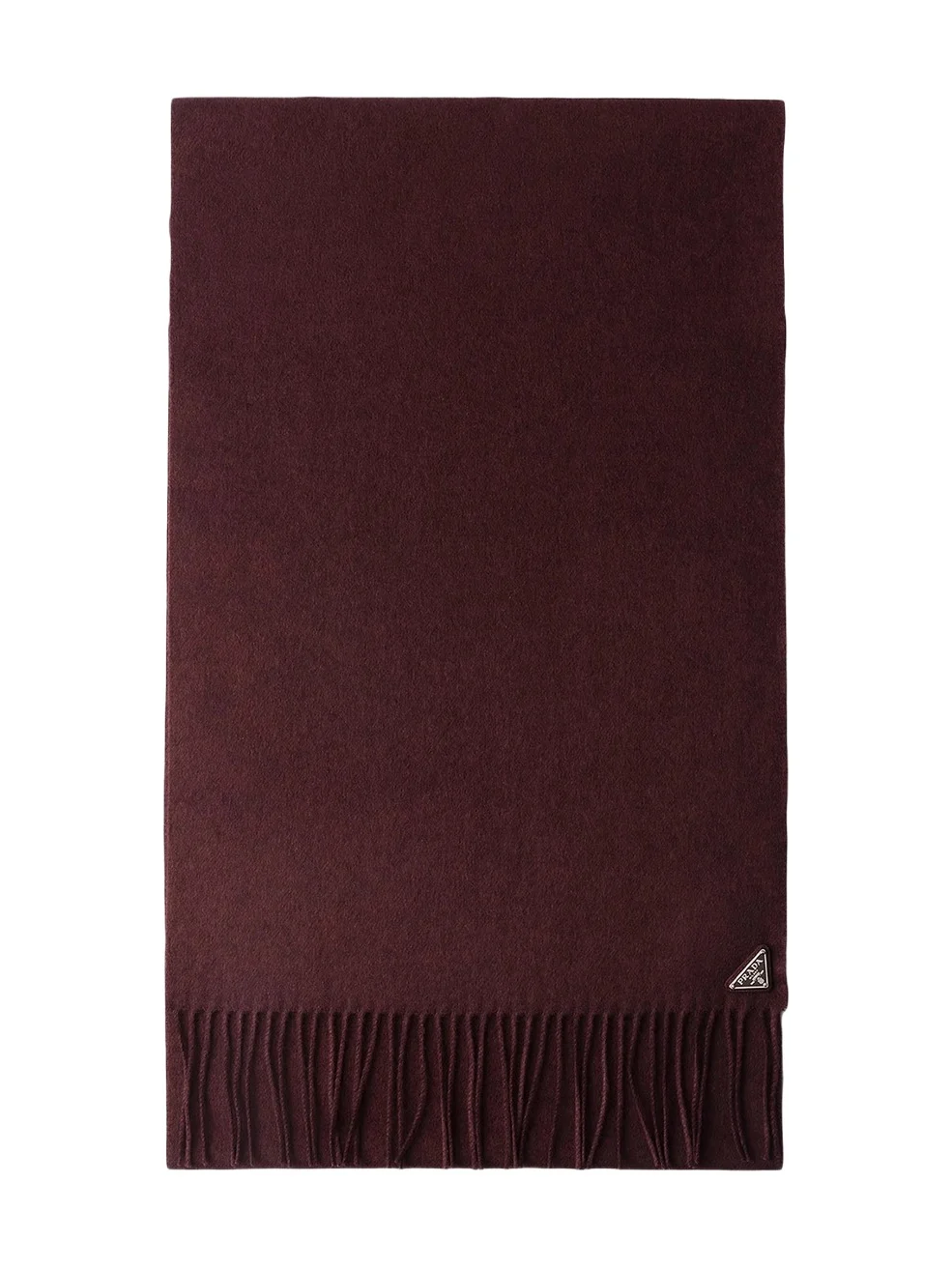 PradaMen's Silk and Cashmere Scarf - Dark Red$795
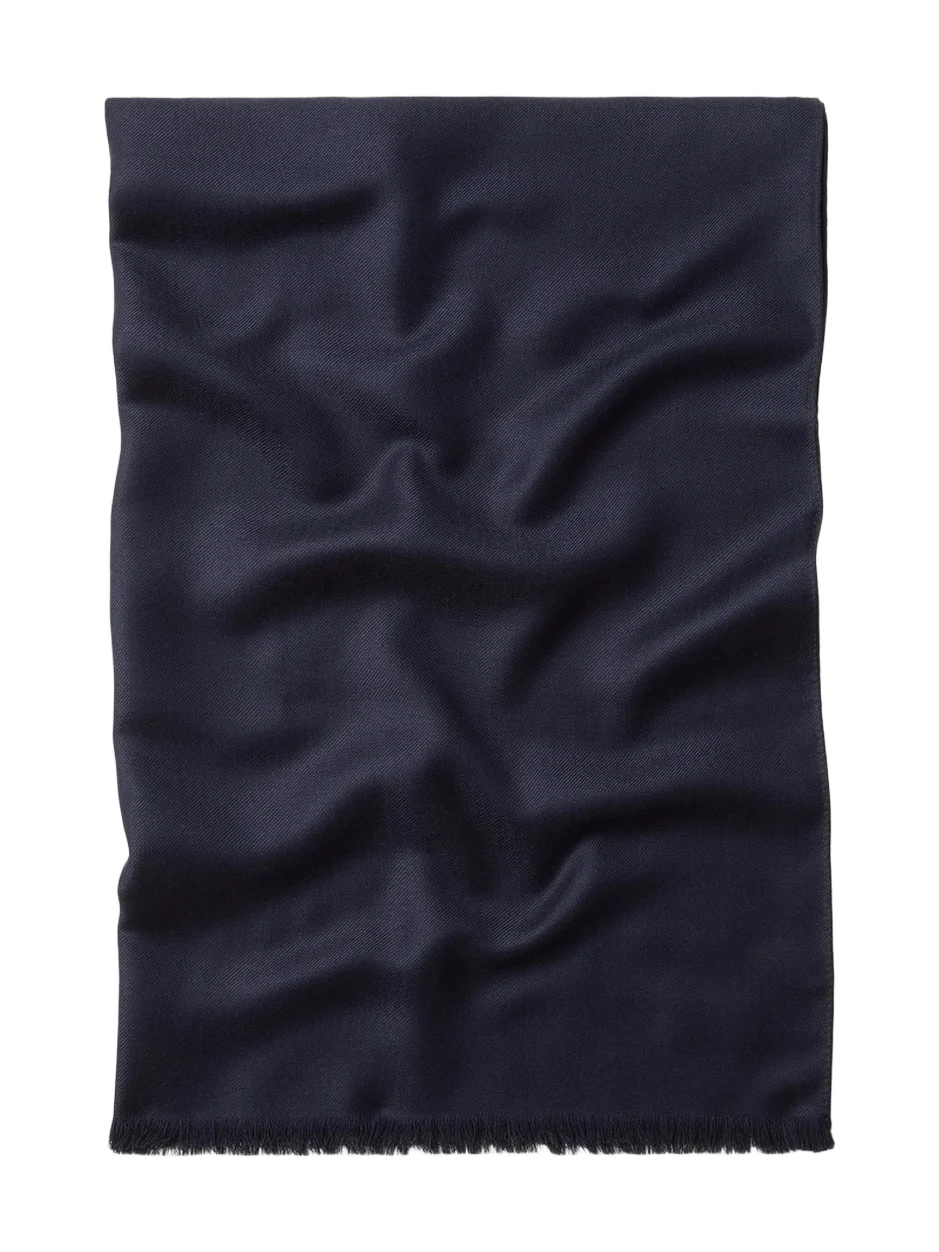 ZegnaMen's Wool and Cashmere Scarf - Navy Blue$990
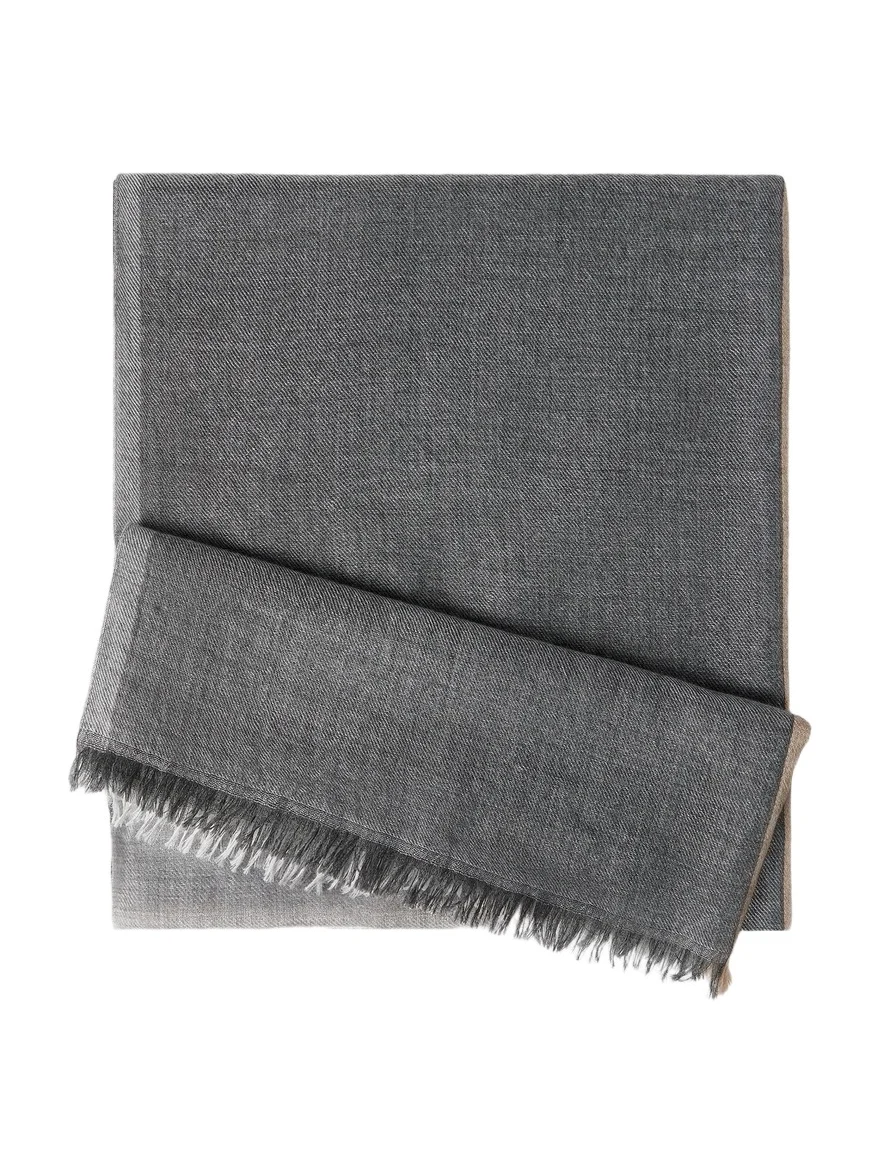 Brunello CucinelliMen's Cashmere and Silk Color Block Scarf$1,350
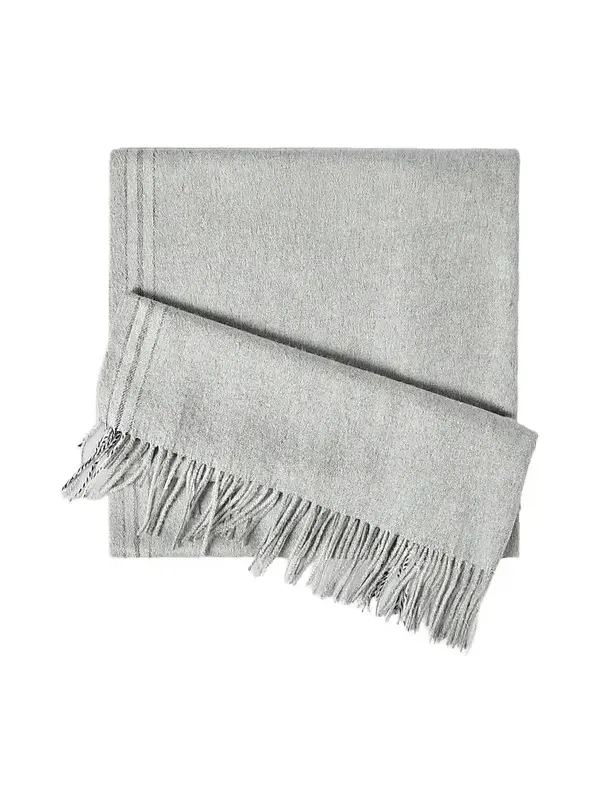 Brunello CucinelliMen's Silk Scarf with Selvedge - Light Grey$1,150
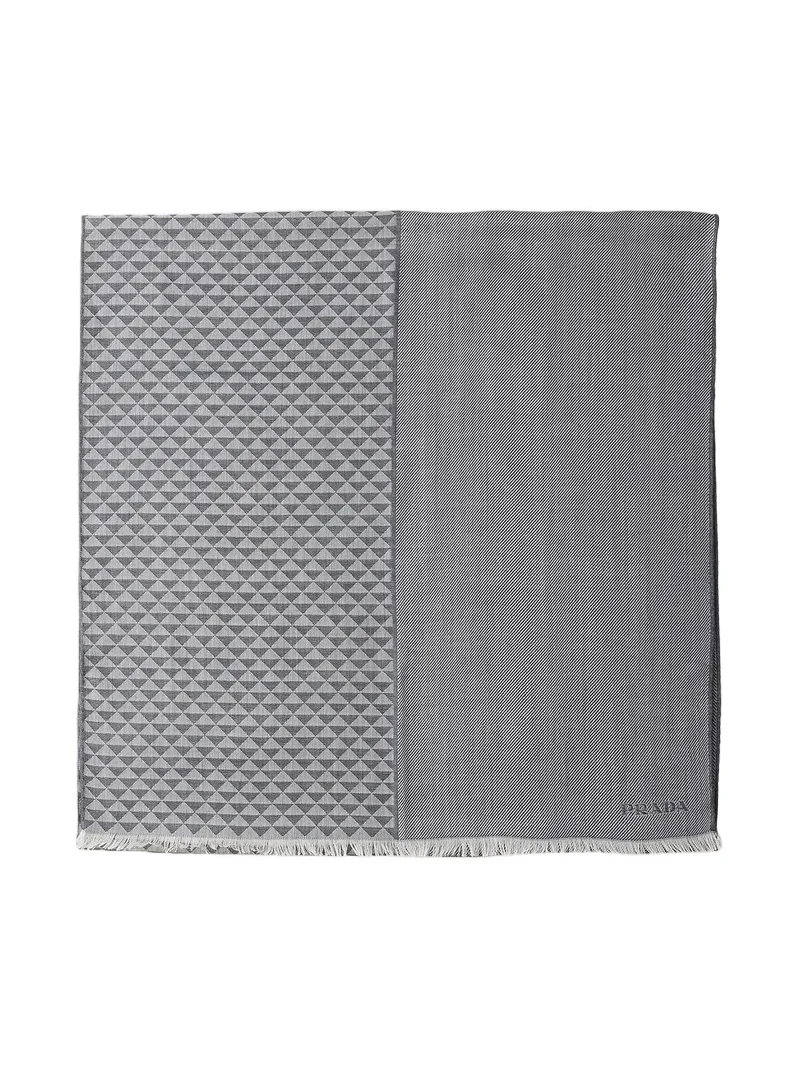 PradaMen's Cashmere, Wool and Silk Scarf - Blue$695
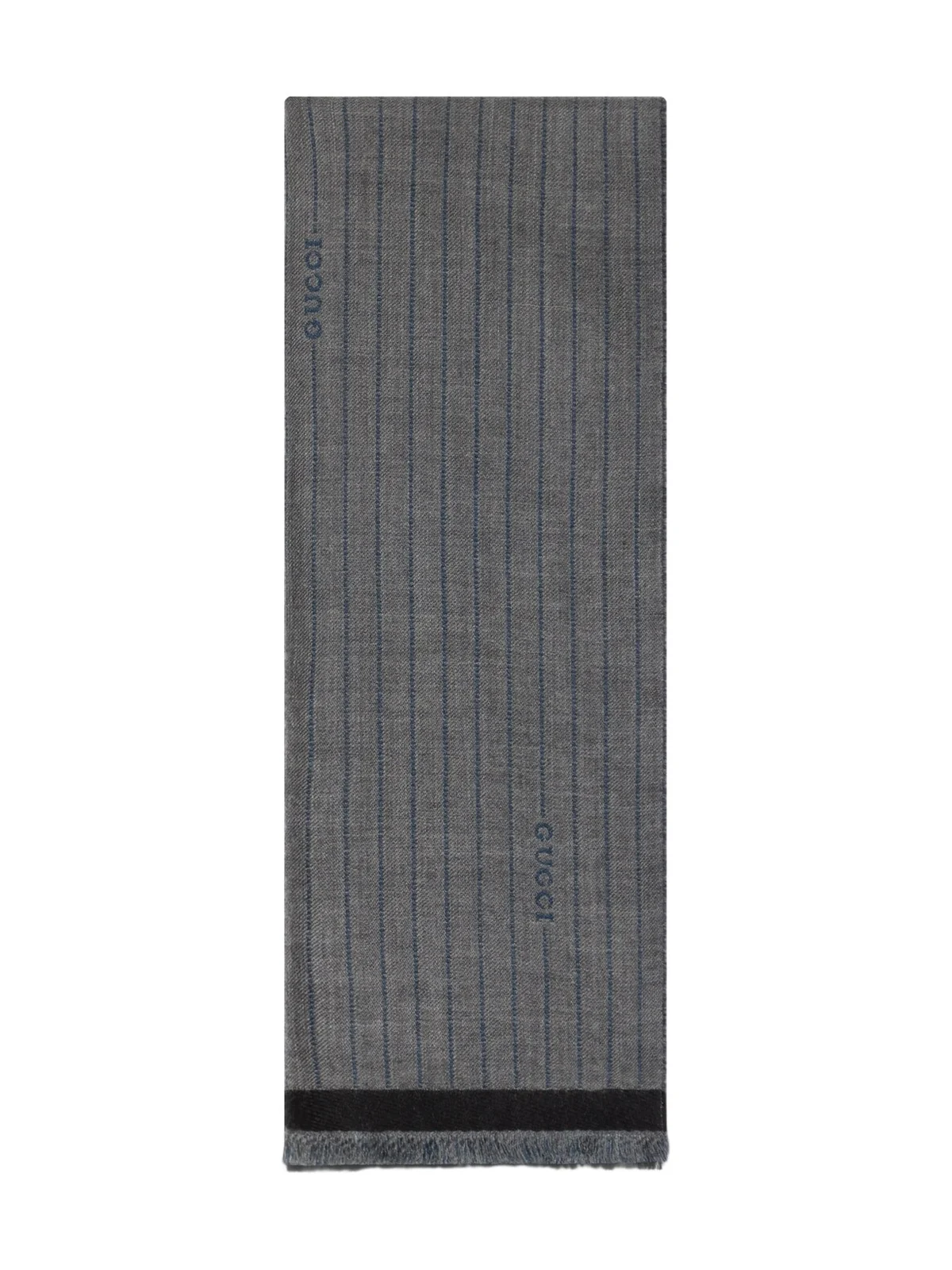 GucciPinstripe Wool Silk Scarf$570
Men's wool scarves for every day
Wool is the scarf for the bag strap, the rain and the seat belt; in our experience it shrugs off friction that wears cashmere thin. Moncler's navy is 100% virgin wool by its listing, and Loro Piana's black is knitted from virgin wool. Givenchy's light gray knit carries a small engraved pin at the edge, and Dries Van Noten's olive Moyson is a wide rib its listing calls extra-long. Prada's shaker knit sets wool beside a panel of Re-Nylon gabardine, the house's regenerated nylon, which suits a technical puffer better than a cashmere coat. One caution: wool can scratch. If he wears a scarf against bare skin, choose cashmere or a merino blend.
Men's wool scarves for every day
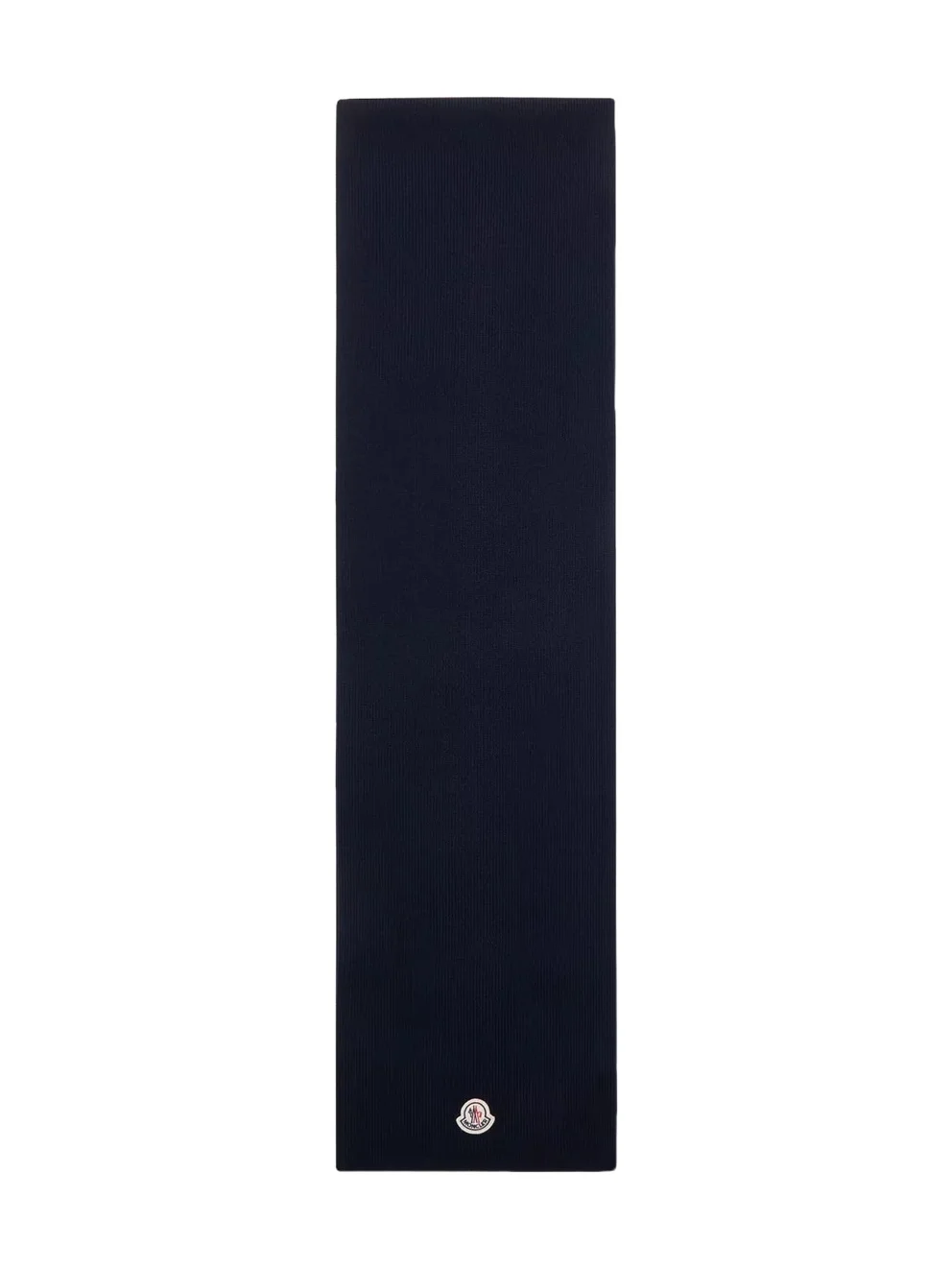 MonclerWool Scarf$565
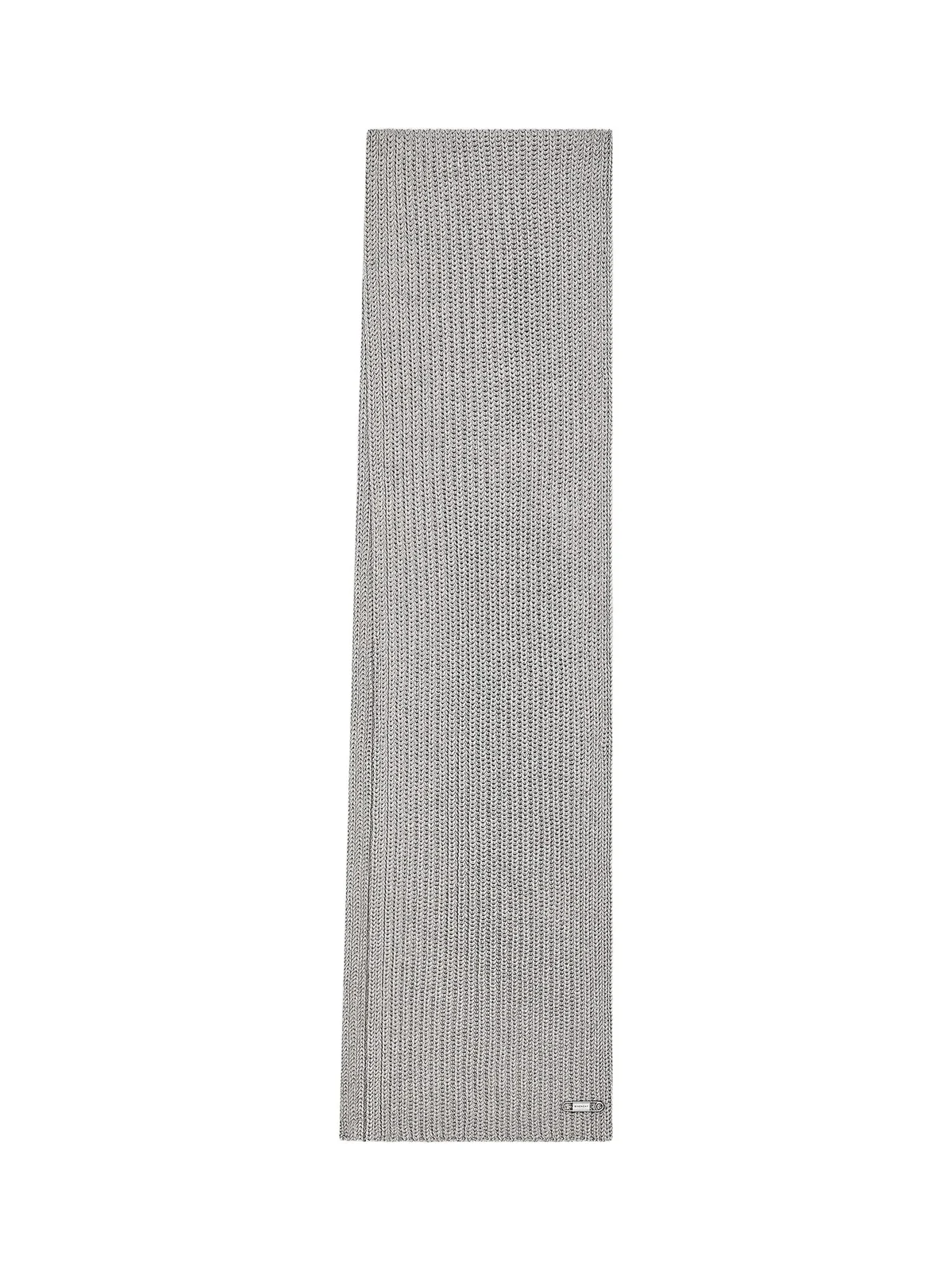 GivenchyMen's Scarf in Wool with Pin - Light Grey$660
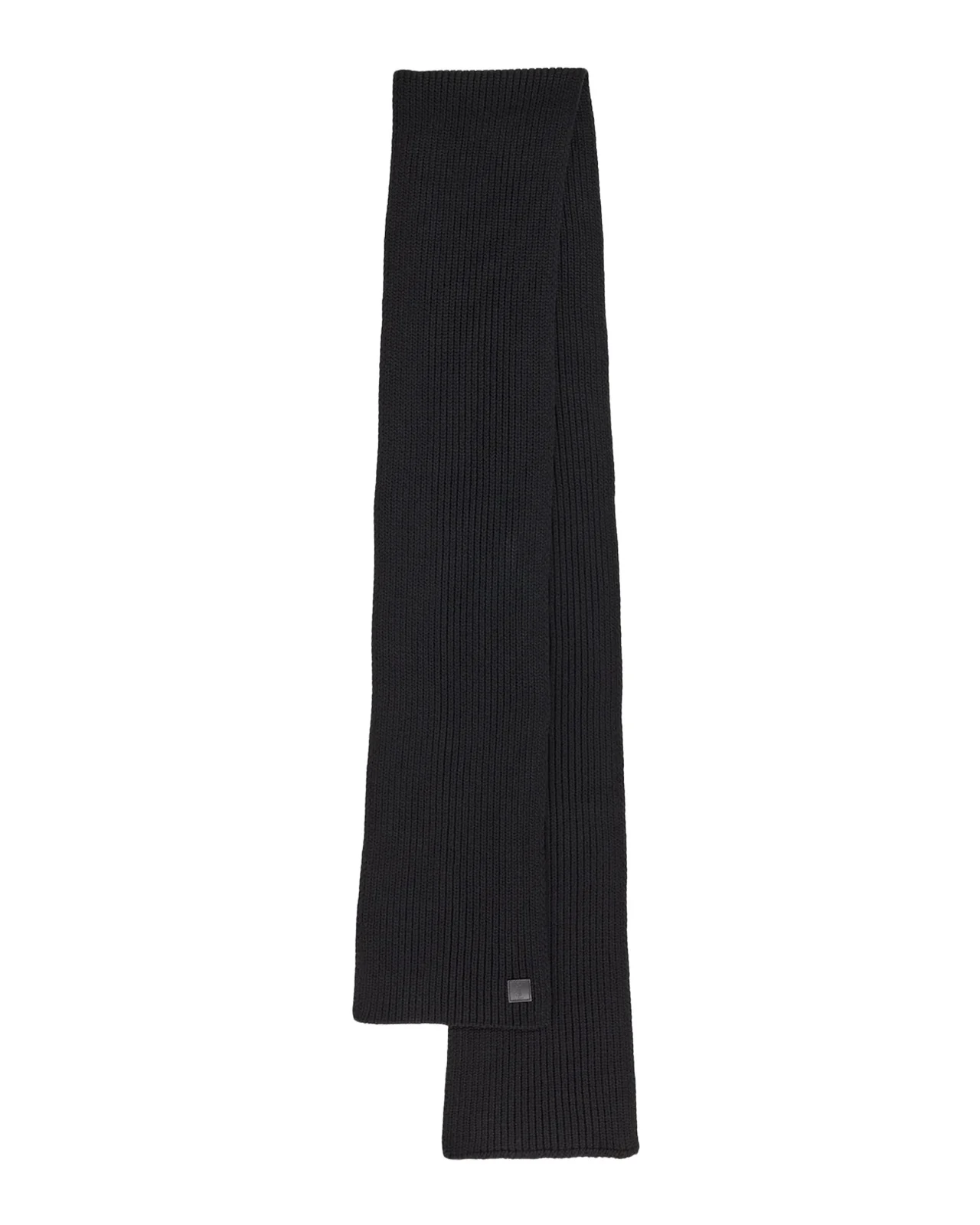 Saint LaurentMen's YSL-Patch Rib-Knit Scarf in Wool$670
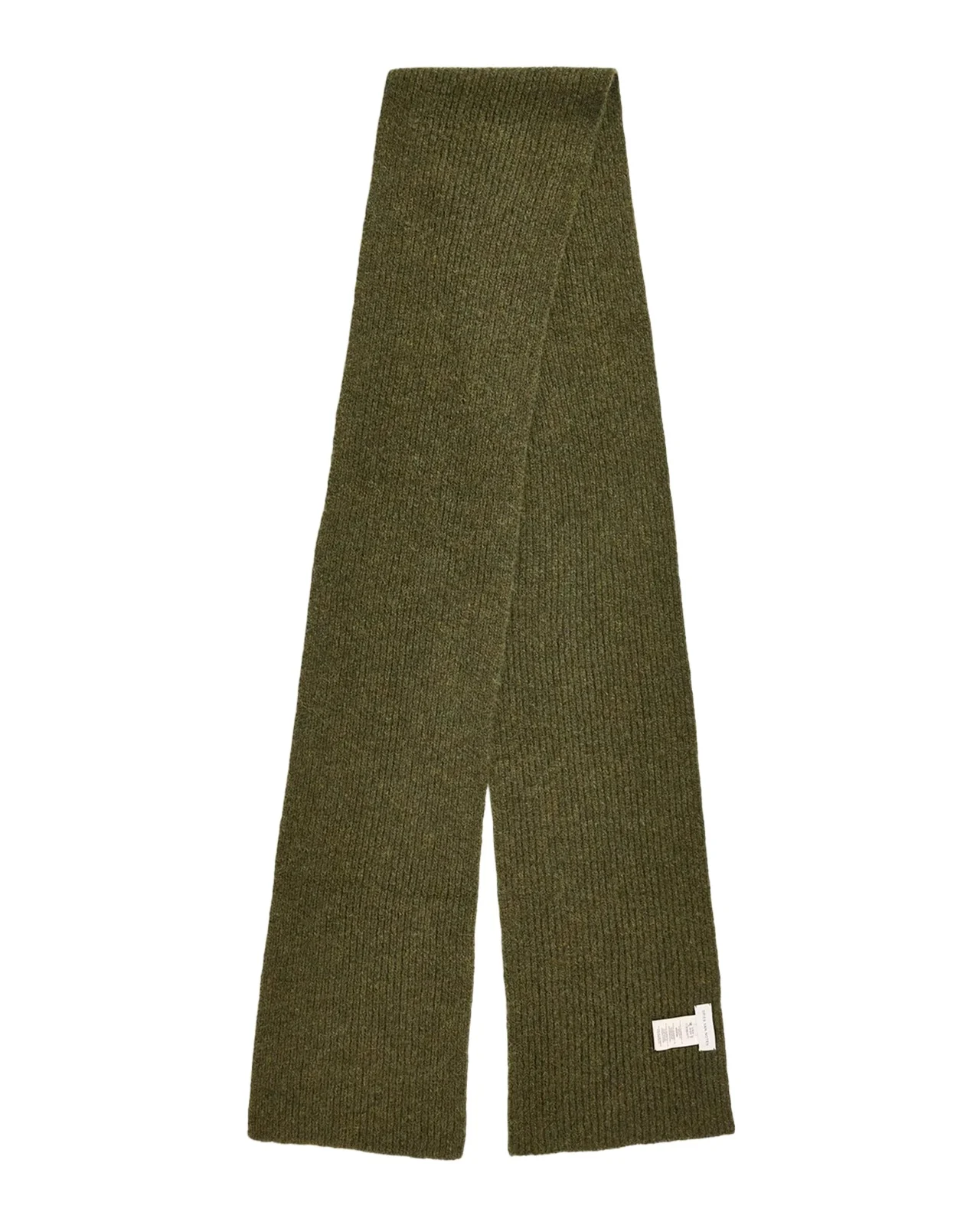 Dries Van NotenMen's Moyson Wool Ribbed Scarf$635
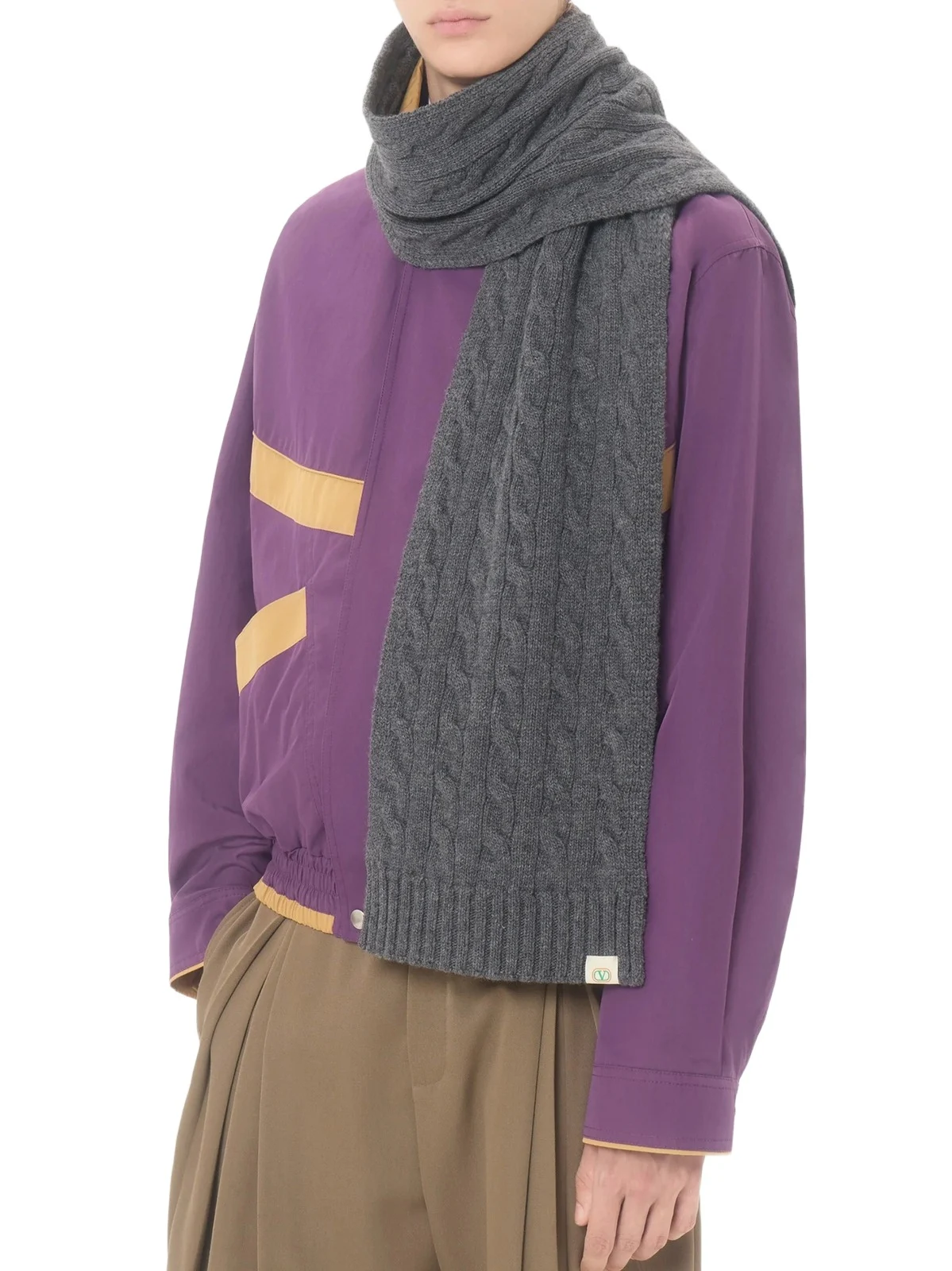 ValentinoMen's Woolen Scarf$650
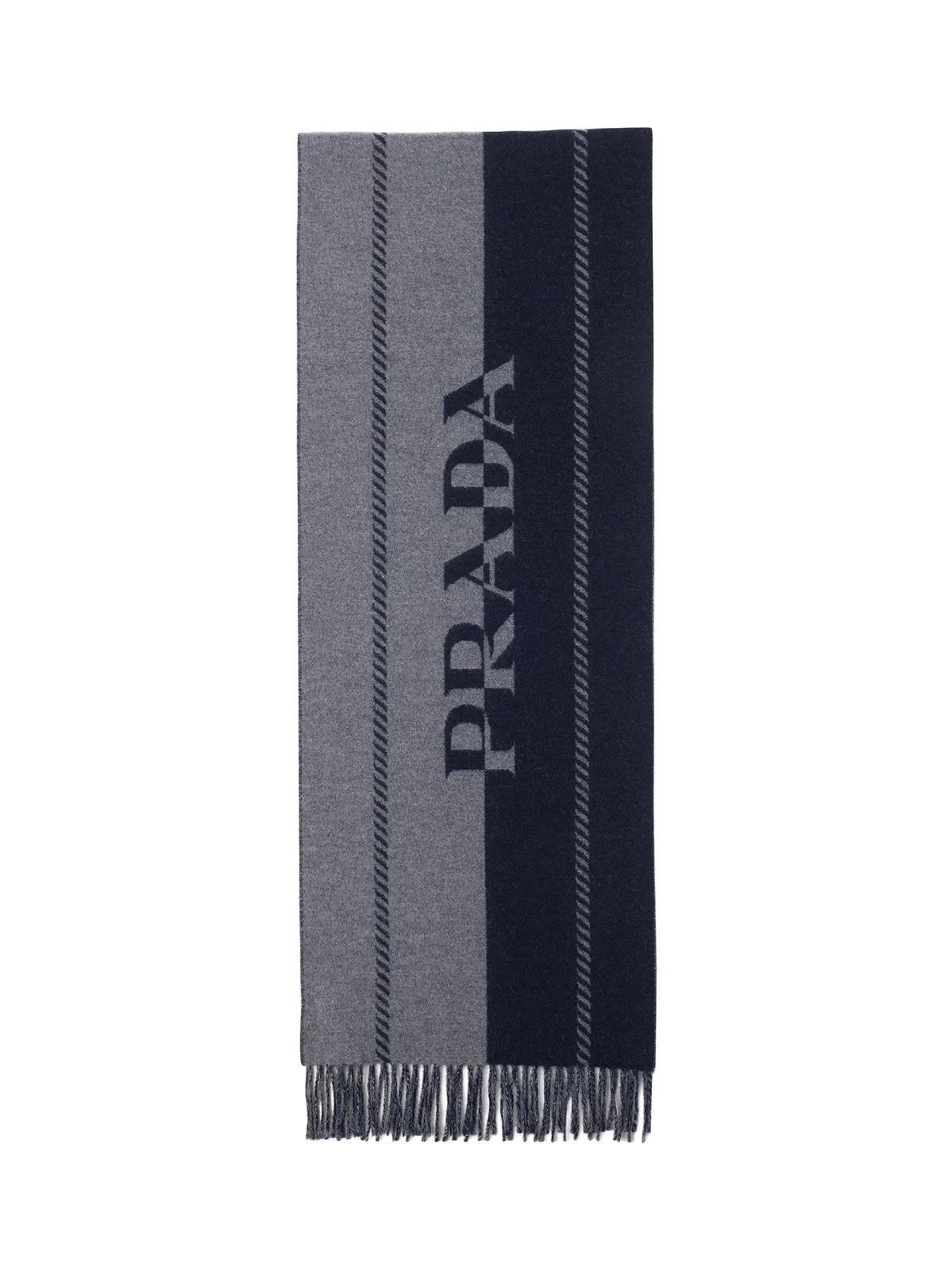 PradaMen's Wool Scarf$650
 PradaMen's Re-Nylon Gabardine And Wool Scarf - Black$950
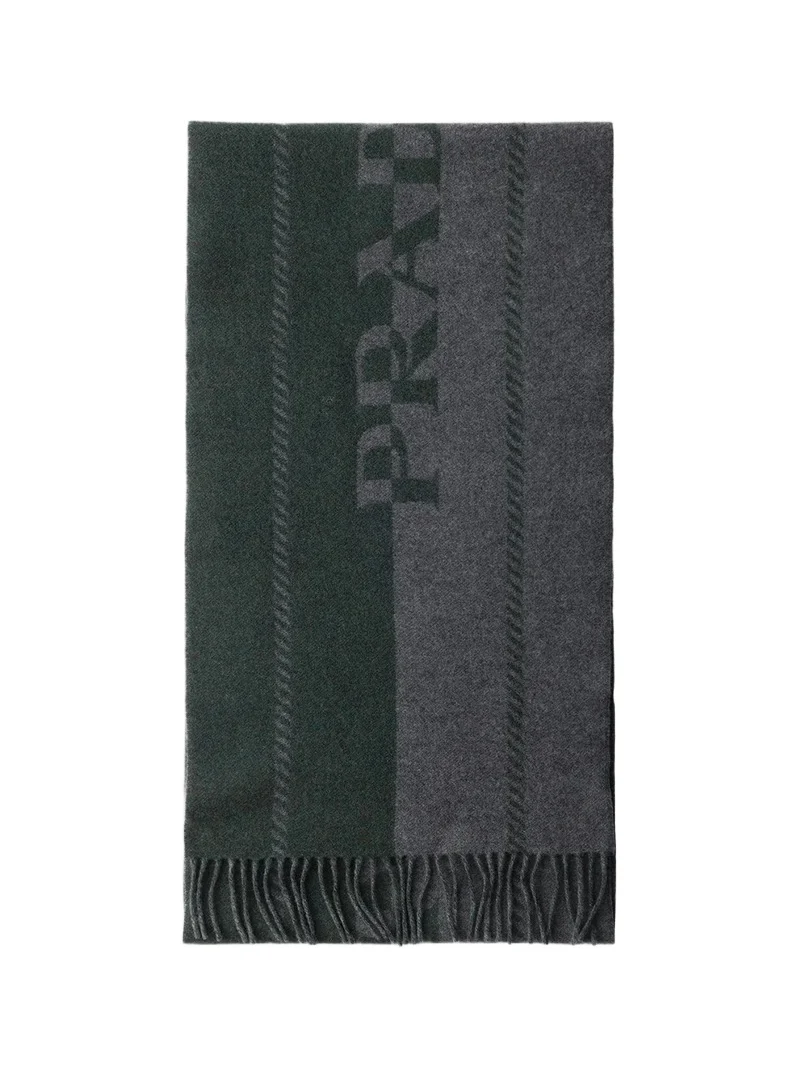 PradaMen's Wool Scarf$650
Alpaca, mohair and bouclé for the coldest days
Mohair is the fleece of the Angora goat, as Mohair South Africa explains, prized for its luster and durability. Brushing raises the long fibers of mohair and alpaca into a halo, which in our experience is why these scarves look and feel the warmest. Most add polyamide, which in our experience helps a lofty knit keep its shape: Loewe's two-tone scarf is 57% alpaca, 24% wool and 19% polyamide, and Moncler's brown check is 80% alpaca. Loewe's baby blue scarf is 73% mohair, and Jacquemus blends mohair, alpaca and virgin wool.
Wear these over the coat, where the texture shows; under a lapel they crush flat. Keep them away from hook-and-loop cuffs and zip teeth, which pull loops out of a brushed knit, and expect a few loose fibers on a dark coat at first.
Alpaca, mohair and bouclé scarves
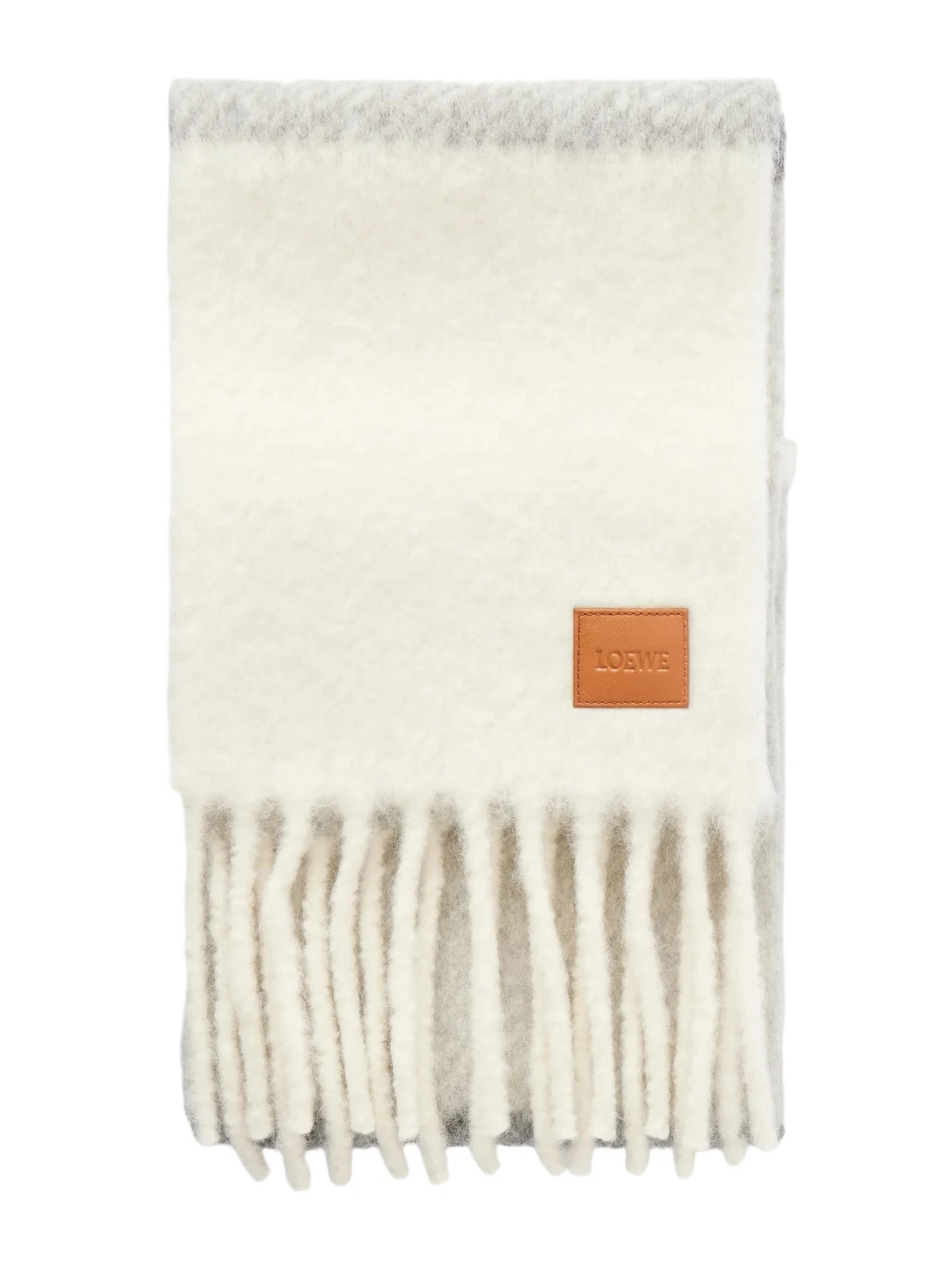 LoeweFringed Striped Brushed Alpaca and Wool-Blend Scarf - Men$550
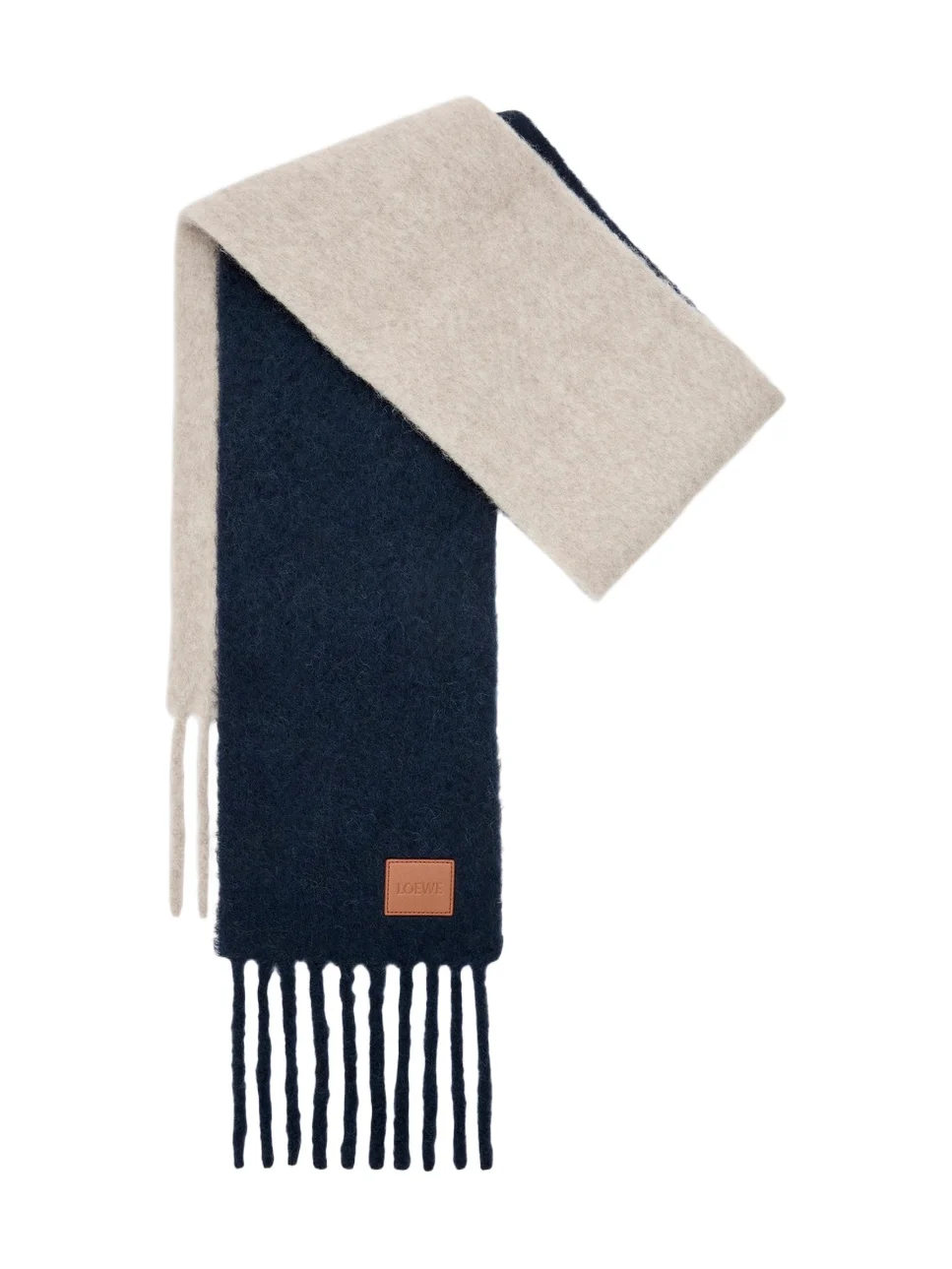 LoeweMen's Bi-Color Alpaca-Blend Scarf$590
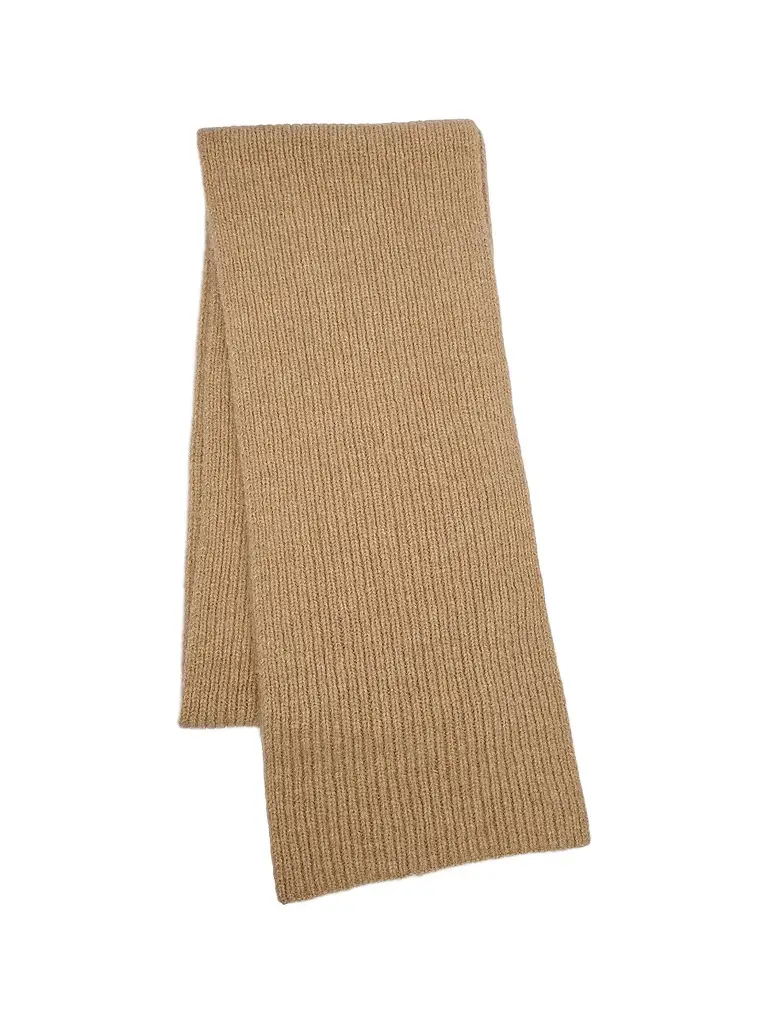 Dries Van NotenMen's Moyson Alpaca Wool-Blend Scarf$635
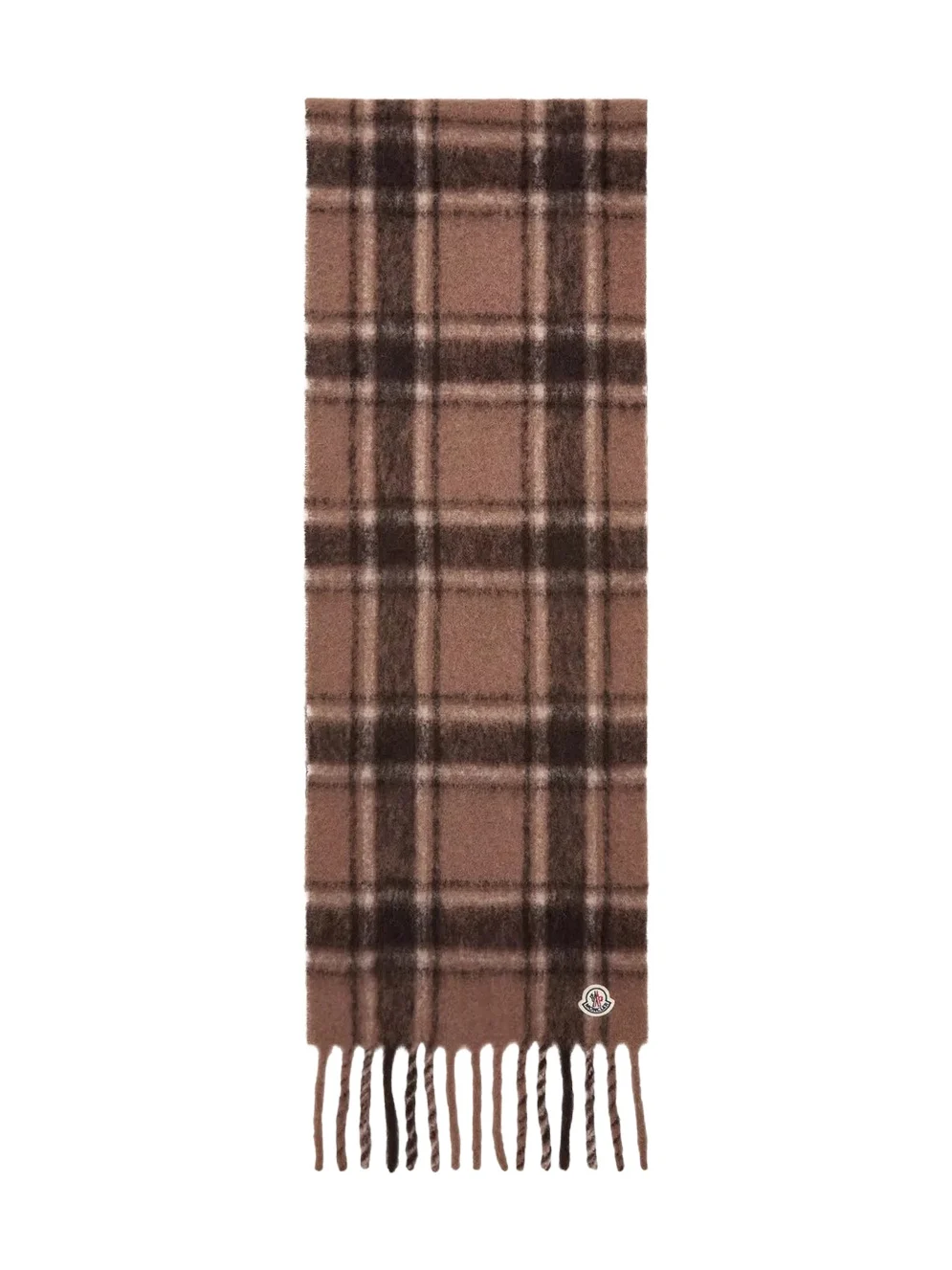 MonclerAlpaca Blend Scarf$650
 BurberryMen's Check Alpaca-Wool Bouclé Scarf$710
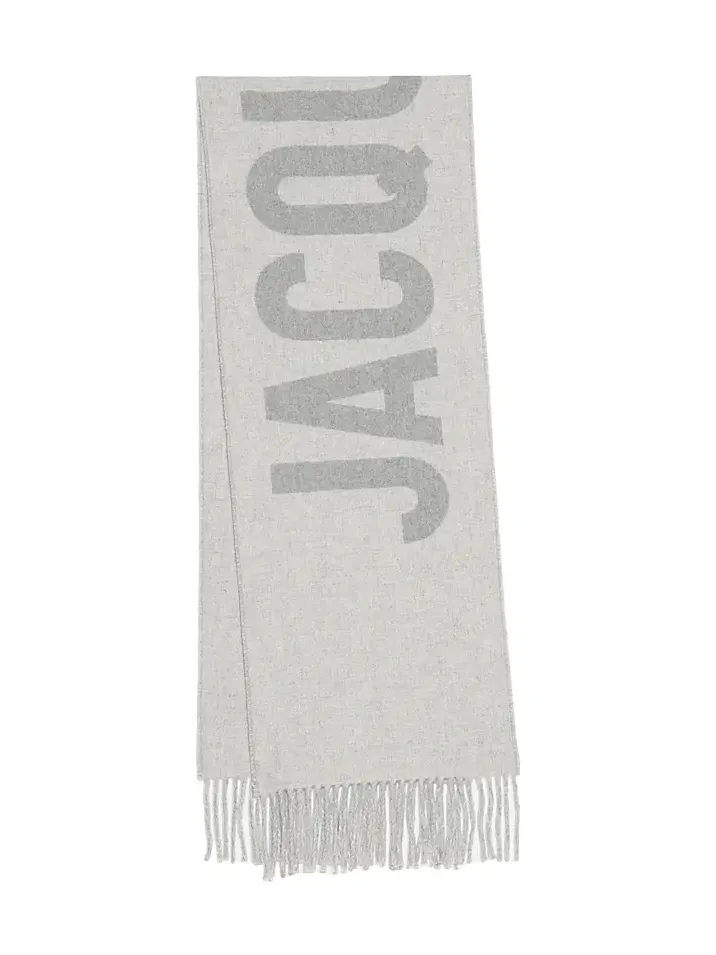
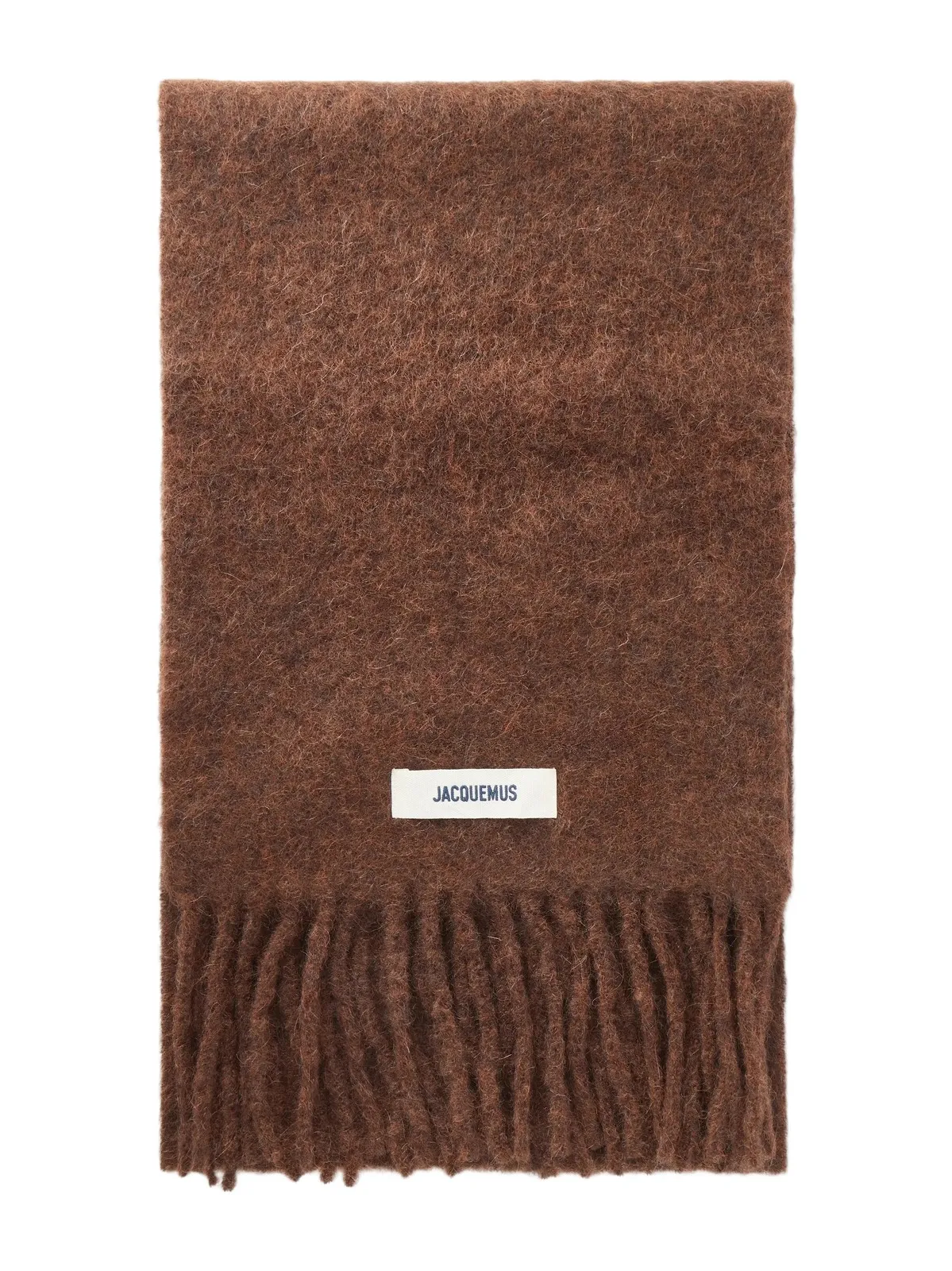 JacquemusLogo-Appliquéd Fringed Woven Scarf - Men$370
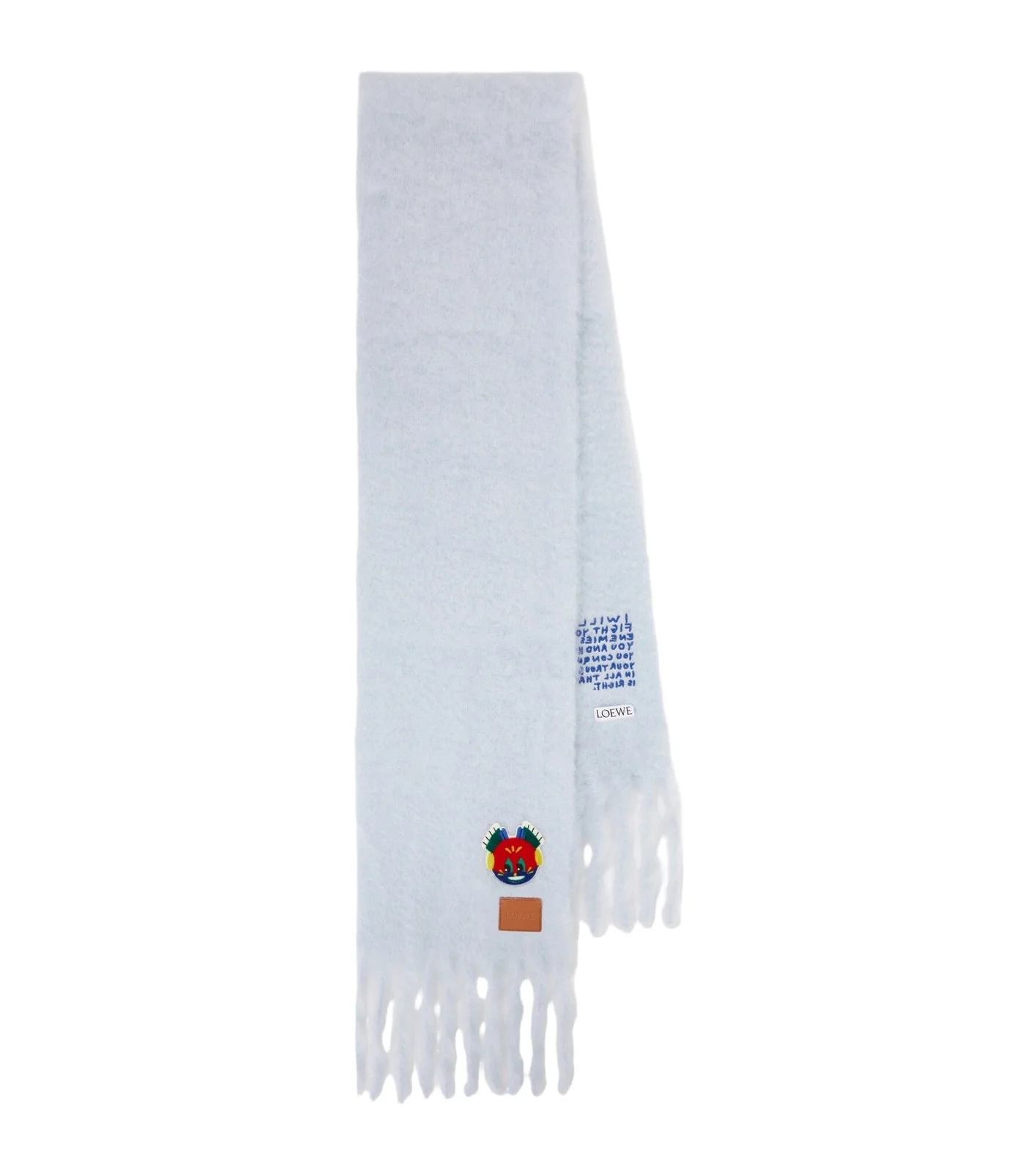 LoeweEmbroidered mohair and wool scarf$850
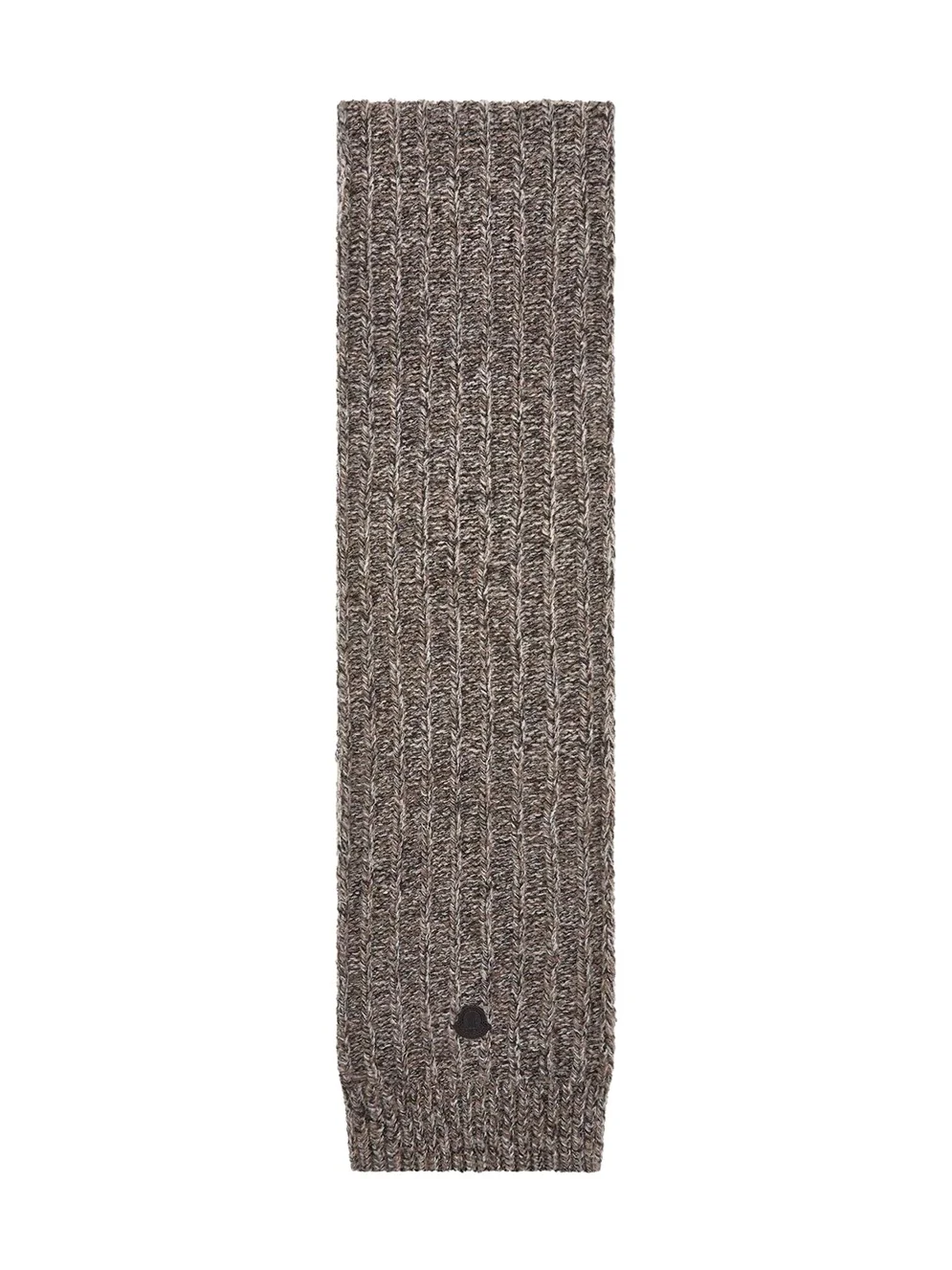 MonclerWool Blend Bouclé Knit Scarf$710
Plain, check, stripe or monogram: choosing a pattern
Our stylists allow one pattern near the face. If the coat has one (herringbone, glen check, windowpane), the scarf is plain; if the coat is plain, the scarf can carry it. Then think about scale: a large check reads from across the street, while houndstooth or a tonal monogram reads only up close, as texture.
Check and tartan
Burberry's gradient check, in green and navy, is brushed cashmere woven on traditional looms, its listing says, and its oxblood large check is lightweight wool cut to wrap size. Zegna's Oasi cashmere madras mixes pale blue, gray and tan. Brunello Cucinelli's blue-gray checked twill is 78% wool and 22% cashmere, and Canali's frayed-edge scarf, a small gray houndstooth in its photographs, is the quietest pattern here.
Check, tartan and houndstooth scarves
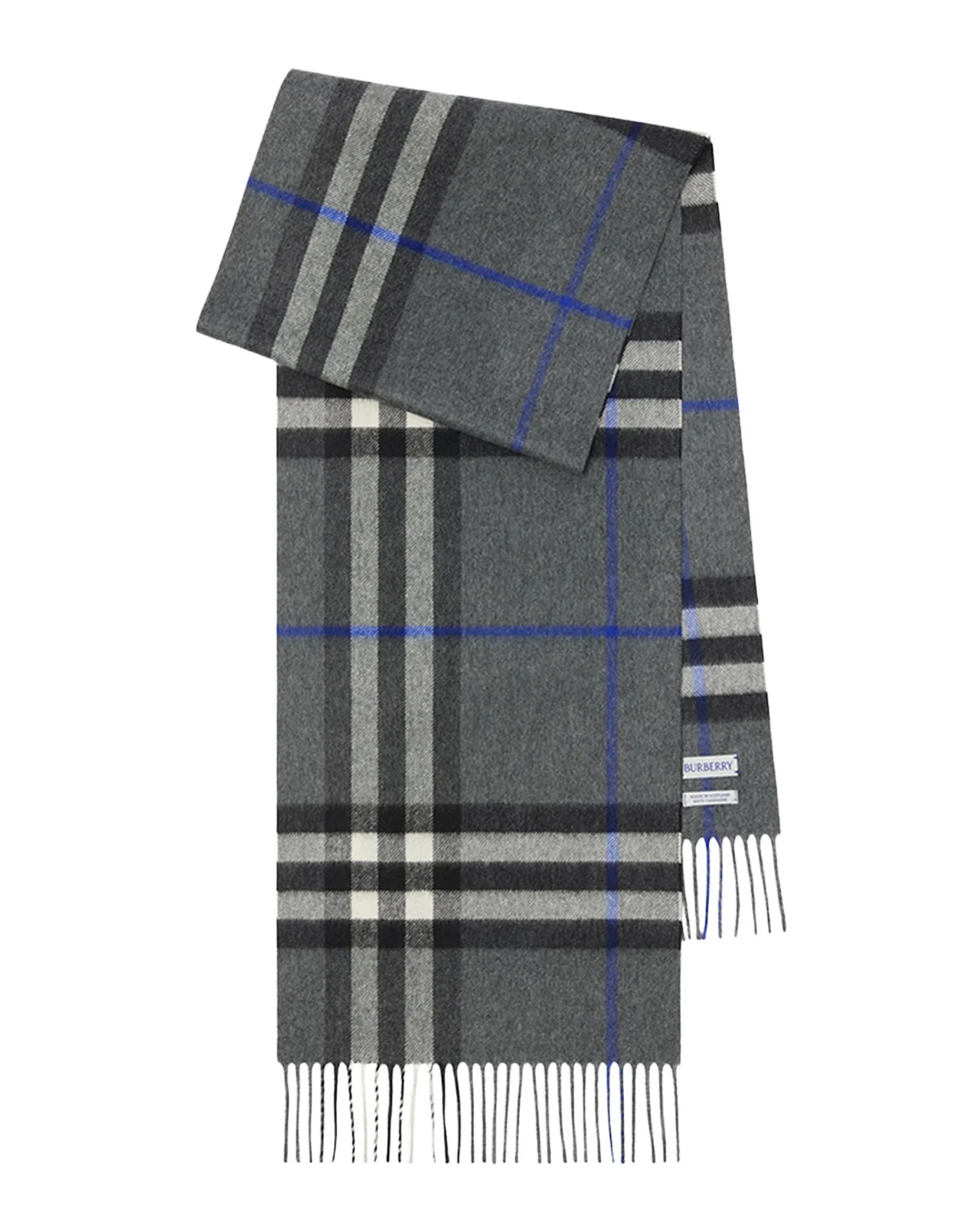 BurberryMen's Cashmere Giant Check Scarf$645
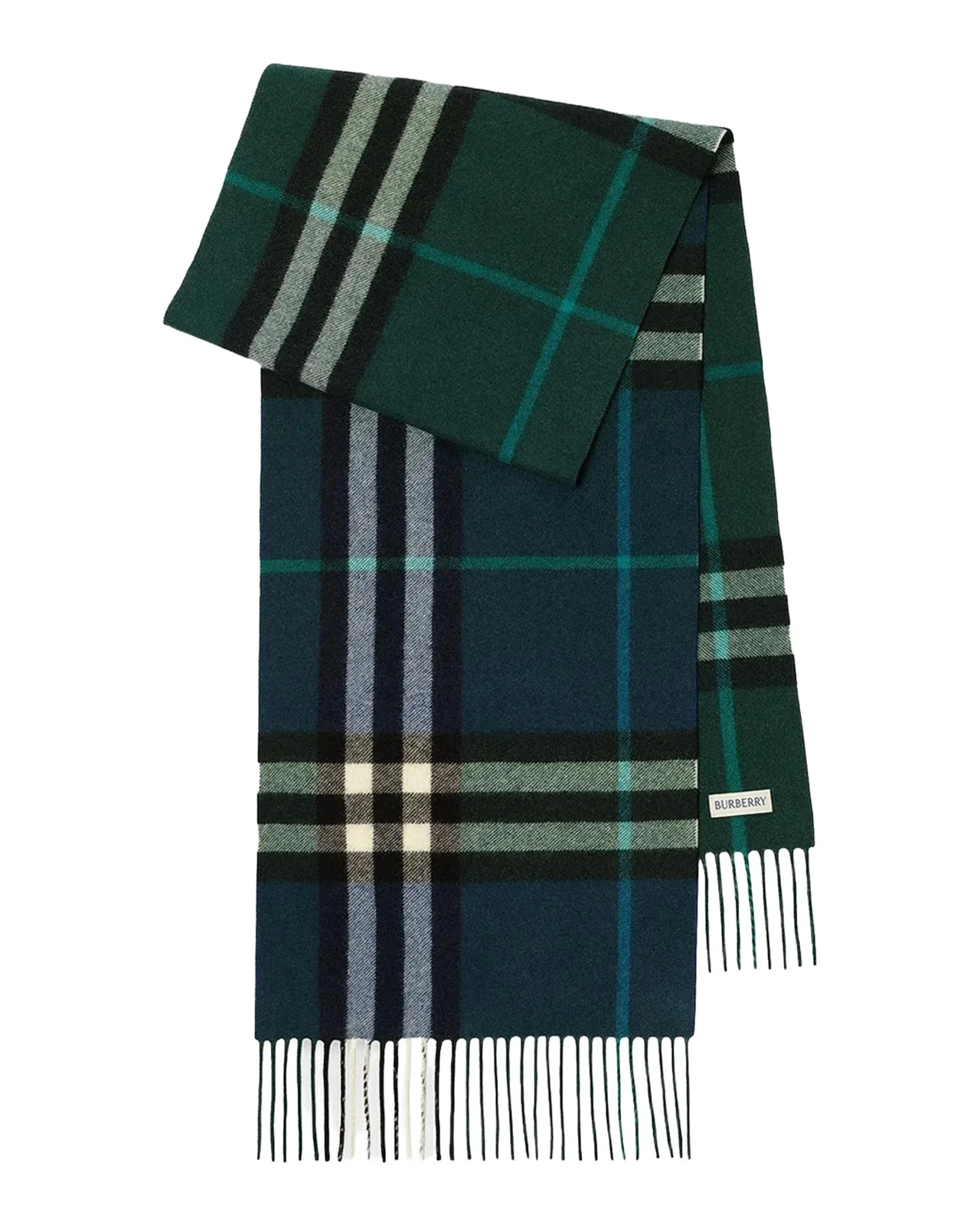 BurberryMen's Gradient Check Cashmere Scarf$710
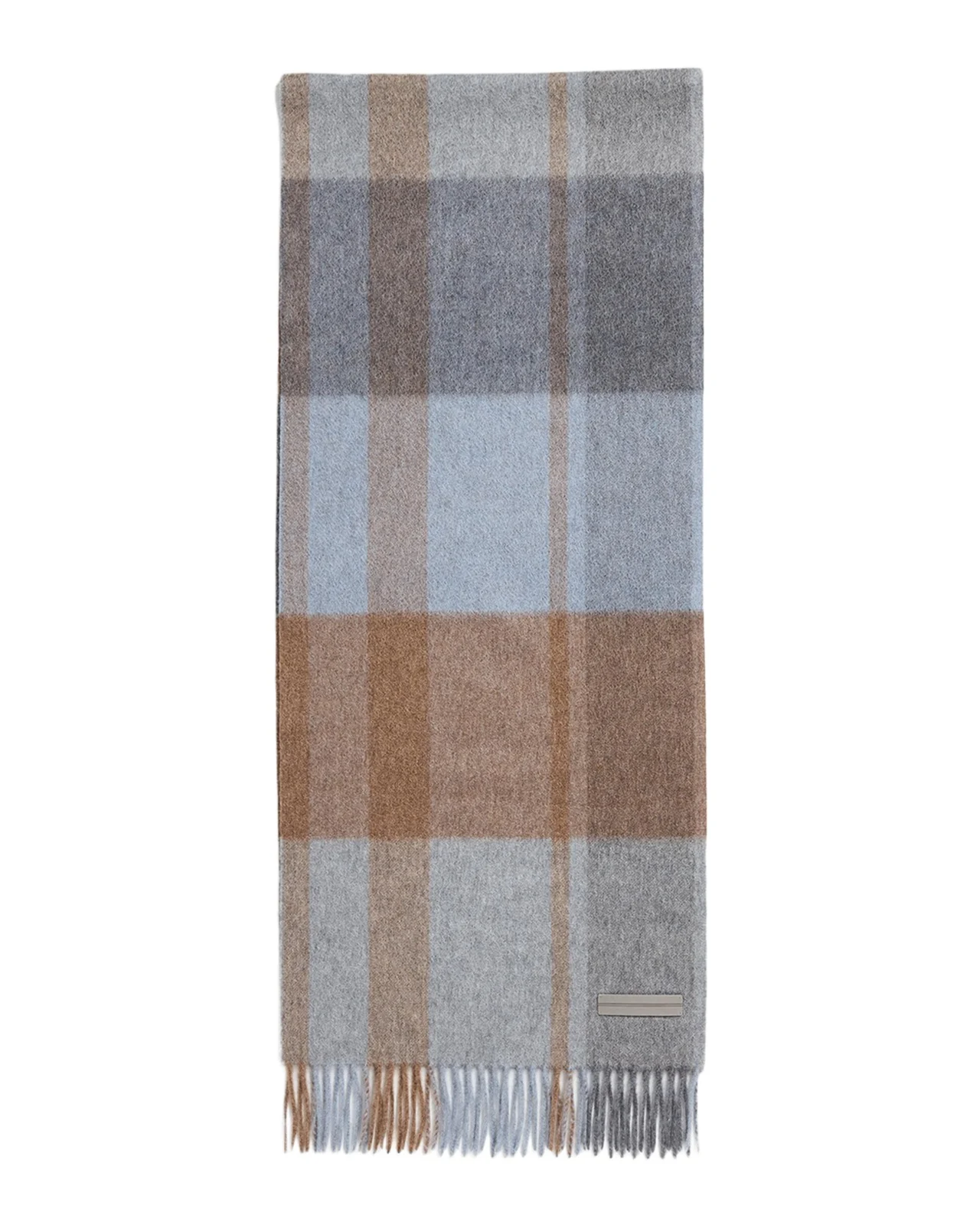 ZegnaMen's Oasi Cashmere Madras Check Scarf with Leather Brand Mark$790
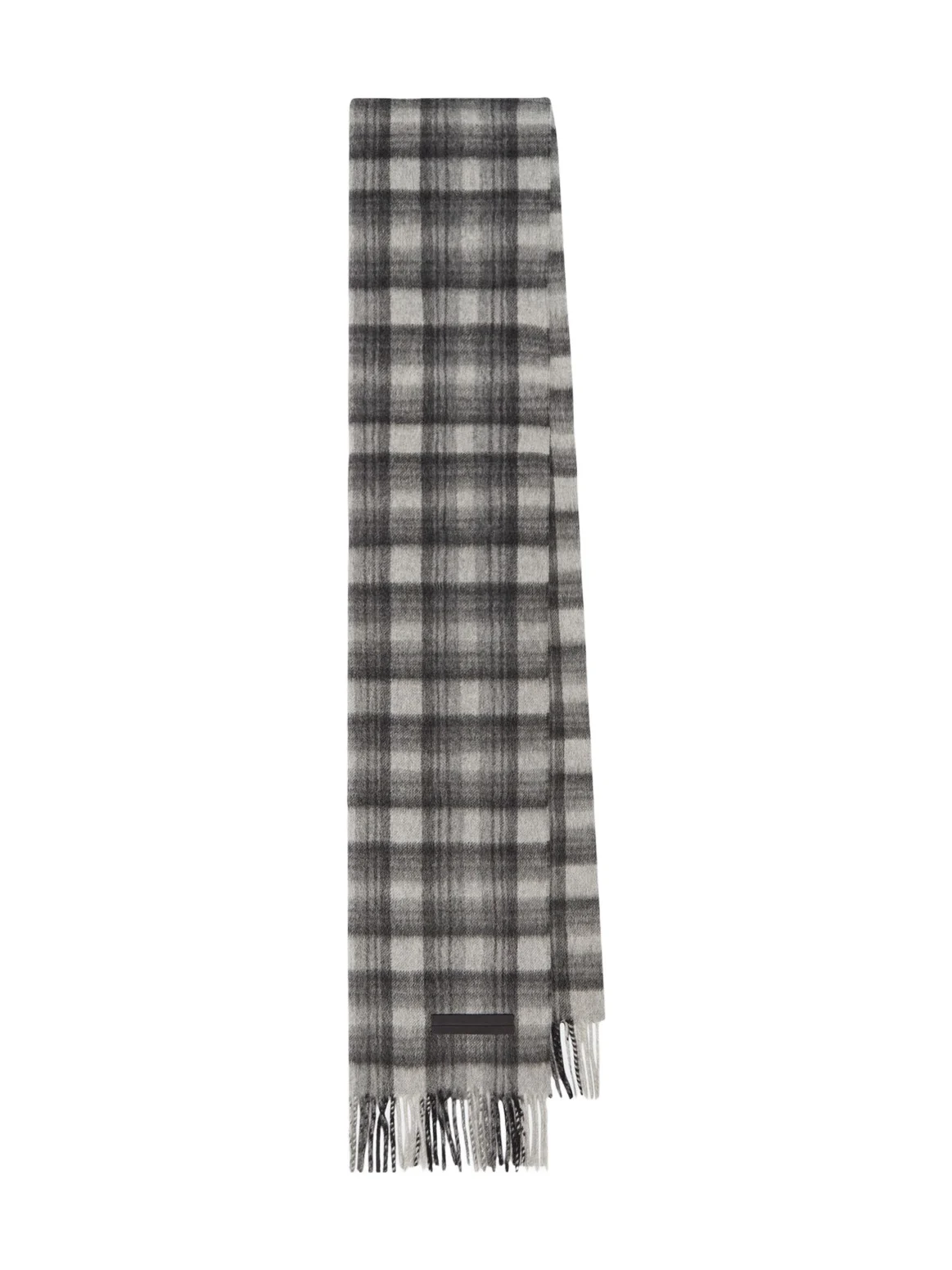 ZegnaChecked fringed cashmere scarf$790
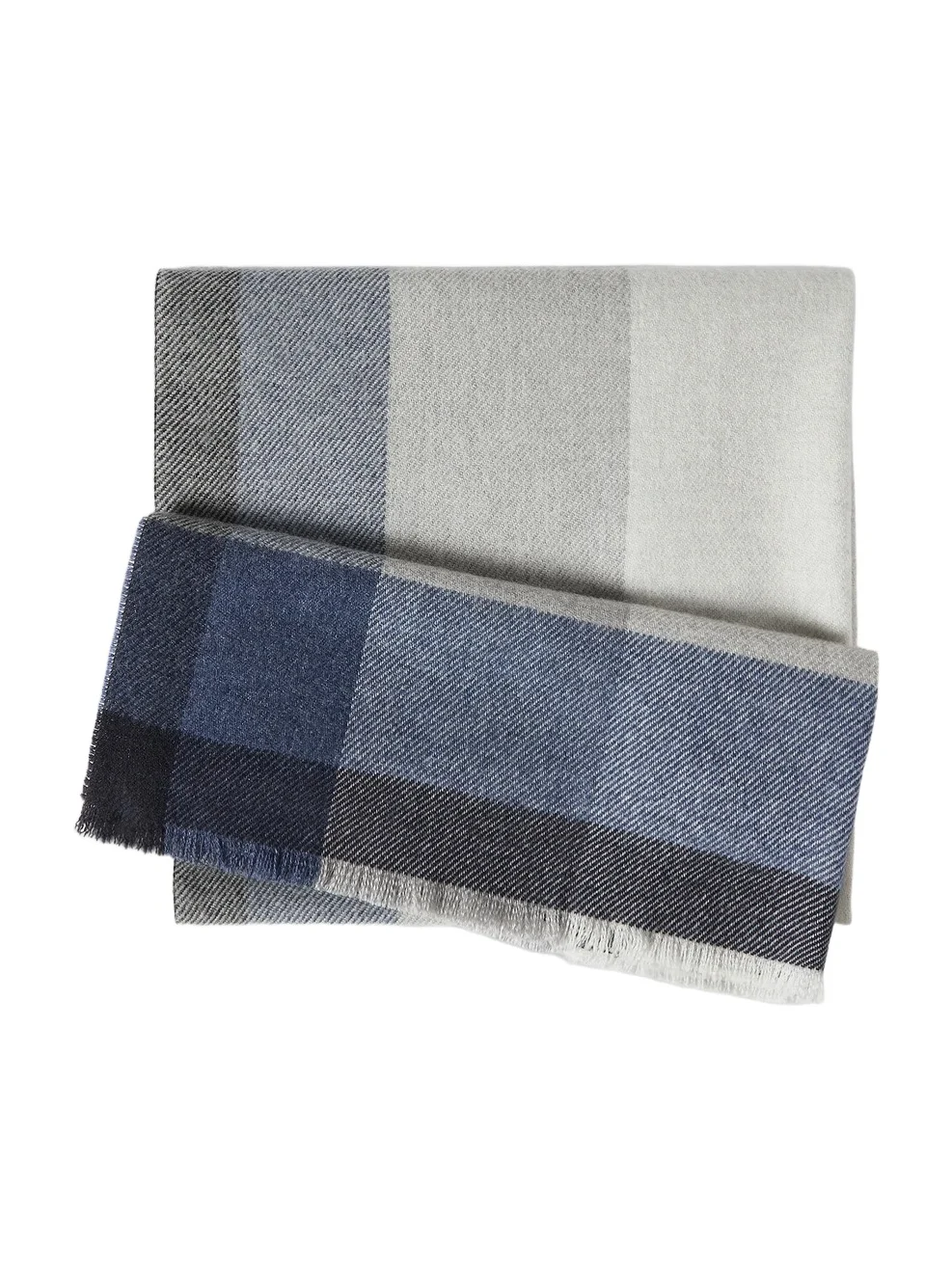 Brunello CucinelliMen's Wool and Cashmere Checked Twill Scarf$850
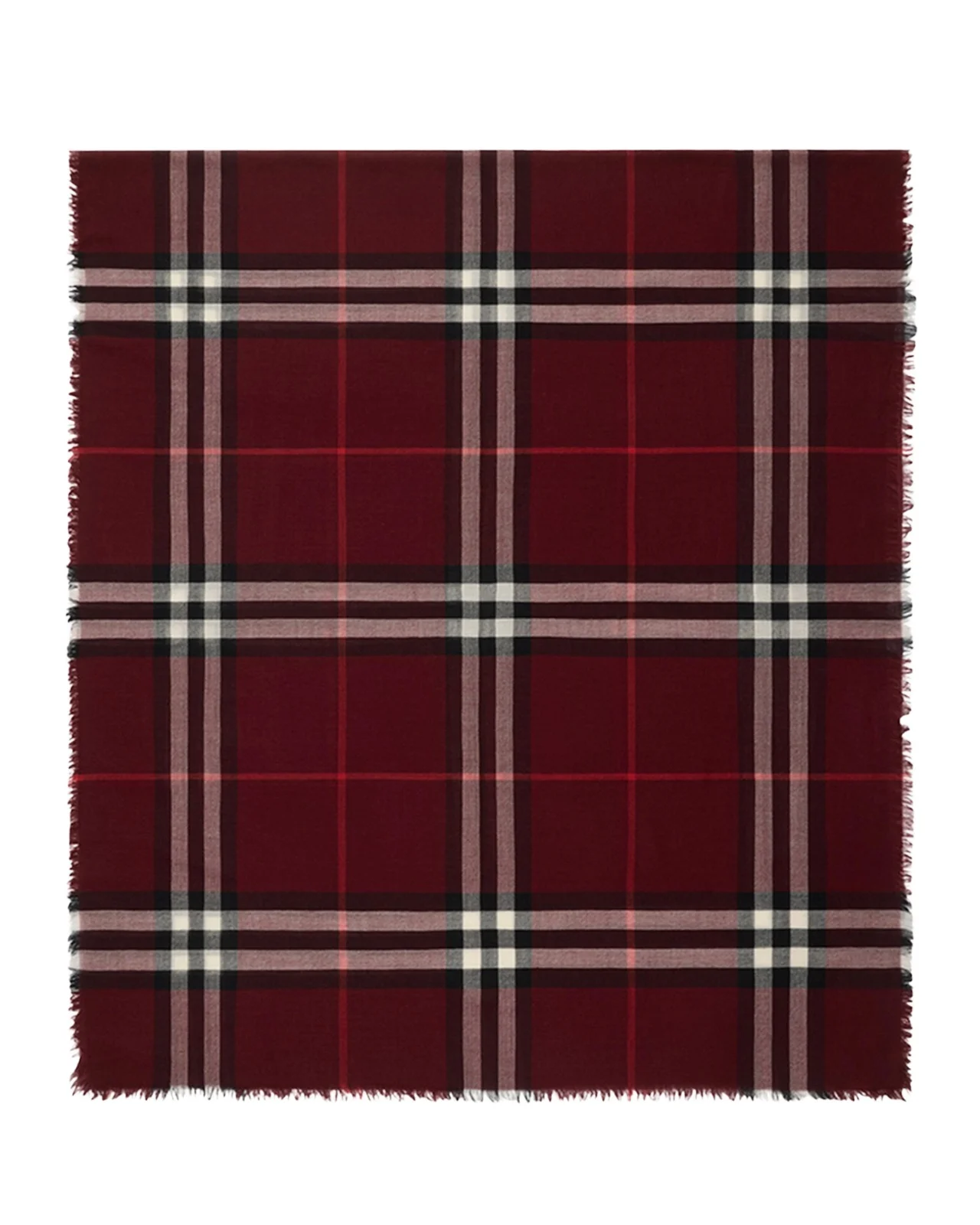 BurberryMen's Wool Large Check Scarf$520
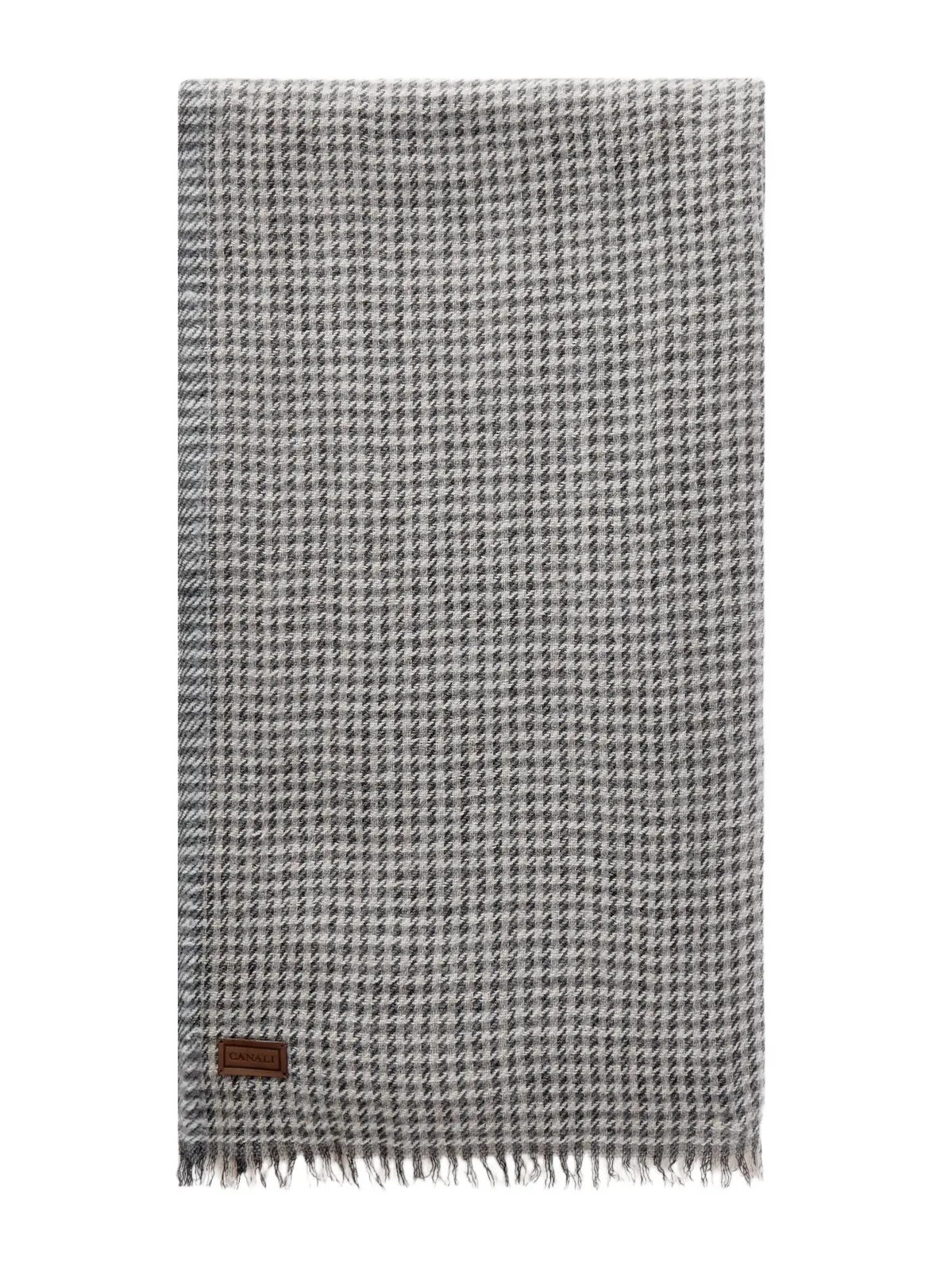 CanaliFrayed Houndstooth Wool and Cashmere-Blend Scarf - Men$595
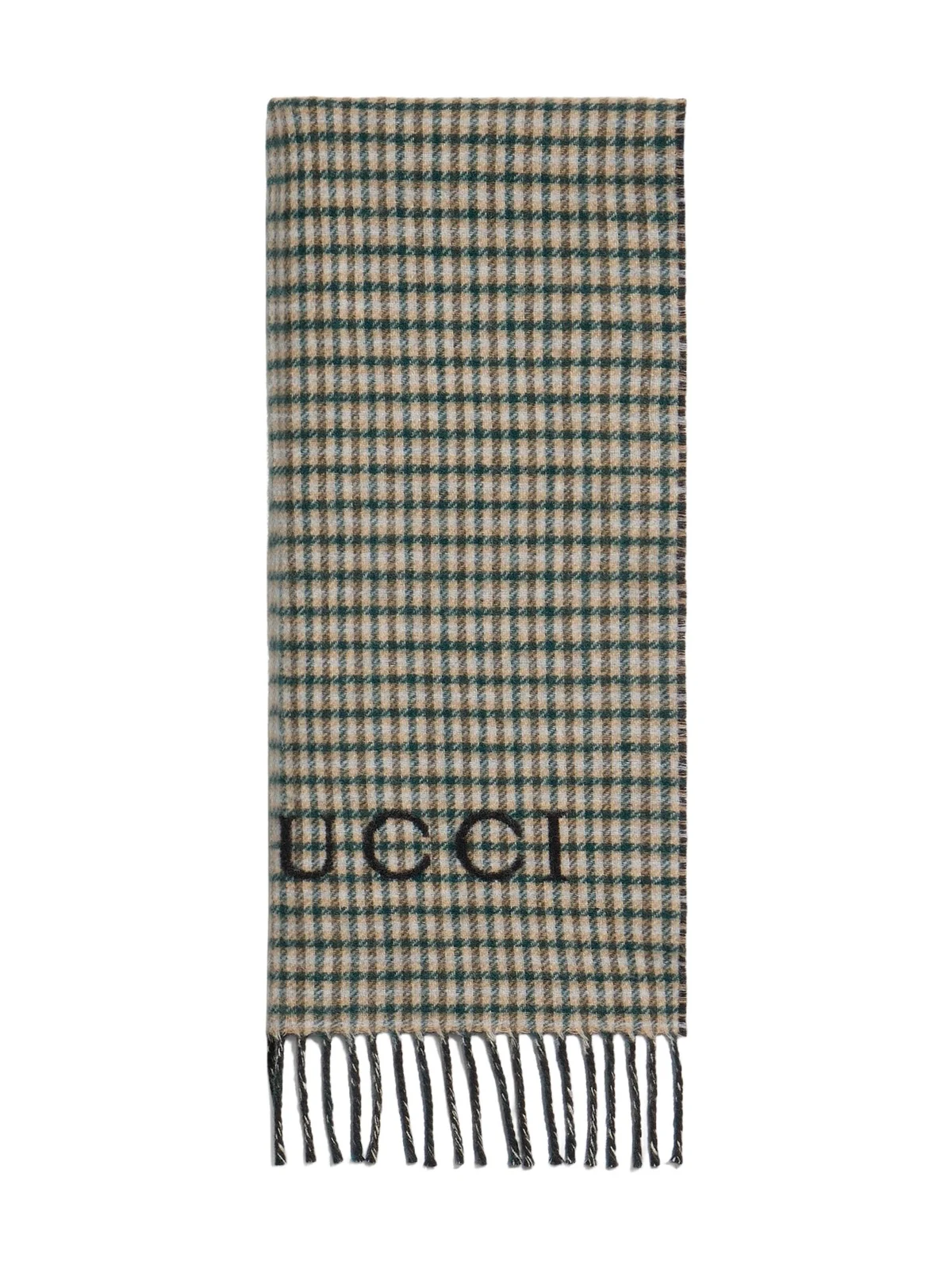 GucciTartan Cashmere Wool Scarf$570
Stripes, chevrons and one strong color
Missoni's zigzag is crocheted from pure wool in blues and black, according to MR PORTER. Givenchy's bicolor splits midnight blue and gray down its length, and Moncler runs a tricolor band down black wool. Brunello Cucinelli's chevron cashmere is short at 45 x 140 cm, a scarf to drape rather than wrap. Tom Ford's yellow cashmere is the loud one, and in our view a one-season pleasure beside a charcoal that lasts ten: wear it against a dark, plain coat and keep everything else quiet.
Stripes, chevrons and one strong color
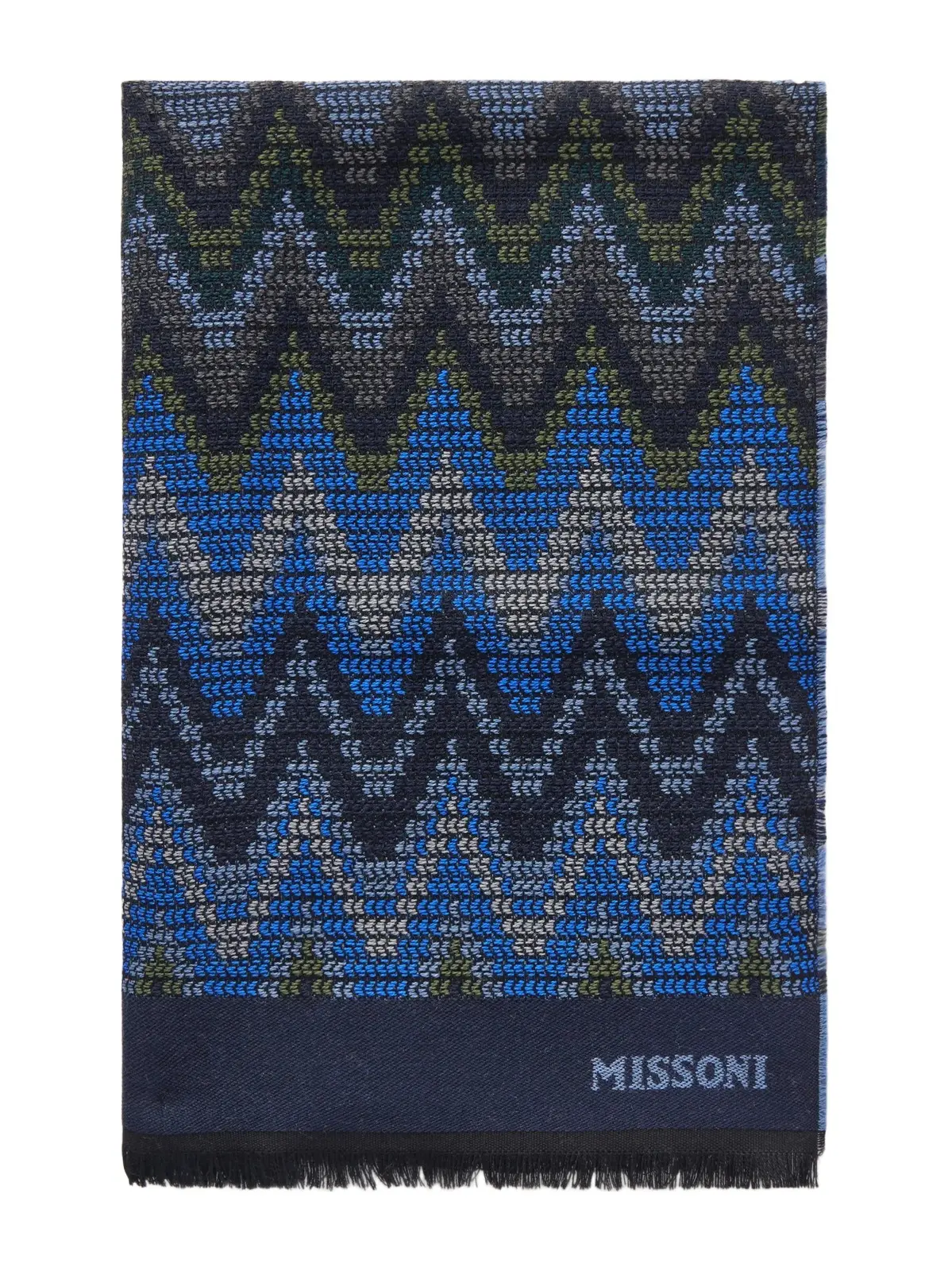 MissoniStriped Crochet-Knit Wool Scarf - Men$260
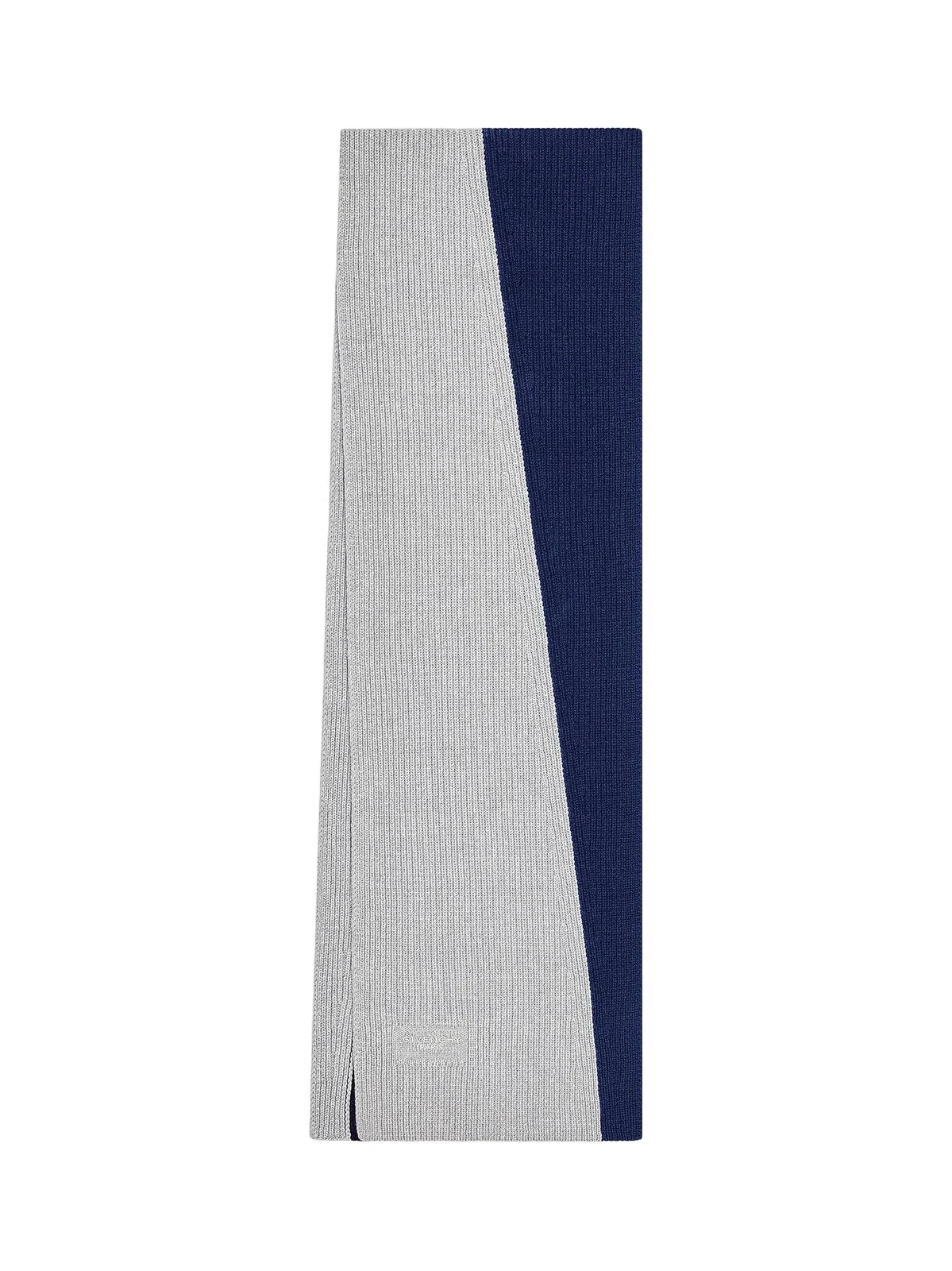 GivenchyMen's Bicolor Scarf in Wool and Cashmere - Midnight Blue Grey$600
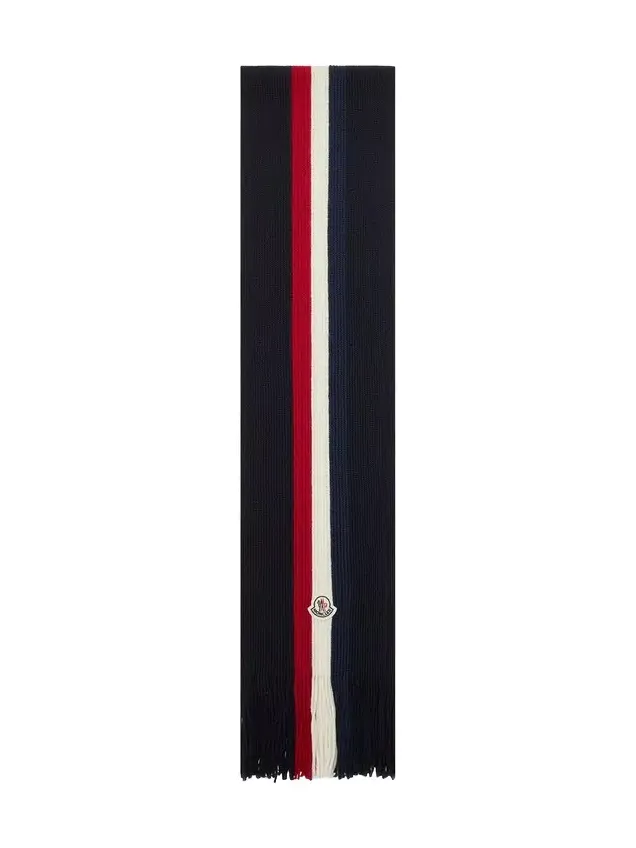 MonclerTricolor Wool Scarf$365
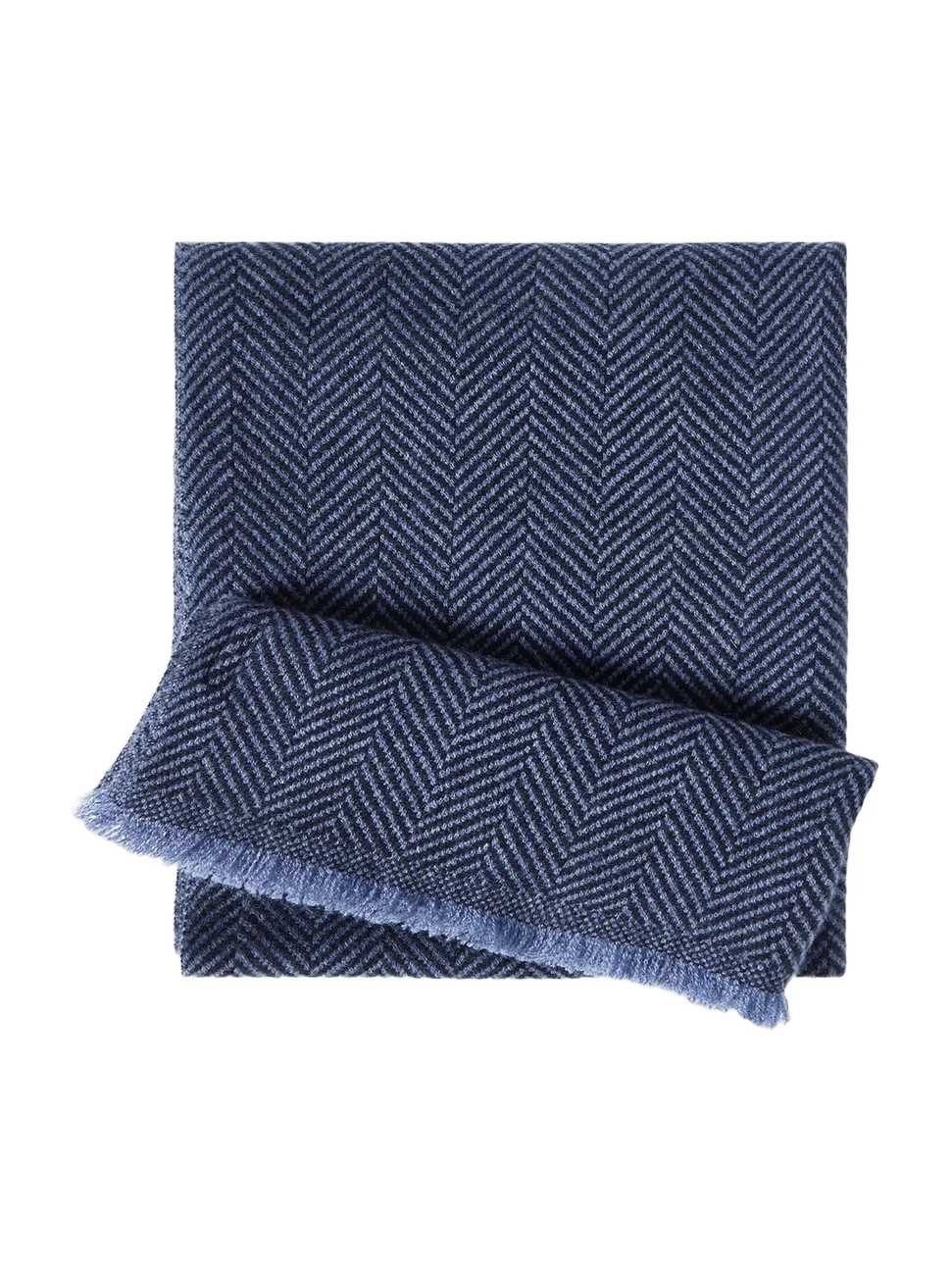 Brunello CucinelliMen's Cashmere Chevron Scarf$1,950
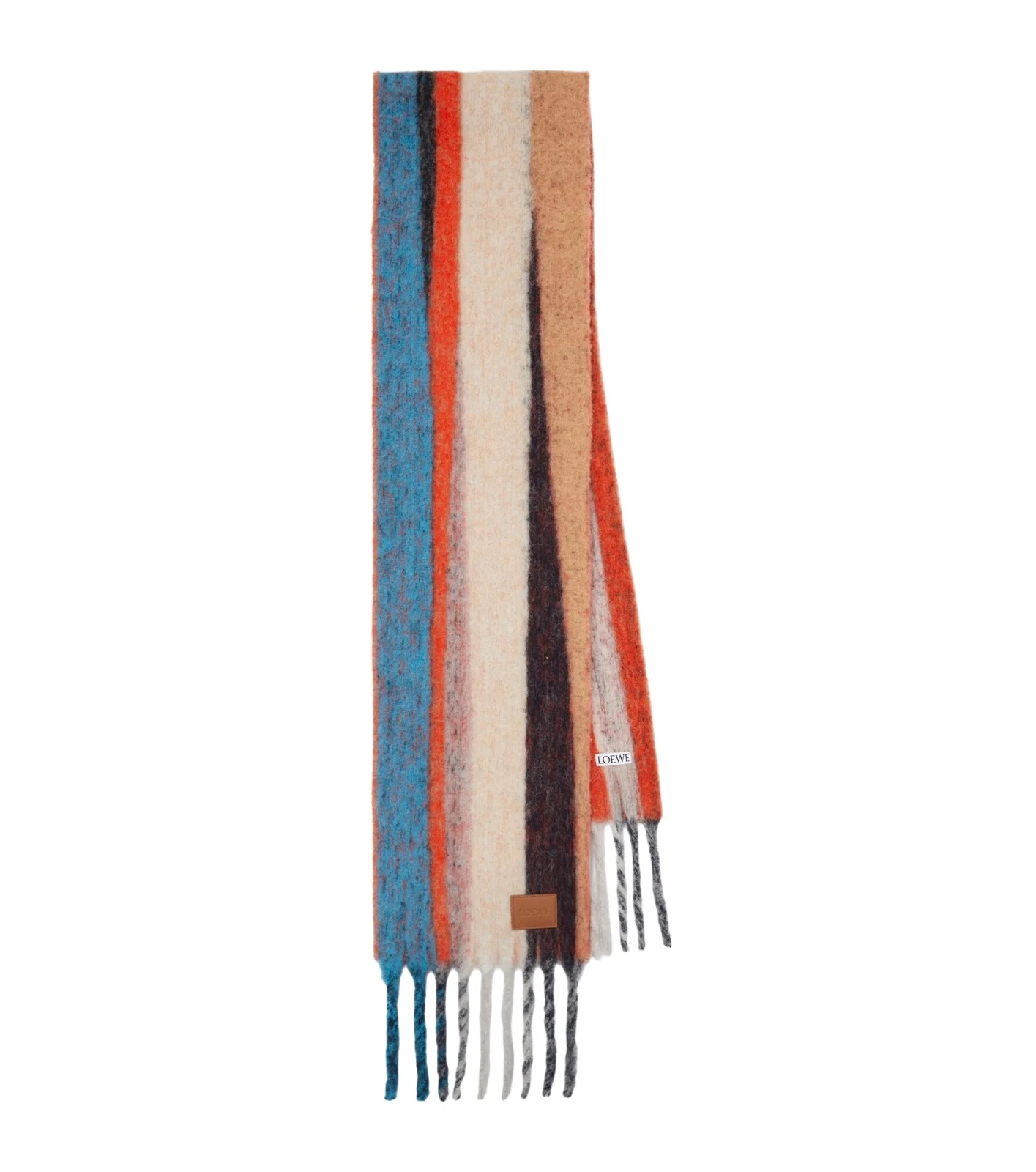 LoeweFringed striped alpaca-blend scarf$690
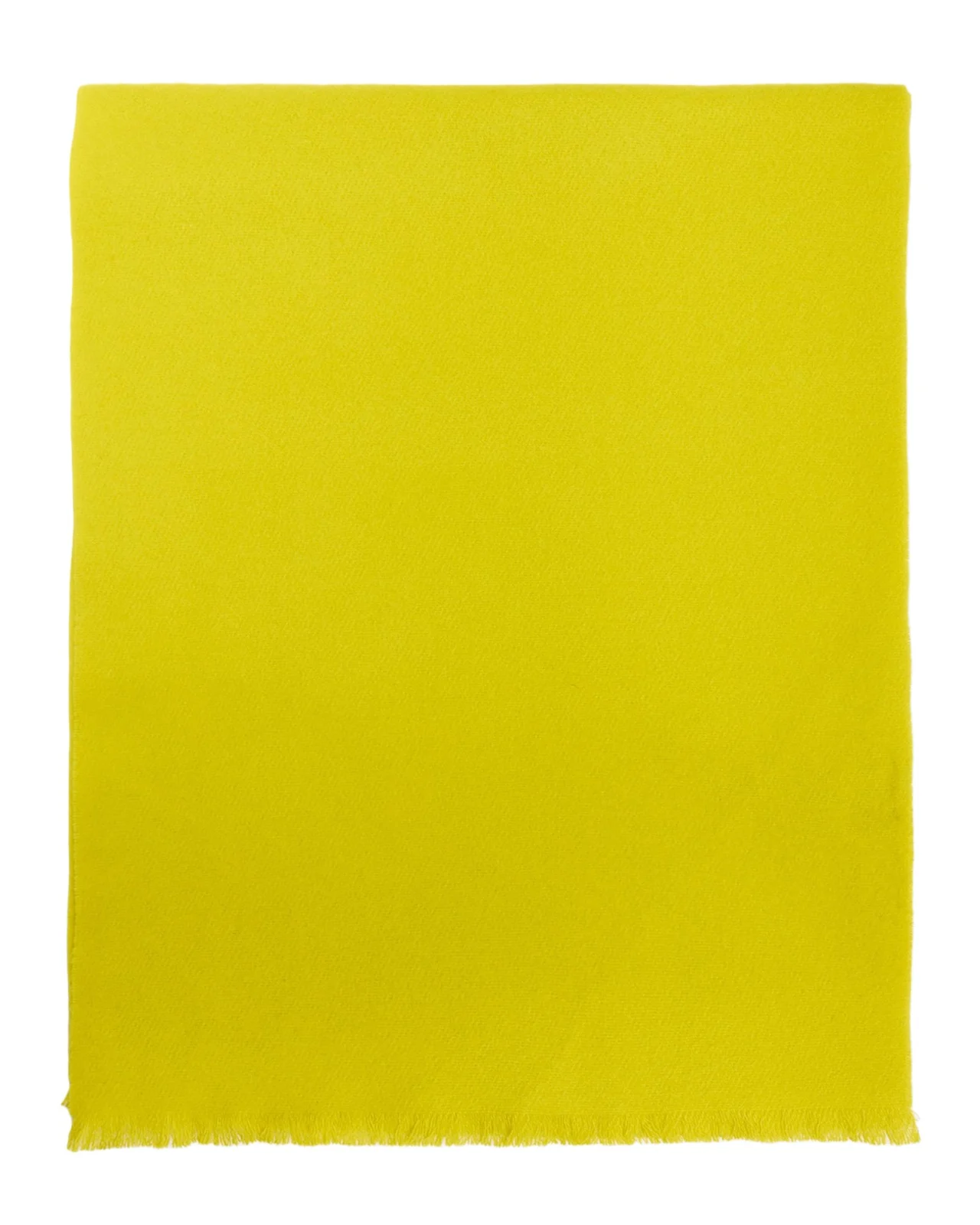 Tom FordMen's Cashmere Tonal Logo Scarf$630
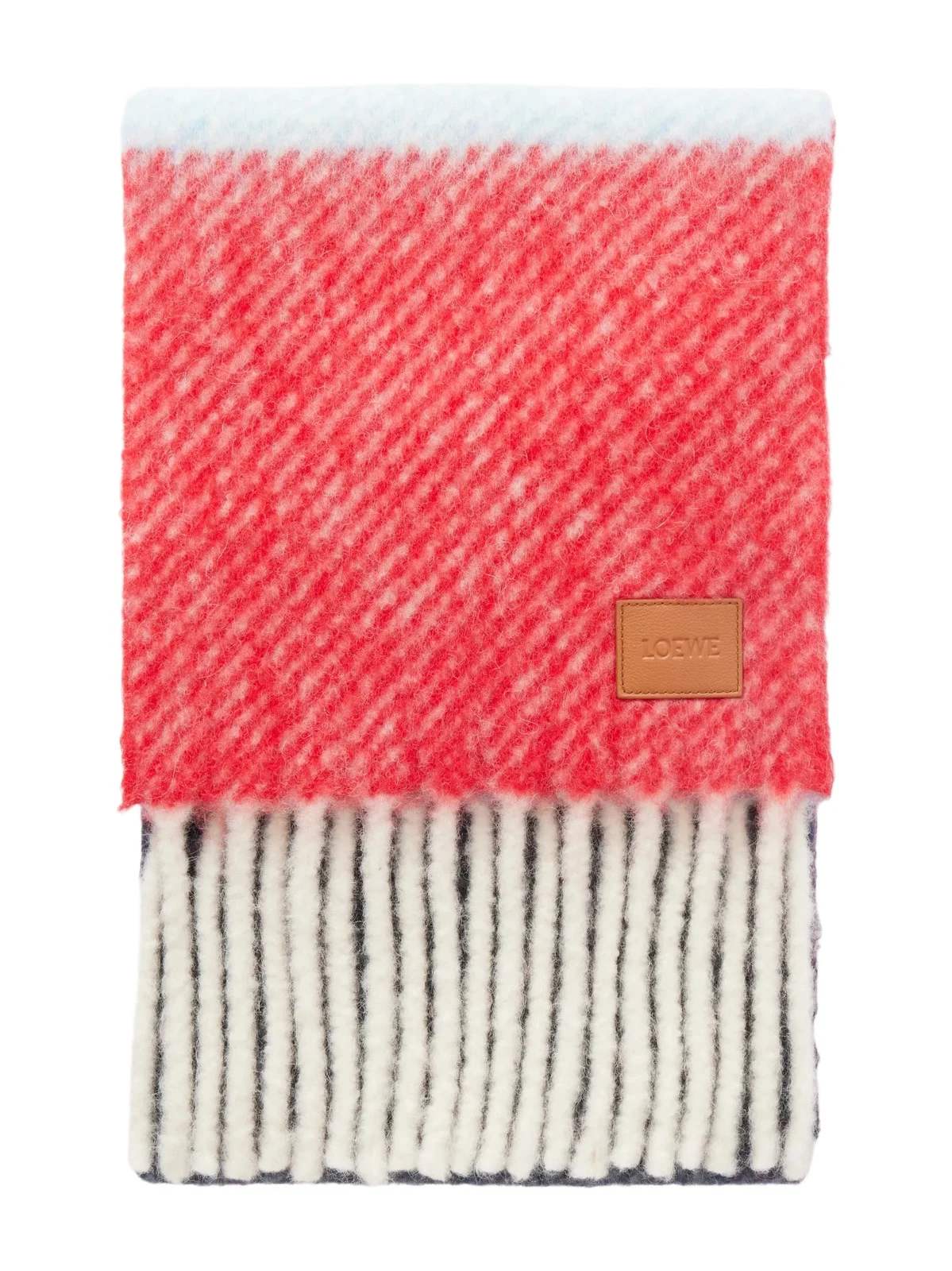 LoeweFringed Striped Brushed Alpaca and Wool-Blend Scarf - Men$550
Logo and monogram
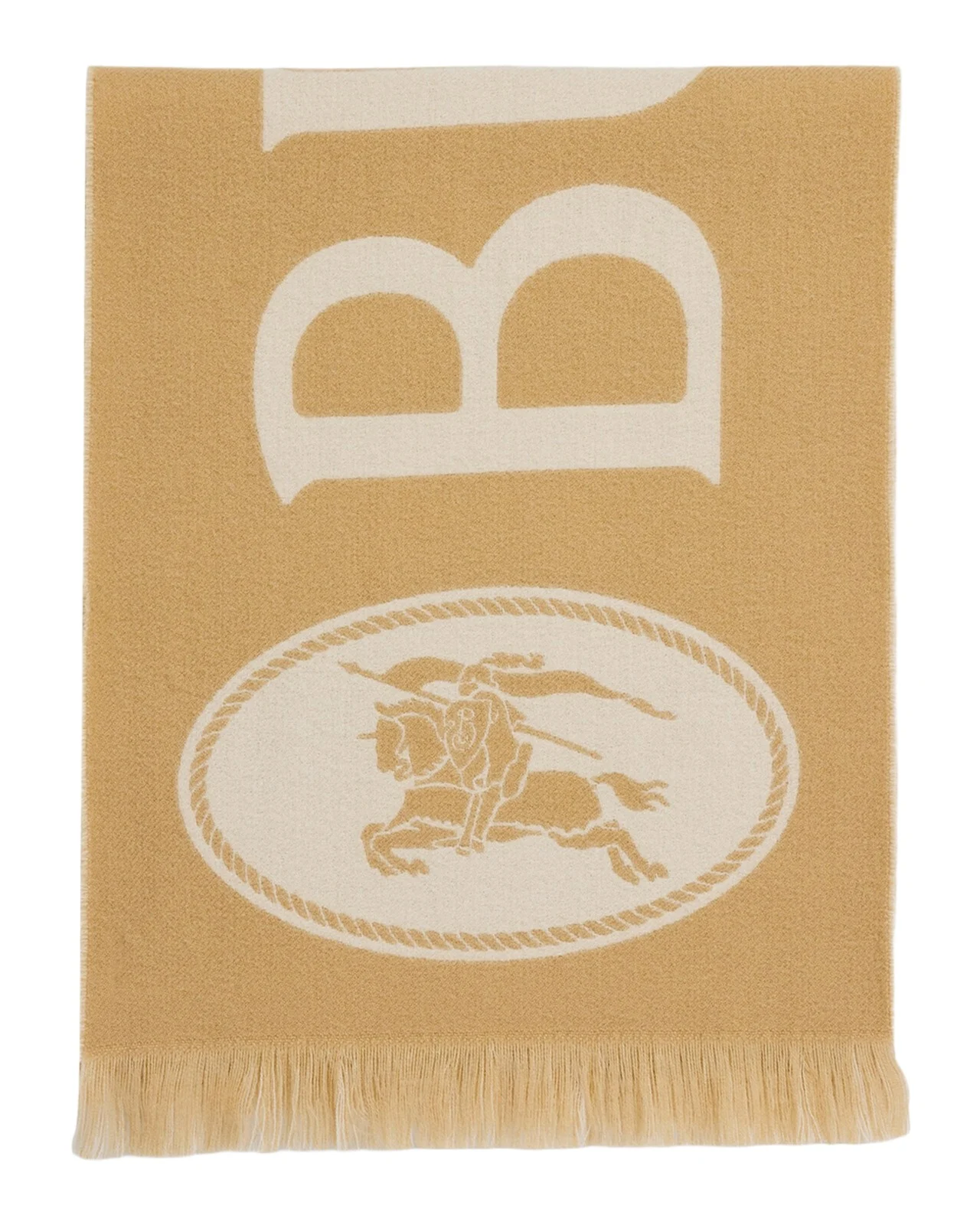
Tonal monograms are the easiest to wear. Fendi's navy wool and cashmere scarf is double-sided, plain on one face and FF Zucca jacquard on the other, so you choose how much shows. Loewe's dark coffee Anagram jacquard is made in the UK, Burberry works its B into gray cashmere, and Balenciaga writes its script in black and white on a scarf long enough to double. In our experience a tonal monogram outlasts a loud one. And keep to one logo per outfit: a monogram scarf with a logo puffer is two.
Logo and monogram scarves
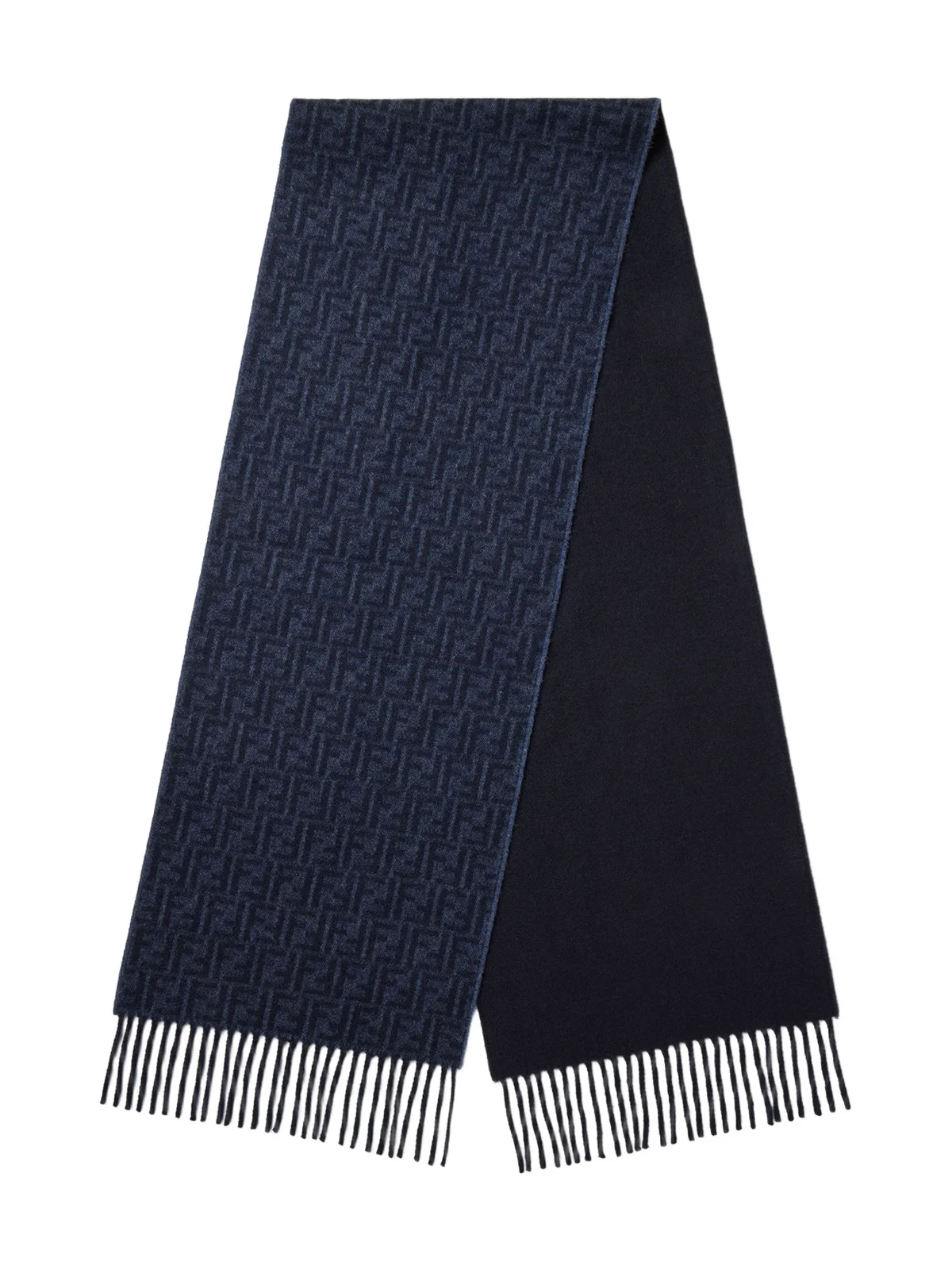 FendiFF Zucca Wool and Cashmere Scarf$930
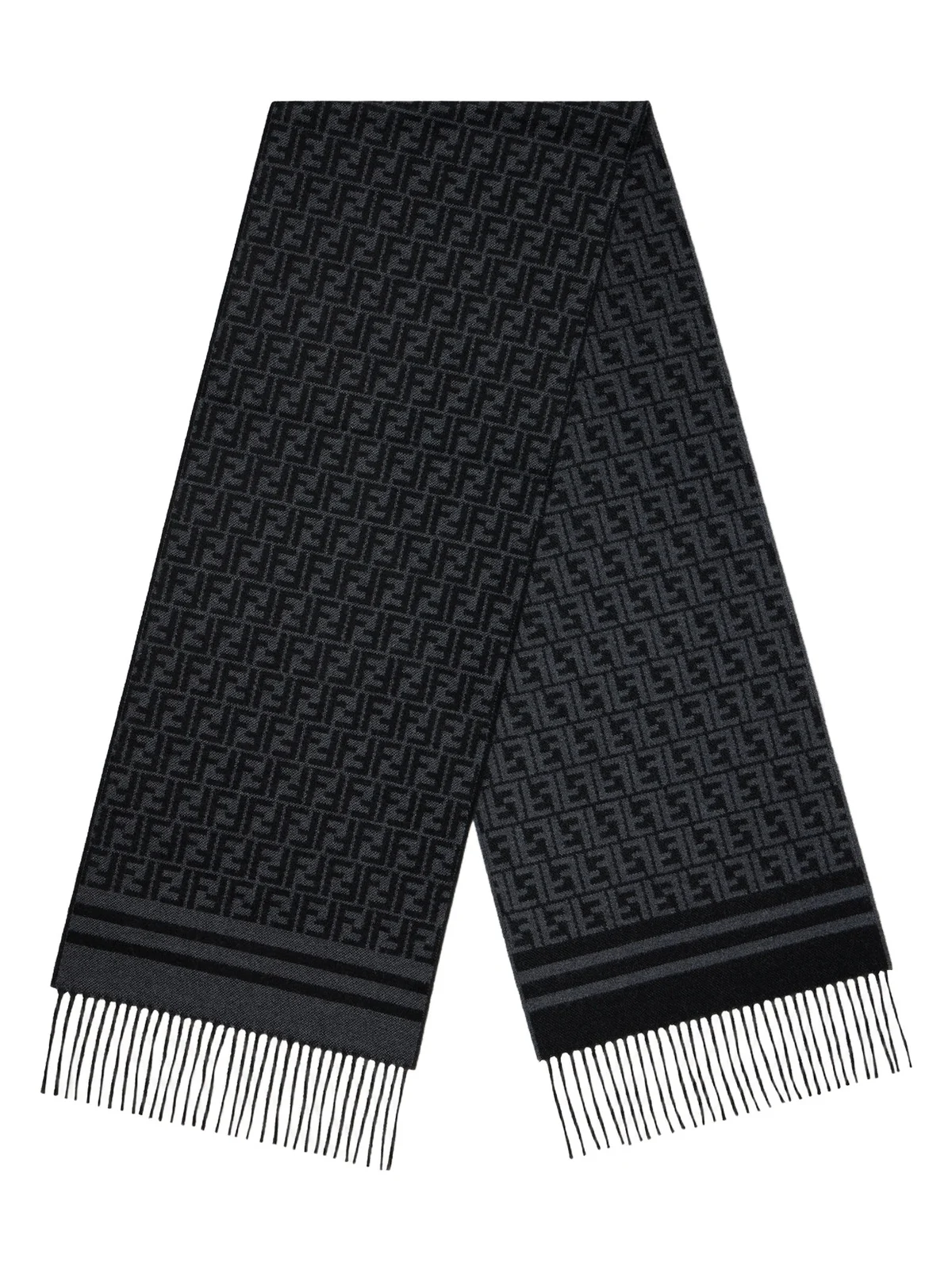 FendiFF Zucca Wool Scarf$790
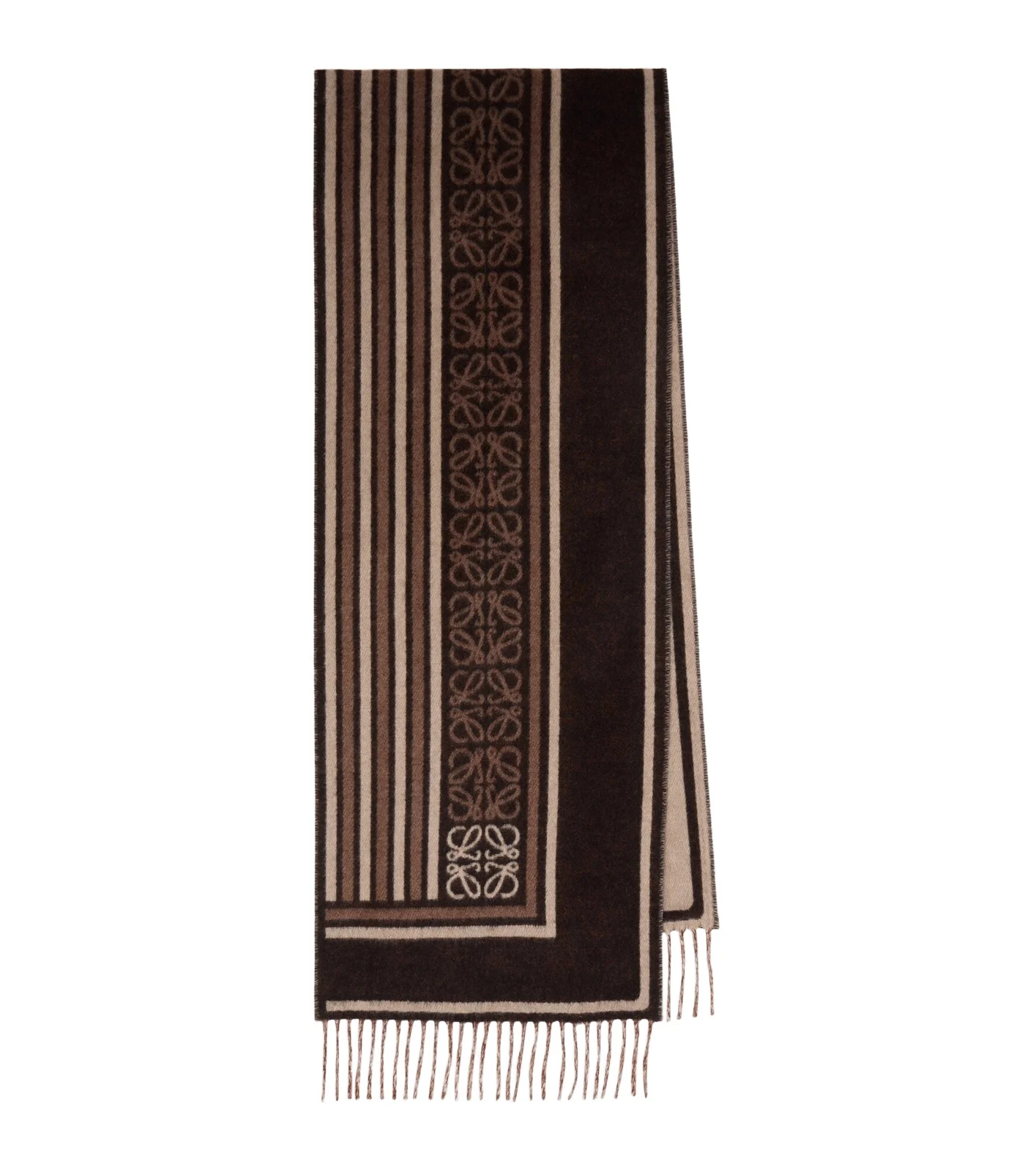 LoeweAnagram wool and cashmere jacquard scarf$650
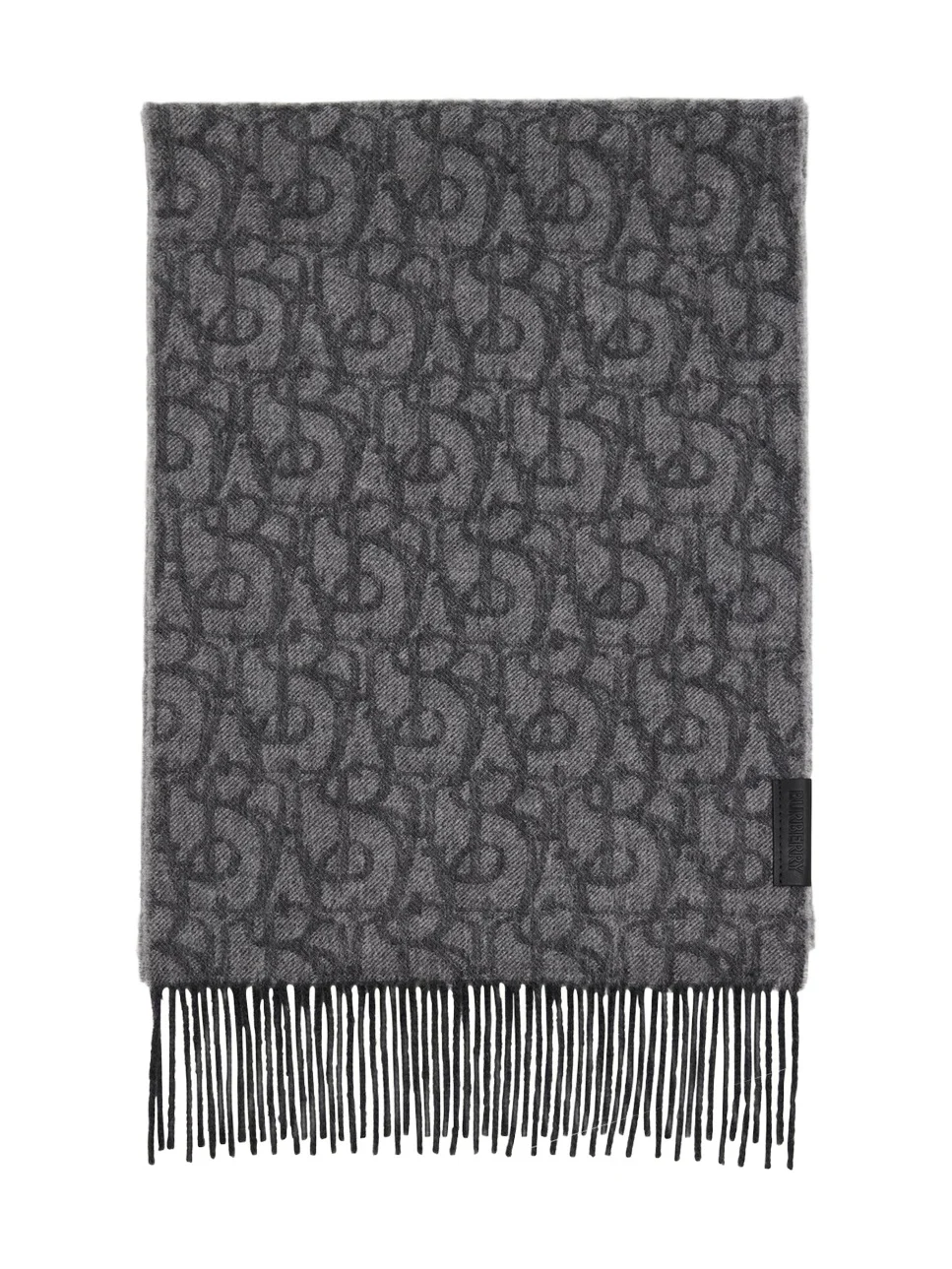 BurberryMen's B Charm Cashmere Scarf$660
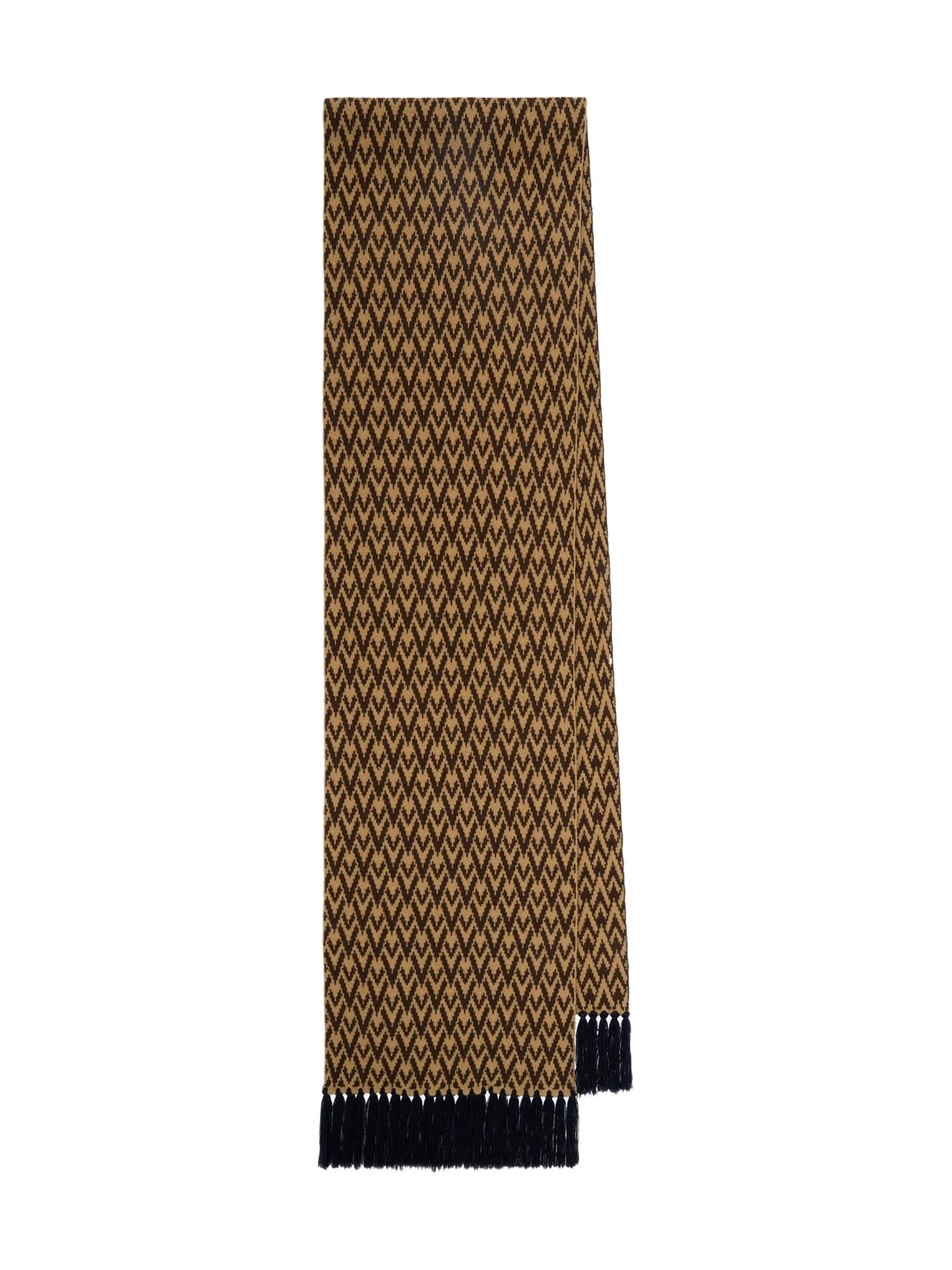 Valentino GaravaniToute La V virgin jacquard wool scarf$690
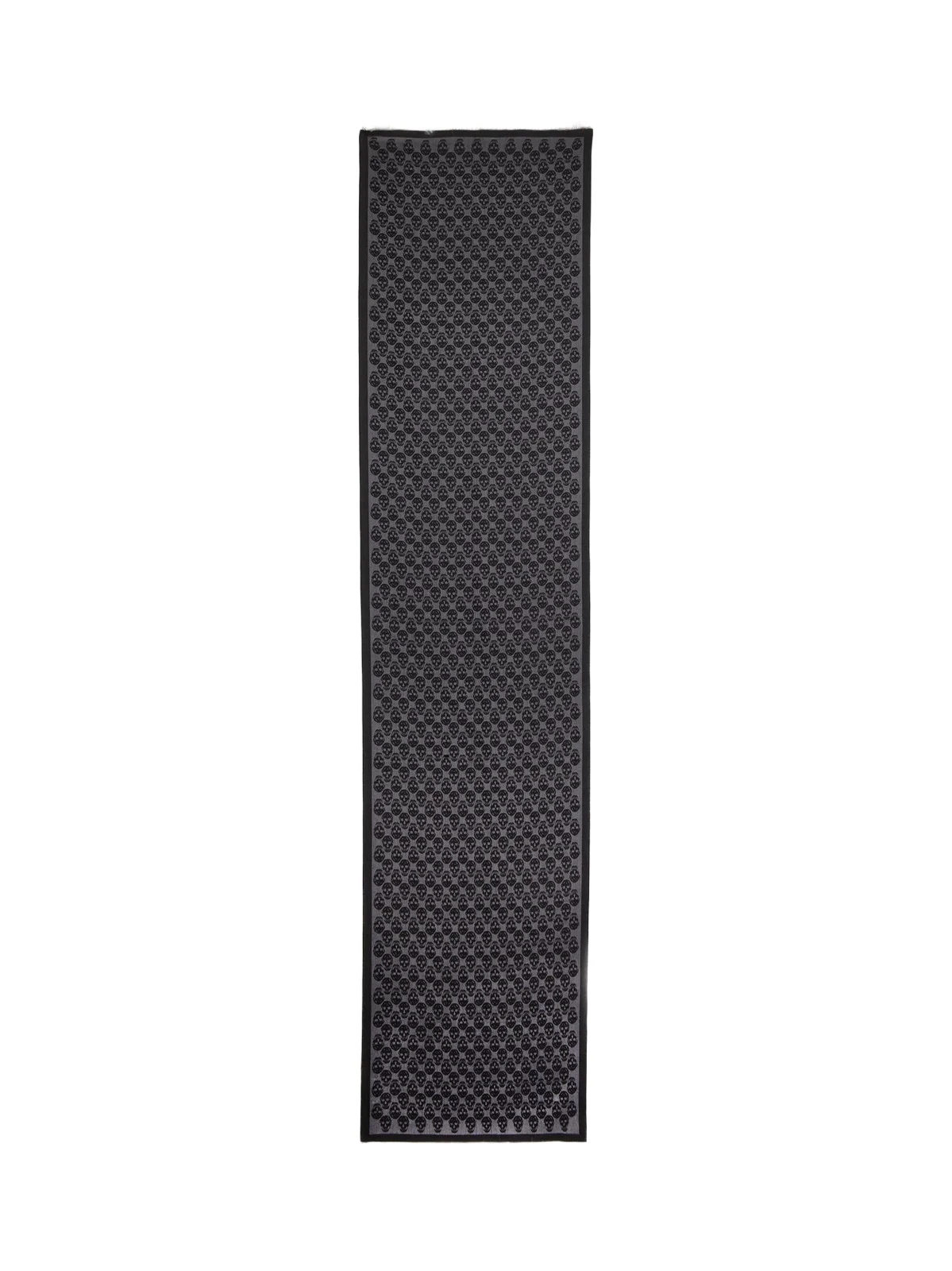 Alexander McQueenMen's Skull Monogram Wool-Blend Scarf$420
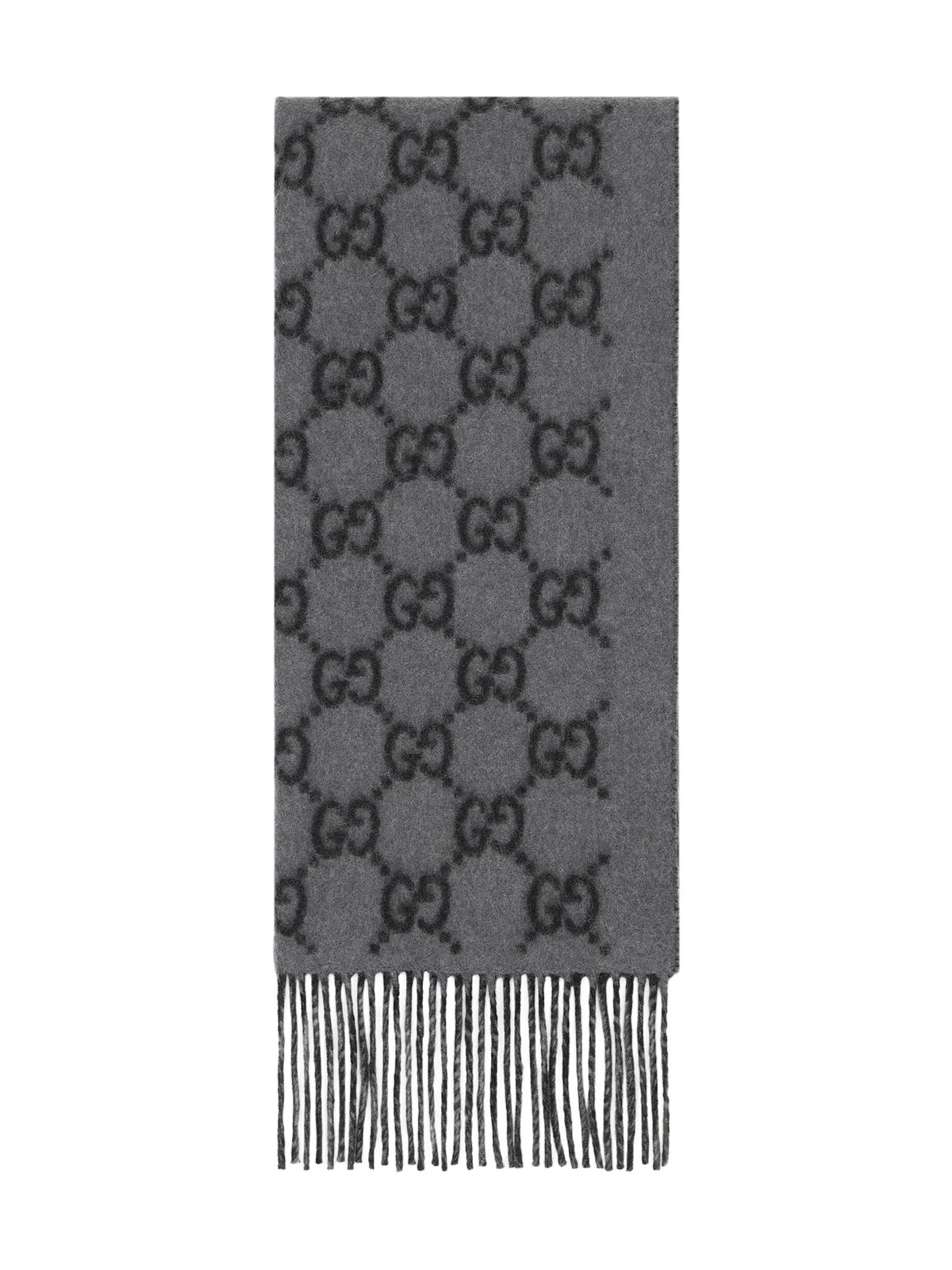 GucciGG Cashmere Scarf$1,020
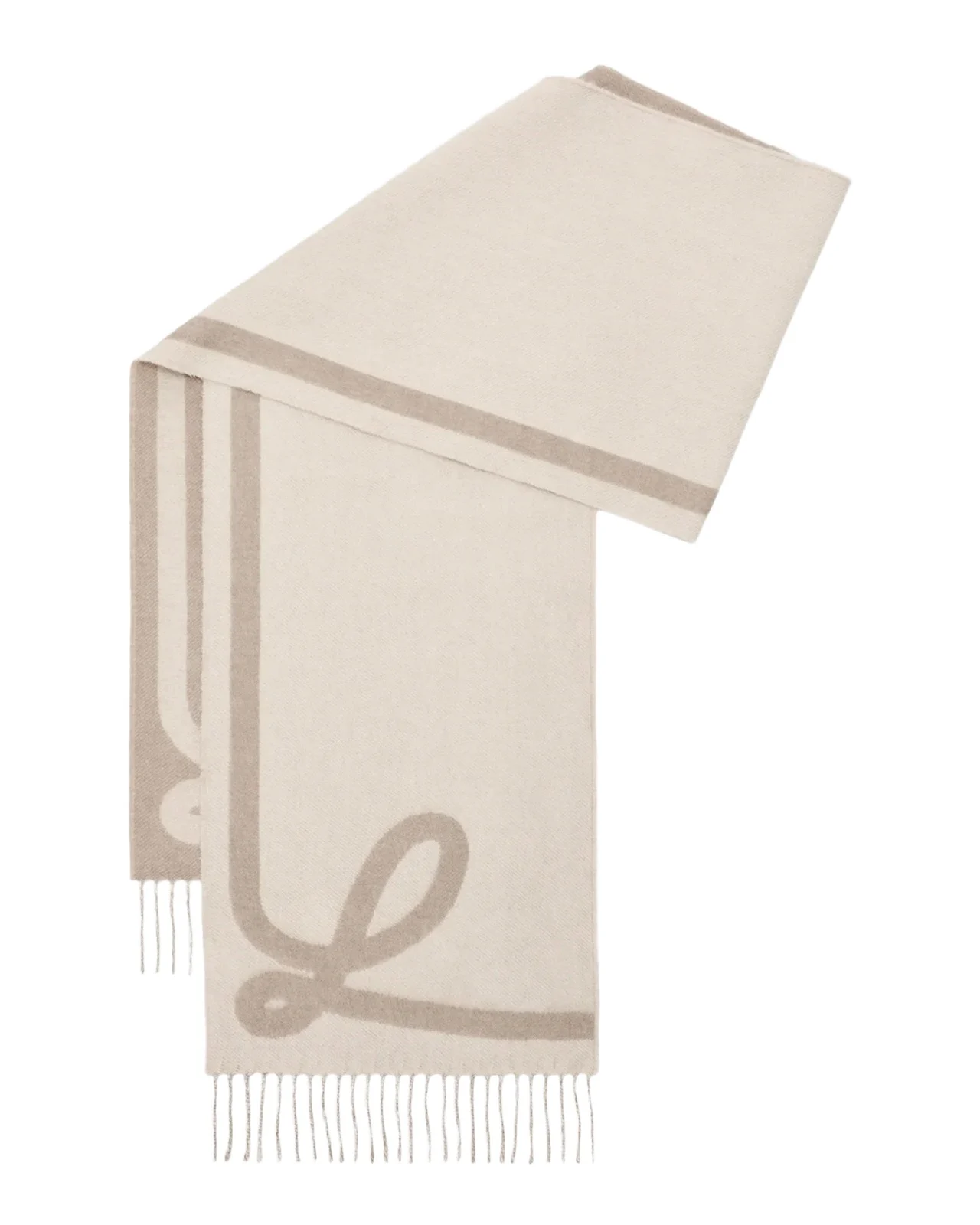 LoeweMen's Logo Wool-Cashmere Jacquard Scarf$550
How to wear a scarf with an overcoat, a suit and a puffer
With an overcoat: put the scarf under the collar so the lapels frame it, tie a Parisian knot or a single wrap, and button the coat over the ends. On a double-breasted coat, fold it narrow enough to fit the V between the lapels. Woven is right here; a chunky knit forces the collar open. Our guide to men's winter coats covers the coats.
With a suit: the scarf comes off indoors. Outside, with no coat, drape a silk and cashmere scarf over the jacket collar, or wrap it once and let the ends fall inside the open jacket.
With a puffer: the collar zips to the chin, so wrap a knit once and zip the collar over it, the warmest option, or zip first and wear the scarf outside, ends down the front, to show it off. A long fringed woven scarf bunches inside a stand collar; a snood avoids that.
Three mistakes to avoid: a chunky knit forced under a lapel, a Parisian knot tied in a scarf too short for it, and fringe hanging below the hem of a short jacket. See our men's puffer jacket guide, and our men's winter outfits for what to wear by temperature.
How to tie a scarf, men's edition: five ways from warmest to lightest
The lengths and warmth ratings are our stylists' estimates, not measurements; warmth here means how much of the neck each tie covers.
| Tie | Length you need | Warmth | Best with |
|---|---|---|---|
| Double wrap | About 70 in or more | Highest: two layers all round | A puffer, a collarless coat |
| Parisian knot | About 63 in or more | High: closed at the throat | An overcoat, under the lapels |
| Once around | About 60 in | Medium: the front partly open | An overcoat, a peacoat, knits |
| Cross and tuck | About 60 in | Medium-low: warms the chest more than the neck | A coat buttoned over it |
| The drape | Any | Lowest | A suit or blazer on a mild day |
1. The double wrap
Hold one end at chest height, wind the rest twice around the neck and let the ends hang or tuck them into a zipped jacket. It closes every gap, but the bulk will not fit under a tailored collar.
2. The Parisian knot
Fold the scarf in half, lay it around the neck and pull both ends through the loop. It is the neatest tie under lapels, but it doubles the thickness at the throat, so use it with woven cashmere and silk blends rather than a chunky knit.
3. Once around
Drape the scarf with one end longer, wrap that end once around the neck and let both fall in front. It shows off a fringe, and in our experience it is warm enough to about freezing, not much below.
4. The cross and tuck
Drape the scarf, cross the ends over the chest and button the coat over them. It stays put all day on a long walk, but leaves the neck itself mostly bare.
5. The drape
Hang the scarf with even ends. It is decoration more than insulation: right for a blazer at dinner, wrong for a wind off the river.
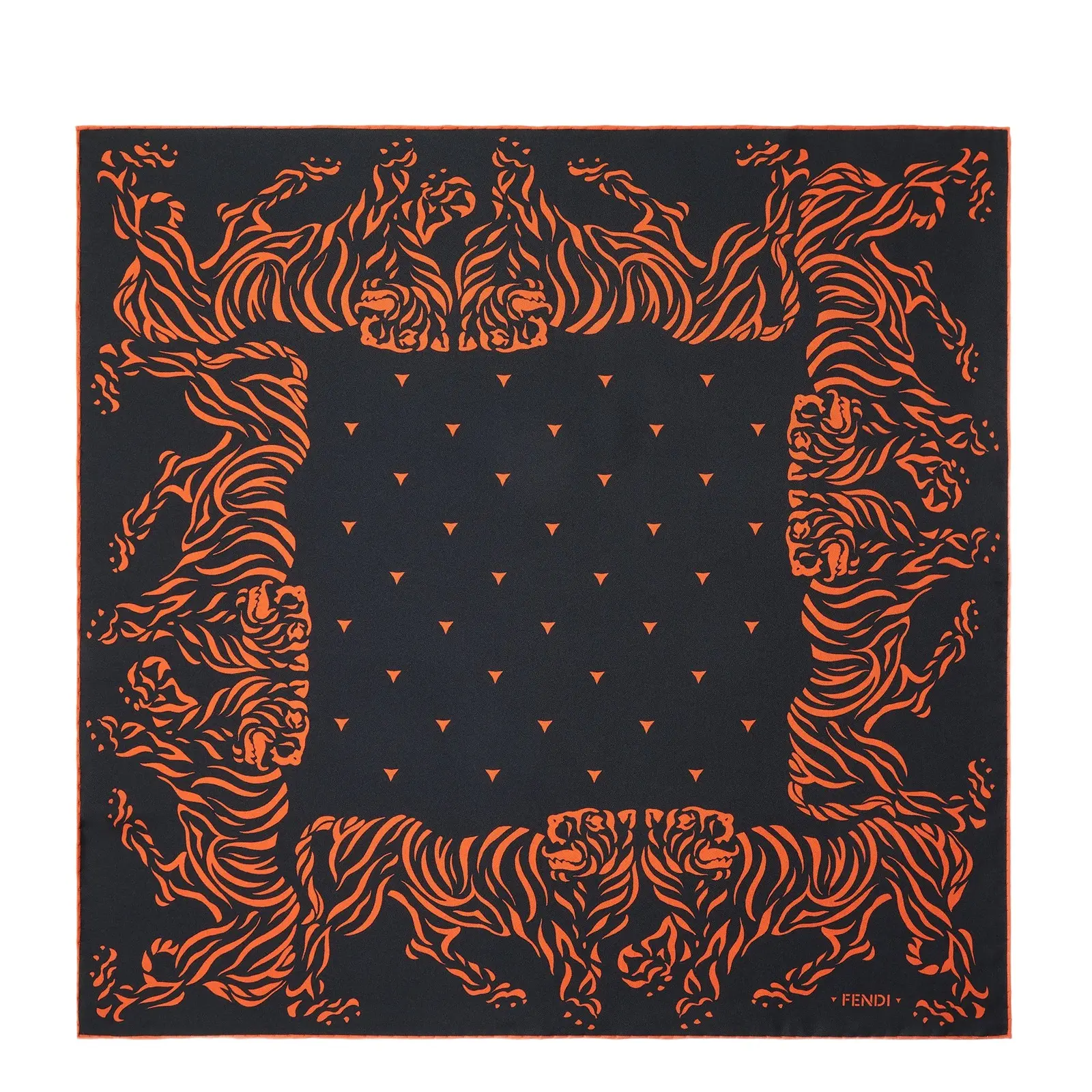
A square takes a neckerchief knot: fold it into a triangle, roll it from the long edge into a band and knot it at the side of the neck under an open collar. Casablanca's, Prada's and Zegna's squares are 52 to 55 cm by their listings; Zegna's is printed wool rather than silk, the one we would knot under an open collar in the cold. Dries Van Noten's foulard is larger, about 30 inches square.
Squares, bandeaus and neckerchiefs
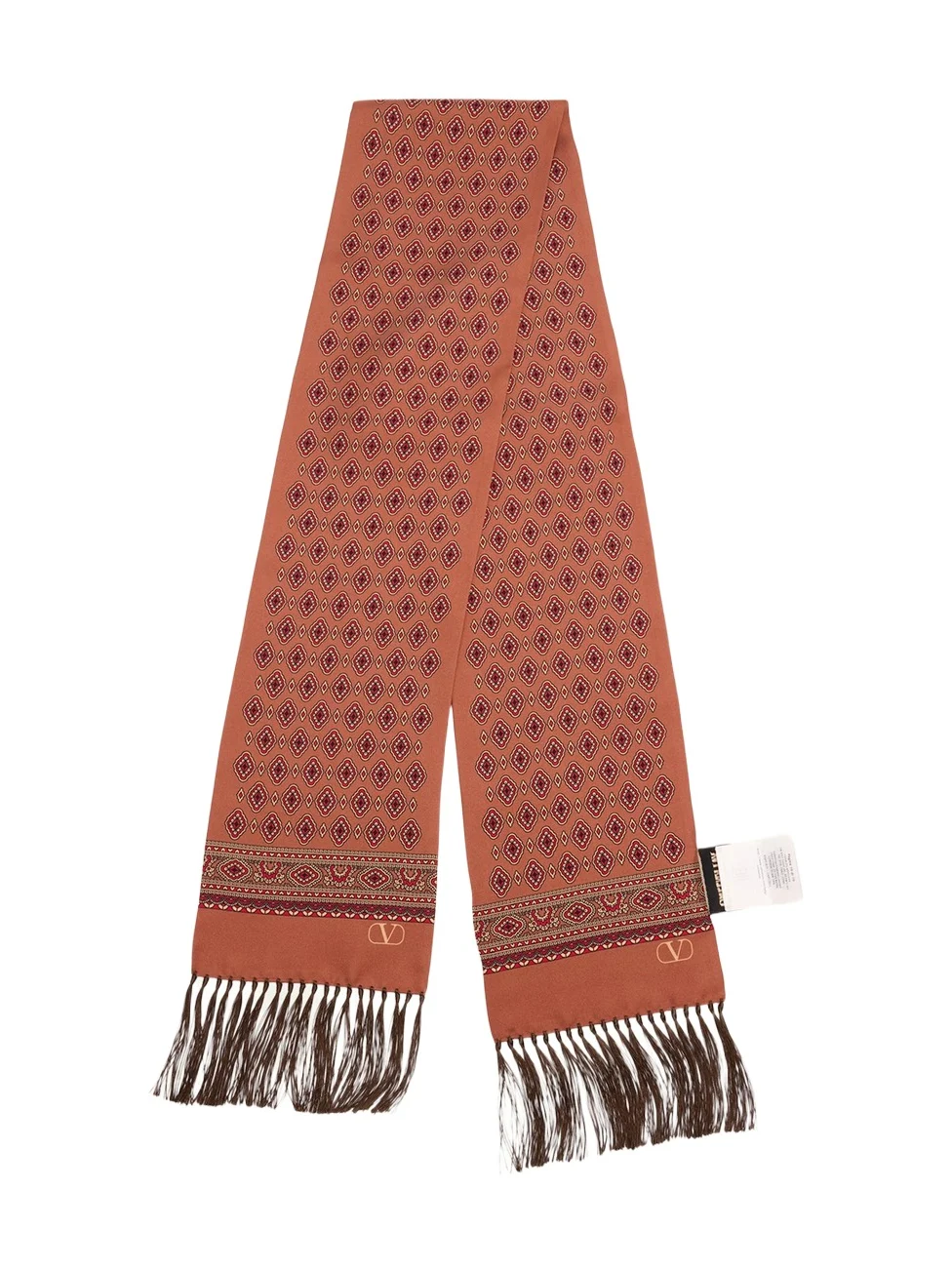 Valentino GaravaniMen's Silk Fringe Medallion Scarf$590
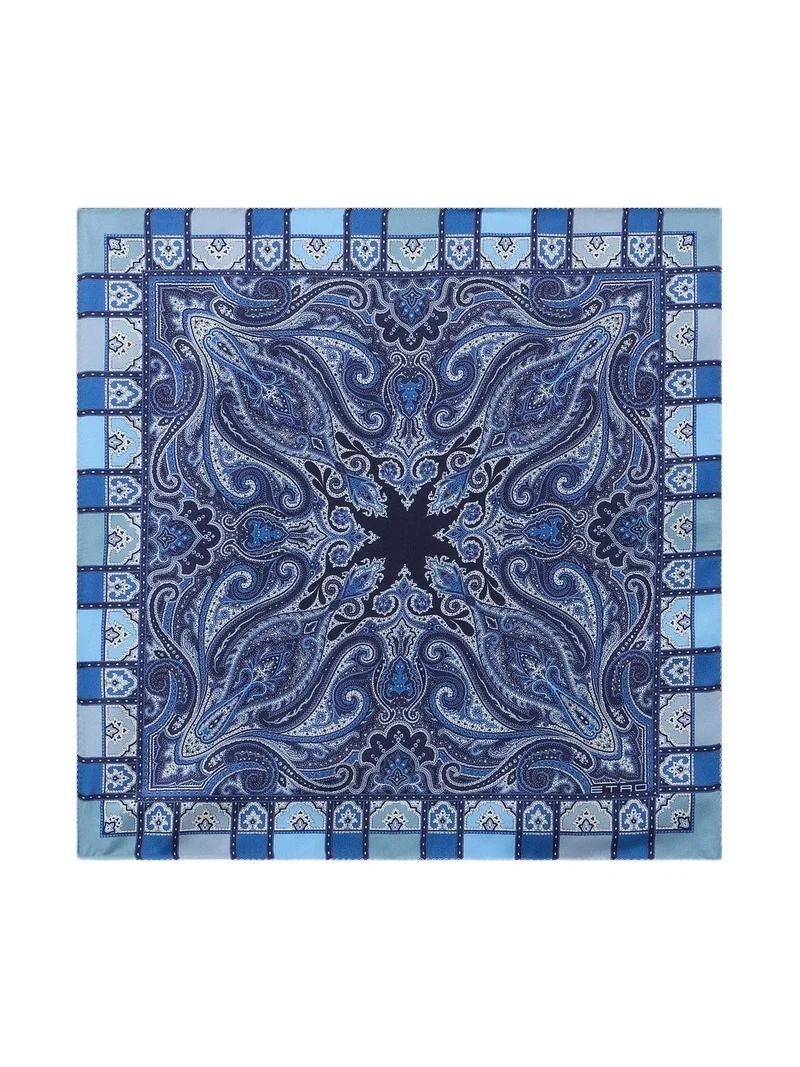 EtroMen's Paisley Silk Neck Scarf$195
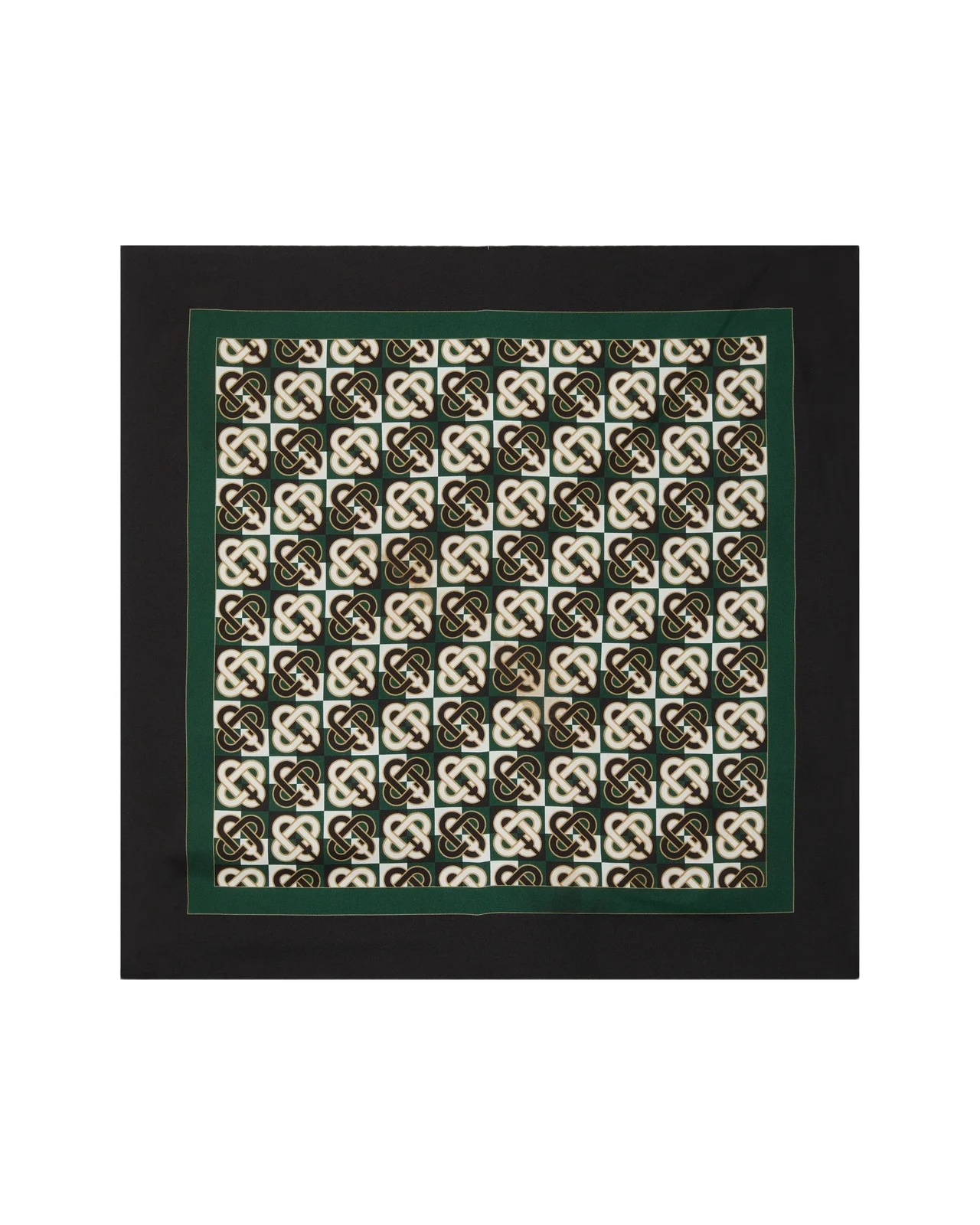 CasablancaGreen & Navy Check Monogram Medium Silk Scarf$215
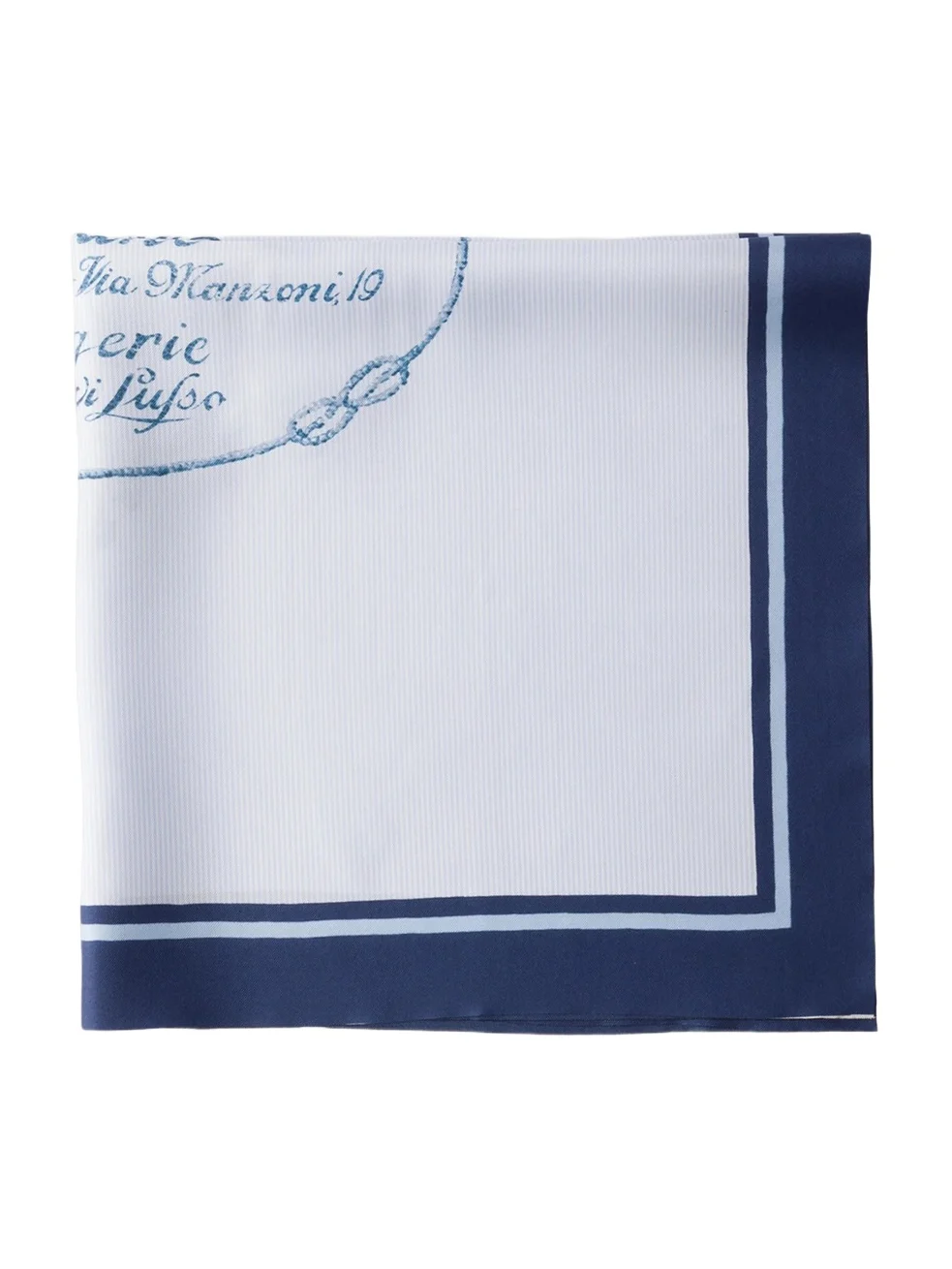 PradaMen's Printed Twill Scarf$360
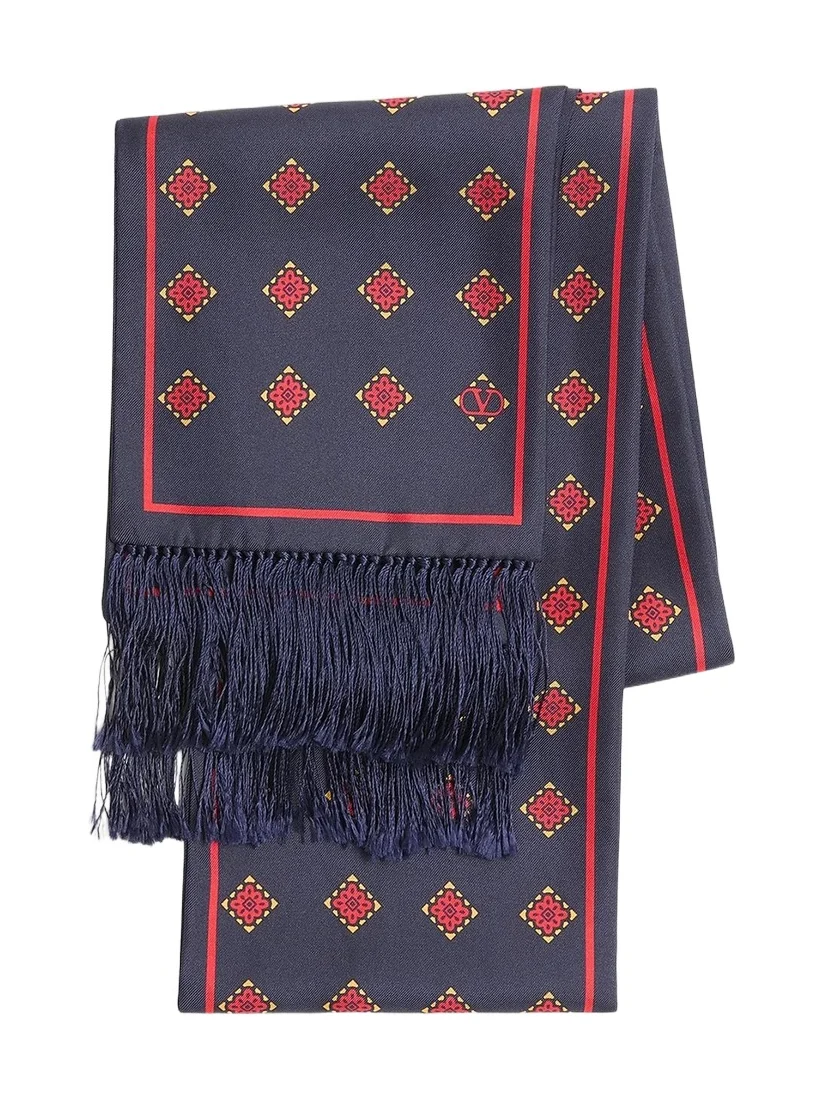 ValentinoMen's Opticool Silk Bandeau Scarf with Fringe - Navy Red$590
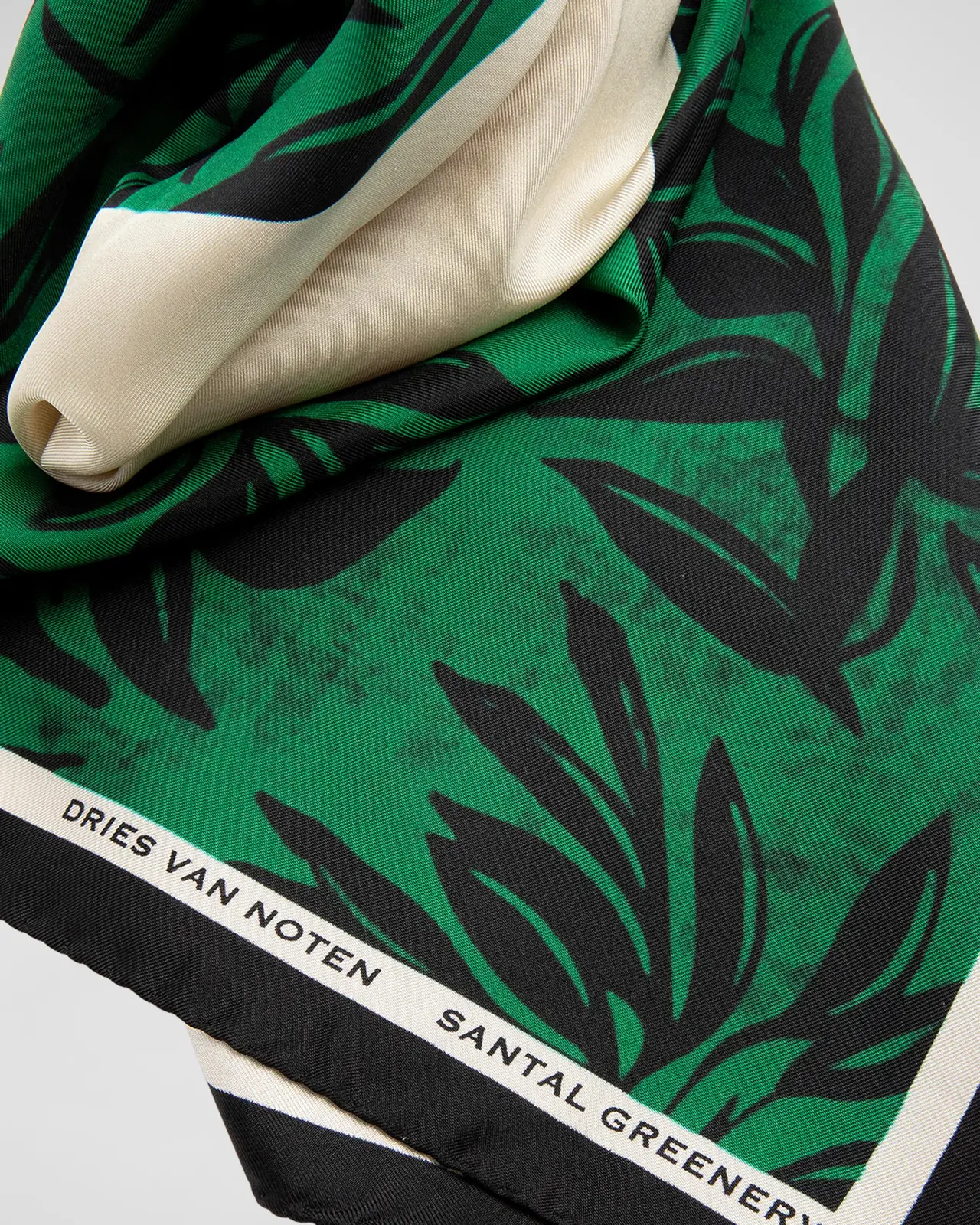 Dries Van NotenSantal Greenery Foulard$320
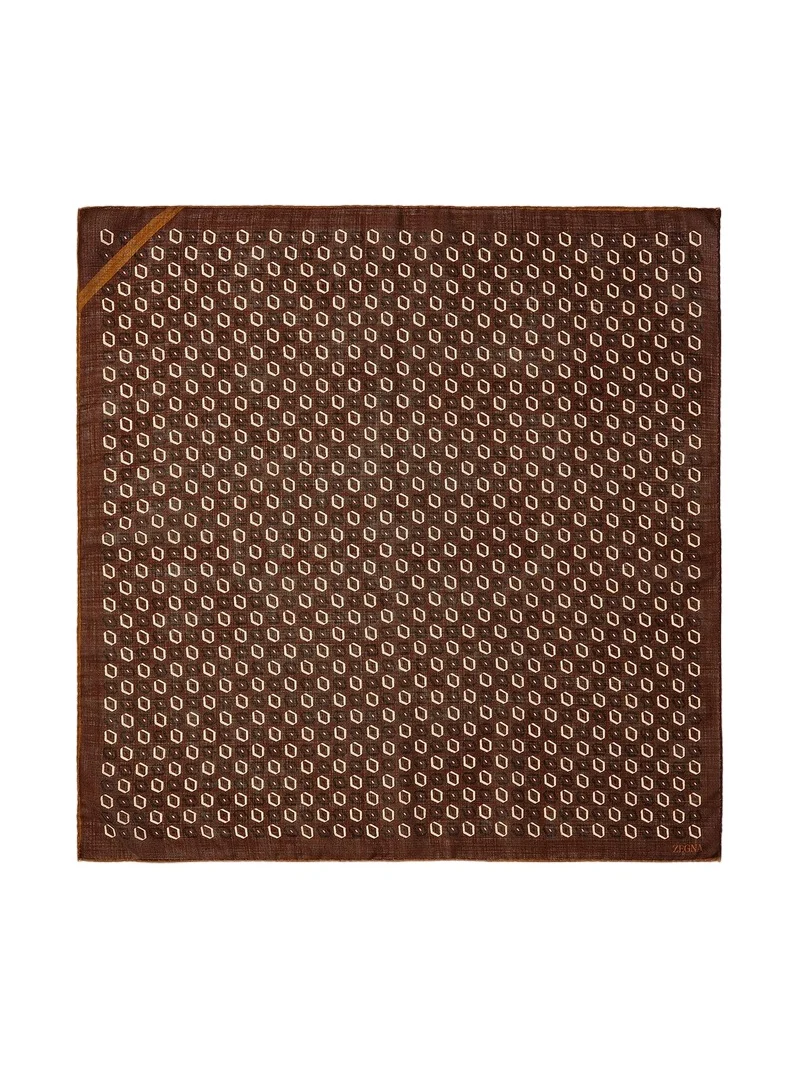 ZegnaMen's Wool Foulard$450
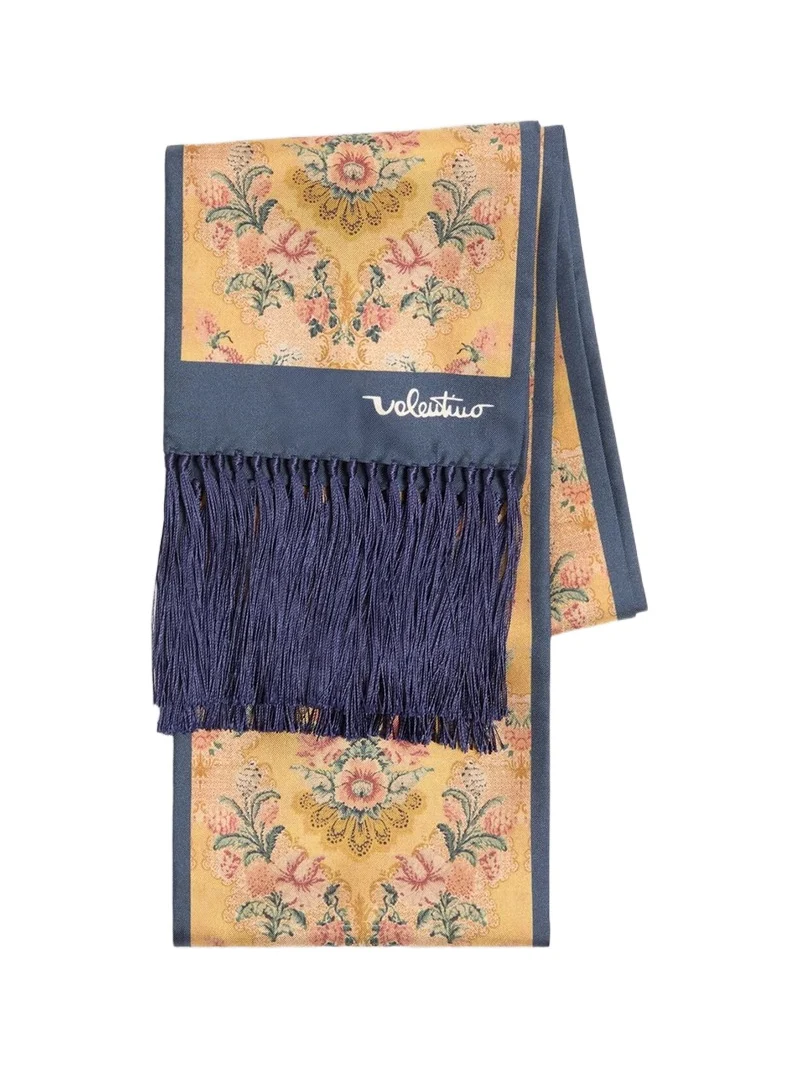 ValentinoMen's Après L'hiver Bandeau Scarf in Silk with Fringes - Multicolor$590
Matching a scarf to your coat
- Charcoal or gray coat: the easiest. Burgundy, navy, camel or a check all work.
- Navy coat: gray, ivory, burgundy or a navy and gray check; a tonal navy reads as one long line.
- Camel coat: charcoal, ivory, burgundy, bottle green or a deeper chocolate.
- Brown or olive coat: cream, oatmeal, gray, burgundy or bottle green.
- Black coat: gray, ivory, oxblood, or black and white like Balenciaga's.
- Black or navy puffer: color is the point: oatmeal, ecru, a gray or green check or one bright knit.
Not sure which of your coats a scarf suits? Ask our AI stylist to pair one with a coat you own. The full range is in our men's scarves and wraps shop, next to men's coats and quilted jackets.
Choosing a scarf as a gift for him
A scarf needs no size, but it needs the right coat: woven cashmere for an overcoat, a knit for a puffer. If you cannot see his coat, match the suit or sweater he wears most. If he already owns a scarf he likes, measure it and buy the same length. Read the composition line, so you know whether "cashmere" means the whole scarf or 15% of it, and give a plain scarf to the man who wears no logos.
Silk squares, logo wools and simple knits start under $500; most cashmere, silk blends and the better wool scarves fall between about $500 and $1,000; several Brunello Cucinelli scarves and Gabriela Hearst's knit sit above. Hanukkah 2026 begins at sundown on Friday, December 4, and ends at nightfall on Saturday, December 12, according to Hebcal, so plan ahead for a first-night gift. For more ideas, see our gifts for men under $500, the holiday gift guide for him and our stocking stuffers for men.
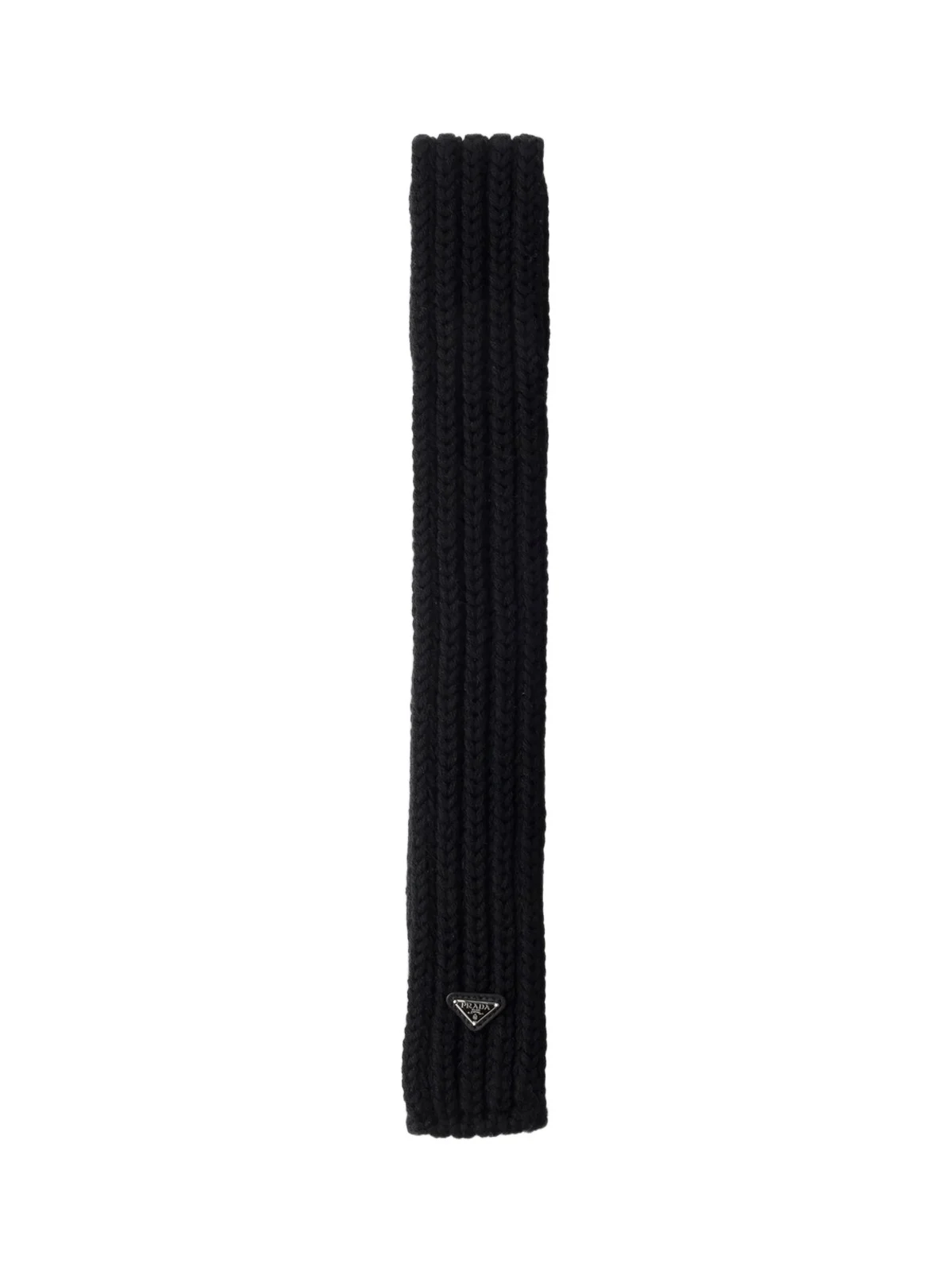
Scarves under $500 to give

Care: pilling, washing, moths and storage
- Pilling: the Woolmark Company says pilling comes from rubbing during wear; pills come off by hand, with a gently used comb or with a battery-operated de-piller. On a scarf, check where it crosses the coat collar and where a shoulder strap sits. In our experience good cashmere pills most in its first weeks, then settles.
- Washing: follow the label, because houses disagree. Brunello Cucinelli's listings allow hand washing, Zegna's say do not wash and dry clean professionally, and Burberry's recommend professional cleaning. Dry a hand-washed scarf flat.
- Moths: the University of California's pest guide notes that clothes moths feed on wool and are less likely to feed on clean fabric than on heavily soiled fabric. It recommends airtight containers for clean items and calls cedar's effectiveness debatable.
- Storage: fold knits rather than hanging them on a hook, which stretches them, and keep brushed mohair away from smooth cashmere so it does not shed onto it.
How we chose
We chose from men's listings only, from houses on Vêtir's luxury list, reading every scarf's fiber line and taking each size from its listing. We checked every photograph, because listed colors can be wrong: one "beige" cashmere scarf photographed as hot pink and was left out. We favored makers that state fiber and dimensions, kept to three scarves per house in any edit, and ran from silk squares a little under $200 to wide cashmere near $2,000.
Frequently asked questions
What is the best scarf for a man?
Our stylists start with a woven cashmere scarf in charcoal, navy or camel, by their rule of thumb about 65 to 70 inches long and 11 to 14 inches wide. It ties under an overcoat's lapels, works with a suit and lasts for years. Add a knit if you wear a puffer more than a tailored coat.
How long should a men's scarf be?
Our stylists' rule of thumb is about 63 to 66 inches for a single wrap or a Parisian knot on most men, and 70 inches or more for a double wrap or a man over six foot two.
How do you wear a scarf with a suit?
Drape a light silk and cashmere scarf over the jacket collar, or wrap it once with the ends inside the open jacket. With a tie, keep the scarf's knot loose and above it, and take the scarf off indoors.
Is cashmere warmer than wool for a scarf?
For the same bulk, our stylists find cashmere warmer and much softer. Wool is tougher, copes better with straps and seat belts and costs less. Brushed alpaca and mohair feel warmest of all.
What color scarf goes with a navy coat?
Gray, ivory or burgundy, or a check that combines navy and gray. A navy scarf in a different texture, a rib against a smooth coat, looks tonal without looking matched.
Why is my new cashmere scarf pilling?
Rubbing causes it, usually where the scarf meets a coat collar or a bag strap. Remove pills by hand, with a cashmere comb or with a de-piller; in our experience it slows after the first few weeks.