Men's Tuxedos: What Black Tie Requires and the Pieces Worth Buying
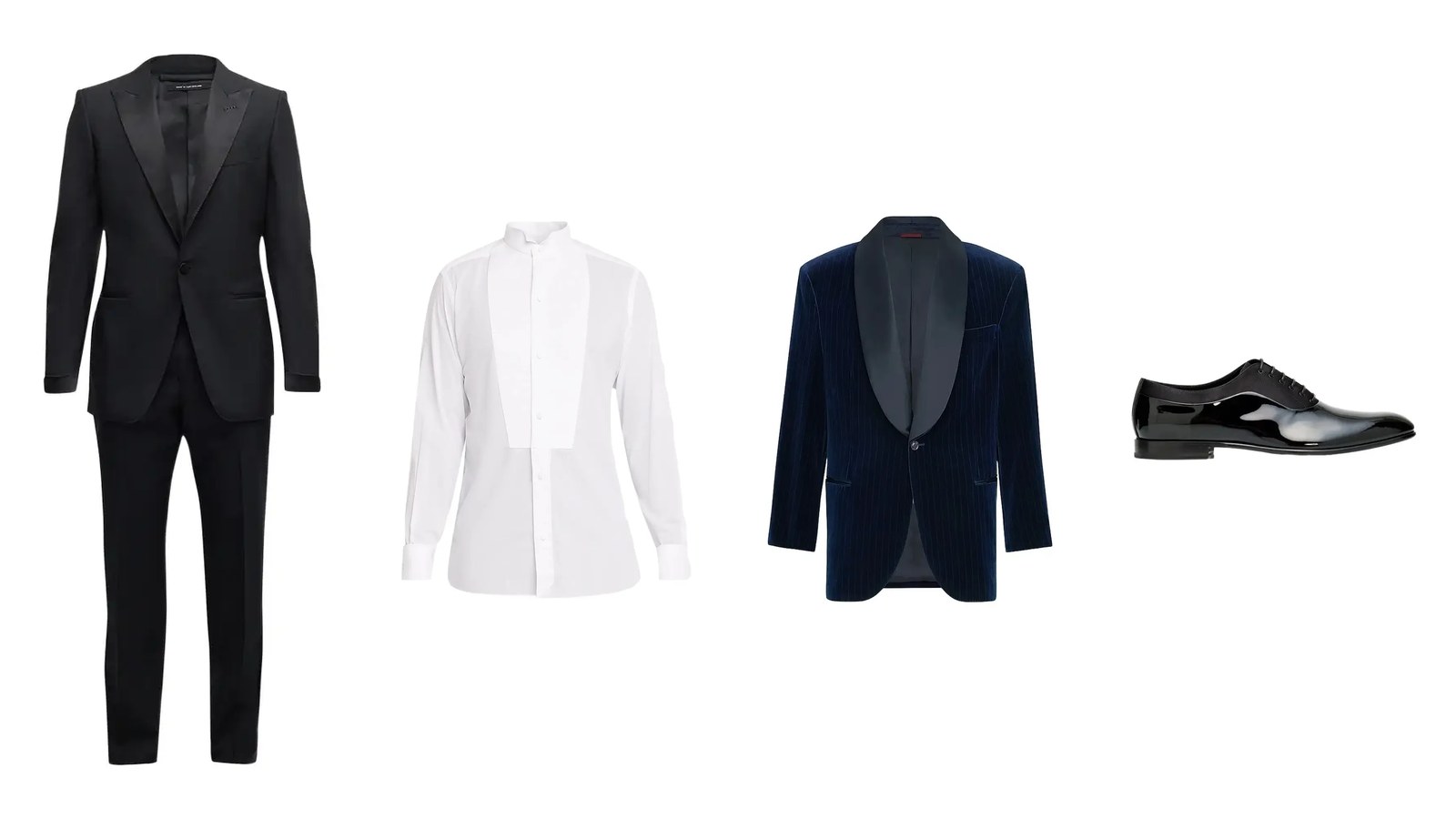
A men's tuxedo, worn to the rule, is a black jacket with silk-faced peak or shawl lapels, matching trousers with a silk stripe down each leg, a white dress shirt, a black bow tie and black patent shoes. That is the core of what "black tie" on an invitation asks for, by the Emily Post Institute's list in the US and Debrett's in Britain. Midnight blue, which the Savile Row tailor Henry Poole names alongside black, is the accepted alternative color. Double-breasted cuts, velvet and jacquard dinner jackets, wing collars and cummerbunds are variations on that frame, and each has a right occasion.
Below: the two rule books in their own words, tuxedo vs suit, reading a listing, lapels and color, velvet and jacquard, then shirt, bow tie, shoes, coat and fit, with pieces to shop in each section.
What black tie attire for men actually requires
Most arguments about black tie start when one guest has read the American rules and another the British ones. The Emily Post Institute's black-tie list (archived copy, August 2026) is the American reference; Debrett's guide to events and dress codes is the British one. Here is what each asks of men, quoted directly.
| Element | Emily Post Institute | Debrett's |
|---|---|---|
| Jacket | "Black tuxedo jacket and matching trousers" | "A black wool (barathea) or ultrafine herringbone dinner jacket, single-breasted or double-breasted with no vents, silk peaked lapels (or a shawl collar) and covered buttons" |
| Trousers | Matching the jacket, with "Dressy braces to ensure a good fit (optional)" | "black with a natural taper, and a single row of braid down each outside leg" |
| Shirt | "Formal (piqué or pleated front) white shirt" with "Shirt studs and cuff links" | "A white evening shirt, with a marcella collar, bib and double cuffs, with a turn-down collar (not a wing-collar)," with cufflinks and studs |
| Neckwear | "Black bow tie (silk, satin, or twill)" | "A black hand-tied bow tie (avoid ones which are pre-tied)" |
| Waist | "Black cummerbund to match tie, or a vest" | Cummerbunds "are not considered essential but may be worn"; a waistcoat and cummerbund "are never worn together" |
| Shoes | "Black patent shoes and black dress socks" | "Black highly polished or patent lace-up shoes and black silk socks" |
| Finishing | "No gloves" | "A white handkerchief in the left breast pocket is a classic detail" |
| Warm weather | In summer, in the tropics or on a cruise, "White dinner jacket, black tuxedo trousers plus other black tie wardrobe" | White dinner jackets "were traditionally worn in hot climates but not usually in Britain, even in the summer" |
Debrett's is stricter on vents and the collar and looser on the waist and the shoes. A man who satisfies both wears a jacket with no vents (in our experience, two side vents are the usual ready-to-wear compromise), a white turndown-collar shirt with a piqué or pleated bib and double cuffs, a black bow tie he tied himself, a cummerbund or a waistcoat but not both, and black patent lace-ups with black silk socks.
Invitations loosen that frame. By Emily Post's definition, at black tie optional "Men are requested to wear a tuxedo, but can opt for a dark suit," and its creative black tie allows "A black shirt" or "A matching colored or patterned bow tie and cummerbund." Debrett's calls a long black tie worn with a dinner jacket "Hollywood black tie" and says that at most formal private black-tie events in Britain it would look unsuitable. Our men's holiday party guide covers every December dress code, and how to dress for black-tie events covers the evening for two.
Tuxedo vs suit: what makes a tuxedo a tuxedo
The difference is in the trim, not the color. A tuxedo carries silk on the lapels and down the outer seam of each trouser leg, and keeps its fastenings quiet: covered buttons, hip pockets without flaps, and trousers traditionally cut for braces or side adjusters rather than a belt. A black suit has none of that, which is why it answers a black-tie-optional invitation and not a black-tie one. The British say dinner jacket, or DJ, for the same thing; Debrett's notes that black tie is described "in America, as 'tuxedos'" and that it "should be described as a dinner jacket, not a dinner suit."
The jacket began as a relaxation. By Henry Poole & Co's own account, the Prince of Wales asked the house in 1865 for a short coat to wear at informal dinners at Sandringham, and it was cut in what Poole calls celestial blue; the house says neither its ledgers, which go back to 1846, nor any other tailor's records show an earlier one. The American name most likely comes from Tuxedo Park in New York State; the Emily Post Institute's history (archived copy, August 2026) notes that Emily Post's father was its architect.
Is a tuxedo sold as a suit or as separates?
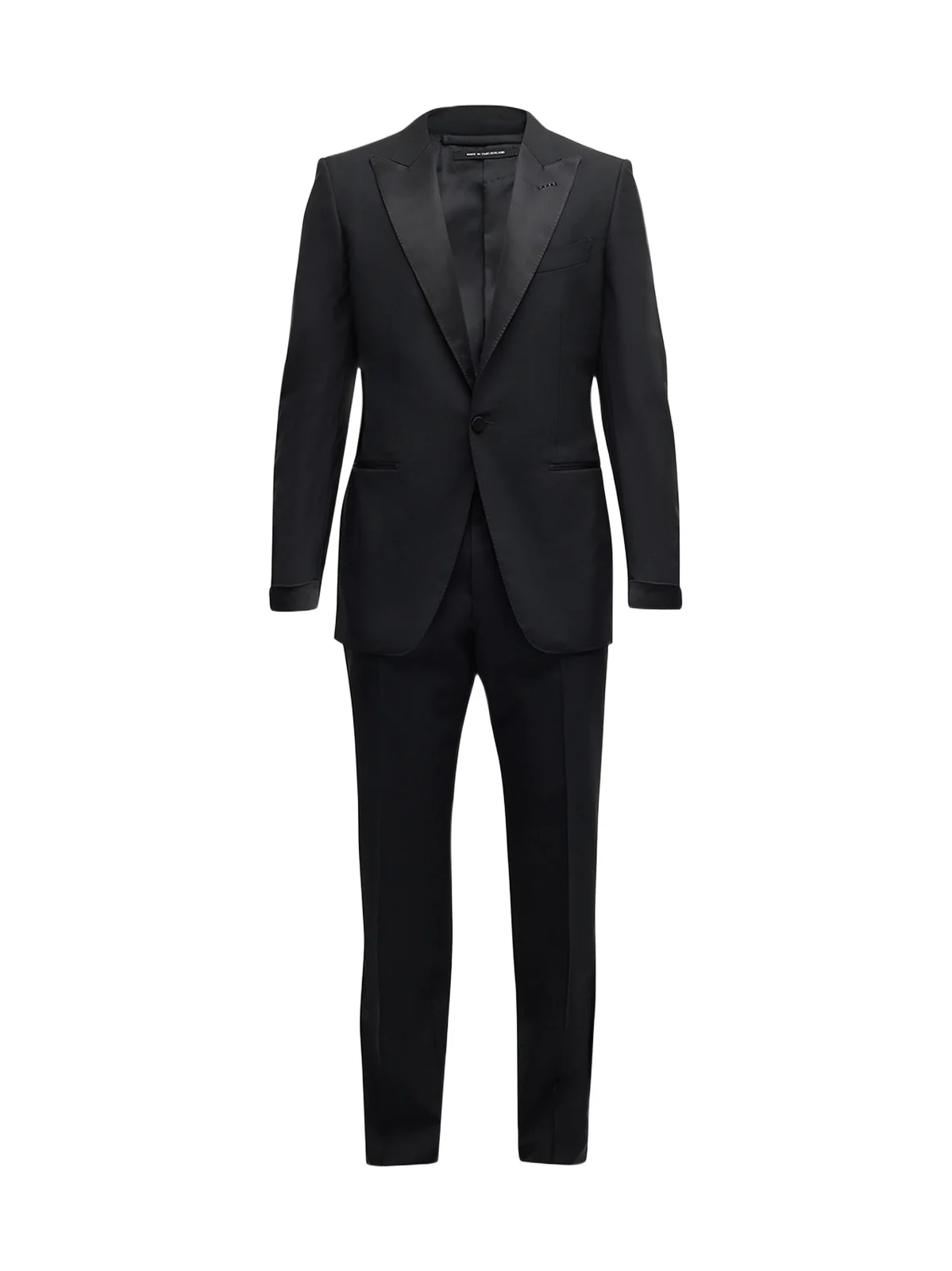
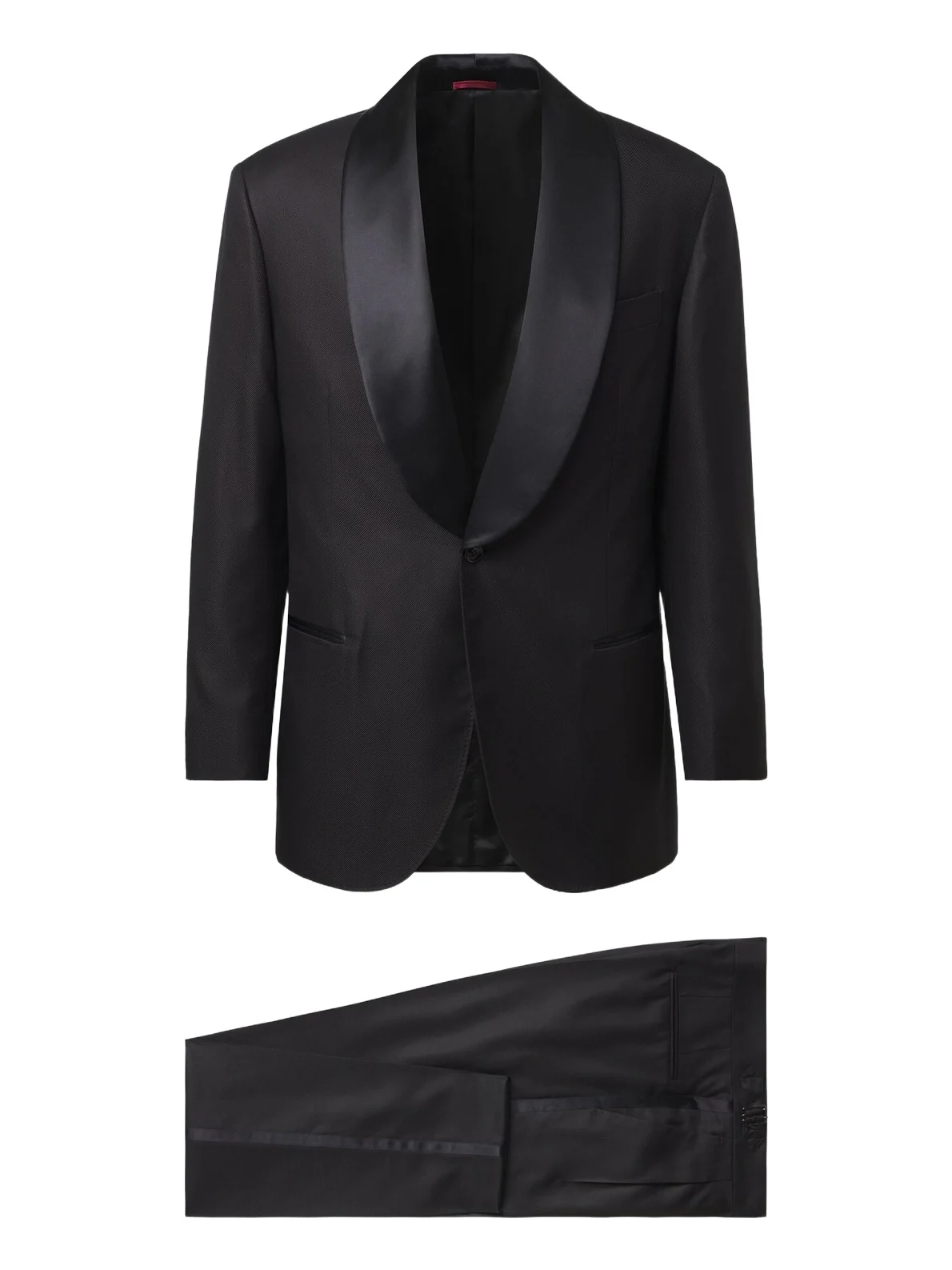
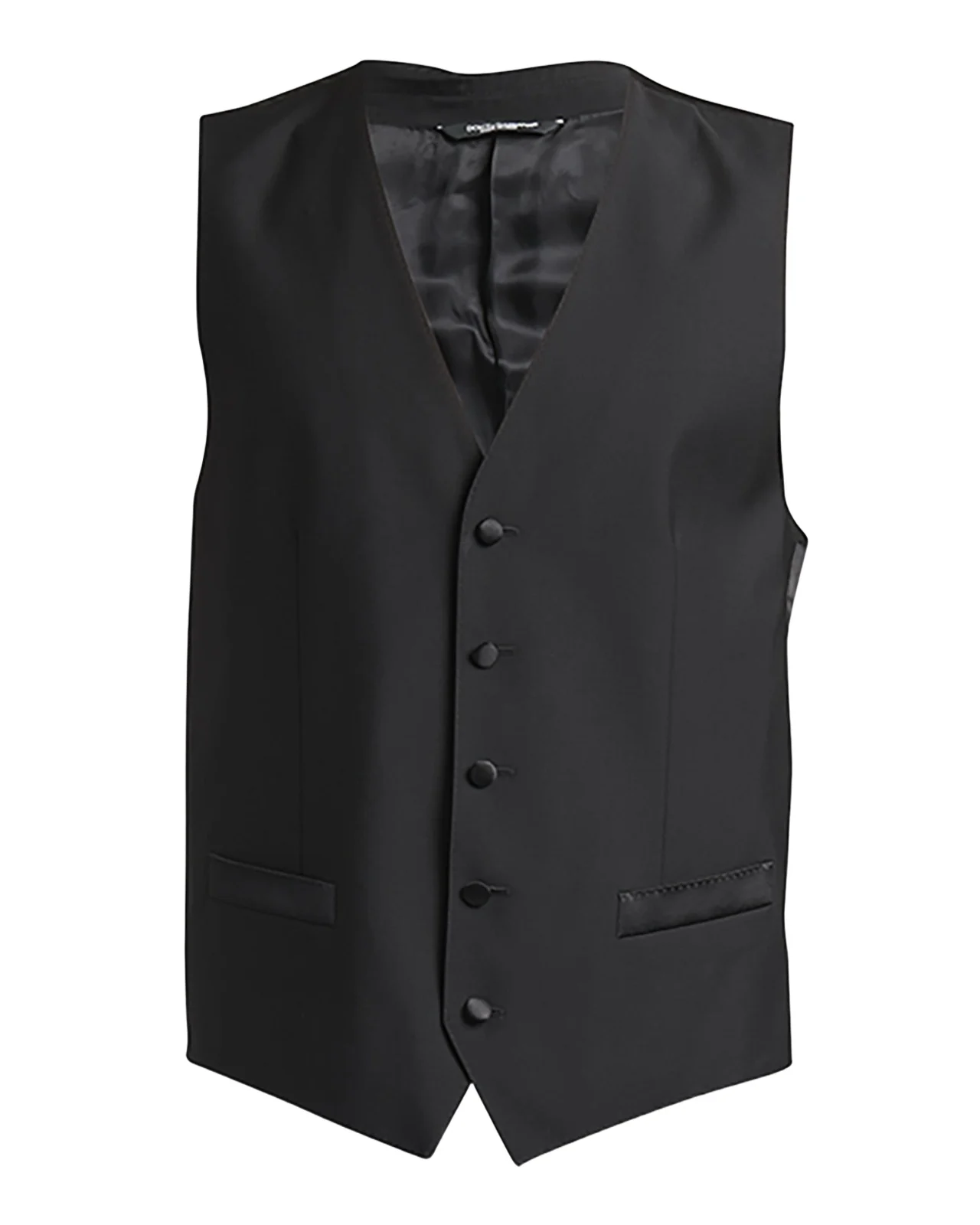
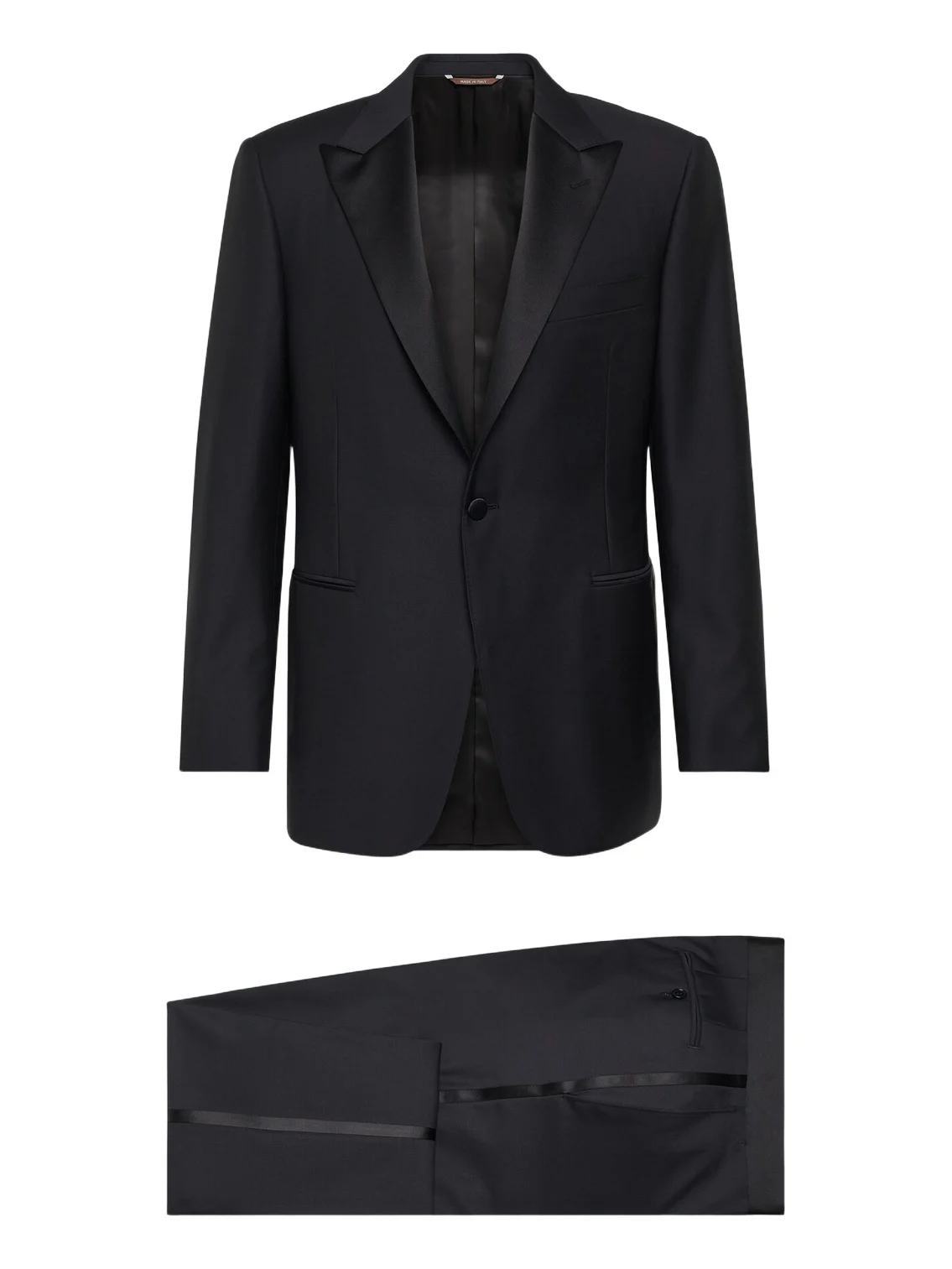
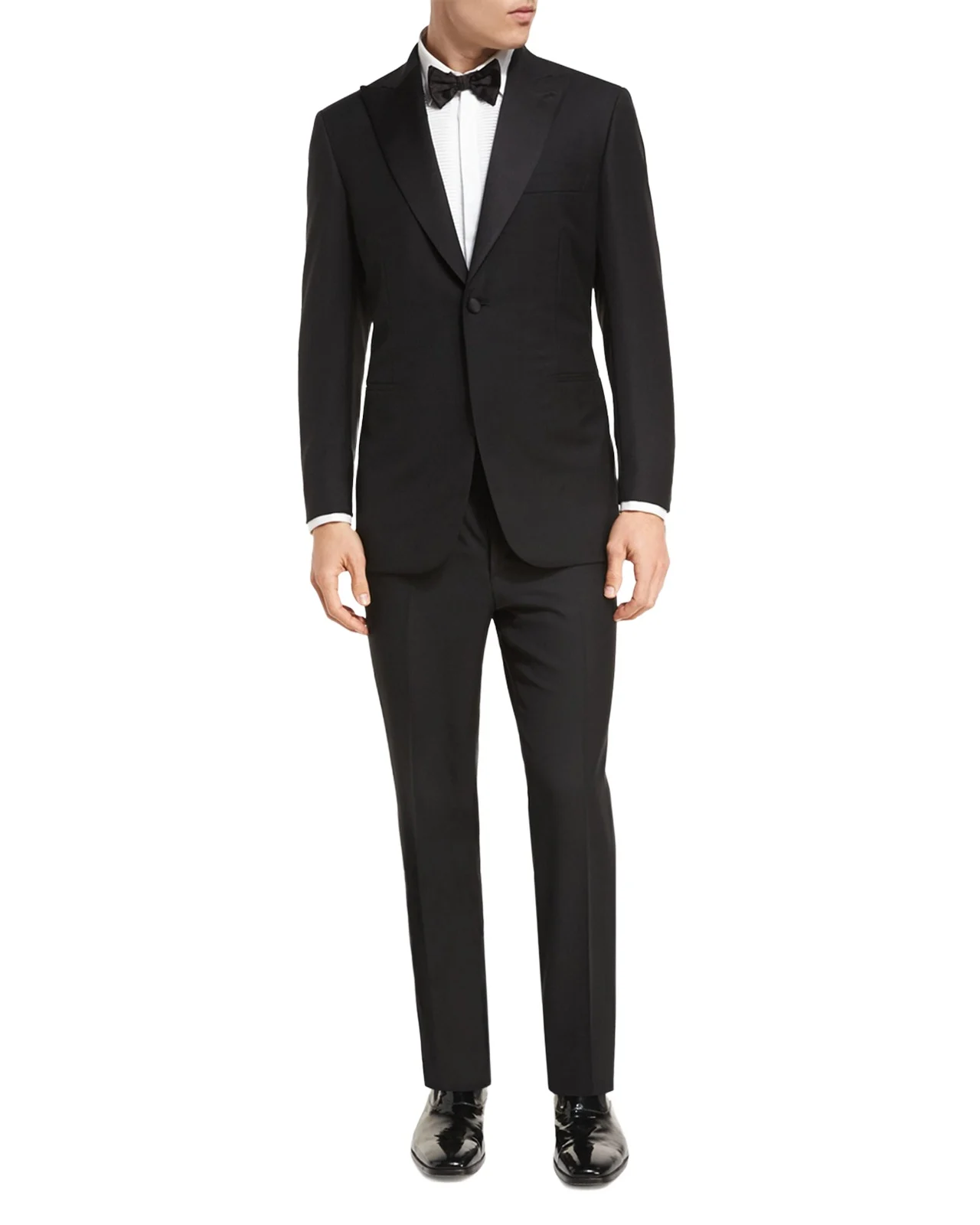
Both, and the listing tells you which. Every tuxedo in the module below arrives as jacket and trousers together: the listings for Tom Ford's satin-lapel tuxedo and for both of Brioni's describe the trousers, Canali's wool tuxedo and Brunello Cucinelli's silk one are each listed as a two-piece set, and Dolce & Gabbana's Martini adds a matching waistcoat. A listing titled "tuxedo jacket", "dinner jacket" or "evening jacket" is usually the jacket alone: Alexander McQueen's double-breasted evening jacket, for one, tells you to "Complete the look with the matching trousers." Saint Laurent, Tom Ford and Brunello Cucinelli also sell tuxedo trousers on their own.
A set comes in one size for both pieces, cut on the house's standard drop between chest and waist (Brunello Cucinelli even lists "Drop 7" on its velvet tuxedo jacket). If your waist sits well off that drop, buy separates or plan on altering the trousers; both Brioni listings leave the trouser hem unfinished in any case. Browse every cut in our men's tuxedos.
The best tuxedos for men, sold as jacket and trousers

How to read a men's tuxedo listing before you buy
Photographs flatter every black jacket equally, and a listing's words do not always match them, so read both; these are the lines our stylists read first.
- Pockets. Look for "jetted" or "besom" hip pockets, slits with no flap, as on Tom Ford's satin-lapel tuxedo and Brioni's two-piece. Flaps and patch pockets come from day tailoring.
- Vents. Debrett's asks for none. Tom Ford's satin-lapel tuxedo, Brioni's two-piece and Brunello Cucinelli's silk tuxedo list double vents, the usual compromise. On a black-tie tuxedo we would pass on a single center vent; on a velvet or jacquard party jacket it matters less.
- The waistband. Brunello Cucinelli lists adjustable tabs at the waist of its silk tuxedo and waist tabs on its navy tuxedo trousers, and Tom Ford's Shelton velvet trousers have waistband adjusters. Brioni's solid wool tuxedo lists belt loops; wear braces anyway, and ask your tailor to remove the loops and sew in brace buttons.
- The cloth. Debrett's asks for black wool, barathea or ultrafine herringbone. Tom Ford describes the Japanese grain de poudre of its evening jacket as finely grainy with a matte finish, which is what you want behind shiny lapels. Brunello Cucinelli's is silk throughout, in our view a choice for a host or a groom more than for the rule book, and Dolce & Gabbana's Martini lists wool, silk and polyester.
- The size line. Listings differ on how they convert European sizes: Tom Ford's grain de poudre jacket gives 52 EU as a US 42, while Jil Sander's evening jacket gives 52 EU as a US 41. Check the house's own size chart before you order.
Shawl, peak or notch, single or double-breasted
Debrett's names two lapels, "silk peaked lapels (or a shawl collar)," so the notch lapel, borrowed from the business suit, is the one to skip on a tuxedo you plan to keep. The two differ in origin. The Black Tie Guide, a specialist reference published by Gentleman's Gazette, defines the peaked lapel as "derived from the tailcoat," and for that reason the more formal of the two, and the shawl collar as "influenced by the smoking jacket."
In our experience the choice is better made on your build than on formality. A peak lapel's points draw the eye up and out to the shoulders, which helps a slighter frame. A shawl collar makes one unbroken curve from collar to button, which suits a broad chest and looks best with the jacket closed. For weddings and galas, choose the peak; for dinners and parties at home, the shawl.
Debrett's accepts a double-breasted dinner jacket on the same terms as a single-breasted one: no vents, peaked lapels or a shawl collar, covered buttons. It is cut to be worn buttoned, so it needs no cummerbund or waistcoat; the drawback is that most men unbutton to sit, and a double-breasted jacket hangs less neatly open. Saint Laurent's six-button grain de poudre jacket and McQueen's wool-mohair version are both double-breasted, but with flapped and patch pockets respectively, so we would wear either to a party rather than a gala.
Dinner jackets and tuxedo trousers sold separately
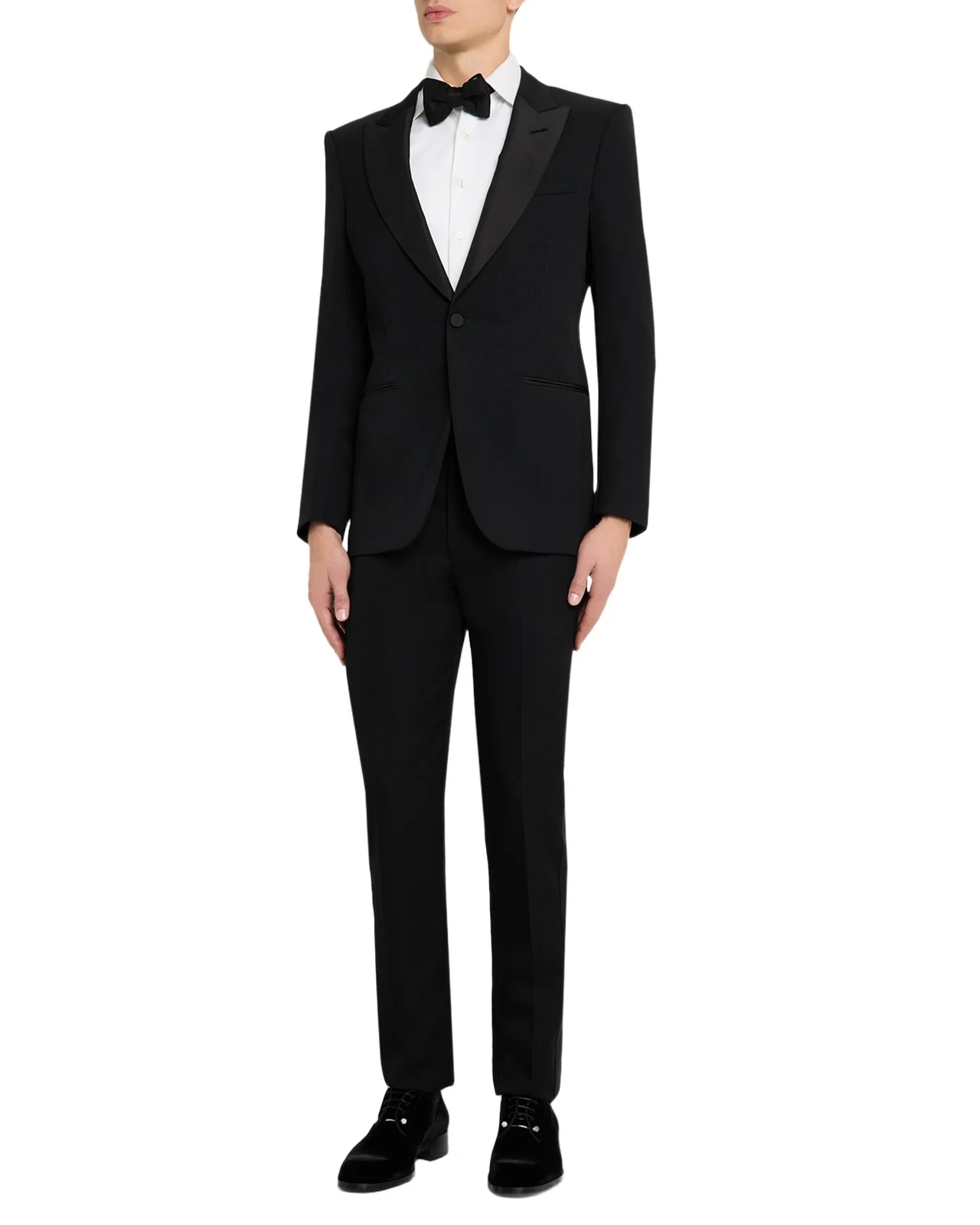 Tom FordMen's Wool Grain de Poudre Evening Jacket$5,690
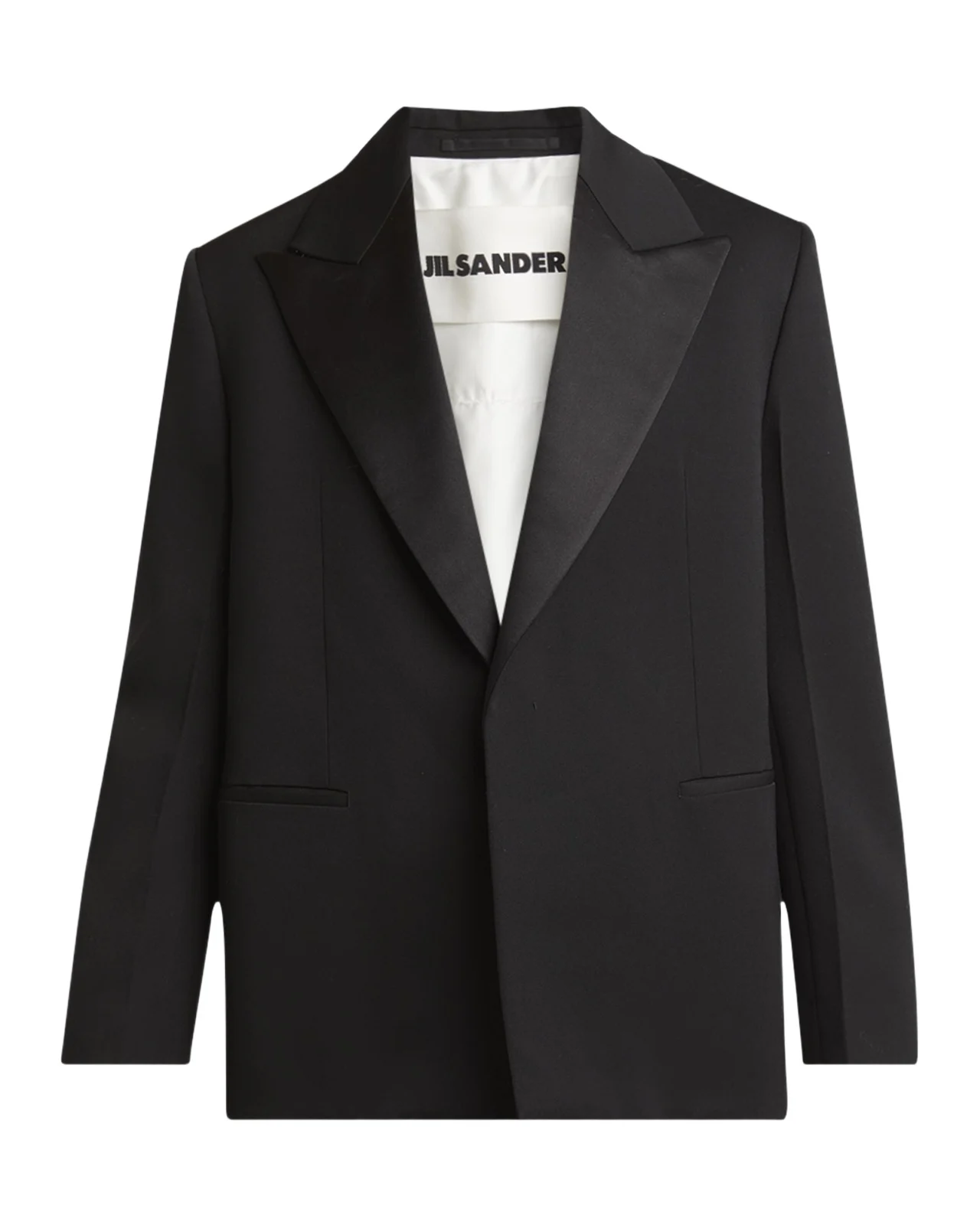 Jil SanderMen's Satin Peak Lapel Evening Jacket$4,990
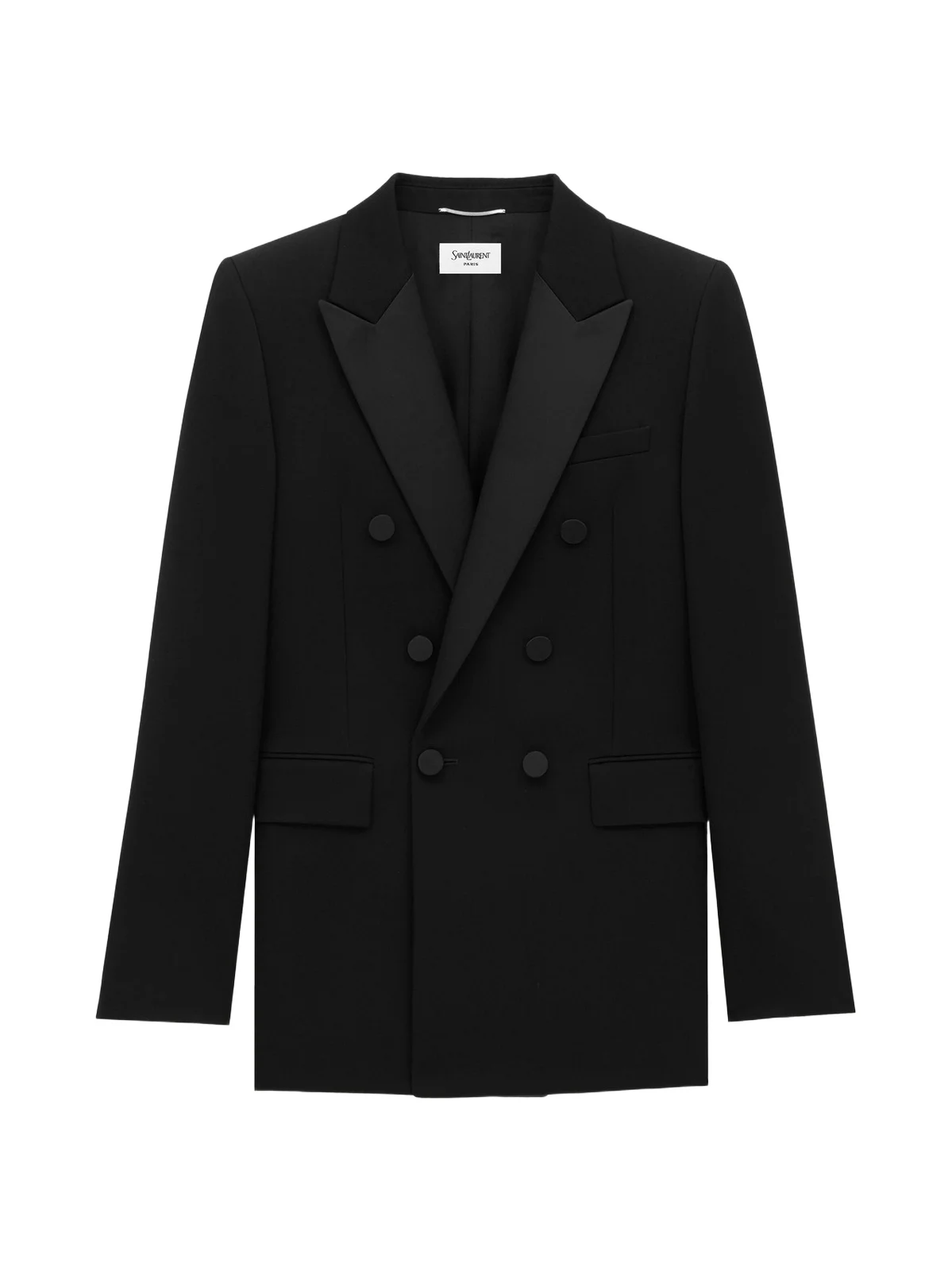 Saint LaurentMen's Double-Breasted Tuxedo Jacket in Grain De Poudre$4,200
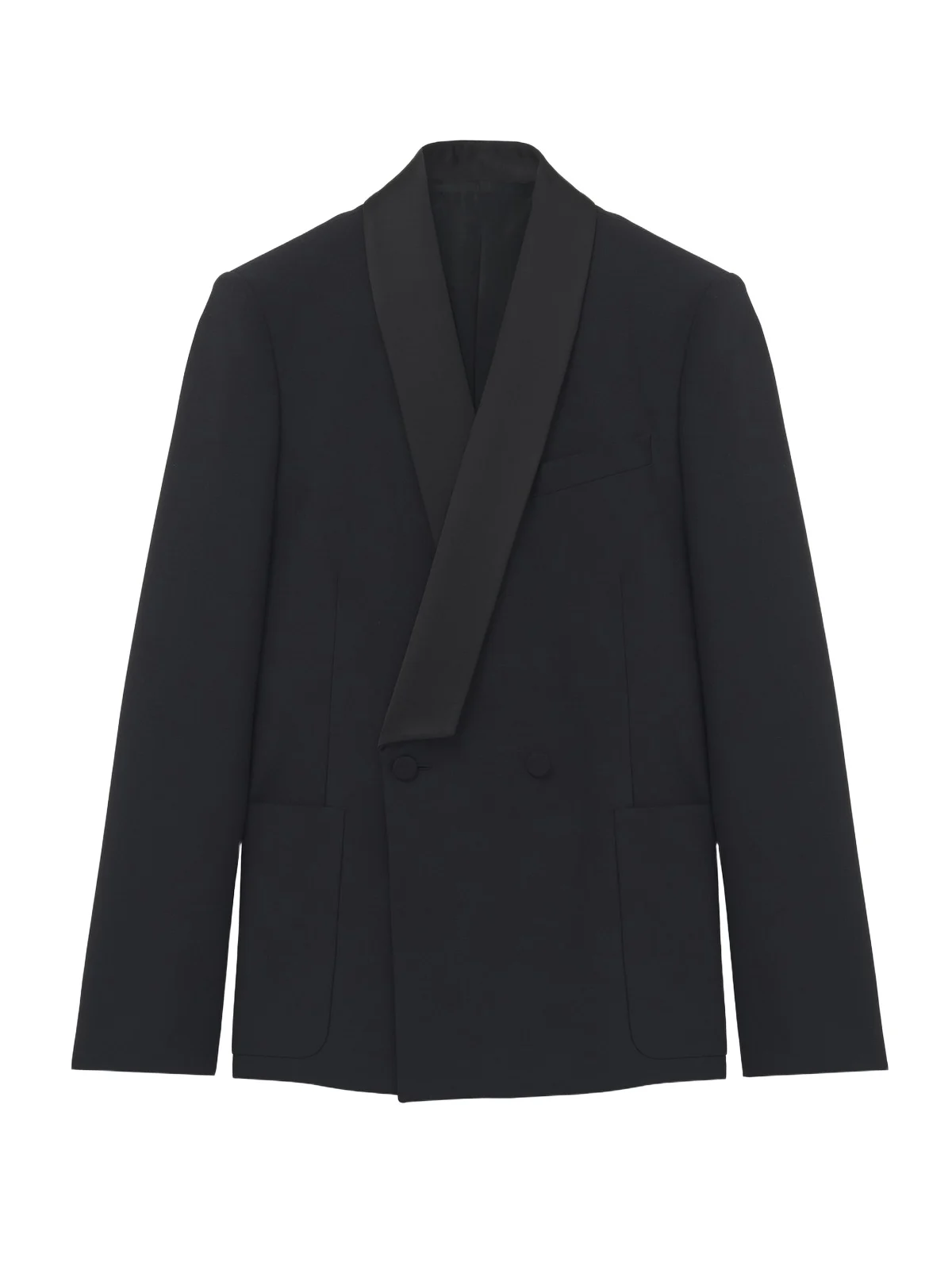 Alexander McQueenDouble-breasted Evening Jacket$3,890
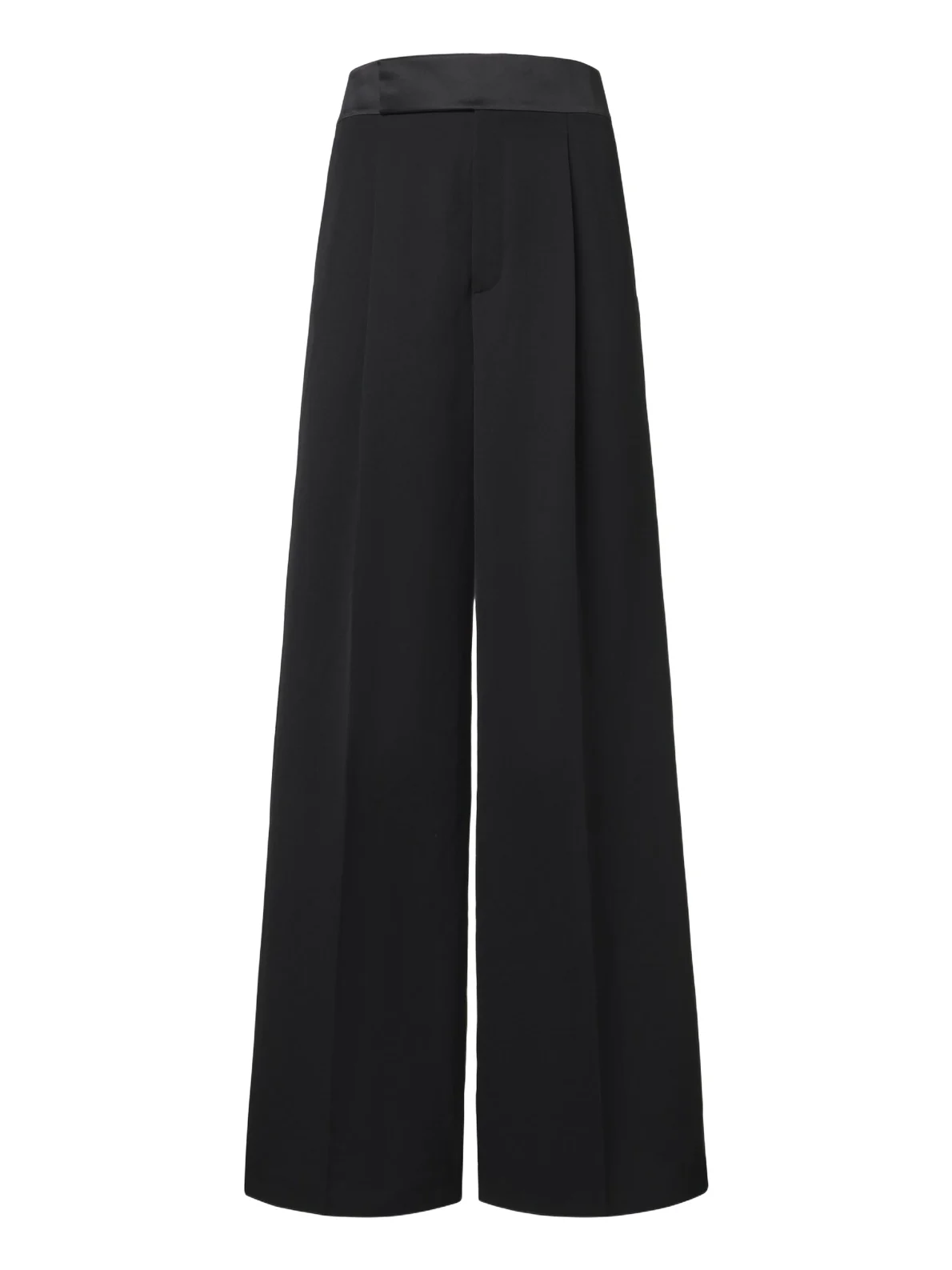 Saint LaurentWool grain de poudre tuxedo pants$3,200
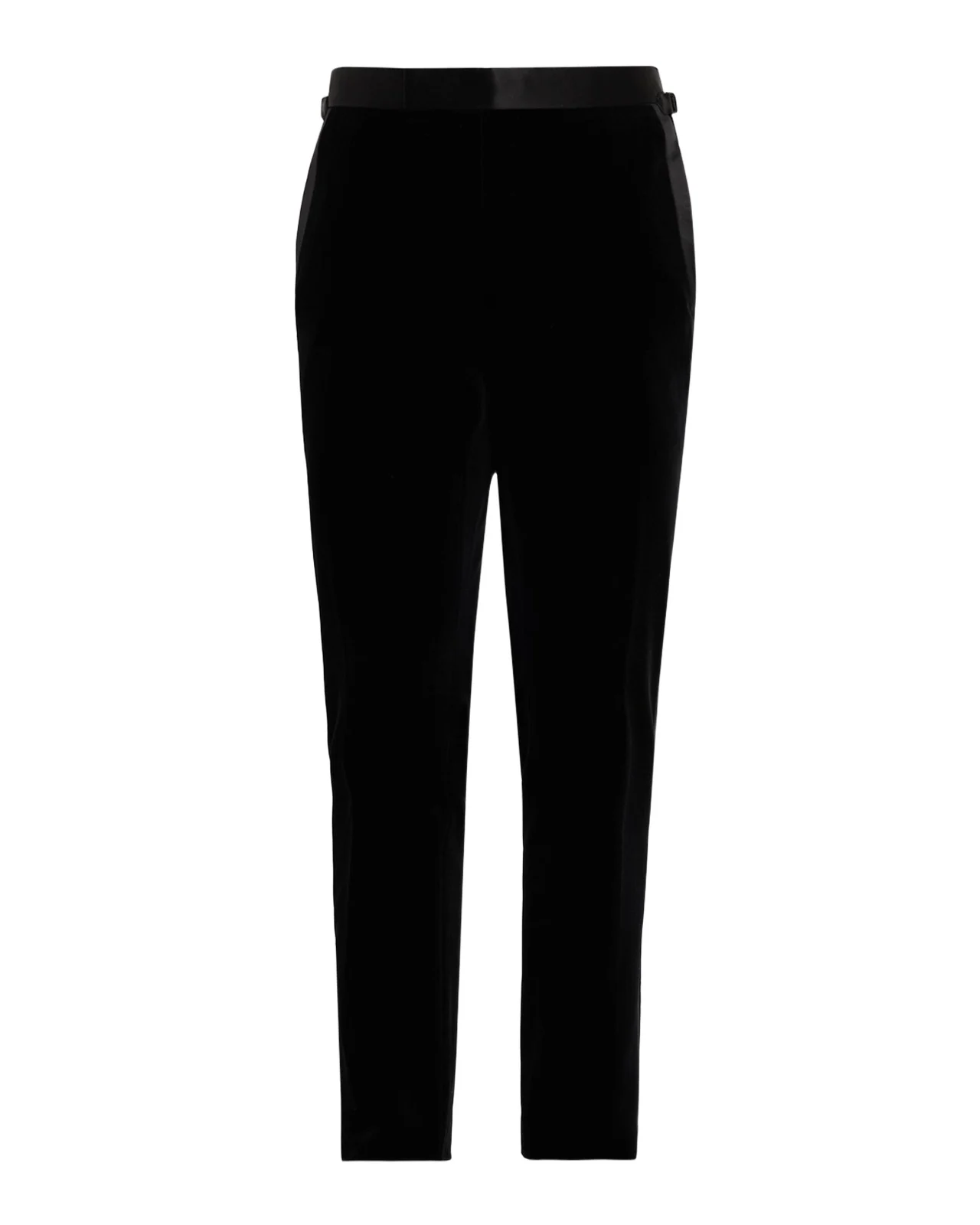 Tom FordMen's Shelton Velvet Tuxedo Stripe Formal Pants$1,670
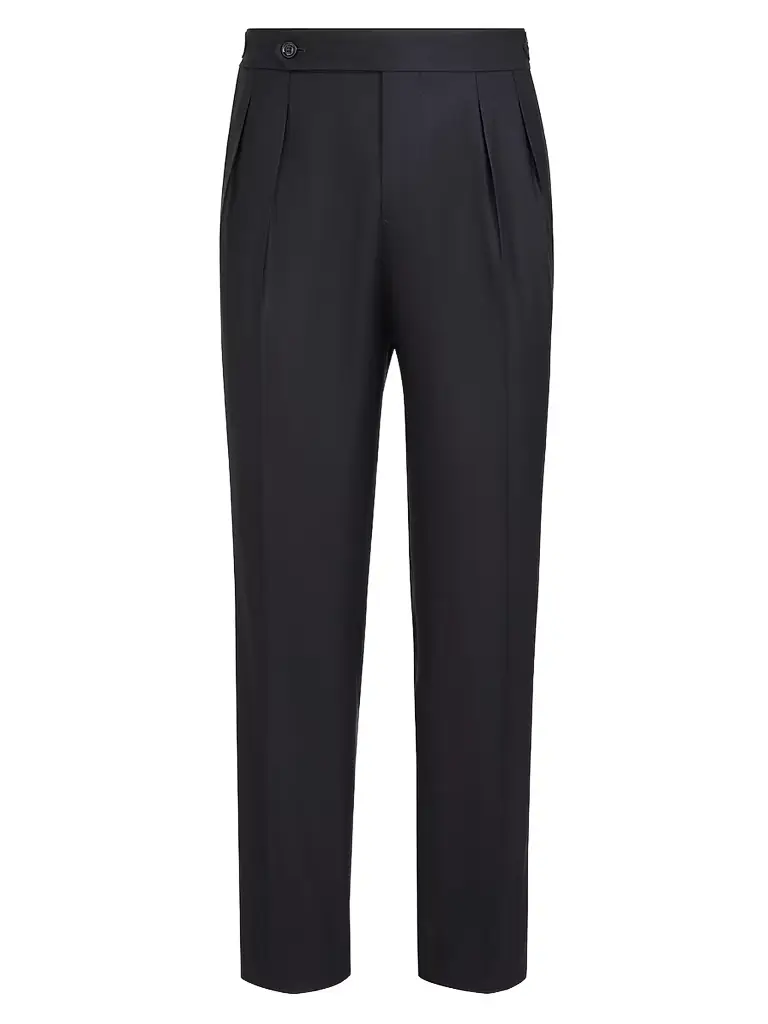 Brunello CucinelliMen's Virgin Wool and Silk Lightweight Twill Tuxedo Trousers$3,100
Midnight blue or black?
Both are correct. Henry Poole describes its dinner jacket, "in black or midnight blue," as "the universal standard for men's eveningwear." If you will own one tuxedo, make it black: in our experience it can go to the same friends' parties year after year without comment, while a colored one is remembered. Buy midnight second, or as a velvet jacket over black trousers, with a black bow tie, and judge the cloth in person or by its color name, because on a bright screen it reads bluer than it will at night. Brioni's jacquard dinner jacket and Tom Ford's velvet cocktail jacket come in midnight, and Brunello Cucinelli makes tuxedo trousers in navy wool and silk.
Velvet dinner jackets for holiday parties
In our view a velvet dinner jacket, or velvet tuxedo jacket as many listings call it, is the most useful December jacket a man can own, because it works at three levels: at a creative black-tie party with tuxedo trousers, a white shirt, a black bow tie and patent or velvet shoes; at a festive dinner with flannel trousers and a roll-neck; and at a party you host. Debrett's draws the line where we would: a velvet smoking jacket is acceptable for the host at home, but "it would not be right for a guest to wear this" when black tie is stated on the invitation.
Look at the lapels first. Brunello Cucinelli's navy chalk-stripe velvet jacket has a shawl collar trimmed in cotton and silk duchesse satin, by its listing, and Zegna's black velvet tuxedo jacket has satin-faced peak lapels: both read as dinner jackets. Tom Ford's wool-silk velvet cocktail jacket has velvet lapels and two buttons, so it reads as an evening blazer, better with a roll-neck.
Then the fiber, which in our experience decides how the jacket ages. Cotton velvet (Brunello Cucinelli, Zegna, Dolce & Gabbana's burgundy double-breasted, Tom Ford's Atticus) has a dense, matte pile and holds structured tailoring. Wool and silk velvet catches more light. Versace's green velvet is viscose and cupro, with the deepest sheen, and it crushes most readily at the elbows and back after a long dinner. For a jacket you will wear every December, buy cotton velvet; for one night of color, the viscose. We would keep velvet trousers, such as Tom Ford's Shelton pair with its satin stripe, for a host who has asked for something creative.
Velvet dinner jackets in midnight, green, burgundy and black
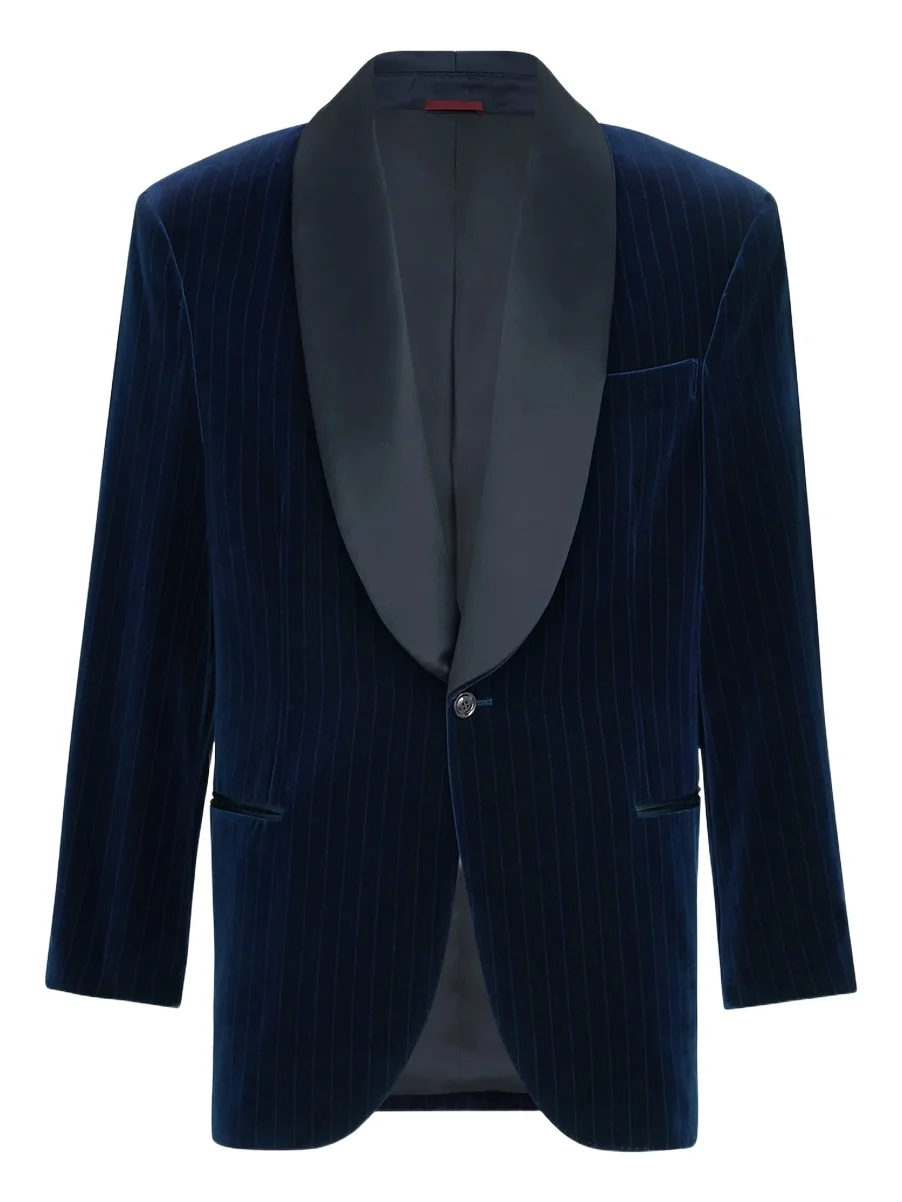 Brunello CucinelliMen's Cotton Chalk Stripe Velvet Tuxedo Jacket with Shawl Lapels - Navy Blue$5,950
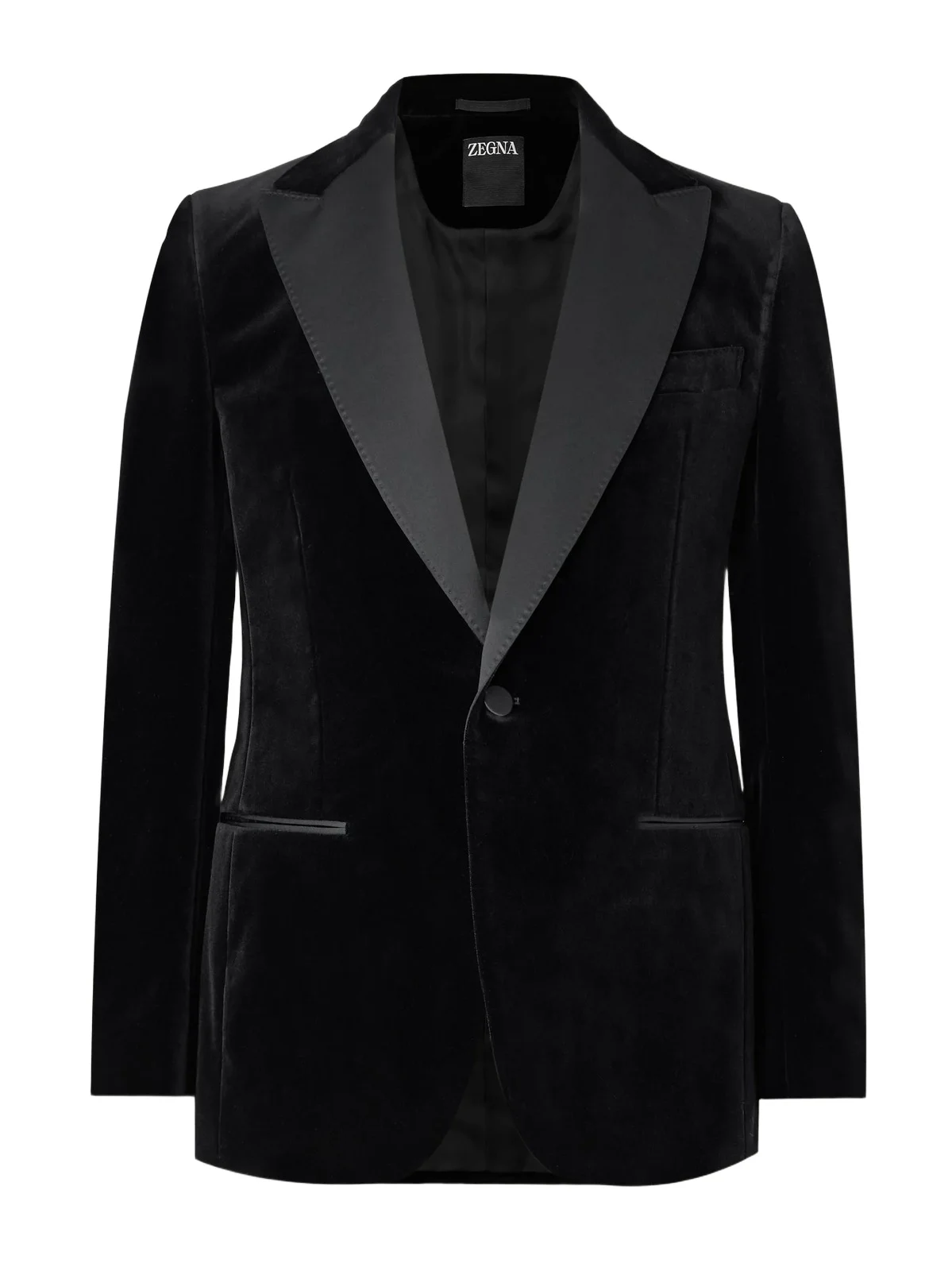 ZegnaSatin-Trimmed Cotton-Velvet Tuxedo Jacket - Men$3,390
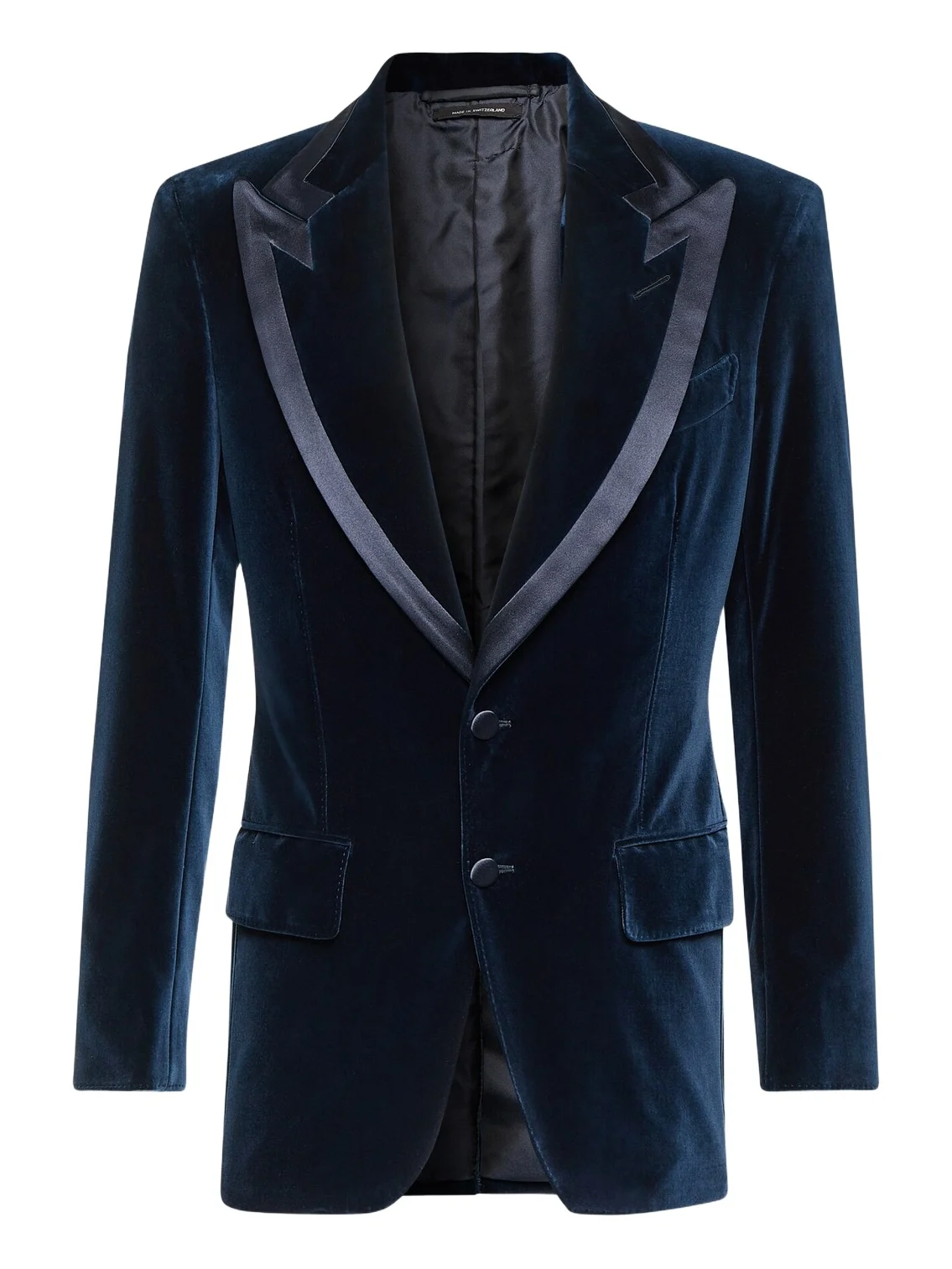 Tom FordAtticus velvet tuxedo jacket$5,390
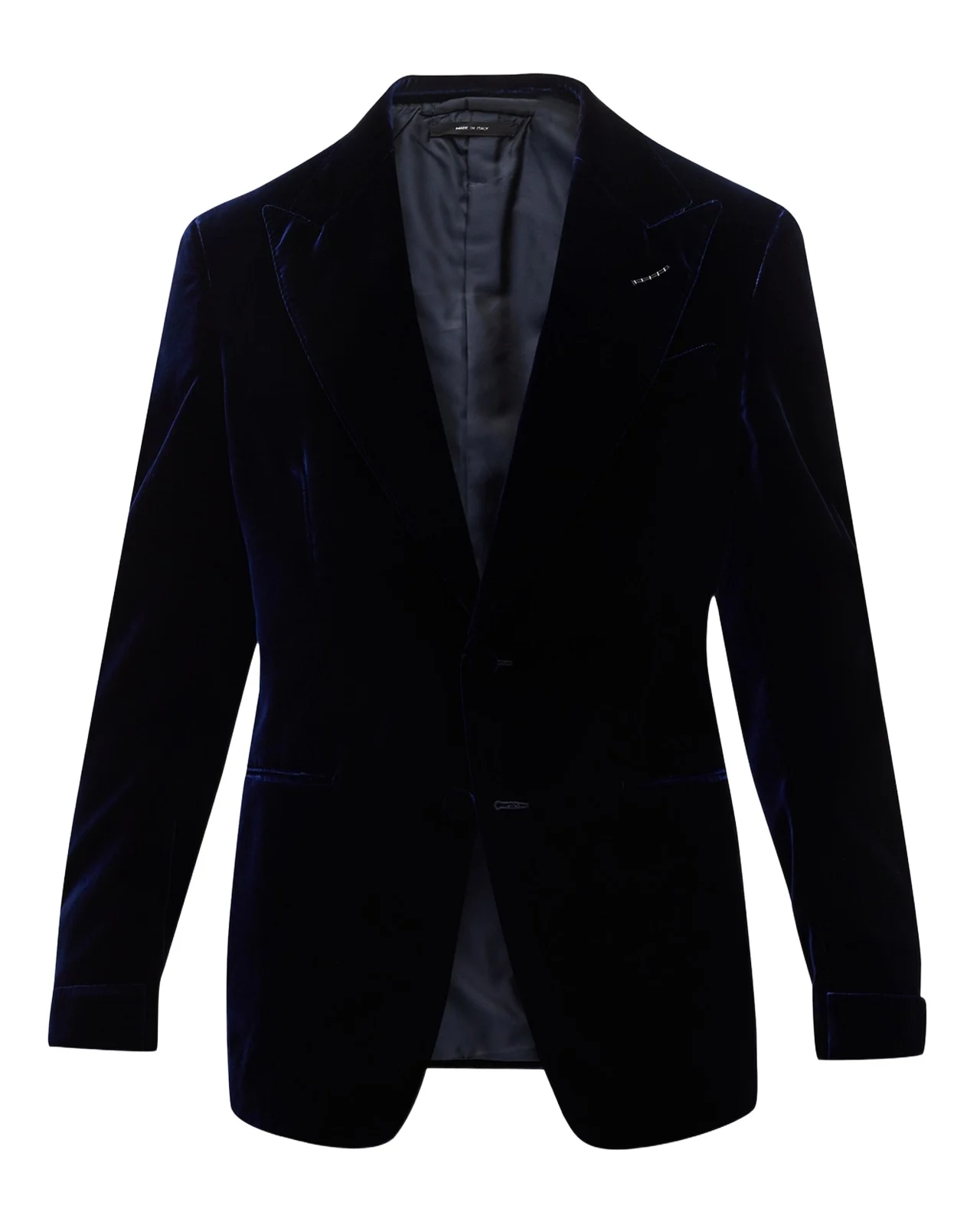 Tom FordMen's Wool-Silk Velvet Cocktail Jacket$5,650
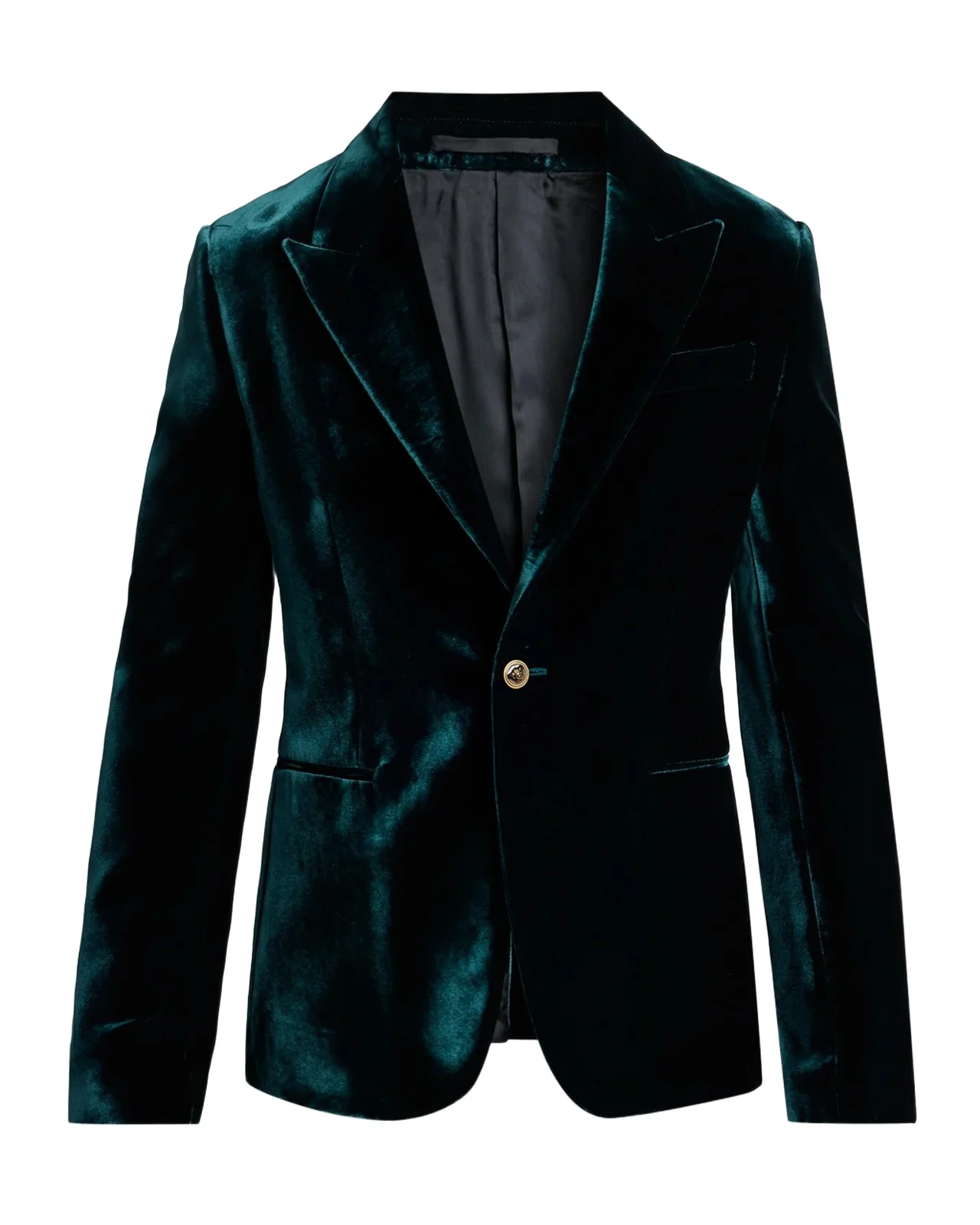 VersaceMen's Peak Lapel Velvet Evening Jacket$3,320
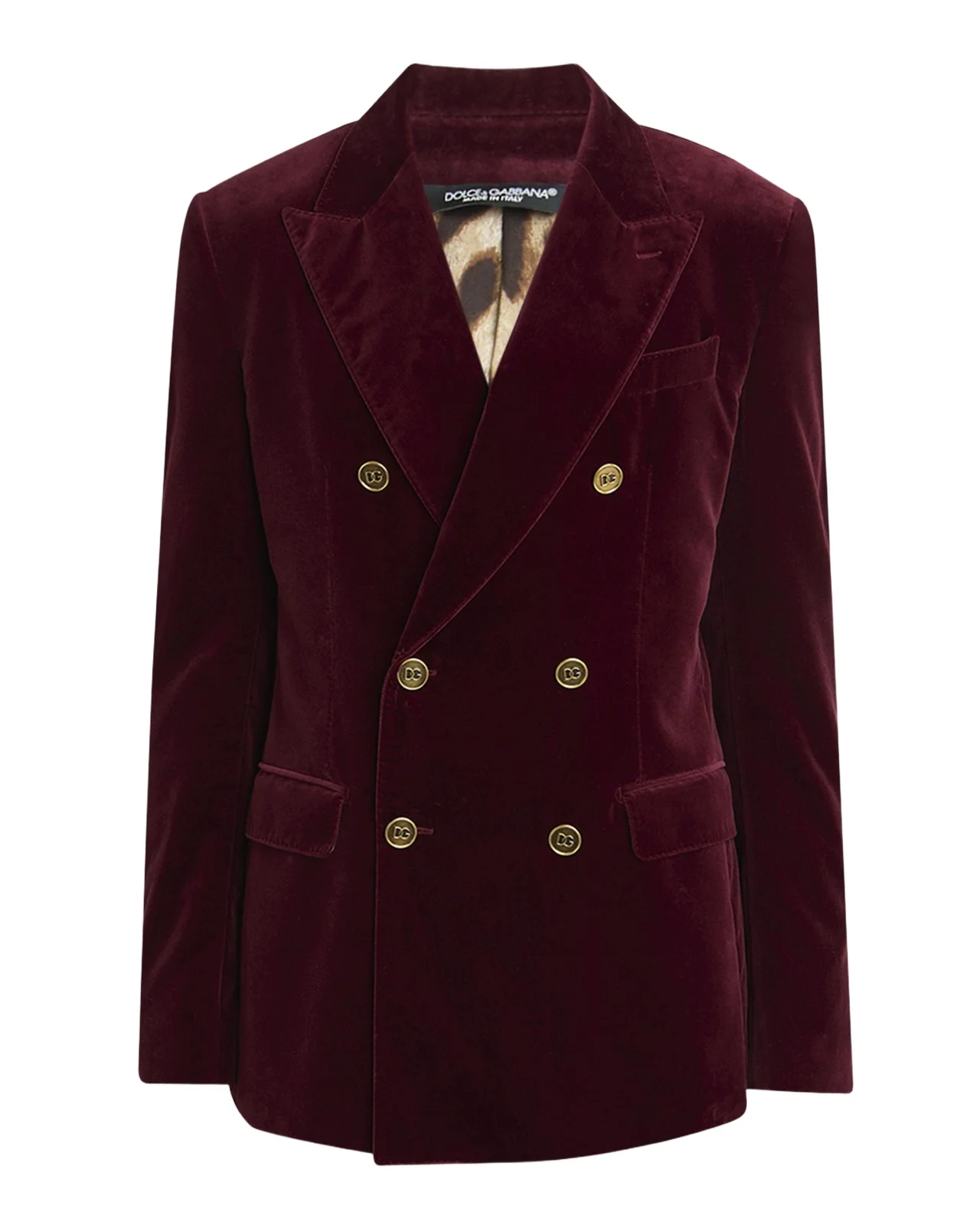 Dolce & GabbanaMen's Velvet Double-Breasted Peak Lapel Dinner Jacket$3,645
Jacquard, metallic and embellished jackets
These are for creative black tie and New Year's parties, not a strict black-tie gala. The useful test is distance. A pattern that reads as texture at arm's length and as plain black across a room, such as Versace's tonal Barocco jacquard or Brioni's midnight jacquard shawl, works at more parties than one that reads from the door, such as Tom Ford's polka-dot silk or McQueen's pale-gold metallic jacket. Tom Ford's listing says the polka-dot jacket "revives an archival polka dot pattern" in mulberry silk jacquard and comes "From Haider Ackermann's first Winter 2025 Fashion Show."
Keep everything else plain: black tuxedo trousers, a white shirt, a black silk bow tie, plain patent shoes. Versace's double-breasted jacket already has ornate triangular ornaments pinned at the lapel tips, so it wants nothing more than cufflinks. The exception runs the other way: Loewe's tuxedo-stripe trousers swap the silk stripe for red tape, and they want a plain black jacket on top.
Jacquard, metallic and embellished pieces for creative black tie
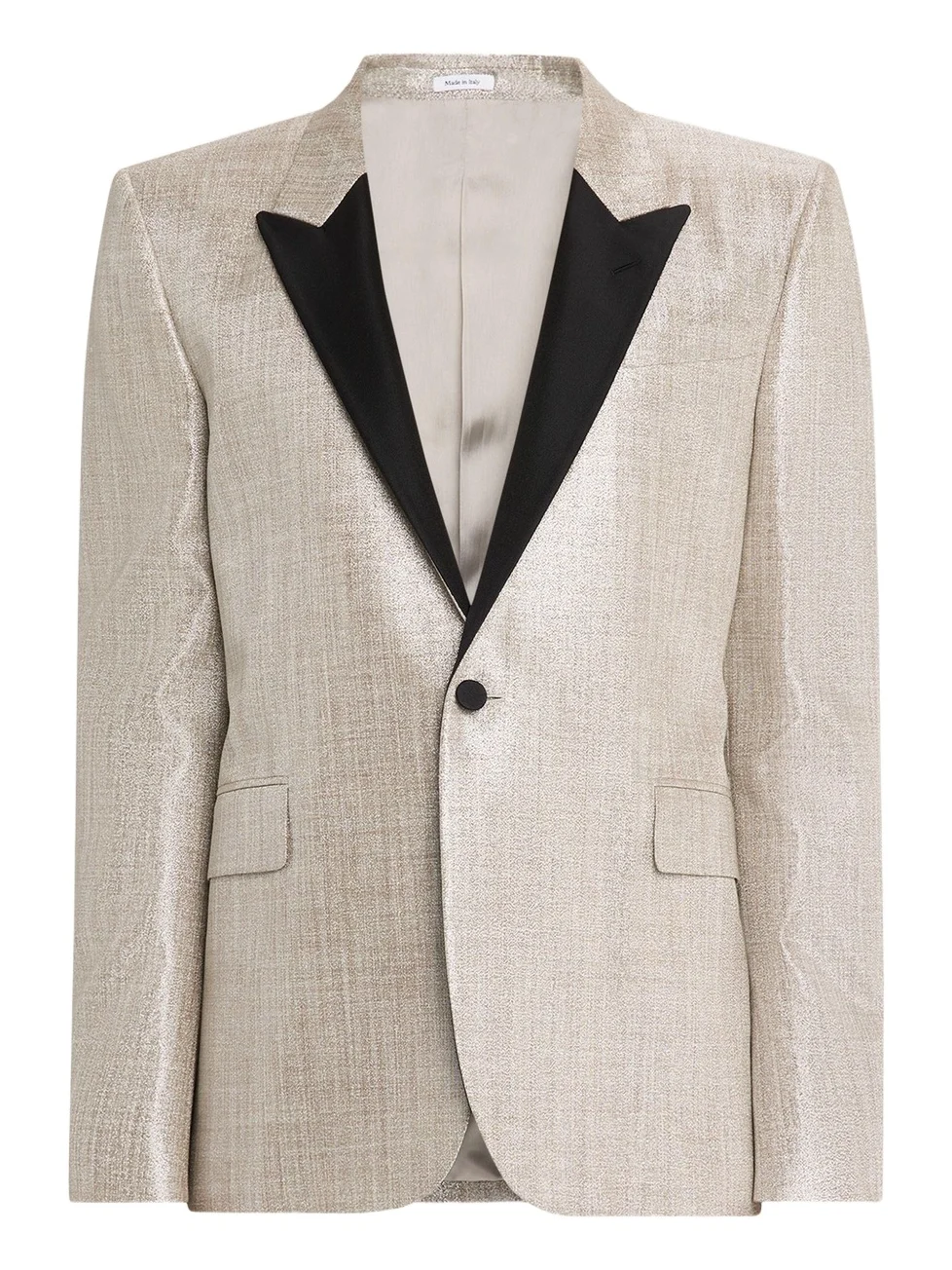 Alexander McQueenMen's Metallic Effect Peak Lapel Dinner Jacket$3,950
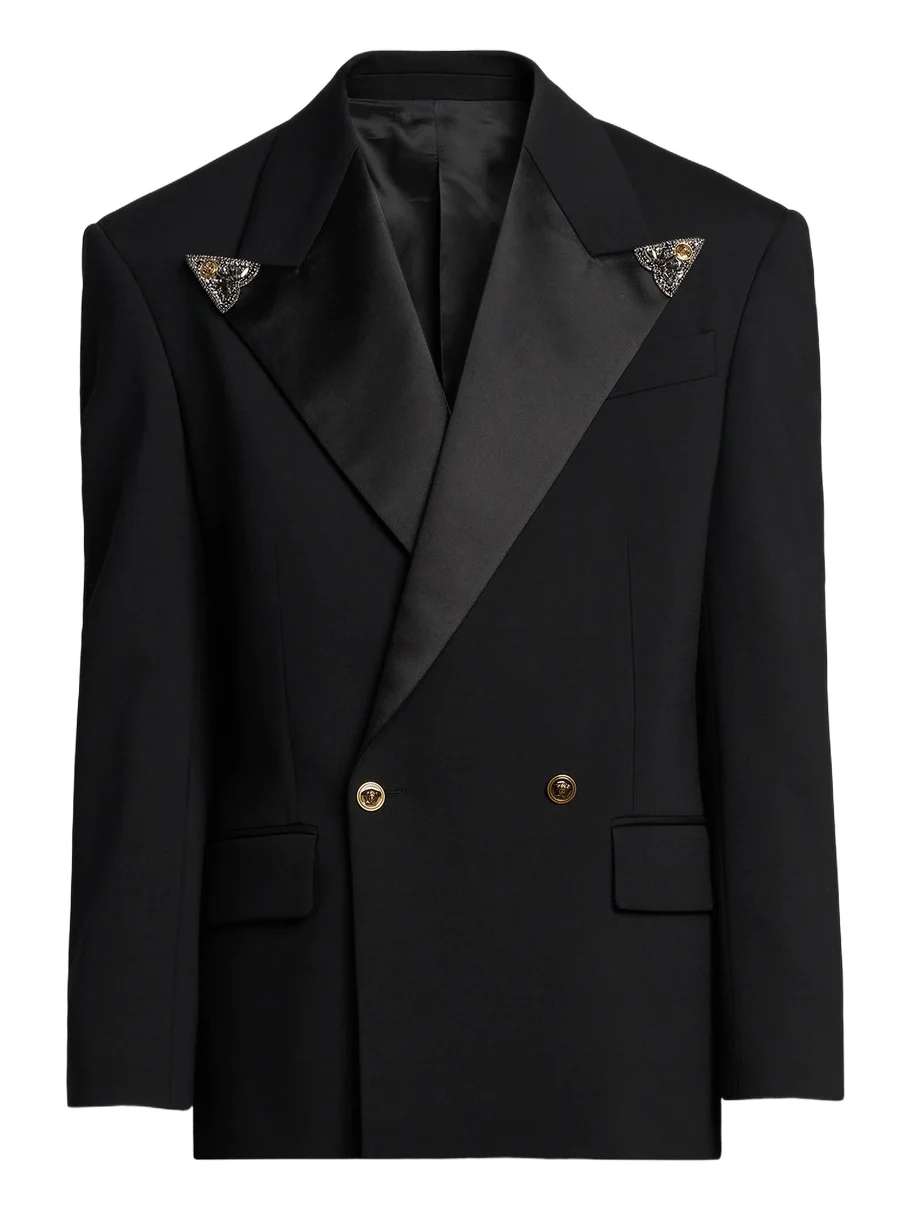 VersaceMen's Embellished Stretch Wool Evening Jacket$4,490
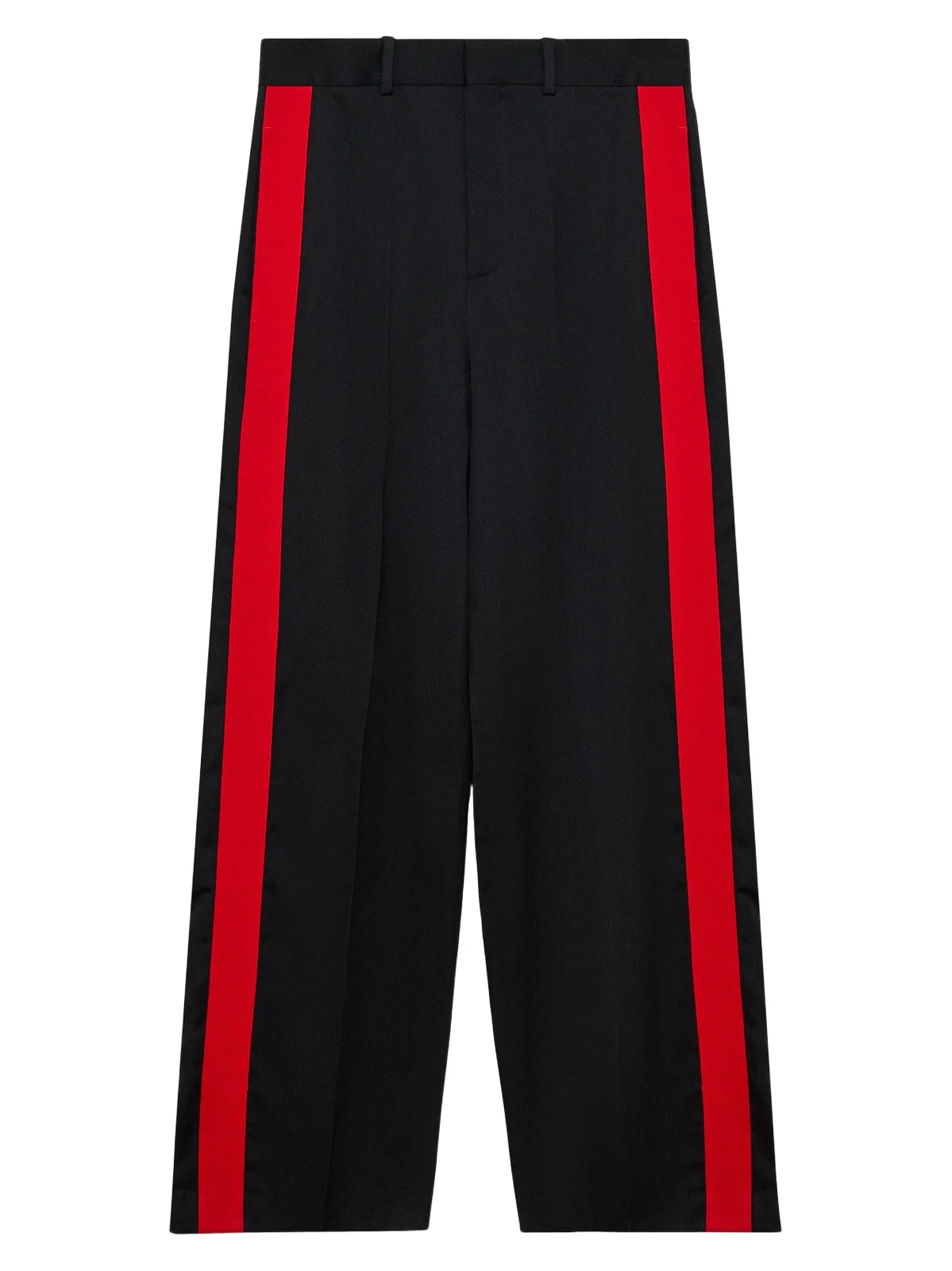 LoeweMen's Wool-Cotton Tuxedo-Stripe Trousers$1,990
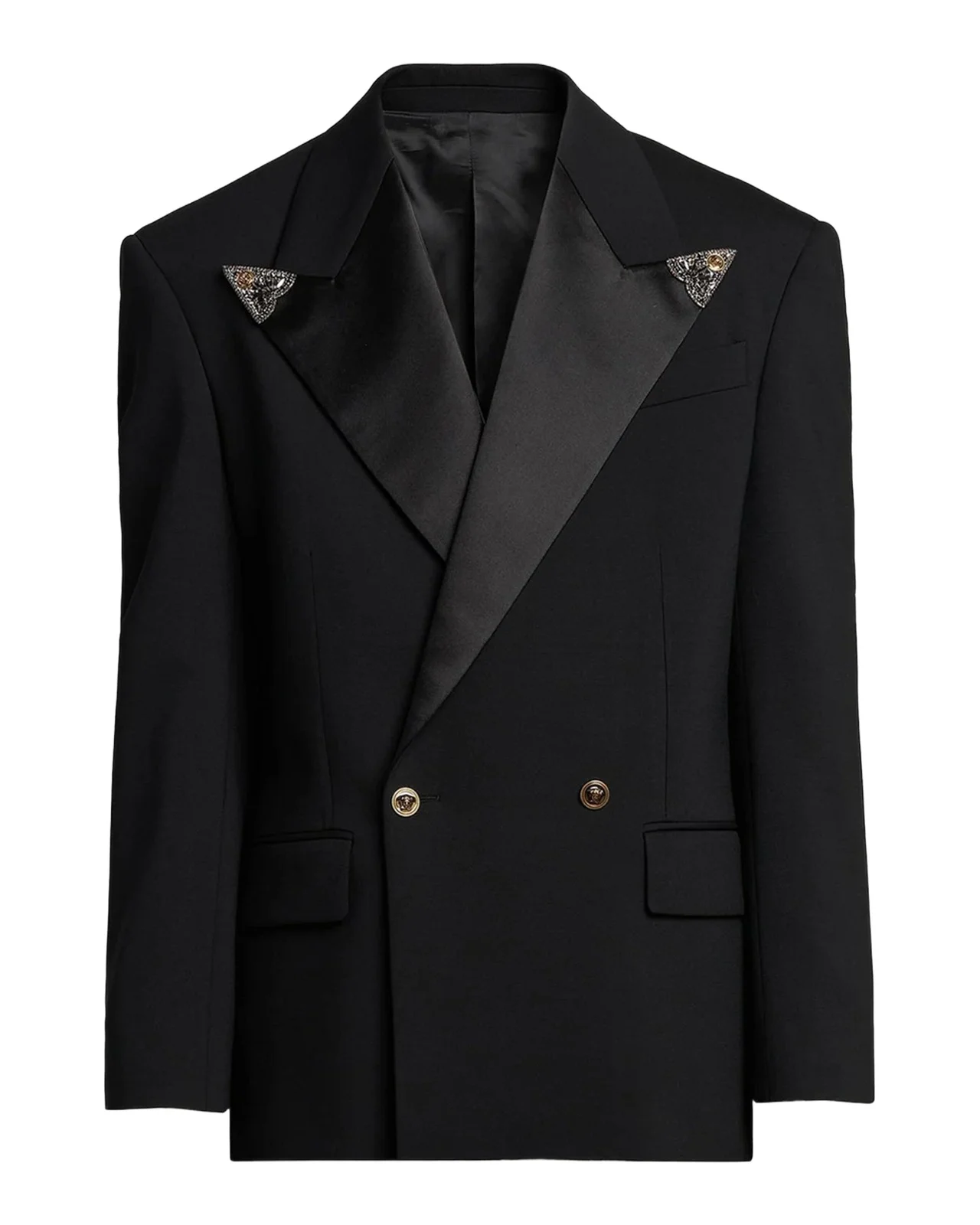 VersaceMen's Embellished Stretch Wool Evening Jacket$4,490
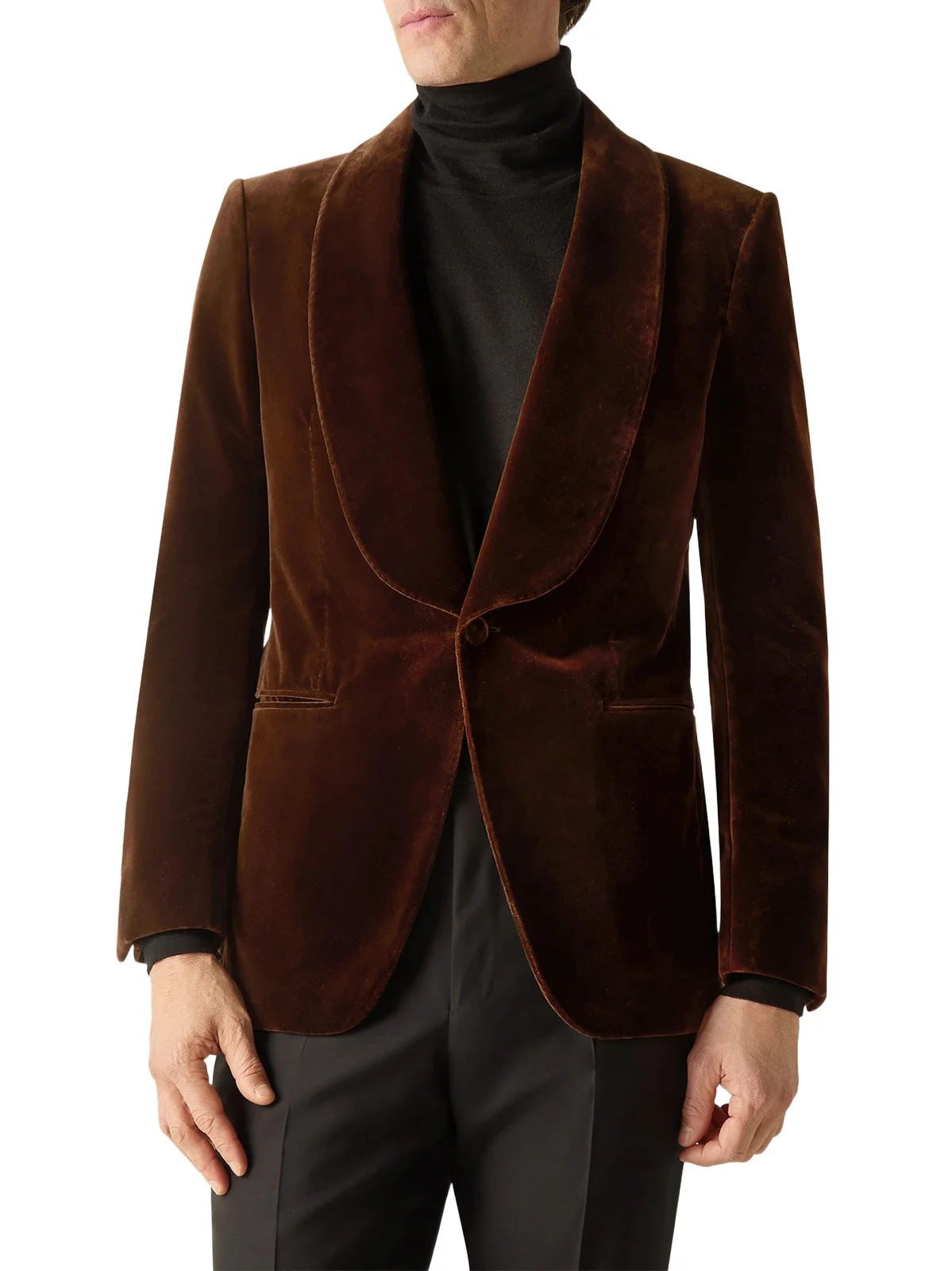 ZegnaMen's Cotton Evening Jacket$4,590
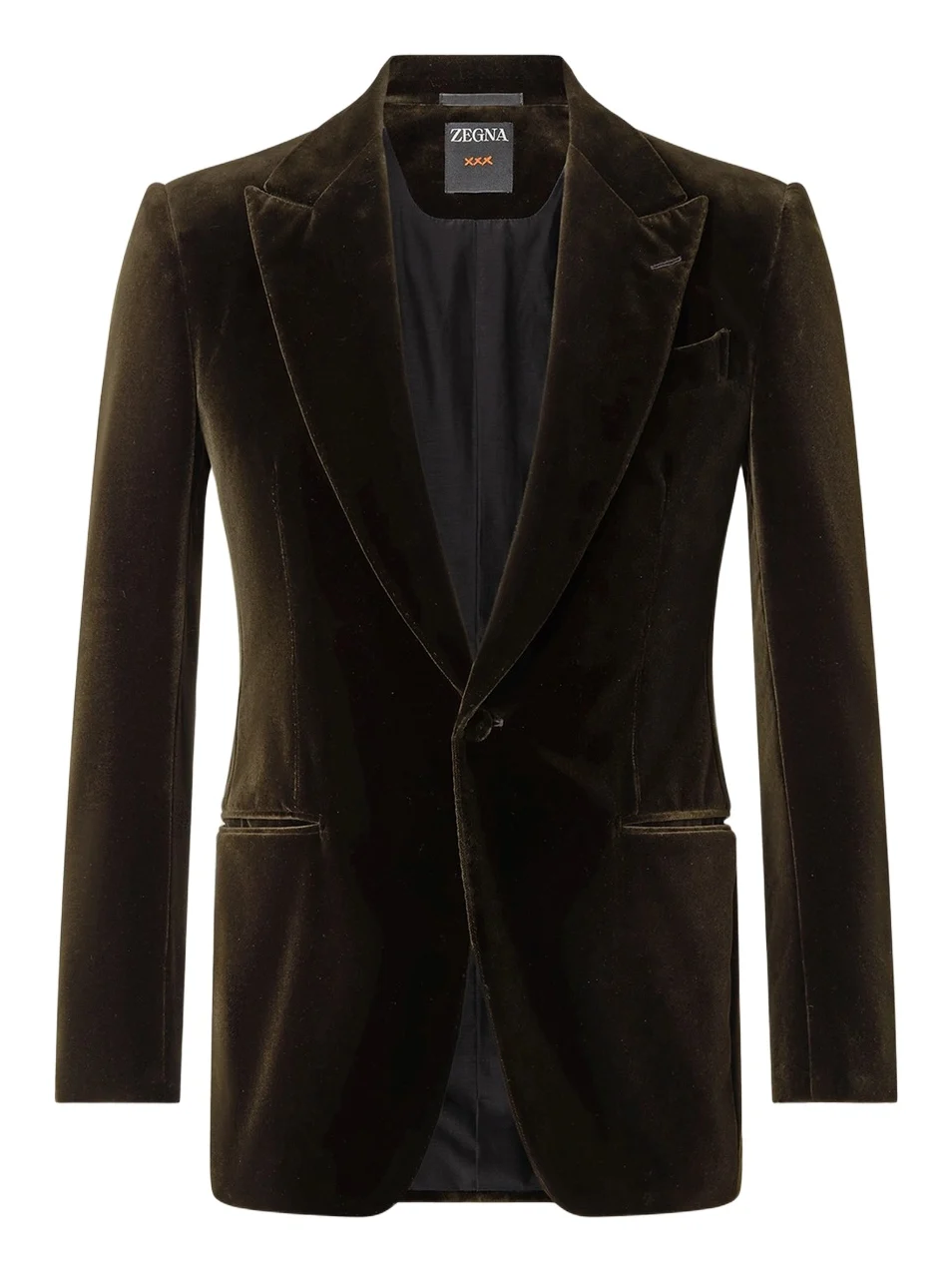 ZegnaMen's Cotton Evening Jacket$4,590
The white dinner jacket, and where it belongs
Emily Post allows a white dinner jacket with black tuxedo trousers "In summer, in the tropics, or on a cruise," and Debrett's ties it to hot climates. This season that means yes on a Caribbean island or a winter cruise, and no at a December party in a US city, however mild the night. In our experience ivory or off-white is kinder under evening light than a stark white. Our men's New Year's Eve guide has ivory jackets for a beach party at midnight.
The tuxedo shirt: wing collar or turndown, bib, studs and cuffs
Debrett's settles the collar for black tie: "a turn-down collar (not a wing-collar)," with the detachable wing collar kept for white tie. Emily Post's list names the front, "piqué or pleated," and says nothing about the collar. Our rule of thumb: a turndown with a shawl collar or a double-breasted jacket, and a wing collar, if you like one, only with a single-breasted peak lapel.
- The front. A piqué bib is crisper; pleats are softer and hide creases. Tom Ford's voile shirt has a pleated bib, Versace's a quilted-effect bib trimmed in silk, and Tom Ford's piqué shirt a plain bib under a wingtip collar.
- Studs or a hidden placket. Both rule books list studs, but Debrett's also accepts "a fly-fronted shirt, where the buttons are concealed." Dior's wing-collar tuxedo shirt and Kiton's piqué bib shirt have concealed plackets; Dolce & Gabbana's bib shirt has a visible button placket.
- The cuffs. Cufflinks need French (double) cuffs. Dolce & Gabbana's, Burberry's and Kiton's shirts list them, while both Tom Ford shirts here list button cuffs, so read the cuff line before you buy links for a shirt.
In our experience the bib should end above the trouser waistband, or it bows out when you sit. A black shirt, like Burberry's bib-front tuxedo shirt, is one of Emily Post's creative black-tie variations, and Versace's shirt with Barocco embroidery belongs to the same kind of party. More in men's formal shirts.
Tuxedo shirts with wing and turndown collars
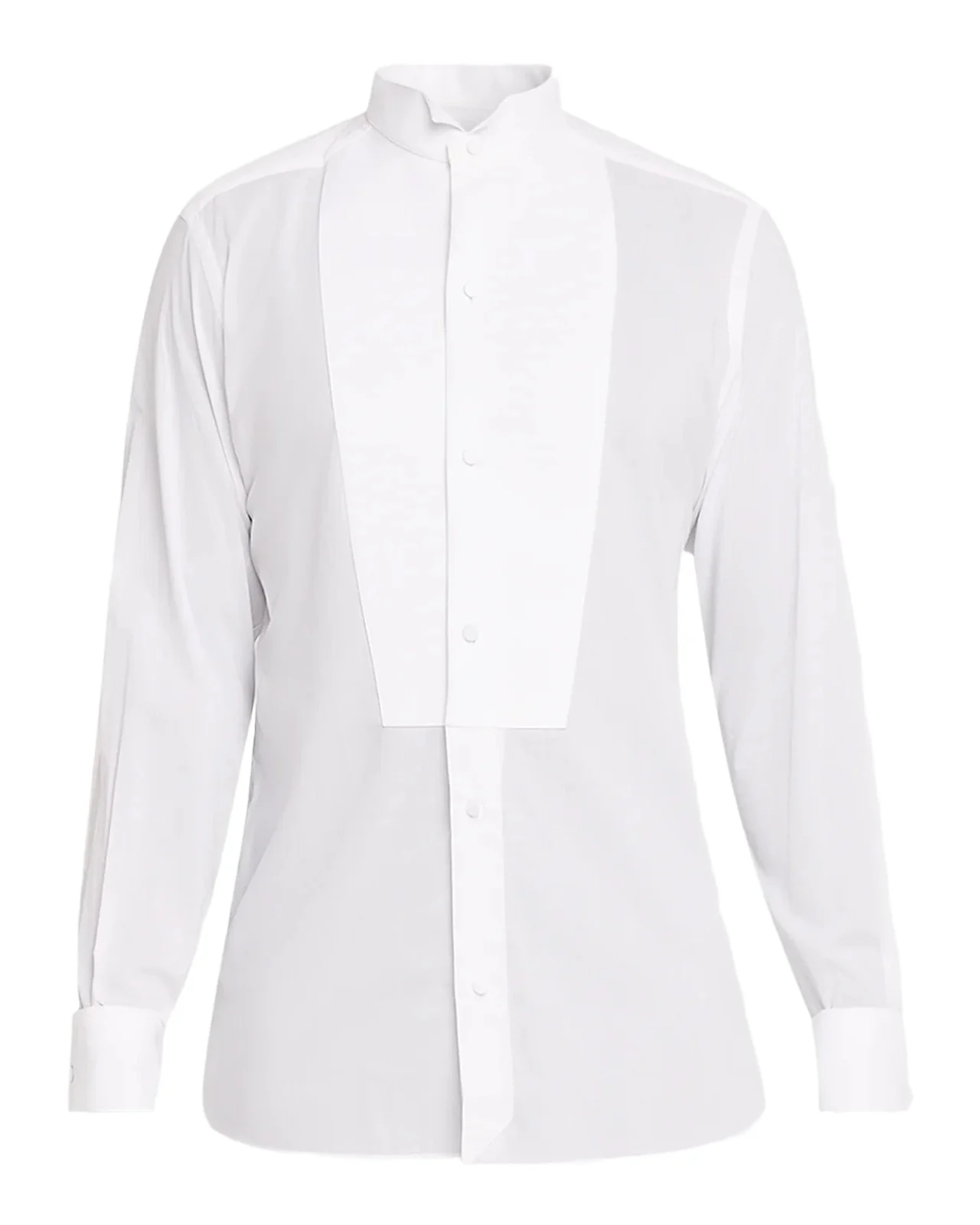 Tom FordMen's Cotton Pique Tuxedo Shirt$1,250
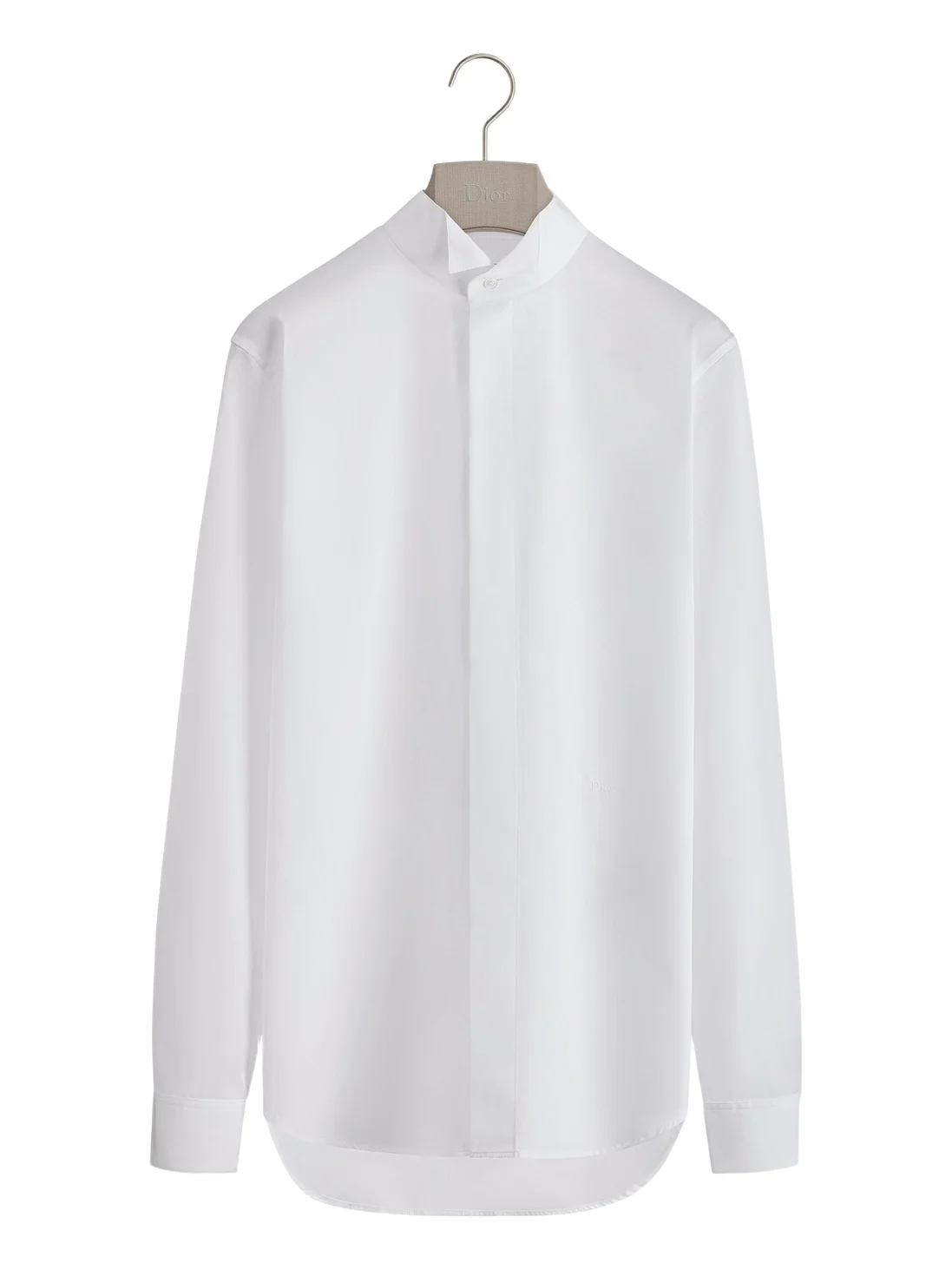 DiorTuxedo Shirt$910
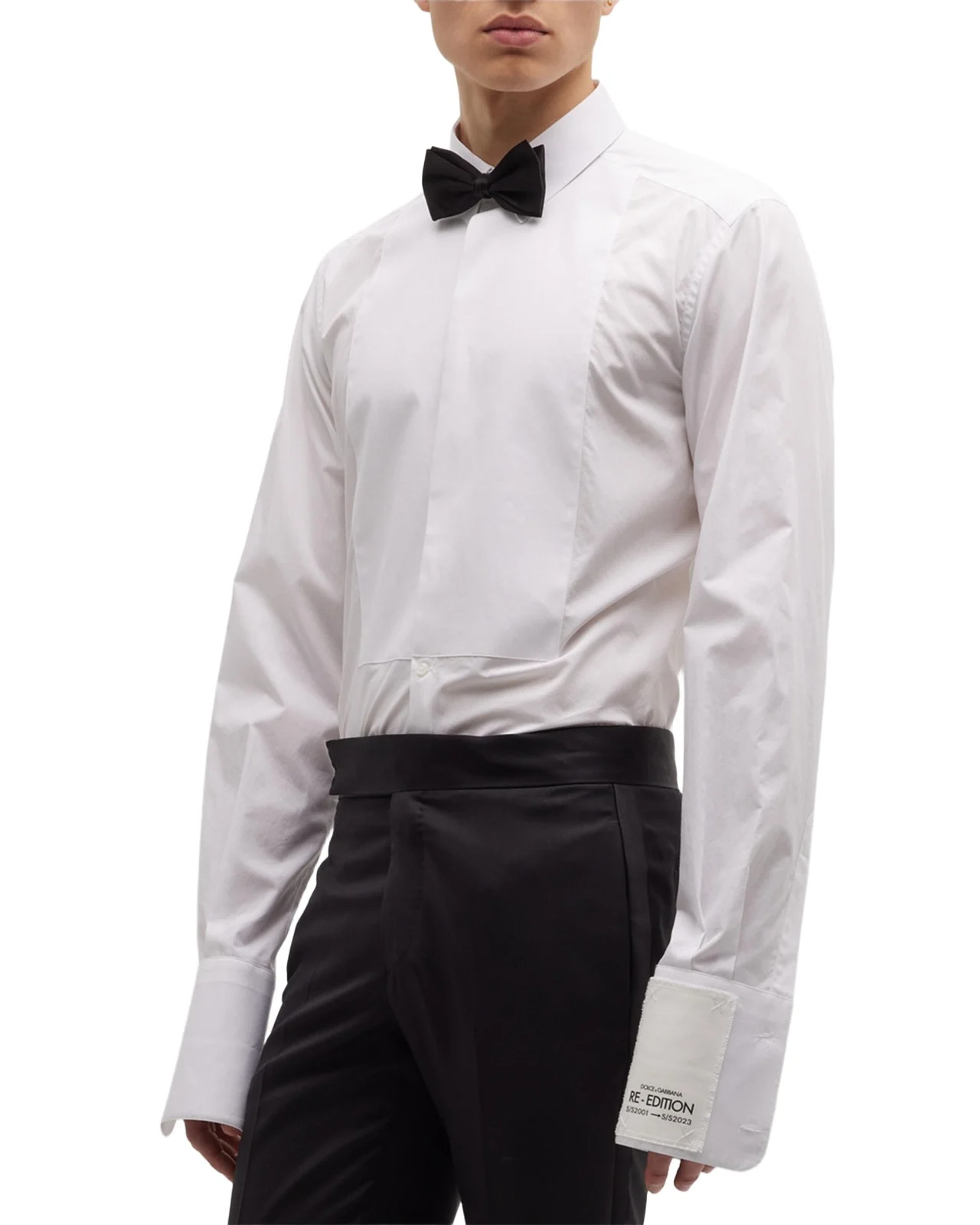 Dolce & GabbanaMen's Bib-Front Tuxedo Shirt$945
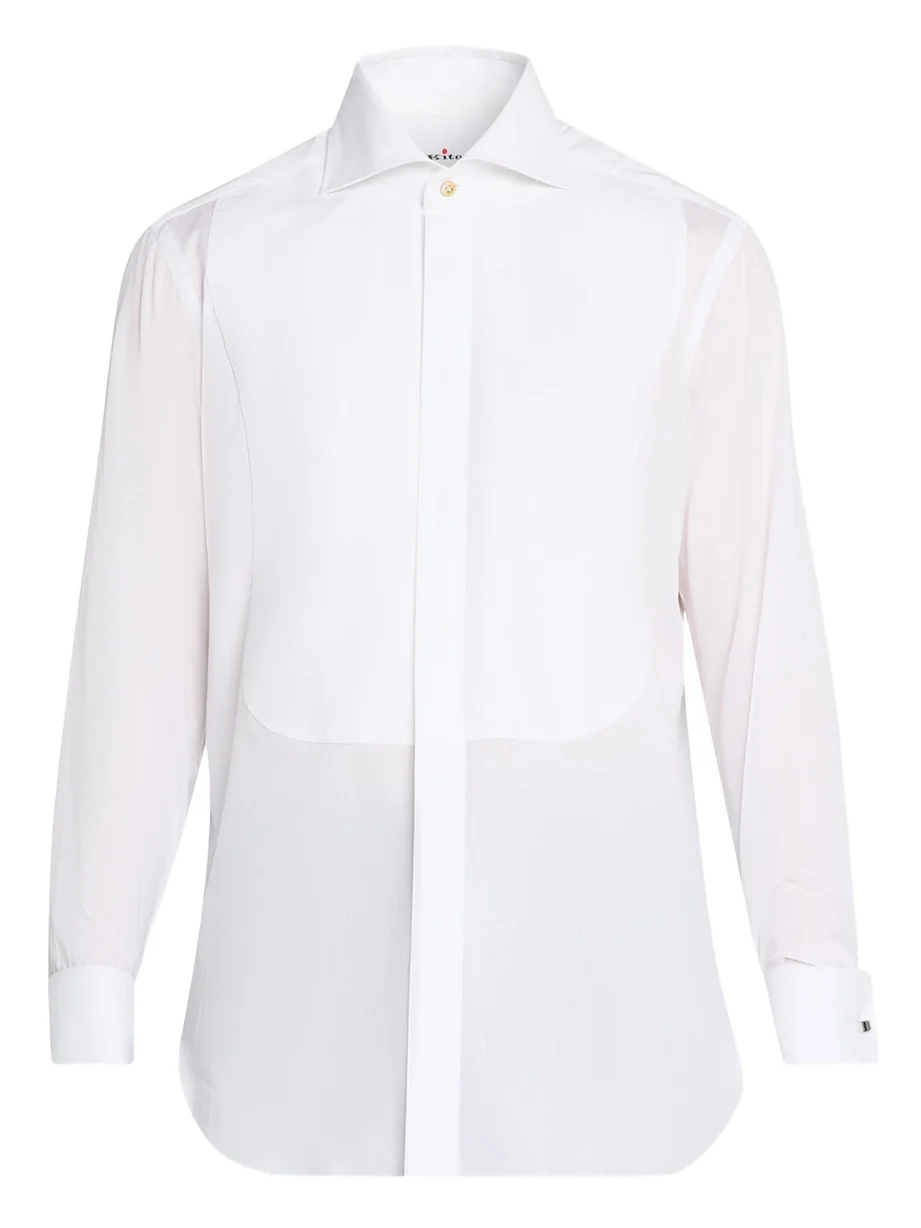 KitonMen's Cotton Pique Bib-Front Dress Shirt$1,035
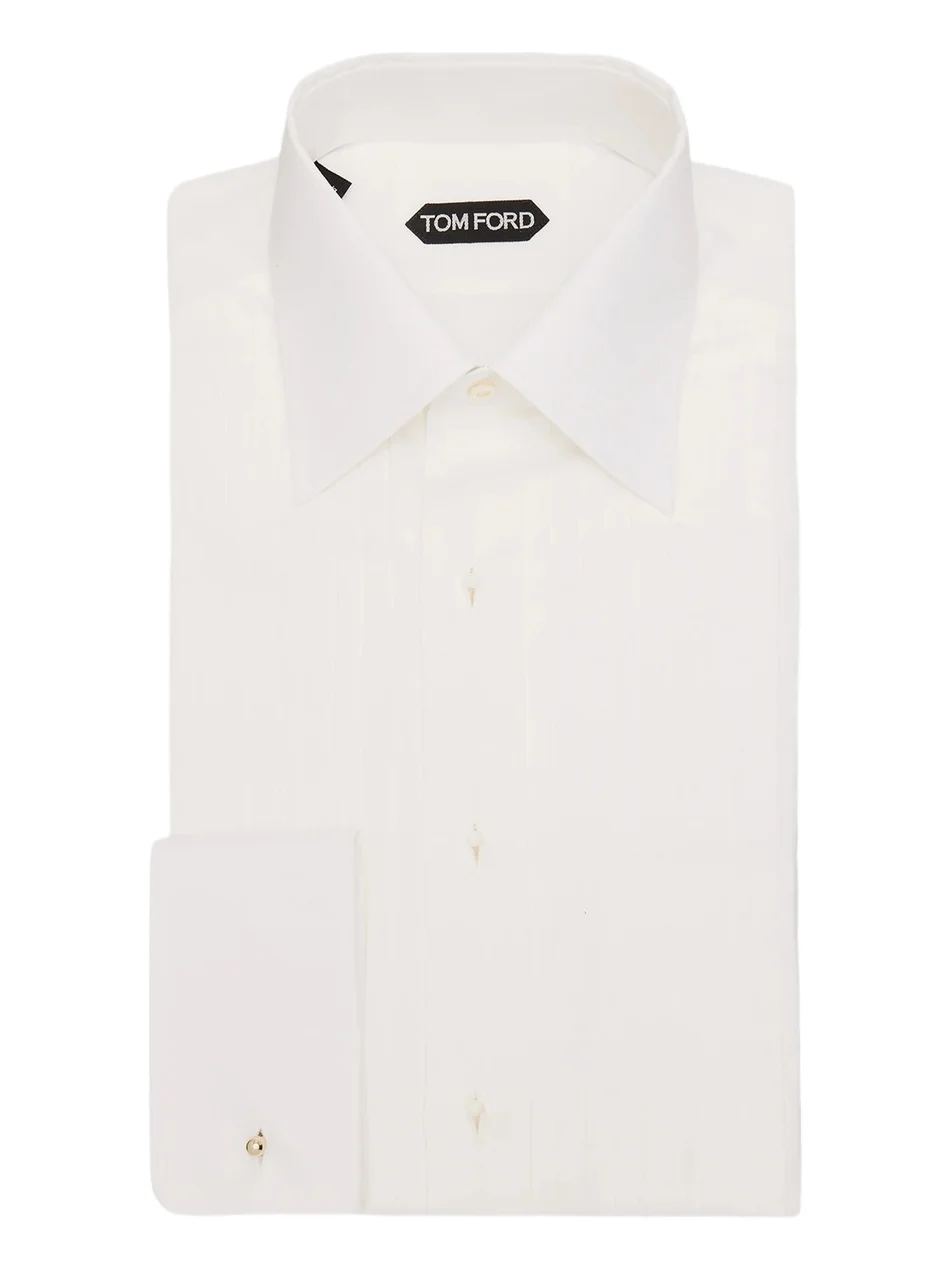 Tom FordMen's Pleated Bib Voile Slim-Fit Formal Shirt$990
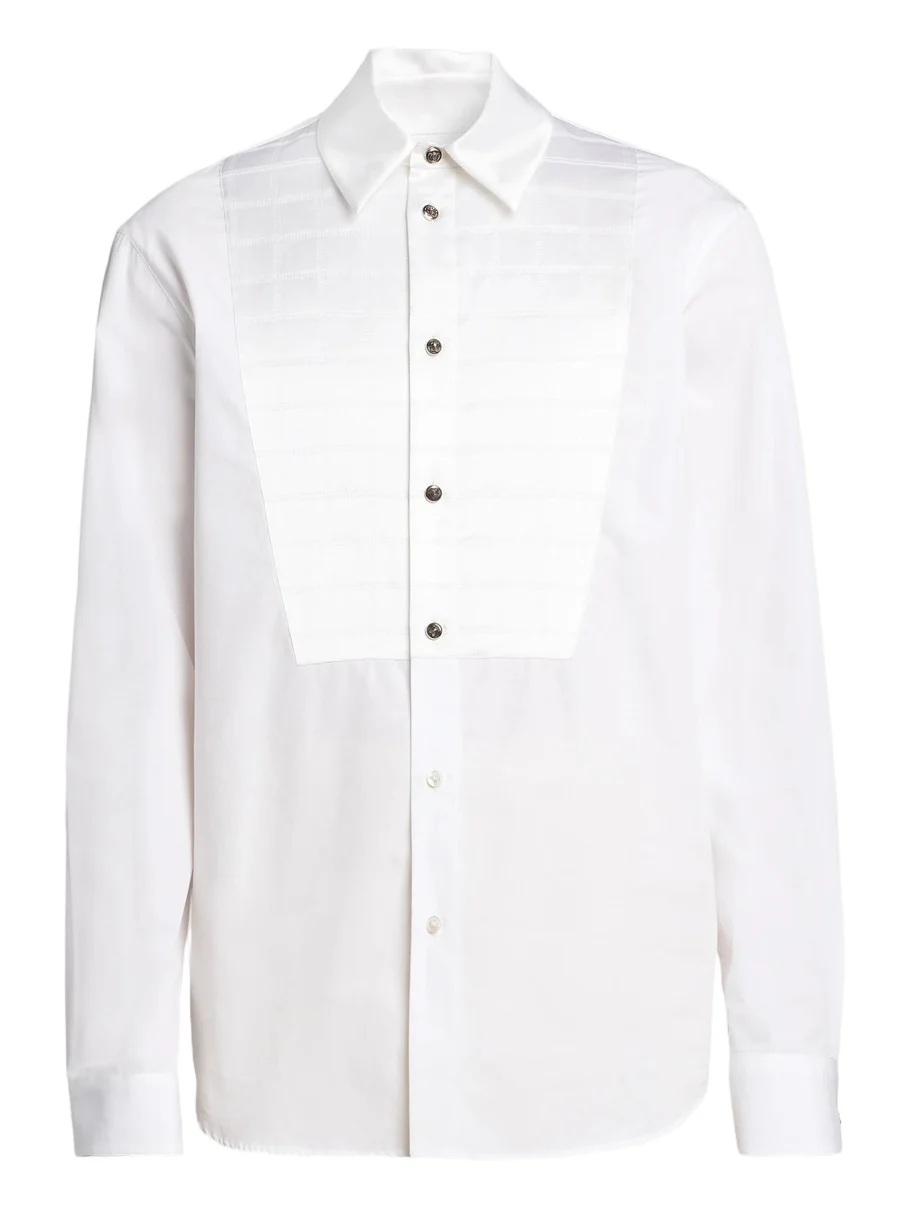 VersaceMen's Textured-Bib Cotton Shirt$1,990
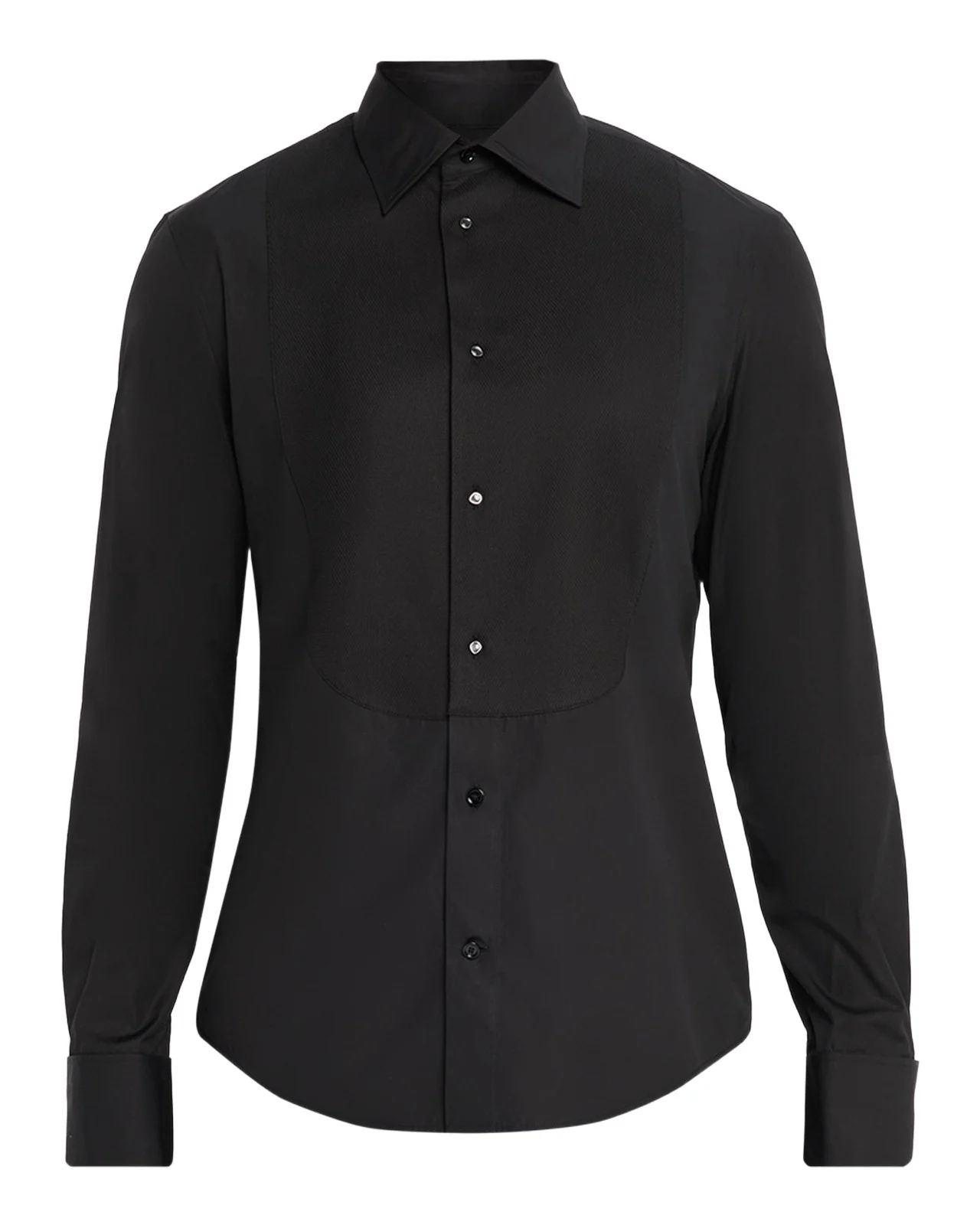 BurberryMen's Slim Fit Cotton Tuxedo Shirt$1,050
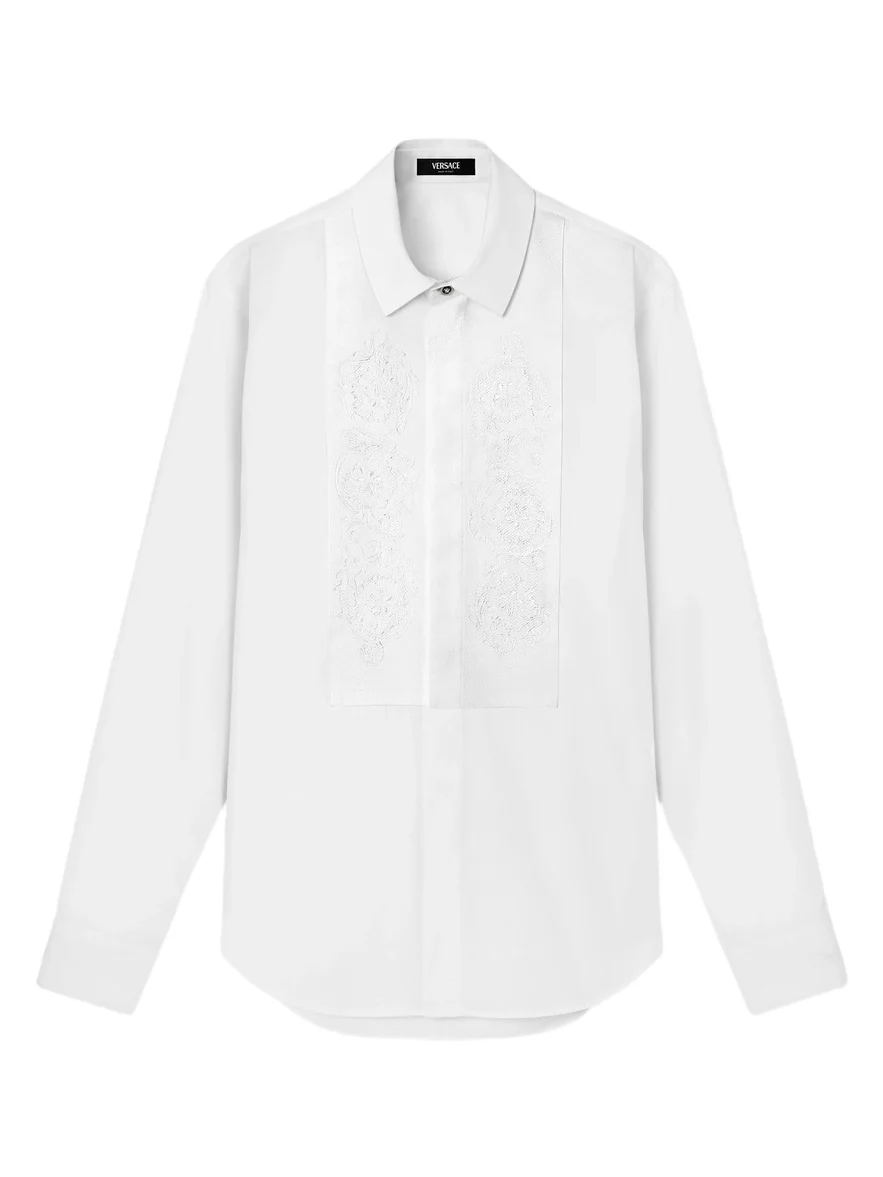 VersaceEmbroidered Cotton-Poplin Evening Shirt$1,590
The bow tie, and cummerbund or waistcoat
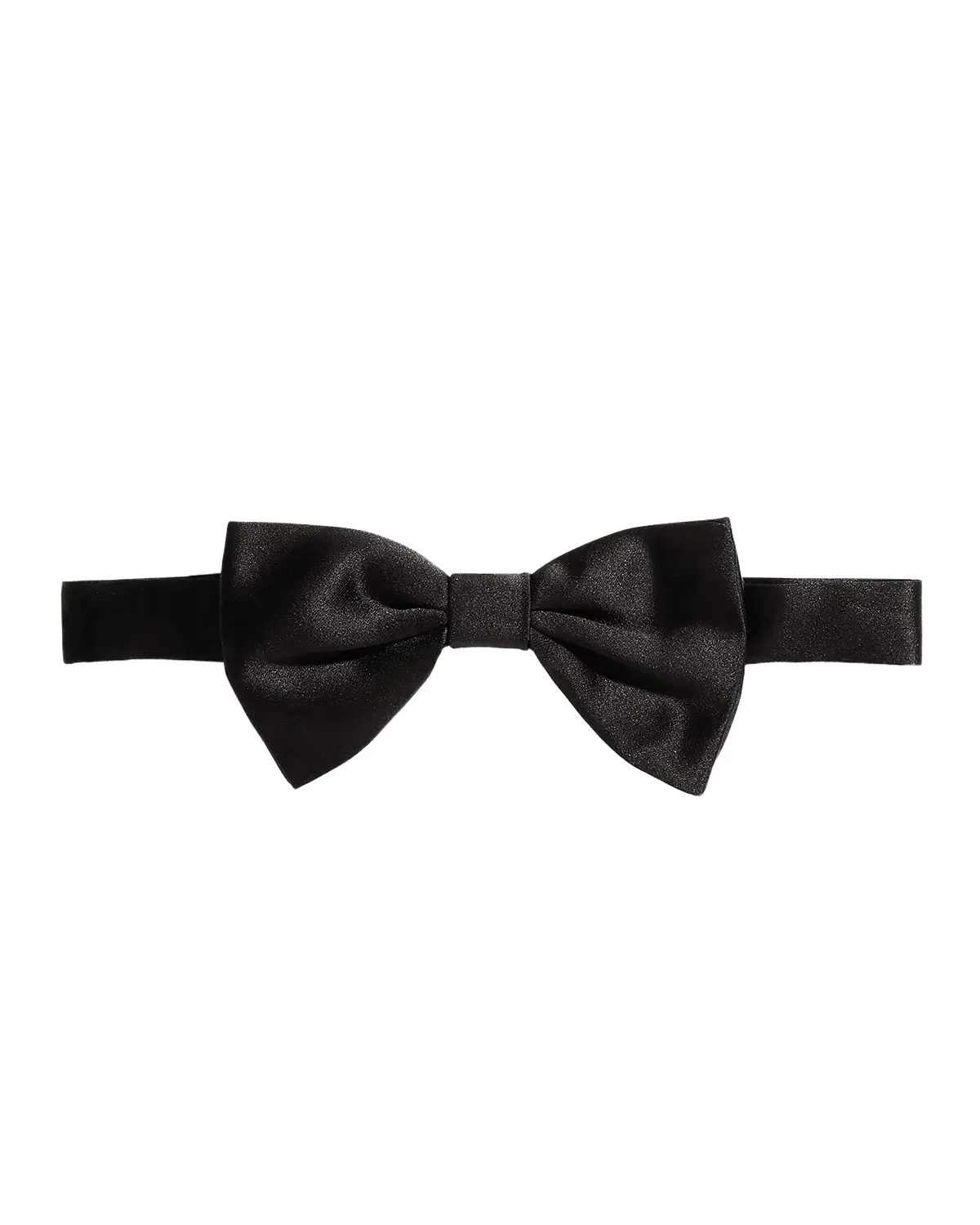
Debrett's asks for a hand-tied black bow tie, and adds that "The size of the bow tie should be proportionate to the size of the wearer." Many luxury bow ties are sold pre-tied; Canali's and Brunello Cucinelli's in our edit are self-tie, by their listings. Match the bow to the lapel facings, satin with satin and grosgrain with grosgrain, and practice the knot at home rather than in the car.
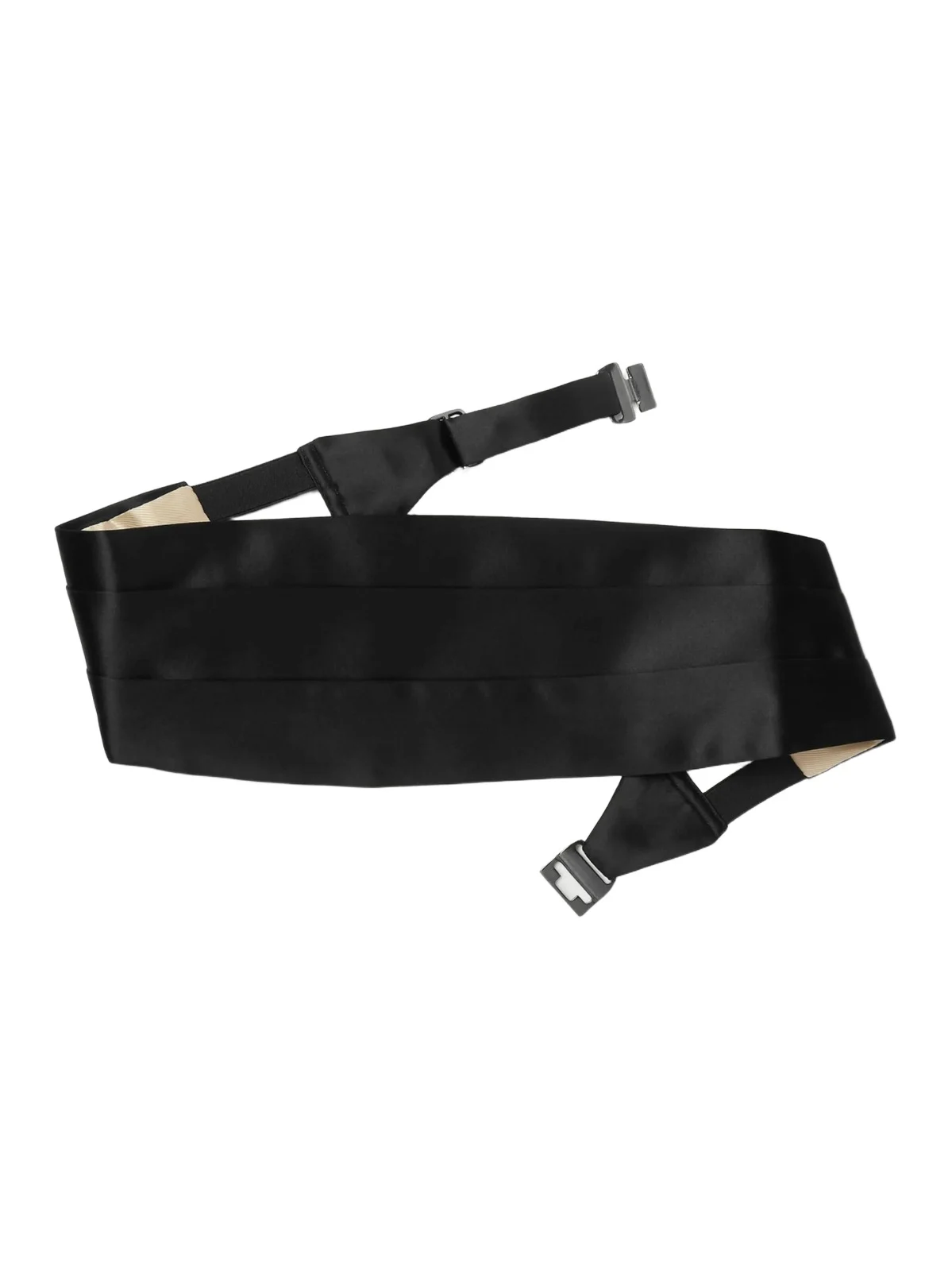
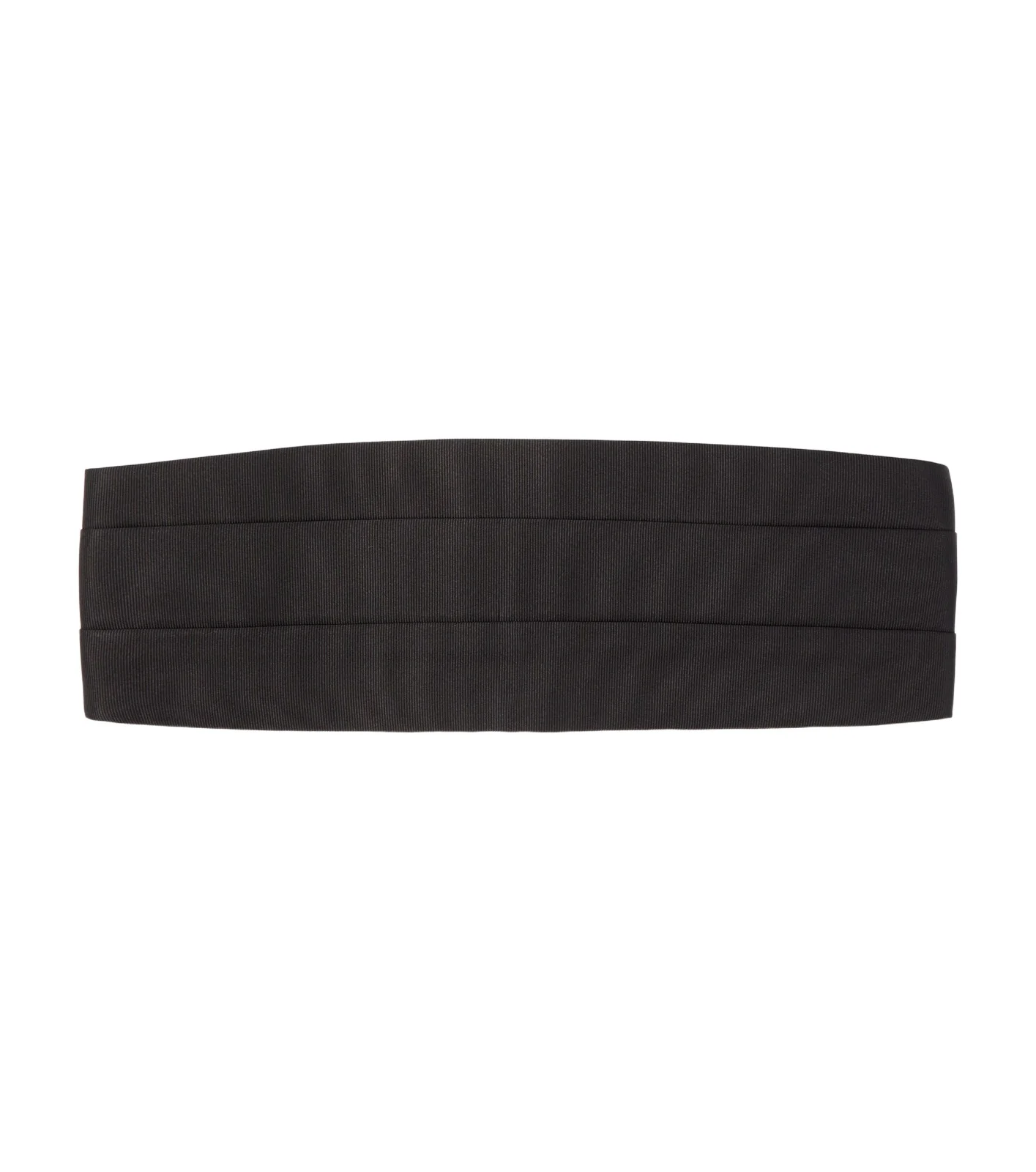
The cummerbund and the waistcoat do the same job: each covers the trouser waistband and the bottom edge of the shirt bib. Emily Post asks for one or the other; Debrett's treats both as optional, says a waistcoat would "always be considered a smart option," and never pairs the two. A cummerbund is worn with its pleats facing up, and the listing for Tom Ford's silk-satin cummerbund gives the reason: they once held theatre and opera tickets. Our stylists put a cummerbund with a shawl collar and a low-cut waistcoat with peak lapels. Most cummerbunds simply adjust, though Gucci sizes its silk one by waist, from about 34 inches for a small to about 43 for a large, by its listing. Finish with the white handkerchief Debrett's calls a classic detail, folded flat, and see our guide to luxury men's accessories for cufflinks and men's ties and bow ties for more.
Self-tie bow ties, silk cummerbunds and white pocket squares


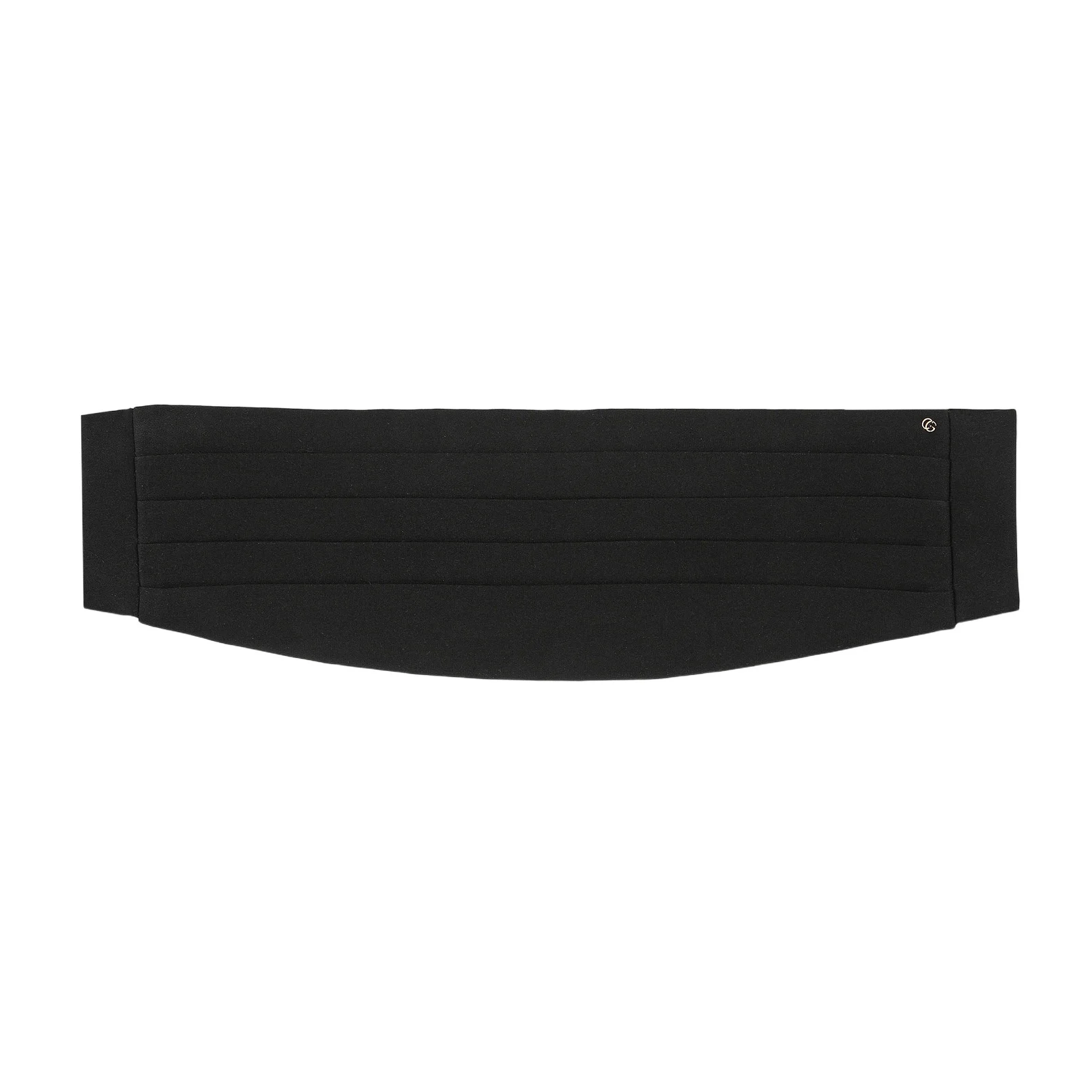

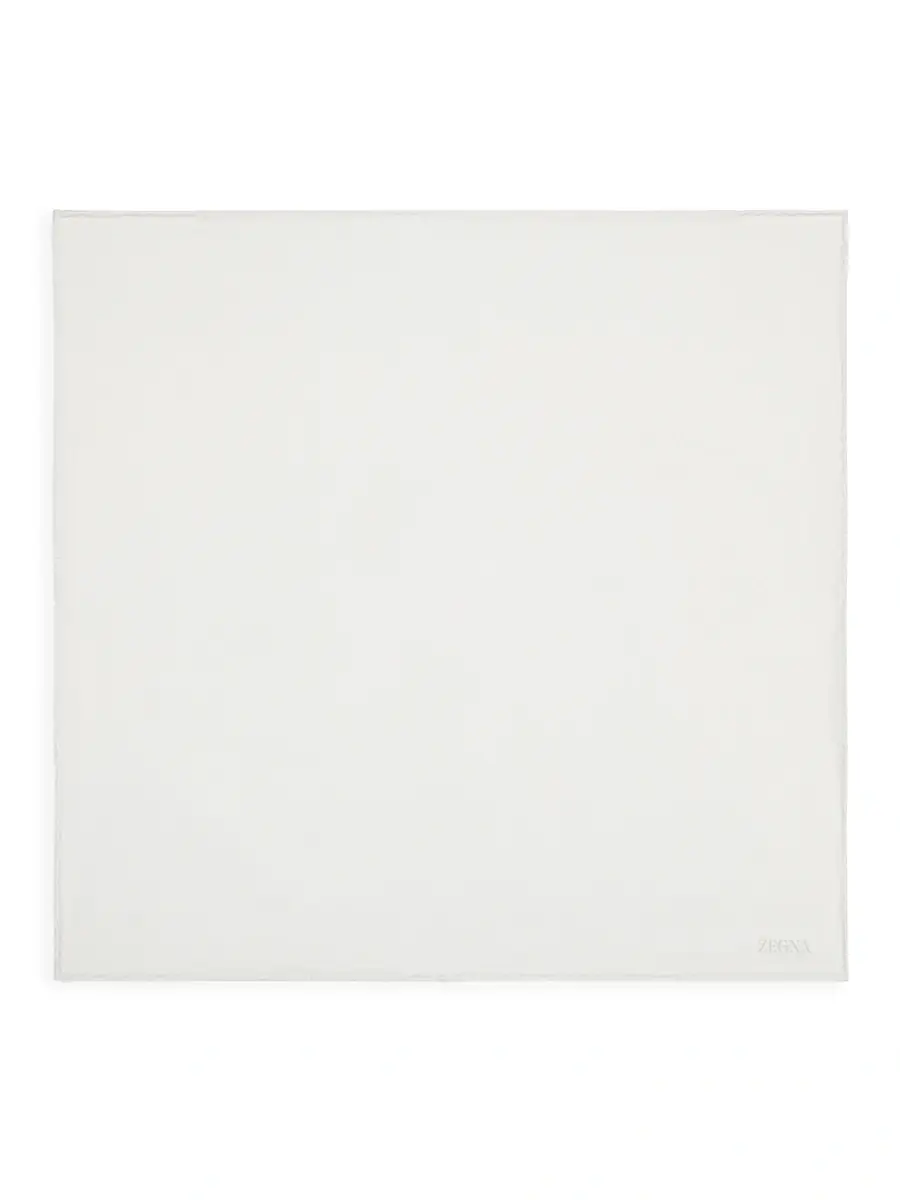
Shoes: patent oxfords, velvet slippers or polished calf
Emily Post asks for black patent shoes; Debrett's for black "highly polished or patent lace-up shoes," both with black socks. The patent oxford satisfies both, and the plainest are the most formal: Manolo Blahnik's Snowdon and John Lobb's Marldon are whole-cut, from a single piece of patent leather, and Ferragamo's Astro Francesina is also cut from one piece, on a slim rubber sole, by its listing. Dolce & Gabbana's Vernice adds a silk panel along the lacing. Choose closed oxford lacing over a derby's open lacing, which reads as a day shoe.
Velvet slippers and loafers belong to creative black tie and to parties you host; Debrett's lists evening slippers among its variations on black tie, with the velvet smoking jacket a host wears at home. Christian Louboutin's Chambelimoc Night Pearl has a pearl-tipped pin on the strap across its vamp, and Manolo Blahnik's Rufus is quilted velvet with a bow. Highly polished black calf oxfords, which Debrett's accepts, are the fallback; they beat borrowed patent shoes that pinch. Wear socks long enough that no skin shows when you sit, which in our experience means over-the-calf, and note that Manolo Blahnik and John Lobb list these pairs in UK sizes. Our men's dress shoes guide goes deeper, and there are more pairs in men's loafers and evening shoes.
Patent oxfords and velvet evening shoes
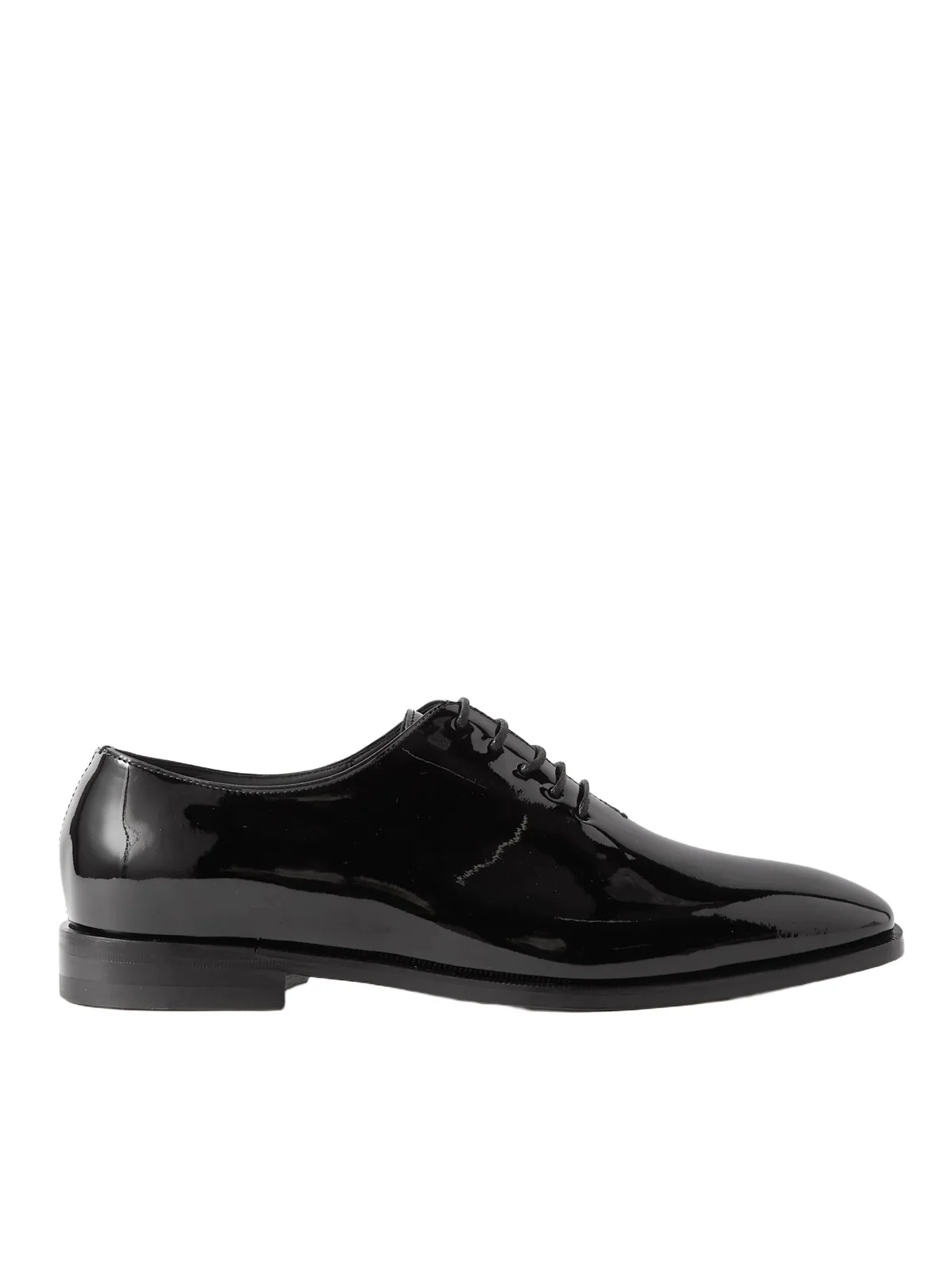 Manolo BlahnikSnowdon Whole-Cut Patent-Leather Oxford Shoes - Men$1,175
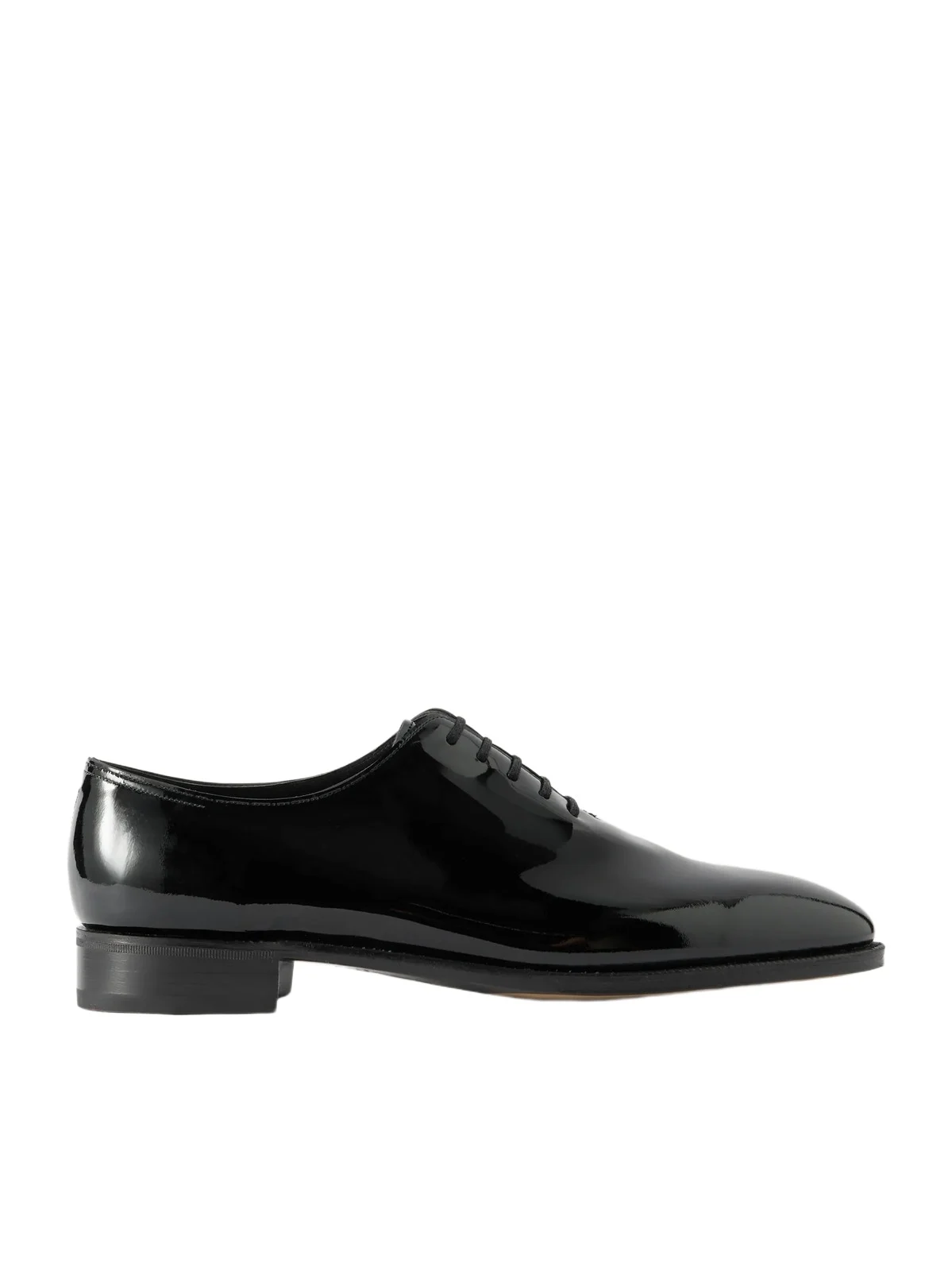 John LobbMarldon Whole-Cut Patent-Leather Oxford Shoes - Men$2,860
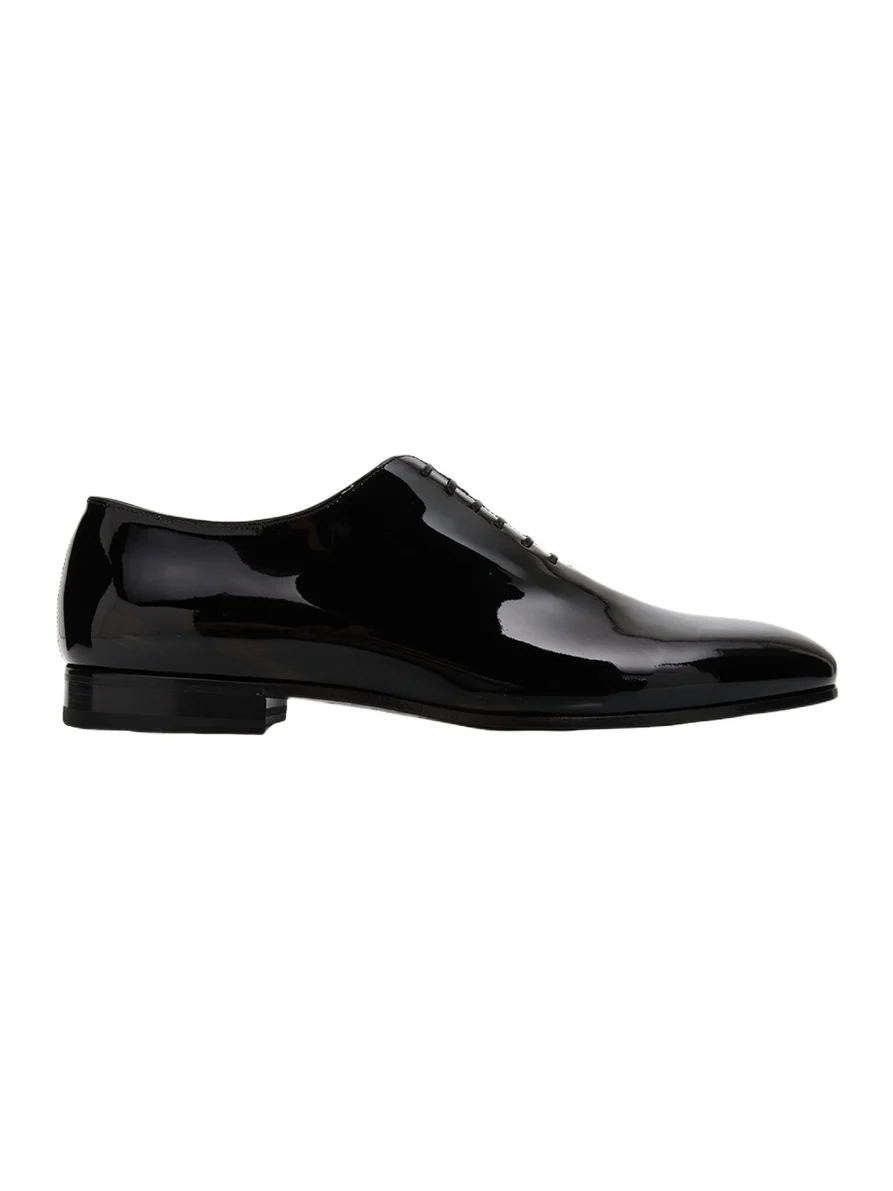 FerragamoMen's Astro Francesina Patent Leather Oxfords$1,090
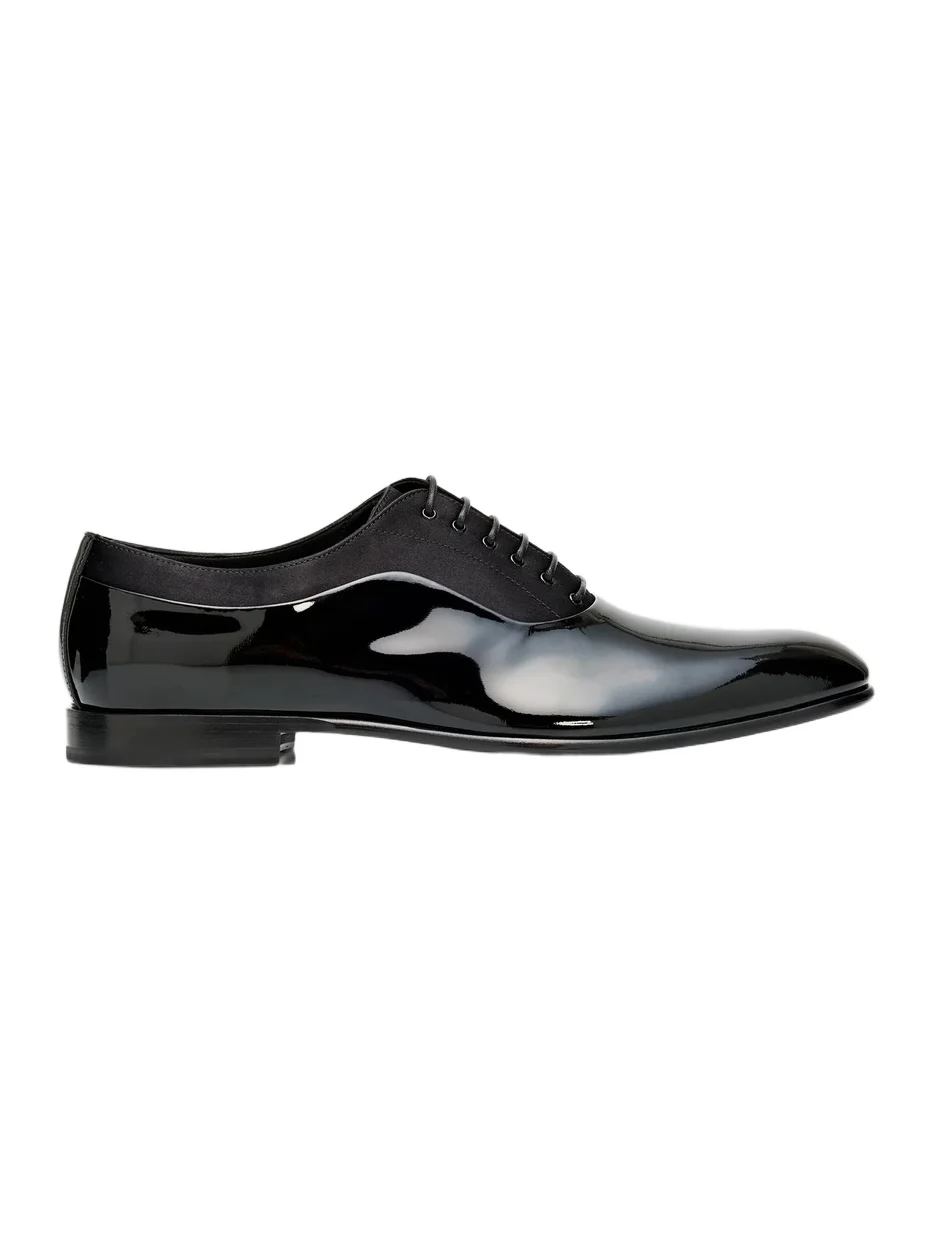 Dolce & GabbanaMen's Vernice Patent Leather & Silk Oxfords - Black$1,045
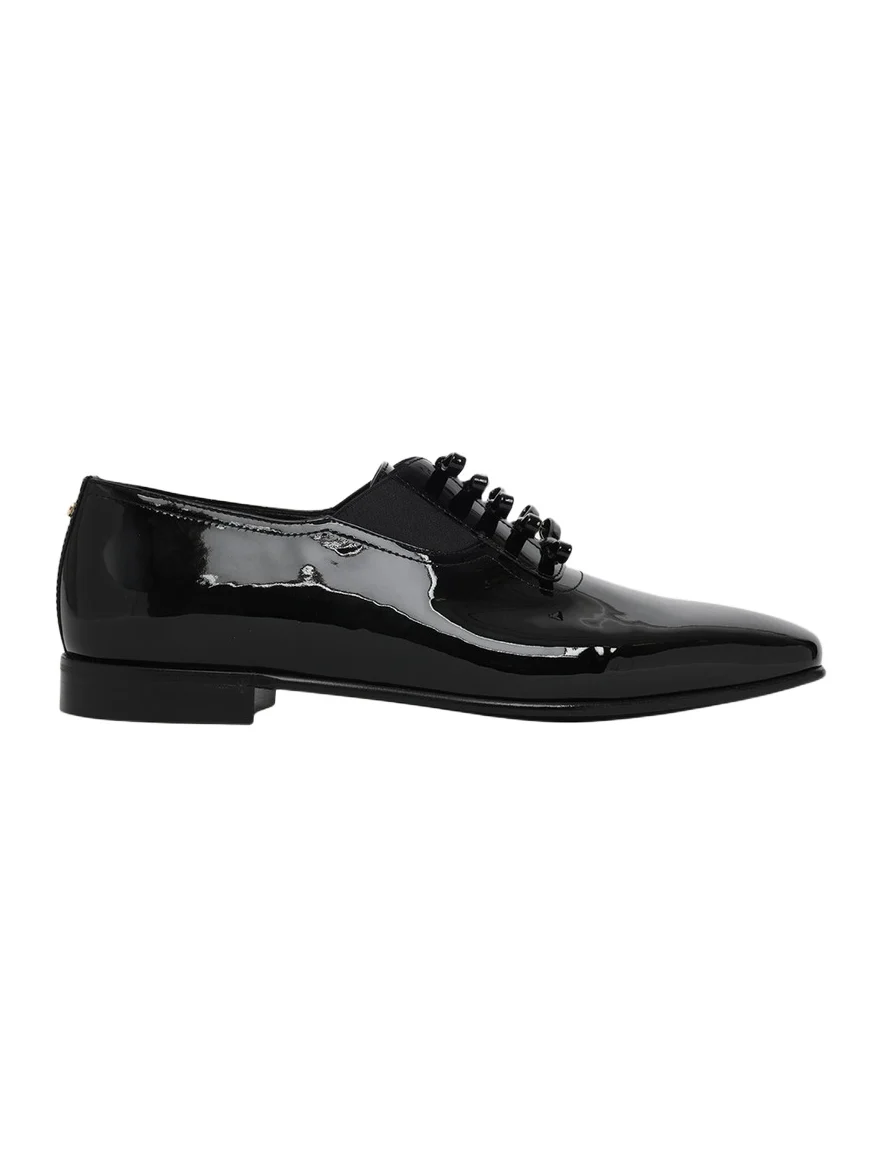 Valentino GaravaniMen's Pas Des Dieux Oxfords in Patent Leather$1,190
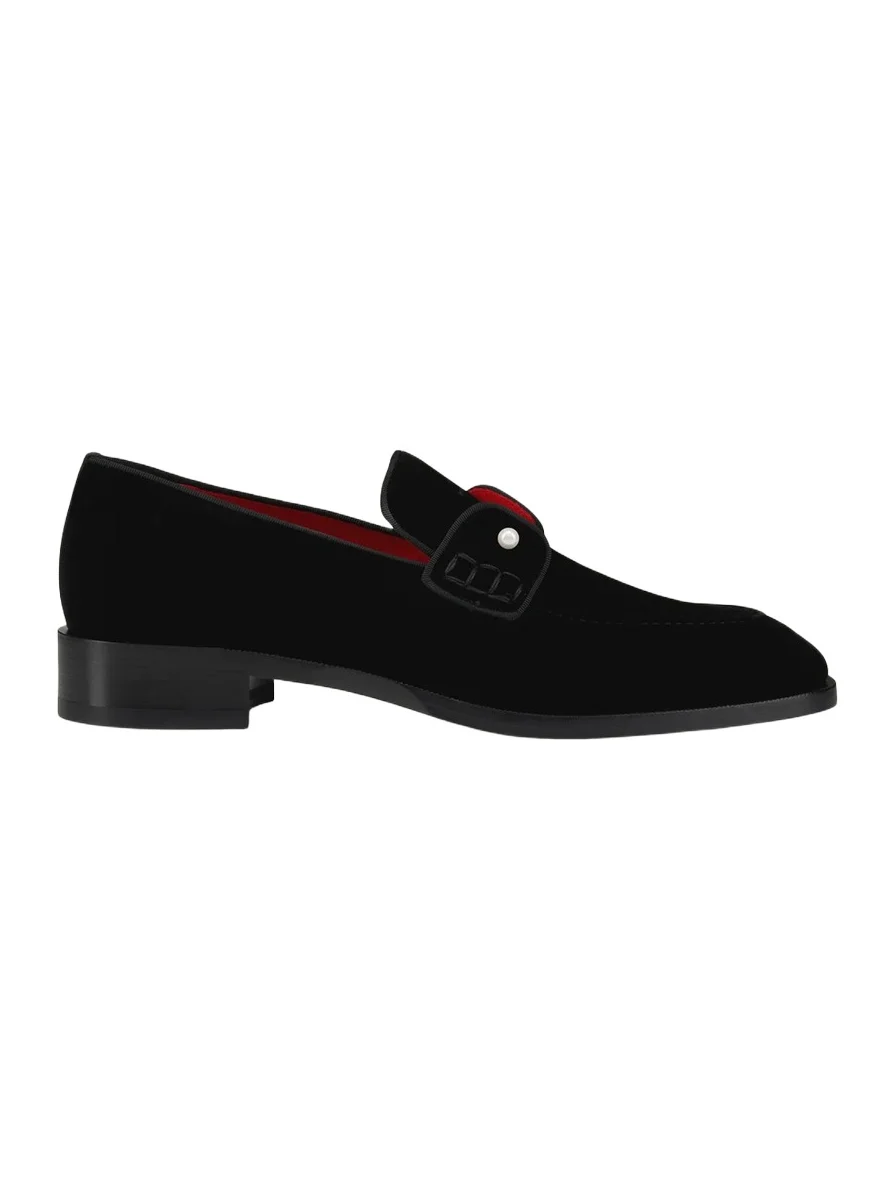 Christian LouboutinMen's Chambelimoc Night Pearl Velvet Loafers$1,490
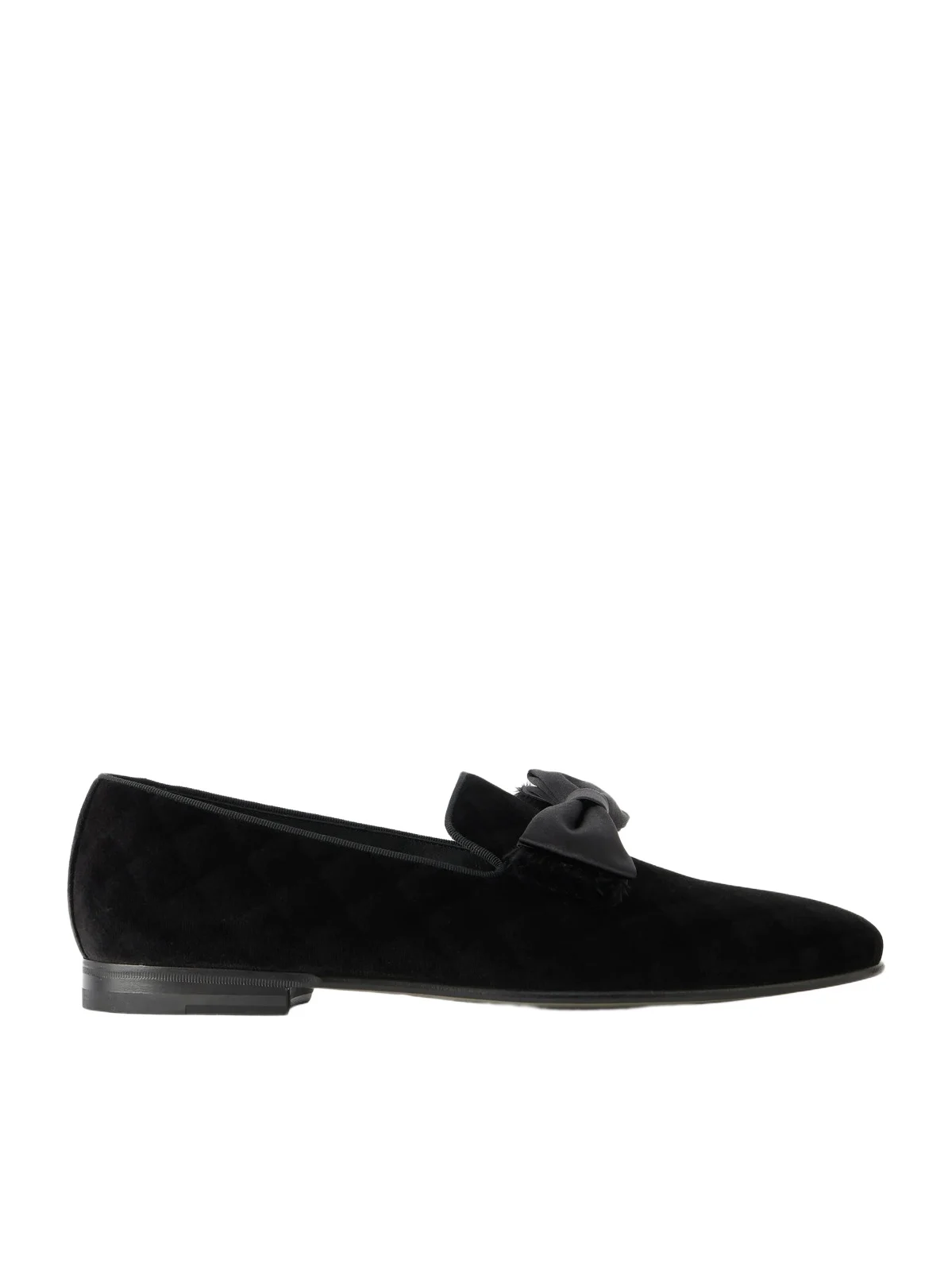 Manolo BlahnikRufus Bow-Detail Quilted Velvet Loafers - Men$1,295
The coat over black tie
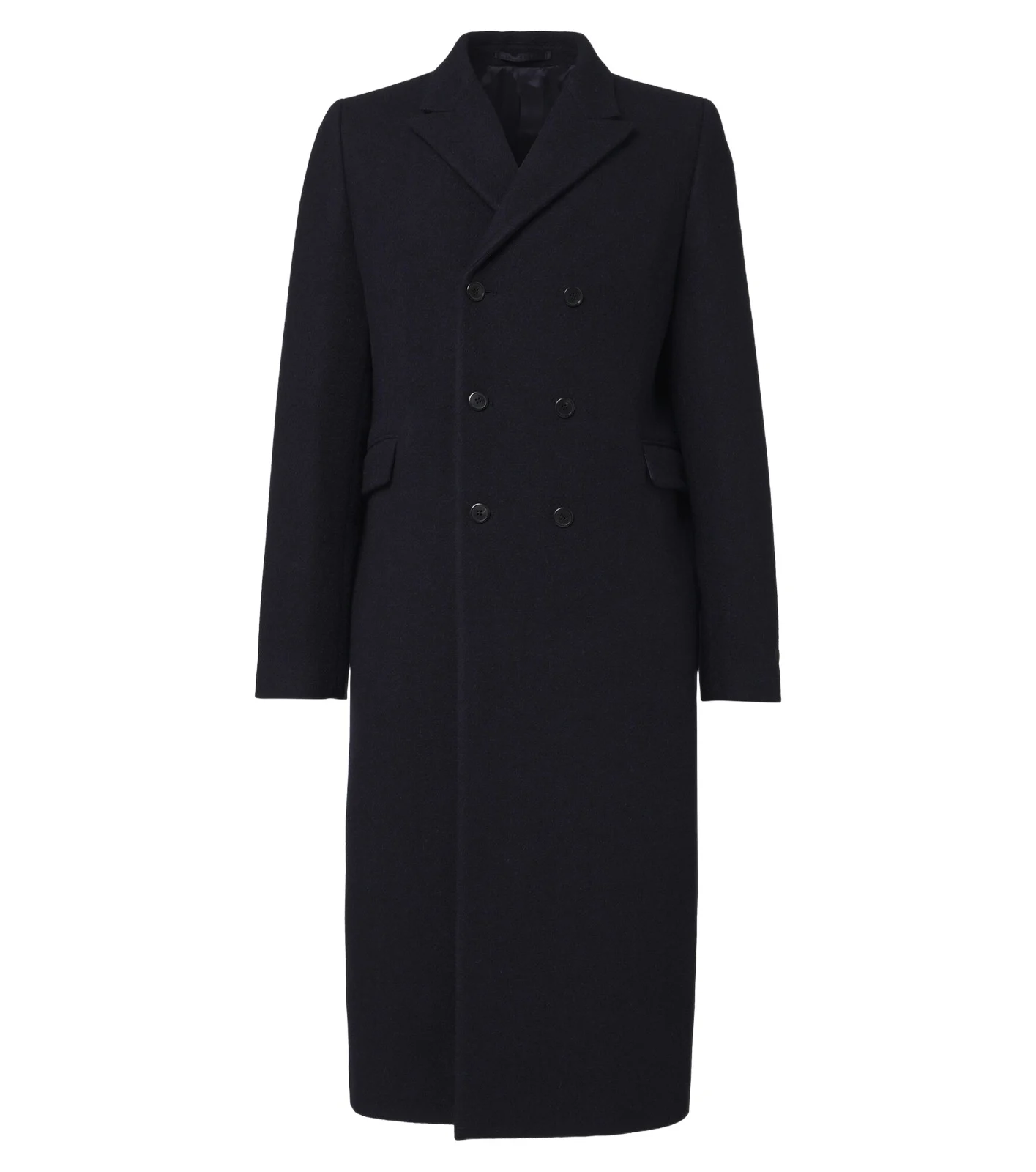
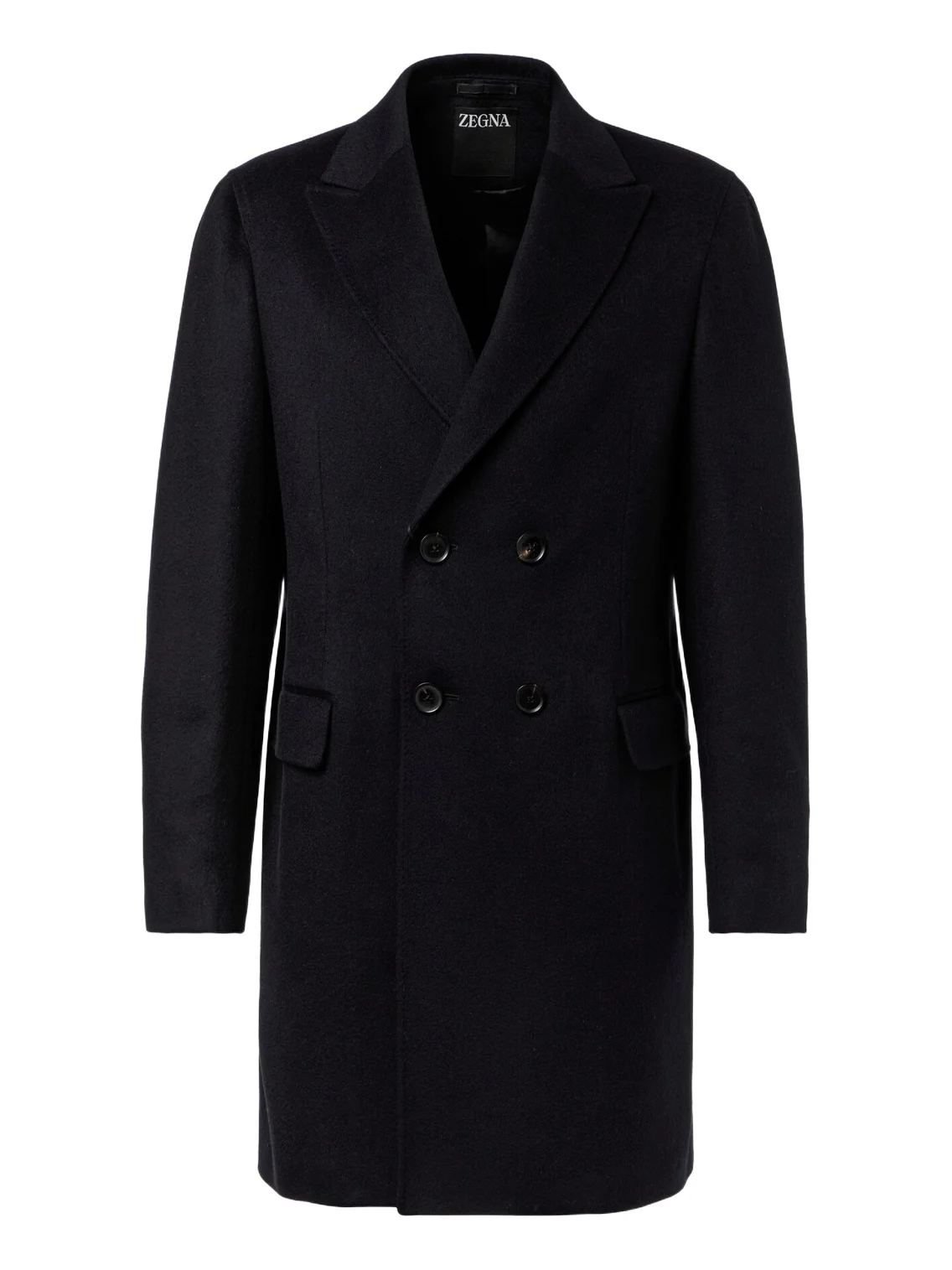
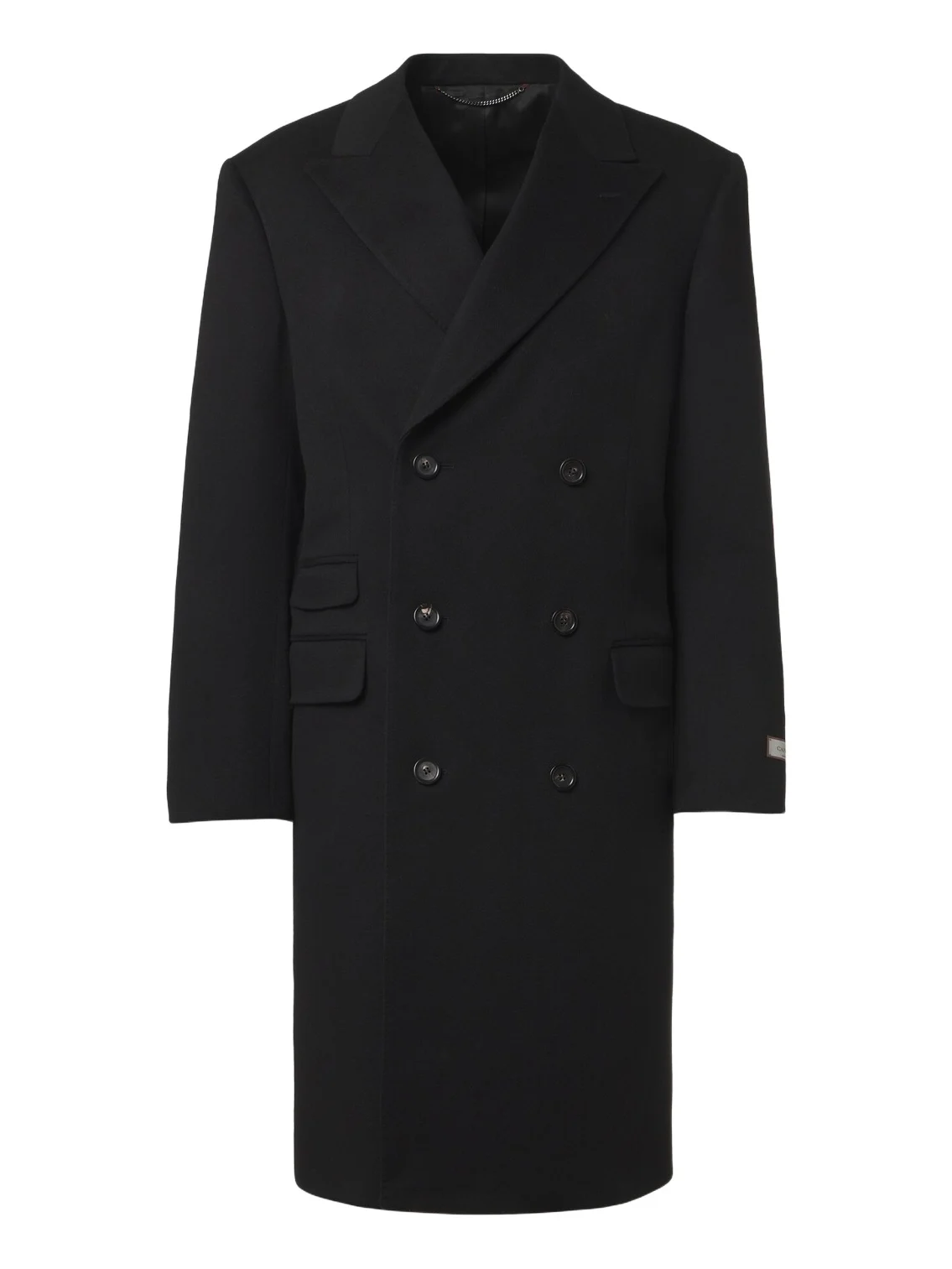
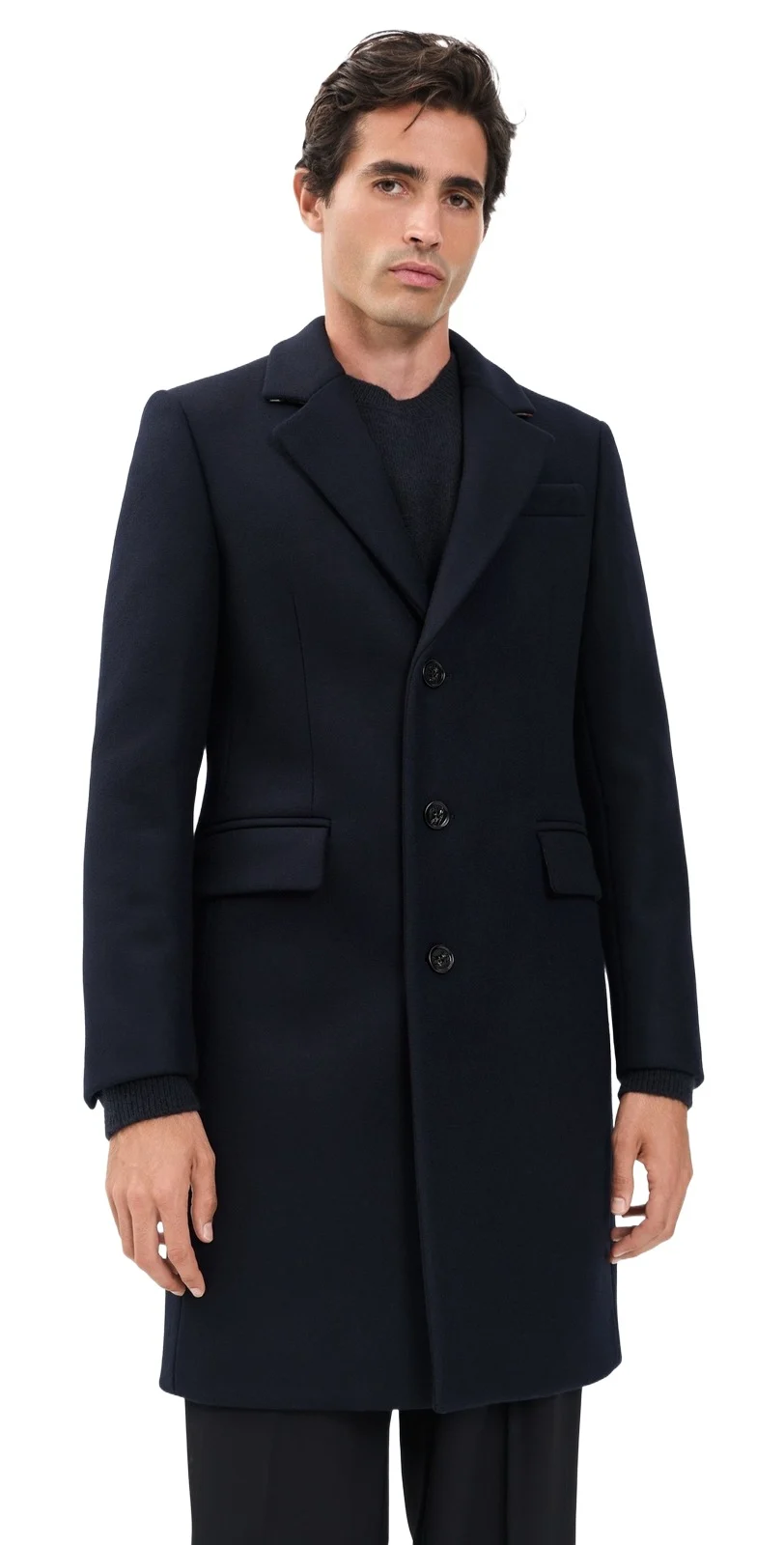
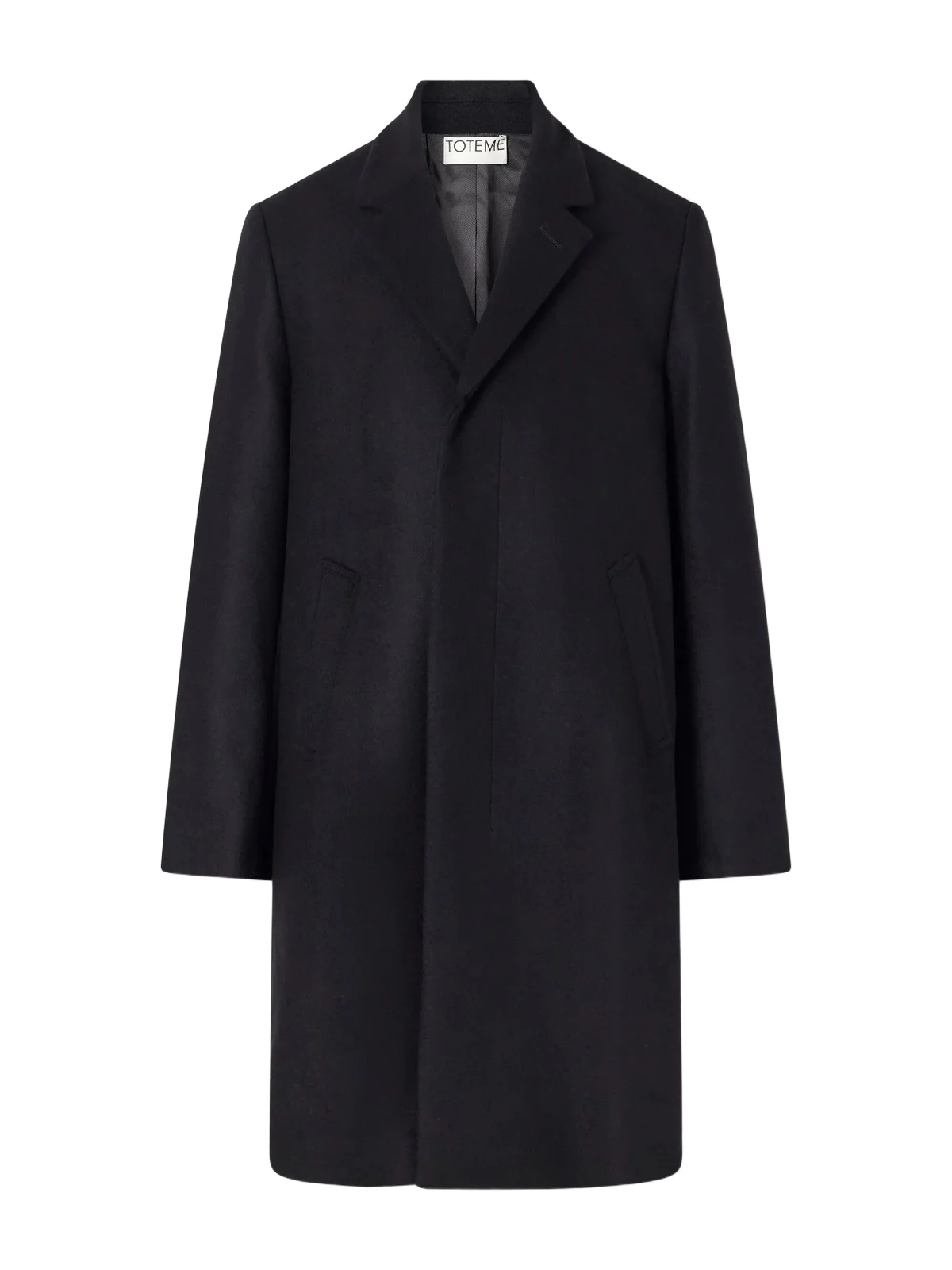
Over a tuxedo we would wear a dark overcoat, black, midnight or charcoal, at least to the knee and ideally double-breasted; a trench or a quilted coat breaks the line. Try the coat on over the dinner jacket, not a sweater, because tailoring needs more room through the shoulders and sleeves. Then raise your arm as if waving for a car: the coat sleeve should still cover the jacket sleeve and the shirt cuff.
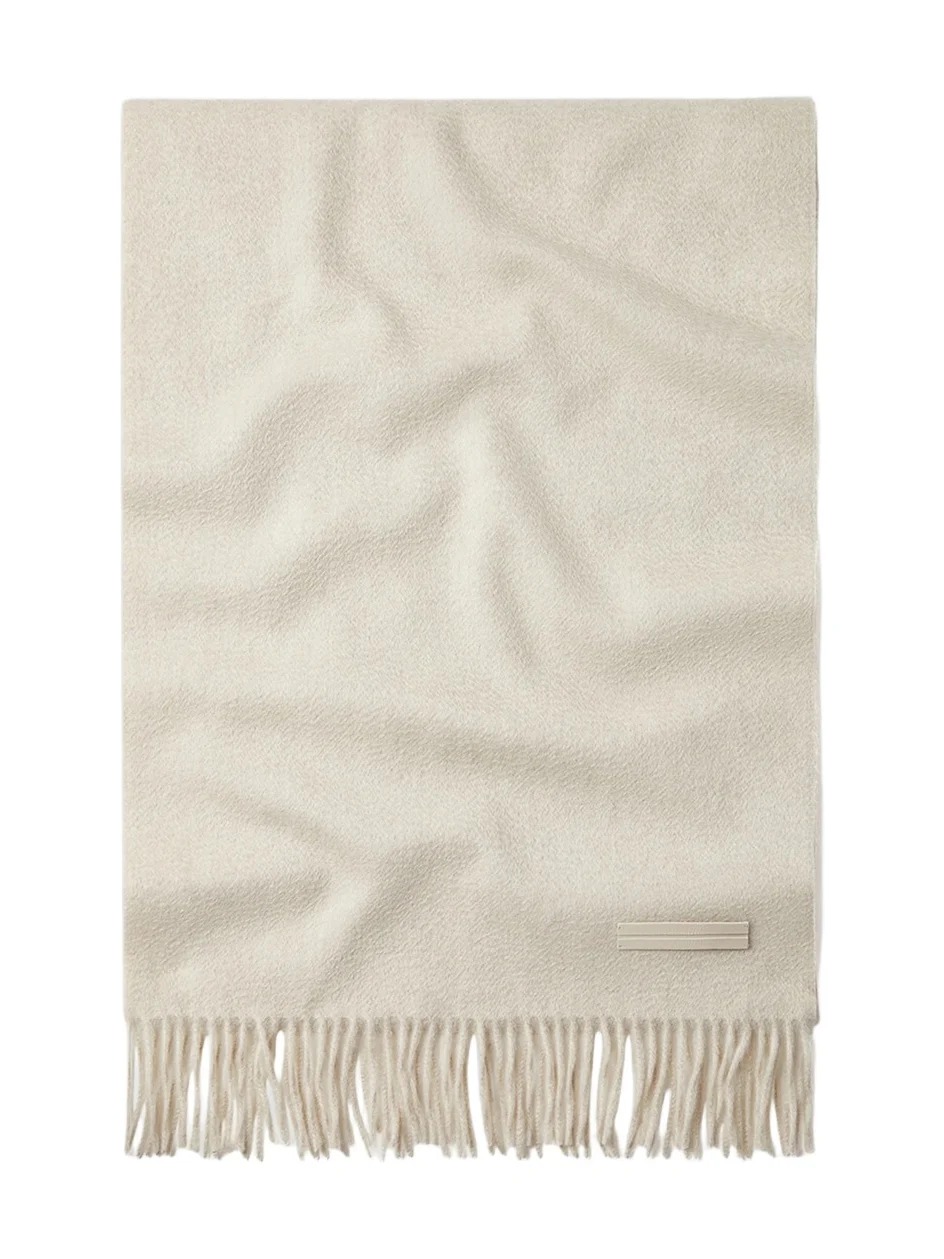
Prada's double-breasted virgin wool coat photographs as a navy close to midnight, which sits well over a black tuxedo; Zegna's and Canali's wool-and-cashmere coats are black, double-breasted and peak-lapelled. Burberry's Beverley and TOTEME's coat, with its hidden placket, are single-breasted and plainer. For white tie in winter, Debrett's suggests "a black overcoat and white silk scarf"; we would take the same pair to black tie, or white or cream cashmere on a cold night. See more men's coats, or our edit of men's winter coats worth the investment.
Long dark overcoats to wear over a tuxedo
Fit and tailoring: what to fix and what to walk away from
Almost every tuxedo needs a tailor. Our stylists' checklist:
- Walk away from bad shoulders. In our experience a shoulder that overhangs or dents below the pad is not worth altering. Choose the size whose shoulders fit and alter everything else.
- Judge the jacket length on the rail. It should cover the seat; shortening a jacket throws the pockets and button out of proportion.
- Fix the rest. Sleeves, trouser length, the trouser waist and some waist shaping are routine work.
- Bring the whole outfit to the fitting. A bib and French cuffs change how the collar and sleeves sit, and the hem is set to the evening shoes' heel. Tuxedo trousers have no turn-ups; we would hem them with a slight break or none.
- Allow time. In our experience tailors are at their busiest in December, so for a holiday party we would buy in November and book the fitting as soon as the tuxedo arrives.
Across all Vêtir users, black tie is the dress code named most often in requests to our AI stylist over the past 12 months, and formal and gala asks peak both in November and December and in July. If part of the outfit is already in your closet, tell our AI stylist what you own and what the invitation says, and it will build the rest around it. Several pieces here are Tom Ford's, and our Tom Ford guide covers the house in depth; for the women's side of a black-tie wedding, see what to wear to a winter wedding.
How we chose
We started from the two rule books, then went looking. Every tuxedo and plain black dinner jacket here has silk-faced peak or shawl lapels, and we read each listing for what arrives (a jacket alone, jacket and trousers, or a set with a waistcoat), the pockets, the vents, how the trousers fasten and whether the hem is finished. Where a listing's words and its photographs disagreed, as one tuxedo's description of shawl lapels did against pictures of peaks, we went by the photographs. Single center vents were allowed only on velvet and jacquard jackets, where the rules are already bent, and every velvet is named by its fiber, viscose included. Two shirts photographed with a different collar from the one listed were dropped, as were a gray-heather coat and a "black" tuxedo that photographed charcoal. Bow ties are self-tie by their listings, shoes are oxfords or velvet slippers rather than derbies, and coats are long and dark with room for a dinner jacket underneath.
Frequently asked questions
What is the difference between a tuxedo, a dinner jacket and a suit?
Tuxedo is the American word and dinner jacket the British one for the same garment. What separates it from a suit is the trim: silk-faced lapels, a silk stripe down each trouser leg and pockets without flaps. A black suit meets black tie optional, not black tie.
Should a tuxedo be black or midnight blue?
Either is correct; Henry Poole names both. For a single tuxedo choose black, and buy midnight as the second, or as a velvet jacket.
Is a peak or shawl lapel more formal?
Debrett's accepts both. The peak lapel, which comes from the tailcoat, is usually considered slightly more formal; the shawl collar, from the smoking jacket, is softer. A notch lapel belongs on a suit.
Do you wear a cummerbund with a double-breasted tuxedo?
No. A double-breasted dinner jacket is worn buttoned and already covers the waistband. Cummerbunds and waistcoats are for single-breasted jackets, one or the other.
Does a tuxedo shirt need a wing collar?
No. Debrett's specifies a turn-down collar, not a wing collar, for black tie, and keeps the detachable wing collar for white tie. A turndown collar with a pleated or piqué bib is correct with any tuxedo.
Can you wear a tuxedo without a bow tie?
Not at strict black tie, where both Emily Post and Debrett's call for one. Debrett's calls a long black tie with a dinner jacket "Hollywood black tie" and says it would look unsuitable at most formal private black-tie events in Britain; Emily Post's creative black tie keeps the bow tie and changes its color.